
The 4 minute guide to SME marketing
The average human’s attention span is… oh look, a notification on my cell phone! According to scientists, the age of smartphones has left humans with such a short attention span even a goldfish can hold a thought for longer. As such it is no longer surprising when people complain that a 1000 or 2000 words post/article is toooooooooo long. So I asked a couple of friends and acquaintances; “What’s the most amount of time you would be willing to spend to carefully read an article that piques your interest?” The answers varied between 2-7 minutes and at the end of the day I arrived at an average of well, 5 minutes! And this was one of the considerations that inspired “The 4 Minute Guide to SME Marketing” series. What I hope to do with this series is help start-ups and small/medium business owners navigate the rather murky waters of marketing. Because I understand the time constraints we all face as busy professionals and business owners, I plan to keep every article interesting, informative, and most importantly, concise. Pinky swear! I chose to do a series specifically on marketing because, to be honest, I absolutely love the profession and practice. I always tell people that marketing found me (a story for another day). After spending years in the advertising industry as a brand and marketing strategist and working on a number of brands across different industries, I’ve gained insights that I believe would be useful to small business owners. It can be difficult to access ready and affordable marketing consulting services so That said, I guess we can all agree that starting a business is exhilarating. Unfortunately, the “build it and they will come” theory doesn’t hold much weight anymore because while you might have a fantastic, the greatest thing since sliced-bread product, if people do not know about it, who you epp? The process of letting people know about your product or service is a deliberate one hence an entire academic and professional field called marketing. Again, unfortunately, a lot of startups and SMEs have a flawed mindset with respect to marketing (what it entails and what it can do for their businesses) and this is why most of them do not scale or eventually live up to their full potentials. I mean in today’s business field, battles are won or lost in the market arena and a good product/service alone would not sell itself. As such, marketing imperatives are no longer an option, but a MUST! You can choose to think about it this way. Your product or service started as an idea and we all know that ideas need momentum. LaunchSquad’s Jason Throckmorton said “you can have the best idea in the world but if you don’t couple that with a strategy to spread your story, your idea isn’t going to go very far.” I couldn’t agree more. Still in doubt? You can also choose to think about it this other way. As a start-up, as a new business, nobody knows you yet so you need to get people to care enough to try what you offer. And this is when marketing becomes a smart investment because it can help you legitimize your business, create excitement, engage potential clients/customers, encourage trials and repeat purchases and even inspire loyalty and advocacy. You see where I am going with this right? 😀 I’d conclude today’s post by saying SME marketing shouldn’t be a flimsy afterthought. Just as you have been very deliberate about creating a top notch product or service, you need to be equally deliberate in creating demand for that product or service. Until next week SLAyers! Cheers!
Dr. Ndidi Nnoli Edozien: My personal growth story
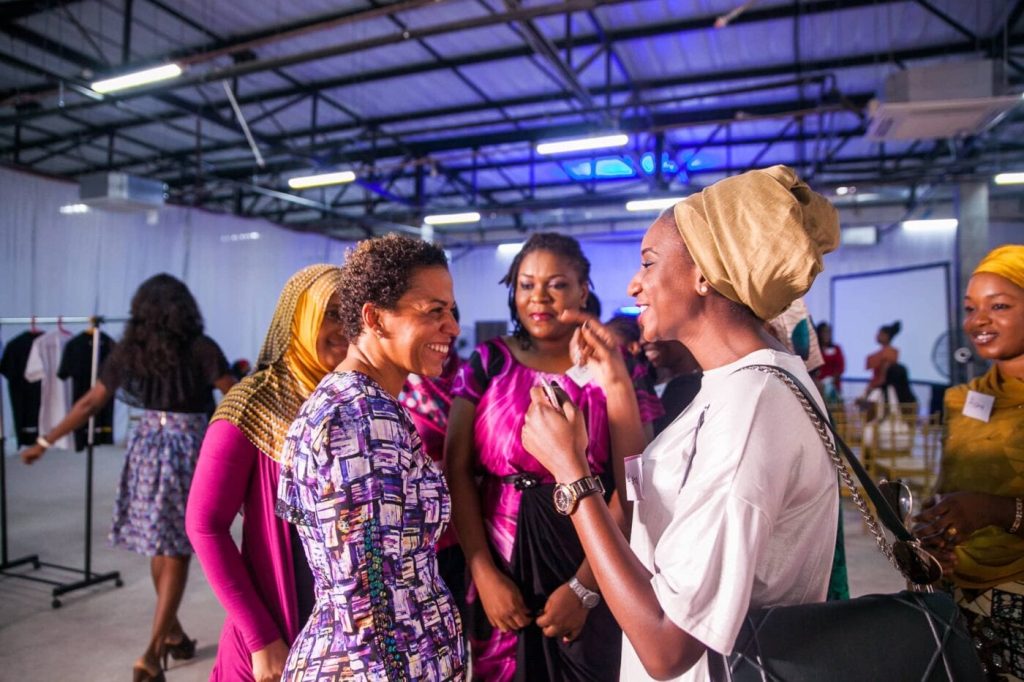
If you weren’t at the Building A Social Enterprise session presented by Dr. Ndidi Nnoli Edozien at She Hive Abuja, you missed what I would call a transformational experience. The founder of Growing Businesses Foundation opened Sunday’s session with an uncharacteristic anthem: Timi Dakolo’s ‘Great Nation’. The song resonated deeply and set the tone for a session which was powerful, inspiring and emotional all at the same time. At several points during the program, I felt chills all over as I connected deeply with the message Dr. Edozien put across. The talk was simply geared at using her personal growth story to help the participants overcome the fear of failure and step out. She started off by describing entrepreneurship as emanating from something you feel, going further to state that you cannot fail at what you love. “Social enterprises are aimed more at solving problems thus it is impossible to fail because you’re solving a problem. An important way to measure impact is by making profit. You cannot separate enterprise from the ability to make profit.” Although she loved to give money out, it took Dr. Edozien 17 years to realise she had to develop the love to yield profit. Dr. Edozien spoke to her audience about the ability to reach inside and find a feel that’s right. She explained that her life has flowed like a river due to never neglecting her gut feeling. This she likened to religion and how we follow our beliefs because it feels right inside. Follow your instincts despite what others think – Dr. Ndidi Nnoli Edozien Drawing parallels from her story She used several stories as a way to drive her points home some of them too numerous to share. Below are my three favourites: “At Queen’s College, I used to come 22nd out of 24 students in a class. I was a quiet, timid girl who wouldn’t say a word. It all changed for me when I got glasses, and literally and figuratively got to see the world around me. That school term, I skyrocketed to the 5th position. Eventually, I was selected for a competition alongside nine other QC students to attend sea school with 30 participants altogether. It was a very big deal at that time.” This particular story was an important one to hear because it helps us understand that it doesn’t really matter what state you find yourself in at the beginning. There is always the potential to turn your story around. “My family and I moved from our house in the prestigious Ikoyi to my husband’s family home in Central Lagos Island. This was very important to my husband because it was an heirloom that had been in his family for generations. On hearing this, a lot of people told me I was mad. However, it afforded me an opportunity to connect with the locals. It made sense to live there because it was the simple people I yearned to connect with and empower.” Dr. Edozien acknowledged that women have a fear of security. She expressed her belief that forums such as the SheHive help women see that they have the same fears but also have what it takes to succeed. “In 2001, a man who wanted to empower women in his village approached me for support. This man is now one of my absolute favourite persons in the world. With N1 million that he received, he went on to build a loan portfolio of N12 billion impacting 434,000 women with a 98% loan repayment rate. He sought to recognise and thank me even years later despite my refusal until I finally agreed to have someone represent me. The Kaduna stadium was filled and 90% of the crowd was womenfolk.” This particular story brought tears to my eyes. The man in the story had a simple idea which he ran with because of a passion and conviction in his heart to lift local women out of poverty. Important lessons from Dr. Ndidi Nnoli Edozien Trust what you have before you. “Perfect is the enemy of good. Think, feel and then move. If you strive for perfection, you will never get started.” – Dr. Ndidi Nnoli Edozien Find someone who inspires and believes in you. Not necessarily someone you love or vice versa, have an individual who can hear, see and feel you. Look for different mentors you feel a connection with. A mentor can be someone you never met. Once you discover that person, connect with them, read their books, follow their story etc. Be vulnerable. Cry! You’re probably thinking, what?! Yes, Dr. Edozien stressed the importance to cry because something moves you. Not alluding to self-pity, it’s okay to feel vulnerable. Her first company logo was a butterfly because it reminded her of how vulnerable the winged insect is. In Dr. Edozien’s closing remarks she boldly stated, “Do not be afraid of failure. Ask failure what is the worst thing that can happen to me? Take it into cognizance and move.” She also asked that young women remember the significance of building a team. In her own words, “you cannot grow a business without a team. It might be your idea, but it gets very lonely at the top. A team will help you drive your vision and fill gaps that may exist.”
How to get discounts and sponsors for your next event

When you’re just getting started, the hustle for customers and publicity is real. You need to get your product in everyone’s face in the cheapest way possible. Events seem to be a favourite for their ability to generate brand exposure and activate your fans. But events cost money and most companies just starting out, don’t really have any so the hunt for sponsors and discounts is on. Everyone wants sponsors, and discounted products and brands get requests from everyone all the time. If you want to stand out and get brands on board for your event, follow these steps for your next event. 1. Start early Give yourself at least 3 months before the event to start looking for sponsors. This can be a long and tedious process and you don’t want to rush at the last minute. 2. Pull together your facts Create a budget as if you were going to pay for everything. This way you are clear about what everything you want costs. Then decide what things are the most important and what things you can afford to lose, if you had to. 3. Decide what you are able to pay for Most of the time it is advisable to pay for the items that the event can not run without. This way no matter what happens, you’ll still be able to run your event and be in control even if a sponsor falls through. However having the money and being prepared to pay for them does not mean you can’t ask for sponsorship. You can also use this during negotiations to let them know that you aren’t just looking for handouts. Brands want to know that you’re investing your own resources to make the event a success as well. 4. Determine if you want a discount, product or cash So many start-ups request cash for their events but that is always the hardest thing to get from a sponsor. Think about what kind of support a brand can provide via in kind services or through exchanges. By being creative in this area, you can strike deals. 5. Decide which sponsors you want to approach and why Beyond just the financial value, think about which brands you want to be associated with your business. Even though you’re just starting out, you want to make sure you’re working with brands that connect to your values and identity. You also want to target brands where whatever you’re offering in return actually matters to them. Most companies that provide sponsorship are looking for the advertising opportunities or to connect to your community. Some may just be happy to support but these companies are few and far between. Generally, everybody wants something in return and you need to figure out what that is. 6. Do your research Call people you know and find out as much as you can about other events this company may have sponsored. Look online for their values and if they have a sponsorship request form. Use LinkedIn to find the right contacts in marketing or communications departments. 7. Prepare a sponsorship package that is targeted at the sponsor Do not ever send a generic proposal. That is the fastest way to get your proposal ignored. Looking for another way to get your proposal in the trash? Have another company’s information in the proposal. That’s a big no no. Spend the time demonstrating that you’ve done your research and know exactly why you want to work with this brand. 8. Send your e-mail Be clear, polite and straight to the point. Ask for a meeting, whether online or face to face so you can explain further and build a relationship. If you have chosen your sponsors carefully you should at least peak their interest in you. 9. Keep track of who you have approached and when If you haven’t heard within 5 days try and follow up with a phone call. 10. Ensure you are able to fulfil the offers you provide sponsors Sponsors can become long term partners if they like your work ethic, product and customer service. Treat sponsors the same as customers. Ensure you have clear agreements so that everyone is on the same page and you keep in touch after the event. Be creative, keep going and good luck with getting them coins!
Want your business to break out? Create a whole new market

As entrepreneurs already know, finding clients can be a long, frustrating and expensive process. When you have little or no brand recognition, you have to work so much harder to get noticed in the market. I recently read in Entrepreneur Magazine, that “it is so important to prioritize future-minded strategy over short term opportunism”, and I completely agree with this. So what does this mean for a young woman who wants to set her business apart? To me it means that this is the time to look for new business opportunities which typically haven’t been as welcome or open to women. While we may be more familiar with industries like beauty and fashion which are easier to start from home, developing a future-minded strategy requires us to look at opportunities beyond ourselves such as construction and heavy industries. It is with such opportunities that we must understand that the only limitations we now have, are those we hold on as truth in our own minds. Being in the industrial sphere does not even always mean that you would have to get dirt under your fingernails; the takeover of technology in almost every business sector has opened up so many doors that the line to what is possible, and impossible has become almost invisible. Many entrepreneurs and CEO’s know that competing head-to-head with other entities can become daunting and cutthroat, more so when markets are slow and quite flat. All leaders in any business would agree that if there’s an easier alternative to get out of the head-to-head competing, and instead find a clear opportunity that has not yet been tapped; they would opt for that direction. In a world with hundreds of thousands of different products & services, innovation has become central to the survival of any new of mature business. Creating new markets for your entity requires just that, INNOVATION’. An article published by Harvard Business Review titled ‘Creating new markets’ stated that, ‘Most companies focus on matching and beating their rivals, and as a result their strategies tend to converge along the same basic dimensions of competition. Such companies share an implicit set of beliefs about “how we compete in our industry or in our strategic group.” They share a conventional wisdom about who their customers are and what they value, and about the scope of products and services their industry should be offering. The more that companies share this conventional wisdom about how they compete, the greater the competitive convergence. As rivals try to outdo one another, they end up competing solely on the basis of incremental improvements in cost or quality or both.’ So, the first thing to understand about creating new markets is that it requires a different pattern of strategic thinking. Instead of looking within the accepted boundaries that define how we compete, entrepreneurs should look systematically across them. By doing so, you can find unoccupied territory that represents a real breakthrough in value. Let’s have a look at UBER, a company that, instead of buying a fleet of cabs and competing head-to-head with other cab companies, decided to do something completely different. The founders of UBER could have innovated and stopped at how they could get hybrid cars as part of their strategy or maybe even offer more comfortable vehicles with WIFI connection and well-trained drivers. Instead, the founders looked at how to make the process easier for customers and developed a tech friendly solution that provides lower costs through accurate monitoring of the distance travelled and drivers trained to a standard level of service. By looking at the problem and the industry from another angle, they have created an entire market for themselves and disrupted an entrenched industry that had little innovation over the past 50 years. I doubt any of the UBER founders had ever driven a cab for a living or dreamt of being a cab driver. However they were able to capitalize on this opportunity because those who had been in that industry were very comfortable with the same old way that they had been operating for years. They couldn’t see the way technology could disrupt the industry and they missed the opportunity. When thinking about creating a new market the popular question “What are my competitors doing?” should immediately be followed by the question “What should my competitors be doing?” Or more bluntly, how can I bring those who could be my head-to-head competitors to my mercy? If you already have a product line, maybe look into a second generation product to help the financial standpoint of the company by creating a new market altogether. Finding secondary marketing can be as easy as adjusting packaging. Look at Coca-Cola or Kellogg’s, these companies have an array of products which aren’t worlds apart where taste or ingredients are concerned. Exhibit A would be the much loved amongst women market, the Special K cereal. Special K promises health benefits & sells fitness indirectly to us and what woman doesn’t want to be fit or at least healthy? Then have a look at Coco Pops, same company, different branding, a bit more sugar and even a cartoon character to attract the kids market. All these have proven to me that as an entrepreneur, your perspective seldom matters above that of the market. You may as the entrepreneur see things ‘Ok as they are’, but one thing you should always bare in mind is that you’re not selling these to yourself, so get into the mind of the market. Think the unthinkable. Now here’s the challenge: Go back to your businesses. Identify your ‘old ways of doing things’ and see how you could catapult yourself to being an industry leader by offering an entirely new way of doing business. Don’t lose sight of your original product or service but explore ways that you could make a similar product that’s targeted at a whole new market. A new market demographic could be a simple as age group, gender or even race. Start innovating. Research how you could infuse technology into your new or existing business. Technology is on the rise, you may just be a tech pioneer in
The purpose of business: The business of purpose
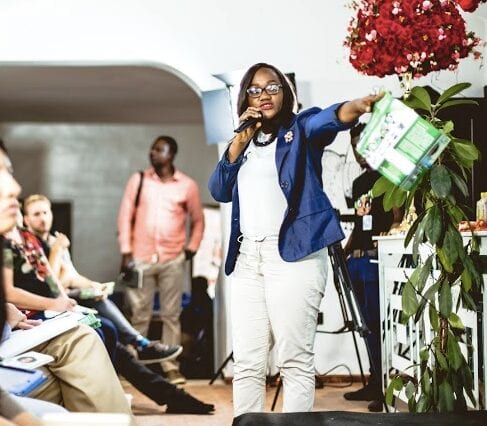
A few decades ago the notion of the Triple Bottom Line became commonplace. The phrase introduced the concept that businesses, particularly global brands, have a responsibility to ensure that their business and their business practices not only render to them (internal) economy prosperity, but that their business practices safeguards the environment, and delivers social responsibility (external). The Three E’s – economy, ecology and equity. More recently, the notion of sustainability and climate change has become a global dictate for ensuring and assessing the actions of corporations – again as a measure of ensuring that corporations take responsibility in and for their global business practices. This ensure that in operating their businesses, they are not in any way depleting the environment and livelihoods, nor negatively impacting the lives of future generations. As usual, naysayers thought it was all hogwash – a liberal, goody-goody notion that some had latched onto to make their businesses look good. A notion that was good for shareholder value and drenched in profit-making with little thought for ecology and equity. But I beg to differ. You see, the future is not only a place we are going, it is also a place we are creating – and as such there can be a trade off between the present and tomorrow, depending on how we live, and ultimately how we lead and how we do business. What am I driving at? I am very much interested in the idea of transformational business leadership as opposed to transactional business leadership. My premise is that business leadership should be transformational and purposeful, and not merely transactional. Your business leadership should have a positive and resounding transformational impact on your internal (staff) and external (clients, shareholders, and partners) stakeholders, to the extent that the leadership positively impacts society at large. Not my responsibility, I hear you say. Well, let’s look at the business landscape and how this notion is being played out in the business sector – and particularly by two women in business. PwC released its 19th Annual CEO Global Survey at the recently concluded World Economic Forum in Davos. Shannon Schuyler, President of PwC Foundation and Chief Corporate Responsibility and Purpose Officer, in an article in the Huffington Post, wrote that the 19th CEO Survey had revealed that while CEOs and companies may define purpose differently, for many ‘purpose is why their business exists’. More importantly, the CEOs noted that they recognise that companies have a wider responsibility to provide value to all stakeholders: ‘business profits and societal prosperity are inseparable: purpose is what aligns and unites them.’ Ms Shannon words were music to my ears. Essentially, global business leaders accept that business is not merely a secular, transactional act, but an intellectual and purposeful act to respond profoundly to societal needs. And that is why you need transformational leaders, leaders with unusual, far sighted ways of thinking and doing, to lead businesses – and ultimately – to shape societies. Jen Lim is the CEO and Chief Happiness Officer of Delivering Happiness – a company she co-founded to inspire science-based happiness, passion and purpose at home, work and in everyday life. For Delivering Happiness, companies can successfully use happiness as a business model to increase productivity and profitability, proving that companies with a higher sense of purpose outperform others by 400%. Here’s the premise My premise is that the higher sense of purpose, the ‘why’ of your business, is the strategic and leadership responsibility of the business leader to know, own, cascade and secure buy-in into by internal and external stakeholders. People generally are always pursuing happiness. They want to be part of something big and bigger than themselves – and what a better place to know and find that than the place where they spend two-thirds of their day, i.e. work? For me, it will take transformational leadership to build the business of your dreams. It will take transformational leadership to have a sustainable business. And it will take transformational leadership to have a truly loyal, dynamic and productive set of internal stakeholders – as well as a set of external stakeholders that render you and your business profit. The transformational business leader is concerned about all their stakeholders – the enterprise itself, the clients, their staff, their business partners – and they go out of their way to identify the needs of each one, after which they seek to arrive at a place of business operations that delivers joint value to all stakeholders. Ms. Schuyler delivered superbly on an enthralling Twitter chat on 18th February about using purpose to drive business. She demonstrated explicitly that in businesses, purpose leads to more innovation, focus, human intensity and quality – and that each of these drive profit. Business therefore is not only a commercial transaction for financial gain but also a potentially transformational endeavour for financial and societal good. Business is purposeful, and there is business in purpose.
Copyright: Preserving your creative work in a social era

The last segment (here) was to follow with a detailed discussion on the non-disclosure agreement. However, conversations with some entrepreneur friends this week warranted a discussion about copyright protections. During the discussion, it was quite evident that some entrepreneurs believe the notion of copyright is all but a fictional concept in frontier markets like Nigeria, especially in a social era where creative works are easily available to the public through social media sites. The comments during the conversation included, “no one cares about copyright, if my work is stolen, life goes on,” “but what courts in Nigeria have the time to resolve copyright cases when it has more interesting election cases pending before it?” and“I barely have enough time to run my business let alone go through the tedious copyright registration process.” During the colourful conversation, entrepreneurs seemed to agree that copyright protection is alive and well in Western countries. However in frontier markets, copyright protection has been tucked deep into the judicial mountains, making enforcement merely a fantasy. The comments of these highly talented entrepreneurs were littered with elements of ambiguity about enforcement procedures, and most importantly, what constitutes copyrightable work. 1. Copyrightable work—Distinguishing the leaves in the forest Copyright protects creative and original expressions such as images, music, and texts. In some jurisdictions, copyright protects particular expressions of ideas and not the general idea itself. For example, the U.S. Copyright statute dictates that “[in] no case does copyright protection for an original work of authorship extend to any idea, procedure, process, system, method of operation, concept, principle, or discovery, regardless of the form in which it is described, explained, illustrated, or embodied in such work” (17 U.S.C. Section 102(b)). Similarly, the Nigerian Copyright Commission noted that a “work is ‘created’ when it is ‘fixed’ in a tangible medium.” Thus, in some jurisdictions, copyright protection does not reach beyond the protection of the specific form of idea. To illustrate, if you and a friend both decide to independently create a painting of Mount Kilimanjaro, your two paintings could qualify as copyrightable work if you both expressed your work in your original forms. To this end, it is not the idea of painting the mountain that is protected; rather, the original form or the painters’ expression of the mountain is what is protected by copyright. Simply put, copyrightable work is analogous to the leaves in a forest; each leaf appears in a form that is distinguishable from the other despite having similar characteristics with other leaves. The second point raised during the conversation was the lack of time to register their work. The good news is that in some jurisdictions, this is not an issue because protection is automatic once one’s work is released into the public domain. In such instances, registration becomes a mere formality and helps put the general public on notice. Registration also has the added benefit of making enforcement and seeking judicial remedies easier. Thus, depending on one’s jurisdiction, registration of one’s work may not be a prerequisite to benefiting from copyright protection. Nonetheless, formal registration is highly recommended. 2. Copyright protection is well and alive, even in African countries! Recent developments this month reminded me that copyright protection is alive and well, even in African countries! Last week, The Nation newspaper reported that “[a] Federal High Court in Abuja, on Friday, February 12, dismissed the preliminary objections filed by former winner of the Face of Africa pageant, Oluchi Onweagba, who was contesting a copyright suit filed against her”. The Nation noted that Chudi Charles, an executive officer of International Pageant and Films, filed the infringement suit seeking N780 billion in damages on grounds that the defendants used West Africa’s Next Top Model, his registered brand, without his consent. Indeed, the dismissal of the preliminary objections does not necessarily predict the court’s ruling on the matter. Nonetheless, judicial decisions over the past few years signaled the judiciary’s commitment to enforcement. For example, in November 2015, a federal high court sitting in Lagos awarded an artist, Dr. Sunday Adeniyi Adeye a/k/a King Sunny Ade, damages in the amount of N500 million for copyright infringement. In 1997, King Sunny Ade filed suit against African Song on grounds of using his master tapes to produce duplicates of his work for public sale without his consent and any remuneration. Several years later, the court ordered the defendants to pay damages. (Sunday Adeniyi Adeye vs. African Song FHC/L/CS/196/97). Similarly, in Angella Katatumba v. The Anti-Corruption Coalition of Uganda (ACCU) (H.C.C.S No. 307 of 2011), a Ugandan high court ordered the Anti-Corruption Coalition of Uganda (“ACCU”) to pay damages in the amount of UShs. 25 million to Katatumba, an artist, on grounds that ACCU incorporated Katatumba’s song into an advertisement jingle without her consent. Likewise, in Nonny Gathoni Njenga & anor v. Catherine Masitsa & 2 ors Civil Case No. 490 of 2013, a Kenyan high court ordered the defendants, Masitsa et al., from reproducing, translating, or adapting the plaintiffs’ literary work, “Wedding Show with Gathoni” into the defendants’ TV Show “Samantha’s Bridal Show.” Despite the fact that “Samatha’s Bridal Show” was running prior to “Wedding Show with Gathoni,” the court’s ruling was made on grounds that the defendants “changed their old running order [of their TV show, Samantha’s Bridal Show] and copied the plaintiffs.” Thus, although copyright cases may not make headlines very often, this does not necessarily mean that enforcement has been erased from the judicial fabric. 3. Practical tips As an entrepreneur, you should register your original expression with your copyright registration office. Use copyright notices, e.g. ©, on your copyrightable work. Such notices not only puts the public on notice but aids in preventing an forger from making an innocent infringement defense—a defense whereby the forger claims that they were not aware their act constituted copyright infringement. If you are using photos, music, or other third-party material for your new venture, seek appropriate consent. You do not want to be subjected to a copyright lawsuit that could potentially
Come what may…business must go on

To all intents and purposes, many economies on the continent have seen a slowdown. Businesses are being tested for resilience, they are being pushed to the edge, and the strength and acumen of their value chains are being tested. But come what may, businesses must go on. They may not thrive as they when the economy was buoyant, but they must continue in earnest. As I think about these times, two things come to mind. The need to build a strong brand to have a sustainable and viable business in and out of a slowdown. The need to continually prepare and plan to scale your business around the core business activity at the earliest possible opportunity. Building a brand. Building a business What is the difference between a brand and a business? A business is an enterprise that creates an opportunity to trade and generate revenue. A brand is made up of intrinsic values, quality and characteristics that endear clients and aspirational clients to the business. I always say when starting a business, it is crucial to focus on building the brand first, so that you can have a viable, sustainable business in the medium to long term. And building a brand is not child’s play. A business brand is almost always made up of the personal and business values of the CEO. Especially for a small business, it is almost impossible to separate the personal brand of the CEO from the business brand. These become indistinguishable given that the CEO is the face of the business, and most likely the primary client-facing representative of the business. For the business owner and CEO, this brings home the need to reflect on, define and articulate your personal and business values right from the outset. This delivers you your business brand. Understand and define what you are trying to achieve with your business and what values are aligned with that personal and business aspirations. Then, commit to live those values – through how you operate your business, how you choose and interact with clients, the quality of your services and products, how you recruit and engage with staff, how you present yourself to the world – presentation skills, public speaking skills, networking, and personal style. When we focus on these from the outset, we endear clients, and essentially revenues, to our business, create brand loyalty, and, come what may, in and out of recession, we enjoy a level of brand loyalty. Scaling your business Most business start with one core idea, concept, initiative, but there is always an opportunity to scale and expand that business. Think of a fashion brand that starts initially producing clothes, then start to produce and sell accessories, then later on goes into interiors, and maybe even then a lifestyle venture such as a restaurant. What enables such a business to do that successfully is the power of their brand. When a brand is strong, it has a following, and clients will seek out that brand for every aspect of their daily needs. It’s an intentional decision. Many global corporations and their CEOs at one point decided to develop their personal and business values (=brand) to keep their clients and customers hooked. In the event of an economic slowdown or economic upturn, their business, through their brand strength, remains a viable and sustainable enterprise. You can do it! The price of business and entrepreneurship is uncertainty, and the prize is a vision fulfilled, success even in the midst of uncertainty. Someone recently shared with me a precise lesson in living. They said, if we knew the times and seasons, if we knew exactly what would happen to us or our business next month, next year or in 3 year, we would not need faith, we would not need to be resilient. It is often the uncertainty in business and the ambition and determination to curb that very uncertainty that fuels the drive to success. Risk taking buoyed by a strong brand can bring some comforting business stability. When we strive to become better than we are, everything around us becomes better, too – Paulo Coelho, The Alchemist
5 tech tools for blogging bosses
If you’re a blogger, you probably know how time-consuming managing a blog can be. You need tech tools for blogging because between editing your pictures just right, resizing them for Facebook, Twitter, and Instagram—and making sure your posts are typo-free—one can become frazzled very quickly. Blogging bosses cannot afford to be stressed out. We must maintain an air of effortlessness at all costs. So, here are a few of my favorite tech tools that take care of the annoying parts of the blogging business so you can keep focused on the big picture. Fiverr Delegate, delegate or delete; that’s my mantra. If something will take up more time than I have available, I find a capable person to handle it or I delete the idea. Find a programmer to do those annoying CSS edits to get your blog looking just right, or hire the perfect graphic designer to breathe new life into your blog images. Fiverr has it all, and for $5 a pop, you can too. No wahala! Tomorrow App How many times have you been stumped trying to figure out where you wrote your to-do list? Okay, maybe you’re organized and your lists are always within reach, but, there’s nothing like being able to see all your to-do’s, personal and professional, in one place and never run out of paper! Tomorrow App is a simple app without distractions. Just put in a to-do item and tap to cross the item off the list when it’s completed. If you don’t get to it, it automatically transfers everything over to the next day. I’m a staunch ‘paper and pen’ girl, but this Tomorrow App on my phone is a lifesaver! PicMonkey I take most of the pictures for my blog, ThisAfropolitanLife. Photography is on my list of creative pursuits. As much as I try to make sure I take pictures good enough to post without edits, sometimes I fail and a little touching up is necessary. PicMonkey is a quick and effective online tool. No need to download anything, just upload and edit away. For blog graphics and more involved designs, I use Canva. Canva Between Facebook, Pinterest, Twitter, Instagram and all the other social media platforms, one can be tasked with a nightmare of a job; adjusting one single photo into dozens of different sizes, just to make sure they display properly. Canva makes this easy and eliminates the stress. They have pretty pre-designed templates in all social media sizes you need. It’s a one-stop-shop to make all your blog graphics come to life. Grammarly There’s nothing more off-putting than an errant typo or grammatical error on a blog post. Don’t loose readers, tighten up your prose with Grammarly; a free tool that catches typos and grammatical errors. It’s like having your own personal editor or English professor within reach. Just upload your document or post and watch Grammarly work its magic.
The mentorship advantage

Sugar. Spice. And everything nice. What do you need to be a successful entrepreneur? More than it takes to make the Powerpuff Girls. Some say passion, commitment, and willpower are top of the list —all very true. I believe to be a successful entrepreneur you need a viable business model and a good mentor. What is the role of a mentor? One of my favorite books on this topic is, “Expect to win: 10 Proven Strategies for Thriving in the Workplace” by Carla A. Harris. She defines a mentor as “someone you rely upon to give you good, tailored developmental advice”. According to Futurpreneur Canada, the advantages of having a mentor are described in six points. A mentor helps you: Gain insights and perspective by having someone to bounce your ideas off of Focus on and strategically work towards your business vision Shorten your learning curve Identify opportunities and risk by learning with someone experienced Grow and enhance your business network and acumen Build confidence knowing you have someone in your corner Key traits of mentors As I write this, I think of all my mentors and the two key traits they all share: Expertise and integrity: Find a mentor you believe to be brilliant, knowledgeable and trust worthy. You want your mentor to be someone you will listen to because you trust their expertise Genuine interest in my development: This is what I call the mentor/mentee chemistry. Choose a mentor who is genuinely interested in who you are, understands your strengths and weakness and wants to help you develop and grow. Mentorship is a deep and personal relationship and for the relationship to be truly useful, you both must feel safe sharing the “good, bad and ugly” How to be a good mentee Having discussed the importance of mentorship and what to look for in a mentor, how do you become a good mentee? Listen Consider the advice you get and apply when relevant (This is why your mentor has to be someone you can trust) Set SMART goals and hold yourself accountable Ask for feedback and provide feedback in return Be honest and communicate openly with your mentor Invest time and effort in your relationship Most importantly, as a mentee, remember to pay it forward Peer mentorship is a form of mentorship that is often neglected but I find very valuable especially in my professional and business life. Keep in mind; your mentor must have some expertise and be genuinely interested in who you are and your development from a point of low self-interest. Many times, you can find these qualities in a peer. To my mentors: Thank you for teaching me to be positive and fiercely myself. Reminding me I have all I need, to be who I want to be—a healthy mind and body. Thank you for demanding I think big. Because, why the heck not.
From passion to profit: Strategic planning for the woman-owned SME

I am fascinated and excited by the growing number of professional women entrepreneurs all over the African continent. Women who dreamed of being in the corporate world, then went on to leading universities at home or abroad, and then joined and rocked the corporate world in the business and financial enclaves of Nairobi, Johannesburg, Lagos or Accra. Women who then decided that they wanted to own their own corporate world. Brave, heroic and adventurous women. Women determined to dream, and women courageous to pursue those very dreams. I salute you all, my sheros. Accolades aside, it’s a tremendous undertaking starting and running a business. As a management consultant and business adviser with two decades of international consulting experience, I have seen the highs and lows, the joy and the pain, of running a business. The joy and pain of those who want fame and celebrity from their venture, the highs and lows of those who want to execute their enterprise demonstrating best practice, the success and disappointment of those who pursue business for purely monetary gain, and the frustrations of business owners as they deal with the inefficiencies of their value chain. Yes, it is immensely trying. Tremendously tough. Plan: Think deeply about your business aspirations But many women generally start their businesses out of a passion. Why else would you leave that well-paid management position in Citibank, GE or MTN? They want to serve that deep cry within them to step out into the deep and start their very own entrepreneurial odyssey. When they separate from their employers and well-paid jobs, the new business card is printed, the website is set up and one or two well-meaning and even carefully chosen employees are recruited. A few years down the line, things start getting complicated and the business’s reality may not match expectations and aspirations. Then disillusion sets in. Whilst this is ‘normal’ and or to be expected, I often think one of things that smaller women business owners on the continent do not do at all that could ease this dark phase of their entrepreneurial journey is strategic planning. Whilst to some that may sound like a big phrase, something that only big corporations indulge in and something that is not necessary for the small business, a documented strategic plan is a critical planning tool for the endurance of a business –even in the small and growing business sector. I would even say, especially in the small and growing business sector because of the aspiration to GROW.One is already tested by the very fact that one is an entrepreneur in the SME sector – with many more established, larger, older, and trusted businesses around the corner. Add to that the desire to make profit, satisfy customers and be responsive to their needs, listen to and train staff, and deal with third party suppliers. Exasperation then sets in. Envisioning the future of your business Whilst a business plan is used to assess the viability of a business opportunity, a strategic plan provides focus and direction for moving a business from where it is now to where it would like to get to. It is a futuristic document that documents your vision, your mission, your goals and the ensuing activities for your business over a specified period –usually 3 to 5 years. Not that you cannot run a business without one, but a more deliberate and focused picture of where you are going and what activities and initiatives it will take to get you and your business there is a valuable exercise in horizon planning and scenario mapping. Let’s start with the envisioning. Having to deliberately consider a vision statement for your business forces you to think of the purpose of your business, ‘the Why’. And ‘the Why’ is where it all starts. Your response, a succinctly documented vision statement, puts a lot into perspective. Let’s move on to your mission. What do you do? More importantly, what do you do expressly well than other businesses? What will distinguish your business? In many ways your response to these questions (in a mission statement) will then shape your goals for your business. I always say it is best to have a maximum of five goals –have one on organisational and people issues, one on branding and communications, including social media, have another on revenue targets, and yet another on your products focused on how you will distinguish your service, your brand and your brand outputs. Having documented the goals, we then move on your initiatives and all activities. For each goal agreed on, you need to articulate the activities you and your business will undertake to realise each goal. These can be as many as six or seven, but I would say ideally limit it again to five –we want to ensure the possible, let’s KIS and keep it simple. Have Done All, Do Having done all that, do. Execute. Have timelines for the achievement of each initiative- I like to say these should be quarterly targets. To support you in execution, for accountability purposes I would say institute a small Advisory Board, or a group of friends who you trust and who are professional enough to respect and value your business aspirations but also comfortable enough to ask you the tough questions about your business. Alternatively, you could also get a business coach. Many of us doers are driven by our passions and our passions alone. A runner wants to run, a golfer wants to golf and a business owner with a passion for jewelry wants to make and sell jewelry. That’s all very well and good, but if you really want to excel at what you do, whether you are a golfer, a runner or a CEO, a lot of the time you need a little, or a lot of, extra help. Conclusion Strategy planning is a tremendous exercise in self-examination and business planning. It takes a lot out of you. It’s hard. You must