
The 25-Year-Old Shaping Africa’s Place in Carbon Removal
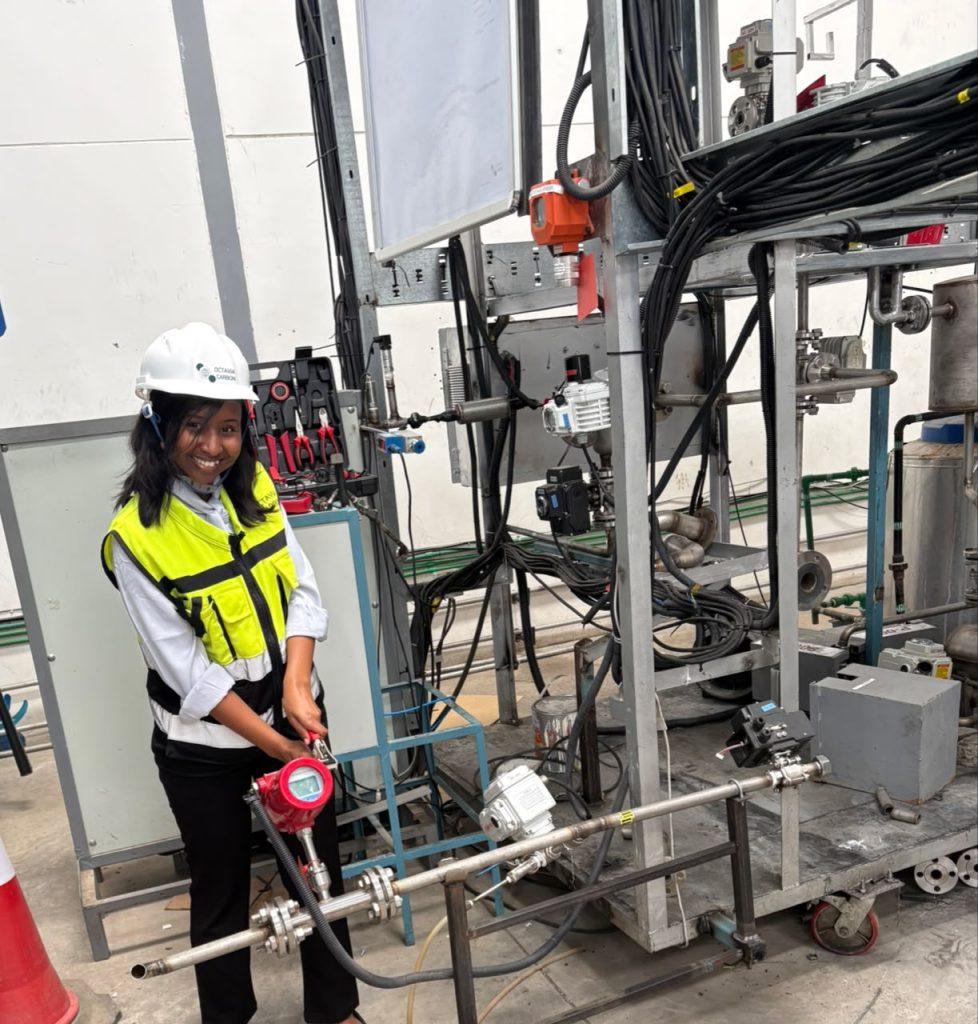
At 25, Sifa Gakii Kinoti is helping build one of climate technology’s newest frontiers in a field with no map, and in rooms where she is often the youngest person or the only woman. By Charity Wakiuru Mukono At an international conference not long ago, someone approached Sifa Gakii Kinoti and asked if she could help serve the refreshments. They assumed she was the waitress. “I was surprised,” she says. “I even offered to help them look for the waiter.” She wasn’t there to pour tea. She was one of the speakers. And when she walked to the front of the room and began her presentation, the people who had overlooked her leaned in to listen. It is the kind of moment Sifa has learned to move past quickly because there is far more interesting work to be done. At just 25, Sifa is Head of Policy and Partnerships at Octavia Carbon, a Kenyan company developing direct air capture technology machines that pull carbon dioxide directly out of the atmosphere. She also serves on the steering committee of the Carbon Removal Kenya Association and is Vice Chair of the Global South CDR Coalition, roles that place her at the centre of a field still taking shape in Kenya, across Africa and beyond. “There isn’t really a blueprint,” she says. “You learn in the process, and from people who have gone before you.” That uncertainty excites her. It also makes the journey harder. Sifa studied Environmental Engineering at the University of Nairobi. “I’ve always loved mathematics and science,” she says. “I wanted to create sustainable solutions for Africa.” Her path into climate technology was anything but conventional. Unlike medicine, law or accounting, direct air capture is a field few people have heard of, and even fewer have built careers in. There were no clear roadmaps, no long list of professionals to learn from, and few young African women in leadership positions in the field. Instead, Sifa found herself helping build an industry while building her own career within it. “We’re creating something new,” she says. “That means learning constantly, sometimes failing and always adapting.” Sifa regularly walks into meetings where she is the youngest person in the room, the only woman, or the only young African. Sometimes those assumptions are never spoken aloud. She still feels them. “It can be intimidating,” she admits. “The people around you have many more years of experience.” Her response has never been to speak the loudest. It has been to prepare the hardest. Before every meeting, she researches the issues, prepares thoroughly, leans into her strengths and communicates with clarity. The result, she says, is that people stop seeing a 25-year-old. They see someone who knows her work and communicates it with confidence. Working in one of Africa’s pioneering carbon removal companies has also given her something few others have: perspective. “Because we’re building this from the ground up,” she says, “sometimes we bring perspectives that no one else has.” Despite her confidence, there is one habit she is still learning to overcome. Sometimes she hesitates before asking a question. “I worry people will think I should already know the answer.” Then someone else asks exactly the same thing. “And I think … I should have asked that.” It is a small confession, but perhaps the one that makes her story most familiar. Confidence, she has learned, is not the absence of doubt. It is deciding not to let doubt speak louder than you do. Moving into policy analysis demanded that she master entirely new material. There were meetings where she did not feel ready, documents she read repeatedly, and conversations she listened to more than she spoke. But every challenge became another lesson. “You make mistakes,” she says. “You learn. And then you keep going.” Ask Sifa where her determination comes from and she smiles. “My parents taught us that you don’t sit and wait for someone to solve your problem. You wake up and find the solution yourself.” That lesson has stayed with her. “So, with the right mindset,” she says, “nothing is impossible.” She is equally quick to acknowledge the people who continue to support her, her family, her friends, her colleagues and her mentors. “Having a support system is important,” she says. “You need people who walk the journey with you.” So, what would she tell another young woman interested in engineering, science or climate technology? She laughs. “Why not?” She knows the path will not always be easy. Jobs can be difficult to find. The industry is still emerging. Many young women will enter rooms where they wonder whether they belong. Her advice is practical: apply for fellowships, attend workshops, take internships, find mentors and ask questions. “No one knows everything,” she says. “So, reach out. You will make it.” In a field still writing its own future, the young woman once mistaken for the waitress is becoming one of the people helping shape where it goes next.
What It Really Means to Lead: Growth and Influence with Rosemary Egabor-Afolahan
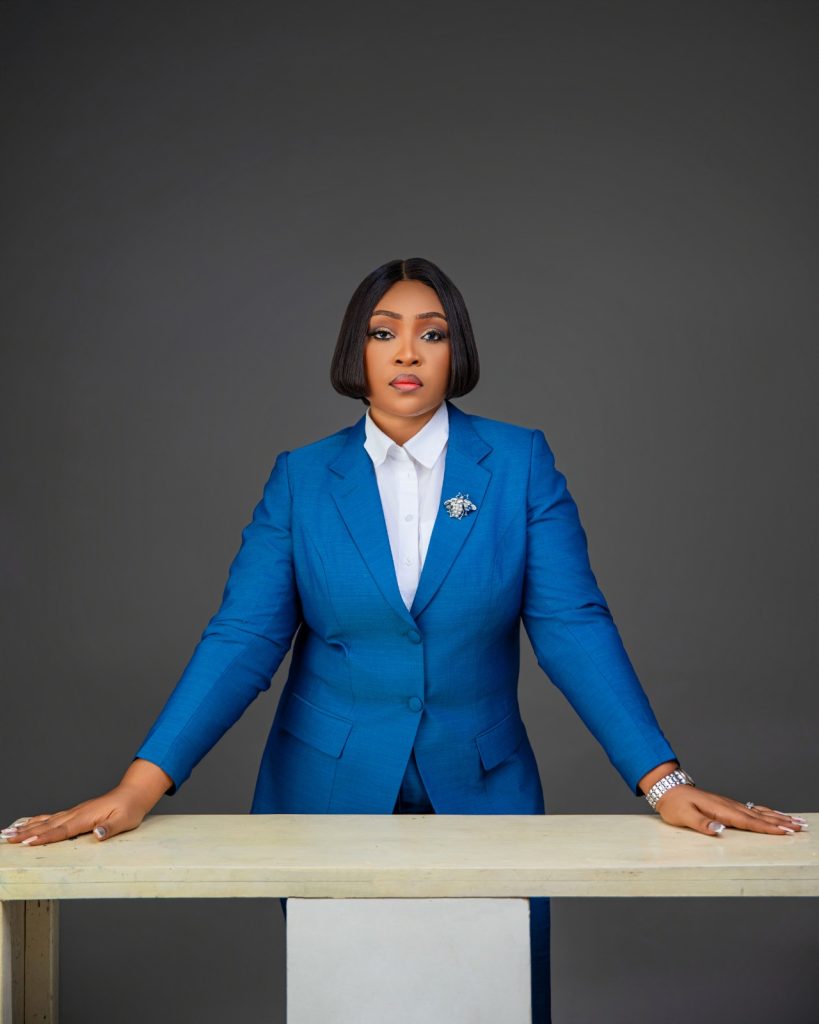
Leadership is often reduced to titles and visibility. For Rosemary Egabor-Afolahan, it is something far morepractical. It is about responsibility. It is about making decisions that carry weight. It is about showing upconsistently and doing the work that keeps an organisation moving forward. As Director of Commercial and Communications at News Central TV, Rosemary sits in a role that demandsboth strategy and execution. As a business Builder. She is responsible for driving growth, buildingpartnerships, and shaping how the organisation communicates with its audiences. It is a position that requiresclarity, discipline, and a deep understanding of how business and media intersect. Her journey into this space did not follow a straight line. Before moving into media, she built her career acrossbanking and the oil and gas sector. Those early experiences exposed her to structure, performanceexpectations, and the realities of operating in high-pressure environments. Over time, she developed a strongfoundation in business development and strategic thinking, skills that would later define her work incommunications. When she joined News Central in 2018, the organisation was just kicking off and still growing into its identity.There was an opportunity to build, but also a need for direction. In her role as Commercial Lead at the time,Rosemary focused on market growth, platform on-boarding, strengthening partnerships and positioning thebrand to attract both audiences and investors. That work paid off. The network expanded its reach, onboarded on satellite platforms, secured keypartnerships, and emerged as a more visible player in the African media space. Her eventual appointment asDirector of Commercial and Communications reflected that contribution. It was not just a title change. It was arecognition of consistent results. Beyond her direct company, Rosemary has also provided a platform for media practitioners and leadingcommunications professionals in Africa. Her initiative, the Media Hangout Network (also known as the MHNGnetwork), has been committed to national discussions on media development in Nigeria. Ahead of the 2023 elections, the MHNG Network drove conversations with media stakeholders, policymakers,and government representatives on the need for operational synergy leading up to the national event, as wellas the roles society needed to fulfill for development. In industries like media, that impact is even more visible. The stories told, the way they are told, and the voicesamplified all shape public understanding. Through her work at News Central, Rosemary has been part ofbuilding a platform that focuses on telling African stories with context and clarity. She has displayed that growth is not about hitting targets but building something that can last. That meansputting structures in place, creating clear processes, and making sure people have the tools they need to dotheir jobs well. It also means paying attention to people. Leadership, in her view, is not about control. It is about clarity and direction. People need to understand thegoal, but they also need the space to contribute. When that balance is right, teams perform better, their ideasimprove, and their results become more sustainable. This is also where impact begins to show. When women are given the opportunity to lead effectively, the effect goes beyond the organisation itself. Itchanges the way decisions are made. It introduces different perspectives. It creates room for others to stepforward. Staying effective in that space also requires continuous learning. The media landscape is changing quickly.Technology is shifting how audiences consume content. Expectations are evolving. What worked a few yearsago may not work today. For leaders, this means staying open. It means being willing to adjust, to rethink, and to keep learning.Rosemary’s time at Lagos Business School reflects that commitment to growth, not just in theory, but inpractice. In pursuit of her postgraduate degree in Media and Communications, she led activities in her classand, after graduation, obtained professional certifications in Strategy from the same institution. She sharedhow her time at the Lagos Business School stretched and refined her aspirations and her contributions to thedevelopment of the institution remain evident through alumni support, and continuous collaborations remainevident. For women building their careers, her journey offers a clear takeaway. There is no perfect path. There is nosingle formula. But there are habits that make a difference. Take your work seriously.Understand your environment.Build your skills deliberately.And being consistent. Because in the end, leadership is not defined by a single moment. It is built over time. Through decisions.Through effort. Through the ability to stay focused and keep going. For Rosemary Egabor-Afolahan, that is what leadership looks like in practice. Not just being in the room, butcontributing in a way that moves things forward.
BellaNaija Launches #StopHPVForHer Campaign to Drive Awareness on HPV and Cervical Cancer Prevention

Leading African digital media platform, BellaNaija, has launched a new health-focused campaign, #StopHPVForHer, to raise awareness on the Human Papillomavirus (HPV) and its link to cervical cancer
Tailored for Success: DWL by Ivie Osula Brings Chic and Confidence to the Workplace.

There’s something about a woman who walks into a room and owns it not with noise, but with confidence & presence. That’s the kind of woman Ivie Osula dresses.
Celebrating Bold Women: Meet the 2024 Veuve Clicquot Bold Woman and Bold Future Award Recipients

The Veuve Clicquot Bold Woman Award Ceremony, a night celebrating bold, innovative, and audacious women who embody leadership across various industries, took place at the Federal Palace Hotel, Victoria Island, Lagos, on Sunday, September 22, 2024.
From the Streets of Ojuelegba to a Celebrated Storyteller

Reading this book is a delight and reassures you on your journey and whatever it may look like now.
VISA SPOTLIGHT SERIES ON SKINCARE ENTHUSIAST: TERRYANNE CHEBET – FOUNDER, KEYARA ORGANICS
When Terryanne’s eldest daughter was little, she struggled with a dry skin condition called Eczema. Terryanne searched for a natural skincare solution that would heal her daughter’s skin but could hardly find any in Kenya. Based on a doctor’s recommendation, she tried shea butter and it worked. Terryanne soon realised that some mothers in her circle were also searching for natural solutions to their children’s eczema. This spurred her to start Keyara Organics- a leading home-grown skincare brand in Kenya. Terryanne Chebet is a Media and Communications professional with more than 15 years of experience in Media practice, Media leadership and Management. She is also the founder of Africa’s Leading Ladies, an online group for African women to connect, learn and share experiences. She started Keyara Organics from her kitchen and it has flourished because of her expertise and passion. This piece is about Terryanne’s journey with Keyara Organics and the lessons you can take away from her experience. What is the intention behind Keyara Organics? The intention behind Keyara organics has always been to provide a skincare solution for the whole family using as many natural ingredients as we can. We aim to make products available for the man in the house, the woman in the house, the child, the toddler- we want everyone to be catered to. What inspired your decision to leave journalism to start Keyara organics? There were so many things that I needed to do with my life and I would not have been able to do them while working as a journalist. It would not have been fair to the job. It would take too much of my time and waste their time as well. So I decided to focus on what I needed to do to be able to get to where I wanted to go. I am 41 years old right now and I have been telling my friends that “this is possibly my highest productive decade so you may not see me much, you may not hang out with me a lot.”When I am 50, 60, 70, I can relax and enjoy life a lot more. I also left because I needed to be home more. As a journalist, I could count the number of times I was actually home before 10 PM for the 10 or 12 years of my career. Has your experience as a journalist helped in running Keyara? My journalistic background has helped me immensely. Being in the public eye has helped me put my brand in a place where I can reach many people. It has helped in building a better brand and getting visibility from media houses. Also, the confidence I have today may not be there if I had not been a journalist before this. What are some of the challenges you have experienced and how have you dealt with them? One of the biggest problems is the packaging and I believe this is an African problem. Many of us in the skincare space has had a problem getting quality local packaging. So we end up having to import packaging. That affects the margin because we are paying for freight and a higher grade of plastic. All this eventually affects the pricing of our products. We have thought of different ways to solve this problem and one of them involves buying a moulding machine to make our own plastics but it is very expensive. However, one of us in the skincare space decided to fill the gap by shipping in containers in bulk and then we buy from her. Sourcing products has also been quite a challenge. For instance, shea butter comes from West Africa and shipping it into Kenya is very expensive. Luckily for us, we found out that shea butter is also available in Northern Uganda and South Sudan and they are neighbouring countries. So now we source from Northern Uganda. In running your business, you interact a lot with local communities and business. In your opinion, how important do you think local communities are to the businesses they choose to support? They are absolutely important. I think that it is a thing of pride to be able to invest in our own and contribute to these little economies. I am pretty big on working with what we have locally and patronising small businesses in our communities. For us at Keyara, we source raw materials like aloe vera from local farmers in Kenya that harvest those items. Supporting local businesses will never stop being a priority for us. In a couple of years, we have seen the skincare industry in Africa grow- brands are consistently popping up in Kenya, Nigeria, Ghana and we are effectively creating an economy of our own through our patronage. By supporting local businesses, we also create gainful employment. Whether it is a full-time person or a consultant, the people who are working on packaging, the people who print out labels- the whole value chain gets impacted and enriched. The more we push for our African brands to grow and support them, the more we grow our economies. What advice would you give to someone who wants to start a business of their own? This might sound cliche but just start. Start where you are, start with what you have. Just start. I started Keyara organics with about 60,000 shillings which is 600 dollars which I took out of my salary. I bought some shea butter and some containers and began producing in my kitchen. Looking back, had I thought that let me wait for big money to come in, let me wait for a million shillings, I would not have started it. So my advice is start where you are, start with what you have and start on something that you are passionate about. Nothing beats creativity. There is a lot of copycatting in the small business space and I understand that because it is a lot cheaper and easier to start out copying someone
VISA SPOTLIGHT SERIES ON THE FOOTWEAR GENIUS: EVE MAINA – FOUNDER, SHOE SPACE AFRICA
After Eve quit her much-loved job because of unwanted sexual advances from male colleagues, she was left with almost nothing in her bank account and desperately had to figure out how to make money. Eve’s family have always traded in shoes. So for her, the shoe business is not uncharted territory. So Eve began selling shoes to make some money pending when she could get another office job. When the business began to show fruits of success, she decided to go into it full-time. Today, Eve owns Shoe Space Africa – one of the fastest-growing shoe businesses in Africa. This piece is about Eve’s journey with Shoe Space and how she has been able to grow her business from almost nothing to the phenomenal brand it is today. What is the story behind Shoe Space Africa? Starting Shoe Space was not intentional at first. I quit my job in 2016 and I was wondering what to do next. The only other thing I knew how to do asides my corporate job was shoes because I grew up in a family where my mum used to make shoes, my cousin used to sell shoes so it was an easy fall back plan for me. I did not know if it would work because I always liked the corporate life. Shoe Space started in January 2017. At the time, I had no savings so I started Shoe Space from zero. I talked to a friend in the business and she gave me some of her shoes. I posted them online and made some money from it. My capital was gotten from the money I made off those sales. I thought I was going to sell shoes for a short time and then go back to working a corporate job. However, when I started seeing headway, I decided to do it full-time. What are some of the challenges you have faced in the course of running Shoe Space Africa, what did you learn from it? I would not necessarily call this a challenge but this time last year, I experienced a tragic accident for the first time in my life. I was travelling to Kampala, Uganda by bus to consult on some shoes. At the bus station, I met a good friend of mine and because we wanted to sit together, I swapped seats with another passenger on the bus. The person that sat on the seat I was supposed to occupy passed on in that accident. My friend who had a safety belt on was thrown out of the bus and even though I didn’t have a safety belt on, nothing happened to me. I remained seated. This moment changed my life forever. After the accident, the way I thought and approached things in my life changed, my heart changed. Up until this day, when I think about that moment, I am stunned. Seeing someone else pass away on your behalf changes something in you. Many times in our life, we take things for granted. You look at your life and see all that you have achieved and you think you did it all by yourself. You forget that it is God that has brought you this far. With regards to the lockdown, the major challenge we have faced has been sales. What has helped us cope is the fact that we have an online presence. I also gave my clients offers and discounts that made my items more affordable for them. Being online worked to my advantage because most people were at home doing nothing except scrolling through their feed. Most shoe lovers are people that will purchase whatever catches their eye even if it is the last money that they have. What is your big vision for Shoe Space Africa? I want Shoe space to be a household name for quality shoes sold at affordable prices. More importantly, though, I want to leave a lasting legacy through Shoe Space. Right now, I am working on establishing a foundation that will provide Kenyan kids with quality shoes. So when you buy a shoe from She Space, you are donating a pair of shoes to someone else that needs them. So my big vision is to make sure African children that need shoes have quality shoes. What advice do you have for someone who wants to start a small business? Having a relationship with Jesus. I know not everyone believes in Jesus but Jesus us the one I give all the credit to. There is a certain kind of wisdom and clarity that you can only get from God. When you start a business, you may not be sure of what you are doing or where to go next but if you have Jesus, He will help you out with that. When you pray about something and ask for help, if He says no, if He keeps quiet or if He says yes, you know what to do and where to go as opposed to just doing things blindly and on your limited understanding. Discipline is so important. Even if you don’t feel motivated, discipline keeps you going. There are days you will not want to wake up but the discipline you have gets you awake. I call myself the 4 AM boss because I wake up at four am in the morning and I have been doing that since primary school. After I wake up I pray and get ready and then I am usually at Shoe Space at 6 am. That discipline has to be cultivated and maintained. If you want to take your business to the next level and meet more customers online, Visa is your plug! Visit their Small Business Hub to get the support you need. First 100 businesses to sign up get $200 worth of online advertising, so hurry now! This spotlight feature on Yomi Odutola is powered by Visa. Visa’s ‘Where you Shop Matters’ initiative aims to champion entrepreneurs
VISA SPOTLIGHT SERIES ON THE BOSS LADY OF LEATHER CRAFTS: YOMI ODUTOLA – FOUNDER, JOELA LEATHER
When Yomi’s daughter was a small child, finding the right shoes for her was a struggle because of the size of her feet. So Yomi decided to make a pair of shoes for her daughter. She designed the shoes on cardboard, went to the market at Mushin, Lagos, to source shoemaking items and created a pair of sandals for her daughter. Doing this filled her with so much joy so Yomi took it a step further and enrolled in a shoemaking and pattern cutting course in the UK. That desire to cater to her daughter’s shoe needs inspired what is known today as Joela Leather – a premium leatherworks store in Lagos, Nigeria. The name Joela is coined from one of her daughter’s names and what solidified Yomi’s choice is the Hebrew meaning – “The Lord is God”. This article is about Yomi’s inspiring journey with Joela Leather and lessons you can take away from her well of experience. You used to work in the corporate world, what made you decide to switch that for entrepreneurship? When my daughter was born, I wanted to be present. I had a very strong support system but I wanted to be there for her while she was growing up so I stopped working. Once I left the corporate world, I thought of all the possible businesses I could start. Growing up, my daughter had big feet and I could hardly find her size in shoes. At some point, I thought, it can’t be that difficult to make children’s shoes. So I started cutting cardboard and paper and putting them together to look like a pair of sandals. After that, I asked for where I could find shoemaking items on a budget in Lagos and everyone was like, “Go to Mushin.” So I went to Mushin with about 5,000 Naira. I came back from Mushin that day with a pair of sandals and a pair of slippers and my husband was stunned. That experience taught me that when you are moved to do something, you should do it immediately. You do not need anyone’s permission. Why did you decide to centre Joela around making ladies’ handbags? Like I said, I have always been in the leather industry. I simply moved from making children’s shoes to making ladies’ handbags. My knowledge of the leatherworks industry just made it easy for me to transition from one section to another. Joela itself started from requests. I had a leather shoe shop and we would make shoes and bags for little girls and then the moms would come and request me to make bags for them as well. They started putting in orders for bags and sometime after that I had to close my shops. I had three shops in Lagos and after I closed them all, the next thought was “what business can I do?” Since the request for ladies handbags was still coming in, I decided to give it a try. Once I put out my first set of handbags and the feedback and responses were really great. What do you think makes Joela stand out as a brand? The philosophy behind Joela is to make classy bags affordable and readily available. We are consistently crafting beautiful, well-made handbags. I want people to see our customers carrying Joela bags and say, “wow, where is that bag from?” I have had that reaction a couple of times and it brings me immense satisfaction. Most importantly, we do not want to burn a hole in your pocket. Joela partners with Footfarm– a charity that gives free school shoes to children in underprivileged communities. Joela also teams up with HR professionals for Work Wear Edit, an outreach program that provides women with employability skills such as HR/interview tips as well as coordinated outfits to gear them up for success. What is your big vision for Joela? My vision is to see African women carry beautiful and affordable bags. I am particular about the African woman because we go through a lot and we need beautiful things that will constantly bring us joy. When you carry a great bag and you are well dressed, nobody can talk to you anyhow. For me, it is not just about carrying a bag, it is about making us feel beautiful and confident. When women feel beautiful and confident, we get a lot done and positively impact the people around us. What advice will you give to someone who wants to start a business? You need structure. Structure and discipline go hand in hand. Don’t think because you are the one running the business, you can do it from your bed. While you can work from bed, have working hours, have structure, have guidance otherwise you will not be productive. Have a to-do list otherwise, your day will pass you by because you will not achieve anything. How can you help? What can you do to solve a problem? When you actually solve problems, the money will come. Fish and pepper sellers solve the problem of making food items available. We need to eat and we need to get the fish out of the sea, we need to get the peppers as closeby as we can. So look around you, look at the problems that around you and see how you can use your skills to solve them You need to be patient. Many of us are in a hurry to make money and this mindset can be costly. If you have structure and you are solving a problem, the money will come. If you want to take your business to the next level and meet more customers online, Visa is your plug! Visit their Small Business Hub to get the support you need. First 100 businesses to sign up get $200 worth of online advertising, so hurry now! This spotlight feature on Yomi Odutola is powered by Visa. Visa’s ‘Where you Shop Matters’ initiative aims to champion entrepreneurs across
VISA SPOTLIGHT SERIES ON WELLNESS EXPERT: LINDA GIESKES MWAMBA – FOUNDER, SUKI SUKI NATURALS
When Linda was newly natural, she could hardly find hair products that her hair liked and responded well to. This discontent led her to start making her natural hair products and soon enough, her friends and family encouraged her to turn it into a business. At the time, Linda was a practising lawyer in New York but her passion for beauty and wellness led her to leave Law and establish Suki Suki Naturals– a premium beauty company that sells organic hair and skin care products. This article is about Linda’s fascinating journey and how she turned her discontent into a sustainable business. How did Suki Suki Naturals begin? Suki Suki Naturals started as a haircare brand. Suki means hair in Lingala. I am actually from the Congo. So my passion started with haircare and then three years after I launched, I decided to go into skincare. So the haircare was because I went natural back in 2010 and I was struggling with my hair. At the time there was hardly anything on the market and the products you could find were mostly available in Canada and the US. Bringing products into the country was too expensive. I was like “I have to find a way to make this work for myself here in South Africa.” So I started mixing things and using herbs, clays, oils and powders. I eventually started sharing them with my family and friends because they were seeing that my hair was growing well and they wanted to know what I was doing. Did you ever see yourself starting a brand like Suki Suki Naturals? From the age of four, I was already playing with beauty products and as I grew up it just got worse and worse and worse and I had to be banned from my mom’s bathroom. Today when my aunties look at me and they see that I have a beauty brand, they are not at all surprised despite my being a lawyer. They are like, “we could see that happening.” Sometimes you have to think back on your childhood and ask, “what was that thing that made me so excited?” How do you keep Suki Suki Naturals authentic? I have had my moments of, “let me take on this partnership even if they do not align with my brand. Let me check if it is going to work out” and that is where lack of authenticity can start to creep in because you think you have to make certain sacrifices to see success. The problem with going with things that are not authentic to you is that you may end up doing business with people that don’t reflect your brand image. They are not the right custodian of your brand not because they are actively trying to bring down your image but just because you are not aligned. It is important to work with people that are aligned with you. I have had to learn to say no to opportunities that are not right for me. After all, Suki Suki Naturals is here for the long run, we are not here for just short wins. Did you face any major challenges as a result of the lockdown? I have been blessed during this time because my area of expertise is one where people were willing to spend simply because you are spending more time at home. Wellness and beauty are very important to people and most of them are like, “ah, I can’t go to the beauty salon, let me take care of my skin, let me take care of my hair.” I have seen a lot of amazing stories of women who have invested in their wellness. You know when you are constantly out, you have to go put your best look forward and sometimes, that comes at the expense of actually taking care of yourself- the makeup, the weave, straightening your hair all the time- but when you are at home, you can be yourself and that forces you to cultivate what you have. So skincare has boomed and I am super lucky that skincare and wellness have boomed because that is my sector and I have been blessed with the fact that my business has been good during this time. How did you keep the communication going with your customers during the lockdown? Social media has always been instrumental to my brand. It has always been great at aiding communication but it has shown its power this time. What I love about social media from a business point of view is that it gives you the power to define what your voice is. You can define what your business is about, to speak to your customer directly and that simplifies the marketing process. It helps to facilitate clear communication between you and your customers. You run a brand that is committed to helping people take care of themselves, How do you make sure you prioritise self-care in your own life? I try to disconnect on the weekends because my weekends are mine alone. As much as I don’t have a lot of family with me here in South Africa, I try to keep in touch with them. I disconnect by literally keeping my laptop in the office. On the weekends I don’t even want to open my laptop and my laptop hardly ever sees my bedroom. Also, I am not a fan of answering emails on my phone, for some reason, I just don’t like it. I try to keep that balance by maintaining opening and closing times and the people and companies I work with respect that. What advice would you give to someone who wants to start a business? Start today. Don’t worry about starting small. I started small. You don’t have to have it all figured out but get started. Operate from a place of authenticity and know your “why.” Why are you doing what you are doing? Don’t follow trends, don’t follow what others