
Tebatso Molapo: Don’t do it for the fame

Before you came across SLA, chances are majority of the business people you saw were men. That was the case for Tebatso Molapo, a 20 year old dreamer and student who started Re Basadi (We are Women), a platform to showcase women-owned businesses. To Tebatso, entrepreneurship is not just about empowering herself but giving the people around her the opportunity to grow with her growth. Here SLA contributor Makalela Kgotlelelo discovers the history of Re Basadi and the challenges of inspiring others. How did Re Basadi come about? I founded Re Basadi late in 2015. Re Basadi a private organisation that aims to get women involved in business by giving them a platform to showcase their businesses. Re Basadi aims to tackle the socio-economic issues experienced by women. The early idea behind Re Basadi was to create a platform for women to get along and with its growth, I noticed a patterned interest in business involvement. I wanted to create a platform wherein women are given the opportunity to openly support each other. Re Basadi is currently running three projects. First there’s “A Part of Me” by Relebohile Majoro which is a campaign that collects and distributes sanitary towels to young girls who can’t afford then. Our second campaign is “Dress-A-Girl” which aims to provide dresses for young girls during their matric farewell (prom). The third project we are currently working on is the “What I Deserve campaign” by Pabalelo Matenchi. This campaign aims to get to women to declare what they want for the lives. Currently, Re Basadi also hosts Market Days where women showcase their business initiatives. On the first Market Day we hosted, we accommodated eight stalls and at our most recent we grew to 20 stalls. Why women? I am from a small town in the southern parts of Limpopo where a lot of the prominent business and brands are owned by guys. I noticed that gap and knew that it was something that needed to be filled. There are so many brilliant, hardworking women in my town and all over South Africa. I am a feminist at heart and it brings me so much joy to see women openly support and love each other. What challenges have met running Re Basadi and how did you handle them? Initially, Re Basadi was aimed at young women within my age group. But, after launching our Facebook page and hosting the first Market Day, we noticed we attracted a much older crowd. One of the most difficult challenges I’ve faced is being a 20 year old and having to tailor my platform for a more matured audience. Their interests are not similar to those of individuals in our age group. Another major challenge has been financial constraints. I am a student, and living on a student’s budget makes it difficult to execute some ideas I have for the organisation. I rely on my passion for what I am doing to keeps me going. Where do you see Re Basadi in the next five years? In the next 5 years, Re Basadi would have impacted the lives of Southern African women and it will be venturing into working in other African countries. Are you an indoors or outdoors person? Indoors. Spending time indoors gives me the time to meditate on my thoughts and my life. I am a low-key introvert. Spending time indoors with friends also gives me the opportunity to learn from them, we get to exchange thoughts and ideas in calm and quiet spaces. What’s your idea of a perfect day out? My perfect day out would definitely be feeding my caffeine addiction with a few friends. There will be good and mind stimulating conversation. What do you love best about Re Basadi? My favourite part of running Re Basadi are the conversations I have with other women about ways to move forward. The constant words of encouragement and appreciation from others helps a lot. There is also nothing more motivational than inspiring other people. I’ve seen the next person working on their lives because they are motivated by what I and other women are doing. For a long time, I wanted to do something because I wanted the popularity that would come with being great. After growing up a bit, I realised that fulfillment comes from being able to change someone else’s mindset on life. When you want something because you want to rub it in people’s faces, it will often be out of your reach until you learn humility. Don’t do it for the fame, do it with passion. Want to see women you know featured on SLA? Tell us what amazing things women are doing in your communities here.
Nok Nora Duany Bassey & Aprelle Duany: We wanted South Sudanese children to access education
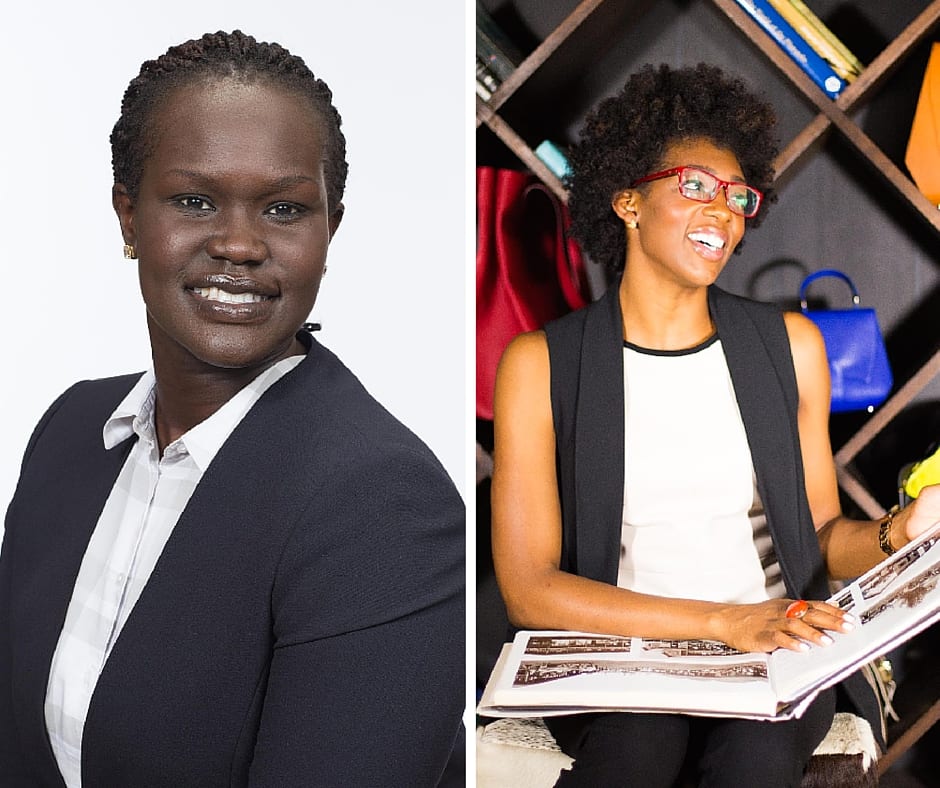
South Sudan is the world’s youngest country. Despite the ongoing conflict, it’s status provides many opportunities for business. Sister-in-laws Nok Nora Duany Bassey and Aprelle Duany joined forces to create The American School of South Sudan (TASOSS) in order to provide much needed high quality early childhood education. Nok’s background is in finance and Aprelle is a fashion designer but both wanted the best for their native and adopted homeland. Below the founders share their greatest challenges, hopes and advice for creating a business in the midst of conflict. Liz: Nok, can you tell me a little about how you came to leave South Sudan and live in the US? Nok: We left South Sudan immediately after the civil war started and came to Bloomington, Indiana where my parents were graduate students at the time. Even during that period, my parents remained really connected to the conflict and worked on the peace process. My dad used to spend six months in Kenya or wherever he could in the bush in South Sudan and then six months in the US to check on the family. I had three brothers and a sister so there were five of us with my mother. She did a lot of advocacy work with churches from the US but there was always a narrative in the household that, “When there is peace we will go home.” And that narrative stuck. So literally when peace came in 2005 after the CPA was signed, I went back after 21 years of being away. My father was already in Juba and we first went to the North, to Khartoum. I remember thinking, “Why haven’t I been here?” A Sudanese classmate from Georgetown was showing me around and everything was so developed. We spent Christmas there and I flew to Juba in time for New Year’s and when I arrived there was completely nothing. I remember getting into the back of a truck to go to my childhood home where I was born. There were no roads. Everything was still under construction. My father had been there for a week and was working to set everything up but it had been abandoned for twenty years. When he came back home they had a found a corpse there and many dead animals. Coming back, I remember this feeling of excitement but also of anger. I thought to myself that I would never go back to the North until I had played some part in developing South Sudan. Coming back forever changed me. I finished my graduate studies in 2006 and moved back to South Sudan permanently. Liz: How was the transition moving back? Nok: Of course it was difficult but it was such a mix of emotions. There was a lot of excitement. So many South Sudanese were moving back after a long time. Over 4 million people were displaced during the war so there was an influx of different South Sudanese from all over the world. Everyone was so encouraged and inspired. I remember drums beating at nights and elders telling stories. People were finally moving freely and everyone was happy. My mom would say, “This really is what peace is: freedom.” We were all building things from scratch and anything that you wanted to do in South Sudan was possible. My father would tell me, “If you miss something you had in the US ,build it here.” I was so inspired and encouraged seeing the work being done for us to have our own country. Of course it was also a big culture shock and it took time and patience to take everything in. Liz: What about you Aprelle? How was it for you moving to Juba? Aprelle: Moving to South Sudan was a difficult transition for me. I left my family and comforts of New York City to support my husband, who like his sister Nok, wanted an opportunity to redevelop his home country. As a new wife and mom, there were many cultural differences that I was not expecting. In addition to the lack of development and language barriers, the environment was difficult to ease into. Overtime, I began to meet new people and gain a better understanding of why South Sudan faced generations of challenges, which held the country back. South Sudan was not an easy place to thrive, but everyday I would meet people who were so passionate about changing the country into a place where they could call home, it was inspiring. At that time, I also began to appreciate the simplicity and beauty of life and I began to explore areas where I could also contribute. Liz: So once you were based in Juba, how did the idea to create a school come about? Aprelle: The school was inspired by my daughter Jinai. The idea became actualized over lunch with Nok, myself, and a few friends. Children in Juba were often isolated in their compounds without an opportunity to engage with other children, which is key to healthy childhood development. One of the things that I wanted for my daughter was a sense of community where she could play and learn. Additionally, Nok and I both benefited from education in our lives from a young age and we wanted to create opportunities for young South Sudanese children to access education. Nok: Yes, oftentimes, people were sending their kids to Kenya or Uganda for school. Young women like myself left kids with their grandparents in other countries. It was heartbreaking. We finally had peace and families were being split again after so many years of being unstable. There were not many schools to support kids in Juba. We initially decided to start a nursery school because Jinai needed one. We started with one classroom and one student. The first day we held an Open House and a few people passed through but Jinai was the only student enrolled for the first two weeks. So everyone was looking over Jinai saying, “Oh, she’s coloring!
Tariro Makina: Billing per hour doesn’t work in Africa
Virtual reality is the world we’re living in. Tariro Makina knows this, that’s why she set up Twenty47 Virtual Assistant, a business that provides social media strategy and email management, among other services to clients. SLA contributor Glenda Makumbe caught up with Tariro in Harare, where they talked about starting a business in Zimbabwe while remaining grounded, the challenges of charging by the hour in Africa and the perks of being a virtual assistant. Tari tell me a little bit about yourself and Twenty47 Virtual Assistant. I am a 30 year old IT geek who is passionate about helping small business owners manage their businesses better. Twenty47 VA had always been an idea in my head until the end of 2013 when I actually gave birth to it. I had fallen out of love with my job and I did not want it anymore. So I just woke up one day, wrote a business plan and registered the business in early 2014. Soon after, I quit my job. I wanted more and I wanted to build on my passion. Currently, most of my clients are based here in Zimbabwe but I also have clients in South Africa, Zambia and the US. My main clients are in the services industry – forming a mix that is spread across various sectors. These include business consultants, event organisers, educators, technology and logistics companies and non-profit organisations. Why Twenty47 Virtual Assistant as a name I chose the name Twenty47 Virtual Assistant because I had a vision to create a global business that served clients in all time zones. I have no problem working evenings (sometimes) so it makes it easier for me to accommodate clients in different countries around the world. However, this has often been construed to mean I am available for every client 24 hours a day and 7 days a week **sighs** this is why you should be careful when choosing a name. What does your business entail? Twenty47 Virtual Assistant started as a one woman business and had been until 2015 when I was joined by one other person. I am involved in the general management of a client’s business online and this is usually the little things like administrative tasks that are considered not entirely important, brand awareness, customer service through various marketing and client engagement channels. Many small businesses shun investing in these areas as they are afraid it may be wasting money, time or both. Yet, they can have a huge impact on the success or failure of a business. I also take care of certain functions of a business or project for those focused business owners or professionals who understand that they cannot do it all by themselves and wish to take advantage of delegation. This way they have an opportunity to focus on what they do best whilst entrusting me to do the rest. I especially specialise in social media strategy formulation, implementation, monitoring and reporting. I do email management as well. Keeping up-to-date with the current industry trends and information plays a major role in social media so as to stay relevant to your audience. This requires a lot of research as well. So I do not have a structure of how a typical day in the life of a VA would look like, but, in a nutshell, it involves planning, lots of it, and staying on top of things. Is there anything in your educational background that helps you in managing your business? I have a Computer Science degree from Midlands State University here in Zimbabwe and that has been a great foundation for me. I have had to learn new things on the job like web and graphic design as my previous roles had nothing to do with design. I found there was a demand for this kind of work and it has helped increase my service offering. How have people received this type of business in Zimbabwe? Selling the idea of what I do to people is not hard, it’s the billing part that was initially hard. So I found that people received the idea of having virtual assistance as something really useful. I came with my approach of billing per hour based on research I had done in other markets. Little did I know that some approaches don’t work in Africa! And I say this with much respect for the continent – one size does not fit all. Because some clients were not time conscious, I still billed them for my time that they would have wasted. This would sometimes anger some clients and it was one of the things that would have made me give up on my business. The moment I changed approaches – put up value proposition packages – things improved. A value proposition package is in a sense packaging my services such that the benefits are clear. For each benefit I present, there is an associated value based on comparable market elements. A prospect can therefore be able to evaluate whether the value proposed versus the cost is something they would be interested in investing into. Many find it easier and clear to make that investment decision compared to when you just say “My services are $20 an hour”. This was a learning curve for me as I learnt that you have to be flexible in business, understand your market and model your business approaches to suit the environment you are in if need be. How do you keep fun in your business? If you spend time with me you are going to laugh. The nature of my work requires me to know my clients’ true personalities. I have to show up and be as authentic and original, as I require them to be. Why did you decide to stay in Zimbabwe? I have faith in the continent and in Zimbabwe. Whilst everyone is looking for a chance to run away, I want to stay and make my business work here. If I can make a business successful in
Lungiswa Moore: Women of colour need a positive community
Community, sisterhood, friendship, marriage…these are all important topics for women of colour. Zimbabwe-born, US based Lungiswa Moore started her lifestlye and community website #mygirlsquad to foster positive connections online. Sisterhood is important and so is family and community but there are right ways to doing business with people you care about. Lungiswa share her tips on that and more. How did #mygirlsquad come about? #mygirlsquad is inspired by women of colour. We are strong, diverse and beautiful but this isn’t shown enough in the media and in our daily lives. Women of colour are grossly underrepresented. I wanted to create a platform to show the positive in women of colour, not just as individuals but as a collective and a community. There’s not enough being told about the growing positive trend of amazing women of colour breaking boundaries and collaborating on great things to uplift their community. We’re happy, loving and ambitious – that should be the narrative. What challenges have you encountered in the past with your business? The biggest trial for me was actually having faith in myself. Tackling self-doubt and steering with faith alone is a very lonely road. There have been many times I’ve been awakened from sleep by my fear of failure. It has made me procrastinate on deadlines and even made me lose opportunities because I felt that I wasn’t the person for it. As an entrepreneur, I feel that even if you’re running a one-man show, many things can go wrong in one day. However, if you allow your self-doubt and fears to overpower your faith and ambition to get through the day, you have already sunk your ship. Fear is inevitable. It’s a natural reaction when you’re faced with something unknown. Just don’t let it turn into doubt. When I start to get doubtful I always surround myself with affirmations. If you don’t have anyone in your life who can give you affirmations, you have to create them yourself. You need constant reassurance that you can do what you set yourself up to do. As someone who has worked with friends, is there a right and wrong way to it? From my experience there is. I’ve worked with many friends before and even with my husband. You have to first understand what your friend’s strengths and weaknesses are. It’s all fun and great when brainstorming ideas get flowing and there’s excitement about launching something together. But knowing your friend as a friend, and knowing your friend in business is different. Your friend may have your back when it comes to personal issues, but when you start dealing with money, things become different. So understanding their strengths and weaknesses puts you both in a better position to work cohesively in things that best fit each other. Some tips from me Always have a contract – this protects you both in case things go south. Communicate. A lot of misunderstandings can lead to bigger issues if they are unresolved. Conflict can carry into your friendship and things can go very sour very quickly if not resolved. Most importantly try to make time for your friendship. Sometimes, you become engrossed in the business side that the friendship gets lost. Remembering that you were friends before getting into business will go a long way. You mentioned working with your husband, how can young African women balance marriage with working with their partners? As an African woman, I found this a challenge when I started. I, along with many other women, have been raised to always put your husband first in your marriage. While that works within a marriage, it doesn’t always work that way in business. You sometimes have to go with your gut or put your husband last sometimes. In any business relationship, there will always be a difference in opinion one time or another, and when that happens – you have to deal with that pragmatically. I’m a passionate individual and I tend to have strong opinions. In instances where my husband would disagree with me, I would not only argue my point in a meeting but I’d find myself randomly arguing the same point while we’re watching our favorite show. That’s crazy! Knowing when to turn that business switch off is important, especially when working with your spouse. In a 9 to 5 it’s easy to come home after a hard day and vent to your spouse about your annoying co-worker or boss, but when you work together and the annoying co-worker is your spouse – it gets tricky. So, leaving business at the office and keeping the marriage at home is the best way to balance it. Why is sisterhood important? I’ve always believed in the power of numbers. No man is an island and you never succeed alone. As a woman of colour – why would you want to be alone, when you can be so much more as a collective? Collaborating with like-minded individuals, who share the same social and economical issues as you, in order to achieve something should be something sought after. We have a long way to go as women of colour – gender inequality, domestic violence, social and economic issues stunt our growth, yet we are the fastest growing demographic in several industries that include business and education. Imagine if we pulled all our resources together? If you’d like to share your story with She Leads Africa, let us know more about you and your story here.
Tshepy Matloga: Recognition is the best motivator
South African journalist Tshepy Matloga started making frequent visits to Malawi in 2014 when she noticed the lack of business magazines with Malawian content. Tshepy jumped at the chance to address this gap by launching Inde, a business and lifestyle magazine aimed at Malawian women. Here, Tshepy shares tips on setting up shop in another African country and speaks on being voted a top South African inspirational youth. You’re South African, why did you decide to start a publication in Malawi? More than a year ago I became a frequent visitor in Malawi. I was charmed by how serene and peaceful the country is compared to the hustle and bustle of South Africa. As a journalist by profession myself, some of the things I collect are magazines and it baffled me that I could not find a single publication that was about women and the business landscape in Malawi. Yes, there are so many publications in Malawian shops but they are all South African publications coming here packaged with South African content. I also met my partner here who happened to be in the media too. When I ran the idea past him, we both decided to bring to life Inde magazine in March 2016. “Inde” is a Chewa word meaning “yes”, Inde Magazine is Malawi’s only business and lifestyle magazine. What is the business climate/culture like in Malawi and how is it different compared to South Africa? The business landscape in Malawi is extremely different than the one in South Africa. I am used to a fast paced business environment and I have found Malawians to be very relaxed, there’s no hurry here whereas in South Africa time is money. With that said, I think my biggest challenge was having to slow down my normal work pace so that I didn’t become too overwhelming. I however like the Malawian walk-in policy, you can just rock up at a company with no appointment and request for a meeting and if the person is available they will make time to hear you out. That part has made things easier for me because I came here with no business contacts. What tools do you use to extend the reach of Inde magazine? Social media has been very helpful in this regard. Then, Malawians are generally friendly people and it being a small community, word of mouth also goes a long way. I have also been trying to partner with local events so that the brand is exposed even more What other projects do you engage in outside Inde? My public relations firm, Chronicles Media Group is present in both South Africa and Malawi. Outside Inde, Chronicles Media group also offers PR services such as corporate communications, social media management, brand management and events. Besides PR and the magazine, I blog for a South African organization called Leadership2020 where I write about my life journey, from growing up in the village of Botlokwa in the northern part of South Africa to running my own company. You recently made Youth Village’s list of the top most inspirational youth in South Africa, how does that feel? Recognition is the best motivator. To be young and know that in the few years that you have been on this earth you have impacted lives is a sign that you are going into the right direction. Everyone who knows me well knows that I have struggled to get to where I am today. From Botlokwa, packing my bags and going to university even though I knew very well my mother could not afford the fee; to struggling to find employment, and when I eventually did find one I did not like it; to starting my business with a few thousands I have saved from freelancing jobs. I have to admit it was a curvy road. So with that said, it is things like such recognition that remind me that the journey was and is worth it. What advice will you give to young African women looking to start a business in another African country? I’d say the beauty of venturing into another country is that you are new there so it makes it easier for you to identify gaps and thus fill them up. Africans are generally friendly people therefore making it easier for a new person to just get lost into the communities and be part of them. But, I have to say markets are not the same. In another country you might find yourself having to adjust your prices and make them lower to make your services/products affordable to the locals. If you’d like to share your story with She Leads Africa, let us know more about you and your story here.
Ogechi Okelu: Making traditional Nigerian snacks sexy
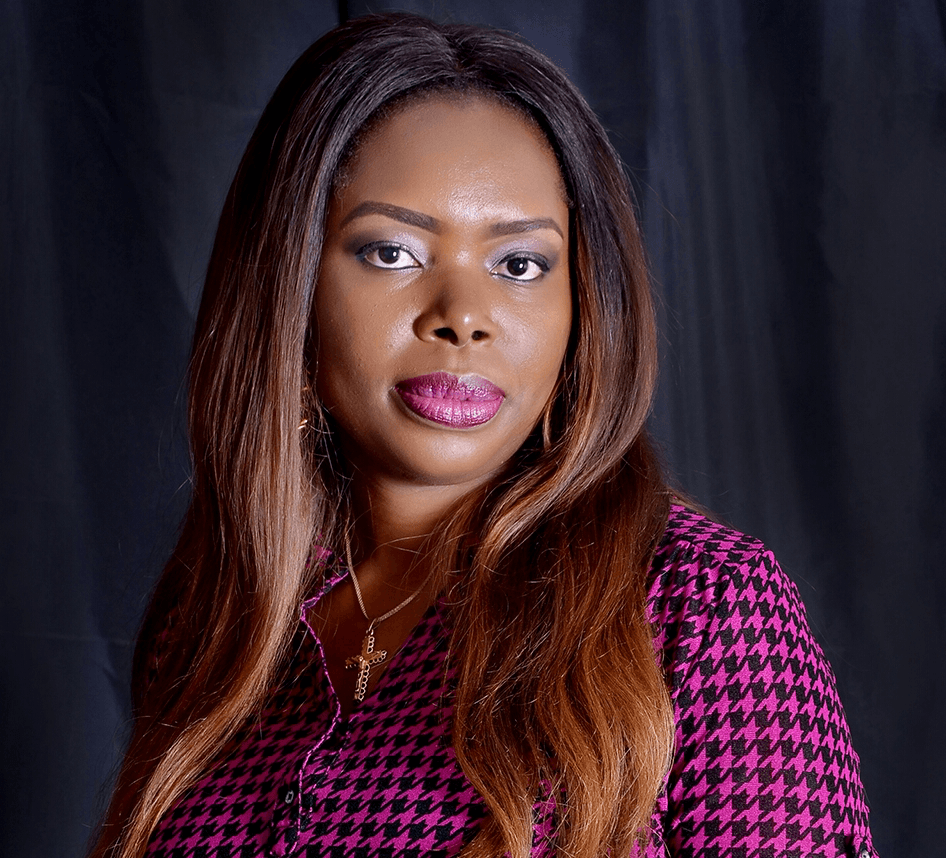
Ogechi Okelu’s love for food creativity led her from a career as a pharmacist to a desire to recreate indigenous Nigerian snacks. Many Nigerians grew up eating snacks which were only largely available in rural areas but Ogechi is repackaging local snacks in healthy and hygienic ways through her small scale food factory to help reach more people. She shared her thoughts with SLA on where traditional foods fit in with weight loss and on her journey so far. Why start a business with indigenous snacks? Nigeria has a wide variety of healthy and creative snacks and meals. These have been lost over time and are not in high demand among the urban and elite groups. This is mainly because of the preparation process and packaging but also due to Westernisation. I’m working on recreating some of these snacks in a healthier and more appealing way for the world to enjoy. Tell us a bit about Kozee My brand has been registered as a trademark and it’s called Kozee. My first product is my brand of kulikuli. Kulikuli is an indigenous snack made from groundnut paste that is quite popular in the northern part of Nigeria. I grew up eating this lovely snack. It is really versatile and can be eaten alone or in combination with other meals. Typically, people eat it broken into soaked garri but modern foodies use kulikuli as salad or parfait toppings, blended into smoothies and also to spice roasted beef or chicken. I am currently at the last stage of registration with NAFDAC, the Nigerian body that is responsible for the registration and quality control of food, drugs and cosmetics in Nigeria. They ensure that standard quality is maintained at all times and that standard operating procedures are adhered to by carrying out site inspections at factories and also running quality control tests on products at their labs. Where do indigenous and traditional foods fit in weight loss and healthy living? The main challenge with weight loss is portion control. We have a wide variety of traditional foods that are rich in fibre and minerals and are not over processed. A lot of our local foods however, have not been scientifically analysed, so we can’t be certain as to how many calories they contain or their nutritional value. This drives a lot of people who are particular about weight loss and healthy living to buy the imported products that have clear nutritional facts written on them. Researching on and repackaging our traditional foods will encourage more people to patronise Nigerian products and therefore boost the economy. How has your background as a pharmacist helped your hustle? As a pharmacist, I have learnt a lot about the importance of quality control and microbial contamination and this has helped me set high standards for myself, my factory and my product. Kulikuli has been made for centuries in the rural areas by hard working women who use a lot of manual processes from start to finish. This makes it difficult to produce large quantities of kulikuli in a healthy and hygienic way. I have been able to substitute a large part of the manual process using food grade machinery. I am also a pharmaceutical sales person, this has taught me a lot about sales, marketing and running a business. Where do you see Kozee in the next year? I currently deliver only in Abuja but am in talks to supply other major cities in Nigeria. I want my products to be available for purchase across Nigeria and hopefully abroad in the nearest future. What is your passion and how do you sustain it? I am a foodie who is also very passionate about healthy living. My passion for healthy food keeps me focused on coming up with creative ideas that I believe can help redefine our traditional and indigenous foods. If you’d like to share your story with She Leads Africa, let us know more about you and your story here.
Career lessons from Ethiopian born business mogul, Mimi Alemayehou

Ethiopian born, Kenya raised Mimi Alemayehou is a Managing Director at portfolio company Black Rhino Group, and Executive Advisor and Chair of Blackstone Africa Infrastructure LP. After studying International Law and International Business, Alemayehou found development consultancy firm Trade Link Holdings LLC. She has held major positions as Director of International Regulatory Affairs at WorldSpace Corporation and was United States Executive Director at the African Development Bank. The mother of two has also served as Executive Vice President of the Overseas Private Investment Corporation (OPIC). If you are like us, you will hold your breath after reading about Alemayehou’s career journey. Below, we share some insights from this African power lady. 1. Strive for your educational goals Mimi: The first successful entrepreneur I knew and looked up to was my grandmother. She could not read or write but she was one of the smartest women I have ever known. I often wonder how far she would have gone if she had been allowed to go to school by her parents, who chose only to send the boys to school. Although, the silver linings of your career may not shine through that window frame just yet, your education is a step towards reaching your career goals. Mimi agrees (higher) education is a huge part of the African growth story. 2. There is much more in your future After being asked whether she thought her position at OPIC was the climax of her career, Mimi replied: “I have always believed that life is a journey of learning; there is no end to it until you are no more.” Although, success can be comforting, that comfort shouldn’t stop us from going beyond our comfort zones. There is always a next move. “I don’t believe there is such a thing as a perfect position or a dead-end job. At every step, you learn. Life’s a journey of learning.” 3. Believe in your work ethic During her career at the African Development Bank, Mimi was the only woman working in the midst of 17 men. “I have never doubted myself in the things I pursued. Fortunately, I have had some amazing mentors in my life and in turn I try as much as I can to mentor as many people, particularly young women.” Confidence is key when it comes to directing your future. Feeling strong about what you do and what you want will minimize doubt. 4. There are ways to do it all “In terms of the balancing act of career and family, I believe mothers are natural multi-taskers”, is Mimi’s response to ‘how she does it’. And no matter how many exciting career moves she has made, she says “being a mother is my biggest accomplishment so far.” Mimi believes prioritizing and accepting the pros of cons of having to travel for work is key to combining career and motherhood. 5. Approach situations with an open mind “My most impressionable years were probably during my time in Kenya. I met so many people from many parts of the world for the first time in my life and that had a long term impact in my life as it made me more open-minded and gave me a greater appreciation for human diversity,” says Mimi. 6. Be picky with what advice you take Mimi’s powerful statement: “I got to where I am today partly because I did not always listen to the advice I got. For example, earlier in my career I was always interested in working on Capitol Hill but a lot of people, including some of my own family members told me that there was no way a member of Congress would hire someone who was not an American citizen. I pursued this dream anyway and was ultimately hired as legislative staffer on Capitol Hill. I have found it invaluable to question things and not necessarily take “no” for an answer.” Be aware of your possibilities, be thorough in how you approach them and follow through. If you’d like to share your story with She Leads Africa, let us know more about you and your story here
Diarra Bousso: It’s hard to be taken seriously in the beginning
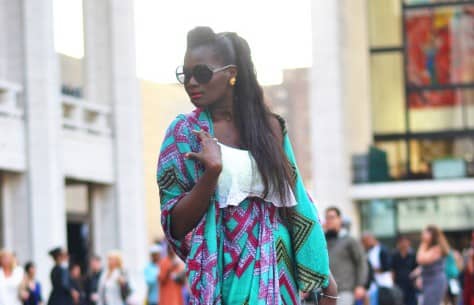
Diarra Bousso is making significant waves in the global fashion industry with her bespoke luxury brand Dakar Boutique Group. The brand houses DIARRABLU and Diarra Bousso target swanky and contemporary consumers. Her work has been featured in The New York Times and The Huffington Post among others., and was showcased at New York Fashion Week. Diarra has gained recognition and acclaim from the global business community. She was a panelist at Harvard’s Africa Business Conference last year where she discussed the evolution of Africa’s consumer growth story. We caught up with her to talk about her journey. Tell us a bit about yourself I was born and raised in Dakar, Senegal and moved to Norway at 16 to finish high school. Upon graduation, I moved to the States where I attended Macalester in Minnesota for a B.A. in Maths, Economics, and Statistics., before moving to New York and starting a career on Wall Street. Two years later, I resigned and returned to Senegal to found Dakar Boutique Group, a luxury holding company that celebrates ‘Made in Africa’ through my various brands: Diarra Bousso and DIARRABLU. The Dakar Boutique Group – what does it do and why did you decide to start it? I always knew I was going to end up in fashion and for me. And it only made sense to do it in Africa, because I wanted to also focus on development and rebranding the continent. Dakar Boutique Group is a luxury holding company and basically owns other companies such as Diarra Bousso and DIARRABLU. Each subsidiary has a particular focus but they all share the ‘Made in Africa’ signature. Diarra Bousso focuses on premium leather goods whereas DIARRABLU focuses on womenswear in geometric cut. Coming up with an idea is the first step. What did you do next? My next step was to raise awareness. We launched at a big party on a private island and followed it up with a traveling fashion show in June 2013 titled African Voyage. This allowed us to get a lot of attention, both in Senegal and abroad. It also marked our first appearance in the media. Talk us through the first 6 months of starting up DB. What were your priorities and how did you determine them? My main priority was visibility. I was focused on the African Voyage event production and PR and put all our energy on it. I have no background in fashion but I definitely knew that I needed to set a high standard for the brand’s image. For me, the best way to achieve that was through a high profile original event. What were the key challenges you faced when you first started? How have they evolved over time? I think it’s always hard to be taken seriously in the beginning, especially when you are not trained in the industry. I was always confident about my vision and so I didn’t let anything discourage me. I focused a lot on communicating aggressively on social media and sharing the essence of my brands in a very transparent manner. I believe this makes you more credible and engages your audience. You’re a fashion designer but you also run a fashion business. How do these roles interact? Is there ever a conflict? The two roles compliment each other very well actually. My background is in finance so business comes naturally. That said, I spent all my free time growing up daydreaming, drawing, painting and designing. This job now allows me to align what I learned in school and what I am naturally good at, which creates the perfect balance. In the fashion business, making beautiful clothes is one thing, getting them to your customer is another. Tell us about your distribution strategy We are available online on the main website, www.dakarboutique.com, where customers all over the world can shop at their convenience. We are currently working on a few in store placements, especially in New York, and will be announcing that very soon. Our strategy focuses on distributing to areas we have customers. You created two lines DIARRABLU and DB . What was the business rationale of creating two separate labels? I wanted to reach two different demographics: DIARRABLU is a very trendy womenswear brand priced under $500. The brand focuses on daydreams which is something accessible to everyone and suits the bold, fun and modern shopper in major cities such as New York, Lagos, Paris, Rio etc. It is therefore only natural for us to aim for distribution in such places. Diarra Bousso is more exclusive and focuses solely on leather accessories. Everything is limited edition, so the customer has to find us, create a relationship, live the experience and then get their bags made to order. It’s a completely different business model as well as a different customer. How have you funded your business growth and what was the fundraising process like for you? Any specific tips and tricks for startups out there? We have been self-funded so far which has been challenging and rewarding at the same time. I think it is important for startups to first try on their own and show what they can deliver before approaching investors. It’s a good test of the viability of your business and definitely makes you more credible when it’s time to raise capital. Can you talk to us about some of the specific marketing strategies that you have used? We have a very strong marketing team that’s very focused on the digital space. Our customer is modern and online, thus it is important to focus on high quality images alongside strong social media fluency and transparency. Lifestyle marketing has also played an important role, and we achieve this with the African Voyage concept which we share on social media through photographs and videos. You’ve managed to get over 12,000 followers on Instagram. What role does social media play in your overall strategy? How have you grown your following? We have grown our following in a very organic manner. I think our audience likes to
Louisa Kinoshi: Be OK with failure, that’s how you learn

Louisa Kinoshi created BeautyRevNg to celebrate the diverse beauty of African women. The Nigeria-based company, which officially launched in April 2014, aims to revolutionize the beauty shopping experience in Africa. It seeks to put brands that cater to the needs of African women in its clients’ hands at the click of a button. BeautyRevNg also provides an online space for African beauty enthusiasts to gather and learn from each other. “It is more than just selling makeup,” said Louisa, who is also a fashion and beauty blogger, and has written for various online publications. Before relocating to Nigeria to work on BeautyRevNG full-time, she worked for Clean Line Energy in Houston. Prior to that, she worked in corporate public relations and marketing for seven years. Her clients included Starbucks, Pepsico and Pfizer, among others. I caught up with her to talk about her entrepreneurial journey so far. Light-bulb moment The idea to start a beauty business came about when Louisa was at Carnegie Mellon University. As a student, she often travelled to Nigeria for holidays. During one of her trips, she lost her makeup bag. “It was a surprise that there was nowhere I could go to replace its contents at an affordable price,” she said. The few places that she did find sold the makeup that she wanted at exorbitant prices. She realized then that there was a need in the market for reasonably priced beauty products that compliment African women’s skin. “I also heard from family, friends and blog followers that this was something African women want to see,” she added. As a blogger, Louisa spend time figuring out what was missing in Africa’s beauty and fashion industry. She talked to people on the ground who shared their beauty wants and needs with her. She also cultivated relationships with beauty influencers, who included celebrity makeup artists and bloggers, in Nigeria. It is through this research that she was able to find out the type of products that her company would initially feature. The relationships she had built came in handy when the business started. It was easy to get people to join the beauty revolution because they had heard about it from these influencers. Louisa wanted to start small. This approach would give her leeway to make mistakes as she worked out the kinks of her business and tested to see if it was something that people really wanted. Armed with personal savings and a little bit of investment from family and friends, she embarked on turning the idea into reality. The first order of business was getting inventory. “We live in a society where there is scarcity of product so whoever has the most inventory is queen,”she said. “If you don’t have anything to sell then that’s a problem.” She then had to develop a website for the company. “I didn’t have to spend too much money on this,” she said. “I have web and graphic design experience so I did a lot of the web development myself.” Louisa had also fostered relationships with photographers and designers who agreed to work with her at a reduced cost. Growing the brand Louisa and her team, which consists of herself, a creative director and logistics manager, identify beauty companies to partner with through research and crowdsourcing. They first find out the brands that African women like, want and respect. “Respect is a really big factor,” Louisa said. “Then we ask, ‘Do these brands have products that cater to us?’” They then reach out to the brands to find out if they are willing to work with BeautyRevNG and have a foot in Africa. Louisa also travels to Los Angeles and attends trade shows where she can meet with the brand representatives in person. She lets them know about her company and her mission and vision. “Once we have an agreement with them, we bring the brands to our site and market them to our customers,” she said. Fostering these business partnerships has not been without its challenges. Some of the brands that customers desire don’t understand the opportunity in Africa yet. Others aren’t quite ready to have a presence in the continent. As such, they are not willing to form a wholesale relationship with BeautyRevNG. “There are also some popular indie brands that are owned by small businesses, but they are struggling to provide inventory for America so they can’t quite expand,” Louisa said. “It’s not their priority.” This doesn’t deter her because the beauty industry has so many options. “If one brand says no, it definitely doesn’t kill your business,” she said.“There are also new players coming in.” “If one doesn’t work there is always the next one,” she added. The company has also dealt with logistics challenges. Initially, it was tough to get the product from the website to the customers hands. “It would take almost three days in the same city,” said Louisa. She worked closely with her delivery partners in order to tackle this. “Now we are at a point where it takes 24 hours for most deliveries within the city.” Her goal is to cut down the product delivery time to 3 to 4 hours. “That would be the sweet spot,” she said. Powering the beauty revolution The startup sets itself apart from its competition by actively engaging with its clients. “From day one we have focused on building a community,” said Louisa. “So our brand voice has always been very inclusive.” Customers participate in the company’s story. They share pictures of products they have purchased from the store as well as beauty finds they are interested in. Through this online community, clients can also access tutorials and get beauty advice. “We are their friends,” said Louisa. “We are who they go to when they want to have conversations about beauty.” “Even if you aren’t purchasing at the time, we still want to engage you.” she added. This online community keeps Louisa going in the face of challenges. “People are always encouraging me
Abai Schulze: Your initial purpose has to be strong

Abai Schulze moved to to Addis Ababa in 2013 to start ZAAF – a company that specializes in handcrafted luxury leather handbags and accessories produced by Ethiopian artisans. The Ethiopian-American entrepreneur has been able to combine her background in economic development and love for fine arts and creativity into a successful brand. Through ZAAF, she seeks to create unique products, open up avenues of opportunity for talented local artisans, and promote brand Ethiopia. Schulze graduated from George Washington University where she majored in Economics and minored in Fine Arts. At the core of her entrepreneurial journey, which she terms as an exciting adventure, is to be able to impact people on an individual level. She spoke to me about how she has been able to grow and market her brand. Taking advantage of learning opportunities Schulze, who was born in Ethiopia and adopted by an American family at age 11, remained connected to her culture. She travelled to Ethiopia during her summer breaks to do volunteer work. It was during one of these trips that she interned with USAID where she worked with artisans and designers, and helped them to create websites to market their products internationally. This enabled her to see how businesses work in Ethiopia. Frequently visiting the country also gave her the opportunity to witness its economic transformation firsthand and ignited the desire to return in her. Her senior thesis analyzed Ethiopia’s potential for exporting textile. “I wanted to go into that field but it didn’t make sense because the initial capital is huge and you have to have actual hands on experience,” Schulze said. She later found out that Ethiopia has the finest leather in the world which it exports to European countries to be used as raw material by famous brands. “I wanted to tap into that,” she said. “Why not make it at home, by our own people, add value to it, export it, and market and rebrand Ethiopia?” “That was my initial take on it,” she added. Schulze’s plan was to get some work experience in the US and go to business school before starting her own company. After graduation she interned at the Overseas Private Investment Corporation and later worked at Ashoka. It was while there that she met many entrepreneurs who inspired her to start her own company. “I changed the timeline and decided to jump in,” she said. “I told myself, ‘If it fails, I am still young, I can start over.’” She then made the physical move to Ethiopia. “You can’t do this type of business from a distance,” she said. “I had to leave everything behind and focus on ZAAF.” Branding and marketing ZAAF In trying to figure out how to brand and market ZAAF, Schulze kept in mind the different connotations that come with products made in Africa. “A lot of it has that NGO feeling,” she said. “The language used is often, ‘It is made by poor people. Buy it otherwise they won’t have a job.” She wanted to reject this guilt-driven purchase angle. “I wanted to show that we are talented, we just need to invest in our own people and we can produce something beautiful,” said Schulze. “You are buying the product because you like the product, not because you are feeling guilty.” “Otherwise you are not going to have loyal customers who come back,” she added. “If they feel like they have done their good deed of the day, then they will move on to the next company.” Schulze and her team were careful and deliberate about the language that they used in branding the company. Its products are made by talented Ethiopian artisans who went to school to sharpen their craft. “They are not people who you just tell to piece two items together,” she said. Working with skilled artisans also ensures that the products are high quality. “We are trying to compete with international brands,” she said. “We want people to buy based on that.” The language they use to talk about the brand reflects all this. “Our products stand out,” said Schulze. “When we produce them, we really want our customers to feel a sense of where the products are made.” ZAAF integrates ageless geometric patterns created on traditional looms with leather. “Talented weavers meticulously count knots to produce patterns of fantastic combination of color and style,” she said. The unique aspects of the handbags and accessories has attracted media attention. “That organic attraction has helped us grow,” she added. Customer engagement is critical to the brand. They engage with customers primarily through social media. They are committed to providing excellent customer service. “If a customer is not happy with a product then we will redo it,” Schulze said. They also work to ensure that products are delivered in a timely fashion. Another way that Schulze keeps her customers happy is by investing in her team. She creates incentives for them based on their desires and needs. “That way they are loyal and create high quality products,” she said. “When you have a high turnover of employees, you can’t be consistent and your customers won’t be happy.” Her advice to aspiring entrepreneurs: Your initial purpose has to be strong. You have to be passionate about what you are creating because you will face a lot of challenges over time. This passion will help you find a way to solve them. Surround yourself with people who challenge you because sometimes you will be in your own bubble and you won’t know how far you are going.