
Moni Baruwa: I spend less time focusing on competition and more on differentiating my brand

What do you do when you have the travel bug and just can’t get it out of your system? Well, you start a business of course! Moni Baruwa has visited more than 25 countries, lived on 3 continents and connected with people from all across the globe. Her travels and the path of self-discovery and development led her to start her very first business venture in CountlessMiles. CountlessMiles is a travel startup that aims to transform the African’s perception of travel by curating unique, cultural and fun destination experiences within and outside the African continent. Moni shared with us some of her thoughts on the black travel movement, filling in the gaps in her startup toolkit and her jollof of choice. Why don’t you believe young Africans currently see intra Africa travel as an attractive option? Traveling within Africa requires deeper introspection. Generally, the average young African’s idea of a travel destination has been focused on places where they can shop or conduct business, or show on social media and positively impact their social status. These historically have included locations in the UK, US, and Dubai. If a destination does not fit into this, then it is not seen as appealing. So our goal is not only to make intra Africa (and global) travel more attractive, but also to change the perception of travel as a whole to a means of learning and self-development. I’ll use myself as an example. When I started solo traveling, and not just to shop or take pictures, the experiences forced me out of my comfort zone, and I developed the boldness to take risks and think bravely in ways that even a college degree didn’t offer. I believe if more of our young people have similar cultural experiences exploring other regions, cultures and ways of life, and brought home the knowledge, we would see significant impact from the community levels to the economic level. Additionally, and equally important, Africa travel is quite expensive and costs the same or sometimes more than the more “attractive” travel options like Europe, US and the Middle East, so young travelers often opt for this. It’s similar to the dilemma US travelers face when trying to choose to travel to the West Coast from the East Coast, as compared to spending less on a round-trip flight to Europe. Black Travel has become quite a popular topic in the media recently with companies like Travel Noire and Tastemakers Africa getting a lot of media attention for providing young black travelers with other options for travel and showcasing another side of the travel industry? What is CountlessMiles bringing to the conversation and adding value to the industry? This is a question I get asked a lot. It is quite amazing the work that businesses like Travel Noire and Tastemakers Africa are doing. For instance, Travel Noire has totally transformed the travel industry for black people. I remember when I traveled, I didn’t see a lot of people like me – black and more so African, so this is good progress. We have similar goals and missions in that we are changing the conversation with regards to blacks and travel. However, the approaches are quite different. Our goal at CountlessMiles is two-fold: we aim to not only change the average African’s perception of travel but also consciously add Africans to the “black traveler” community. This group of travelers is typically different from the black traveler community because they have unique barriers to travelling including issues such as obtaining visas with a non blue/maroon passport, finding travel health insurance to name a few. When I traveled around Eastern Europe and I visited Bosnia and Herzegovina, the guy at the immigration border gave me a dirty look because of my Nigerian passport. He almost gave me a hard time getting in, but because of my experience with similar issues, I was fortunately able to convince him otherwise. Similarly, in Vancouver, the receptionist at the place I stayed said he had never seen a Nigerian passport before, so they made a souvenir of my passport. I was pleasantly surprised at that but it made sense, in part because of their own lack of curiosity, but largely because Africans haven’t fully embodied the essence of traveling the way the Europeans or Australians do, and have yet to reach that far. This I believe makes CountlessMiles unique in its approach and impact – consciously encouraging Africans to travel the world in a unique way, while subconsciously opening up better tourism relationships with other countries and hopefully less visa hassles for Africans, especially West Africa. At CountlessMiles, we say “Your vacation starts with You”, because we focus on curating authentic personalized experiences for any African looking to travel, based on their budget and travel preferences. The primary service we provide, which is crafting a destination experience, is very customer-centric, while most of the competition seems to be focused on creating group trips that people can sign up for. The travel industry across West Africa is very fragmented and has many small-scale operators. How will you identify the best operators that are able to deliver the experience your customers are expecting? The great thing about experiential travel is being able to connect with the locals, the culture, and the new environment. This is the approach we take at CountlessMiles – visit the countries ourselves, get immersed in the culture, meet the locals and get information about the best offerings in the region, and build informal long-lasting relationships with potential partners. This way we are able to curate the best and most authentic experiences for clients based on first-hand knowledge and experienced recommendations. Another useful resource that has worked particularly in West Africa is leveraging on our network across the region. Luckily through my travels and life path, I have been blessed to meet people who are key influencers in various West African countries. I am working with them to develop a list of the best operators that we
The mentorship advantage

Sugar. Spice. And everything nice. What do you need to be a successful entrepreneur? More than it takes to make the Powerpuff Girls. Some say passion, commitment, and willpower are top of the list —all very true. I believe to be a successful entrepreneur you need a viable business model and a good mentor. What is the role of a mentor? One of my favorite books on this topic is, “Expect to win: 10 Proven Strategies for Thriving in the Workplace” by Carla A. Harris. She defines a mentor as “someone you rely upon to give you good, tailored developmental advice”. According to Futurpreneur Canada, the advantages of having a mentor are described in six points. A mentor helps you: Gain insights and perspective by having someone to bounce your ideas off of Focus on and strategically work towards your business vision Shorten your learning curve Identify opportunities and risk by learning with someone experienced Grow and enhance your business network and acumen Build confidence knowing you have someone in your corner Key traits of mentors As I write this, I think of all my mentors and the two key traits they all share: Expertise and integrity: Find a mentor you believe to be brilliant, knowledgeable and trust worthy. You want your mentor to be someone you will listen to because you trust their expertise Genuine interest in my development: This is what I call the mentor/mentee chemistry. Choose a mentor who is genuinely interested in who you are, understands your strengths and weakness and wants to help you develop and grow. Mentorship is a deep and personal relationship and for the relationship to be truly useful, you both must feel safe sharing the “good, bad and ugly” How to be a good mentee Having discussed the importance of mentorship and what to look for in a mentor, how do you become a good mentee? Listen Consider the advice you get and apply when relevant (This is why your mentor has to be someone you can trust) Set SMART goals and hold yourself accountable Ask for feedback and provide feedback in return Be honest and communicate openly with your mentor Invest time and effort in your relationship Most importantly, as a mentee, remember to pay it forward Peer mentorship is a form of mentorship that is often neglected but I find very valuable especially in my professional and business life. Keep in mind; your mentor must have some expertise and be genuinely interested in who you are and your development from a point of low self-interest. Many times, you can find these qualities in a peer. To my mentors: Thank you for teaching me to be positive and fiercely myself. Reminding me I have all I need, to be who I want to be—a healthy mind and body. Thank you for demanding I think big. Because, why the heck not.
Why we need business education in the African market

When considering female micro-entrepreneurship in sub-Saharan Africa, I often remember the stark images of the women of Yaba market in Lagos. Some of the market women sell food produce, others focus on the textile business and a greater number work as the “Jacquelines” of all trades. I often wonder if they designed and wrote out a business plan before they started their respective ventures and how they and their businesses have survived through the years. More importantly, I think about what can make their businesses more profitable and sustainable. During my last trip to Nigeria, I spent a few hours buying gifts at Yaba market and engaging different micro-scale womenpreneurs. My goal was to gain insight as to how these women got started in business, how their businesses were structured and what their biggest needs were. Unsurprisingly, many women talked about limited access to loans and credit. However, I was more struck by the desire of many of the women to get an education. The conversations inspired me to think of creative and effective ways to empower women in the market with customized business skills and education. I dug deeper to gain a clearer understanding of what can be done to empower these women, many of whom didn’t complete secondary school but still had a strong desire to obtain some formal education. The biggest challenge to getting formal education for many of these women was time, money and the opportunity cost of leaving their businesses for extended periods of time. Many women simply could not leave their kiosks during business hours to attend class at a school that would most likely be far away. While auditing a Coursera class on Social Entrepreneurship, I applied the Principles of Design to the problem. My solution: take the training and education to the women. I crafted a model that will function as a daily or weekly lunch-and-learn, allowing micro-womenpreneurs leave their kiosks for forty-five minutes to an hour and take skills-focused business classes at a location within the market infrastructure. To increase the chances of success, the program must be skills-focused and be offered in bite-sized digestible format. Many of these women manage shops, stalls and boutiques; hence they need an education that is timely, tailored and convenient. Listed below are the reasons that having a skills-focused business school in the market will be beneficial to small-scale women entrepreneurs: Timeliness and applicability of information Given the focus on skills-based learning and real time application of information, women can learn about how to build a budget and exercise their knowledge of different commerce topics on their businesses the same day. Their learning is further complemented by their respective business challenges, which can serve as case studies from which everyone else can learn. Additionally, women can real time advice from their teachers, mentors and fellow womenpreneurs. Creation of a Womenpreneur ecosystem A market-based schooling approach creates a network of entrepreneurial women who come together to share business experiences, engage with business lessons, and form a coalition. This creates a support system whereby women can rely on each other for support or even micro-credit; an ecosystem where women can share issues they are having in their businesses and find ways to learn from each other’s experiences promises to create trust among the women. Women may also discover that they are serving different levels of the business chain and may decide to integrate or partner; hence creating potential value to be realized in efficiency gains. Convenience and flexibility It is difficult to convince a middle-aged woman who is the breadwinner of her family to leave her kiosk for hours at a time to attend school. However, if that education is right there in the market and is fitted into mini-education sessions, it creates a more compelling and readily available opportunity. Bringing education to the micro womenpreneurs creates the flexibility that has been missing in obtaining an education. The Girl effect Many of the women I’ve seen running shops over the years tend to have some help from another younger woman. Usually, it’s a daughter or a niece or a relation of some sort. Some of these relationships with younger women can be structured as apprenticeships with defined learning outcomes, which further fuel the entrepreneurial spirit of the young women. Coupling that structure with formal education (right there in the market) can create a powerful domino effect for years to come. A program of this nature can take many forms. There are number of parties from the private, public and non-profit sectors who could come in as partners. From a funding perspective, the program can be sponsored through philanthropy, whether from an NGO, the government or a Private Corporation. It can also be structured as a public-private partnership. While there are obstacles facing women entrepreneurship, most of these are in fact solvable. Education continues to be a primary issue, however, with some creative thinking we can develop meaningful responses and improve these solutions as ideas further develop.
Emi-Beth Quantson: There is still so much I want to do
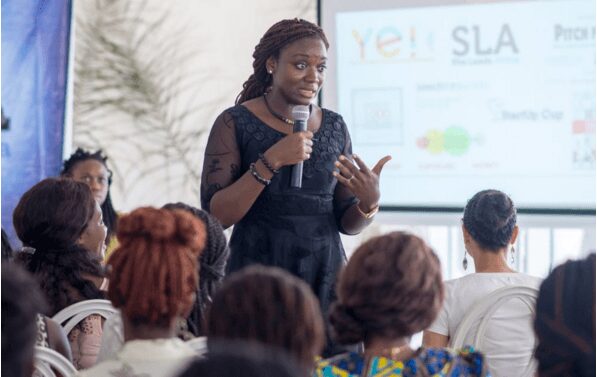
[In picture above, Emi Beth Quantson at SheHive Accra 2016] As part of SheHive Accra 2016, I caught up with Emi-Beth Quantson, CEO and founder of Kawa Moka, after her talk on how she won Startup Cup Ghana. Kawa Moka is a “social enterprise coffee shop and creative space” that empowers underprivileged women through employment and mentorship. The Startup Cup competition provides opportunities for entrepreneurs to network and gain financial support, which were essential for Kawa Moka to thrive. What was your childhood like? I had a very happy childhood. I have two older brothers who used to bully me shamelessly. And as my parents always entertained, we had to serve. I think that is where the interest in hospitality came from because my parents were always throwing parties – entertaining, they told jokes. We used to have Christmases where all our cousins would come together and we will have nine lessons and carols and sing and do firecrackers. It was pretty cool. What dreams did you have growing up? A lot! I wanted to do so much. I still want to do so much. One of the things I wanted when I was in Ashesi [University] was to be the first woman governor of the Bank of Ghana. I still have not lost that ambition. I am just praying that nobody gets there first. I still want to go to grad school, maybe go back into corporate and do something finance, sort of setup Kawa Moka, and then afterwards have it run a little and do something else. I have a million and one ideas. We will see which ones get done and which ones do not. But there are a lot of things I want to do with my life. What would you say are some of the influences that have shaped you into the woman you are today? I come from a close knit family, and I would say my mum, aunt, and grandmother were my closest influences on my mum’s side. And on my dad’s side, there were also a lot of women – aunties and grandma. I guess each family sort of taught me different value sets and opened me up to different experiences. I remember my grandma was always concerned about me: she calls me Aku. She was always like, “Oh Aku, what are you doing again? You say you want to do this or you don’t want to this, ohh”. She is always concerned and finding ways to impart knowledge from way back, not try to necessarily put me down, but then she will use some nice way of telling you that, hey you should do this. And it was fun to have all those family gatherings so I think my family has probably been my largest influence. How was your transition from Ashesi University into the corporate world? Very easy. I worked part time in my final year of school. I worked part time for Ghana Home loans so I had some corporate experience. My final internship was at PWC so before I graduated, I already had a job and had already gained experience in that job. As such, it was a very easy transition for me – I did not have to send out a million CVs. You have a background in consulting. What would you say are some of the key skills that make you a successful consultant? Being able to think on your feet. Even though a lot of assignments have a lot of similarities, everything is unique in its own way. For every assignment, you need to think on your feet and find innovative solutions based on the parameters that you are given. I think that is a key skill. Another key skill is networking and just learning how to talk to clients and establish a relationship because a lot of the consulting assignments are based on relationships. They feel the connectivity because you give them the best solution and you do it with a smile and you do it nicely. So, I would say those are the two key skills, and of course the analytics is a given. You need to have the technical skills. A lot of which, if you are working with a multinational they will teach you, but you can also teach yourself. You are the CEO and founder of Kawa Moka as well as the CFO at Impact Hub. How do you juggle all these responsibilities? With Impact Hub, I am transitioning. We are hopefully going to put out a job description for finance manager so that at least I can have support in the sense of the day to day stuff. But I mean it has not been so hard. I have had a lot of support from the Impact Hub team so there are other team members who sort of put in data and do the rudimentary stuff as well so that helps me with balancing. But it has also not been easy because, of course, you have your peak seasons running your own business. I also do a bit of consulting on the side so that has been a challenge as well. Some days you wish there are more than 24 hours in a day, but I think one tool that helps with balancing is communication – just make sure you set realistic deadlines and then you work to make sure you accomplish them. I also take courses all the time on setting smart goals and managing time just to remind myself how to be efficient and plan things out properly. How has being an entrepreneur affected your personal life? My husband is really fantastic. He is like my number one fan. He is always like, “why are you not doing this?” So he is giving me that male aggression in my business. He always pushes me to make sure I get to the next level and stay honest with my goals and visions. So even though sometimes, I
What Zainab Balogun taught us about branding and working for free
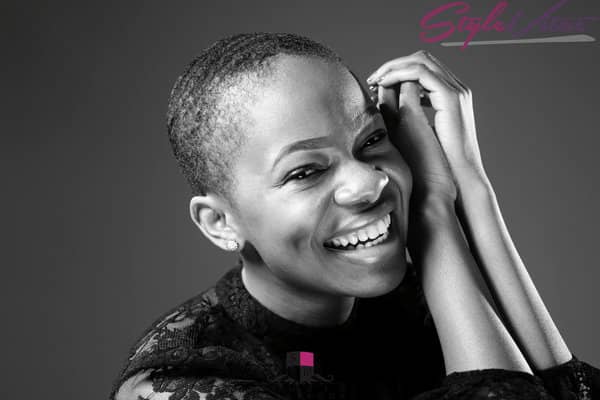
On January 14 we got the chance to connect with Motherland Mogul Zainab Balogun to learn more about building a career in the media and entertainment industry. Click here to see the full recap if you missed the chat. Zainab is a media professional, TV presenter, producer, budding actress and media entrepreneur. She is currently a presenter for the daily entertainment news show EL Now and original talk show called The Spot on EbonyLife TV. She also appears as a presenter and associate producer on Jumia TV, a teleshopping show. In addition to her presenting responsibilities she is a brand ambassador for Dark and Lovely international hair company. We learned 5 critical things from our chat with Zainab that budding media starlets, early career professionals and brand new entrepreneurs alike can learn from: 1. Maintain healthy contacts and keep people updated on your progress – that’s how you find out about new opportunities #SLAChats — She Leads Africa (@SheLeadsAfrica) January 14, 2016 2. Sometimes you have to work for free to get your foot in the door. Money shouldn’t be the only option you consider #SLAChats — She Leads Africa (@SheLeadsAfrica) January 14, 2016 3. Think about how you can build your own opportunities and content while you pursue opportunities with bigger brands #SLAChats — She Leads Africa (@SheLeadsAfrica) January 14, 2016 4. Having a strong work ethic can help bring mentors and teachers to you to help you grow #SLAChats — She Leads Africa (@SheLeadsAfrica) January 14, 2016 5. Stay consistent with your brand. Even when things are challenging, that will always be your calling card #SLAChats — She Leads Africa (@SheLeadsAfrica) January 14, 2016 Special bonus! Zainab shared the best piece of advice she received when first starting out in her career. @SheLeadsAfrica “Honour your brand” You’ll get tempted by the status quo in rough times but someone out there will buy into YOU #SLAChats — Zainab Balogun (@Zainab__Balogun) January 14, 2016 Special thanks to Zainab for joining us and for everyone who participated. If you want keep up to date with future events hosted by She Leads Africa, join our community and follow us on Twitter, Facebook and Instagram