
Munozovepi Gwata: Nobody is really taught how to manage their personal finances

[bctt tweet=”We want to instill financial literacy skills into children from a very young age so that they can understand money” via=”no”] Munozovepi Gwata is an ambitious entrepreneur and an aspiring Chartered Financial Analysts and Hedge Fund manager. She is the founder of the Aworks, a conglomerate with subsidiaries Arete’ Tech, Kukura Capital NGO and Kukura Capital Investment Trust. Her personal mission statement is to inspire people throughout the African continent and to create innovative solutions that will bring upon development, wealth, and success for the continent. Munozovepi’s goal is to build Awork to the same status and standard of Berkshire Hathaway which she has no doubt that she will accomplish. Why is financial literacy important and why start an organisation that educates people on the matter? I believe financial literacy is extremely important just like learning Maths and English. It is the fundamental skill that equips people with the essential ability to effectively save and make money. Unfortunately, nobody is really taught how to manage their personal finances. Not at one stage in our lives do we come across financial literacy education in the mainstream education system. I find this very alarming and I am a strong advocate that financial literacy should be included in the mainstream curriculum. The consequence that we have now, is that people are not equipped to manage their personal finances and they do not know how to save or grow their money. Therefore, instead of having the opportunity to pass down wealth to the next generation, they are passing down poverty and debt. I felt that I could no longer sit on the sideline and watch this continue to happen, this is when I decided to become a part of the solution and build an organization that addresses the problem. In starting Kukura Capital, did you decide to go solo or have a business partner(s) and why did you decide to go solo/partner up? In starting Kukura Capital, I decided to go solo. I do have a great team of friends and family that help me and soon we will be adding another 8 new team members to the Kukura Capital team. When I started Kukura Capital it was only an idea. A lot of people, even though they shared and agreed with my vision, didn’t share my hard work ethic, and because of this, I did not manage to find a full-time business partner. It still worked out great in the end. I was given a lot of good advice on how to develop the organization, leaned on some great books and to my surprise in such a short time we have managed to pick up and maintain a great momentum. We also have the support from other well established NGO’s and Institutions which is great. When did you establish Kukura Capital and what has been the biggest lesson you have learnt thus far? Kukura Capital was established last year in November and it was inspired by my own journey to learn more about the financial industry. In gathering information, I kept thinking to myself there has to be an easier way to learn about financial literacy, and from there Kukura Capital was born. The biggest lesson I have learnt? I have to say I have learnt so many things, but the biggest lesson is that knowledge is truly power. As an organisation, one of our main goals is to make knowledge about financial literacy easily accessible and to break down the complex concepts of finance and make it simple and easy to understand and apply. Doing such a simple task has proven to be powerful. When you tell an individual of any age, be it a high school student or a young adult, that if you save this amount of money every month and reinvest it either in the market, or in a business and you can get this x% in return, people’s eyes really light up, and they really do change their spending habits. The things people always say to me is: “Why didn’t anybody tell me earlier? I would have been a millionaire a long time ago.” What gave you the courage to start your organization? What advice would you give to someone who is thinking of going into business? Fortunately enough, my past experience in leadership positions and community involvement gave me a lot of confidence to start. Also, having a business and finance background also gave me the confidence to start Kukura Capital. However, to be honest, I didn’t really think too much about it, I really believed what the organization stood for and went for it. That would be my advice to anyone starting a business. In addition to running Kukura Capital I also run a FinTech business and when I started I had plenty of doubts but I quickly moved away from any negative thoughts and just went for it. In addition to that, I will advise anyone who wants to start a business to fully commit to their business and make sure that they love what they do, so even when it gets tough they are still driven to keep going and succeed. [bctt tweet=”I’ll advise anyone who wants to start a business to make sure that they love what they do” via=”no”] You have recently finished a children’s book “The Rich Life of Thabo”, what brought about the decision to write a children’s book on financial literacy and in what format and where will the book be available? I really love this book and wrote it with my talented friend Charisa Mujuru. I am really excited for this book because it is definitely going to inspire a lot of young kids to be like Thabo. Thabo is the main character in the book and he lives in a township and one day he decides that he is tired of never having enough pocket money so him and his sister, under the guidance of their grandmother, decide to start a business. The book really
Cynthia Okuwashaka: Everyone has a talent inherent they can work on

[bctt tweet=”I try as much as possible to come with something new to make myself stand out” username=”SheLeadsAfrica”] Cynthia Okwuashaka craving her own financial independence started out as an apprentice in a nail studio. Thereafter, she went on to acquire training in hair making and makeup artistry. All these skills she acquired while studying the English Language in University. A few years later, she enrolled at the Opral Benson beauty school and has now become a certified massage therapist. Cynthia worked in several beauty lounges and finally at Four Points before resigning to start her own business Spaquil Beauty Therapy, a mobile spa, and wellness business in November 2015. Since then, she hasn’t looked back. For Cynthia, she finds peace and fulfillment when she is able to help her clients get relief from aches they feel before the session. In addition, earning her own income in a decent way brings even more fulfillment. How did you come about the knowledge that you could self-sponsor yourself through the university rather than be financially dependent on anyone? I had the opportunity of meeting a friend’s sister who told me she supported herself through school fixing false nails. So I said to myself if she could do it so I can. That’s how I started working at a nail studio and went on to learn hair making too. Why did you leave your job at Four Points to start your own business? Four Points for me was a phase I knew from the onset will pass so when the time came, I had to leave. I have always pictured myself as my own boss and my years there were to gain experience so when it’s time for me to setup mine I will do it and be successful at it. [bctt tweet=”…there’s so much fulfillment in making your own money in a decent way” username=”SheLeadsAfrica”] How do you manage competition in your business? Knowledge they say is power, I try as much as possible to come up with something new to make myself stand out. You are a graduate of English language, how does your discipline impact your business? In the area of communication, my discipline has given me an edge as people see therapists as secondary school drop outs. When I have a conversation with my clients, they get to see a different side of me. Sometimes, they then ask why I had to settle for a therapist instead of working in line with what I studied in school. I tell them I have a passion for therapy. [bctt tweet=”I know for sure one step at a time gets me closer to my goal.” username=”SheLeadsAfrica”] What plans do you have for the future? Like I said, knowledge is power so am working very hard to get more training in my field of practice. What is your advice for girls from indigent homes who feel they can only survive by being financially dependent on men? Where do they start from? First of all, they will need to make a decision about the kind of life they want and work towards it. Dependency cripples, and there’s so much fulfillment in making your own money in a decent way. Crafts pay off in the long run and everyone has a talent inherent they can work on and pray as well for God to bless and prosper. The journey of starting one’s own business and growing it is a very tough one, where do you get the inspiration to continue in down times? I would say my passion for massage therapy is what keeps me going, Spaquil Beauty Therapy was birthed in November 2015 and I have had the opportunity of traveling to South Africa for training in less than 2 years of starting up. And when I think of the difference I can make in the lives of people with my healing touch I keep going no matter what. I know for sure one step at a time gets me closer to my goal. You moved from making hair and being a nail technician to a makeup artist and now a massage therapist. It seems you have worked longer as a massage therapist. Is it that you are passionate about this than the other trades and why? Massage for me is my sole calling in life, it goes beyond touch, I find peace and fulfillment when am able to help my clients get relieved of aches they feel before the session. I see myself as a small doctor (lol). How do your parents feel about your accomplishments so far being a certified therapist and running a successful business at 29? My parents have always given me support. In fact, my father who is very educationally inclined actually gave me the go ahead to learn vocational skills while I was still at the university. Today, they are happy and proud of me which is the joy of every parent to see their child or children succeed in life. If you’d like to share your story with She Leads Africa, let us know more about you and your story here.
Everlyn Nguku: Textile design and fashion technology is amazingly dynamic
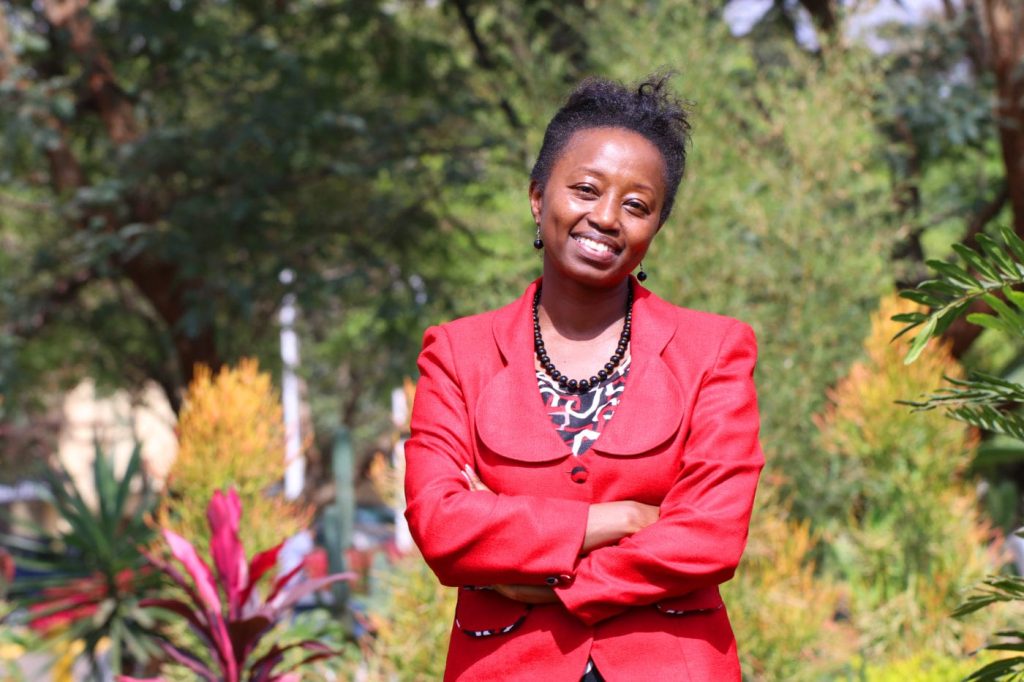
[bctt tweet=”Meet Everlyn Nguku the woman setting Africa on a new journey toward advanced textile manufacturing” via=”no”] Everlyn Nguku is one of Kenya’s few and little-known textile scientists. She was more of the artsy type growing up. But while she was in University studying fine arts, her interest shifted to a more scientific angle. Unbeknown to her at the time, this shift in interest would catapult Everlyn to establish East Africa’s first silk quality control laboratory, and set Sub-Saharan Africa on a new journey toward advanced textile manufacturing. What exactly does a textile scientist do? A textile scientist specialises in various areas including; new technologies related to fibres, innovative textiles; textile chemistry, polymer and fibre science, processing, fabric development, quality issues among others. Textiles are multidisciplinary in nature. How did you come across this as a career? I did not start out as a Textile Scientist. I studied Fine Arts for my first degree and looked forward to a career in teaching design or design related activities (I am the “creative” in the family). However, as I studied my course, my passion for fabric and pattern shifted to fabric construction. I was intrigued and keen to understand the technical aspects of fibres and fabric. I then did my masters and the study focused on four natural textile fibres. This was the beginning of my journey with silk and science at International Centre of Insect Physiology and Ecology (ICIPE). I began to look at textiles beyond the design element. My Ph.D. focused on silk properties. I had to understand the science behind the silkworm that produces the silk, processing technology and quality of the resulting fibre. You are researching on the African Silkworm; tell us a bit about that? My work actually revolves around the domesticated silkworm Bombyx mori, although there are several commercial species of silkworms. B. mori is the most widely used for silk production; it is reared indoors and feeds on the mulberry leaves. This activity is referred to as sericulture, which is the practice of raisings silkworms to produce raw silk- the yarn obtained from cocoons spun by the worms. I take an interdisciplinary approach and multi-faceted research of silk that focuses on optimizing silkworm rearing techniques, and cocoon production, with a key focus on fibre quality and value addition initiatives for the production of various quality silk products. The research explores the mechanical behaviors of the silk fibre, which are key building blocks in the production of quality silk fabric. We also design silk fibre testing procedures to assess and systematically study the quality factor, tenacity & elongation, friction and wear traits. How many women are involved in this research? Within the institution, I am working with five female technicians who undertake rearing of the silkworms and processing of the cocoons and raw silk. A textile industry needs more professionals who understand the science and the business sense in manufacturing and processing the raw material, how can Africa tap into this? The industry is labour intensive and has the potential to offer significant employment opportunities. There is a need to equally invest in the skills and qualifications of people and promote the technical qualifications for people in the textile and apparel industries. African Universities do offer degrees and masters in textile design and fashion technology. What can be done to ensure that more of these graduates become the backbone of this industry? This sector in Africa is amazingly dynamic; however, it appears to be fragmented. Consequently, its potential remains largely unexploited possibly due to organizational weaknesses within the industry. In order to integrate graduates into the industry, there is a need for governments within the continent to prioritize the sector, unlock the potential, overcome existing problems of the textile industry and address issues that hinder the growth of the manufacturing industry. This strengthens and improves the entire textile industry and value chain for it to be competitive and remain relevant. In addition, possibly review the rules on textile imports especially the influx of cheaper clothing which seem to hamper the local industry in Africa. The industry should also recognize the potential of textile design and fashion technology graduates and the dynamisms they inject into the growth of the commerce and therefore need to nurture and engage this local talent. Some of the challenges you face revolve around ignorance and general disregard of research from a policy level. How are you pushing to get more attention on this issue and more government investment and commitment to grow the textile industry in Kenya? I am a member of Kenya Bureau of Standards (KEBS) Technical Committee on Blankets, Nonwovens, Threads, and Fibres. This is a forum that presents an opportunity to interact with the main industry stakeholders on issues related to textiles, standards and to an extent policy. Who would win in a fight, Wonder Woman or Black Widow? Hmmm…I had to look up the Black Widow…. didn’t know much about her ? All the same, my take is Wonder Woman. If you’d like to share your story with She Leads Africa, let us know more about you and your story here.
Elizabeth Akanbi: Make mistakes, learn, grow and do better

[bctt tweet=”We aim to reach women that have a passion to become game changers” username=”SheLeadsAfrica”] If there’s something she’s known for, it’s adding value to other women’s lives. With over 7 years experience across different industries, Content creator and Marketing communications professional, Elizabeth Akanbi is Founder and Managing editor of For Working Ladies, an online career lifestyle hub for women. With a strong passion of understanding people’s journeys to success she uses this knowledge to inspire, empower and motivate individuals. Asides equipping women with inspiring and motivational content Elizabeth is passionate about sharing the African culture through art, food, music and social events. As such she co-founded a lifestyle brand, The Social Bloc which runs periodic social events in the UK to highlight the African culture. What inspires For Working Ladies? I have always desired a mentor, someone to tell me how to make decisions, someone to give me career advice, tell me the risks of starting a business, I’m sure you know what I mean right? But I have never been fortunate to have one. I would search the internet day and night looking for answers to my questions, read loads of articles, career profiles and then draw a conclusion on the topic. I knew I wasn’t the only person going through this and needed to create a platform where you could get career/entrepreneurship tips, read about other women that have taken your path and just daily lifestyle content. Why an online platform? Because the world is going digital and people are constantly on their phones so I saw this was the best place to share content and reach our audience. For Working Ladies is a career lifestyle hub for women created to motivate, inspire and give guidance. What kind of content do you provide and what women does your business aim to reach? Our content mainly focuses on career and entrepreneurship, however, we also share lifestyle content also. We aim to reach women that have a passion to become game changers, we want to equip them, motivate them and be that big sister that says we have your back. What innovations and future plans are you looking towards for your business? 2017 is the year that I hope to take For Working Ladies offline and create interactive events. Things are still in the pipeline; I am excited and currently looking for speakers and brands to partner with for our first interactive event. Asides from events we hope to start delivering content in new and fresh ways as the behavior of people are changing and they want more than just written content. Tell us about your greatest challenge as well as your greatest achievement so far? My greatest challenge has been creating content that is new, fresh and relevant on an ongoing basis. There is so much content out there that it is necessary to give people a reason why they should read yours. Luckily I have an amazing team of contributors who are constantly creating fresh and relatable content for women. My greatest achievement so far has been keeping this content-based site going for over a year, being the only editor, managing the digital marketing, overseeing over 15 contributors whilst working. It takes a lot of time and dedication; there have been times where I have gotten so tired of proofreading and writing that I just want to give up. I am working on building a team so that as a brand more can be achieved. What business tools have helped you in running your business successfully? My daily tasks consist of sending emails, a lot of emails! mainly to contributors and also to people I am interviewing. I am literally always stuck to my phone/Mac refreshing my inbox, it can be a headache but it has to be done. The best tool that has helped me in managing emails is Boomerang for Gmail, it allows you to schedule emails, receive notifications to follow up on an email and also receive a notification when they have read the email. It’s a really user-friendly plugin! There are so many great features, we have an article on our website about it. [bctt tweet=”Learn from every mistake, because every experience and encounter is there to teach you” username=”SheLeadsAfrica”] What personal values have guided you as an entrepreneur? Hard work and consistency. Results don’t just come; you must be intentional and put the work in. The first step is making the commitment but the next, which can be the hardest is consistency coupled with hard work. Also as Oprah said, “Learn from every mistake, because every experience and encounter, particularly your mistakes, are there to teach you..” It’s okay to get it wrong, it’s okay for that partnership to breakdown, it’s okay for that idea not to work out, but in all of that experience what did you learn? I try my best to analyse every experience I have had and learn from it. Without mistakes how would we learn? Make mistakes, learn, grow and do better! From your business name, it is safe to say you have nothing for the unemployed ladies? We have something for every female, whether employed or not. Our main focus is career and entrepreneurship, however, we touch on lifestyle, fashion and much more content that is relevant to all ladies. Everyone has something they want to achieve in life, a dream they want to pursue, something they are working on and we want to be part of that journey in inspiring, encouraging them that they can achieve whatever they set their mind to do. [bctt tweet=”Don’t allow the distance between where you are and where you want to be scare you” username=”SheLeadsAfrica”] Advice for entrepreneurs about to throw in the towel? Why did you start in the first place? Sit down and have a deep think. Remember your why at every low point and allow it to push you. Don’t allow the distance between where you are and where you want to be scare you,
Ifrah Arab: This is just not a joke for me
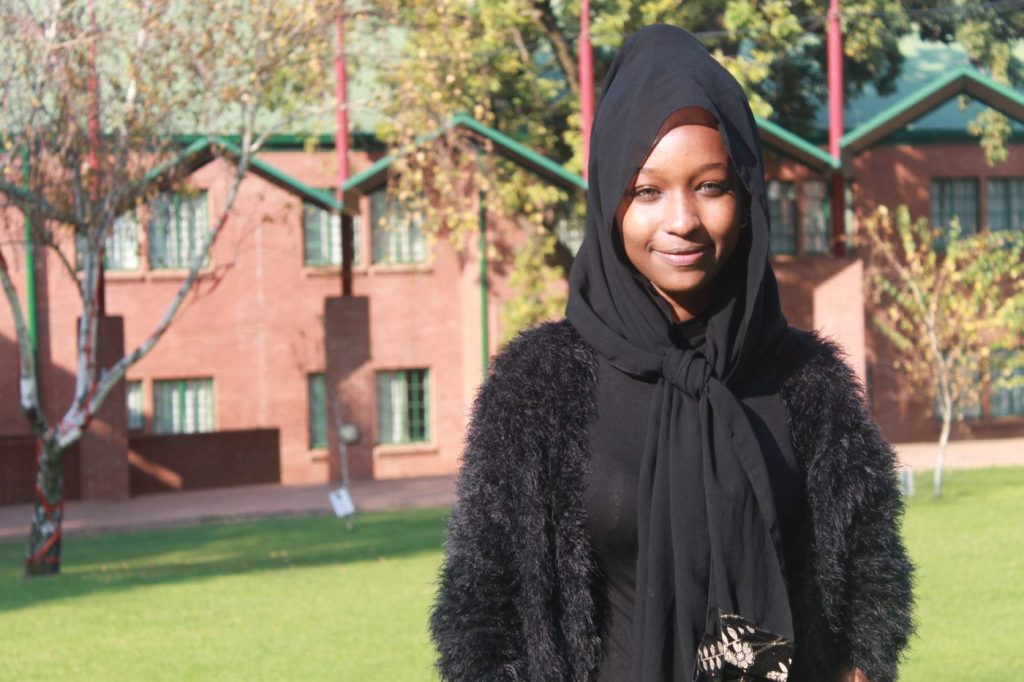
[bctt tweet=”We faced a lot of challenges being in a conservative community they weren’t ready to accept change” via=”no”] Ifrah Arab is only 20 years old, but she is on a mission to alleviate poverty and inspire more women much older than herself into enterprise. Through this effort Ifrah was a 2016 Anzisha Prize finalist and a 2016 Echoing Green semifinalist quite a mean feat. Ifrah grew up in Garissa town, a conservative community where women were never encouraged to have economic independence. In 2015, when her mother passed away, Ifrah felt the need to uplift mothers in her community. She founded SuperMom, a door to door distribution network that gives Kenyan women in disadvantaged areas access to quality and essential consumer products. Within two years of operation, she now has 50 women now selling products door to door earning an income and making household items accessible to thousands. Ifrah hopes to draw in 2,000 women in the next two years and double their incomes. How many commodities is SuperMom now selling door to door in Garissa County? We sell a whole range of products. Our main ones are consumer goods which include sugar, salt, flour etc. mainly basic everyday use consumer products, clean green energy, sanitary products and health products. Garissa has a relatively large Muslim population some of whom are conservative when it comes to women working. Has SuperMom encountered any challenges around this with the community? Yes, we faced a lot of challenges mostly because of, as you said it, being a conservative community they weren’t ready to accept the change. Most of them saw it as a breach of culture and all that and we faced a lot of opposition. [bctt tweet=”Ifrah Arab personally interacts with the women in her SuperMom network.” username=”SheLeadsAfrica”] How are you overcoming this challenge? We overcome this challenge by using a new tactic. We decided to first approach the community elders, religious leaders, local women groups and made them understand our mission. This made it easier for us to then penetrate the larger community because now we had people they trust endorsing us. You were a 2016 Anzisha Prize finalist, how has this experience improved your outlook and operations at SuperMom? I learnt a lot from the Anzisha Prize. I met different young people from Africa who shared the same vision of making Africa great. They were all young problem solvers aged between 15 and 22. It was wonderful being able to meet and build networks with people of the same mindset and share ideas. You were also a semifinalist in the Echoing Green Fellowship of 2016? What are some of the lessons you learnt from that process? I wasn’t able to make it to the finals for Echoing Green but the feedback they gave me after the selection process has helped SuperMom grow. We were able to take in all the advice we got from them and that was really great. What are some of the most successful pitching techniques you use when seeking funding for SuperMom? When I am pitching SuperMom I always make sure I am clear and the audience clearly understands what SuperMom is all about. I also make sure to always show traction. What we have done so far to earn that trust. I always give my story too. It makes people understand the reason why am doing this. That it’s just not a joke for me. [bctt tweet=”When I am pitching SuperMom I always make sure the audience clearly understands” username=”SheLeadsAfrica”] What keeps you going? I personally interact with the women in our network. Every time I hear any of the women talking about how SuperMom has improved her life it motivates me to do more. What big plans do you have in store for SuperMom? The problem we are trying to solve is not unique to my community. Several other marginalised communities in Kenya face the same problem. My vision is to expand and reach these other communities. We are also not covering all the products needed so also to form more partnerships so as to increase the number of products in our catalogue. What’s the one thing you would not leave the house without? My phone. If you’d like to share your story with She Leads Africa, let us know more about you and your story here.
Ethel Cofie: Share your knowledge, inspire others
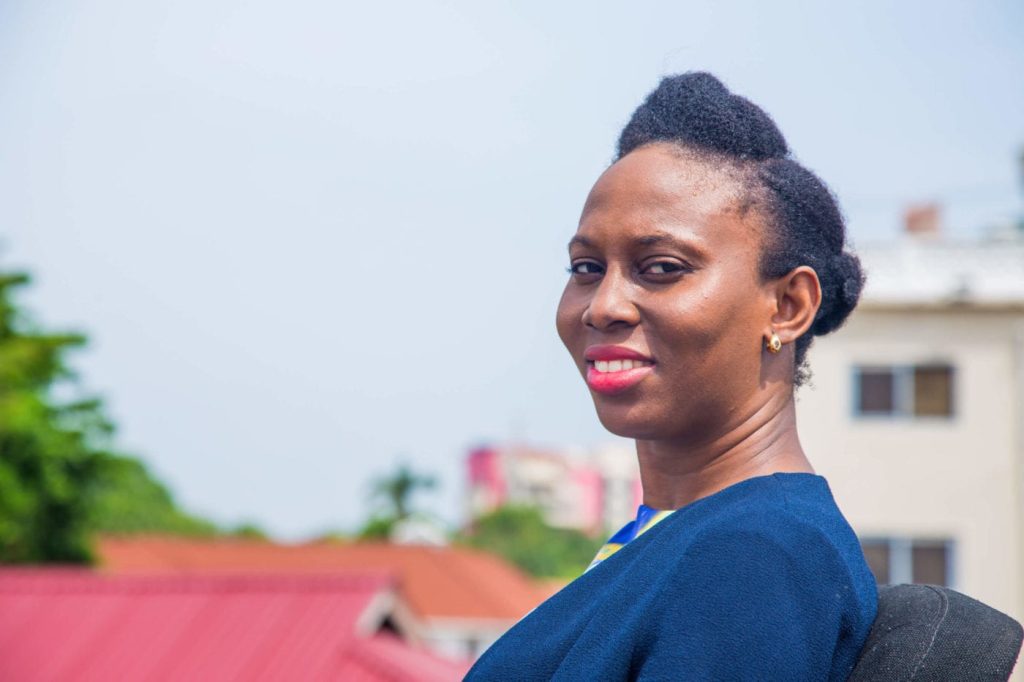
[bctt tweet=” I have always loved the idea that technology can allow you to create – Ethel Cofie” username=”SheLeadsAfrica”] When Ethel was 18 years old her father sent her to computer diploma class, so she would keep busy. There, one of the lecturers made a life-changing statement to Ethel, “the computer is dumb and the computer is only as smart as the one who writes its logic”. That simple line led to Ethel choosing to do a degree in computer science and then a master’s degree in Distributed System on scholarship in the UK (the only female in her specialization). Ethel made her first attempt at entrepreneurship with a software firm in her Ghana which failed. Because she was self-funded, Ethel lost her savings in the process. Not daunted, Ethel went back to full-time employment across Ghana, and Nigeria, Sierra Leone building innovative technology or managing teams that build innovative tech. She eventually found her way back into entrepreneurship and is now an award-winning entrepreneur. Her software company EDEL Technology Consulting won the IT Consulting Firm of the Year, as adjudged by the Ghana Telecom and IT Industry. In the last few years, Ethel Cofie has gone from being named one of the top 5 women influencing technology by the Mail and Guardian (South Africa) to winning the Most Influential African Woman in Business and Government: ICT Category by CEO Global. How did you get the idea/concept of EDEL Technology? As I sat through my first programming class, I thought, the computer is only as smart as the one who writes its logic, and I’m smart so why can’t I? I had just signed up to my first computer training class after my secondary education. It was all new and exciting for me –learning about computers. This first lesson revolutionalised my life and the way I felt about computers. It’s one of those aha! moments of my life. After 6 months of the computer training course, I decided that a career in computing was what I wanted; I, therefore, applied to Valley View University to pursue a BSc course in Computer science. I have always loved the idea that technology can allow you to create and make drastic changes in industries in technology. So I knew I was always going to become an entrepreneur. In my mind, I was going to build an organization around technology. I chose to focus on building an IT Strategy and Consulting company so I can strategically work with companies to build new revenue streams and make them more efficient. What has been your biggest hurdle so far? In business, there are challenges– times you feel like giving up. Times you feel you made a mistake. Like all entrepreneurs, the biggest challenge is the self-doubt, and also the negativity from people you think should support you. The story is no different from mine. Leaving a lucrative corporate job to start my own business was a challenge. [bctt tweet=”After failing the first time round, Ethel Cofie went on to be an award-winning enrepreneur” via=”no”] Has there ever been a time when you thought of giving up? What kept you going? I left my lucrative job and very comfortable life in London and returned to Ghana with the intention of starting a Software Business of my own (EDEL Technology Consulting). I told nobody about it. Not even my parents, because considering that they were the typical African parents, I knew they would object. They only got to know of my intentions after I had shipped all my belongings and arrived in Ghana. Everybody thought I was insane. And guess what, I failed completely at my first attempt. A lot of my working life was spent in the United Kingdom, where people understood technology. However, I painfully came to understand what it meant to build technology in Ghana, where at the time most people did not understand what it meant. You can just imagine what my parents and people said at the time. The blow was overwhelming because I had spent all my savings on this new adventure. But I didn’t let this deter my vision. I plodded on, mastered courage and took on a few jobs, did a lot of projects and started EDEL Technology consulting version 2 and I am glad to report that the second version has grown to the point where we have clients not only in Ghana but in the United Kingdom. What is your favourite thing about the tech industry? I love the ability to create and change industries and change how businesses use technology to solve business challenges. This is why I love technology –we can change how the world works. [bctt tweet=”Ethel Cofie: This is why I love technology –we can change how the world works.” username=”SheLeadsAfrica”] As one of the top 5 women influencing IT in Africa, to what do you attribute your success? I’m always learning and sharing. I’ve found that nothing is more rewarding than learning new things, and this has always been my mantra. You cannot over-learn. Another thing is also to share. Share your knowledge, inspire others, hence my fixation with getting more girls into tech. I also believe that to be successful, one must maximize their opportunities and believe in the purpose for which was born. Which season is the toughest for your job? How do you overcome this? We work with businesses so our seasons are based on general economic trends. We provide solutions to businesses so when business is booming, our services are also in high demand. If you’d like to share your story with She Leads Africa, let us know more about you and your story here.
Omowunmi Kolawole: Social media is my only marketing channel
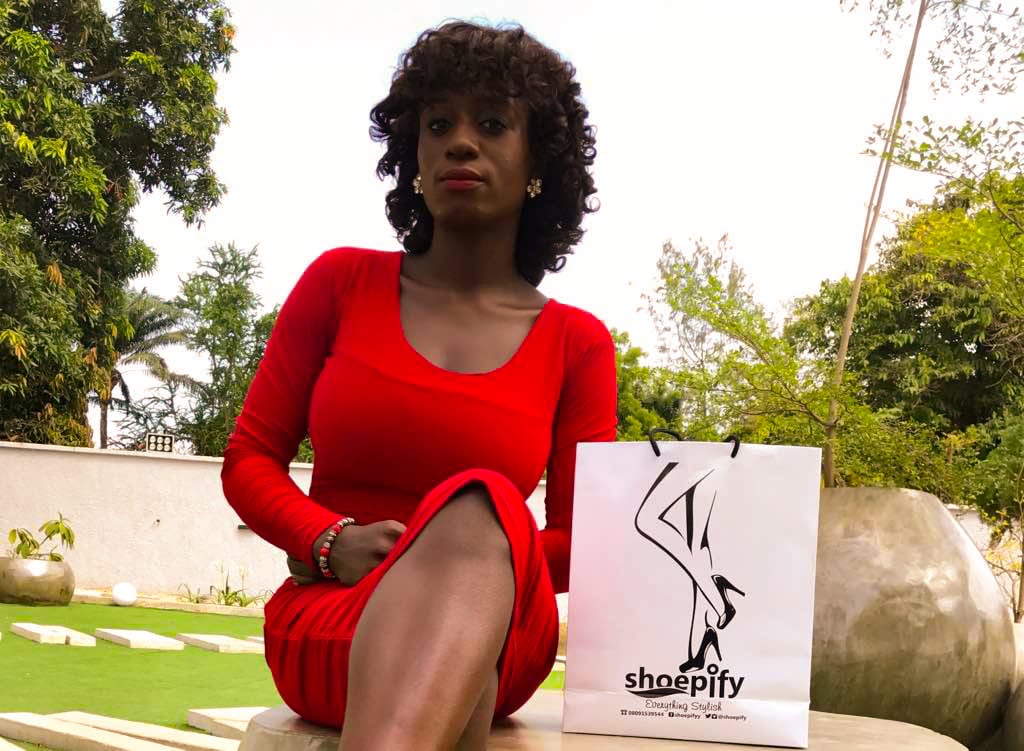
[bctt tweet=”I make more sales via Twitter than other social media networks- Omowunmi Kolawole” username=”SheLeadsAfrica”] Omowunmi Kolawole is a 26-year-old graduate of Political Science from the University of Lagos. In September 2016, she founded Shoepify, a shoe brand targeted at women who are all about winning in the financial world while looking amazing and saving money at the same time. The brand is dedicated to the smart spenders who can totally “slay” without breaking the bank. Apart from selling shoes, Omowunmi is a trained fashion designer who is on her way to launching the next best brand in the Nigeria’s fashion industry. Why did you choose to sell shoes? Two major factors triggered this. The first is my target audience. I target people with big feet; these are people who find it difficult to get their shoe sizes. This is a major challenge because I can personally relate. Most of the sizes we stock are 39 upwards. Although we are looking to stock more of 37, 38 and 43 as we have had increasing demands for them. The second factor was based on a research I did. I found out there was a gap in the online shoe business. Vendors often cater more to high-end customers. People weren’t really selling shoes below N12,000 (~$37) so it was an opportunity for me as there was a market suffering. We don’t stock shoes above N10,000 for now. Is social media your only channel of marketing? Yes, it definitely is. Apart from the word-of-mouth marketing, I do at various gatherings, I channel all other marketing into social media. What are your primary social media channels and how long have you been using them? Twitter and Instagram. We started using them September 2016 but went full scale in March 2017. What social media platform do you consider more productive in terms of audience and sales? Sometimes it shifts, but I have definitely made more sales on Twitter. I personally use the platform a lot, so I have been able to capitalize on my personal profile. Customers are also more engaging via Twitter. Retweets go a long way in helping the business as it can land on thousands of people’s timelines. Twitter has definitely been more productive. [bctt tweet=”People find it hard to trust brands on social media- Omowunmi Kolawole” username=”SheLeadsAfrica”] What are some of the challenges you have faced while using social media? With social media, you have to be constantly online to engage potential buyers. You need to keep them engaged and the platforms are quite different. What works for Twitter may not work for Instagram thereby, making you create double content around the same picture/post to get reactions. Another challenge is trust. I found out there are a lot of illegitimate businesses running online especially on Instagram so people find it hard to trust brands. Clients are skeptical about paying their money to someone they don’t know or not getting the exact item they paid for as shown in pictures. So we have to go the extra mile to convince them. How has social media affected your general sales? About 90% of the sales have come from social media so I can say that even though there are challenges, we are pushing through and it is definitely getting better. People are beginning to trust the brand more. [bctt tweet=”Do a research before using social media for marketing- Omowunmi Kolawole” username=”SheLeadsAfrica”] Which one-sentence advice would you give to someone interested in using social media as their marketing force? Do your research, know what your target market wants and give them. f you’d like to share your story with She Leads Africa, let us know more about you and your story here.
Mwiche Siame: Influence and leadership is much more than having a “position”
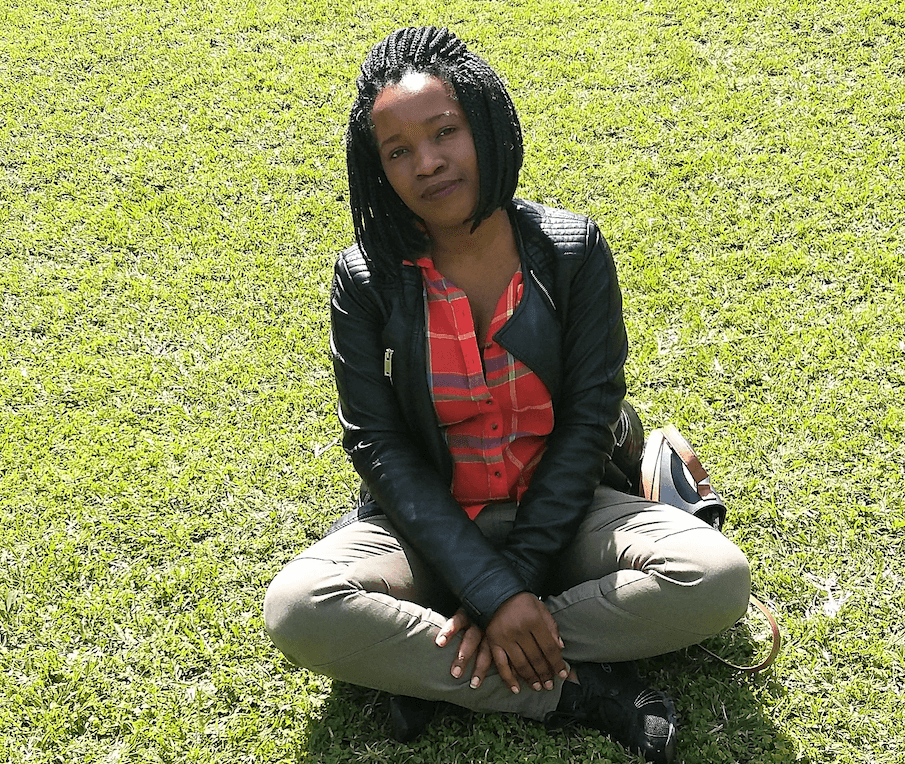
[bctt tweet=”Mwiche Siame’s drive to work in health came from a place of having lost close family & friends to HIV” via=”no”] Mwiche Siame grew up in the small town of Kitwe, Zambia. As a Global Health Corps fellow, Mwiche worked at the Ministry of Health Zambia as a Senior Research Associate. She stayed at the Ministry of Health and is currently working as a Strategic Information Officer in the Ministry’s Department of Policy and Planning. Her work involves ensuring that health workers obtain training in data quality and use of data/health information for decision making. Previously, Mwiche completed her Bachelor of Science degree in biology at the University of Zambia, becoming actively involved in the AB (abstain, be faithful) club, which focuses on HIV/AIDS prevention. In this club, she and other college students travelled to primary and secondary schools to give lectures and mentor students about the risks of HIV/AIDS. She worked for the Macha Research Trust, which is a nonprofit organization with the mission of improving healthcare through research. In 2011, she continued her education at the graduate level, obtaining a degree in epidemiology with her thesis research focusing on prevention and treatment of risk factors of malaria in pregnant women. Why did you decide to work in the health sector even though you didn’t study medicine or train to be a health professional? I studied biological sciences and could have worked in another sector but I strongly felt that I could still make a difference in global health. Initially, I worked in a lab for infectious diseases, focusing on malaria. After about five years, I decided to go back to school and study public health. When I went back to doing lab work I struggled to find my place. I decided to become a Global Health Corps fellow and then it became very clear that I needed to get back to my first love, which is working in HIV from a public health angle. In college you worked on HIV prevention. How did you mobilise other students to get involved and take action? I was a passionate student leader and an advocate of HIV prevention among my fellow college students and those in secondary. My drive to work in health came from a place of having lost close family and friends to HIV. I was able to share personal experiences with others on how HIV impacts young people and also on reproductive health, specifically among young women. And you were placed at the Ministry of Health in Lusaka as a Global Health Corps fellow. Did you expect to stay there beyond your fellowship year? Absolutely not! I had no idea what my next career would be three months before the fellowship ended. The opportunity was unforeseen but I was in the right place at the right time and I took it. What has surprised you about working for the Ministry of Health? I initially did not have a clear understanding of why the system was so bureaucratic, and now that I have worked there I know better and appreciate the need to have such a structured system. When people think of health, we often think of medicine and tools rather than data. Why does data collection and analysis matter for health outcomes? I often have to explain my relevance at the Ministry of Health as I am neither a doctor nor a nurse, especially to my grandmother! I work in the Department of Policy and Planning and work primarily on quality improvement of health services through data use. Data collection and analysis matters as it is the backbone for measuring performance and is the basis for decision making and policy formulation in health. Without data, there is no evidence! And without evidence, there is no strong justification to have interventions that improve health outcomes. People often think that leaders are the ones who are out on the front lines protesting and leading rallies but we know that’s only one type of leadership. What’s your own personal leadership style? My leadership approach is strategic and participative. It entails encouraging each member of the team to maximise their strengths and be active in making a change. I feel that influence and leadership is much more than having a “position” – it’s more about deliberate efforts to pool the knowledge and experience of all players. A multi-sectoral approach is critical. Can you tell us about a mentor who really impacted you? My grandmother! She did not have a college education, was married at 15 years old, and has had many health challenges, but she still remains a leader in her own right against all odds. She has taught me a lot about life and given me career advice based on following my heart, being true to myself, and challenging myself to do and be better. Her hard work and advocacy for women’s empowerment has been a great source of inspiration to me. What’s your favourite way to relax and renew your energy when the fight for health equity gets tough? I love music – singing and listening to music relaxes me. I am fortunate to have a strong support system of friends and family to talk to and hang out with, and this helps a lot. Also, I do take some time to meditate and pray too, and that keeps me grounded and present. If you’d like to share your story with She Leads Africa, let us know more about you and your story here.
Ipinayo Ade-Akingboye: Know the difference between a business and a hobby

[bctt tweet=”I wouldn’t say self-taught but I didn’t have any formal training in photography – Ipinayo Ade-Akingboye” via=”no”] Ipinayo Ade-Akingboye likes to think of herself as a creative. The short #MotherlandMogul studied Architecture in the University of Lagos but is currently a wedding and portrait photographer based in Lagos, Nigeria. Ipinayo is often playing Candy Crush but finds time to run her photography hustle. She was a Finalist for the Etisalat photo competition in 2012 and was nominated for Eloy awards Female Photographer of the year. Ipinayo also participated in the Fayrouz L’original competition and her team came second. Was there a specific time when you realised that photography is a viable career choice? Hmm, all I can say for sure is that I really enjoyed every time I was shooting. It became something I didn’t mind doing for the rest of my life. I chose photography as a career choice when I concluded my NYSC. Although I had been shooting for about 3 years professionally, it never really was full time. If I had exams coming up or school obligations, I would not take jobs. But so far, I have been able to start photography full time this year and I am enjoying it. You’re also an architect, how do you combine your knowledge of architecture and photography, if ever? Well, architecture taught me discipline and how to solve problems. Before I start a session or organize one, I ask myself certain questions like; Who is it for, What is it for, What solution or experience is it meant to provide? That’s all from my architectural experience. Are you self-taught or do you have formal training in photography? Would you say one option is better than the other? I wouldn’t say self-taught but I didn’t have any formal training in photography. I have these amazing friends who used to let me follow them about while they were shooting. They helped me a lot when I had questions. How long did you have to learn and perfect your craft before you could earn a living through your photography? I can’t really put a time stamp to that cause we are always learning, I have not stopped learning. I think anyone at any stage can earn money through photography. It all depends on the kind of work you’d like to be known for, the quality you put out and the type of clients you want. How have you worked on differentiating your brand so it stands out? I believe when you are on a journey to find out who you really are, no matter what it is that you do, your work will speak for you. [bctt tweet=”When you’re on a journey to find out who you really are, your work will speak for you” username=”SheLeadsAfrica”] What’s your dream photography project? My dream project is to travel round Nigeria and shoot a particular subject that comes in different shapes and sizes but all places have them in common. What should a young African woman who’s interested in photography do to make her hustle successful? She has to know the difference between a business and a hobby. She should surround herself with people who don’t think her dreams are too big and most of all, she should stay true to who she really is. With creative people (and that includes many freelancers) the line between a business and hobby can sometime be blurry. Sometimes what started out as a hobby can transition into a business, so it’s very important to understand the rules. A key feature of a business is that it’s operated for profit. You often engage in a hobby for sport or recreation, not to make a profit. To demonstrate a profit motive for your business, first of all make sure that you keep excellent records. It may help your case if you can keep track of some of the following information: The amount of time you put into the business The percentage of your total income that comes from the business The reason for any losses Changes and improvements you’ve made to the business Evidence of your own knowledge in the field A record of any past business successes including any profits made in earlier years The current and anticipated future value of any business assets. Both need to be differentiated because they help you know exactly what you want and where you are headed. There is nothing wrong with making photography a hobby, I mean thats how I started. When I decided I wanted to make a living off it, it became a business for me. [bctt tweet=”It’s important that your client is comfortable around you, it allows you bring out the best” via=”no”] What’s a typical day like for you? I personally try as much as possible to meet my clients before the day of shooting so there is a certain level of comfort already. However, this doesn’t happen all the time. Other times, I try to chat them up when they are getting their make up done and all. It is very important that your client is comfortable around you, it allows you bring out the best in their portraits. Photography is not a cheap hobby, what can a budding photographer do to save money with regards to equipment etc? Get a day job? Lol! I have so many colleagues that have/had day jobs so they could save up to get necessary equipments for them to start on their own. A professional camera costs between N850-N1.5m now, body only. Also, not everyone would get the well paying clients immediately but you have to keep up. You have to be at alert so when its your turn, you are ready with no excuses. If you’d like to share your story with She Leads Africa, let us know more about you and your story here.
Sylvia Nwoko: Running a social media business has not been easy

[bctt tweet=”With good internet connection, a social media business is less work and more fun- Sylvia Nwoko” username=”SheLeadsAfrica”] Sylvia Nwoko is a 22-year-old graduate of Foreign Languages from the University of Benin, Nigeria. She established Thatpurpledotcouture, a unisex clothing brand in Nigeria as a fashion blog in October 2015. After a year, she developed interest in turning it into a business and ventured into fashion services such as fashion designing, retailing Ankara fabrics, fashion accessories and other ready-to wear fashion items. At the beginning, Sylvia was her own model, alongside a couple of her friends. Asides doing this, she has interests in singing, travelling and reading good books. How have you managed to successfully run a social media business? Running a social media business has not been easy. However, with good internet connection, good publicity and my love for social media platforms such as Instagram, it has been less work and more fun for me. I have a deep passion interacting and starting conversations with different people. I also have a good edge at convincing people. What are some of the challenges you have faced while using social media for promotions? My major challenges are poor internet connection, high data costs, cost of running adverts and trying to get the attention of the public to follow my account and patronize me. What is that thing that gives you an assurance that you have successfully run a campaign online? The fact that I can post several pictures and my followers react to it in different ways is a good feeling. Even without posting a single picture in 2 days, I still get comments and orders coming through. [bctt tweet=”I use social media to promote my business everyday- Sylvia Nwoko” username=”SheLeadsAfrica”] How often do you make use of your social media channels? Every day, I must confess. I think I’m an addict. Which is your favorite social media channel for business and why? Instagram is my favorite social media channel because my page is not private. Anybody can scroll through see what we’ve got to offer and send us direct messages. I always get an instant notification via Instagram unlike other channels such as Snapchat where customers have to add me up first. [bctt tweet=”Social Media is ideal for every kind of business- Sylvia Nwoko” username=”SheLeadsAfrica”] Do you think social media is ideal for every kind of business? Give a reason for your response Yes, I think social media is ideal for every kind of business because we live in a virtual world where all most everybody believes what they see on the internet. I think it is the best thing that can happen to any business especially when you have a speedy growing fan base that trusts your services. What advice will you give to someone who is intending to start a social media business? Be prepared, social media business is very competitive and tasking. If you’d like to share your story with She Leads Africa, let us know more about you and your story here.