
#SisterhoodGoals: 2 things to learn from Lupita Nyong’o and Danai Gurira

Lupita Nyong’o and Danai Gurira are history makers individually and now, collectively. Eclipsed, the play Danai wrote and Lupita stars in, is the first Broadway production that has a female playwright, a female director, and an all-female cast. The play which premiered last week has received incredible reviews, and we, of course, expected nothing less from these powerhouses. Here are 2 things we learned about sisterhood, friendship, and business from these Motherland Moguls. Keep your promises, even if it takes a couple of years When Lupita arrived at Yale, the first role she was assigned to was to be an understudy in Eclipsed (written by Danai). From then on Lupita promised herself that she would one day do this play. She even mentioned the play in her first Vogue cover story and after a run at the Public Theater in 2015, Lupita emailed Danai and told her “Let’s do Eclipsed” and the rest is history. Have you promised to take a look at your friends resume or give feedback on a new purse design? Stop procrastinating and follow through on your commitment. As friends and sisters, we need to lend each other a helping hand. Your passion can inspire others In Variety magazine Danai stated “It’s very clear to me what my drive is. I tell African women’s stories. It doesn’t mean I don’t do other things, but that’s my thing. It’s rooted in a passion for that, and it’s rooted in a rage because I feel that they are so under- and misrepresented. I’m trying to link these two places, and have Africa be seen by the West in a more multidimensional, complex and celebratory way.” For Lupita, when she was deciding where to go to drama school, she was nervous about only doing work that focused on the Eurocentric point of view. When she arrived in the States from Kenya, she was so grateful that the first play she received was written by an African woman and focused on powerful female characters. Danai followed her passion and created a play that has given other young African women the opportunity to shine. Lupita was inspired and motivated by the play at the beginning of her professional acting career. How many other young, African women have been inspired by Lupita’s acting and activism all across the globe? Are you genuinely following your passions or you just managing with what you can do? You never know the impact your business idea, non-profit or role in a company can have on others. By following your passion, you can inspire and motivate others to achieve their goals. It can be easy to lose yourself on the journey to success. Sisterhood can challenge us to become better versions of ourselves and help us remember what is truly important. Sisterhood in our communities connects all of us like a spider web. If one part of the web tears we all feel it. Think about what we could collectively accomplish if we all kept our promises and helped motivate others like Lupita and Danai.
Is it a good idea to move back to Nigeria?

It seems like everyday, there’s another of your friends who is moving back to the promised land of Nigeria for a shot at making it big. They either grew up or attended schools in the UK, America or South Africa, etc. Our generation seems to be leading the great diaspora exodus from the comfortable Western world and jumping back into Nigeria for a chance to “make it”. But for those of us who aren’t yet convinced that moving back to Nigeria is the right move, there are typically a couple of questions that come to mind: – Are there are any real opportunities there that I can’t find anywhere else? – How do I even get situated in the job market and meet the people who can help me find a job? – What things should I be looking out for to make sure I don’t get hustled? – Should I ask for the same salary I made before? As founder of a recruitment firm specializing in connecting diaspora returnees (Nigerians who have studied/worked abroad) with top companies in Nigeria and a returnee myself, I’ve faced all of these questions and more. Here is some advice for you on the areas with the biggest opportunity and some helpful do’s and don’ts. Ready to move back? Employers want what you’re offering. Diaspora Nigerians (aka repats) are the ideal package for employers as they help bridge the capacity gap in-country while simultaneously fulfilling local content obligations. As Nigeria becomes more globally competitive, repats are in the best position to maximize on the opportunities that accompany such growth. Those on the fence about moving back are being seduced by the promise of endless champagne nights, parties, and lucrative money making ventures. However, as likely as this may be, it’s extremely important to make sure that you are fully prepared for dealing with all sides of Nigeria, not just the glitz and the glam. You must have a clear plan about meeting your basic needs, that aren’t so basic in Nigeria (e.g. housing, transportation, electricity), otherwise you are on a fast-track to misery and likely to leave without maximizing your full potential, but I digress! All things being equal, lets assume you’re prepared for the move, let’s move on to what opportunities are on ground that aren’t available in more developed markets. Opportunity: Old dog, new tricks Major multinationals that have been on the continent for decades have refocused their global priorities to favor their sub-Saharan markets, Nigeria, in particular. Their increased investment is due to the market size opportunity available here. Several companies have instituted specific programs for moving diaspora Nigerians to work full time in Nigeria indefinitely or for a set period of time. If you’re working in a company that has an office in Nigeria, definitely enquire about this, and move back corporate style. Nigeria’s new wave of transition has led to an increase in development projects in established industries such as infrastructure (power, water, roads, etc.), agriculture, manufacturing, telecommunications, healthcare, you name it! Innovation is driving Nigeria at the moment, so you have to find the right opportunity at a major firm for what you are passionate about and drive it home. Ecommerce Start-Ups This is the golden goose for young Nigerian professionals considering moving back. Start-ups are great ventures to move back to work for, especially if you have long-term entrepreneurial ambitions. I actually moved back with a popular ecommerce company many moons ago and my experience there was invaluable! They are extremely ambitious, have long-term growth strategies for Nigeria and Sub-Saharan Africa, and are looking for repatriated talent that has local understanding to really drive their objectives. There is immense opportunity for growth but just make sure you do your research on the right ones to join and ask detailed questions about your role, responsibilities, short-term and long-term objectives. If you are on the same page, the sky is the limit with a start-up. Do your thang If you have a bright idea, pursue it. Do this intelligently and fearlessly. The opportunity potential here is true, the time for new ideas is not dead, even if someone is doing what you want to do, the market is big enough for both of you. I have friends that own bakeries, fashion labels, financial services companies, blogs, consulting firms, farms, you name it and are actually successful (no expensive hobbies here). If you know what you want to do, do some serious research, speak to the right people, and carry-out your plan. If you provide a great service, you will have clients. This is a huge consumer population with growing pockets. Create, plan, and deliver. Do’s/Don’t DO be open minded to different opportunities that you wouldn’t have previously considered. You moved back for a change, so go ahead and try something different. DON’T just take any job that has the highest paycheck. Find something you’re passionate about and don’t feel pressured into a role that you won’t perform in. DO network with people that have different backgrounds. This is the best way to find new opportunities and friends that can help you get acclimated in a new city. DON’T have an entitled attitude. If you’re coming from abroad people are looking for you to show that, so surprise them. DO find things to do that remind you of your life back home (e.g. weekly manicure, grocery shopping/cooking, intramural sports teams). Moving back can move you out of your normal routine so find the things that keep you sane and feeling settled. DO keep following She Leads Africa to stay motivated and help you achieve your dreams Compensation This is an area that causes frustration for both returnees, the employers and the recruiter (aka me ☺). Employers tend to find repats “entitled” for expecting higher pay than market rate; repats expect to be paid internationally competitive salary’s given their education, and experience in other markets, and I, the recruiter, am stuck in the middle! When discussing salary with potential employers, it’s always best to do the following: Research
The purpose of business: The business of purpose
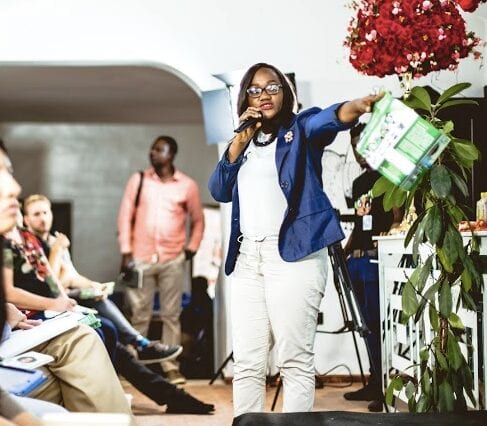
A few decades ago the notion of the Triple Bottom Line became commonplace. The phrase introduced the concept that businesses, particularly global brands, have a responsibility to ensure that their business and their business practices not only render to them (internal) economy prosperity, but that their business practices safeguards the environment, and delivers social responsibility (external). The Three E’s – economy, ecology and equity. More recently, the notion of sustainability and climate change has become a global dictate for ensuring and assessing the actions of corporations – again as a measure of ensuring that corporations take responsibility in and for their global business practices. This ensure that in operating their businesses, they are not in any way depleting the environment and livelihoods, nor negatively impacting the lives of future generations. As usual, naysayers thought it was all hogwash – a liberal, goody-goody notion that some had latched onto to make their businesses look good. A notion that was good for shareholder value and drenched in profit-making with little thought for ecology and equity. But I beg to differ. You see, the future is not only a place we are going, it is also a place we are creating – and as such there can be a trade off between the present and tomorrow, depending on how we live, and ultimately how we lead and how we do business. What am I driving at? I am very much interested in the idea of transformational business leadership as opposed to transactional business leadership. My premise is that business leadership should be transformational and purposeful, and not merely transactional. Your business leadership should have a positive and resounding transformational impact on your internal (staff) and external (clients, shareholders, and partners) stakeholders, to the extent that the leadership positively impacts society at large. Not my responsibility, I hear you say. Well, let’s look at the business landscape and how this notion is being played out in the business sector – and particularly by two women in business. PwC released its 19th Annual CEO Global Survey at the recently concluded World Economic Forum in Davos. Shannon Schuyler, President of PwC Foundation and Chief Corporate Responsibility and Purpose Officer, in an article in the Huffington Post, wrote that the 19th CEO Survey had revealed that while CEOs and companies may define purpose differently, for many ‘purpose is why their business exists’. More importantly, the CEOs noted that they recognise that companies have a wider responsibility to provide value to all stakeholders: ‘business profits and societal prosperity are inseparable: purpose is what aligns and unites them.’ Ms Shannon words were music to my ears. Essentially, global business leaders accept that business is not merely a secular, transactional act, but an intellectual and purposeful act to respond profoundly to societal needs. And that is why you need transformational leaders, leaders with unusual, far sighted ways of thinking and doing, to lead businesses – and ultimately – to shape societies. Jen Lim is the CEO and Chief Happiness Officer of Delivering Happiness – a company she co-founded to inspire science-based happiness, passion and purpose at home, work and in everyday life. For Delivering Happiness, companies can successfully use happiness as a business model to increase productivity and profitability, proving that companies with a higher sense of purpose outperform others by 400%. Here’s the premise My premise is that the higher sense of purpose, the ‘why’ of your business, is the strategic and leadership responsibility of the business leader to know, own, cascade and secure buy-in into by internal and external stakeholders. People generally are always pursuing happiness. They want to be part of something big and bigger than themselves – and what a better place to know and find that than the place where they spend two-thirds of their day, i.e. work? For me, it will take transformational leadership to build the business of your dreams. It will take transformational leadership to have a sustainable business. And it will take transformational leadership to have a truly loyal, dynamic and productive set of internal stakeholders – as well as a set of external stakeholders that render you and your business profit. The transformational business leader is concerned about all their stakeholders – the enterprise itself, the clients, their staff, their business partners – and they go out of their way to identify the needs of each one, after which they seek to arrive at a place of business operations that delivers joint value to all stakeholders. Ms. Schuyler delivered superbly on an enthralling Twitter chat on 18th February about using purpose to drive business. She demonstrated explicitly that in businesses, purpose leads to more innovation, focus, human intensity and quality – and that each of these drive profit. Business therefore is not only a commercial transaction for financial gain but also a potentially transformational endeavour for financial and societal good. Business is purposeful, and there is business in purpose.
Want to go to Harvard Business School? Here’s how these African women made it happen

Harvard Business School is arguably the world’s most popular and influential institution of business education in the world. With alumni leading the globe’s most powerful companies, it’s no wonder that many Motherland Moguls have HBS at the top of their list for their MBAs. We’ve caught up with two HBS students to learn about why they chose the school, the strategy they used for their applications and their best resources during the application period. Maimouna Diakhaby MBA Class of 2016 Country of Origin: Guinea Pre-MBA Job: Business Analyst at Rio Tinto Favourite Class: Managing International Trade and Investment Why did you think an MBA was the right step for you in your professional journey and why did you think HBS was the best place for you? After 4 years of work experience, I knew it was time to round my analytical skills with leadership and management skills. I was also looking for an education that would give me a comprehensive understanding of how different parts of an organization fit together to create value. While there are amazing programs in the US for any aspiring student, my first choice was Harvard Business School for 2 keys reasons: First, the school’s leadership focus was not only used for promotional reasons but also embedded in the entire curriculum. At HBS, every case discussion puts you in the shoes of a leader (CEO, head of state…) and forces you to make a decision that could change the course of an organization. The school attracts, selects and shapes individuals who are striving for technical excellence and looking to have an impact and influence the environment they live in. The other reason I chose HBS relates to the school’s branding in Africa. As a woman looking to contribute to the continent’s development, I wanted to get a degree from a school with a strong reputation. In fact, women are too often relegated to more “feminine” roles and rarely taken seriously in some regions. The HBS network and reputation in Africa will hopefully allow me to break those barriers and focus on creating value. How did you stand out in your application and show the admissions committee what you could offer the school? It’s really hard to isolate what made me stand out. The admission office states that it looks for a well-rounded applicant and that all aspects of an application are equally important. In my application, I just tried to convey my story in a coherent and comprehensive way. I made sure to present all aspects of my background- strength and weaknesses included. I strongly believed that if HBS was truly a place where I would thrive, my true ambitions and flaws would be accepted. I also believe that showing that I was a “balanced” prospective student played an important role. The typical HBS student has had a successful career coupled with strong extra-curriculum involvement that truly reflects their passions. What area of your application did you spend the most time on and what was your strategy? I spent the most time crafting my essay. I must have read it a thousand times (no jokes). I really wanted to make sure that it was an accurate reflection of my personality and would effectively allow the admission team to assess the kind of leader I was aspiring to become. It is really important for prospective students to make sure their essay is coherent with the rest of their application. Also, use it as a platform to introduce yourself without exaggeration or disguise. What resources/websites/programs were helpful for you during your application process? GMAT Club is a fantastic resource. Most MBA students I know have referred to it at one point or another. People use it to ask questions, share information with other applicants or just learn useful tips on the gmat. The Manhattan GMAT preparation books were also my go-to reference while prepping for the test. READ MORE: Founder of MBA Mama shares with us her advice on successful family planning during your MBA Sola Olaniyan-Bright MBA Class of 2016 Country of origin: Nigeria Pre-MBA job: Adidas Group Finance, Germany Concentration at HBS: We don’t have official concentrations but I’ve had the most electives in the fields of Entrepreneurship and Start-up Finance. Favorite classes so far: Three come to mind: 1. Entrepreneurship and Global Capitalism: a business history course that studies the lives and journeys of successful businessmen and women from the 18th century till date. I loved this class because it challenged us to study different aspects of the world’s biggest entrepreneurs and to form our own opinions on the decisions they made from a financial, moral, and ethical standpoint which, of course, ended up being very personal for everyone who took the class. 2. Entrepreneurial Finance: We studied the mechanics of businesses, mostly start-ups, from idea to execution primarily through the lens of investing and other financing decisions. 3. Business, Government, and the International Economy (popularly known as BGIE): It’s macroeconomics in practice where we study a different country every class to understand the underlying drivers of their performance and sometimes predict the future of their economies over time. Why did you think an MBA was the right step for you in your professional journey and why did you think HBS was the best place for you? Pursuing a graduate degree is something I’d always known I wanted to do. Having studied Accounting at university and completed the ACCA exams (chartered accounting qualification), I was initially looking to do an MSc in Financial Engineering or something along the lines of strengthening my roots in finance. However, after 5 years in asset management and management consulting across various industries, I knew I wanted to go for a degree that would be much more than an academic exercise. I wanted a degree that would better equip me to be a rounded business leader by exposing me to as many different aspects of business as possible while keeping me globally competitive and this made an MBA a clear choice. I chose HBS for 3 reasons the brand, the learning style (case method), and the network. The brand is very strong especially on the African continent and of course beyond. The case method puts you in the driver’s seat of
8 free business apps you should download right now

We’re not going to point any fingers but some of you are addicted to your phones. Not in a cutesy ‘I just like to capture moments type of way’, but in an ‘if I don’t find network right now I will slap someone’ kind of way. It’s not our place to judge but that type of addiction might demonstrate your priorities aren’t straight. If you’re spending more time on your phone chatting and double tapping instead of getting work done, you might soon run out of money to pay for that data bill. Don’t fret —after all that doom and gloom you know your home girls at SLA have come to hook you up. What if you didn’t have to choose between work and play on your phone. What if there were these magical tools that could help you track your sales while you take your selfies? That magical tool would obviously be two heads, and unfortunately for African parents across the world, we haven’t figured that one out yet. All we’ve done is find some cool mobile applications you can download right now to make it easier to get your work done while you’re on the go, looking for network signal. 1.Track My Life Ever wondered how much time you spend watching makeup tutorials on YouTube? Track My Life can help you figure out how you’re spending your time. However, it won’t be able to stop you from clicking the next video. This app can help you figure out which activities are taking up the majority of your time and if those aren’t high value tasks or helping you bring in more revenue, then they’ve got to go! 2. CamCard Did you lose the business card you got from potential bae while you were “networking”? With Camcard you can manage and exchange business cards right from your phone. Once you get a card, you scan details and they are stored directly in your phone. If you did mean to lose that card, what excuse are you going to use now? Your dog chewed it up? 3.Booksy Biz Picture this, your side hustle as a makeup artist is starting to pick up, you’re getting booked every other weekend and it’s getting harder to keep track of your new clients. This is not the time for you to forget about appointments and lose the goodwill you’ve built up. Booksy Bizz is a mobile appointment calendar and scheduling app that can help you manage staff, communicate with customers and manage appointments. This app will make it seem like you have a personal assistant working 24/7 when it’s actually just you in your pajamas, eating ice cream. 4.QuickBooks Online Keeping track of expenses is the worst!! Who even has time for receipts? says the person who doesn’t want their business running out of money. If you want to build a long term and financially sustainable business then you have to keep track of the numbers. QuickBooks let’s you invoice clients and manage your expenses. Now you’ll have no more excuses figuring out where your money went. 5.Perch Small Business Thanks to Perch Small Business you don’t need to reserve your Instagram stalking your friends and ex boyfriend’s new fiancée. You can now extend those skills to your competitors and their social media movements and know exactly what they’re up to. Use Perch to get a bird’s eye view of reviews, social posts and promotion for you and your competition all in one place. 6. Tiny Scanner Why is it that every single business transaction in Africa requires tons and tons of paperwork? I feel like the next time I go to KFC they’re going to ask for 2 passport pictures and a signed affidavit. If you’re in an industry that requires a lot of paperwork, then having access to your files in an organized manner is necessary. Tiny Scanner let’s you scan your documents and save them on your mobile device, iPad, or tablet anywhere you go. 7. HootSuite It’s great that Instagram allows to switch between multiple accounts, but what about the wahala in switching between multiple social media platforms and keeping track of them? Hootsuite allows you to manage multiple networks, schedule posts, and engage your audience all in one place. 8. Wunderlist Few things can compare to the relief you feel after checking off something on your to do list. This app will keep your business in sync whether you are managing multiple projects, delegating assignments to co workers or just making sure you actually eat during lunch time one day this week. Know any other cool apps that have helped you increase your productivity, keep your mind focused and helped your business grow? Share them with us.
Copyright: Preserving your creative work in a social era

The last segment (here) was to follow with a detailed discussion on the non-disclosure agreement. However, conversations with some entrepreneur friends this week warranted a discussion about copyright protections. During the discussion, it was quite evident that some entrepreneurs believe the notion of copyright is all but a fictional concept in frontier markets like Nigeria, especially in a social era where creative works are easily available to the public through social media sites. The comments during the conversation included, “no one cares about copyright, if my work is stolen, life goes on,” “but what courts in Nigeria have the time to resolve copyright cases when it has more interesting election cases pending before it?” and“I barely have enough time to run my business let alone go through the tedious copyright registration process.” During the colourful conversation, entrepreneurs seemed to agree that copyright protection is alive and well in Western countries. However in frontier markets, copyright protection has been tucked deep into the judicial mountains, making enforcement merely a fantasy. The comments of these highly talented entrepreneurs were littered with elements of ambiguity about enforcement procedures, and most importantly, what constitutes copyrightable work. 1. Copyrightable work—Distinguishing the leaves in the forest Copyright protects creative and original expressions such as images, music, and texts. In some jurisdictions, copyright protects particular expressions of ideas and not the general idea itself. For example, the U.S. Copyright statute dictates that “[in] no case does copyright protection for an original work of authorship extend to any idea, procedure, process, system, method of operation, concept, principle, or discovery, regardless of the form in which it is described, explained, illustrated, or embodied in such work” (17 U.S.C. Section 102(b)). Similarly, the Nigerian Copyright Commission noted that a “work is ‘created’ when it is ‘fixed’ in a tangible medium.” Thus, in some jurisdictions, copyright protection does not reach beyond the protection of the specific form of idea. To illustrate, if you and a friend both decide to independently create a painting of Mount Kilimanjaro, your two paintings could qualify as copyrightable work if you both expressed your work in your original forms. To this end, it is not the idea of painting the mountain that is protected; rather, the original form or the painters’ expression of the mountain is what is protected by copyright. Simply put, copyrightable work is analogous to the leaves in a forest; each leaf appears in a form that is distinguishable from the other despite having similar characteristics with other leaves. The second point raised during the conversation was the lack of time to register their work. The good news is that in some jurisdictions, this is not an issue because protection is automatic once one’s work is released into the public domain. In such instances, registration becomes a mere formality and helps put the general public on notice. Registration also has the added benefit of making enforcement and seeking judicial remedies easier. Thus, depending on one’s jurisdiction, registration of one’s work may not be a prerequisite to benefiting from copyright protection. Nonetheless, formal registration is highly recommended. 2. Copyright protection is well and alive, even in African countries! Recent developments this month reminded me that copyright protection is alive and well, even in African countries! Last week, The Nation newspaper reported that “[a] Federal High Court in Abuja, on Friday, February 12, dismissed the preliminary objections filed by former winner of the Face of Africa pageant, Oluchi Onweagba, who was contesting a copyright suit filed against her”. The Nation noted that Chudi Charles, an executive officer of International Pageant and Films, filed the infringement suit seeking N780 billion in damages on grounds that the defendants used West Africa’s Next Top Model, his registered brand, without his consent. Indeed, the dismissal of the preliminary objections does not necessarily predict the court’s ruling on the matter. Nonetheless, judicial decisions over the past few years signaled the judiciary’s commitment to enforcement. For example, in November 2015, a federal high court sitting in Lagos awarded an artist, Dr. Sunday Adeniyi Adeye a/k/a King Sunny Ade, damages in the amount of N500 million for copyright infringement. In 1997, King Sunny Ade filed suit against African Song on grounds of using his master tapes to produce duplicates of his work for public sale without his consent and any remuneration. Several years later, the court ordered the defendants to pay damages. (Sunday Adeniyi Adeye vs. African Song FHC/L/CS/196/97). Similarly, in Angella Katatumba v. The Anti-Corruption Coalition of Uganda (ACCU) (H.C.C.S No. 307 of 2011), a Ugandan high court ordered the Anti-Corruption Coalition of Uganda (“ACCU”) to pay damages in the amount of UShs. 25 million to Katatumba, an artist, on grounds that ACCU incorporated Katatumba’s song into an advertisement jingle without her consent. Likewise, in Nonny Gathoni Njenga & anor v. Catherine Masitsa & 2 ors Civil Case No. 490 of 2013, a Kenyan high court ordered the defendants, Masitsa et al., from reproducing, translating, or adapting the plaintiffs’ literary work, “Wedding Show with Gathoni” into the defendants’ TV Show “Samantha’s Bridal Show.” Despite the fact that “Samatha’s Bridal Show” was running prior to “Wedding Show with Gathoni,” the court’s ruling was made on grounds that the defendants “changed their old running order [of their TV show, Samantha’s Bridal Show] and copied the plaintiffs.” Thus, although copyright cases may not make headlines very often, this does not necessarily mean that enforcement has been erased from the judicial fabric. 3. Practical tips As an entrepreneur, you should register your original expression with your copyright registration office. Use copyright notices, e.g. ©, on your copyrightable work. Such notices not only puts the public on notice but aids in preventing an forger from making an innocent infringement defense—a defense whereby the forger claims that they were not aware their act constituted copyright infringement. If you are using photos, music, or other third-party material for your new venture, seek appropriate consent. You do not want to be subjected to a copyright lawsuit that could potentially
Motherland Mogul playlist: Women’s History Month Edition

Shout out to all the ladies in the house!!! It’s Women’s History Month and it’s that wonderful time of year when we get to recognize all of the incredible women who’ve made an impact on the world, our countries and our communities. It’s that time of the year to strategize on how to improve the conditions for women across the globe. No Women’s History Month would be complete without a playlist of fist raising, hip shaking anthems to inspire and motivate us to keep working for equality and opportunities for women everywhere. Here are some of our favorite songs that you should keep on repeat this month. Lira – Rise Again Beyoncè – Grown Woman Stella Mwangi – Identify Yourself Queen Latifah – UNITY BLU3 – Strong Woman Destiny’s Child – Independent Women ONE Campaign – Strong Girl Brenda Fassie – Good Black Woman Whitney Houston & Chaka Khan – I’m Every Woman Alicia Keys – Girl On Fire Becca – African Woman Aretha Franklin – Respect What are some of your favorite inspiring and motivating songs by women? Let us know and we’ll add them to the list.
Come what may…business must go on

To all intents and purposes, many economies on the continent have seen a slowdown. Businesses are being tested for resilience, they are being pushed to the edge, and the strength and acumen of their value chains are being tested. But come what may, businesses must go on. They may not thrive as they when the economy was buoyant, but they must continue in earnest. As I think about these times, two things come to mind. The need to build a strong brand to have a sustainable and viable business in and out of a slowdown. The need to continually prepare and plan to scale your business around the core business activity at the earliest possible opportunity. Building a brand. Building a business What is the difference between a brand and a business? A business is an enterprise that creates an opportunity to trade and generate revenue. A brand is made up of intrinsic values, quality and characteristics that endear clients and aspirational clients to the business. I always say when starting a business, it is crucial to focus on building the brand first, so that you can have a viable, sustainable business in the medium to long term. And building a brand is not child’s play. A business brand is almost always made up of the personal and business values of the CEO. Especially for a small business, it is almost impossible to separate the personal brand of the CEO from the business brand. These become indistinguishable given that the CEO is the face of the business, and most likely the primary client-facing representative of the business. For the business owner and CEO, this brings home the need to reflect on, define and articulate your personal and business values right from the outset. This delivers you your business brand. Understand and define what you are trying to achieve with your business and what values are aligned with that personal and business aspirations. Then, commit to live those values – through how you operate your business, how you choose and interact with clients, the quality of your services and products, how you recruit and engage with staff, how you present yourself to the world – presentation skills, public speaking skills, networking, and personal style. When we focus on these from the outset, we endear clients, and essentially revenues, to our business, create brand loyalty, and, come what may, in and out of recession, we enjoy a level of brand loyalty. Scaling your business Most business start with one core idea, concept, initiative, but there is always an opportunity to scale and expand that business. Think of a fashion brand that starts initially producing clothes, then start to produce and sell accessories, then later on goes into interiors, and maybe even then a lifestyle venture such as a restaurant. What enables such a business to do that successfully is the power of their brand. When a brand is strong, it has a following, and clients will seek out that brand for every aspect of their daily needs. It’s an intentional decision. Many global corporations and their CEOs at one point decided to develop their personal and business values (=brand) to keep their clients and customers hooked. In the event of an economic slowdown or economic upturn, their business, through their brand strength, remains a viable and sustainable enterprise. You can do it! The price of business and entrepreneurship is uncertainty, and the prize is a vision fulfilled, success even in the midst of uncertainty. Someone recently shared with me a precise lesson in living. They said, if we knew the times and seasons, if we knew exactly what would happen to us or our business next month, next year or in 3 year, we would not need faith, we would not need to be resilient. It is often the uncertainty in business and the ambition and determination to curb that very uncertainty that fuels the drive to success. Risk taking buoyed by a strong brand can bring some comforting business stability. When we strive to become better than we are, everything around us becomes better, too – Paulo Coelho, The Alchemist
Twitter Chat with Yasmin Belo-Osagie: Getting Into The Graduate School of Your Dreams (Mar 14)

Missed this event? Make sure you don’t miss the next one by joining our community today. [vc_row][vc_column][vc_custom_heading text=”Click here to follow She Leads Africa on twitter” font_container=”tag:h2|text_align:center” google_fonts=”font_family:Oswald%3A300%2Cregular%2C700|font_style:400%20regular%3A400%3Anormal” link=”url:http%3A%2F%2Ftwitter.com%2FSheLeadsAfrica||target:%20_blank” css=”.vc_custom_1457117576423{border-top-width: 2px !important;border-right-width: 2px !important;border-bottom-width: 2px !important;border-left-width: 2px !important;padding-top: 2px !important;padding-right: 2px !important;padding-bottom: 2px !important;padding-left: 2px !important;border-left-color: #1e73be !important;border-left-style: solid !important;border-right-color: #1e73be !important;border-right-style: solid !important;border-top-color: #1e73be !important;border-top-style: solid !important;border-bottom-color: #1e73be !important;border-bottom-style: solid !important;border-radius: 2px !important;}”][vc_column_text]Applying to graduate school can be an exciting but nerve wrecking time. Graduate degrees have the potential to help you add advanced knowledge and credentials to your CV and move up in the rankings at work. However, competition is stiff for the best programs and even qualified candidates can struggle when it comes to convincing admissions officers to allow them entry. Join us on Monday March 14 for a Twitter Chat with our very own Yasmin Belo-Osagie where she’ll help us figure out how to get into the graduate school of our dreams. Follow She Leads Africa on twitter and use the hashtag #SLAChats to ask your questions and participate in the discussion. Topics that we’ll cover: How to develop your application strategy The best study tools to help you prepare for the entrance examinations How to get letters of recommendations to help you stand out Tools to help you manage all of the different deadlines and requirements [/vc_column_text][vc_column_text]About Yasmin: Yasmin is a co-founder of She Leads Africa where she leads the events and offline programming team. Prior to starting SLA, she worked as a management consultant at McKinsey & Company where she focused on developing multi-year growth strategies for large organizations. She graduated from Princeton University (majoring in history) and is now mid-way through a JD/MBA at Harvard Law School and Stanford Business School.[/vc_column_text][/vc_column][/vc_row][vc_row][vc_column][vc_custom_heading text=”Click here to follow She Leads Africa on twitter” font_container=”tag:h2|text_align:center” google_fonts=”font_family:Oswald%3A300%2Cregular%2C700|font_style:400%20regular%3A400%3Anormal” link=”url:http%3A%2F%2Ftwitter.com%2FSheLeadsAfrica||target:%20_blank” css=”.vc_custom_1457420347838{border-top-width: 2px !important;border-right-width: 2px !important;border-bottom-width: 2px !important;border-left-width: 2px !important;padding-top: 2px !important;padding-right: 2px !important;padding-bottom: 2px !important;padding-left: 2px !important;border-left-color: #1e73be !important;border-left-style: solid !important;border-right-color: #1e73be !important;border-right-style: solid !important;border-top-color: #1e73be !important;border-top-style: solid !important;border-bottom-color: #1e73be !important;border-bottom-style: solid !important;border-radius: 2px !important;}”][/vc_column][/vc_row]
Creating impact that works: Tips from my start-up experience in Ghana
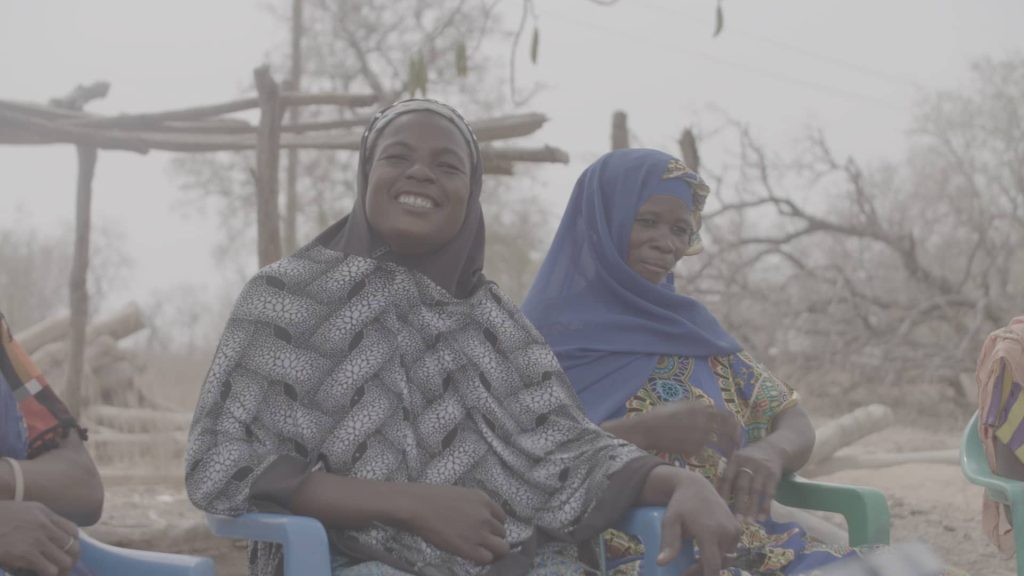
Naa-Sakle Akuete is the founder of Eu’Genia Shea, the first line of premium shea moisturizers dedicated to using 100% natural ingredients in partnership with female cooperatives in Ghana. She shares what she’s learned from working with rural communities for her natural products. When my mother founded a shea butter manufacturing company in Ghana in 1999, she had never heard the term “double bottom line.” She did, however, know that if she was going to succeed in business, she wanted to do so in an ethical manner. By partnering with pickers from female cooperatives, paying them above-market prices, and offering organic and financial training, she was able to ensure that her community thrived along with her business. Her decades of experience inspired me to start my own finished products line last year: Eu’Genia Shea. As I pore through her life’s work, applying lessons learned and trying to avoid mistakes already made, one point shines through brightly: good intentions do not always yield good results. Hopefully, some of these points will be helpful to others aiming to make mutually beneficial business partnerships in rural developing communities. Build Trust You know yourself, you understand your motives, and without a doubt, your heart is in the right place. But even if you are native to the country/region/community, how can others be assured of this goodwill if they do not know you? SNV is a Swiss nonprofit dedicated to “creating effective solutions with local impact”, in this case facilitating savings. They entered Damongo, Ghana with speeches and promises, but without any connections. The cooperatives with which we work were understandably wary. How many times have they encountered non-profits who raised their hopes only to disappear, or worse still, people claiming to have their best interests in mind, only to cheat them? They sent the confused SNV away then SNV came to my mother to explain their mission. My mother spoke on their behalf, and now SNV is a valued contributor to these cooperatives. Bottom line: Understand the legacy of the community and approach accordingly, whether through an intermediary or through years of proving yourself (which takes a bit longer, but Mum can confirm it works!) Listen There are thousands of aid organizations flooding millions of dollars into poor communities globally. Most of them have good intentions, but their money still goes to waste. For example, on one visit to our facilities in Damango, Mum occasionally saw workers without shoes. As a westerner, or a native with a westerner’s perspective, this is jarring for a number of reasons, not least of all because of the safety implications. She spoke with the women and made a point of purchasing shoes for all of the workers on her next trip to the US to ensure that no one was left unprotected. Upon her return, some women again were not wearing shoes. When she inquired about it, she discovered two things: some husbands were absconding with their wives’ shoes and some women found it difficult to maneuver in the new shoes. Had my mum taken the time to dig a little deeper originally, she would have found that buying local shoes closely fitting each woman would have helped solve both problems. Encourage them to maintain assets Now you’re partnering with a community whose needs you understand and are able to address. You’ve suggested ideas and implemented technology where appropriate; they’ve told you why half of your bright ideas aren’t quite so bright, and everything is moving along swimmingly. It’s come time to leave them for a couple weeks, months, or years… Before you leave operations in their hands, make sure you’ve given them the tools and know-how to maintain (and how often to maintain) any machinery you’ve introduced. The once shiny, now corroded Japan Motorbike rusting by our plot is a great example of something that made life easy for a couple months before falling into disrepair. Choose the right customers You’re running a business not a charity. On one end, you have Bill Gates in Microsoft era and on the other, Bill Gates in the Bill & Melinda Foundation era. You don’t have to be either extreme, but what you have to do is make enough money to keep yourself afloat and to continue the work you’re doing. If social impact causes your products to be slightly more expensive than competitors, find the customers who care. And make sure your product is worth it! At Eu’Genia Shea, not only do we pay above market wages, provide training, and give 15% of our profits back to our workers, our longevity in the industry helps ensure our products are always of the highest quality. Our customers get expertly moisturized skin, our partners make a good living, and we get to keep on doing what we love — win/win! Transparency Your aim is to do great things, so be open about it. Maybe you’re not doing quite as much as you’d like yet. For example, 15% of profits covers some of the tuition costs of our worker’s children, but not all. I’d love Eu’Genia to be able to give all the children in our communities a free education. I’d love to provide all past and future workers with a pension when they retire. I’d love to offer free daycare to workers whose children are below school age. The reality, however, is that I’m not in a position to do any of this yet. That doesn’t mean that I shouldn’t try though. Along the way, I’m sure I’ll make mistakes. But my mistakes can be learning points for me and other entrepreneurs like me. Being transparent about our goals and processes not only allows others to give us valuable feedback, but also supports the growth of all enterprises looking to make an impact. We live in a big and complicated world with many societal issues I’ve never heard of or understood. If those who are able can contribute to improve the landscape how best they know, our actions will magnify each other’s. I’m excited to