
Nneji Akunne: We are truly passionate about each customer

Inspiration can come from anywhere and when Nneji Akunne and siblings weren’t satisfied with the skin care options that were available to them, they decided to develop their own. With experience as a Sustainability Fellow for H&M Germany and marketing consultant for smaller startup brands, Nneji has used her experience to develop ILERA Apothecary, a luxury personal organic skin care line. Why did you start ILERA Apothecary? We started ILERA Apothecary because we sought transparency in the personal care industry. Making our own products for personal use and seeing how effective they were made us wonder why other products within the industry needed so many ingredients to do the same job. We looked as far back as 10,000 BC on more traditional practices, where Ancient Egyptians used elements from the earth to heal and protect their skin, and realised that the foundation of natural beauty came from the ingredients in the products used each day. Why do you think organic and natural personal care is important and matters in the beauty industry? What you put in your body is just as important as what you put on it. We are so blinded by big corporations marketing and advertising that sell us “younger looking skin” that we don’t pay attention to the ingredients used in each product. Because the FDA does not currently regulate the ingredients of beauty products in the U.S. with the same thoroughness done in the E.U., it’s up to consumers to read and understand each product’s labels; which in reality is something that’s not always done. When you choose organic skincare, you’re choosing products whose ingredients work with the natural systems of your skin, not the scientific formulas that have been tested on animals to produce results unrelated to human beings. Organic and natural personal care companies like ours that are truly passionate about each customer, carefully spell out the ingredients used in all products offered and the reasoning behind them. What makes ILERA Apothecary different from other personal care startups? ILERA Apothecary aims to educate our customers about their overall health. It’s one thing to simply promote a more natural skincare regimen but, as stated before, what goes inside of your body is important as well. We take a more hands-on approach and speak about the health of the individual from all areas like diets, mental health and lifestyle. All skin types are not created equal and while it would be easy to sell the same product to every customer as they come, we offer consultation services where we can get to know the customer better and understand their skin and lifestyle needs. What is your favourite product and why? Both of our personal favourites is the unscented body butter. I (Nneji) am all about the touch and feel of the skin along with being able to determine my scent for the day. For Chinonye, the body butter leaves her skin feeling so rich and smooth day and night which is very important since she has dry skin. For your business to get to the next level, would you prefer funding or a high-value mentor? High-Value Mentor. I say this because funding would only be able to take us so far. With a mentor, not only would the individual be able to provide us with networks we may not have been granted access to, but also the insight and experience of a seasoned mentor are worth way more than money can buy. What can we expect from ILERA Apothecary over the next 6 months? We are looking to expand the brand into international markets and entering into more retail spaces. We are also working to expand our product offerings to include a separate men’s line. While our products are currently unisex, we want to cater to the specifics of a man at all life stages. What is the most important thing you’ve learned on your journey towards healthy skin and body care? Understanding the importance of planning for the future right now has shifted our lives tremendously. We always heard that your body is your temple and it should be treated as such but it wasn’t until we began testing products to sell that we truly understood that notion. Skin is the body’s largest organ that serves to protect your insides from the outside world. Where you live, what you eat, and what you do on a daily basis can determine the type of life you’ll live once you get further in age. Living healthy and active lifestyles are our goals as we age and taking care of our skin is one of the first steps in making that happen. Want to see women you know featured on SLA? Tell us what amazing things women are doing in your communities here.
Omnia and Salma: We want to connect the Sudans using culture and technology
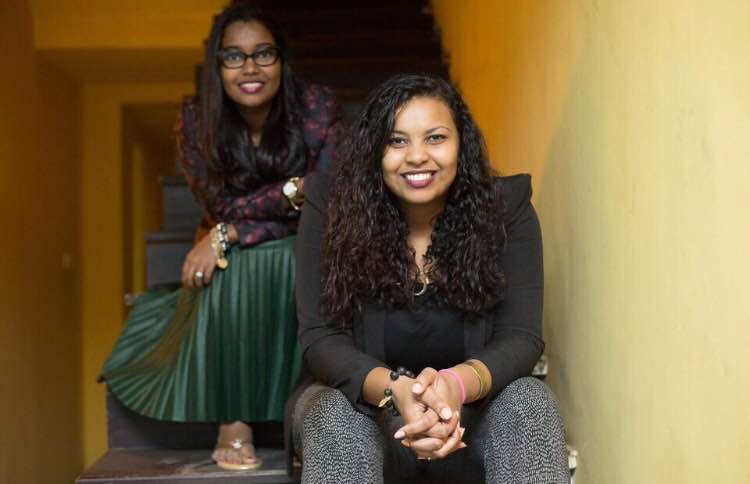
Sudan and South Sudan have been under fire for decades from the perils of civil war, famine, poverty, corruption, Islamic jihad and other crisis that affect the countries politically, socially and economically as well as culturally. Omnia Shawkat and Salma Amin Saad decided to build a contemporary platform to voice independent opinions of the diverse, intelligent, and peaceful youth that diverge massively from the mainstream that places them in tiny status-quo boxes. Omnia and Salma started the online magazine Andariya for Sudan & South Sudan in both English and Arabic to lifting our spirits, sharing contemporary analysis and opinions & promoting creative arts ideas and events. Since the launch of the magazine they’ve also launched a photography project titled “MyKhartoum” to show the beauty of the capital city with a series focused on Juba coming soon. Omnia and Salma shared with us why online media is so important, why Andariya is different and what they’ve learned about organic growth. Why do you think digital media matters in Sudan and South Sudan? Sudan and South Sudan have a shared cross-border culture that was severed along with the political ties in July 2011. The current generation witnessed a tough time of great polarization and we had no time to heal, reconcile or mend our broken matter when the political secession came upon. This need to open the road of communication is one great reason why digital media matters right now; it transcends boundaries. The publishing industry is also lagging behind due to many factors (economic, censorship, access, language etc.) and a way to overcome some of these challenges and reach and engage a wider audience that is already online, beyond even the Sudans (there is a massive diaspora population from both countries) is through the use of digital media of various types. What role would you like Andariya to play in the development of these two countries? Our mandate is purely cultural, so if we are to perfect our mandate, the cultural footprint of the Sudans on the internet will be enhanced along with more offline engagement due to the conversations that spring up online. One underlying factor is to really connect both countries (both local and diaspora communities) over intersecting cultural values, opinions & aspirations. Both Sudans are in similar development stages, and cultural development is key in advancing all the other pillars of development. What makes Andariya different from other youth-focused media platforms? There are the basic building blocks of being a bi-lingual digital cultural platform for South Sudan and Sudan. We target a larger age group- for once, the “youth” or younger generation is online and discussing matters of importance to them in a common platform that welcomes all views. More importantly, we are discussing issues that older generations have exclusively hashed out over the last few decades (i.e. identity issues, culture and acculturation, etc.) and adding our perspectives to the conversation. Another differentiating factor is our belief in using different mediums to reach diverse audiences. We’re across social media platforms but slowly growing into creating online-offline campaigns to engage more people. Can you share your favourite story from the platform and why? The way our community was formed is both interesting and inspiring; we practically found each other as if we were long lost souls. We have an incredibly harmonious relationship with more than 50 community members across the world, and we treasure this the most. For your business to get to the next level, would you prefer funding or a high-value mentor? We’d prefer to have a mentor to help us reach that next level. We’re a very hands-on platform that organically adapts to challenges and opportunities and finding a mentor who can understand the climate we operate in and growth we’re aspiring to would be invaluable. So far, we’ve taught ourselves what we discovered was needed, but a community of more than 50 people also means everyone brings wisdom and creativity to the table, so we’d like to think we’re currently being internally mentored. What can we expect to see from Andariya over the next 6 months? We’re launching a new website so we expect editorial growth. Our business model has shifted massively in the last four or five months so we’re experimenting with more offline engagement. A few online projects are also in the works. We are actively pursuing expanding our network and partnerships base both inside the Sudans and outside. What is the most important thing you’ve learned on your journey towards building Andariya? Be flexible. Organic evolution can be disruptive but can also be harmonious. Want to see women you know featured on SLA? Tell us what amazing things women are doing in your communities here.
Top 10 best black girl magic moments of getting ‘WANDA’ in formation
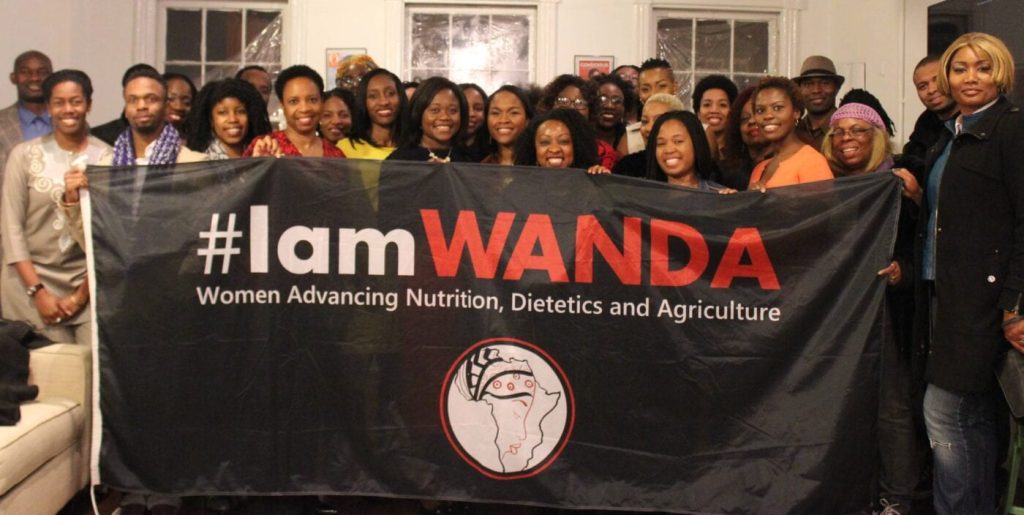
Earlier this month, I had the distinct pleasure of attending the launch of WANDA, a newly established nonprofit organization educating, empowering and advocating for women and girls of African decent to become leaders in the fields of nutrition, dietetics and agriculture. The launch, which took place on March 5th was held in honor of International Women’s Day and as such, featured a panel of innovative and groundbreaking social entrepreneurs in industries ranging from beauty and cosmetics, to television and entertainment. WANDA Founder, Tambra Raye Stevenson, groundbreaking in her own right as a National Geographic Traveler of the Year and founder of the DC-based NativSol Kitchen, describes WANDA (Women Advancing Nutrition, Dietetics, and Agriculture) as an initiative bringing together “sisters of the soil” to encourage all women, young and old, to lead in advancing the fields of nutrition and agriculture. “Women and girls are at the heart of transforming our communities through preserving our foodways, building vibrant economies and healthy communities,” she said. WANDA will also be launched in Abuja, Nigeria in May. As a Ghanaian-American woman just beginning her journey into the fields of agriculture and nutrition, I find WANDA’s mission intriguing. The organization promotes itself as a Pan-African initiative, which is hugely significant to me at this point in my career. Though most of my professional experience falls within the realm of international development, a heightened social awareness of racial injustice in the United States, underscored by the growth of the “Black Lives Matter” movement, has compelled me to offer whatever service I can to ensuring a healthy future for Africans AND African-Americans alike. Having shared this passion with colleagues and advisors, I have been told that I cannot have a successful career straddling both sides of the Atlantic – I would have to choose. The launch of this organization confirmed that I am not alone in my desire to protect and promote health throughout the African Diaspora. And for me WANDA is blazing a trail where there had been none before. If you missed the launch, check out my top 10 black girl magic moments that continue to resonate with me. 1. Getting in formation Inspired by the song that launched many a think piece, WANDA flexed its impressive marketing and social media muscle by borrowing from Beyonce’s celebrated and controversial song, “Formation” for the title of their event. Dubbing the launch, “Black Women Getting in Formation: Power of Media and the Arts to Advance Nutrition and Agricultural Advocacy,” WANDA brought attention to the convening power of a song some have identified as a call to arms for black women. In a recent interview with Black Enterprise, Stevenson shared that WANDA’s version of “getting in formation” means encouraging women and girls to pursue education and leadership roles in health and agriculture. For me, gathering under the backdrop of “Formation” and a national conversation about self-love and unapologetic blackness brought a palpable sense of pride and purpose to the launch. It was an environment that allowed participants to celebrate each others accomplishments, relate to each others struggles and commit to partnerships moving forward. A moment that stayed with me, however, was when panelist and WANDA honoree Rahama Wright, CEO of Shea Yeleen International reminded attendees that countless unnamed and unknown women have always and are still doing the work only recently championed by Beyonce. Way before the Super Bowl performance that stunned America, black women worked together to achieve success and independence. This moment from Wright reminded me that despite Beyonce’s undeniable contributions to the movement, the real heroes in the quest for justice and equality are in our midst and should not be overlooked. 2. Celebrating excellence in entrepreneurship Speaking of celebrating the heroes in our midst, WANDA set a great example by honoring four WANDA women leading the way in promoting positive images of blackness and black women. Along with Ms. Wright, WANDA honored Julian Kiganda, CEO of Bold and Fearless, DeShuna Spencer, Founder and CEO of KweliTV, and Mukami Kinoti Kimotho, Founder and CEO of Joodj. During the panel discussion, each honoree offered a unique perspective on the realities of being a black female entrepreneur. The most memorable moment for me was the vulnerability each woman shared in explaining that their successes were not won overnight. The panelists openly discussed the tendency in the black community to erase struggles from one’s personal narrative. By openly discussing the blood, sweat and tears that goes into growing an organization from the ground up, the panelists believe that more women may be encouraged to continue chasing their dreams even when they face hardship. It was a message that resonated with the audience who clapped in support of these personal and uplifting statements. 3. The food NativSol Kitchen provided the tasty, healthy and culturally relevant fare originating from different countries across the continent. Stevenson dazzled attendees with a Morroccan stew, West African rice dishes, savory black eyed peas, and my personal favorite from the event, bissap, or zobo as it is known in Nigeria. The drink is made from dried hibiscus leaves and is known for its tangy flavor and deep crimson color. NativSol spiced its version up with a touch of ginger, giving the beverage a kick that rounded out the meal. The message I took away from the impressive spread is that food from across the African continent and Diaspora is naturally delicious and healthy. Over time, departure from these foods and the uptake of the Western diet has left a staggering percentage of the Diaspora suffering from overweight, obesity, heart disease, hypertension, and diabetes. In the United States, over 75% of African Americans are overweight or obese, while in Africa nutrition related non-communicable disease will account for 40% of the disease burden on the continent by 2030. A part of WANDA’s mission is to reverse this trajectory and restore health to the Diaspora by embracing the heritage foods that characterize so many of its classic dishes. For more information about the link between culture, food and
5 TEDx Talks that remind us why failure is okay
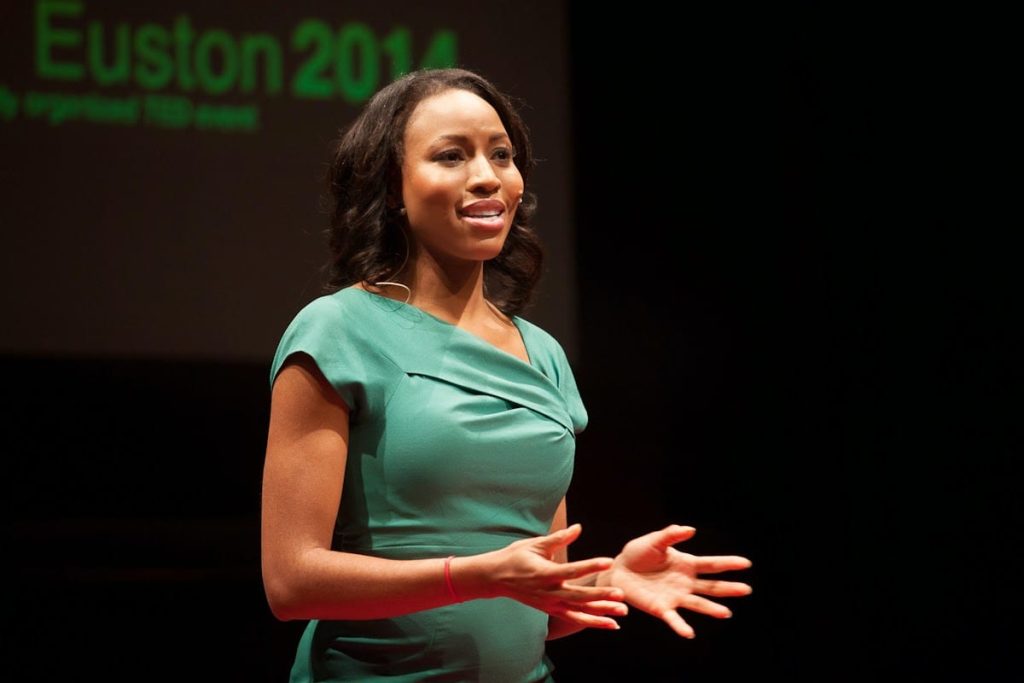
When your finances, relationship with bae, worklife and hair are on fleek, it can feel like you’re on top of the world. But the real challenge of growth comes when you get knocked down and everything seems to be going wrong. It takes courage to keep going when everything around you is saying stop. But don’t fret. The following TEDx Talks hit the nail on the head on why it’s okay to fail. Failing All the Way to Success | Jason Njoku “I was broke, I was living with my mom. But, I was still in the game” Jason Njoku dubs himself a “certified failure” after his 10 failed entrepreneurship ventures landed himself back on his mother’s couch. His TEDx talk chronicles how he eventually found a winning idea and became the CEO and founder of Iroko Partners, a leading online distribution company focused on the Nigerian entertainment industry. Trust your struggle | Zain Asher “But I think that having that competitive spirit and having the need for one upmanship and comparing yourself to other people again and again can actually bring out fears and insecurities that end up holding you back” Zain Asher was a receptionist in the US and no matter how hard she worked she wasn’t able to get a promotion. The company she was working at even began to look for external candidates for the position she was aiming for. Through that struggle, Zain realized that the learning process was worth it, and she is now a national business and personal finance correspondent at CNN International. Success is scarier than failure | Jemele Hill “If you ask me today what my fear is, it is success. It’s so much easier imagine failure, we do it all the time.” Jemele Hill first pursued writing because it was an outlet from her drug addicted parents. The negatives in her life were transformed into positives as she used that skill to become a celebrated sports columnist and television host for ESPN. Reprogramming your brain to overcome fear | Olympia LePoint “The truth is if we do not have a way to reprogram our minds to overcome fear. We will never be successful at our own specific missions in life.” Olympia LePoint failed algebra, geometry, chemistry and calculus in high school. Through her failures, Olympia learned to name and reject her fears. Olympia went from failing subjects in high school to becoming one of the top five graduates out of a 6500 graduating class with a degree in Mathematics. Olympia went on to get her Master’s degree in Applied Mathematics and is now an award winning rocket scientist who has helped launch 28 space shuttle missions to outer space. Perseverance and the power of not giving up | Christine Krzyzanowski “So many people have visions and dreams and they are put into uncomfortable situations then they quit and settle” Christine Krzyzanowsk thought she lost all glimpse of being successful when she quit her high paying job in New York City and moved to Texas. But through the lessons she learned from failed business ventures, she’s now become the co-founder and chief marketing officer for Xtreme Tilt, LLC., where she leads marketing for the gaming company worldwide. Sometimes we just see the end results of someone’s success but never get a glimpse of their journey. These TEDx Talks showcased the underlying theme of not letting failure hold you back from doing something you know within yourself that you are capable of accomplishing. Which one of these videos did you relate with the most?
Want your business to break out? Create a whole new market

As entrepreneurs already know, finding clients can be a long, frustrating and expensive process. When you have little or no brand recognition, you have to work so much harder to get noticed in the market. I recently read in Entrepreneur Magazine, that “it is so important to prioritize future-minded strategy over short term opportunism”, and I completely agree with this. So what does this mean for a young woman who wants to set her business apart? To me it means that this is the time to look for new business opportunities which typically haven’t been as welcome or open to women. While we may be more familiar with industries like beauty and fashion which are easier to start from home, developing a future-minded strategy requires us to look at opportunities beyond ourselves such as construction and heavy industries. It is with such opportunities that we must understand that the only limitations we now have, are those we hold on as truth in our own minds. Being in the industrial sphere does not even always mean that you would have to get dirt under your fingernails; the takeover of technology in almost every business sector has opened up so many doors that the line to what is possible, and impossible has become almost invisible. Many entrepreneurs and CEO’s know that competing head-to-head with other entities can become daunting and cutthroat, more so when markets are slow and quite flat. All leaders in any business would agree that if there’s an easier alternative to get out of the head-to-head competing, and instead find a clear opportunity that has not yet been tapped; they would opt for that direction. In a world with hundreds of thousands of different products & services, innovation has become central to the survival of any new of mature business. Creating new markets for your entity requires just that, INNOVATION’. An article published by Harvard Business Review titled ‘Creating new markets’ stated that, ‘Most companies focus on matching and beating their rivals, and as a result their strategies tend to converge along the same basic dimensions of competition. Such companies share an implicit set of beliefs about “how we compete in our industry or in our strategic group.” They share a conventional wisdom about who their customers are and what they value, and about the scope of products and services their industry should be offering. The more that companies share this conventional wisdom about how they compete, the greater the competitive convergence. As rivals try to outdo one another, they end up competing solely on the basis of incremental improvements in cost or quality or both.’ So, the first thing to understand about creating new markets is that it requires a different pattern of strategic thinking. Instead of looking within the accepted boundaries that define how we compete, entrepreneurs should look systematically across them. By doing so, you can find unoccupied territory that represents a real breakthrough in value. Let’s have a look at UBER, a company that, instead of buying a fleet of cabs and competing head-to-head with other cab companies, decided to do something completely different. The founders of UBER could have innovated and stopped at how they could get hybrid cars as part of their strategy or maybe even offer more comfortable vehicles with WIFI connection and well-trained drivers. Instead, the founders looked at how to make the process easier for customers and developed a tech friendly solution that provides lower costs through accurate monitoring of the distance travelled and drivers trained to a standard level of service. By looking at the problem and the industry from another angle, they have created an entire market for themselves and disrupted an entrenched industry that had little innovation over the past 50 years. I doubt any of the UBER founders had ever driven a cab for a living or dreamt of being a cab driver. However they were able to capitalize on this opportunity because those who had been in that industry were very comfortable with the same old way that they had been operating for years. They couldn’t see the way technology could disrupt the industry and they missed the opportunity. When thinking about creating a new market the popular question “What are my competitors doing?” should immediately be followed by the question “What should my competitors be doing?” Or more bluntly, how can I bring those who could be my head-to-head competitors to my mercy? If you already have a product line, maybe look into a second generation product to help the financial standpoint of the company by creating a new market altogether. Finding secondary marketing can be as easy as adjusting packaging. Look at Coca-Cola or Kellogg’s, these companies have an array of products which aren’t worlds apart where taste or ingredients are concerned. Exhibit A would be the much loved amongst women market, the Special K cereal. Special K promises health benefits & sells fitness indirectly to us and what woman doesn’t want to be fit or at least healthy? Then have a look at Coco Pops, same company, different branding, a bit more sugar and even a cartoon character to attract the kids market. All these have proven to me that as an entrepreneur, your perspective seldom matters above that of the market. You may as the entrepreneur see things ‘Ok as they are’, but one thing you should always bare in mind is that you’re not selling these to yourself, so get into the mind of the market. Think the unthinkable. Now here’s the challenge: Go back to your businesses. Identify your ‘old ways of doing things’ and see how you could catapult yourself to being an industry leader by offering an entirely new way of doing business. Don’t lose sight of your original product or service but explore ways that you could make a similar product that’s targeted at a whole new market. A new market demographic could be a simple as age group, gender or even race. Start innovating. Research how you could infuse technology into your new or existing business. Technology is on the rise, you may just be a tech pioneer in
9 reasons you should (seriously) consider an internship

I started giving proper thought to my career during my second year at university. The buzz towards the end of that period was crazy, and getting an internship was all everyone seemed to talk about. The energy was amazing; everybody wanted to get into big firms, especially the investment banks. I would be having lunch, walking along the corridors, working in the computer labs and it was the same – Goldman Sachs this, JP Morgan that, Morgan Stanley, Credit Suisse, Merrill Lynch, Barclays Capital, Deutsche Bank, BNP Paribas…my head almost exploded at a point because that’s all I would hear about. I wasn’t particularly bothered about getting an internship because I had gained a considerable amount of part-time work experience up until that time, and I had a very well paying summer job coming up at Edexcel (now Pearson UK). I had really enjoyed doing the job the previous summer because of the large number of Nigerian students working there. It was serious fun and there must have been at least 100 of us young Nigerians working there at some point. Anyway, a great friend and classmate of mine, Chitra, asked me if I had applied to any of the investment banks. I said, “Nope, Edexcel pays very well and I enjoy the work.” She must have thought I was crazy, because she gave me an, ‘Are you ok? Can’t you see what your mates are doing?’ look. She managed to convince me to put in at least ONE application. I procrastinated for a few days before deciding to check the websites. Lo and behold, I was too late – I had missed all the application deadlines (or so I thought). I didn’t even feel bad, thinking ‘it wasn’t meant to be’. It must have been a few days later when she asked, “Did you check the Credit Suisse website?” I was like “Errr”…Anyway she told me it was still open and that the deadline was that day. I was like “Today? How am I supposed to get it done in a few hours?” Long story short, I dropped everything else, put in my application and forgot about it. I was convinced they wouldn’t call me because of how I rushed to get it done. Imagine my surprise when I got called for a telephone interview – I couldn’t believe it. I passed the phone interview, and was invited to attend a 9-hour assessment centre (story for another day). I somehow managed to make it through that successfully, and the rest, as they say, is history. It was an A M A Z I N G experience. I got to meet and learn from so many brilliant people and was especially fortunate to have a great boss who helped me gain clarity with regards to a decision I had been struggling with for a while, like whether or not to do a master’s degree – I ended up not doing it). Best of all, though, was the lunch. They had ALL sorts in there, Italian, Indian, Chinese – you name it. Even the dessert was nice. I always looked forward to lunch because of the many different options. Anyway, let me get down to the real reason I wrote this post. What competitive advantage did my 3 months at Credit Suisse give me? Why should YOU intern? Internships are one of the best ways to get your foot in the door in terms of getting a full time role. Work hard while you’re there, and there’s a good chance you’ll be asked back. I was made a full time offer for a graduate position immediately after my internship and this meant I didn’t have to worry about applying for jobs in my final year. Upgrade your CV Even if you’re not made an offer where you interned, the experience will seriously boost your CV and increase your chances of getting a job elsewhere. Test drive a career path you’re interested in I was bent on getting into the telecoms industry after graduation because I enjoyed all the telecoms modules I took as an undergrad. I’m glad I got a chance to intern because my experience at Credit Suisse was a key turning point in terms of helping me discover what I really enjoy doing. (I eventually did my NYSC at a telecoms company and I absolutely hated it). Develop key transferable skills An internship is a great opportunity to hone your existing skills and develop new ones, which employers are always looking out for when recruiting. Learn the importance of work ethic The workplace is very different from the school environment and the best way to learn work etiquette is in a real life work environment. Build your network You get to meet new people and build relationships you can leverage. ALL the jobs I’ve had since NYSC (and I mean ALL 5 jobs since 2009) have been through the network I’ve built over time. Get professional training I was ‘trained professionally’ for the first time during my internship. It was the Information Technology Infrastructure Library (ITIL) training and must have been worth around $150 at the time. Not only did I get it free, I learnt some concepts that I still use today. Earn a salary While some internships are unpaid, mine was very well paid and I remember thinking ‘WOW’. It gave me an idea of what I could possibly earn as a full time graduate trainee. Besides, who (especially as a student) doesn’t like some extra cash? 😀 Boost your confidence The experience seriously boosted my confidence because I had to hit the ground running in terms of the tasks I was assigned. I also had to learn and apply new concepts very quickly in a ‘real-life’ setting. This made me feel like I could achieve anything I set my mind to. So, what’s holding you back from an internship? I hear many young job seekers complaining about the lack of opportunities in terms of jobs
3 Things to do After You’ve Been Fired From a Job
With all that’s going on in the world right now, getting fired from a job is the last thing on your mind. It’s never a pleasant experience. For many people, getting fired is not just about losing a source of income, but also losing self-esteem and dignity. It can have devastating results. But we’re all about the bounce back here, so the potential setback in losing your job can be a hidden opportunity for your next come up. The key is in not spending too much time feeling sorry for yourself but investing the energy into something positive. So if you were fired from your job, here’s what to do now. Upgrade your skills Every disappointment can be a blessing in disguise. Losing your job can provide an opportunity to explore and learn more. Let’s face it, working underpaid means you probably don’t have that much time to pursue other projects. If you need some inspiration or guidance, check out SLA’s Online Classes and Expert Talks to get started today. Start your own business Why not use this time to start your own business? If you were afraid to quit your job and take the leap, your company just saved you from that problem. If you don’t already have a business idea in mind, look around you and think about those issues you are always complaining about. Someone shared on social media once how difficult it is to get breakfast at the workplace. Most eateries do not open to offer breakfast and if you have to leave your home very early to avoid traffic, then you probably don’t have the time. Can you start a breakfast delivery service or a smoothie shop? Looking for some inspiration and ideas? Check out the Start A Business section to learn from other young women who have gone out and started their own enterprises. Find another job Not everyone has what it takes to be an entrepreneur. So, if you feel the urge to look for another job, go ahead. There’s no shame in that. Brush up your CV, update your LinkedIn account, reach out to your network, and be on the lookout for job listings. Social media is a great way to build your reputation and let people know you’re looking for new opportunities. Getting fired may look like a huge downer, but with a positive attitude staying proactive, you may be on your way to turning that downer into a lift-off.
How to build a creative writing career

“Sow your seed in the morning and do not let your hand rest until the evening; for you do not know which will have success, whether this one or that one, or whether they will both do well.” Ecclesiastes 11:6 I saw a tweet some time ago where a young lady was looking to start off her writing career. She wanted an agent and was pleading with people in her circle to help her retweet her request until she got one. According to her tweet, she believed that would be the best way to kick start her writing career. She got 10 retweets but unfortunately no agent. Many people wait to take that big leap in their career or business until they find someone more experienced to help them. I think that is a mistake. We have to be independent and proactive in looking for new opportunities and we can’t wait for others to help us. If you’re looking to build a creative writing career, here are 10 things I think you should do to get started. Read from other writers The first step to take if you want to be a great writer is to read. Read a wide variety of books from classics to contemporary, fantasy to horror, romance to crime. Make it your goal to read at least one book every month. Better if you can read a book a week. Read as many short stories as you can find. Read until you find that genre that you get a lot of joy reading and you believe you’d be interested in exploring. Concentrate on your genre of choice Find as many authors as possible who have published works in this genre. Pay attention to their writing style: how they use words, how they tell their story and the unique techniques they use in telling their stories. There is always something to learn or borrow from other writers as you develop your own unique style. Start writing The use of social media in itself lends itself to writing. One of the best ways to be a writer is to write something every day. Your writing doesn’t have to be fantastic, it just has to be clear and readable. Aim to create suspense in your writing. Always ask yourself, can someone tell where this story will end from reading the first paragraph? Keep writing as part of your hustle From the outset, you will probably not make any money from writing. All across the globe creators are struggling to make ends meet. Even in Los Angeles which may seem like the centre of the creative universe, Jules Barusch says, “I’m not going to say it’s always easy. I am currently an actor, writer, and movie producer living in Los Angeles—but I also have to copy write and work in a hotel to make the ends meet“. It may be hard to accept but writing will probably have to take second place in your work life but you have to fit writing into your lifestyle. You may decide to write for 30 minutes every day after work or to have a 2,000-word short story available to share every weekend. Whatever you decide, ensure it is a consistent practice. Share your writing Don’t be too proud to beg. Send private messages to your friends and ask them to help you share your work. While you’re sharing, also ask them to provide you with feedback about your writing so you can better understand what your audience is looking for. Offer your writing service for free Yes, I am fully aware of the great “exposure cannot pay your bills debate” but exposure can pay your bills…eventually. Remember that as a writer you are building a portfolio. You don’t want that portfolio to be empty when someone who needs your services comes calling. And who says that someone is not among the readers of that journal you sent your short story to? Enter writing competitions You may not win but your writing will improve. Entering a competition means that you will ask more people to read what you have written and ask for their feedback. It also means that you may get the attention of judges who already work in the industry. Even if you do not win, someone may be impressed by your writing style and can follow up for further opportunities. Pray Pray that the stars align in your favour. A good friend once told me that heroes are made or destroyed every decade. I dare say that each new day is that start of a new decade. How do you know that today isn’t your day? Pray it is. Hope it is. Believe it is. Write some more Experiment with all types of writing. Try your hands on short stories, flash fictions, novellas and even a novel. Borrow ideas from different genres. Do not be afraid to push your creative limits. Remember, there are really no new stories there are just new ways to tell old stories. What would a Cinderella story look like if it was sci-fi? What if we created a horror Rapunzel? Push your mind to the edge. Keep on writing No matter what happens do not give up on your writing. Many think that if they are not discovered in the first few years of writing, then they should go do something else. But a majority of the well-known creative writers wrote for several years before their big break. Take for instance Paulo Coelho, author of one of the most profound books I have read, “The Alchemist“. He started writing in 1982 but it was not until 1994 that this book gained traction and went on became a best seller. The first publishers in 1988 only produced 900 copies and refused to reprint and more than 20 years later the book is an international bestseller. The Alchemist has become one of the best-selling books in history, selling more than 65 million copies, and even set the Guinness World Record for most translated book by a
Get these four mentoring elements right & reap the rewards

‘Get yourself a mentor!’ I bet most of you have heard this sentiment shared at one point or another during trying times in business or career. What always amazes me is the matter-of-fact way this is normally mentioned. When you get a chance to probe what precisely a mentoring relationship ought to look like, don’t be surprised to get a pair or two of blank stares. That’s the nature of buzzwords. Everyone throws them about but very few understand the process that one must follow to ensure a worthwhile mentoring relationship. When I started my business, I was told at the first business incubation meeting that no business succeeds without mentors. I bought into this; after all business advisors who have been in the game for some time said it. What they failed to mention though is the importance of structuring the relationship in a business-like manner to make it mutually responsive for both parties. ‘If it is not structured, it’s not going to work.’ Before we get some structure, let’s define what mentorship is. In its simplest form, mentorship is a relationship in which a more experienced or more knowledgeable person helps to guide a less experienced or less knowledgeable one. With this knowledge in mind, I went looking for a mentor and my criterion was simple: ‘experienced business owner who has made strides in the business world’. But guess what? The relationship never took off and I found it a tad bit contrived. Over the duration of my business, I have formed relationships with various mentors; some time-bound, others more regular and yet others sporadic based on need. I have also taken on mentees; some didn’t work out while others flourished. I have settled that structure makes or breaks a mentor/mentee relationship. Structure has been credited for the turnaround of Ford Motor Company when Allan Mulally, the former Chief Executive Officer (CEO) saved the company from bankruptcy. A structured approach to any intervention necessitates forward thinking. Without it, one is stuck in thinking in the now. Structure implies commitment and precision. And it is these two attributes that I found lacking in my previous relationships. I have, to my great dismay, found that lack of structure tends to be the norm in such relationships. Over the last two years, I have learnt that for a mentoring relationship to succeed, four elements need to be present. 1. Approach your potential mentor thoughtfully Check the mentors’ track record with prior mentees to ensure that they have added value to others. It also helps to have a specific request to approach them on and go there with a proposal on how you as the mentee hope to work with the mentor. 2. Have an agreement in place For some reason we think it’s okay to have written agreements for all other interventions but not for mentoring, which is why, in my opinion, these relationships do not work to their full potential. You need clear guidelines on time, boundaries and work plans. I have found that when you have it documented, both parties are held accountable to keep their end of the bargain. Most importantly, this enables you (and the mentor) to review the relationship periodically. 3. Understand your mentor beyond the surface Just as we are always advised to understand what makes our bosses tick, the same principle applies to mentors. Know what works best with them; do they prefer email communication, are they best called in the morning etc? Know what is important to them and how having you as a mentee is an added value to them. 4. You want the relationship, take charge of it The assumption is you wanted to have a mentor for a specific reason to ensure that you fulfill your goal. Doing so, requires you take control of the relationship. The mentor will not run after you, you need to do the running (until you’ve proven your value). Being timid will not get you anywhere neither will aggression. The trick is in striking a healthy balance. When you approach a mentoring relationship in the same structured way you would coaching or training, you force yourself and your mentor to put priority to the union. When your needs are clear, the mentor knows exactly how they can support you. The best part is both parties are accountable to each other, and with accountability comes measurement of impact and that is golden!
13 inspirational quotes to help you get through those devilish days
Some days can feel so terrible you think the entire world has some beef against you. You wake up to an empty generator tank, which means no hot bath for you, and while running late to work, your nice shoes get ruined in the rain. You make it to work, but at lunch time, just before it’s your turn, the canteen runs out of food. Then just before you’re about leaving for home, your boss gives you an assignment with a 3-hour deadline! You finally made it home but it’s not over. Your mother calls to say some girl in your secondary school class is getting married, and she’s wondering if she’ll be the last mother on earth with an unmarried daughter. On days like these when you just need a pick-me-up, you can be sure to count on She Leads Africa to swoop down and resuce you with some common sense. We’ve got 13 inspirational and motivational quotes to help you remember that today’s challenges won’t be there tomorrow. 1. Strive Masiyiwa – Founder of Econet Wireless “The opportunity is in the problem. The moment I see a problem, I immediately begin to think about the opportunities that can be created by trying to solve it.” 2. Teresa Mbagaya – Microsoft Education Lead, East & Southern Africa “On career, I’ve always remarked that absolutely no one but you is responsible for your career; as such, plan for your future. Ask for that promotion, ask to be included in strategic meetings, invest in your leadership and in your colleagues, ask to take lead of varied initiatives and best yet, bring your best self to world.” 3. Lupita Nyong’o – Actress “It’s only when you risk failure that you discover things. When you play it safe, you’re not expressing the utmost of your human experience.” 4. Kechi Okwuchi – Sosoliso plane crash survivor “I make decisions based on what I like – not what I look like.’’ 5. Kene Mkparu – MD / CEO at Filmhouse Cinemas “Consider what is in your hands, Africa needs your talent.” 6. Fred Swaniker – Founder of African Leadership Academy “Everywhere I went I experienced the wonderful beauty of our continent and saw the resilience and the spirit of our people, and at that time, I realized that I wanted to dedicate the rest of my life to making this continent great.” 7. Heshan de Silva – CEO of De Silva Group “You can never start a business based on what you like right now. Because what you liked 5 years ago, is not what you like today. So, have something deeper than what you like as a starting point.” 8. Uche Pedro – Founder of Bella Naija “Keep it simple, don’t try to do everything. Pick your lane and be the best at it.” 9. John Obidi – Social media strategist “It is not only important for you to become a superstar at what you do, it is necessary. There are people in your future counting on you to make it.” 10. Zain Asher – Anchor at CNN International “I don’t believe in competing for what I want, I believe in creating what I want.” 11. Nancy Kacungira – News Anchor “We need to begin a dialogue between ourselves… It’s time we start writing a new narrative that doesn’t focus on the struggle, but on progression.” 12. Aliko Dangote – Businessman “I built a conglomerate and emerged the richest black man in the world in 2008 but it didn’t happen overnight. It took me thirty years to get to where I am today. Youths of today aspire to be like me but they want to achieve it overnight. It’s not going to work. To build a successful business, you must start small and dream big. In the journey of entrepreneurship, tenacity of purpose is supreme.” 13. Chimamanda Adichie – Author “Of course I am not worried about intimidating men. The type of man who will be intimidated by me is exactly the type of man I have no interest in.”