
Winifred Onyemaechi: I would like to be remembered as the lady who changed the face of farming in Africa
Winifred Onyemaechi is a farmer and the CEO Nature’s Kitchen Limited. She has a background in Business Administration and Management from the Institute of Management and Technology, Enugu. Winifred has also earned a certificate in Entrepreneurship Management from the Enterprise Development center of Pan Atlantic University, Lagos. With 8 years working experience in customer service and operations in the banking sector. Winifred recalls that when she was in banking, she barely had time for herself. This lack of time affected her food choices negatively. Often not having time to go source fresh meat to be slaughtered and cooked. This dilemma gave Winifred some insight into a gap in the market; fresh meat/ poultry which is easily accessible to families and people in the hospitality industry. This is how Nature’s Kitchen was born. She cites her major strength as her tenacity. “I don’t take no for an answer” in addition that she believes her other strengths include her ability to multitask and plan ahead. [bctt tweet=”when making decisions, I choose the option that scares me the most” username=”SheLeadsAfrica”] Who is Winifred Onyemaechi? Winifred Onyemaechi is a wife, farmer, agricultural entrepreneur and the CEO of Nature’s Kitchen Ltd. I worked in the banking industry for 8 years and then resigned to focus on Nature’s Kitchen. What is Nature’s Kitchen? Nature’s Kitchen is an agricultural business that produces and distributes meat/poultry to families people in the hospitality industry. We are dedicated to ensuring that our meat is processed under very hygienic conditions, compared to what is usually obtained in the local market/abattoirs. How did you find a gap in the market for this business? Nature’s Kitchen was born out of a desire to ensure that people /families buy and consume fresh agricultural products and bi- products, conveniently. When I was in the banking sector, I barely had time for myself. I would always prefer to make my meals with fresh chicken. However, it used to take me about 3 to 4 hours to select the chicken and have it slaughtered at the local market. When I chose to go to the meat shops the chickens they sold were either stale imported chickens or locally grown chickens that have been stored for more than 2 months- therefore losing its freshness. I saw this as a problem and started making enquiries about how people got fresh chicken and I realized that a lot of people faced the same problem as I did. So, when it was time to resign from the bank I decided I would in my own little way provide fresh chicken to families and individuals. We have since evolved from poultry to goat and snail meat as well. How do you make sure that your meat/poultry is of the highest standards? There are a number of things we do. We mainly conduct continuous staff training, because we aim to ensure that the highest hygiene standards are followed; from rearing to packaging of products. We have checklists that guide our processes. What are the three key business lessons you have learned since running Nature’s Kitchen? Patience: this is an important virtue in business. I allow my business to grow organically; business is like life- it has a natural flow to it. I have learned to have patience with staff, customers and suppliers, and even with the business holistically. Being involved: an agricultural entrepreneur has to be hands -on. One does not just invest money, delegate and supervise remotely. Learn and know the nitty gritty of it all. Our business requires our time. Courage: face whatever it is that seems like the hardest decision to make. For instance, when making decisions, I choose the option that scares me the most. That works for me. What are two main business challenges you have overcome while running Nature’s Kitchen? Debts from family and friends: in typical African, society, family and friends have an entitlement mentality; hence being able to get payments for services rendered is normally a challenge. I used to face this challenge as well among my extended family and friends. However this has been overcome as I have learnt to keep business and family separate. Handling pressure: I have learnt how not to be overwhelmed with the myriad of obstacles which emanate from both internal and external factors that impinge on the business daily. What is your three year growth plan for Nature’s Kitchen? Primarily, we want to quadruple production and distribution, both in terms of number and variants offered. In addition, we want to be a household name/brand in meat (especially poultry) production in the whole of Nigeria. What inspires you each day to keep running your business? In spite of the daily challenges we face, the daily feedback from satisfied customers on how our services help impact their lives positively keeps us going. In one sentence, how would you like to be remembered? I would like to be remembered as the lady who changed the face of farming in Africa. Facebook: @nature‘s kitchen limited Instagram: @naturezkitchen Do you aspire to be in the farming business? Let us know more about you and your story here.
Mpho Maseko: Take risks or you will never know
Mpho Maseko was born in Swaziland and raised by a single mother. She completed her primary education in Swaziland and her secondary education was split between Malawi, Blantyre and Nelspruit. Her higher education started in Durban, then she completed her Bachelor of Business Administration in Johannesburg. Currently she has 14 years of work experience from Customer Services to Human Resources Development. Ripinde Virtual Admin was founded in 2015 after she resigned from her full time job because of a family influenced decision. In the process of finding her feet she quickly learnt that self belief is the key to growth. Goal setting and time management strategies help her accomplish the things that matter. Most of the time that means redirecting her energies into things that will add value in her life. [bctt tweet=”Goal setting and time management strategies help Mpho Maseko accomplish the things that matter” username=”SheLeadsAfrica”] What is the most influential factor that has contributed to your company’s success? The most influential factor that has contributed to Ripinde Virtual Admin’s success is the drive behind the brand. We value success and always strive for excellence in everything we do, no matter how small the tasks may be. As a virtual admin firm what are the challenges you face as you have to deal with companies that have different ways of doing things? The challenges we face as a Virtual Admin service provider vary from one client to the next. For example, 80% of our clients are small businesses that range from a one man show to a maximum of 15 employees on payroll. Understanding and managing people is a very important aspect in this industry. We conduct a profile analysis of each client, and through communication with our clients, we are able to deliver according to each client’s expectations- we do not have a one size fits all service. Essentially, to get clients requesting some of your services such as bookkeeping and business management there has to be trust. How do you ensure that your firm is trustworthy? Our four values sit at the heart of everything we do . We respect our business, we value excellence, we are customer-focused and we serve with integrity. We have a strategic support team ranging from certified payroll administrators, bookkeepers, and business administrators, and they all ensure that we provide quality and professional customer service. We gain trust from clients through managing and instilling confidence. By taking our clients through the process of explaining how we work and ensuring that we have understood the scope of work. Most of our clients come from referrals and we can only be certain that we are doing a great job. Do you ever decline client requests? Yes, we have declined a client request before. We have processes in place to protect our clients and ourselves as the service provider. Unfortunately we do not start work without an agreement in place- signed by both parties. We have had clients before that want us to begin without the correct measures in place, and we have burnt our fingers before and now we know better. Do you consider yourself a risk taker? Risk taker? I have learnt that in business you have to take risks or you will never know and if you do not know how do you move forward? When you launched Ripinde Virtual Admin, you basically gave up on the security of having a full time job to start your business. Did you resign after Ripinde had started? I resigned and then started my entrepreneurial journey. I love the journey because I get to set my own schedule and make my own rules. Brave! So was there a backup plan or were you just confident that this was going to work? I had no back up plan, I had no choice but to make it work. And moments of doubt, how do you conquer those? I do not make decisions when in doubt, never. I realised that doubt is not unique to me and that it can be disruptive. So in those moments I accept that I need to relax, distract myself by taking time out to play, talk to myself and seek wisdom from my mentor – my husband. Why is it important to not sweat the small things in life? Worrying about things that are not important can take over your life, limit the chances of your success and cause health issues. When I don’t sweat the small stuff I find that I’m more confident to deal with the bigger stuff. Any entrepreneurial tips on how to avoid a burnout? Healthy eating & exercise Always do your best and don’t take anything personal Establish boundaries – personal and business Stay true to your boundaries and values Remind yourself why you started your business, and how far you have come Manage your time Change your routine – work from different environments, meet & learn from new people Be bold and take time off to relax What’s the most interesting thing you’ve seen or read this week? I recently learnt that there is a website that enables students to raise funds for their education – crowd funding for students. Its amazing! Loved this story? Let us know here!
Jobs – Finance Associate

The Role: She Leads Africa (SLA) is looking for a Finance Associate who will be responsible for our company’s accounting related functions. SLA is a premium media company for female entrepreneurs and professionals. We’ve built a community of 350,000 digitally engaged women across Africa and we are one of Africa’s fastest growing startups with features in Forbes, BBC Africa, Financial Times and CNBC Africa. Our ideal candidate is someone who is a self-starter and can thrive in a fast-paced, dynamic environment. This role is located in Lagos, Nigeria and reports to the co-founders whilst liasing with other departments. Job Responsibilities: Responsible for developing and leading all aspects of the company’s financial management and financial reporting. Managing and generating invoices Making payments to 3rd parties; Following up on receivables; Managing vendor applications and banking processes; Managing our banking relationship; Preparing invoices and receipts to send to our accountants; Supporting our accountants to manage payroll process; Requirements: The ideal candidate will be exceptionally organized with experience using data management tools like excel. An accounting/ finance background is a plus. A desire and interest in building a happy and healthy team environment is key Degree in Accounting or related field; 1-3 years work experience; Advanced Excel proficiency is a plus*; Detail oriented and organized; Ability to adapt to rapidly changing environments and priorities. Application process: [typeform_embed type=”embed” url=”https://sheleadsafrica.typeform.com/to/UWJlOl”] Unfortunately due to the number of applications we receive, we will not be able to contact everyone who applies. We will not be able to answer additional questions via email.
Ratidzo Mutizwa Njagu: I would rather become a CEO of a major company today
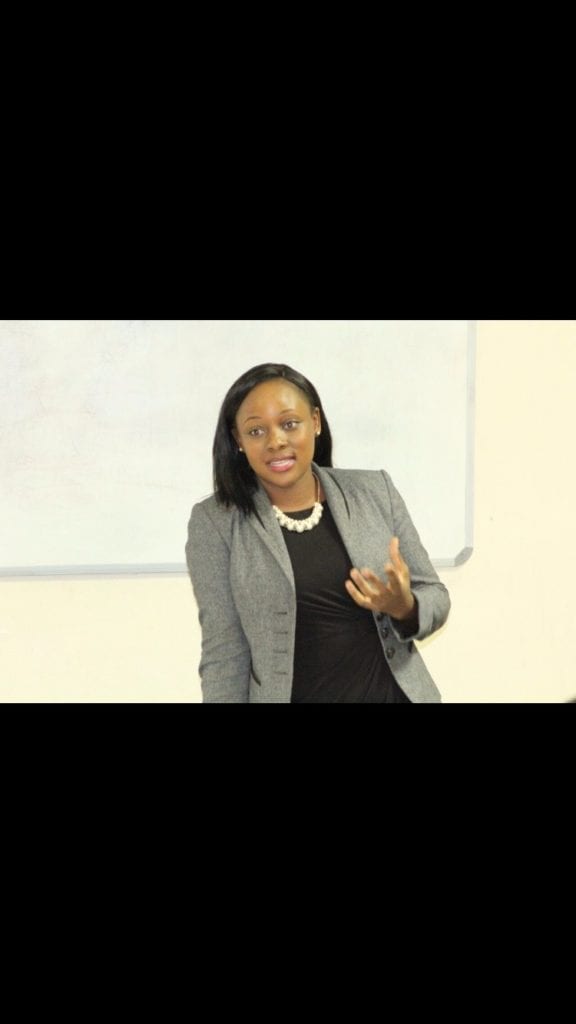
Ratidzo Mutizwa is a Development Economist, Life coach and Leadership Content Creator. She primarily focuses on community engagement, CSR and women’s development. She holds a masters in Political Economy from the LSE and has successfully trained in corporate governance, capacity building and monitoring & evaluation. She is the Founder of Deeply Driven now known as the Leaders Lounge Foundation, which empowers, coaches and provides training for young leaders. Previously she worked for BRAC, Deloitte Central Africa and the Clinton Health Access Initiative. She is a passionate change agent determined to aid the development of young leaders and to equip them with essential life skills. [bctt tweet=”Professionally, whatever I do has to have an impact that will outlast me – Ratidzo Mutizwa Njagu” username=”SheLeadsAfrica”] What are your most important values personally and professionally? Personally, I find that whatever I do needs to feed into my purpose, cater for a healthy lifestyle and allow me to fully express myself. Professionally, whatever I do has to have an impact that will outlast me. In other words, what I do is driven by a need to achieve generational impact and ultimately improve the future of those to come. If you were given unlimited resources, what women focused initiatives would you contribute towards? I would seek to ensure that young women under the ages of 35 are able to get access to free value added personal development and basic business training. I believe that access to upskilling in Southern Africa ( which is our initial primary target region) can be a positive catalyst for change across the continent. [bctt tweet=”Ratidzo Mutizwa says her goal is to drive innovation and promote socio-entrepreneurship.” username=”SheLeadsAfrica”] What can millennials expect to get from training or advice from Leaders Lounge? The Leaders Lounge is a place for millennials to learn from the legends, those that have gone before them. As well as a common space where millennials can meet up to share ideas and information with each other. Trainings are given in the form of workshops, seminars and conferences. Topics are centered around redefining the leadership landscape across various sectors; and seek to inform and educate on business principles and essential life skills. The goal is to drive innovation and promote socio-entrepreneurship. Deeply Driven provides CSR advisory services. What social responsibility commitments do you have as an organization? We have committed to providing free life-skills training services in high schools within Zimbabwe. A part of our mission is to encourage the development of a highly self-aware and well equipped generation of leaders. Leaders Lounge is tailored to impact global audiences. How do you reach out to these audiences and how do you plan on growing? We are being purposeful about building our social media reach as we know that African millennials are increasingly active online- no matter where they are in the world. We also understand the demand for African-driven solutions and innovations and are seeking to address this. At Present we have established a blog through which we share weekly tips, advice and inspiration. As part of our strategy we are launching Podcasts as well as monthly YouTube videos, which will share on particular topics relevant to the African millennial. Ratidzo Mutizwa Njagu, what things in life are still a mystery to you? It baffles me that we often continue to want to be and to do more. For our generation, happiness in our present state is often quite illusive and without a concerted decision to choose happiness we are often left wanting [bctt tweet=”To be a CEO is to nurture and allow great leaders within the organization to thrive and to create a highly innovative environment – Ratidzo Mutizwa” username=”SheLeadsAfrica”] Would you rather suddenly be elected a senator or suddenly become a CEO of a major company. (You won’t have any more knowledge about how to do either job than you do right now.) This is interesting! I would certainly rather become a CEO of a major company today. At that level of leadership a lot of the real work is in identifying and bringing together the people who are good at what they do- something I already enjoy doing. To be a CEO is to nurture and allow great leaders within the organization to thrive and to create a highly innovative environment. I think the role of a CEO is to be able to bring great ideas and great people together effectively and to instill confidence in the management teams What have you done to up-skill yourself this year? Tell us your story here
Carol Nyazika: Ndanaka is not just a beauty brand, it’s a lifestyle brand
We last spoke to Carol Nyazika 10 months ago, when she was still in the process of launching Ndanaka. Ndanaka is an au-natural lifestyle brand with products predominantly from Zimbabwe and other African countries. It brings together a variety of beauty elements and infuses them into one. Hence their tag line, A Fusion of Beauty. Revisiting our last sit down this is what she had to say about it. How was the seed planted? I started Ndanaka in 2011 when people were not really talking about natural products. Ndanaka started as a lifestyle blog and YouTube channel that promotes natural skin and hair care. I was suffering from dry skin and my mothers skin was breaking out due to menopause. All the products she was using were not working for her, so I started mixing up a few ingredients that she could try. I then trained as a formulator and are now qualified to create products. How did the name, Ndanaka, come about? I gave my brand a Shona name because there are so many products with either French or foreign names we can hardly pronounce but we learn to. The word or statement, Ndanaka, has several translations and can mean ‘I am beautiful’ or in slang, ‘I’m good now’. Fast forward to 2017… Ndanaka was launched in January and it took four weeks. The process included: formulation, procurement, manufacturing, packaging, marketing and eventually making it available to the public. What attracted you to this industry? My initial drive and motivation was seeing my mothers confidence return when she felt beautiful and happy with her appearance. Later on, my mum would say, “You keep running away and going into other industries and even though you excel in those, you are not using your God given gift”. Before, I was scared of entering the beauty industry because of the labels that sometimes come with it, but eventually I decided to give it a go. God gives us the power to profit, so I believe that now I am using my God given gift. How was it like leaving your full time job to start a business in a struggling economy? It’s interesting and the economy pushes you a bit more because now you are literally eating what you kill. I have nothing to fall back on so I have to learn to budget and also work very hard to generate sales. But, it is not only about me, but our service providers as well. Even though the economy is struggling, we are forward thinking and putting sustainable structures in place. Structures that cover our cost to meet demand. The company is self-funded. Like any business our profits are still going back into the business and we are grateful that we have managed to increase our profit every month ever since we started. We work from home, where we have a work station or lab and a garage that we converted into a storage. Because I am a trained formulator, I make my own products. It is therefore easier to come up with new products that our clients require or ask us to make . We started off with four products and we now have seven. How has the market responded to your brand? The response has been overwhelming. We started selling on the 28th of January, since then it’s been a whirlwind. The demand is growing within Zimbabwe and other countries like Kenya, Zambia, Tanzania, South Africa, Australia, New Zealand and the UK. In our first week of operation, we sold out in four days and our first retailer sold out in the first week. We are now currently in three retail shops and working to increase our presence across the country and into different markets. We aim to maintain good quality products as we continuously build, evolve and grow. What challenges have you faced with the launch of Ndanaka? Not meeting demand. However, we started taking this into consideration when pricing and formulating our products. At the end of the day we aim to provide an affordable brand because we understand our vision and goals. Another setback is packaging. We are still not where we want to be but it is all a work in progress and we understand that. With the issue of unavailability of cash in Zimbabwe, how are you managing to run your business? We have all methods of payment – most people pay cash, our second biggest method of payment is Ecocash (a mobile money transfer powered by Econet), swipe then transfers. We make sure we have nothing to hold our customers back from purchasing our products. We work with what we have, always searching for a solution and not letting the current hardships set us back. How does your brand support the Zimbabwean economy? Besides paying my taxes, I try to work with Zimbabwean companies and service providers as much as I can. Printing and graphic design is done locally. Some of my ingredients are sourced in rural Zimbabwe, therefore creating jobs. I am also pushing for my brand to be recognised internationally as a Zimbabwean brand. What personal traits are necessary to run a business like Ndanaka? Resilience Confidence in one’s product Ability to constantly evolve Good listening skills A good support system Be good at delegating Ability to take criticism A hunger to learn What advice would you give to your younger self? Just start – figure it out as you go. Have a skeleton and add flesh as you progress. Do not be afraid to ask. Be humble enough to ask for help and its okay if you dont know. Be curious about everything. Always have a contingency plan. Be resilient. People will always say something about you. Don’t take it personal. Feel your feelings – feel challenged, sad but move on- keep going. Try and be authentic – do what comes naturally to you. Try and be supportive of others. Put the work in and do what it takes to
Nneka Obianuju Onubogu: I have never felt inferior because of my gender
Read how Nneka Obianuju Onubogu a Mechanical Engineer; and currently a research assistant at Universiti Tunku Abdul Rahman Malaysia, is unperturbed by gender stereotypes in the industry. A Harvard Business Review article of 2016, was an answer to an inquiry of ” why do so many women who study engineering leave the field?” And one of the reasons given was “gender stereotypes”. So, if you are contemplating abandoning your career in one of the STEM fields due to gender stereotypes or any other reason, before you throw in the towel, wait! [bctt tweet=”I have a passion for fixing things” username=”SheLeadsAfrica”] Having a role model and following your passion makes it easy Nneka’s motivation for pursuing a career in mechanical engineering were influenced by two things: “First is my dad, who is a practicing Mechanical Engineer. I admired and still admire him so much that I wanted to be just like him. Secondly, I have a passion for fixing things. I am very inquisitive on the mechanics behind any machines’ motion. Right from childhood, I had a habit of unscrewing all my toys and fixing them back over and over again.” When you are passionate about anything, it will be very hard for you to throw in the towel, especially when the going gets though. [bctt tweet=”being different means making a difference anywhere you go and anywhere you find yourself” username=”SheLeadsAfrica”] Remember that you are a woman with talents and abilities Being a ‘woman’ should not make you feel less than a human being when assigned to male dominated teams, you are as capable as your male colleagues! Nneka says “Our research team actually consists of all men (Professors, Doctors and lecturers) and one lady (myself). We treat each other equally and there has never been a period when I felt inferior because of my gender”. When you still feel overwhelmed,borrow a page from Nneka’s book,”sometimes I feel like ‘a woman in a man’s world’ hence, I give my best contribution to my team”. Nneka is currently working on a project tagged ‘Wide acceptance angle optical fiber-based day- lighting system using two-stage non-imaging solar concentrator’. “This is a project sponsored by the Ministry of Energy, Malaysia”. The papers can be found in the links below: http://www.sciencedirect.com/science/article/pii/S187661021 http://www.sciencedirect.com/science/article/pii/S030626191730750X [bctt tweet=”I have met many ladies like me who are in male dominated career paths and they also strive hard to be the best and make a difference” username=”SheLeadsAfrica”]Blend in Whether you are in a local or global community, do not isolate yourself. Nneka, although from Africa, found herself working and studying in Asia. She quickly learned the language and befriended some locals. “Even though my University is generally Chinese dominated, everyone speaks English and every lecture and research is conducted in English. Irrespective of that, students and my research team members still switch to Chinese language when they discuss within themselves. This is not a problem for me as I have learned the Chinese language (conversational) and I can understand what they say. Right now, I am a professional at eating local foods with ease. I am also the only foreigner (African) in my office, but I still participate in every event weather Chinese, Malay or Indian”. Conquer any inferiority complex by actively making a difference Nneka’s slogan is ” Being different means making a difference anywhere you go and anywhere you find yourself”. She adds that “the fact that you are in a career path where you are the only lady in a team of men is the key reason for you to stand out”. Some African people say, ‘Mechanical Engineering is not for ladies; a lady should be a teacher, a lawyer or even a house wife’. I can boldly say from experience that it is a blatant lie! “I have met many African ladies like me who are in male dominated career paths, who also strive be the best and make a difference. This should inspire other women who have dropped out to get back on their feet and even do better” she says. [bctt tweet=”… I show them that Africans are not racist by braiding the hair of the kids for free.” username=”SheLeadsAfrica”] Making a difference includes contributing to the community you find yourself. Nneka does this by using one of her skills to make children smile. “I have made an impact in the lives of the locals here, especially via my hair braiding skills. I was so surprised when I made it to the Chinese newspapers for just that little kind gesture “. In addition, Nneka has many solar technology ideas that she intends to implement when she arrives in Nigeria. You see why she just can’t turn her back? When you are full of dreams and know that the world is waiting to feel your impact, you wont turn back! Networking is one the keys to staying motivated Networking is today’s currency to getting up the success ladder and staying motivated. Nneka advises those in a global career and STEM fields to “try creating a network with people who are pioneers in that career path. In that way, they stay motivated and become significantly better”. Are you in male dominated field/ industry? Let us know more about you and your story here
Tsitsi Mutendi: I am the Queen of Start-Ups

[bctt tweet=”Entrepreneurship has its pro’s and con’s but it has taught me responsibility” username=”SheLeadsAfrica”] Tsitsi Mutendi, founder of Jewel Magazine, Mucha and Mufaro dolls is a girl from Masvingo, born in Harare and partially raised in the UK. She spent eight years of her childhood in the UK before moving back to Zimbabwe. Tell us a bit about Tsitsi Mutendi I decided earlier on in life that I was more suited for entrepreneurship than I was to a career. Mostly because I enjoy starting things. I love creating new companies or entities and seeing them succeed and/or learning from their failures. My entrepreneurship journey started when I was 24, back then I wanted to be a fashion designer. I have had the privilege and honour of creating different products and taking them to a market. How was Jewel Magazine born? Jewel started in February 2011 after I lost my child. I loved reading magazines and decided to create my own that would be an outlet for the different ideas I had. Ideas to inform women about things that could help them empower themselves. The first issue went to print in June 2011 and came out in July. I wanted a magazine name which reflected what I thought of women and what they should think of themselves. I couldn’t think of any other name better than Jewel. To me women are like precious Jewels, sometimes they are covered in the earth, growing roots and preparing to germinate, sometimes you have to dig deep to find them. Do you have any plans of reviving Jewel? Jewel for me was a journey; it’s unfortunate we got to a place where we couldn’t print it anymore because we kept breaking even. The decision to stop printing was hard because I felt like I was giving up on my baby and no mother wants to give up their child. I think Jewel is one of those product pieces in the journey that has made me grow stronger. It has brought me more focus, and has always had the power to renew my will and vision to move forward. Unless we can bring Jewel back bigger and better than it was, without having to shelve it again, I think for now it will always be a part of Zimbabwean history. Tell us a bit about Mucha Fashion Mucha was born before Jewel. I love African print fabric and loved what West Africans were doing with it at the time; It was so modern and chic and no one in Southern Africa was doing it.It involved a lot of creativity with fabric and garments, and most of our clients allowed us to revamp their wardrobes. Unfortunately, I had to let go because the market became saturated and there was a lot of replication. What is Danz Media all about? It is our flagship product company which has been running for many years. So many great products are housed under it. For example, my husband, Daniel Mutendi’s Nama’s award winning children’s book, Tsuro na Gudo: Misi yese haifanani. We have also produced other Shona educational books, and continue to work with organisations and schools. I love Danz media because it allows me to be creative and to explore different media platforms. How did Mufaro come about? Mufaro came from wanting a soft cushy doll for my daughter. I could not find it in shops so I learnt how to make one. Wanting to venture into the toy market only came after realizing no one else was doing it and the opportunity was there. So my husband and I decided to attend the Spiel Warenmesse toy fair in Nuremberg which was held in February 2011, to exhibit our Mufaro Dolls. It is the biggest toy fair in the world and it ran for six days. Africa is very much underrepresented in the toy industry, so it was an amazing learning experience for us. We are in the process of implementing and working with the different partners that we met when we were there. Where is the Woman of Legacy Foundation now? I stopped running the foundation as a stand alone organisation but instead focused on corporate social responsibility. I invest in other women and provide individual and organisational mentorship. We provide scholarships as a family, not only to students who excel academically, but those we feel will invest in tomorrow. [bctt tweet=”Entrepreneurship is not easy but gives one the flexibility to choose when to work” username=”SheLeadsAfrica”] What are your entrepreneurial journey highlights thus far? The ability to spend time with my family. Entrepreneurship is not easy but gives one the flexibility to choose when to work. Meeting so many remarkable women. It’s not when you start profiling women, knowing who they are, and learning why they do what they do ,do you truly realise how powerful we are as women. Risk taking. I don’t know what a comfort zone is. Entrepreneurship has taught me that risk taking is not for sissy’s, neither is it something that you should be afraid of. Most of the lessons I have learnt are because I have taken chances. I wouldn’t change my entrepreneurship journey and I definitely wouldn’t get a job. What are your top entrepreneurship lessons? Entrepreneurship has its pro’s and con’s but it has taught me responsibility. You never stop learning really. It has also taught me that I am the master of my own destiny. No amount of capital or investment is going to make a crappy idea work, you have to go out there and put in the work. At times you might not know if you are going to reap or how you are going to pay the next bill but it’s still important to stay true to your dream or vision. How do you prioritize your time between being a mother, wife, entrepreneur? I work with my husband and we both work from home- so our children see us all the time. I also have a good support system. It includes my
6 tips for successful networking in the big city
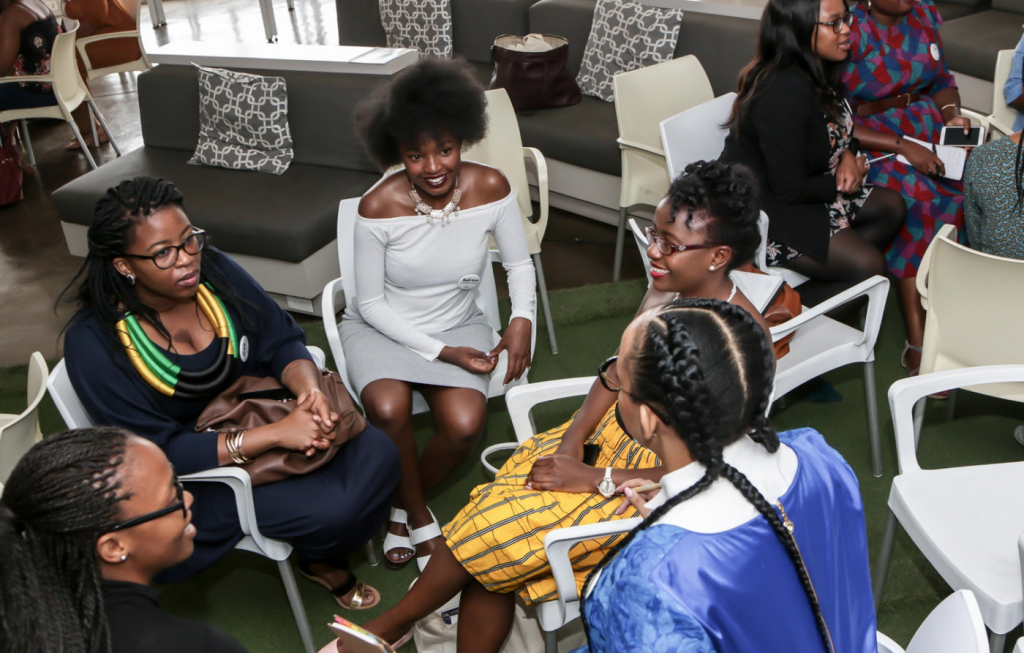
[bctt tweet=”The question now is, What are you doing to increase the size of your network?” username=”SheLeadsAfrica”] You have probably heard the saying that “your network is your net worth”. In this article’s context, net worth is not limited to finances alone but includes knowledge, skills, and access to opportunities as a result of your network’s size. The question now is, “What are you doing to increase the size of your network?” Networking simply means to form personal or working relationships with people in your industry as a means of knowledge acquisition or landing deals. We are officially in Quarter 3 of 2017 and if you have not already started, now is the time to build your network. Here are six tips for successful networking in a big city: Step outside your comfort zone Dreams are not fulfilled by staying in your comfort zone but by stepping out and engaging in new activities, attending events and meeting new people. For example, you can’t expect to be the best entertainment lawyer if you don’t network with people in the media and entertainment industry with a view to growing your clientele and offering the best services to them. Stepping outside your comfort zone paves a way for your career growth and development. [bctt tweet=”Stepping outside your comfort zone paves a way for your career growth and development.” username=”SheLeadsAfrica”] Be the master of your craft In whatever industry you work in, you should aim to be the master of your craft. Strive to perfect your knowledge in a certain industry by keeping up on current affairs so that you will be able to engage in thought-provoking discourse with the people you choose to network with. Having a view on a current issue in your industry that’s different from most views usually sparks interest and will have people willing to know more about your philosophy on that issue. Working in the creative industry will force you to practice your craft regularly so that you may gain more knowledge and an appreciation for your skills that will not be influenced by anyone. If your networking goals include getting a mentor, then honing your creativity by a schedule of practice will be a catalyst to your progress; experienced people would rather mentor people that have a resilience for hard work. Is ‘hard work’ your middle name? Introduce yourself first There will be times that you will be in a room full of people unknown to you. Imagine you’re an introvert that made it this far to an industry conference, your instinct may be to grab a coffee and sit down at the nearest table. Networking in the big city involves taking a plunge, so rather than following your instinct, you should join a table full of people who are not yet deep in conversation and introduce yourself or walk over to someone standing alone and find common ground. Using an icebreaker to soften the atmosphere may get people smiling and will create a perfect opportunity to say, “Hi, my name is Rachel and I work for 1 Media Ltd. It’s nice to meet you, what’s your name?”. [bctt tweet=”Unresponsive body language while networking can be a deal breaker” username=”SheLeadsAfrica”] Communicate with body language There are many ways you can show courtesy and attentiveness from your body language. Unresponsive body language while networking with other industry professionals can be a deal breaker. This may give off a vibe of having a short concentration span or succumbing to distractions from passers-by, implying that you may have the same attitude towards a particular job. Shaking hands, smiling, and maintaining eye contact with someone you have just met shows your confidence and eagerness to partake in a serious discussion. This sort of body language will be reciprocated when delivered properly and not aggressively. Try not to scare your business targets away by being overly expressive or not expressive enough! Never forget your business card Networking with your business card is a recipe for success. At corporate or private events, many people may be able to introduce themselves and speak for a couple minutes but not engage in a full conversation. Sell your personality and your business but solidify this with a card that clearly states the name of your business, nature of the business, your role in that business and your current contact information. Talking about a business or representing a company with nothing to signify your affiliation may not be convincing to other people and may prompt people to perform extra due diligence to ascertain your true identity. Follow up After all the hard work involved in attending seminars or making connections at a meeting you followed your boss to, don’t take a step back by not following up on the conversations you’ve had with colleagues and seniors in your industry. Follow up on your networking attempts by sending a short email, setting up a meeting or a friendly phone call (with a purpose) to inquire an opinion. Networking can either be impulsive or very strategic but whatever the case, ensure that you are using your network to achieve your net worth!
Five Tips to Manage Your Team
Below, I share 5 tips to manage your team, which I gleaned from Richard Templar’s book on the Rules of Management. As a team leader at work, you are responsible for managing and leading a group of people to reach their targets and in turn contribute toward the organisations larger objectives. Being in a position to lead requires effort, strategy and understanding of your team members. The onus lies on you to bring out the best from the team you lead. [bctt tweet=” Rather than shooting some bullets of criticism, keep calm and dole out encouragements…” username=”SheLeadsAfrica”] Talk your team up I have often heard the cliché “it is better to encourage than to criticize”. How apt this is when it comes to leading a team! There will be days when tasks are more demanding, resources are not sufficient or there are tight deadlines to meet. These conditions might fuel managers to lash out at team members. But, rather than shooting out bullets of criticism, keep calm and dole out encouragement. Such as “we can do this”, “we are getting there”, or “we will get through this”. I know a leader who tells his team at every turn that “our best is yet to come”, and each time, his team churns out a better output than they did in their previous feat. [bctt tweet=”… your team’s success is your success” username=”SheLeadsAfrica”] 2 ways to encourage your team Templar offers two ways to encourage your team: “one is to tell them they are going to do good before they have done it. Or wait until they have done good then tell them they have done good”. He emphasizes that your team will most likely perform better when you praise them beforehand, because they wouldn’t want to “fall their hand” (in my Nigerian pidgin English parlance). Allow your team to be better than you Founder of TEF Tony o. Elumelu in his recent article titled: Advice for new managers, ,published on LinkedIn, pointed out that “great leaders don’t compete with their staff”. A corporate executive once wrote that, in the early days of her career, her VP told her she wasn’t good enough. Fast forward to a few years later when she was making waves in her career, she said she ran into him. He revealed to her that during those times he was demeaning her work was a reflection of his own insecurities and not that she wasn’t good enough! You should always give your team the necessary resources and support that they need to reach their objectives. [bctt tweet=”No one is a repository of knowledge!” username=”SheLeadsAfrica”] Train them to develop solutions to problems When you have trained your team to the extent that they can deliver excellently, you should naturally expect that they will bring you solutions and minimal problems. According to Templar, a question which indicates a problem should be answered with “and what would you like me to do about it?” and a complaint should be answered with “what do you think we should do?”. Applying this rule makes your team think in terms of the solution and not the problem. Listen when they offer suggestions No one is a repository of knowledge! No matter how skilled or experienced you may think you are, you will still need input from members of your team from time to time. Caution here is not every idea or suggestion must be used, but it’s important for you to let your team know that their input is welcomed. In this way, they will not hold back important critical information. Clearly spell out the responsibility of each member of the team If you are delegating responsibility, clearly define what is expected in terms of the result. Provide the necessary resources, and make sure they understand how it should be achieved. Click this link to learn 10 ways to motivate your team. Do you have any tips on how to best manage a team? Let us know more about you and your story here
3 key questions to ask when looking for the right banking partner in Africa
Finding the right banking partner in Africa Home to some of the fastest growing economies in the world, Africa has an abundance of attractive investment opportunities. Emerging market and developing economies are anticipated to grow 4.1% – far faster than advanced economies, according to the recently released Global Economics Prospect report, who also cite Ethiopia, Tanzania, Côte d’Ivoire and Senegal as some of the fastest growing economies on the continent, and in the world. Tapping into the opportunities that come from that growth – whether as an individual or entrepreneur – will likely leave you in search of a dedicated financial services provider. But how do you go about finding a stable partner? We suggest asking these 3 key questions: What’s their strength & expertise? You need to assess whether they can they provide the required products adapted to Africa’s need, and if they have the financing to support your development if you’re coming to them as an individual or entrepreneur. What asset class do they work with and what segment do they service? Do they offer equity, mezzanine, or debt finance? The answer to these will help you decide if it’s the right fit for your business. It’s imperative that you feel confident in the stability and sophistication of their systems to manage any requirements your business might have. Assess the strength of their balance sheet – the stronger it is, the more likely they’re able to take on your project. Where are they located? Glocalization is key. You want a partner who has a global outlook, but with local expertise. Assess their footprint in Africa – and find out how expansive their presence on the ground is in the country you’re interested in. This extends to regional presence too if you’re looking to engage in cross-border transactions. Do they have an extensive network of bank branches and ATMs for you to access across the country or countries you plan to operate in? That physical presence means they’re likely to have a better understanding of the local landscape – with 54 countries in Africa, each environment is unique, and you want a partner who is able to help you navigate through it. How accessible are they? Embracing the digital revolution is no longer an option for financial services providers, with online banking playing a critical role in delivering innovative products within the globalised business environment. While not all banks have adopted a digital first mindset, most offer basic electronic facilities that allow you to access your accounts online, whether personal or business. But what about more advanced business needs – are the systems efficient enough to bank manage complex transactions like managing liquidity across a range of local and foreign currency bank accounts?