
Why we need business education in the African market

When considering female micro-entrepreneurship in sub-Saharan Africa, I often remember the stark images of the women of Yaba market in Lagos. Some of the market women sell food produce, others focus on the textile business and a greater number work as the “Jacquelines” of all trades. I often wonder if they designed and wrote out a business plan before they started their respective ventures and how they and their businesses have survived through the years. More importantly, I think about what can make their businesses more profitable and sustainable. During my last trip to Nigeria, I spent a few hours buying gifts at Yaba market and engaging different micro-scale womenpreneurs. My goal was to gain insight as to how these women got started in business, how their businesses were structured and what their biggest needs were. Unsurprisingly, many women talked about limited access to loans and credit. However, I was more struck by the desire of many of the women to get an education. The conversations inspired me to think of creative and effective ways to empower women in the market with customized business skills and education. I dug deeper to gain a clearer understanding of what can be done to empower these women, many of whom didn’t complete secondary school but still had a strong desire to obtain some formal education. The biggest challenge to getting formal education for many of these women was time, money and the opportunity cost of leaving their businesses for extended periods of time. Many women simply could not leave their kiosks during business hours to attend class at a school that would most likely be far away. While auditing a Coursera class on Social Entrepreneurship, I applied the Principles of Design to the problem. My solution: take the training and education to the women. I crafted a model that will function as a daily or weekly lunch-and-learn, allowing micro-womenpreneurs leave their kiosks for forty-five minutes to an hour and take skills-focused business classes at a location within the market infrastructure. To increase the chances of success, the program must be skills-focused and be offered in bite-sized digestible format. Many of these women manage shops, stalls and boutiques; hence they need an education that is timely, tailored and convenient. Listed below are the reasons that having a skills-focused business school in the market will be beneficial to small-scale women entrepreneurs: Timeliness and applicability of information Given the focus on skills-based learning and real time application of information, women can learn about how to build a budget and exercise their knowledge of different commerce topics on their businesses the same day. Their learning is further complemented by their respective business challenges, which can serve as case studies from which everyone else can learn. Additionally, women can real time advice from their teachers, mentors and fellow womenpreneurs. Creation of a Womenpreneur ecosystem A market-based schooling approach creates a network of entrepreneurial women who come together to share business experiences, engage with business lessons, and form a coalition. This creates a support system whereby women can rely on each other for support or even micro-credit; an ecosystem where women can share issues they are having in their businesses and find ways to learn from each other’s experiences promises to create trust among the women. Women may also discover that they are serving different levels of the business chain and may decide to integrate or partner; hence creating potential value to be realized in efficiency gains. Convenience and flexibility It is difficult to convince a middle-aged woman who is the breadwinner of her family to leave her kiosk for hours at a time to attend school. However, if that education is right there in the market and is fitted into mini-education sessions, it creates a more compelling and readily available opportunity. Bringing education to the micro womenpreneurs creates the flexibility that has been missing in obtaining an education. The Girl effect Many of the women I’ve seen running shops over the years tend to have some help from another younger woman. Usually, it’s a daughter or a niece or a relation of some sort. Some of these relationships with younger women can be structured as apprenticeships with defined learning outcomes, which further fuel the entrepreneurial spirit of the young women. Coupling that structure with formal education (right there in the market) can create a powerful domino effect for years to come. A program of this nature can take many forms. There are number of parties from the private, public and non-profit sectors who could come in as partners. From a funding perspective, the program can be sponsored through philanthropy, whether from an NGO, the government or a Private Corporation. It can also be structured as a public-private partnership. While there are obstacles facing women entrepreneurship, most of these are in fact solvable. Education continues to be a primary issue, however, with some creative thinking we can develop meaningful responses and improve these solutions as ideas further develop.
How to be a badass? 5 Epic lessons from our favourite TV Moguls and their creator Shonda!

Unless you have been living under a rock, or generally lack interest in everything pop culture related, you’ll have seen or heard about one of these shows: Grey’s Anatomy, Scandal, Private Practice or How to Get away with murder. The brain behind all of these television gems is Shonda Rhimes, the most powerful woman in television. She’s the first African American woman to run three consecutive shows on television’s most expensive real estate: Thursday night. More than being an incredible writer, Shonda is also an example of what it means to be a badass leader and how to turn your dreams and aspirations into reality. She wrote a book recently called ‘Year of Yes’ and it is not only incredibly moving and hilarious. It also teaches many lessons about getting to the top in your respective field. Here are 5 lessons from Shonda and her incredibly written female lead characters: Annalise, Olivia and Meredith. Annalise Keating – Think on your feet For those who follow HTGAWM (How to get away with murder), if there’s one thing we can learn from Annalise it is the ability to think on your feet. She is the fast-talking attorney on the show and is quick to come up with arguments to defend her clients. She ultimately created the twisted story that let her students get away with the murder of her husband. Though a bit dirty and twisted, I still think there is a lesson here. In whatever field you are in, immerse yourself in it, so that you can draw from different aspects when you need to. Annalise knows the LAW. Therefore, she knows how to get around it and make it work for her. You want to be an entrepreneur, but do you know the rules of the game? When you find yourself in a difficult situation, it’ll be those moments you had invested in knowing your craft that will get you through. Do the work, and when you do, be better than Annalise, and use it for good. Olivia Pope – He is not the sun, you are Arguably one of the most drawn out love stories in television history took a turn for the crazy when Olivia moved into the white house to be Fitz’s girlfriend. For those of you who don’t understand why this broke all of our hearts, it would be the equivalent of President Clinton moving Monica Lewinsky into the White House as his girlfriend at the height of the scandal. Yes, it was that crazy. Although there is no doubt that Olivia loved Fitz, what became clear as she lived out the role of First Lady was that it was not who she was and she had the courage to do what she knew she had to: end it and move out. The truth is, sometimes love is not enough. Your life goals need to be aligned with your partners, otherwise you will be betraying yourself. He is not the sun, you are! We need to internalise this to be the Motherland Moguls we can be. There will be times when you will have to make sacrifices, but you should never have to sacrifice yourself. Remember that .ladies, and choose wisely. (Preferably not a married president like Olivia. Let’s try to keep it drama-free.) Meredith Grey – It takes a Village The saying ‘no man is an island’ has taken on new meaning as I have spent the past 11 seasons watching Meredith Grey go through all sorts of heart shattering life events in Grey’s Anatomy. Most recently (spoiler alert), she gets attacked by a patient and loses her hearing and her ability to move for weeks. She has 3 small kids! How will she survive? The answer is simple: she has a village of people who will do whatever it takes to look after her. As I wiped my tears watching all of her friends step up to look after her and her family, I was reminded of how she did the same for each and every one of them at a different time. It makes sense. We cannot rise to the top alone, we need to realise that the people around us have a serious effect on our ability to reach our goals. Get your immediate circle right. And the best way to do that is to be the type of friend you wish you had. This will heavily pay off in the future. Life is full of uncertainties and we cannot control what will happen. All we can do is put ourselves in the best position possible to deal with whatever life throws at us, and a huge part of that is the people you can call on no matter the situation. Do you have those people? If not, are you that person to anyone? From creator, Shonda Rhimes – Dreaming is for losers This point for me was very difficult to internalise. I am a dreamer, it is in my blood. The phrase: ‘dream come true’ is featured on my blog over a gazillion times. Shonda as the badass leader that she is really burst my bubble on that one. The people who get things done are not the dreamers, they are the doers. Shonda explains: ‘I wanted to be Nobel Prize-winning author Toni Morrison. That was my dream. I dreamed and dreamed, and while I was dreaming, I living in my sisters basement (FYI dreamers always end up in a relative’s basement). I actually couldn’t be Toni Morrison because she already had that job and wasn’t planning on giving it up! One day I read an article that said it was harder to get into USC film school than Harvard business school. I could carry on dreaming or I could do. At film school, I discovered an entirely new way of telling stories… a way that flipped this switch in my brain. Years later, I had dinner with Toni Morrison. All she wanted to talk about was Grey’s anatomy. That
20 powerful Chimamanda Adichie quotes for today’s boss women
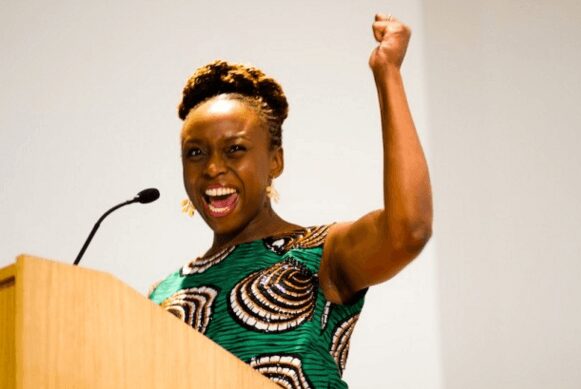
Nigerian writer, speaker, and activist, Chimamanda Adichie, is beloved by many. The award winning novelist and Ted talk sensation is fiercely revered for being a thought leader on Africa and contemporary African politics. With her recent feature on Beyonce’s self titled album, Beyonce, many have come to know her for talk, “We should all be feminist”. But Adichie speaks on more fronts than one, from the personal and private to the institutional and public. Below, we share 20 of our favorite quotes by Adichie that shed light on some of the topics and issues today’s boss women care about: being our true and best selves, navigating social roles, confronting gender and racial injustice, love and relationships, the motherland, and of course, money and being a creative. While short, each quote is steeped deep in history and context and is worth pondering over. On being a powerful woman 1. Never ever accept ‘Because You Are A Woman’ as a reason for doing or not doing anything. 2. I want to be respected in all of my femaleness because I deserve to be. 3. Minister to the world in a way that can change it. Minister radically in a real, active, practical, get your hands dirty way. On life 4. Your standard ideologies will not always fit your life. Because life is messy. 5. Please do not twist yourself into shapes to please. Don’t do it. If someone likes that version of you, that version of you that is false and holds back, then they actually just like that twisted shape, and not you. And the world is such a gloriously multifaceted, diverse place that there are people in the world who will like you, the real you, as you are. 6. The truth has become an insult. On Men, Love, and Relationships 7. Masculinity is a hard, small cage, and we put boys inside this cage. 8. Of course I am not worried about intimating men. The type of man who will be intimidated is exactly the type of man I have no interest in. 9. Please love by giving and by taking. Give and be given. If you are only giving and not taking, you’ll know. You’ll know from that small and true voice inside you that we females are so often socialized to silence. Don’t silence that voice. Dare to take. On injustice 10. Racism should never have happened and so you don’t get a cookie for reducing it. 11. The real tragedy of our postcolonial world is not that the majority of people had no say in whether or not they wanted this new world; rather, it is that the majority have not been given the tools to negotiate this new world. On Gender and Feminism 12. I am trying to unlearn many lessons of gender I internalized while growing up. But I sometimes still feel vulnerable in the face of gender expectations. 13. Some people ask: “Why the word feminist? Why not just say you are a believer in human rights, or something like that?” Because that would be dishonest. Feminism is, of course, part of human rights in general—but to choose to use the vague expression human rights is to deny the specific and particular problem of gender. It would be a way of pretending that it was not women who have, for centuries, been excluded. It would be a way of denying that the problem of gender targets women. 14. Culture does not make people. People make culture. If it is true that the full humanity of women is not our culture, then we can and must make it our culture. On Africa and being African 15. I recently spoke at a university where a student told me it was such a shame that Nigerian men were physical abusers like the father character in my novel. I told him that I had recently read a novel called American Psycho, and that it was a shame that young Americans were serial murderers. 16. They themselves mocked Africa, trading stories of absurdity, of stupidity, and they felt safe to mock, because it was a mockery born of longing, and of the heartbroken desire to see a place made whole again. 17. Because although there’s a lot of gender bullshit in Nigeria, I think women in the west have a lot more invested in being liked. And being liked if you’re female means a certain thing. So in workplaces, women who are bosses in Nigeria are fierce. The people who work for them, men and women, respect them. But, these are women who very keenly perform gender stereotypes when they go back home. And if they give a public interview, they have to say, ‘My husband supported me and allowed me to …’. On Money and wealth 18. Creative writing programmes are not very necessary. They just exist so that people like us can make a living. 19. There are many different ways to be poor in the world but increasingly there seems to be one single way to be rich. 20. How can we resist exploitation if we don’t have the tools to understand exploitation. Which of your favourite quotes by Chimamanda did we miss?
7 unusual signs that you might just be a go-getter
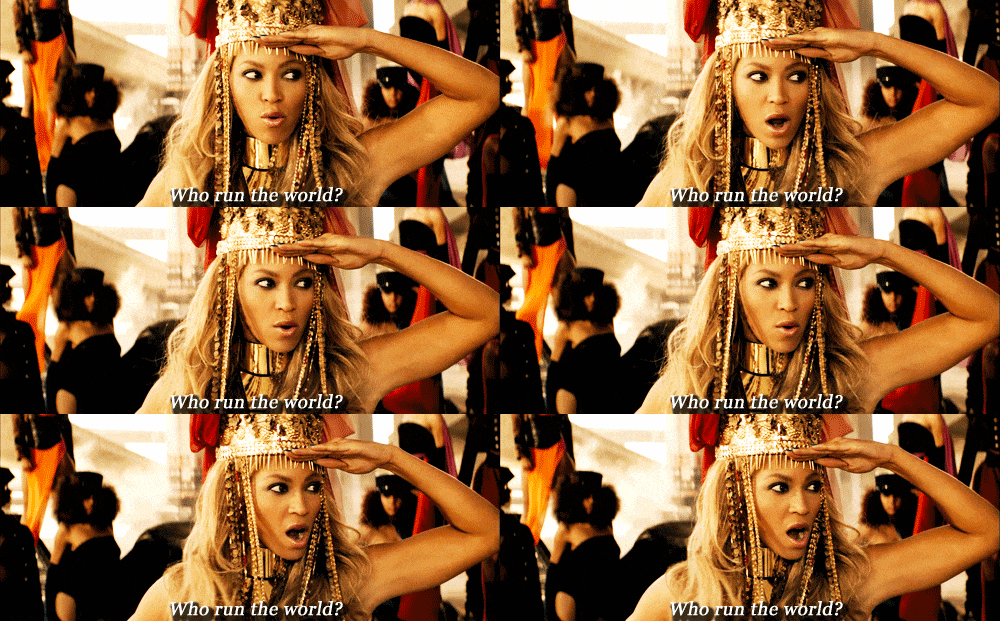
From the get-go, society encourages young people to learn quickly and strive to lead. We’re bombarded by mainstream notions on what it means to be a go-getter —a true leader. And, although these notions are true to some extent, they don’t necessarily encapsulate all qualities of bad-ass leaders in today’s millennial-driven world. So, here is a list of 7 uncommon traits of impactful leaders and go-getters. 1. You’ve got a lot of fears Fear is usually seen as a painful weakness and an inhibitor to leadership. Ironically, it probably has the opposite effect on you. Fear grounds you to reality. It makes you practical and risk-adverse. Fear acts a constant reminder of your limitations, but also reminds you that there are ways to work around them. Fear empowers you. You’ve got high standards for yourself and those around you. You dream big. The stakes are higher and you may not have many resources at your disposal. But the role of fear in your life makes you incredibly ingenious, inventive, and a go-getter. 2. You’ve failed often and failed hard Failure and fear go hand-in-hand. In the realm of impactful leaders and entrepreneurship, success is difficult and rarely guaranteed. Although failure might be likely, you don’t let the possibility stop you. The great thing about being a 20-something is that you’ve got time and opportunity on your side. If you aren’t failing occasionally or at all, you’re doing something wrong. A life without failure is a life without risk. A life without risk is a life without measurable success. And is that a life really worth living? 3. “Disorganization” is your middle name You probably have a written schedule that you never follow. You’ve got work assignments and projects strewn across your apartment. Your mind is a composition of deadlines, reminders, and goals to accomplish – high hopes and dreams. You weirdly find order out of your chaotic life. The fact that you have a multitude of commitments makes you feel like you’re on track. Even if it’s in an unorganized way. 4. You’re not the loudest voice in a crowd But you’ve often got something important to say. In any setting, what you comment on resonates with people, even if your voice doesn’t carry through the room. People tend to listen intently to those that speak softly or only on occasion. With speaking, less is often more and you always use that to your advantage. 5. You hold unique perspectives You always offer advice or insight that diverges from mainstream ideology. And although it makes you worrisome that your thoughts never align with what most people think, they’re often always valued by your peers. People often ask you for advice and it usually catches you by surprise. You’re not convinced that you’re the leader in a group but almost always you’re nominated to take the role. You probably don’t realize you have a propensity to lead, but others probably do. 6. You put people first A leader only gains presence through the conviction of her followers. You know this all too well. The defining quality of a true leader is one who leads to allow others to take their place one day. You hope to pass on what you’ve learned and are passionate about to the next generation. 7. You have no idea where life is taking you Confused, disoriented, and possibly disillusioned with occasional quarter-life crises sounds a lot like you. You don’t have all the answers and you’re still on a steep learning curve. You don’t exactly subscribe to the 5-Year Career Plan and that’s OK with you because the world is your oyster, and you can do just about anything with it. A life of mystery and unknown opportunity is what you’ve always sought out. You’re not sure if the goals you have now will be the same in the next two years. But you don’t mind because you live in the present. And, you live to lead. Are there any unconventional attitudes or beliefs of go-getters that we didn’t list? Share them below.
All the reasons no one is responding to your emails

Even for tech-savvy millennials, emails can be tricky, especially in the workplace. Every once in while, when you send an email, you might not get a response. It could just be that the recipient hasn’t seen it yet, or perhaps started replying and then got distracted (this happens with texts all the time, no??). But it could also be more than that. Here are a few things to consider when you don’t get a reply from your boss or colleague. 1. Wrong Recipient This doesn’t refer to an instance in which you meant to email Tayo and ended up emailing Taiwo because they have similar email addresses (though that very well may be the case). Rather, this is when you email Taiwo about an issue that Tayo should be handling or is more suited to respond to. Always make sure your email is going to the appropriate recipient. There’s no need to email the CFO of your company about something the Finance Manager can handle. 2. Unclear Content Maybe you went into too much detail, maybe you didn’t go into enough detail. Either of these can lead the email being confusing for recipient and may lead to you not getting a response. With most emails, brevity is key. But every once in a while, you’ll need to send an email with lengthy project descriptions or detailed instructions. Make sure to read over emails to ensure that they’re coherent. Proofreading may seem like a chore but with short emails, it won’t take you more than a minute. With longer ones, it’s important that there isn’t any miscommunication. 3. Poor Timing Sometimes a co-worker may not respond to your email because of the timing. Perhaps you sent them some information too late, or perhaps it’s a question that can be answered in a meeting later that week. Either way, make sure to consider the timing of the email if you find yourself wondering why you haven’t gotten a response. 4. You were rude Hear us out! You may have not intended to be disrespectful, but we all know how emails can be misconstrued. This depends largely on the recipient and his/her perspective, so to be safe, it’s best to use language that is either pleasant or at least neutral and innocuous. If however, you intended to express displeasure or be combative, don’t be surprised when you don’t hear back, as some people would rather not engage in heated email exchanges. 5. A response isn’t required Some emails just don’t need a response. If you send your boss some information she asked for, she may respond or she may not and will discuss it with you at a later time. Other times, if you’re sending a thank you email or an email about something that is not pertinent, it’s possible you won’t hear back. In most cases, it’s nothing personal, so there’s no need to worry. All in all, remember that proof-reading and clarity are very important when emailing at work, along with being polite. Emails rarely get lost, so if you don’t hear back, consider one of the five instances above. Then call to make sure the recipient has seen the email or send another email following up.
3 business lessons I learned from Beyonce’s Super Bowl Weekend

Ok, so Beyonce happened this weekend and apparently so did the Super Bowl! I don’t know who has fully recovered from it because none of my social media feeds have. That’s the Beyonce effect. I mean she has me wanting to eat at Red Lobster and I live in South Africa??!! Do they deliver? Apart from the epic dance moves that I need to start practising, I think there is something we can learn as business-minded women from the event! 1. Let’s get information Education and self development are important for us as women, especially in these days where almost every company/ institution/ government wants to be seen to be progressive by empowering the women in their societies. There are so many free learning opportunities that exist we have to look around us and take advantage of them- especially in tech and business management.If you can’t find free, look for cheap, but credible courses. We can find Chanel on the low low so lets channel that to finding Harvard learning on a budget. MIT has free online course materials; you won’t get a degree but it does boost your confidence. Beyonce did an interview looking back at her 2013 halftime show and she said “part of the reason I rehearse so much and part of the reason I study everything is so that I can completely let go and relax, so I am not in my head and I am confident.” Be like Beyonce and study as much as you can so when opportunities arise, you are confident to put your hand up in that meeting! You should lean all the way in! 2. Let’s see that coordination How dope were the black panther women in their fros and leather ensembles? Wouldn’t you love to have seen Beyonce in an afro? I have read some interesting articles for and against Beyonce’s support of the black panthers. I won’t get into the political debate, but I think we need to look at collaboration and coordination within the black community. It’s an open secret that black women have challenges working together. I have heard this story endlessly and have been a victim of black on black discrimination. On 31 January 2016, thousands of black girls gathered in Johannesburg in a celebration of ‘militancy, magic and melanin’. I think the mobilization was great, the atmosphere electric – but my only criticism is there was no formation around a common goal. For example, we have to support black owned businesses or actively connect college black girls to career black women so as to help us survive the jedi mind tricks of corporate culture. Prime example, Beyonce gave a shout out to Red Lobster and their year to date sales went up by 33%??!! Beyonce said, “prove to me you got some coordination.” This reminds of a picture posted by Ava Durvenay of 3 little girls with their afros holding hands. The caption of that picture read, “if there is no enemy within, the enemies outside cannot hurt you.” I think this challenge of working with other black girls comes from the ‘just enough’ mentality we were raised with. In our homes, there were just enough resources and we’ve transferred this mentality to our work. We think there is just enough ‘shine’, that the “enemy” is onto us, so they reserve only 1 spot for us at the 18 seater table, and we all clamour for it. We don’t have to play by those rules anymore, especially if we play together! Come on, lets twirl on the haters together, it’s better for optics! 3. Slay…consistently I think this is pretty self explanatory. Beyonce is a lot of things, but consistency is probably number 2 on the infinite list. She was on hiatus for almost a year, but when she hit that stage, it was like she never left. Be known for your craft and excellence: ” You just might be a black Bill Gates in the making!”. Beyonce sparked something. We have to keep the flame burning so we can afford tickets to her Formation World Tour. Side note to Beyonce: Africa is a part of the world, so don’t be planning world tours and excluding us! We are not represented by our colonisers in France and Britain. You need to come by and see us! That said, I think black girls in Africa should start a petition for Beyonce to bring her tour to Johannesburg. Ok, now ladies lets get in formation!
8 new African kitchen traditions to reset this year
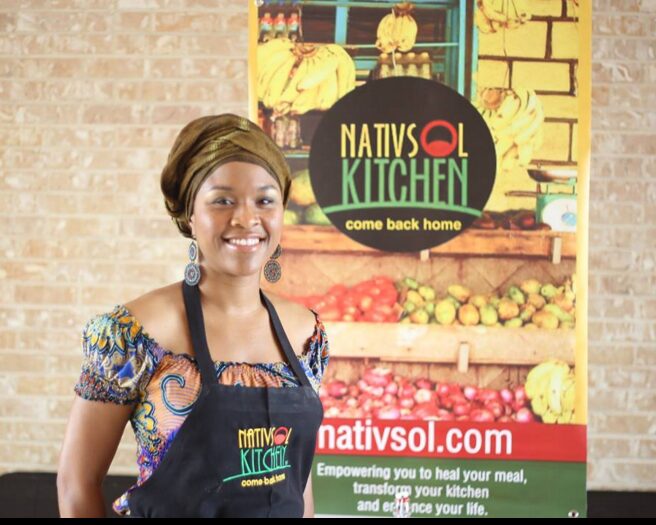
Every year for the past four years, I have hosted a vision board party with my friends. While I am busy cooking a meal with loving energy in the kitchen, we chat as they prepare their vision board with new hopes and wishes of love, health, travel and success. At times, I get so busy hosting that I delay preparing my vision board. So this year, I’ve decided to share my vision with you–my passion for healthy communities and my purpose of sharing the ancestral wisdom of wellness for a healthy Africa with new kitchen traditions. As I have traveled across the African continent speaking with students, meeting with health professionals and visiting farms, and preparing traditional dishes from West to East Africa, I thought about how ripe the time is for me and all of us to create and envision a healthy kitchen that nourishes Africa. My cooking classes through NativSol Kitchen are mostly attended by women who bring their mothers and children. And from them, I realized how “we are the ones we have been waiting for” to heal ourselves and our communities. We, as women, have been essential in the spiritual uplifting of our families and communities. And so, we have a rightful place of taking back our power in the kitchen to continue to uplift ourselves or we relinquish our power to people who don’t have our best interest at heart. I say this thinking of the many reports of food recalls and billboards promoting junk food as a quick fix to stress and depression. That’s not love and we can do better. I have seen it first hand: African Diasporans in America have become prey to the “convenience culture” resulting in, to no surprise, the booming rates of non-communicable diseases such as heart disease, diabetes, cancer, and kidney disease. Even I have fallen prey to fast-food drive throughs to feed my family and ready-to-eat meals while working at the desk for 8 or more hours at times. But as Africa changes, welcoming development and opportunity, so will the kitchens transform. But in what way? I wish to share 8 kitchen traditions with you, because I truly believe the kitchen is the sacred place providing the healing power and freedom that will make us better equipped to enjoy the fruits of a wealthy Africa. 1.Nourish and (re) new Food should be seen as energy that nourishes the body and soul. Think about how it grew, how it was prepared and reflect on food providing more than a full belly. but good nutrition – vitamins, minerals and fiber—for the body and soul. Remember the last time you ate junk food and wanted to sleep or be inactive, whereas eating colorful fresh fruits and vegetables made your body feel recharged to get up and go? That’s what it means to be renewed! 2. Authentically and African Food should be whole and alive, not “fake” and dead. Or my typical expression: “Not fried, dyed and laid to the side” unless that’s what you want to be too! Do we want “fake” people in our lives? So why do we eat fake food—filled with artificial color, flavors, perspectives wrapped in package like a coffin? Let’s be true to our food and culture as we want people to be with us. 3. Traditions Some habits are hard to break. So to create new traditions, try a quick litmus test of asking the question: Will it heal me or kill me? Perhaps it’s time to create new traditions of the life you want: A life with the career you dream of, the ability to travel easily around the world, a healthy pregnancy and to see your children grow. Then healthy eating habits must be a new tradition. 4. Intuition Ask any one mother and she may share how her intuition grew after having a baby. Women are innately intuitive. However, in the everyday hectic cycle of life, we may forget. We instinctively know what’s good for our body; that’s what it means to follow your gut—it’s your primal brain and the source of creation. 5. Values Creating a new set of values that are based on your beliefs, be it self-worth, sustainability, health, patience, or creativity, to navigate the course of your health and life. Shifting from a value system of pure economics—focusing on low cost and convenience—is powerful to having the life your deserve. 6. Spirituality and sustainable The spirit of our mothers and fathers who transformed the kitchen as a sacred place preparing meals reflects the magical creation like the act of planting a seed. We have a symbiotic relationship with the world like a child to a parent. Sustaining that relationship is key for our future and our children—that’s agape love at best. 7. Oneness and organic Giving reverence to the Creator through mindful eating with grace before meal or making a ‘spirit/ancestor’s plate’ speaks to abundance, optimism, appreciation, recognition of the source of all life. In the hustle and bustle of life, we can easily forget our power source and give our power to man, when God has the ultimate control. Also, equally important, is eating food that is organic, free of pesticide and toxins, that burden our bodies creating more imbalance in our health. 8. Love and local Cooking and eating with love versus fear is a powerful intention that transfers the energy of the cook into food as energy that our body receives, and how our families receive the food as nourishment. Sourcing our food locally is part supporting the local economy and preserving our heritage foods which promotes our African identity. What about you? What African traditions have you ingrained into your diet and kitchen? Which ones did we miss? Share them below.
3 ways to find your passion the African way

African education is said to be limiting in that it does not allow children to truly explore their passion, discover their creativity and hone in on their innovative capabilities. This by all accounts is true. Primary and Secondary education for the most part in African countries focus on passing a test. Post-university, if you are not a lawyer or a doctor, for many parents, you have failed. It is interesting how this poor conceptualization of success is still prevalent in many African homes today. This means that for the average African, average in ability and in aptitude, school isn’t where you will discover what it is that inspires and drives you to succeed. So the question becomes, as a young woman, how does one truly discover this thing called passion in an African context? 1. What comes naturally to you/what are you good at? The idea of what comes naturally to you in my opinion is very often limited to the ability of your hands or again your aptitude. Your personality and character a lot of the time is very closely aligned with what it is you are passionate about. So, while very obvious activities such as your love of maths or how well you make a pot of jollof may apply, it is essential that you consider the character that is within you. Focus on the little personality traits that many could miss, such as your affinity for children, or how people taking a liking to you, or better yet how helping people is engraved in your DNA. While each of these are applicable to a wide range of jobs, it provides you with a starting point for narrowing down what it is you will excel at doing. 2. What do you do in your spare time? What is that thing that you spend all your free time doing? Are you reading books, writing poems, drawing, singing, free styling, baking or cooking? Think about that one thing you always want to do in your leisure time, what you do to de-stress, what you gravitate towards doing when you are alone. If you can identify a trend, or the recurrence of a particular activity that isn’t sleep, then you are displaying persistent interest in that activity. Be sure you have found something you are passionate about. 3. What do you like to talk about ? What we are passionate about a lot of the time is evident in what we talk about. To discover your passion, reflect on all the conversations you are so eager to jump into. You may not yet have chalked it up to a passion, but it is apparent in how your heart feels conviction for the topic, how your opinions must be heard on the topic, how you must suddenly raise your voice and stand up to display just how much authority you have in said topic. It is true that we stand for what we are passionate about, especially when we must defend it. Finding your passion, if it isn’t an innate talent, is not easy, neither is it impossible. Give yourself time to find out what you are passionate about, get a journal and note your likes and dislikes. As time passes by, you will replace, delete and add more. Your passion may not be the status quo but if everyone on earth did the same thing, we will be boring species.
For young African women II: How to build wealth at every stage of your life

In Part One of How to Build Wealth at Every Stage, I discussed how to build wealth at the younger stages of life, from childhood to 19 years old. Here I discuss how to build on those stages. Stage 3: The Young African Woman This is known as the accumulation stage and is typically between ages 20-30/35. At this point, a person has just graduated or has started working and has some disposable income. Income is typically larger than expenses at this stage. Some may live with their parents while some may begin to consider getting their own accommodation. This is also a stage when people begin to think about settling down etc. This is the best time to begin to develop a personal financial system. The earlier you start the more time you have for your money to grow and enjoy the benefits of compounding. I love Albert Einsteins quote which says “Compound interest is the eighth wonder of the world. He who understands it, earns it…he who doesn’t pays it”. Basically, compounding interest simply means that the money you earn as interest is put back into your account or investment thereby allowing your money to grow faster. An individual at this stage should develop a savings and investment culture, learn and practice the principles of personal finance which is budgeting and also consider setting up an emergency fund. In terms of investing, this is a good time to invest in riskier assets and take advantage of long term growth opportunities. You can also begin to buy valuable jewelry like gold, which appreciates over time and can be sold when cash strapped. It is very important to withstand peer pressure at this stage. Focus on your vision and goal. Key things to consider at this stage include: Have a vision board Set financial goals Prepare monthly budgets Establish a savings culture Invest in the stock market Pay off any debts accumulated in University such as student loans, credit card debts etc Invest in yourself. Start a business Stage 4: The African Woman This is called the Consolidation stage and is typically between ages 30/35-55. At this stage your expenses are rising higher than your income. You may be married or starting a family. You may have moved out of your parents’ home and live on your own. Needs include education for kids, rent, mortgage, planning for retirement, higher education etc. Financial discipline is required at this stage. It is important to be strict with budgeting and not forfeiting savings and investments. In terms of investment it is also important to begin to diversify your portfolio. This is also a good time to take some risks depending on the side of the spectrum you fall on. Key things to consider at this stage include: Set up an education trust fund Buy land and or get a mortgage Health insurance Life insurance Build up your assets Plan for retirement Create multiple streams of income Invest in yourself It is also important to note that you are never too old to dream. Mrs Betty Irabor started her magazine at this stage. Mo Abudu started her tv station, Ebony Life TV in her late forties. Stage 5: The Older African Woman This is called the retirement stage and is age 55 and above. At this stage most individuals would be getting ready to retire or be retired. In most cases there is no steady income except from pension allowances. Needs include healthcare, retirement home, and vacation, maintaining a standard of living, estate planning and leaving a legacy. A woman who was financially intelligent in her younger years will enjoy this stage. She may have set-up a business that is running on its own and therefore be enjoying the fruits of hard work during her youth. This is also a time to ensure you are fulfilling purpose and at this stage you may even start a new business. Please note that these age ranges are just a generic template and not cast in stone. Individuals may past through these stages at different ages. Once you have determined the stage you are in your financial life cycle, it is important to set financial goals and to determine action steps required to achieve your goal. An important point is to ensure that you create a plan to achieve this goal and that your plans are as flexible as possible. For example you could have a goal to set-up an emergency fund of 6 months’ worth of living expenses by 30/12/16. Action Steps: ∙ Track spending ∙ Create a budget ∙ Pay-off all outstanding debts ∙ Reduce excess spending on eating-out and eat home-cooked food ∙ Reduce spending on aso-ebi ∙ Set up direct debit with bank What are some of your goals for your financial future? What phase of life do you find yourself in? Could you begin to implement some of these key elements now?
5 ways to support the ambitious African woman in your life

Women are going beyond traditional roles of stay-at-home moms and caretakers, and building careers outside teaching and nursing. Through legislation and promotion of gender equality at work (which still has a long way to go), women have been catapulted to an unprecedented level of success both financially and socially. A lot of women are venturing into the jungle of entrepreneurship, starting their own businesses in the pursuit of becoming Motherland Moguls. The men who love these women may either be intimidated by their drive or, are cool calling “shotgun” and letting their lady do her thing. If you are in the ‘shotgun’ group, here are 5 practical things to do to show your support for a Trap Queen in your life; things she probably wouldn’t ask you for but would appreciate. 1. Be her CEO Before you quit your day job know that I am talking about Chief Evangelical Officer. Spread the “gospel” of her business to your friends, family, colleagues, people in a queue at the bank. When you start up, there is usually not much of a budget for marketing so you rely a lot on word of mouth and referrals. Share links to her business on your social media, and have a couple of her business cards in your wallet and car. If you know someone in her field, hound that person until they meet with her. Recommend her business to supply a service to your employer. 2. Groceries When you start your own business, there is very little money for luxuries. We have all read about entrepreneurs living on bread and eggs or eating cereal with water. She is a Trap Queen so she will never ask and she has the basics covered. However, she will appreciate some of her favourite pre-hustle treats once in a while. I’m not suggesting that you go and fill a trolley because that would actually infuriate her. She doesn’t need to be rescued, but wouldn’t mind being spoiled. She may live at home with her folks so housing is not necessary, but you can fill her tank with gas so she can get to meetings. This is not a closed list. You know what your Queen needs. 3. Give her space. Lots of it. Being an entrepreneur is a lonely path and that’s how entrepreneurs actually prefer it. When its time to strategise, plan, and envision the future, please do not disturb. If things aren’t going well and we need to lick our wounds, we often retreat into our caves. Entrepreneurs do not work a 9-5, they work as the need arises: their laptop is their office, they work overnight and sleep during the day. Taking calls or replying texts can break focus or creativity, which entrepreneurs need. Don’t be upset when she doesn’t call or text back in 24 hours and under no circumstances is it ever acceptable to be needy or nag her. Realise and accept that if an opportunity comes along, she will need to invest time in it so you must never make her choose between you and it. 4. Be secure Networking is the lifeblood of entrepreneurship. You need to be known in your field because the playing fields aren’t equal. Owners of startups need to be beating the streets of the cities, pushing business cards into the hands that could later sign their cheques. It’s undeniable that men are the leaders of the business world therefore women will inevitably spend time with them for professional purposes. Most of these events take place after hours or on weekends so you need to be secure enough to let her go. Some weekends dates will have to be cancelled because she finally landed a networking opportunity with someone she has been trying to meet for ages. Alternatively, you may have to accompany her to a black tie event where she will leave you with a table of strangers so she can talk to her potential investors. In those instances, be a big boy and network for yourself! 5. Hold her hand As mentioned above, entrepreneurship can be a very lonely road and it does get very hard before it gets easier. Singer John Legend once said, “the world is beating you down, I’m around in every mood.” I don’t think that means PMS but times of fear, failure, joy, triumph, loss, betrayal, anxiety and insecurity. Holding her hand also means keeping her accountable because entrepreneurs are dreamers tend to be passionate about their project. But they can also get carried away with flighty thoughts. This why you need to reign her in sometimes. Finally, in case you haven’t figured it out it yet, her networking will also help you meet new people who can change your life too. So invest in your Trap Queen and watch her build the empire.