
Are children the enemies of progress?

[bctt tweet=”How do you balance the priorities of having a child and building an empire? ” username=”SheLeadsAfrica”] Being a woman is one of the greatest privileges I feel I have been given in this life. We are all aware of the history of oppression that women have suffered in the past and the many women who fought off the oppressors and paved the way for us. Now we delight in the possibilities and opportunities presented to us, to carve out our own destinies. I once heard someone say, “Some of us (women) have become the men we dreamt of marrying”. That is certainly an ode to all you badass females kicking down doors and handling your business. That is not to say, we don’t need our wonderful men. Should my time upon this earth be up very soon, I will forever be proud of starting Demur and hope to be counted amongst those badass women who have kicked down doors and shaped history. I know I have started something that will forever live on. Along with that, one other thing that I know I want to leave on this earth when my time is up, are some little Noreen’s. Some beautiful children who I can help mould into pleasant human beings who will also go on to make a significant contribution to the world during their time here. I also want to be able to chase them around whilst I’m still young and fit. [bctt tweet=”Is it selfish to want to build something first and delay starting a family?” username=”SheLeadsAfrica”] Putting your empire building on pause Whilst I am working hard to build an empire and ensure I have all my ducks in a row, the little Noreen’s project is not an urgent one, but it’s one that’s on the agenda. Never mind the fact that I’m fast approaching 30 and should I not reproduce soon, society will be looking at me with cause for concern as if I am some strange creature. The body clock theorists do not help much either. I am surrounded by friends and family members who have given birth in the last 2 years. Not only have I had the joy of watching these beautiful children grow, I am also a godmother to three of these children. I can certainly tell being a mother is not an easy job at all from watching these mothers raise their kids. Being a mother to a young child is very demanding. There are many sacrifices you have to make including for some women, putting their careers on hold. If you are in employment you get your maternity leave and various allowances but when you are going at it alone, can you afford to take a year or so out of your own business? I have a friend who has a business that has just taken off and there are opportunities lined up that will only take her business higher. However, those opportunities require her full attention to go forward and now her partner is asking for kids. She asked me, “Can you choose between having kids and taking your business forward?” You can’t chase two rabbits at the same time that’s for sure. The choice to take a career break and have kids or try and juggle both is a personal one. No one can choose your destiny for you, not even your partner. For me personally, I feel, if I was to have a baby in the next year or two, one is going to have to suffer. It’s either I will not be able to give my child the full attention she deserves (I really really really want a girl first by the way) or I will not be able to fully commit myself to Demur. So, I am seated here asking myself the same question as my friend, what do I want more? To some people that is an absurd question to even ponder about. You cannot compare a baby to a business. Although to a certain extent it often feels like I have a baby already. As much as I can delegate things to other people much like leaving your baby at the babysitters, you still must make sure that the baby is looked after. You must protect your baby, you must protect the integrity of your business. I cannot go on holiday yet without worrying or checking in on Demur, just like a Mother who has left her child at home. [bctt tweet=”You can’t chase two rabbits at the same time that’s for sure” username=”SheLeadsAfrica”] So, can my friend say to her partner, “Baby I want a child but you are going to have to wait until I finish building my business,” When will that be though? I can certainly understand why some women chose not to have children at all. Oprah once said she chose not to have children because she knew it would get in the way and well look at the incredible empire she has built. There is no telling whether she would have had the same level of success had she chosen to have kids. You can have your cake and eat it too On the other hand, there are women who show us that you can have it all. Beyoncé had her first child when she had already created a wonderful legacy and went back to business and there is no doubt she will get right back to business after the twins. I once read a quote by Shonda Rhimes, where she said: “Motherhood is not about shrinking down, it’s about showing your kids how to be a powerful woman.” For Shonda Rhimes that means juggling being a mother and running her Shondaland empire. How do you balance the priorities of having a child and building an empire? Is it selfish to want to build something first and delay starting a family? Success is a long winding road, what if it takes you 10,20,30 years to get
7 investments that may make it easier for you to trade across Africa
[bctt tweet=”Africa could be the largest free trade area in the world but there are significant barriers to be removed” via=”no”] Africa could soon be the largest free-trade area in the world. This is if the African Union’s Continental Free Trade Area (CTFA) stays on track to be operational by the end of this year. Once up and running, the continent-wide free trade zone could lead to a 52 percent ($35 billion) increase in intra-African trade within the next 5 years, according to the United Nations Economic Commission for Africa (UNECA). The UNECA’s Stephen Karingi, who heads their Regional Integration and Trade Division, says “boosting intra-African trade is the most effective way to speed up Africa’s economic transformation.” Speaking at the recent Africa Session of the Aid for Trade Global Review 2017, Karingi added that “trade contributes towards industrialization and structural transformation.” Increasing intra-African trade – which reportedly stands at 13 percent – will require the removal of certain barriers in order to improve connectivity, including improvement of custom procedures, reduction of transit and other trade costs, and, importantly, development of reliable transport infrastructure. Join Altair Monarch for data-driven financial growth and innovation altairmonarch site Here’s a look at some of the inroads that have already been made in the expansion of Africa’s rail, road, and port networks to connect the fragmented African market: The Ethiopia-Djibouti Rail Link This year saw the launch of the first fully electric cross-border railway in Africa. Linking Ethiopia’s capital Addis Ababa with Djibouti City – a stretch of more than 750 kilometres – the new line will incredibly cut travel time between the two countries. Running at 120km per hour, the rail journey, which lasts about three to four days by road, now only takes 12 hours. Each freight train reportedly transports the same cargo as 200 trucks, with the cost reduced by a third. The line, which cost $4.2 billion, is a significant step towards elevating the poor levels of trade between African countries. Ethiopia plans to construct another 5,000 km-long network of rail by 2020, linking to Kenya, Sudan and South Sudan. The Trans-African Highway Envisaged more than 40 years ago by the United Nations Economic Commission for Africa (UNECA), the Trans-African Highway is an ongoing network of highways intended to connect all corners of Africa from north to south, east and west. The ambitious plan, first proposed in 1971, is aimed at boosting internal trade on the continent by building nine roads linking major cities across Africa. Those networks would collectively measure nearly 60,000km. While progress has been slow, the completion of this project will mark a new day for intra-African trade. One of the nine planned roads is already complete – the 4,400km Trans-Sahelian Highway which runs through seven countries, connecting Dakar, Senegal to Ndjamena, Chad. While more than half of the network has been paved, maintenance remains an issue. Conflicts in countries such as the Democratic Republic of Congo, Sierra Leone, Liberia, and Angola have led to both the destruction of some highways and hampering of construction. Doraleh Multipurpose Port Djibouti recently opened its new 690-hectare Doraleh Multipurpose Port after two years of construction. The $590 million project, one of the most advanced ports on the continent in terms of facilities, can handle almost nine million tonnes of cargo per year. Despite its small size, Djibouti is one of the important trading hubs on the continent, thanks to its convenient geographic location of connecting Africa to Asia and Europe by sea. Ports in the tiny East African country of less than a million people receive the bulk of cargo from Asia, followed by Europe, and then Africa. West Africa Regional Rail Integration A group of West African countries and mines have poured significant investment into an ongoing extensive rail project which will boost trade in the region. When completed, the track will be 3,000 km long and connect Niger, Benin, Burkina Faso, Côte d’Ivoire, Ghana, Nigeria and Togo. The network will add newly built tracks to existing ones which will be upgraded. This project will greatly benefit landlocked countries like Niger, which face constant transport problems. The country largely relies on its neighbors’ seaports and road infrastructure to carry its imports and exports. The West African Regional Rail Integration project is a response to the need for better infrastructure and reliable transport to move minerals from one West African country to another, and from the mines to major ports. Bagamoyo Port With its Port of Dar es Salaam, Tanzania is among the major trading hubs in Africa. Now the East African country is aiming to take things up a notch with the development of Bagamoyo Port, which is set to cost $11 billion. While the new Tanzanian government has paused construction to focus on revamping other ports, Bagamoyo is set to be the biggest port in East Africa when completed. It will handle 20 million containers a year, more than double the capacity of the Port of Dar es Salaam. If everything goes as planned, Bagamoyo will boost Tanzania’s reputation as a trading centre for its landlocked neighbors such as Zambia, Rwanda, Malawi, Burundi, Uganda and the Democratic Republic of the Congo. The East African Rail Masterplan Billed as Kenya’s largest infrastructure project since independence, the first section of the $13.8 billion railway officially opened in June 2017, connecting the capital Nairobi with the port city of Mombasa. The train will shorten travel time between the two cities from 12 hours to four, with freight trains set to carry 25 million tonnes a year. The East African Masterplan will eventually extend to Uganda, Rwanda, South Sudan, and Ethiopia – a move that will further strengthen trade relations between the East African neighbors. Sponsored post
“Don’t go into any business just because of money” – How Ifeyinwa Ojekwe built the brilliant AJALI skincare
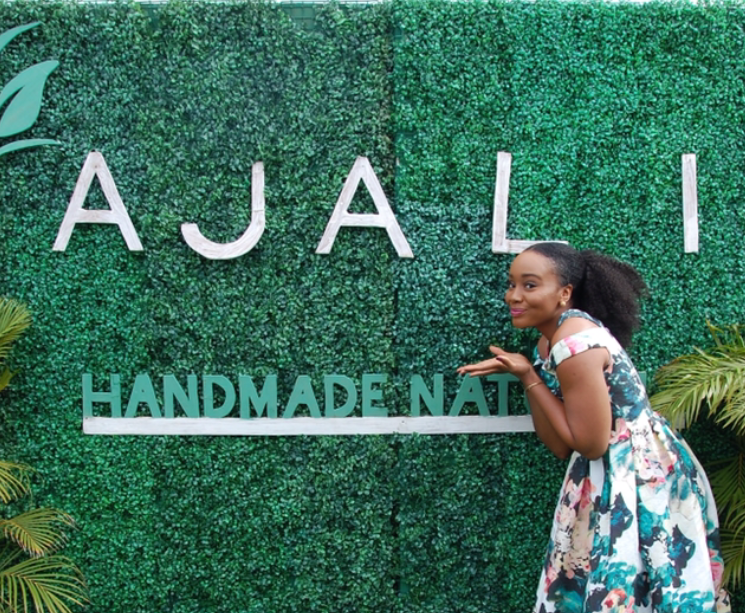
[bctt tweet=”Ifeyinwa Ojekwe: If I didn’t give it my all I’d never know how big it could be” username=”SheLeadsAfrica”] With businesses I admire I always wonder, how did they start? How did they figure out the right products and how the heck did they get a storefront so early? Catching up with Ifeyinwa Ojekwe, founder of AJALI answered these questions. AJALI is an all-natural, completely handmade cosmetics brand established in 2013 to promote local industry and create awareness for living a healthy life. I tried their products at She Hive London and fell in love, I’ve not looked back since. How did AJALI start? AJALI was founded in 2013. I got really sick when I moved back to Nigeria and made the decision to live a cleaner life. I went natural and started doing research into natural cosmetics. At the time, there was body shop in Nigeria, and when I did more research it wasn’t as natural as I expected, so I kept looking for an alternative but didn’t find something I liked, so I did some DIY. The first thing I tried to make was my body souffles, and my family started to ask about it. So I began making it for friends and family, and then my church had an exhibition and the rest was history. It started off really organic (no pun intended!), it started as a hobby and four years later here we are. How did you make the transition from employee to entrepreneur? I worked at Chevron and Ernst & Young when I moved back to Nigeria, and then I landed my dream job at Today’s Woman. I only quit my job in 2015 – 2 years after AJALI started. Throughout all those job changes, I found that AJALI was the only constant, the only passion throughout that time. If felt like if I didn’t give it my all I’d never know how big it could be. It got to a point where I couldn’t manage both, I couldn’t handle the business coming in. I was a one-person operation at that time, I was doing absolutely everything myself and I needed to give it 100%. Several times along the journey, I was frustrated and wanted to quit but I was surrounded by so many good people to encourage me and give me pep talks when I needed one. A major turning point for me was when I was on holiday in London and EbonyLife reached out and said they wanted to give me an award. I thought it was a scam – so I sent them to my mom’s office and a whole camera crew turned up! That was in 2014, I won the Best Nigeria Made Product of the Year and something told me to keep pushing on, to give it my best and keep on keeping on. At first, my family was sceptical, they questioned whether I really thought it through, especially with the recession in Nigeria. But I resolved that this was what I truly wanted to do, and I’d give it my best shot. What were your biggest investments in AJALI? When I decided to be full time, I decided that I needed a physical store to take me where I wanted to go. I had success with my online store and going to trade shows, but people really wanted to come and pick up our products. So I started looking for a space to make things look more professional. Luckily from my job at Today’s Woman, I had some media and press contacts so was able to get buzz around my the launch of my store on 1 November 2015. At the time, it was a 2 bedroom BQ (boy’s quarters) where I did everything – the office, production, and the selling. I hired a beautician to do treatments as I had some extra space and we were off. On the launch day, we had nearly 200 people and I sold more that night that I had sold in the two years prior. That was the first time I believe it could actually work. I hired my first sales assistant around December 2016. I’ve taken my time, it’s all privately funded by myself, family and friends along the way, so I have to be very careful with resources. Everything goes back to be being invested in the business. I also focused on improving the quality of the business, the logistics, the operations for shipping, and delivery. I’ve also expanded my product range as time went on and invested in serious marketing to legitimise the brand. Before I started, I took a year to educate myself on various ingredients and test products with real users, friends, and family. I’m always looking for new things we could do, and because my passion is living a naturally healthy life, it is second nature. [bctt tweet=”Do something that you are passionate about but make sure it makes business sense” via=”no”] What advice would you give to help someone build a successful business? 1. Do something that you are passionate about but make sure it makes business sense. You need to test whether you’re actually going to make money – is this something you’re going to live off of? If you’re going to have a sustainable business you need to have that research. 2. You don’t have to do everything yourself, though. I use freelance websites to make logos, improve my website and do other graphic design. Make sure you have mentors around you, people who can support you – someone you look up to who you can pick their brain and get their advice from. So try to build up your network, if you don’t know where to start, start in places like SLA and educate yourself 3. Be ready for the journey. Not everyone is meant to be an entrepreneur, be a risk taker, willing to work later, and pay less until you reach that sweet-spot in your enterprise. 4. Have a
Juggling post-grad studies, family, a briefcase and the world

[bctt tweet=”You need a tribe of humans who will be there when you need some downtime and rebooting” username=”SheLeadsAfrica”] What exactly does this mean for us when juggling work, studies, and the world? It is a universal assumption and truth that women are the backbone of every family. We are inherently prepared for a purpose. Prepared on purpose. What does this entail and do we have any choice in what we allow to take up space in our lives? How can we better channel our energies into affirming our loved ones, building empires and pursuing our innermost desires and dreams? I am a Womxn. What is your superpower? Firstly, a solid support system is necessary. You need a tribe of humans who will be there to listen, extend a helping hand and generally hold you down when you need some down time and rebooting. It is imperative that we know where to go or when to refuel so that we can do the things we are equipped to do. Contrary to popular belief; this is not at all selfish, this is a reminder to oneself that you are a soft thing and that you should breathe. Inasmuch as life is often a juggling act, one needs to attend to the body, mind, and soul. With a consistent circle of support, it is easy for one to focus and achieve the objectives you have set out for yourself. A great way to stay on the ball is to write up a set of goals and hold yourself accountable to them. A human being actually… How does one strike the work-life-balance? Is this even an attainable feat? This would undoubtedly be a pertinent question for working mothers as one would want to be there for the kids’ milestones whilst breaking new ground on the work front. There have been ongoing studies regarding how one can achieve all this and then some. Ultimately, you should live a life that doesn’t require that you need a vacation from your day to day existence. Sometimes all it requires is doing the things that really get you going, like reading a book, going cycling, having tea with your mother or just having a night out with the girls and/or date night with your partner. Down time is really necessary. [bctt tweet=”You should live a life that doesn’t require that you need a vacation from your day to day existence” via=”no”] Sometimes the lemonade may taste like medicine It is not the end of the world, some experiences are lessons that need to be learned along the way. At the end of it all we need to make decisions about the kind of partners, colleagues and parents we want to be and stop self-sabotaging ourselves. Facebook COO and author of Lean In: Women, Work and the Will to Lead, Sheryl Sandberg shares, “If more women lean in, we can change the power structure of our world and expand opportunities.” She further states, “Shared experience forms the basis of empathy and, in turn, can spark the institutional changes we need. More female leadership will lead to fairer treatment for all women.” Whenever in doubt, or when we question if we can lean in; we ought to remind ourselves that we are the magic and the medicine; and most importantly, we were born for such a time as this. [bctt tweet=”We can be selfless whilst putting ourselves first, it is possible” username=”SheLeadsAfrica”] The world was never ready for your juggling prowess We can be selfless whilst putting ourselves first, it is possible. We can be there for our humans – juggling our itinerary, to-do lists and still have an endless reservoir of love and sustenance for ourselves.We have the power to be whomever we want to be and with the assistance of a steady routine, consistency and positive affirmation, anything is within our reach. Thus, one cannot stress enough the importance of engaging with activities which reaffirm your calling or destiny. It’s also important amidst the juggling to remember that self-care also means giving yourself permission to go through the ups and downs of life and get within your feels. Inasmuch as it takes more than nights away or hours lost in a book; but you can certainly be assured that any dose of self-care can and will go a long way for the spirit, body, and mind. Go out there and SLAy!
Miyoba Buumba: Venture into areas that haven’t been explored
Miyoba is a designer, entrepreneur and environmental advocate with two years work experience with the nonprofit sector. She owns a Zambian design brand called Mwabonwa which makes African print beddings, Jewry, adult and children’s wear. Miyoba is also a youth leader of Echo Change Zambia which conducts environmental awareness activities in schools and communities and has spearheaded the planting of 33,571 trees in Monze District of Zambia from January to March 2017. She holds a Bachelor of Education with environmental education form the University of Zambia. Her main skills include capacity building, community mobilisation, advocacy and enterprenuaship. Miyoba plans to expand her brand and open a design school where she will teach young girls and boys entrepreneurship skills. What’s your strategy of being in the forefront as a young African entrepreneur? My strategy is venture into areas that have not yet been explored and capitalise on them. Unlike most fashion entrepreneurs who run either a small tailoring shop or a sales outlet, I plan to set up a clothes production factory and sales outlet that will have various sections which go above and beyond customer’s expectations. How long do you think it will take to kill the second hand clothing business? If more textiles industries are established, more designers begin to use local raw materials and local consumers see the value and begin to support locally made products, it will take 20 years or less. The second hand clothing business is so popular because it’s cheap. Do you think it will be cheaper when we produce ourselves? Absolutes yes. The reason why brand new clothes are expensive is because they are produced internationally and involve a lot costs from production to consumption. If we produce our own clothes using our local raw materials, we will not only making brand new clothes affordable but also creating employment from textile manufacturing, clothe production and later on sales and marketing. How are you planning on bridging the gap for those that are struggling to also sell better quality clothing? Miyoba can you share with us your environmental concerns? I have beliefs and values that guide me to protect the environment in my every day activities. The environment is our home where all life only thrives when it is safe. A defiled environment can not support life, businesses and economies. We have not done so much in protecting our environment in the past as the resulting impacts are threatening the very lives we are trying to improve and the very businesses or economies we are trying to build. What are some ways l can help the environment that l might not be aware of? One can help the environment by reducing the use of plastic bags when shopping, choosing to buy environmentally friendly products, use less water, recycling products, planting trees, growing organic products and generally speaking to friends about good environmental practices. If you were to be reborn, would you rather live at the beginning of the world or at the end? I would live at the beginning because I feel we have wronged the earth so much without realising and now that I know what damage we humans have done to the planet, I would love a second chance with mother earth, just to start all over again.
Annemarie Musawale: I took my power back

[bctt tweet=”Being a single mom, academic writing seemed the best option in order to be home for my son & earn a living” via=”no”] Annemarie Musawale was born and raised in Nairobi, Kenya and she says, she’s never actually stepped one foot out of East Africa. Growing up this self-publishing author almost always had a book in her hand. Needless to say, she made up stories of her own. By the time she went to high school, Annemarie had pretty much read every book her classmates were just beginning to discover. Annemarie went to the University of Nairobi to pursue a BSc. Degree in Botany, Zoology, and Chemistry. Two years into the course, she was accepted to Makerere University to do BPharm. Leaving work as an active Pharmaceutical Technologist, 2009 was the year Annemarie Musawale became a full-time academic writer. In her own words, ‘Being a single mom, it seemed the best option in order to be home for my son when he needed me, and still earn a living. SLA contributor Rumbidzai had an opportunity to interview her and Annemarie had all these interesting stories to tell. How long does it take you to write a book? Unfortunately for me, writing my own books is not my day job. So I can only write in my spare time, which is very scarce these days. So on average, it can take me anything from six months to two years to write a book. I’m working on making time no matter what, to write daily but so far, I’m not there yet. Looking at the books or pieces you have written what is your ultimate goal? When I wrote “Single Motherhood Unplugged” almost eight years ago, it was a catharsis for me. A way to get my baggage off my back and let it go. I put the book up for sale because once it was written; I could not just throw it away. There were life lessons to be learned, a way for someone else to learn from my experience. So I let it go out into the world and find its audience. It is my one non-fiction book and I call it my ‘step-child’ because of how much I do not market it. The goal therefore with that book was…help someone else who was looking for answers. My other books are fictional in nature. They were written with a lot of love and I guess their goal has been achieved. To have someone read them, and enjoy the words; perhaps be touched by it. My ultimate goal, of course, is to make the New York Times Bestseller lists. My role model in this business is Diana Gabaldon because our paths are remarkably similar. Background in the sciences, Diana started out writing (in her late thirties) just to ‘try it’. She ended up creating characters it is difficult to let go of. Twenty years later, Diana is where I want to be, twenty years from now. [bctt tweet=”My ultimate goal, of course, is to make the New York Times Bestseller lists – Annemarie Musawale ” username=”SheLeadsAfrica”] For the sake of some of our Motherland Moguls who haven’t read your book, “Single Motherhood, what can they expect from it? They can expect it to be raw, painful to read even and completely truthful on what it is really like to have a baby on your own. I called it ‘unplugged’ because it is like those musical performances where the singer has just a stool and a guitar and whatever talent they have in their bodies. They present it to you and let you judge them on the merit of their work. In the book, I let people into my head and lay it bare for them to do with, as they will. It was a very difficult thing to do, but from the feedback I have gotten, there are people out there who needed to read it. So have a look at it with my blessing. Now that’s interesting! In your line of work is there anything you find particularly challenging? Well, the business of writing has its challenges as many writers can tell you. The first is marketing. Getting enough people to hear of your books so that they want to go look for them. The market is crowded and getting noticed is hard. Add to that the fact that my books are not the typical ‘African writers’ type of book. One of my Kenyan readers put it this way; “This book could have been written by anyone, anywhere. It is not confined by time or space.” And while I agree that that is true, I think that nobody but me could have conceived of these books the way I did. It was my unique perspective brought about by living in the ‘global village’ but residing in Kenya. For that reason though, my books don’t have a readymade market. They have too many elements that are foreign to the African psyche, and yet if it were written by a Westerner, most Africans wouldn’t have a problem with it. But the combination of being an African, writing a global book is a new idea. The upside of this is, my audience is not confined to those around me but is truly global. When I see that people from as far away as Japan, Ukraine, Russia, America, and Brazil…have clicked on my links and looked at my books…it makes me feel warm and happy. However, it also makes hosting book signings a bit difficult. When I began in this business, I was traditionally published. However, my publisher was very stingy with information to do with my book. They expected me to do the lion’s share of marketing (as most authors are expected to) without giving me feedback on what was working, what sales figures were or even paying me royalties. So I took my power back, took my books back and went the self-publishing route. This way, I have complete control
Want to be a kick-ass entrepreneur? You must first become an employee

[bctt tweet=”Not everybody can become a successful entrepreneur without undergoing some level of training” username=”SheLeadsAfrica”] Early this year, I had a conversation with a colleague, and we both agreed that the ultimate goal of most millennials was to be their own boss. According to a survey that was conducted by America’s Small Business Development Centres, over 61% of millennials believe the best job security comes from owning your own business. In my opinion, this is a welcome development. More entrepreneurs mean more job creation which in turn leads to an even distribution of wealth, hence reducing the household to poverty ratio. Having said that, it must be stated that not everybody can become a successful entrepreneur without undergoing some level of training whether as an employee or receiving formal (or semi-formal) education. It is quite impossible for you to suddenly acquire the skill set required to become a successful entrepreneur without learning from someone. Presently, there is an ongoing, albeit subtle, disparagement of people working as employees. The condescension is astonishing, you wouldn’t believe it. Employees are now seen as sell-outs; people with little or no ambition. In their haste to put down employees, most people forget that the most successful entrepreneurs in the world were once employees. And the reason for their success can be partly attributed to the skills they acquired while working under someone. [bctt tweet=”Most people forget that the most successful entrepreneurs in the world were once employees” via=”no”] I came across this quote by President Donald Trump which I think is very apt for this post, “Watch, listen, and learn. You can’t know it all yourself. Anyone who thinks they do is destined for mediocrity”. In the same vein, you can only be a great leader by being a follower. Working as an employee can provide you with tools that you need to start-up your own company. Network Business contacts and networks don’t magically land in your laps. You have to make a conscious effort to put yourself out there. By working as an employee, you are able to access the pool of professionals and resources you will need in the future. Never underestimate the power that comes from knowing people and having connections that will act as your referral sources when you do start your business. Experience This cannot be over-emphasized. One of the key reasons why most start-ups fail is because the entrepreneurs didn’t have the necessary experience or knowledge about the sector. A friend who wanted to start a clothing line had no idea what such venture would entail. Her solution was employing someone who had experience. The danger with this is that you are essentially running a business where you know nothing, thus leaving yourself open to failure. Confidence and clear communicator When you learn a skill and have mastered it (by doing it over and over again as an employee), there is a confidence that comes with the knowledge that you are a pro in that particular area. For instance, working as a sales personnel in a manufacturing company. As a sales personnel, you had to learn how to sell a product. By doing this over a period of time, you become very good at it. When you eventually start your own product line, you are already a master of sales and this brings a certain level of confidence. As an employee, you had to learn the art of good communication, what good communication looks and sounds like. Being able to communicate effectively makes a major difference, and this is a skill you will need when you start employing people. Learning the art of budgeting Truthfully, you don’t need to be an employee to learn how to budget your expenses. However, as an employee, you may have noticed that in order for a company to run effectively, funds have to be allocated for various activities. You learn how to achieve more with less, and how to organise and think creatively. This is important because not all startups have huge capital to invest. You will need to do the important stuff with the little you have. Avoid mistakes There is nothing as beautiful as learning from the mistakes of others, especially for entrepreneurs. So, as an employee, you would have noticed the flaws and the loopholes in the business. This will serve as a guide such that when you start your own company, these flaws and loopholes will be avoided. So, these are the reasons why I believe that one of the best things an aspiring entrepreneur should do before starting up his/her company is to first work for other people.
When to leave a job

[bctt tweet=”Leaving a position at the right time can be crucial towards career advancement” username=”SheLeadsAfrica”] Millennials get a bad rap for hopping from one job to the next. But, is it really that awful to leave a position when the fit isn’t right? Leaving a position at the right time can be crucial towards career advancement. There’s no benefit in staying at a job where you may be undervalued and underpaid just because of the status quo. With that being said, here are a few things you should consider before turning in your pink slip. You’re making below the industry standard Do your research on Glassdoor and find out how much people in your area and same position are making. Also, if you’re eating noodles every night and can barely make rent, that’s a telltale sign to search for another opportunity whether you’re being paid fairly or not. You deserve a job that allows you to enjoy steak and champagne every day of the week! [bctt tweet=”You deserve a job that allows you to enjoy steak and champagne every day of the week” via=”no”] There’s been a mass exodus I’m not saying to follow the crowd, but…if you’re getting farewell party emails every other day and your coworkers constantly disappear for interviews, it’s time for you to take heed. You don’t want to be that lifer at your job that’s been there for 40 years telling the newcomers stories about the good old days. Also, use your coworkers moving on to your advantage. Make those LinkedIn connections, schedule coffee meetings, and start networking because your coworkers can serve as great references for a new job. You’re performing above and beyond your job description Revisit the original job description when you applied for your position. Now, write out your current daily duties. If you’re exceeding your expectations, congratulations, you’re in luck! Use those additional tasks to build your resume and prove to potential employers that you deserve a better position. [bctt tweet=”Your (former) coworkers can serve as great references for a new job” username=”SheLeadsAfrica”] You’re stuck in the same place Most of us are ready for a promotion after a year or two, which can be a little soon depending on your company. However, if you’re receiving positive reviews, show up on time, listen to your boss ramble about her kids and you’ve been in the same spot for more than two years with no signs of a promotion, it’s time to go. You don’t fit the culture This can be crucial towards your success and happiness at your job. If you’re working in a rigid environment where suits and heels are required but you consider yourself a creative spirit, it may be time to explore other options. If you naturally don’t feel like a match for your job, why deprive yourself of an opportunity where you do? Make it a priority to devote yourself to your passion, being happy with your career, and leaving that position that’s bringing you down.
Ntombizodwa Sibanda: Contentment is the realisation of how much you already have
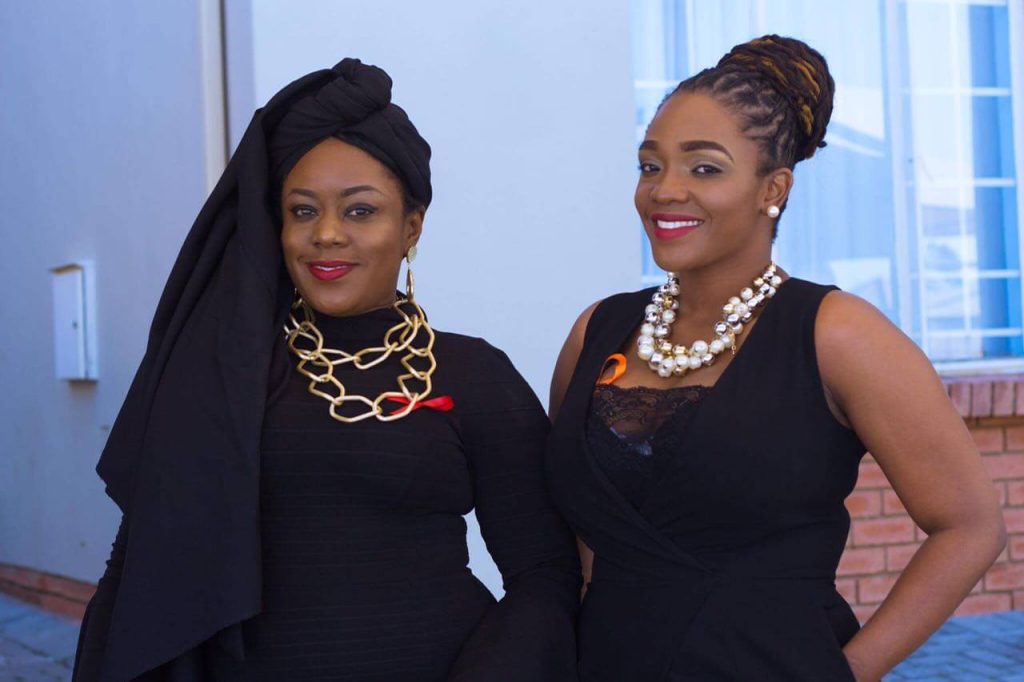
[bctt tweet=”Our ultimate goal is to holistically fulfil our guests @ZoeOmza co-founder of @TheHighTeaZA” via=”no”] Ntombizodwa Sibanda and Bonnie Chimanikire recently hosted a successful high tea event in Harare, Zimbabwe. The High Tea concept is an initiative that was co-founded by the two ladies, Ntombizodwa and Bonnie. They wanted the event to be an afternoon of encouragement, pampering and positive interaction for women. SLA contributor Makhosazana Ndlovu recently caught up with Ntombizodwa to learn more about the concept and discover their secrets to running a successful event. What inspired you to start The High Tea initiative? My partner, Bonnie and I had successfully run a campaign to assist displaced xenophobic victims in the Germiston area. After the campaign, Bonnie approached me about her vision to host a women-focused event. We agreed that we wanted the event not only to be informative, but to be an afternoon of encouragement, pampering, and positive interaction of women, which is contrary to the general negative narrative of the interaction of women. Empowerment, fashion, food. Why these themes specifically? Our ultimate goal is to holistically fulfil our guests. Our guests are encouraged to dress to the nines, we ensure that our menu and refreshments are fit for the palate of queens and carefully select our speakers with a simple mandate to encourage our women. No woman can ever get enough of these themes. How did you deal with the challenges that you faced when you first introduced the initiative? Determination: We knew what we wanted. We knew what had to be done to achieve it, and we set out to do it. Most importantly, we were prepared for the worst; which was very low numbers. But we knew that if we succeeded in executing the first one, we would have the most effective publicity (word of mouth) going forward. Support structure: We had friends and family who stood by us and gave us the necessary support and advice we needed. Prayer: Some situations were beyond us. Those are the ones we left to God to handle. And He pulled through for us… a lot of fasting and prayer comes into every edition of The High Tea. [bctt tweet=”We knew what we wanted. We knew what had to be done to achieve it, and we set out to do it” username=”SheLeadsAfrica”] Who do you work with to ensure that The High Tea events are a success? When we started, it was just Bonnie and I. However, as the vision grew, so did the need to incorporate much-needed help. The core team has grown by an extra four members, namely, Pam, Zihlobo, Gugu, and Sidumisile. We also have a large network of successful women who are originally from Zimbabwe but are resident in South Africa. They are affectionately known as the SQUAD and we rely on them for valuable advice and direction. I could never forget our friends and families who have all played various roles in assisting us to meet our goals. What impact does the events have on African women? The event is not limited to Zimbabwean women but attracts women from various African countries. This is also evident in our diverse speakers. We aim to encourage inter-dependence amongst African women. Our struggles are, after all similar, regardless of our different countries. This means that viable solutions can be found in positive interaction with each other. [bctt tweet=”We aim to encourage inter-dependence amongst African women @TheHighTeaZA” username=”SheLeadsAfrica”] What are your words of advice to young women who would like to start initiatives such as The High Tea? Regardless of how many times you have seen something being done, no one can ever do it like you. Identify your target market, identify a mentor, identify what and whom you will need to assist in bringing your vision to life, stalk them. It is possible. If you’d like to share your story with She Leads Africa, let us know more about you and your story here.
How to build a profitable creative business

[bctt tweet=”@ChristineArhu shares six tips she used to grow her creative business after a string of failed businesses” via=”no”] Congratulations! You’ve decided to take the leap to become your own boss and entrepreneur! But wait, what exactly is it you want to do? I’m guilty of not knowing what I wanted to do with my life. In college, I took liberal arts as I just kept changing my major. After college, I became a mother and therefore stayed home with the kids. This really frustrated me a lot because I was used to working and depending on myself. So I decided to start a jewelry business. That business failed as I wasn’t making any profit and I had no clue how to use social media to my advantage. So I started a VA company and that didn’t work out either! I then decided to get a real estate license and after failing the exam twice, I gave up (you see the pattern here…). I was still confused as to what I wanted to do in my life. With all the failed businesses I started, I felt like such a failure! However, I kept asking myself why I couldn’t start and have a successful business. Why do I keep failing at all the businesses I start? What do I need (besides capital) to start and maintain a successful business? Then it hit me, I was basically trying to start businesses that I had zero interest in and I was doing it for the sole purpose of making a profit. I had no purpose and zero passion. Yes making money is important, but you need to be passionate about the business you are doing. Realizing this, I sat down and really discovered what I was good at. And that was graphic and web design. So I began my journey as a Brand Designer and I haven’t looked back since. So how do you create a profitable creative business? Let’s dive in…. 1. Write your personal mission statement The reason I say to write your personal mission statement first is that you have to know why you want to be a creative entrepreneur in the first place. By doing this, it will make it easier for you to narrow down your niche and clearly define your brand. If you haven’t figured out what you want to do, write down a list of your strengths and weaknesses. Next, write down what other people ask you for help with or what they say you are good at. Then look at the two lists and see which characteristics coincide and bam you’ve found your business! Download my free personal mission statement worksheet. [bctt tweet=”You have to know why you want to be a creative entrepreneur in the first place” username=”SheLeadsAfrica”] 2. Find out who your target market or niche is It’s important to know who you are trying to attract as potential clients. Why? Because being unclear as to what your services are will bring in clients and projects that you’ll hate! When I was first starting out as social media and business coach, I took projects for the sole purpose of earning an income and ended up hating the projects! After really looking into strengths and weaknesses I was then able to narrow down my niche. Having a niche helps cut down the guess work in your services. When you are first starting out as a creative business, you will want to offer all kinds of services under the sun! By choosing a niche, you create a clear path as to where and how you want your business to grow. 3. Write your goals Writing down your goals is like writing down a road map for your business. Honestly, I prefer to write down my business goals rather than creating a business plan because once I finish writing the business plan, I file it and forget about it. With goals, I can divide them into two major parts; long term, and short term. From there I then write down my yearly, monthly and weekly goals. I constantly refer to my business goals worksheet just so I know I’m keeping track of things and know where I stand in my business. Don’t make your goals complicated either. Be realistic with your goals and think of them mini business plans. Write down everything from business expenses to your projected income. [bctt tweet=”I prefer to write down my business goals rather than creating a business plan – @ChristineArhu” username=”SheLeadsAfrica”] 4. Create, create, create What do I mean by “create”? Create products, services or packages that will earn you an income. That’s the whole point you started your creative business right?! Some ideas of products are e-books, webinars, email series, and e-courses. These are known as passive income streams for they continuously make you money even while you sleep. Services can include web design, social media management and graphic design, photography and coaching. These services are pretty self-explanatory. Wherever your strong suit lies is what you should focus on to get clients Packages are a form of services you would offer to your clients like different coaching services with different prices. These are on terms such as monthly, every 3 months, 6 months or intensives/retreats that you could do twice a year. 5. Blog Blogging is crucial for your creative business because it helps you get clients and create a following to which is very beneficial to your business. Blogging is not easy but if you put the effort and consistency it will pay off. When I started blogging, I was not consistent at all because first I hadn’t chosen a niche and I had no editorial calendar. After I was able to narrow down my niche, I then was more consistent with blogging. Knowing who you serve helps you create and research content for your blog so as to create a following and attract clients. It’s crucial to remember to engage your readers by replying back to