
Bookkeeping for dummies

[bctt tweet=”Bookkeeping is an important skill to have when you’re starting your business” username=”SheLeadsAfrica”] One thing that you quickly learn when you start your business is that you’ll have to handle every aspect of it; from marketing your products, hiring your employees and most importantly getting a handle of your accounts. It is therefore important that you get a good understanding of the basic set of accounts for any business, how they relate to each other and how the different actions you take are represented in your books. The more your business grows the more complex it becomes and at that point, you might want to consider getting yourself some professional help. In this Forbes article, the writer talks about what you need to know about the 10% of start-ups that succeed. One of the things he talks about is making sure you understand the ‘’boring’’ stuff about your business. It is so easy to get carried away by the more interesting aspects of your business and forget to handle the less interesting but many times the most important aspects of your business. One of these is the accounting. What we are going to do here is to give you a basic introduction to the business accounting concepts that you need to understand as you run your business. Don’t be worried about whether or not you have an accounting degree, these are things you can do with your eyes closed. [bctt tweet=”Every business transaction is an exchange of one thing for another” username=”SheLeadsAfrica”] Double entry: All business transactions have a double effect on the accounts Every business transaction is an exchange of one thing for another. This is the basis of accounting, the idea here is to get an all rounded picture of where your money is going and keep yourself from small mistakes. As a boutique owner, you sell an outfit (inventory) in exchange for cash. This simple transaction has a double effect of increasing the amount of cash in your business while reducing the count of inventory. Very simply put that is double entry affecting your cash account and your inventory account. The accounts are interrelated At this point, we are basically building up on the double entry concept by creating an account for every element of your business. If for example, you did not sell the outfit for cash but for credit, then you’ll want to keep an account of the person to whom you sold the outfit to until you get the money in cash and then close off that account while increasing the amount of actual cash that you have. Every time you use your cash for something new then create an account for whatever aspect of your business is affected by that transaction. If it is an account that you already opened then you just keep building on that account. Balance the accounts You’ve probably heard this phrase before, what it simply means is that after some time you’ll want to know how your accounts look. Say every month or every week when you want to know where your business stands you’ll make sure that for every account you opened both sides have an equal amount. For example, your inventory account had a balance of $1000 when you started off, every time you sold something that balance reduced. Let us assume that at the end of the month your inventory reduced to $250, you’ll continue selling it off at the beginning of the next month so to balance your account the $250 will simply be considered as inventory carried forward. [bctt tweet=”Bookkeeping grows more technical as your business grows & there are many apps you can use to do this” username=”SheLeadsAfrica”] These are the basic accounting ideas that you need to understand. Bookkeeping, of course, grows more technical as your business grows and there are many applications that people employ these days to do this, however, the idea remains the same. In the next article in this series, we’ll help you understand the important accounts when doing bookkeeping for your business. We’ll talk about differentiating between cash and profit, understanding the incoming statement as well as the balance sheet.
Elizabeth Akanbi: Make mistakes, learn, grow and do better

[bctt tweet=”We aim to reach women that have a passion to become game changers” username=”SheLeadsAfrica”] If there’s something she’s known for, it’s adding value to other women’s lives. With over 7 years experience across different industries, Content creator and Marketing communications professional, Elizabeth Akanbi is Founder and Managing editor of For Working Ladies, an online career lifestyle hub for women. With a strong passion of understanding people’s journeys to success she uses this knowledge to inspire, empower and motivate individuals. Asides equipping women with inspiring and motivational content Elizabeth is passionate about sharing the African culture through art, food, music and social events. As such she co-founded a lifestyle brand, The Social Bloc which runs periodic social events in the UK to highlight the African culture. What inspires For Working Ladies? I have always desired a mentor, someone to tell me how to make decisions, someone to give me career advice, tell me the risks of starting a business, I’m sure you know what I mean right? But I have never been fortunate to have one. I would search the internet day and night looking for answers to my questions, read loads of articles, career profiles and then draw a conclusion on the topic. I knew I wasn’t the only person going through this and needed to create a platform where you could get career/entrepreneurship tips, read about other women that have taken your path and just daily lifestyle content. Why an online platform? Because the world is going digital and people are constantly on their phones so I saw this was the best place to share content and reach our audience. For Working Ladies is a career lifestyle hub for women created to motivate, inspire and give guidance. What kind of content do you provide and what women does your business aim to reach? Our content mainly focuses on career and entrepreneurship, however, we also share lifestyle content also. We aim to reach women that have a passion to become game changers, we want to equip them, motivate them and be that big sister that says we have your back. What innovations and future plans are you looking towards for your business? 2017 is the year that I hope to take For Working Ladies offline and create interactive events. Things are still in the pipeline; I am excited and currently looking for speakers and brands to partner with for our first interactive event. Asides from events we hope to start delivering content in new and fresh ways as the behavior of people are changing and they want more than just written content. Tell us about your greatest challenge as well as your greatest achievement so far? My greatest challenge has been creating content that is new, fresh and relevant on an ongoing basis. There is so much content out there that it is necessary to give people a reason why they should read yours. Luckily I have an amazing team of contributors who are constantly creating fresh and relatable content for women. My greatest achievement so far has been keeping this content-based site going for over a year, being the only editor, managing the digital marketing, overseeing over 15 contributors whilst working. It takes a lot of time and dedication; there have been times where I have gotten so tired of proofreading and writing that I just want to give up. I am working on building a team so that as a brand more can be achieved. What business tools have helped you in running your business successfully? My daily tasks consist of sending emails, a lot of emails! mainly to contributors and also to people I am interviewing. I am literally always stuck to my phone/Mac refreshing my inbox, it can be a headache but it has to be done. The best tool that has helped me in managing emails is Boomerang for Gmail, it allows you to schedule emails, receive notifications to follow up on an email and also receive a notification when they have read the email. It’s a really user-friendly plugin! There are so many great features, we have an article on our website about it. [bctt tweet=”Learn from every mistake, because every experience and encounter is there to teach you” username=”SheLeadsAfrica”] What personal values have guided you as an entrepreneur? Hard work and consistency. Results don’t just come; you must be intentional and put the work in. The first step is making the commitment but the next, which can be the hardest is consistency coupled with hard work. Also as Oprah said, “Learn from every mistake, because every experience and encounter, particularly your mistakes, are there to teach you..” It’s okay to get it wrong, it’s okay for that partnership to breakdown, it’s okay for that idea not to work out, but in all of that experience what did you learn? I try my best to analyse every experience I have had and learn from it. Without mistakes how would we learn? Make mistakes, learn, grow and do better! From your business name, it is safe to say you have nothing for the unemployed ladies? We have something for every female, whether employed or not. Our main focus is career and entrepreneurship, however, we touch on lifestyle, fashion and much more content that is relevant to all ladies. Everyone has something they want to achieve in life, a dream they want to pursue, something they are working on and we want to be part of that journey in inspiring, encouraging them that they can achieve whatever they set their mind to do. [bctt tweet=”Don’t allow the distance between where you are and where you want to be scare you” username=”SheLeadsAfrica”] Advice for entrepreneurs about to throw in the towel? Why did you start in the first place? Sit down and have a deep think. Remember your why at every low point and allow it to push you. Don’t allow the distance between where you are and where you want to be scare you,
Ifrah Arab: This is just not a joke for me

[bctt tweet=”We faced a lot of challenges being in a conservative community they weren’t ready to accept change” via=”no”] Ifrah Arab is only 20 years old, but she is on a mission to alleviate poverty and inspire more women much older than herself into enterprise. Through this effort Ifrah was a 2016 Anzisha Prize finalist and a 2016 Echoing Green semifinalist quite a mean feat. Ifrah grew up in Garissa town, a conservative community where women were never encouraged to have economic independence. In 2015, when her mother passed away, Ifrah felt the need to uplift mothers in her community. She founded SuperMom, a door to door distribution network that gives Kenyan women in disadvantaged areas access to quality and essential consumer products. Within two years of operation, she now has 50 women now selling products door to door earning an income and making household items accessible to thousands. Ifrah hopes to draw in 2,000 women in the next two years and double their incomes. How many commodities is SuperMom now selling door to door in Garissa County? We sell a whole range of products. Our main ones are consumer goods which include sugar, salt, flour etc. mainly basic everyday use consumer products, clean green energy, sanitary products and health products. Garissa has a relatively large Muslim population some of whom are conservative when it comes to women working. Has SuperMom encountered any challenges around this with the community? Yes, we faced a lot of challenges mostly because of, as you said it, being a conservative community they weren’t ready to accept the change. Most of them saw it as a breach of culture and all that and we faced a lot of opposition. [bctt tweet=”Ifrah Arab personally interacts with the women in her SuperMom network.” username=”SheLeadsAfrica”] How are you overcoming this challenge? We overcome this challenge by using a new tactic. We decided to first approach the community elders, religious leaders, local women groups and made them understand our mission. This made it easier for us to then penetrate the larger community because now we had people they trust endorsing us. You were a 2016 Anzisha Prize finalist, how has this experience improved your outlook and operations at SuperMom? I learnt a lot from the Anzisha Prize. I met different young people from Africa who shared the same vision of making Africa great. They were all young problem solvers aged between 15 and 22. It was wonderful being able to meet and build networks with people of the same mindset and share ideas. You were also a semifinalist in the Echoing Green Fellowship of 2016? What are some of the lessons you learnt from that process? I wasn’t able to make it to the finals for Echoing Green but the feedback they gave me after the selection process has helped SuperMom grow. We were able to take in all the advice we got from them and that was really great. What are some of the most successful pitching techniques you use when seeking funding for SuperMom? When I am pitching SuperMom I always make sure I am clear and the audience clearly understands what SuperMom is all about. I also make sure to always show traction. What we have done so far to earn that trust. I always give my story too. It makes people understand the reason why am doing this. That it’s just not a joke for me. [bctt tweet=”When I am pitching SuperMom I always make sure the audience clearly understands” username=”SheLeadsAfrica”] What keeps you going? I personally interact with the women in our network. Every time I hear any of the women talking about how SuperMom has improved her life it motivates me to do more. What big plans do you have in store for SuperMom? The problem we are trying to solve is not unique to my community. Several other marginalised communities in Kenya face the same problem. My vision is to expand and reach these other communities. We are also not covering all the products needed so also to form more partnerships so as to increase the number of products in our catalogue. What’s the one thing you would not leave the house without? My phone. If you’d like to share your story with She Leads Africa, let us know more about you and your story here.
Ethel Cofie: Share your knowledge, inspire others

[bctt tweet=” I have always loved the idea that technology can allow you to create – Ethel Cofie” username=”SheLeadsAfrica”] When Ethel was 18 years old her father sent her to computer diploma class, so she would keep busy. There, one of the lecturers made a life-changing statement to Ethel, “the computer is dumb and the computer is only as smart as the one who writes its logic”. That simple line led to Ethel choosing to do a degree in computer science and then a master’s degree in Distributed System on scholarship in the UK (the only female in her specialization). Ethel made her first attempt at entrepreneurship with a software firm in her Ghana which failed. Because she was self-funded, Ethel lost her savings in the process. Not daunted, Ethel went back to full-time employment across Ghana, and Nigeria, Sierra Leone building innovative technology or managing teams that build innovative tech. She eventually found her way back into entrepreneurship and is now an award-winning entrepreneur. Her software company EDEL Technology Consulting won the IT Consulting Firm of the Year, as adjudged by the Ghana Telecom and IT Industry. In the last few years, Ethel Cofie has gone from being named one of the top 5 women influencing technology by the Mail and Guardian (South Africa) to winning the Most Influential African Woman in Business and Government: ICT Category by CEO Global. How did you get the idea/concept of EDEL Technology? As I sat through my first programming class, I thought, the computer is only as smart as the one who writes its logic, and I’m smart so why can’t I? I had just signed up to my first computer training class after my secondary education. It was all new and exciting for me –learning about computers. This first lesson revolutionalised my life and the way I felt about computers. It’s one of those aha! moments of my life. After 6 months of the computer training course, I decided that a career in computing was what I wanted; I, therefore, applied to Valley View University to pursue a BSc course in Computer science. I have always loved the idea that technology can allow you to create and make drastic changes in industries in technology. So I knew I was always going to become an entrepreneur. In my mind, I was going to build an organization around technology. I chose to focus on building an IT Strategy and Consulting company so I can strategically work with companies to build new revenue streams and make them more efficient. What has been your biggest hurdle so far? In business, there are challenges– times you feel like giving up. Times you feel you made a mistake. Like all entrepreneurs, the biggest challenge is the self-doubt, and also the negativity from people you think should support you. The story is no different from mine. Leaving a lucrative corporate job to start my own business was a challenge. [bctt tweet=”After failing the first time round, Ethel Cofie went on to be an award-winning enrepreneur” via=”no”] Has there ever been a time when you thought of giving up? What kept you going? I left my lucrative job and very comfortable life in London and returned to Ghana with the intention of starting a Software Business of my own (EDEL Technology Consulting). I told nobody about it. Not even my parents, because considering that they were the typical African parents, I knew they would object. They only got to know of my intentions after I had shipped all my belongings and arrived in Ghana. Everybody thought I was insane. And guess what, I failed completely at my first attempt. A lot of my working life was spent in the United Kingdom, where people understood technology. However, I painfully came to understand what it meant to build technology in Ghana, where at the time most people did not understand what it meant. You can just imagine what my parents and people said at the time. The blow was overwhelming because I had spent all my savings on this new adventure. But I didn’t let this deter my vision. I plodded on, mastered courage and took on a few jobs, did a lot of projects and started EDEL Technology consulting version 2 and I am glad to report that the second version has grown to the point where we have clients not only in Ghana but in the United Kingdom. What is your favourite thing about the tech industry? I love the ability to create and change industries and change how businesses use technology to solve business challenges. This is why I love technology –we can change how the world works. [bctt tweet=”Ethel Cofie: This is why I love technology –we can change how the world works.” username=”SheLeadsAfrica”] As one of the top 5 women influencing IT in Africa, to what do you attribute your success? I’m always learning and sharing. I’ve found that nothing is more rewarding than learning new things, and this has always been my mantra. You cannot over-learn. Another thing is also to share. Share your knowledge, inspire others, hence my fixation with getting more girls into tech. I also believe that to be successful, one must maximize their opportunities and believe in the purpose for which was born. Which season is the toughest for your job? How do you overcome this? We work with businesses so our seasons are based on general economic trends. We provide solutions to businesses so when business is booming, our services are also in high demand. If you’d like to share your story with She Leads Africa, let us know more about you and your story here.
Omowunmi Kolawole: Social media is my only marketing channel

[bctt tweet=”I make more sales via Twitter than other social media networks- Omowunmi Kolawole” username=”SheLeadsAfrica”] Omowunmi Kolawole is a 26-year-old graduate of Political Science from the University of Lagos. In September 2016, she founded Shoepify, a shoe brand targeted at women who are all about winning in the financial world while looking amazing and saving money at the same time. The brand is dedicated to the smart spenders who can totally “slay” without breaking the bank. Apart from selling shoes, Omowunmi is a trained fashion designer who is on her way to launching the next best brand in the Nigeria’s fashion industry. Why did you choose to sell shoes? Two major factors triggered this. The first is my target audience. I target people with big feet; these are people who find it difficult to get their shoe sizes. This is a major challenge because I can personally relate. Most of the sizes we stock are 39 upwards. Although we are looking to stock more of 37, 38 and 43 as we have had increasing demands for them. The second factor was based on a research I did. I found out there was a gap in the online shoe business. Vendors often cater more to high-end customers. People weren’t really selling shoes below N12,000 (~$37) so it was an opportunity for me as there was a market suffering. We don’t stock shoes above N10,000 for now. Is social media your only channel of marketing? Yes, it definitely is. Apart from the word-of-mouth marketing, I do at various gatherings, I channel all other marketing into social media. What are your primary social media channels and how long have you been using them? Twitter and Instagram. We started using them September 2016 but went full scale in March 2017. What social media platform do you consider more productive in terms of audience and sales? Sometimes it shifts, but I have definitely made more sales on Twitter. I personally use the platform a lot, so I have been able to capitalize on my personal profile. Customers are also more engaging via Twitter. Retweets go a long way in helping the business as it can land on thousands of people’s timelines. Twitter has definitely been more productive. [bctt tweet=”People find it hard to trust brands on social media- Omowunmi Kolawole” username=”SheLeadsAfrica”] What are some of the challenges you have faced while using social media? With social media, you have to be constantly online to engage potential buyers. You need to keep them engaged and the platforms are quite different. What works for Twitter may not work for Instagram thereby, making you create double content around the same picture/post to get reactions. Another challenge is trust. I found out there are a lot of illegitimate businesses running online especially on Instagram so people find it hard to trust brands. Clients are skeptical about paying their money to someone they don’t know or not getting the exact item they paid for as shown in pictures. So we have to go the extra mile to convince them. How has social media affected your general sales? About 90% of the sales have come from social media so I can say that even though there are challenges, we are pushing through and it is definitely getting better. People are beginning to trust the brand more. [bctt tweet=”Do a research before using social media for marketing- Omowunmi Kolawole” username=”SheLeadsAfrica”] Which one-sentence advice would you give to someone interested in using social media as their marketing force? Do your research, know what your target market wants and give them. f you’d like to share your story with She Leads Africa, let us know more about you and your story here.
7 effective strategies to start any organisation: Lessons from Julie Nixon
[bctt tweet=”You have to prepare a plan to execute your business solutions. An idea will remain that until it’s put into action” via=”no”] Julie Nixon was educated in the United Kingdom before immigrating to South Africa in the late 1980’s. After undergoing extensive Retail Management courses with a leading retail chain, Julie utilised her broad experience in sales, merchandising and human resource courses to streamline the Gone Rural operations. Julie arrived at Gone Rural in 2005 to take on the position of Workshop Manager and was promoted to General Manager in 2007 with new responsibilities including Sales, Human Resource courses, and Logistics. As head of sales, Julie oversaw a one hundred parent sales increase in three years which in turn quadrupled the women’s income during the same period. Julie due to her successes was given the position of Chair Person for the “Swazi Secrets” (a women’s empowerment company started by Her Majesty the Queen Mother) where she served a two-year term. While chairing this organisation, Julie realised that though artisans in Swaziland are hardworking and talented, they do not make much income. This led her to start a fair-trade organisation called Swaziland Fair Trade (SWIFT) which ensures that supply chains are fair while creating opportunities for fair wages at grass roots level. Julie is passionate, dedicated and committed to improving the lives of the people of Swaziland and has managed to secure a grant for a three-year capacity building project for handcrafters in Swaziland. If you are planning on starting any organisation, here are 7 effective strategies you can learn from Julie Nixon. 1. Identify the need for the community and possible solutions To start any type of organization, you will first have to discover the need and then provide solutions. The core purpose of any organization is to fill a need –be it goods or services, the organisation must provide some satisfaction. This was the case of Julie who discovered that though artisans in Swaziland are highly skilled and talented with an abundance of natural raw materials, they had no way of getting their beautiful pieces to the market. The artisans had capacity needs such as proper costing as many of them did not cost their labour into the product which meant it was actually costing the artisan to produce and sell a product. This led her to provide a solution by starting a system where all will benefit and as she has always been a big supporter of Fair Trade, she decided that would be the best way to make a difference. Thus social enterprises like those in the Fair-Trade model ensure that their supply chains are fair, they create opportunities for fair wages at grass roots level and they are transparent and inclusive. This is a model she supported, which is why Swaziland Fair Trade (SWIFT) came into being. 2. Prepare a plan or strategy to execute these solutions After discovering the need and possible solutions, you then have to prepare a plan or strategy to execute these solutions as an idea will remain an idea until it is actually put into action. Julie’s plan for SWIFT is to grow the local economy and create more socially responsible companies that operate under the principles of Fair-Trade. Thus, a network of businesses that work together as a united front to protect the weakest members of their society. With this as the fundamentals, Julie set out to put her idea into action by; Targeting a group Every organization needs a focus group for it to function, as if you do not have people believing or patronizing what you intend to provide, then there really is nothing to give. The target group for SWIFT was local handcraft or food producers who have a marketable product and a will to create jobs through the application of Fair Trade standards. Making a list of services to be provided or goods to sell What do you intend to give this target group? Julie carefully crafted a capacity building, mentoring and coaching, training and development program to capacitate the highly skilled artisans of Swaziland. The training was supported by trade linkage opportunities and sales platforms such as the Bushfire Marketplace, to ensure members “earned while they learned”. Marketing strategies Making a list of how to communicate your plans to the target group. This can be through word of mouth, social media etc. depending on who your target group is. 3. Get a mentor, attend workshops and do some research As you are working on getting your organization out there, you also have to work on yourself and that is by getting a mentor who has been in that trade or industry for a while, attending workshops/school and doing some research. Julie attended workshops by Paul Meyers the Chairman of the World Fair Trade Organization (WFTO) who called for the setup of country networks that offered an alternative to the classic capitalist model and became active in spreading the word about Fair-Trade. [bctt tweet=”As you’re getting your organisation out there, you also have to work on yourself by getting a mentor” via=”no”] 4. Invest in the organization If you have chosen the path of starting an organization, then you must already know that this organization will run on money and time. This means you should be prepared to invest with both your money and time. SWIFT was started with zero finances but with decades of collective business knowledge. Their vision was pure, capacitate handcrafters at grass roots level, to promote Fair Trade as an ethical business practice and a will to grow their domestic economy. In the very early years, SWIFT used membership contributions to hire a part-time country manager and the company Julie worked for Gone Rural, allowed her time to work setting up SWIFT. 5. Start small Rome wasn’t built in a day so be prepared to start small unless you already have your funding and professionals who are willing to sacrifice their all for your dream. If not, you would have
Laying the foundations of your business while holding down your day job

[bctt tweet=”This been the hardest undertaking of our lives thus far, but also the most rewarding ” username=”SheLeadsAfrica”] In August 2016, my friend and I took the plunge and decided to launch our very own social enterprise. Born out of many long conversations and brainstorming sessions, we finally settled on creating an organization that could help address some of the challenges Nigerian girls are facing stress-induced their educational development. That was how Give Girls A Chance came about. We were giddy with excitement as we embarked on the process of registering the organization and launching a fundraising campaign. In January 2017, we had raised enough money to sponsor the first group of girls in the program with full scholarships including tuition, fees, books, and uniforms. We also recruited five amazing volunteers to serve as mentors through our dedicated mentoring program. With all of this in place, we set to work running the organization like the bad-ass boss ladies we are. Half a year later, we can honestly say that this been the hardest undertaking of our lives thus far, but also the most rewarding thing we have ever done. Mind you we both decided to do this right at the moment when our other professional careers were taking off. I had just joined the UN in August and was posted to Zambia. My partner Hauwa was wrapping up her youth service and about to start working as a full-time doctor. But this idea was something that had been on both of our minds for a long time and we did not want to wait any longer. We are both deeply passionate about public service and believe that it is our duty to contribute to the development of Nigeria. What better way to do that than by training up the next generation of women and future leaders of our country? So, we took the plunge, and for better or worse, we have survived to talk about it. For every success that we have had, we have had twice as many failures and faced countless roadblocks. When it comes to laying the foundations for your businesses while holding down your day job, here are some of the experiences we’ve had and advice we would like to share with the readers. Say goodbye to sleep…at least for the time being Before you take this flirtationship any further, imagining the idea of starting a side hustle, business or organization while keeping your day job and still managing to get 8 hours of sleep, stay fit and avoid stress-induced acne, let me stop you right there. Unless you are Wonder Woman (and who knows some of you very well may be), you should know now that you’re going to have to make a choice between bringing your business to life or getting the daily recommended 8 hours of sleep. I can’t tell you how many sleepless nights we’ve had and how many things we’ve had to miss out on because we choose to invest our waking hours and our resources into growing our organization. There is so much research, planning, and coordination required to grow a business and if you have to do this alongside a job that demands the 8 hours of the day when most people are typically productive, it simply means you’re going to have to cut into your sleep and leisure time to stay on top of everything. The good news is that the joy of seeing your idea come to life is unparalleled. Nothing beats that feeling of satisfaction and accomplishment you will have when you start to hit your targets. And if all it takes is skimping on sleep every now and then, that’s a small price to pay, right? You can always make it up later when your name is up in flashing lights and you’re rolling deep in that moolah. [bctt tweet=”You’re going to have to make a choice between bringing your business to life or sleeping” via=”no”] Budget, budget, budget I grew up with a banker for a father and he tried his best to instill in me the spirit of budgeting and saving. But I like shiny things too much and I’m always ready to take on the challenge of seeing how much stuff I can get for all the money in my account. I am so thankful that Hauwa is in charge of the finances for Give Girls A Chance. We managed to raise a significant amount of money when we first launched and true to form I wanted to go big and sponsor as many girls as we could but Hauwa talked sense into me. We decided to start with 11 girls, put some money into savings so we could pay for events and plan for the future. We knew that it would not be cool if we sponsored 200 girls for one semester or two, but then had no money to keep on going. The girls would end up right back where they started, having to drop out of school because they could not afford to go. Instead, we decided to take things step by step, prudently accounting for every kobo and making sure we were getting the best return on our investments. As the new school year approaches, we are thrilled as we can now comfortably take on more girls for an extended period of time. My advice is to use the resources you have wisely and always have some money left in the bank. [bctt tweet=”Use the resources you have wisely and always have some money left in the bank ” username=”SheLeadsAfrica”] Be consistent Because we both have full-time jobs, the only times we are able to work on Give Girls A Chance related activities are in the evenings and on weekends. In fact, that’s not true. We end up replying to emails, texts, and requests during our lunch breaks at work too! Saturday mornings at 9 AM are set in stone for our weekly check-in meetings and Sundays
Sharon Kadangwe: No competition without innovation

[bctt tweet=”You won’t find anyone else who will be as honest with you as you are with yourself” username=”SheLeadsAfrica”] Model….. what comes to mind is the svelte size zero figures, catwalks, high fashion and of course the G_L_A_M_O_U_R! And usually when we talk about Runway Fests, its all about the gorgeous models working the runway and less of the amazing superstars behind these events. With that said we decided to challenge the norm and spotlight a poet, writer, model and entrepreneur from Blantyre, Malawi who goes by the name Sharon Kadangwe. Sharon has a degree in Counselling Psychology but is also passionate about fashion, arts and empowering girls. She has been modelling professionally since 2012 and has appeared in fashion shows in Blantyre and Lilongwe. Sharon has also appeared in several themed photoshoots and adverts for Airtel and Nedbank. Her interest in the fashion industry grew beyond modelling over time as she became one of the founders of the Winter Ankara Fashion Expo (WAFE) an annual street fashion show which occurs in Blantyre and started in 2015. Is it possible for a teen starting her modelling career to just breakthrough without undergoing a training of some sort? It depends. In other circumstances some of the best models have just been scouted in the street. Scouted means they are seen by someone who works in the fashion industry and then from there their careers start, they then train as they work. Most international models start their careers like that, locally we have Jack Thunde who was scouted in South Africa. You then have another group of models who make it because they are hard-working and passionate and they get training. In our industry, it’s not everyday that someone is scouted so you would have to train and practice if you want to find jobs as a model. What makes WAFE different from other festivals? Everything about WAFE is unique. The name is unique, where it occurs is unique and how we do it is unique. We are the first fashion show in the history of Malawi to be held on the street. The Winter Ankara Fashion Expo (WAFE) is an event that we created after we realized that most fashion shows in Malawi were centered around the capital city and the summer season. We hold it at the end of July, which is the end of the cold/winter season in Malawi and we have it on Victoria Avenue. The reason why we chose that particular street is because of its history and the significance it has in the present day. We also wanted to have an event created by Blantyre, for Blantyre that anyone could enjoy. Which is the most important, strong headliners or strong supporting acts? Great question. Being someone who’s been on both sides (attending and planning an event) I would say headliners are important but supporting acts can also make or break the headliner. The tricky part is in finding both strong headliners and strong supporting acts at one event. The aim of WAFE is also to promote youth entrepreneurship within the fashion industry. Is it going according to how you envisioned it? Yes. It has. Response from the event so far has been positive not only from the attendees but the designers. We have been able to provide a platform for different types of designers, especially upcoming ones. Models we have auditioned and trained have gone on to parade in different shows and campaigns all over Malawi. That’s what we wanted to do; give people a platform to people so that they grow and develop with the skills they learn and empower others to do the same and that chain keeps going until the industry expands and grows and I believe with time that will happen. [bctt tweet=”You can’t have competition without innovation – Sharon Kadangwe” username=”SheLeadsAfrica”] How competitive is the industry? It’s competitive, challenging and slowly responds to change. I believe most of the competitiveness comes from selfish ambition and greed. If we had a lot more people willing to collaborate with others to grow the industry things would move at a faster pace. But at the same time you can’t really call it competitive when people don’t come up with their own creative ideas they just copy what others do. You can’t have competition without innovation. You’ve had much experience with festivals now. What seems to get easier with time? Hahaha, I wouldn’t say 2 years is a lot of experience but I have definitely learnt a lot about myself, what I can do, how people think, how to work with others and how to talk to people from all walks of life. The only thing that becomes easier is seeing where you made mistakes and being willing and able to fix them. We have had a lot of disappointments and setbacks over the past 2 years and being able to pick yourself from that and forging ahead is also something that comes with time. What doesn’t get easier is the same thing; experiencing a setback, making a mistake and getting disappointed. It goes both ways. Managing events is an unpredictable industry. You can plan everything to the last second but anything can happen. Nobody ever expects bad things to happen, but they do. What matters is how you deal with them Can you share with us your greatest work related accomplishment I have a few accomplishments that I’m proud of but at the top of my list would have to be featured on africa.com, I was given an opportunity to talk about WAFE and all the things I do. I also performed poetry and gave a talk to female students at the S.H.E empowered retreat for girls last year. It was amazing to have such an opportunity, when I was in school I hoped for such events to happen and so I’m really glad I was able to share my story and my art to other young ladies. Fun question! Do you ever talk to yourself? When and
#LiftAsYouClimb-Takeaways from SheHive DC
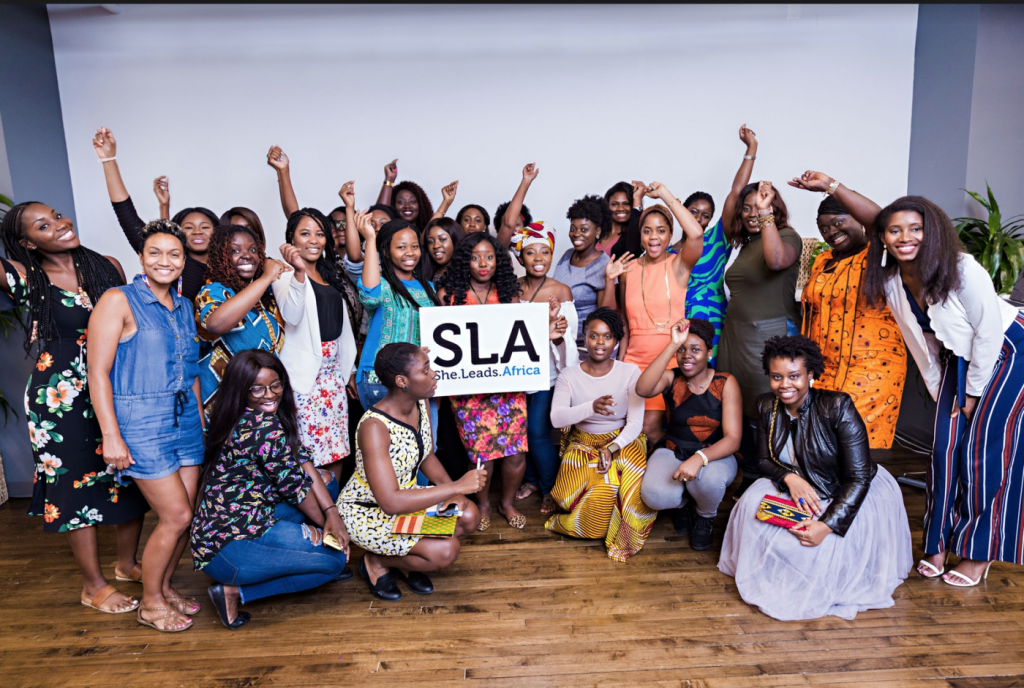
[bctt tweet=”There’s a seat at the table for you and me. Lift as you climb” username=”SheLeadsAfrica”] In my junior year of college, I sat in the White House. I sat at the edge of my seat as I listened to women of color ranging from Chief of Staff members to representatives from economic policy and public engagement. These powerful women talked about experiences and lessons that they had learnt as White House Staffers, and as I took in everything, I appreciated the opportunity to sit, listen and learn. I experienced a similar feeling of respect and gratitude as I sat surrounded by amazing black women at the SheHive DC conference this past weekend. There is something powerful about hearing from people who wield successful and influential positions, people who see themselves in you and who you can see yourself in. That being said, here are three key takeaways from the conference centered on your value proposition and how you can learn from others. The takeaways are: track your data, don’t be afraid to ask for informational interviews and lift as you climb. I hope you learn something concrete that you can apply to your career, business, and life just as I did! [bctt tweet=”There is something powerful about hearing from people who wield successful & influential positions” via=”no”] How you can provide value In the “Building Partnerships” workshop with Afua Osei (co-founder of SheLeadsAfrica), Afua talked about one of the ways that her organization proved their value proposition effectively. In their proposals and potential partnerships, they were able to collect and measure relevant data. They could pinpoint exactly how much value they added to potential partners and sponsors based on data that they tracked including statistics like how many more followers they could bring to an organization’s social media presence. Our world is increasingly becoming a more data-driven one, and the ability to measure data and showcase it in digestible ways will open doors to building partnerships and attracting sponsors in your business. A cool resource I want to share from a YouTube channel that I follow(shout out to TechChange!) that looks at everyday datasets and visualizes it is Piktochart. Piktochart is an easy way to visually represent data that you collect and it can help you start thinking more about collecting and representing your data! [bctt tweet=”The ability to measure data and showcase it will open doors to attracting sponsors in your business” username=”SheLeadsAfrica”] Learning from the people around you Another valuable tool, that should come in handy is the informational interview. I first learnt the concept of informational interviews through one of my mentors (shout out to Davia!) Informational interviews are essentially interviews where you seek out and ask for an opportunity to meet people you admire and want to learn from. At SheHive, Denise Horn, who is currently head of corporate communications at Turner Broadcasting, also emphasized the importance of connecting with people through informational interviews. A tip was to also ask these people for two other people within their circle that you can connect with! During my job search, my mentor connected me to so many people doing amazing work in various sectors in her circle. These interviews gave me clarity on what I wanted to pursue career wise and the things that I was passionate about. It was amazing how people I didn’t know were eager to help me learn from them. I hope that you too will also seek out people that you want to learn from. Don’t be shy when it comes to asking questions and asking for informational interviews! And finally one of my favorite takeaways from the conference: “There is a seat at the table for you and me. Lift as you climb.” My friend, Adoley, and I coined this quote as our takeaway from the conference. (And won a bottle of wine for it too ayee) I am a product of the people who invested in me. The people who made time and shared their knowledge and experiences with me. Recently, I have been reflecting about the kind of footprint I want my life to leave as I transition from my undergraduate experience. And it’s one that embodies the theme of #liftasyouclimb. The idea of trying to be a woman who actively encourages women around you. Someone who willingly shares tips, advice, and experiences, and connects people to others within your network when necessary. A lot of times, in our attempt to achieve success, we forget about other people that we can carve out time for and support to reach similar successes that we have had. We all have experiences that others can learn from and it’s important that, when we are able to, we share our experiences with others in a way that is constructive and beneficial. [bctt tweet=”We all have experiences that others can learn from & it’s important to we share them with others” via=”no”] Thanks to SheHive DC for that reminder. Track your data, don’t be afraid to ask for informational interviews and lift as you climb.
Handling “many eggs” in one basket: How to manage the hustle

[bctt tweet=”Several eggs in your hustle basket? Here’s how to be effective ” username=”SheLeadsAfrica”] You have a great full-time job but because of passion and interests, there are many other eggs in your hustle basket. It’s becoming a struggle to be on top of your game in your different work zones and this is a huge pain point for you. How the can you be more effective and ace each hustle? Proper planning So you’re a lawyer by day but also run online bi-weekly legal training sessions for your Facebook community? Or you’re a bank employee during the week and an event planner during the weekends? You need to plan ahead. What are the things you need to achieve per week or per month in each work zone? How can activities be spread across to enable you to perform them efficiently? For instance, you may need to take out a day to plan weekly/monthly activities. You will also draw out a schedule of when to perform specific tasks and follow through. A good plan is a foundation for work effectiveness. [bctt tweet=”A good plan is a foundation for work effectiveness” username=”SheLeadsAfrica”] Time management It’s one thing to have a plan and it is another to follow through. Yes, you need to follow through otherwise you’d keep going round in circles. This means deliberate scheduling of planned activities and allocation of timelines. Most times, we waste time on activities that do not in any way help towards our big picture. This makes our other work zones suffer. So you get on Instagram looking at lovely pictures, fashion statements and couple goals when you are supposed to be writing a book, 5 minutes, 30 minutes, 1 hour? Wehdone ma, when do you think you’d finish that book? You need to start prioritising. Of course, you can take part in other activities but it shouldn’t be at the expense of your A-game. Delegation/outsourcing By now, you must have realised that you cannot do all. Either because you do not have enough time or you do not have enough expertise in certain areas. You can achieve this by employing interns or entering a partnership with another business. I can hear someone say, “but that would cost money”. Well, it may not always be free but could cost you something which is not necessarily money. Once you’ve identified the areas you need to delegate or outsource, then you need to get creative with payment options. What then can you offer the person rendering you a service? If you are an accountant, you could offer to manage their books. If you’re the lawyer offering online legal sessions, you can offer legal training to the Facebook or Whatsapp community of the expert you are delegating to. The idea is to get creative in delivering value because trust me, you need help and you may not have all the money to pay. [bctt tweet=”Get creative in delivering, you need help and you may not have all the money to pay” username=”SheLeadsAfrica”] Automation You should automate certain tasks. It makes things faster and saves you much needed time. For instance, you need to upload content on various social media platforms. Instead of going from one to the other, get an app that helps you reach all at the same time. Or you work in a bank but bake for your clients too and you still want to be mixing your dough manually? Dear Motherland Mogul, you do not have time for that, invest in the right equipment. Please automate certain tasks so that it can increase your efficiency in other areas. Remember, asides work you still have other areas of life where your attention is needed: religion, relationship, social impact. [bctt tweet=”Automate certain tasks so that it can increase your efficiency in other areas ” username=”SheLeadsAfrica”] Adequate rest You also need to rest and engage in leisure activities. If you do not have good health or you are not well rested, there is no way that you can focus and act efficiently on the job. You need to be deliberate about your health and wellbeing. Eat well, rest well, have fun and when it’s time to work, go make us proud. We are here cheering you on!