
4 things you need to know about social entrepreneurship

Before Jesse Williams’ woke speech and Kendrick and Beyonce’s performance at the BET awards, there has been a growing consciousness around business. Maybe like myself, you have been wondering about social entrepreneurship, a growing field in its right that is gaining gang attention. It has been hard for many to pinpoint exactly what a social entrepreneur is. However, there some things you can look at to be able to know the kind of business you are and if you stand a chance at being a social enterprise. It’s about people Social entrepreneurs, beyond the glory of coming up with an amazing product and service, are highly inspired by the people they are trying to assist. Their products and cutting edge solutions are a response to problematic issues in society no matter the sector. It is almost like having the heart of Mother Theresa but the drive of Oprah. Outside just trying to get that paper, social entrepreneurs ensure that they meet the needs and improve communities in the same vein. These businesses are motivated primarily by caring about social change and reaching as many people as possible. It’s about innovation Social innovators are always looking for solutions to pressing societal issues . As a result, they have to come up with new, sustainable and inventive ways to respond to these issues. Social enterprises move past the textbook responses and find ways to help people and these solutions should be long term. If people need food, a social entrepreneur won’t be thinking about giving out handouts but also about training them to have their own eco-friendly gardens so they could grow their own produce whilst protecting their environment. Ladies, you don’t have to be Florence Nightingale. But you can look for opportunities or approaches that have not yet been adopted in your market and implement them at home, hashtag thinking globally, acting locally. It’s about collaboration It just makes sense to do it with a squad. Social entrepreneurs not only build strong connections with people but also with other companies, entities or individuals to reach a greater number of individuals. Some social entrepreneurs are purely not for profit and so have to think outside of the box to ensure they are making waves in the community. This can’t be done alone. You have to look at others who might have the expertise to take your efforts further so you can get in formation. It’s about passion It would be awesome to help people, get cheddar and change lives. Yet it will be hard if you are not actually passionate about people or the solution you are trying to build. Social entrepreneurs are both community conscious and business savvy. So, you are bound to face challenges and constantly develop new ways to improve your enterprise. If you are not really into it, you are likely going to harm the people you are trying to save. So, if you know you care about business and driving social change concurrently more than pizza, you probably are a Motherland Mogul and a social entrepreneur.
Urban-rural migration and the weird city girl that dares it

While rural-urban resettlement may be the most studied human migration pattern, it definitely isn’t the only existing one. Considering the pros of urbanization and the excitement that the urban switch stirs, it is understandably confusing that anyone would want to spin the bottle the other way around. I’m talking about urban-rural migration. Yes. Packing up your valuables then taking a hike out of town, destination, some good old rural grounds with the intention to settle for a few months…or for good. Talk about a reverse trend. The question is, why? You know how when almost everyone gravitates towards something, it becomes particularly precious? Urban cities illustrate this best with their high cost of living and increased competition over limited resources. The basic structure of the urban system in itself is as magnetic as it is frustrating. As much as we love it, sometimes it gets too much and there is a yearning to shut out the noise of the city. This goes beyond taking days off work, or locking up and staying indoors. Rural life presents a picture of serenity, easy living and greater mental focus -which we like to call ‘clarity of mind’. It also suggests cheaper land and rent, a chance to work without constant disturbance of modern tools and to learn the art of human relations in its most basic form. Now for the soulful African woman who needs to find herself but cannot because of the confusing urban noise and pressure, ruralism may be a very bold step. Moreso if it involves living alone, as many African cultures still raise eyebrows at the single woman who dares to live alone. Yet, it just might work. Going rural may not be at the top of the list for most young women. But, when it does become a choice, it is always a good idea to start a business that will give financial security. Here are a few ideas; Go ruralpolitan Be that city girl that knows how to farm. Those who know this, know this, farming is good business. There is something strongly appealing about a farm girl. She’s a girl you do not want to mess with. Everyone loves to eat, even those who don’t eat much still need food. Cultivate maize, yams, vegetables, fruits…anything that works with available soil. There’s no shame in it. Farm and sell the produce within your community and find a market in the nearest city. Here’s a fact; because of the absence of chemicals and smoke from industrial chimneys, crops grown in rural areas thrive, look and taste better. Get into some animal farming too. Rear chickens and sell the eggs, add goats to the mix if you can. And if people like rabbits in your part of town? Do not hesitate. Set up a bakery We haven’t met anyone yet who doesn’t enjoy a good loaf of bread. Chances are the nearest bakery is a good distance away from your town and folks do not particularly like walking so far to get some flour in their diet. Bake breads, doughnuts, rolls, pies even sweets if you know how to and sell. Drum up some new confectionery when you can and introduce it. You’ll be shocked to find how receptive people are to the new. They won’t just want to see it in your show-glass, they will want to taste it too! Become a transporter At a reasonable fee, of course. If it’s high, you may very well just ride alone.This may be tricky because of the cost of the vehicle in question whether motorcycle, motorcar or van. If you have any of these, transporting would be good commercial enterprise to undertake. Don’t just ride that bike or car, make some cool cash out of it. Launch a convenience store Every town big or small needs a convenience store (guess that’s why it’s called “convenience”). Before you do this, find out about the people living in your area and what they gravitate towards. This way you don’t waste time trying to sell things nobody has any interest in buying. It does not necessarily have to be a big shop at first. You could start small then later expand to something larger and on and on. Stock up on products you know people cannot do without, things they like but can’t get because they have to go miles to find them. Save them the trouble and include all those things in your store. This business ensures a steady flow of income everyday! Start up a medical care/pharmacy Please be certified to do this. You don’t want law enforcement agencies knocking on your door one day out of the blue -that just smashes the whole idea of peace and quiet, don’t you think? Much as this is humanitarian, it is also a service provision that comes with a fee. People have headaches or illnesses they simply can’t explain, women get pregnant, children run, fall and get bruises. Every one of them needs to be treated. Every town or village needs a medical facility no matter how healthy-looking the environment is. Open a beauty salon People get tired of doing their own hair. Even those who didn’t give it much of a thought earlier will suddenly begin to find their way to your shop once it opens up. Beware, you need to be able to make that hair sing. A lack of skill will quickly bring an end to customers trooping in. Establish a guesthouse Why open a guesthouse in a rural area? It’s as confusing as it is simple. City dwellers may not always like to go to small towns or villages but they usually pass through. Whether they come alone or are accompanied by friends, city dwellers will visit family ‘back home’ for festivities. Most of them will require lodging so that they don’t inconvenience their hosts. It would be a great idea to establish a place where they can lay their heads for the night or for a few days
You don’t have to see the whole staircase – just take the first step

It was apparently Dr Martin Luther King who said you don’t have to see the whole staircase, just take the first step. And as I sat with a group of 70 odd women global leaders at a meeting convened by Vital Voices in Johannesburg, I completely understood Dr King’s words more so than ever before. Of course Dr King was probably remarking on the civil rights movement which he led in the United States. He was probably saying that even though a dream may seem far off, our responsibility is to take the first step towards it. As I conferenced with these 70 remarkable global female leaders, it became blatantly obvious that each one had travelled a road. Each woman had travelled a road less travelled, and each had created a path rather than followed a path. For each of them had dreamed a unique idiosyncratic dream. A dream that rendered them weird and obtuse, but a dream that they could not help but pursue even though they may not have been able to see the whole staircase from the outset. The entrepreneurial staircase All of these women are doing remarkable things in their communities. They are making positive change in their societies, and some are doing so with tremendous danger to their lives as they tackle social and cultural taboos. In fact what they are doing in their communities is so peculiar and pioneering that their voices are vital in their communities and societies. Much in the same way that the Suffragettes were a vital voice the in late 19th century and Billie Jean King remains a vital voice in women’s sports and tennis in particular. All of these women stayed true to their own authentic voice and calling, even though they may not have been able to see the whole staircase. Even though they may not know the end of where they are going and how they will reach the destination. They carried on knowing that a desired destination had to be reached. Further, they have refused to stop until that desired destination had been reached. So it is in business. Sometimes as a business woman and CEO, you may not know how or if that dream is possible. You may not know how and even if you will achieve that dream. Yet you soldier on because you must, because it is only in throwing in the first pebble that the ripple effect begins. Therein lies the ingredient for leadership and legacy. When you dream an original dream or are gingered in calling to a new path, you begin a transformative journey for society and for yourself. The need to execute goals As the year draws on and we reach mid-year, many may be wandering how and if they will get to the top that business staircase. The one that they began climbing with clear goals at the beginning of 2016. But goal setting and goal execution is a journey and a process. It is not just an exercise completed in a workshop and which, as if by magic, comes to life without any disturbances. Setting the goal is one thing, it is in fact a very commendable achievement. Many do not even bother to do so, preferring to go with their ‘gut feeling’. However, executing the goal is another. The former speaks to the genesis of a thing. It speaks to an aspiration, an idea, a noble ambition. The latter, goal execution, to me speaks more to the hunger for achieving that aspiration. Just take the first step It is the ambition for an aspiration that keeps you working at 3am to deliver on a report even though the fees for the service may not be as appealing as you would like. Yet you understand that growth is a process, that this piece of work could potentially lead to the next bigger, project. It is this hunger and ambition that keeps you investing in your business and your brand through deliberate and meticulous attention to detail. In doing the work that you do and doing it to the best of your ability even though you may not see the fullness of the result that you would like yet. It is this hunger and ambition that causes some (and many later) to begin to notice and positively respond to your business service and product. Eventually leading them to becoming the net promoters of your business even as you pay less attention to the acclaim and focus of service and operational excellence. It is this hunger and ambition that keeps you climbing the staircase even though you cannot yet see the top of the staircase. Many of us may not yet see the whole staircase, we may not yet see the expected end that we desire, but we must be kind to ourselves. Rome was not built in a day and so long as we take the first step, the second, third, fourth and fifth step to the attainment of our business dreams and ambitions, we are making the necessary inroads. Have big dreams. You will grow into them
How to start a media company with no money and no clients

If you’re ready to take the leap and start your own media and communications company, there’s no reason not to! Sometimes life requires you to take just jump and make your idea a reality. There must be some method to the madness though especially when you’re on a budget and have no clients upfront. We got some insider tips from Anne Mazimhaka, co-founder and creative director of Illume Creative Studio, a communications agency based in Kigali, Rwanda. Launch online There’s no need to launch your company with a cocktail party, bottles of champagne and a fancy guest list filled with big names that likely won’t show up. Go the easy way and start with a simple but good looking website. Like with Squarespace which offers solutions for easy websites that will be eye-catching enough to your future clients. Your website should clearly list the services you offer. Remember to keep things clear and direct, let people know what you’re offering from the word go. As a communications agency, you can start out offering services such as content development, creative consultancy, editorial roles and social media strategies which you can offer from the comfort of your home. Your contact details should also be well displayed for when people need to reach you. Make full use of your network This is something that you should start on before you take that leap. Build a network through attending events and rubbing shoulders with the change-makers in the industry. Save their business cards and contact details for when you’re ready to launch your company. As your launch date approaches send a newsletter announcing it through a service like MailChimp. The key is the leverage the power of your network, and when contacting them do so strategically. Emails easily get deleted but people do not mind receiving an email announcing a company if they can see what’s in it for them. This is why you should include an offer in your initial newsletter, such as 20% off for first-time clients. This is a great opportunity to attract clients. Invest wisely You’ll want to ensure any little money you have is spent wisely. Get business cards and postcard sized pamphlets printed out. These should again advertise your brand and the services you offer. Once your business cards and pamphlets are ready, you should reach out to people who you would target as clients and leave those behind with them. This way you’re doing your advertising yourself. By the time you snag your first couple clients you’ve set the ball rolling. When people see the value in what you have to offer, they will come flooding in.
Creating impact that works: Tips from my start-up experience in Ghana
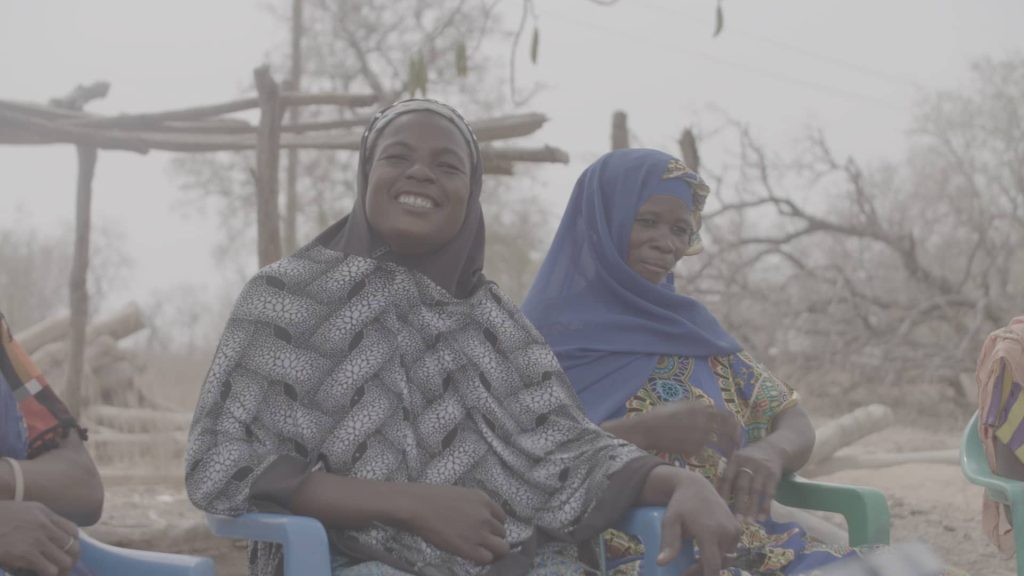
Naa-Sakle Akuete is the founder of Eu’Genia Shea, the first line of premium shea moisturizers dedicated to using 100% natural ingredients in partnership with female cooperatives in Ghana. She shares what she’s learned from working with rural communities for her natural products. When my mother founded a shea butter manufacturing company in Ghana in 1999, she had never heard the term “double bottom line.” She did, however, know that if she was going to succeed in business, she wanted to do so in an ethical manner. By partnering with pickers from female cooperatives, paying them above-market prices, and offering organic and financial training, she was able to ensure that her community thrived along with her business. Her decades of experience inspired me to start my own finished products line last year: Eu’Genia Shea. As I pore through her life’s work, applying lessons learned and trying to avoid mistakes already made, one point shines through brightly: good intentions do not always yield good results. Hopefully, some of these points will be helpful to others aiming to make mutually beneficial business partnerships in rural developing communities. Build Trust You know yourself, you understand your motives, and without a doubt, your heart is in the right place. But even if you are native to the country/region/community, how can others be assured of this goodwill if they do not know you? SNV is a Swiss nonprofit dedicated to “creating effective solutions with local impact”, in this case facilitating savings. They entered Damongo, Ghana with speeches and promises, but without any connections. The cooperatives with which we work were understandably wary. How many times have they encountered non-profits who raised their hopes only to disappear, or worse still, people claiming to have their best interests in mind, only to cheat them? They sent the confused SNV away then SNV came to my mother to explain their mission. My mother spoke on their behalf, and now SNV is a valued contributor to these cooperatives. Bottom line: Understand the legacy of the community and approach accordingly, whether through an intermediary or through years of proving yourself (which takes a bit longer, but Mum can confirm it works!) Listen There are thousands of aid organizations flooding millions of dollars into poor communities globally. Most of them have good intentions, but their money still goes to waste. For example, on one visit to our facilities in Damango, Mum occasionally saw workers without shoes. As a westerner, or a native with a westerner’s perspective, this is jarring for a number of reasons, not least of all because of the safety implications. She spoke with the women and made a point of purchasing shoes for all of the workers on her next trip to the US to ensure that no one was left unprotected. Upon her return, some women again were not wearing shoes. When she inquired about it, she discovered two things: some husbands were absconding with their wives’ shoes and some women found it difficult to maneuver in the new shoes. Had my mum taken the time to dig a little deeper originally, she would have found that buying local shoes closely fitting each woman would have helped solve both problems. Encourage them to maintain assets Now you’re partnering with a community whose needs you understand and are able to address. You’ve suggested ideas and implemented technology where appropriate; they’ve told you why half of your bright ideas aren’t quite so bright, and everything is moving along swimmingly. It’s come time to leave them for a couple weeks, months, or years… Before you leave operations in their hands, make sure you’ve given them the tools and know-how to maintain (and how often to maintain) any machinery you’ve introduced. The once shiny, now corroded Japan Motorbike rusting by our plot is a great example of something that made life easy for a couple months before falling into disrepair. Choose the right customers You’re running a business not a charity. On one end, you have Bill Gates in Microsoft era and on the other, Bill Gates in the Bill & Melinda Foundation era. You don’t have to be either extreme, but what you have to do is make enough money to keep yourself afloat and to continue the work you’re doing. If social impact causes your products to be slightly more expensive than competitors, find the customers who care. And make sure your product is worth it! At Eu’Genia Shea, not only do we pay above market wages, provide training, and give 15% of our profits back to our workers, our longevity in the industry helps ensure our products are always of the highest quality. Our customers get expertly moisturized skin, our partners make a good living, and we get to keep on doing what we love — win/win! Transparency Your aim is to do great things, so be open about it. Maybe you’re not doing quite as much as you’d like yet. For example, 15% of profits covers some of the tuition costs of our worker’s children, but not all. I’d love Eu’Genia to be able to give all the children in our communities a free education. I’d love to provide all past and future workers with a pension when they retire. I’d love to offer free daycare to workers whose children are below school age. The reality, however, is that I’m not in a position to do any of this yet. That doesn’t mean that I shouldn’t try though. Along the way, I’m sure I’ll make mistakes. But my mistakes can be learning points for me and other entrepreneurs like me. Being transparent about our goals and processes not only allows others to give us valuable feedback, but also supports the growth of all enterprises looking to make an impact. We live in a big and complicated world with many societal issues I’ve never heard of or understood. If those who are able can contribute to improve the landscape how best they know, our actions will magnify each other’s. I’m excited to
How to start an event planning company with no money and no clients

So you want to quit your job to start your own event planning company (or any other one) but you have no money and no clients, yet. What do you do? Have a roof over your head and food to eat Firstly, if you’re going to quit your job, make sure you have some back up. This doesn’t necessarily have to be cash, but a family or someone that is willing to maintain a roof over your head and food on your table. If you don’t have that, then you will need to ensure you have some cash back up to keep yourself going through your start up phase, this will be a minimum of a year – two years, depending on your company. This back up, in whatever form is comes is essential! It’s essential because you will need all the energy and focus to get clients and start earning an income. For an events company, you should be earning a small income within your first year to at least cover some costs. Once you’ve figured out your back up, quit your job! It will be the scariest but most liberating thing you’ve ever done, but a word of caution, you will now work 24/7. Be prepared! What makes your company unique The next step is to figure out what your unique selling point (USP) is, what sets you apart from all the other event coordinators. As JamJar, our USP is customer service, efficiency and pushing the boundaries. We are willing to go the extra mile for our customers and promise to push ourselves as we create concepts and experiences that are truly one of a kind for the customer.Once you have your USP, start using your contacts. Your first job is likely to be someone you know. If you do a good job, the word will start to spread. E-mail people you know and ask them to recommend you. Send out your company profile to people and test their reaction to your information. Be realistic and original. People can tell when you are trying too hard or being fake. Initially, you may need to take a few jobs that you do not make much money from but is worth value in terms of marketing, building your portfolio and experience for yourself. Keep note of this, however: there will become a point where you no longer need exposure, and exposure won’t pay your bills. Be aware of your business and your value and continue to reflect. Once you reach that point, own it and do not be ashamed. Listening is key Until you reach that point, continue to work, listen and learn from your jobs and experiences. Make sure the experience of working with you is memorable from when the person first takes your card to the end product. This is everything! Even when something goes wrong or you have a difficult customer, remember your response is key and will last forever. People will tell 4 out of 10 people about a positive experience but 8 out of 10 for a negative experience. Get to bookkeeping Slowly you will start to increase the number of customers you have, do your best to keep them. As you start to grow, make sure you have a good financial system, this does not have to be fancy. Keep track of what you are receiving and what you are spending. The event planning industry is one that is not heavily reliant on start up equipment – your brain and a piece of paper are all you need to be organised, efficient, and reliable, the main characteristics an organiser should have. Take advantage of this fact, it means your start up capital required is much less and you can pace the growth of your company. Share with like-minds Lastly, Collaborate. Collaboration is powerful if you are strategic. Don’t just collaborate because someone asks you to. Collaboration usually means you will foot the bill for whatever you are willing to contribute to the project, or provide your time for free. Be sure you are prepared to lose or not gain as much as you hoped. Moreover, make sure you do what you can and get the most as much as possible for your brand while working with your collaborators. Good luck starting up and enjoy the journey!
Always be a dreamer: The story of Grace & other successful women

Grace is a seasoned banker with over 20 years on international banking experience in Europe as well as several countries in Africa. She boasts a successful career and a number of ‘firsts’ in her current bank. Though she at one time loved her job, the enthusiasm is waning as office politics thickens, even as she seeks a more fulfilling vocation. But Grace has another burning desire – to own her own executive events management and floral business. Having grown up in Nairobi, with her stay-home mother, being a keen gardener and floral enthusiast, Grace has a keen interest in flowers. She watched how the floral business flourished and prospered in Kenya –even at export level. Grace is also a good organizer and has a keen eye for events management, particularly corporate events. She has dreamed of having her own events management and floral business for many years – but to date, fear of financial insecurity and stepping leaving her banking job holds her back. She remains frustrated with her job and her life, yet dreams of stepping out into the world working in the area of her passion. Dreamers are daring people They dare to imagine. They dare to imagine a change; they dare to imagine a possibility. Where the audacity to dare becomes a limp hope is when the dreamer ceases to execute for lack of courage and for much of fear. But when we cease to dream and to execute our dreams, we make a folly of our hopes. Our dreams form the very essence of our desires and hope –and we owe it to ourselves, and perhaps even to the world at large, to have the audacity to execute. Ms Oprah Winfrey records that when she decided to move from Baltimore to Chicago as a Talk Show host, everyone thought she was insane, for she, a black woman, was going to the eye of the storm. Chicago was Phil Donahue land, and Phil Donahue was the king of talk show hosts. How and why on earth could Ms Winfrey do this to herself? Why would Chicago want to see a black woman hosting a talk show when they had Phil Donahue? Oh, but Ms Winfrey was a Dreamer. Ms Winfrey was not only a Dreamer but she was also a Doer. She dreamed about her tomorrow, envisioned her futurist self, and had the audacity of hope. She packed up and moved to Chicago. Her audacity delivered on to her – even far beyond what it did for Phil Donahue. Taiye Selasie’s example Let us bring it more home. I recently came across Ghana Must Go, a fascinating book by Taiye Selasie (in feature image). Reading her interviews and her book itself, I was reminded of what Selasie said in one of her interviews on the book: ‘I’m very willing to follow my imagination’. She recalls that the idea for Ghana Must Go came at a yoga retreat in Sweden and got typing. For her, the book was entirely realized. It was a book that she wanted to read, a book whose characters she had dreamt about and conceived, and a book she dared to write. She dared to dream, she dared to write, and the book has delivered much international acclaim. That’s the audacity of hope. Nicole Amarteifio’s example Some of you may have seen the web movie series An African City, created by the fabulous Nicole Amarteifio. The story goes that whilst at University, and having recently seen Sex in the City, Nicole was intrigued to imagine what an African story line may look like. The intrigue literally captivated her, and Ms Amarteifio began the journey of script writing. Research, research, research; script, script and yet more script and a few years down the line (even whilst working an international job), the final script was born. Still working a full time job, Nicole made time and used funds from her savings, friends, and family to gather actresses and all necessary resources to produce the movie, and now the rest is living history. From CNN and BBC interviews, to Forbes Africa Woman features to speaking at the Cambridge University Business School, and being contacted by numerous international TV channels for Season 2 of An African City. Small, deliberate steps. Yes, Oprah Winfrey, Taiye Selasie and Nicole Amarteifio could have fallen flat on their faces, like many others. Yet, the bottom line is that they took small, deliberate steps to actualize their dreams. Small, deliberate steps. They bring us nearer to our hopes and dreams. Images: 1. Oprah Winfrey. Fabrizio Ferri / Harpo Productions. 2. Writer, Producer, and Director Nicole Amarteifio with An African City stars Maame Adjei and Marie Humbert.