
8 things we learn from the acquisition of Kenyan beauty brand, SuzieBeauty

In 2011, Suzie Wokabi, founder of Kenyan cosmetics brand, Suzie Beauty, said the following about her vision for her brand: “My dream is to turn SuzieBeauty Limited into a household name for everything beauty on the continent, and internationally. I want to become the MAC of Africa!”. Six years before that, she had returned to Kenya as a trained makeup artist looking to stock up on goods. She faced a number of challenges such as not being able to find the high quality brands she was used to. Where she was able to find them, they were often unavailable, overpriced, or counterfeit. So in 2009, Wokabi launched her own local brand. Seven years later, she is in reach of the vision she set out for her company. On January 25th, 2016, SuzieBeauty announced that it has been acquired by regional manufacturing company, Flame Tree Group, pending approval of the competition authority. Suzie said the following about the sale of her company: “For me this is the biggest milestone so far.” Wokabi explained, “with the resources at Flame Tree Group, SuzieBeauty will likely expand its range to include skincare products such as cleansers, moisturisers and eye creams. There will also be investments into better distribution and marketing. In the long-term, production could be moved from China to Kenya”. This wife, mother, daughter, and entrepreneur is trailblazing the way for other Motherland Moguls. There is so much to learn from the successful sale of Wokabi’s company. We’ve narrowed it down to just 8. 1. Do your research In choosing to start a beauty brand, Wokabi did extensive research on the Kenyan beauty market. In an interview with How We Made It In Africa, Wokabi said the following: “My research shows that the development of products to fill our specific market needs has the potential of becoming a big and profitable business.” She also did extensive testing of her products in the market before launching her business. She developed her product line and spent a year of testing on the market before launching in 2011 and beginning retail operations in 2012. 2. Choose to work in your passion Wokabi once said, “If I did not completely love everything about SB and the beauty industry, I would have given up a very long time ago. I now understand why most startups fail. When you don’t have the passion and everything is an uphill battle, it becomes so easy to quit.” 3. Dream BIG From the start, it is clear that Wokabi had a strong vision for her company and brand. From her early interviews before the launch of her product line to more recent ones, the vision has always been, as she said, to “distribute Africa-wide. The sky is the limit”. 4. Know your magic While strong on quality products, Wokabi has said time and time again that the affordability of her products is what makes her competitive in the local and international market. When she was asked if SB stand out in the midst of international beauty brands that had recently entered the Kenyan market? She responded, “None of them will ever beat me in price. The whole point of SB is the affordability of quality beauty products.” 5. Get help in your weak areas Wokabi says she knew nothing about business prior to her endeavor. She has especially struggled with financials, an area her husband has supportive in. 6. Learn from your mistakes While successful, Wokabi has never shied away from the mistakes and mishaps in her journey. After some false starts with partners, Wokabi made sure to engage differently with future partners. She explained: “We have had so many bad partnerships. We have had both equity partners and debt investors. There were just too many mistakes made. We were very particular about this one. This time we didn’t make any mistakes – and it feels right, completely.” 7. Engage with investors and finance partners who understand your company and your vision While in talks with Flame Tree Group, Wokabi was in talks with other potential investors. She had this to say about Flame Tree Group: “The chemistry has always been right from the beginning. So any challenges we ever came across, we would fix together.” Flame Tree Group CEO, Heril Bangera, also had this to say, “We want to increase the brand’s presence in the market. We have seen the brand is successful, so there is an opportunity now to use that as a base to grow it within Kenya and beyond.” 8. Knowing that someone did it helps Wokabi often mentions her role models, Bobbi Brown, in interviews. Bobbi Brown was an American professional make-up artist who founded Bobbi Brown Cosmetics. Estée Lauder, the America beauty products giant, bought the brand in 1995, with Brown retaining creative control. Wokabi will similarly retain creative control of SuzieBeauty. We wish Wokabi, SuzieBeauty, and Flame Tree Group much success in their new venture. What other insights have you learned from this acquisition? Share them below.
Archel Bernard kickstarts her Liberian ethical fashion factory

Archel Bernard is a Liberian fashion designer and entrepreneur. She successfully raised more than $40,000 on Kickstarter for her company’s growth and shares with us how someone stealing her ideas got her started in fashion, her ambitions to build a global brand and why crowdfunding was the way to go to raise much needed cash. Why did you choose fashion as your avenue to make a difference in Liberia and how has your business made an impact on the local community? I wanted to be the West African Oprah Winfrey when I moved to Liberia. I would go to communities and shoot and edit videos of exciting things happening around Monrovia, and of course the West African Oprah had to wear West African clothing! I made my dresses at a trendy boutique in town, and the seamstress would take FOREVER to get my clothes to me. I was doing my own designing because traditional African clothes aren’t typically my taste. One time I went to pick up a dress the boutique had been working on for about a month, and when I saw her, she was wearing a copy she made for herself, another customer was wearing a copy she just purchased, and another tailor was sewing one for her to sell on her racks! I still had to pay top dollar for a dress she was taking credit for designing. At that point I realized I could figure out a way to do everything I was paying her to do for me, AND possibly make a profit from it if people liked my styles. I made 8 different styles, found two tailors, and paid them a small fee to make my first line. I didn’t even know I was creating a line, much less a company. I just thought I could make a little money around Christmas. I sold out of everything and used the feedback (and money) to make more styles. Two of those same looks are still our top sellers today! I was never inspired to create until I came to Liberia. I loved the bold colors and patterns. The chaos in the markets and streets, and always the women wore bright lappa to navigate it. Seeing and wearing African cloth made me feel at home. I was thrilled by the design possibilities because from where I sat, we could do much more than tie lappa around our waist. Two months after selling my first dress, my government contract ended and I was unemployed. My mom hired me to be her driver on a visit to Liberia, and my dad gave me his pick up truck, so I bought cloth with the money and sold dresses from the back of the truck. Slowly, I saved enough money to open a shop. I’ve worked all kinds of jobs to make this happen. Now our business has grown so much, our tailors get sad when I leave town, not because they will miss me but because when I’m in town there’s always a ton of money to be made! What are your ambitions for your company and The Bombchel Factory? I want to build a large factory that staffs and trains hundreds of Liberian women, and offers classes on the side for literacy and business skills. This is about community building and industry changing. I want our factory to rival not only rival China for quality, but be the best in the world for human development. I want clothes made in The Bombchel Factory to be sold everywhere from Nasty Gal to Bergdorf on Fifth Ave soon, to prove that there is space for quality, ethical fashion in the most exciting shopping districts of the world. Why did you choose crowdfunding as a fundraising strategy for your business? I chose to crowd fund our company because we had hit a point where we couldn’t grow anymore doing the same thing we were doing: small custom orders for under $100 a client. We wanted to reach the everyday girl, but customer acquisition was expensive and there wasn’t much profit in a few custom orders a month. I’m incredibly scared of loans, after having already signed my life over to Sallie Mae years ago, and I don’t think we are big enough to start including investors with equity. Since all we needed was a strong following to preorder our goods, crowdfunding was perfect for people like us. Everyone who backs our campaign knows to expect a wait before receiving their goods, so that gives us a chance to perfect our items and plan our website and New York Fashion Week launch party. We are using Kickstarter to literally explode onto the market, and Kickstarter is good for helping you build a loyal following. What factors did you take into consideration before starting the crowdfunding campaign and how did you prepare to make sure it was a success? I had a friend, Chid Liberty of Liberty & Justice factory, also do a Kickstarter for his t-shirt line. He was actually the person who recommended crowdfunding to me. When his campaign launched it was flawlessly executed. They met their goal in a few hours and even got endorsements from several celebrities. I knew I didn’t have that kind of reach, but I also knew I had a lot of things going for me that I could package. I read every article and watched every video on having a successful crowdfunding campaign and applied what I could. My best friend in Atlanta offered a great photo shoot deal, and my sisters have been known to work long hours for clothes, so I knew my packaging would be spot on. I had a ton of people interested in ordering my designs, but I needed to streamline the ordering process and show the need for my product would gain the same results as having a large network. Crowdfunding has proven I have a market, not just cousins and friends who want to support me. What message would you share with other young African
10 things I learned about pitching to an investor
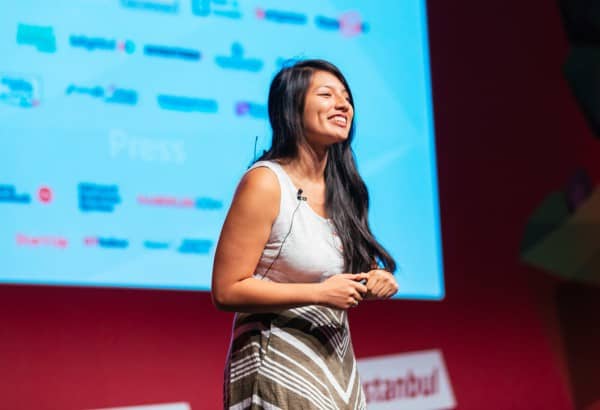
She Leads Africa recently had a free webinar session with Andrea Barrica on the fundamentals of pitching your business – The Do’s and Oh No She Didn’t of Investor Pitching. Andrea Barrica is a Venture Partner at 500 Startups, a global seed fund and accelerator for early stage startups based in Silicon Valley. She was previously co-founder at inDinero, an accounting and taxes software solution where she led the team to the first $1M in sales in 10 months. Here are ten things we learned from her. 1. Don’t try to pitch to all investors Most of the interactions that you have with investors are not investor pitches. Most of the interactions that you have with investors are about how you can get the right type of investor who wants to hear about your company and is willing to hear about your pitch. When you have an investor who is interested, it is then time to have the investor pitch. 2. Differentiate yourself, be clear, and don’t overly pitch Create a level of personal connection. People invest in people they like. Make it a conversation (never corner someone in a party). Keep it brief, and tell your story in 60 seconds or less. Understanding the market and asking questions and advice versus pitching the business is a great way to get investors interested. Be natural, authentic, and humble. 3. If you do not have an idea, investors will not be willing to invest Support your idea, prove it out Wait until you have traction and a great team Wait until you really need the money. However, when you really need the money the most, the investor has all of the leverage versus having a great team and traction without the desperation. 4. Use your resources, networks, and community to find investors Meet people — It’s better to meet investors when you’re not fundraising Standard networking — get introductions from other investors Go where investors hang out and then find the ones that you respect Write — start writing your own blog and content The key is running your business—it is important to build, go out there and get some traction. The first investors will be family and those you are close to. 5. When meeting investors, know who is going to be there, and how many people—know your audience! The important thing to know about a meeting is that, no one is as interested in you as you think they are. You must be brief. Think about how to you make your presentation interesting. How will you make it unique? 6. If you want to stand out, work the room, run the meeting, tell a story Make a personal connection, research the people in your room. Don’t make it to feel robotic; not too many slides. If people ask questions at the end and if what you presented was clear, that means that they are interested. Don’t leave asking: are you interested? Rather leave with: will you be willing in investing; how much will you be willing to invest? 7. The don’ts Pitching is a conflict between what we say, what we mean to say, and what the person actually hears. What we say and what we mean to say is not what the investors hear. Don’t: Create slides first This is a bad way to start a presentation. So don’t rely too much on your decks and your slides. Don’t: Be A 1 pitch pony. Don’t only have one pitch prepared Have more than one prepared. Prepare for the different types of investors and what they may care about most. Don’t: Forget the 20:1 rule For every one minute of a presentation, practice out loud. Make sure the delivery and confidence is there. 8. The do’s Do: Tell a strategic story Tell a story that will help the listener understand something about your story that they didn’t before. How does my story help me to achieve my goal? It is important to ground out the things that you want people to know about you in short stories. Do: Know your secret sauce How will you win when everyone else fails? It is your differentiation. Do: Know what is the most compelling thing about your business Use this cheat sheet: Traction Team- past experience and your background Product Vision Do: Pass the 60 seconds test You need to get someone interested about your company in 60 seconds, no matter what industry you are in. 9. If you want to get in touch with foreign investors, build a great business They will reach out to you. Make sure people know you. How so? Support local organizations. What are you doing? What problem are you solving? How do you understand the market? 10. You close deals A great pitch deck and a horrible pitch won’t do anything for you. So how can you improve? Get together a small group of other young entrepreneurs and force yourself to practice consistently. Go out to new events and networking opportunities and keep pitching. You won’t get good unless you do it. Take improv classes or acting classes. Have a few friends video tape you pitching and talk about ways to improve with your friends. The only way that you will improve is by giving and getting brutal advice—patting each other on the back, will not help. Want to watch the full webinar? Check out the video below:
Quick Read: Your 1 minute guide to startup financing
You already know that it takes more than a stellar business plan and an ace team for your startup to thrive. You also need financing to get your ideas off the ground. COLD. HARD. CASH. But what type of financing is available for me, you ask? Well, you have 3 options: 1. DEBT FINANCING Your company receives a loan and gives its promise to repay the loan. It includes both secured and unsecured loans, and can be long-term or short-term. Pros: You aren’t giving away any part of your business. Cons: Defaulting on the loan = signing your life away. 2. EQUITY FINANCING Your company obtains finances from potential investors, family and friends, business angels or by issuing an Initial Public Offer (IPO). Pros: You are not obligated to pay a dividend Cons: Equity finance generates capital from external investors in return for a share of the business. 3. MEZZANINE FINANCING This is a combination of both debt and equity financing. It begins as debt capital that gives the lender the rights to convert to an ownership or equity interest in the company if the loan is not paid back in time and in full. This type of financing allows the owner both debt and equity options. Pros: Allows you to get the money you need without giving up a huge chunk of your company’s ownerships…as long as you pay your debt on time. Cons: Interest rates are much higher than traditional debt financing. Want to learn more about financing and savings options for your business? Visit PAL Pensions to learn more about their unique products for young entrepreneurs.
Four things you must have to be pitch perfect
What makes a pitch perfect? This is a question many entrepreneurs ask as they prepare to speak to investors. It is also a question we are asked quite frequently at SLA. We’ve heard a number of pitches through our own pitch competitions, both the SLA 2014 and SLA 2015 Entrepreneur Showcase. We know what moves us. To make sure we are not alone, we’ve also looked at the research and numbers and found that there are 4 items all investors look for in a pitch. To make the point clear, first watch this video of Aaron Krause of Scrub Daddy. He is no Motherland Mogul but his pitch makes a few items easily identifiable. The 4 items and takeaways are clear: Enthusiasm and passion WINS U.S. based Shark Tank investor, Barbara Cocoron, says she knows within the first 40 seconds of a founder speaking whether she will invest or not. Does your demeanor show that you are confident in your business or are you anxious and fidgety? When you speak, are you excited about your business? Do you have a genuine passion for your vision? Your business solves a problem and your solution is of value Meaning, what is your value proposition? What makes your business stand out from the rest in the market. What problem is it solving in the world? How are you solving the differently from the rest of the companies in your industry? State this concisely, clearly, and early. Your business works in the real world Also known as proof of concept, investors want to know that there is an actual need for your product or service. Have you taken your business to market? Have you made sales? What’s your revenue for this year and/or last? The only way to know that a business is valuable is by taking it to market and letting the people decide its value with their money. You are the one to run the business We all know; coming up with a business idea is easy, execution is key. Why are you the one to make the idea fly? Are you clear in your communication and can you. Have you led a business in the past? Have you taken the time to develop some of the prerequisite skills for running a business; that is, negotiation, project management. As we see from Aaron Krause’s pitch, not every investor will be immediately wowed by your idea. All you need is one! One investor who believes in your business, vision, and you. But, in order to bring that one right investor on board, all four items —enthusiasm, value proposition, proof of concept, and business acumen— must be present.