
Women at Wave: Empowering Young Africans Beyond the Limits
Wave Academies is a vocational training platform which aims to empower millions of disadvantaged West African youth. With skills that transform their mindset and employment opportunities that enhance their social mobility. Misan Rewan is the founder of WAVE Academy. Born and raised in Nigeria, Misan plays a vital role in the transformation of Nigeria’s education and skill development sectors. She has worked in management consulting with The Monitor Group on a wide spectrum of projects in both the private and public sector. She also supported aspiring Ivoirian entrepreneurs through, TechnoServe’s Business Plan Competition; and developed a scholarship administration model as a consultant with the Center for Public Policy Alternatives in Nigeria. Misan supported Bridge International Academies’ international expansion strategy, and is a Draper Richards Kaplan Social Entrepreneur. Noella Moshi is the Programs Lead at WAVE. She was on the founding team of African Leadership University (ALU) Education where she directed Marketing, and worked on the curriculum. Noella co-developed Goodbye Malaria, a social impact venture that works with private and non-profit organisations to eliminate malaria. She is a Mandela-Rhodes scholar, and a Praxis Fellow. Ifeanyi Okafor grew up in Lagos, Nigeria. She is passionate about helping young people discover themselves. Aissatou Gaye is a Senegalese citizen who works as a Finance Coordinator at WAVE. She is currently helping the organization draft its way towards financial sustainability through various revenue diversification and cost reduction strategies. Aissatou is also the co-founder of YAWcamp, a summer camp that focuses on developing critical, creative and proactive thinking among Senegalese youth. Amina Lawal is the training operations coordinator at WAVE. She is skilled in communication, research and creative writing. She firmly believes that having the balanced 360 degrees life is possible and steadily strives to have such balance. When she is not working, Amina writes for various blogs. We share the amazing story of these great women and how their awesome work at WAVE is creating the next generation of change drivers. What was the driving force that lead to creating WAVE? Lifting John Stott’s definition of vision as: a deep dissatisfaction with what is and a clear grasp of what could be, I’d say the driving force behind starting WAVE was a deep dissatisfaction with the state of affairs for West African youth. There are over 40 million unemployed youth in West Africa, but beyond the statistics are real faces, people like you and I, whose reality is chronic unemployment, disillusioned poverty and a loss of dignity that leads to growing levels of frustration across the region. WAVE was an attempt to stop complaining and to do something about it. So a few friends got together in a room and started designing a solution. Enter WAVE – an attempt to level the playing field for hardworking young people by teaching them the skills required to get a good job, increase their incomes and build a brighter future What has been the biggest challenge(s) you’ve faced and how have you crossed each hurdle? Biggest challenge faced has probably just been me dealing with my own insecurities (imagined and real) and coaching has been helpful in crossing the hurdle. I don’t hear enough leaders in this part of the world talk about their shortcomings and how they’ve built support networks to deal with them, and I’m no different. So overcoming has been through everything, from having a coach who helps bring self-awareness to my “automaticities” (my default way of responding) and helps me generate my best self, to family and friends who “hold the space” for me to JUST BE (rather than DO), to the serenity prayer that helps me discern where to focus my brain cells, effort and anxiety. I could give you a laundry list of other challenges faced but the critical challenge/hurdle is dealing with me first so I can see most other challenges as opportunities for learning and growth. [bctt tweet=”I see most challenges as an opportunity to learn and grow” username=”SheLeadsAfrica”] What values have been crucial to your success in the business world? Inclusiveness – Most of what drives me comes from a simple notion I’ve had since I was a kid, of not wanting poor people to be poor. At WAVE today, this value translates as “Putting People First” – from the people we exist to serve, to our team who does the serving to our partners who support our service. Our clients see how we have designed our model, service delivery and feedback culture to put them first and so are able to be very forgiving when we slip up, give us feedback and grant us a second chance to make it right. What principles and skills are necessary for young people to possess in order to excel in today’s world? There are three things I think are important for success: Knowing your “why”: Understand what motivates you, and connect it to whatever work you are doing. For example, I care about learning for the sake of personal growth. That’s my “why”. As long as I am doing work that pushes me to stretch beyond my current capabilities, my “why” is being fulfilled. Learning from everyone: Everyone has something to teach us, and if at any point we aren’t learning, then we need to look harder for the lessons. One of my favourite things about working at WAVE is that each person brings insights from their unique experiences; from the driver to an intern, to the people we serve. Trusting yourself. No one knows you better than you know yourself. Take advice from everyone, but at the end of the day, whatever decision you make must come from you, so that you can stand by it. That way you avoid regret, and you avoid living someone else’s life. What innovations have helped in achieving the set goal at WAVE, and how exciting is it to train young people of diverse background and see them become more equipped Africans? Our goal at WAVE is to increase income for unemployed youth. We do
Why Sustainability Makes Good Business Sense
You’ve likely heard of business “going green.” From installing solar panels on rooftops, utilising recycling bins, and switching off lights after hours, there are a number of ways both employers and employees can adjust their behaviour to operate in an environmentally responsible way. But that’s just one part of building a sustainable business. Along with environmental well-being, it’s also about social impact and economic viability. This could include skills training for employees, and improving the quality of life in the communities in which you operate in. Sustainability at What Cost? There’s often a misconception that sustainability initiatives are expensive and will erode profits. On the contrary, it has shown to be beneficial for business owners from the bottom-line up. Using the example of Egyptian agri-business SEKEM, that used biodynamic agricultural methods to start Egypt’s first organic farm in the middle of the desert forty years ago, a Harvard Business Review article titled ‘Making Sustainability Profitable’ offers three approaches for companies to ensure their environmental efforts pay off financially: Many, like Sekem, took a long-term view, investing in initially more-expensive methods of sustainable operation that eventually led to dramatically lower costs and higher yields. Others have taken a ‘bootstrap’ approach to conservation: they started with small changes to their processes that generated substantial cost savings, which they then used to fund advanced technologies that made production even more efficient. Some have spread their sustainability efforts to the operations of their customers and suppliers, in the process devising new business models that competitors find hard to emulate. You don’t need to incur high costs upfront, but rather adopt a model that works with your available resources, and adapt it to your sector. That’s exactly what AccorHotels set out to do when they launched their internal sustainability management system, dubbed Charter 21, which recommends over 60 actions hotels can take to reduce their environmental footprint. The French hotel chain group, that operates in over a dozen African countries, commissioned two independent studies to assess the financial return on a number of their sustainability initiatives. The first study focused on the corporate social responsibility expectations of the hotels’ B-to-B customers, while the second provided a statistical analysis of the influence of several sustainable development indicators on profitability and guest satisfaction. Both revealed that the more a hotel invests in initiatives that reduce their environmental footprint, the more positive its paybacks are, both in terms of (1) reducing costs of water and energy for example, and (2) increasing revenues partly due to enhanced reputation and guest satisfaction. Other key takeaways: Sustainability should not be viewed as a cost to the business. Highly visible sustainability initiatives can be a very effective way to differentiate a company in the minds of customers and strengthen customer relationships. Formal programmes that include specific, measurable objectives and a framework for managing progress towards achieving them are critical to making sustainability a core part of doing business. Another core part is getting the buy-in from staff members. One of the key actions of AccorHotels’ Charter 21 is training employees in environmentally friendly practices. Fostering a Culture of Sustainability By encouraging employees to follow sustainable practices, it could soon become a norm that has a lasting impact in the workplace and in their private homes. Think about something as simple as using energy-saving bulbs at office desk lamps, or utilising reusable glass instead of plastic cups at the water cooler. Consider the possible knock-on effect if this results in a conscious behavioural change where the employee now turns the household water geyser off when not in use, or ploughs biodegradable kitchen scraps back into the garden instead of disposing as waste. It’s this way of sustainable thinking that lead a turtle conservationist at Cape Town’s Two Oceans Aquarium to start an eco-rooftop garden. Initially meant to feed the facilities’ green sea turtles, it soon evolved into a lush garden of waterwise indigenous plants and herbs that is shared among employees. Not a drop of water is wasted here, with the vegetation being nurtured by the condensation from nearby air conditioners. The sustainable rooftop garden now also functions as an oasis for employees during break time complete with recycled artwork, and a worm farm that feeds off lunch scraps which in turn becomes fertilizer that can be ploughed back into the garden. Nurturing Community-Based (Business) Partnerships Sustainability relates to the future of your company and the broader community. Consider the impact of procuring goods and services from local businesses, or spreading your sustainability efforts to the behaviour of your suppliers and customers. Kenya-based ICOSEED (Integrated Community Organisation for Sustainable Empowerment and Education for Development) have successfully nurtured a mutually-beneficial relationship with local farmers. Winner of the 2017 SWITCH Africa Green-SEED Awards, they buy banana stems from farmers, process it into balls of fibre, and then use them to produce (biodegradable) products such as bags and table mats. They even take it a step further by giving the by-product (slurry) back to the farmers to use for biogas or compost. ICOSEED factors in all three key tenets of sustainability in that they’ve accounted for environmental well-being by producing environmentally friendly products and promoting the use of slurry for compost and biogas digesters; social impact by providing job opportunities for stem transporters and extractors along with an alternative source of income for hundreds of farmers; and economic value. The company now plans to Increase the number of farmers supplying banana stems from 400 to 9,000 by 2018, scale up the production capacity of banana fibre by buying new machinery, diversify the product range, and establish two new production sites in key banana growing areas. ICOSEED has adopted a sustainability model that works with their available resources. They’re now able to reap the rewards by funding the advanced technologies that will increase their production efficiency, while also spreading their sustainability efforts to the operations of their suppliers. They encapsulate the ideal of a sustainable business, where environmental well-being,
Dorcas Tshuma: Making Every Women Count
Dorcas Tshuma is the South African founding member and programme director for Triumphant Hand of Mercy Initiative (THOMI Africa). THOMI Africa empowers women and girls, who are helpless or homeless, with the skills and confidence necessary to secure a job, create a healthy lifestyle, and regain a home for themselves and their children. Dorcas has participated in prestigious events across the globe: The UN Global Compact Leaders Summit in New York, the Civil Society Policy Forum in Washington DC and as the guest speaker for NIMSA (Nigerian Medical Students Association) on their Empowering women to Empower Humanity female international summit. Please briefly highlight what THOMI Africa is about? We are a non-governmental organization which support the UN Women’s flagship programme of ”making every women count”. We look at challenges women face, and suggest different solutions. We equip women with the knowledge that will enable them to be skilled at all levels, irrespective of their geographical location. THOMI Africa is against the abuse of women and children. We also campaign against the abuse of drugs, alcohol, and form of substances. We raise awareness pertaining to breast cancer, TB, HIV & AIDS, including the care and counsel of victims dependents. Additionally, we make every women count by assisting the elderly, disabled and widowed in our community. Why and when was THOMI Africa founded? I founded this organization a long time ago, but it was officially registered in 2015; due to my natural passion for gender equality. It used to sadden me every time I saw girls and women suffering, begging on the streets with kids on their back, starving, being raped, abused and murdered. That is what triggered me to be involved in making every women count, through empowerment programmes which equip women and girls. As a Programme Director what does your role entail? I oversee the administration of policies and programmes; and I monitor and report on the economic empowerment portfolio and provide assistance when needed. I also communicate with all project/programme partners at all levels, and ensure that the organisation strategy is developed across all areas. I play a role in in decision making and provide financial analysis, and provide guidance on all activities, plans, targets and business drivers. What is the best book you have ever read? Animal Farm by George Orwell. Since its inception what are some memorable THOMI Africa achievements? Attending the UN Global Compact Leaders Summit (New York) in 2016; Being part of the World Bank/International Monetary Fund Annual Meetings as part of Civil Society Policy Forum in October 2016 in Washington DC,USA; Being guest speaker at NIMSA Female International Summiton on the topic, “Empowering Women to Empower Humanity”. We also participated in the Anti Female Genital Mutilation Campaign which took place on Saturday, 19th of November, 2016; and were nominated by United Nations women last year, as a 2016-2017 Global Champion for change. Any challenges? Being unable to secure adequate funding to execute programmes and campaigns. But, every organisation face challenges and they differ depending on the circumstance at hand. For anyone who would like to contribute to ‘making every women count’, which qualities are you looking for? Someone who will contribute to ‘making every women count’ must have, among other qualities, a natural passion for helping the underprivileged. That individual needs to be able to listen, give appropriate counsel and mentoring. They need to have a strong sense of compassion and empathy for people. In conclusion they need to be able to meet deadlines and interact effectively across many levels of management. I have developed multitasking and prioritization abilities, and willingness to do whatever is needed to empower women. And a positive attitude! Do you know of or run an organisation which positively impact women? If you’d like to share your story with She Leads Africa, let us know more here.
Dr Yabome Gilpin-Jackson: My work is about developing our human capacity to be, think and do things differently and better
Dr. Yabome Gilpin-Jackson was born in Germany, grew up in Sierra Leone, and completed her studies in Canada and the USA. She is a social scientist, organization consultant, academic and writer. Dr Yabome Gilpin- Jackson considers herself to be a global African, dreamer and storyteller – a curator of African identity and leadership stories. She’s been named International African Woman of the Year and Emerging Organization Development Practitioner 2017. The author of Identities: A short story collection, and initiator and co-editor of We Will Lead Africa, Volume 1. Best known for: Her laugh. Yabome, who is married and the mother of 3 children, has also published several journal articles and book chapters and continues to research, write and speak. Most recently at Princeton University – on the importance of holding global mindsets and honouring diversity and social inclusion in our locally global world. What is We Will Lead Africa? We Will Lead Africa is a platform for inspiring continued change and transformation on the African continent, in two ways: First, we collect, curate and share the stories of everyday African leaders who are making a real impact on the progress of the continent. Second, we encourage networks of everyday leaders to gather in their communities to share, learn and inspire each other to continue taking actions that make a difference. At our root, our work is about sharing inspiration and action, through the power of storytelling. We know that the personal narratives of ordinary everyday leaders are in fact extraordinary. Our first volume shows this powerfully. It reminds us everyday that Africans are taking charge of their destinies and futures, despite popular opinions. [bctt tweet=”Africans are taking charge of their destinies and futures, despite popular opinions” username=”SheLeadsAfrica”] What inspired you to create We Will Lead Africa? My inspiration came from a deep desire to be part of the movement of Africans reclaiming our own narratives. When you live in the West/Diaspora, you are bombarded by news, images, and everyday negative stereotypes, that imprint the challenges and deficits of the continent on entire populations that don’t know any different. As this is perpetuated, Africans ourselves become hooked into a sense of helplessness and hopelessness, even when we know that the dominant view is an incomplete one. We do not hear about all that is going well, the innovations occurring, the industries emerging and expanding, the people and groups who are no longer waiting for our political leaders and foreign aid to fix all our problems. As we lose hope, our conversations become like the very dominant Western narratives we are subsumed in. For example, I received a call for submissions to the Kwame Nkrumah International conference a few years ago and the list sparked a deep desire for change in me. The list was focused on all the historical issues that have led us to the political leadership challenges we face on the continent. Then, I thought what about leadership NOW and into the FUTURE? What does that look like? That was what sparked the idea for We Will Lead Africa. When I met my co-founders and co-editors, Sarah and Judith, they shared similar thoughts and sentiments and off we went. It’s important to say also that we are not interested in a one-sided view or only the positives…we want to know and be inspired by the fullness of stories of everyday leaders. How do they navigate and overcome the challenges they face everyday, to solve complex problems on the African continent? [bctt tweet=”My inspiration came from a deep desire to be part of the movement of Africans reclaiming our own narratives” username=”SheLeadsAfrica”] What one story had the most impact on you? This volume is so full of inspiration and examples of courage! I was impacted by all of them in different ways. But, the one that I keep remembering though is, Chris Mulenga’s story about starting a program to help get street children recognized for their resilience and innovative capacities and reunited with their families. Chris describes how he has done this work that has a 90% success rate. He describes himself as poor when he started and says he is still poor. Yet at the time of writing the book he had helped over 6,500 children and has been recognized with international humanitarian awards. He attributes his inspiration to the value of being hospitable-which he learned as a child- whereby his family would share what they had no matter how little; and to the orientation of service to the poor that comes from his Catholic faith. I just keep thinking about the resources available to so many of us, and yet, we are stopped by the myth that we do not have enough to make a meaningful difference to the lives of others. What if we just tried? What if we just started now, with whatever we have? What are the 3 main steps you’d advise for an aspiring author ? 1. Get clear what story you are passionate about telling and why 2. Get clear who you want to tell it to 3. Be focused and determined…and just start writing. There really is no magic to it – it’s 90% determination and the willingness to make time to do the work needed. Growing WWLA brand… Our priorities are growing We Will Lead Africa networks and encouraging other African leaders to take on editing volumes as well. The three of us have identified a volume we will work on next, and we are documenting our process, which we will make available to others interested in editing a volume as well. For now, stay tuned in the next 18months to 2 years for the following volumes: We Will Lead Africa: Technology; We Will Lead Africa: Women; and We Will Lead Africa: Governance. Our priority is in growing our impact in inspiring everyday Africans to take action for the change and transformation of the continent. We are in this for the long haul and are choosing to go
Rutendo Beverly Mpofu : A lot of people feel there are no returns in basketball
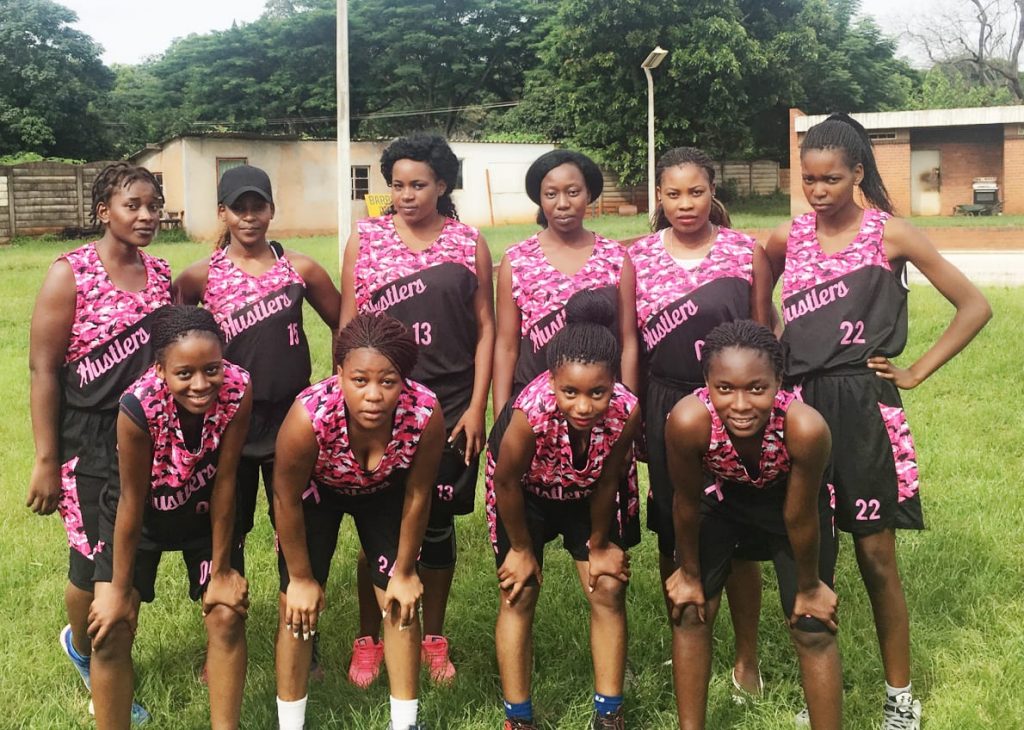
Twenty seven (27) year old Rutendo Beverly Mpofu, was born in Bulawayo, Zimbabwe. In September 2015 she started a basketball team, Lynx Ball Queens, with four other women, Tanya Kazembe, Celestine Karimbika, Sarah Kabiseni and Melisa Maganga. Beverly is the team captain and currently plays number 15. She also holds a Communications and Media with Management degree from Monash University in South Africa. [bctt tweet=”One doesn’t have to be social but on the court there has to be unity” username=”SheLeadsAfrica”] When did you decide to start a basketball team? I joined a basketball ladies association team soon after my undergraduate degree, but realised we had different goals. This pushed me to start my own team. At first there was a lot of slacking and not taking things seriously. But, after the loss of one of the team founders, we decided to be serious about the team. We joined another team called Hustlers in Mufakose, Harare and after a while we branched out on our own to become Lady Hustlers. We recently rebranded to Lynx Ball Queen. We started out small with a group of about seven women and now we are more than 12. Our team is made up of women between 16 – 27 years of age. Within our first year we managed to make it to the top six in the national league with only seven players. It was really challenging but we were happy with the results. Last year (2016) we were number two. So I clearly see a great improvement. Where do you get your sponsorship? We currently do not have sponsorship, because a lot of people feel that there are no returns in basketball therefore they do not want to sponsor it. We have approached many people and Net-One (a telecommunications company in Harare) has given us t-shirts before. We take whatever small donation we get and are open to working for our sponsorship. Because we do not have sponsorship, we purchase our own kits, and cover transportation costs to and from training and tournaments. A subscription fee of $10 is paid every month by each team member, but because of the current economic conditions we have agreed that people pay whatever they can. This is what is used for the basic running of the club. Where does your inspiration come from? My brother used to play since primary school. So that was my grand entrance into basketball. All the women on the team started playing when they were young, so it’s just a passion for most of us. What does a normal day look like for you? We train during the week but it is very challenging to get everyone in the same spot at the same time because of our many different commitments. We have players that are still in school and some work, so we have to incorporate training with other clubs that have venues with good lighting. This is so that we are able to train late into the evening. We generally try to put in work where we can. On the day of the tournament, we do not train. We sit, talk and strategise and do warm ups 15 mins before a game. It also helps if we know the people we are playing. Which women have been the most influential in your life? My Mother. She continues to teach me that you can’t wait for other people to do things for you. You need yourself first before you need someone else. [bctt tweet=”When you get on the court, you leave your quarrels on the line” username=”SheLeadsAfrica”] What is the greatest lesson you have learnt when setting up your team? To be patient. I deal with people from different backgrounds who have so many things going on, so I have really learnt to be patient. How do you manage conflict within the team? When one gets on the court, they leave their quarrels on the line, they can always pick them up after if they choose. But basketball time is basketball time. One doesn’t have to be social but on the court there has to be unity. That being said, people don’t bring their problems on the court. What personal traits are necessary for what you do? A high basketball IQ. One should be able to take theory and apply it on the court. A fighting spirit and perservance. The ability to work within a team and realise that one cannot do everything by themselves. Do you run a business in the sports industry? If you’d like to share your story with She Leads Africa, let us know more about you and your story here.
Afia Bobia Amanfo: Entrepreneurship as a vehicle for social change
Afia Bobia Amanfo is the co-founder of Studentshubgh, a non-profit organisation committed to the mentoring and grooming of young people in sub-Saharan Africa. Even though she comes from an administrative background, Afia finds fulfillment addressing the challenges of disadvantaged young people and connecting them with opportunities. She has been involved with volunteer outreaches to villages and schools in Ghana for several years, before starting Studentshubgh with her co-founder, Nana Ofosu Boakye. Afia is a graduate of the University of Ghana, Legon and the University of Lille in France. She is currently registered for the Master’s degree in International Trade at the Universite de Paris Est Creteil, France. Her career goals are to become a social entrepreneur as well as an international business analyst. Afia has a strong relationship with God, which she sees as the foundation for everything she does. [bctt tweet=”Young people are really starved for content that addresses their issues, directs and guides them and this is the gap we seek to fill – Afia Bobia Amanfo” username=”SheLeadsAfrica”] What made you take the leap into entrepreneurship? I have always had entrepreneurial dreams and a desire to use entrepreneurship as a vehicle for social change. But, for many years I held myself back because of a fear of failing. I finally decided to take the leap not because I had gathered enough courage, but because I was frustrated by the lack of access to quality content for young students in sub-Saharan Africa. I interact with a lot of young people and I was distressed. By the fact that many of them were making poor decisions concerning their career, academics, relationships and life in general because they didn’t have easy access to information or a qualified mentor. A quick check on most youth focused sites will show a bias towards entertainment. Definitely, the youth are interested in entertaining news and it is good business to give your customers what they want. However, young people on our continent are really starved for content that addresses their issues, and gives them direction and guidance. This is the gap we seek to fill. In addition, I was motivated by the desire to lend my voice to instilling a sense of patriotism and pride in African youth. I believe there will be a change in the future of Africa only to the extent that the youth are intentionally taught to believe in themselves as Africans; and learn to exploit their abilities to their fullest potential so they can become successful future leaders. So yes, I took the leap after lots of prayers and I have not regretted it. You built your website from scratch and you had no background experience to support this. From your experience what are the key resources and things to consider when creating a website? Thanks to the internet, no skill is too difficult to learn today. From graphic design to website or app development, the tools are all there on Youtube or a blog out there. So I will say: Start with research. You can research based on the type of website you want to build e.g. a magazine, blog, e-commerce etc. Determine the best domain name registration sites Find a hosting site Find templates and learn about plugins. You can find something whatever your budget is! Here are a few resources you need: Reliable internet connection. This is a must since you will spend several hours on your site. Domain name registration & hosting. You need to check for the availability of your domain name and register it as well. Most hosting services offer free domain name registration and free email address as part of the package. You can do a little research on the types of domain names and decide whether to register as a .com, .org, .gh etc. I have been using ehost.com as my hosting service which is quite affordable and also offer great customer service. Other hosting services include bluehost, godaddy etc. A website creation tool/ publishing platform. If you are a beginner like me, I will definitely recommend WordPress. WordPress has several templates ( both free and paid) and plugins. You can play around with various templates to find out what you want. I think if you have an online business, it is good to try your hand at designing your site, because experimenting with various templates will give you ideas and your site will end up better. You can always get an expert to add the touch-up’s, but do some experimenting on your own. Besides WordPress, you can also check other tools such as drupal, joomla or wix. You are going to need some great pictures for your site. There is definitely a lack of quality African stock photos online but there are a few options both free and paid. Check out pixabay.com, shutterstock.com and stockfreeimages.com Ok, so let’s just say that was manageable. Let’s talk about building a social media following of over 7000 and developing an e-magazine in just 6 months! What’s the secret Afia? I will say, there is actually no secret. The key to building a social media following has been widely discussed on many blogs and Youtube videos. I have watched She Leads Africa videos which spell out the strategy I used. A clear strategy: We decided to invest in creating a community on social media first before launching our website. Our strategy is 2 fold: Focused content and target advertising. To be honest, we have experimented a lot with content. We know our target audience and what we want to give them. Experimentation and iteration: However, we continue to experiment with the presentation of the content in order to achieve maximum impact. We have learned to consider that our target audience (students between 15 to 25) usually have very little to spend on data so we don’t do a lot of videos, we try shorter posts and also images with quotes, in order to get the message across. A well
Fatima Babakura: Social Media Made Our First Collection Successful
Fatima Babakura is a 21-year-old final year student at McMaster University and the founder and creative director of Timabee, a luxury accessory brand which she created out of her passion for sketching designs. Within 3 years of starting the business, Timabee has won a best fashion brand of the year award. Fatima has also been listed among 22 women redefining luxury in Africa by the Lionesses of Africa group, and has also received the WEF “Iconic Woman” award in 2017. Her passion for women and girls has inspired her to continue to grow Timabee, as well as start other businesses that would create job opportunities, especially in Africa. She is also the co- founder of Signature Boutique in Canada, a multi-brand boutique that aims to showcase the works of African based designers to the world. Fatima enjoys cooking, traveling and sharing her success story. [bctt tweet=”I have always loved accessories and handbags” username=”SheLeadsAfrica”] What inspired the Timabee brand? I have always loved accessories and handbags. Growing up, I remember being called “mummy’s handbag”, not because I followed her everywhere as that title would suggest, but because I was always holding my mother’s handbag when we went out together. I guess it was only natural that after I sketched a handbag, I became very curious to see it come to life. That is how Timabee started. What other services do you offer? Timabee currently has a bespoke section that allows the client to be a part of the design team for their handbag. You get to pick your leather, style and a whole lot more. I think it’s really cool. Do your services include any form of offline transactions or are they strictly online? Kindly tell us how the sales chain works. Being a full-time student and juggling a business doesn’t allow much time for offline interactions but I find ways to work around it.We have events from time to time and I also offer one on one bespoke sessions, depending on my availability. I am responsible for the bespoke side of design, amongst other things, so my schedule definitely affects those sessions. [bctt tweet=”With everyone being on social media these days, it is the best way to connect to a wider audience” username=”SheLeadsAfrica”] What are the major social media channels you make use of? Instagram and Twitter. Instagram is our first love. It made our very first collection a success. What has been the most challenging moment on social media so far? So far we haven’t had any challenge’s with social media, thankfully. What would your response be to someone who is contemplating whether or not to use social media as a marketing tool? I think it is a very great tool and it is inexpensive too. With everyone being on social media these days, it is the best way to connect to a wider audience. I would definitely say do it! Are you in the fashion accessories industry? Share your story with us, let us know more about you and your story here.
Nkwah Azinwi Ngum: Our food choices are very important for a healthier life
Nkwah Azinwi Ngum has an MSc in Rural Economics and Agri-Food from the University of Yaoundé II Soa, Cameroon. She is a Cameroon Human Rights Fellow and a Cameroon Women’s Scholarship fellow. She was trained by the Israel’s Agency for International Development Corporation – MASHAV- under a course ‘Agribusiness, a tool for the empowerment of rural women’ in Israel. Currently she serves as the Coordinator of the Cameroon Women’s Scholarship Alumni Association. She is also one of the World Council of Churches youth ambassadors in Africa; and has completed an Eco-school course on Water, Food and Climate Justice in Malawi. She recently founded an organisation “Save The Future”, which aims to empower communities and young people to overcome development challenges. The organisations primary focus is to equip young people with the necessary sustainable agriculture skills, as a means to curb poverty and food insecurity. [bctt tweet=”People should be able to economically afford the food necessary to maintain their well-being” username=”SheLeadsAfrica”] Nkwah, to what extent is food security guaranteed, if one is growing their own crops? We need to know the basic definition of food security before we can clearly understand this question. Food security in its most basic definition means: ensuring that everyone can access the amount of healthy, nutritious foods they need to live. However it also indicates that people should be able to economically afford the food necessary to maintain their well-being. Growing your own food is one way you can make sure your family always has an ample supply of fruits and vegetables and other food crops. We should note that growing your own food does not necessarily mean you are food secure. But, it reduces the resources you would spend on say, vegetables, and these resources could be channeled to other food crops that cannot be grown in the garden, hence contributing to food security. You have been raising awareness of food security on social media, how has this been received by your target audience? Using social media to raise awareness on the dangers of food insecurity and how we can cope or avoid the situation has been a little challenging. People still do not see this a challenge, but it is a situation whose consequences have triple effects – individual, family and economy. Notwithstanding challenges, from the reactions I have received, attitudes are changing; many people are beginning to gain interest in the subject and are trying to curb the situation by growing their own food. I will also like to note that, aside from social media, I am educating children in orphanages and schools on sustainable food. For the past four months, I, together with my friend, Ndeby Jarreth Therese (Co-Founder of Save The Future), have been able to reach about 200, 9-17 year old young people. From time to time, we call back to check the progress they are making in maintaining the gardens and also whether their feeding habits are changing. We are also hoping to increase the beneficiaries of this project to 2000 by the end of this year. [bctt tweet=”Children who grow their own food may have increased preference for vegetables.” username=”SheLeadsAfrica”] What’s your advice on how we can actually convince our kids to have healthy eating habits? Kids are more open to learning new cultures and attitudes than adults. One trick is introducing these veggies in their diet, whether frozen or dried, and being diverse in the colors (use different colors so that they can find the food attractive). Alternatively, we can get kids to eat healthily by letting them assist in growing the food they eat. Create a home garden (no matter the size) and let your kids help out in the garden. Let them grow their favorite vegetables. During which time, you can teach them the benefits of veggies and fruits. Research has shown that children who grow their own food may have increased preference for vegetables. Aside from home, pre-schools and primary schools can also contribute in grooming kids in healthy nutrition by using school gardens. Kids interact and learn from their peers. Therefore, school is one of the main social contexts where agricultural and food related practices, attitudes and other skills can be developed and shaped. What are some of the healthiest foods that you recommend us to take daily? Our food choices are very important for a healthy life. For a balanced diet we need to eat fruits and vegetables, protein, grain products and dairy foods. However, we need to know which food is vital on a daily basis and which are not. I would recommend fruits and veggies as the healthiest food for our daily consumption. We have to encourage and inculcate the habit of eating fruits and vegetables daily. One way of doing this is by growing our own veggies like okra, lettuce, amaranth, cucumber etc. You are also encouraging entrepreneurial skills so that people can produce more and sell excess. When one has taken farming to the business level is there anything they have to do differently? Many people see farming as a way of life, but today the concept is changing, especially among young people. If we want to consider our farming as a business; we need to treat it like another business venture. We need to carry out feasibility studies on the different stakeholders already involved in this line of business and create a business plan. However, for the young people I am working with, the basic idea is to introduce them into the world of entrepreneurship and the methods of how they can develop interest in agriculture. [bctt tweet=”Using fertilizers is not a bad idea, but the problem is how we use them; quantity and quality – Nkwah Azinwi Ngum” username=”SheLeadsAfrica”] What do you think about using fertilizers and other chemicals on our crops? Does that have any effects on our systems? Using fertilizers is not a bad idea, but the problem is how we use them; quantity and quality. Most fertilizers contain the same basic materials: nitrogen,
5 minutes with SheHive London 2017 speakers: brother and sister team Emeka & Ifeyinwa Frederick
Chuku’s is the world’s first Nigerian tapas restaurant based in London, fusing authentic Nigerian flavours and the best of Nigeria’s West African culture with the world. Founded by sibling duo Emeka & Ifeyinwa Frederick. On founding Chuku’s The sibling duo’s idea to create a food company, offering a variety of small plates of Nigerian dishes, was born out of growing up in a Nigerian household, and having friends who loved their home meals. This lead them to explore Nigerian cuisine, by fusing traditional recipes with food from their travelling experiences, and their experiences of being part of the diaspora. Running the operations at Chuku’s Every day is different for this team, with something new to be learned and done each day. They note that creating a routine is one of their main goals in the short term. But, their weeks are broken up into: Shopping days Cooking preparation Events and logistics Administrative tasks Strategizing Marketing This is one busy duo, as we can see! [bctt tweet=” Hear the Chuku’s team speak at SheHive London 2017: http://sheleadsafrica.org/shehivelondon2017/” username=”SheLeadsAfrica”] Long term goals… Their long term plans include: Finding a permanent space to offer their food. Establishing a chain of mainstream Nigerian tapas lounges. To become a UK household brand name. What trends keeping their eyes on… The evolution of technology in the food space and how it continues to evolve and disrupt the market. The rise of healthy meals and food, which their already onto, with their delicious tapa’s. To learn more about the creative Nigerian foodie duo, get a ticket to our SheHive London event on the 24th of September.
5 minutes with SheHive London 2017 speaker: Minna Salami
Minna Salami is a Nigerian-Finnish writer, blogger and commentator who has contributed to the popularisation of African feminism through her blog, MsAfropolitan. On woman empowerment: At the risk of sounding too spiritual, or something, let me first say that I believe that if there is a purpose to life, then it is self-actualisation. Some might call this “becoming the highest version of yourself”. Challenges facing professional women. I would say, firstly, the absence of adequate constitutional rights. Secondly, the absence of a robust civil society fighting for adequate constitutional rights. The absence of both disturbs the smooth flow of a woman’s professional life. Women feeling whole and complete. We need to cultivate a culture where women feel the opposite of lack, namely a sense of wholeness. Women working in male dominant fields, as most women are, need to cultivate a sense of inner acceptance that they are enough just as they are, which will enable them to want the same for others. [bctt tweet=” Hear Minna speak at SheHive London 2017: http://sheleadsafrica.org/shehivelondon2017/” username=”SheLeadsAfrica”] On Economic growth… The question women should be asking is: How is the money they are contributing to the economy benefiting women? The system should work for us and not vice versa. Put it this way, gender equality is indeed necessary for economic growth, but economic growth is not the only reason we want gender equality. African women and feminism. It is in Africa that I have encountered women with the most dedication to the feminist revolution; women who do not pander to patriarchal narratives, and women who inject a deep humanism and criticism to the global feminist discussion. To hear more from Mina Salami and her world changing creative pursuits, get a ticket to our SheHive London event on the 24th of September.