
Valentine Njoroge: If you have an idea, do something about it
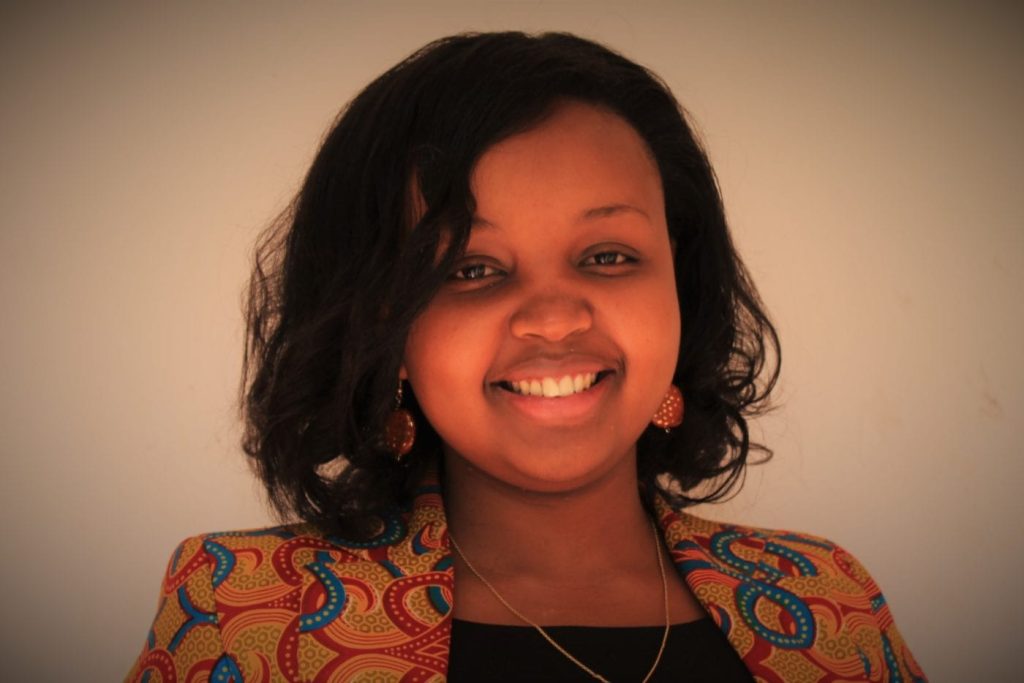
Entrepreneurs are a dime a dozen in this millennial age. Here on the African continent, the main obstacles preventing one from getting their business started is the lack of enough capital and investors ready to believe in your new, cool idea. Valentine Njoroge, a young entrepreneur from Kenya, saw this problem and decided to fix it by starting an online crowdfunding company for African businesses, Mradifund. Her passion about financial inclusions and development, entrepreneurship and impact investments, not only inspired the start of this initiative but also landed her the coveted role as projects director at East Africa’s leading investment firm, Centum Investments Ltd at the tender age of 24. SLA contributor Diana caught up with Valentine and got her to share her tricks and tips to making it in the fast paced financial world and why she is determined to help other young people get their dream off the ground and become a success. When did you first get interested in the investments industry? One of my first internships was at Kenya Women Finance Trust (KWFT), a micro-finance institution focused on funding low income women. The women who got these loans had such incredible stories of transformation. They would start very impressive businesses and see their lives changed because of these loans. This got me really interested in the investments space and I got to discover all sorts of other verticals in the industry. How did the idea of Mradifund come about? Mradifund has been a journey of sorts. One of my senior seminars while I was pursuing my undergraduate degree was all about economic development. I chose to focus my paper on alternative investments in Africa (with a bias on Kenya). While researching for this class, I came across Kickstarter, which was still fairly new at the time. They had applied crowdfunding to social/cultural works of art that the public wanted to see. I thought the same concept could be applied to businesses, so I wrote about Equity Crowdfunding. I envisioned a situation where the general public could fund ‘cool’ companies that were too small to be interesting to the traditional investor. Fast forward a few months, I was working in Private Wealth Management aiding high net worth individuals to allocate their wealth to various investment opportunities. Then, one of my clients asked if there was a way he could invest in African companies. At the time, I said I didn’t know, but kept researching. When I next visited home, I started finding out more about start ups and SME financing. I eventually connected that same client to a startup which he invested in. He later asked me how much I would charge for the connection which triggered the thought that this could be an actual business. I moved back home a few months after that and spent some time fine tuning the ideas from my paper. The experience of actually connecting a business to an investor is what inspired Mradifund today. You currently have various investors from not only Kenya but all over the world. How did you manage to get them on board with your vision for online crowdfunding? I still know all of my investors personally, so I met each of them and explained the concept to get them on board. Most of Mradifund’s investors already have an interest in funding businesses due to a variety of reasons including past experience or passion for SMEs or a certain sector. Investing with other people is valuable to them because it allows them to spread the risk of investing in SMEs over several opportunities by putting less money into each opportunity. The fact that the investment is shared among several people also means that investors can make more investments. Again, this spreads the risk which makes investors happy. (If an investor has KES. 10M, they can invest KES. 1M in 10 companies and the probability of 10 companies failing/losing money is lower than that of 1 company failing). This is what makes them stay. You are also currently the Projects Director at Centum Investments. How do you juggle running your own company, working at such a big corporate company and still get time to live life? Haha, well… I have learned how to use the resources around me to the max! My board at Mradifund, my team at Centum, my friends and family all help me achieve my goals in little ways, even if they don’t realize it sometimes. I kill two birds with one stone on very many occasions, especially in the work/friends’ quadrants. Also, I have had to learn how to be very efficient with prioritizing the urgent and important stuff. I say no to stuff that’s just interesting (but not value adding) or just feels like an obligation when it’s really not. Did you ever see yourself going the entrepreneurial route or did you just chance upon it? I have always kind of had an entrepreneurial spirit in me. I sold everything as a kid and I grew up in a very entrepreneurial family, so maybe in that sense I never had to think about it much. It became clear to me once I was already in it that it was a big passion of mine. I did spend a ton of time dreaming up my career in corporate (it was constantly changing) —wearing suits and carrying a briefcase as a teenager though. What has been the proudest moment of your career? One of the founders of the a business that Centum Foundation supported wrote me an email saying how much impact we had on his company through our mentorship program. He spoke about the knowledge and opportunities it opened up to him, as well as how much more confident it made him. As a result, he was able to partner with a major retailer which turned his business into an overnight success. It was really heartfelt and was very inspiring! As a young woman working in the male-driven field of finance, what
Imane Bensalem: Humanity needs more dreamers, storytellers, lovers and givers
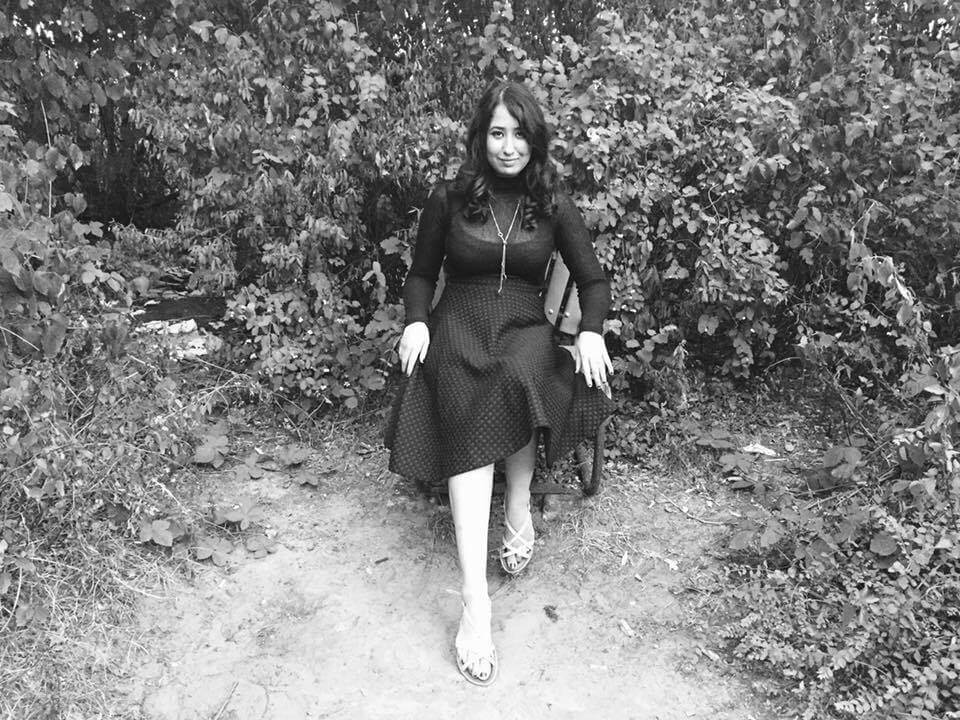
[bctt tweet=”As an author @imane_bensalem deals with her start-up as a life plan rather than a business” username=”SheLeadsAfrica”] Ever felt so alone and isolated in the world? Imane Bensalem would know that feeling. It was a sense of isolation that lead he to start the Tribe of Why, a global community of like-minded individuals who support each other to achieve their dreams. Dreaming is something Imane strongly holds on to and her goal is to help others know that they are not alone. A community that provides support will lead to more dreams to become realities, is her philosophy. From organising local events in Marrakesh, Morocco to linking up members to start businesses in foreign countries, the Tribe of Why does it all. You’ll be motivated and ready to become part of the tribe after reading some of Imane’s wisdom. Tell me about yourself, who are you and what’s your story? What makes Imane the human she is? Pain is a great teacher, the truest of all. And I have had my share of pain. I could not be grateful for it when I was younger, but I am now. Because those nights I did not know if I would make it to the next morning were the reason I can now give so much love to others and be a leader who is altruist and empathetic. I am Imane, they call me Mani. I am the founder of Tribe Of Why and author of The Bird who Lived with Humans. In addition, I connect people who share the same life dreams because I believe that dreams unite the human race and go beyond our societal barriers. Dreams build the future and sharing them with many other supporters around the world will enrich each individual in the Tribe and will inspire them to continue the search for meaning. How were your childhood and growing phases an inspiring force for the Tribe of Why? I was a single child of a single mother. I experienced isolation and questioned the capacity of our educational system to get me out of such a situation. My mother is a professor, and she agreed that the system did not allow her to be present in her own child’s life. I started seeking knowledge in people —through deep talks— rather than books, and authentic liaisons rather than superficial links with others. Then, I succeeded at building an international tribe for myself and they were my school, my inspiration and now, my Tribe Of Why members. I wanted to extend this experience to every other human on planet because with the amount of connectivity allowed to us, I do not see why anyone should suffer isolation or give up on their dream just due to a lack of local support. The global pool of talent is so big and rich that even the wildest of dreams will always have a match somewhere. [bctt tweet=”I don’t see why anyone should give up on their dream due to lack of local support” username=”SheLeadsAfrica”] As an author, I deal with my start-up as a life plan rather than an actual business. I try to bring my life learnings into my work and allow art to be a constructive part of business. Art changes people and people change the world. I try to be a vehicle of that change. What inspired you to begin the Tribe of Why? Walking into my room everyday is an inspiration to continue building the Tribe Of Why. If you walk into my room you will find cards from a best friend in Greece, letters from another friend in Spain, Germany, and dried flowers from Maldives. A regular day for me could look like a brain-cafe with an inspirational entrepreneur/friend from Vienna, then a meeting with a stranger who just landed from the UK for the first time in Marrakesh. Her first destination was a Tribe of Why event in the city. Then this stranger becomes a friend, she meets me 2 or 3 more times and then tells me she found love here, in this new city, during one of my events. All of the things I just stated actually happened. I began Tribe Of Why the day I started a small talent community in my business university. Within 3 months we grew to 300 members throwing the biggest flash mob defending women rights. The dance was designed by us, the DJ was a student too, we were self-sufficient because we were a tribe that shared the same passion; passion for art and freedom. What is Tribe of Why about? Is it a single tribe in one location or stretched across the globe? Tribe Of Why allows you to connect with creative minds, thinkers, entrepreneurs and dreamers across the globe, but also locally. When you are travelling, you can rely on the tribe to host you and co-create ideas with you. But, you can also share coffee with the wannabe author next-door that you never actually knew about until you joined the tribe. We are a moveable feast of knowledge and creativity. Also, small talk is something you won’t have to endure in the tribe, we go deep! Why do you think your tribe is important in our day and age? It is extremely important during our current times to cultivate love, empathy and peace. Such things expand out of themselves when connections from one human to another are true and purposeful. Many of our youth today use the social platforms to compare themselves to others, they deepen their depression and sense of isolation from the world. We want people to understand they are all on the same quest. This is why we care about building tribes who share the same dreams, they implicitly share the same pursuit and same obstacles. But together, it is easier to overcome these obstacles in contrast to being alone and feeling maladjusted to the world during such a pursuit. How do you think this can help humanity? In a
Sekayi and Tukiya: We want MaFashio to represent Zambia on a much more international scale

[bctt tweet=”When sisters Sekayi & Tukiya started @MaFashio they didn’t know that fashion blogs existed” username=”SheLeadsAfrica”] With big smiles and charming personalities to match, Sekayi and Tukiya Fundafunda have a star-like quality about them. Popularly known as Kahyi & Kii, the powerhouse sister-duo are behind Zambia’s hottest fashion blog, MaFashio. According to the sisters, “MaFashio” is a slang that describes someone who either looks really good —or really strange. In other words, fashion that makes a statement. That is essentially what MaFashio aims to deliver —content that celebrates the uniqueness and strangeness of Zambian fashion and culture, packaged in a way that is fun, inspiring, and accessible. Since bursting onto the scene in 2012, MaFashio has positioned itself as the premier “style house” in Zambia with its one-stop shop approach to fashion solutions, including blogging and styling and creative direction. Kahyi & Kii have carved out a permanent place for themselves on the fashion and lifestyle scene in Zambia and are well on their way to becoming a successful and well-recognized international fashion brand. The sisters recently opened up to SLA contributor Uloma about their blog, fashion, and some of their favourite things from 2016. How did MaFashio begin? Where did you find the inspiration to start a fashion blog? Kahyi: We had a lot of artistic influences growing up —mom made wedding dresses and dad was an artist. As teenagers we dressed very differently from our peers, which wasn’t something that was popular in Zambia at the time. One summer towards the end of our high school years, Kii and I happened to spend a lot of time together, and we discovered just how cool the other [person] was. As we spent time getting to know each other and observing the people around us, we both simultaneously had this realization that we were encountering a lot of people dressed in really interesting and diverse ways. That was how the idea for MaFashio came about. One day we just decided that we were going to start telling people they looked nice, take their pictures, and create a place where we could post and share these pictures. At the time we started, we didn’t even know that “fashion blogs” existed. All we knew was that we had found this project that we were really passionate about and we were determined to pursue it as far as we could. We built a simple blog on Blogger put up pictures, then spammed everyone we could think of to direct them to our blog. One day we got a call from Gareth Bentley, who had somehow caught wind of our site and was impressed by what we were doing. He showed us how other bloggers were doing it and gave us tips on how to make the site appear more professional. From there things sort of took off. When did you realize that MaFashio had finally broken onto the Zambian fashion scene in a big way? It was definitely when we got invited to attend and blog at Fashion Week in 2013. It was such a surreal experience, getting the VIP treatment and being introduced to some major players in the Zambian fashion industry. Being at that event and getting to blog about it definitely put us on the map and opened doors for us. After that, we knew it was time to take MaFashio to the next level and that was when we decided to register the brand as an official entity. [bctt tweet=”We never back down from a challenge and we are motivated to continue improving our skills” username=”SheLeadsAfrica”] Your story sounds almost like a fairytale. Coming from an artistic background, having a flair for fashion and design, and then starting what was probably the first fashion blog in Zambia at a time when there was no one else in the space. Were there any parts of this whole process that did not come easy to you? You’re right, we do have a natural affinity for styling and writing, but the photography and other technical aspects didn’t come easy and took a lot of effort. In fact, we are still learning, but that’s what I love about us. We never back down from a challenge and the more MaFashio grows, the more motivated we are to continue improving our skills, acquiring new ones, and also asking for help when there is something we can’t do ourselves. How does the division of labour within MaFashio work? Kahyi: I have a background in Economics and Finance, so I would say I am the more business-savvy one of the team. I love structure and I enjoy creating systems so I am always looking for avenues to incorporate that into our business. Kii: I have a background in Law, which has come in quite useful in interpreting the contracts we are presented with. When it comes to MaFashio, while Kahyi focuses more on the planning and organization, I would say I contribute more to creating the content and aesthetics for the site. In the best of ways, Kahyi is the yin to my yang and we complement each other in a way that is good for the business. As frontrunners in the fashion blogging industry in Zambia, how have you embraced this role as leaders and mentors? Also, as others come onto the scene, what has it been like dealing with the competition? Kahyi: Last year we organized an event called Fashion for Brunch and honestly it was a struggle to scrape together 16 bloggers at the time. This year, we hosted the same event again and we had 35 bloggers. We even had trouble picking the 20 we needed for the event! It has been a pleasure for us to watch this new generation of bloggers come onto the scene, and we don’t necessarily view them as competition because we understand our role. The only yardstick by which we measure our growth and success is ourselves. Kahyi: I attended a lecture earlier this
Marcia Lebambo: I want to see my people in better conditions
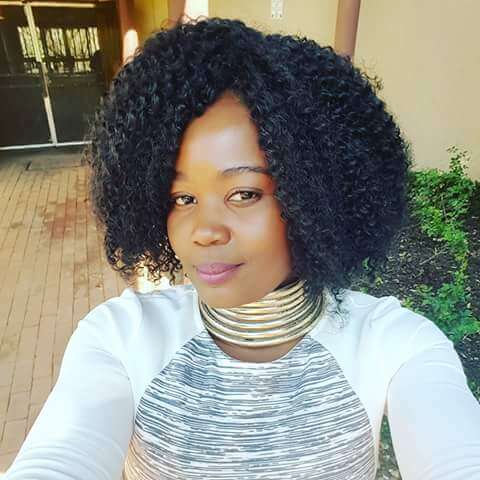
[bctt tweet=”The Marcia Lebambo Foundation brings Spelling Bees to school learners in townships” username=”SheLeadsAfrica”] Marcia Lebambo is a woman passionate about developing marginalized communities in rural areas. A self-described village girl who came to Gauteng to claim her piece of gold, Marcia is giving back to the community through education in a unique way. Her foundation uses Spelling Bees to educate school children in rural areas and townships in South Africa. Marcia believes Spelling Bees are a great way to encourage confidence in children. Though she works as a senior campus officer and lecturer, Marcia is pursuing her PhD and is still digging for her gold. Tell us about the Marcia Lebambo Foundation The Marcia Lebambo Foundation was established in 2012 as a non-profit organization focusing on teaching school learners in townships and rural areas writing and reading skills. This is done using a popular competition called a Spelling Bee. In the competition, contestants are asked to spell a broad selection of words, usually with a varying degree of difficulty. This is a comprehensive learning process that allows children to learn the definition, pronunciation, and roots of the words. Learning grammar is not the only benefit, learners are able to enhance vocabulary, competitive spirit, greater knowledge, cognitive skills and confidence. Since 2012, over a thousand learners participated in the program. The initiative was motivated by improving the quality of basic education in the country, especially schools in the rural areas and townships. As an organisation, we believe that the fight for quality education cannot be the responsibility of government alone, but every South African. This is the reason why we are extending a hand to your organisation to help change the plight of our education system. What motivated you to starting Spelling Bees in South Africa? Coming from a rural school where the level of education was very poor, I didn’t value myself as a student. So when I joined TUT as a student in 2005, I felt like I didn’t belong and that affected my confidence a lot. After completing my degree, at only 19 in 2007, I then told myself that I cannot sit and feel sorry for myself. I had to do something not only for myself but other kids in similar backgrounds like mine. I wanted to go back and help kids from previously disadvantaged schools learn how to read and write. Because spoken words are written first, if you can master reading and writing you can master the speaking. In 2012, together with a group of volunteers, I founded the Marcia Lebambo Foundation which organises the Spelling Bee competitions. [bctt tweet=”If you can master reading and writing you can master the speaking” username=”SheLeadsAfrica”] Coupled with the rapid pace of social media and technology, writing has become a challenge globally, especially for learners in marginalised communities. I believe that if you cannot spell the word, you cannot read, and if you cannot read, you will not be able to write. We literally go school by school sending invitations and requesting collaborations from school teachers, principals and parents. It is very challenging because it is self-funded. But it is worth it. Do you have a favourite book or read much? I love biographies, they tell a story and invite the reader to meet the person behind the person. I call biographies intimate reads. Currently, I am reading Zuma, A Biography by Jeremy Gordin. In between, I’m also reading a local Author Sy Tshabalala’s book titled Being Positive in a Negative World, Daily Supplements of Inspiration. But the pace has been slow because I am doing my PhD which consumes a lot of time on research books and articles and a lot of writing. What keeps you awake at night? To see my community and people in better conditions than they were yesterday. Being raised by parents with no educational background and being the first in the family to receive a university qualification reminds me that I represent my entire community. That responsibility reminds me that I have to rise above the narrow confines of my individualistic concerns to the broader concerns of all humanity. I am driven by knowing that God has given us powers to be and do anything that we want in life, whether good or bad, the choice lies with us. I am also inspired by ordinary women with no education or employment who use whatever little resources available to sell fruits and vegetables to pay for their children’s education. My question daily is; If they can do it, what stops me? If the late Mandela could move the entire world behind prison bars, what is actually stopping me? That is what inspires me. Why did you choose your profession? I started with a course that I didn’t want to do because I didn’t apply on time to secure a space on the course I wanted which was law. So I went for any that was available and ended with administrative management. I completed it in Cum Laude because I wanted to quickly remove it from my face and register my all-time favourite. But as one can expect, life happened and I ended up doing so many other courses. My qualifications include: Diploma Administrative Management B-tech Strategic Management B-tech Public Management Masters in Entrepreneurship After so many years, it is only now that I have been accepted to study LLB. The plan is to complete my PhD first this year, 2016. I want to be an academic full-time. There still so much work to do especially in the black-dominated universities. [bctt tweet=”Marcia Lebambo was the first in her family to receive a university qualification” username=”SheLeadsAfrica”] How do you define family? Family is strength, family is love, family is light. To me, family is everything. They keep you grounded, when you go up they celebrate with you, when you go down they cry with you. They are our ultimate life cheerleaders. Three of my siblings are part of the Spelling Bee initiative. I must say
5 things to do before leaving school

[bctt tweet=”All students should make plans for life after school if they plan to be #MotherlandMoguls” username=”SheLeadsAfrica”] One of the biggest mistakes students make is avoiding the future. That is making no plans for after school or laying down foundations for post graduate life. Many times, you see graduates sitting at home even after the one year National Youth Service without potential jobs or side gigs and no money. With the rate of unemployment, post-graduate life is scary. That’s why you shouldn’t be slacking! Here are a few tips on things to do before leaving school so you’re on top of your game after graduation. 1. Save up Whether you are in your first year, your last year or in-between, if you haven’t started, it is time to get on the bandwagon. A little sum put away at intervals makes a substantial sum at the end of the day. Sometimes, the money is just not enough, we get that. Still, shaving a little off the top before facing your list of needs and wants, helps build a safety blanket. This may help finance a start-up venture or provide sustenance during the dry after-school days. 2. Lay it all out Things don’t always go the way we plan but trust me girl, it feels good to have a plan. Now, I am not just talking about relationship and marriage plans, which are needed. I am talking business and entrepreneurial visions. Map it out. Map the road to those goals out too. Yes, things change, life happens, and sometimes we have to make some tweaks to our initial plans. Yet, it is necessary to have something to look forward to after school and to work towards them. Your plan will determine how you work in school. Your grade points and your business life will also be geared towards those visions. Think this is too much work? Don’t, you’ll be thanking us in the future. [bctt tweet=”Your future plans will determine how you work while in school” username=”SheLeadsAfrica”] 3. Make use of the opportunity If you plan on working within your course of study then being in school is the right time to become a member of the professional body of your course. Here’s a tip, it is usually cheaper to join professional bodies as students than as postgraduates. Another thing to make use of is online courses. Most campuses have free or cheap WiFi access and most service providers have special plans that are campus oriented. Use this to your advantage and get a boatload of free or cheap relevant online courses without breaking the bank on data charges. Business wise, you can use the opportunity to hone your skills, go online and improve your work. Though the workload might be bulky, students still have a great chance to fit in extracurricular activities. So, rather than spending too much time partying it up (this is needed but it’s not a priority), carve out time to use what is available to you to get what you want. [bctt tweet=”Start making friendships that will last a lifetime while in university” username=”SheLeadsAfrica”] 4. Squad goals Yes! Start making friendships that will last a lifetime. This is the best period to build your support team and your squad. You can figure out people of like minds, goals and visions, people with the ability to propel you. No haters, slackers or scrubs need apply. You need true friends to stand by you. Friends whose lanes cross with yours, but never clash. This can be the foundation of an empire tomorrow. Squad shopping is slightly hard but not impossible. Making close-knit friendships post-school can be hard but in school you have lost of time for girls night out and everything in between. You get to plant, water and grow something beautiful —your squad. 5. Please LIVE! You know the saying, “don’t just go through school, let school go through you”? Live, savour every moment, do not zone out and do not go through school in a haze! Make sure your time in school is filled with memorable days. Keep a journal if necessary (which is like totally necessary). Make mistakes and learn. Get yourself out of messes, dust yourself and go on. Let your school life be one massive “WHOOP!!!!” with a lot of “yays!” and a few “oops!” [bctt tweet=”Live, savour every moment, do not zone out and do not go through school in a haze!” username=”SheLeadsAfrica”] Go all round, do not be fixed, fit in, then stand out. Complicated, yeah? But no. There are places to fit in and there are other places where you need to do you. Be well rounded, academically, socially and spiritually. Make every moment count and have an amazing squad to share them with. Finally, here is a toast to you for the amazing journey you will embark on.
Christine Khasinah-Odero: You can live out your purpose even after becoming a mum

Ever heard of “Mumpreneur”? This term captures the essence of being a mum and entrepreneur. At the forefront of inspiring Mumpreneurs in Kenya is Supamamas, founded by Christine Khasinah-Odero. At first glance, Supamamas is a marketing and events company but when you look further, you find a company that inspires mums. Through events and their website, Supamamas encourages mums to remain in business by imparting the skills needed to thrive. An award winning entrepreneur, Christine created this platform specifically for mums to let women know that they can continue to move towards their dreams even as mothers. If you’re looking to be a flawless Mumpreneur, this one is for you! What makes a woman a Supamama? What makes a woman a Supamama is living your life with intent. To live out the best version of you as a human, as a woman, as a mum and as a professional, whether in business or employed. It is also about striving to be the best version of you. Just because you have become a mum, doesn’t mean that you cannot live out your purpose or dreams. Being a Supamama is about giving your family, your children and society the best of you but not forgetting to invest in yourself. A Supamama continuously learns and strives to achieve her goals. She is also that mum who accepts that she cannot be a super woman. She knows that it’s okay to ask for help and accept help. Tell us, how do you inspire mums in business? When it comes to mums in business, there are specific events we put together that provide an opportunity for Mumpreneurs to come and learn from notable speakers who have been there and are thriving. Our speakers share their personal journeys from which mums are able to learn from. Our invited guests also share practical business tips gained from their experience running businesses. At Supamamas, we also inspire mums in business by sharing their journey on our website. This gives them an opportunity to share how far they have come, while at the same time giving their businesses visibility and connecting them to possible customers. What do young mothers get wrong when it comes to raising children? Helicopter parenting: This means hovering over our kids and being there at their beck and call. We want our kids to have it easy and not fall in any way. So, instead of letting them experience adversity, we clear the path. We remove obstacles to make their life easy, forgetting adversity is a part of life. Only by facing it can our children build life-coping skills they’ll need down the road. So while it seems like we’re doing them a favour, we’re really stunting their growth. We’re putting short-term pay-offs over long-term well-being. Compensating for what they didn’t have as children: Some parents provide over and above the basic needs of their children. Whenever the child asks for something, they give in, literally to everything. This way the kids never learn the value of delayed gratification and not getting everything now. Not spending enough quality time with their children: This is because our lives have become so busy. We either spend many hours working or when at home, get easily distracted by other things. Mums need to make a conscious effort to be present when with their children. It’s best to realize that it’s not the quantity of time we spend with them but the quality. What makes Supamamas stand out from other marketing and events companies? What makes Supamamas different as a company is that we have created a platform that provides an opportunity for companies to connect specifically with mums. Providing an opportunity for companies and brands to engage and have meaningful conversations with their customers or potential customers. Our events are also different in that they are conversational, experiential and interactive. This provides an opportunity for brands to go beyond selling and marketing but also to receive feedback and meaningfully engage. Our events are personal and intimate. Mums who attend them feel special because they can be heard and express themselves. It’s like being part of a big family of mums where we all have a common goal to be the best we can be. The warmth that mums experience at events organized by Supamamas is exceptional. Beyond business we also are keen on mentorship and community service and have organized numerous initiatives mobilizing mums and corporates to give back. One of our notable CSR was a red carpet event for cancer survivors. In 2013, you were a finalist in the “Most Influential Women in Business in Africa SME” category in South Africa’s CEO Magazine. In 2015, you were Country Winner 2015, what do you think changed at Supamamas to cause this win? It was an honour being selected as one of the Country Winner 2015, CEO Magazine Africa’s most influential Women in Business. I believe what played a big part is staying consistent and continuously learning. I’m always looking for what I can do to improve and grow the events, as well as grow our online following and engagement. As an entrepreneur you need to continuously improve, knowing that there is always room to do better. What four skills do Mumpreneurs need to master to avoid burning out? Make your well-being a priority: Setting up a business and growing it is tough. It can really take a toll on you, not only physically but mentally. Mumpreneurs need to make a conscious effort to take care of themselves to push through and prevent burnout. That means eating well, exercising and getting adequate sleep. Nurture friendships and create a support system: For instance, your support system can be with other entrepreneurs. With them, you can share your experiences, frustrations and celebrate the little gains. Being around like-minded people helps to ease the pressure and gives you a sounding board and room to exhale. Creating focus and having a plan: This gives you an idea of what you want to
Jabu and Gugu: It’s difficult finding women in film to take up crew positions
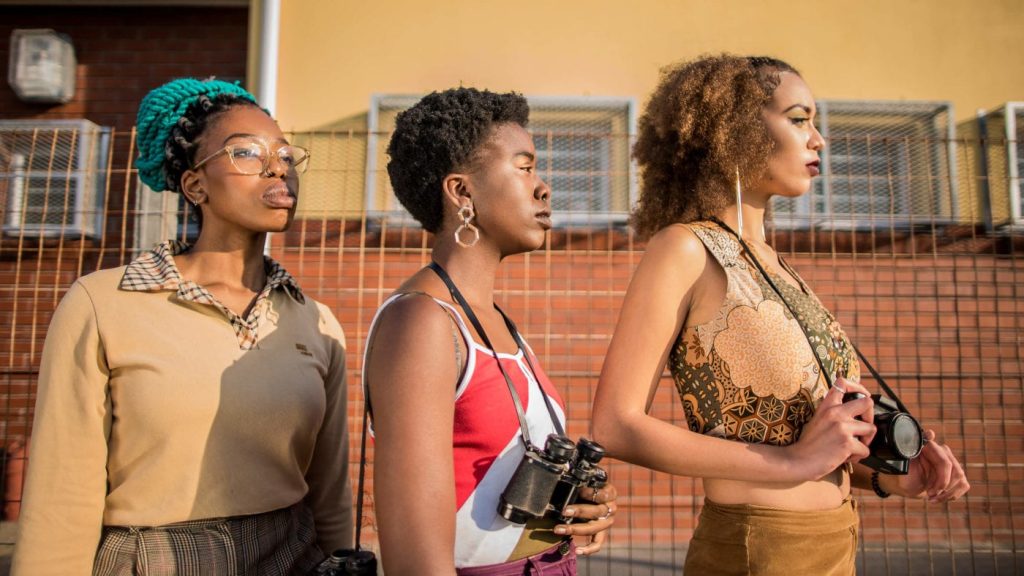
[bctt tweet=”Jabu & Gugu from @TheFoxyFiveTV team clue us in on feminism and self-care” username=”SheLeadsAfrica”] We all know the challenge of getting African parents to understand what you’re doing when you’re not in a typical 9-5. Now, imagine if you were making a webseries? The Foxy Five is a hot web series that brings lessons from intersectional feminism in post-Apartheid South Africa through five characters. It draws creative inspiration from Blaxploitation cinema and based goddess, Pam Grier. SLA is excited to see gorgeous women bringing magic to our screens. We were doubly excited to speak with two women from the Foxy Five team. Jabu Nadia Newman is creator, writer and director while Gugu Radebe is the show’s producer. With them, we uncovered the joys of being part of a production team that is all-women and why South African women are at the forefront of change. We also got Jabu and Gugu to share what should be inside a self-care toolbox. Why use a 70s edge to tell the story of intersectional feminism in post-Apartheid South Africa? Jabu: I used a 70’s edge to create a cinematic world for the characters. I knew that a lot of what was going to be in the narrative would be real experiences but wanted to stay clear of, like a documentary style. I wanted the world that The Foxy Five live be influenced by The Black Panthers, Blaxploitation cinema, all of Pam Grier’s bad ass womxn characters and 70’s fashion. Fashion is a huge inspiration for me and I want all by work to be connected by a particular style or era. What has been surprisingly easy about making your production team solely women? What has been difficult? Jabu: The most amazing thing about working with womxn is the ideas that we come up with. Because we’re all relatively going through similar experience, we always seem to read each other’s minds and understand each other’s viewpoint and vision. It has been a blessing to have these womxn trust my vision and understand what I’m —and we’re all— trying to do. I don’t think many men would have supported me when I first started The Foxy Five. The most difficult aspect of working with womxn, is finding womxn in film to take up crew positions. Like finding a womxn sound recordist and engineer proved to be very tough. Oh, and getting time in everyone’s schedule to just meet and shoot is fucking hard. Like wow, black womxn are doing the most so we’re always busy. [bctt tweet=”The most difficult aspect is finding womxn in film to take up crew positions – @JabulileNewman” username=”SheLeadsAfrica”] Gugu: It has been surprisingly ‘easy’ in the sense that we are all womxn that know each other from different spaces and circles however when the call to begin the project came, coming together was effortless. Creating a kind of sisterhood came naturally to us. With that mentality alone, it made it easier to come across different womxn that would want to be part of the project. What has been particularly difficult is finding a predominantly black womxn team to fulfil production specific roles, however after a lot of researching we were able to find more womxn to fulfil the core roles in the production team. In your interview with OkayAfrica, you mentioned that South African women can add much more to the rest of the world regarding feminism. Can you share what issues South African women deal with today and how they navigate them? Jabu: Right now, South African womxn are leading the revolution and are at the forefront of bringing change. Plus, these womxn are also having to make sure that the movement is intersectional and call out all the misogynistic and patriarchal bullshit that is evident in the movement. (South) African womxn also draw so much power and strength from their ancestors and pre-colonial history that when it comes to decolonizing feminism we need to be playing a huge role. What particular challenges have you faced as South Africans making a web series? Jabu: The biggest challenges as with any independent film-making is funding. And then next is probably getting our parents to understand exactly what we’re doing. Gugu: What has been particularly difficult is sourcing funding. Considering that this web series medium is fairly new, not enough funders cater for this specific medium here in South Africa. As intersectional feminists it’s hard to portray these five archetypal characters- or any others- without projecting our own individual thinking around topics that are raised. [bctt tweet=”Not enough funders cater for the web series medium in South Africa” username=”SheLeadsAfrica”] What can we expect from The Foxy Five in the next six months? Jabu: Firstly you can expect the last 3 episodes of this season and then only bigger and better things for next year! Gugu: We will be releasing our last three episodes soon and we’re still to unpack many layers of intersectional feminism all the way up to the finale. In the interim we’ll be hosting fundraising parties come November in Cape Town CBD, keep your eyes on our Facebook Page for more information. What do you think young black South African women need in their self-care toolbox? Jabu: Coconut water to quench the thirst —because the thirst is real Long hot baths for our aching muscles Vaseline for our lips Flowers for our rooms Shea Butter for the skin “Girl Without A Sound” by Buhle Ngaba for lonely nights Pap Culture for the laughs And of course The Foxy Five for healing and feeling loved Gugu: Water Good music A book to write thoughts Mom on Speed dial Coconut oil We want to know what amazing things young women are doing in your communities. Tell us about them here.
Mouna Ben Garga: To create change is my life commitment
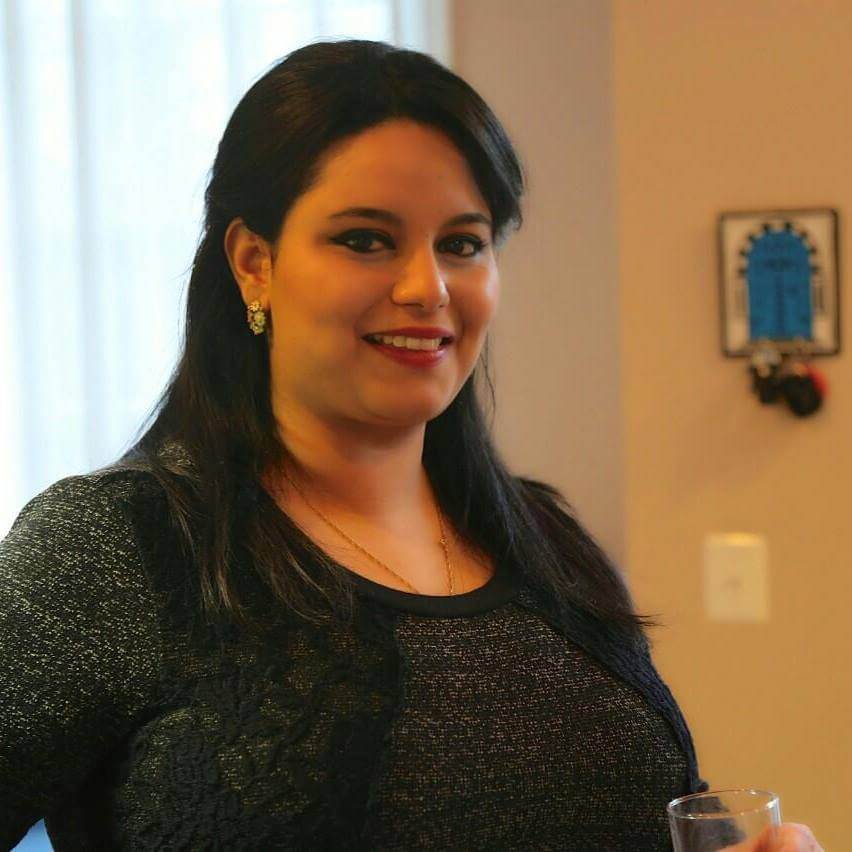
[bctt tweet=”Mouna Ben Garga is working to influence national and international agendas” username=”SheLeadsAfrica”] Are you familiar with the terms advocacy, social change or community development? Well, you cannot separate these words from Tunisian-born Mouna Ben Garga because she lives by them. Mouna Ben Garga epitomizes the notion of active citizenship and innovation for social change. Community mobilization and development are her passion. When she isn’t advocating for the rights of immigrants in the US, Mouna’s working to influence national and international agendas. Share with us what you do. How many people you touch and how long you have been at it? Since 2009, I have committed myself to advocate and mobilize communities. I started as a member of the Junior Chamber International in which we build the capacity of youth to find solutions and be agents of change in their communities. Moving to the United States, I got engaged with the African Diaspora advocating for the rights of immigrants and engagement in the continent through the AU Diaspora participation program. Finishing my Master in Public Policy, I found myself doing what I always loved to do as a profession; “community development and advocacy”. I work to create strong alliances to influence national and international agendas around critical causes such as climate change, Agenda 2030 and youth engagement. Currently, as a programme officer at CIVICUS, a global alliance dedicated to strengthening citizen action and civil society around the world, I support civil society organizations in Africa and Middle East to develop their innovation capacity in community building and mobilization. What are you excited about lately? I am excited about innovation for social change. For a long time, innovation was associated with business and science. However, lately we’re starting to witness the rise of innovation for social change and impact. Lately, I am working to make it part of communities empowerment in Africa and Middle East. [bctt tweet=”Lately we’re starting to witness the rise of innovation for social change and impact” username=”SheLeadsAfrica”] Why do you believe in the work you do? Any sustainable positive change comes from within. But together we are stronger, more influential and more efficient. Thus, I work to connect people and communities and build partnerships. How do you stay motivated? Reading and watching the impact that people are making around the world. It could start from a video advocating women’s right in India. Then, there is an innovative app which helps raise money for Syrian refugees. I have also been recently motivated by an article about a solution for climate change initiated in small village in Tunisia by a young woman. These achievements empower me to keep working because I am not trying alone. What is that one thing you think needs to be improved on in Africa’s development? Full engagement! Decisions about Africa and its development are taken in offices far away from people who will be the final implementers. Many plans and strategies are published every year and with any new international action, but the implementation mechanisms are not effective. This delays the impact and creates more tensions. African citizens should play an important part in the continent’s development and not only limited to consultative role. A participatory approach is needed and a process of co-design in which civil society organisations (CSOs) play the interim agent between communities and governments. [bctt tweet=”African citizens should play an important part in the continent’s development” username=”SheLeadsAfrica”] What do you appreciate most about your country, Tunisia? Youth! As most of the African countries, our treasure in Tunisia is our youth. Despite the political instability, our youth is finding many ways to make a change. It is true that many of us decided to be active in CSOs but they are working toward showing a real impact and influencing political process. We stand for our rights, against corruption and we demand transparency and engagement. We’ve reached a point in Tunisia at which the youth are moving from protesting to influencing. What do you think makes a good road trip? Companionship is what makes a good road trip. Even though you can enjoy the good view and the trip journey alone, it is more nurturing to share it with others. You learn new things from company and your eyes open to new facts and realities. In fact, you will probably pay attention to other details in the road that you would not see alone. What three items do you always carry with you on a road trip? CD and books My favourite music Cash Want to see women you know featured on SLA? Tell us what amazing things women are doing in your communities here.
Makhosazana Ndlovu: No matter what happens, stay true to yourself

[bctt tweet=”Makhosazana Ndlovu is a woman slowly making her way through the media industry” username=”SheLeadsAfrica”] Makhosazana Ndlovu is a woman defined by her values. Her strong value system ensures that she sees through whatever decision she makes. This has helped her move forward in the media where she is slowly growing as a content creator and producer. When she is not working at Hillbrow Radio Makhosazana also works at a NGO which gives young people skills they need to navigate their lives and careers as they grow up. Read on to see how this young South African woman is doing her own thing and making strides in her career. Tell us about your work as a producer. How has it contributed to your life? My journey as a producer has been a whirlwind of emotions. But I believe that through this job I have grown a lot both as a person and as a content producer. One of the exciting things about content production is that I get the chance to use my creative juices. And of course, my line of thought gets to be articulated by other people. How did you start in the media world and what challenges have you faced? I started early this year and I was motivated by my passion for journalism. I had just finished my tertiary education and luckily there is a radio station (Hillbrow Radio) near my neighbourhood. I work at Hillbrow radio on a part time basis and I must admit that it is creating a leeway for me in media. With my job, I am honing my skills as far as content production, news reading and presenting is concerned. I am also starting to appreciate and understand the celebrity culture more. You’re also involved in women empowerment campaigns, why do you think women need to be empowered First, I am involved with women empowerment campaigns because women empowerment is one of the causes that I am passionate about. I think women need to be empowered because we still live in a society where women are marginalized and objectified. I feel like elements of socialization still play a role in how women are treated or treat themselves. Therefore, my vision is to see a society where women make their own decisions independently without influences of socialization or patriarchy. [bctt tweet=”My journey as a producer has been a whirlwind of emotions” username=”SheLeadsAfrica”] Tell us about the NGO you work with. Currently, I work at an NGO that aims to develop the youth from cradle to career. The experience has been absolutely amazing and I have learnt a lot as I have grown both professionally and in general. The feeling of helping young people makes me sleep peacefully at night and puts my heart at peace. What do you feel most proud of? I am proud of most of the decisions I have made in my life. I am also proud of having completed my degree in record time. Then again, I am also proud of the #womenforwomen campaign that I put together with a colleague of mine. If you could travel anywhere, where would you go and why? I would go to China, just to see the Great Wall of China. [bctt tweet=”Helping young people makes me sleep peacefully at night and puts my heart at peace” username=”SheLeadsAfrica”] What words of advice would you give other young women? No matter what happens, stay true to yourself and stand for what you believe. Hey South African #MotherlandMoguls, the SheHive will be in Johannesburg from November 3-6. Find out more here.
Dr. Ettamba Agborndip: Anyone can excel in the sciences regardless of their gender

It is widely believed that science is an all “male affair”. In fact, a walk through the science departments of most colleges or universities in Cameroon could convince you that girls don’t exist. This is because girls are stereotypically considered weak in sciences. But in recent times, many young girls are challenging the myth about girls and science and doing it so well. 25-year-old Ettamba Agborndip, a medical doctor and fellow of the Moremi Initiative for Women’s Leadership in Africa, is one such lady challenging such stereotypes. Dr Ettamba has been practicing now for 14 months since her excellent results from the Medical school at Faculty of Health Sciences, University of Buea, Cameroon. She told me in a late night WhatsApp chat that, “anyone can excel in the sciences regardless of their gender”. Ettamba’s vision is to inspire women and young girls to make informed health decisions by educating them about the common pathologies affecting our communities. What is the greatest feat of being a doctor? A lot of personal time is consumed depending on the kind of patients you have in the wards. Sometimes, I end up spending 24 hours in the hospital because I have an unstable patient and I cannot be at peace at home. Did you encounter any challenge during the pursuit in becoming a doctor? The whole process of becoming a doctor is a challenge. From the long hours in class, to late hospital hours and sometimes gruesome ward rounds, to having to miss out on family events. But so far, I don’t have any regrets about being a doctor. How did it feel when you received your medical degree? It was an emotional day for me. I was happy to have conquered those 7 years, the look of pride and fulfillment on my parent’s face was priceless, and I was happy to have made my teacher’s proud. I wouldn’t be where I am without my teachers. Girls are stereotypically considered to be weak in science. How did you break that? I went to an all-girls school so I did not get to experience that stereotype. However, I do believe that anyone can excel in the sciences regardless of their gender. It’s all about passion, hard work and determination. What advice can you give to young girls on challenging the myth about science being a guys thing? I would advise young girls to believe in themselves and work hard. It always helps to get orientation about your desired field so as to better prepare yourself for the task ahead. Secondly, I’ll advise them to equally have a mentor who can hold their hands and guide them especially when it gets difficult. Did you have another career goal apart from being a doctor? I have always wanted to be a doctor. At some point engineering was tempting, but medicine has always been my passion. What do you love about your job? I love fact that we actually save people’s lives. There’s no amount of money which can replace the fulfillment you get when a patient says; “thank you doctor”. It means the world. The sad thing about being a doctor is that you can’t save them all. Some patients don’t make it and it’s a fact that we must live with. Want to see women you know featured on SLA? Tell us what amazing things women are doing in your communities here.