
Upgrade your PR Game: Lessons from Wimbart Global PR & Media #SheHiveLondon

Jessica Hope, founder and managing director of Wimbart PR joined us over the weekend at #SheHiveLondon. With over a decade of experience at places like iROKOTv, Jessica launched Wimbart Hope earlier this year. No matter the size of your business or brand, PR can help upgrade your business. In this installment of the #SheHiveLondon catch up, we share key takeaways from Jessica’s sessions on how to master the PR game. On the importance of PR for African businesses PR can help your business or brand majorly by giving you that all-important exposure. It expands your audience and helps prove that you are legit: it’s one thing to tell someone that you’re great, but when other publications or news outlets do it, it’s another level. Someone reads about you, they get curious and start to build trust in your product. That’s what brings you one step closer to closing a deal or making a sale. On starting her own business After over 10 years of building and honing her PR skills, Jessica Hope stepped out to launch one Wimbart PR. Wimbart found it’s niche: African Tech startups and it is flourishing. She never let any social challenges get in the way – recalling one time she went to an industry event six months pregnant and still managed to close multiple deals. She recognised that business is about making that personal connection. So by putting your real authentic self out there, all sorts of opportunities jump out at you. Mentoring also helped her to make the move from employee to M.D. Having worked for university friend turned iROKO TV CEO Jason Njoku, he encouraged her to take the plunge. On developing the right PR strategy Start to build your own narrative. Your narrative is the story of your brand and how your product is going to help customers. It’s what makes you unique and interesting. It’s not just about the story though, if you can back it up with good data and already have endorsements from other people, your story gets stronger. When you’ve crafted your story you can pitch it to publications, to in-house journalists and freelancers why can then feature your work to their audience of thousands (and maybe even millions if you’re lucky). On working well with the press Creating the right narrative isn’t the only important thing to do, you have to be a careful planner. Everything in publishing works on schedule, so if you’re interested in getting a story in for Christmas, you should be pitching it to publications months in advance. Ask around, go to industry events to meet journalists and get to know what they want. (That’s right networking is unavoidable, no matter how awkward it might seem at first). Remember many businesses are trying to do what you’re doing, and sometimes being one of the first to reach out to the press will give you the upper hand. Journalists are on strict schedules and also quite cynical make sure your pitch is high-quality, interesting and timely. Remember while the goal is to build your media presence, it doesn’t always happen overnight. Be patient and be prepared to get ignored at times, don’t worry, it happens to the best of us. Just stick with it, persistence pays off. On embracing the quirks of your brand or business To put it frankly, the fact that you exist is not news. When pitching your brand or business you need to think about what your ‘so what?’ is. News outlets get hundreds of stories a day, what is it about you that is specifically interesting? Jessica used the example of AfroEmoji. While the app was relatively simple, it was pitched to the international market as ‘Africa’s first Emoji brand’.The app got featured on CNN and the Huffington Post which led to thousands of downloads. Even though there were a few side-eyes about how the African Emojis all looked suspiciously Nigerian, the controversy helped the buzz and put it on the map. Embrace your quirks and let your personality come out. You can’t please everyone, no matter how hard you try. On building partnerships with the press The African business ecosystem is still being figured out by international media, this means that it can be tough to get noticed. You can help journalists out by giving them context and a full backstory around your journey so far. On the plus side, unlike some African publications, Western publications don’t usually charge for editorial features (nothing better than saving some $$$). Never forget that relationships with journalists can move from purely business to a more personal connection in the long-term. When you think of this as a journey, not just a one-time goal, developing PR partnerships comes right into your reach.
The 4 minute guide to SME marketing: Everything na packaging

This article in the on-going series was largely borne out of a personal experience. Did I mention that I am testing the entrepreneurship waters myself? To digress a little, I think there is a side-gigging bug making the rounds, especially in the city of Lagos. Let’s do a quick poll if you currently work a 9-5 job but still want to take charge of your working life, do what you love and not be dictated to by corporate rule, say Aye! Well, my business partner and I had a mini-debate about how products should be packaged for potential customers. My stance was a very practical and cost minimizing one seeing as ‘affordable’ was at the core of our proposition to customers. But she, on the other hand, believed in making an impression because from her perspective and quite truly, packaging can make all the difference! Let me quickly explain why this is so. Remember that saying about dressing how you want to be addressed? The same can be said of product packaging. Humans are largely visual beings and can form lasting impressions based solely on what they see. Also, seeing as we live in a cluttered world, you want to be able to, with your packaging, get people’s attention and inspire them to take action. Now I am not going to over-flog the “Packaging Matters” discourse because I am almost certain that as a (potential) business owner this is something you are definitely aware of. But while you do the needful, there are 2 things I think you should keep in mind: What’s your business model? As a new business, especially, one playing in an already saturated field, one way to win would be through your pricing model. You should actually aspire to deliver the lowest cost to your customers in the form of lower prices. This can guarantee you a spot on customers’ purchase considerations. I mean who doesn’t want to pay the lowest price for the best quality, right? If your promise is the lowest cost, perhaps you shouldn’t spend so much on the packaging of your product seeing as every cost you incur would have to be taken care of in your selling price. Of course, you should consider this if you intend to make a profit and remain in business. Going minimalist (please do not read this as tacky!) with your product packaging shouldn’t bother you at all if your proposition to customers clearly explains why that is necessary. So for example, ever noticed the difference in packaging when you shop via Jumia or Konga (proposition: lowest price guaranteed) as against shopping at a Montaigne Place (proposition: luxury at its best)? Packaging versus Product Quality I am sure we’ve all had this experience before. You go to a fancy restaurant with the most fantastic ambience and the food turns out absolute crap. Mind you, this is after much pomp and pageantry. Or you pick a pack of biscuit off the supermarket shelf because of a package design too catchy to ignore and discover that it tastes like sawdust. In both aforementioned instances, you’d have to be a masochist to want to relive that experience. The learning, therefore, is this: you can inspire an action (purchase) with package design but if the product/service experience does not meet expectations, there would likely be no repeat purchase. More important than the package design is the product/service quality because that’s what ultimately delivers value. There is the need to fully understand how your desired customers define value and give them that, else any other thing you do would be counter intuitive. So you start a hair salon business, what would your ideal customer appreciate more; gold-plated mirrors from Dubai or gifted and experienced hair stylists on your payroll? This is the ideal process: Know your intended customers. Understand their needs. Create a product/service that fully satisfies those needs. Then properly package that product or service. Do not attempt to prioritize no. 4 over no. 3. There’s so much more we can say about packaging but this is still the most important thing: “Packaging is a substantive aspect of your marketing strategy that you should pay keen attention to ”. Cheers!
“Be realistically audacious” : Teniola Adejuwon on the 500 StartUps accelerator experience
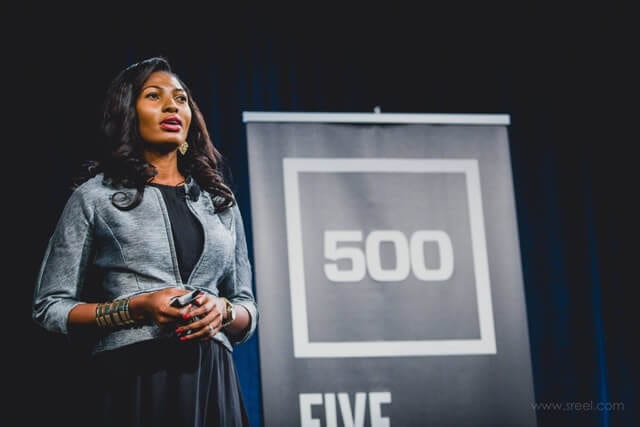
Podozi.com is a beauty ecommerce platform that gives African women access to both local and international beauty brands. Co-founders, Teniola Adejuwon and Wale Babatunde, recently completed a 4-month accelerator programme with 500 StartUps, a leading venture capital fund in Silicon Valley. To date, 500 StartUps has invested in over 1,500 businesses across 50 countries worldwide. Every year, thousands of businesses apply either through a formal application or referral, and after passing 5 or 6 rounds of interviews are accepted onto the programme. Podozi was one of 50 startups accepted for the most recent cohort ‘Batch 16’. With the programme, Podozi worked in Silicon Valley, learned how to take their business to the next level and received a net investment of $100k. In this interview, Teniola shares her experiences with 500 Startups and gives some advice for aspiring entrepreneurs. How did you get involved with 500 Startups? It came as a total surprise. Last year, we were introduced to 500 Startups through an investor who was a personal contact. As my mentor Tara Fela-Durotoye always reminds me, your network is your networth. Previously, the investor had mentioned that although they typically focus on Series A funded businesses or higher, they really liked the Podozi business. So we agreed to keep in touch for when the business grew bigger. Applying to 500 Startups was an aspiration of ours, which we planned to pursue in the future. About a year later, we got an email introducing us to 500 Startups, and that was it. How has being part of the 500 Startups programme helped develop Podozi? We recently completed the programme, so it’s still very early to articulate the full benefits, but being part of the 500 network is like being part of a global family. It’s a lifetime thing, where you grow and evolve. We were exposed to people and ideas from across the world. While we have formally finished the programme, we continue to keep in touch with our batch and the other businesses in the community via a group email. We have a well of resources to draw from and access to mentors who we can reach out to for advice. Throughout the programme, we had opportunities to pitch to hundreds of investors and peers in the startup ecosystem. One of our pinnacle moments was presenting Podozi during the closing ‘Demo Day’. Being able to articulate our brand raised our profile with international peers and investors, which also helped our profile in Nigeria. Also, to be eligible for the programme, we had to (re)incorporate as a U.S. company which gave us access to U.S. specific venture networks and investors. Tell us more about your experience in Silicon Valley as part of 500 Startups Batch 16? Living in California was an interesting experience. Given the 8-hour time difference, we were working from 9am to 7pm U.S. time, then worked after hours to service Nigeria alongside our colleagues back home. It was a demanding but authentic experience of what it means to run a truly international business. All businesses in our batch worked from the same office in San Francisco. This helped develop a spirit of camaraderie, collaboration and shared learning, which is not always a given in most accelerators. We travelled to Los Angeles, New York and other cities across the U.S. which gave us exposure to international best practices and processes. Once you get established processes in place, you’re able to serve your customers better. I’ve always been an advocate of this and Podozi advocates this too. While it’s not always possible to please everyone, I remind my team to put themselves in the customer’s shoes. Empowering the customer is crucial, and something businesses on the continent tend to miss. What advice would you give to aspiring startups and entrepreneurs? Cultivate an attitude of excellence. Being entrepreneurial isn’t about calling yourself the CEO, you need to have a long-term mindset. My first company, Beauty by Nature, ran the Beauty Business Masterclass series. We would teach attendees that no matter whether you’re a nail technician or a self-taught makeup artist, you need to develop your craft and put the right structures or systems in place to support it. That is the difference between a sustainable business and one that burns out quickly. Also, it is not only about funding. Successful entrepreneurs are convinced beyond reasonable doubt about what they are doing. In the past I’ve seen African startups get deterred early on by investor questions about about basic things like their business model or business numbers. If you are not convinced about your product, it will be difficult to enter in, let alone survive in Silicon Valley. It can become quite distracting when your brand gets bigger and your profile increases, so you need to keep focused. As one of my mentors says, ‘the media, awards and accolades will come; just do your work’. What tips would you recommend for making a successful application to an accelerator? Firstly, do your homework. There are funds and accelerator programmes that may be targeted to your industry or geography. Be aware that while some of them are global, their funds might be localised to specific regions. Then, develop a proof of concept. Ideas are a dime a dozen, so don’t just go about touting ideas. Don’t simply try to replicate an idea that works in another country, ensure that it’s relevant to your market. My mentor, Mrs Ibukun Awosika says, “Be the expert of your business – know your numbers and keep your books tidy”. Businesses sometimes rush to launch an app without considering the consumer behaviour in their locality or whether they have the capacity in-house to maintain such. In e-commerce the big question is traction! It’s all about your metrics. Third, be humble enough to admit what you don’t know and be ready to learn quickly. Utilise your resources, prepare in advance and ask as many questions as possible, there’s a wealth of resources out there like Quora to keep you