
Negotiation 101 for dummies
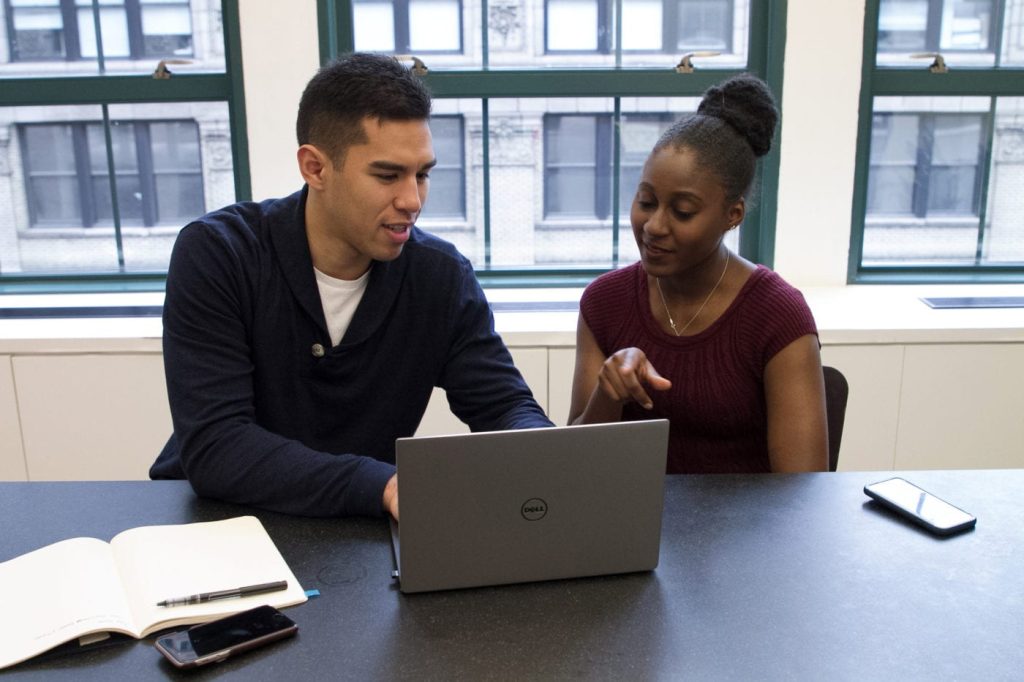
[bctt tweet=”You’ll be winning at negotiations even if you’re no good it with these tips” username=”SheLeadsAfrica”] You have been in negotiations for quite some time already. No matter how hard you try, you are confronted by a silent wall every time you attempt to find anything about the other party. Communication is not passing through and you only know your position. Worse, the tension is building up and your opponent is becoming more aggressive by the minute. What do you do? You might be tempted to give up, to stay on your position, or to concede to their requests. However, none of these options will give you what you need. This article will present you with tools to ease into negotiations and achieve a satisfactory agreement. Never state, always ask Asking questions is a way to educate and seek information. By asking questions, you show a willingness to take the other party’s opinion into consideration. You also communicate your desire to understand their situation. Questions are also a wonderful tool to make them understand your own position. Ask them what they would do in your place. Ask them hypothetical questions like, “What if I did exactly what you asked, what would be the consequences that I will face?”. It will help put their demands in perspective and show how realistic their proposal is. The power of silence Silence, when used right, is a very powerful tool it shows that you are listening and paying attention to what is being said. When silent, do not try to think about what you are going to say next or how to counter their current argument. Focus on what is being said and on making sure you have a proper understanding of the situation. When you ask a question, make sure you refrain from commenting or saying anything at all until you receive a full answer. By staying silent, you are pushing them to elaborate on what was said. This is an effective way to gather as many details as possible on an issue. Silence makes people nervous and compelled to fill in the absence of noise. The more comfortable you are with being silent the better negotiation ninja you will become. Forget about bottom lines The purpose of setting a bottom line is to protect your interest by making sure that the outcome of a negotiation will never go above what you are willing to concede. By setting a bottom line you will consider only one scenario as the least acceptable one. However, the costs of considering a unique outcome greatly outweigh the benefits of a bottom line. A bottom line cannot be changed and therefore lacks in flexibility. It will keep you away from bad deals as well as wise deals. It will also limit the influx of creative input and the making of imaginative solutions. A bottom line will cut short discussions without solving anything. Developing your best alternative Negotiating power is gained when the option of not reaching an agreement is as or more appealing than the option of reaching it. Before entering any discussion, you must think about the possibility of not reaching an agreement. What will you do if negotiations are not conclusive? What is your best alternative to negotiations? Thinking about the possible failure of discussions will help make the most out of your situation. It is, therefore, important to prepare yourself. Take a moment to brainstorm all possible alternatives to the negotiations. Out of all the ideas generated, choose a few to develop into concrete plans. Then assess which out of the developed plans is the best for your situation and select your best alternative. The more attractive the alternative, the more power you will have during the negotiations. A powerful best alternative should make you want to call off negotiations before they even started. Dismantling the other side’s best alternative Part of your preparation will involve understanding the other party. You need to gain as much information as possible on their motivations, interest, and above all, you will need to know what their best alternative is. Sometimes, if not readily available, the information will have to be obtained during the discussion process. Once you have acquired all the knowledge you need, you have to ask yourself: “Is their best alternative attractive? Is it easily attainable? Is it realistic?” If the answer to all three questions is no, then you have all negotiating powers on your side. If the answer to all three questions is yes, you will have to consider taking actions that will decrease the attractiveness of their best alternative. Most frequently, the answers are a combination of yes and no. If it is your case, you will not only have to show that your alternative is more attractive to you than theirs is to them, but also explain why their best alternative might not be the best solution. Always keep in mind that the easier it is to walk away from the discussion, the more negotiating power you hold.
8 markings of a strong #MotherlandMogul, as told by Mary J. Blige

[bctt tweet=”Does Mary J Blige teach us that strong business women remain authentic? Find out how here” username=”SheLeadsAfrica”] I have been a fan of Mary J. Blige since my childhood in the early 90s and have taken great inspiration from watching the way that she has blazed trails, set trends and overcome adversity, both in her career and personal life, from then even up till now. This, in addition to the fact that her songs tend to surround themes such as female empowerment, make her a favourite. With a title like “The Strength of a Woman,” her upcoming album seems set to carry on this important discussion. So, to celebrate, I was inspired to share 8 markings of a strong business woman through some of my favourite Mary J. Blige lyrics: 1. “Take Me as I am or have nothing at all” There is a saying that goes “if you try to please everyone, you’ll end up pleasing no-one”. Although it can be tempting to make your business all encompassing, one of the things that Mary teaches us about strong business women, through songs such as “Take me as I am,” is that they remain authentic. When I say this, I mean that they are self-aware enough to know where their talents lie and who they can best serve. In other words they niche down. An example of this can be seen via the overlap and differences between She Leads Africa and my blog. Both cater to women but they have different niches- in that SLA caters to business women whereas my blog caters to Christian women. Some of the benefits of having a niche in this way are that: It allows you to play to your strengths It allows you to work with the kinds of people you like to, making your business a joy rather than something you dread It sets you up as an expert in your particular field, making you the “go to” person in your niche or specialism Being seen as an authority has a positive effect on profit margins 2. “All I really want is to be happy” Through songs like “Happy,” Mary shows us that part of the reason strong business women are able to be so authentic is because they know what makes them…well…happy! Not only that, these women have developed goals; so, they know what they want to achieve in future. They also honour their dreams by going for them. This knowledge of self may have been hard won- especially if it was something that they didn’t always have- but, once it’s developed, it is what guides their business practices. 3. “No more drama” In songs such as “No More Drama”, Mary is teaching us that strong business women refuse to tolerate negative entities. This is because they’ve battled through too much to make their businesses what they are today to let another person destroy it with negativity. They are, however, also wise enough to know when the “drama” is coming from within (through things like fear, self-doubt or negative self-talk) and so will do the inner work needed to shake those things off to progress as well. 4. “Hate it or love it the underdog’s on top and I’m gone shine, homie, until my heart stops” Sometimes it is not possible to eliminate negativity because it is coming from a family member or colleague, for example. Through songs such as her remix of 50 Cent’s “Hate it or Love It,” Mary teaches us that in such situations, we always get to choose how much we are willing to be affected by other people’s opinions or attitudes. We may not be able to control nay-sayers or “enemies of progress” (as we Nigerians would call them), but we can control our own reactions. Strong business women realise that, and so they refuse to slow down, give up or let anybody steal their “shine”. 5. “…As long as it’s you by my side, I’m stronger” In addition to breaking away from the negative sources in their lives, strong business women seek positive relationships and collaborations. According to another Mary song, this means relationships that make them “Stronger”. As already implied, this entails being around people that: Love you for you (only suggesting alterations be made to contribute to you growth and progress, rather than make you feel “less than”) Support your goals and dreams Are positive sources of influence. By the same token, strong business women are able to do and be the same for others (in the knowledge that a win for one sister is a win for us all and does not detract from them in any way). 6. “In each tear, there’s a lesson…” Through songs such as “With Each Tear” Mary shows us that strong business women are constantly learning, even if the teacher comes in the form of a mistake or failure. They roll with the punches, extract the lessons from that season and use it to become better rather than bitter. Tweet: Mary shows us that strong business women are constantly learning, even if the teacher comes in the form of a mistake or failure 7. “I can see in colour, the first sign of spring…” Mary demonstrates, through songs like “I Can See in Colour,” that strong business women lean towards such optimism because of a hope and faith in God, or another higher power, who means them good and not evil. This gives them a sense that everything, including bad things, happens for a reason; that even if the bright side of a situation is not immediately apparent- it will be. They also understand, in line with one of my favourite songs (Total Praise by Richard Smallwood) that, that higher power is the source of their strength in the first place. 8. “[I] put my life all up in these songs just so you can feel me; so you can get the real me” I’m going to end this ode to Mary J. Blige and strong business women with the song I began with- “Take Me As I Am”. In it Mary sings the words in the title of this 8th point. When we share these things with others, we let people who have the same challenges know that there is a light at
Emefa Quashie: From beauty queen to farmer and social entrepreneur

[bctt tweet=”Mamagah Farms is an agricultural social project run by beauty queen Emefa Quashie” username=”SheLeadsAfrica”] It’s not every day that you hear the story of a beauty queen owning a farm. But the story gets bewildering when you notice that instead of just employing people to work on the farm (like some “modern” farmers do) she goes hands in and knee deep -getting her well-manicured nails in groveling dirt as she furiously uproots and plants, as she waters and nurtures and as she satisfyingly harvests and reaps. Meet Emefa Quashie. A present farmer, social entrepreneur and an erstwhile beauty pageant winner. When she’s not furiously uprooting and planting on her farm (Mamagah Farms), she is lost in her studies for her MBA in Marketing or running Universal ChildCare Foundation, a non-profit organization that supports needy children. SLA contributor Emma Kwenu Smith caught up with Emefa to get some insights on how to dominate in an unpopular agriculture career for modern young women and simultaneously use it to make a social impact. Tell us about Mamagah Farms. Mamagah Farms is a social project that mobilizes and empowers rural women farmers to adopt modern technologies in farming. We want to commercialize agriculture in rural communities in southern Ghana. Mamagah farms was established in 2015 with the main aim of empowering women economically through commercial farming and creating support schemes. These schemes create opportunities for smallholder farmers to improve their livelihood. Currently, we work with female smallholder farmers in rural communities within the Southern part of Ghana. Simply put: We farm, we train and we support. There are so many avenues for social entrepreneurship -why agriculture and what was the innovative idea behind Mamagah Farms? I was born into a farming community, and my mother was a small holder farmer so I spent a lot of my days on the farm assisting her. Unfortunately, along the line I grew up with a warped misconception about agriculture. Growing up in a rural community, I always thought farming was for the poor and uneducated -after all, many folks there turn to farming to be able to feed their families and also make an economic living. However, over time I came to appreciate the relevance of agriculture and numerous opportunities it presents to the youth. Mamagah Farms was born out of this realization. This is why I decided to take up farming –to send a message to the young women. Do you plan to diversify what you produce and expand to include other parts of the country? How are you preparing for this? With over 200 acres of land in the Volta Region of Ghana, we specialize in growing and harvesting in maize and pepper. Unfortunately, and as is the same with any start-up, not having enough funds can slow down plans of scaling up. We are pitching for investors and hopefully, we would be able to work at optimum capacity, making full use of the land. This way, we will be able to diversify our produce and grow a variety of crops to suit both local and international demands. Funding is everything especially for an entrepreneur who wants to leverage on technology to make farming simple and easier. There are plans to expand to other parts of the country and even West Africa. [bctt tweet=”Funding is everything especially for an entrepreneur who wants to leverage on technology” username=”SheLeadsAfrica”] How does your business as a social venture empower local women farmers? Mamagah Farms is just like social entrepreneurship project. We apply business principles to solve societal problems. What we noticed is that there is potential for rural women farmers to cultivate on a bigger scale and learn the best farming methods which would ultimately impact their economic livelihood. Realizing this, we use the profit from Mamagah Farms for investments. Apart from financially supporting these farmers to purchase inputs and commercialize their farms, we also partner with local organizations to provide training and extension sessions for these women. Most of the women who work with us are single mothers and while we want to fight poverty and promote empowerment, we want these women to have enough to afford to educate their children. An empowered woman means an empowered family and ultimately, an empowered nation. What challenges have you faced with Mamagah Farms and its related social projects? My biggest challenge has been reorienting the minds of the local folks. As hardworking as they are, the tradition has created a certain mindset towards change. A typical example is technology. When you suggest the use of tractors, some believe that using tractors may disturb the peace of their ancestors. With such a mindset, how can we grow? But it is not enough to recognize a challenge and leave it there. We take the women farmers through training programs, where we address these challenges. We show them concrete examples of how farming is done in first world countries and how we can get there. Culture and tradition can have a hold on people’s mindset, and it is important to give them the needed exposure in order to disabuse this mindset. Why should more women explore the prospects in agriculture in Ghana, and Africa? In recent times, women are defying the odds and taking more risks in their careers. Why should agriculture and agribusinesses be any different? Can a woman not own a 10,000 acre farm and work on it herself, while managing others to work as well? Agriculture has never been and is not a reserve of men. Our natural disposition as women makes us more inclined to be the better farmers, we are nurturing and detail-oriented. This is an important quality. There are several opportunities in agriculture we can take advantage of. From crop planting through to the distribution of produce, there are endless opportunities to explore. Food is a necessity. Africa has arable land and other resources, and there are always opportunities to meet the need for food produce. If you get such an opportunity, why say no? [bctt tweet=”Agriculture has
How to protect your small business from day one

[bctt tweet=”5 key steps to protect your small business from a legal standpoint” username=”SheLeadsAfrica”] Congratulations on deciding to become a business owner! Are you wondering what you should be doing to ensure business continuity and profitability? Below are five key steps you should consider taking, from a legal standpoint, to protect your small business. 1. Determine what permits you require and whether you need to incorporate – Determine whether to incorporate your business Most small businesses start off as unregistered businesses or sole proprietorships. The need to incorporate immediately is country specific, as some countries require immediate incorporation for certain business activities. But, as your business grows, incorporation may be ideal, as it offers many benefits including separate legal entity status – Determine what licenses, permits or approvals you need. In addition, you should find out what permits, approvals or licenses you need to start and run your business legally. You can obtain this information by asking contacts in a similar trade or business. You can also reach out to regulatory bodies or organizations that assist small businesses. [bctt tweet=”Find out what permits or licenses you need to start and run your business legally” username=”SheLeadsAfrica”] 2. Protect your confidential information and intellectual property – Protect your intellectual property Consider registering your intellectual property with the regulatory body in your country, as that is the usually the most effective protection. – Register your domain name With the increasing importance of social media, if you intend to establish a web presence, you should register and secure your domain name as soon as possible. – Protect your confidential information Determine how much information on your business know-how (information peculiar to your business that gives you a competitive advantage) that should be disclosed to third parties. Before you speak to a lawyer or intellectual property expert, err on the side of caution, by not disclosing or disclosing little, about distinguishing aspects of your business. – Sign confidentiality agreements Sign a confidentiality or non-disclosure agreement with potential investors/ business partners. While this may not always be well received, you should still try. You can conduct an internet search for websites that offer agreement templates that you can tailor to your needs or ask a lawyer to draft an agreement for you. 3. Pay attention to your contracts – Review it Before you sign an agreement, review it thoroughly. Some useful questions to ask are: What are my rights and obligations? What are the other party’s rights and obligations? When do each party’s obligations end? Are there any red flags or issues of concern that should be discussed or resolved before signing? – Document your understanding Also, as a best practice, have an agreement for every business relationship. If a dispute arises, an oral agreement would be very difficult to prove. Even if both parties agree on the existence of the contract, they will definitely not agree on the exact details. But, if a signed contract is not practicable, have a paper or email trail that highlights the important details including your understanding and expectations. – Address payment concerns Payment for services rendered is another common concern. You should, therefore, always inform clients of your fees and timelines before you commence work. More importantly, know your client’s payment reputation, based on past interactions or market research, it will help you decide whether to do business with them or not. [bctt tweet=”If a signed contract is not practicable, have a paper trail that highlights important details” username=”SheLeadsAfrica”] 4. Talk to a lawyer Another way to protect your small business is to seek legal advice on key aspects of your business early on. You can avoid or save on legal fees by asking a skilled lawyer friend for free/discounted legal advice. If your friend does not practice in that area, they may be able to refer you to another lawyer that can provide premium services at competitive or discounted rates. 5. Monitor your brand Finally, use the internet to your advantage. Set up Google Alerts. It’s a great way to monitor your brand/business because you get updates any time your brand or business name is mentioned. I wish you every success in your entrepreneurial journey! Note: This article is for information purposes only and it should not be used as a substitute for legal advice.
How to make the switch from consumer to producer
[bctt tweet=”Most of us consumers never think about how we can join the elite community of producers” username=”SheLeadsAfrica”] What are some of the things you consume or do daily? If you are anything like me, there’s a newspaper column that I am obsessed with. It brings out issues that greatly resonate with me. I also feel lost when I don’t have my phone. For you, it could be going out to your favourite bar to get some drinks with friends. Or it could be listening to that great music or watching the latest season of Orange is the New black (well, that’s me again). Absolutely everything we use in life was created by someone. Well, apart from the air we breathe and other gifts of nature. Someone went out of their way to create that video game that you can’t get enough of. Unfortunately, most of us just buy things. We never think about how we can also join the elite community of producers. I mean, wouldn’t it feel good if your name was on a product/service that people value? I am going to show you how to get in touch with your fabulous producer side. First, let’s look at the attitudes that define consumers and producers. The consumer attitude Consumers are passive about their ability to grow, reactive about life and unquestioning of their environment. They take life as it is, conforming to the standards set for them by society (or producers). When it comes to their finances, consumers buy their way to financial scarcity, but that is a topic for another day. Consumers wait for other people to create opportunities for them. The producer attitude A producer is someone who makes a product or service. Producers usually live outside their comfort zones by constantly looking at how to improve the word around them. Producers create their own lives. They believe that their destiny is in their hands and that if something is to be, then it is up to them. They create value for other people. [bctt tweet=”Producers are constantly looking at how to improve the word around them ” username=”SheLeadsAfrica”] Why the producer attitude is superior You might be wondering why I am rambling on and on… “What’s the big deal about this? Why should I even bother to be a producer? Doesn’t the world need both producers and consumers?” You are right, the world needs both producers and consumers, otherwise there would be no one to utilize the resources that we produce and vice versa. The producer is the one who makes things happen. S/he goes above and beyond to create value for others (and for themselves). And in the process she creates a legacy for herself which lives on even when they are gone. Think people like Steve Jobs and Elon Musk who are known for the personal computer revolution and for launching a landmark commercial spacecraft respectively. If you want to create a legacy that is worth writing about, you will have to step into a producer role, giving some kind of value to the world. [bctt tweet=”@Gloriakambedha’s 3 steps to switching from consumer to producer” username=”SheLeadsAfrica”] How to make the switch… So now that you know why it’s important to make the switch, let’s dive straight into how to go about it using these three steps: Step 1: Practice awareness and question every decision Making the switch to a producer starts with acknowledging that everything around you was created by someone who took a chance. See how you can apply your knowledge and skills to create something of value to the world. The more successful producers who get the greatest reward are those who add the greatest value. When you become more aware of your environment, start questioning every decision you make to consume —whether it is to do with your purchases or the way you spend your time or even the information you read. Step 2: Actively process information Every producer needs information. Thankfully, we live in an information age. However, Instead of processing information passively by spending hours online, producers look for way on how this information will change their life. Everyone starts with consuming information but the intention should be to start producing as soon as possible. However, even students don’t have to just be consumers of knowledge. Students can add value through blogging, entrepreneurial efforts, teaching, etc. Step 3: Action Everyone has something to offer the world. Identify what it is you are good at and offer it to the world. It is a good idea to get inspiration through reading blogs, personal development books, listening to podcasts, attending conferences, but the work will still not be done. You have to be willing to sit down and start creating. It does not have to be perfect. All you need is a vision of what you want to create. The Internet has given us the tools for just anyone to be a producer. Use them. If you want to write, you don’t need any approval from an editor, to start your own show, Youtube is available. Do not be passive about making your own unique contribution to the world. Concluding When you first decide to become a producer, you will not see results right away and you might feel like your time is being put to waste. But do not give up. Overtime, your actions will build momentum and this will define the legacy you will leave.
5 business lessons from Angry Birds

Any Angry BirdsTM fans reading this? Game or movie, whichever tickles your fancy? Well, I am an avid fan and with my recent addiction —or should I say penchant— to the league tournament game, Angry Birds Friends, where we complete online ‘globally’ (pauses to laugh at such an interesting hobby), I found myself ruminating over some business lessons. These angry birds have something to teach us as they deal with their foes, the bad piggies. Let’s get angry, I mean, started! 1. Put your ducks in a row or if you prefer, arrange the birds wisely behind the catapult This is the bit you prioritize on your strategy from the business plan. What comes first? Leasing office space or testing the market? When playing angry birds, the birds are aligned for you such that you cannot pick red before yellow. If yellow were to be fired on the catapult before red, it would change the dynamics of winning. Create a list of priorities and shuffle it accordingly according to internal and market conditions. 2. Understand the role of each bird When playing this game, each bird has its own unique ability. This also goes for you, I bet you’ve identified your strong point by the time you launched. The yellow bird (Chuck) can zoom in at a high speed and is good with wood destruction. The little blue birds can be fired into 3 and deal well with glass. The black one (Bomb) is a bomb in waiting and is perfect for blowing stone. The small red one (Red) can be fired to mid-range distances. The big red bird (Terence) is bulky and is good for close range mammoth destruction. The white one (Matilda) doesn’t fly so far but it can drop an egg and destroy whatever lies above with its head. The green one is fantastic for hidden spots because it works almost like a return boomerang. Back to business, what is the objective of each strategic action you take and what will it be good at achieving? If you are launching an app, you could decide on a market sampling storm, then online advertising and finally traditional advertising. Or if you’re launching a clothing boutique, you could open with premium unique designs that you know consumers are looking for and consider offers later at certain peak seasons instead of the other way around. What comes first or last and why? Sometimes though, this is an egg-before-the-chicken, chicken-before-the-egg phenomenon! So be careful. 3. Save some birds, where possible Now, the objective of this game is to use the least number of angry birds to destroy the bad piggies. Feels odd typing piggies as I wear a smug face and convince myself that I am writing earnestly! With such a mission, the moves you make need to be smart. You need to visualize the end from the beginning for you to save some birds which is different from releasing them aimlessly. As an entrepreneur, bootstrap is your friend. You need to decide on what you want versus what you need. Do you really need a fancy office space or can you operate from home and save that money for one or two sales personnel? Do you need an accountant or can you handle that in your initial years, seeing that your degree gave you some basic skills? Such pertinent questions and more will help save your ‘birds’. 4. Ignore the grunting pigs The sound effects in this game are quite something. I mean, when you are down to one bird and have three pigs to attack, they begin to grunt and somewhat remind you that you are losing. Then when the game is over and you’ve lost, they snort and grunt even more! In the face of business, you might have some competitor pigs nipping at your heels or get to a point where some of your family and friends are not being very supportive. You will need to remind yourself why you started, what your deepest and genuine motive is and latch on to that. Hang around inspiring like-minded people and don’t let the noise of competition cripple you, unless it’s obviously sending an important signal. As for the naysayers, just make the lipstick redder and keep at it. 5. When you don’t manage to destroy all the pigs, try again, differently. Perspective is the crux of the matter here. If you looked at a 6 from the south, and then from the north, you will see different figures. At times when playing this game, I tilt my phone. I flip it to the right, left, diagonal, maybe 65 degrees, or whatever. I take a moment and rethink my attack strategy. You will have a number of moments like these in business when all you need to do is take a step back and change the plan. It is okay that the first plan didn’t go as expected, you learnt something. You are now wiser but don’t waste any more time, rethink and reactivate. Hope you enjoyed this one!
You need workplace inspections

Last week, Ada noticed the office photocopier wasn’t working rightly. She thought it was negligible but didn’t say anything to anyone. The office has never had a workplace inspection plan. Yesterday, when Kate started to use the machine, she got electrocuted. Thankfully, Biola saw her and immediately switched off the equipment. Kate did not die. However, she sustained injuries. Now, that was very close! Who wants to waste business funds on scenarios that could have been avoided? These things happen! A lot of potential hazards can be stopped from growing into accidents through workplace inspections. Most times, we take happenings in the workplace for granted. Other times, we create tasks for ourselves and employees wrongly. Regular inspections can expose existing and potential danger. Hazards like a sharp nail, a blown fuse, faulty equipment, poor workstation design, uneven floors have a high potential to cause injuries and illnesses. Someone might be thinking “This is not for me”. Hold that thought. Are some more prone to injuries than others? Anyone can get injured on any type of job. People faint, fires start, people trip and fall, machines malfunction in various businesses. To really get things right, you would need a Safety Professional to help you with safety inspections. However, on your own you can begin to assess the work process (Are there repetitive tasks? Is the task properly designed? Do staff have sufficient break time?), the environment (What is the noise level? Is the workplace too hot or too cold?), the equipment (Does it malfunction? Is it appropriate for the particular task?). Workplace inspections could be done daily, weekly or monthly depending on the scale and nature of business. Workplace inspections are important to start-ups because they help you: Identify existing and potential hazards (danger) Recommend corrective actions Interact with employees and know their concerns as they perform their daily tasks Monitor existing corrective actions So, what have you observed at work that could lead to harm? Do something about it!
Help! I don’t have a mentor

If you’ve read articles and stories of successful entrepreneurs, the word ‘mentor’ must have stood out. Even the established entrepreneurs still have mentors. And you wonder, what more do they still need to learn? Successful entrepreneurs know the benefits of having a mentor and one of those benefits is the opportunities for learning. So what happens if you don’t have a mentor? Relax, it’s not the end of the world. However, here are a few things you should do: Read books What do you need a mentor for? Do you need a guide or someone to share their business journey with you? Do you need to learn from their mistakes? Do you want to learn how to manage time, make a sales pitch or form partnerships? What better way to learn all that than reading books written by successful entrepreneurs? Reading is the way, ladies! It can’t be that hard. Try peer-to-peer mentorship When founders talk about mentors, they refer to business owners who have had about fifteen years or so of business experience. Unfortunately, very few of these business owners have time to dedicate to mentoring startups. Now, you could consider being mentored by a founder within your age group. The good thing about this is that being in the same business environment, you can relate with this mentor. He or she can prove the best person to bounce off ideas with as they’re probably also among your target clients. Quit with the attitude One thing that can put your mentors off is the I-know-it-all attitude. As an entrepreneur, be prepared to be criticized, shaken and moulded. Keep in touch with your mentor(s) and update them on your progress. You would need to be that proactive. Leave the sour attitude at the door and be ready to be guided. Unfortunately, most entrepreneurs give up along the way, and complain about their mentor not making time for them and criticizing them too much. Well, guess what, it’s all part of the learning process. In conclusion, to be mentored, you’d need an open mind and a teachable attitude.
Pricing as a start-up: Where do you begin?

You finally registered that business or online store, and already considering setting up packaging. Or maybe your website is up and running and you’re ready to pull out all stops to get your marketing underway. But there’s just one thing missing, how much should your products or services cost? Pricing isn’t easy; there are several factors to consider. You don’t want to seem too expensive and therefore alienate your target market. But you also don’t want to price it so low that it connotes less quality or cheapness. So what’s a girl to do? We all know that end at the end of the day, you’d want to cover your production costs and still make a profit. Because we all know those red bottoms won’t buy themselves. However, pricing has to be based on the value transferred to customers for using your product or service. Consider the cost of production and make comparisons between your prices and that of competitors. A general rule of thumb is to use the 10% rule by using the customer’s derived value and adding 10% to it. Got it? Good. Let’s explore some more. Know your customers/clients The better you understand your customers’ needs, the more accurate your pricing will be. Looking to your competitors for a pricing comparison should be based on the assumption that their pricing is ideal. Your competitors may be over or even under charging. So it’s still important to do a personal cost analysis and figure out the pricing that works best for you. Is your pricing above or below theirs? Does location, staff, size of the company, quantity, and quality of the products come into play? These are all worthwhile questions you should ask when looking to your for answers. “Profit is not something to add on in the end, it’s something to plan for in the beginning” – Megan Auman Price sensitivity It is important to note that clients and customers will only pay more if they have the assurance of value. So don’t be scared to test out several different prices at the beginning. It’s the same when you walk into a boutique, see a dress and instantly know it would be far cheaper at a regular clothing store. But because it’s an exotic brand, you believe it is of better quality and therefore, worth the high price. This is where price sensitivity comes into play. Price sensitivity is the degree to which the price of a dress in this analogy, affects the customers’ willingness to buy it. I like to call it the fine line between “too good to be true” and “dirt cheap” and therefore a bargain. You do this by offering a different price, typically with a 5% difference, to individual customers for the same service or product. The general idea is that if you aren’t getting pushback from at least 20% of your customers, then you’re on the right track. Also, it is important to note that there is less price sensitivity when the product is unique and hard to find. So make sure to distinguish yourself from competitors in a big way. The price would be worth it if the boutique is making just one dress per size. The exclusivity is almost like getting a custom-made dress. “The reason it seems as though price is all your customers care about, is because you haven’t given them anything else to care about”- Seth Godin Smaller versus bigger Giving customers a choice between several tiers in pricing helps establish how well your products/services are priced. Have you ever come across the low, middle, and high price offerings? This is called ‘Goldilocks Pricing’. With this, you get to choose between the inexpensive but not ideal and the expensive but full package. You then end up with the pricing that is just the right fit, like your very own Cinderella shoe. It typically has just enough features to get you started and is often the bestseller. More often than not, it’s a few steps away from that ‘premium’ package which you can upgrade to anytime. For instance, if you sell an 80-gram tub of shea butter for R60, then a 160-gram tub would cost 10% less than buying two 80-gram tubs. Chances are, the customer will go for the bigger tub which means more money for you, provided the production cost is not higher. Similarly, a “buy 3 products and get the cheapest one free” sale in a specific high-end product range/ service market will ensure that you still get your money’s worth. Make sure that you always capitalise on these opportunities by offering any extra features that come with the package. For example, 10% to upgrade to the premium package from a 7-day free trial. In summary, if your product or service is amazing, of standard quality and worth the price, customers will come flocking. Good luck!
Negotiate your way to financial success Part II: Negotiation mistakes and how to avoid them

In the last segment, we discussed the essential steps for negotiation. Of equal importance are things you should not do during negotiations. Mistakes during a negotiation can hinder its success. Don’t get emotional It is imperative that during negotiations you maintain a professional stance, even when you feel undermined. For example, bursting into tears and lamenting about the unfairness of an offer can prove counter-productive. Your tears won’t persuade your negotiation partners to give you a fair deal. Moreover, emotional persuasion will not help you win your negotiation partners’ respect. It will only get them to “pity” you. You never want to start a business relationship out of pity. Pity does not get you the deserved respect in the long run. Emotional outbursts during a negotiation will hurt its effectiveness and productivity. Tip: Rather than using emotional persuasion, use objective facts. Humanize the negotiation but do not personalize it. Don’t make unsupported assertions One could be tempted to make unsupported assertions when negotiations seem to go downhill. Don’t! Using fiction to support your bargaining point during negotiations will hurt your chances of success in that deal. Remember, you will likely be dealing with savvy business individuals who most probably have researched your assertion. They’ll definitely be able to spot a fictional assertion. There is nothing worse than being unethical during a negotiation and tarnishing your reputation in the business industry. News travel fast! Tip: Prior to a negotiation, gather as much hard data as possible to support your assertions. Where relevant data is unavailable, use comparable data. When using comparable data, be transparent with your business partners. Do not disguise the comparable data as one that speaks on the matter at hand. In the same light, don’t rely on spontaneous brilliance. Prepare! Do not make spontaneous decisions Do not feel pressured to make a decision on the spot. It is perfectly okay if your negotiations require a series of meetings before reaching a bargain. Tip: Ask for time to make a well-informed decision. Do not say “No” Yes! I really meant to say do not say “no” during negotiations. Never say “no” during a negotiation, even when declining an offer. Instead, positively decline the offer. You should be able to embed “no” into the kindest phrase your potential business partner has ever heard! For example, you have been recently offered a job with an unattractive salary. Rather than emailing the employer to say “Thank you, I have decided to decline your offer,” you could do it better. Consider calling and saying, “Thank you for the offer, I am excited about the position and the opportunities it will offer. However, after reviewing the compensation package, it would prove challenging to be able to meet my financial obligations. Nonetheless, I remain open to hearing about future opportunities that will match our mutual needs.” Such an approach will allow you to continue future conversations with your potential business partners, employers, or even schools. In fact, this approach helped a friend get more financial aid from a top law school. Tip: Bury your “no” in a positive statement. Make them feel good about your response so that they barely dwell on the fact that you just said “no”. Do not give an ultimatum During negotiations, your goal at all times should be to negotiate. Yes, simply negotiate. Avoid using an ultimatum during negotiations. It sends the wrong signal that you’re unwilling to further the negotiation discussions or find a win–win scenario. Moreover, an ultimatum will put your negotiation parties on the defensive. For example, saying “this is my best offer, take it or we have no deal” is wrong. It’ll likely to make the other party believe that a negotiation ends if your offer is not met. Never give the impression of foreclosing the possibility of finding a mutually acceptable bargain. Such aggressiveness will likely be counterproductive in achieving success. Tip: Rather than give an ultimatum, which focuses on the “I,” focus on the “we,”. Express your willingness to create value for all parties while also noting the need to meet a deadline. You may consider telling your negotiators that you would like to reach a decision by a certain deadline. Such timing should, however, be reasonable. This can help you pay attention to cultural nuances (as discussed below). Such an approach will allow all parties to focus on reaching an agreement within the stipulated timeframe. Do not ignore cultural nuances It is imperative to pay attention to cultural nuances during negotiations. This could play a vital role during the value-creation process. For example, direct eye contact with negotiation parties is strongly encouraged when dealing with US negotiators. This conveys sincerity and could enhance negotiations. In China, however, such a gesture could hinder a negotiation’s productivity. Direct eye contact is considered inappropriate or rude in China. Tip: Do not apply blanket tactics during negotiations. Research the negotiation parties and be sensitive to cultural idiosyncrasies. This will help you succeed in maximizing your negotiation potential. To summarize, avoiding these negotiation blunders will improve the likelihood of a successful negotiation. It would provide the ability to realize your desired outcome. If you would like insights on a particular topic, write to us! We are listening.