
Navigating cross-cultural relationships in the workplace
After years living in France and the United States, Aminatou, an experienced business development consultant, arrived in Abidjan to work for a local social enterprise. Despite the logistical hiccups of working on the continent, she didn’t think the transition would be that much of a problem. After all, she grew up in Saint-Louis, Senegal, and spoke fluent French. She’d worked across Africa for leading multinationals and smaller start-ups for the better part of a decade. But after a few months, she was struggling with her team and considering returning to her job in Paris. What was the problem? Cross-cultural training isn’t just for the West. As many young African professionals contemplate moving back to the continent —to their home country or somewhere else in the region, they can suffer from the shock of navigating cross-cultural dynamics in the workplace. It’s no secret that business leaders need to understand the cultural nuances of the different regions where their business operates. Yet, aspiring Motherland Moguls returning home might underestimate the need to orient themselves to the minutiae of workplace dynamics across Africa, especially as the continent rapidly transforms. The Ghana, Kenya, or Zimbabwe of 2008 doesn’t look the same in 2016. Avoid clichés Clichés and stereotypes can lead to faulty assumptions. While generalizations can be useful, culture is complicated and can’t be measured by one or two factors. Individual people might not fit these generalizations. Even as we advocate for pan-Africanism, we should recognize that each country or region is unique. For example, there is a prevailing stereotype that Africa is a sexist place and that men will be condescending to women in the workplace. This is not always the case. Assume best intent until proven otherwise, and ask questions to immediately clear up miscommunication. Overemphasizing stereotypes can have a real cost — misplaced fear of encountering workplace sexism may scare talented female professionals from taking positions in Africa. As you enter the workplace, you might encounter differences along these four major areas: 1. Different Communication Styles Across cultures, people communicate differently when it comes to verbal and non-verbal communication. Messages aren’t always explicit — more often than not, you’ll have to read between the lines. Words and phrases that are common in one place might leave people looking at you in confusion in another. In some countries, there might be more of an emphasis on hierarchy than in others. In Francophone Africa, for example, there is more of an emphasis on formality than in Anglophone parts of the continent. 2. Different Conflict Resolution Styles Not everyone always gets along. Some cultures approach conflict directly while in other cultures differences are worked out quietly. Feedback might be frank or more diplomatic. 3. Different Approaches to Time Management Some countries, like Germany and Switzerland, are famous for their strict adherence to clocks. However, in most non-Western cultures, time is better viewed as a polite suggestion. Nevertheless, time management views can defer depending on the situation. People tend to have short-term or long-term orientation when comes to time. In parts of Southern Africa, for example, some people differentiate regarding the urgency of a project by saying “now” (sometime soon) vs. “now now” (right this minute). 4. Different Decision-Making Styles A cultural frame of reference often shapes expectations about how to make a decision. Does what the boss says go? Is there room for dialogue? The roles individuals play in decision-making can depend on the egalitarian or hierarchical nature of a culture. This determines whether or not decisions are made unilaterally or by consensus. To successfully navigate cultural differences, follow the three L’s: Listen actively and empathetically to assume best intent, Learn from generalizations, but supplement these with your own observations and, Look at the situation from both the insider and outsider perspectives. Arm yourself with these tools, and you’ll avoid misunderstandings and conflicts that can cost your team profits or productivity.
Tshepy Matloga: Recognition is the best motivator
South African journalist Tshepy Matloga started making frequent visits to Malawi in 2014 when she noticed the lack of business magazines with Malawian content. Tshepy jumped at the chance to address this gap by launching Inde, a business and lifestyle magazine aimed at Malawian women. Here, Tshepy shares tips on setting up shop in another African country and speaks on being voted a top South African inspirational youth. You’re South African, why did you decide to start a publication in Malawi? More than a year ago I became a frequent visitor in Malawi. I was charmed by how serene and peaceful the country is compared to the hustle and bustle of South Africa. As a journalist by profession myself, some of the things I collect are magazines and it baffled me that I could not find a single publication that was about women and the business landscape in Malawi. Yes, there are so many publications in Malawian shops but they are all South African publications coming here packaged with South African content. I also met my partner here who happened to be in the media too. When I ran the idea past him, we both decided to bring to life Inde magazine in March 2016. “Inde” is a Chewa word meaning “yes”, Inde Magazine is Malawi’s only business and lifestyle magazine. What is the business climate/culture like in Malawi and how is it different compared to South Africa? The business landscape in Malawi is extremely different than the one in South Africa. I am used to a fast paced business environment and I have found Malawians to be very relaxed, there’s no hurry here whereas in South Africa time is money. With that said, I think my biggest challenge was having to slow down my normal work pace so that I didn’t become too overwhelming. I however like the Malawian walk-in policy, you can just rock up at a company with no appointment and request for a meeting and if the person is available they will make time to hear you out. That part has made things easier for me because I came here with no business contacts. What tools do you use to extend the reach of Inde magazine? Social media has been very helpful in this regard. Then, Malawians are generally friendly people and it being a small community, word of mouth also goes a long way. I have also been trying to partner with local events so that the brand is exposed even more What other projects do you engage in outside Inde? My public relations firm, Chronicles Media Group is present in both South Africa and Malawi. Outside Inde, Chronicles Media group also offers PR services such as corporate communications, social media management, brand management and events. Besides PR and the magazine, I blog for a South African organization called Leadership2020 where I write about my life journey, from growing up in the village of Botlokwa in the northern part of South Africa to running my own company. You recently made Youth Village’s list of the top most inspirational youth in South Africa, how does that feel? Recognition is the best motivator. To be young and know that in the few years that you have been on this earth you have impacted lives is a sign that you are going into the right direction. Everyone who knows me well knows that I have struggled to get to where I am today. From Botlokwa, packing my bags and going to university even though I knew very well my mother could not afford the fee; to struggling to find employment, and when I eventually did find one I did not like it; to starting my business with a few thousands I have saved from freelancing jobs. I have to admit it was a curvy road. So with that said, it is things like such recognition that remind me that the journey was and is worth it. What advice will you give to young African women looking to start a business in another African country? I’d say the beauty of venturing into another country is that you are new there so it makes it easier for you to identify gaps and thus fill them up. Africans are generally friendly people therefore making it easier for a new person to just get lost into the communities and be part of them. But, I have to say markets are not the same. In another country you might find yourself having to adjust your prices and make them lower to make your services/products affordable to the locals. If you’d like to share your story with She Leads Africa, let us know more about you and your story here.
Gain international development experience without becoming an unpaid intern
Working in the international development field is the best of many worlds. You have the opportunity to do good and well in life; travel around the world, live on stipends, get tuition reimbursement and student loan forgiveness. There are many incentives to working at places like Save the Children, the World Bank, or your country’s national development agency. This can be a very competitive sector to break into but with a plan of attack and a strategic mind, it’s definitely within your reach. I’ve traveled throughout sub-Saharan Africa due to work, and trust me it’s been a long time coming. I’ve had to work throughout high school, college, and graduate school; I attended expensive private universities and the US Department of Education owns my first born. I didn’t have any hook-ups from parents who knew important people and I didn’t have any high profile professors vouching for me. I’ve had to consistently plan and re-plan every career move every step of the way. Still, it’s possible to get that dream job, and this is what I think can help: Never work for free Seriously, this is a never ending cycle that you don’t want to get into. If you are a freshman or sophomore in college, fine maybe. You are only two years removed from high school and may not have a skillset to take to an employer. But, interning for free well into your 20s is absolutely unnecessary. You have to sell yourself and you can’t sell yourself cheap. By the time you graduate you have a skillset and should be able to express that in a convincing manner. Your language skills, your research abilities, your study abroad stint are all assets worth something! If you think its okay to work for free just for the experience, you are beginning your career backwards. When you end up applying for a job and you need to tell them how much you were last paid, the fact that you worked for free at the UN will overshadow any work that you did there. It devalues your contribution to the organization you worked for, if you made a big enough impact they would have found a way to pay you. Just say no. Begin learning a language It’s so important, particularly if you are interested in working in sub-Saharan Africa. French is a vital tool that will propel your resume to the top of the pile even if you may not have that 3-5 year professional experience. Entering a language institute may even be more valuable than graduate school. Believe me, having a language is a shoe in for many international development agencies. Find an actual niche/focus It’s not good enough to say you want to work in international development, or in Africa. What do you want to change? Public health? Food security? Economic empowerment of women and girls? Reproductive health? There are dozens, if not hundreds of niches within international development, it is important you find yours. Graduate school allows you to learn the different sectors within international development and helps you figure out the hot topics, the institutions working on the ground and where in the world the issue is most pressing. For example, I work in population and health, specifically in reproductive rights and access to contraception for young women. Pretty specific. When you’ve found your niche, do your research, write about it, read about it, tweet about it, enter dialogue online, attend events and listen to webinars. This will get you on the radar and start building you a mini portfolio before you even apply for the job. Apply for work/travel grants To work in international development you must have overseas, on the ground experience. So, you have graduated school, you have a basic understanding of a second language, you have found your niche! This isn’t enough to land your first position. You need real on the ground experience, whether in Southeast Asia, Africa or the Middle East. You need to get your butt over there for at least six months. You’ve got to get creative, start a go fund me campaign, work for a year at some desk job to save up and move overseas. If you are like me and don’t have the money to move overseas for a year. Apply for travel grants ASAP. One of the best is the Christianson Grant, it awards young people under 30 with up to $10,000. All you need to do is find a place to work (and get accepted by the selection committee of course). One of my close friends was awarded the grant and spent a year working at an education NGO in Kigali, Rwanda. The $8,000 she received was enough to pay her housing, her monthly expenses, and her flights there and back. Other grants like Princeton in Africa place you at NGOs across sub-Saharan Africa, along with paying for flights and housing. Take a (very temporary) pay cut So you’ve been denied all the travel grants, and don’t have the money for an overseas stint. Don’t worry, there are other options to getting that overseas experience. Get on idealist.org, UNjobs.org, and devex.org, then study the jobs/paid internships available in developing countries. You’ll find many small local NGOs looking for program managers, site coordinators, capacity building managers, and so on. These jobs pay close to nothing but they will pay for your flight, a small monthly stipend, and housing. These are golden opportunities to getting that experience while still being compensated. For example, I found a job in rural Tanzania in 2013. It was working with women (check), it was based in Africa (check), and it paid $600 per month. Um not check! I was taken aback by the low salary, but knew I had to consider it for on the ground experience. The position also offered me housing, flights, and a “Program Manager” title (check). In the end, my time in rural Tanzania is how I ultimately got my international development career started. I am
5 ways to start building your political career
Today more women are taking charge and running the show in different capacities as businesswomen, captains of industries, CEOs, academics, and professionals. Yasss! Salute to all the Motherland Moguls making it happen. For the longest time, politics all around the world has been referred to as the big boys’ game. Well, hold the door fellas because more girls wanna come in and play too. Why politics? It’s simple. There are various issues that affect us African women such as those tendered in the Nigerian Gender and Equal Opportunity Bill which failed to pass for the second reading in the Nigerian Senate. Some of these issues include access to education, divorce rights, ownership of property. To get the laws that will favour us, we need better representation in government. An article in the West Africa Insight declares that women are usually found at the bottom of the political chain; organizing, supporting, and acting as spectators as opposed to leading and initiating. Traditionally, the woman is relegated to the background and as such this practice has found its way into political participation. In the ECOWAS parliament, we have only a minute number of female parliamentarians. Nigeria has one of the lowest numbers of female senators and ECOWAS parliamentarians (6.7% of parliamentarians in Nigeria are female). Despite decades of self-governance, this country has produced only two female governors in its entire history. Does this mean that women are uninterested in politics? Of course not. While we recognize that the participation of women in politics has been an immense struggle with several factors working against us such as financial constraints and cultural inhibitions, we must rise to the occasion. We commend the efforts of countries like Rwanda, South Africa and Namibia for taking a feminist stance in political representation. However, several African countries are still lagging behind. We need to rewrite the story of women in Africa and it starts with every single one of us. Politics is not confined to running for office either. Some of us will rise to become the most influential persons in the government’s cabinet as ministers, commissioners, advisers and administrators. It’s not just about women issues. If we are qualified and passionate about good governance, then we should put ourselves out there. If you have a dream to create an impact in your constituency, by all means work towards it. Where should you begin? For those of us who would like to make our foray into politics, these are some of the steps we need to be taking: 1. Start young It’s not too early to plot your map and begin making steps towards your political future. Now is as good a time as any. Take a leaf from Lindiwe Mazibuko, former parliamentary leader for the Democratic Alliance in South Africa who made history as one of the youngest parliamentarians. She decided to veer into politics after being intrigued by her future party’s dynamics making it the focus of her final year dissertation in university. 2. Get involved with a cause You need to be known for something. This is the time to begin to carve a niche for yourself. What social issues are you most passionate about? There are several campaigns that you can get involved with depending on where your passions lie. Volunteer within the community. Propelled by crises in her own life, Joyce Banda, Former President of Malawi inspired and impacted the lives of women and children battling systemic abuse and poverty even before assuming public office. She also fought to enact bills protecting women and children when she gained a seat in parliament. 3. Align with a mentor Network with the people who can kick off your career and fund your aspirations. According to Political Parity, a platform aimed at helping women achieve their political aspirations, more women remain at the bottom tier because of lack of access to funding. Mentors who are able to relay their experience as well as provide resources and connections play an invaluable role in an aspirant’s rise to success. 4. Develop the right skills to stay relevant Hanna Tetteh became an indispensable member of her political party in Ghana after a worthy performance managing its communication strategy. She has been described as an expert negotiator and it is no surprise that this skill has helped keep her at the top of the political ladder. What skills can you start to develop that will be useful when you begin building your political career? 5. Become an expert in your chosen field As a young woman some people may already have their doubts about you so it is extremely important that you become a master in your field. Former Nigerian Minister of Finance, Ngozi Okonji-Iweala had a long career as an economist rising to one of the top positions in the World Bank before entering government. Despite controversies, she was a prized asset in President Jonathan’s government due to her level of expertise. Thulisile Madonsela became Public Protector of South Africa after receiving a 100 percent vote from parliament. She holds a BA in Law and an LLB, she was also awarded three honorary doctorates in law after an impressive record in public service. She was involved in the drafting of South Africa’s constitution amongst other notable feats. No one can deny that she knows the law and would be an effective advocate for South Africans. Begin to build a worthy resume by deciding what area you intend to become an authority in and by working diligently at it. There you have it ladies, 5 steps that can help you ascend the political ladder. What moves will you be making?
Top 10 best black girl magic moments of getting ‘WANDA’ in formation
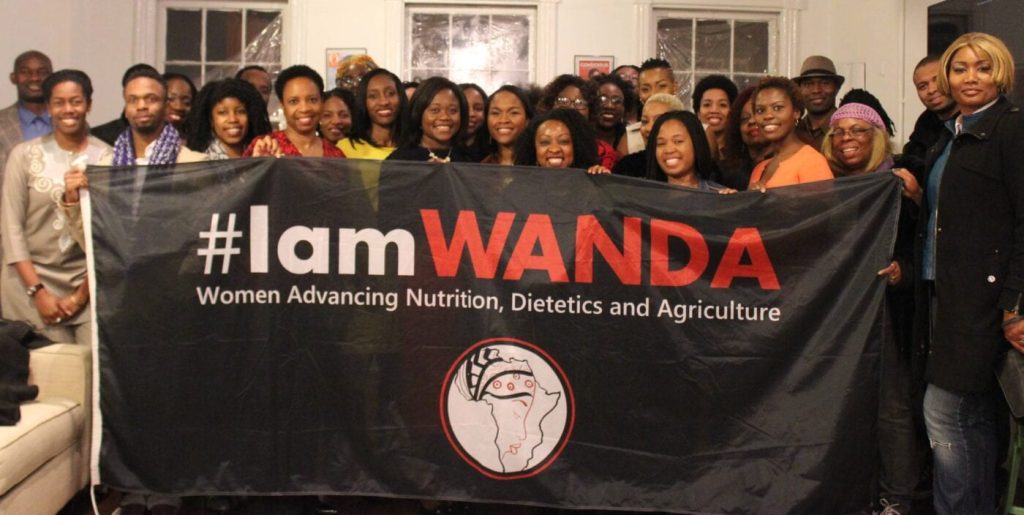
Earlier this month, I had the distinct pleasure of attending the launch of WANDA, a newly established nonprofit organization educating, empowering and advocating for women and girls of African decent to become leaders in the fields of nutrition, dietetics and agriculture. The launch, which took place on March 5th was held in honor of International Women’s Day and as such, featured a panel of innovative and groundbreaking social entrepreneurs in industries ranging from beauty and cosmetics, to television and entertainment. WANDA Founder, Tambra Raye Stevenson, groundbreaking in her own right as a National Geographic Traveler of the Year and founder of the DC-based NativSol Kitchen, describes WANDA (Women Advancing Nutrition, Dietetics, and Agriculture) as an initiative bringing together “sisters of the soil” to encourage all women, young and old, to lead in advancing the fields of nutrition and agriculture. “Women and girls are at the heart of transforming our communities through preserving our foodways, building vibrant economies and healthy communities,” she said. WANDA will also be launched in Abuja, Nigeria in May. As a Ghanaian-American woman just beginning her journey into the fields of agriculture and nutrition, I find WANDA’s mission intriguing. The organization promotes itself as a Pan-African initiative, which is hugely significant to me at this point in my career. Though most of my professional experience falls within the realm of international development, a heightened social awareness of racial injustice in the United States, underscored by the growth of the “Black Lives Matter” movement, has compelled me to offer whatever service I can to ensuring a healthy future for Africans AND African-Americans alike. Having shared this passion with colleagues and advisors, I have been told that I cannot have a successful career straddling both sides of the Atlantic – I would have to choose. The launch of this organization confirmed that I am not alone in my desire to protect and promote health throughout the African Diaspora. And for me WANDA is blazing a trail where there had been none before. If you missed the launch, check out my top 10 black girl magic moments that continue to resonate with me. 1. Getting in formation Inspired by the song that launched many a think piece, WANDA flexed its impressive marketing and social media muscle by borrowing from Beyonce’s celebrated and controversial song, “Formation” for the title of their event. Dubbing the launch, “Black Women Getting in Formation: Power of Media and the Arts to Advance Nutrition and Agricultural Advocacy,” WANDA brought attention to the convening power of a song some have identified as a call to arms for black women. In a recent interview with Black Enterprise, Stevenson shared that WANDA’s version of “getting in formation” means encouraging women and girls to pursue education and leadership roles in health and agriculture. For me, gathering under the backdrop of “Formation” and a national conversation about self-love and unapologetic blackness brought a palpable sense of pride and purpose to the launch. It was an environment that allowed participants to celebrate each others accomplishments, relate to each others struggles and commit to partnerships moving forward. A moment that stayed with me, however, was when panelist and WANDA honoree Rahama Wright, CEO of Shea Yeleen International reminded attendees that countless unnamed and unknown women have always and are still doing the work only recently championed by Beyonce. Way before the Super Bowl performance that stunned America, black women worked together to achieve success and independence. This moment from Wright reminded me that despite Beyonce’s undeniable contributions to the movement, the real heroes in the quest for justice and equality are in our midst and should not be overlooked. 2. Celebrating excellence in entrepreneurship Speaking of celebrating the heroes in our midst, WANDA set a great example by honoring four WANDA women leading the way in promoting positive images of blackness and black women. Along with Ms. Wright, WANDA honored Julian Kiganda, CEO of Bold and Fearless, DeShuna Spencer, Founder and CEO of KweliTV, and Mukami Kinoti Kimotho, Founder and CEO of Joodj. During the panel discussion, each honoree offered a unique perspective on the realities of being a black female entrepreneur. The most memorable moment for me was the vulnerability each woman shared in explaining that their successes were not won overnight. The panelists openly discussed the tendency in the black community to erase struggles from one’s personal narrative. By openly discussing the blood, sweat and tears that goes into growing an organization from the ground up, the panelists believe that more women may be encouraged to continue chasing their dreams even when they face hardship. It was a message that resonated with the audience who clapped in support of these personal and uplifting statements. 3. The food NativSol Kitchen provided the tasty, healthy and culturally relevant fare originating from different countries across the continent. Stevenson dazzled attendees with a Morroccan stew, West African rice dishes, savory black eyed peas, and my personal favorite from the event, bissap, or zobo as it is known in Nigeria. The drink is made from dried hibiscus leaves and is known for its tangy flavor and deep crimson color. NativSol spiced its version up with a touch of ginger, giving the beverage a kick that rounded out the meal. The message I took away from the impressive spread is that food from across the African continent and Diaspora is naturally delicious and healthy. Over time, departure from these foods and the uptake of the Western diet has left a staggering percentage of the Diaspora suffering from overweight, obesity, heart disease, hypertension, and diabetes. In the United States, over 75% of African Americans are overweight or obese, while in Africa nutrition related non-communicable disease will account for 40% of the disease burden on the continent by 2030. A part of WANDA’s mission is to reverse this trajectory and restore health to the Diaspora by embracing the heritage foods that characterize so many of its classic dishes. For more information about the link between culture, food and
Is the law keeping young African women safe from sexual violence?
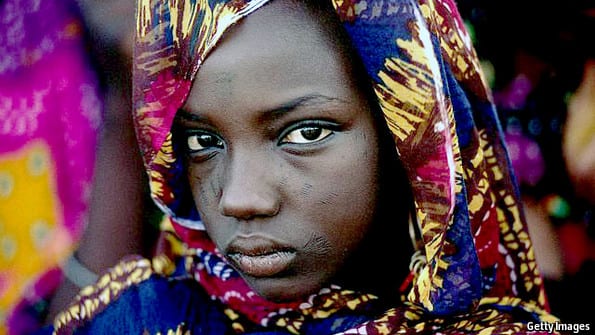
It may be 2016, but young Nigerian girls are still being exploited by those who should be protecting them. I’m referring to the father figures, lawmakers, community leaders and even some parents. Only recently, the internet and media went into a frenzy over the notion that the age of consent had been lowered from 18 to 11. The reason for this confusion? A bunch of subsections under Section 7 of the Sexual Offences Bill postulating penalties for sexual penetration in girls under the ages of 11, 15 and 18. We’re all still asking ourselves why the need to highlight these three ages rather than the relevant one which is 18. This is of major concern as concerns two main areas: child marriages and rape. Source: BBC Africa UNICEF reports that Nigeria is the country with the highest number of child brides across Africa. The number of child brides across Africa is expected to almost triple by the year 2050. It’s been almost 2 years now since the world has been fighting for the return of the Chibok girls following the #BringBackOurGirls campaign. Sadly, at this time, we are still waiting and hoping that they are rescued. Ese’s story Most people have been following the story of 14-year-old Ese Oruru who was abducted from her base by a man who took her to the North to become his bride. Reports made by the Bayelsa State Police Command as captured in Punch Newspaper state that her recent kidnapping from her home in Bayelsa to faraway Kano is a case of eloping. It’s almost laughable except that it’s not. This is a grave issue that affects every one of us regardless of gender. It thus becomes obvious that law enforcement and the rest of the community have failed to catch on that the law does not condone the violation of any woman especially one who is still a child. Ese’s predicament is our predicament and as such statements made by the very institution put in place to install law and order demonstrates our failure as a society. How on earth does a teenager elope? The fact that such a statement can be made by the police public relations rep confirm to us that child marriages are still very much a thing in this part of the world. This is a practice prevalent in the northern part of the country where matured men take on child brides. At this point of the century where societies are moving to expel inhumane practices, the reaction to Ese’s case is a prime example of the normalcy of such a practice. Whether or not Ese voluntarily left her base in Bayelsa for a faraway state or was kidnapped / coerced into doing so as certain assertions have been made, the baseline is she is still a minor. Although it has taken six whole months, the good news is Ese has been handed over to the police for her return to her family in Bayelsa. Just as author Chimamanda Ngozi Adichie has been quoted as saying, ‘culture does not make people, people make culture’. Thus, the mere fact that something is a part of our culture is not a good enough reason to uphold it. There is certainly good culture and bad culture and as humans we are expected to evolve and be progressive. What are some of the risks? There are several risks that child brides are faced with including emotional and psychological trauma that may follow them way into adulthood and in fact for the rest of their lives In addition, if the ‘marriage’ had been consummated underage, pregnancy, Vesicovaginal Fistula and STIs are all common occurrences for child brides. As a society, where do we go from here? We need to close the gap between the law and its practice through proper information dissemination and sensitization. The Nigerian police force must undertake reorientation programs with the passing of new laws. The law should expressly state the age of consent for sexual intercourse by getting rid of the compounding subsections in the Sexual Offences Bill. It is also not enough that the law prescribe a penalty of 5 years imprisonment or a fine of N500,000 for the perpetrators in child marriages! A part of her life is taken away from her as she is forced to grow up in the worst ways possible. The maximum penalty should be sought for such offenders. What can we do as women? As women, each of us has a responsibility to uplift other women especially those who do not have some of the privileges we do have. Speak up about it! Challenge the status quo! Tweet about it, blog about it, discuss with peers, make your voice heard. You may be surprised how little people actually think about this issue. Educate yourselves including other young girls and women. Females need to be aware of the dangers they face and to take extra precaution where necessary. Counsel and encourage one another. As women we need to quit slut shaming and blaming the victim. The guilty party is the aggressor or manipulator. Skimpy clothing or a flirtatious nature do not equal a license to rape. Parents and guardians also need to be receptive enough for their daughters to feel free enough to tell them about any funny business going on. Raise your sons to respect women. Men have as much a part to play as women do in the promotion of gender rights.