
Digital Skills Training: The Key to Africa’s $59 Billion Creative Economy
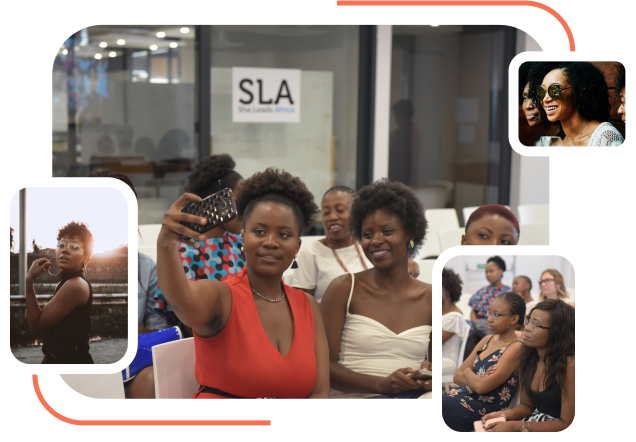
Africa’s creative economy is having a moment, and the numbers back it up. A recent Boston Consulting Group report values the sector — spanning fashion, music, film, and digital content — at around $59 billion, with real room to grow toward the roughly $2 trillion global creative market. What’s driving that growth is a combination of forces unique to this continent right now: a young population (Africa is home to nearly 890 million people under 25), rapid digital acceleration, deep diaspora networks, and a global audience with a growing appetite for African culture, sound, and style. And at the center of this shift are women. In the fashion and design segment alone — worth an estimated $31 billion — women make up more than 60% of the workforce, climbing past 80% in countries like Kenya and Madagascar. This isn’t a niche corner of the economy. It’s a core engine of it. What “digital creativity” looks like as an economy A decade ago, “creative work” in Africa often meant informal, local, and hard to scale. That’s changed. Today it looks like: This shift was on full display at this year’s Cannes Lions Festival, where an all-female delegation of West African creators — including Woof Studios Africa’s Adetutu Laditan — took the Creators Stage to make the case that African creators are no longer just producing viral moments. They’re building the commercial infrastructure — production houses, talent pipelines, distribution systems — that global brands and platforms are now trying to plug into. Culture isn’t just content anymore. It’s the product. Where the real leverage is: skills Skill is what turns a moment into a career. The creators who last aren’t just the ones with a good eye or a viral post — they’re the ones who understand production, brand storytelling, pricing, negotiation, and how to manage a growing digital business. That technical foundation is what makes a creative career sustainable rather than a one-time spike in engagement, and it’s the layer that training and skills programmes across the continent — including our own BoostHer programme, which has trained over 30,000 people in these exact areas — are working to build out. This is also where funders and investors should be paying closer attention. A $59 billion sector growing on the back of a young, digitally fluent population isn’t a passion-project market anymore — it’s an asset class with real returns, provided the people building it have the technical and business skills to scale past a single viral moment. Every naira or dollar invested in creative skills training doesn’t just support one creator’s career; it strengthens the pipeline of professionalized, investable talent that the whole sector needs to grow. The opportunity for funders isn’t just to sponsor creativity — it’s to invest in the infrastructure of skill that makes that creativity durable. Africa’s creative economy is being built in real time, by young women turning phones, platforms, and talent into businesses. The more of them who have real technical skill behind that talent, the more this becomes a sector built to last — not just to trend.
The 25-Year-Old Shaping Africa’s Place in Carbon Removal
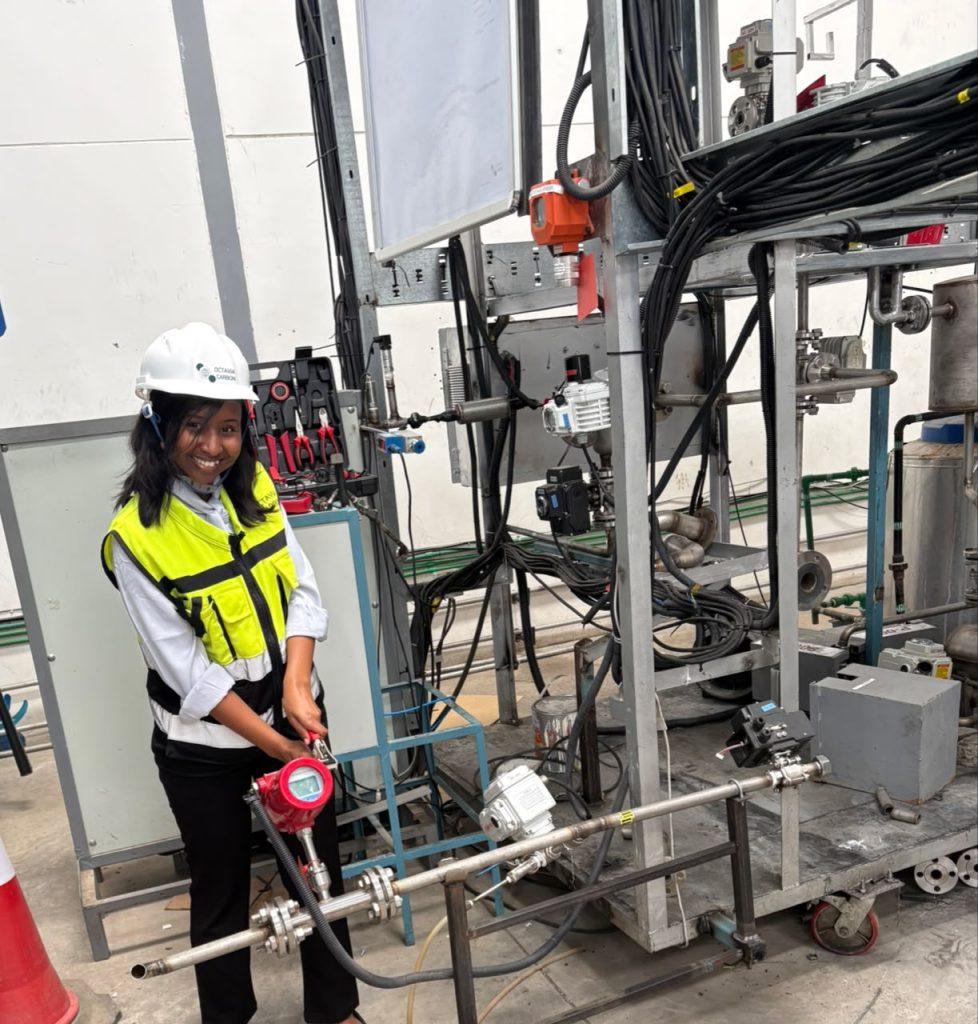
At 25, Sifa Gakii Kinoti is helping build one of climate technology’s newest frontiers in a field with no map, and in rooms where she is often the youngest person or the only woman. By Charity Wakiuru Mukono At an international conference not long ago, someone approached Sifa Gakii Kinoti and asked if she could help serve the refreshments. They assumed she was the waitress. “I was surprised,” she says. “I even offered to help them look for the waiter.” She wasn’t there to pour tea. She was one of the speakers. And when she walked to the front of the room and began her presentation, the people who had overlooked her leaned in to listen. It is the kind of moment Sifa has learned to move past quickly because there is far more interesting work to be done. At just 25, Sifa is Head of Policy and Partnerships at Octavia Carbon, a Kenyan company developing direct air capture technology machines that pull carbon dioxide directly out of the atmosphere. She also serves on the steering committee of the Carbon Removal Kenya Association and is Vice Chair of the Global South CDR Coalition, roles that place her at the centre of a field still taking shape in Kenya, across Africa and beyond. “There isn’t really a blueprint,” she says. “You learn in the process, and from people who have gone before you.” That uncertainty excites her. It also makes the journey harder. Sifa studied Environmental Engineering at the University of Nairobi. “I’ve always loved mathematics and science,” she says. “I wanted to create sustainable solutions for Africa.” Her path into climate technology was anything but conventional. Unlike medicine, law or accounting, direct air capture is a field few people have heard of, and even fewer have built careers in. There were no clear roadmaps, no long list of professionals to learn from, and few young African women in leadership positions in the field. Instead, Sifa found herself helping build an industry while building her own career within it. “We’re creating something new,” she says. “That means learning constantly, sometimes failing and always adapting.” Sifa regularly walks into meetings where she is the youngest person in the room, the only woman, or the only young African. Sometimes those assumptions are never spoken aloud. She still feels them. “It can be intimidating,” she admits. “The people around you have many more years of experience.” Her response has never been to speak the loudest. It has been to prepare the hardest. Before every meeting, she researches the issues, prepares thoroughly, leans into her strengths and communicates with clarity. The result, she says, is that people stop seeing a 25-year-old. They see someone who knows her work and communicates it with confidence. Working in one of Africa’s pioneering carbon removal companies has also given her something few others have: perspective. “Because we’re building this from the ground up,” she says, “sometimes we bring perspectives that no one else has.” Despite her confidence, there is one habit she is still learning to overcome. Sometimes she hesitates before asking a question. “I worry people will think I should already know the answer.” Then someone else asks exactly the same thing. “And I think … I should have asked that.” It is a small confession, but perhaps the one that makes her story most familiar. Confidence, she has learned, is not the absence of doubt. It is deciding not to let doubt speak louder than you do. Moving into policy analysis demanded that she master entirely new material. There were meetings where she did not feel ready, documents she read repeatedly, and conversations she listened to more than she spoke. But every challenge became another lesson. “You make mistakes,” she says. “You learn. And then you keep going.” Ask Sifa where her determination comes from and she smiles. “My parents taught us that you don’t sit and wait for someone to solve your problem. You wake up and find the solution yourself.” That lesson has stayed with her. “So, with the right mindset,” she says, “nothing is impossible.” She is equally quick to acknowledge the people who continue to support her, her family, her friends, her colleagues and her mentors. “Having a support system is important,” she says. “You need people who walk the journey with you.” So, what would she tell another young woman interested in engineering, science or climate technology? She laughs. “Why not?” She knows the path will not always be easy. Jobs can be difficult to find. The industry is still emerging. Many young women will enter rooms where they wonder whether they belong. Her advice is practical: apply for fellowships, attend workshops, take internships, find mentors and ask questions. “No one knows everything,” she says. “So, reach out. You will make it.” In a field still writing its own future, the young woman once mistaken for the waitress is becoming one of the people helping shape where it goes next.
The Bank She Already Has -Informal Finance in Africa

Every morning, before any bank opens its doors, a woman in a market in Kano is already banking with her Ajo contribution, handed to a trusted collector who will circle it back to her, plus everyone else’s, on a schedule the group agreed to months ago. No collateral. No credit score. No branch visit. Just trust, repeated often enough to become infrastructure. This is informal finance, and for millions of African women entrepreneurs, it’s the primary financial system they operate in. What “informal finance” actually looks like Across the continent, this takes different shapes with the same core logic: Ajo and Esusu in Nigeria, Chama in Kenya, Stokvel in South Africa, tontines across Francophone Africa. Add to that informal moneylenders, supplier credit extended on trust between market traders, and family or community lending that never touches a bank ledger. None of it is regulated. All of it moves real money, at scale, every day. Why women lean on it — and it isn’t about literacy The easy story is that women use informal finance because they lack financial literacy. That story doesn’t hold up in the field. Women running SME businesses in places like Kano and Ilorin are often financially sophisticated, they track margins, manage supplier relationships, and price risk daily. What they lack is access: collateral requirements that assume land or property ownership skewed toward men, documentation demands that formal lenders won’t waive, and, in many Muslim-majority communities, a financing gap where interest-based lending conflicts with Islamic finance principles and few Sharia-compliant alternatives exist locally. Financial literacy training addresses none of that. You can teach a woman to build a cash flow projection, and she still won’t qualify for a loan if the underlying eligibility criteria were never built with her in mind. The barrier is structural, not educational. The double edge Informal finance deserves real credit, not just as a stopgap. It’s flexible, community-governed, and built on trust that formal underwriting can’t replicate. But it has a ceiling. Group savings pools are only as large as the group’s combined savings — they can smooth cash flow, but rarely fund the kind of growth capital a scaling business needs. Informal moneylenders can be predatory. And because none of it is recorded in a way formal institutions recognize, a woman can have a flawless repayment history for a decade and still show up as “no credit history” to a bank. Organisations building the bridge — and how to actually get in The good news: informal finance is increasingly being connected to formal systems, deliberately, by organizations that understand both worlds. None of these require a loan application in the traditional sense — access usually runs through a local facilitator, cooperative, or implementing partner already active in a community, not a branch or a portal. CARE International runs the most widely replicated model, the Village Savings and Loan Association (VSLA). Groups of 15 to 25 people meet regularly to pool savings, access small loans, and build emergency insurance, with the model supporting more than 8 million members since 1991, most of them women. Its LINK Up initiative goes a step further — connecting 10,000 VSLAs directly to formal financial institutions in Kenya and Tanzania, turning an informal savings record into something a bank will recognize. Access: through CARE’s country offices, or the local NGOs and cooperatives that implement CARE-aligned savings programmes in a given community. Oxfam runs its own version under different names depending on the country, VSLAs in Nigeria, Saving for Change in Mali. In Nigeria, Oxfam’s VSLAs are self-managed community groups of 15 to 25 people who meet weekly or fortnightly to save and borrow, with savings and earnings shared out after roughly a year, and the model is active specifically in states like Kebbi and Adamawa as part of rural resilience programming. Access: through Oxfam Nigeria’s field offices or the local partner organizations delivering its rural livelihoods and resilience projects. Plan International takes a similar approach with a younger-skewing focus. It supports savings groups across 28 countries so that people, especially young women, can confidently access financial services and build saving and investment skills. Access: through Plan International’s country programmes, usually bundled with youth economic empowerment or girls’ education initiatives already running in a community. BRAC stands out for building a formal pathway on top of the informal one. Its model starts women in community savings groups, then moves them into BRAC’s own microfinance institutions once they’re ready to scale. In its AIM programme, more than 13,000 young women set up 630 savings groups, collectively saving over $230,000, with some going on to become clients of BRAC’s microfinance branches. BRAC’s group-based loans are collateral-free and designed specifically for women micro-entrepreneurs who lack formal credit history, effectively formalizing the trust-based lending an Ajo group already runs on. Access: through BRAC’s country offices in Uganda, Tanzania, Sierra Leone, Liberia, Rwanda, and Ghana, where its savings-group and microfinance branches operate directly in communities. This is where SLA’s role becomes clear. Digital skills, the kind SLA builds through BoostHer, aren’t a replacement for informal finance, and they’re not positioned as one. They’re the bridge: the ability to digitize records, build a visible transaction history, and present a business in a way that formal capital providers and platforms like ConnectHer can actually evaluate. A woman doesn’t have to choose between her Ajo group and a bank loan. With the right digital tools, her Ajo history becomes evidence a bank can use. The reframe Informal finance isn’t a phase women “graduate out of” on the way to real banking. It’s real banking — proven, trusted, and running at a scale formal institutions still can’t reach in the same communities. The work isn’t to replace it. It’s to build the connective tissue — through organizations like CARE, and through digital skills that make informal financial histories legible to formal systems — so that women don’t have to leave one system behind to access the other.
How Stephanie Chiamaka Madumelu Is Transforming Women’s Health Through Prevention and Education
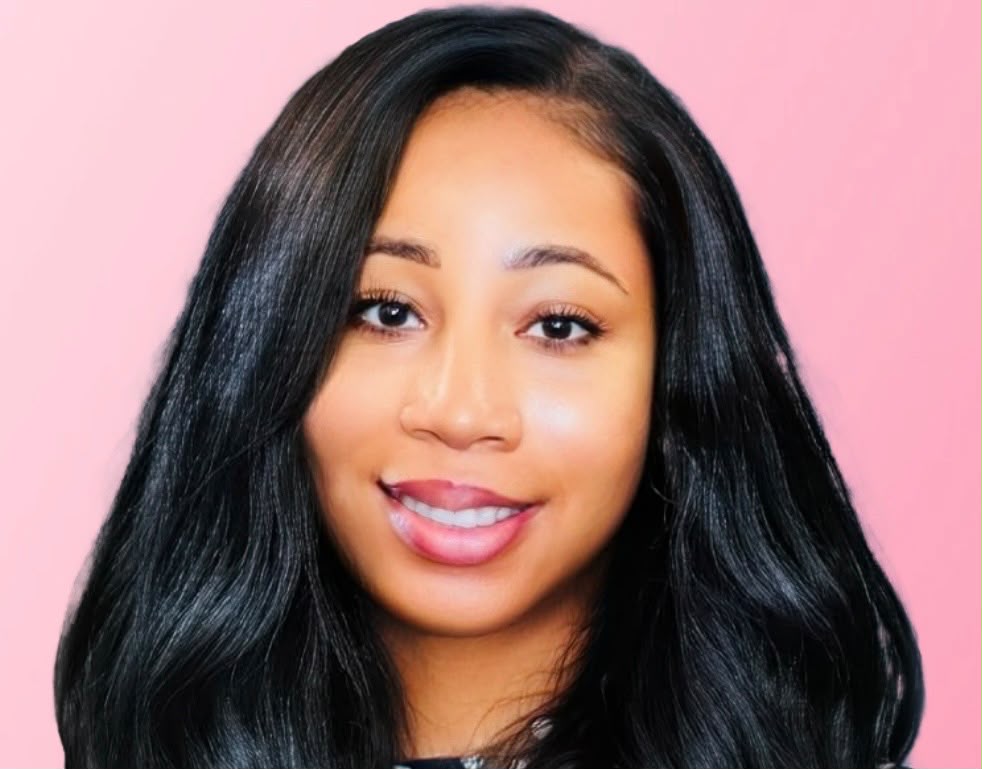
Recognizing that many preventable reproductive health conditions continue to affect women because of limited awareness, stigma, and unequal access to healthcare, Stephanie founded Maky Bloom to bridge these gaps through community-centered health education and outreach.
From Classrooms to Careers: What Nigeria’s 13,709 Women Taught Us About Workforce Development

By Samson Arowobusoye, Job Matching Consultant, She Leads Africa | June 8, 2026 A Year 1 Impact Report on the BoostHer Program, a Partnership Between She Leads Africa and Jobberman In Nigeria, being a young woman with an education is no guarantee of economic independence. According to the World Bank’s 2025 Gender Data Report, only 10.5% of employed Nigerian women hold formal wage or salaried positions, compared to 17% of their male counterparts. Meanwhile, 13.4% of young women are classified as NEET: not in education, employment, or training. And for women in the most underserved communities, including internally displaced persons living in camps, this figure is far worse. The gap between education and economic inclusion is not a skills problem alone. It is a structural one, compounded by access, geography, confidence, and the near-total absence of opportunity. It was into this reality that the BoostHer Program was launched in May 2025, a partnership between She Leads Africa (SLA) and Jobberman, under the broader Young Africa Works initiative. The program was designed to meet women where they were, offering both digital and practical livelihood skills. For women in displacement camps, this included hands-on training in soap making and financial literacy, skills with immediate income-generating potential that required no device, no internet connection, and no prior technical background. For women with digital access, the program offered professional and entrepreneurial training across a range of high-demand fields. The goal across all tracks was the same: equip Nigerian women with market-relevant skills and translate that training into measurable economic outcomes. By January 2026, when Year 1 closed, 13,709 women had been trained. 2,750 had recorded income improvements through new jobs, promotions, freelance gigs, or product sales, all directly traceable to skills acquired through the program. This is what SLA learnt. 13,709Women Trained 2,750Income Improvements Recorded 30,000Target for Year 2 The Women We Set Out to Reach The BoostHer Program targeted Nigerian women between the ages of 18 and 35, but from the outset, SLA resisted the temptation to define that group narrowly. Formal education, as understood within the program’s eligibility, begins from the secondary school certificate. Participants did not need to be university graduates or current tertiary students to qualify. The program was designed for any woman who had completed at least a secondary school education, whether she had gone further into higher education or not. Within that broad eligibility, participants came from three distinct starting points. Some were graduates navigating a difficult labour market. Some were students still in school, building skills ahead of graduation. And some were active business owners, whether graduates or not, who needed digital and practical tools to grow what they had already built. The program was structured to serve all three. This led to a deliberate two-pathway structure at the heart of the BoostHer Program. The Professional Pathway served women seeking new employment, career advancement, or promotion within formal organisations. The Entrepreneurial Pathway served women running or building businesses, who needed practical skills to expand their reach, grow their revenue, and compete in an increasingly digital marketplace. Both pathways were equal in design priority. Neither was treated as secondary. Jobberman, as the program sponsor and convener under the Young Africa Works mandate, brought its deep understanding of the Nigerian labour market to the partnership. SLA, as the implementation partner, brought its expertise in reaching and training young African women, particularly those who are ambitious and hungry for opportunity but structurally underserved by mainstream workforce development programs. Courses Built Around Real Needs One of the deliberate design choices in Year 1 was to resist the temptation of a one-size-fits-all curriculum. The BoostHer Program offered a suite of courses calibrated to the actual economic activities of the women it serves, organised around the two core pathways, with a dedicated track for women in underserved and displaced communities. Under the Entrepreneurial Pathway, participants could enrol in Digital Marketing and Content Creation, designed for business owners seeking to grow their brands online; Smartphone Video Editing, which enabled participants to produce professional-grade content without expensive equipment; E-Book Creation, targeting authors and content creators looking to monetise intellectual property; and Brand Design, equipping women building personal and business identities in a competitive visual economy. Under the Professional Pathway, participants could enrol in Executive Virtual Assistance, one of the highest-demand remote work skill sets in today’s economy, and Data Analysis covering Excel, SQL, and Power BI, opening doors into the data-driven sectors of finance, technology, and business. For women in IDP camps and other underserved communities, the program delivered soap making and financial literacy training, practical livelihood skills that could generate income immediately, without a smartphone, a laptop, or an internet connection. These courses were not an afterthought. They were a recognition that workforce development, to be truly inclusive, must speak the language of the community it is trying to serve. Across all tracks, the shared principle was the same: every course was a direct pathway to a specific income-generating opportunity that participants could activate immediately after completion. What the Data Revealed Of the 13,709 women trained between May and December 2025, follow-up reporting before year’s end captured 2,750 with verifiable income improvements. This 20.1% documented outcome rate, achieved within the same calendar year as training, is a significant indicator for a program of this scale and reach. When broken down by pathway, the outcomes tell a rich story. Of the 2,750 recorded improvements, 817 came through the Professional Pathway. Of those, 663 participants secured new jobs and 154 recorded promotions within their existing organisations. The remaining 1,933 outcomes came through the Entrepreneurial Pathway: 1,561 participants recorded direct product or service sales traceable to skills gained through the program, while 372 secured paid freelance gigs. Together, these figures confirm that both pathways delivered real, measurable economic value within the same year of training. The program’s reach also reflected geographic and demographic breadth, with participants drawn from across Nigeria with varying levels of prior education and digital exposure. Professional Pathway817 outcomes (29.7% of total)663 new
The Gap Is Not About Awareness — It’s About Who Gets Left Out of the Room
Why African women entrepreneurs are still being failed by the systems built to serve them — and what She Leads Africa is doing about it. There are more fintech apps, grant programmes, accelerators, and women empowerment initiatives on the African continent today than at any point in history. And yet, if you ask the women building businesses across Africa — from the woman six months into her first venture to the one who has been grinding for five years — many will tell you the same thing. The opportunities exist. But not for her. Not yet. This is the paradox that sits at the heart of women’s entrepreneurship in Africa. It is not a gap caused by a lack of solutions. It is a gap caused by solutions that keep finding the same women — the already connected, the already visible, the ones who already had one foot inside the door. At She Leads Africa, we see this every day. And we think it is time to name it plainly. The Pipeline Leaks at Every Stage The challenge facing African women entrepreneurs is not one bottleneck. It is many — and they show up differently depending on where a woman is in her journey. The aspiring entrepreneur has the idea, the drive, and the lived experience. What she doesn’t have is a pitch deck she was taught to write, an account history that satisfies a lender, or a network that opens the right doors. The tools and programmes built to help her still assume she is already halfway there. The early-stage founder is generating revenue — sometimes formally, often not. But the moment she tries to grow, the system asks her to prove she is already established. Registration documents. Bank statements. Credit history. Requirements that assume a formalised business life she hasn’t had the opportunity to build yet. She is told to be formal before the system will help her formalise. The growth-stage woman has survived. In the African entrepreneurship environment, that alone deserves recognition. But survival doesn’t make her visible to funders. She is too revenue-generating for a grant, too informal for equity investment, and too small for a traditional bank loan. She has outgrown the programmes designed for beginners and been overlooked by the systems designed for scale. The ecosystem has no clear product for who she is right now. At every stage, the same truth emerges: the pipeline doesn’t break in one place. It leaks everywhere. It’s Not Just Funding. It’s Technology Too. When we talk about inclusion for women entrepreneurs, the conversation often stops at capital. But the gap runs deeper than money. The digital tools built to serve African women entrepreneurs — the apps, the platforms, the financial products — are largely designed for someone who already has a registered business, a reliable internet connection, a smartphone, and a transaction history. For the woman who has none of these yet, the technology meant to include her is effectively invisible to her daily reality. And here is what makes this particularly frustrating: the women we work with are not lacking in intelligence or capability. Many are educated. Many are digitally aware. Many have smartphones and data. But they are still using tools that were not built with them in mind — tools that assume a version of their life that doesn’t yet exist. This is the technology inclusion gap that doesn’t get talked about enough. It is not just about the woman in a rural area with no internet access. It is also about the young graduate in the city who downloads a fintech app and finds that every feature requires a credit history she was never given the chance to build. Both women are being failed. By the same assumption. That inclusion means making the tool available — not making it actually work for her. The Bigger Problem: Who Is in the Room When Solutions Are Built Every programme, product, and policy that has failed to reach the women who needed it most has one thing in common. She wasn’t in the room when it was designed. Not really. Not in a way that shaped the brief, challenged the assumptions, or redirected the approach. She may have appeared in a survey. She may have been referenced in a needs assessment. But co-design — real, compensated, iterative co-design that starts from her reality — is still the exception, not the standard. The result is solutions that are technically available but practically inaccessible. Programmes that serve the women already connected to the ecosystem and measure that as impact. Funds routed through organisations closest to power, not closest to the women themselves. We are not short of good intentions. We are short of proximity. And proximity cannot be replaced by a focus group held after the product is already built. What She Leads Africa Is Building Toward She Leads Africa exists because we believe African women don’t need to be saved. They need to be seen. Seen at the aspiring stage, before they have the language or the credentials the system demands. Seen at the early stage, when they are building something real with little structural support. Seen at the growth stage, when they have proven themselves and still can’t get a seat at the table. Our work is not perfect. The gap is wide, and we are one organisation. But we are committed to closing it one step at a time — by creating platforms where these women are not just beneficiaries of a solution someone else designed, but active voices in shaping what support actually looks like for them. That means programmes built around continuity, not just conversion. Real, sustained accompaniment — mentorship that outlasts the cohort, networks that hold beyond graduation, follow-on support that responds to where she actually is, not where the programme assumed she would be. It means funding and amplifying the organisations with genuine proximity to underserved women — the ones operating in communities that the mainstream ecosystem rarely reaches. And
What It Really Means to Lead: Growth and Influence with Rosemary Egabor-Afolahan
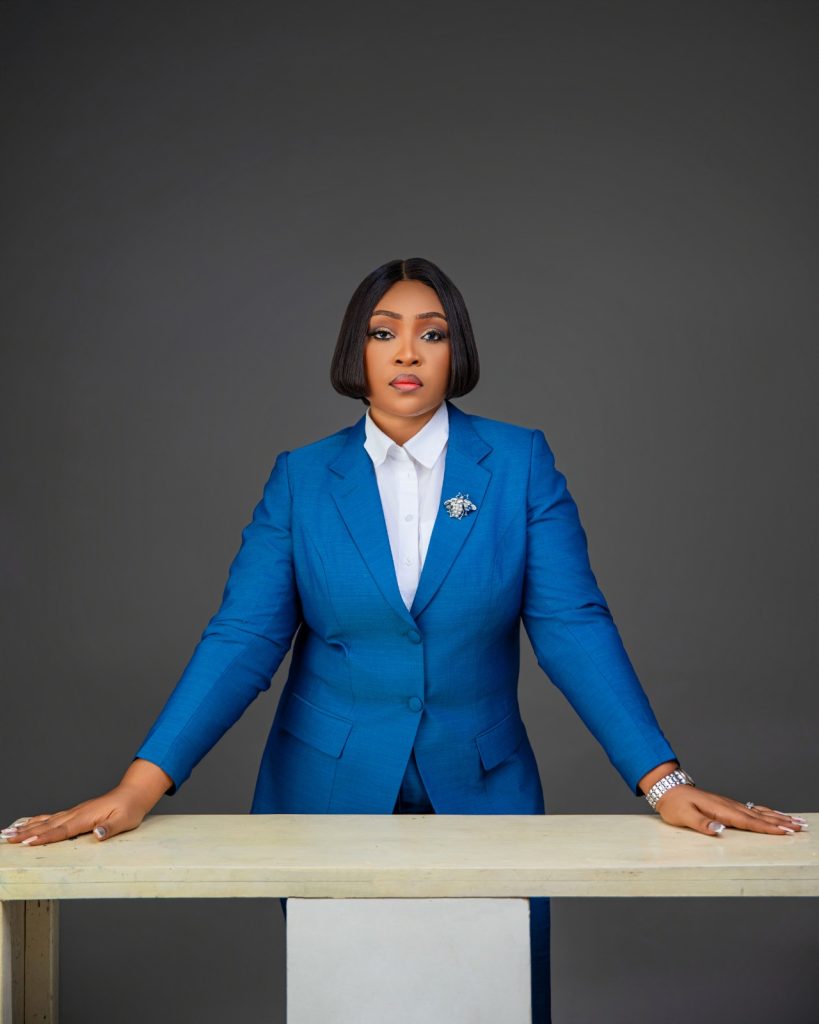
Leadership is often reduced to titles and visibility. For Rosemary Egabor-Afolahan, it is something far morepractical. It is about responsibility. It is about making decisions that carry weight. It is about showing upconsistently and doing the work that keeps an organisation moving forward. As Director of Commercial and Communications at News Central TV, Rosemary sits in a role that demandsboth strategy and execution. As a business Builder. She is responsible for driving growth, buildingpartnerships, and shaping how the organisation communicates with its audiences. It is a position that requiresclarity, discipline, and a deep understanding of how business and media intersect. Her journey into this space did not follow a straight line. Before moving into media, she built her career acrossbanking and the oil and gas sector. Those early experiences exposed her to structure, performanceexpectations, and the realities of operating in high-pressure environments. Over time, she developed a strongfoundation in business development and strategic thinking, skills that would later define her work incommunications. When she joined News Central in 2018, the organisation was just kicking off and still growing into its identity.There was an opportunity to build, but also a need for direction. In her role as Commercial Lead at the time,Rosemary focused on market growth, platform on-boarding, strengthening partnerships and positioning thebrand to attract both audiences and investors. That work paid off. The network expanded its reach, onboarded on satellite platforms, secured keypartnerships, and emerged as a more visible player in the African media space. Her eventual appointment asDirector of Commercial and Communications reflected that contribution. It was not just a title change. It was arecognition of consistent results. Beyond her direct company, Rosemary has also provided a platform for media practitioners and leadingcommunications professionals in Africa. Her initiative, the Media Hangout Network (also known as the MHNGnetwork), has been committed to national discussions on media development in Nigeria. Ahead of the 2023 elections, the MHNG Network drove conversations with media stakeholders, policymakers,and government representatives on the need for operational synergy leading up to the national event, as wellas the roles society needed to fulfill for development. In industries like media, that impact is even more visible. The stories told, the way they are told, and the voicesamplified all shape public understanding. Through her work at News Central, Rosemary has been part ofbuilding a platform that focuses on telling African stories with context and clarity. She has displayed that growth is not about hitting targets but building something that can last. That meansputting structures in place, creating clear processes, and making sure people have the tools they need to dotheir jobs well. It also means paying attention to people. Leadership, in her view, is not about control. It is about clarity and direction. People need to understand thegoal, but they also need the space to contribute. When that balance is right, teams perform better, their ideasimprove, and their results become more sustainable. This is also where impact begins to show. When women are given the opportunity to lead effectively, the effect goes beyond the organisation itself. Itchanges the way decisions are made. It introduces different perspectives. It creates room for others to stepforward. Staying effective in that space also requires continuous learning. The media landscape is changing quickly.Technology is shifting how audiences consume content. Expectations are evolving. What worked a few yearsago may not work today. For leaders, this means staying open. It means being willing to adjust, to rethink, and to keep learning.Rosemary’s time at Lagos Business School reflects that commitment to growth, not just in theory, but inpractice. In pursuit of her postgraduate degree in Media and Communications, she led activities in her classand, after graduation, obtained professional certifications in Strategy from the same institution. She sharedhow her time at the Lagos Business School stretched and refined her aspirations and her contributions to thedevelopment of the institution remain evident through alumni support, and continuous collaborations remainevident. For women building their careers, her journey offers a clear takeaway. There is no perfect path. There is nosingle formula. But there are habits that make a difference. Take your work seriously.Understand your environment.Build your skills deliberately.And being consistent. Because in the end, leadership is not defined by a single moment. It is built over time. Through decisions.Through effort. Through the ability to stay focused and keep going. For Rosemary Egabor-Afolahan, that is what leadership looks like in practice. Not just being in the room, butcontributing in a way that moves things forward.
Zedcrest Appoints Simbiat Bada as Managing Director, Stockbroking

Bada’s appointment follows Zedcrest’s acquisition of RMB Nigeria Stockbrokers and aligns with its strategic vision to deepen market capabilities as it continues to deliver innovative, client-focused solutions that drive growth and strengthen its market position. Lagos, Nigeria – March 2026 — Zedcrest Group, a leading financial services powerhouse with a strong footprint across Asset Management, Investment Banking, Securities, and Financing, has announced its Board’s approval of Simbiat Bada’s appointment as Managing Director, Stockbroking. Adedayo Amzat CFA, the Group Managing Director, Zedcrest Group who made the announcement at a media parley held at the Zedcrest Head Office in Lagos, noted that the appointment will now be vetted by the Securities and Exchange Commission (SEC). According to him, “Bada’s appointment reflects Zedcrest’s commitment to deepening its expertise in securities trading and delivering superior execution, advisory, and wealth creation opportunities for our clients. It also reinforces our ambition to build a best-in-class stockbroking business that is responsive to evolving market dynamics.” Also commenting, Chairman of the Zedcrest Board, Babatunde Sanda, FCA, expressed confidence in the appointment, noting that Bada’s leadership will be instrumental in unlocking new opportunities and delivering sustained value for stakeholders. He added, “We are confident that Simbiat brings the discipline, professionalism, and strategic insight required to strengthen Zedcrest’s position in the equities market.” Simbiat Bada is a certified investment professional with nearly a decade of experience spanning securities trading, asset management, sales, and business development. She holds a bachelor’s degree in Economics from the American University of Nigeria, Yola, and a master’s degree in Economics from the University of Lagos. She is also a member of the Chartered Institute of Stockbrokers (CIS) and a qualified Chartered Accountant (ICAN). Prior to joining Zedcrest Securities, she held key roles at Vetiva Securities and WSTC Financial Services Limited, where she leveraged her expertise in trading, operations, and wealth management to drive performance and support business growth. As part of its long-term expansion strategy, Zedcrest had successfully acquired RMB Nigeria Stockbrokers in 2024, which was subsequently rebranded as its stockbroking arm, Zedcrest Securities. This move strengthened the company’s presence in the equities market, enhanced its trading capabilities, and expanded its offerings across the capital markets value chain. About Zedcrest Group Founded in 2013, Zedcrest Group offers its diverse clientele a broad range of financial solutions, which include Asset Management, Investment Banking, Securities, and Financing. These services are provided through its subsidiaries: Zedcrest Investment Managers (Zedcrest Wealth), Zedcrest Global Markets, Zedcrest Securities, Zedcrest Capital, and Zedvance Finance. For more information, visit www.zedcrest.com.
Real women. Real results. How She Leads Africa is changing careers one course at a time
Skills alone don’t build careers — the right training, at the right time, in the right community does. Through the BoostHer Program, She Leads Africa has been equipping women across Africa with tools, confidence, and credentials that open real doors. Here are three women who took the leap, and what happened next. Testimonials At one point, TIMD Couture had quality designs but low sales. I saw the She Leads Africa course and enrolled to improve my marketing. During the training, I learned to define my brand, show its value, and create sales-driven content without lowering standards. I challenged myself to post consistently, and within a short time, my sales grew to between ₦200,000 and ₦400,000 a month. The experience taught me the power of consistency, storytelling, and strategic marketing. I’m grateful to She Leads Africa for helping me discover abilities I didn’t fully recognise. Ojo Imole Deborah Fashion Designer & Digital Marketer, TIMD Couture Hello, my name is Peggy Ibiene Toby. A friend of mine recommended the program to me as one of the biggest Teaching platforms in Africa. I was part of the She Leads Africa training to add to my skills in Executive assistance.This program helps me challenge myself in tasks I found difficult, but I was able to push through the entire tasks. During my training time, I got my first job as a virtual/executive assistant, and all that I learned during the program has helped me manage the role.I want to say a big thank you to She Leads Africa for their time and dedication to impact in us this great skill. I truly recommend. Peggy Ibiene TobyExecutive Virtual Assistance From growing a fashion brand’s revenue to landing executive roles, these stories share a common thread: when women invest in themselves, the returns are real. The She Leads Africa BoostHer Program offers more than knowledge — it delivers clarity, community, and credentials that move careers forward. Ready to write your own success story? Explore She Leads Africa’s upcoming programs at sheleadsafrica.org
The Confidence Gap Was Never the Problem
She Leads Africa, March 30th, 2026 For years, we’ve been told a convenient story: that African women just need more confidence. Lean in. Speak up. Take your seat at the table. But after working with thousands of women across industries, countries, and career stages, we can say this plainly: Confidence is not the problem. And it never was. At She Leads Africa, we’ve sat in rooms with women who are building businesses from scratch, leading teams under pressure, navigating male-dominated industries, and holding entire families and communities together. These women are not lacking belief in themselves. What they are navigating—daily—are systems that were never designed with them in mind. The Myth of the “Confidence Gap” The idea of a “confidence gap” became popular through leadership discourse that suggested women hold themselves back more than men do. But research paints a more complicated picture. Studies like those published in the Harvard Business Review show that women often underestimate their readiness for roles compared to men, but that’s not because they are inherently less confident—it’s because they are responding rationally to environments that penalize them differently. Another body of research from McKinsey’s Women in the Workplace reports consistently shows that women—especially in regions like Africa—face: In other words, what looks like a confidence issue is often a calculated response to structural barriers. If you know you’ll be judged more harshly, interrupted more often, or overlooked regardless of performance, caution is not a flaw—it’s strategy. What We’ve Seen Firsthand We’ve worked with women who: These are not women lacking confidence. They are women operating within systems that: So when we keep telling women to “be more confident,” we’re asking them to adapt to unfair conditions instead of questioning the conditions themselves. Let’s Name the Real Problem: The System Across many African contexts, structural barriers show up in subtle and overt ways: This is not about individual mindset. This is about power, access, and design. And until we address those, confidence training alone will always fall short. So What Can Women Do? While we continue pushing for systemic change (and we must), we also recognize that women still have to navigate these realities today. Here’s what we’ve seen work—not as a replacement for change, but as a way to move strategically within the system: 1. Build Strategic Visibility It’s not enough to do good work—you have to make sure it’s seen. Document your wins. Share your progress. Speak about your impact. Not because you lack confidence, but because visibility is currency in systems that don’t automatically reward you. 2. Find—and Use—Power Networks Mentorship is helpful, but sponsorship is transformative. Seek out people who will advocate for you in rooms you’re not in. And just as importantly, be intentional about the rooms you choose to enter. 3. Detach Worth from Recognition In biased systems, recognition is not always a reflection of value. Do not internalize delayed promotions, overlooked ideas, or unequal pay as personal failure. Often, they are symptoms of structural imbalance—not your inadequacy. 4. Negotiate with Data, Not Just Confidence Confidence alone doesn’t close gaps—information does. Research salary benchmarks, funding trends, and industry standards. Use data to back your asks. Systems may resist you, but data makes it harder to dismiss you. 5. Create Parallel Systems Where Possible Some of the most powerful shifts happen when women build their own tables. From women-led investment groups to community-driven platforms, African women are already creating alternative ecosystems that redistribute access and opportunity. That is not just navigation—that is transformation. A Call for a Better Conversation It’s easier to tell women to fix themselves than to fix systems. But we need to move beyond conversations that center confidence as the primary barrier. Because when we do, we risk ignoring the very real structural challenges that shape women’s experiences. African women are not lacking confidence. They are navigating complexity with intelligence, resilience, and strategy. The question is no longer, “How do we make women more confident?” It is: “How do we build systems that are finally worthy of their confidence?”