
The Bank She Already Has -Informal Finance in Africa
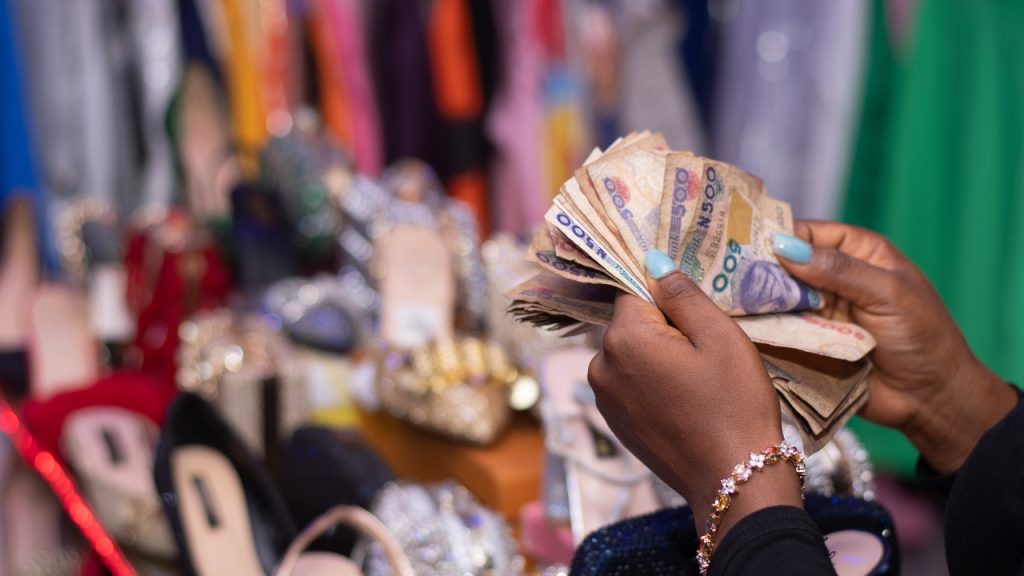
Every morning, before any bank opens its doors, a woman in a market in Kano is already banking with her Ajo contribution, handed to a trusted collector who will circle it back to her, plus everyone else’s, on a schedule the group agreed to months ago. No collateral. No credit score. No branch visit. Just trust, repeated often enough to become infrastructure. This is informal finance, and for millions of African women entrepreneurs, it’s the primary financial system they operate in. What “informal finance” actually looks like Across the continent, this takes different shapes with the same core logic: Ajo and Esusu in Nigeria, Chama in Kenya, Stokvel in South Africa, tontines across Francophone Africa. Add to that informal moneylenders, supplier credit extended on trust between market traders, and family or community lending that never touches a bank ledger. None of it is regulated. All of it moves real money, at scale, every day. Why women lean on it — and it isn’t about literacy The easy story is that women use informal finance because they lack financial literacy. That story doesn’t hold up in the field. Women running SME businesses in places like Kano and Ilorin are often financially sophisticated, they track margins, manage supplier relationships, and price risk daily. What they lack is access: collateral requirements that assume land or property ownership skewed toward men, documentation demands that formal lenders won’t waive, and, in many Muslim-majority communities, a financing gap where interest-based lending conflicts with Islamic finance principles and few Sharia-compliant alternatives exist locally. Financial literacy training addresses none of that. You can teach a woman to build a cash flow projection, and she still won’t qualify for a loan if the underlying eligibility criteria were never built with her in mind. The barrier is structural, not educational. The double edge Informal finance deserves real credit, not just as a stopgap. It’s flexible, community-governed, and built on trust that formal underwriting can’t replicate. But it has a ceiling. Group savings pools are only as large as the group’s combined savings — they can smooth cash flow, but rarely fund the kind of growth capital a scaling business needs. Informal moneylenders can be predatory. And because none of it is recorded in a way formal institutions recognize, a woman can have a flawless repayment history for a decade and still show up as “no credit history” to a bank. Organisations building the bridge — and how to actually get in The good news: informal finance is increasingly being connected to formal systems, deliberately, by organizations that understand both worlds. None of these require a loan application in the traditional sense — access usually runs through a local facilitator, cooperative, or implementing partner already active in a community, not a branch or a portal. CARE International runs the most widely replicated model, the Village Savings and Loan Association (VSLA). Groups of 15 to 25 people meet regularly to pool savings, access small loans, and build emergency insurance, with the model supporting more than 8 million members since 1991, most of them women. Its LINK Up initiative goes a step further — connecting 10,000 VSLAs directly to formal financial institutions in Kenya and Tanzania, turning an informal savings record into something a bank will recognize. Access: through CARE’s country offices, or the local NGOs and cooperatives that implement CARE-aligned savings programmes in a given community. Oxfam runs its own version under different names depending on the country, VSLAs in Nigeria, Saving for Change in Mali. In Nigeria, Oxfam’s VSLAs are self-managed community groups of 15 to 25 people who meet weekly or fortnightly to save and borrow, with savings and earnings shared out after roughly a year, and the model is active specifically in states like Kebbi and Adamawa as part of rural resilience programming. Access: through Oxfam Nigeria’s field offices or the local partner organizations delivering its rural livelihoods and resilience projects. Plan International takes a similar approach with a younger-skewing focus. It supports savings groups across 28 countries so that people, especially young women, can confidently access financial services and build saving and investment skills. Access: through Plan International’s country programmes, usually bundled with youth economic empowerment or girls’ education initiatives already running in a community. BRAC stands out for building a formal pathway on top of the informal one. Its model starts women in community savings groups, then moves them into BRAC’s own microfinance institutions once they’re ready to scale. In its AIM programme, more than 13,000 young women set up 630 savings groups, collectively saving over $230,000, with some going on to become clients of BRAC’s microfinance branches. BRAC’s group-based loans are collateral-free and designed specifically for women micro-entrepreneurs who lack formal credit history, effectively formalizing the trust-based lending an Ajo group already runs on. Access: through BRAC’s country offices in Uganda, Tanzania, Sierra Leone, Liberia, Rwanda, and Ghana, where its savings-group and microfinance branches operate directly in communities. This is where SLA’s role becomes clear. Digital skills, the kind SLA builds through BoostHer, aren’t a replacement for informal finance, and they’re not positioned as one. They’re the bridge: the ability to digitize records, build a visible transaction history, and present a business in a way that formal capital providers and platforms like ConnectHer can actually evaluate. A woman doesn’t have to choose between her Ajo group and a bank loan. With the right digital tools, her Ajo history becomes evidence a bank can use. The reframe Informal finance isn’t a phase women “graduate out of” on the way to real banking. It’s real banking — proven, trusted, and running at a scale formal institutions still can’t reach in the same communities. The work isn’t to replace it. It’s to build the connective tissue — through organizations like CARE, and through digital skills that make informal financial histories legible to formal systems — so that women don’t have to leave one system behind to access the other.
Why African Women Entrepreneurs Are Undervalued by Investors — And How to Change the Narrative
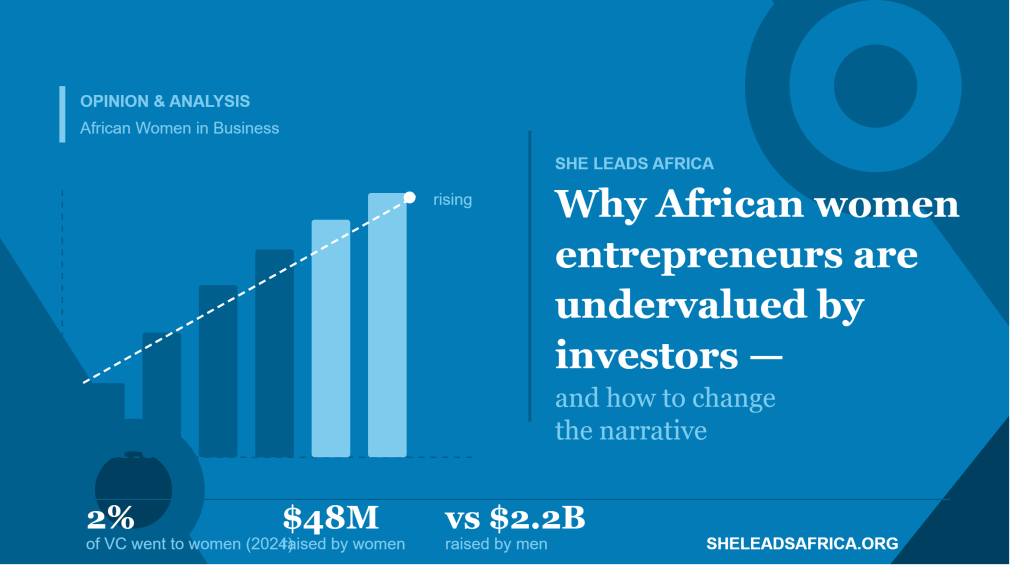
By She Leads Africa | 22nd June, 2026 Here is a number worth sitting with: in 2024, female-led startups across Africa raised just $48 million. Their male counterparts raised $2.2 billion. That’s not a gap. That’s a canyon. And it’s getting worse. Women-led startups received only 2% of total venture capital deployed across Africa in 2024 — the lowest share recorded since data collection began. A year later, despite a 40% rebound in overall African startup funding, the situation barely moved. Less than 10% of all venture funding in 2025 went to companies with even one female founder. If you are a woman building a business on this continent, these numbers are not news to you. You have felt this. In the rooms you weren’t invited into. In the pitch feedback that focused on your risk rather than your runway. In the investor who asked who else was backing you before deciding if he should. The question isn’t whether the gap is real. The question is: what do we do about it? First, let’s name what’s actually happening The funding gap is not an accident. It is the output of a system that was never designed with African women entrepreneurs in mind. Bias shows up before you even walk in the room. Research consistently shows that investors — the majority of whom are men — tend to back founders who look, sound, and network like them. This “homophily” effect means women-led ventures are evaluated through a narrower lens, often before a single slide is reviewed. The sectors women dominate are undervalued. Women-led startups are disproportionately concentrated in education, health, agriculture, and social impact — all sectors that attract lower valuations and smaller check sizes than fintech infrastructure or enterprise SaaS, where male founders dominate. It’s not that these sectors matter less. It’s that the ecosystem has decided to value them less. The “market potential” question is rigged. Women entrepreneurs frequently report being questioned about the size of their addressable market — even when they are explicitly serving African women consumers, one of the fastest-growing and most underserved economic groups on the continent. A $2.5 billion funding gap has accumulated over five years while investors simultaneously missed the explosive growth of women-driven markets in e-commerce, mobile finance, and agri-food. Grant dependency is a trap, not a solution. Women receive around 52% of Africa’s grant funding — which sounds like progress until you realise that grants don’t build the equity runway needed to scale. Overreliance on grants keeps businesses in a perpetual “startup” phase and reinforces the perception that women-led ventures need charity, not capital. What this costs all of us This is not only a women’s issue. It is an economic one. The McKinsey Global Institute estimates that closing the gender funding gap in Africa could unlock $316 billion in additional economic growth. The $42 billion financing gap for women entrepreneurs isn’t just a missed investment opportunity — it is economic value being left on the table, every single year. Women in Africa represent one of the highest rates of entrepreneurship in the world. They are already building. They are already selling — On the Jumia platform, over half of sellers in Kenya and Nigeria are women, according to IFC research, a signal of just how actively African women are driving digital commerce. They are already creating employment, driving household income, and sustaining local economies. The infrastructure of care, food, learning, and trade in this continent runs largely on women’s labour and ingenuity. Choosing not to fund them is not a neutral decision. It is a choice — and it has compounding consequences. What you can do — right now, as a woman entrepreneur If you’re building and you’re frustrated, you have every right to be. But here is what we know works. Get clear on what kind of capital you actually need. Not every business needs venture capital, and chasing VC before you’re ready — or when it’s the wrong structure for your model — can cost you equity and momentum. Revenue-based financing, development finance institutions (DFIs), blended finance instruments, and targeted grant programmes are growing. Know your options before you walk into any room. Build your evidence base obsessively. Investors claim to be data-driven. Give them data that’s hard to argue with — unit economics, retention metrics, market size research, customer testimonials. Don’t let anyone tell you your market is too niche when you can show them exactly who your customer is and how much she’s willing to pay. Invest in your investor network before you need it. The single biggest predictor of who gets funded is who already has warm introductions to the right people. This is unfair — and it is also true. Find the female angel networks, the gender-lens funds, the investors who have a track record of backing women founders. In Kenya, for example, a robust network of female angel investors has measurably increased funding rates for women entrepreneurs. That’s replicable. Document your story with precision. Your impact, your growth, your team, your vision — all of it needs to be articulable in three minutes and defensible in an hour. Work on your pitch the same way you work on your product. Ruthlessly. Find your community and stay in it. Isolation is the enemy of ambition. Connect with other women who are at the stage you’re trying to reach. They will open doors, share intelligence, challenge your assumptions, and remind you — when the ecosystem fails you — that the failure is not yours. What needs to change at the system level Individual preparation matters. But let’s be honest: the burden of fixing a structural problem should not fall entirely on the people being excluded by it. The ecosystem needs to move. Specifically: Gender-disaggregated data must become standard. You cannot address what you do not measure. Every fund, accelerator, and DFI operating in Africa should be required to track and publish funding flows by gender. More women need to be in investment decision-making roles.
Zedcrest Appoints Simbiat Bada as Managing Director, Stockbroking
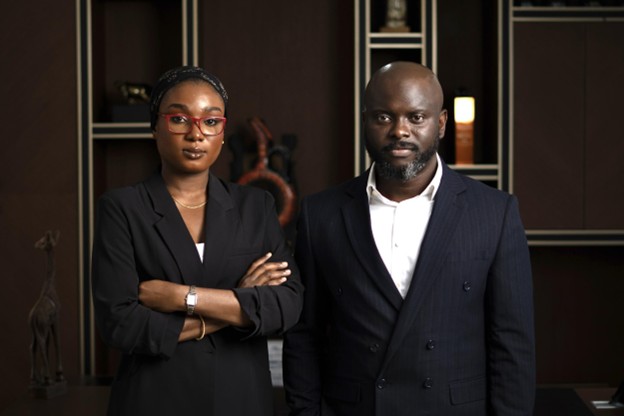
Bada’s appointment follows Zedcrest’s acquisition of RMB Nigeria Stockbrokers and aligns with its strategic vision to deepen market capabilities as it continues to deliver innovative, client-focused solutions that drive growth and strengthen its market position. Lagos, Nigeria – March 2026 — Zedcrest Group, a leading financial services powerhouse with a strong footprint across Asset Management, Investment Banking, Securities, and Financing, has announced its Board’s approval of Simbiat Bada’s appointment as Managing Director, Stockbroking. Adedayo Amzat CFA, the Group Managing Director, Zedcrest Group who made the announcement at a media parley held at the Zedcrest Head Office in Lagos, noted that the appointment will now be vetted by the Securities and Exchange Commission (SEC). According to him, “Bada’s appointment reflects Zedcrest’s commitment to deepening its expertise in securities trading and delivering superior execution, advisory, and wealth creation opportunities for our clients. It also reinforces our ambition to build a best-in-class stockbroking business that is responsive to evolving market dynamics.” Also commenting, Chairman of the Zedcrest Board, Babatunde Sanda, FCA, expressed confidence in the appointment, noting that Bada’s leadership will be instrumental in unlocking new opportunities and delivering sustained value for stakeholders. He added, “We are confident that Simbiat brings the discipline, professionalism, and strategic insight required to strengthen Zedcrest’s position in the equities market.” Simbiat Bada is a certified investment professional with nearly a decade of experience spanning securities trading, asset management, sales, and business development. She holds a bachelor’s degree in Economics from the American University of Nigeria, Yola, and a master’s degree in Economics from the University of Lagos. She is also a member of the Chartered Institute of Stockbrokers (CIS) and a qualified Chartered Accountant (ICAN). Prior to joining Zedcrest Securities, she held key roles at Vetiva Securities and WSTC Financial Services Limited, where she leveraged her expertise in trading, operations, and wealth management to drive performance and support business growth. As part of its long-term expansion strategy, Zedcrest had successfully acquired RMB Nigeria Stockbrokers in 2024, which was subsequently rebranded as its stockbroking arm, Zedcrest Securities. This move strengthened the company’s presence in the equities market, enhanced its trading capabilities, and expanded its offerings across the capital markets value chain. About Zedcrest Group Founded in 2013, Zedcrest Group offers its diverse clientele a broad range of financial solutions, which include Asset Management, Investment Banking, Securities, and Financing. These services are provided through its subsidiaries: Zedcrest Investment Managers (Zedcrest Wealth), Zedcrest Global Markets, Zedcrest Securities, Zedcrest Capital, and Zedvance Finance. For more information, visit www.zedcrest.com.
BoostHer Career & Trade Fair 2026: Everything You Need to Know
May 2, 2026 | Lagos, Nigeria The future is female-powered — and Lagos is about to feel it. Mark your calendars: the BoostHer Career & Trade Fair 2026 is coming to the Regal Hall at Daystar Christian Centre, Ikosi Road, Oregun, Lagos on Saturday, 2nd May 2026, starting at 9:00 AM. Designed to host between 1,500 and 2,000 participants, this is shaping up to be one of the most significant women-focused events the city has seen. Whether you’re a fresh graduate, a seasoned professional, an entrepreneur building your empire, or simply a woman ready to level up — this event was built for you. What Is the BoostHer Career & Trade Fair? The BoostHer Career & Trade Fair is more than a one-day event. It’s a movement. Built around the theme “Empowering Her Future, One Skill at a Time,” the fair brings together career professionals, entrepreneurs, industry leaders, and ambitious women from across Lagos and beyond. The goal is simple: create a space where women can access real opportunities, build meaningful connections, and walk away equipped to thrive in an ever-changing world. What to Expect on the Day Career Sessions & Recruiter Engagement Attendees will have direct access to inspiring career talks, industry insights, and one-on-one engagement with recruiters actively seeking top talent. If you’ve been looking for the right room to be in — this is it. Come ready with your CV, your questions, and your ambition. Digital Skills Training & Hands-On Workshops Skills are the new currency, and the BoostHer fair takes that seriously. Practical, hands-on workshops will cover essential digital and professional skills, giving attendees tools they can immediately apply in the workplace or in their own businesses. No passive lectures — this is learning by doing. A Vibrant Trade Fair Showcasing Women-Owned Businesses One of the most exciting highlights of the day is the trade fair itself. Women entrepreneurs and business owners will be front and centre, showcasing innovative products and services. It’s a powerful opportunity to discover, support, and celebrate women-led businesses and startups making their mark. Networking & Community Experience Some of the most valuable conversations happen in the spaces between the sessions. The BoostHer community experience is intentionally designed for connection — with mentors, employers, fellow entrepreneurs, and like-minded women who are just as hungry to grow as you are. Why You Should Attend This event isn’t just inspirational — it’s practical. Attendees can expect to: No matter where you are in your journey, there is something at BoostHer 2026 for you. Event Details at a Glance Date Saturday, 2nd May 2026 Time 9:00 AM Venue Regal Hall, Daystar Christian Centre, Ikosi Road, Oregun, Lagos Expected Attendance 1,500 – 2,000 participants Theme Empowering Her Future, One Skill at a Time Be Part of the Movement The BoostHer Career & Trade Fair 2026 is a bold, necessary step toward creating economic empowerment and real opportunity for women across Lagos and beyond. It’s where skills meet opportunity, and ambition meets action. The future is being built — come help shape it. 💫 Click here to learn more and apply
Your 2026 Reset: How African Women Can Plan Careers, Money, and Growth With Intention
With the start of a new year, many African women find themselves reflecting quietly. Not just on what they achieved, but on how they feel — tired, proud, uncertain, hopeful, or all of the above. A new year has a way of forcing honesty. It asks questions we often avoid during busy seasons: Am I growing? Am I fulfilled? Am I building something sustainable — or just surviving? Before jumping into new resolutions and ambitious goal lists, it may be more powerful to pause and reset. A reset doesn’t mean starting over. It means keeping what works, releasing what doesn’t, and moving forward with intention. Rethinking Career Growth Beyond Titles For many women, career planning has long been tied to job titles, promotions, or company names. But the realities of today’s work environment have made one thing clear: titles change, but skills create leverage. As you prepare for the year ahead, it’s worth reflecting on what truly moved your career forward this year. Which skills opened doors? Which responsibilities stretched you? Where did you feel underutilised or unseen? Growth in the coming year may not come from a new role, but from deepening your expertise, improving your leadership capacity, or positioning yourself more strategically within your industry. The question to carry into the new year is not just where you want to work, but who you want to become. Approaching Income and Business With Clarity Whether you run a business, manage a side hustle, or earn a salary, starting a new year offers an opportunity to look honestly at your income. Many women equate growth with doing more — more clients, more projects, more hours. But sustainable progress often comes from doing less, better. Which efforts actually paid off this year? Which drained your energy without meaningful returns? Where did you undervalue your time, skills, or ideas? The coming year is an opportunity to choose clarity over chaos. Simplifying your income streams, refining your offerings, and making intentional decisions about how you earn can create more stability than constant hustle ever will. Shifting From Money Survival to Money Strategy For many African women, money conversations are shaped by responsibility — supporting family, navigating uncertainty, and preparing for the unexpected. As a result, financial decisions are often reactive rather than strategic. Resetting your relationship with money begins with awareness. Understanding where your money goes, how it supports your goals, and where it limits your options is a form of self-leadership. As you plan for the year ahead, consider what financial security truly means to you. Is it an emergency fund? Investments? Freedom to make career choices without fear? Money is not just about comfort — it is about choice, agency, and long-term power. Leading Yourself With Boundaries and Intention Burnout has become so common that many women no longer recognise it as a warning sign. Instead, exhaustion is normalised, and rest is postponed for “later.” But growth that comes at the cost of your wellbeing is not sustainable. Resetting for the new year may require redefining what productivity looks like. It may mean saying no more often, protecting your time, and releasing the need to meet every expectation placed on you. Personal leadership is not only about how you show up for others, but how you honour your own capacity. Moving Forward With Purpose You do not need to have every detail of the coming year mapped out. You only need clarity about what matters, courage to make intentional choices, and the willingness to adjust as you grow. At She Leads Africa, we believe African women deserve the tools, community, and confidence to build lives and careers that reflect their values — not just external definitions of success. As the new year approaches, consider this your permission to reset, realign, and move forward on your own terms.
“READINESS IS NOT A DESTINATION”: BELLA DISU’S TEDx TALK INVITES US TO CONFRONT HESITATION AND BEGIN
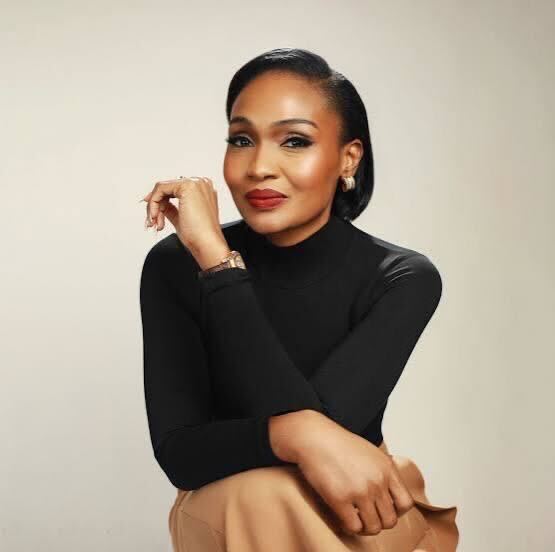
Bella Disu’s TEDx Ikoyi talk, “Say Yes Now: Why Readiness is a Myth,” is resonating widely for its clarity and emotional honesty — not because it targets one group, but because it speaks to something universal: we hesitate at the very moment we need to move. In the talk, she reflects on the quiet weight of waiting — the belief that one more milestone, one more qualification, or one perfect condition is needed before taking a step. Psychologists call this destination addiction: the belief that readiness lies somewhere ahead instead of here and now. Disu shared her own turning point at 38, when she finally met her “whole self” — the creative, the changemaker, the lifelong learner — not through perfect preparation, but through a simple act of courage: deciding to stop walking within the same walls. One of the most powerful lines in the talk underscores the ripple effect of choosing courage: “Saying yes never ends with you… each yes becomes a light for someone else.” Her message is both simple and liberating: • Readiness is not found in advance — it is formed in motion. • Growth begins not when we feel prepared, but when we choose to begin. Say yes once — even when inconvenient or imperfect — and everything begins to shift. Watch the TEDx Ikoyi talk here: Say Yes Now: Why Readiness is a Myth | Bella Disu | TEDxIkoyi
Redefining the Future: How Impact Hub and Bayer Foundation Empower Women Entrepreneurs to Transform Food and Health Systems in Africa and the Middle East

In a world where millions still lack access to basic healthcare and nutritious food, change is being written not in policy papers or boardrooms, but by women entrepreneurs building solutions at the heart of their communities.
IN MY CORNER : How Ivie Osula and Jokotade Shonowo Are Redefining Sisterhood Through Style, Storytelling & Sister Support

A feature from the “In My Corner” campaign a platform where real friendship becomes real power. There are friendships that text you when you’re down. And then there are friendships that pull up, uninvited but deeply needed, when the lights are off and the stage is empty. That’s the kind of bond Ivie Osula and Jokotade Shonowo share a powerful, creative sisterhood built on authenticity, shared vision and an unspoken “I’ve got you” that doesn’t need applause. At the heart of this year’s In My Corner campaign — an initiative spotlighting women who choose collaboration over competition their story unfolds not just in fashion and photographs, but in deep, mutual support. What Is “In My Corner”? In My Corner is more than a campaign, it’s a movement. A visual and storytelling experience created by women, for women, to celebrate the friendships and mentorships that anchor us. Through powerful portraits, honest conversations, and a lens focused on community, the campaign documents the real relationships behind success the ones that rarely make the headlines, but always shape the journey. Meet the Women Behind the Story Ivie Osula is the founder of @DWLonline, a luxury fashion brand reshaping the narrative around power dressing for modern African women. Her designs are intentional — every stitch a declaration of strength and softness, woven together. Jokotade Shonowo is the founder of @Poshclick, a creative studio capturing women and men as they are bold, vulnerable, regal. Her lens doesn’t just see beauty; it reveals truth. Together, they’re redefining what it means for women to be in each other’s corners not just in theory, but in action. More Than Just a Moment — It’s a Movement In an industry that often rewards rivalry, Ivie and Joko choose something different. They style each other’s dreams. Shoot each other’s visions. And stand side-by-side as they climb. Their friendship isn’t performative, it’s purposeful. Built in quiet moments. Sealed through trust. Strengthened by shared ambition and soft landings. Whether they’re working late on campaign visuals or sharing silent support between shoots, what they’ve built is a living example of what In My Corner champions: sisterhood as strategy, friendship as fuel. A Toast to the Real Ones This International Friendship Day, we celebrate the women who show up when the cameras aren’t rolling. Who hold the ladder while you climb. Who don’t compete with your light, they reflect it back at you. Because when you’ve got someone in your corner, you don’t just survive.You soar. To stay engaged with In My Corner, follow @InMyCornercampaign for the latest conversations. For Ivie’s work in fashion, visit @DWLonline and for Joko’s photography, explore @Poshclick. The journey continues, and In My Corner is here to remind us, every woman has a story worth telling.
How This Beauty‑Obsessed Tech Founder Is Giving the Industry a Voice

Layo Ogunbanwo has spent the last year building Splice, a software platform for salons and spas in Nigeria. Now, she’s taking things a step further with the Beyond Beauty Podcast: a platform for raw, real, and unfiltered conversations about the business of beauty. In this Q&A, she shares why she’s doing it, who it’s for, and why it might be the industry’s most important mic yet. 1. Why are you launching a Podcast? And why now? I felt like we needed a place to talk about the business of beauty. About leadership, retention, growth, pricing, burnout, and hiring. The real stuff that salon and spa owners face every day, but don’t always have the space or the language to unpack. Since launching Splice in September of 2024, I’ve spoken with hundreds of beauty professionals across Nigeria. These are some of the most hardworking and talented entrepreneurs I’ve met. But a lot of them feel isolated. They are figuring things out in silos, with no real community or steady access to knowledge. I wanted to change that. The Beyond Beauty Podcast is a place where real people can have real conversations about what it takes to run and grow a beauty business. No platitudes. Just honest, helpful, inspiring stories from people building the industry. It’s our way of giving the industry a voice and support. 2. You’ve worked in tech and product for years. What drew you into the beauty space? Honestly, I’ve always been a beauty girlie. I like to do my nails, lashes, the whole works. There’s something deeply human about walking into a salon or spa. It’s where people go to feel better, to reset, to be seen. I’ve always admired the people behind that experience, especially the women who run their businesses and build from scratch. But my deeper involvement started in 2020. A close friend who owns a salon in Lagos was struggling to keep her operations organised. She was juggling everything by herself, and it was chaotic. So I helped her map out a more structured workflow using some basic digital tools. It wasn’t perfect, but it made a difference. And that’s when it clicked for me that this entire industry was operating without real, centralised infrastructure. That experience pushed me to start researching the beauty and wellness sector more intentionally. I spoke to dozens of business owners, kept hearing essentially the same thing: “We’re figuring it out, but it’s hard.” That gap between talent and tech support is what pulled me in. Beauty businesses are everywhere, but not many people are building for them. That’s the problem I wanted to solve with Splice. 3. The Beyond Beauty Podcast feels very community-focused. Who did you build it for? I built it for the people who are doing the work. The salon and spa owners with no formal support, aestheticians and therapists trying to keep up with industry trends while holding a team together, stylists who are booked out, but still aren’t sure how to scale. There’s so much skill and ambition in this industry, but not nearly enough support or visibility. Many don’t even see themselves as business owners when in reality, they’re doing the full work of entrepreneurs, including hiring, managing clients, handling marketing, and even product development in some cases. This podcast puts their stories at the forefront: the journeys, the challenges, the pivots, and the small wins that don’t usually make it into the spotlight. 4. What stories are you most excited to tell through this podcast? The honest ones. I’m particularly excited about the stories that go beyond aesthetics and “how I started” and into the heart of “how I’m surviving.” Stories about beauty business owners who didn’t know as much as they do now six months ago, who have had to let go of staff, who’ve mastered how to deal with the no-show problems, who’ve struggled with and figured out retention. I want to hear about pricing anxiety, customer drama, burnout, rebranding, breakthroughs, and bounce-backs. There’s a lot of polish in the beauty industry, and that’s great. But what we don’t see enough of are the layers underneath, the things that every business owner goes through but rarely shares out loud. Those are the stories that make people feel less alone. And those are the stories that teach. So, yes, we’ll talk about growth, strategy, and systems, but we’ll also talk about doubt, mistakes, and the bounce-backs. Because that’s real life. Because these stories don’t just inspire, but reflect. 5. How does the Beyond Beauty Podcast connect with what you’re building at Splice? They’re deeply connected: same mission, different formats. With Splice, we’re building the software that helps beauty professionals manage bookings, reduce no-shows, automate reminders, track client history, all of that. It’s the operational backbone. But with the Beyond Beauty Podcast, we’re building the voice. The narrative. The space where beauty professionals can hear from people who’ve walked similar paths, where they can learn what’s working, what’s not, and how others are growing through it. One supports the “how to do it.” The other supports the “why it’s worth it.” Too much innovation can slow tech. But I’ve always believed that community and infrastructure should grow together. If we only give people tools but no sense of identity or belonging, they’ll struggle to sustain momentum. But if you give them both, they build better businesses and stay in the game longer. 6. You’ve had some amazing guests already. Any common threads or surprises? Yes, definitely. One thing that keeps coming up is how much beauty professionals are learning on the job. There’s no formal blueprint for how to run a successful salon or spa in Nigeria, so people are figuring it out as they go, through mistakes, word of mouth, and watching others. And that’s why the conversations are so powerful. Guests are open. They share what they wish they knew earlier, the turning points in their journey, and the systems that helped them grow. For example, in
Tailored for Success: DWL by Ivie Osula Brings Chic and Confidence to the Workplace.

There’s something about a woman who walks into a room and owns it not with noise, but with confidence & presence. That’s the kind of woman Ivie Osula dresses.