
Women at Wave: Empowering Young Africans Beyond the Limits
Wave Academies is a vocational training platform which aims to empower millions of disadvantaged West African youth. With skills that transform their mindset and employment opportunities that enhance their social mobility. Misan Rewan is the founder of WAVE Academy. Born and raised in Nigeria, Misan plays a vital role in the transformation of Nigeria’s education and skill development sectors. She has worked in management consulting with The Monitor Group on a wide spectrum of projects in both the private and public sector. She also supported aspiring Ivoirian entrepreneurs through, TechnoServe’s Business Plan Competition; and developed a scholarship administration model as a consultant with the Center for Public Policy Alternatives in Nigeria. Misan supported Bridge International Academies’ international expansion strategy, and is a Draper Richards Kaplan Social Entrepreneur. Noella Moshi is the Programs Lead at WAVE. She was on the founding team of African Leadership University (ALU) Education where she directed Marketing, and worked on the curriculum. Noella co-developed Goodbye Malaria, a social impact venture that works with private and non-profit organisations to eliminate malaria. She is a Mandela-Rhodes scholar, and a Praxis Fellow. Ifeanyi Okafor grew up in Lagos, Nigeria. She is passionate about helping young people discover themselves. Aissatou Gaye is a Senegalese citizen who works as a Finance Coordinator at WAVE. She is currently helping the organization draft its way towards financial sustainability through various revenue diversification and cost reduction strategies. Aissatou is also the co-founder of YAWcamp, a summer camp that focuses on developing critical, creative and proactive thinking among Senegalese youth. Amina Lawal is the training operations coordinator at WAVE. She is skilled in communication, research and creative writing. She firmly believes that having the balanced 360 degrees life is possible and steadily strives to have such balance. When she is not working, Amina writes for various blogs. We share the amazing story of these great women and how their awesome work at WAVE is creating the next generation of change drivers. What was the driving force that lead to creating WAVE? Lifting John Stott’s definition of vision as: a deep dissatisfaction with what is and a clear grasp of what could be, I’d say the driving force behind starting WAVE was a deep dissatisfaction with the state of affairs for West African youth. There are over 40 million unemployed youth in West Africa, but beyond the statistics are real faces, people like you and I, whose reality is chronic unemployment, disillusioned poverty and a loss of dignity that leads to growing levels of frustration across the region. WAVE was an attempt to stop complaining and to do something about it. So a few friends got together in a room and started designing a solution. Enter WAVE – an attempt to level the playing field for hardworking young people by teaching them the skills required to get a good job, increase their incomes and build a brighter future What has been the biggest challenge(s) you’ve faced and how have you crossed each hurdle? Biggest challenge faced has probably just been me dealing with my own insecurities (imagined and real) and coaching has been helpful in crossing the hurdle. I don’t hear enough leaders in this part of the world talk about their shortcomings and how they’ve built support networks to deal with them, and I’m no different. So overcoming has been through everything, from having a coach who helps bring self-awareness to my “automaticities” (my default way of responding) and helps me generate my best self, to family and friends who “hold the space” for me to JUST BE (rather than DO), to the serenity prayer that helps me discern where to focus my brain cells, effort and anxiety. I could give you a laundry list of other challenges faced but the critical challenge/hurdle is dealing with me first so I can see most other challenges as opportunities for learning and growth. [bctt tweet=”I see most challenges as an opportunity to learn and grow” username=”SheLeadsAfrica”] What values have been crucial to your success in the business world? Inclusiveness – Most of what drives me comes from a simple notion I’ve had since I was a kid, of not wanting poor people to be poor. At WAVE today, this value translates as “Putting People First” – from the people we exist to serve, to our team who does the serving to our partners who support our service. Our clients see how we have designed our model, service delivery and feedback culture to put them first and so are able to be very forgiving when we slip up, give us feedback and grant us a second chance to make it right. What principles and skills are necessary for young people to possess in order to excel in today’s world? There are three things I think are important for success: Knowing your “why”: Understand what motivates you, and connect it to whatever work you are doing. For example, I care about learning for the sake of personal growth. That’s my “why”. As long as I am doing work that pushes me to stretch beyond my current capabilities, my “why” is being fulfilled. Learning from everyone: Everyone has something to teach us, and if at any point we aren’t learning, then we need to look harder for the lessons. One of my favourite things about working at WAVE is that each person brings insights from their unique experiences; from the driver to an intern, to the people we serve. Trusting yourself. No one knows you better than you know yourself. Take advice from everyone, but at the end of the day, whatever decision you make must come from you, so that you can stand by it. That way you avoid regret, and you avoid living someone else’s life. What innovations have helped in achieving the set goal at WAVE, and how exciting is it to train young people of diverse background and see them become more equipped Africans? Our goal at WAVE is to increase income for unemployed youth. We do
Women at Afroes: Anne and Gathoni are Leading the Mobile Gamification Path
Afroes , short for ‘African heroes’, is a mobile-first enterprise. They’re on a mission to position African youth for productive futures by, innovating in skills acquisition, engagement and connecting to opportunity. Anne Githuku-Shongwe is a Social Entrepreneur, Social Innovator, a Development Professional and a thought leader on digital and social innovation. Anne founded Afroes in 2010, as a digital enterprise. Creating gamified learning solutions designed to reach, teach and connect Africa’s young women and men to life skills, through their mobile phones. Her vision is to revolutionise learning in Africa, with a focus on delivering positive, Africa-focused mobile phone entertainment to the youth market across the continent. Anne and Afroes have received multiple awards including, the prestigious Schwab Foundation/World Economic Forum Social Entrepreneur of the Year 2013. Gathoni Mwai is a Sustainable Development professional. She has over 7 years experience working on social development issues in Africa, and on the use of data, technology and innovation for development. Having been brought up in Kenya she is passionate about the country, its people and seeing them all thrive. Gathoni joined Afroes as project manager for the development of the PeaceApp award winning Haki II: Chaguo Ni Lako, ,a mobile game that was used for peace building in Kenya, in the run up to the 2013 elections following the post election violence experienced in 2007-8. She recently completed her Masters in Sustainable Development Corporate Responsibility. Currently, she takes on the role of Kenya programme manager, where she is tasked with scaling the Afroes product range and developing partnerships. Join us on this inspiring journey as we share the stories of these two front-running African women in tech. Tell us the story behind Afroes Afroes (the name comes from a play on the words African Heroes and Heroines) was inspired by conversations with my children. I was worried that they weren’t being exposed to any positive African media content; and that their ideas and aspirations for Africa were being influenced by the Western media’s pervasively negative messages about the continent. I wanted to do something to change that. But it was whilst I observed my son excitedly relating things he’d learned while playing the computer game, Civilisations, that I realised that, children who play computer games are a captive audience for anything you want to teach them. I knew from that point onwards that I needed to harness the power of computer games, to deliver positive messages to African children. Given the growth of mobile phone usage and ownership across Africa the idea of computer games evolved to mobile phone games. How effective has the Afroes’ strategy been, in achieving its set goals and what successes have you recorded in recent times? The Afroes strategy has had to be very adaptable to the changing times, technology and issues that affect African youth. At our core ,our main goal has been to inspire and empower young Africans with 21st Century skills, which will help them transform their lives and the lives of people in their communities. We have set out to build partnerships with like-minded organisations that see mobile phone technology as a medium to change mindsets and positively impact young Africans. In the last 3 years we have been lucky enough to receive the following awards: Winner of PeaceApp – promote digital games and gamified apps as venues for cultural dialogue and conflict management, 2014; Winner, Gender Mainstreaming Awards, Empowerment Initiatives, South Africa, 2014; Winner, ICT Innovation Award for Gender Youth and Vulnerable Groups, Kenya, 2014; To date we have had over 800,000 users download our games and 100,000s more through offline activations. [bctt tweet=”Our core our main goal has been to inspire and empower young Africans with 21st Century skills” username=”SheLeadsAfrica”] What challenges have you faced in the course of running your business and how have you been able to walk through them? Sustainable financing has been a major challenge. We have been lucky enough to have our games fully funded by our project partners, but this has been quite limiting. Another challenge we have had is convincing programme/ solution stakeholders to adopt an alternative media/ mediums, strategy and methodology to reach and engage their traditional intended audience; as well as appeal to a new demographic of social issue based content advocates, stakeholders and consumers. How important is technology for Africa’s future and how well has the African market tapped into it? Technology is important on a global scale. What is more important for Africa is appropriate technology to enable sustainable growth and livelihood development for all. The African markets have not only tapped into the technology, but are leading the charge in technological innovation. From Mpesa (mobile money), to the use of drones to transfer essential goods. Recent statistics have showed that 2/3 of young people own a smart phone, giving them access to a world of information, allowing them to tap into new ideas and adapting it for themselves. [bctt tweet=”Technology is important on a global scale” username=”SheLeadsAfrica”] If you had to binge watch any movie series, which would it be? The Wire – because it’s on my watch list but I’ve never watched it. Tell us about the Job Hunt game launching soon and the concept behind it JobHunt is a mobile game designed to simulate the online/ digital work experience. The concept of this game is to create awareness on digital jobs and the opportunities to earn an income for young people. In the game you bid for jobs, improve skills and ultimately build the skills required to win jobs in this space. What is the greatest lesson you’ve learnt on your entrepreneurial journey so far and how has it helped you in the course of your work at Afroes? Being an entrepreneur is not an easy life, very often you need to be motivated even when things may not be working in your favour. There is this image of a man digging in a cave with a huge diamond just a few digs
Dumisile Mphamba: Striving To Maintain Excellence, As A Form Of Worship
Dumisile Melody Mphamba is a 19-year-old Zimbabwean young lady who will be starting her undergraduate studies at Stanford University, this fall, under a full scholarship. Growing up in a country with a ‘broken’ health system, she aims to contribute solutions to eradicating the inequity in the healthcare sector. Dumisile hopes to becomes a medical doctor and public health professional, who focuses her career on optimizing access to healthcare, for low-income Zimbabweans. She describes herself as an artistic scientist. During her high school days, Dumisile co-managed 26 extracurricular clubs including: Public Speaking Captain and Toastmasters Vice President. She is also an active She is a Worship Leader, actress, Youth Music Director and volunteer in her community. Dumisile is the oldest of three girls, and lives with her parents and sisters in Harare, Zimbabwe. In this interview, she takes us through her incredible story to Stanford… [bctt tweet=”My core belief is that I was created to praise and please the Lord” username=”SheLeadsAfrica”] What has been your motivation for excellence and what impact have you made as a result? My core belief is that I was created to praise and please the Lord. What better way to honour my Creator and Source than to give Him my best and nothing less? In this same regard, I take pleasure in developing other people, so that whether they share my spiritual beliefs or not, they can live to get the very best out of life, and share the very best of their gifts with the world. I do this in many ways, my particular favourite being, as a mentor and Youth Group Leader in my church, as well as the Youth Music Director and Worship Leader. In addition to that, as a Cultural Captain and leader in my school. I believe that, by striving to maintain excellence as a form of worship, I inspired several of my schoolmates to pursue academic, extracurricular, sporting and other equally important forms of excellence, and thus obtain a sense of fulfillment. [bctt tweet=”By striving to maintain excellence as a form of worship, I inspired several of my schoolmates” username=”SheLeadsAfrica”] Take us on a walk through your journey to attaining a full scholarship at Stanford University? I began considering applying to the US for tertiary education when my school Guidance Counsellor suggested that I consider it as an option. Anyone who knows me, knows that at the time (I was 17) I had made a solid plan to complete my GCE A-levels, pass and go straight to medical school, without going through the relatively complicated American path to becoming a medical doctor. It took a lot of convincing from my Guidance Counsellor and my mentor, Dr Charlene Kembo-Chideme. But, I joined EducationUSA Harare, took the SATs, sought guidance from the EducationUSA advisor and fellow Zimbabweans in the USA (in crafting my application essays), applied, and the rest is history. I was accepted into the University of Pennsylvania and Yale University, also on very generous scholarships, but Stanford had always been my dream school, and their package was the most generous of the three. So I am very grateful for having such an easy choice to make! What principles have been fundamental to you and why? My defining element is my constant motivation to please God, and pursue a close relationship with him. But, this was not always my conviction. When I was about 14 years old, I experienced a time of loneliness and rejection by friends I had trusted for years, as well as tragedies that led to angry questions: What was the point of living? What was the point of God? It is then that I began to realize, through prayer, introspection, and a bucket load of tears, that my job was not to understand why things were the way they were. But, what was important was for me to flourish in those circumstances, and please God by doing my personal best, no matter what my surroundings looked like. [bctt tweet=”Flourish in your circumstances, no matter what your surrounding looks like” username=”SheLeadsAfrica”] While in high school, you balanced having an outstanding grade while managing over twenty-six extracurricular activities. How did you achieve that? The most important element was my close relationship with God and our often brutally-honest conversations. I also received constant encouragement from my parents, and had a strong support structure of older sisters, particularly my mentor, who affirmed me especially when I needed it. I also have to mention my artistic outlet. I studied only science subjects at Advanced Level, and so it became increasingly important for me to deliberately let out the artist in me on stage, through public speaking, theatre, music and worship. What qualities are essential for young Africans? Resilience is key. One of my favourite quotes is “A river cuts through the rock, not because of its power, but because of its persistence.” – Jim Watkins. As young Africans, we must believe in the unique gifts and ideas we possess. We must be resilient enough to seek new ways of pursuing our goals if ever we fail, and we must refuse to allow our gift to die without being tapped into. I believe that leadership is the ability to use our gifts to unite people; Towards a vision that benefits followers, and to inspire them to develop their own vision for their lives, so that they may use their gifts to, in turn, benefit the lives of others. [bctt tweet=”A river cuts through the rock, not because of its power, but because of its persistence -Jim Watkins” username=”SheLeadsAfrica”] What are your plans for Africa and Zimbabwe in particular in the coming future? My goal is to become a medical doctor and public health professional, who focuses her career on optimizing access to healthcare for low-income Zimbabweans. I look forward to collaborating with many like-minded individuals, both in Africa and the world at large, who are also passionate about developing healthcare infrastructure in
Dr Yabome Gilpin-Jackson: My work is about developing our human capacity to be, think and do things differently and better
Dr. Yabome Gilpin-Jackson was born in Germany, grew up in Sierra Leone, and completed her studies in Canada and the USA. She is a social scientist, organization consultant, academic and writer. Dr Yabome Gilpin- Jackson considers herself to be a global African, dreamer and storyteller – a curator of African identity and leadership stories. She’s been named International African Woman of the Year and Emerging Organization Development Practitioner 2017. The author of Identities: A short story collection, and initiator and co-editor of We Will Lead Africa, Volume 1. Best known for: Her laugh. Yabome, who is married and the mother of 3 children, has also published several journal articles and book chapters and continues to research, write and speak. Most recently at Princeton University – on the importance of holding global mindsets and honouring diversity and social inclusion in our locally global world. What is We Will Lead Africa? We Will Lead Africa is a platform for inspiring continued change and transformation on the African continent, in two ways: First, we collect, curate and share the stories of everyday African leaders who are making a real impact on the progress of the continent. Second, we encourage networks of everyday leaders to gather in their communities to share, learn and inspire each other to continue taking actions that make a difference. At our root, our work is about sharing inspiration and action, through the power of storytelling. We know that the personal narratives of ordinary everyday leaders are in fact extraordinary. Our first volume shows this powerfully. It reminds us everyday that Africans are taking charge of their destinies and futures, despite popular opinions. [bctt tweet=”Africans are taking charge of their destinies and futures, despite popular opinions” username=”SheLeadsAfrica”] What inspired you to create We Will Lead Africa? My inspiration came from a deep desire to be part of the movement of Africans reclaiming our own narratives. When you live in the West/Diaspora, you are bombarded by news, images, and everyday negative stereotypes, that imprint the challenges and deficits of the continent on entire populations that don’t know any different. As this is perpetuated, Africans ourselves become hooked into a sense of helplessness and hopelessness, even when we know that the dominant view is an incomplete one. We do not hear about all that is going well, the innovations occurring, the industries emerging and expanding, the people and groups who are no longer waiting for our political leaders and foreign aid to fix all our problems. As we lose hope, our conversations become like the very dominant Western narratives we are subsumed in. For example, I received a call for submissions to the Kwame Nkrumah International conference a few years ago and the list sparked a deep desire for change in me. The list was focused on all the historical issues that have led us to the political leadership challenges we face on the continent. Then, I thought what about leadership NOW and into the FUTURE? What does that look like? That was what sparked the idea for We Will Lead Africa. When I met my co-founders and co-editors, Sarah and Judith, they shared similar thoughts and sentiments and off we went. It’s important to say also that we are not interested in a one-sided view or only the positives…we want to know and be inspired by the fullness of stories of everyday leaders. How do they navigate and overcome the challenges they face everyday, to solve complex problems on the African continent? [bctt tweet=”My inspiration came from a deep desire to be part of the movement of Africans reclaiming our own narratives” username=”SheLeadsAfrica”] What one story had the most impact on you? This volume is so full of inspiration and examples of courage! I was impacted by all of them in different ways. But, the one that I keep remembering though is, Chris Mulenga’s story about starting a program to help get street children recognized for their resilience and innovative capacities and reunited with their families. Chris describes how he has done this work that has a 90% success rate. He describes himself as poor when he started and says he is still poor. Yet at the time of writing the book he had helped over 6,500 children and has been recognized with international humanitarian awards. He attributes his inspiration to the value of being hospitable-which he learned as a child- whereby his family would share what they had no matter how little; and to the orientation of service to the poor that comes from his Catholic faith. I just keep thinking about the resources available to so many of us, and yet, we are stopped by the myth that we do not have enough to make a meaningful difference to the lives of others. What if we just tried? What if we just started now, with whatever we have? What are the 3 main steps you’d advise for an aspiring author ? 1. Get clear what story you are passionate about telling and why 2. Get clear who you want to tell it to 3. Be focused and determined…and just start writing. There really is no magic to it – it’s 90% determination and the willingness to make time to do the work needed. Growing WWLA brand… Our priorities are growing We Will Lead Africa networks and encouraging other African leaders to take on editing volumes as well. The three of us have identified a volume we will work on next, and we are documenting our process, which we will make available to others interested in editing a volume as well. For now, stay tuned in the next 18months to 2 years for the following volumes: We Will Lead Africa: Technology; We Will Lead Africa: Women; and We Will Lead Africa: Governance. Our priority is in growing our impact in inspiring everyday Africans to take action for the change and transformation of the continent. We are in this for the long haul and are choosing to go
Fatima Babakura: Social Media Made Our First Collection Successful
Fatima Babakura is a 21-year-old final year student at McMaster University and the founder and creative director of Timabee, a luxury accessory brand which she created out of her passion for sketching designs. Within 3 years of starting the business, Timabee has won a best fashion brand of the year award. Fatima has also been listed among 22 women redefining luxury in Africa by the Lionesses of Africa group, and has also received the WEF “Iconic Woman” award in 2017. Her passion for women and girls has inspired her to continue to grow Timabee, as well as start other businesses that would create job opportunities, especially in Africa. She is also the co- founder of Signature Boutique in Canada, a multi-brand boutique that aims to showcase the works of African based designers to the world. Fatima enjoys cooking, traveling and sharing her success story. [bctt tweet=”I have always loved accessories and handbags” username=”SheLeadsAfrica”] What inspired the Timabee brand? I have always loved accessories and handbags. Growing up, I remember being called “mummy’s handbag”, not because I followed her everywhere as that title would suggest, but because I was always holding my mother’s handbag when we went out together. I guess it was only natural that after I sketched a handbag, I became very curious to see it come to life. That is how Timabee started. What other services do you offer? Timabee currently has a bespoke section that allows the client to be a part of the design team for their handbag. You get to pick your leather, style and a whole lot more. I think it’s really cool. Do your services include any form of offline transactions or are they strictly online? Kindly tell us how the sales chain works. Being a full-time student and juggling a business doesn’t allow much time for offline interactions but I find ways to work around it.We have events from time to time and I also offer one on one bespoke sessions, depending on my availability. I am responsible for the bespoke side of design, amongst other things, so my schedule definitely affects those sessions. [bctt tweet=”With everyone being on social media these days, it is the best way to connect to a wider audience” username=”SheLeadsAfrica”] What are the major social media channels you make use of? Instagram and Twitter. Instagram is our first love. It made our very first collection a success. What has been the most challenging moment on social media so far? So far we haven’t had any challenge’s with social media, thankfully. What would your response be to someone who is contemplating whether or not to use social media as a marketing tool? I think it is a very great tool and it is inexpensive too. With everyone being on social media these days, it is the best way to connect to a wider audience. I would definitely say do it! Are you in the fashion accessories industry? Share your story with us, let us know more about you and your story here.
Just Omomo Ibe: Rule as a Boss, Rock like a Mum, Slay as a Wife

Business strategist and work- life balance expert, Just Omomo Ibe, is helping women create a balance between their work and personal life, so they can chase their dreams and make money while at it. She also helps individuals identify the various opportunities in their business to make more profit. Just Omomo Ibe has been in the banking sector for over seven years and is the founder of The Just Ibe Network; thus living her dreams while been an employee. She is involved in speaking engagements, coaching calls, online courses and business consulting for SME’s. Recently, she launched a Youtube show which focuses on motivation and strategies from experts in various fields, the channel is aimed at further helping her target market achieve success in their life and business. [bctt tweet=”It’s an act of self sabotage to neglect your dreams because you have a job” username=”SheLeadsAfrica”] Tell us about The Just Ibe Network The Just Ibe Network is a group of company that comprises our consulting firm, training and mentorship platform, it also includes an online training academy and media arm. At The Just Ibe Network we pride ourselves in delivering superior quality trainings, coaching and consulting for our esteemed clients both offline and online. What market research did you carry out in the course of starting your business, and how did you go about it? The first research was that of my competitors, I needed to find out what my competitors were offering and what gap they are not filling. This helped me make informed decisions as to how best to penetrate the market. A lot of businesses offer homogeneous products, therefore market research helps you understand how best to position your business in a way that not only meets the needs of your consumers but also positions your business as authentic. [bctt tweet=”Innovation keeps you in the business long after your competitors have gone” username=”SheLeadsAfrica”] What challenges have you faced so far in the setup of your business? The greatest challenge I faced in setting up my business was creating time to actually execute my plans; creating and fine tuning strategies that would keep me relevant in the market place today and always. Innovation keeps you in business long after your competitors have gone, so you must constantly innovate. What are your launch plans once your business registration is completed? Honestly a business registration isn’t stopping any major launch of my business, as all facets of my businesses are in full gear at the moment. The registration would just allow me operate a corporate account in the designated banks. So my take is it doesn’t matter if your business name is ready or not, keep adding value to your ideal clients and grow your business regardless. [bctt tweet=”It doesn’t matter if your business name is ready or not; keep adding value to your ideal clients and growing your business” username=”SheLeadsAfrica”] What inspired the book ‘Rule as a Boss, Rock like a Mum and Slay as a Wife? Rule as a Boss, Rock as a Mum, Slay as a Wife is a book dedicated to helping women create a work life- balance. Last year I started my career in public speaking, leveraging on several online platforms and offline avenues, despite been a full time banker, wife and mum. So people started asking me how I was doing all I was doing, so conveniently. I started documenting steps I have taken that helped me overcome my otherwise very tight schedule and results I achieved. This book is aimed at providing practical steps that can help women fully integrate all aspects of their lives, thus living a balanced and fulfilled life. What kind of investors and partnerships are necessary for your kind of business and what strategies are useful in achieving this? Media investors are required for the talk show arm of my business, which is targeted at providing strategies that would help entrepreneurs succeed and grow in business. Corporate investors also play a major role, especially companies who have CSR projects, ours can successfully pass as a CSR project aimed at helping young and budding entrepreneurs. Who is the one person from anywhere on the globe, you would love to interview and why? The one person I would love to interview is President Barack Obama. He is the one person I look up to the most, because he is probably about the best public speaker that exists in this day and age. [bctt tweet=”If you can think it you can definitely birth it” username=”SheLeadsAfrica”] What quote resonates with your business and how does it inspire you? We at The Just Ibe Network live by this mantra: if you can think it you can definitely birth it. So dear corporate ladies, your dreams are valid, they are your dreams for a reason, it’s an act of self sabotage to neglect your dreams because you have a job; the world needs you to live to the fullest. Have you mastered the art of work-life balance? Share your story, let us know more about you and your story here.
6 steps to quit your current job for your dream job
[bctt tweet=”“Luck is what happens when preparation meets opportunity”” username=”SheLeadsAfrica”] A little while ago, I got a text from a good friend to ask for my advice. She wanted to quit her current job to go pursue something she was passionate about. But, she was having trouble mapping out a plan. Thinking through how I’ve handled similar situations in the past. Here is a summary of the advice I gave to my friend on how to quit her job in 6 steps. Pick a date and plan your exit strategy It all starts with having a plan. Decide for yourself what is the absolute last day you can see yourself being in your current job. It can be 3, 6 or 12 months from now. Write it down somewhere you can easily refer back and be reminded of the commitment that you’ve set. Once you’ve picked an “I’m outta here by X” date, then you need to come up with a specific and detailed plan of all the things you need to do in that time-frame. This plan will map out priorities which will enable you to leave conveniently and support your transition into your dream job. Know exactly where you want to go What is your dream job? What are the profiles of people in the positions you aspire to? Identify 5 of these scenarios. How do you stack up against the competition? Are there any common threads across these profiles and are these things that you see in your own profile? If yes, great, if not, then you have to get serious about acquiring those skills, attributes, qualifications. Focus on building your brand In this age of social media, it’s all about perception. Sometimes you get that next job not because you’ve been the best at your current job, but because you’ve learnt how to get better at promoting yourself and your work. These days, its not enough to just “stay in your own lane”. You have to find a way to strategically be seen and heard, while remaining authentic and true to yourself. Think about your long-term goals and ask yourself whether the things you’re doing now are in line with that vision. Network, network, network Like it or not, you have to put yourself out there, be it virtually or in person. Attend more events where the people who have the job you aspire to, will be present. Challenge yourself to talk to these people, ask them questions, get their contact details and be proactive about following up with them. Approach people, not with the intention of showing off, but rather to find out what they are interested in and see how your interests align with theirs. Be purposeful and intentional about networking and watch it pay off. Put in work behind the scenes At the end of the day, when the right offer comes your way, you’re still going to have to back it up with experience. So whether you need to go back to school; take a course online; spend more time at your local bookstore; or schedule coffee dates with your mentors; the reality is that you are going to have to put in work. Turn the job hunt process into a fun experience. Give your CV a makeover and add new certifications to your LinkedIn profile. Talk to people you look up to and realize that all of your goals are within your reach. You must be willing to work hard for the life you want! Be your biggest cheerleader Finally, learn to be your biggest cheerleader. But also surround yourself with a tribe of people that are committed to your success, both personally and professionally. Keep working towards your goals. Know that when you cross that line, all the people who love and care about you will be right there cheering you on. Have you ever left a job for your dream job? What steps did you take? Let us know more about you and your story here.
5 tips on how to talk your way into a promotion at work

Do you feel like you are stuck in a rut in your current position? Is the thrill of having a challenge long gone ? Are you having a hard time connecting the dots between how your current position will lead you to the position you aspire to be in some day? If you’re feeling any of the above, the obvious choice might be to move on from your current job, to “greener pastures”. However, there is another alternative. Maybe all you need is a “current job makeover”. I applied the 5 tips below when I found myself in a similar situation and the result was that I got a promotion, a significant salary increase and renewed passion and excitement for my job. [bctt tweet=”In the end, facts win over feelings when it comes to your professional life” username=”SheLeadsAfrica”] Make yourself indispensable From day 1 when I started my current job, I was eager to prove that I could do the job better than anyone else who had come before me. I came in early and left late. I often took work home in the evenings and on weekends (I had just moved to a new city in a new country so, in a way, work was also my solitude). I asked lots of questions. Read as much as I could to help me understand the new industry I was working in. When the opportunity to do tasks outside of my job description came up, I jumped at them immediately. Soon I started to see that my boss was getting more comfortable letting me do things that were technically above my pay grade. Work hard to make yourself indispensable. Figure out what you still have left to learn In the early days, I would sit in meetings with my boss and the higher ups, and realized that half of what they were saying was Greek to me. Granted, I was doing a kick ass job in my little corner, but there was so much about the work that I had no clue about. I made it my personal mission to learn from every member of the team, by offering to help them out with various assignments. The more I learned, the more I realized that the higher ups in my team started to pull me into the inner circle. Eventually, they even started asking for my opinion about things. Pitch a new position which reflects where you are trying to go Realizing that I could do so much more in this field was probably what brought on the itch to leave in the first place. Suddenly my role became too small and too confining. On one hand, I wanted to grow and take on even more responsibility. Bur on the other hand I knew that I did not have the over 10 years experience the colleague next in line had. What to do? I drew up a list of the things in my current job description that I wanted to keep doing; the things outside of my job description that I wanted to do more of; and the things that I wanted to learn to do. In doing this exercise I came up with a whole new job description. I pitched this idea to my boss. She took my proposition seriously and brought this to the attention of the higher ups. After some deliberation and modification; they agreed to create this new position for me. Back up your request with facts I didn’t just rock up into this meeting and demand to have them switch things up for me for no good reason. I took the time to document every single thing that I had done on the job, including the things that were outside my role. From the big things where I’d helped out with projects in other countries, to the little things like the new initiatives I’d spearheaded within our country team. For every new task and responsibility, I included in my new job description, I backed it up with examples that showed that I was up to the task. In the end, facts win over feelings when it comes to your professional life. No one is going to hand you something just because you ask for it. People are never going to pay you what you think you’re worth. You’re going to have to get in there and show yourself as worthy and then claim what is yours. Keep your cool and be prepared to walk I remember walking out of the meeting thinking “What if my boss takes this to the higher ups and they say no? Then what?” I knew that if it came to that then I would have to make a decision to leave. If you realize that you are in an environment that is not invested in your growth and is not helping you actualize your full potential, then I think that is always the best time to walk away. Luckily for me, I didn’t have to. A week later, they came back with an offer that was even better than I could have imagined. So I stayed, and I’m committed to growing but also contributing to the growth of my team; and doing my part to help them achieve their objectives. Have you been in a similar situation at work? Let us know your story here.
Nneka Obianuju Onubogu: I have never felt inferior because of my gender
Read how Nneka Obianuju Onubogu a Mechanical Engineer; and currently a research assistant at Universiti Tunku Abdul Rahman Malaysia, is unperturbed by gender stereotypes in the industry. A Harvard Business Review article of 2016, was an answer to an inquiry of ” why do so many women who study engineering leave the field?” And one of the reasons given was “gender stereotypes”. So, if you are contemplating abandoning your career in one of the STEM fields due to gender stereotypes or any other reason, before you throw in the towel, wait! [bctt tweet=”I have a passion for fixing things” username=”SheLeadsAfrica”] Having a role model and following your passion makes it easy Nneka’s motivation for pursuing a career in mechanical engineering were influenced by two things: “First is my dad, who is a practicing Mechanical Engineer. I admired and still admire him so much that I wanted to be just like him. Secondly, I have a passion for fixing things. I am very inquisitive on the mechanics behind any machines’ motion. Right from childhood, I had a habit of unscrewing all my toys and fixing them back over and over again.” When you are passionate about anything, it will be very hard for you to throw in the towel, especially when the going gets though. [bctt tweet=”being different means making a difference anywhere you go and anywhere you find yourself” username=”SheLeadsAfrica”] Remember that you are a woman with talents and abilities Being a ‘woman’ should not make you feel less than a human being when assigned to male dominated teams, you are as capable as your male colleagues! Nneka says “Our research team actually consists of all men (Professors, Doctors and lecturers) and one lady (myself). We treat each other equally and there has never been a period when I felt inferior because of my gender”. When you still feel overwhelmed,borrow a page from Nneka’s book,”sometimes I feel like ‘a woman in a man’s world’ hence, I give my best contribution to my team”. Nneka is currently working on a project tagged ‘Wide acceptance angle optical fiber-based day- lighting system using two-stage non-imaging solar concentrator’. “This is a project sponsored by the Ministry of Energy, Malaysia”. The papers can be found in the links below: http://www.sciencedirect.com/science/article/pii/S187661021 http://www.sciencedirect.com/science/article/pii/S030626191730750X [bctt tweet=”I have met many ladies like me who are in male dominated career paths and they also strive hard to be the best and make a difference” username=”SheLeadsAfrica”]Blend in Whether you are in a local or global community, do not isolate yourself. Nneka, although from Africa, found herself working and studying in Asia. She quickly learned the language and befriended some locals. “Even though my University is generally Chinese dominated, everyone speaks English and every lecture and research is conducted in English. Irrespective of that, students and my research team members still switch to Chinese language when they discuss within themselves. This is not a problem for me as I have learned the Chinese language (conversational) and I can understand what they say. Right now, I am a professional at eating local foods with ease. I am also the only foreigner (African) in my office, but I still participate in every event weather Chinese, Malay or Indian”. Conquer any inferiority complex by actively making a difference Nneka’s slogan is ” Being different means making a difference anywhere you go and anywhere you find yourself”. She adds that “the fact that you are in a career path where you are the only lady in a team of men is the key reason for you to stand out”. Some African people say, ‘Mechanical Engineering is not for ladies; a lady should be a teacher, a lawyer or even a house wife’. I can boldly say from experience that it is a blatant lie! “I have met many African ladies like me who are in male dominated career paths, who also strive be the best and make a difference. This should inspire other women who have dropped out to get back on their feet and even do better” she says. [bctt tweet=”… I show them that Africans are not racist by braiding the hair of the kids for free.” username=”SheLeadsAfrica”] Making a difference includes contributing to the community you find yourself. Nneka does this by using one of her skills to make children smile. “I have made an impact in the lives of the locals here, especially via my hair braiding skills. I was so surprised when I made it to the Chinese newspapers for just that little kind gesture “. In addition, Nneka has many solar technology ideas that she intends to implement when she arrives in Nigeria. You see why she just can’t turn her back? When you are full of dreams and know that the world is waiting to feel your impact, you wont turn back! Networking is one the keys to staying motivated Networking is today’s currency to getting up the success ladder and staying motivated. Nneka advises those in a global career and STEM fields to “try creating a network with people who are pioneers in that career path. In that way, they stay motivated and become significantly better”. Are you in male dominated field/ industry? Let us know more about you and your story here
Flo Awolaja: Don’t take your talent for granted
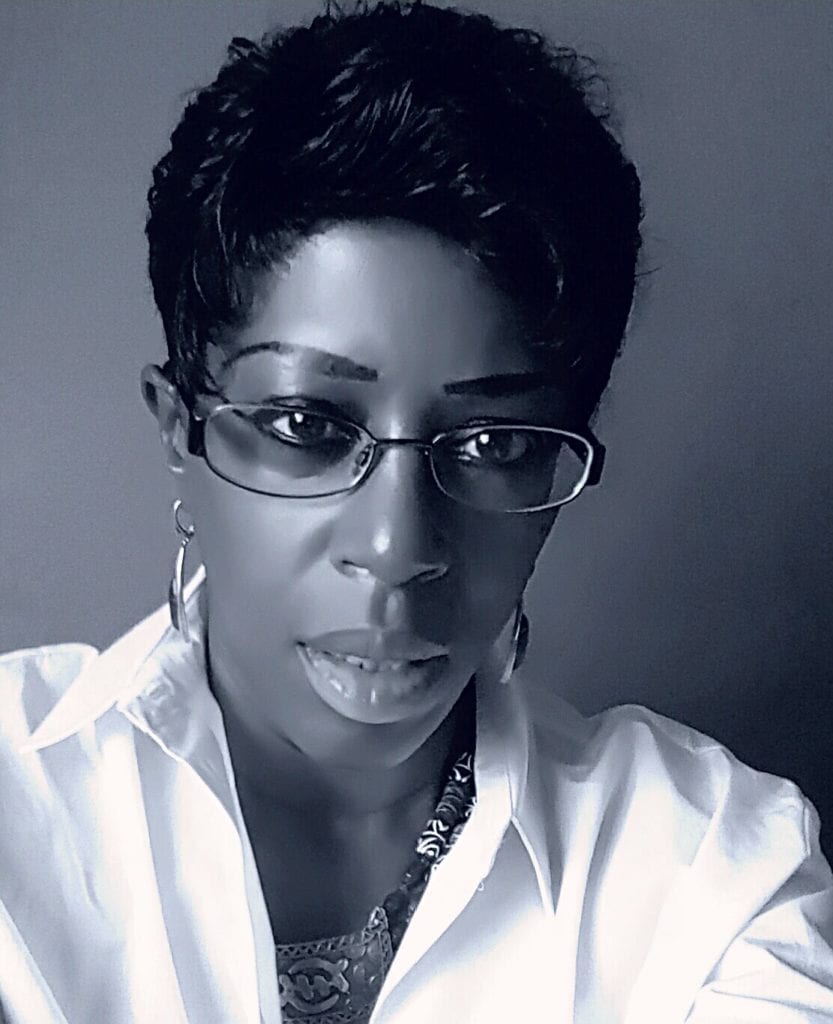
[bctt tweet=”Flo Awolaja represents a lot of things in one, as a writer, poet, and photographer” username=”SheLeadsAfrica”] Growing up in a household rich in colour, born to parents of Nigerian heritage and a culture that inspired her artistic talents, it’s no surprise that Flo Awolaja grew to become an incredible burst of creativity. Flo is a fun loving and exuberant personality that exudes a quiet confidence and steely determination to succeed in all things. She has been influenced by many of her mother’s collection of African fabrics, various painters, designers, textile artists, photographers and inspired by a plethora of contemporary Nigerian and African American artists in the likes of Chief Nike Davies-Okundaye, Abdoulaye Konaté, Peju Alatise, Victoria Udonian, Hayden Palmer, William H Johnson, Elizabeth Catlett, Romare Bearden et al. Flo Awolaja represents a lot of things in one, as a writer, poet, and photographer, she continues to take delight in all visual pleasures which stimulate the senses. She also has a successful career as a graphic designer and lecturer and has combined her passion for art, design, and photography with teaching, working to raise achievement in her learners by encouraging them, raising their self-esteem, and aspiring confidence in them. [bctt tweet=”The things that are random are not your calling, they are your passion” username=”SheLeadsAfrica”] Tell us about your work on African Arts. There is an expression that I have been carrying around with me for the best part of a year now. When I stumbled upon it, whilst surfing through social media, it was so profound that I have it permanently on my screen saver on the laptop to remind me to keep striving and designing, and how fortunate I am to be doing the things I like. The quote is, “The things that are random, are not your calling, they are your passion”. This is what essentially guides me, and I really do try not to take my talent for granted. Like most things, the body of work that I am now exploring happened by accident, (the best things usually do) it occurred whilst I was at home looking after my son, who had been in the hospital and was now convalescing at home. I had travelled to Ghana in 2013 and brought back a lot of batik fabrics. Not knowing what I wanted to do with them, they lay dormant, until 2015. Whilst looking after my son, I remembered that I had them, and had added to the collection by purchasing metre samples in all colours from friends who would travel to Nigeria and Ghana, gently asking them to bring me back whatever they could. In those moments as a designer, the light bulb goes on and you find yourself creating pieces, which is how the first few ideas transpired. Gradually one became two, and the pieces began to materialise, to the extent that I had about 20 small pieces which I had framed. Enter my son, who saw me spread them out on the floor and was marvelled at how I had managed to hide them around the house, out of the eyes of my mother. Quick as a flash he had photographed them and posted them onto his Instagram account, I still do not have one! From that moment the genie had been released and it was not going to go back into the bottle. It became a question of how to showcase the designs to a wider audience. Each opportunity has acted like a stepping stone, I have been most fortunate in the breaks that have come my way I tend to look at my work much in the way a painter starts with a blank canvas. No two pieces that I create will ever be the same. Whilst I am creating these textile paintings, I am only aware of the colours that I will use, but not the journey of the piece, each one has its own rhythm and story, that for me is what makes each one off piece unique. [bctt tweet=”The universe has a lovely way of conspiring to tell you something different – @Maverikartz” username=”SheLeadsAfrica”] What inspires your art works and exhibitions? Wow, that is a difficult question, but I can honestly say that I am inspired by many things, from listening to music, conversation, hearing and reading a line of poetry, along with photographs that just capture my imagination. I also think that being raised in a culture steeped in Yoruba tradition, has been instrumental in my journey as a designer. My mother was a printer and my father was a draughtsman, so design and the love of design have been instilled in me from an early age. I am inspired by anything that delights and tickles my visual senses. How would you compare the Western and African market in terms of values for art works? Like most things we have been constantly conditioned through no fault of our own to have the idea that African works of art are somewhat in inferior; that is certainly not my view, and anyone who knows me will tell you I am the most ardent and fervent champion of our African Ancestry and Heritage. The African market is far more exciting. The current resurgence and proliferation of African art is taking the art world by storm. Our trajectory of art has always been rising, however presently its stock has never been higher, why is this? Artists from Picasso to Hirst have made more than a passing reference to the art of Africa, even to the point of appropriating whole elements in the quest to claim works as their own. So why the sudden interest? What many curators were happy to call ‘tribal’, that somehow adding the word ‘tribal’ made it somewhat less authentic and therefore was not really valued. Fast forward, the last few years have seen a sudden surge of interest as new kids on the block enter. From photographers and sculptors to painters and textile designers, old and new now