
Juanita Abrahams: Set yourself apart & stay true to yourself

Blogging has taken the world by storm, whether it’s done as a hobby or as a job, some are creating careers out of it! When fashion bloggers first hit our screens on E! Entertainment, it gave some of us a little insight into what fashion bloggers actually do. We now know a bit of how they work with various clients and create an income through doing something they love. So, still on my quest to explore various fashion-related careers, I got chatting with Juanita Abrahams, the Creative Director of Juan Leo. Juanita is a BCom Accounting student, who is currently completing her under grad, in pursuit of the esteemed CA (SA) designation. She is also a SAICA articled clerk and trainee accountant. Please tell us a little more about yourself I am also a SAICA articled clerk and trainee accountant, currently completing my third year of articles in pursuit of the esteemed CA (SA) designation. From an early age, my hobbies included; design, art, photography and dance —and I dabbled in all of these for many years and often still do. So let’s fast-forward to 2016, where that interest in design, art and photography has fully formed into what we know as Juan Leo Lifestyle, your blog, please tell us a little more about it I’ve always loved fashion and design, and became quite involved in creative arts from an early age so the next befitting step after being exposed to so many opportunities within the industry and similar industries was to start a blog, which looked much easier at first. We started out as “Faith, Fashion & Living Fabulously” which encompassed everything I believed in and loved. But my real goal was to build a different type of fashion community —one which isn’t focused solely on looking or feeling good, but one that focuses on others as well. And naturally, the brand progressed and we underwent some rebranding of sorts and landed up as Juan Leo Lifestyle. It hasn’t lost the meaning or purpose of the brand —focusing on faith and fashion with a greater purpose. It basically refers to not competing, but offering something more to the world and distinguishing ourselves from everyone else. I must say, that’s rather unique, combining fashion and faith, so how do you marry the two? Through networking and building relationships with businesses, companies and local entrepreneurs. It’s about ensuring the cycle of giving back never stops. Although, we do focus on fashion and lifestyle aspects, we retain being a platform for a purpose and our current focus is on being a support to local designers, entrepreneurs and start-up businesses, and not just in Cape Town. We’ve identified gaps in the market and I think it’s quite obvious that many individuals have the dream and the talent, but lack knowledge in terms of social media and marketing themselves and that’s why they struggle or they become stagnant in the growth of their business. And that’s where we come in. I think that’s quite important, considering I’ve come across many companies that position themselves as ‘being there for the small businesses’ but when it comes to working with them, they shy away. How do you help small business? We’ve also recently started Pedro by Juan Leo —a menswear fashion and styling division aimed at the modern man. I have wanted to branch out for a while and we’ve finally found the perfect team for this. This allows us to reach even more start-up companies and brands, and also impact a greater audience. So on one end, you’re driving traffic to smaller brands and business, how does the other end work? How does a blogger create income through blogging? I would say I wouldn’t know because this isn’t our first priority but bloggers do charge per post, or per Instagram photograph posted and this is dependent on your followings. This is by means of sponsored posts primarily. Many bloggers with a huge influence can be seen being hired for commercials/advertising, campaigns with big retailers and the likes —there’s opportunity everywhere if done right. I’m sure bloggers get paid for every little thing under the sun that you haven’t even imagined yet —from public appearances to promoting garments at an event and online and everywhere in between and I’m not too sure how I feel about it. I believe you should stand by your brand and quality requires payment. Juan Leo’s main income would be from; Brand photography Content creation Fashion photography for other bloggers (and it’s my favourite! Passion drives everything) Would you say that blogging is a viable career choice? Career? Perhaps. Viable —I’m not sure. Blogging itself can become a full-time job if you’re prepared to make a few huge sacrifices in the beginning and are also prepared to stand your ground when it comes to payment. Your following and content quality play a huge role in securing work —real work. I’ve watched many bloggers or creatives evolve and boom straight to the top without realizing it. Once you reach a certain point, managing a full time job and a blog is quite time-consuming and if blogging is your passion, it will eventually pay the bills while you’re having fun and doing what you love. Would I do it? Yes and no. ‘Yes’, because I love it, and ‘no’, because there’s more to blogging than just looking good and showing off a lifestyle. I’ll blog and do everything else that isn’t shown online —that makes me happy. Bloggers move through ranks in my opinion (and if no one has noticed). It starts off as a blogger, and evolves into everything from a digital or fashion influencer to a brand ambassador, social media marketers and eventually lands positions on radio or TV. It’s amazing how the ripple effect just takes over. With such opportunities that can come from being a blogger, I can imagine that there would be an influx of new bloggers —and with so many, there would surely be some common traits
Advice from the Accelerator Moguls: Tailoring a foreign concept for Africa

Ever had been inspired by a brilliant idea, then immediately dismissed it as impossible for the Nigerian market? We’re talking about those ideas that people deem “too foreign” for Nigerians to patronise or appreciate. These foreign concepts may actually end up being your ticket to being a Motherland Mogul. Two women who have pushed through in their attempts to introduce concepts and made profit doing so are Tokunbo Sotinwa of Bubble Tii and Crystal Ikanih of Art Splash Studio. Tokunbo and Crystal show us that it is possible to replicate something from the US and Taiwan in Nigeria. They are also both currently participating in SLA’s Accelerator program. If you’ve never heard of bubble tea before, it is flavoured tea with tapioca pearls. The idea for bubble tea was born in Taiwan and subsequently the trend spread to other Asian countries before gaining popularity across the world. Tokunbo is credited with bringing the bubble tea phenomenon to Nigeria to surprisingly good results —Bubble Tii has managed to expand locations to a second store within 12 months of launching the first. Art Splash Studio organises painting classes for grown-ups in Abuja. The idea came from when its founder Crystal Ikanih was visiting friends in the US. So what do both women say about tailoring a “foreign concept” to the Nigerian market? Creating a demand where there was none previously You can expect that this will be very challenging. For Tokunbo, people did not know anything about bubble tea in Nigeria. She overcame this challenge by first starting off by appearing at outdoor events. This helped introduce her product to her targeted demographics. Bubble Tii also appeared at pop-up events where people were offered to taste different flavoured bubble teas. While there was no specific demand for painting classes in Abuja, Crystal saw an opportunity in the demand for alternative entertainment. You’ve surely heard people complain about how Abuja can be boring. Crystal is tapping into this market with Art Splash Studio and her Paint Nite, where people paint while drinking wine. Another important way to create demand is through social media. Social media is a very effective tool to create buzz. Sharpening your marketing tools Already knowing that introducing the concept of a paint class wouldn’t be easy for the Abuja crowd, Crystal took the time to draw up a marketing plan. Be like Crystal and find ways to develop a very informative marketing plan to actually ensure that people are willing to invest their money in your idea. You may start by introducing the concept to your networks and gauging how people respond to it. Sometimes it doesn’t really matter if people don’t understand your idea, if it’s a good one, you can trust that once you launch, it’ll take a life of it’s own. Getting people on board with your idea Now people have heard about your foreign concept and are interested, what other ways can you get them on board with your idea? The most simple way to do this is through word of mouth. It’s worked wondered for both Bubble Tii and Art Splash Studio. For Tokunbo, once one person had the bubble tea experience, they were happy to tell other people. Word of mouth has also helped Crystal grow her business. She’s reached a point where now when she’s telling someone about Paint Nite, they’ve already heard about it. Imagine if your customers are so pleased with your product, they spread the word. So you want to start a café that only sells tea. Someone may caution that Nigerians don’t really do tea, who wants to drink tea when the weather is hot etc. But if you set up that café and wow your customers with different flavoured ice teas and tea-themed cakes, they’ll definitely come back and bring their friends too.
5 tips to make the most of a slow day at work

When the big conference is over or the quarterly sales report is in, then comes the slow day. Everyone in today’s workplace has moments of downtime every now and then —as you probably do if you’re reading this. But forget #NetflixAndChill, it’s time to #HustleAndChill. Even if you’re excelling at your job, now isn’t the time to rest on your laurels. Use these slow days as opportunities for self-improvement by checking in on your goals rather than your Facebook or Instagram. Here are a few tips for what to do when you find yourself with a few extra hours on your hands: Plan ahead You know how your boss lovingly exclaims, “What would I do without you?” Make sure he or she is prepared for the unexpected sick day or your departure for a new position by drafting a detailed list of your daily, weekly, and monthly activities to ensure that your successor will be well equipped to follow in your footsteps. It’ll also help you avoid forgetting the little things like sending a check for a vendor or drafting invitations to an annual event. It’s never too early to start on hand-over notes —it’s easier to remember what you’re doing while you’re doing it rather than racking your brain as you’re headed out the door. (You’ll also earn brownie points from your boss that will help you maintain a good relationship even after you’re gone). Learn As the saying goes, “good things come to those who hustle.” Got your eye on a raise or promotion? Take this slow period as an opportunity to learn a new skill or hone a weak one. If you increase your value to your company, your employer will be more likely to reward your efforts. Sign up for a webinar, listen to a podcast, or take an online class from sites like Coursera, Skillshare, or edX. Interested in shifting to another role? Visit other departments and learn about their work. Even if your colleagues only need help with menial tasks, they’ll appreciate the favor (and be more likely to return it when you’re in a crunch). Organize To maximize your time when things are busy, set yourself up for success by organizing your paperwork. Organize your online and offline space by saving those client emails that you took hours to draft, filing feedback on projects that you can reference during your next feedback session, and making sure your work space is tidy. A clear space leads to a clear mind. Connect Having a good reputation in your field is part performance, part visibility. According to the Harvard Business Review, “workers are happiest in their jobs when they have friendships with co-workers.” Take advantage of your free time, and follow up with other industry professionals as well as current and former colleagues. It’s an opportunity to build trust and camaraderie at work, but also learn more about what’s going on at your company and in your industry. Grab lunch or coffee or simply spend time acknowledging the contributions of those around you with a handwritten note —old-fashioned gestures are always appreciated. Daydream In today’s competitive global economy, people are being paid more to think than to manufacture. So along with your A-game, it’s time to bring your imagination to work if you’re gunning for that promotion. After all, Archimedes had his “eureka” moment in the bathtub, Newton developed the theory of gravity while lounging in his mother’s garden, and J.K. Rowling came up with Harry Potter while staring out a train window. Now, imagine if those people had been new deep in the drudgery of paperwork or catching up on email. Studies show that daydreaming indicates an active mind more open to creative breakthroughs. Creativity is about thinking outside the box, so put away the phone, turn off the monitor, and let your mind wander. You might just come up with the next game changer.
Twitter Chat with Kuwala: Building an International Fashion Brand (Oct. 13)
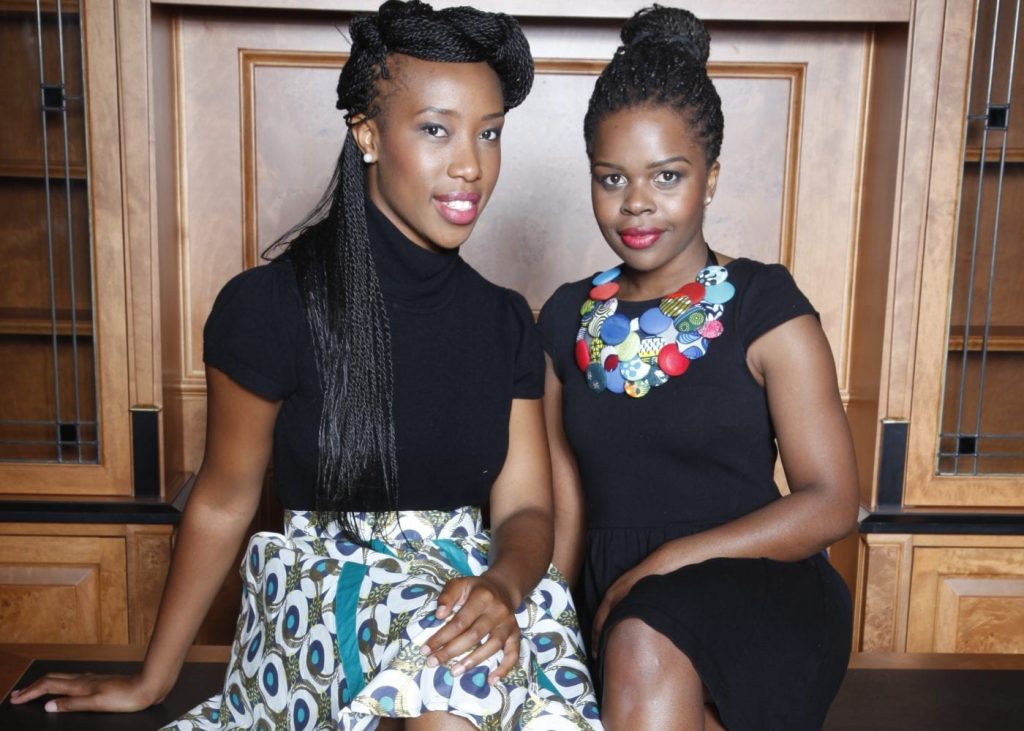
How do you go about starting a fashion company where you source from one place, you and your partner live in different cities and your clients are world wide? How do you ensure quality through the pipeline and celebrate the culture that you source from? These questions plague many budding entrepreneurs. Join us Thursday Oct. 13th for a twitter chat with the founders of Kuwala, as we discuss the ins and outs of sourcing ethical fashion brands, selling around the world, and managing an international team. Kuwala is an international African e-commerce site started by two Malwaian women living in Canada. Veronica Nnensa and Freeda Mulenga use Kuwala to promote high-quality fashion designed in Africa and are working to show that Africa is also a fashion hub for creativity and manufacturing. If you have ever considered going into fashion or starting a company across multiple countries, then you don’t want to miss this chat! Follow She Leads Africa on twitter and use the hashtag #SLAChats to ask your questions and participate in the discussion. Topics that we’ll cover: How to source African fashion designers Leveraging technology to manage a global brand Changing the story around African fashion Differentiating your brand Advice for people interested in all aspects of African fashion Twitter chat details Date: Thursday Oct. 13, 2016 Time: 1pm Toronta // 6pm Lagos // 7pm Lilongwe Location: Follow She Leads Africa and Kuwala on twitter and use the hashtag #SLAChats About Freeda, Veronica & Kuwala Born in Malawi and raised in South Africa, Freeda Mulenga is a graduate of the University of Cape Town, with a degree in Finance and Accounting. She has worked as an accounting professional including for well-respected firms such as Collins Barrow. Born in Malawi and raised in Canada, Veronica Nnensa has a degree in Public Affairs and Policy Management with a minor in French. She has a wealth of skills and experience developed through a variety of socially conscious initiatives and organizations, including working as an Economic Development Officer in Brazil. In January 2014, these two friends launched Kuwala.co, an e-commerce platform which curates unique and exclusive pieces from socially responsible African fashion brands. Based in Toronto, these two fashionistas hope to promote the growth of a sustainable and ethical African fashion industry through Kuwala. To find out more about their story, click here.
”There’s nothing like being too ambitious”: Women in non-traditional industries with Adepeju Adebajo #SheHiveLagos

According to one of the speakers at #SheHiveLagos, Adepeju Adebajo, CEO, Lafarge Cement, it’s actually better to go through the road less travelled. Here, that road leads to non-traditional industries. Adepeju has experience in strategic planning, brand management, product development and management consulting. She believes that by challenging the status quo, you eventually create a new and fresh perspective to things you never thought of. This is where we get curious. And if you’re like us, don’t worry, here are 4 things you can do to nurture your curiosity. Do your research Explore the opportunities available in the market. Utilize them to nurture your curiosity and try new things. This can be anything really, it doesn’t matter what. Just ensure that you’re doing something different from your norm. This is what stokes curiosity. Set goals and priorities This may come off basic. I mean, who doesn’t know you need to set goals? It’s a simple yet effective way to shift from your usual comfort zone and actually get to doing something. Be focused. Plan things out and don’t allow anyone or anything heap unrealistic expectations on you and your goals. Intelligence. Diligence. Hard work Contrary to the mistaken assumption, education can give you that job you want. What it takes to keep that job is the right attitude, tenacity, discipline and a political antenna. If you have all these, you’re good to go. Quality education This might not be all it takes, but it’s a pretty well-known fact that quality education (especially in your area of interest) and creativity are interrelated. Adepeju has successfully moved across different industries, so of course we were excited to hear about the mantra she lives by. They are to kill for (well, kind of). Create your own future You are no more likely than the next generation to seek group consensus when making decisions. You simply shouldn’t be bashful about making decisions that people don’t agree with. Train a successor There’s a simple way to ensure that knowledge never stops but continues in your workplace or industry. Mentor people and raise a successor. Never be afraid to share what you’ve learned with other promising women. When you have a mentee, constantly find out what they know. It may likely be a far cry from what you’d expect. Find out if their skills are as strong as they could be and if they are not, help them in their weak areas. Be a good follower You can’t become a great leader if you weren’t a good follower and even as a leader, you’ve got mentors to learn from too. Learning from the right people, in the right ways is important. In hindsight, actions that feel right in the moment can wind up as obvious no-nos. The trick is to learn from other people’s experiences before you cross that line, because once you do, you’ll be doing away with avoidable mistakes. Treat others the way you’d want to be treated If I were to go back to the organizations I’ve worked, they would welcome me with a red carpet. That alone says a lot – treat people well. Once you reveal through your actions that people are important to you, there’s the chance that your work will be a lot easier and you will be successful.
The power of connections & community

At the beginning of 2016, I found myself in an unmotivated space filled with uncertainty and a lack of fulfillment. I knew that I needed a boost of encouragement and inspiration but I wasn’t sure where it would come from. I wanted to feel empowered; like I was doing something impactful. Five months ago, I was scrolling through my Instagram timeline and came across the SheHive NYC event posted by one of my favorite African bloggers. I did a little research on the organization and quickly decided to attend. I was impressed by the lineup of speakers and felt a strong need to connect with African women. Being born and raised in Sweden to African parents, I always had a strong urge to get involved at some capacity in Africa and diaspora. As expected, so many inspiring and accomplished women spoke during the conference, but there was one talk in particular that struck me. Bisila Bokoko took the stage and immediately caught my attention. All I kept thinking was…how can I get 20 minutes with this powerful woman? After she completed her presentation, the ladies at the event swarmed around her so I decided to approach her differently. Connecting out of the box The next day, I sent her a message through LinkedIn and asked if I could take her out to lunch. She agreed, and our lunch turned into an impactful two hours of sharing ideas, stories and goals. After our meeting, Bisila invited me to collaborate on BB Knows Best ——her seminar series aiming to influence, empower and advise women to pursue their dreams and goals. Our true passion for empowering women of all ages led to this to this event which took place in New York City on October 19th, 2016. There is immense power in connecting and communicating; especially for young women in business as we are a minority that is vastly growing. The need for building genuine connections and a meaningful network is imperative. A simple elevator conversation can turn into a successful collaboration or partnership. Contrary to my state earlier this year, I am now on the path to achieving my personal and professional goals. That wouldn’t have happened if I didn’t take the opportunity to enter into an unknown space and connect with the wonderful women at SheHive NYC. Bisila and I are looking forward to encouraging more women to step out confidently and connect.
Sade Salami: Trying to beat personal best is a factor in growth

Anyone who knows even a little about Dyslexia knows the journey isn’t without certain challenges but Sade Salami overcame it and excelled in her studies. The Media Arts, Music & Sound Recording graduate and Founder, Fresh Strawberry Management is committed to taking control of her own destiny. Fresh Strawberry, an events company has worked with reputable names in the media, fashion and entertainment industries. We caught up with a brave and passionate Sade to get the scoop on some invaluable business advice, her mentoring activities, other projects and plans for the future. Leaving home with no plan or money at the age of 16 is a brave choice, how did you survive? It definitely wasn’t easy and was a major challenge, so I had to take it one day at a time. Back then making sure my basic needs (such as food and shelter) were taken care of, was my main and sometimes my only concern. As I got older, I survived by setting goals and planning. This kept me ready and focused at all time. What’s the secret behind Fresh Strawberry’s growth? I would say knowing when to adapt and move in our market and being consistently good, has been a major key to Fresh Strawberry’s growth. Trying to beat one’s personal best, is also another factor in our growth. We always push ourselves to do the best we can. Another contributing factor to our growth, would be that we have had good people working in our team over the years, people who buy into the vision and who have drive. I don’t think we could have done it all without them. I’ll also add that it’s very important to be prepared. Opportunity happens all the time, however the difference in being successful and not, is being prepared and knowing how and when to maneuver in all situations. Tell us about Status London, why did you decide to venture into reality TV? Status London came to fruition from a conversation I had with my younger brother. We noticed that there are not many UK-based reality shows, which focus on black people. I also felt it was important to tell a different story, as to what is already out there and to show the range of personalities in our community. I’ll also be honest in saying that reality TV is a guilty pleasure of mine. So I wanted to see if this is something my production team could do, if so let’s do it. As a mentor, what are four things you look for in young people before mentoring them? The first thing would be see if they are willing to help themselves, you have to have self motivation. Secondly all my mentee have been curious about life, and have a strong passion for finding their place in the world. All of my mentees have also been open to trying different things. And lastly a positive attitude is a must, if they can teach me something too I also appreciate that. It not just about me showing or advising them, as I like to learn too. What other steps will you take to inspire the next generation and change the negative perception of black people in the media? Keep doing what I do, as I can’t say right now what’s my next steps are. I’m passionate about black people in the media, so I believe my products and businesses will always be in line with trying to change the negative, singular stereotypes and narratives that currently exist of black people. What can we expect from Fresh Strawberry and Sade in the next year? For Fresh Strawberry, you can expect expansion. We know there will be huge growth within the company and with regards to our presence within the events industry. If you’d like to share your story with She Leads Africa, let us know more about you and your story here.
Some things have to take the back seat: Balancing work + life #SheHiveLagos

Although undoubtedly one of the most fun events of the year, SLA’s SheHive is also one of the most informative gatherings for smart African women. This weekend, the city of Lagos pretty much exploded thanks to #SheHiveLagos. We could wax rhetoric about all the wonderful ways you can achieve some balance, but let’s be real. At the end of the day, you need a way out of those particularly uninspiring mornings where you just want to give up on everything. To help Motherland Moguls shatter glass ceilings across all industries without breaking a sweat, Arese Ugwu, founder of Smart Money Africa, Nimi Akinkugbe, founder & CEO of Bestman Games and Nibi Lawson, founder of The Kinky Apothecary gave the best advice ever. You’ll need to bookmark this! What is balance to you? What does it mean to be able to balance work with life? Arese: I believe in balance but not in the way most people view it. I spent a lot of time in my 20s trying to find balance. But you can’t have it all put together all the time and that’s fine. You should be able to focus on your career and not feel guilty. Learn to live with it. Find out what best works for your lifestyle. Nimi: I have never had total balance in my life. Some things have to take the back seat and that’s totally okay. Don’t knock yourself out on everything. You can’t insist on micro-managing everything. Nibi: Find out how things work with you. Compartmentalize them. Do things at the time you’re able to and when at your best. As busy women, how do you cope with handling personal responsibilities? Arese: There are times when my daughter says, “Mummy, you work too much”. I used to feel bad but I found a way to make her understand that my working hard is tied to the quality of life I am able to provide her. Now, while she’s doing homework, I work. This works for us as we have a routine for homework, conversations and play dates. Nimi: Guilt trips are real. Most times, I’m not able to do school runs but I’ve found a way around that. I decided on 3 days, a week. Support systems are also critical. You need the help of friends, siblings and a spouse (if you have one). My mother-in-law is my greatest support. She kicks in just when I need her. Nibi: I’m not married yet and I feel guilty about not having time for my friends (and weddings). But I find ways around these things. Priority is key. How do you decide on what to prioritize? What models do you make use of? Arese: I think everyone has to learn how to say, ”No”. It’s really that important. If you have to spend all day responding to emails, DMs and tweets, you will never get work done. How then do you pay your bills? I remember being on a board where their expectations for my responsibilities were quite different from mine and of course, I politely declined. Figure out your priorities and focus on them. Nimi: I have a broad picture of what I do. I don’t have idle time. And yes, even my thinking time is planned! I’m definitely not one to attend four weddings and a funeral on a Saturday. It takes a lot to juggle family, friends, business and a career but you can’t sit and worry about how hard it is. You’ve simple got to prioritize. Nibi: My hair business started as a hobby but even as a banker then, I had to decide between the two. You simply have to be courageous enough to decide what you need to do. Looking back at your 20s, what would you have done differently if you knew better? Arese: Maybe I would have gone harder on building my career. Ladies, balance should not exist in your dictionary. Understand that this is a time to build yourself and go hard on yourself. Nimi: Financial knowledge and discipline are very important as a lady in your 20s. Also, develop yourself and don’t wait for things to happen. Nibi: In my 20s, I waited for suggestions on what to do but now, I would say, do you and be focused. How do you manage people’s expectations of who you are with who you really are? What drives your desire for success? Arese: What drives me fundamentally is my child. I want to be successful so I can provide her a better life. And so, I don’t keep friends or people who question my drive and desire for success. Nimi: It’s about purpose. That one thing you love and won’t mind doing for free. Gradually, you would make money out of it. Nibi: I’m driven by success itself and I try to hang around smart and driven women who motivate me to great heights. Final words to Motherland Moguls Arese: If you haven’t found your purpose, that should be your priority right now. You know those issues that make you argue on end? That’s probably your passion. Start thinking of a way to make it work. Your awesome, smart, and lucrative idea isn’t going to achieve itself if you don’t start doing something about how you’d make it happen. Nimi: There is so much abuse of everything these days. So look after yourself, exercise and diet properly. Give back. Have social empathy —think of that one thing you can do to change lives. Nibi: Your health is very important. If you’re not healthy, you can’t be talking of success in business or career. You can’t afford to be ill when there is money to be made. Taking a whole lot on yourself can make you flounder out somewhere along the way.
Laurie Frempong: Why I self-manage my modeling career

When it comes to the modelling industry, Ghanaian model and fashion blogger Laurie Frempong is her own boss. She manages her career, finds her own jobs, negotiates payments and acts as her own PR. This model has been self–managing since she was discovered at a casting for Project Walkway Ghana nearly four years ago. Over the years, Laurie has secured editorial, swimwear, print, runway and commercial modelling contracts without a manager or an agency. She would be first to admit that balancing self-management and a modelling can be very tough but with determination, one can achieve anything. What led you to self-manage your modelling career? After being discovered and gaining exposure at the Project Walkway Ghana, I went into full-time modelling but in Ghana, there are no real modelling agencies and models signed under agencies had to go out and search for jobs. There was no need having a manager who would not assist me in anyway, yet expect to be paid. So I chose to manage my own career. This was not easy especially since I had to combine management with modelling. Both jobs are full-time so there are days my management skills would be lacking and there are days my modelling skills would be lacking. This was at the very beginning though, now I have developed a skill to balance both jobs so as to not lack in both areas. As a self-managed model, how do you find work? What jobs have you done over the years? Well in order to find work, I had to build a brand and that was what I did. I am identified with my natural hair and my colourfulness. After this, I found work through recommendations; attending castings —which are very few in the country, and via social media. I take my work very seriously and always give my best on the job so people contact me for a job knowing they are getting nothing but the best. I have worked many brands and shows like Afua Biney, Kiki Clothing, Woodin, Lema Press, Ernest Chemist, Zedi & Cross Alikoto Clothing, Nallem Clothing, Papa Oppong, Steve French, Wusuwa’s Diary, RIP Runway, Legon Fashion week, Catwalk for Orphans among others. What are the challenges you face as a self-managing model in the industry? How do you overcome these challenges? When I chose this path, I knew it was not going to be easy. Given the fact that Ghanaians are still warming up to modelling as a career, I knew I would face challenges. But I was still hopeful and determined to go through with my choices no matter what. Challenges I face include; – Non-payment for jobs well done. – Getting paid less than what was negotiated. – Missing out on castings because these opportunities are communicated directly to modelling agencies. For the payment challenges, I have rectified it by using a rate card. The rate card has details of how much a model charges depending on the type of job wanted. This card takes into consideration the number of hours involved, etc. This way when I am approached by a client, they know exactly what to expect. With the issue about the castings, there is nothing I can do about it other than investing in myself, updating my portfolio and branding myself so well that I will not depend on these castings. Would you say self-management is better than having another person manage you? Well, there is nothing like being your own boss but to some extent I will say having a manager has its pros. For instance, if I had a manager, I will have more time to focus on becoming the best model since I would not have to worry about the negotiating of contracts and payments. Are there many self-managing models in the industry? What advice would you give to a self-managing model? There are as many freelance models as there those who are under management in the industry. The advice I would give to a self-managing model like me is – self-management is not easy but nothing good comes easy. So stay focused; build your brand and portfolio, set goals and work towards them and most importantly learn to use social media to market your brand. Also when starting out, many people would try to take advantage of you so build your negotiation skills and be firm at all times. What do you enjoy most about what you do? Every single thing. This career allows me to express myself in so many ways and be true to myself. I also love seeing the product of my hard work. After all the stress, when I see the final work and it looks amazing, I am happy. What’s the strangest thing you’ve ever done as a model? Recently, I had to do a runway for a fashion graduate, Steve French. The concept was to act like a mad person on the runway. It was one of the most creative shows ever. Which international brand would you like to model for and which concept would it be? Vlisco. An editorial spread and a fashion film. The fashion film will tell a story about the history of African Prints. And I would be the model styled in some iconic Vlisco designs since its inception. I also dream of being a Victoria’s Secret model. That will be a dream come true for me. Want to see women you know featured on SLA? Tell us what amazing things women are doing in your communities here.
Is there a correct way of handling conflict in start-ups?

To answer the question, no. There isn’t a right way to handle conflict. Processes in start-ups are never linear, especially in the beginning stages. So when a disagreement arises between members of the start-up, there’s almost always a third party involved to resolve the issue. People are different, and can also react to situations very differently. Processes and policies put in place in big corporates solve this issue. But when issues arise in start-ups, processes and policies are thought of. What can start-ups do in the early stages to handle conflict? Acknowledge that conflict will occur Having to acknowledge that it will happen might seem cynical. But because people are different, the acknowledgement helps the start-up be realistic. Getting recognition in the beginning stages of a start-up is usually key. The beginning stages also include getting your product and service out to your target audience. At this stage, handling conflict by creating processes would be the least of your worries. Or so you may think. Being in an organisation that was being run like a start-up before —I’ve seen that if there is no process behind handling conflict, operations may come to a halt, especially if you’re working in a small team. Handle conflict according to its levels To fast track my advice on how to handle disagreements between people, it’s important to first rate the level of conflict. The different levels could be a low, medium or high. It may also be hard to rate the different levels. How would a start-up actually measure which conflict is more important than the other? This, I believe, is at the discretion of the organization. Identify each level and put processes in place to handle each level. Handle low or medium level disagreements internally within a few days or even hours. But a high level conflict means that a third party can be brought into resolve it and only the people involved should be addressed so that operations continue. Culture fit With any organisation, a culture fit between team members is important. People have different personalities, attitudes and different ways of reacting to situations. However, it is still very important to bring people into your start-up that know and understand the value of what the start-up is trying to achieve. Eliminate continuous conflict by involving people that believe in the values of the start-up. Align your goals and values with that of the start-ups to become the right person to work with. This way even if conflict does arise, as it always does in any organisation, people know what their purpose of being in the organisation is. With knowing and understanding the value of being in the organisation, the resolution stage can be much easier situation to reach.