
Who you’ll meet at SheHive London – Lausanne Kimbidima

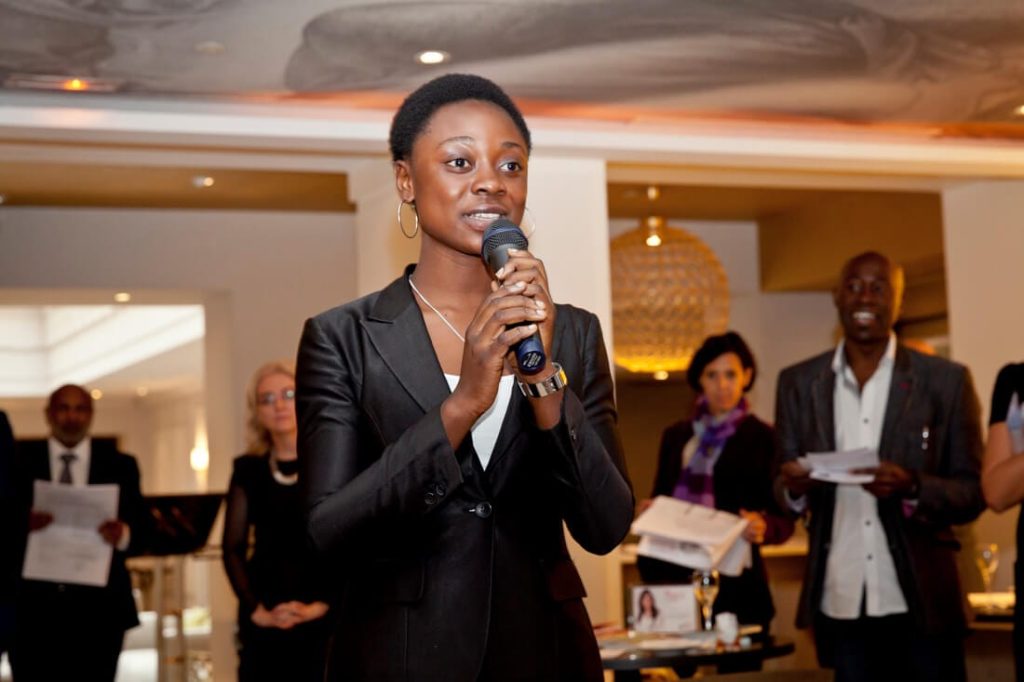
As we continue our countdown to SheHive London, we talked with Lausanne Kimbidima, globe-trotter, all-round travel enthusiast and founder of Good Africa. Lausanne shared a bit about her initiative and why she’ll be attending SheHive London. Thanks for speaking with us. Can you please introduce yourself, tell us who you are and what you do? My name is Lausanne Kimbidima – my family is originally from Brazzaville, Congo, from which my parents moved to Paris in their twenties. I have always loved travel. I first left France at age 8 when my family decided to leave our small town, which was about a 45 minute drive from Paris. We moved to London, where I learnt English within 6 months, and years later, ended up studying for a Communications degree in the West Midlands. Is this where you thought you would end up? Growing up over 300 miles from the majority of my family, led me to travel often. I would train-travel on my own when I was as young as 15 years old. Later I travelled Europe with friends but I became mostly curious about experiencing Africa. Although I was working towards a career in Media & Communication (I had worked on projects for Disney, and British cinema film releases), I pursued my travel ambitions. Prior to my first trip to Senegal, people told me to observe and take notes so I could brainstorm enterprising initiatives to boost the economy. However, when I got there and submerged myself in the diverse city lifestyles, the wealth of culture was undeniable. So upon my return, I launched an Instagram page called @wearegoodafrica, to share this vision of contemporary Africa, and we now have over 3,000 followers. What’s your big idea that you’re looking to achieve in the next 5 years? We are building a curated platform dedicated to African lifestyle which will provide insight into the new travel habits of millennials, as well as the everyday lives of the locals. Good Africa will feature tips, guides and reviews from travellers worldwide. As Good Africa was born due to a lack of resources on authentic 360 African lifestyle —work, and travel included— we are also developing an inclusive programme, where travellers will be invited to a transformative travel experience. Good Africa is an advocate for freedom. We believe every moment you wake up and decide that you want to experience work and lifestyle anywhere else in the world, this should be possible. This is what drives our mission. What professional organisations are you associated with and in what ways? I am a School of Media, Birmingham City University Alumni, and a proud Good Africa ambassador! What made you want to attend SheHive London? Prior to moving into the next phase of Good Africa, I am excited to connect with other individuals in the travel sector and just anyone determined making their mark on the world. Who are you looking to network with and meet at SheHive London? I am 100% open to what this experience will bring – and look forward to insightful conversations with business owners to investors and travel enthusiasts. What skill are you most proud of that you believe can add value to another attendee at the event? I am bilingual! I’m also an eternal optimist. I hope to motivate and inspire other attendees to start their journey, and add value to others. Meet Lausanne at SheHive London! Buy your pass here!
We need to start teaching women about entrepreneurship early
As young girls, we may have thought that that success in the real world means success at a corporate job. Working towards this goal, you start first by making sure you do well in school, entering into a good university, passing at university and ultimately finding a prestigious job in the corporate world. It really is tempting to believe that success in the corporate world is the only success that matters. But when you get get exposed to different kinds of people and career paths, you realise it’s not. Especially when you encounter entrepreneurship, where one can control their own destiny. Then you realise that corporate is not the be all and end all, and there’s far more available to you than climbing the corporate ladder. In my own life, I’ve come to see that there’s a huge misconception about entrepreneurship among women and I’d like to debunk some myths. It’s not as daunting as you think To some women, just the thought of struggling or having to put their lives into something that isn’t guaranteed to last, can be daunting. There is more focus on the negative rather than the possibilities of making entrepreneurship work for you. It’s true that we all fear of the unknown. When you add unforeseen risk to that, staying in your comfort zone seems easier. But staying in comfort zones implies that you’re scared of what starting your own business might bring. Yet there’s always hope. I’ve learn a few things in the past two years. It comes from being exposed to what entrepreneurship is and meeting various people that have found their passion here. Most important to me is, the advantages of being familiar with entrepreneurship from an early age. Start young Girls graduating high school need to know that entrepreneurship is an option when it comes to career paths. Once girls understand what it is, and what they can contribute to this exciting career path, self-doubt will vanish. Here’s how it works. High School No, I’m not saying young girls need to start hustling from high school. I mean that the knowledge needs to be instilled from there. This way when girls head to university, they know have an option to study entrepreneurship further. During school career fairs, the concept of what entrepreneurship is and what it offers should be shared. The onus is also on the high schools to make entrepreneurship knowledge more reachable to students. University and onwards Though Africa has many good universities, we have limited options for entrepreneurship as a degree. I didn’t even know that you could study entrepreneurship formally. I recently found this out when my colleague told me about her daughter studying entrepreneurship in one of the universities in SA. I can’t lie, I was shocked. Most universities don’t offer a degree that isn’t related to a corporate field. Still, it makes sense when you consider that pursuing entrepreneurship doesn’t necessarily mean you are saying goodbye to the corporate world. There are many #MotherlandMoguls who are successfully climbing the corporate ladder, while running their own businesses. In my opinion, if you have the opportunity of doing both, then you should take it. Juggling the work load might be too much, but at the end of the day the results will be fruitful and worth it. Find a community This is not as easy as you may think. It may be hard finding a community of like minds at first but more women are creating organisations that allow women to come together. With these groups, you can freely share interests, passions and ideas. I think such communities should become available for young women from high school onwards. (Imagine entrepreneurship clubs in high school). This helps so young women won’t feel isolated in choosing this path. I’d like to see more communities for young women become a safe haven. This will help us relate to one another and create a trusted and supportive community.
Kate Mayeye: I’m the Kenyan designer who is inspired by Nigerian fashion
Kate Mayeye is a Kenyan fashion designer and the CEO of African Fabric & Designs Kenya Ltd. Kate is inspired by her love for unique African prints and, in particular, the Nigerian fashion industry. Recently, she had the rare chance of styling an award-winning Nigerian actress, Angela Okorie for three high profile, red carpet events. Kate shares with SLA her love for fashion, the opportunities it provides and how she is introducing a different fashion culture to Kenya. Why African Fabric & Designs Kenya Ltd? I love to stand out, and showcasing Africa’s unique culture has given me that opportunity. I am looking to place the African print on the world map. It would gladen my heart to see other people, not just Africans, embrace it. Why are you drawn to the Nigerian fashion industry and how did you come across it? I am married to a Nigerian. My husband and I love the impeccable finishing on designs made by Nigerians. I also wanted to introduce a different fashion culture in Kenya, and Nigeria has been the perfect reference as she is at the forefront of the African fashion market. Nigerians are the ‘who’ to watch for when it comes to fashion styles and trends in Africa. How did you get the chance to dress Angela Okorie? Were there any challenges? Angela Okorie was in Kenya a few months ago. The occasion was the pre-production of a dramatic comedy starring her, Mike Ezuruonye, Huddah Monroe and Mumbi Maina among others. Former Miss Kenya 2014, now actress and producer, Juliet Ochieng had approached me concerning the Nigeria-Kenya collaborated movie titled Brother Jekwe. I was the costume designer for the movie which Juliet also co-produced, my job was to provide outfits and accessories to support the narrative. The biggest challenge in dressing Angela was her busy filming schedules. Our fittings sessions were practically non-existent but I’m glad things turned out great. What would you say to a fashion designer whose dream is to dress celebrities? In dealing with celebrities, be cautious. Focus on what they want, but make suggestions on what best fits. Be sure to communicate what you can or can’t do. Simply, be honest. What do you look out for in selecting fabrics? When selecting a fabric, I look out for the uniqueness of the print, the thread count, colour-fast quality and the strength of the fabric. I don’t condone shrinkage or fading when it concerns my fabric. If you were on a deserted island and could only take one piece of clothing, what would it be? Well, let’s see. I would definitely take a Dera. It’s multipurpose. What challenges have you encountered in your business? Perfecting customer order has always been a challenge, especially when you have to depend on hired hands. But we learn and grow daily with every experience. The biggest challenge remains power blackouts. Traffic, courier clearance bottlenecks, and of course unforeseen circumstances are also issues we’ve had to deal with. What advice will you give to young African women looking to start a business? Every business owner requires a huge passion, commitment, and a strong support system. Be your own motivator, some days are going to be tougher than others but you can do it. With God on your side, it can only get better. 2 year plan? Tell us about it I’m working on business expansion, opening up more outlets to showcase our amazing designs. These designs would feature locally produced prints and materials that represent the different African cultures. What other projects are you involved with besides African Fabric and designs limited? I am a partner with an events and social media management company, DiMaye Media and also a one-third partner in a supplies and Maintenance firm- Tatu Dallas Supplies and Maintenance Ltd. Which celebrity did you love designing for? Every client is a star in my eyes. They are my celebrities. If you’d like to share your story with She Leads Africa, let us know more about you and your story here.
The art of dusting yourself off

What’s the difference between successful business people, and those who are less so? I’ve always wondered about this and for a while, I thought it boiled down to factors such as innovation, technical know-how and networks. I have since found that while these factors play a large role, a lot depends on your ability to self-motivate during the down times. It is easy to be focused when things are going your way, but this is not always the case when the reverse occurs. This partly explains why a majority of small, medium and micro-sized enterprises (SMMEs) do not get to year two of their existence. Running your own business means you are forgoing a predictable source of income for something that you have no guarantee will work. Yes, you go into it having done your homework and armed with a clear projection of your revenue. But, we know what they say about the best-laid plans. The reality is that business is tough. It is not for the faint of heart. I have come across a lot more ‘depressed’ business people than happy fulfilled ones. Hell, I have had more down moments in the space of a year and a half than I’d ever had in my entire professional career. When you are in the services business like some of us, the going can get a lot tougher than most. So, if the harshness of the entrepreneurship path is so prevalent, how come we hear very little about it? Human nature prohibits people from admitting that things aren’t what they thought they would be. It’s as if doing so makes you less human, better yet, less ‘entrepreneurial’. We walk around pretending the world of business is fine and all of us are making money and not spending sleepless nights wondering where payroll money will come from. You end up feeling discouraged and exhausted, sometimes even considering the attractiveness of a predictable income. When this moment hits, it’s easy to forget all the good things that attracted you into your business industry in the first place. You forget all about the well-laid strategies that you have developed over time and the urgency to generate cash becomes a dominant factor in your mind. At this point in the journey, it’s time to dig deep into your internal resources. No, I’m not talking about spirituality. Accessing your inner resources takes a clear understanding of the following: You are not unique Everyone goes through dips in every area of their lives. You are not unique. Don’t worry, you won’t die from it either. Understand that even the ones you admire today went through the struggles you are going through. It passes and it comes back again, get used to the cycle. If it comes easy, you’ll take it for granted I have learnt that when things are handed on a silver platter the amount of care we place on them is different to when you work for it yourself. Make sure success is important to you, that way you give things you work on all you’ve got. Dusting yourself off is a skill you learn Mental fitness does not just happen overnight, it is a skill that gets better with exercise. The more you use this skill, the better it becomes. All it takes is knowing what you want to achieve and knowing and believing that you have all you need to realise it. In addition, remembering that obstacles are part of the game and a chance sometimes to recalibrate. Get used to downtime We all go through down moments in every area of our lives, it’s even worse in the world of business. There are many businesses offering similar goods and services and it is always about reinventing yourself. Sometimes it goes your way, other times it doesn’t. Failure is also part of the journey and that is normal. How you move from the dips is what determines the level of impact you and your business will have for the next generation.
Thembelihle Terry-Lynne Zulu: Every woman needs a big sister

The idea of women helping other women, benefits both parties and demonstrates just how powerful every woman can be with the right support. Thembelihle Terry-Lynne Zulu, through Girl Grandeur Zimbabwe which she co-founded, is going the extra mile to encourage women to pursue their dreams. Here is what she is doing to support other women. How have you used your personal challenges to inspire other young women? Women shouldn’t be shamed for sharing their pains, struggles and life experiences. No woman deserves to be slammed or termed ‘attention-seeking’ or ‘too sensitive’ for sharing her story. Our stories need to be told because in them is the hope for survival for every woman. My life’s journey epitomizes, to a great extent, the challenges faced by the African girl child. I have been through most of the issues plaguing young women, from abuse to pregnancy, and everything else in between. I once wrote on my personal blog, “I went through some mistakes so that you don’t have too.” Walking young women through their ordeals is a mutual healing process as it helps me as much as it does them. Tell us more about Girl Grandeur Zimbabwe, how did it come to be? As the first of five girls, I considered it my duty to help my sisters make the right life choices. Gradually, this mentoring circle grew to include their friends. Our goal is to help every woman, especially the young ones access safe and comfortable adult counsel. We need them to be able to do this without the fear of being judged or unduly reprimanded. To address this, Girl Grandeur Zimbabwe has a mentorship program for business newbies, as well as a Big Sister program for the little girls. In addition, to debunk the myth that women are naturally unable to work together, we created a platform that has some semblance of a sisterhood. Here, women come together in an informal setting to discuss issues relevant to them, share opportunities, advertise their businesses and have meaningful debates about womanhood in Zimbabwe. How does a social club in Zimbabwe function? Girl Grandeur Zimbabwe may not be the first social club for Zimbabwean women, but our approach is the first of its kind. We have branched out into various income generating programs and it’s a constant learning process. The club is accessible to every young woman in Zimbabwe, subscription fees are affordable and within reach. Our structure includes a board, a committee, and ordinary members. Our diversity reveals the implicit beauty of our differences and we are determined to do much more. How do you provide support when needed? Through our several social media platforms, we invite Girl Grandeur Zimbabwe members to contribute to planned projects or offer free services. For example, one of our members in Harare identified a pregnant homeless woman who needed help. To alleviate her plight, we brainstormed on possible support solutions. Our growing membership increases the need to incorporate a wide range of issues facing every woman. We work closely with other NGOs while monitoring progress through the appropriate authorities. As a co-founder, what advice will you give any woman looking to start a business with someone else? When starting out, it’s easy to go for people who are within your reach and that’s usually kith or kin. In getting the right hands, be drawn to people who are not only passionate about your vision but who have proved that they can deliver results. You won’t always end up with the ones you started out with and you need to be okay with that. Appreciate small beginnings and don’t mess with the growing process. Among other things, Girl Grandeur aspires to bridge the generational gap between mothers and daughters. How can young modern women overcome this gap? A friend once suffered vaginal thrush but couldn’t tell her mother for fear of receiving retribution. There’s no gainsaying the fact that mothers need to create more time for their daughters. These days, more women work as hard and long as most men. And so, inadvertently abandon the formative training of their children to maids, nannies, the media, peers and even Google. Some parents have been distracted by the cash-stretched times but good parenting isn’t just about money. Making time for your children is paramount – you can’t put a price tag on a thing like that. Tell us about your relationship with your mother, was there any tension? How was it resolved? When is there never any tension between mothers and daughters?! As a young girl, I didn’t understand half of the policies she’d put in place. As cliché as this sounds, as I grew older, I began to understand why she did what she did. Now, I understand that she didn’t ‘hate’ me but had to curb some of my rebellious tendencies. Open and honest communication is key to the mother-daughter relationship. I strongly believe that when a child understands the reason(s) for a reprimand or punishment, he/she is more unlikely to repeat offense. What do you love best about your mother? I consider my mother a warrior! A warrior who never let societal beliefs stop my sisters and I from finding our identities and flourishing in them. In retrospect, she understood that everything I did was in preparation for who I was to become. Never did she ask me to be who I was not. If you’d like to share your story with She Leads Africa, let us know more about you and your story here.
4 business lessons I learned from my mother (and aunties)
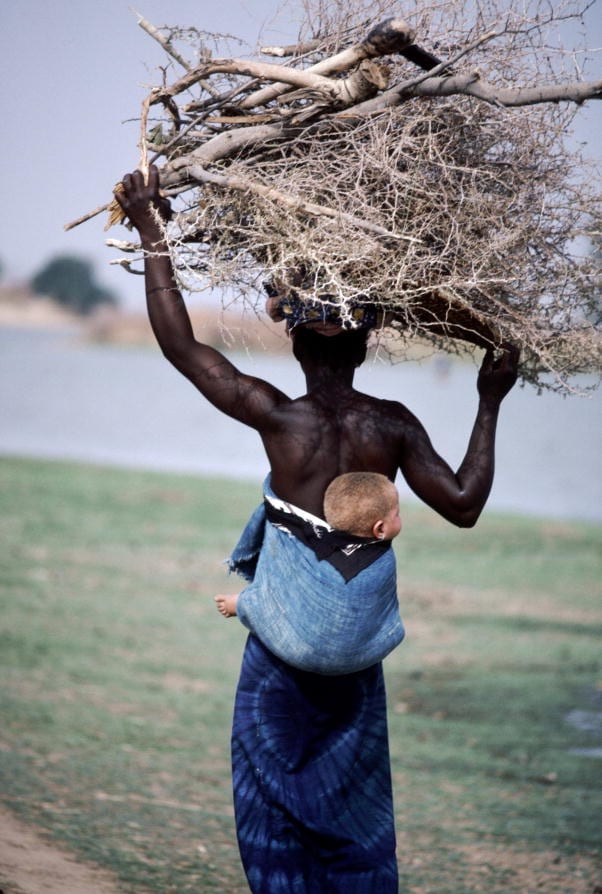
No one works as hard as an African mother. I should know because I was raised by one. You see them everywhere, trying to build new businesses from the farm, to the market place, to distributing companies and high-rise malls, to boardrooms and to the top of multi-national companies. Mothers are the epitome of perseverance, the backbone of our society, really. Mom aside, I was also brought up by more than five aunties! I know there are some entrepreneurial tips that we all need to follow from these marvelous older women. These are age-old tips that work anywhere, and have seen our mothers and their mothers through tides of disasters and of plenty. Reputation In business, your reputation is everything. Without a good reputation, your future businesses are worthless really. This is greater than branding, dear ladies. A reputation speaks to your character, and is bound to outshine all however much you brand yourself or your company. It is the core of who you are. Get a good reputation and guard it with everything you have. Be a woman of your word, conduct your affairs with dignity, have good products and services. You know…reputation. Appeal to self-interest in business This is where most aspiring #MotherlandMoguls go wrong. I get that we are emotional beings but when making a deal, never play to mercy or pity. A Motherland Mogul never grovels, not when you know you can bring something to the table. And it does not matter whether it is the centerpiece or the whole darn table. If you always find a way to ensure the other party can benefit, the deal is yours. That is how barter trade worked for years. If it was good enough for our ancestors, it should serve the purpose well for us. Afterall, we are here due to them. Keep people guessing The easiest way to fall in a rut is being predictable in business. While there is some good in being consistent, predictability points more to actions than products or services. It encourages you to get out of your comfort zone and actually be out there. It means partnering up with people that are not like you and learning new things. Why else do you think women form small funding groups that bring together people of various professions and backgrounds? If it works for your personal life, why can’t it do so in business? Always keep an air of unpredictability. That way, no one ever sees you coming and the traps are definitely fewer. Never retreat, never surrender Our mothers run the household. No matter how big it is, no matter how much work is, you are sure that your mother will leave everything at the door and be your mother. If there is punishment to be delivered, it will be delivered. And she never lets her children see her overwhelmed or tired. Why is it then, that when some of us go to work, we carry unnecessary baggage that distracts us the whole time? Then we actually end up doing nothing at work. We end up frustrated and are grumpy to our families when we go back home. Some household issues like worrying when laundry will be done or planning the meal for the next day calls for some serious time management. And when you’re at work, let it be no retreat, no surrender for things that are worth it. We often look for business strategies elsewhere while in truth, they are right in front of us. Staring right into our faces, like our mothers often do. And yes, the pun was very much intended.
6 ways to turn your business dream into a reality

Chasing a business dream requires a deliberate and focused sense of concentration on set goals. Don’t you hate-love those successful people who make success seem so easy? Wouldn’t it be great if you could bring their magic to your own life? Imagine walking into a multi-million dollar event to a standing ovation. Everyone is clapping and the spotlight is on you, the bombass CEO of your own company. Sounds like a dream, right? Snap out of it! It’s time to live that dream. First, there’s the parody of that person who takes the giant step of starting her own business. Now, years have passed and the enthusiasm has dwindled because she’s held on to the same approach. Don’t be her. If you must make the leap, be sure the potential rewards are huge and satisfactory. Otherwise soon, you’ll be complaining like Jane who went into selling clothes because Maryann’s boutique was blossoming. It’s a simple, sad fact that the vast majority of entrepreneurs would rather invest in whatever business idea is currently trending than create their own dreams. Yes, we all need inspiration but success doesn’t come by pursuing someone else’s dream. You want to become the next Oprah Winfrey? Cool, but you need to learn to do what you love better, faster and more often. Where am I going with all of this? Simple. Define your dream Do you have a business idea? How big is your goal? Think back. How long have you nurtured this idea? How sure were you in it, when it was birthed in your mind? It’s so easy to look around at people who have achieved business success and say, “Oh she achieved that height because she’s special, it’s just the way she was made.” Okay, saying this may make you feel a bit better, but like Lupita Nyong’o once said, “Your dreams are valid too.” Yes girl, they are! Vision The idea, big or small, must be laid out in detail. Achieving your dreams does not have to be easy, but you need to be able to know, at any moment, where you are headed. Set goals with timelines. Here’s my example, by January 13th, 2017, I shall have set up a firm on the 14th floor of East Grove Towers with a portfolio of 120 clients. Time to werk. Get to work The nature of the idea must require an intense sense of concentration. An example would be a goal-driven SLA contributor. Ideally, she is a brilliant lady who is detailed, pays attention to research and is not afraid to be sassy. This is someone who can devote the energy required to get the work done. Now apply that to your business. Outsource expertise You must be willing to make the best of resources to get work done. If you have the innate abilities of a genius kid, beautiful! (Also, lucky you) Otherwise, leave the work to experts. This is especially important in sensitive areas like sales, finances or technical implementation. That dream of you wearing 20 hats and running everything yourself should remain in lala-land. You’re awesome but you’re not Super Woman. Send yourself future letters or emails This might sound crazy but stay with me. There are great websites and apps that allow you write yourself emails due to being delivered say, in three months. I love starting my letters this way, “Dear future me, by now you must have scored that East Grove Tower office and earned enough for a holiday in Maldives. Where are we at now?” See, not hard. Believe it or not, these letters are a great source of motivation and accountability. Share your dream with 5 people You need regular enough feedback from sincere people. This way, you can constantly adapt and make progress toward your goal. These people should call you out when you fail on your business plans. They should challenge you to be the best you can be. Choose the No BS’er friend who will taunt you to action. Finally, if you must be successful, you’ve got to work hard, very hard. The way you go about it is the difference between good and top-of-the-ladder great. While working hard, remain positive. Positivity is a virtue common to successful people. It’s that cultivated sense of success. We have Walt Disney to thank for this quote, “Dreams come true… only if we have the courage to pursue them.” What steps are you taking in achieving your business dreams?
Sibahle Khumalo: Balancing a baking business with my studies in Genetics

For some us, side hustles only became real when we started our careers. For others, it starts much earlier. Sibahle Khumalo is a university student and a #MotherlandMogul. Between studying to complete her degree in Genetics, she bakes and sells cakes. Sisi Lwandle recently caught up with Sibahle for a chat where she discovered what it takes to balance studies and entrepreneurship, and what Sibahle views as success. How did the idea for your baking business come about? It was actually my mother who had the idea of me starting a baking business. I learnt how to bake muffins and cupcakes from my mom and I had tried baking cookies and brownies before, but I had never baked a “big cake” as I called it. So, early last year I was feeling brave and I searched on the internet for a good chocolate cake recipe. To my surprise we had most of the ingredients I needed in the house. I just had to buy a round cake pan, after which I proceeded to bake my chocolate cake and decorate it. It was the best chocolate cake I’ve ever tasted and everybody in the house was so surprised to see that I could bake a delicious cake in just one try. My mother loved it so much she took it to work the next day to share with her colleagues and they loved it to. She then told me that I could actually start my own small baking business and from then I started modifying the recipe and practicing to bake it perfectly. After some time I started advertising my creations on Facebook and well one thing led to another and I found myself starting my own small business. Where did your capital funding come from? How were you able to start up? My capital funding came out of my pocket as I have a part-time job as a coach at a local high school. I used the little money that I had to buy equipment and even now I use some of the business’ profit to build the business. Slowly but surely my dream of having my own bakery is coming together. You’re studying a degree in Genetics. This is a complete contrast to the industry of your current business, where and how do they both fit into your future plans? That’s a very good question. I plan on continuing my studies and going into medicine as it has been my life long dream. At the same time, I plan on growing my bakery business to the extent where I don’t have to work myself but have staff working for me, I’m planning for it to become a passive form of income. As a full time student, how do you juggle academic responsibilities and the demands of your growing business? I won’t lie, it’s very tough. Sometimes I find myself having to turn down customers because of writing tests or exams. Other times, I find myself stressing and not having enough time to study. But with the help of my mom and aunt I get everything done in time, which usually means going to bed at midnight. How has being an entrepreneur and student affected your social life? I’m surprised it hasn’t affected it too drastically, I still have time for my friends and family. It just takes a lot of pre-planning for things to work. So now I actually have a use for calendar/journal. What advice would you give to other university students who wish to become entrepreneurs? Go for it! There’s nothing worse than just keeping business ideas in your head, start small and grow your business from the ground up. Understand that success isn’t something that happens overnight, but know that all the hard work will pay off soon. And also, be prepared to have to choose sometimes between your education and your business. If you won the lotto right now, what would you do? If I won the lotto I would open my own bakery/cafe. And I’d also treat myself to a long deserved holiday, baking can get really tough. What motivates Sibahle Khumalo? Making my customers happy, there’s nothing better than putting a smile on someone’s face. What is your favourite aspect about being an entrepreneur? Being able to say, “I have my own business” has to be my favourite part! But, what I love the most about being a black female entrepreneur is having the platform to inspire other people. How do you define success? Success is the result of an ongoing process of bettering yourself and working on your goals. Which company or business person inspires you? Buddy Valastro, the owner of Carlo’s Bakery, most commonly known as the Cake Boss. Want to see women you know featured on SLA? Tell us what amazing things women are doing in your communities here.
Didi Akinyelure: Success has no format

Didi Akinyelure is a producer and business news anchor who hosts the CNBC Africa morning show called “Open Exchange, West Africa”. She is also the 2016 winner of the prestigious BBC World News “Komla Dumor Awards”. Didi calls herself an accidental journalist since she never had any formal education in journalism. With a financial background, a passion for real estate and telling African stories, Didi wanted to be a media entrepreneur who makes and sells contents to news networks. Instead, she found herself on live television after being discovered by the Country Manager of CNBC Africa. Didi believes that success has no specific format and with passion, preparation, hard work and research, one can achieve anything. Tell us a brief history of your career before CNBC? Before CNBC, I worked with a financial advisory company in the UK to make some money since investment firms pay very well but my passion was real estate. I did not know where I developed the passion but I knew it was there so I started attending real estate investment seminars to learn more about it. After working for a while with the financial advisory company, I decided to branch out from financial planning to real estate. I then got a job at Barclays Wealth Management where I purchased two properties. After indulging in my passion for real estate, I became an investor and moved back to Nigeria to work with asset management division of investment bank, Oceanic Capital for slightly over two years. I then resigned from my position due to the financial crisis which made things difficult for the company. The capital side of the company got mixed with banking and most of us did not want that since this resulted in being paid less. My job became less interesting and exciting so I saw it as an opportunity to chase what I was passionate about. Thus, changing the perception of Africa by telling the African story through real estate and real estate investment. Why and how did you switch to journalism? What led you to work for CNBC? Journalism was never part of the plan. The plan was to pursue real estate investment in Nigeria. However, I found out that one needs lots of capital to be able to pursue this career. While in the UK, it is very easy for someone out of the university to get on the property market where you can buy property without much cash. In order to not let my passion die, I decided to make a documentary about real estate in Africa and sell it to any news network that will show an interest. I convinced my mother to accompany me to Cape Town where I filmed a documentary about real estate. I had never stood in front of a camera before and after 30 minutes, the production crew commented on a work well done. I tried marketing the pilot with the news network where I found out that the networks did not buy documentaries directly rather, I needed companies to sponsor my work. This proved very difficult since I had almost zero experience and it is not easy getting someone to sponsor your work. I then decided to go to CNBC Africa because I had seen their shows on the screen while I was working at Oceanic Capital. I had a meeting with Country manager who accepted my CD. He commended me a work well done and asked I asked me to join their team since I was a natural. I declined. The idea was to be a media entrepreneur who creates contents and sells it to interested buyers and not to work for anyone. So I went back to hustling and later decided to consider the CNBC offer. I had become a liability to my entire family who were wondering what I intended doing with my life. In just a couple of years, I had switched from banking to real estate to making documentaries. As much as they loved me, they did not understand the path I had chosen since there had not been any results. I thought I was going to be filming documentaries but rather, the job description was for live television. I decided to give it a shot as I had the financial background CNBC was looking for. Who was the biggest inspiration for your choice of career? This is a tough one since journalism was never my dream. It was somewhat thrust upon me so I refer to myself as the “accidental journalist”. I have always been inspired by Isha Sesay from CNN but I never for once thought about being a journalist or a news anchor. I didn’t even know that journalism was going to be a part of my life. So what I did was to learn from all anchors I met at CNBC and those I saw on television. What has been your personal key to success as an anchor on the CNBC? My personal key to success was learning to accept criticism and letting my passion shine through. The first 3 months at CNBC were very tough because journalism is very different from banking and asset management where you perform similar tasks each day. In journalism, each day comes with a different story so I had to keep up with news and conduct lots of research. I came to understand that on live TV, people are not that forgiving compared to other jobs where you are given a grace period of two or three months to be conversant with the work. Whenever I went off air, I was being told about the wrong things I did on set. This is when I had to be strong inside and accept the criticism and turn them into strengths. Also, what I’ve learnt from this career is that I was bored in my other life. I was doing the job for the paycheck while with this one, I am doing it because I love and enjoy
Who you’ll meet at SheHive London – Jessica Laditan

Jessica Laditan is the Founder and CEO of Pop Up Africa, a pop up events company that runs African-inspired events across London. She’ll be one of the many participants at SheHive London (which is now just 8 days away!). SLA intern, Lamin recently talked with Jessica about her work and her expectations for SheHive London. Thanks for speaking with us. Can you please introduce yourself, tell us who you are and what you do? Hey guys, my name is Jessica Laditan. I’m the Founder and CEO of Pop Up Africa. Pop Up Africa is an African inspired pop up events company. We curate and run African-inspired events across iconic spaces in London. The idea is to bring diversity to the space whilst celebrating culture and giving traders who sell African inspired goods a platform to promote their brand to a wider market. Our events vary from trade events, to street food markets, cultural festivals, private functions and networking seminars. I’ve been featured on the Women4Africa ‘100 Gold List’ 2016. Earlier this year I was a Judge in the ‘Next Star in African Food’ Initiative launched by Red Magazine in partnership with publishers Harper Collins. I also regularly share my knowledge and expertise on pop up retail for African brands at events, on radio, online and via print features. Is this where you thought you would end up? Haha no, definitely not where I thought I’d end up. In school I had dreams of becoming an actress until my dad quickly told me to think of a more serious career. I studied Marketing at University and wanted to go into Fashion PR. I dabbled in that for a bit until it quickly became apparent that I wanted to own my own business. Having my first child gave me that push that I needed and a few poor business ideas later I came up with Pop Up Africa and haven’t looked back since. What’s your big idea that you’re looking to achieve in the next 5 years? In the next 5 years, I’m praying that the business will grow to higher levels with an international presence. What professional organisations are you associated with and in what ways? Over the past few years, I have developed and worked in partnership with a few organisations including, Spitalfields Market, The Southbank Centre, Farm Africa, Red Magazine, Google Campus… What made you want to attend SheHive London? I’ve been tracking She Leads Africa and the SheHive events and couldn’t wait for it to come to London! The founders are inspirational and I love events where African women come together to empower each other so I decided that I definitely had to attend SheHiveLondon. Who are you looking to network with and meet at SheHive London? I’m open to networking and meeting anyone at the SheHiveLondon event. I’m looking forward forward to hearing and learning from others. Also to meeting anyone that’s interested in Pop Up Africa and the work that we do. What skill are you most proud of that you believe can add value to another attendee at the event? I’m most proud of my event management skills, my knowledge of the London pop up scene and my skills in helping brands raise their profile. Meet Jessica at SheHive London! Buy your pass here!