
Ask a Financial Advisor – Volume 2

Financial independence starts with careful planning. If you want to be a millionaire in the future, you have to do the work today. We’re excited to present the second installment of our Ask A Financial Advisor column. Financial experts from United Capital have once again taken questions from our community and answered with real advice. Volume 2 of Ask A Financial Advisor features advice on starting and maintaining a saving plan as well as saving for future goals. How can I start the process of investing my money? Right now, I know nothing and would like to educate myself before doing anything. What are some trusted sources and beginner tips? – Naome Jeanty It’s great that you want to educate yourself prior to getting on the investment ladder. There are loads of resources available to one on the internet, so please do as much research as you can. The best way to create a life that is not dependent on a paycheck is to start investing early in your life and these are our top three tips – 1) invest at least 20% of your savings on a consistent basis. 2) take calculated risks, especially when you are young 3) start investing for retirement as soon as you have a steady income from paid employment or an on-going business venture. I earn N134,000 and I look forward to getting a landed property and also a car by this time next year. How can I save to meet up with this target? Thank you. – Toyin As with starting any project, it’s important to define clear goals -which you’ve done already. You do however need to prioritize these goals such that you are able to differentiate between routine expenses, short term and long term savings goals. Use the SLA Savings calculator and remember that an emergency fund is key. This is where it comes in handy to set up a Private Investment Trust. And when you do need to borrow, let it be for investment purposes i.e. purchase of land etc. How do I start and MAINTAIN a savings plan. I currently live paycheck to paycheck when debts have been ignored. I want to put money aside, I’m currently paycheck to paycheck (bills paid, rent paid etc) but at the cost of ignoring some debts. (Owe family and friends money…I can’t afford to pay them back at the moment). – Gloria Determination here is the key, both to getting out of debt and maintaining a consistent savings plan. The first step is to determine what you can actually save after taking out your routine expenses, i.e. food, transportation etc. Then the next step is ensuring that you actually do save. A great way to going about this is to set up a direct debit order on your salary account or main business account which ensures that a designated sum is debited at regular intervals i.e. monthly, quarterly etc and moved into an investment vehicle such as a Private Investment Trust. If you’d like to get your questions answered by a financial advisor from United Capital, submit your questions by clicking here.
5 things you’ll miss if you’re not at SheHive London
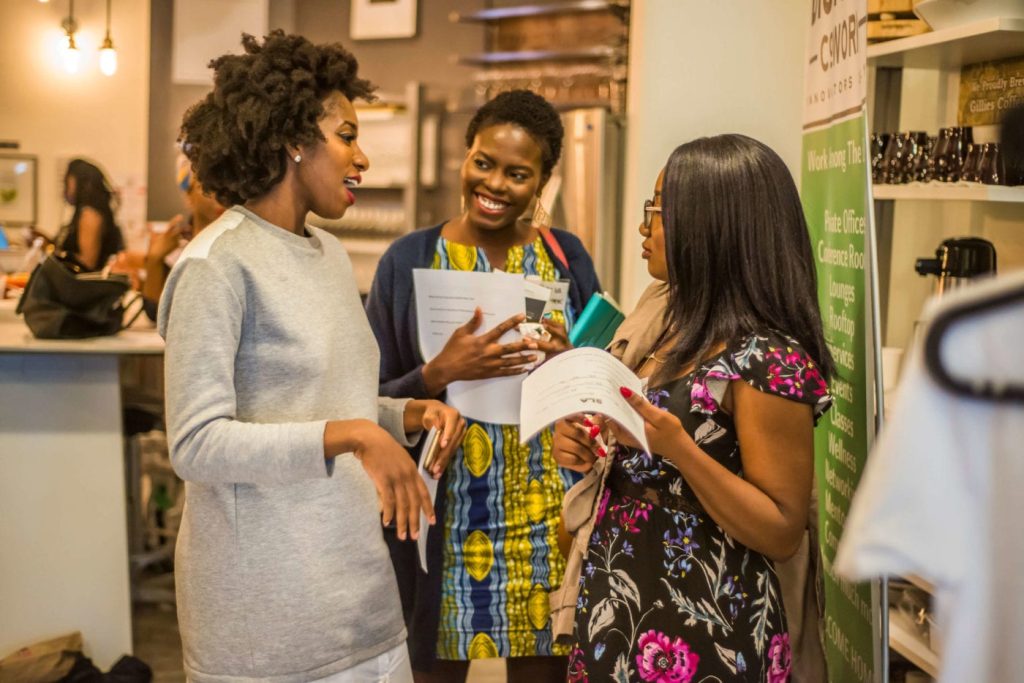
SheHive is coming to London! For 4 days, SLA is taking over Facebook HQ for a professional bootcamp. Between August 18 and 21, you’ll have the opportunity to interact with the coolest people in London. This will not only be a great experience for established entrepreneurs and professionals, but for aspiring career women of all ages. Now, you may have your own reasons to skip SheHive, but we have 5 solid reasons why missing it will be a bad idea . Renowned and inspirational speakers You definitely don’t want to miss out on this chance to hear and interact with some of the best and brightest minds out there including Imad Mesdoua, Charles Sekwalor and Ade Hassan. Get ready to learn from passionate and creative entrepreneurs, hear about their vast experiences and leave inspired. THE networking opportunity You’ll get an excuse to show off your networking skills, potentially make long-term connections with some dope people, get advice, raise your profile and increase your confidence. Meet and connect with some of the best and most talented young African entrepreneurs. Intimate sessions The intimate nature of our sessions means that you can get the most out of them and get exactly what you need. And if you splurge for an All Access Pass, you’ll have time to speak to the co-founders and other speakers directly. #SheHive is also a multicultural platform where you not only learn career skills but how to apply them. New friends You’ll have the chance to interact with new women and reconnect with old ones! Don’t miss out on the chance to meet some amazing, aspirational women like yourself who will motivate you. Motivation is contagious and the moment you interact with individuals who are cheerful and upbeat, you will catch the vibe too. The chance to grow your career and business in a clearly defined market Are you an entrepreneur? Our #ShopTheHive event is the best place to come and showcase your product to our community. Not only will this generate awareness for your brand, but you can additional revenue stream to your existing business. SheHive is where career success starts, so don’t miss out on your chance to hear amazing speakers, participate in hands-on workshops, network with amazing African women on a multicultural platform and don’t forget SHOPPING. Who would want to miss this? If you haven’t bought your pass yet, better hurry up and do it.
The why and how to being an inspirational leader
Let me start by telling you about Julia. After eight years of operations and more than 25 members of staff, Julia was frustrated and exasperation. She deemed that the business was just not viable and decided it was finally time to shut things down. Dwindling revenues and consistently spiraling costs were largely to blame. But it was all supposed to have been so easy. After graduating from University with a LLB, Julia decided that, having studied Law to please her parents, she could now start living her own dream. Julia got qualified and set up her own Montessori kindergarten. Soon enough through word of mouth and referrals, pupils came in. But year in and year out, pupil numbers were not growing as Julia had expected. Teachers too were not as inspired and motivated in their work as she needed them to be. Julia herself needed inspiration. Now, imagine a world where people wake up inspired to go to work. A world where your employees genuinely look forward to the start of business day. Where they look forward to interacting with their colleagues and leader daily. In this world, your employees are constantly and authentically excited about interacting with clients. They see themselves as relevant and are ready to offer premium solutions to the needs of clients with a listening ear and attentive heart. Imagine that. Wouldn’t it be really amazing? In my point of view, this would be seriously valuable. I think we should all seek to make our businesses and workplaces like that imagined one above. I am convinced that one of the ways you can do that is to lead with purpose and direction. You need to know your why of your business, live the why of your business in your operations, and inspire with the why of your business. The Why Let’s start with ‘why’. Why exactly are you in business? What is so distinctive about your business and your organization that it would potentially draw clients and employees to your door step? There are some organizations that people just fantasize working with. There are others that are the preferred service providers of many. There is a reason for this both employee and client deem these organisations to be especial service providers. They are seen as having a unique way of doing and serving. There is something distinctive about their brand and therefore their business. This isn’t something left to chance. The most sought after brands are relentless in their efforts to be responsive to client and employee needs and wants. They clearly understand why they are in business and who they are in business to serve. They are also equally obsessive about serving clientele effectively and efficiently according to their brand values, and doing so consistently and constantly. The How I wonder if Julia, the head of the school above, had thought deeply about the ‘why’ of her business. I also wonder if she had thought deeply about how she would have to operate her business to satisfy that why. Julia probably hadn’t thought deeply about what it takes to create the kind of school that she wanted. This list is lenghty, from organizational values and culture, to parent/school engagement, to away days for teachers, to school administrative policies, to continuous learning for herself and her teachers so that they become authorities in their field, to developing an executive presence for herself. In any business, there are vital peripherals which we must pay attention to. These are beyond the product and service that you sell. The decisive business leader ensures that their business operates at a place of inspired joint value for all its stakeholders. They ensure that their organization is a continuously learning, improving and responding. They ensure that their business is continually enhancing their capabilities, services and products -and inspiring and motivating staff as it does so . And that takes courage It takes courage to inspire, when you inspire you will suggest innovative ways of doing and thinking for the better. In presenting new ways of thinking and of doing, the business leader challenges the status quo. That is why leading effectively often requires courage. Most people will need tremendous inspiration to offer their best and effect an otherwise dormant potential. It will take courageous leadership to draw out that potential. It was TS Eliot who said that only those who will risk going too far can possibly find out how far they can go. The privilege and responsibility of business leadership is in taking calculated risks, within and in spite of your resource constraints, to see how you can more effectively serve and respond to your clients and your team’s needs. That takes courage. But courage is ineffectual without purpose and direction. This is why in business we must know our ‘why’, and gather the courage to demonstrate that why through our how.
How to organize an independent art/design exhibition
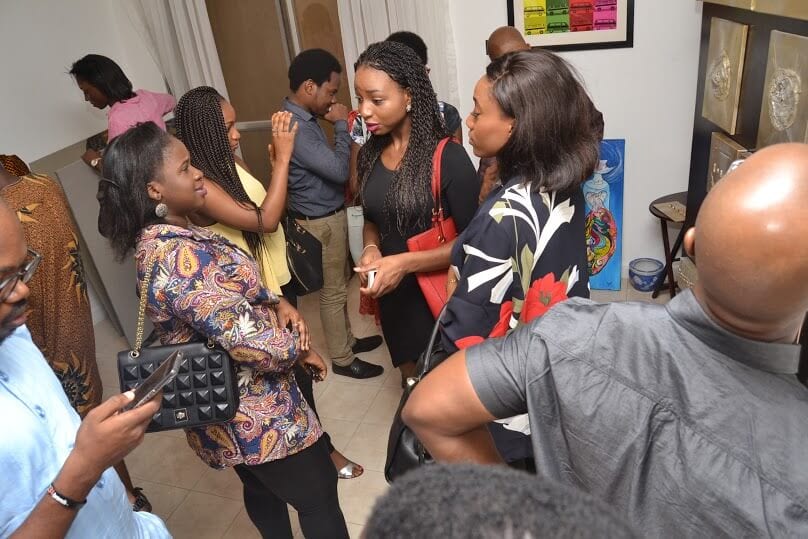
To artists and designers, exhibitions are very important. In fact, they are akin to gigs and appearances musicians make. Exhibitions are a good way to talk to people about your art, meet prospective buyers and patrons and generally reach more people. Now, most people think you need to have a gallery or art-house to have an exhibition. However, more and more independent art exhibitions are put together across the world. Three months ago, I had an exhibition titled, “The Philosopher’s Muse: An alternate art exhibition” in Lagos, Nigeria. I’d like to share firsthand how you can pull off a great event. Now, the first step is to have all your art works completed first. This way, you don’t run into any future troubles. Once you’ve done this, you’re ready to start. Build a committee The committee can be made up of people you have employed or friends and family. No matter what, always start with a committee. Tell as many people about your idea as possible to get their take and then have some of them help make your idea a reality. Create a budget With the help of your committee, you would need to decide on a budget for the event. Stick to it closely and don’t forget to factor in marketing costs. Get a space If you can get a gallery space, that would be amazing. If you can’t, there are tons of other types of spaces that can be used. Think of bars, garages and so on. If you’re in Lagos, you can reach out to Sao Café, Blue Mahogany, StrangerLagos, Ice cream factory, iamisigo store and Kia Motors. These are a few places in Lekki that seem to be game for such events. If you don’t want to go with them, you can get a garage, a white space, a store or a room to host your first exhibition. Invite other artists Always do this. Two heads are better than one and it’s a great idea to invite other artists to exhibit with you. This will require drawing up an arrangement with them. Publicise your event There are a number of blogs which would be happy to publicise your event for a small amount of money or for free depending on your agreement. Some of these blogs may not be powerhouses in the blogging world but they reach the right crowd. A number of examples are NTDIL, FOMO, The Sole Adventurer, UnravellingNigeria, Vunderkind, The Naked Convos , ArtsandAfrica.com, Afropunk.com. Also, getting your event on a free events platform may help the turnout of the event. Upload the details of the exhibition Having all the details of the exhibition on your Facebook page or website will cut the cost of publishing exhibition material. It will also get other people who may be unable to make it to the exhibition aware of the event. Entertainment Rent or loan a small set of speakers for music. Then organise caterers to provide small finger foods and drinks so your guests know you appreciate them for coming. Yellow Canopy is an affordable option for event catering. Send invites After publicizing the event, don’t forget to send out personal invites to people you want to see at the event. These could be influencers, mentors or others. Set up early Before the event, try to set up a day before. Have the name and titles of the works you’ll be exhibiting neatly placed near the pieces. Have a good time At this stage, you have done all you can. It’s time to have some fun. Enjoy it knowing that no matter what, you have taken the first step in your career. This is good news.
Dorinda Mawuenya Matey: It never started as a business, I was just sharing my passion

Dorinda Mawuenya Matey is a natural hair enthusiast and entrepreneur who turned her love for natural hair into her profession. She started the “We Naturals Team” as a Facebook page to share her discoveries and knowledge about her hair journey. In time as her followers grew, they needed more than just advice; they needed quality products to grow healthy hair. Dorinda saw this as an opportunity to turn her passion into a profession. Currently, her company is one of the leading hair products brand in Ghana and Nigeria. We Naturals has 19 employees and 68 retailers in Ghana, 39 in Nigeria and one in Cote d’Ivoire. What ignited the spark to start the We Naturals Team? When I started my natural hair journey in 2011, I was completely lost. I had no idea how to handle my hair and eventually relaxed it again. In 2013, I went back to natural hair, I realized it was much easier this time as I was reading a lot about my hair and experimenting with different hairstyles, products and regimen. On my first anniversary, I decided to start a Facebook page (We Naturals) to share all that I’m learning to help make the journey easier for others. It never started as a business; I was just sharing my passion. The business We Naturals came in after my followers on Facebook started asking about products. I saw an opportunity in there and started selling other brands until I started making my own products. How did your followers react when you started making hair products? They were excited and received it very well. We won’t be where we are today if it wasn’t for our very amazing followers and customers. Our very first sale was made on Facebook. What was unexpected when you started We Naturals? Well, I realized people will do anything to undermine others just to get ahead. You have to be diligent not to compromise on your integrity and focus on your goals to keep moving forward. What creative strategies did you use to acquire funds to start the business? I had funds from a 3 year life investment policy I started in 2011. Because I had this money, it was fairly easy for me to get going when I decided to start selling products. It wasn’t enough to do everything, but it was a good start. Did you get the products right on the first try or did you have to do more trial and errors? We often do a lot of trials until we are satisfied with the efficiency of the product, the consistency, scent, colour etc. We have a production team who make the products, they’re then sent to labeling and quality control before it moves to store. We experiment on employees, friends and family. We sometimes also request for product testers from social media who also serve as our final testing point before the product is introduced. Why do you focus on only natural hair products? Do you have plans on making products for relaxed hair? The company started off with my passion for natural hair, because of that the products were automatically perceived to work for only natural hair. However, most of our products can be used for all types of hair, though in some cases with slight difference in method. Have you had any formal education pertaining to your choice of career? Yes I have a certificate in Natural Products Formulation from the USA. I had to learn how to make the products from a credible institution to be able to make quality products. I have experience in business and marketing which come in handy. What do you enjoy most about what you do? I love reading positive feedback from our customers. Fortunately about 90% of all the feedback we receive is positive and they come in very often. Every single time I receive a positive feedback, I smile. It makes me really happy because that is one more person we have provided a solution to, not just sold a product. How did you distinguish yourself from your competitors? Our primary target groups are individuals on a healthy hair journey, mainly the natural hair journey and these are people who are looking for results. Our business is built on selling solutions, not just products. We solve hair problems and I believe this is what our credibility is built on. I am passionate about making the hair journey for all my customers a delight so I always go out of my way to help them find solutions. That is what automatically sets us apart, the genuine passion to make our customers happy always. Describe a typical day at work. No two days are ever the same with me. It depends on what needs my attention the most but generally I go over accounts with the sales team and allocate monies for various things that need to be taken care of. I then go into production, mainly supervising and sometime making products myself when necessary. I handle our social media platforms personally so I am on and off social media throughout the day responding to questions, sharing contents and taking orders. I also check for orders on our website and respond to emails. I go to our store to check on stock and bulk orders going out, as well as inspecting products especially labeling and responding to complaints and other issues. What difficulties did you face expanding to other African countries? What was surprisingly simple? The major difficulty we faced and are still facing in Nigeria, is the exchange rate. The Naira keeps falling and we end up losing money through exchange. With the Francophone countries, I will say the language barrier has slowed our efforts but we are taking necessary steps to resolve these issues. What was surprisingly easy was how quickly Nigerians accepted our products. What are your goals for the company? Our goal is to be the number one in Africa not just in product quality, market
Maphefo Ingrid Mashigo: I hated every minute of the corporate world

How many single mothers and divorced women do you know in the modeling industry? From that number, do you know any that will leave their stable job with guaranteed income to introduce young, unknown girls from the village into the world of modeling? Well, meet Maphefo Ingrid Mashigo. Maphefo is the young Limpopo-born woman who opened up Bokamoso Future Models to young women in rural areas. Maphefo doesn’t just discover models, she produces them. To Maphefo, models are her ‘rare, raw, rough diamonds’. When did you know modeling was in you? Modeling runs in my family, I was inspired by my aunts and uncles. They were models in the local scene and I got to love modelling because of them. Since I was a little girl, I’ve always loved the spotlight. I did a lot of drama and beauty pageants from the age of six. Like I have mentioned, my surrounding was a big influence. Tell us about Bokamoso Future Models. What have you achieved to date? With Bokamoso Future Models, I produce models from the rural areas who have never modeled before. I want to bring them to the international stage. For a company that is only eight months old, we have shaken the industry and are taking it by storm. Before people know it, they won’t know what hit them. I am so happy to announce that I have a model that is going to represent South Africa at the Miss Heritage International that will be taking place in India this December. I look up to the likes of Tyra Banks who has her own production company. I would want to be remembered as an icon. There are so many modeling agencies out there, what are you bringing that is different? Unlike any other agency, I don’t sign models, I produce them. That is a big difference. I spend a lot of time, until the wee hours of the morning hosting extensive trainings and workshops. I provide transport for my models to castings, auditions and shoots; they don’t have to pay for such services. More than anything else, I mentor them. In an industry that is clouded by a lot of negativity such drugs, alcohol and also anorexia, How do you guard yourself and your models against it all? Morals are something that were instilled in me by my grandparents from a very young age. I am personally not a huge fan of alcohol and my parents taught me those things are demonic. I have never forgot those lessons. The fact that I am a Christian and a huge believer helps and guides me in everything I do. How did you find the corporate world and when did you know it was time to leave? Corporate world? I hated every minute of it. I never looked forward to going to the office. The idea of working for someone else was slowly killing me daily as I’ve always wanted to be independent. The salary was good and it got me by, but I was never happy. The fear of living an unhappy life forever based on a good salary was not part of my plans. Maphefo had to come to life. Being a single mother and business owner in the shrewd modelling industry, how do you handle everything? We have an amazing father called God, through him, all things are possible. The father of my child does not support her in any form but we are surviving through the angels that God had sent through. I have amazing friends, business associates and parents who look out for us and assist me with anything I need. The world has so many ills, what calms you down? I am very family oriented and my daughter calms me down. You have a hoarse voice, have you ever been mistaken for a man on the phone? Hahahaha, no! I am instead encouraged to do radio presenting. I have such a deep, strong voice even if I can say so myself. Want to see women you know featured on SLA? Tell us what amazing things women are doing in your communities here.
5 wedding planning tips for the business savvy bride

Have you recently gotten engaged? Congratulations! Are you deep in the trenches of the madness that is planning a wedding? E-hug. I had no idea what I was getting into when I began to plan my wedding. Prior to getting engaged, I had invested little to no time envisioning my wedding, and I generally dreaded attending weddings (with some exceptions). What I have always enjoyed though, is research and strategic planning. Likewise, when it was time to plan my wedding, I treated it like I would any professional project. It’s been a year since I got married and with the rear view mirror in sight, here are 5 tips I would give any #BossBride: 1. Develop your wedding brand To begin my wedding research, I followed major wedding sites like Bella Naija on social media. I pored through every single post on blogs like Aisle Perfect and bought books like Vogue Weddings: Brides, Dresses, Designers. Once I had a better grasp of things, it was time to decide on my wedding brand. What will my wedding look like? What will it feel like? I asked myself these questions because I didn’t want my wedding to be a copy-and-paste smorgasbord of every trend. It was especially important to me to have a bit of my personality stamped on the wedding. Accordingly, I put together a concept note describing my vision for my wedding (aka #Blavid2015). I have always been passionate about the arts and I created my vision around this. Both my traditional and ‘white wedding’ were like mini-concerts: I had traditional dancers, a choir, musicians, a quartet and poetry reading. Of course several things went wrong on my wedding —but what most people (hopefully) remembered, was the music and the ambiance. 2. Get the budget figured out early A vision without the finances to execute it is pretty much useless, so it’s important to get the finances figured out early. While the bride’s family traditionally pays for the wedding in Western countries like America, this is not always the case across the African continent. My husband and I come from different Nigerian cultures, with different traditional rules about who pays for the wedding. Thus, it was important for both families to discuss who was paying for what and decide on the budget early in the process. Getting a budget together will require getting various price quotes and a lot of prioritization, so it’s best to get an early head start. 3. Do not waste your human capital Once I had a vision and a budget, it was time to figure out who would help me execute my vision. Beyond the usual suspects like my maid-of-honor and best friends; my mother and I delegated tasks and asked favors from whoever asked what they could do to help (perhaps to their shock, Ha!). For example: a family friend who owns a marketing firm designed our logo and handled the programs; another who is a creative helped design my wedding website and invitations. One of my photographer friends did my engagement shoot, and another friend with a hair business hooked me up with a great hair extensions. A former family chauffeur organized a tour of the city for our foreign guests, and my brother-in-law’s fiancé made our bridal train proposals. I could go on and on, but the point here is: #TeamWorkMakesTheDreamWork. 4. Beware of social media vendors Beautiful Instagram feeds do not a good vendor make. Some vendors spend so much time boosting their social media profile that they neglect their actual products and customer service. Additionally, particularly in Africa, some of the best vendors might not be social media savvy or on the Internet at all. No matter how many popular wedding hashtags a vendor is affiliated with, no matter how many blogs rave about a vendor, no matter if a vendor is a family member or friend —do not choose a vendor whose work you have not seen, touched, tasted, heard, etc. 5. Negotiate your contracts like a CEO I shamelessly negotiated prices with every vendor I worked with and they all gave discounts. Two of the most stupid mistakes I made however, were paying some vendors 100% upfront and not insisting on written contracts. As a lawyer, I am very ashamed to admit this. I blame my desperation to book these vendors and what I’ll call PWSS (Pre-Wedding Stress Syndrome). One vendor failed to deliver on almost everything he had promised—it nearly brought me to tears at my reception. When I wrote to him after the wedding, he apologized and explained that a bus with some of the materials he needed had not arrived on time. One year later, a promised refund remains buried in a labyrinth of excuses and justifications. I wanted to sue, but my pastor-mother insisted on leaving it all to God. The moral of this story: a) protect yourself by insisting on paying a balance after the wedding, and b) document all your expectations in a detailed contract. A final note: flexibility and adaptability are important skills for any seasoned professional or entrepreneur in today’s world. The same applies to a wedding: you may have to make concessions to make your family, in-laws and partner happy. I was resistant to some things at first (Type A problems), but I eventually realized that I would have a much happier wedding if all the important parties had some buy-in. I also rolled with the punches—or danced with them, I should say. I decided I would be happy on my wedding day no matter what, and for every mishap I noticed, I danced a bit harder. By the end of my reception, my curls were undone, my foundation had bled, and I had danced my happy heart out.
Your guide to dressing in the workplace

Dressing matters. Entering the corporate world as a young lady, I struggled finding out what it takes to get ahead. Apart from being good at what I do, I was clueless in terms of being presentable and my dressing. I couldn’t decide if I needed to be sexy and fashionable until it hit me. Did it matter how I looked? Of course, yes!! How you dress matters, it actually matters a lot. “A picture is worth a thousand words.” Dress up every day with the aim of creating a lasting first impression. In the corporate environment you meet different people every day and you never know who is studying you. The image you create greatly influences the way you are viewed in the office. With the primary goal being to “feel good” about the way I looked, I had to project a positive image. Feeling good about myself helped me naturally convey confidence and professionalism. It also gave me a positive attitude, which was all I needed to get ahead. Although there may be no set rules as to how one should dress, at times our choice is determined by our occupation or location. Your goal is to look the part, and for appearance to be consistent with the type of work you do. A college campus might be the perfect forum to show off the latest trends in fashion style, the office environment however, is not the place to do so. A conservative suit would be the recommended style for professional and managerial positions while overalls are for a construction job. I could go on and on about what to wear and what not to, avoiding too short skirts and wearing too much bling blah blah blah…we can all recite those off-head. To cut it all short here’s a few pointers to take note of from me; 1. Create your own brand Come up with an overall image you want to portray in the workplace. Then, go about buying and choosing the clothes that fit this image. Try mixing and matching casual, fun clothes with formal attire to add a personal flair to your style of clothing. Pair patterned or brightly-coloured tops to add a spark to a suit. You can also choose a patterned suit with a solid top. Just make sure what you choose to wear reflects a little of your personality. 2. Understand your body Know your body type and choose styles that show it off in a professional way. Wear clothing that is fitted and highlights your best physical features without being revealing or raunchy. To me, nothing is sexier than a woman who shows off her stuff while not showing bare skin. Dress to express who you are inside without baring your assets on the outside. Not only is wearing inappropriate clothing distracting, it can also give off an inaccurate impression. I’m curvy and gifted in all the right places, but trust me, I will never be caught in a short skimpy outfit. The office environment is not meant for that. Looking sexy is alright but do it in a classy-professional way. 3. Understand what’s appropriate in your industry Dressing culture varies from uniforms to suits and overalls depending on the line of business. Some businesses simply require employees to be more formal than others. In the fashion industry, models need to keep up with the latest trends however, corporate professionals are not taken seriously unless the show up in formal suits. Perceptions on dressing differ and office environments need to take into consideration both the clients and fellow industry professionals. You will have to understand and appreciate the perception your company dress code may have on all of these people. 4. Make sure your clothes ‘fit’ Appearance whether classy and confident or relaxed and trendy, is often reduced to how well clothes fits. If they are too big or too small, trust me they won’t look good on you. A proper fit applies to everything including clothing, the shoes, and the accessories. Baggy clothing will not highlight or enhance you in any way, instead it may make you look less professional or even heavier than you are. The same applies to smaller and tighter clothing. Makeup and hair can also negatively affect perceptions of women in the workplace, but that’s a tipping point for another day…
Rafiat Kasumu: I was literally weaving history

The kente cloth of the Ashanti is one of the most recognisable African fabrics worldwide. We’ve seen kente dashikis, kente wax print and now kente graduation stoles. Rafiat Kasumu is a Nigerian-American who developed a love for kente while working with kente weavers in Kumasi, Ghana. Rafiat took this love to the next level by co-founding Kente Master which seeks to expand the international reach of Ghanaian kente weavers. Here, Rafiat schools us on international social impact and the importance of maintaining the tradition of kente weaving. What was the spark that lead you to start Kente Master? Kente Master started as an idea amongst a group of my peers and I who participated in University of Pennsylvania’s joint International Development Summer Institute (IDSI) with KNUST in Ghana. While I was in undergrad, I was fortunate enough to be one of 15 UPenn students selected to go. There, I was placed in a small group of students who worked directly with local kente weaving associations daily to help scale their businesses and practices. It was a life changing experience! Thanks to it, I fell in love Ghana’s culture and history. The most profound moments of this experience were when I heard about the history of kente from the weavers themselves. I witnessed it’s traditional production from thread to final product, and got to try my hand at weaving traditional kente cloth. I was literally weaving history and this was the spark! Learning about the significance of kente –down to the meanings of colors and patterns– really opened my eyes to how important this craft is. From that moment on, I knew I wanted to be a part of the movement to expand this craft internationally. Not only the significant story of kente needs to be spread. International social impact might be a new term to some, what exactly does it mean? Sure, “social impact” is a broad term that has been used a lot over the years by different organizations and within different contexts. Because of this, the definition of social impact is continuously in flux. It is really determined by that institution in that given time. Kente Master is a social enterprise that promotes African entrepreneurship by servicing premium Kente graduation stoles to major universities abroad. For us , “social impact” is the positive impact an action has on a community or society. At Kente Master, we create international social impact through the connections we facilitate between local Kente weaving associations in Ghana and top universities in the United States. These connections provide greater opportunities for local entrepreneurs to scale their craft and businesses. With the influx of inauthentic and over-priced kente textile merchandise coming from China and other non-traditional manufacturers, these opportunities are essential for local Ghanaian entrepreneurs. What steps do you take towards economic self-empowerment for the weavers you work with? As I mentioned, Kente Master is all about economic self-empowerment of the artisans and weavers we work with. As an organization, we do not change any of the current business practices of the various weaving associations we work with. Rather, we give them an online platform as well as resources to market and sell their products and goods globally. Economic self-empowerment of the weavers is also tied to the fact that they are still able to use the traditional weaving methods of kente. These methods are passed down from generation to generation. For weavers, self-empowerment is the notion of knowing they can continue their craft the way their ancestors taught them as well as knowing that their clients value these traditions. Share with us a brief history of kente weavers. Is the tradition as prestigious as it presumably was in the past? Sure! To understand the history of kente weavers, you must first understand kente itself. Kente cloth is the finished product of a traditional form of weaving that originated in Ghana from the Ashanti Kingdom. It is a fabric made of interwoven silk and cotton strips that has a really unique texture. According to Ashanti legend, centuries ago the first piece of kente was sewn and was given as a gift from two weavers to an Ashanti king as a symbol of royalty and wealth. Since then, the brightly woven kente has been passed down through generations of esteemed royal families, with each symbol and colour standing for a particular meaning. As the years went by, kente became widespread beyond royalty and was used to mark important stages of life in Ghana, such as weddings and baby naming ceremonies. Today, its significance to these important passages of life has transcended both continents and cultures. Kente stoles are now, among other things, seen as a wearable staples of a collective heritage in the United States. In Ghana, the craft is as prestigious as it was in the past, as skilled artisans still customize kente for important ceremonies. Abroad, we found that though people may wear kente stoles at graduations, many may not know the origin or creation process of the cloth. Kente Master was created to solve this critical gap so that students at universities abroad understand this unique tradition and know that their stoles were made in Ghana. Who are the clients that go for Kente graduation stoles? Great question! Some of our past customers have been the black cultural centers of universities and individual student organizations that identify with the African Diaspora such as multicultural Greek organizations, Black Student Leagues, or African Student Associations. But, we’ve also had clients that fall outside of these groups. Really, kente stoles are for anyone who wishes to stand out at their graduation by wearing a customizable piece of graduation regalia! Do you work with any universities in Ghana or other African countries? Yes! During its early stages, Kente Master was selected to participate in the World Bank-backed Kumasi Business Incubator (KBI) at the Kwame Nkrumah University of Science and Technology (KNUST). This program equipped us with tools we needed to turn our innovative idea into a
So, you want to start a career in education

When I was younger, the word education for me meant receiving instruction and strict teachers who I call, ‘madams’. In my naïve little world then, I equated education to the tutelage received from angry looking madams that always dressed appropriately. It was these madams that instilled the pride associated with accomplishing basic goals in reading and writing in us. They were the women who allowed us to proceed through the next grade, form and eventually to college. With time, I realised that lessons from the madams was just one aspect of education. There are also policy makers, administrators, researchers, project analysts, area experts and numerous education development practitioners at different levels. These experts work towards collectively improving the quality of teaching and learning in any system. The process that leads many to the teaching vocation is pretty clear and straightforward to some. However, having realised the versatility of the sector, I concluded that there was no one formula to getting ahead in education. Rather, there are certain basic principles that you need to follow to launch and maintain a successful career in education. Passion is half the battle won I am a strong believer of the mantra, “passion is half the battle won”. When you are hungry and starving for a specific goal, you are more likely to be successful. When you have the drive to achieve something, you will chase after the best results. You won’t rest until you have left your mark in your specific area of interest. Start with the basics Basic education in your area of choice is the much needed support structure to quickly launch your career in education. Many people go for any first degree and then struggle towards getting employed after. Don’t be one of them. You should carefully choose what course to enroll in at uni considering the area you’d like to be an expert in. While receiving basic instruction in your field of interest, you will learn the theoretical aspects of your trade. This will be what you put into practice once employed. Volunteering as a student also allows you to put into practice what you’ve learned at university and to start creating a name for yourself in your industry. Write academic papers Researching and writing academic papers on your subjects of choice is what will turn you into a specialist. While everyone has an opinion on educational topics, it takes a well recognised author, who has done the research (be it primary or secondary) on specific aspects, and produced papers with demonstrated and verifiable results to be taken seriously. It is the specialists that get to influence the decisions of policy makers and development agendas. They are also the ones who guide the way other academics think and move in the education sector. Be dynamic As the world is dynamic and constantly changing, any career path has to be similarly open to change. It is key to keep up with innovations in the education sector so as to remain relevant. For example, the increasing use of the internet to disseminate information on subjects should be taken into account for career development. Online courses make it easier for students to familiarize with their field of choice and areas of growth and opportunity. This can be employed by educators to spice up their trade.