
4 things you can learn about branding from Yemi Alade

Yemi Alade does not need any introduction. Raise your hand if you start singing the words to “Johnny” anytime you meet someone called John. For some of us, it is difficult to remember how Yemi Alade was before the Johnny era. The mere mention of her name conjures up a certain image. That is her brand. Since rebranding herself, Yemi Alade has reached new heights of stardom with fans across Africa and beyond. She has a lot to teach us about branding. 1. Find a style that is yours… A successful brand is a brand that is unique. When you’re building your brand, first things first is discovering what you are doing that others in your industry aren’t. What makes you special and different from everyone else? You may need to add some colour and give your brand a personality that everyone will remember. Yemi Alade’s edgy sense of fashion just stands out. She has emerged with unique and quirky styles that immediately jump at you. Yemi Alade has described herself as a fashion chameleon, her style is at once easy, simple and edgy. When it comes to fashion, no one else in the Nigerian entertainment industry is doing what Yemi Alade and so effortlessly too. 2…then stick to it Let’s talk about hair. When you think of Yemi Alade what hairstyle is she rocking? The “pineapple” hair-do has become Yemi Alade’s signature. She has worn it in different colours and added little variations to it along the way. Others might consider sticking to one hairstyle boring yet, a branding essential is consistency. You have to be consistent in what you do and/or offer. Consistency reinforces the value of your brand. Yemi Alade has been consistent with her pineapple hairstyle and it links back to her style as being part of her overall brand. 3. Show off your best work When building a successful brand ladies, you’ll have to pay attention to positioning. Once you have put a message out there you must avoid changing it easily. Otherwise you risk confusing your customers. Pay a visit to Yemi Alade’s Twitter page and right there you will see #Johnny. This is a very important branding strategy. “Johnny” is Yemi Alade’s most successful hit yet and by putting it on her page, she is ensuring that anyone who is a fan of the song will associate it with her. In this way, “Johnny” is now part of her brand, more so than other songs she has released. Using your best work is a great strategy for branding. 4. Don’t be afraid to venture into unknown territory In finding out what makes your brand unique, you may need to push yourself. Think outside the box, be innovative and bold, be daring and most importantly make sure you are standing for something you believe in. For me, one more things comes to mind when I think of Yemi Alade; multilingual. She sang a French remix of “Johnny” and brought on a popular French zouk artist for a remix of “Kissing”. Going further she released a Swahili version of “Na Gode”. Yemi Alade has taken her brand to entirely new levels by speaking to audiences in their own languages. Her brand communicates with fans across borders, something that the only most successful brands accomplish. What else do you think aspiring #MotherlandMoguls can learn from Yemi Alade? Kindly let us know in the comments section below.
Key steps to creating your business with Sharon Beason, Founder of Womeneur

Creating a business model can come with its challenges, it is not always easy and requires significant strategy. Womeneur is a platform for women to develop their businesses professionally. During She Hive NYC 2016, Womeneur Founder, Sharon Beason went over the initial steps needed to develop a business. In this workshop, attendees learned that paying attention to detail can make all the difference in the trajectory of a business. Here are some of Sharon’s strategies on developing a business professionally. It has to make sense Think about how viable your business is. No matter what business you are in, you are always in the business of solving problems. Ask yourself, am I solving a problem? Do your research and know who your competition is. You must see where your competition is slacking and solve the problems that they are not. For example, if they are not responding to customer phone calls make sure that you are. If they are low on merchandise, make sure that you are not. Aim high Within the industry that you are looking to get into, see who on a grand scale is doing what you aspire to do. For example, if you are looking to make handbags, look at who is currently the most successful at doing it. Study the strategies that the company uses. Have a well-defined niche and target that audience. Create a customer profile for that niche. Be as meticulous as possible when defining your target audience, this allows you to make better customer-centered decisions. Ask yourself, what do they look like? How do they speak? What are their interests? Listen to your audience You have to actively listen to your target audience’s needs and go where they are. For example, if most of your target audience uses Instagram to communicate go there and read about the discussions that they are having on that platform. Sharon explained that people’s commentaries give you a snapshot into their mindset. If you have a well-defined understanding of their problems, you can more readily provide solutions. Workshop participants went home with the key takeaway that if they set up their business models effectively, they can become agents for change within their respective industries. In order to become an agent for change you must listen to the people that you want to serve and always make it your priority to fulfill their needs.
You’re now a Motherland Mogul, have you thought about safety?

A light bulb just came on and you’re already smiling at the money you’d be making from the business idea… You just slammed a pitch and you’re already practicing the speech you’ll be giving other young people on how you made it… You’ve launched your website and have snagged a client or two, business is looking promising… Your business is expanding, income is rolling in, your reputation is soaring, you’re making impact… You are now a known brand… Pause. Hold up. Wait a minute. Have you given any thought to safety on the job? Chances are you haven’t thought about the safety of both yourself and your employees. Yet, whatever stage you are on your entrepreneurship journey, it is important to consider the health and safety of everyone involved in your operation and invest in it. A safety management system (SMS) is a proactive and systematic process of safety. It involves developing a safety culture that ensures your organisation/business remains safe from loss of any kind. There are numerous benefits to incorporating a SMS in your startup. It reduces business costs and increases efficiency. With a SMS in place, you won’t have to worry about spending limited resources addressing the fallout of accidents and other incidents such injury, loss of goods, damage to business property, even death. Financing Banks and investors are more likely to invest in a business that is set up on a right foundation. No one wants to lose hard-earned money to accidents that could have been averted. Employee morale In business, word of mouth travels faster than any advertising. Employees do not want to leave a job worse than when they got into it, broken bones, injuries or ill-health. A safety system boosts their morale and lets them know that their employer is interested in their overall well-being. This morale of staff is inadvertently manifest in improved client relations and that is a plus to a business. Business confidence Big companies in construction, aviation and oil and gas seek credible businesses with a safety culture to work with. This singular investment in a safety culture could set you apart from other business owners Legal compliance And of course, using SMS means you would be complying with relevant laws in your country of operation. They say, train a woman and you train a nation. Here is to building safer businesses and workplaces as we become Motherland moguls.
Twitter chat with Flavia Tumusiime: Building a career in the media industry (Jun 16)

Missed this event? Make sure you don’t miss the next one by joining our community today. Ever wanted to know how to make it in the media industry? Are you invested in building your public image? The media can be a very lucrative place for young women to build a career in but many of us don’t know the first step to enter into it. Join us on Thursday June 16 for a twitter chat with Ugandan TV presenter, radio host, MC and actress, Flavia Tumusiime on building a career in the media industry. If you’re not sure how to move forward in becoming a media personality, then you need to join this chat. Follow She Leads Africa on twitter and use the hashtag #SheHiveNairobi to ask your questions and participate in the discussion. Topics that we’ll cover: How to balance public and private lives as a celebrity When to start building your public profile How to gain and maintain a lasting public image The necessary skills required to work on TV Media industry mistakes to avoid at all costs Twitter chat details: Date: Thursday June 16, 2016 Time: 2:00pm WAT // 5:00pm EAT Location: Follow She Leads Africa on twitter and use the hashtag #SLAChats About Flavia Tumusiime Flavia Tumusiime, has become a consistent and steady face in Uganda and Africa’s media world. Her journey began at the age of 14 when she landed top spot as one of the hosts of popular teens show on WBS TV. She later did a short stint on HOT 100 radio before being offered a show on the number one radio station in Uganda 91.3 capital FM where she now hosts the mid-morning show daily. She was a face of Freedum Nytil a Ugandan clothing brand from 2006 to 2008. In 2007 she featured in her first film role in “Kiwani”, a H.Ssali production and is now lead actress in the “Beneath the Lies” series. Flavia’s career took a major turn in 2011 when she landed a role as co-host of the popular game show “Guinness Football Challenge” for 2 seasons and also became the first Ugandan VJ for popular African music channel, Channel O. She was the first East Africa to co-host the popular Big Brother Africa reality show in 2012.
To disclose, or not to disclose: Striking the right balance when making a case for your business

As promised in Navigating The Catch-22: Successfully Fundraising For Your Business, this segment discusses, in detail, the nuts and bolts of confidentiality agreements. Also referred to as Non-disclosure Agreement (NDA), the NDA keeps certain aspects of what an entrepreneur will discuss or disclose with a potential investor a secret. While an NDA is an important document that helps protect your new venture’s confidential information, entrepreneurs should endeavour to strike the right balance between protecting their business secrets and sharing relevant information with potential investors to attract capital or other resources. 1. Timing is everything: Relationships come first Indeed, the know-hows of your new venture might necessitate the execution of a NDA. However, this does not mean that you should walk into a potential investor’s office for the first time offering a NDA as a substitute for a handshake. This singular act may, in fact, be counterproductive as it may scare away savvy investors! The use of the words “scare away” is intentional. Indeed, this choice of words begs the question, “Why would a potential investor be reluctant to sign an NDA, if they do not intend to breach the agreement?” A few answers are listed below: Most potential investors sit on numerous pitch competition boards. They encounter numerous entrepreneurs in their professional lives and are often asked to sign NDAs. Consequently, your NDA may be number 500 on the request list. As such, a potential investor’s reluctance to sign your NDA may not be because they intend to disclose your trade secrets, rather, it may be due to the practicality of keeping track of thousands of NDAs that they receive. From a practical standpoint, it gets really challenging to track thousands of NDAs especially where entrepreneurs submit pitch decks with similar ideas. Investors are not only attracted to an idea but to other factors such as your team, track record, probability of success etc. Given that NDAs are important legal documents, investors will often want their lawyers to review these documents before they sign. This costs time and money—two things that have huge opportunity costs for an investor. Notwithstanding, if you are concerned about a potential investor’s ability to protect your confidential information, you should vet them. This can be easily done by utilizing your networks to find out more about a potential investor. If you are not satisfied with the results of your due diligence, then consider safeguarding your proprietary information. You have to strike the right balance between keeping your business know-hows a secret and attracting investors. The free flow of ideas is an important factor in further developing your product and raising capital. However, you do not need to disclose every minute detail of your business to an investor if you do not feel comfortable doing so. 2. Practical consideration when reviewing an NDA When you get to the NDA stage, it is imperative that you carefully review the NDA, negotiate the terms, and participate in the drafting process. If there are provisions you do not understand in the NDA, don’t feel embarrassed asking about the intent of that provision. Below are a few items you should consider when negotiating your NDA: Ensure that the party that signs the NDA has the authority to do so. Check to make sure that individual is an authorized officer of the company. Ensure that the NDA details what the word “confidentiality” means. If the definition is too broad and contains everything under the sun, you might get a lot of push back from your potential investors. So, be practical about the scope of the definition! In the same light, your NDA should clearly explain what doesn’t constitute confidential information. Remember, exceptions are equally as important as inclusions. The NDA should also detail the manner of the disclosure that will be kept confidential. For example, will both parties treat oral disclosures as confidential information? It is also important that you carefully think through your negotiation strategy during the NDA drafting phase and that you negotiate from a practical perspective. Spending too little negotiating a NDA might create an impression that you are not a savvy businesswoman. This perception may hurt your negotiating power with your potential business partner in the long run. On the other hand, overly negotiating a NDA might make you appear as one who might be difficult to work with. It is essential that you find the right middle ground. As a general rule of thumb, entrepreneurs should not negotiate past three drafts. More drafts may be required for an extremely complex project. Treat the NDA negotiations as a pre-investment negotiation interview. During this stage, your potential investors are just getting to know you. This is your opportunity to show them that you are savvy businesswomen with excellent negotiation skills. During the drafting phase, be cognizant of who will have access to the confidential information. Will all employees have access to the information? What third parties will have access to the information? All these considerations are important as they let you know the individuals that will be privileged to the information you have provided. Your NDA should also list each party’s responsibilities or burdens. Ensure that the NDA contains remedies that are reasonable. Most importantly, research your potential investors or business partners to ensure that the individual or firm is a reputable and fair player in the market. To summarize, it is imperative that you carefully consider the timing of requesting an NDA. When it becomes necessary to execute a NDA, carefully negotiate your NDA and ensure that you understand every word on the agreement before you sign on those dotted lines. In the next segment, we will discuss the art of successful negotiation. If you would like insights on a particular topic, write to us! We are listening.
Advice from Vanessa De Luca, Editor-in-Chief, ESSENCE magazine on building a career in journalism
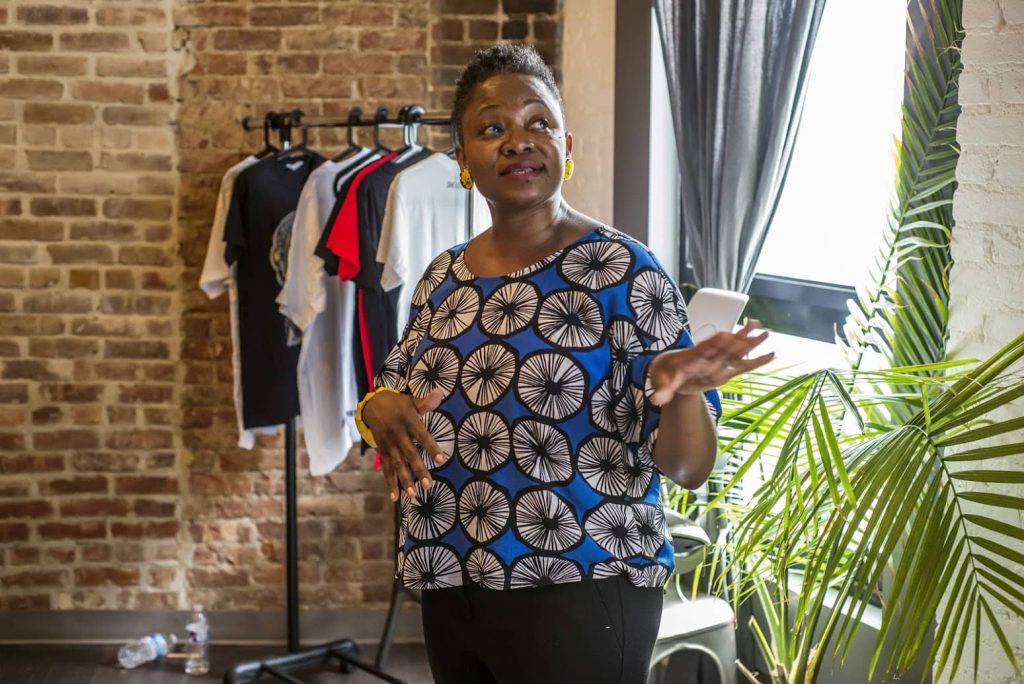
The profession of journalism has evolved over time, greatly propelled by social media platforms. From print to digital, the various mediums in which information is now presented to the world can be a little overwhelming for a novice who wants to make their mark within the industry. At She Hive NYC 2016 Vanessa De Luca, Editor-in-Chief of ESSENCE Magazine, shared with us some of the important guidelines needed to build a career in journalism. Here are some of the gems of information Vanessa shared. Keep it short In the age of technology many people have a very short attention span. You have to be masterful at telling a great story within a short time frame. Create content that shows your target audience that you understand them. Be as direct in your message as you can possibly be. Keeping your content simple and authentic allows your target audience to connect with it. Be Adaptable Be very comfortable with adapting to constant change. See what type of content your target audience is engaged around and give them that. Take the time to learn what the “new thing” is and what will set you apart from everyone else. You may go into work spaces where others who have been in the industry much longer than yourself may not understand how to use the newest technological platform that others are using to connect with core audiences. By keeping on top of these various platforms, and showing them how it’s done, you can make yourself more of an asset to your team. Know Your Audience Use data metrics to measure your engagement, but do not solely rely on it. Let your connection to your audience guide you in making intuitive decisions. Use data as a guide but also ask your audience what they would like to see. Engage on Social Media If you are looking for a job as a social media manager but your personal social media page has only 25 followers, employers are not likely to take you very seriously. If you are not engaged on your own personal social media platforms, how can someone trust that you will be engaging on theirs? When branding your business you can’t hide in the background. You must have a presence, know what you stand for and what you don’t. You must humanize your brand; people want to know who you are and they want to connect with the pieces of you that resonate with them. You have to tell a story; people want to know how what you do changes the lives of the people that you serve. Telling the story of how you built your business for example, this allows others to be inspired by your journey.
Gain international development experience without becoming an unpaid intern

Working in the international development field is the best of many worlds. You have the opportunity to do good and well in life; travel around the world, live on stipends, get tuition reimbursement and student loan forgiveness. There are many incentives to working at places like Save the Children, the World Bank, or your country’s national development agency. This can be a very competitive sector to break into but with a plan of attack and a strategic mind, it’s definitely within your reach. I’ve traveled throughout sub-Saharan Africa due to work, and trust me it’s been a long time coming. I’ve had to work throughout high school, college, and graduate school; I attended expensive private universities and the US Department of Education owns my first born. I didn’t have any hook-ups from parents who knew important people and I didn’t have any high profile professors vouching for me. I’ve had to consistently plan and re-plan every career move every step of the way. Still, it’s possible to get that dream job, and this is what I think can help: Never work for free Seriously, this is a never ending cycle that you don’t want to get into. If you are a freshman or sophomore in college, fine maybe. You are only two years removed from high school and may not have a skillset to take to an employer. But, interning for free well into your 20s is absolutely unnecessary. You have to sell yourself and you can’t sell yourself cheap. By the time you graduate you have a skillset and should be able to express that in a convincing manner. Your language skills, your research abilities, your study abroad stint are all assets worth something! If you think its okay to work for free just for the experience, you are beginning your career backwards. When you end up applying for a job and you need to tell them how much you were last paid, the fact that you worked for free at the UN will overshadow any work that you did there. It devalues your contribution to the organization you worked for, if you made a big enough impact they would have found a way to pay you. Just say no. Begin learning a language It’s so important, particularly if you are interested in working in sub-Saharan Africa. French is a vital tool that will propel your resume to the top of the pile even if you may not have that 3-5 year professional experience. Entering a language institute may even be more valuable than graduate school. Believe me, having a language is a shoe in for many international development agencies. Find an actual niche/focus It’s not good enough to say you want to work in international development, or in Africa. What do you want to change? Public health? Food security? Economic empowerment of women and girls? Reproductive health? There are dozens, if not hundreds of niches within international development, it is important you find yours. Graduate school allows you to learn the different sectors within international development and helps you figure out the hot topics, the institutions working on the ground and where in the world the issue is most pressing. For example, I work in population and health, specifically in reproductive rights and access to contraception for young women. Pretty specific. When you’ve found your niche, do your research, write about it, read about it, tweet about it, enter dialogue online, attend events and listen to webinars. This will get you on the radar and start building you a mini portfolio before you even apply for the job. Apply for work/travel grants To work in international development you must have overseas, on the ground experience. So, you have graduated school, you have a basic understanding of a second language, you have found your niche! This isn’t enough to land your first position. You need real on the ground experience, whether in Southeast Asia, Africa or the Middle East. You need to get your butt over there for at least six months. You’ve got to get creative, start a go fund me campaign, work for a year at some desk job to save up and move overseas. If you are like me and don’t have the money to move overseas for a year. Apply for travel grants ASAP. One of the best is the Christianson Grant, it awards young people under 30 with up to $10,000. All you need to do is find a place to work (and get accepted by the selection committee of course). One of my close friends was awarded the grant and spent a year working at an education NGO in Kigali, Rwanda. The $8,000 she received was enough to pay her housing, her monthly expenses, and her flights there and back. Other grants like Princeton in Africa place you at NGOs across sub-Saharan Africa, along with paying for flights and housing. Take a (very temporary) pay cut So you’ve been denied all the travel grants, and don’t have the money for an overseas stint. Don’t worry, there are other options to getting that overseas experience. Get on idealist.org, UNjobs.org, and devex.org, then study the jobs/paid internships available in developing countries. You’ll find many small local NGOs looking for program managers, site coordinators, capacity building managers, and so on. These jobs pay close to nothing but they will pay for your flight, a small monthly stipend, and housing. These are golden opportunities to getting that experience while still being compensated. For example, I found a job in rural Tanzania in 2013. It was working with women (check), it was based in Africa (check), and it paid $600 per month. Um not check! I was taken aback by the low salary, but knew I had to consider it for on the ground experience. The position also offered me housing, flights, and a “Program Manager” title (check). In the end, my time in rural Tanzania is how I ultimately got my international development career started. I am
Asmau Ahmad, Plum Perfect CEO: Lessons on building a business in tech

The She Hive made its way to NYC and it held no punches! Guest speaker Asmau Ahmad, CEO and founder of Plum Perfect, showed us that building a business in tech requires strategy, confidence and persistence. Trained as a chemical engineer, Asmau understands the importance of being both precise and thorough. Asmau’s Plum Perfect is a mobile technology that allows the user to submit a photo selfie, it then analyzes the content of that photo to recommend makeup products that work for your complexion. During She Hive NYC 2016, Asmau shared with us how she navigated her path within the tech industry. Here are some lessons we can take away from Asmau’s journey. Be flexible Your ability to stay alive as a startup is directly correlated to your ability to pivot quickly. This means that you need to learn what is moving very quickly and move directions. Do not get too emotionally invested in something that clearly isn’t working. If you have been working on something that needs to be revamped, just make the necessary changes. You can either grow fast or die slowly, the choice is yours. If your startup does not have the funds to market itself, partner with bigger brands and let them do the marketing. Data is king Use data tracking tools that allow you to see how your users interact with your technology, Google Analytics and Mixpanel are some resources Asmau suggested. Listen to your users, read all of their reviews and make adjustments accordingly. Your most enthusiastic customers and your most angry customers will be the ones who give the most feedback. Feed off the energy of your most enthusiastic customers and give them what they want. Conversely, solve the problem of the angry customers and give them what they want too. You want to get to a happy zone with as many customers as possible. Reach out to investors Asmau said that she focused on mostly women-led investors to help push Plum Perfect forward. It’s important that you find investors that fall in line with your business interests. Choose one revenue model that you want to focus on, state what you want clearly and simply. Investors need to know that you are well informed about the product you’re pitching. Know your numbers when presenting, what has been your ROI thus far? How much do you need to carry out your next endeavor? Get investors who not only give money but also invest time into your project. Surround yourself with people who are smarter than you. You do not always want to be the one with the best ideas in the room. There are some instances where an investor will not take you seriously unless you have an MBA degree, it is validating for them. Asmau’s takeaway is that business school is not mandatory for running a successful business. If you have a viable business model and can think logically you can run a business.
Five essential books on leadership

One of the best ways to become a leader is by soaking up advice from those who got there before you. A plethora of leadership books exist and it can be daunting to decide where to start. You may want to go with popular books like “The 48 Laws of Power” or you may consider this list which spices things up by choosing books with a specific kind of woman in mind. Whether you’re the woman whose family and friends dismiss her anxiety because “Africans don’t deal with that” or you’re struggling to find a balance between being a wife, mother, daughter, aunty, bff and/or businesswoman, we’ve got a book on leadership for you. “#Girlboss” by Sophia Amoruso: For the woman who doesn’t have time for the haters Sophia Amoruso is the founder of Nasty Gal, an online fashion retailer worth over $250 million. When she was 22 years old, she was broke and had spent most of her teens on the road and shoplifting. “#Girlboss” is a book for the a typical CEO, it charts Amoruso’s ascendance into success offering practical life and career advice. This one is for the women who walk the unbeaten path and have to listen to people asking them why they are setting up a puff-puff business when they haven’t yet married. In “#Girlboss” Amoruso reminds us to be loyal to our passions and remain nonconforming. “Flying Without a Net: Turn Fear of Change into Fuel for Success” by Thomas J. DeLong: For the anxious #MotherlandMogul “Flying Without a Net” is a useful guide to anxious professionals. Fear of the unknown is very real for some of us. It holds us back from new challenges and dims our brightness by making us vulnerable. In this book, Thomas J. DeLong, Harvard Business School professor, teaches how to deal with fears and to turn vulnerability into strength. “Flying Without a Net” is essential learning on how to confront fears and improve on your courage. “The First-Time Manager” by Loren B. Belker, Jim McCormick and Gary S. Topchik: For the newbie just starting out Called the “ultimate guide for anyone starting his or her career in management”, “The First-Time Manager” is effectively a beginner’s guide. This book is great for newbies venturing into the worlds of management and entrepreneurship. It offers easy advice on diverse topics from discovering your management style and hiring and keeping your staff motivated to dealing with bosses and leading meetings. “Nice Girls Don’t Get the Corner Office: Unconscious Mistakes Women Make That Sabotage Their Careers” by Lois P. Frankel: For the good girl ready to go bad Apparently nice girls carry last. You may be making huge mistakes in your career by being overly likeable. “Nice Girls Don’t Get the Corner Office” is a must-have for business women. It shows that being a nice girl may not be the best way to take charge of your career. Lois Frankel coaches us on getting rid of unconscious mistakes such as multi-tasking and not negotiating. “The Emperor’s Handbook: A New Translation of the Meditations” by Marcus Aurelius: For the multitasking woman This list won’t be complete without one from history. Marcus Aurelius ruled Rome from 161 to 180 A.D, he was also a legislator, a parent, a military officer, a political leader and a spouse. No wonder, Aurelius is considered to be one of the most powerful and respectable leaders in history. And where better to learn than from a leader whose name is remembered thousands of years after his death? “The Emperor’s Handbook” brings timeless lesson from a Roman emperor to readers of today. It is a translation of Aurelius’s private personal notes on life, leadership and everyday advice. What kind of leadership books is for a woman like you? Share them with us.
I Quit! How to write a letter of resignation

Hi, I quit! I was too good for this job anyway. Kiss my a** and don’t bother contacting me. P.S. Just to let you know, I was the one who ate the jollof rice you kept in the fridge that time. Let’s be honest. How many of us have imagined sending a message like the one above before heading to your favourite suya spot for a treat yourself episode? When you’re leaving one job for (hopefully) better opportunities, you may want to use the opportunity to air grievances. This may provide temporary relief but you can’t burn bridges. Resignation letters go on file and you won’t want to come back for a reference only to be confronted with an unprofessional resignation letter. Here is a step-by-step guide to writing a letter of resignation. The opening Even before sitting down to write your letter of resignation, you will need to sit down with your boss for a one-on-one session informing them of your resignation. Now, you’re ready to write your letter. The opening of your resignation letter should be friendly but formal. It’s a fine balance to maintain but it can be done. The most important thing is to remain professional at all times. Your letter’s salutation will depend on your relationship with your boss and the level of formality in your place of work. If you’ve been calling your boss Kemi all along, there is no point in writing “Dear Ms. Ade”. Ditto if it’s the other way round. Motherland Mogul Tip: Don’t forget to add the date. It should be aligned left, above your boss’s name and work address. The body Don’t beat around the bush and don’t sugar coat anything. You should state your intention to resign clearly. This way your boss doesn’t think you’re open to being convinced to stay. It’ll be quite uncomfortable having your soon-to-be former boss throwing in a higher salary to an attempt to halt your resignation. Crystal clarity also shows that you are confident in your decision. A simple, “Please accept this notice of my resignation from my position…” will work great. Some advice stating your reasons for leaving but this is a must-do. Give as much details as you’re comfortable with. Motherland Mogul Tip: Don’t forget to state your last date of work. Give your employer as much time as stated in your contract. For most, it’s a month’s notice. The conclusion As you’re being nice and professional, you should offer with helping any transition. This will usually involve training whoever will be replacing your soon-to-be vacant position. Be careful not to promise what you can’t deliver. Round things up neatly, based on how much information you included above. You may want to add in more details about your departure if you’re really close to your boss. Sign out with “warmly” or “king regards” or even “sincerely”. Motherland Mogul Tip: Don’t forget to thank your employer for the opportunity. Finally read through your letter, over and over. You’re looking for grammatical errors and typos. There should be no trace of hostility, remember you’re not burning bridges. Have you written a letter of resignation recently? Did you make any blunders? Let us know your experience by leaving a comment below.