
5 things all potential business partners must consider

Starting a business can seem very daunting. So, you’re not Chuck Norris. You have a great business idea or project plan and acknowledge that you have limitations. Well, that’s okay because sometimes, bringing in a business partner makes good math. A business partnership is a marriage of sorts. So before you seal that deal, take a moment… In my third year at university, a close friend and I decided to start up an entertainment company together. It seemed like a fantastic idea at the time and we had a lot of fun as well as learned a great deal about the industry. In hindsight however, it would have been preferable to define the parameters of our professional relationship and consider a lot of the points on this list: 1. Look out for someone who brings something different to the table It is important to approach a potential business partner who can complement you by bringing in something different whether it be financial power, business connections or a particular expertise. Be sure to delineate the roles and responsibilities. Speaking from experience, it is never fun when one person feels like they are doing all the work. It is extremely important to draw up a founder’s agreement devoid of personal sentiments early on in the process. There is no point bringing in someone who doesn’t have anything unique to offer. If the value proposition does not add up, ditch the thought. 2. You need to have a shared vision Though your goals may differ to a reasonable extent (not so much that you want different things out of it), your potential business partner must buy into the vision you’re selling. The last thing you want is a scenario where your partner is no longer passionate about the work or decides they have grown bored with the business. This is a risk that can actually happen to any business owner regardless of how pumped they are at the commencement of the venture. However generally speaking, it is less likely that partners part ways if they both solidly believe in the vision behind a business and are committed to making it work. 3. Study them in their work environment Seeing your potential partner in their professional element can help you better understand what it would be like working together. Do they have a good work ethic? Do you speak the same work language? Are you comfortable with their style and pace of work? The answers to these questions can help shape your decision when considering another for a partnership role. Afua and Yasmin, SLA co-founders weigh in on what makes their partnership work: “Since we came from the same company, we have a similar working style which makes being partners very easy. It’s great having someone to collaborate and brainstorm with on new challenges.” 4. How do they handle personal crises? Make the effort to get to know them not just on a professional level but on a personal one as well. How do they get along with friends? Are they petty and vindictive? How do they deal with the tough situations in their lives? The last thing you want on your hands is a partner that’s messy and doesn’t know how to manage stressful situations. 5. What’s their commitment level like? Startups are extremely tasking. In the incubation period, there’s a lot of conceptualization and planning going on. You need someone who is ready to give a 100% of themselves to the heart and soul of the business. Even if you are both unable to meet physically as often as you would like, they must be willing to keep the communication 110% just like you are. Virtual meetings, emails and instant messaging are available to compliment regular meetings. If you notice that this person always has an excuse for not getting work done, calling like they said they would or constantly need motivation to think positively, it’s a definite red flag. After going through this list, hopefully you feel more confident about your decision to take on a business partner. It’s a pretty exciting thing. If you have found however that you need to go back to the drawing board, that’s okay too. Like they say, better safe than sorry!
The 4 minute guide to SME marketing: Much ado about big budget

“Jennifer our business only has #xxxx and I can show you our account statement if you don’t believe me. I really would love to do marketing o, but If I spend that kind of money now, I would have nothing left to run my business.” This was a real statement from a friend of mine during a conversation we had about his recently launched platform. At some point during the conversation, I had to subtly remind him that if he does not market his platform, he wouldn’t have a business to run in another few months. I cannot say this enough, when it comes to getting your business out there, marketing is a big deal. As you think of your product you also have to think about how you will go to market with that product. Having worked with/and for startups and small businesses, I am all too familiar with the budget constraints. There is usually too little cash competing with too many business priorities. This, coupled with the fact that for a long time small business owners have been told that marketing (and subsequently advertising) is for the big players with big budgets, have made them shy away from it until it becomes an absolute necessity. The real questions are: Can you create buzz around your product or service without a killer budget? Yes! Can you get people to care about your brand and actually want to engage with your brand without having to dole out a shit load of money? A big yes! These things are very possible as long as you are committed to going through the marketing process in a creative and deliberate way. As we go further in this series, we will explore multiple strategies and tactics that you as a small business owner can deploy in growing your customer or client base. However, today, I would like to speak to 2 things that I consider very essential at the early/launch stage of your business that will cost you little or nothing to implement: Be approachable One of my favorite IG luxury fashion retailers once did a PSA that encouraged people to come into her store and window shop even though they might not be able to buy any of the items at that particular time. I thought that was really warm and inviting and it inspired my first interaction with her business. Truth is, your brand essence notwithstanding, if your business projects an image of being aloof or arrogant, people will probably have a difficult time connecting and interacting with it. Give something back Earlier this year I bought a pair of shoes from one of these online stores and inside the box was a voucher with a discount code for 20% off my next purchase. This was to thank me for choosing them and to encourage me to choose them again. I was quite pleased with both my purchase and the incentive and let’s just say before the end of the day I had redeemed my voucher. Make people feel appreciated for spending money on your business and you give them a powerful reason to want to spend more. More often than not superior marketing can beat a superior product. Coca Cola and Pepsi are fantastic in illustrating this because despite the fact that Pepsi typically wins in blind taste tests, Coca Cola still controls a huge chunk of the carbonated soft drinks market. However, superior marketing does not always imply superior marketing spend/budget. With a healthy dose of creativity, strategic marketing and sometimes just plain hustle you, with your little or no marketing budget, can achieve results that would rival that of an FMCG with their seeming infinite marketing spend.
Begin with the end in mind

I am sure we have all heard the saying ‘begin with the end in mind’ more times than we care to remember. Most times this is said in the context of our own lives and how we should be approaching the goal realization process. Perhaps the best-known individual on this is Steven Covey in his ‘The 7 Habits Of Highly Effective People’, where habit 2 speaks to this directly. I was reminded of this very saying a week ago when I had a one-on-one meeting with my mentor. In conversation my mentor asked me what my end goal is. I asked him what he meant and at that very moment I realized that in so much as I understand where I see the business going, I have not actively put together my business end goal. A business end goal is all about where you see yourself as a businessperson in seven to ten years. Unlike a typical business mission and vision statement, this is about you the person in as much as it is about the business. Take for example a person who wants their business to be the leader in providing information communication technology (ICT) on the African continent; the key question is how will this person know when the milestone has been reached? What are they using as a yardstick for success? More than that, what is the ultimate role you would like to play in business? You may want your company to be a regional leader in its area of work, but your personal ambition may be to have multiple business interests without you being necessarily involved in each business on a day-today basis. It may be that your passion is unrelated to the daily grind of deal making and operations management, but rather in advocating for a particular cause that gives meaning to your life. In this particular case, what drives you is the ability to derive income while not being bogged down by the minutia of managing a business or multiple business interests. Your end goal is thus to create businesses that allow you to spend your energies on things that bring you meaning. Thus, by year x, you want to be in a position to have built businesses that run independently of your daily input so that that you can focus your time on what your care most about. When you begin with the end in mind, you are letting your imagination guide you. As Steven Covey puts it, the exercise of imagination is based on the principle that all things are created twice: first mentally and then the actual physical creation, with the physical following the mental in the same way a building follows a blueprint. The world of business is challenging and often times we are stretched beyond our limits. It is during those times that our bigger goal/end needs to carry us through. Taking the ICT company example, say now an opportunity comes to take the business to other markets, your end goal enables you to make an informed decision on what you need to do. For instance, will the time requirements of moving beyond conquered markets square up with your personal end goal? Perhaps you may end up concluding that the potential revenue does not justify sacrificing these goals, or that your team requirements must support this ambition to the largest extent possible. You can only square up your personal vs. business interests once you have made an honest determination of what is important to you and where you see yourself at your predetermined timeframe. Lack of such a determination may leave you drifting and following others’ priorities/ambitions without the gratification that your journey should bring you. While waiting to reach your pinnacle point, you can still do something towards achieving your personal ambitions by doing small tasks towards that very end. How do you start you may be wondering? Below are three actions you can start with you to ensure you are continuously working towards the end in mind: Develop a business and personal goal statement This statement should answer the questions of what and who you want to be. Aligned to that is what you would like your business end to look like at point x; in other words, what is your ultimate business objective? Be sure to be as clear as daylight when you work through this- the clearer and specific you are, the better will be your ability to continuously measure your progress. This statement should be an articulation of that mental picture which will form the beginning to the physical realization. Take it one day at a time When you begin with the end in mind, your days will never be the same again. Each task, or project will be a clear fit into the bigger end. Only then are you able to make things happen for your personal and business ambitions. Your decision-making improves, as you know instinctively what makes sense and in what way this makes sense. Conflicts between personal and business goals are clearly identifiable and can be resolved in a more systematic way. It’s not cast in stone In as much as your business plan is a fluid document, so is your personal plan. Just because you have a desire to advocate for children’s’ rights in your 20s does not mean that’s what you ultimately want to do. Be open minded to the changes you need to make as you go along, review your timeframes, and reassess your priorities from time to time. When you are true to yourself, irrespective of what your goal statement looks like today- the values you hold and your passions stay with you. When you begin with the end in mind, you put yourself in a better position to succeed. You do not make haphazard decisions around your business and personal life. It is only then that you can have a better grip of you in your entirety.
Nengi Omuku: They are surprised I’m a small girl showing large canvases

Nengi Omuku is an emerging Nigerian artist making her mark in the contemporary art world. After attending the Slade School of Fine Art, University College London, she’s gone on to showcase her work in exhibitions across the globe including the prestigious annual Armory Show in New York as part of the 7th edition of the 2016 Armory Focus: African Perspectives, an invitational section on Pier 94. She has received multiple awards for her work including the British Council CHOGM Art Award, which was presented to her by Her Majesty Queen Elizabeth II in 2003. Nengi shares with us her favorite artists, proudest moment in her career and her hopes for the future of African art. Who are some of the artists you admire most? Who did you look up to when studying art in school? Ben Enwonwu was an inspiration for me at art school. He was a role model and an alumnus of the Slade School of Fine Art, which inspired my decision to also study at the Slade. I admire Wangechi Mutu’s work, which highlights themes related to women. Yinka Shonibare has an incredible body of work, which flawlessly captures his sense of humour. Then there’s Chris Ofili; there’s a simplicity and sensuality about his recent paintings that I relate to. When do you feel like you create your best work? What setting is it? Are you at home or in a studio? Painting at home has never really worked for me, because a lot of my paintings are quite large. I work best in a dedicated studio space, surrounded by paint and pigments. Alternatively, a garden would work just fine. When it comes to a geographical location, I could be dropped anywhere in the world and I will be inspired to make. All the work that I make comes directly from experiences that I have had and every space offers new experiences. How is it being a woman in the art world, would you say that there’s some gender inequality or are there some challenges that you would say only female artists face or is it not as bad as other industries? A gentleman came to the first solo show I had in Nigeria and was genuinely surprised that I was a ‘small girl’ showing large canvases. He expected to meet a man! There are lots of articles being written about gender inequality in the global art world about how female makers aren’t as recognized as their male counterparts. There’s no doubt that men have dominated the art scene in Nigeria and elsewhere, but at the same time I don’t find that daunting. We are all just players in the same game. So I’ve thrown myself into the pond like everyone else, because our limits are only imagined. What has been your proudest moment in your career? Winning an art competition and getting to meet the Queen of England was an amazing experience. She encouraged me to continue with art and as a young person, that’s just something you don’t forget. The other awards that I have received as a result of my work have also been very encouraging. There’s no better feeling than being rewarded when you push for more from something that you’re passionate about. What are your hopes for the future of African art? I look forward to increased visibility for artists that live on the continent alongside the proliferation of art spaces. Another hope is that the concept of ‘African Art’ grows and expands to reflect the dynamic and diverse work of artists who live and create on the continent and its diaspora. You can follow Nengi on Instagram @nengiomuku to learn more about her work and travels through the art world.
7 history lessons to keep the modern African woman motivated

History is such a fascinating subject. It is very enlightening to be able to study people, places and events which occurred before you because they help shape modern thought and explain the current status quo. We often hear about great heroes and heroines throughout history who have impacted on our world but African women in particular have not received as much spotlight. As Motherland Moguls, we acknowledge and pay our respects to those who have paved the way before us. You’ll notice these women had different methods of achieving their goals but for us what stands out is what we can take away from their stories. This is by no means an exhaustive list, we hope you enjoy our selection nonetheless. Let’s delve into important lessons from our African heroines who remind us that the struggle is not a new one, but indeed we can come out on top as game changers: Yaa Asantewaa Lesson #1: Bravery Yaa Asantewaa was the gatekeeper of the golden stool a symbol of Ashanti supremacy. When her father and brother were exiled by the British colonialists in the 19th century, she charged the Ashanti people to fight for their freedom. Whilst many were afraid to fight, she demonstrated immense bravery even calling on her fellow women to fight if the men would not. She was instrumental in the independence fight leading an army of 5,000 in battle against the British. Margaret Ekpo Lesson #2: Be ingenious Being a woman was not an excuse for Margaret Ekpo. In the early days of her political activism, she found herself being the only woman at a political rally she attended. Unimpressed by this, she tried to get other women to become more involved in political matters. Unfortunately, most men would not permit their wives to do so. She later invested heavily in the salt business during a period of scarcity. Having the upper hand, she refused to sell salt to women who would not join the Aba Market Women Association. As you can guess, she soon had the turnout she was looking for and was able to promote economic empowerment for women through the association. Ahebe Ugbabe Lesson #3: Your pitfalls can become your crowning glory Ahebe Ugbabe is a woman who doesn’t get as much shine as she should in African history. She is hailed as the first female KING of Igboland. Yeah, I wrote that right…king, not queen. What’s most remarkable about her story is that she was able to turn lemons hurled at her into some good ol’ lemonade. Sacrificed to be married to a village deity as penance for her father’s sins, she managed to escape to another community and later returned to be installed as a warrant chief, eventually becoming king! Queen Nzinga Lesson #4: Re-invent yourself where necessary Queen Nzinga of Angola is remembered for her brilliant political prowess. She ruled over the Mbundu people through the aid of the Portuguese colonialists. Prior to her ascension to the throne, women were not allowed to do so. She thus adopted the name Dona Ana de Sousa which had Christian and Portuguese affiliations to ring in their support. At some other point, she is reported to have taken on the title Rainha de Andogo meaning ‘Queen of Andongo’. This queen had so much kickass, we have outlined not one but two lessons from her story. Lesson #5: Elevate yourself when others try to put you down At a conference with the Portuguese authorities, an attempt to humiliate Nzinga was thwarted when she made a conscious effort not to be put down. Offered a seat on a mat as a sign of disrespect, Queen Nzinga sat on her servant’s back to negotiate the peace discussions. Funmilayo Ransome Kuti Lesson #6: Raise a new generation of thinkers A phenomenal woman, Funmilayo Ransome-Kuti was an influencer, activist for women’s rights and human rights campaigner. Founder of the Abeokuta Women’s Union, she has been immortalised in history as one of the delegates who negotiated Nigeria’s independence from Britain. She dropped her Christian name ‘Frances Abigail’ in response to the racism she personally encountered in Britain. There is no doubt that she influenced her offspring with her revolutionary ideas as several of them went on to become radical voices against different forms of injustice. Queen Amina of Zaria Lesson #7: Be badass! Queen Amina is hailed as a brilliant military strategist and warrior who performed incredible feats leading her troops into battle, conquering new territory and fortifying the kingdom of Zaria. Referred to as a legend, Queen Amina’s badassery also extended to the control of trade and the erecting of walls surrounding Zaria city. We hope you’ve been doubly inspired and motivated to perform great feats in your chosen professions and the world around you. So, adjust your crowns and let’s get to writing our own amazing stories that will remain ingrained in the sands of time!
3 things to do when your academic background and your career are worlds apart

There is an indescribable joy that is experienced by a Nigerian who has just graduated from an institution of higher education – what a delightful feeling! No more paying of exorbitant school fees. No more buying of handouts from lecturers under duress. No more dodging from sleazy lecturers. No more coping with below-par study situations. Surely, things can only get better from then onward. However, when the time comes to seek out and secure gainful employment, the graduate would soon realize that she has jumped from the fabled frying pan into the fire of reality. If one was disillusioned by the undergraduate experience, a greater disillusionment awaits such an individual when faced with the task of finding a job which matches their actual field of study. According to the National Bureau of Statistics, Nigeria’s unemployment rate rose to 7.5% from 6.4% in the first three months of 2015. There are therefore too few jobs for too many graduates, and so graduates often have to grab any job they are able to get with both hands. A lot of my contemporaries who work in the Nigerian banking sector, for instance, did not study anything remotely related to banking or finance in their various tertiary institutions. They studied courses like Microbiology and Applied Chemistry; they took banking jobs because those were the jobs available, not necessarily because they had a deep love for finance. So, what do you do if you find yourself in such a situation? Here are 3 ways to make the most out of it. Adapt your learned knowledge to your current job For instance, if you are a Political Science graduate who has, after a long job search, gotten a job in a Bank as a Marketing Executive. You should try to think about the aspects of studying Political Science which you could adapt to your current situation. These would include things like Being able to undertake thorough research (in this situation, research on your target market). Being apt at writing reports. The ability to analyze situations from different points of view. When you approach the situation in this manner, you would perform well at your job, and you may even start to see it as a long-term career, rather than a temporary situation. There is an added bonus if it turns out that your personality happens to match your job; so if it just so happens that you’re very charming and persuasive, your job as a marketer would be more tolerable for you. Sell yourself For this step to work very well for you, you must first ensure that you put in your best in any job situation in which you find yourself for the duration of time you are there. Then, if you decide that you want to move on from the job, you have to pitch yourself as an expert in your current job, who just happens to also be an expert in your academic field of study. If I was the hiring manager of an organization, I would be very intrigued by a candidate who is a trained microbiologist who currently works as a marketer at a bank. It is now up to you, as a job applicant, to really demonstrate how those experiences would make you a very desirable candidate for the advertised role. So, you must always ensure that you are excellent at your job, even if it isn’t where you thought you would end up; that excellence would most likely be your stepping stone to future success. Don’t give up It is very easy to get disillusioned when, after months or years of searching for a job, you end up with a job that is unrelated to your field of study. Some graduates end up seeing the job they have gotten as one which they are okay with doing on a long-term basis. If this is not the case for you, please do not fret or get discouraged. Keep applying for the job which you desire, while making sure that your skills in your field of study are up to date. Take online courses if possible. Read up on new trends in that area of expertise. Try to get a mentor to guide you on your journey. If it is possible, try to volunteer in some way to keep your knowledge in that area up to date. Whatever you do, try not to be sad about the situation. While you do all this, you must strive to maintain optimal professionalism at your current job. Having a job which doesn’t have anything to do with your field of study might be source of irritation, but not having a job at all is an even worse situation. Have you experienced such a situation on your quest to become a #MotherlandMogul? Kindly share your experiences in the comments section below. Don’t give up!
#YasminSays: Here’s why that interviewer never called you back

Over the last couple of months, I’ve been spending a lot of time trying to hire new talent for SLA. It’s been brutal. I often hear young people talking about how they can’t find jobs. They always blame the system. They don’t want to hire new people.” ”They didn’t like my face.” ”They don’t like people from different tribes.” After 3 months of looking at applications and interviewing a bunch of people, here’s a thought I’d like you all to consider…. Maybe you’re the problem. Maybe you went about getting a job the wrong way. Maybe you played yourself and set yourself up for failure. I know… I’m mean right? And I’m not meant to be mean because I founded SLA and we’re meant to be this cuddly organization that helps women. Hell – we probably spend our evenings braiding each other’s hair and giving group hugs as we sing kumbaya. WRONG. My job as a founder of SLA is to keep it all the way real with you and turn you into a corporate beast. Someone who’s going to go out and crush it all over Africa. So in the spirit of keeping it real with you, here’s a list of the dumbest things you can do if you’re applying for a job. Don’t ask basic questions A couple of weeks ago, I was searching for a new program manager. One of the prospective candidates sent me a question asking whether or not we charged people to be members of SLA. Needless to say, I didn’t even bother to look at her application. Why you ask? Because she asked a basic and frankly stupid question. All she needed to do to get that information was to go onto the SLA website and do her research. Yet, she decided not to and instead came off looking like the Founder, CEO and Chairman of SimpleHeauxs.com. When you choose not to take any initiative in learning about the company or gaining basic, publicly available information, you show that you actually aren’t that serious about the company and they shouldn’t take you seriously either. Don’t overhype yourself This one is so obvious that I’m actually sad that I have to write it down. One person who we interviewed called herself “an innovator from birth.” Is that so….? From birth huh? The only reaction someone will have when they see that is: The best thing you can do when applying for a job is to be honest and straightforward about your results and what you’ve actually been able to deliver. All the grammar in the world won’t help you if you can’t show that you know how to get things done. Don’t overhype your qualifications A couple of weeks back I was talking to a girl who said that she graduated from Harvard Business School. On further investigation, it comes out that she just did a course there for a couple of weeks. Her CV went straight into the dustbin because now I know she is a bona fide massage therapist – massaging the truth all day every day. If you didn’t have to take an entrance exam, then calling yourself a graduate is a stretch. Doing a summer course does not make you a graduate of that institution so chill your life. Not everyone in the world went to Harvard and THAT IS OKAY. No need to be so insecure. Don’t act entitled This one goes out to all you returnees out there. Especially the ones who went to fancy schools. Y’all think that because you went to fancy schools with big names like Stanford and Harvard that I should be falling over myself trying to hire you. False. Some of the most basic, offensive, simple-minded heauxs I know went to these Ivy League schools so relax yourself. No degree can overcome a stank, arrogant attitude and I’d rather take a chilled out, smart local grad over your annoying self any day. Chill with the fone If you spent one year in England and yet try to sound like Queen Elizabeth herself when I interview you, you will be rejected immediately. Why do we Africans feel the need to pretend to speak English with a foreign accent? It’s so weird and makes you seem really insecure. More generally, I’m not quite sure what the intended effect is. People know that you’re faking it and they’re probably judging you. In fact, sometimes the fone is be so strong that it’s actually hard to understand what you’re trying to say. I have a sort of English-American Nigerian twinged accent because I spent 14 years abroad. Does that make me better, more professional or smarter than someone with a Nigerian, Kenyan or Ghanaian accent? Absolutely not! An accent is an accent not a badge of intelligence so stop faking it. Speak as you speak and be confident with your bad self. So there it is. Five reasons why you may have gotten rejected from your last job interview. To those of you who’ve engaged in some of this behavior. Don’t worry. It is well. No one can fault you for not knowing but if you continue to make these mistakes moving forward… you have only yourself to blame. For those of you who are interested in learning more about how you can be well prepared to CRUSH the job market, check out a bunch of FREE resources we’ve created to make you the baddest B you can be. Till next time! Xoxo Yasbo
10 things nobody tells you when you’re a new manager
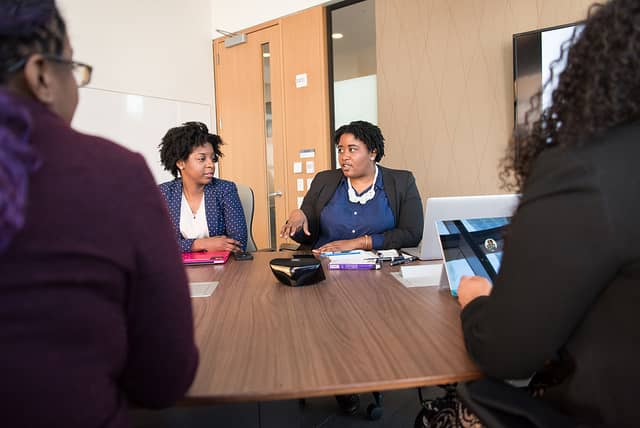
I thought I was ready when I took on my first ‘official’ management role as a performance manager. I had technical ability (I’d undertaken a good deal of additional, unpaid supervisory work, under the guise of ‘development opportunities’ prior to that) and I had a professional attitude so I thought I was good to go. Ha! Boy, did I get that wrong. The main difficulty was that I didn’t know the difference between leadership and management. If you’re a new manager, some of the lessons that I and countless other leaders have learnt (and I’ll be learning as long as I’m still here) will, hopefully, help you to transition into a management and leadership role in a more authentic way. Prioritise being the leader your team needs, rather than doing everything perfectly Chances are you’re a conscientious woman with high standards so you don’t need to stress about being seen to be doing a good job; that’s a given. It’s better to work out what your team needs from you than to focus on ticking every box. Spend time with your new colleagues, get to know them and find out what they need most from you, whilst you learn more about the role. If change is needed, find a way of working that works for you and your team You’ll need to develop the confidence to challenge the status quo, which takes guts, especially if you’re managing a group of people you only just met, or you’re new to the organisation. Overstand your values Yes, I said overstand. It’s one thing to be aware of your own values; it’s quite another to understand how your values serve you and influence the way in which you lead. The best leaders have a high level of self-awareness. Check out this article for more on understanding your values. If you’re not already, spend time getting get clear on your values. Start reflecting There will be days when you feel more like an infant school teacher than a manager and there’ll be days when you feel on top of the world because things are going so well. Spend time reflecting on your day or week and ask yourself what you did that was good and should be repeated and what wasn’t so good. How can you do things differently next time? Reflecting like this helps to improve your practice as a leader and is a pretty good de-stresser, too! Don’t try to switch up your persona Pretending to be someone you’re not is hard work and tiring. If you’re not a suit kinda person, don’t go for a power suit, just because you’re now in a leadership role. If you’re a soft-natured person, don’t try to come across as hard-nosed. People will see straight through you and inconsistencies in the way you treat and lead will cause others to doubt your credibility. Do you, boo. Don’t be afraid to be a bit vulnerable Exercise wisdom, of course (this ain’t therapy!) but being honest about things you’re not sure of can help your new team to connect with you as another human being and see you as more than just ‘the new boss.’ If they can see that you’re ok with your imperfections and limitations, they can relate to you and come alongside you far quicker. It’s also freeing for you to release the pressure that striving for perfection creates. Just because you’re the manager, doesn’t mean that you should, or will have, all the answers It’s not your job to know everything, it’s your job to facilitate your team in coming up with solutions and support staff so that they can do their job. You will make mistakes Get comfortable with the fact that things won’t always go to plan and that’s ok. You’ll learn for the next time. Being liked as a manager is underrated Yes, it’s true that staff need to respect you but being respected and being liked don’t have to be mutually exclusive. It’s a lot easier and more enjoyable for everyone when you’re likeable. Boy, is leadership great for your growth! Try not to compartmentalise your learning. Growth is growth so be intentional in transferring the development in your professional life to your personal development. A year from now, you’ll have grown immensely through your experiences so soak it up, my dear! What’s your experience been? What do you wish you’d been told earlier on? Let me know in the comments below.
Debunking the “Marketing is Advertising” myth

Advertising is not marketing. As a marketing professional I encounter clients who usually do not understand that although all advertising is marketing, not all marketing is advertising. Marketing is an all-encompassing practice, made up of various elements such as strategy, customer research, trend investigation, public relations, social media promotion, product design, pricing techniques, promotional campaign activities, distribution management, competitor research, innovation, concept and service design, content creation, copywriting, and so much more. All of these efforts need to be working together to build a successful product or service. Advertising on the other hand is really only one form of marketing but that which everyone actively notices. It is the promoting of brand awareness to a large target audience via mass media, such as television, print and radio. Let me try to simplify this Think of marketing as a box of crayons with different colors, while advertising is just one color in the entire box. To create a masterpiece that isn’t lackluster, you need to play around with the different colors in your box of crayon. I thought it was important to establish this because I encounter quite a lot of entrepreneurs and business owners who think that because they have a Facebook or IG page, they are ‘marketing’. While social media is a fantastic marketing tool, it is but one in the arsenal of tools that are available to you. Nonetheless, advertising works The big brands have proven this over and over again. They have also proven the fact that advertising needs the support of other marketing elements to deliver good results. So while you would be serenade by Power Oil sachet jingles on radio on your way to and from work (Advertising), you would also find that Power Oil sachet at almost every street corner (Optimized Distribution). More importantly, advertising alone would not solve all of your marketing problems. So for example, you can choose to invest your limited funds in a radio campaign or on Facebook sponsored posts but all of these efforts would yield little or no results if you do not have a product that solves a real consumer need. However, the process to dimensioning & understanding these needs is a marketing process called customer and market research (and definitely not advertising)! Another example is the lady who sells packaged food items (Say 5kg at ₦8000) and wants to increase her sales. She might not necessarily need to spend money trying to set up a billboard along the third mainland bridge. What she could do is launch smaller variations of her product (let’s say 2kg @₦4000) that students and other low income earners can afford. This would help her appeal to more people and broaden her market space. Am I making sense? The lesson today is single minded: Marketing is much bigger than advertising. And to be very honest, marketing is a tough concept to get your arms around but that is why I am here. To help you get the hang of it such that you would get actual returns on all investments (time, money and effort) made into this very vital aspect of your business.
Dr. Zainab Shinkafi-Bagudu: Achieving health and wellness in your 20s & 30s
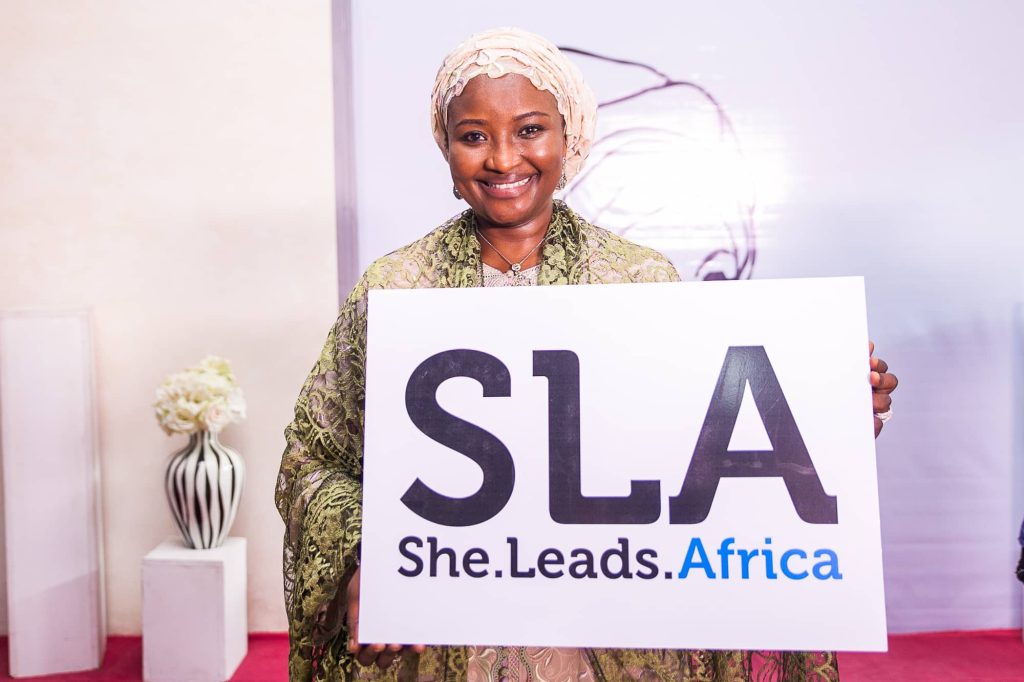
It wasn’t all business and career talks at She Hive Abuja 2016. Motherland Moguls were treated to a presentation by Dr. Zainab Shinkafi-Bagudu on achieving health and wellness in their twenties and thirties. She is a paediatric consultant, Founder of Medicaid Cancer Foundation and CEO of Medicaid Radio Diagnostics. Dr. Bagudu is also the First Lady of Kebbi State and a mother of two beautiful girls. She shared some insights particularly on her work with cancer. We created a list of some of our highlights from the discussion: • “It is essential to look after yourself. In my career, I have found it is easier to spot those who have versus those who haven’t.” • “Breastfeeding is one of the biggest protective factors against breast cancer. It is also best to space out your children.” Whilst, she acknowledged that sometimes breastfeeding doesn’t work out for mother and baby, it is best to try as much as possible due to its several advantages. • “We’re gradually losing our natural immunity due to poor diet compared with past generations.” She blamed our reliance on red meat and processed foods as well as a higher intake of antibiotics as principal causes of more health issues today than our grandparents experienced. • “It is the seeds that you sow early on that will carry you to term.” • “Self-examination of the breasts should be carried out regularly to detect anything usual.” In addition, she expressed that ultrasounds can help pick up abnormal cells but mammograms may be a more ideal test as a woman progresses into her mid thirties and forties. • “Early period onset and late menopause may often be indicators of abnormality and such women may have a higher risk of developing breast cancer.” • “Every sexually active woman should routinely get a pap smear done because there is a higher risk of contacting HPV which causes cervical cancer.” As an advocate against cancer, Dr. Bagudu encourages young women to invest in the HPV vaccine. Although she and other health advocates are working with the government to make the vaccine more cost-effective, she described it as a worthwhile investment. • “Early marriage is a hindrance not only to education but also a big contributor to certain health issues.” Participants went home with new knowledge and the discounted screenings offered to the She Hivers at her diagnostics services didn’t hurt one bit either. Who are we kidding? The ladies were all for it! Dr. Bagudu concluded the segment by making reference to game-changers such as Bill Gates and Olusegun Obasanjo, and charging young women to be outliers. She encouraged them to differ from the norm by having a dogged approach to life and work. Black Bill Gates, anyone? Catch her TEDx talk titled ‘Outlier, paradigm shift and cancer‘.