
Taking command: Meet Kenya’s first female marine pilot, Elizabeth Marami
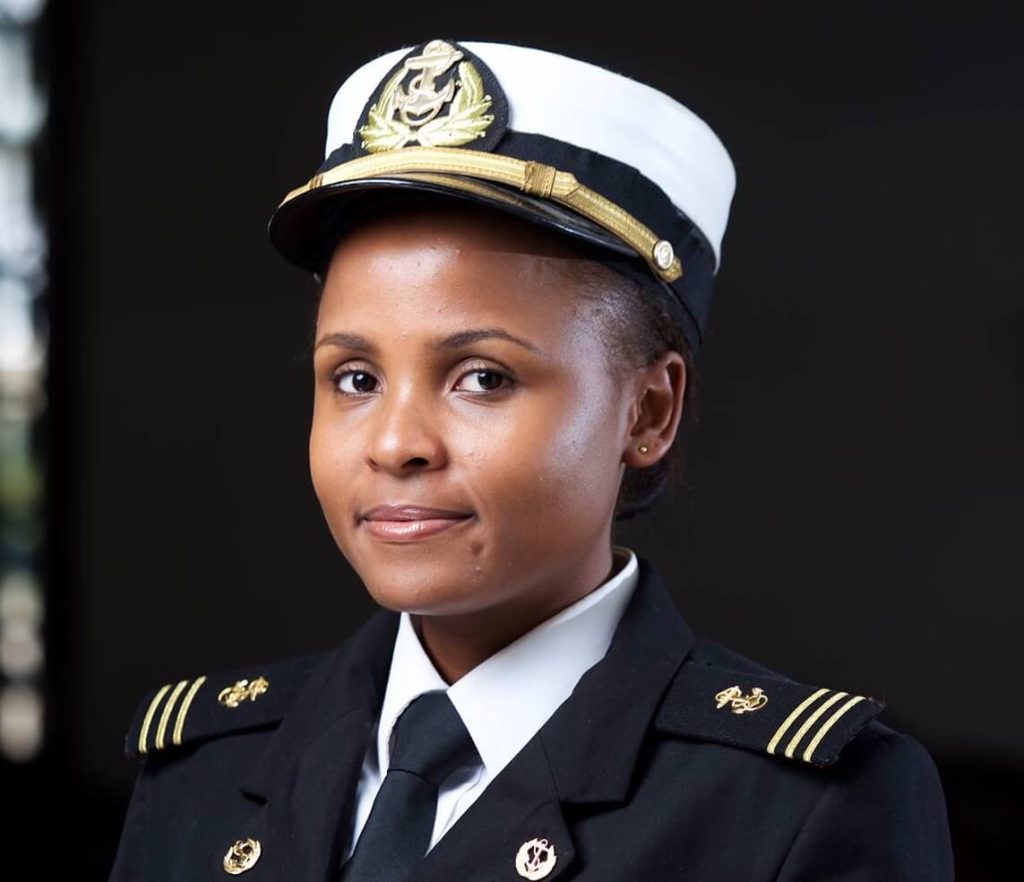
At only 27 years, Elizabeth Marami is charting the path less travelled and breaking gender barriers that have been in place for so long. Her courage would see her swim away from the waters of comfort to take up a comprehensive and challenging course in navigation and become a marine pilot. Intimidating and authoritative would be the ideal requirements for her job. However, Elizabeth has a warm personality, petite physique and is soft spoken for a person whose main duty is to take ‘command’. You have the name pilot in your job title, does that scare you? I do not often introduce myself as a marine pilot. It was just recently that I just found myself doing so. I believe it must have leaned more into the fact that I was talking to someone who inspires me and made me feel comfortable saying it. I am just Liz. What influenced your choice of career? I didn’t want to be ordinary. I wanted to pursue something that would challenge me. So when I heard about a scholarship, I could not resist the temptation to apply. The scholarship would have me leave Kenya for Alexandria, Egypt to study navigation. The selection process was very competitive and I couldn’t believe it when I was awarded. I had another offer to study law at the University of Nairobi but my mind was set on navigation. What comprises navigation studies? The degree course takes 5 years. On completion you get certification from a UN body, the International Maritime Organization (IMO). There is also a mandatory requirement of 18 months of sea time for every rise in rank and additional channel training at Kenya Ports Authority (KPA). I’m currently at second officer level. When I joined the training I was one of 2 female students, the rest were men. The training is very extensive with classes running late into the evening. I never had a typical college life of fun and socializing. You are now a marine pilot; describe a typical work day in your life I am a second officer in command. Foreign ships coming to the Kenyan territorial waters are not allowed to navigate on their own and have to have a Kenyan pilot meet them and help navigate. By doing that, you are taking ‘command’. I understand you are the only woman in your workplace. What are the dynamics? Do you prefer working with men as opposed to women? Our workplace is predominantly male. Small things such as bathrooms —where we have separate bathrooms for the male staff and the rest for general public— goes to show the gender disparity that is in the maritime industry. Yet the real struggle is not about the bathrooms but so many other key policies that keep away women from the sea. There is gender imbalance in staffing and training. Consider that women in the maritime industry account for only one or two per cent of the world’s 1.25 million seafarers, according to the International Labour Organisation. The men I work with are great; they encourage me and push me towards achieving my goals. Actually, working with men has helped me understand women better. The men in my workplace affirm, encourage me to be more assertive and don’t compete against me. This has helped me look at women not as competition, but team players in the same frontier. If you weren’t a marine pilot, what would you be doing? I would be working in the fashion industry. I would want to build an international brand that showcases African fabric and authentic designs. Tell me about your blog? Is it an escape from the unwavering tide in your career? I have always loved writing and fashion. Running my blog keeps me normal. I get to wear beautiful pieces and get photographed —which is a world away from my job. Sometimes I wish I could run this blog anonymously and that way I would be able to write about the deep-rooted issues of my life. You wrote extensively about rejection on your blog. Would you comment on that? We were 9 students who were awarded the same scholarship, 8 are male and 1 is female. Part of our course requirements is practical skills in form of 18 months of sea time. All the men in our class have successfully secured sea time on board ships since been offered the opportunity. I have been rejected by various companies in my quest to meet the board requirements for 18 months of sea time so that I can graduate to a captain, 1st in command. My applications often come back with rejections based on my gender which can be very frustrating. Companies are afraid of getting into sexual harassment (legal) suits so they prefer not to hire women. The blog gives me an off-my-chest platform where I can share my frustrations. I have however learnt to be patient. Good things come to those who wait. What does your family feel about your career choice? My family is very understanding. They have been very supportive. It’s only when I started my initiative, ‘Against the Tide’ that my dad became a little concerned. Be on the lookout for the official launch of this initiative. Tell me more about the initiative Against the Tide is my own initiative to see a reasonable gender balance in the maritime industry. Although in its infancy, I want to advocate for policies that favour both genders and allows for equal opportunities in access to opportunities in the industry. I also intend to mentor young girls into believing in themselves and having the courage to get into the profession. I have been speaking to students at various schools about the importance of believing in themselves. You met the President, His Excellency Uhuru Kenyatta. How was it like? The most impressive thing about meeting the president the second time was that he remembered me from the first time we met. On this instance, he commended me on our work before
#BossingFromBirth: Lessons you can learn for your career/entrepreneurial journeys from #SheHiveJoburg
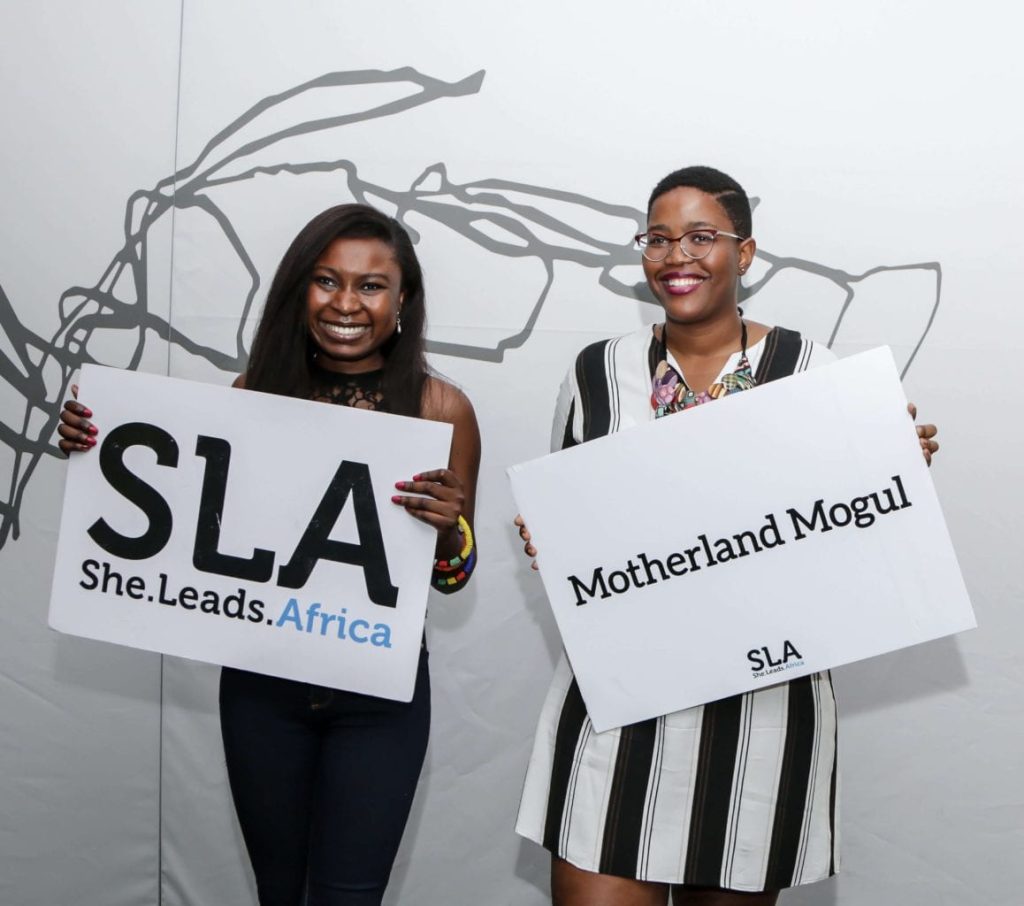
[bctt tweet=”Lessons on #BossingFromBirth from Linda Mabhena-Olagunji and Vere Shaba #SheHiveJoburg” username=”SheLeadsAfrica”] The final #SheHive tour was in Joburg this November. The Motherland Moguls in Joburg got a chance to hear inspirational talks from women making strides in their respective industries, giving us lessons on #BossingFromBirth. Two of the women were Vere Shaba of Shaba and Linda Mabhena-Olagunju of DLO Energy Resources Group. One of the many valuable lessons we took from Linda and Vere was their entrepreneurial drive from an early age. Both women started in the corporate sector. Linda started off as a lawyer at one of the top five firms (Bowman Gilfillan) and Vere started off as a Mechanical Engineering at WSP Group but both left to start their own companies. The aim of only making money is not a good idea to get into business For some people, the driving force to starting their own businesses is to only make money. If you get into a business base with the intention of only making money, people will definitely see through that. Vere pointed out that what helps in getting into business is having the passion for it. This is an important lesson because the passion is what will drive you to make your business and career path work. [bctt tweet=”In business/career failure will happen but it’s all about having a good comeback” username=”SheLeadsAfrica”] Make sure you always have a comeback Whether you’re in building your business or building yourself in your career, failure will happen but as Linda had pointed out, it’s about having a good comeback. It’s about continuing even after the failures and making sure you fail upwards and keep moving. You need to be resilient. As with any business or career path you choose, things probably won’t go as planned or what you have wished for, so you need to ensure you have a strong support system. A support system could be your colleagues, family and close friends. Have those people around you who will encourage you to keep moving. Most importantly, you need to have a extraordinary confidence and belief in yourself, Motherland Moguls! Value networking Every person that you meet could be your potential client or business partner, therefore creating networks and maintaining those relationships is key. Always make sure that you leave a good impression on people. This should not business or career wise but also all aspects in your life where you’re constantly meeting and working with people. [bctt tweet=”Planning is key! & other advice on #BossingfromBirth from Linda Mabhena-Olagunji & Vere Shaba” username=”SheLeadsAfrica”] Commit your dreams and thoughts into writing Planning is key! It’s also important to commit everything into writing. Once you commit a thought to writing or once you tell someone about a dream or thought, you should hold yourself accountable. Ensure that you execute on those dreams and thoughts that are on paper. Linda pointed out that: Your word is your bond. Making plans is important, and plans change but as a chaser of your dreams, learn to be adaptable. With all the changes happening, always make sure you know what your end goal is and whatever you do aligns with that end goal. Put in the hard work With growth, comes more learning. Learn and master your craft. It’s very easy to see through you if you don’t know your craft and you can easily lose credibility for that. Know that you are on a consistent journey of learning. You never really arrive at a destination of learning and once you feel that you know it all, then it’s probably time to check-out. This doesn’t mean stop learning, but it means find something that challenges you and continue the journey of learning everyday. #MotherlandMogul tip from Linda: Make a plan, and know that your plan might deviate. Know and write down your short, medium and long term goals and execute on them. [bctt tweet=”You need to be clear on who your client base are and understand them to be a boss from birth” username=”SheLeadsAfrica”] Understand your client base To understand your client base, ensure that you surround yourself with them. You need to be clear on who your client base are and understand them. This will help in you better positioning yourself based on who your client base is. Everything about you and your brand and how you carry yourself, should align with your brand. #MotherlandMogul tip from Vere: Have a clear plan about what you want, your client base, your brand and Live Your Brand! Know when to continue or give up In some cases, the breakthrough happens just when you’re about to quit. Stick through it during the hard times. Yes, it won’t be easy but it is so fruitful to work hard to make your own dreams a reality than to work hard towards making other people’s dreams a reality. When you know that this is your passion, continue until the breakthrough.
9 personality traits for guaranteed success
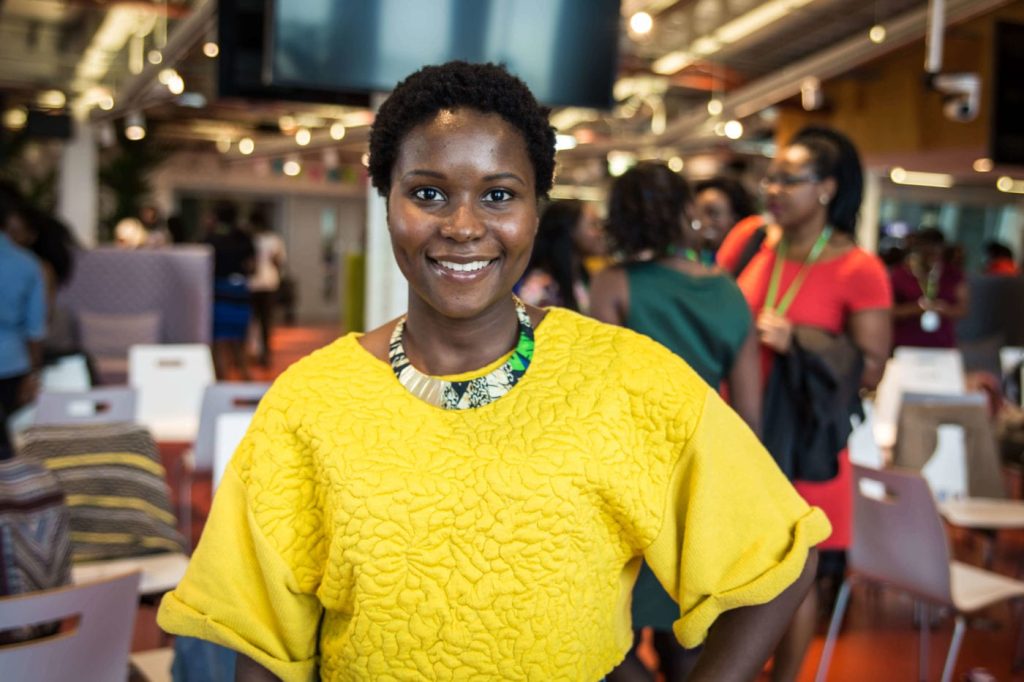
Ever seen the look of surprise when certain men hear that you are the Managing Director or CEO? Most women are generally content and more likely to take a back-seat when it comes to leadership roles. However, being a woman shouldn’t hold you back or alter your chances of success. It all comes down to personality. You need to develop confidence and a fiercely independent attitude for determination to succeed. Read on to learn more about the important qualities that prosperous businesswomen possess and how to develop them. 1. Ambitious Being successful is not only about being an expert in your industry, but also having the desire to see the bigger picture, and play a greater role in society. A successful entrepreneur has a vision and can see the path ahead and be able to inspire others to help them turn a dream into a reality. 2. Entrepreneurial and hard-working Women can be extremely resourceful. We are able to identify opportunities and develop the relationships that are needed to get work done. Hard work is our secret to success and to be successful you has to learn to sacrifice most of your spare time to build up your business. 3. Passionate Successful female entrepreneurs have a passion for what they do because they tend to develop businesses through the things they enjoy doing. Women have been stereotyped as emotional leaders by men, but really we are just passionate about success and excellence. What you need to do is find your own passion and once you believe in it, turn it into something you can really be proud of. 4. Optimistic/Positive attitude In the face of adversity, you need to be bold enough to stand the test of time. The tendency to look on the positive side of events or conditions helps you maintain a hopeful outlook. With an optimistic perspective, one expects the most favourable outcome, and as such, is more likely to get that favourable outcome. The ability to analyse situations, see the good side of projects and the results showcases a person’s attitude and level of confidence. This trait is contagious. 5. Confidence One of the defining characteristics of being successful is confidence —the ability to understand what you are capable of. A confident personality is essential to win the hearts, respect and earn the trust of clients and build a profitable business with a solid reputation. There is no point in starting a business unless you are confident and believe that you are destined for success. To be a successful Motherland Mogul, you need to stand tall and hold your head up high. Whenever you are around and engaging with other people, smile, shake hands and always maintain eye contact. 6. Assertiveness You also need to be straightforward and confident in our communication with others to enable them to seize new opportunities. You’ll be greatly respected for this. In order to express your ideas, values and abilities you need to be assertive and confident. As a woman, when you are are self-assured, your peers will treat you with respect. Be fearless and learn to speak with authority and purpose. Remember though to also keep calm and deal with criticism rationally. 7. Aggressiveness Being aggressive doesn’t necessarily mean fighting all the time. It involves bringing constructive energy to projects to make sure that things get done. You can enhance this personality trait by developing a determined attitude to make sure you see things through until they are done. 8. Persistence We all get tested and life knocks us down now and again, the secret is in remembering to get back up when we fall. I have one motto, to always remind myself why I started even when I face challenges or opposition. Starting something is one thing, but keeping it going and making sure it’s a success is another. You need to learn the power of persistence and never give up. 9. Humility The business industry is always changing, so you will constantly need to keep up and remain innovative. Successful Motherland Moguls understand this and are willing to put in the extra work to learn and improve. Read books, attend workshops and learn from others. Remain humble and don’t ever be afraid to admit that you don’t know everything.
How to beat the rewards system
As someone who has been working in this crowdfunding space for quite some time, I have had the opportunity to have incredible conversations with people who run crowdfunding platforms and people who run campaigns on crowdfunding platforms. As you can imagine, the information you gain from both sides of the coin, while different, is necessary for a complete understanding of the crowdfunding scene. Before I decided on exactly what I wanted Do it Now Now to be, and the kind of support we would need to offer our campaigns, I did a lot of research into what it takes to run a successful campaign and what support campaign founders need. Let’s talk about perks/rewards Yes! You got the money, congratulations! But now, you have to deal with sending everyone that pledged an amount of money to you, the things you promised you would give them. If you have raised $23K and you have 380 backers who have each donated between $10 and $1000, you are going to have to gift 380 people a gift corresponding to the amount they donated. That means, you are going to have to design or purchase the gift and send it to their individual addresses. To some of us, this seems pretty straightforward. However, for people like myself who need to break stuff down, consider this. What is your donation percentage? The first thing to consider when deciding which perks you are going provide to your donors, is how much of the donation is going to go to perks. Most platforms offer a 5% (or more) commission on the amount raised. After that, they add the transaction fees (usually between 3 and 4%). The problem with pledges, is that not everyone has the money in their account when it is time to collect. Factor in the cost of failed pledges. We suggest you factor in another 2% to cover this. So, before you factor in perks at all, you have just paid out 10% of the amount raised on each donation. So far, on each $100, you are making $90. Not bad. What is your attraction percentage? Now, how much money do you want to spend to attract someone to donate to your campaign? This includes any kind of advertising (Facebook, twitter, Instagram etc.) you want to use. We don’t actually suggest you pay a ridiculous amount for advertising a campaign. Say you spend 50c on each $10 donation, that isn’t too bad. So far, on each $100, you are making $85. Not bad. What is your perk percentage? How much do you value your donor, in each donation bracket? Think about this purely monetarily. Your perk percentage reflects how much of the donation you want to spend on the physical or non-physical perks, the shipping of the physical perks, the design costs, etc. We suggest as an individual campaign, you spend no more than 15% of your raised amount on perks. There are different rules, depending on the type of campaign you are running. If you already have a product you are trying to sell, and you have a RRP, then by all means use your existing merchandise! You have already paid for it, and if you are making a small mark-up on the cost-price of your merchandise you are doing well. However, if you do not have existing merchandise and you actually need to make some money to create merchandise, this 15% maximum budget is for you. The 15% includes the physical items, and the packaging and shipping of those items. Note that with the state of most platforms, people expect a lot as a reward. We suggest you get really creative so that you don’t end up spending 50% of your raised amount on perks (trust me, it happens!). You are now at $70 for every $100. Not bad. Keep on budget and you will get a good amount back! Make sure you factor in the quantity of each perk you want to offer. What will your community actually donate? Are you surrounded by $10 givers, or $100 givers? What do you think your $100 will want to receive? Try talking to your community. If you make them a part of your decision making process, they are much more likely to respond to your campaign. What is your administration cost? Think about your opportunity cost. How much time are you going to spend on the post-campaign administration? How much time are you going to spend on marketing and organising your campaign? Most campaigns take 10 hours a week to run, and most campaigns run for 8 weeks. Post-campaign administration is about 3 hours each workday for a month (approx. 60 hours). Factor in a salary that makes sense for whoever is going to be dealing with this part of your campaign. You are looking at 140 hours at an average wage of $5/hour; $700. Factor in 3% of your fundraising amount as a guide, if you don’t want to have strict time/cost constraints. These estimations depend on the number of backers and the type of perks you have —the more personalised the perks, the longer it is going to take to organise properly. It is not impossible to do this well. There are actually a number of print and ship on demand platforms that you can look up. There are also a number of crowdfunding support companies that handle all of this for you. They usually charge between $3-5 per physical item for shipping and handling post-campaign. If you plan and budget carefully, and you do as much of the work yourself and try to use as much readily available merchandise as possible you could be at $67 for each $100 donation post-campaign. Not bad at all. There are benefits to donation/reward based crowdfunding, and there are obvious benefits to no-reward donation based crowdfunding. You need to think about what type of crowdfunding best suits what you are trying to do. Merchandise based campaigns with ready merchandise should go for
Valentine Njoroge: If you have an idea, do something about it

Entrepreneurs are a dime a dozen in this millennial age. Here on the African continent, the main obstacles preventing one from getting their business started is the lack of enough capital and investors ready to believe in your new, cool idea. Valentine Njoroge, a young entrepreneur from Kenya, saw this problem and decided to fix it by starting an online crowdfunding company for African businesses, Mradifund. Her passion about financial inclusions and development, entrepreneurship and impact investments, not only inspired the start of this initiative but also landed her the coveted role as projects director at East Africa’s leading investment firm, Centum Investments Ltd at the tender age of 24. SLA contributor Diana caught up with Valentine and got her to share her tricks and tips to making it in the fast paced financial world and why she is determined to help other young people get their dream off the ground and become a success. When did you first get interested in the investments industry? One of my first internships was at Kenya Women Finance Trust (KWFT), a micro-finance institution focused on funding low income women. The women who got these loans had such incredible stories of transformation. They would start very impressive businesses and see their lives changed because of these loans. This got me really interested in the investments space and I got to discover all sorts of other verticals in the industry. How did the idea of Mradifund come about? Mradifund has been a journey of sorts. One of my senior seminars while I was pursuing my undergraduate degree was all about economic development. I chose to focus my paper on alternative investments in Africa (with a bias on Kenya). While researching for this class, I came across Kickstarter, which was still fairly new at the time. They had applied crowdfunding to social/cultural works of art that the public wanted to see. I thought the same concept could be applied to businesses, so I wrote about Equity Crowdfunding. I envisioned a situation where the general public could fund ‘cool’ companies that were too small to be interesting to the traditional investor. Fast forward a few months, I was working in Private Wealth Management aiding high net worth individuals to allocate their wealth to various investment opportunities. Then, one of my clients asked if there was a way he could invest in African companies. At the time, I said I didn’t know, but kept researching. When I next visited home, I started finding out more about start ups and SME financing. I eventually connected that same client to a startup which he invested in. He later asked me how much I would charge for the connection which triggered the thought that this could be an actual business. I moved back home a few months after that and spent some time fine tuning the ideas from my paper. The experience of actually connecting a business to an investor is what inspired Mradifund today. You currently have various investors from not only Kenya but all over the world. How did you manage to get them on board with your vision for online crowdfunding? I still know all of my investors personally, so I met each of them and explained the concept to get them on board. Most of Mradifund’s investors already have an interest in funding businesses due to a variety of reasons including past experience or passion for SMEs or a certain sector. Investing with other people is valuable to them because it allows them to spread the risk of investing in SMEs over several opportunities by putting less money into each opportunity. The fact that the investment is shared among several people also means that investors can make more investments. Again, this spreads the risk which makes investors happy. (If an investor has KES. 10M, they can invest KES. 1M in 10 companies and the probability of 10 companies failing/losing money is lower than that of 1 company failing). This is what makes them stay. You are also currently the Projects Director at Centum Investments. How do you juggle running your own company, working at such a big corporate company and still get time to live life? Haha, well… I have learned how to use the resources around me to the max! My board at Mradifund, my team at Centum, my friends and family all help me achieve my goals in little ways, even if they don’t realize it sometimes. I kill two birds with one stone on very many occasions, especially in the work/friends’ quadrants. Also, I have had to learn how to be very efficient with prioritizing the urgent and important stuff. I say no to stuff that’s just interesting (but not value adding) or just feels like an obligation when it’s really not. Did you ever see yourself going the entrepreneurial route or did you just chance upon it? I have always kind of had an entrepreneurial spirit in me. I sold everything as a kid and I grew up in a very entrepreneurial family, so maybe in that sense I never had to think about it much. It became clear to me once I was already in it that it was a big passion of mine. I did spend a ton of time dreaming up my career in corporate (it was constantly changing) —wearing suits and carrying a briefcase as a teenager though. What has been the proudest moment of your career? One of the founders of the a business that Centum Foundation supported wrote me an email saying how much impact we had on his company through our mentorship program. He spoke about the knowledge and opportunities it opened up to him, as well as how much more confident it made him. As a result, he was able to partner with a major retailer which turned his business into an overnight success. It was really heartfelt and was very inspiring! As a young woman working in the male-driven field of finance, what
Irene Charnley: We women will lead fundamental change on our continent #SheHiveJoburg
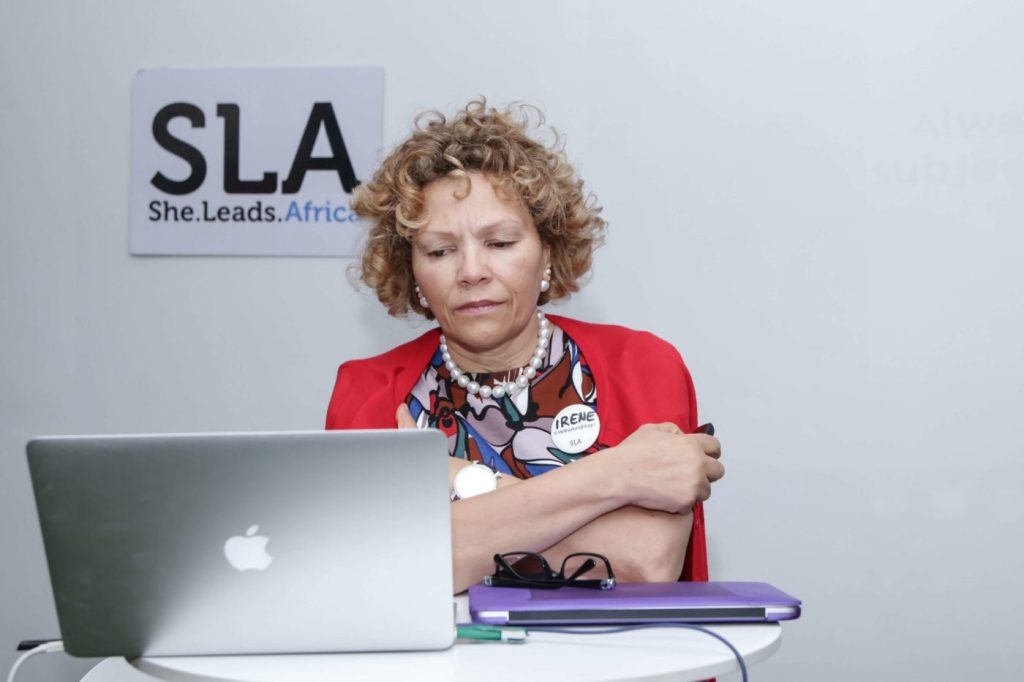
[bctt tweet=”Have the conviction & fortitude to put forth your ideas – Irene Charnley #SheHiveJoburg” username=”SheLeadsAfrica”] Irene Charnley is an ex-MTN exec who led the company’s expansion into Nigeria and Iran. She’s also now a telecoms founder whose company, Pan-African, reigns supreme in Nigeria, Uganda, Tanzania and Congo. At #SheHiveJoburg Irene Charnley dazzled the crowd by sharing the key principles she has followed throughout her career to get to where she is today. With a net worth of around $150 million, it was clear to all in the room that Irene knows a thing or two about being a Motherland Mogul. Irene’s key principles to follow if you want to be successful Have some core values and let them guide you The most important relationship you will ever have is with yourself. According to Irene, when it comes to succeeding in business and in life, you have to realize that there is no magic out there, the magic is within you. You must cultivate some core values rooted in integrity, as these will help guide and sustain you on whatever path you choose to follow. Irene shared that her core value is this: everything is possible. There is always a way, it is up to you to find it. She talked about the difficulties she and her partner faced when trying to secure a building for their business. They faced challenges in getting landlords to rent to them. But having this “everything is possible” attitude, they were persistent in knocking on doors till someone finally let them in the building. “What are the core value that drove you to action everyday?”, Irene opened this question to the audience and the awesome ladies of #SheHiveJoburg shared some of the following responses: “I have the power to make everything I want come true”, “Be truthful to yourself and to others”, “Always follow through on your promises”, “Be present in everything that you do, both physically and psychologically”. Irene encouraged everyone in the audience to be true to their values every single day, to forget everyone else and please themselves first, to simply, “Be you!” [bctt tweet=”Irene Charnley’s core value is simple, everything is possible! #SheHiveJoburg” username=”SheLeadsAfrica”] Always aim to be a subject matter expert Irene talked about the importance of working twice as hard as everyone else in the room to become the expert, the one that people turn to when they want an explanation of how things work. This is the only way to stay ahead of the competition and to become comfortable being in a position of power and influence. When you prepare diligently, you’ll begin to see things outside the box and are able to come up with solutions that no one else has thought of yet. At the end of every day, you ought to ask yourself, “What did I learn today that was worth it for me?” My key takeaway from Irene’s wisdom was, “Know that it’s about you, know what your core values are and always be prepared”. [bctt tweet=”The only way to stand ahead of competition is to work twice as hard – Irene Charnley” username=”SheLeadsAfrica”] Business is logic. Business sense is common sense Sometimes what trips most people up on the way to success, especially when it comes to success in business, is that they waste too much time overthinking things. Women especially have the tendency to dwell too long on things. We are afraid to speak up and share our ideas because we feel like someone in the room must have a better one. Irene shared a very important lesson on this topic. After having spent a lot of time in several boardrooms, one thing that became clear was that no one in the room has all the answers. Have the conviction and the fortitude to put forth your ideas, even if they will be shot down or criticized. Use every opportunity as a learning point: ask questions, share your ideas, learn from others. That’s the only way to keep growing. Find voices you trust. Keep them around you Again, as women we have this tendency to want to shoulder all our burdens ourselves and fight and toil to get the answers we need. But Irene, as successful as she is, shared a key insight, “You can’t go through this journey alone. You need to find your angels and let them help you out along the way”. Irene talked about the importance of having mentors to guide you by offering advice and a fresh perspective. Also of importance is being a role model yourself to someone else who is a bit behind you on the same path. And as a sign of putting your money where your mouth is, Irene offered to share her email and phone number with all the ladies in the room. She promised to be available to mentor anyone who felt they could benefit from talking to her. [bctt tweet=”At #SheHiveJoburg Irene Charnley offered to be a mentor. See what else you missed out on” username=”SheLeadsAfrica”] Be a value-add. To everyone. All the time For a minute, stop and think about you. What is it that you bring to the table, to your business, to your community that no one else does? What is it that you do differently that makes you so special? Irene reminded us that we all have gifts that we should be nurturing. It is up to us to bring these gifts with us to every relationship or partnership. We should start to view entrepreneurship as a way to add value to what is already out there. Build sensible relationships, sensitively Last but not least, Irene talked about the important of relationships. Of cultivating the right relationships, with the right people at the right time. On the journey to success, we must strive to do our best to listen and learn, and to truly understand where others are coming from so that we might know how to best serve them. Irene ended her talk on
Imane Bensalem: Humanity needs more dreamers, storytellers, lovers and givers

[bctt tweet=”As an author @imane_bensalem deals with her start-up as a life plan rather than a business” username=”SheLeadsAfrica”] Ever felt so alone and isolated in the world? Imane Bensalem would know that feeling. It was a sense of isolation that lead he to start the Tribe of Why, a global community of like-minded individuals who support each other to achieve their dreams. Dreaming is something Imane strongly holds on to and her goal is to help others know that they are not alone. A community that provides support will lead to more dreams to become realities, is her philosophy. From organising local events in Marrakesh, Morocco to linking up members to start businesses in foreign countries, the Tribe of Why does it all. You’ll be motivated and ready to become part of the tribe after reading some of Imane’s wisdom. Tell me about yourself, who are you and what’s your story? What makes Imane the human she is? Pain is a great teacher, the truest of all. And I have had my share of pain. I could not be grateful for it when I was younger, but I am now. Because those nights I did not know if I would make it to the next morning were the reason I can now give so much love to others and be a leader who is altruist and empathetic. I am Imane, they call me Mani. I am the founder of Tribe Of Why and author of The Bird who Lived with Humans. In addition, I connect people who share the same life dreams because I believe that dreams unite the human race and go beyond our societal barriers. Dreams build the future and sharing them with many other supporters around the world will enrich each individual in the Tribe and will inspire them to continue the search for meaning. How were your childhood and growing phases an inspiring force for the Tribe of Why? I was a single child of a single mother. I experienced isolation and questioned the capacity of our educational system to get me out of such a situation. My mother is a professor, and she agreed that the system did not allow her to be present in her own child’s life. I started seeking knowledge in people —through deep talks— rather than books, and authentic liaisons rather than superficial links with others. Then, I succeeded at building an international tribe for myself and they were my school, my inspiration and now, my Tribe Of Why members. I wanted to extend this experience to every other human on planet because with the amount of connectivity allowed to us, I do not see why anyone should suffer isolation or give up on their dream just due to a lack of local support. The global pool of talent is so big and rich that even the wildest of dreams will always have a match somewhere. [bctt tweet=”I don’t see why anyone should give up on their dream due to lack of local support” username=”SheLeadsAfrica”] As an author, I deal with my start-up as a life plan rather than an actual business. I try to bring my life learnings into my work and allow art to be a constructive part of business. Art changes people and people change the world. I try to be a vehicle of that change. What inspired you to begin the Tribe of Why? Walking into my room everyday is an inspiration to continue building the Tribe Of Why. If you walk into my room you will find cards from a best friend in Greece, letters from another friend in Spain, Germany, and dried flowers from Maldives. A regular day for me could look like a brain-cafe with an inspirational entrepreneur/friend from Vienna, then a meeting with a stranger who just landed from the UK for the first time in Marrakesh. Her first destination was a Tribe of Why event in the city. Then this stranger becomes a friend, she meets me 2 or 3 more times and then tells me she found love here, in this new city, during one of my events. All of the things I just stated actually happened. I began Tribe Of Why the day I started a small talent community in my business university. Within 3 months we grew to 300 members throwing the biggest flash mob defending women rights. The dance was designed by us, the DJ was a student too, we were self-sufficient because we were a tribe that shared the same passion; passion for art and freedom. What is Tribe of Why about? Is it a single tribe in one location or stretched across the globe? Tribe Of Why allows you to connect with creative minds, thinkers, entrepreneurs and dreamers across the globe, but also locally. When you are travelling, you can rely on the tribe to host you and co-create ideas with you. But, you can also share coffee with the wannabe author next-door that you never actually knew about until you joined the tribe. We are a moveable feast of knowledge and creativity. Also, small talk is something you won’t have to endure in the tribe, we go deep! Why do you think your tribe is important in our day and age? It is extremely important during our current times to cultivate love, empathy and peace. Such things expand out of themselves when connections from one human to another are true and purposeful. Many of our youth today use the social platforms to compare themselves to others, they deepen their depression and sense of isolation from the world. We want people to understand they are all on the same quest. This is why we care about building tribes who share the same dreams, they implicitly share the same pursuit and same obstacles. But together, it is easier to overcome these obstacles in contrast to being alone and feeling maladjusted to the world during such a pursuit. How do you think this can help humanity? In a
Escaping the comfort zone

The comfort zone is a terrible thing. I’ve probably made this statement and tweeted it at least 20 times in the past month. This article is as much for myself as it is for many of you out there. The comfort zone is this wonderful place where you can sit pretty and be comfortable. In the comfort zone, you have a good level of assurance that despite not being where you are meant to be, you are okay for the time being. It might be a physical space or a mental one. One thing is certain though, the comfort zone is a dangerous thing. There are steps you should be taking, moves you should be making to put yourself out there. But you’re not. In your 20s and 30s, you have got the zeal and energy to make things happen. Your mind is fire and you have so much potential you need to explore. So, why aren’t you popping right now? Because you’re comfy…in the comfort zone. Unfortunately, the comfort zone isn’t where great things happen. You can’t realise your dreams or start the business you’ve been planning for the past six years in it. Sure, many of us have heard stories of how opportunities literally fell into the laps of unsuspecting people. This model was discovered by a scout as she went about her shopping in the local mall; Rita Dominic accompanied a friend to an audition and got discovered. But let’s be real, that’s just not everyone’s story. And while you’re waiting for the mystery opportunity, the clock is ticking. Haven’t you noticed that some of the greatest hustlers are those that started from the bottom? With no safety net or comfort zone, there is no other choice but to hustle for all it’s worth. Prison break It might be a plush prison, but you’re in a holding cell nonetheless. Girl, you need to step out and the time is now. Leaving is really scary. You’ve got a myriad of fears. What if I fail? Well, so what if you do? If you do, you pick yourself up and go back to the drawing board. If you don’t try, you’ll never know and will resent yourself in the future for wasting the prime years of your life saying what if? So what do I do now? – Tell yourself you need a change This first step is very important. It might sound so simple but you shouldn’t underestimate the power of the spoken word. If you aren’t convinced in your spirit that you need to take charge of your life, then it doesn’t matter how many times others tell you. You need to tell yourself this, and you need to believe it. – Start doing the groundwork and looking for opportunities Look for opportunities that excite you and scare you at the same time. – Take a leap of faith! Go out there and just do it. Take action. It’s not necessarily going to be an easy path but the heat refines the diamond. Once you get out there, you can really get your hustle on.
3 things you need to know before turning your creativity into a source of income

It was Jeff Goins who said, ”A creative is an artist. Not just a painter or musician or writer. She is someone who sees the world a little differently than others. A creative is an individual. He is unique, someone who doesn’t quite fit into any box. Some think of creatives as iconoclasts; others see them as rebels. Both are quite apt. A creative is a thought leader. He influences people not necessarily through personality but through his innate gifts and talents.” With this quote in mind, here are my three tips to getting started as a young African creative. 1. You are creative You were born with immeasurable gifts and talents, you influence through your gifts of leadership, communication and a unique way of seeing things. This is the first step; you must believe that you are. It’s not all about throwing paint on canvas or pumping out eBooks. That’s only part of it. Do you do excel sheets like no one else can? Are your PowerPoint presentations clear and concise, leaving everyone stunned? Can you conjure up delicious meals with meagre ingredients? That, my friend is creative. Untangle that knot in your head which says that you must ‘forget about your hobbies and concentrate only on getting a good job as an accountant/lawyer/doctor’. Do you know people are out here getting paid to wear different outfits every day? (Some do this while holding down a full-time job, but still… getting paid for that ‘I love to dress up’ hobby!) YOU.ARE.CREATIVE. Accept it, embrace it. 2. Your creativity often feels effortless but sometimes, it feels like it takes massive effort Do you intrinsically and effortlessly know how to arrange flowers? Can you look at a plant and know exactly if it has had too much water or too little? Let’s also say that you know how to arrange your office in a nice way, people always wander in and hang around, simply because you can decorate on a whim. You know how to use eye-shadow colours everyone has written off as too bright for girls of colour but you… you know how to use it in the right amounts. Or you’re a writer. Writing romance novels comes to you easily… but sometimes the words just don’t seem to come. You design nice clothes but some days it feels like you’ve designed it all, seen it all and you sit there looking at your sketchbook, uninspired. You are a TV producer but you haven’t had a good idea develop in months. Everything is boring boring boring! Understand that sometimes you are in the groove, and sometimes you’re in a funk. This is normal. You are always creative, but your creativity is affected by so many situations. For example, your attitude, how tired you are, how comfortable or uncomfortable you are in your surroundings. 3. You MUST learn to embrace criticism We are the generation of, ‘Oh, you made this? Well, it didn’t speak to me, therefore, it’s not good enough.’ We are quick to write someone off if we don’t like their work. We are also the generation that cannot take any form of criticism because ‘hating’ or ‘hateration.’ ‘She didn’t like my work; she is totally hating.’ Who made you the authority on all things? When you receive criticism it is important to listen to it, and decide whether it is constructive or destructive. ‘I think what you made was great, and I think you could improve it like this’, is constructive criticism. ‘This is the worst thing I’ve ever seen!’, is destructive criticism. I know you’ve seen it on popular TV shows, and we love to watch because we love to see other humans humiliated. Criticism shows you what is working and not working about your creativity. It makes you better. Embrace it. Learn to pick out the good criticism to help you move along. The way you sit and patiently pick out the bad beans from the good ones is how you must treat criticism. With patience, and determination. Go ahead, get started using your gifts , talents and those quirky things you wrote off as hobbies. Use them to start a business and propel yourself to heights you never thought you could reach.
How to protect your small business from day one

[bctt tweet=”5 key steps to protect your small business from a legal standpoint” username=”SheLeadsAfrica”] Congratulations on deciding to become a business owner! Are you wondering what you should be doing to ensure business continuity and profitability? Below are five key steps you should consider taking, from a legal standpoint, to protect your small business. 1. Determine what permits you require and whether you need to incorporate – Determine whether to incorporate your business Most small businesses start off as unregistered businesses or sole proprietorships. The need to incorporate immediately is country specific, as some countries require immediate incorporation for certain business activities. But, as your business grows, incorporation may be ideal, as it offers many benefits including separate legal entity status – Determine what licenses, permits or approvals you need. In addition, you should find out what permits, approvals or licenses you need to start and run your business legally. You can obtain this information by asking contacts in a similar trade or business. You can also reach out to regulatory bodies or organizations that assist small businesses. [bctt tweet=”Find out what permits or licenses you need to start and run your business legally” username=”SheLeadsAfrica”] 2. Protect your confidential information and intellectual property – Protect your intellectual property Consider registering your intellectual property with the regulatory body in your country, as that is the usually the most effective protection. – Register your domain name With the increasing importance of social media, if you intend to establish a web presence, you should register and secure your domain name as soon as possible. – Protect your confidential information Determine how much information on your business know-how (information peculiar to your business that gives you a competitive advantage) that should be disclosed to third parties. Before you speak to a lawyer or intellectual property expert, err on the side of caution, by not disclosing or disclosing little, about distinguishing aspects of your business. – Sign confidentiality agreements Sign a confidentiality or non-disclosure agreement with potential investors/ business partners. While this may not always be well received, you should still try. You can conduct an internet search for websites that offer agreement templates that you can tailor to your needs or ask a lawyer to draft an agreement for you. 3. Pay attention to your contracts – Review it Before you sign an agreement, review it thoroughly. Some useful questions to ask are: What are my rights and obligations? What are the other party’s rights and obligations? When do each party’s obligations end? Are there any red flags or issues of concern that should be discussed or resolved before signing? – Document your understanding Also, as a best practice, have an agreement for every business relationship. If a dispute arises, an oral agreement would be very difficult to prove. Even if both parties agree on the existence of the contract, they will definitely not agree on the exact details. But, if a signed contract is not practicable, have a paper or email trail that highlights the important details including your understanding and expectations. – Address payment concerns Payment for services rendered is another common concern. You should, therefore, always inform clients of your fees and timelines before you commence work. More importantly, know your client’s payment reputation, based on past interactions or market research, it will help you decide whether to do business with them or not. [bctt tweet=”If a signed contract is not practicable, have a paper trail that highlights important details” username=”SheLeadsAfrica”] 4. Talk to a lawyer Another way to protect your small business is to seek legal advice on key aspects of your business early on. You can avoid or save on legal fees by asking a skilled lawyer friend for free/discounted legal advice. If your friend does not practice in that area, they may be able to refer you to another lawyer that can provide premium services at competitive or discounted rates. 5. Monitor your brand Finally, use the internet to your advantage. Set up Google Alerts. It’s a great way to monitor your brand/business because you get updates any time your brand or business name is mentioned. I wish you every success in your entrepreneurial journey! Note: This article is for information purposes only and it should not be used as a substitute for legal advice.