
The struggle is real: Keeping it together in the growing phase of business
[bctt tweet=”Take a deep breath and find at least one thing in your business to be grateful for” username=”SheLeadsAfrica”] It has been said a million times already, starting a business is not easy. Worse still is the tendency of the initial thrill to fade away in the face of early-day challenges. Most times, your entire life is focused on your business and you have no time for something else. The early days are hard, so here are some tips to tide you through the them. 1. Remember why you started A daily reminder will do and if not everyday, often. Every successful Motherland Mogul has stories to tell about early days. Each person’s experience is different from the next but one thing is common. The struggle to keep up during the first few months and the importance of keeping their eyes on the goal. [bctt tweet=”Be enthusiastic, think ‘I’ve got work to do! Time to pray and SLAy’” username=”SheLeadsAfrica”] When you wake up in the morning, the slight (or heavy) trepidation and anxiety should be replaced with curiosity and excitement. Wake up with, “I am doing it! This is my dream!” rather than “Here we go again”. Be enthusiastic, think “I’ve got work to do! Time to pray and SLAy”. When you think back on all the planning, the first eureka moment, the excitement when you were laying down the plans, you realize that this is it. You are right where you want or need to be (or maybe not, but you are on the right track). 2. Seeds will grow if well planted Once you’ve set a solid foundation, all you have to do is wait. Waiting is harrrd, yes. But just as feeling of fulfilment washes over you when you eat freshly cooked corn harvested from your garden with your hands (gardening or farming folks will get this), so it feels when all the patience and hard work starts to pay off. You literally eat the fruit of your labour but you have to go through the waiting period first. You have to wait for the seeds to first sprout, then grow and become ready to produce fruits. That is a very long but worthwhile wait. So here is a virtual truckload of patience because it is highly needed at this stage. 3. Water and nuture I know, enough with the fruit analogies but, that is the closest situation to what you are going through. While you are waiting for your business to grow —which should be the natural course of things, you have to prune it, pamper it, water it, sometimes cajole it and nurture it to grow. I totally just gave your business a personality. Yes it has one. If it doesn’t, it should and I will call it ‘she’. And like a woman, you have to pay attention daily to the details of your business. While you watch it grow, a business mani-pedi is always needed. [bctt tweet=”I totally just gave your business a personality and I will call it she” username=”SheLeadsAfrica”] You will constantly have to make changes, remove old things that no longer deliver, stick with tried and trusted routines. Wait, that is basic skin care! Well. As I said SHE needs the attention. You have to keep your hands on the pulse of the business and watch your down-line. Don’t worry we are getting there. 4. Faith Belief in your dream, in the big picture, in your self and in God is the seasoning in the dish. Remembering why you got into this business, pulling yourself up each morning, working late into the night, skipping lunch and having more microwaved dinners than is healthy for you…all these are peppered by faith in what you are doing. When I have a dream and I somehow get stuck, my first thoughts are full of doubt. I question the idea, the goal, the direction. But God doesn’t let me fool myself for long. The idea is reinforced and I snap out and push. That is what faith in your dream will do for you. Especially when no one seems to get your idea or you don’t have the support you need. You need to hold on strongly to your dream and to your God. You are going to need it for what I call the, “Oh what am I doing? Am I sure this is it?” days. [bctt tweet=”You need to hold on strongly to your dream and to your God.” username=”SheLeadsAfrica”] 5. Count your blessings If you don’t who will? I mean, I know you are not there yet, but girl you did it! You started. And as Rona Wigs said the first step is to start! You have give yourself a pat on the back. Try hard (really hard) not to dwell on what isn’t. Dwell on what is, plan for what isn’t and most times, take a chill pill. Make only healthy comparisons only if you have to. [bctt tweet=”Dwell on what is, plan for what isn’t and most times, take a chill pill.” username=”SheLeadsAfrica”] Be your number 1 fan and blow your trumpet when needed. Girl I am proud of you, you have made it this far and you are going to go higher. So, each day, especially on the days you want to rip into something, take a deep breath and find at least one thing in your business to be grateful for.
A Day at #SheHiveJoburg: True SheHive fashion is epic
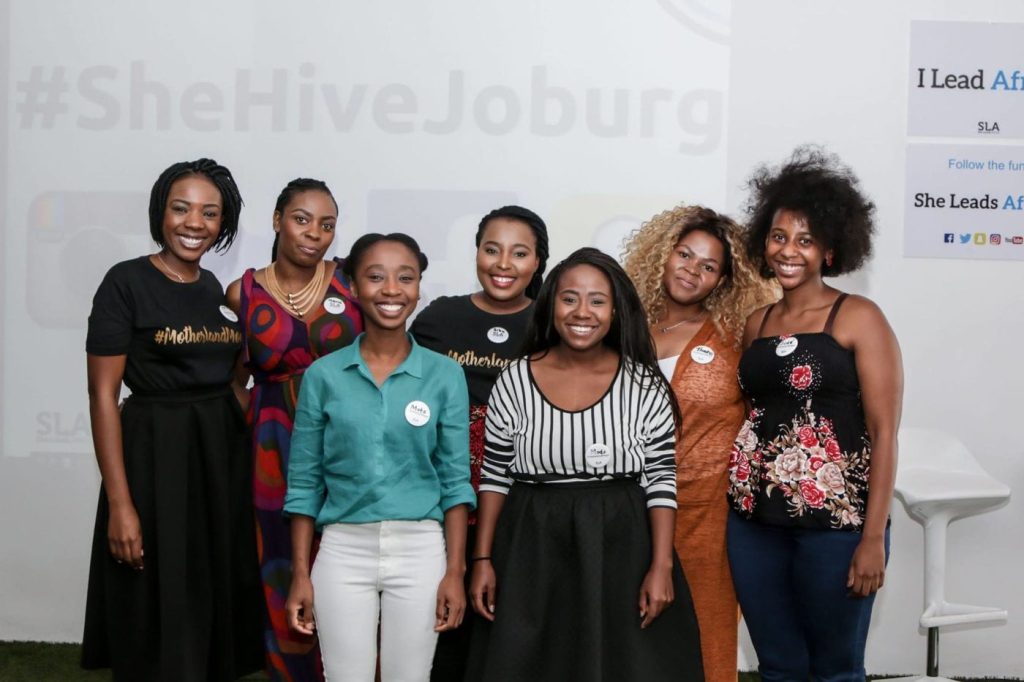
10:00: As a Joburger for the past few years, it was my first time experiencing Maboneng, where SheHive Joburg is taking place. Driving into Maboneng, which is known for it’s eccentric culture and vibe, you forget that you are in Joburg. SheHive Joburg was held at the OPEN Collaborative City Workspaces on the 4th floor. I walked into a space with music playing in the background, and I was filled with excitement. 10:45: More people started arriving, registering and received their #MotherlandMogul name tags. You could sense the excitement, not only for the event but the great venue SheHiveJoburg was being held. 11:28: We had a full house, and it was time to start! Ellen, the MC, welcomed all the ladies. We found out that Joburg was the final stop of the SheHive tours. I must say, bringing women together around the world with such an event is an awesome initiative and learning experience. To break the ice in the room, Ellen asked that the ladies turn to the person next to them and introduce themselves. This intro also had to include a selfie! Who doesn’t love selfies?! After taking the selfies, we needed to post them on Facebook, Twitter or Instagram with the hashtag #SheHiveJoburg. The ladies with the best caption on what they want to learn on the day would win a prize at the end of the day. Of course this was well-received. We love prizes! 11:35: The SheHive signature rap battle begins. The All Access ladies were the judges for this segment. The #MotherlandMoguls got into teams of 6 to prepare their rap. Team names included Captured Africa, African Butter and African Dream. The best four names went to the final round to battle it out. After watching the four teams battled for the rap title, I must say that Africa Has Got Talent! The judges finally announced the winners and Captured Africa took the title! 12:01: SLA Co-founder, Afua spoke about building winning partnerships. The ladies in the audience split into groups of 5-7 for the business exercise assigned by Afua. The exercise required that the different groups come up with a business name, a natural bath and body product and a partnership that would best align with their product. Preparing for the pitch to their potential partners filled the room with excitement. I discovered that Motherland Moguls are creative, and having this experience will help them in the future when they pitch to their soon-to-be partners. 13:03: Networking is valuable but networking right is more valuable. Ellen encouraged the ladies to speak to 3 people they do not know during lunch, and of course, take more selfies and post on social media. 13:06: Lunch time. This was the perfect time to take more selfies, take pictures using the SLA props to and most importantly to eat and mingle. 14:00: Once lunch was over, Victoria, the Marketing and Social Media coordinator from Kisua announced that everyone is legible to a 15% discount on their first purchase at Kisua!! This was one of the many highlights of the event, the #MotherlandMoguls loved this. Then, the media panel began with Susan Younis, Janine Jellars, and Leslie Kasumba. The panel was a discussion on their career journeys to date and the lessons learned in the media industry. Who better to learn from than from these media moguls!? The media panel gave us pointers on how to know which offer to take. One of the panelists, Janine, pointed out that not every opportunity presented to you will be an opportunity you should take. It’s important to know what is good for you and understand what your path and your purpose is. 15:20: The next speaker was Irene Charnley, who is the CEO of the Smile Group. Her presentation was centered around the importance of you. She gave us pointers on how Motherland Moguls can be guided by their core values. Irene also asked a few members of the audience to tell us what their core values are. This was important because what your values are should speak to both your personal and professional life. A lesson we took from the presentation is to always be present in everything that you do. 16:17: After that inspiring session, we needed a comfort break where more networking happened and Motherland Moguls bought branded t-shirts. We even had some ladies change into the t-shirts as soon as they bought them. 16:35: The last speaker of the day was Dorothy Amuah from Luxury Focus. Dorothy spoke of her journey after finishing her MBA, and seeing that there is an opportunity for luxury to expand in Africa. She came back to Africa to see where she could play her part in growing the luxury industry. We learned about the luxury business and for many of us, it was an eye-opener. We definitely learn something new everyday! 17:15: Motherland Moguls got an opportunity to share their stories about themselves, their businesses and initiatives and everybody loved this. Having platforms such as SheHive that give women opportunities to talk about the great work they do are vital. To end off the day, the rap battle winners and social media winners claimed their prizes and it was time for cocktails and more networking!
Shana Kay Derman: Perfection is something that I’ve always strived for
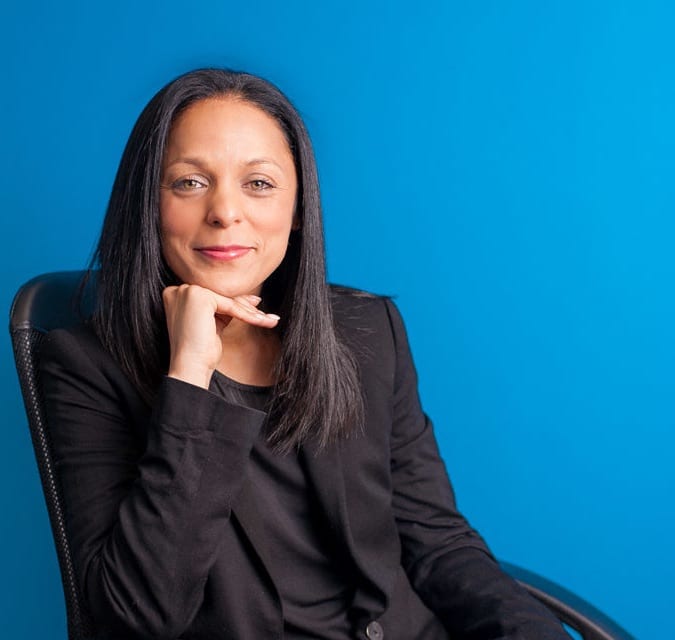
The first time I met Shana Kay Derman, she was dancing along to a music performance at a women in technology conference. Actually, she was the only person in the whole room dancing, so naturally I joined her. I will admit, I was bit shocked to see her go up on stage a few minutes later. Not only was she a speaker, but she was the Chief Innovator and co-founder of a successful internet security company. With a refreshingly authentic leadership style reminiscent of leaders like Richard Branson, Shana heads up innovation at IntelliCred in Johannesburg. While there remains a noted absence of women founder’s in the tech space, Shana has managed to find success. Who better to meet up with for a little inspiration? You have built an amazing tech company. Looking back on your journey, what do you wish you could have done differently? My journey is still very much in progress, but what is always top of mind is being less afraid. Being more willing to take risks is something that as a woman, I always thought was more of a “me” thing than a gender thing. But over 25+ years, and engaging with women from all walks of life, many of them including myself admitted to not big risk takers. An example of when I should have spoken up and taken a risk was with my first business. I wish I would have had the opportunity to purchase a larger share of the company I was building. At the time, I didn’t feel I was worthy of asking, when in hindsight, I definitely was. Another aspect of business that I wish I had been more vocal about was questioning things. I learned not to assume that if someone is older, or in the industry for longer, or even seen as knowledgeable, that anything they claimed should be taken as fact. Questioning engagements, partnerships, points of view, opinions and especially advice is something that I do more now. Whenever I feel that the point does not sit well with me or simply does not make sense, I question it. I know you worked incredibly hard in your first company. With that in mind I can’t imagine you being afraid to ask for the full value of your contribution. I’ve heard similar stories a little too often. With the wisdom of hindsight, how can women begin to have their value realized in the workplace? In my opinion, gender-roles are responsible for women (and I am referring to my experiences here and the stories shared by my female friends and peers) not valuing themselves in the business place. Sheryl Sandberg’s Leanin.org published a statistic that a man will apply for a job with only meeting 60% of the criteria where a woman will want to meet 100% of the criteria to apply for the same job. This takes me back to risk-taking and raises the topic of assertiveness. Being assertive doesn’t mean being a b***h or being a horrible person, it means we need to speak up more. Speaking up more means we start to be seen. Ensuring that our team members see and acknowledge the work we do is one of the ways that we can ensure that our value is visible. Perhaps men value themselves more because they are allowed to experiment a lot more when they are younger? As children, girls are not nurtured nearly enough to hone the skills that allow us to show and feel value, in a business context. However, having said all that, to me the essence of value resides in women supporting and uplifting each other. Women and men should consider showcasing women more as there are so many doing amazing things who no one ever gets to hear about. At this stage you have successfully brought your idea to life. What advice do you have on shattering our personal glass ceilings and nurturing entrepreneurship qualities? I believe that there are two core qualities in entrepreneurs that cannot be taught. The one is perseverance and the other is drive or vision. Perseverance is key to sustaining the entrepreneurship spirit. You’ll go through many challenges before successes and the challenges are many. A few tips on shattering any personal glass ceilings are: Constantly educate yourself, especially on the essentials of the marketplace. Find a mentor that can give you support and a boot in the butt when needed, and hone your skills irrespective of gender. Having a mentor is also key to challenging my thinking when I am in a rutt. Drive or vision is the key sustainer for me. Have a vision greater than yourself. Doing a greater good for the world at large while building a successful profitable business is something I’ll always come back to. I’ve heard it said that tech is ‘the great leveler’. Meaning that, it’s a space that doesn’t care about gender, as long as your product is good. Have you found this to be true? I would not say that tech doesn’t care about gender. It remains a very male-dominated industry. What I will say is that when you build something, no-one cares if a male or female built it. All they care about is that it works the way it is meant to. In this regard, tech is a leveler. In the beginning of my technology career, I worked ten times harder because the field was so sparse with women. Over time and feeling more confident in my ability (due to educating myself and working hard), I had to prove myself less and less. You do of course still come across the chauvinistic person every now and then. I deal with that by always speaking up in meetings or contribute to sessions where my contribution makes sense. I imagine being one of so few women in the industry you must have felt the need to be close to perfect? Perfection is something that I’ve always strived for in everything I do. With that said, I realize that one cannot
Arit Okpo: I call myself a socially adept introvert

[bctt tweet=”@menoword presenter/producer of @TheCrunch_EL is a socially adept introvert” username=”SheLeadsAfrica”] You may have seen Arit Okpo on TV and marveled at her grace and poise. Arit currently produces and presents The Crunch, the flagship news show for Ebonylife TV. On The Crunch, she discusses and analyses current affairs issues and stories. When she’s not producing content or presenting shows, Arit writes prose, opinion pieces and discussions on current affairs. And she doesn’t stop there, Arit has also functioned as facilitator and event MC for a number of public functions. With all this, it’s kinda hard to believe that Arit is an introvert. For someone who is constantly in front of the camera (whether at work or on her very active Snapchat), Arit has found a way to make her shyness work for her as she forges her path in Nigeria’s media industry. How did you come to be a presenter and producer? I had been thinking about going into media for a while, but thought it was going to be purely behind the scenes as a Producer and Director. One day in 2013 however, I got a call from my now CEO Mo Abudu, informing me that she was launching a new show and that she thought I would be great for it. I had participated in her reality show The Debaters in 2010 and she had remembered me. Even though it was totally unexpected, I knew immediately that this was the opportunity I needed and I said yes to the job! As someone who is shy and an introvert, how do you appear so comfortable in front of the camera? I call myself a socially adept introvert, meaning I have learned how to engage actively in social settings. I bring this to my work in front of the camera, I try to chat and engage as if the people I am talking to are friends sitting right there in the studio with me. When I’m in front of the camera, I talk and act in the very same way I act in my everyday life. In a nutshell, instead of stepping out of my comfort zone, I take my comfort zone to work with me. [bctt tweet=”Instead of stepping out of my comfort zone, I take my comfort zone to work with me – @menoword” username=”SheLeadsAfrica”] What is the typical day in the life of a producer like? I produce a daily news show and so my day usually consists of; previewing the episode going to air that day, then checking that all the other inserts of the show are ready or being prepared (we produce these ahead of time). I check invitations to events and say yes to the ones that align most closely with our direction as a show and send these off for scheduling. Then, I review the work we have to shoot and try to craft a direction for it. I check the news for the next day and send it off for recording and finally, I scour the web for possible stories and guests that we can feature. This is aside from the meetings, budget preparations, planning and general craziness that is all in a day’s work. What do you think other young women can learn from you career path? There is no one way to achieve your goals. My career path is very varied but each time a new opportunity came up, no matter how out of the way it seemed, I always looked for (and found) a thread tying it to the past and leading to my future. Don’t be afraid to say yes to unexpected opportunities and don’t be afraid to try things you’ve never tried before. [bctt tweet=”Don’t be afraid to say yes to unexpected opportunities @menoword’s advice on career paths” username=”SheLeadsAfrica”] Do you have a career development plan? If so, can you share it with us? I am very excited about curating and sharing the everyday stories of the continent. Whether it’s our food, our habits, our people or our politics, Africa is a very interesting continent. I look forward to creating content that celebrates the very fabric of who we are –our similarities, differences, hopes, failures and successes. You’re very active on Snapchat. Do you use this medium to actively build your brand or is it something you do for fun? It’s pure fun for me. It’s a chance to share my everyday life, my thoughts and my activities. I enjoy the chance to share with people a little bit more about who I am away from the camera. Your hairstyles and clothing choices on The Crunch are always on fleek, what’s your favourite clothing item? I have a fantastic styling team that does such an awesome job of making me look good and they’ve given me some incredible looks. For my every day look, I’m crazy about my ankara pants of which I have quite a number; they’re comfortable, versatile and made in Nigeria! Do you always have a good night’s sleep? Nope! I only get a full night about 2 nights a week. I am very nocturnal and so my brain starts to wake up around 10pm at night and goes strong till 2–3am. Sadly, this lifestyle is not very compatible with a 9 to 5 job, meaning that on average, I get about 5 hours during the work week. [bctt tweet=”I look forward to creating content that celebrates who we are – @menoword” username=”SheLeadsAfrica”] How do you find time to write while working full-time on The Crunch? I have to say that it is not always easy. Sometimes I am tired, other times I am simply not in the mood, especially because my job makes me associate writing with work. Deadlines help though, once I have a submission deadline I make it happen. I’m going to work on writing more next year though (I say this every year). If you’d like to share your story with She Leads Africa, let us know more
Don’t be afraid to wear your pink panties

Five years ago, I was certain that my favourite colour was purple. With time, I started feeling like it was suddenly everybody’s favourite colour so I started looking for a new favourite colour. Why? I wanted people to wonder and ask me, “Why beige?” I didn’t want them to respond with a, “Oh not you too.” But, is it so wrong? Take chocolate, wine or coffee for example, would you give it up if the whole world said women loved it? I didn’t think so. So, what are these pink panties and how do I know I’m wearing my pair? Pink panties are the “common and safe option.” Most people would describe those choices as “security” or “stability”. Wearing your pair is simple, find your passion and stick to it whether it makes you part of the 99% or the 1%. When you devote yourself to it, you’ll find that there are many ways to kill a cat. Real time effects Of course, this issue stretches far beyond the sweet things in life. It’s the fear that roams in the workplace, in academic spaces and in business. I remember having a chat with a 14-year-old girl from back home and I asked her what she wanted to do after matric. “I wanted to study politics but my sister is already doing it,” was her response. 1. The belief that to be unique or your own person directly translates to making a different choice from the next person is a problem even in young kids. I call it the “if I’m not the only one, then I’m not doing it” syndrome. These kids spend a lifetime waiting to stand out, all the while missing out on all the opportunities that come their way. That attitude does nothing for you. Imagine walking into a supermarket only to find one brand of sanitary pads, the one you really don’t like and you don’t want to buy it because well, you know where this is going. Let’s get a tad more serious now right? 2. Look at all the current issues that women across the globe are facing. The possibility that someone with a sustainable solution could be sitting pretty somewhere because ‘there are so many women empowerment groups’ is a disturbing thought. Yet, we can’t ignore the fact that it is a real thing. I recently finished writing my first novel, a short story about women and their incredible strength and I can’t believe how fulfilling it feels. Now, if I had written that book the moment I felt it was what I wanted to do —instead of worrying that people would think I did it because someone else I knew already had a book— I would have missed out on months of questioning. The journey to starting and finishing the book has allowed me to learn things about myself that I never, in a million years, thought I could ever possess. 3. The sad thing about it all is that we don’t realise it. In our hesitation and fear, we hinder not only the progress of ourselves, but possibly, the potential of the next young girl. By trying to hard to be “unique” we may be stomping on other dreamers. The main reason why we don’t want to be like everyone else is because we are afraid of failing. This scares us more than the regret we’d have to live with if we gave up on our dreams. For the future I believe we are all meant to excel. How? It’s simple, be you and do you! Yes, but again, how? Okay, so maybe everyone chooses to study law or start an events management business or blog…at the end of the day, this is your life and your choices are for you. Here is little check-list to help you find your best fit. Don’t: Stop wearing the green, blue, floral, white or yellow pairs, we love them! Let social seasons and trends define your decisions and choices regarding what you love and your future; Choose something because nobody has or because everyone has Develop an “I either sit the round out, or obliterate the rules” attitude, there is place for all of us, even those who don’t mind the rules Do: Wear what you want; Find your passion and purpose, work at it and stand out; Remember that you don’t have to stand alone to stand out! Your pink panties matter, go forth and wear them proudly.
Nomfanelo Magwentshu: How to shape #MotherlandMoguls into leaders #SheHiveJoburg
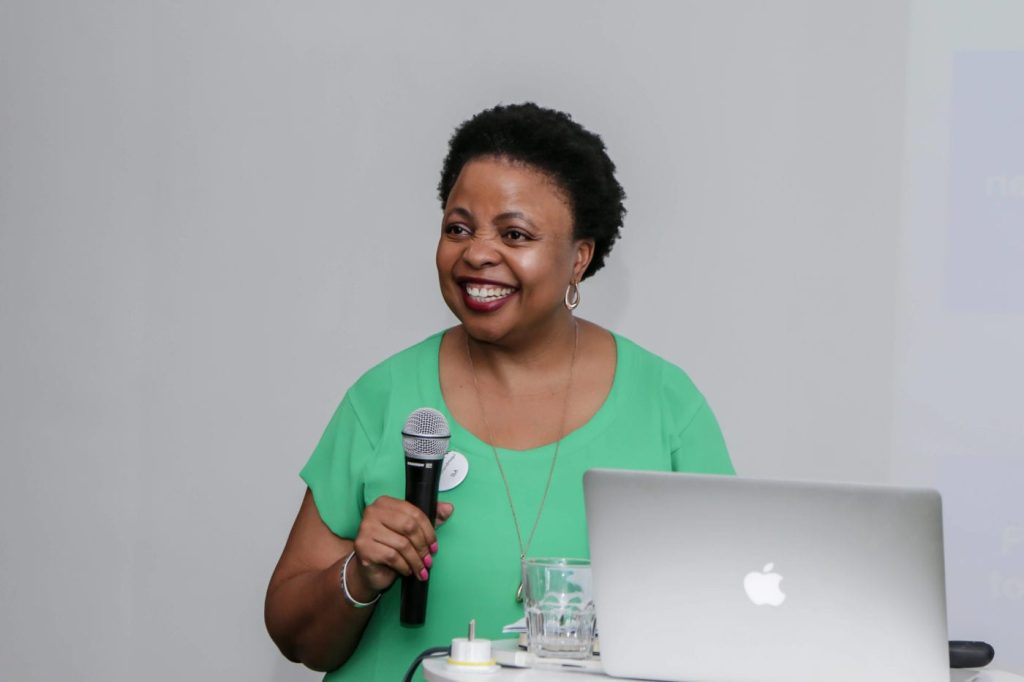
[bctt tweet=”To be a leader, take a leap of faith, follow your dreams and add value to other people’s lives” username=”SheLeadsAfrica”] Nomfanelo Magwentshu is a partner at McKinsey and was the lead organiser for the SA Fifa World Cup. She was previously the GM for South Africa’s national carrier, South African Airways. Nomfanelo provided some tips on how to be leaders at #SheHiveJoburg. She also opened up about her upbringing and her reasons for leaving certain roles in her career that did not fulfil her. With that said, one saying we took from Nomfanelo and her journey and that can resonate with Motherland Moguls is this, Take a leap of faith and follow your dreams and add value to other people’s lives even in the smallest ways. Nomfanelo shared what has shaped the leader that she is today: Show up and take risks Always show up and take risks when you are given opportunities in your career or in business. Show up and be counted. People must know you, and acknowledge you. Ensure that you’re not just a number to an organisation, you need to make sure you leave your mark. [bctt tweet=”Nomfanelo Magwentshu advises leaders to find sponsors and mentors that will challenge them” username=”SheLeadsAfrica”] Find sponsors and mentors According to Nomfanelo, find sponsors and mentors that will challenge you. Someone that will challenge some of your deepest issues and fears. One of her deepest fears is the fear of failure, especially the fear of not being good enough in a new environment. She pointed out that mentors will not make the decisions for you. It’s important to make yourself accountable for everyday decision, even if you have a mentor to help you navigate through your life. #MotherlandMogul tip: Find people to coach you —different people who can coach you on different aspects of your life and find those people that will challenge to get the best out of you. Think about the bigger picture When Nomfanelo joined the SA Fifa World Cup organising committee, it was not about being the best in football. She shied away from the media but her biggest goal was to think of the bigger picture, and that was to ensure that South Africa delivers the best World Cup. [bctt tweet=”Always listen to your head and your heart to become the leader you’ve always wanted to be” username=”SheLeadsAfrica”] Listen, follow your head but don’t neglect your heart At times where she lasted 5 months in an organisation, in her head Nomfanelo knew this MIGHT be the right place for her but her heart told her otherwise. Ensure that you listen to both to make the right decisions for yourself. Failure is a step towards success You need to learn from your failures as they are a step to your next success. When you go to your next step, learn from your failures and you are guaranteed to be successful. If you make another mistake, always get up and keep moving. #MotherlandMogul tip: Ensure that you reflect and you learn from the failures and make sure that you do not repeat them.
Jinna Mutune: Girls need to be told that they can have it all

[bctt tweet=”I have lived long enough in Africa to be able to tell an African story in an African way” username=”SheLeadsAfrica”] Dreams and making them come true; this seems to be the running theme with this film-maker, Jinna Mutune whose feature film LEO was well received by international audiences in twelve global cities. SLA contributor Juliet had the great pleasure of visiting Jinna at the Pegg Entertainment offices in Karen Country Lodge within the leafy suburbs of Karen, Nairobi. Amidst a couple of monkeys doing monkey business on the office rooftop and peering into their interview through the glass windows, they managed to have a great chat. When did you figure out that you wanted to do film? I actually always wanted to do it, I just didn’t know what it was, and I didn’t know it had a name. There was a creative space in our home that allowed me to explore a lot. When I was 12, my first mentor —who was a student pastor— used a lot of art and creativity to teach the Bible and that really inspired me. So I did a lot of plays in school and carols in church. At 15, I got to a place where I needed to know what my purpose was and was stirred up by my faith. The most defining moment though was when I met my mentor; that really opened my mind to what I wanted to do. Dream Dare Believe. How do those three words speak to you personally? That you should dream, I think it’s time to encourage the African children to dream out-of-the-box dreams, of becoming astronauts and scientists, things that are not on our regular spectrum. Daring comes with doing, going after the dream making plans with people. Trying and failing and trying again until it works. Then, believing means hanging on to it until it comes to pass. The only problem when we talk about dreaming in this generation, is that people want it to happen in a flash. The whole idea of believing is the consistency, I knew this at 16 when I wrote the plan of how I was going to be a film-maker. I thought I was going to make a feature every year; more than 17 years later though I have only done one feature and working on my second. [bctt tweet=”I think it’s time to encourage the African children to dream out-of-the-box dreams” username=”SheLeadsAfrica”] There’s always a bit of a time lag between the dreaming and the coming true, what do you advice dreamers out there to do during that time lag? I’d encourage people to start small; I personally started with small plays. You can always tell a great person by what they do with the little resources they have. Many times I meet young people who say that they want to do big things but don’t know where to start. Start from where you are and do it to your level best because you never know who is in your audience. Maximise the small opportunities, I did a lot of plays when I was starting out. When I was getting the movie to screen in 12 global cities, most of these cities are the same ones where I did the small plays. Faith has also been everything in this journey, I have relied on it, it has been my inspiration and it’s how I charge up half the time. Is there any point when you thought your dream was crashing before your eyes? How did you pick yourself up again? There have been many; let me talk about distribution though. When we did LEO, we didn’t have a marketing budget. We thought we’d be acquired by one of the major distribution channels, but the deal didn’t pull through. So here I was with a product and no money to let people know about it and I really wanted to give up. It was really tough because I found that there was a lack of understanding from the masses about the work I did. There was a lot of criticism and very little support and I wondered why? Why did I need to move forward? I used a lot of inspiration and scriptures that I call ‘muffins’ to keep me running. One was a visual of a man running through a wall, and every time I looked at it I told myself ‘something has got to give’, ‘something has got to happen’. So, I started speaking more and got radical about it until I finally got a lead to get the movie into the air-planes. [bctt tweet=”The thing that this journey has taught me is that there is nothing like impossible.” username=”SheLeadsAfrica”] Out of the blue, an old friend called me from Houston and wanted to screen the movie there. Soon after that the cinemas opened up. The thing that this journey has taught me is that there is nothing like impossible. I think it’s Einstein who said ”… it’s not that I am a genius, it’s just that I stay with problems longer.” That’s why I find the culture of instant success amongst our young people a bit scary because I feel like we are going to lose our genius minds. Our genius minds need to develop the character of staying-in until it works. You’ve talked a bit on money matters when it came to distribution tell us more about talk about getting funding. Money follows good ideas, one of my mentors said to me and I thought it was mind boggling. I always thought you get the money and then get ideas to use the money. But now, if I have an idea and I’m not getting money then I go back to the drawing board and ask myself how I can improve this idea so that it attracts the money people. [bctt tweet=”Money follows good ideas, one of my mentors said to me…” username=”SheLeadsAfrica”] LEO the movie went through about 20 drafts before the shooting begun. So there’s always a way in which you can improve your product. One door may close but they will leave you with ideas on how you can tweak your product to make it more sellable. I never feel like any of my meetings are quite wasted even if I don’t get the deal that I am looking for. It somehow adds up to something or they give me an idea that helps me move in the right direction. Does where you live geographically affect the filmmaking process? Hollywood has systems. There, film-making is an art and a job, if you are talented, you can find your way into the system. There’s a system with compensation in every stage which motivates film makers. There are also things like 3D studios, trained actors, trained animals, period wardrobes etc. These things help you create your story and your imagination canvas as a director becomes wide. From creation to consumption there are systems that acknowledge the work and a willingness to pay for the work. Locally, my advantage is that it’s never been done before. In the West for a young independent film maker, it can be very difficult to access the system. But here I can talk to anyone for things like location and negotiate on rates and because it’s an African story its best told in African soil. I have lived long enough in Africa to be able to tell an African story in an African way and that’s a huge advantage. Have you experienced any challenges in your journey as a filmmaker being a woman? I don’t think I have ever gone into the
Nomsa Daniels: Putting capital in the hands of women #SheHiveJoburg
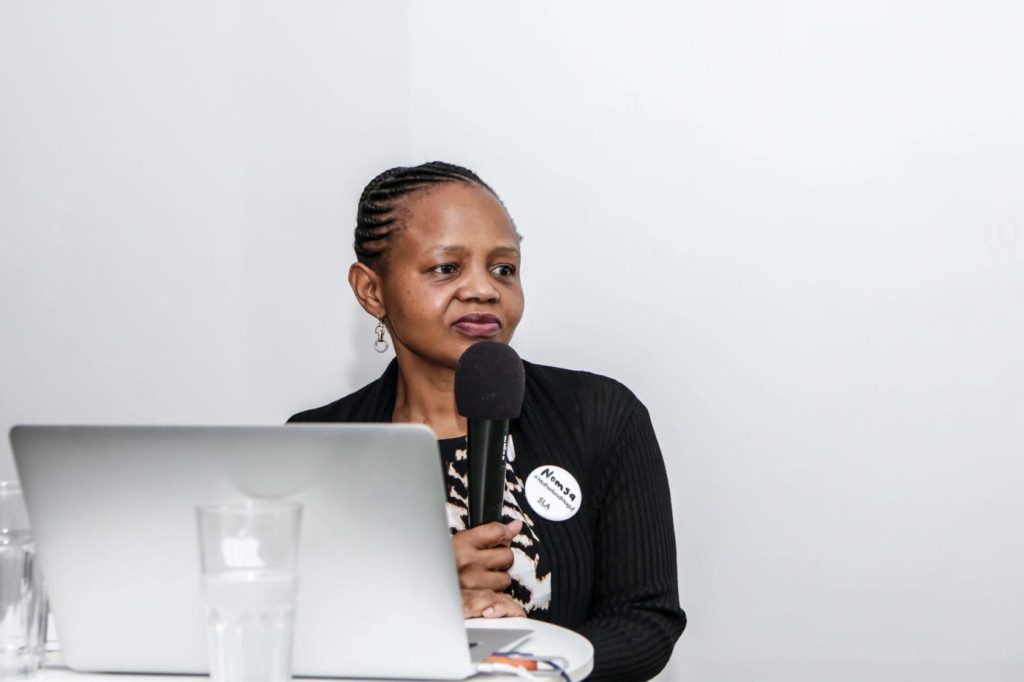
[bctt tweet=”Through New Faces New Voices @nomsa_daniels aims to link more women to financial institutions” username=”SheLeadsAfrica”] On the last day of SheHive JoBurg, the audience heard phenomenal woman share her equally amazing story. Nomsa Daniels is CEO of the Graça Machel Trust, she heads a team of specialists that support the trust’s work on women and children’s rights across the continent. Nomsa is working to ensure that more women in business are able to access the kind of capital they need to start and grow their businesses. During her talk, Nomsa Daniels focused on the initiative, New Faces New Voices. What is Nomsa Daniels’ story? Even from a young age, Nomsa was already interested in development issues. She received a bachelor’s degree in English Literature & History and a Master’s degree in Geography and Environmental Studies. Her first job involved working for the US government where she was able to focus on issues pertaining to Africa. This experience, while enlightening, made Nomsa realize that rather than look at Africa through the lens and agenda of a third party, she would much rather be on the continent, immersed in its issues and dealing with its development there. As a result, she moved to South Africa in 1987. There, Nomsa was involved in several different projects before she was approached by Graça Machel to join the trust. At the trust where Nomsa, along with her peers, came up with the idea to start New Faces New Voices. This is to give the new generation of young, enterprising black women a space where they could be seen and heard. What is New Faces New Voices and why should we be interested? New Faces New Voices is an initiative established by the Graça Machel Trust in 2010 to deepen women’s participation and influence in the financial sector. Its three main objectives are to: increase women’s access to finance and financial services, build capacity and skills of women to access finance and, promote women’s leadership in the financial sector. Initiatives like this are particularly important because studies have shown that countries that have greater gender equality have more inclusive growth. Also, women tend to invest up to 90% of their wealth into improving the education, health and economic well-being of their families. This investing in women and ensuring that they have access to finance will not only benefit them but their families and countries. [bctt tweet=”In South Africa, only 7% of adults are engaged in entrepreneurship and the typical entrepreneur is male” username=”SheLeadsAfrica”] What is the landscape in which New Faces New Voices operates? In South Africa, only 7% of adults are engaged in entrepreneurship. This figure is alarmingly low when compared to other African counties, also considering the fact that unemployment levels in SA are high. The typical entrepreneur is male, between 25 to 44 years old and lives in an urban area. He is involved in retail and wholesale sector and has a secondary or tertiary education. So where are all the women? Research on the topic shows that businesses run by women are most prevalent in the following sectors: retail trade, manufacturing clothing, professional services, restaurants/bars and social work activities. Comparing the activities of men and women, it is clear that there is a lot of potential for women especially in atypical areas where they have largely been under-represented. Reflection point for Motherland Moguls: Challenge yourself to think more broadly and to think outside the box! [bctt tweet=”Women are faced with cultural constraints that limit their ability to participate fully in business” username=”SheLeadsAfrica”] Looking at the numbers, there is definitely a business case for investing in women and they represent a sizeable and viable market that can yield a return on investment. Given that this is the case, why are there not more women in business? Part of the issue is that women face a number of challenges, which although not unique to them, do affect them uniquely. These challenges include that women tend to have lower levels of education and lower income levels. Women also lack collateral, exposure to the market, mentors and role models. On top of all that, women are faced with cultural constraints, norms and belief systems that limit their ability to participate fully in business. In addition, women face several funding constraints such as lack of business training, lack of information on where to find funding, lack of understanding of what funders look for and lack of business track record. Reflection point for Motherland Moguls: How do we reform the educational system to ensure that young girls and women are exposed to entrepreneurship at a young age? How is New Faces New Voices tackling this issue? New Faces New Voices aims to link more women to financial institutions and funding vehicles that target women. A lot of women are not aware that a lot of institutions have funds ring-fenced specifically for women. These institutions often complain that they cannot find enough women to give these funds to. New Faces New Voices is working to bridge that gap by helping to connect the right women to the right institutions so that they can access capital that is ready and waiting for them. On the one hand, New Faces New Voices works with the women to bring them to the level they should be at. This is so that they can present an interesting value proposition to these institutions. On the other hand, New Faces New Voices works with the institutions to help them tailor their programs. This way, their criteria are more realistic and actually suit the needs of the women they are targeting. Reflection point for Motherland Moguls: Access to finance is important, but so is access to markets! Final words of advice to all women out there looking to get into business. Do your research. Who funds the type of business you are looking to establish? What is their funding criteria? Understand the type of funding your business requires at various stages (working capital, bridging
Why research in business should be a daily routine
One of the very first lessons I learnt about entrepreneurship, is that if I don’t do it, someone else will and that once you do it, everyone else will. Let me break it down. The first lesson is probably much easier —someone will, eventually, spot the gap in the market and attempt to fill it. The latter is the lesson a lot of start-up entrepreneurs don’t want to think about. That once you decide to fill that gap, soon everyone else (and trust me, some of them have been sitting on the idea waiting for someone to do it first) will. This is because you are their case study and now they know the idea does in fact work. A typical first response is usually, “that’s my idea!”, when in fact, we should be thinking about the opportunity that it presents. The good news is, if you’re already thinking ‘competition’ and ‘unique selling point’ then you are halfway there. The answer is research, constant research. From my early high school days, I was obsessed with research, particularly on the Internet. It started with me always wanting to have the answers, because I hate not knowing. Gradually, it became a very educational and growth-fuelling hobby. Research, although mostly associated with reading, isn’t limited to that. Depending on the industry and sector you want to operate in, it could include you physically getting out of bed and attending seminars or, chilling by the Mall of Africa, watching how people walk, talk, laugh or studying what they are wearing, which shops they visit first and how they arrived there or, stalking interesting people on Twitter. The business environment is ever-changing and to get with the times, you need to research. Whether you are an aspiring entrepreneur or an established one already, there is always room for growth and improvement. Research in theory You may not know it, but there are many forms in which research takes shape outside of Google and Yahoo, and these are three of the absolute favourites right now: Social media Yes, it’s not just about the number of likes on your latest pic. Facebook, Twitter and even Instagram can be a huge source of information. It allows you to tap into your (potential) ultimate client/customer’s mind. You will know what they are thinking and what they want —all of this is embedded in everything they complain about, decode it. It can also be a very good way to see how your closest competitors have positioned their products and services and learn from that. Trends grow on social media, if I see someone with a 10k followers wearing yellow jeans, I want to buy them. Keep an eye on people with huge followership and influence on societal behaviour, these are people commonly known as ‘twelebs’ and ‘felebs’. Blogs The beautiful thing about blogs is, the research is actually done for you (but be sure to verify, remember, if it’s my blog, I can put up anything I want). Bloggers usually bring the newest trends onto their blogs for their readers, if you comb through their content, you will find that they are communicating to you the gaps that are opening up in the market. Video driven sites like YouTube Although most people would instantly associate YouTube with music videos, there is a lot more to it. Tutorial videos and even more serious documentaries are put up there, it is a great source of information for when you’re looking to do something like write a book or even start a blog on a related subject. Research in practice Lerato wants to start an online channel but she doesn’t understand how it could be financially sustainable for her. Also, she has no idea what kind of content she wants to put up on her website/channel. What can Lerato do to help solve her dilemma? Correct, research! 1. Use the resources you have Lerato has a Facebook account, but now that she knows she has to research, she doesn’t know how Facebook can be used to do that. Easy, the answer is trends. First, she needs to zero in on a subject. Does she want it to be a health site, lifestyle, entertainment or news site for example? For that she can visit sites that already exist to see which she feels is more for her. Let’s say she chooses a self-help/DIY type of site. 2. Ask and answer the right questions That’s where social media comes in, what do people need help with? Lerato will now study the questions people post on Facebook or tweet on Twitter. She will also check how many of them get the answer they are looking for and how long it takes them to. Not only is this research in terms of content, but it also allows her to see if there really is a market for the site and if it will be more effective and efficient for the user to go to her site instead of asking for help from his/her friends on Facebook. Once she is done with her decision, she goes to Google and types in “start an online DIY site”. Voila, a link to an article about how to make money from such sites comes up. Of course she clicks on the link, now she knows where her revenues will come from. 3. Don’t stop researching A few months later, Lerato’s site, From Your Toolbox, is ready for action. It is an instant hit with her friends and followers, with amazing readership ratings. Soon she starts receiving requests for advertising space, nothing can stop Lerato now. One day, on her timeline however, she learns that her friend has started an entertainment news site and instantly she is shaken. What do you think Lerato does to deal with this development? Lerato doesn’t like fighting, so no. Instead, she uses the resources that are available at her disposal. And that is how she gets into the culture of research, following new trends and
Leslie Ossete: Improving lives through better transportation

If your mission is improving the lives of millions, you’ll find some similarity with Leslie Ossete. She is one of four co-founders of Magic Bus Ticketing, an offline SMS based ticketing system. Magic Bus Ticketing aims to improved lives by simplifying how they interact with transportation. It’s a student start-up that lets bus commuters know when the next bus arrives and how much it is charging. It also allows payment through mobile money. Recently, Magic Bus Ticketing won $1 million dollars from the Hult Prize. Pretty amazing, right? Let’s start with the Hult Prize. Congrats on winning the $1 million! How do you plan to use the money from the prize? Thank you! After a year long process, Magic Bus Ticketing has finally won the Hult Prize, which awards $1M in seed funding to the winning start-up. My team was among the 5 finalists out of 25,000 applicants worldwide to compete in what is now the largest student competition for social good. This September 20th at the Clinton Global Initiative in New York, we pitched our innovation in front of notable judges such as Bob Collymore, CEO of Safaricom, and Akinwunmi Adesina, President of the African Development Bank Group. And, we won! The $1M prize is distributed to Magic Bus Ticketing through monthly instalments. Depending on how much is required to effectively run the business, the Hult foundation makes funds available to Magic Bus Ticketing. Magic Bus Ticketing will use the million to fully launch its operations in Kenya, and scale fast to other East African countries with similar market conditions, Tanzania and Uganda by the end of this year. You are from Congo Brazzaville and Madagascar, why set a company in Kenya? I grew up in Brazzaville, and my team-mate Wyclife is from Nairobi. Both of us as Africans had experienced similar challenges in public transportation; long wait times at the bus stop and inconsistent pricing when it comes to bus fares. We decided to focus our pilot in Kenya because first, Nairobi is one growing tech hub on the continent. Second, Nairobi has the fourth highest commuter pain point according to IBM. And third, there had already been a lot of research and initiatives done towards using technology to improve public bus transport. In fact, Nairobi is a place of innovations. Several projects to introduce cashless payments in the bus system had been led, such as Google’s BebaPay bus card. What sparked the idea to integrate urban commuting with mobile payment? The public bus system in Africa is mostly privatized and informal. The day-to-day operations are run by a crew of drivers and conductors who earn little money from their hard work. That pushes them to overcharge commuters for their own benefit. They abuse the current cash system to set higher fares based on demand and supply. For instance, in Nairobi when it rains, the bus fare triples. Commuters themselves don’t like to carry cash around. They worry about pickpockets, and not being able to get their change back in the bus. Furthermore, the police also abuses the cash system. Police officers know the bus crews carry cash 24h/24h, and do not hesitate to fine them for absurd reasons. We envision that cashless payment in the bus industry will bring more safety and order. We believe the way to implement a cashless bus system is through the use of mobile money, which is already widely used in East Africa. It is quick, accessible, and locally relevant. Prior initiatives have been using bus cards linked to banks, but most people don’t have bank accounts, banks have high transaction fees, and buses need liquid cash on a daily basis. What steps did you take to grow your company by 5000 booked tickets in less than two months? In order to acquire a customer, you must spend on marketing. We did a lot of mass-marketing through social media platforms such as Facebook, Twitter, and Whatsapp groups. We also do outreach marketing, implementing stalls at university campuses. Furthermore, we do collaborative marketing with the bus operators themselves, handling flyers to commuters, in order to build trust with potential customers. Last but not least, we also do product demos of our technology at major bus stops. As we launch in Nairobi, we will expand to advertising through radio, TV, and billboards. What does a student start-up need to thrive and be successful? A student start-up needs to be backed by a board of advisers, with a diverse background and expertise. Magic Bus Ticketing consistently asks for feedback from renowned experts in the fields of transport, technology, finance, and organizational management. Our advisers come from valued institutions such as the World Bank and MIT university. Briefly, a student start-up needs to create for itself a network of mentors who understand the goals and challenges of the organization —no, they don’t have to come from particular institutions, but they have to be right for your organization. For example, for Magic Bus Ticketing, one of our key advisor is Bernard, who has been a bus driver in Nairobi for the past 10 years. That’s real knowledge! Perseverance is key, even more for student start-ups, to succeed. I remember our humble beginnings on our campus at Earlham College. Our initial plan was to add more buses on the roads, and to provide commuters with a subscription model to access buses on-demand. Our buses were supposed to have TV screens, Wi-Fi, bike racks, online libraries, and much more. We presented this idea at the local Hult Prize at Earlham, and were not selected to attend the regionals. It was extremely upsetting because we all knew we were tackling a real challenge in public transportation. We had to iterate our business model, and re-apply online to ensure our spot at the Hult Prize Boston regionals, which we won. Without perseverance, we would not have come this far! What do you think of the industry you work in? How do you plan to remain consistent? Magic Bus operates in