
African traditions: Helpful or harmful?

In 2014, Nigeria’s Supreme Court annulled the Igbo custom that bans a daughter from inheriting her father’s estate. This marked a decisive victory in women’s rights in Igbo culture. It also serves as a reminder to the rest of the country and the Motherland that African women should be treated as equals. Harmful traditions need to be done away with. President Barack Obama, on his state visit to Kenya which coincided with the ruling, also discussed the need to reconcile traditions with evolving societies. In one of his addresses to the country, Obama stated, “Treating women as second‐class citizens is a bad tradition. It holds you back…These traditions may date back centuries; they have no place in the 21st century.” It’s a complex situation Changes in a society don’t mean we need to abandon traditions all together. Each culture has its values, and some of those values should remain untouched. Forbidding daughters from inheriting their father’s’ estate was a custom that perpetuated inequality. But, traditional Igbo culture as a whole is not one that seeks to subjugate women. We have to be able to distinguish between healthy practices and unhealthy ones. Equality is actually part of Africa’s traditions Historically, Igbos are democratic people. Laws were made and disagreements were settled by popular vote. Before the colonial era, Igbo women played an active role in politics. They took part in village meetings with men. They had their own markets and business networks, their own community meetings to discuss issues affecting women. They also had the right to strike against and boycott anything that threatened women’s interests. Women’s meetings were called mikiri and it was during these meetings that women shared their experiences as businesswomen, mothers, and wives. Mikiri was not only a support system, but also a forum to maintain women’s markets and enforce market rules (which also applied to men). If a man was found guilty of breaking market rules or abusing his wife, the women would gather around his property. They would dance, sing, bang on his doors, and throw mud at his house to express their objection. They could even beat him up a little. This was Igbo women’s most effective form of protest and it was called “sitting on a man”. British rule lead to the end of female institutions like mikiri in Nigeria. Back then British culture did not recognize women in its own political institutions. So, its colonial administration failed to recognize the culture of women’s participation in politics in Igboland. They wrote it off as another “savage African practice”. Igbo traditions and values like democracy and mikiri that promote equality. These values should have stood the test of time, rather than the laws that prohibit a woman from claiming what is rightfully hers. So what can we do? There’s clearly a need to decide which customs hold us back and which ones benefit our communities as a whole. Maybe we should follow the example of the recent Nigerian supreme court ruling. We should compare our traditions to our constitutions. If a cultural practice encourages inclusivity, it should stay. If it violates the rights of a particular group, it should go. Women should be part of Africa’s growth story. Sustainable development is only possible when everyone gets a seat at the table. We should all be active participants in socio‐economic and political initiatives.
It’s time to question the strict gender roles placed on women

One of the major gender roles set apart for women is that of the nurturer. But nurturing takes time. It keeps women away from other activities. It drains us emotionally. It makes us places nurturing above other roles. It costs money. It reduces resources available to women. I was born into a family of 7 children and I have 3 children myself. While I am a huge supporter of family life, I believe nurturing is a huge factor of inequality between the genders. Women are raised to believe that nurturing is an exclusively for women. This is deduced from the inter dependency required during the first year or so of a child’s life. But nature does not make mistakes, it was not intended for intense inter dependency to go on forever. In fulfilling gender roles, some women believe that everything else takes a back seat to nurturing. In my opinion this is a box that women create to limit themselves. We have an inherent gift of multitasking and delegation. Yet, a good number of us spend an inordinate amount of time planning and thinking about our roles as mothers or wives. Consider too that other women will go against their instincts to perform these roles due to societal norms, even when they are honestly not interested in being nurturers. The reality Nurturing is an important role for both genders. The inter dependency between a mother and child should be balanced with a father’s participation. A father is just as valuable a parent as a mother and is key to the emotional growth of a child. It’s a partnership and not a sole proprietorship! So dads, bringing in the bacon is not enough. Children also need your socialization, encouragement, advise, direction and love. Having a support system is important for any woman who has a child. We need time to do other things for our own mental stability. Yet, many women pour in too much time on their children and into their children’s life. You don’t need to take your child everywhere. You don’t need to be a drone mum using espionage-like tactics to constantly keep an eye on your child. My children surprise me everyday with their innovative thinking when I give them space to explore and make their own choices. So mums, child rearing is not a 24 hour business. Balance it out, live your life. Be the lioness who hunts and leads with the lion, even though she has cubs. Technology equalises the imbalance Society can balance gender roles with technology. Women can use technology to participate more to society and not feel stifled or limited to the nurturing role. With technology, we can contribute from anywhere and work faster. Women can handle domestic roles and still have time to pursue their aspirations and dreams. For example, parents can can supervise their homes in their absence through nanny cams. Jobs that were previously time and energy consuming can be done quicker and easily with technological innovation. Women have the choice to participate be both mothers and professionals. Education, personal development and skill acquisition are available at a click of a button. E-learning platforms allow users to interact, access premier education without from the comfort of home. I personally favour listening to audiobooks so that I can multitask. Furthermore, technological advances in the prevention and treatment in medicine mean parents don’t have to fret so much over children’s health. This allow parents time to pursue other pursuits. A number of the restrictions and barriers have been lifted by technology. We need to come up with more strategies to equalize gender roles so that men and women can live fulfilling and significant live while still being nurturers. Technology provides us that opportunity, why not capitalize on it?
4 career lessons from Akothee, Kenyan singer and entrepreneur

Earlier this year, Akothee set off a storm on Kenyan gossip forums as curious minds wanted to know about her wealth. The singer is thought to be one of the wealthiest celebrities in the country and her rapid rise to fame sparked rumours. Wagging tongues suggested that she got her wealth from a rich man and that she is part of the Illuminati. She was even accused of human trafficking. Just goes to show that there is still a long way to go before haters will stop saying horrible things about successful women. Akothee has quite a lot to teach us about life and business, get your pens ready. It’s okay to have a rough start Akothee left school aged 14 to marry the man she thought was the love of her life. In her own words, she came from a stable family but rebelled against expectations placed on her. She stayed at home, working as a housegirl for her mother-in-law over the course of seven years. All this while, her husband was in school getting his degree. He would eventually leave her for another woman. It was after ten years of marriage that Akothee returned to school. She was 24 years old. It is never too late to make a change in your life. A bumpy ride should not stop you from moving forward. Nurture your inner hustler After her divorce, Akothee moved from her village to Mombasa. There she learned how to drive and took to driving a taxi as part of her brother’s business. Yes, you read that right, she drove a taxi (some sources say it was a matatu). Akothee is known to be a great dancer and although she has made money from it, when she started she was dancing for free. It was others who suggested that she consider dancing as a business. She followed this advice and went on to earn a living as a professional dancer, dancing at high-end parties in cities across the world. Write this down, you can make profit from doing something unconventional. Always persevere and like Akothee land on your feet not on your back. Diversity is the spice of life Looking at all the things Akothee does begs the question, what exactly is her side hustle? Is it her music? Is it her business? The parties she hosts? The acting she does on the side? On the business side of things, Akothee has admitted that her ventures fund her Instagram glamorous living. She is the woman behind Akothee Safaris, a travel agency and transport service (remember the taxi company mentioned above? It has now expanded to a fleet of cars and will soon acquire a private jet). She also owns a 5 star boutique hotel in the coastal city Diani. In addition to this, she deals in real estate and property, buying and selling luxurious homes along the Kenyan coast. These days, everyone is expected to find their niche and stick to it but Akothee shows us that you can choose to buck the trend. You can be a mama and an entrepreneur On top of managing all that showbiz and entrepreneurship, Akothee is a mother of five! She has said that having kids is a hobby and she won’t mind a number six. As a single mum, she’s both the mother and the father, add to this her diverse hustles and her as a person outside her celebrity status. Her children have seen her through all her struggles and respect her for it. Akothee is a huge inspiration to single mums. You can be everything you want to be in addition to being a great mother. It’s been said that her past European partners are the ones that gave her money but after studying Akothee’s entrepreneurial spirit, I’ll take that with a pinch of salt. Here’s to living life to the fullest while generating your own wealth!
How to be career focused and not disappoint your mother

It started as a conversation with my friend. We were talking about topics we’d love to read about and I said I wished someone would write a manual on how to not disappoint your mom. Mothers…bless their souls, we love them but there’s something about knowing you’ve disappointed your mother that leaves an indelible mark on your consciousness. A mark you’ll continue trying to obliterate or make amends for -both exercises in futility really because how do you fix what you didn’t set out to ruin? See I’m 26 and I’m a single girl living and working in Lagos, far away from the comfort of my family. That on its own is enough to cause most parents to worry, my parents don’t live in Nigeria. Thus the responsibility of parenting me has been outsourced to a gaggle of well-intentioned, if incredibly parochial, aunts whose reports about my actions are the only things my parents have going for them right now. This unfortunately means that over the last year and a half since arriving in Nigeria, every other phone call to my mother has been an episode of ‘New Ways to Break a Mom’s Heart’. Often due to one aunt or the other complaining about something I’ve done to her. By all accounts, the aunties have valid cases against me. My job means that I work long days that often become longer nights; and on days when I simply can’t go home, I stay in hotels. When you factor in that according to Nigerian aunties, only a certain type of lady regularly patronizes hotels, you begin to understand why my innocuous actions are an affront to their quiet sensibilities. By focusing on work, I disappoint their expectations of proper Nigerian womanhood. I get it, I don’t agree with it but I get it. I used to obsess about my work-life balance and how I was not fulfilling some arbitrary Nigerian ideas I believed I had to satisfy. But now I step away from it all. It’s really just BS. I came across an article once that argued there shouldn’t be anything like work-life balance. The writer stated that this way of thinking doomed us into thinking it was a zero sum game. They instead chose to think of work and life as a delicate relationship that although might sometimes appear to be skewed, are in reality both being satisfied in different ways. This helped me understand that I do not disappoint, and neither do you. I’m still not sure how to balance my work with my life or perhaps more importantly how to ensure my mother doesn’t get disappointed with me (everyday). Yet if there’s one thing I know, it’s the inevitability of mistakes. Sometimes, your work will appear to take precedence for months on end and you won’t always do what’s right by mom. So, maybe don’t obsess over assumed failures? These days, when I get to steal time away from work to gossip with mom over phone about bosses or new opportunities, I can hear her pride. I feel how proud she is of my ability to make things work in my career despite not being the daughter she might have wanted me to be. That’s really all there is to it at the end of the day.
Why you need to set career goals each month

All successful people have career goals. We know a full time job can make it challenging to achieve said goals but this doesn’t make them any less important. As career-focused young women, the goals we set are our career objectives. They are an essential part of progressing up the career ladder. A great way to make sure you are on top of your career goals in a timely fashion is to break them down monthly. This means you’re only focusing on one goal a month. Your monthly goals can range from learning a new skill or updating your LinkedIn account to asking for a promotion or improving your relationship with co-workers. The choice is entirely yours. Not convinced? Here are four reasons you need to set monthly career goals. Flexibility Let’s be real, when you set yearly goals, you do so blindly. There’s no way of knowing how each month in the year will pan out. Monthly goals allow you to properly consider the time period in which you’re setting your goals. That way you’re flexible enough to consider any drama that may come up. It is as the year moves on that the best times to focus on certain activities are revealed to us. Imagine this, you update your resume January every year. What happens when you change employment within the year? Will you wait until the following year to update your resume again? Now if you take our advice and devote a month to brushing up your resume, you have more than enough time to create a master version saved for when you need it. Easy tracking Monthly goals are easy to measure. You know, tracking your progress towards achieving your goals is just as important as setting them. Tracking makes it easier to move on to new goals when you’ve achieved others. If you set goals yearly, you may end up forgetting some of your triumphs when it’s time to evaluate. Seeing what you’ve achieved on a month-by-month basis is also a huge boost to your sense of accomplishment. You’ll be surprised at how much you get done in a month. Better focus Taking things one month at a time allows you to focus, making goals much more achievable than otherwise. You can devote a month to forming better work habits and increasing your productivity. Very specific right? Trust us, by the time you spend thirty days focused on one thing, you would have developed habits that will have a lasting impact. You can set a month aside to learn something new. This is especially useful for those slow seasons at work where you have more free time. Time management Setting monthly goals is a great way to manage your time while also saving yourself from too much stress. If you’re following our advice (and you should), you may set one or two ultimate goals for the year then focus on one aspect of your career each month. This way, each month, you’re one step closer to achieving your ultimate boss goals. You can even go further and set weekly and daily goals. As an aspiring #MotherlandMogul do you set goals every month? Let us know what your goals are in the comments section below.
Thelma Golden, Director and Chief Curator of Studio Museum Harlem: “The digital age has made it easier for artists”
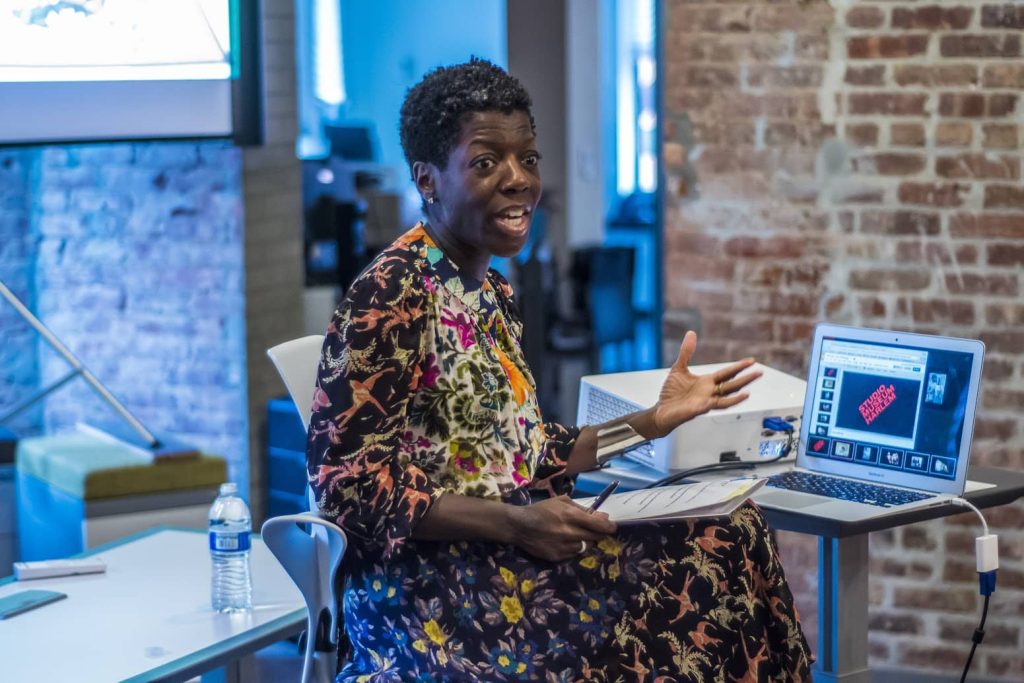
Art opens us up to the world. We can get a glimpse into the culture and history of a people through their creations. When it comes to African art, many artists are visual griots who tell a story through their visual work. The digital age has made it easier for artists to present their works on a larger platform. Thelma Golden, Director and Chief Curator of the Studio Museum in Harlem, explained to us at She Hive NYC 2016 that art at its core is multidisciplinary. Here are some of the points that Thelma Golden highlighted. – “Digital spaces for art display can have pros and cons. Many museums plan so far ahead that it could take years for your art to be showcased, digital spaces in this instance can be great for artists to bring attention to their work.” – “Create a support system within your peer group, within different fields, they can be cultural mentors to you.” – “Art being in the digital space has been to the great benefit for artists who don’t always have access to the official portals of art.” – “When thinking about investing in art you need to do your research. First figure out what you like, go to museums and see what is for you. For example, do you like abstract art? Do you like art with a lot of texture? To live with art, you want to be around something that inspires you and provokes you.” – “One of the amazing things about collecting contemporary art is that you get to know the artist. Knowing about the artist should also be criteria when investing in art pieces.” – “You should only buy art from reputable sources to ensure that you are getting what you paid for.” – “Follow artists that you like on social media and see their path, engage with them.” She Hive NYC attendees learned that art is an investment in culture itself. If you want to be an agent for change in the distribution of African art, be involved in the art scene. Sign up for a museum membership within your community. Visit art exhibits whenever possible. There is strength in numbers, have your peers get involved. Let’s go out and support!
Ogechi Okelu: Making traditional Nigerian snacks sexy

Ogechi Okelu’s love for food creativity led her from a career as a pharmacist to a desire to recreate indigenous Nigerian snacks. Many Nigerians grew up eating snacks which were only largely available in rural areas but Ogechi is repackaging local snacks in healthy and hygienic ways through her small scale food factory to help reach more people. She shared her thoughts with SLA on where traditional foods fit in with weight loss and on her journey so far. Why start a business with indigenous snacks? Nigeria has a wide variety of healthy and creative snacks and meals. These have been lost over time and are not in high demand among the urban and elite groups. This is mainly because of the preparation process and packaging but also due to Westernisation. I’m working on recreating some of these snacks in a healthier and more appealing way for the world to enjoy. Tell us a bit about Kozee My brand has been registered as a trademark and it’s called Kozee. My first product is my brand of kulikuli. Kulikuli is an indigenous snack made from groundnut paste that is quite popular in the northern part of Nigeria. I grew up eating this lovely snack. It is really versatile and can be eaten alone or in combination with other meals. Typically, people eat it broken into soaked garri but modern foodies use kulikuli as salad or parfait toppings, blended into smoothies and also to spice roasted beef or chicken. I am currently at the last stage of registration with NAFDAC, the Nigerian body that is responsible for the registration and quality control of food, drugs and cosmetics in Nigeria. They ensure that standard quality is maintained at all times and that standard operating procedures are adhered to by carrying out site inspections at factories and also running quality control tests on products at their labs. Where do indigenous and traditional foods fit in weight loss and healthy living? The main challenge with weight loss is portion control. We have a wide variety of traditional foods that are rich in fibre and minerals and are not over processed. A lot of our local foods however, have not been scientifically analysed, so we can’t be certain as to how many calories they contain or their nutritional value. This drives a lot of people who are particular about weight loss and healthy living to buy the imported products that have clear nutritional facts written on them. Researching on and repackaging our traditional foods will encourage more people to patronise Nigerian products and therefore boost the economy. How has your background as a pharmacist helped your hustle? As a pharmacist, I have learnt a lot about the importance of quality control and microbial contamination and this has helped me set high standards for myself, my factory and my product. Kulikuli has been made for centuries in the rural areas by hard working women who use a lot of manual processes from start to finish. This makes it difficult to produce large quantities of kulikuli in a healthy and hygienic way. I have been able to substitute a large part of the manual process using food grade machinery. I am also a pharmaceutical sales person, this has taught me a lot about sales, marketing and running a business. Where do you see Kozee in the next year? I currently deliver only in Abuja but am in talks to supply other major cities in Nigeria. I want my products to be available for purchase across Nigeria and hopefully abroad in the nearest future. What is your passion and how do you sustain it? I am a foodie who is also very passionate about healthy living. My passion for healthy food keeps me focused on coming up with creative ideas that I believe can help redefine our traditional and indigenous foods. If you’d like to share your story with She Leads Africa, let us know more about you and your story here.
Key steps to creating your business with Sharon Beason, Founder of Womeneur
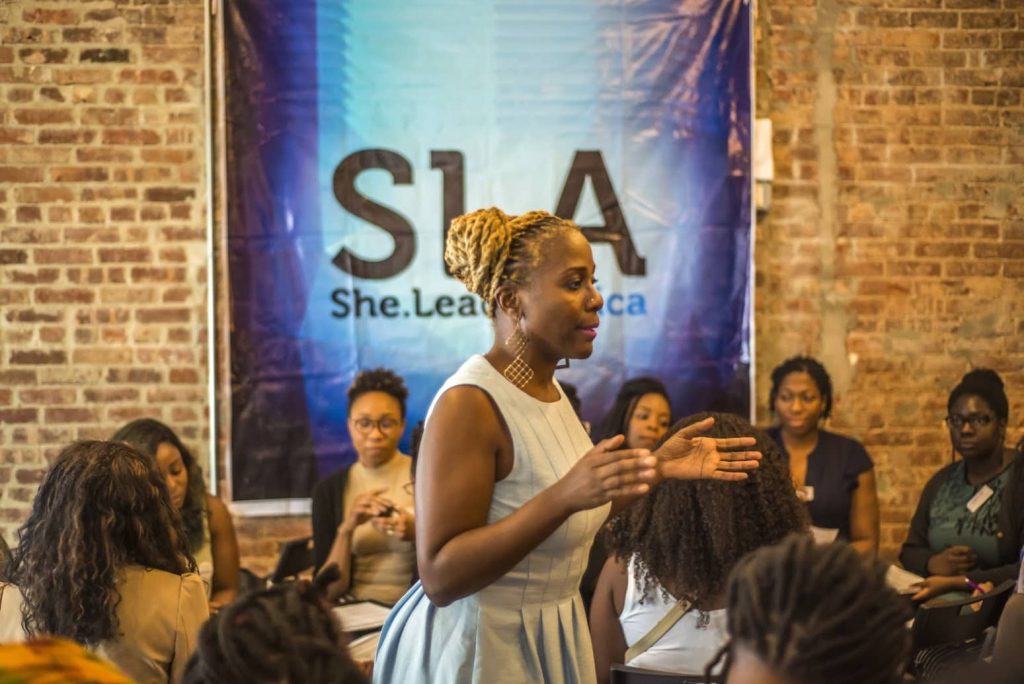
Creating a business model can come with its challenges, it is not always easy and requires significant strategy. Womeneur is a platform for women to develop their businesses professionally. During She Hive NYC 2016, Womeneur Founder, Sharon Beason went over the initial steps needed to develop a business. In this workshop, attendees learned that paying attention to detail can make all the difference in the trajectory of a business. Here are some of Sharon’s strategies on developing a business professionally. It has to make sense Think about how viable your business is. No matter what business you are in, you are always in the business of solving problems. Ask yourself, am I solving a problem? Do your research and know who your competition is. You must see where your competition is slacking and solve the problems that they are not. For example, if they are not responding to customer phone calls make sure that you are. If they are low on merchandise, make sure that you are not. Aim high Within the industry that you are looking to get into, see who on a grand scale is doing what you aspire to do. For example, if you are looking to make handbags, look at who is currently the most successful at doing it. Study the strategies that the company uses. Have a well-defined niche and target that audience. Create a customer profile for that niche. Be as meticulous as possible when defining your target audience, this allows you to make better customer-centered decisions. Ask yourself, what do they look like? How do they speak? What are their interests? Listen to your audience You have to actively listen to your target audience’s needs and go where they are. For example, if most of your target audience uses Instagram to communicate go there and read about the discussions that they are having on that platform. Sharon explained that people’s commentaries give you a snapshot into their mindset. If you have a well-defined understanding of their problems, you can more readily provide solutions. Workshop participants went home with the key takeaway that if they set up their business models effectively, they can become agents for change within their respective industries. In order to become an agent for change you must listen to the people that you want to serve and always make it your priority to fulfill their needs.
You’re now a Motherland Mogul, have you thought about safety?

A light bulb just came on and you’re already smiling at the money you’d be making from the business idea… You just slammed a pitch and you’re already practicing the speech you’ll be giving other young people on how you made it… You’ve launched your website and have snagged a client or two, business is looking promising… Your business is expanding, income is rolling in, your reputation is soaring, you’re making impact… You are now a known brand… Pause. Hold up. Wait a minute. Have you given any thought to safety on the job? Chances are you haven’t thought about the safety of both yourself and your employees. Yet, whatever stage you are on your entrepreneurship journey, it is important to consider the health and safety of everyone involved in your operation and invest in it. A safety management system (SMS) is a proactive and systematic process of safety. It involves developing a safety culture that ensures your organisation/business remains safe from loss of any kind. There are numerous benefits to incorporating a SMS in your startup. It reduces business costs and increases efficiency. With a SMS in place, you won’t have to worry about spending limited resources addressing the fallout of accidents and other incidents such injury, loss of goods, damage to business property, even death. Financing Banks and investors are more likely to invest in a business that is set up on a right foundation. No one wants to lose hard-earned money to accidents that could have been averted. Employee morale In business, word of mouth travels faster than any advertising. Employees do not want to leave a job worse than when they got into it, broken bones, injuries or ill-health. A safety system boosts their morale and lets them know that their employer is interested in their overall well-being. This morale of staff is inadvertently manifest in improved client relations and that is a plus to a business. Business confidence Big companies in construction, aviation and oil and gas seek credible businesses with a safety culture to work with. This singular investment in a safety culture could set you apart from other business owners Legal compliance And of course, using SMS means you would be complying with relevant laws in your country of operation. They say, train a woman and you train a nation. Here is to building safer businesses and workplaces as we become Motherland moguls.
To disclose, or not to disclose: Striking the right balance when making a case for your business

As promised in Navigating The Catch-22: Successfully Fundraising For Your Business, this segment discusses, in detail, the nuts and bolts of confidentiality agreements. Also referred to as Non-disclosure Agreement (NDA), the NDA keeps certain aspects of what an entrepreneur will discuss or disclose with a potential investor a secret. While an NDA is an important document that helps protect your new venture’s confidential information, entrepreneurs should endeavour to strike the right balance between protecting their business secrets and sharing relevant information with potential investors to attract capital or other resources. 1. Timing is everything: Relationships come first Indeed, the know-hows of your new venture might necessitate the execution of a NDA. However, this does not mean that you should walk into a potential investor’s office for the first time offering a NDA as a substitute for a handshake. This singular act may, in fact, be counterproductive as it may scare away savvy investors! The use of the words “scare away” is intentional. Indeed, this choice of words begs the question, “Why would a potential investor be reluctant to sign an NDA, if they do not intend to breach the agreement?” A few answers are listed below: Most potential investors sit on numerous pitch competition boards. They encounter numerous entrepreneurs in their professional lives and are often asked to sign NDAs. Consequently, your NDA may be number 500 on the request list. As such, a potential investor’s reluctance to sign your NDA may not be because they intend to disclose your trade secrets, rather, it may be due to the practicality of keeping track of thousands of NDAs that they receive. From a practical standpoint, it gets really challenging to track thousands of NDAs especially where entrepreneurs submit pitch decks with similar ideas. Investors are not only attracted to an idea but to other factors such as your team, track record, probability of success etc. Given that NDAs are important legal documents, investors will often want their lawyers to review these documents before they sign. This costs time and money—two things that have huge opportunity costs for an investor. Notwithstanding, if you are concerned about a potential investor’s ability to protect your confidential information, you should vet them. This can be easily done by utilizing your networks to find out more about a potential investor. If you are not satisfied with the results of your due diligence, then consider safeguarding your proprietary information. You have to strike the right balance between keeping your business know-hows a secret and attracting investors. The free flow of ideas is an important factor in further developing your product and raising capital. However, you do not need to disclose every minute detail of your business to an investor if you do not feel comfortable doing so. 2. Practical consideration when reviewing an NDA When you get to the NDA stage, it is imperative that you carefully review the NDA, negotiate the terms, and participate in the drafting process. If there are provisions you do not understand in the NDA, don’t feel embarrassed asking about the intent of that provision. Below are a few items you should consider when negotiating your NDA: Ensure that the party that signs the NDA has the authority to do so. Check to make sure that individual is an authorized officer of the company. Ensure that the NDA details what the word “confidentiality” means. If the definition is too broad and contains everything under the sun, you might get a lot of push back from your potential investors. So, be practical about the scope of the definition! In the same light, your NDA should clearly explain what doesn’t constitute confidential information. Remember, exceptions are equally as important as inclusions. The NDA should also detail the manner of the disclosure that will be kept confidential. For example, will both parties treat oral disclosures as confidential information? It is also important that you carefully think through your negotiation strategy during the NDA drafting phase and that you negotiate from a practical perspective. Spending too little negotiating a NDA might create an impression that you are not a savvy businesswoman. This perception may hurt your negotiating power with your potential business partner in the long run. On the other hand, overly negotiating a NDA might make you appear as one who might be difficult to work with. It is essential that you find the right middle ground. As a general rule of thumb, entrepreneurs should not negotiate past three drafts. More drafts may be required for an extremely complex project. Treat the NDA negotiations as a pre-investment negotiation interview. During this stage, your potential investors are just getting to know you. This is your opportunity to show them that you are savvy businesswomen with excellent negotiation skills. During the drafting phase, be cognizant of who will have access to the confidential information. Will all employees have access to the information? What third parties will have access to the information? All these considerations are important as they let you know the individuals that will be privileged to the information you have provided. Your NDA should also list each party’s responsibilities or burdens. Ensure that the NDA contains remedies that are reasonable. Most importantly, research your potential investors or business partners to ensure that the individual or firm is a reputable and fair player in the market. To summarize, it is imperative that you carefully consider the timing of requesting an NDA. When it becomes necessary to execute a NDA, carefully negotiate your NDA and ensure that you understand every word on the agreement before you sign on those dotted lines. In the next segment, we will discuss the art of successful negotiation. If you would like insights on a particular topic, write to us! We are listening.