
20 powerful Chimamanda Adichie quotes for today’s boss women
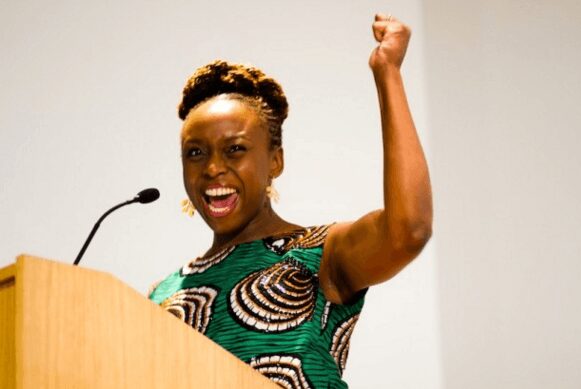
Nigerian writer, speaker, and activist, Chimamanda Adichie, is beloved by many. The award winning novelist and Ted talk sensation is fiercely revered for being a thought leader on Africa and contemporary African politics. With her recent feature on Beyonce’s self titled album, Beyonce, many have come to know her for talk, “We should all be feminist”. But Adichie speaks on more fronts than one, from the personal and private to the institutional and public. Below, we share 20 of our favorite quotes by Adichie that shed light on some of the topics and issues today’s boss women care about: being our true and best selves, navigating social roles, confronting gender and racial injustice, love and relationships, the motherland, and of course, money and being a creative. While short, each quote is steeped deep in history and context and is worth pondering over. On being a powerful woman 1. Never ever accept ‘Because You Are A Woman’ as a reason for doing or not doing anything. 2. I want to be respected in all of my femaleness because I deserve to be. 3. Minister to the world in a way that can change it. Minister radically in a real, active, practical, get your hands dirty way. On life 4. Your standard ideologies will not always fit your life. Because life is messy. 5. Please do not twist yourself into shapes to please. Don’t do it. If someone likes that version of you, that version of you that is false and holds back, then they actually just like that twisted shape, and not you. And the world is such a gloriously multifaceted, diverse place that there are people in the world who will like you, the real you, as you are. 6. The truth has become an insult. On Men, Love, and Relationships 7. Masculinity is a hard, small cage, and we put boys inside this cage. 8. Of course I am not worried about intimating men. The type of man who will be intimidated is exactly the type of man I have no interest in. 9. Please love by giving and by taking. Give and be given. If you are only giving and not taking, you’ll know. You’ll know from that small and true voice inside you that we females are so often socialized to silence. Don’t silence that voice. Dare to take. On injustice 10. Racism should never have happened and so you don’t get a cookie for reducing it. 11. The real tragedy of our postcolonial world is not that the majority of people had no say in whether or not they wanted this new world; rather, it is that the majority have not been given the tools to negotiate this new world. On Gender and Feminism 12. I am trying to unlearn many lessons of gender I internalized while growing up. But I sometimes still feel vulnerable in the face of gender expectations. 13. Some people ask: “Why the word feminist? Why not just say you are a believer in human rights, or something like that?” Because that would be dishonest. Feminism is, of course, part of human rights in general—but to choose to use the vague expression human rights is to deny the specific and particular problem of gender. It would be a way of pretending that it was not women who have, for centuries, been excluded. It would be a way of denying that the problem of gender targets women. 14. Culture does not make people. People make culture. If it is true that the full humanity of women is not our culture, then we can and must make it our culture. On Africa and being African 15. I recently spoke at a university where a student told me it was such a shame that Nigerian men were physical abusers like the father character in my novel. I told him that I had recently read a novel called American Psycho, and that it was a shame that young Americans were serial murderers. 16. They themselves mocked Africa, trading stories of absurdity, of stupidity, and they felt safe to mock, because it was a mockery born of longing, and of the heartbroken desire to see a place made whole again. 17. Because although there’s a lot of gender bullshit in Nigeria, I think women in the west have a lot more invested in being liked. And being liked if you’re female means a certain thing. So in workplaces, women who are bosses in Nigeria are fierce. The people who work for them, men and women, respect them. But, these are women who very keenly perform gender stereotypes when they go back home. And if they give a public interview, they have to say, ‘My husband supported me and allowed me to …’. On Money and wealth 18. Creative writing programmes are not very necessary. They just exist so that people like us can make a living. 19. There are many different ways to be poor in the world but increasingly there seems to be one single way to be rich. 20. How can we resist exploitation if we don’t have the tools to understand exploitation. Which of your favourite quotes by Chimamanda did we miss?
7 unusual signs that you might just be a go-getter
From the get-go, society encourages young people to learn quickly and strive to lead. We’re bombarded by mainstream notions on what it means to be a go-getter —a true leader. And, although these notions are true to some extent, they don’t necessarily encapsulate all qualities of bad-ass leaders in today’s millennial-driven world. So, here is a list of 7 uncommon traits of impactful leaders and go-getters. 1. You’ve got a lot of fears Fear is usually seen as a painful weakness and an inhibitor to leadership. Ironically, it probably has the opposite effect on you. Fear grounds you to reality. It makes you practical and risk-adverse. Fear acts a constant reminder of your limitations, but also reminds you that there are ways to work around them. Fear empowers you. You’ve got high standards for yourself and those around you. You dream big. The stakes are higher and you may not have many resources at your disposal. But the role of fear in your life makes you incredibly ingenious, inventive, and a go-getter. 2. You’ve failed often and failed hard Failure and fear go hand-in-hand. In the realm of impactful leaders and entrepreneurship, success is difficult and rarely guaranteed. Although failure might be likely, you don’t let the possibility stop you. The great thing about being a 20-something is that you’ve got time and opportunity on your side. If you aren’t failing occasionally or at all, you’re doing something wrong. A life without failure is a life without risk. A life without risk is a life without measurable success. And is that a life really worth living? 3. “Disorganization” is your middle name You probably have a written schedule that you never follow. You’ve got work assignments and projects strewn across your apartment. Your mind is a composition of deadlines, reminders, and goals to accomplish – high hopes and dreams. You weirdly find order out of your chaotic life. The fact that you have a multitude of commitments makes you feel like you’re on track. Even if it’s in an unorganized way. 4. You’re not the loudest voice in a crowd But you’ve often got something important to say. In any setting, what you comment on resonates with people, even if your voice doesn’t carry through the room. People tend to listen intently to those that speak softly or only on occasion. With speaking, less is often more and you always use that to your advantage. 5. You hold unique perspectives You always offer advice or insight that diverges from mainstream ideology. And although it makes you worrisome that your thoughts never align with what most people think, they’re often always valued by your peers. People often ask you for advice and it usually catches you by surprise. You’re not convinced that you’re the leader in a group but almost always you’re nominated to take the role. You probably don’t realize you have a propensity to lead, but others probably do. 6. You put people first A leader only gains presence through the conviction of her followers. You know this all too well. The defining quality of a true leader is one who leads to allow others to take their place one day. You hope to pass on what you’ve learned and are passionate about to the next generation. 7. You have no idea where life is taking you Confused, disoriented, and possibly disillusioned with occasional quarter-life crises sounds a lot like you. You don’t have all the answers and you’re still on a steep learning curve. You don’t exactly subscribe to the 5-Year Career Plan and that’s OK with you because the world is your oyster, and you can do just about anything with it. A life of mystery and unknown opportunity is what you’ve always sought out. You’re not sure if the goals you have now will be the same in the next two years. But you don’t mind because you live in the present. And, you live to lead. Are there any unconventional attitudes or beliefs of go-getters that we didn’t list? Share them below.
Lucy Quist, CEO of Airtel Ghana: Have huge dreams and be extremely ambitious
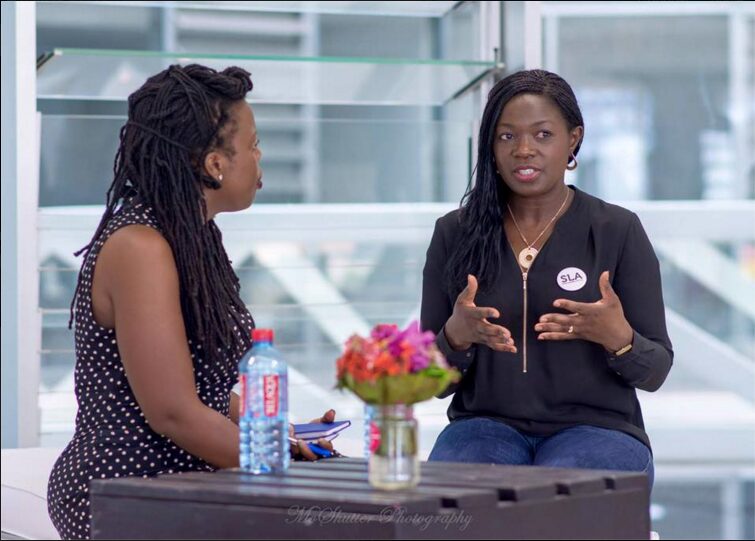
Lucy Quist is a Ghanaian business leader whose commitment to Africa’s youth is palatable. CEO at Airtel Ghana, she is the first Ghanaian woman to lead a multinational telecommunications company. Trained as an electrical and electronic engineer, Lucy has received numerous awards for her vision and strategic planning for the expansion and integration of various telecoms businesses in Ghana and also across the continent. Lucy Quist (LQ) sat down with SLA Co-Founder Afua Osei, at She Hive Accra, where she shared powerful insights on leadership and integrity. After her talk, Femi-Abena Senola (FS), former Vodafone manager and She Hive Accra content intern, spoke with her about more personal matters – from her family to her role models and her legacy. In this candid interview, we learn about the goals and dreams that truly inspire this global leader to continue her work. FS: Hi Lucy, Thank you for joining us at She Hive Accra. Lucy, boss, what are you most proud of? LQ: You’re welcome. I’m extremely proud of my family and my kids. My kids have demonstrated so much independence. I am also proud of the fact that over the years, I have been able to demonstrate to Ghana and the world that leadership is not a function of gender. I believe that black women, African women, are able to lead big businesses. FS: What quotes sums up your career to date? LQ: Impact driven by integrity, excellence and generosity. FS: Who is the first person that pops into your head when you think about leadership? LQ: Tidjane Thiam. He is the CEO of Credit Suisse. I have never met him but really admire his professional record. He inspires me to sustain a global path in my career. From what I know about him, he was at McKinsey, then he became a sector Minister in his home country, Cote D’Ivoire. After a while he left the ministerial job to become the CFO of Prudential, then rose to become the CEO. Because he did such a great job at Prudential, Credit Suisse poached him. On the world hearing that a black African man was becoming the CEO of Credit Suisse, the share prices of Credit Suisse automatically went sky high. I think he is a man of full of integrity and that also resonateswith me. We talk about changing Africa; we talk about creating the Africa we believe in. We know all our entrepreneurs are really important but it is equally important to have visibility in big businesses. When you look at revolutions that have taken place in the western world, aside the economic ones, they were all led by corporations, by businesses which means that companies change the human story. As Africans, we must be willing to play the corporate games, not play it for personal gain but play it for positive change. FS: What are three things people would be surprised to know about Lucy? LQ: That I don’t have a favourite food, the thing is I like variety. I may want this today at another time, I may want something else. The second thing is that I really like to sing. FS: Really? I’m surprised. LQ: I love [ love, love,] to sing. I really look forward to being part of an organised singing group one day, whether it be part of a choir or a band, etc. I look forward to the opportunity but I do not have the time right now. If you’re going to work with other people, you must fully commit. I look forward to a time when I can make that commitment, but I am very passionate about singing. FS: So we can look forward to Lucy the professional singer maybe? LQ: Absolutely. FS: And the final thing we’d be surprised to know about you? LQ: Final one: I feel very global, I really believe you can make a life anywhere. I tend to believe that I can live anywhere. There are a number of places I feel at home at, from DRC to Europe to Ghana, etc. FS: During your presentation, you stated that you could not have achieved what you did/do without support from your team and you made reference to your husband who has been very supportive. Many think that this may be the case because you met each other at a young age. Would you like to shed some light on this? LQ: I was not very young actually; I was about 26 when we met and we got married a few years later. At that point I was mature enough to know what I wanted, who I wanted to be with and what values were important to me. FS: Do you feel that if you met a different person your life would be different? LQ: It is an unbreakable yes and I’ll give you concrete evidence: Before I met my husband, I had never heard of INSEAD [the business school]. I knew I wanted to pursue an MBA, but at the time I had no idea which school to choose. My husband said to me: “Lucy, you’re the kind of person who goes to INSEAD”. And I was like what school is that? And he said, it’s a wonderful school, one of the best in the world for MBAs. The rest is history. He literally sent me there. There are so many examples and instances where he would lead and say to me this is what you need to do, go, go, go. FS: OK, moving on to next question, what advice would you give an African woman at the start of her career? LQ: Have huge dreams, be extremely ambitious, develop a consistent routine, make sure you’re known for some great things and make sure your name pops into people’s minds. Be very confident in what your dreams are and the rest of the world will conspire to get you there. FS: What’s one app on your phone that you cannot live without? LQ: Facebook FS: Really you still use
Divinity Matovu: You don’t want women dropping out of the workforce

She Leads Africa interviewed Cofounder and CEO of MBA Mama, Divinity Matovu. As a mother of two, she is pursuing her MBA at the Wharton School of the University of Pennsylvania with a focus on entrepreneurial management and finance. She has launched four start-ups, lived and worked in East Africa and prides herself on being a global citizen and an advocate for women’s empowerment. This is what she had to say about navigating family and career planning as an MBA Mama. “The biggest barrier for women with children interested in pursuing their MBA, women in business is: childcare. Many women find themselves saying: Oh, I have a child, I’m not going to be able to keep up. What will I do about childcare? Will I have any money going in? If we can develop something that helps women to save time and money on childcare, it becomes much easier to have a conversation and for them to continue advancing in their careers. You don’t want highly educated, highly qualified, and highly trained women dropping out of the workforce. Our brand, MBA Mama, makes visible: women who successfully maintain their careers after maternity leave and even women who have children during the MBA. We are an online platform that provides ambitious women with tools and resources to leverage an MBA, and strategically navigate family and career planning. Because of the childcare issues, there are a lot of women who are not at the table to lean in. That is not good for our economy or for business. We want to help women navigate having a child during their post MBA career so that they don’t fall behind their male peers, and so that they don’t feel like they have to drop out of the work force. From our perspective, an MBA is a great degree that women should leverage to have career advancement. Firstly, an MBA is a graduate degree with the highest return on investment. During the MBA program, you can gain a set of skills that are transferable to any industry and add value to any career. An MBA can increase your access to an excellent network. Lastly, the types of careers available post MBA have wonderful benefits.” Whether you’re a mother, a woman who is passionate about going back to school, a woman interested in starting a family or all of the above, Divinity provides you with these useful tips. Here’s her top three tips for a successful family planning during the MBA: 1. Timing is crucial There are quite a few women who are timing their ovulation cycle when pursuing their MBA. They work with their partners to make sure that they will be pregnant when they want to be pregnant. These women give birth during the winter break, which is 3-4 weeks. They come back that next semester, and for most of them, they are only taking classes maybe two days a week. There are also women who work to have children the summer before they start full-time work, and after they graduate. 2. Maintain consistent family time When I’m with my daughter, I’m with my daughter. I’m unplugged and not checking emails or on social media. My philosophy is: quality of our time together as opposed to quantity. Even though I’m really busy, that really helps us to maximize our time. So, figure out what time works best for you. Mornings are really good for us because we’re up and about and getting ready together. 3. Prepare for the week I do meal preps on Sunday. So, I cook many meals on Sunday and then I’ll Tupperware everything into portions so that throughout the first three days of the week I have all of my meals ready to go. We do take out Thursdays, so I know I don’t have to cook dinner that day. Fridays and Saturdays are easy, because I don’t have class. Sunday, I start my meal prep again. On her four tips on successful business planning: 1. Create your own brand I am an MBA Mama, and I see myself in my consumers. I’m investing time in the community and I hope that leads people to our brand. I launched the company and was very excited to get my partner Nicole on board. That was a challenge because I had to make sure that my vision was clear, and that I could get someone else to buy into the idea. 2. Gain Financial Skills Finance is central to any business operation. You can have a great brand and people can be excited about what you’re doing, but if you don’t know how to manage the money, if you don’t know how to read a balance sheet, and if you don’t know how to get your finances in order—nothing else really matters. 3. If you want to build an online community, communicate and be engaged Be engaged with your online community—whether that’s responding to a tweet or re-tweeting someone mentioning your brand, communicating with fans on Instagram or featuring people on your blog. By staying connected, people know that you actually see enough value in what they have to say. 4. Utilize Social Media! Finally, any of word-of-mouth that can help your business will be good for your brand. People love referrals because it’s a trusted source and it’s even more trusted than paid advertisements. Through our blogs people find us, and the women we feature also spread the word to their followers. Also, we feature women who share their stories through our “MBA Mama of The Month Initiative.” If someone can recommend your brand by word-of-mouth, that’s really the best way.
3 young African women software developers want to give you global hair inspiration

SLA interviewed Priscilla Hazel, Cassandra Sarfo, and Esther Olatunde, cofounders of the Tress App. In this interview, they share insights on how they met, their Tress app, and their vision for their enterprise. Who are the women behind Tress and how did you all meet? We are three software entrepreneurs from Ghana and Nigeria who are passionate about using technology to improve lives. Priscilla Hazel is the team hustler and is responsible for business strategy, public relations, and keeping morale high. Esther Olatunde is the hacker within the team. She’s the backbone of our technical development and responsible for keeping the app running. Cassandra Sarfo is our resident hipster – she has a keen eye for detail, and is responsible for the user interface design and user experience of the Tress app. We’ve known each other for about 2 years after first meeting at the Meltwater Entrepreneurial School of Technology, and we’re are excited to be working on something that affects us on a daily basis. What is Tress ? Tress is a mobile app and a fun, passionate community of black women from around the world sharing and discovering hairstyle inspiration. With Tress, women can: 1. Discover new hairstyles to inspire them the next time they’re at the salon. 2. See detailed information about hairstyles such as the products used, the name of the salon, and price range. 3. Share their favourite hairstyles and get compliments and recommendations from our supportive community. 4. Follow fashionable people and discover their hair care secrets. Whether you’re rocking a weave, extensions, cornrows, braids, locs, relaxed hair, wig-caps, or anything in-between, Tress is your home for hair inspiration and information. What was the inspiration for the app? What problem are you trying to solve with the app? It’s surprisingly difficult to find accurate information about hairstyles. Many ladies have at some point walked up to complete strangers to compliment and inquire about their hair, or stalk social media accounts not only for inspiration but adequate information about the style. We wanted to bring the experience of getting answers on the mobile phone, without the hassle. So now on the app, women have access to hairstyle inspiration that is relevant to them and they have adequate information to help rock the look they want. Who is your target market? Our target market are the 100+ million black women around the world who have access to a smartphone and are crazy about hair. According to Nielsen, black women on average spend a disproportionately high share of their income on haircare products, which is 9 times more than other races. Mintel estimates the black haircare industry to be worth 500 billion dollars. We consider the market to be extremely attractive. You are currently based in Ghana, what’s your vision for Tress in Ghana? What about in Africa and globally? While we piloted the app in Ghana, where we’re currently based, Tress is available globally. We want Tress to be synonymous with anything hair: hairstyles, hair-products, hair-stylists, hair-extensions, you name it. It should be the go to place for hair related queries. What’s one of the biggest challenges you face right now? Our biggest challenge is distribution. Getting the word out there about Tress has been challenging, as well as getting the kind of community engagement we aspire to have. What would a successful Tress look like? A successful Tress will be an app that is used by practically all black women for their hair and hairstyle needs. It should be the go-to app for any woman looking to find hair inspiration, hair-stylists, and high quality hair products. Beyond the app, we’re also excited to have Tress become active in all kinds of media products for black women – television, magazines, events, and more. A successful Tress would also be an active social network of black women thriving in all aspects of their lives. Is there any other insight about being business women and entrepreneurs you would like to share? My co-founders and I have grown extremely close through working on Tress together. We have our individual and collective ups and downs, but we’ve learned to support each other mentally and emotionally, while also having fun together to maintain our sense of humour. When embarking on the entrepreneurial journey, it’s extremely important to have a great team with you that you can trust to be with you through both the inevitable disappointments as well as the exciting times. Finally, we’ve really enjoyed working on a deeply personal problem. We’re able to use our unique experiences as black women to inform the development of the company and this also helps us empathize with our users and anticipate the needs of women like us. I’d encourage more women to start business focused on solving the unique challenges we face. Black women wield a large amount of purchasing power, and their multiple businesses waiting to be started to harness that. Want to know more about Tress? You can find them here: Email: priscilla@tressapp.co Facebook: TressApp Twitter: tress_app Instagram: tress_app Blog: blog.tressapp.co We want to know what amazing things women are doing in your communities. Tell us about them here!
All the reasons no one is responding to your emails

Even for tech-savvy millennials, emails can be tricky, especially in the workplace. Every once in while, when you send an email, you might not get a response. It could just be that the recipient hasn’t seen it yet, or perhaps started replying and then got distracted (this happens with texts all the time, no??). But it could also be more than that. Here are a few things to consider when you don’t get a reply from your boss or colleague. 1. Wrong Recipient This doesn’t refer to an instance in which you meant to email Tayo and ended up emailing Taiwo because they have similar email addresses (though that very well may be the case). Rather, this is when you email Taiwo about an issue that Tayo should be handling or is more suited to respond to. Always make sure your email is going to the appropriate recipient. There’s no need to email the CFO of your company about something the Finance Manager can handle. 2. Unclear Content Maybe you went into too much detail, maybe you didn’t go into enough detail. Either of these can lead the email being confusing for recipient and may lead to you not getting a response. With most emails, brevity is key. But every once in a while, you’ll need to send an email with lengthy project descriptions or detailed instructions. Make sure to read over emails to ensure that they’re coherent. Proofreading may seem like a chore but with short emails, it won’t take you more than a minute. With longer ones, it’s important that there isn’t any miscommunication. 3. Poor Timing Sometimes a co-worker may not respond to your email because of the timing. Perhaps you sent them some information too late, or perhaps it’s a question that can be answered in a meeting later that week. Either way, make sure to consider the timing of the email if you find yourself wondering why you haven’t gotten a response. 4. You were rude Hear us out! You may have not intended to be disrespectful, but we all know how emails can be misconstrued. This depends largely on the recipient and his/her perspective, so to be safe, it’s best to use language that is either pleasant or at least neutral and innocuous. If however, you intended to express displeasure or be combative, don’t be surprised when you don’t hear back, as some people would rather not engage in heated email exchanges. 5. A response isn’t required Some emails just don’t need a response. If you send your boss some information she asked for, she may respond or she may not and will discuss it with you at a later time. Other times, if you’re sending a thank you email or an email about something that is not pertinent, it’s possible you won’t hear back. In most cases, it’s nothing personal, so there’s no need to worry. All in all, remember that proof-reading and clarity are very important when emailing at work, along with being polite. Emails rarely get lost, so if you don’t hear back, consider one of the five instances above. Then call to make sure the recipient has seen the email or send another email following up.
How to start an event planning company with no money and no clients

So you want to quit your job to start your own event planning company (or any other one) but you have no money and no clients, yet. What do you do? Have a roof over your head and food to eat Firstly, if you’re going to quit your job, make sure you have some back up. This doesn’t necessarily have to be cash, but a family or someone that is willing to maintain a roof over your head and food on your table. If you don’t have that, then you will need to ensure you have some cash back up to keep yourself going through your start up phase, this will be a minimum of a year – two years, depending on your company. This back up, in whatever form is comes is essential! It’s essential because you will need all the energy and focus to get clients and start earning an income. For an events company, you should be earning a small income within your first year to at least cover some costs. Once you’ve figured out your back up, quit your job! It will be the scariest but most liberating thing you’ve ever done, but a word of caution, you will now work 24/7. Be prepared! What makes your company unique The next step is to figure out what your unique selling point (USP) is, what sets you apart from all the other event coordinators. As JamJar, our USP is customer service, efficiency and pushing the boundaries. We are willing to go the extra mile for our customers and promise to push ourselves as we create concepts and experiences that are truly one of a kind for the customer.Once you have your USP, start using your contacts. Your first job is likely to be someone you know. If you do a good job, the word will start to spread. E-mail people you know and ask them to recommend you. Send out your company profile to people and test their reaction to your information. Be realistic and original. People can tell when you are trying too hard or being fake. Initially, you may need to take a few jobs that you do not make much money from but is worth value in terms of marketing, building your portfolio and experience for yourself. Keep note of this, however: there will become a point where you no longer need exposure, and exposure won’t pay your bills. Be aware of your business and your value and continue to reflect. Once you reach that point, own it and do not be ashamed. Listening is key Until you reach that point, continue to work, listen and learn from your jobs and experiences. Make sure the experience of working with you is memorable from when the person first takes your card to the end product. This is everything! Even when something goes wrong or you have a difficult customer, remember your response is key and will last forever. People will tell 4 out of 10 people about a positive experience but 8 out of 10 for a negative experience. Get to bookkeeping Slowly you will start to increase the number of customers you have, do your best to keep them. As you start to grow, make sure you have a good financial system, this does not have to be fancy. Keep track of what you are receiving and what you are spending. The event planning industry is one that is not heavily reliant on start up equipment – your brain and a piece of paper are all you need to be organised, efficient, and reliable, the main characteristics an organiser should have. Take advantage of this fact, it means your start up capital required is much less and you can pace the growth of your company. Share with like-minds Lastly, Collaborate. Collaboration is powerful if you are strategic. Don’t just collaborate because someone asks you to. Collaboration usually means you will foot the bill for whatever you are willing to contribute to the project, or provide your time for free. Be sure you are prepared to lose or not gain as much as you hoped. Moreover, make sure you do what you can and get the most as much as possible for your brand while working with your collaborators. Good luck starting up and enjoy the journey!
Blogger’s delight: Lee Litumbe of Spirited Pursuit

As the face and voice behind the popular travel and lifestyle website Spirited Pursuit, Lee Litumbe’s mission is simple: she is in spirited pursuit of travel, adventure, and new cultural experiences. Founded in 2014, Spirited Pursuit showcases dynamic travel stories, captivating photography, and curated city guides from culturally rich destinations. Geared towards curious and adventurous individuals seeking authentic experiences, Spirited Pursuit is quickly becoming the premier inspiration site for travelers. As a visual storyteller, Lee uses photography to shape poignant narratives centered around cultural immersion and travel experiences off-the-beaten track. Driven by Lee’s Cameroonian roots, Spirited Pursuit’s primary region of focus is Africa. Other current geographic focuses include The Middle East, Latin America, Southeast Asia, and Oceania, with some additional coverage of Europe and North America. Accolades garnered include features in USA Today, The Guardian, and Ebony magazine to name a few. Additionally, Elle Canada named Lee among the most “Inspiring Instagram Accounts that Make You Want to Travel”. With a blog that features photography, travel, adventure, and cultural experiences from you and many around the world, what led you to start blogging? To be honest, Spirited Pursuit was founded as a result of my quarter life crisis. The idea for the website began to develop after I turned 25 and realized I had no idea where my life was going. During that time, I was working a job I despised, struggling to salvage a dysfunctional relationship, and battling a severe bout of depression which all left me with dangerously low self-esteem. After spending several months curled up in bed feeling sorry for myself, my two older sisters encouraged me to get off my ass and get back to doing the things I love: traveling, taking photographs, writing, and just being creative. Those passions combined with my desire to provide a platform for others to share their transformative experiences and stories with travel are what ultimately drove me to create Spirited Pursuit. The website now serves as my creative outlet, which has given my life a renewed sense of purpose and direction. As seen on your blog, you are also a photographer, and a model. How have these hidden treasures furthered the success of your brand? I think it just comes down to others seeing themselves in what you do. African (black) women are rarely used in major travel campaigns, so it’s a conscious choice to use myself as the face of my projects. I want other young black girls and women to be able to see themselves traveling and being adventurous, while also giving readers the opportunity to connect with a real person. By using myself and my unique set of skills to capture destinations, I believe it makes my stories more relatable and attainable. It further demonstrates to my readers that if I – a young solo female traveler – can do it, so can they. Although I use myself as a subject, the narratives I produce always focus more on the place and experience, not so much me. Have you been able to monetize Spirited Pursuit? If so, through what avenues? If not, do you have plans to do so or are you not interested in monetizing? Spirited Pursuit began as (and still is) my labor of love, so initially there was no financial motivation. Early on, I made the difficult decision to keep our digital space ad free to maintain a positive user experience, choosing to accept donations at the discretion of our readers instead. However, as the platform continues to see tremendous growth, I’ve opened up collaboration and partnership opportunities to like-minded brands, tourism boards, and publishers that are interested in promoting powerful travel opportunities to our community through creative advertising. I also separately offer my creative services (content curation/creation, creative direction, consulting, photography, and writing) to other brands interested in elevating the quality of their digital content. Pursuing earnings without compromising my reader experience is important to me. I am consistently working towards finding a balance between keeping the lights on and maintaining a quality, minimally compromised, user experience.What are your plans for Spirited Pursuit? Where do you want to take the blog/ brand in the future? The goal is more travel, more stories and more inspiration – particularly within Africa and the African Diaspora. I’m passionate about building a community and platform that takes the anxiety out of traveling to Africa by creating informative and inspiring resources and guides. By curating content that shows others that Africa is not defined by the poverty, conflict, disease, and socio-political issues constantly being projected in traditional media, my ultimate goal is to attract more investment and tourism. And by attracting investment, I mean compelling and propelling business opportunities within the continent, not just charity. Beyond that, I’d much rather show you than tell you, so please stay tuned for what’s next for Spirited Pursuit and me. What advice, would you have for African women looking to further their brand through blogging or social media? The best advice I would give to others would be to speak on a topic they truly love and are passionate about; mostly because you’ll need that passion to stay motivated when things get hard (which they will) or uninspiring. If your goal is to build a large audience, focus on producing quality and original content consistently. The people you hope to connect with will naturally gravitate towards your work if it’s genuine and honest, so don’t lead with trying to make money or being “popular”. I would also encourage others to add value to the lives of their audience by solving a problem they might have, while being as creative and original as possible in the execution of their ideas. Finally, be sure to support others – particularly women. One of the biggest lessons I’ve learned on my journey is that another woman’s success is not my failure. Your win is my win, and my win is your win. Instead of viewing other women as competition, reach out and build relationships with them so they become allies; there
3 business lessons I learned from Beyonce’s Super Bowl Weekend

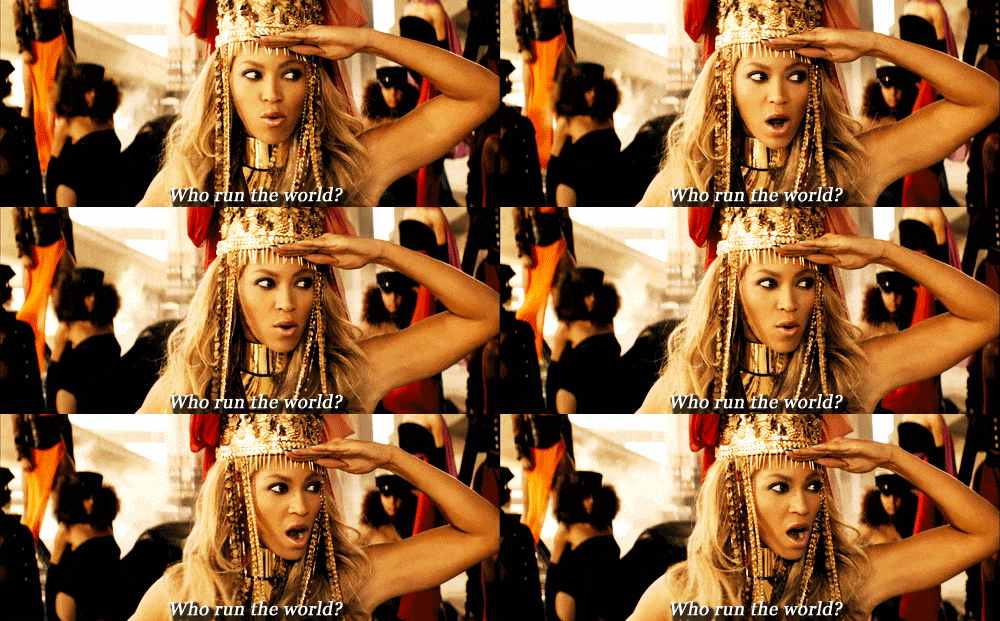
Ok, so Beyonce happened this weekend and apparently so did the Super Bowl! I don’t know who has fully recovered from it because none of my social media feeds have. That’s the Beyonce effect. I mean she has me wanting to eat at Red Lobster and I live in South Africa??!! Do they deliver? Apart from the epic dance moves that I need to start practising, I think there is something we can learn as business-minded women from the event! 1. Let’s get information Education and self development are important for us as women, especially in these days where almost every company/ institution/ government wants to be seen to be progressive by empowering the women in their societies. There are so many free learning opportunities that exist we have to look around us and take advantage of them- especially in tech and business management.If you can’t find free, look for cheap, but credible courses. We can find Chanel on the low low so lets channel that to finding Harvard learning on a budget. MIT has free online course materials; you won’t get a degree but it does boost your confidence. Beyonce did an interview looking back at her 2013 halftime show and she said “part of the reason I rehearse so much and part of the reason I study everything is so that I can completely let go and relax, so I am not in my head and I am confident.” Be like Beyonce and study as much as you can so when opportunities arise, you are confident to put your hand up in that meeting! You should lean all the way in! 2. Let’s see that coordination How dope were the black panther women in their fros and leather ensembles? Wouldn’t you love to have seen Beyonce in an afro? I have read some interesting articles for and against Beyonce’s support of the black panthers. I won’t get into the political debate, but I think we need to look at collaboration and coordination within the black community. It’s an open secret that black women have challenges working together. I have heard this story endlessly and have been a victim of black on black discrimination. On 31 January 2016, thousands of black girls gathered in Johannesburg in a celebration of ‘militancy, magic and melanin’. I think the mobilization was great, the atmosphere electric – but my only criticism is there was no formation around a common goal. For example, we have to support black owned businesses or actively connect college black girls to career black women so as to help us survive the jedi mind tricks of corporate culture. Prime example, Beyonce gave a shout out to Red Lobster and their year to date sales went up by 33%??!! Beyonce said, “prove to me you got some coordination.” This reminds of a picture posted by Ava Durvenay of 3 little girls with their afros holding hands. The caption of that picture read, “if there is no enemy within, the enemies outside cannot hurt you.” I think this challenge of working with other black girls comes from the ‘just enough’ mentality we were raised with. In our homes, there were just enough resources and we’ve transferred this mentality to our work. We think there is just enough ‘shine’, that the “enemy” is onto us, so they reserve only 1 spot for us at the 18 seater table, and we all clamour for it. We don’t have to play by those rules anymore, especially if we play together! Come on, lets twirl on the haters together, it’s better for optics! 3. Slay…consistently I think this is pretty self explanatory. Beyonce is a lot of things, but consistency is probably number 2 on the infinite list. She was on hiatus for almost a year, but when she hit that stage, it was like she never left. Be known for your craft and excellence: ” You just might be a black Bill Gates in the making!”. Beyonce sparked something. We have to keep the flame burning so we can afford tickets to her Formation World Tour. Side note to Beyonce: Africa is a part of the world, so don’t be planning world tours and excluding us! We are not represented by our colonisers in France and Britain. You need to come by and see us! That said, I think black girls in Africa should start a petition for Beyonce to bring her tour to Johannesburg. Ok, now ladies lets get in formation!
Beginner’s guide to marketing to an African audience

Now is a good time to become a game changer. Social media has allowed the world to get a cultural peak into the diversity of African culture. From Azonto music to African films, many African media outlets are re-branding Africa’s image to the world. Social media has given us the global platform to have unfiltered control over our own images (no pun intended) and build meaningful connections with those who are like-minded. Take advantage of the global opportunities that the internet has to offer. Working within the field of marketing is based off of the relationships and connections that you build with others. When others see that you are of value to them in some capacity, they are more inclined to support you. Content is king (or queen)! Your content must reflect your values. If your mission statement says that you believe in high quality, but your social media images look like your little cousin Kofi took them, nobody believes you. High quality photos are non-negotiable. The majority of your digital audience will most-likely have smartphones, if they can take semi-professional looking photos with them, at the very least, you can do the same. About 55% of online users leave a website within the first 15 seconds, this leaves little time to make a great first impression. You should always “sweat the small stuff”. Have an eye for detail. Putting elements of your personality into your marketing strategy sets you apart from the rest. It shows a level of creativity that no one else can effectively duplicate because there is only on you. Engage with your audience You have to tap into your audience’s needs on an emotional level. You must engage with your audience so that they feel connected to your brand; this is how brand loyalty is developed. Take the time to define who your target audience is and create content that is relevant to them. Be as personal as possible when addressing your audience, they need to know that they are valued. Implement nuances that remind them of their culture so that they feel a level of nostalgia and camaraderie in association with your brand. Allow your empathy to shine through. Show your core audience that you “get them.” Please understand that social media for brands is really not about self-promotion but rather to engage with your audience and build trust. Brands should use their social media platform to learn about their customers needs and find solutions for them. When you are marketing, you are in the business of solving problems. It is imperative that you take the time to know and grow with your audience. In knowing their values, you can develop marketing strategies catering to their interests. Majority of online activity for many is done on a mobile device (i.e. tablet or smartphone). Your website must be mobile friendly, responsive web design needs be integrated into your website. Responsive web design is “a web design approach aimed at crafting sites to provide an optimal viewing experience—easy reading and navigation with a minimum of resizing, panning, and scrolling—across a wide range of devices (from mobile phones to desktop computer monitors).” If visitors have to struggle and constantly scroll across the screen just to read a sentence, they will easily become annoyed and less likely to visit again. Your website should be easy to navigate. If you are selling a product or asking visitors for donations on your homepage, visitors should not have to maneuver through three different webpages before finding the right button to click. People in the digital age are less patient, you have to find ways to accommodate that. I beg, “African time” need not apply in the digital world. Create customer profiles When marketing to an African audience, create a customer profile. A customer profile is just a detailed description about who your target customer is. Many marketing teams do this in order to make customer centered decisions that appeal to their target customer. The customer profile could include the following: Name Age Hobbies Where they live Favorite movies Goals and aspirations In addition to the above, you can even google a picture of what your target customer would look like, be as visual and descriptive as possible. According to user experience researchers from Experience Solutions “most projects evolve from an idea, and grow through the opinions of influential members of the project team. The trouble is that these influential members of the project team are rarely the end user or customer. This often results in a product or service that doesn’t quite meet customer expectations or needs…” Having a thorough customer profile serves as a reminder as to who your target audience is. You are more likely to accurately focus your branding strategies around their interests. Make Google analytics your best friend Make Google analytics your best friend. Google analytics is a free web service run by Google that tracks and reports your website traffic. You can use this tool to track the geographical location of your users, view which pages on your website they are visiting, the time of day that they visit the most, and a host of many other details. In knowing how your audience moves, you can study trends and plan strategically. For example, if Google analytics shows that your blog has that highest amount of web traffic on Tuesday’s between 3-5pm, you may want to release new blog posts during that time. There are plenty of videos on YouTube that walk you through the process of using Google analytics. Africa is not a country Finally, marketing to an African audience requires significant research. Africa has over 50 countries, each of which has its own unique culture. A marketing strategy that works in Nigeria may not work in Kenya. Collect data, analyze and respond accordingly. As long as you are working with a well-defined goal in mind, it is easier to establish your target audience and market to them effectively. Have any other tips on marketing