
Ethel Marfo: We have to prepare boys to fully complement empowered girls
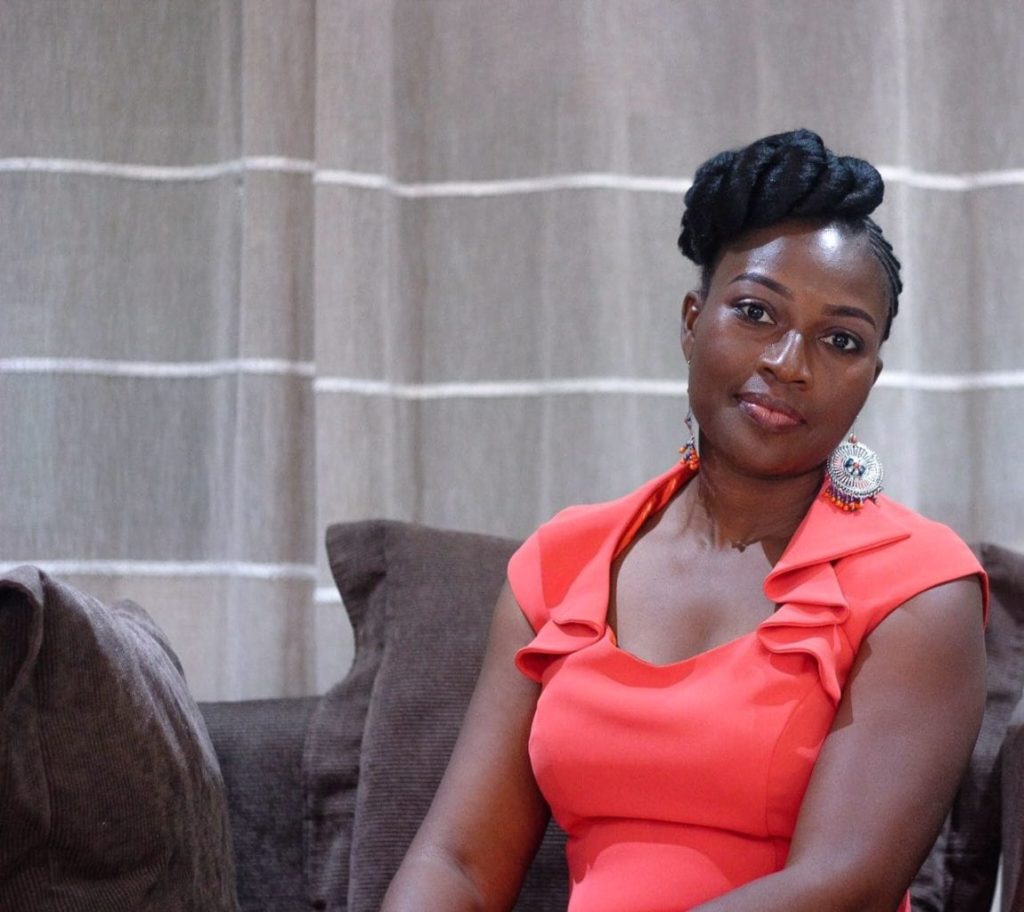
[bctt tweet=”Ethel Marfo: No matter how empowered a girl is, she’ll need a responsible man when she decides to get married” via=”no”] Ethel Adjorlolo Marfo is a social entrepreneur who is passionately Africa’s first Male Child Development Activist. She is the founder & CEO of Junior Shapers Africa, a social enterprise that provides grooming and mentoring for boys between 6-16 years. Junior Shapers Africa aspires boys to become responsible men and solid supporters of the modern African woman. Other enterprises founded by Ethel include Salon Cuties, a niche salon for children and Ghana Mompreneurs Club, a business support network for moms combining business and early years of motherhood. She has also worked as a Public Relations and Marketing Professional in various organizations. As mother of 3 daughters, Ethel is a firm believer of devoting time and preparing the boy child to fully complement the girl child we are tirelessly empowering today. Why choose to focus on male child empowerment? First of all, I am motivated by the future of my daughters. I have three beautiful daughters and my husband and I are giving them the best of nurturing and training they will need to survive as independent women. But it dawned on me that no matter how empowered or educated a girl is, she will need a responsible man or husband to co-manage her future home when she decides to get married. It’s important that children are raised in a holistic way by both mother and father. I was also concerned about the (social, emotional, spiritual) needs of the boy child who no one is paying attention to. This leads to a lot of dysfunctional men in our society frustrating hardworking women. Again, I was challenged by the fatherhood crisis that is on the increase. There are a lot of fathers shirking their responsibilities towards their children. Though a mother can teach children to be responsible and can also instill good character traits in them, a mother cannot role model for a boy on how to be a responsible man. A boy needs to see his father handle responsibilities of a man, husband, and a father to become one himself. To solve this challenge, I find good men to groom, mentor and nurture young boys to uphold high standards of integrity with strong family values and be responsible for himself and his community. Share with us the operation of Junior Shapers Africa? Is it a series of one-time courses or it’s a continuous learning up until graduation? It’s a continuous learning up till graduation. The Junior Boys Mentoring Clinic (JBMC) is the flagship program that oversees the mentoring and grooming of boys. There are basically three(3) levels with this program; The foundation level focuses on boys discovering and understanding who they are and appreciating themselves. Topics like temperaments, values, self-worth and essential life skills are treated at this level. The second is the Intermediate level where boys are groomed with the necessary leadership skills to lead themselves, colleagues and the outside world. Topics covered include team work, basic entrepreneurship skills, being a responsible and patriotic citizen among others. Boys at this level identify a need in their communities and provide a solution to it in our community project month. The Maturity level focuses on building sound and positive relationships with the opposite sex, parents, friends and family. Boys are mentored and nurtured on topics such as, understanding the role of a man, the synergy between men and women, communication and networking skills and personal branding. The objective is for boys to develop relationship building skills. Each level runs on a 12 month duration after which boys will graduate and move to the next level depending on our assessment of the boy’s development. Our monthly clinics are held on the last Sunday of every month plus an intensive man up boot camp during summer holidays at a fee. There is also the JSA Social Projects (Communities and Slums) which we devote during public holidays to address issues of boys in danger prone or less productive communities. We held an impactful mentoring clinic for boys in Jamestown, Accra on Easter Monday and preparing now towards the Liberia Refugee Camp for a similar clinic on AU holiday. How are you able to ensure this grooming doesn’t wear out once these boys get into the university? Boys will serve as JSA life-mentors after completing the final level or the matured class. They will be assigned mentees to inspire and mentor. They will be sharing their personal life stories when they were being mentored and the impact mentoring had on their personal and social life. What are some of the marketing tools you use to publicize your services and attract people to sign up? My greatest marketing tool has been social media (Facebook, the website, WhatsApp, Instagram, and LinkedIn), Radio and TV interviews. Secondly, by recommendation. Parents and subscribers recommend the program to their friends after they have enrolled their boys and have seen some positive attitudinal or behavioral change in their boys. [bctt tweet=”@Juniorshapersafrica we believe it’s easier to build strong boys than repair broken men” via=”no”] Tell us some of the challenges running Junior Shapers Africa and how you are tackling them? My first challenge is funding. Since it’s a non-profit organization, I mostly have to invest my personal money in our social projects and other programs we run. We sometimes depend on the benevolence of companies and individuals who have the vision of seeing boys empowered. Secondly, it’s a challenge finding more dedicated, responsible and well-mannered mentors for the boys. Some men do not see the need to groom and mentor these boys at the foundational ages of their lives. They come up with excuses when they are invited to come and inspire these boys on their journey to responsible manhood. Some say, that the boys are too young to receive such nurturing. Again, we lack the necessary infrastructure for our programs. I envision a facility with auditoriums for our mentoring sessions, a cinema, a
Frenny Jowi: Never muffle your dreams thinking that you are not ready yet
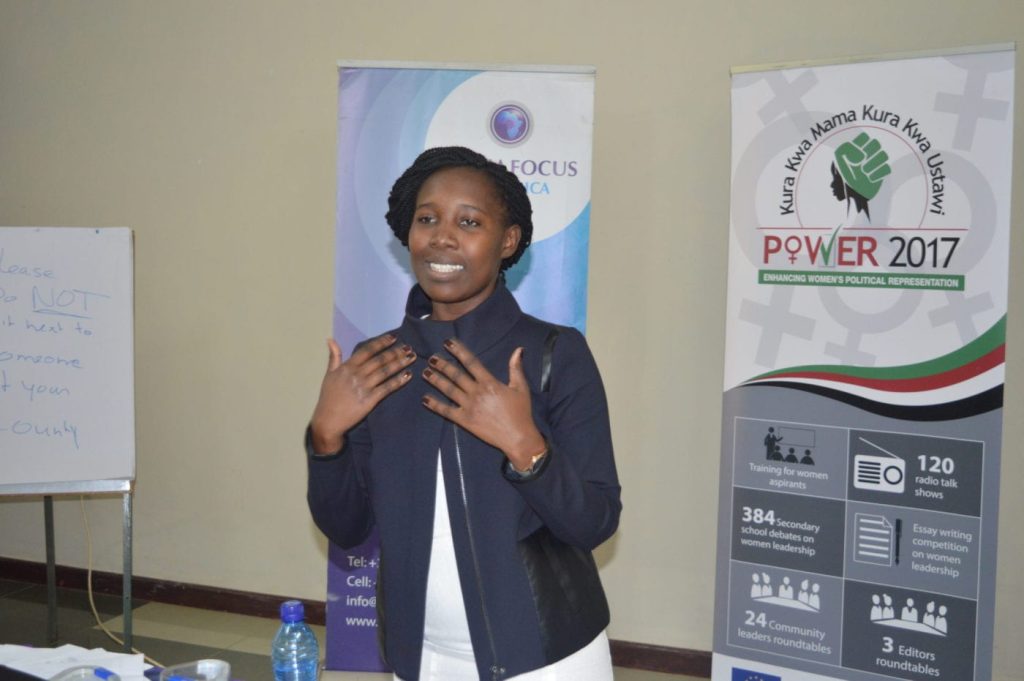
[bctt tweet=”Reaping profits from the media space while vouching for public-interest journalism is Frenny Jowi’s hustle” via=”no”] Frenny Jowi is a journalist, a digital media and PR consultant. She also creates media coverage strategies with a bias on social media campaigns. Currently Frenny is the lead consultant at Media Focus on Africa, as a media relations trainer, digital journalism trainer, and radio producer. For 4 years Frenny had a successful career at one of the world’s leading international broadcasters, the BBC. While working for BBC Africa both in Kenya and the United Kingdom, she led several productions including creating digital content for younger audiences and news coverage of historic president Obama visit to Africa. Showing off her inner #MotherlandMogul, Frenny is also the Founder Image Masters PR & Communications, where she works in partnership with the UK-based Peter Burdin Africa Foundation and world roving Ilona Eveleens Media. To top that all off, Frenny also works as a volunteer youth mentor and freelance journalist. Tell us, how did you get to the BBC from a local Kenyan media house? I worked briefly at a little-known community radio station, Exodus Network, then moved into a giant newsroom, the Nation Media Group headquarters in Nairobi. It was my first real experience of working in a converged in newsroom. I enjoyed the complexity of things. KTN came to recruit from my school when I was in my third year. My adventurous self then jumped into TV journalism. All this while, the editors made me file international stories as a trainee reporter. The tone of the wire copies about Africa made me uncomfortable. I wondered, where was Africa’s genuine voice on the global debate and take on issues? I wanted the news through African eyes for the world. As a young African I was best placed to tell the story. The international broadcaster I had grown up listening to, was the first to spot my talent, so I joined as an intern after doing some voice test, translation and script writing interviews. I started off as an intern at the East Africa Bureau in Nairobi and quickly gained skills as a bilingual reporter and producer for BBC Swahili and many other BBC World Service Programmes/ My favourite was and still is the Fifth Floor Programme. I told the African story as I had dreamt. I was nominated for the 2014 Kenya Annual Journalism Excellence in Journalism Awards. [bctt tweet=”I told the African story as I had dreamt – Frenny Jowi ” username=”SheLeadsAfrica”] What prompted you to move back to Kenya? Moving to London to work for the BBC was one the most exciting moments in my career at the BBC. I loved London’s palace gardens! Kensington was my best, the Gothic architecture and the Thames during summer. After one year of doing so much including producing President Obama’s visit to Africa, my work visa practically sent me packing! That was not a bad thing, I was to wait for one year cool off period to renew my work visa, but then came flooding ideas of what I could do at home instead of a rigorous visa application process. At the time when I lived in London, there was a growing anti-migrant sentiment. My work visa had labeled me such, migrant staff. London treated me well, but I don’t want to shy away from saying the migrant stories made me very uncomfortable. I was working from the centre of the world when waves of Brexit became more pronounced. I was right at the centre of one of the world’s most influential broadcasters when news of drowning African migrants would dominate the news for weeks. Meeting my former schoolmates who had settled in London permanently, we often talked much about we could do for the continent, it wasn’t just talk for me. I am back home to do something for the continent. Why do you call yourself a media entrepreneur? When I started working in the newsroom, I realized the industry was evolving fast and profits were put first. I felt that this compromised storytelling as public interest was given second priority or none at all. I also saw the potential in digital migration and social media that opened up space for multiple media houses. This was supported with more democratic space in Kenya, that allowed countless radio and TV stations to operate freely. So, I sought to reap profits from the growing media space. At the same time, I wanted to rigorously vouch for a public-interest journalism model. Despite lacking experience in running a business, I registered my company and started off pitching for work as a communications consultant and content producer. I was confident the myriad new radio and TV stations needed quality content. It was just the right time to turn my journalism skills into a strong business idea. My company, Image Masters, had been a dormant Facebook page for four years. I breathed life into it, created a company profile and hit the ground running producing for the BBC’s Arts Daily Programme. I then moved on to consult for KTN, a leading TV station in Kenya that was then setting up Kenya’s first 24-hour news channel. Since then, I have worked with many other clients create alternative educative content for younger audiences. My biggest project now radio plays and shows themed on women leadership. I have a bias for social media which many organizations are now embracing as mainstream. One year on, I am now proudly self-employed and working with great partners to deliver for clients. I am leveraging on partnerships to compensate for the need of staff. The future can only be bright. What is the first thing any young woman who wants to start out as a media entrepreneur do? Let confidence and courage lead you. Never muffle your dreams thinking that you are not ready yet. Carefully reconsider your talents, skills, and networks. Figure out how much of your abilities are lying underutilized. Get to work. I know you may
Ngasuma Kanyeka: Creating cutting edge communication solutions

[bctt tweet=”You have to have a 360-degree view of the world around you to create the type of solutions we do” via=”no”] Known for her tenacious spirit, humor, and sharp thinking, Ngasuma Kanyeka is a Dar e Salaam based entrepreneur, strategic thinker and feminist. Her company, Capacitate Consulting Ltd creates cutting edge communication solutions for institutions and governments. Ngasuma was involved in the creation of the national communication strategy for the oil and gas sector in Tanzania in order to manage expectations of various stakeholders. She has been an integral part of the African Union Youth Volunteer Corps since its inception. When asked which colour crayon she would be if she was added to a new crayon box her answer was RED because that describes her bold passion. Ngasuma shares her passions and entrepreneurial experiences which I hope will inspire you to harness your talents. What is Ngasuma best known for? I am known for my tenacious spirit, humor and sharp thinking. Also, I am an incurable sarcastic enthusiast who loves a good play on words (I have an artistic flare). I am known for being a dynamic, strategic thinker who loves a good challenge and for lighting fire under peoples’ backside to get moving. I visualize a lot of the world and I believe we are more connected than we realize. Oh and without wanting to change it, even if I could, I am an African, a feminist, a woman (these three are not in any particular order of priority) and fundamentally a human being. A little hippy, a little nerdy and a little cool. What is Capacitate Consulting Ltd and what prompted you to start it? As part of my Masters’ studies, I investigated women who prevail beyond their circumstances and manage to achieve wellbeing. This was based on a psychological theory known as Salutogenesis. I was fascinated and I learnt a great deal about women who managed to navigate their existence and lead balanced, thriving lives. I met a woman who really impressed me and made me question how I had ended up with 17 years of education and I had not recognized my own power and the endless opportunities availed to me in this world. That is what prompted me to start Capacitate. I met a woman who really impressed me and made me question how I had ended up with 17 years of education and I had not recognized my own power and the endless opportunities availed to me in this world. That is what prompted me to start Capacitate. From a young age, I started to volunteer my skills and expertise and enthusiasm. When I was just 16, I was running environmental campaigns with the Jane Goddall Institute. Also, I was engaged in my community from teaching kids in my neighborhood during my holiday break to running awareness campaigns to empower girls. I have always been a busy bee, refusing to see that there were challenges too great to be tackled. I have always wanted to contribute and become a doer. That is how I ended up working as a journalist, that curiosity sparks a need to voice these issues, but my analytical side wanted the numbers to back it up and so I studied for a degree in IT. Meanwhile, I was interested in human behavior which is how I ended up studying Health Promotion. It makes perfect sense to me, but it is an upheaval of confusion for people looking at my resume. I recently got a short story accepted for publication and two poems published by a UNESCO project called Badilisha. So Meanwhile, I was interested in human behavior which is how I ended up studying Health Promotion. It makes perfect sense to me, but it is an upheaval of confusion for people looking at my resume. I recently got a short story accepted for publication and two poems published by a UNESCO project called Badilisha. So Capacitate encompasses these passions, it is the coming together of skills and expertise that my colleagues and I have garnered through the years to create cutting edge communication solutions for institutions and governments. You have to have a 360-degreee view of the world around you to create the type of solutions we do. Tell me something about your last job, other than money, that has inspired you to keep doing what you do. I am actually selective about projects I take, I work through referrals. Ultimately, I want to look at myself in the mirror and be satisfied. So I have turned down several, supposedly lucrative projects that did not sit well with my value system. I did not come here to do evil. One of the recent projects I am happy about is when I led the creation of the national communication strategy for the oil and gas sector in Tanzania to manage expectations of various stakeholders. Communities, where the oil and gas extraction activities take place, believed that they would get rich overnight. This expectation management strategy will build their understanding of the sector and also create a sense of ownership for them to make deliberate steps to benefit from the sector as it develops. I wanted to be part of changing the narrative that natural resources are a curse, it lends too much to that narrative that Africa is a dark continent. We Africans are not cursed. We are intelligent beings that can manage, make decisions and make choices once we are informed of what our options are, like everyone else in the world we want the best for ourselves. I am also exceptionally proud of the African Union Youth Volunteer Corps program that I have been a part of since inception, there is no greater joy than to see the endless number of African youth that has grown and thrived from it. It is truly one of the greatest programs in the world, and it has fostered a greater understanding of who we are as a people and the
Oreoluwa Oduko: Social media helps me reach almost everyone everywhere

[bctt tweet=”I have long decided not to compromise my business standards- Oreoluwa Oduko ” username=”SheLeadsAfrica”] Oreoluwa Oduko is a graduate of law from the University of Lagos and the Nigerian Law School. She began an online business selling pets (@PawsNaija) in 2013 during a six-months-long Academic Staff Union of Universities (ASUU) strike that began while in her third year at the University. Oreoluwa had previously channeled her advocacy skills into general marketing merchandise online before transitioning into the selling of pets. Oreoluwa has a significant interest in traveling and the general lifestyle of animals. She hopes to use her legal background to fight for animal rights in Nigeria. Why did you choose to sell dogs and puppies online? I have always been involved in online marketing. Selling pets came up at some point, and it was only right to add it to my online business. I started the business at the end of 2013, during the six months ASUU strike which began while I was in my third year at the University. What other services do you offer? I am more of a link between clients and what they need. I do not personally offer all services, but I have a network of people who provide services such as veterinary, training, boarding, grooming, and walking and so on. Do your services include any form of offline transactions or are they strictly online? Kindly tell us how the chain works. For purposes of having records, all pre-contract discussions are done online (in writing). Everything else after such as delivery, veterinary, grooming, walking, training, boarding are all done offline. It’s simple really. It depends on what animal the client wants and where it would be sourced from. For example, if a customer wants a dog that is available locally, I get details of what the client wants, contact breeders who deal in that, show the customer’s options, have them choose, pay and it’s delivered to them. If I have to import, I take a request, give the client a quote. The client makes payment, I pay for the pet, and it’s shipped to me and is delivered to the client. What are the major social media channels you make use of and how do you take advantage of it? Twitter, Instagram, and Facebook. I post pictures and get people to like, retweet and share on my personal page. That helps create more awareness. [bctt tweet=”Certain people don’t understand the value of having good quality – @owhreoluwa” username=”SheLeadsAfrica”] How often do you make sales from social media? Not as much as I would like. There are several reasons why I don’t make sales. On Twitter for instance; sometimes I get as many as 600 retweets on a single tweet but no successful sale. People see a picture and breed name that they know nothing about and assume they can have it, but from little interaction with them, they realize that’s not what they want. I also do pre-purchase interviews where I ask the client various questions to ensure the pet is going to a good home where it would be taken of. There are certain breeds that I don’t sell to people who have no experience of owning such breeds and how to train or socialize them. If the person can’t meet the basic requirement, I would most likely decline to sell a pet to them. Also, because of the way my business is being run, I sell only quality pets which do not come cheap and certain people don’t understand the value of having good quality, so they don’t buy. I have long decided not to compromise my business standards by sourcing for pets from just anywhere though. Always I tell people I would rather sell one good pet to a real owner and make no money than do otherwise in a bid to make quick money. I just keep doing what I do, and I try to improve every day, increase my reach, and try to educate people on the little things. What has been the most challenging moment on social media so far? Getting people to understand how the process works and having them pay upfront. People claim to want a certain thing but are not ready to pay for quality which can sometimes be discouraging. [bctt tweet=”People claim to want a certain thing but are not ready to pay for quality – Oreoluwa Oduko” username=”SheLeadsAfrica”] What would your response be to someone who is contemplating whether or not to use social media as a marketing tool? I’d say go for it. Social media helps you reach almost everyone everywhere without physically being there; it’s a sure way to reach as many customers as you need. If you’d like to share your story with She Leads Africa, let us know more about you and your story here.
Boitumelo Tlala: I knew failing was never an option

[bctt tweet=”Boitumelo Tlala: There is time for fun but fun is sweeter when you focus on education first.” username=”SheLeadsAfrica”] Boitumelo ‘Tumi” Tlala is a corporate social investment professional who is passionate about the development of disadvantaged communities. She is a graduate of the University of Johannesburg and is currently completing a Btech degree in Public Relations Management. She plans to complete her Masters Degree specialising in Corporate Social Responsibility. Growing up in one of the toughest neighbourhoods in South Africa, Tumi was able to overcome the temptations and challenges which surrounded her. She didn’t relent on achieving her dreams and continues to soar to greater heights. Tumi intends to ultimately head a multinational foundation with the aim of investing in Africa, to empower women and youth, for a sustainable future. You grew up in a rough environment with so many negative distractions, how were you able to stay focused on your goals without relenting? I grew up in Diepsloot, an informal settlement north of Johannesburg. Alcohol consumption, rape and crime, in general, were the norm, and still are. Yet there was hope, my parents strived to take me to good multiracial schools. I was able to stay focused by studying hard, usually, midnight to mornings as there were taverns around my home with music blasting through the night. I surrounded myself with school friends, most stayed in affluent suburbs, which helped me to escape. Finally, I watched shows like the Oprah Winfrey Show, back then it encouraged me that women can succeed despite their circumstances. What was the toughest period of your life so far? The toughest period of my life was when I lost my father in October 2003, the year when I was in matric. Being a daddy’s girl he was a great support. To make matters worse, I was to start university the following year and I wasn’t sure who would be paying my fees. As a result I needed to find work immediately after completing my exams, which I did at a mall close to my school. By God’s grace, a wealthy businessman who was a friend to my friend’s father sponsored my two years of tertiary. Luckily by the third year, my father’s pension and provident funds came through. Throughout, I knew failing was never an option. If you were to address a group of teenagers, what advice would you give them? If I were to address a group of teenagers, I would first of all tell them there is time for fun but fun is sweeter when you focus on education first. There are many opportunities out there but you need to focus, work hard and smart, have self-respect and also respect your parents. There are many opportunities out there but you need to focus, work hard and smart, have self-respect and also respect your parents. Tell us two of your best and worst skills. Best skill is my ability to network, to form partnerships and relationships, a great skill that I am using in my career as a corporate social investment practitioner currently. My worst skill is my intolerance for the mediocre. I see time as my most important asset and people or situations that tend to take time and yield little, I cannot tolerate. As a result, I surround myself with people I can learn from and whom I can also be an asset to. Who is your role model and why? I do not have a specific role model, but there are many attributes that I admire in a number of women and men, who are trailblazers of their own destinies. I have come to love She Leads Africa as daily there are amazing women and men whom I learn from and follow at times. [bctt tweet=”Boitumelo Tlala: I love SLA because I get to learn from so many amazing women and men” username=”SheLeadsAfrica”] What are some of the things you want to achieve before turning 40? Before the age 40, I would like to make giant leaps in my career and business. In my career, I would like to be a head of a foundation for a multinational organisation. I believe strategic corporate social investment can be a solution to some of Africa’s challenges. Investing in economic development by supporting small businesses, especially female led ones, investing in education for the African child and tackling the scourge of HIV/Aids for the betterment of our future, are my top priorities. With that said, I am planning on pursuing my Masters specializing in Corporate Social Responsibility. On the business front, I have started a property development company where I plan to provide affordable accommodation for our people. If you were to live anywhere in the world, where would you choose? I would live in South Africa, it’s a wonderful country and I grew up here, my roots and past are here. I believe Africa has a lot of potentials to grow. Most importantly we have ubuntu, where we respect and care about each other regardless. Having to live in the post-Apartheid South Africa, the thought of someone making me feel I need to be anything rather than me or feel that I should not be in a specific place due to my skin, for me is the worst violation of humanity. I would like to have a home in the UK and USA though…if I can achieve that before 40, then I would be highly proud of myself. If you’d like to share your story with She Leads Africa, let us know more about you and your story here.
Lindiwe Mashinini: I work hard to ensure that I create a legacy for my girls
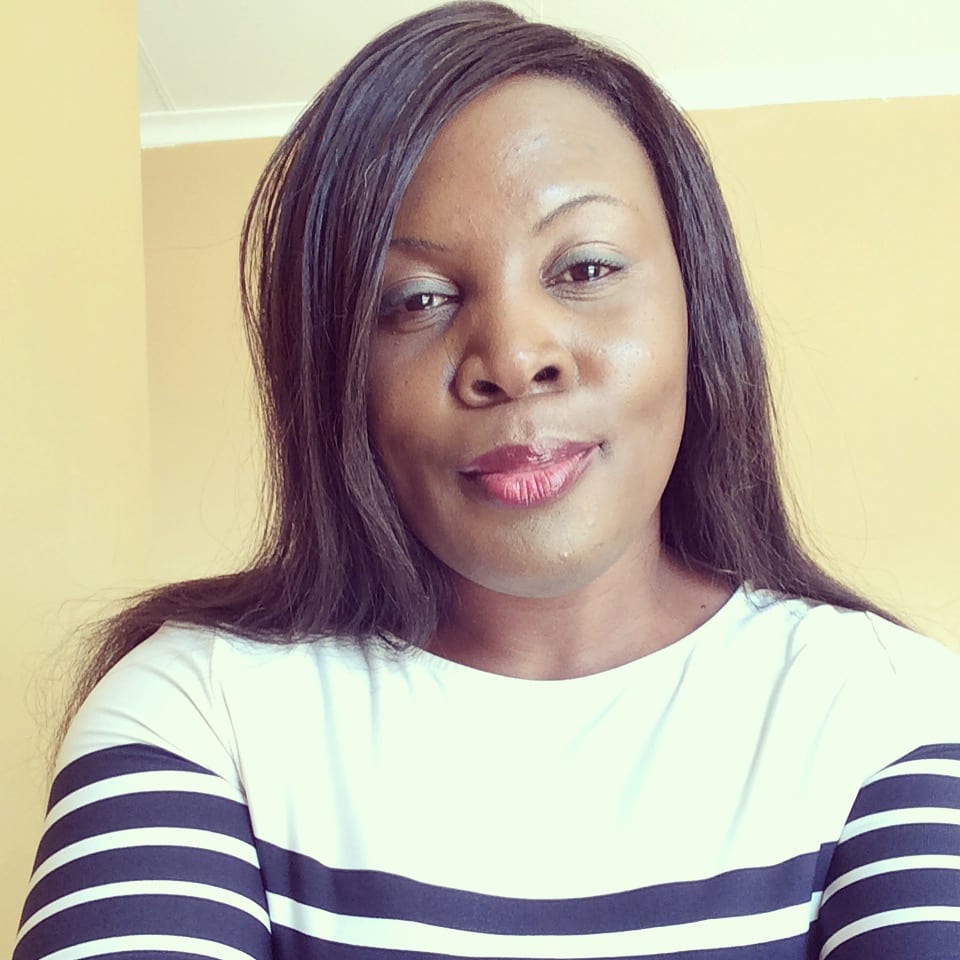
[bctt tweet=”Lindiwe says ‘I want African girls to know that we live in a time where everything is possible’ username=”SheLeadsAfrica”] Our generation has been privileged to be brought up in an era where everything is online. I’m pretty sure the next will literally be raised by technology and that by then pens and paper will be in museums. Software development or coding is an IT skill that is highly demanded, but it so happens that we don’t have enough coders. Generally, the IT industry is perceived as a man’s field and what we need is more ladies to challenge the norm. Some African girls have been blessed to have Lindiwe Mashinini the Founder and CEO of Africa Teen Geeks. Africa Teen Geeks is a non-profit organisation that educates school children and the unemployed youth on how to code. Lindiwe holds a BCom degree from the University of Cape Town and recently completed a General Management Programme at the Gordon Institute of Business Science (GIBS). Lindiwe is currently studying towards an MS in Technology Management from Columbia University in New York as well as a Graduate Certificate in Entrepreneurship and Innovation at Stanford University. Her numerous accolades include being among the Young Business awards top 3 finalists and recently named Innov8tive Magazine Top 50 Visionary Women in #Tech To Watch in 2017. There are several pathways to take in IT. Why coding? Africa Teen Geeks’ main mission is to inspire a generation of Africans who will be creators of technology, not just consumers. Ten years ago less than 18 percent of the world’s population had access to the Internet. Last year roughly 3 billion people -approximately 43 percent of global population- were online. This is phenomenal growth and the pace of change is continuing. The digital economy has a great impact on South African growth and economic opportunity. In 2014 alone the US exported roughly $400 billion in digitally deliverable services accounting for more than half of US services exports. Africa’s digital exports have been negligible. Africa’s economic growth and competitiveness depend on our capacity to embrace the digital economy. For Africa to be competitive in the digital economy it has to equip the youth to address the legacy of colonialism where skills are concerned and to level the playing field for the previously disadvantaged. Coding is one of the ways in which we can raise a generation of innovators and tech entrepreneurs. With the majority of Africans lacking access to capital, technology is one of the few industries where one doesn’t need money to start their business but only sweat capital. From your experience with the coding classes. What is the common hurdle? Their main hurdle is access to computers and the internet. This is common for most Africans since less than 10% of Africans are online. We are addressing that by removing both the computer and internet access as a barrier to learning the basics of coding. In that way, we can really talk about “Computer Science for All. [bctt tweet=”Africa’s economic growth & competitiveness depend on our capacity to embrace the digital economy” via=”no”] Africa Teen Geeks is a non-profit org, how would you pitch to get investments within your organisation or in the tech industry as a whole. We see ourselves as a social enterprise and are working hard to create an organisation that is not donor dependent. We have just launched our first coding boot camp as well as an entrepreneurship lab through our partnership with the Unreasonable institute. Ultimately, we are a movement that empowers, equips and elevates Africa’s next generation of game changers. Let’s talk startups. How good should a coder be before starting their own coding company? I think they need to be good enough to be able to create a prototype of their idea. They need to be able to demonstrate their solution to potential customers and investors. [bctt tweet=”The aim of this programme is to create a pipeline of African women in tech -Lindiwe Mashinini” username=”SheLeadsAfrica”] Generally speaking there is a gender gap in our IT industry. How can we close the gap and break the stereotypes? Obviously, early exposure is important but also is having female role models in the tech sector. That’s why we have a Girl Geek programme in partnership with Standard Bank. At the Girl Geek programme we don’t only teach the girl how to code, we also expose them to the industry. We also provide leadership training and mentorship from Standard Bank developers. The aim of this programme is to create a pipeline of African women in tech by removing all the barriers that keep girls from pursuing tech careers. Knit2code, now that’s genius! Please share with us how this came about and how you executed your idea. Knit2code was inspired by the lack of female role models for girls and also the situation on the ground where less than 10 percent the population are connected to the internet. For example, only 5 percent of South African schools teach IT due to lack of infrastructure and qualified teachers. But also only 23 percent of IT learners are girls. Knit2code includes the female caregivers who learn to code through knitting. What happens to girls when they go home? For many, their mothers and grandmothers (who are most often their caretakers) are overwhelmed by technology. They do not think they have any skills to support their daughters in their training and to discuss their work. Sadly, girls interested in STEM are often told they inherited a “male brain”; technical skills are not seen as a part of a woman’s feminine legacy. Many women, of any generation, either knit or know about knitting. They see it as a useful handicraft, one that can create garments for their families. Without knowing, women who knit have already learned the basic concepts of computing. Helping women recognize this connection is what Knit2Code will seek to accomplish. Knit2code will bring together 8-10-year-old girls and a female family member to learn, re-learn or enjoy
Maureen Isikaku: I find a lot more joy and fulfillment when I’m painting faces
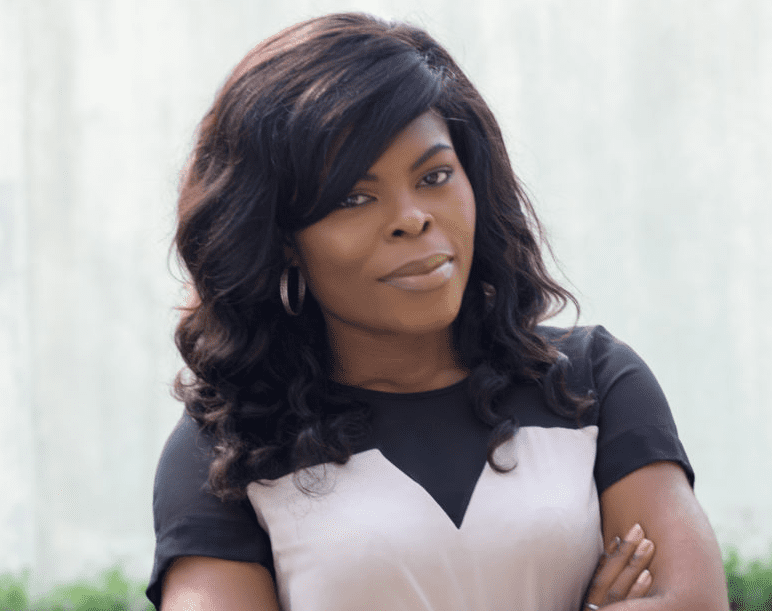
[bctt tweet=”@radiantbyreena: I’d really love to give Ini Edo a facebeat. I hope she reads this & calls me up” via=”no”] Maureen Isikaku is a part-time freelance beauty artist with intent to go full time pretty soon, she is also a school administrator. Maureen caters to beauty, bridal and editorial makeup and is working on expanding her artistry into bridal hair styling and organic skincare. She started her freelancing makeup career in October 2015 and has grown in leaps and bounds since then. She had her makeup training done with Zaron Cosmetics, Ikoyi. She has worked on celebrities such as Victoria Kimani, Arese Ugwu, Kayla Oniwo, Uche Elendu and a couple others and backstage at high-profile events (Miss Nigeria and The Headies) and enjoyed every bit of it Maureen Isikaku lives in Lagos, Nigeria and is available to travel worldwide. You run radiantbyreena and also have a 9-5 job, how do you manage both successfully? Yes, I do. It has not been easy managing both but I have learnt to put structures in place and allocate specific amounts of time towards each job. My makeup appointments are majorly for now, during the weekends or in the evening, that allows me to juggle both effectively. Luckily, so far out of town jobs have been during the school holidays. Eventually, if you have to choose between the two jobs, what will it be and why? It would definitely be makeup artistry, the reason being that I find a lot more joy and fulfillment when I’m painting faces. I am very passionate about what the outcome will be on a job that I can think of nothing else. The number of makeup artists in Nigeria have gone off the roof, how do you deal with the tough competition and gain customers? Dealing with competition can be emotionally draining, as you have to constantly observe and try to offer better than your competitor. So I focus more on developing my craft and business than I focus on my competition and this has really helped. I attach value and quality to my services. When I accept a job, I always strive to give the best regardless of anything. I continually invest in my craft and in myself. When I am with a client, I make sure that she is satisfied and happy. All these lead to referrals that go on to become repeat clients and my client base keeps growing. What are some of the common mistakes done by makeup artists during a face beat? I would say forgetting to prime and mismatch of foundation shade (a very common mistake). What do you love about makeup artistry? I love the opportunity to get creative, the satisfaction for both the client & I after a job well done, the travel and getting to meet new people. Also the fact that I have a lot of makeup to play with. I just love the beauty of makeup artistry. Which celebrity would you like to face beat? I would really love to give Ini Edo a facebeat. I hope she reads this and calls me up. If you’d like to share your story with She Leads Africa, let us know more about you and your story here.
Lorraine Maphala Phiri: A brand for every woman who understands the importance of quality over quantity
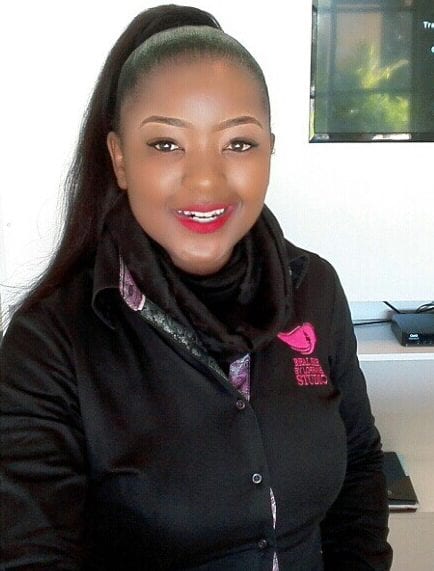
[bctt tweet=”We do more than just sell hair we educate our clients on the different types of hair” username=”SheLeadsAfrica”] Born 33 years ago, Lorraine Maphala Phiri has been nominated Female Entrepreneur of the Year 2016 at the Megafest Business Awards Southern Region. The former model is certainly making a mark in the business sector. Lorraine proves that she is a beauty with brains as she has established herself and booming business well. Lorraine has exhibited exceptional modelling prowess both locally and internationally, distinguishing herself with a unique versatility that has seen her excel during the early stages of her career. SLA contributor Neo Cheda got to chat with her, however, about her career and her business venture: Real Hair By Lorraine. Tell us about your modeling career, winning Miss Zimbabwe and going on to represent the country in Miss World. Representing my country at Miss World had always been my dream. Since high school, I always had a desire to speak and be heard. Coming from a dusty suburb of Nketa 6 it was a dream I never imagined would come true. Winning Miss Zimbabwe 2005 was a life changing moment for me as it opened doors I never thought I could go through. It was fulfilling and rewarding and proved to be a great platform for me to establish my career and brand. Tell us about your business, what product or service you provide and who your target audience is. Since the end of my reign, I have been busy growing Lorraine as a brand. Real Hair by Lorraine (RHL) is a proudly Zimbabwean brand specializing in 100% human hair i.e. Indian hair, Mongolian hair lace wigs, and all things hair. Real Hair by Lorraine Studio was then birthed after the hair brand when I realized the gap in Bulawayo, Zimbabwe for a professional upmarket hair salon. We offer beauty services as well, nails and mail art. Our target market is every woman who desires to look beautiful, feel beautiful and be treated like the Queen they are. It’s a brand for every woman who understands the importance of quality over quantity. We don’t just sell hair it’s a lifestyle. Women have also shown us great support and at the moment we have one branch in Bulawayo and an online shop which helps us supply hair products to customers in Europe, Harare and South Africa. We are different from most people in the hair business because we do more than just sell the hair but we educate our clients on the different types of hair and how to take care of it.” Please tell us what being a business owner means to you and why you became an entrepreneur in the first place? Being a business owner for me means a lot of sacrifices, being able to change people’s lives through your work and empowering families by providing jobs. The fear of poverty and being ordinary inspired me to be an entrepreneur. I became an entrepreneur because I love starting something totally new and seeing it come to life. I love challenging myself and I have always been a dreamer a big dreamer. From a young age I always knew that I would end up a businesswoman, I just didn’t know what kind of business I would venture into. [bctt tweet=”The fear of poverty and being ordinary inspired me to be an entrepreneur – Lorraine Maphala Phiri” username=”SheLeadsAfrica”] How do you achieve work-life balance? It’s an art and I’m still learning. However, having a strong support system at home makes it a lot easier and with my ability to prioritize, everything just falls into place. What or who has been your greatest influence in business and why? How did you get where you are today, and who/what helped you along the way? My husband’s work ethic has been my greatest influence in my business, however, I have always aspired to be a business woman to be reckoned with. I would never be where I am today without the sacrifice of my parents who continued to pick me up even when my businesses hit rock bottom. Their encouragement and faith in my dreams Their encouragement and faith in my dreams are what has kept me going. I am still work in progress I have not arrived yet lol. Maybe next time we speak I will be Dr. Lorraine. What would you say is your greatest professional accomplishment to date? Being founder and MD of Real Hair By Lorraine Studio. What’s the best advice you have received in business that you wish to pass on to our readers? Start where you are with what you have, the best time to start is now. If you’d like to share your story with She Leads Africa, let us know more about you and your story here.
Dinnah Nabwire & Mary Ajwang: Raising awareness for reproductive health with Voices for Health Uganda
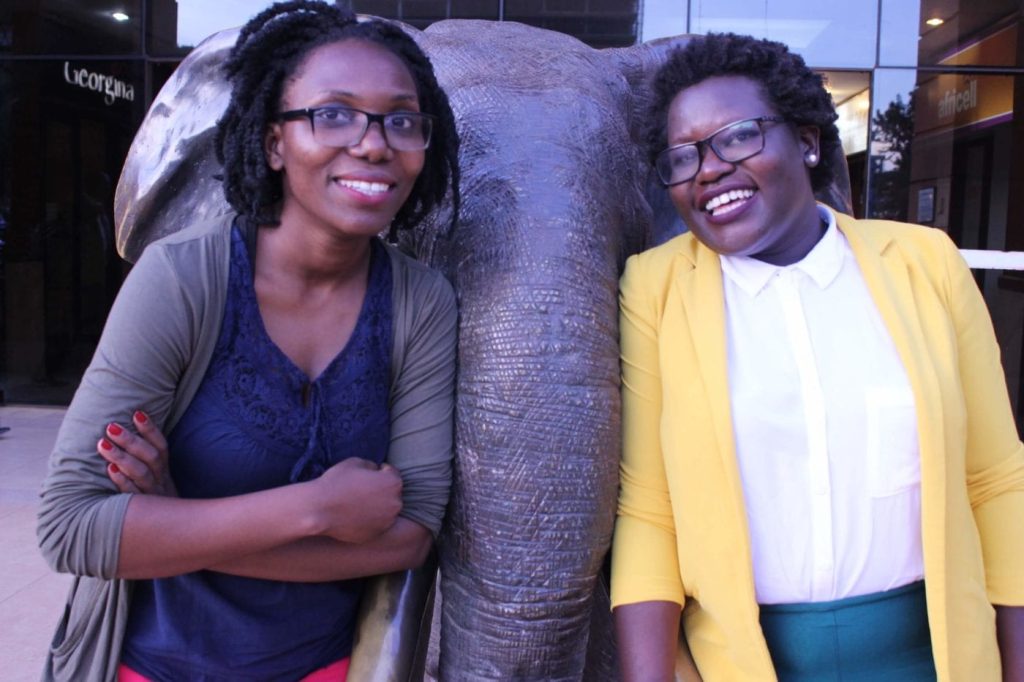
[bctt tweet=” I was drawn by the role women had in giving life but distressed by the hurdles they experienced” via=”no”] Dinnah Nabwire and Mary Ajwang are transforming their society by focusing on sexual and reproductive health. They are both behind the Voices for Health Uganda, a platform that harnesses young voices on the needs of reproductive health. Drawing from their diverse experiences and being from different parts of Uganda brings much-needed balance to their work as co-founders. You’ve both chosen to build careers in global health, and particularly in reproductive health, despite having very different backgrounds. What was the moment you each knew that this was the field for you? Dinnah: Working with Marie Stopes International through Global Health Corps gave me an opportunity to refine my career path with a focus on sexual and reproductive health. Through supporting programs related to advocacy and research on access and utilization of services, I have come to appreciate that sexual and reproductive health is central to all development interventions. Through supporting programs related to advocacy and research on access and utilization of services, I have come to appreciate that sexual and reproductive health is central to all development interventions. Mary: My initial exposure to reproductive health was during my clinical training and working as a frontline health care provider in health facilities in rural Uganda. I was drawn by the role women had in giving life but also distressed by the enormous hurdles they experienced. I, therefore, decided that I was going to take on career opportunities that refine my ability to prevent maternal death through amplifying the safe motherhood message. Did you both have a specific career strategy around addressing family planning? Yes, we wanted to close the gap in access and utilization of family planning services. So we conceptualized the Voices for Health Uganda as a platform to harness young and often marginalized voices on needs and aspirations of productive health. What are your predictions for your industry considering the recent moves by the US presidential administration to cut funding to global reproductive and sexual health initiatives? Knowing that the US government is the largest bilateral funder for sexual and reproductive health globally, we are aware of the negative implication this has on financing for services in countries such as Uganda that are among the 24 family planning priority countries. Globally, 225 million women have an unmet need for family planning whereas in Uganda the unmet need stands at 62%. This means that funding cuts towards family planning can impede the progress that has been previously made on access and utilization –this is unfortunate. We, through Voices for Health Uganda, are working to close this gap by raising awareness on the need to connect global and in-country challenges to funding for reproductive health. [bctt tweet=”Globally, 225 million women need family planning in Uganda the unmet need stands at 62%” via=”no”] You two are quite the dynamic duo in advocacy and in life! What’s been your favorite part of leading alongside each other? What’s been the most challenging? Favorite part: We enjoy debating concepts and taking the time to draw real life experiences to our work. Mary and I come from different parts of Uganda and thus each share different realities sometimes informed by our communities. Struggling to strike a balance in such cases has been the most intriguing. Most challenging: Integrating our expectations in the voices for health Uganda within our daily activities and commitments remains a work in progress for us –we just know it has to work. Sometimes as young women carving out our professional paths, we fear that asking for help, not knowing all the answers, and making mistakes are signs of weakness. What has your partnership taught you about this? We were drawn to working together based on our different expertise, knowledge, and experiences. These have taught us to continuously appreciate each other’s competencies and encourage us to keep focused on our goal. In the midst of your hustle, how do you each like to unwind and take care of yourselves? We make time to hang out over caramel milkshakes at our fave place, #CafeJavas. Mary, what’s one thing that inspires you about Dinnah? Dinnah is intelligent, hardworking and has had exposure working with non-profits –things I wanted to learn and grow in. Dinnah, what’s one thing that inspires you about Mary? Working with Mary has continued to shape me into a positive-oriented and goal-focused person. There are times I would have preferred to step out, and all I needed is a positive guide. What’s one thing you’ve each learned lately that you want to share with other young advocates interested in pursuing a career in social good? Invest in growing networks through offering a clear value addition and seeking the opportunity to leverage skills, information, and engagement with others in the space. For instance, we offer to take up high-level networking opportunities during partner-led events such as meetings and conferences. What three words come to mind for each of you when you think of a true leader? This was hard for us to choose! But, we think courage, resilience, and empathy are foundational for a true leader. If you’d like to share your story with She Leads Africa, let us know more about you and your story here.
Lynda Aphing-Kouassi: I have brought back with me this mindset of a winner and the power of excellence
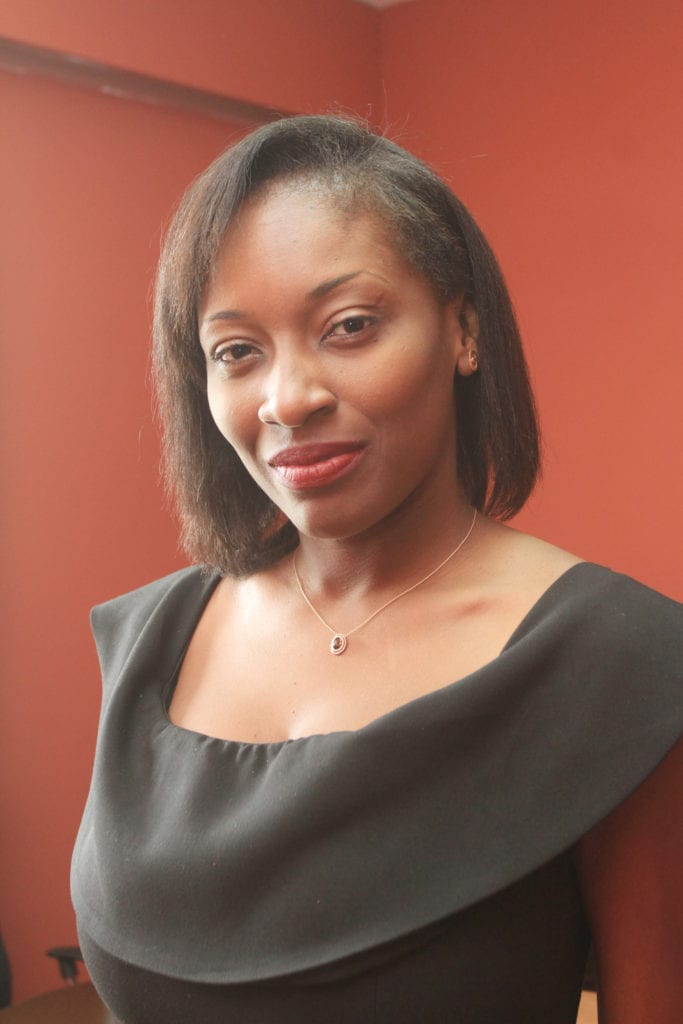
[bctt tweet=”If you want a career that fulfils you, you need to focus on your interests rather than your qualifications -Lynda Aphing-Kouassi” username=”SheLeadsAfrica”] Lynda Aphing-Kouassi is a former banker and Founder and Director of Kaizene, a firm specializing in training, coaching and networking conferences. The process of creating African leaders and encouraging the inclusion of women is the core of her business which she tries to achieve by her coaching and training sessions. Passionate and rigorous, Lynda has extensive experience in the management of companies and employees in the following sectors, portfolio management; training, coaching, and seminars; conferences organization for more than a decade. For Lynda, the biggest resource a successful company should rely on is its workforce. Not being visible on the balance sheets it’s often relegated to the bottom rank. Via its various initiatives on leadership and training seminars organized, Kaizene accompanies multinationals and SME’s by reminding them of the best leadership techniques to use in order to enhance the skills, inspire the employees, create partnerships and synergies and ensure a stable and sustainable development. “Our beautiful Africa is full of leaders we just have to accompany them to the best of our abilities, mentor them, remind them of their potential and reiterate to them the soundness of excellent leadership in order to give back to Africa the place that it should have: “the provider of excellence”. You spent 19 years abroad, fill us in on your experience in a foreign land. As a French speaker who disliked English at the time, living in London was a most difficult experience. My sister who was married to an Englishman lived in London already and they kindly allowed me to live with them. I soon found I could express my fears and got to speak English more often. My brother-in-law’s help was tremendous because he was patient and understanding despite the many mistakes that I made. I then started uni and work during which I experienced a lot of setbacks and a feeling of non-belonging as far as the lifestyle was concerned. It is at that time I realised that to belong you had to embrace the new culture. But I could see that others embraced it to the point of forgetting their own! I then decided that the authenticity of my culture would take me far. So, while learning and understanding the lifestyle in the UK I was also bringing my own to the table. For example, I would make my country’s food during parties and lunches and wear my African print dresses as often as possible. I became an object of curiosity which brought people near me to try and understand where I was from and slowly the feeling of not belonging disappeared. I started to make real friends and began to really enjoy and understand the country. The UK became my home. At work in a FTSE 100 company and being a black person, you can imagine that every disagreement or difference of opinion may well be perceived as aggression. I considered this as a form of bullying and refused to be bullied. I worked hard and developed this mindset of a winner where nothing was good enough until it was excellent. Also, I made sure that I was going to be accepted, not just tolerated. This is what you can do if you value and believe in yourself. I learnt from this experience that only you have the answer to your own doubts and that the only judge is God. So, I have brought back with me this mindset of a winner and the power of excellence. My dream is to influence my peers with this belief so we can be proud individuals, strong, developed and authentic and to then become an example to others. I believe we can and will, with our young population and this mindset of confidence and excellence, have a better Africa. Awesome! So what did you experience in terms of mindset and lifestyle that you wish to bring to your own country or Africa as a whole? During my time in Europe, I found the development of infrastructure so important that it created a great communication between companies and people. The buildings are often rehabilitated and well maintained, communities put themselves together to ensure development and the cleanliness of their spaces in order to have a decent living environment. Technology is well advanced allowing sustainable environment and every child understands the value of a prosperous technology. I truly wish we have the same type of developed infrastructure in Africa, and I am sure we will get there. All services ( water, electricity, transport etc) go through the infrastructure and ensure the development of the community. This prompted me to plan the organisation of a conference on infrastructure in October this year to discuss our lack of infrastructures and how to ensure a sustainable development for Sub-Saharan Africa. [bctt tweet=”Africans have all the necessary tools to be excellent – Lynda Aphing-Kouassi” username=”SheLeadsAfrica”] What does a better Africa look like to you? A better Africa to me is a stable Africa where we understand politics and don’t use it against ourselves. It is one where we realise that Africans have all the necessary tools to be excellent and should therefore collaborate. A better Africa is one where Africans can freely travel across Africa and use our own products, learn to transform our raw materials and understand our values. A better Africa is one where one African can’t tolerate seeing another one begging but where possible help others and grow together. And most of all where we do not envy Europe and strive to be the best. Walk us through the journey of starting up Kaizene. Kaizene is a baby that was born on the underground in London whilst talking to a friend about setting a business. Then the idea was put to bed. I had a job opportunity in Abidjan and although I had never experienced the working life in Abidjan, I