
Tafadzwa Bete Sasa: I wanted to get more things done and be a GoalGetter
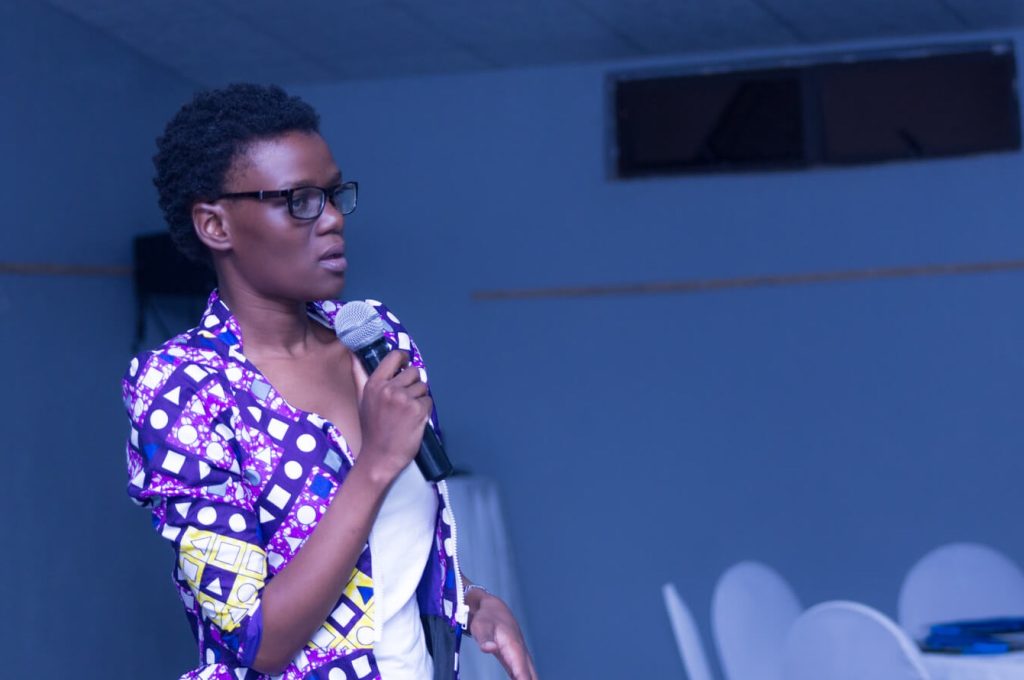
[bctt tweet=”Tafadzwa Bete Sasa wanted to be one of those people who kick butt with their goals” username=”SheLeadsAfrica”] Tafadzwa Bete Sasa is an admirable achiever who has navigated the professional world mostly as a learning and development professional. She has several accolades under her name and has also been name a Global Shaper by the Lusaka Hub —an initiative of the World Economic Forum. Tafadzwa also recently started her own line of planners called GoalGetter Planners which are customized organizers to help individuals set and track goals. SLA contributor Kudakwashe Mulenga sat down with Tafadzwa to get insight into her start-up. She discovered how Tafadzwa Bete Sasa has navigated her career to get where she is. Where did you get the inspiration to start the GoalGetter planners? The GoalGetter planner was born out of frustrations with my year, in year out recycling of New Years resolutions and being at the same place come year end. This frustration grew as I began meeting other young people who were my age. We all had the same 24 hour days but were just not getting more things done and being GoalGetters. You know the people who just hit the ground running and are already ticking off milestones and kicking butt whilst the rest of us are reeling in January blues. I got tired of being in the latter group and decided I wanted in on the Goal Getter life. As part of that process I started asking questions, observing, studying and listening to the Goal Getters to understand what helped them get things done. I noticed a common thread of behaviours and patterns. This was further confirmed by the insights some GoalGetters shared in a series of interviews I ran for my blog called The Process. It is these mindsets and habits that became what I call The GoalGetters seven winning ways to getting things done. I combined those with my favourite goal setting and goal tracking tools to create the GoalGetter Planner. What difficulties did you face producing your own planner, how did you find a client base? I first thought of designing a planner several years ago but sat on it for the longest time because I just was not sure how to go about it. I was confused about the design, content, production, branding, marketing, distribution, financing. In addition, I was convinced it would just not work out until I had a certain level of expertise, money and influence. However, I mentioned the idea to some friends and my coach who have always encouraged and nagged me to get it done already. I decided I would produce the first samples of the planner for two friends, have them use it for a year give me feedback before rolling it out to everyone else. I had my friends Moreblessing, Glen and Epi review the raw versions of the planner then paid for a professional designer and editor. By the time I submitted the final content to the printers I was a bit more confident to sell to more people. Now, when I decided to sell the planner, I dared to set a Big Hairy Ambitious Goal of selling 20 planners within the first year. On the 14th of November, I shared the planner on my Facebook page. You can only imagine my shock when within the first two weeks more than 75 people had placed orders. As the early adopter friends started sharing pictures of their purchased planners, their friends also wanted in. This way the GoalGetter planner customer base continues to grow. I get a bit overwhelmed keeping up with orders as I am running the project as a lean start-up. I produce the planners to order, receive feedback from one batch and try to improve within the next. It has been an awesome start but we are definitely still learning. I am grateful for my friends and their friends who are willing to navigate the learning curve with me. [bctt tweet=”African society has many expectations and limitations on the young woman – Tafadzwa Bete Sasa ” username=”SheLeadsAfrica”] What advice would you give to young professional women across Africa? The African society has many expectations and limitations on the young woman that contradict the reality of the global village the world has become. This places young professional African women in a great predicament; trying to balance these expectation with their own growing ambitions. We are becoming more and more exposed to what other Motherland Moguls are up to. As such, the professional African young woman has to decide what races to run and which medals they are chasing. We can’t have it all and to be honest I do not think we want it all. Sometimes, ‘all’ involves things we don’t really aspire towards but that have been prescribed by society. The disappointment of not getting what we may have wanted is compounded by the fear of society’s disapproval of us for not having it all. African young professional women must decide what they want for themselves. They must then pursue that whilst gracefully accepting whatever life may bring them; without the extra burden of fearing to disappoint. You have taken on many responsibilities career wise in recent years including becoming a Global Shaper and serving as JCI president. How did you realize your ability for greatness and what was your journey like? When I started off I would never have imagined I would be here today. But as a principle when I commit to something, I fully plug in to ensure I learn as much as I can. I always step up to a challenge or opportunity. As such in the several organizations I have been over the years, I have refined various skills which are all coming together to create different opportunities. If I were to give examples, I would start at BancABC Zimbabwe where I had my first job as an HR intern. I arrived raw as they come and left with a good understanding of
Asanda Gcoyi: Talent on its own will never be enough
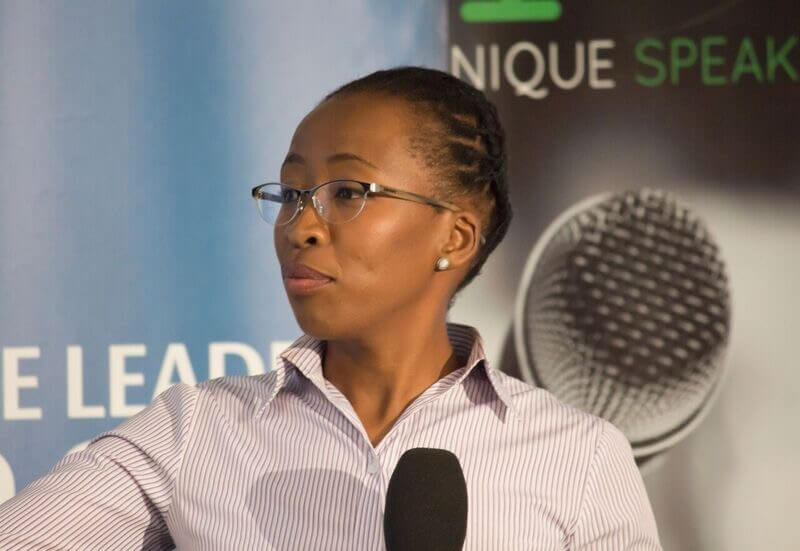
[bctt tweet=”Many people are talented in something but don’t invest time in becoming the best – Asanda Gcoyi” username=”SheLeadsAfrica”] It’s time again for you to meet one of the people that make the SLA website run smoothly. We’re talking about our contributor family who SLAY with their writing. Asanda Gcoyi is a talent hunter, she’s the CEO of CB Talent, an empowerment hub dedicated to all things talent development. Through her passion, Asanda works with entrepreneurs and highly successful people in order to help them take their success to a higher level. We’re all lucky that she shares some of this wisdom in the articles she writes for SLA. A certified master coach, Asanda Gcoyi is the boss of turning talent into something more powerful. What defines talent to you? I think it is ones’ ability to showcase what you can contribute in any given context. Talent has to be pegged to passion for it to be meaningful. Further, talent requires hard work to be of any use. Many people out there are talented in something. Quite a few take joy in just being talented in whatever they may be talented in; yet they do not invest the time required to become the best at what they are talented in. As such, talent on its own will never be enough. Think of any successful footballer and imagine their work schedules. You will find hours and hours of hard work behind that success; not only god-given talent. [bctt tweet=”You will find hours of hard work behind success; not only god-given talent @Coachasanda” username=”SheLeadsAfrica”] What goes into starting a talent development firm? It is one of those businesses that stem purely out of passion. You must understand people, and what motivates them and be able to ascertain how this all fits into the overall business imperatives. Luckily, you don’t need much in terms of start-up capital, so bootstrapping does the trick for the first six months or so. Tell us about being the Chairperson of the Ethics Portfolio Committee (EPC) at Coaches and Mentors South Africa (COMENSA). How did you find yourself in this role? When I returned from Beijing, China in December 2014, I was actively looking for ways to reintegrate myself into the South African business landscape having been away for over four years. As a qualified coach with a keen interest in understanding the professional from a South African point of view, I thought the best thing to do would be to find opportunities to get involved. Luckily for me around mid 2015, the committee had an opening, I applied and I was invited to join. Less than a year into it (around 6 months), I was asked to take over as chairperson. It was an excellent opportunity for me to develop professionally in the important area of ethics and conduct of the profession. I really enjoy working as part of the ethics portfolio and I am often challenged out of my comfort zone, which is very important for me. If it is not a challenge, I lose interest. You studied in China’s Peking University; can you share more about your experiences as an African woman in China? Peking University and Tshingua University are the top two universities in China so you can imagine the competition! I had no doubt in my ability to get admitted because they too take into account your GMAT scores for business school studies. As the only and first African woman at a Chinese top institution, it was both an honour and a testing time for me. There was still a ‘curiosity’ on Africa and Africans so in a way I was representing more than just my race and gender but the entire continent! I have never been one to be meek so my time at Peking was characterised by involvement both in academia and the social space. I was voted into the class committee a month into the studies and I was responsible for the events portfolio. That tells you a lot about my ability to be me irrespective of where I plant myself. [bctt tweet=”Asanda Gcoyi’s experiences in China gave her the background to be a multicultural specialist” username=”SheLeadsAfrica”] What four skills would you say is needed for someone to be a multicultural specialist? To be a multicultural specialist, I would say one needs; Advanced self-awareness; Exposure to diverse environments is key; Actual experience working in cross cultural environments and Areputation (track record) of successful multicultural engagements. How is your understanding of the East and West behind your “developing the leader in you, to impact business” idea? The East and the West are so different in many respects and understanding these differences is key in this day and age. Taking these two and infusing local perspectives (read African) is what I believe can set one apart in business, and professionally. For the longest time, we were concerned about the ways of the West and didn’t pay much attention to the east until China became the powerhouse it is today. I think that to really be a global citizen/leader, you can’t not understand these two within your local context. Are there any particular things you look out for in finding people to support? I look for a can-do positive attitude. What will be your New Year resolutions? I have three New Year resolutions Take CB Talent to the next phase —accelerate growth! To be kinder to self. Grow spiritually! We want to know your stories! Tell us what amazing things women are doing in your communities here.
Ehime Akindele: Be fearless in the pursuit of whatever sets your soul on fire

[bctt tweet=”We should all aim to live a life dedicated to service to one another – Ehime Akindele ” username=”SheLeadsAfrica”] Ehime Akindele founded Your Way Foods, —which is made up of Sweet Kiwi Yogurt Cafe, Beet Root food bar and a soon to come Mongolian self serve bar— under the age of 30. A huge believer in healthy foods, Ehime actually started her career with Amnesty International. From then, she moved to Citigroup in Dallas, Texas where she worked in their legal banking group. All that time, Ehime Akindele wanted to start her own business back in Nigeria. She has received training certifications in restaurant management and dessert manufacturing and eventually started with Sweet Kiwi. Ehime will be celebrating the 5th year anniversary of Sweet Kiwi. While meandering the challenges of running a start-up in Nigeria, Ehime Akindele has found time to work in not-for-profit as she wants to foster the spirit of volunteerism in Nigeria. Can you tell us about opening Sweet Kiwi? Were there any particular challenges to opening a frozen yogurt store in Lagos that you did not expect? There were several challenges as we were the first frozen yogurt company in Nigeria. There were no existing format for operations so we had to learn a lot along the way. Still, we keep working at it. Power was a major issue as the soft serve machines are heavy duty and are quite delicate. A lot of times, the lack of power puts us in very stressful situations. I remember the day of our Lekki store launch, we had all 5 machine fuses blow. This was literally 10 minutes before the opening speech began. [bctt tweet=”Power was a major issue in running a frozen yogurt store in Nigeria – Ehime Akindele ” username=”SheLeadsAfrica”] I just prayed inside; we were about to open a yogurt store and the yogurt dispensing machines just stopped working! I had to think quickly so we had a team working behind the scenes while we lengthened the speeches and prayers. I remember Mrs. Fela- Durotoye telling me to be calm, and trying to delay the first product sample. She suggested I give a full breakdown of every item in the store. I don’t remember breathing the whole time, but we overcame it and we are now 3 years in. When did you decide to diversify your projects with the Beet Root healthy food bar? Why did you decide to? From the start, my plan was to have a group of companies dedicated to healthy food. I started off my actual entrepreneur career training on how to build and manage a Mongolian grill. Beet Root was always part of the plan, we just decided to put our Sweet Kiwi first. [bctt tweet=”Ehime Akindele founder of @sweetkiwie is promoting healthy food in Nigeria with her companies” username=”SheLeadsAfrica”] Any advice to women looking to expand their businesses? What three skills do they need to master before going this route? I believe the foundation of the business has to be solid before you consider expansion. So what you’ll need to do is perfect your operations and pay attention to economical forecasts. The three skill I would say young women need to master before expanding their businesses are; Patience, Resilience and Tenacity. Do you still work a 9-5 while managing your entrepreneurial projects? I have never worked while running my business, I quit before I began. Why do you believe Nigeria should foster the spirit of volunteerism? We should all aim to live a life dedicated to service to one another. I believe volunteering builds better and stronger communities. It is an opportunity to make a difference in another persons life and truly you never know what you might learn, sometimes it is as little as learning to appreciate your own situation. What’s your favourite fro-yo flavour? Why? This is a hard question as I have so many favourites. For right now and the key word is now, my favourite is the Strawberry Greek Yogurt. Any motivational last words for our readers? Be fearless in the pursuit of whatever sets your soul on fire. If you’d like to share your story with She Leads Africa, let us know more about you and your story here.
Sonia Mugabo: Emerging markets, like Rwanda, are centers of innovation
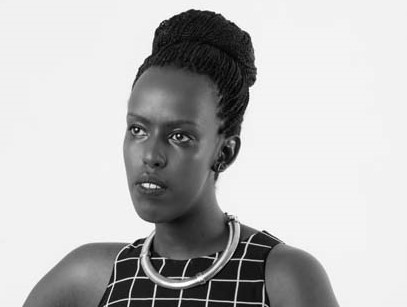
[bctt tweet=”@soniamugabo is setting the standard for Rwandan fashion in global and local markets” username=”SheLeadsAfrica”] Sonia Mugabo is the founder of Sonia Mugabo (“SM”), a Rwandan-based fashion brand offering an eclectic mix of African trends and contemporary style. SM offers both bespoke as well as ready to wear designs. A pioneer of Rwanda’s fashion industry, Sonia is setting the standard for Rwandan fashion in global and local markets. Since its start three years ago, SM has cultivated a loyal following of customers who value the brand’s innovative and high-quality designs. Rwanda’s fashion industry is nascent. What impact has that had on Sonia Mugabo and other fashion businesses in Rwanda? Most people in Rwanda wear second-hand clothes imported from Western countries, which basically means Rwanda’s local talent is largely ignored. Luckily, with the aim to encourage consumption of local products, the Rwandan government is putting a stop to the importation of second clothes. As such, local designers are seizing the opportunity to build brands with a strong Rwandan heritage as well as creating jobs and inspiring young talent to pursue fashion careers. I believe emerging markets, like Rwanda, are centres of innovation since they’re compelled to innovate to solve unique challenges. You interned at Teen Vogue in New York. What are some of the things you learned there that helped you navigate the Rwandan fashion scene and those you’ve had to discard? Teen Vogue New York was a fast moving and fashionable environment. The behind-the-scenes of the fashion world intrigued me. I learned about clothing brands while observing talented fashion editors define the next season’s trends. I got a sense of how the business of fashion functions and the hard work involved to remain at the top in a highly competitive industry. In Rwanda, I’ve had to follow my gut, work hard and just do everything possible to make my brand stand out. Also, since we’re in an age where we can market freely on social media, I’ve leveraged that platform to create brand awareness and reach a diverse audience. You said your best work is created in New York, a city that’s been branded a fashion haven by fashion aficionados. Why did you choose to move to Rwanda to open Sonia Mugabo? When I realized I wanted to pursue a fashion designer career, I discovered starting in New York was almost impossible without having gone to fashion school. However, in Rwanda, there’s a lot of incentives by the Rwanda Business Development (RDB) for companies and individuals wishing to do business in the country. That encouraged me to return home after I graduated college to launch my brand, Sonia Mugabo. What’s your advice to women considering a career in fashion but can’t access a fashion magazine internship or fashion school? I’d say educate yourself as much as possible about the industry. Research how your favourite brands became fashion powerhouses. Most importantly, if you want to start your own brand know that there is a whole other aspect of just making beautiful clothes. There’s the business side of fashion, so make sure you understand the 5 Ps of marketing [product, price, place, people and promotion]. Another key to note is, though the fashion industry might appear glamorous from the outside, a lot of work takes place behind the scenes. It isn’t an overnight success story so don’t expect to bear fruits right away. Sometimes, you even have to plant fresh seeds. Lastly, I’d say set up a 5 to 10 year plan for yourself, set milestones and try to achieve them one step at a time. If there was something you could change about the Rwandan fashion industry, what would it be? I would encourage people to support local businesses as much as they support foreign ones. I’d change the mindset that “Made in Rwanda” is of lower quality than something sold in Nordstorm. Support your own. [bctt tweet=”Opportunities in Rwanda encouraged Sonia Mugabo to return home and launch her brand @soniamugabo” username=”SheLeadsAfrica”] What’s next for Sonia Mugabo the brand and the person? We’re excited about launching our second store at Kigali Marriott in Kigali, which will carry our up-scale collection inspired by timeless fashion. We plan to continue creating strong fashion pieces that celebrate and capture the essence of global trends with an edge that is purely African, and will be distributing SM products around Africa, North America and Europe through e-commerce, retail stores, stockists and stores across major fashion cities in 2017. We also hope to present seasonal collections in New York, London, Paris and Milan fashion weeks. Personally, since I’m self-taught, I would like to take fashion courses to enhance my craftsmanship. I’m excited about the future. If you’d like to share your story with She Leads Africa, let us know more about you and your story here.
Michelle Orlendo: Helping women appreciate African-textured hair with the Nywele Chronicles
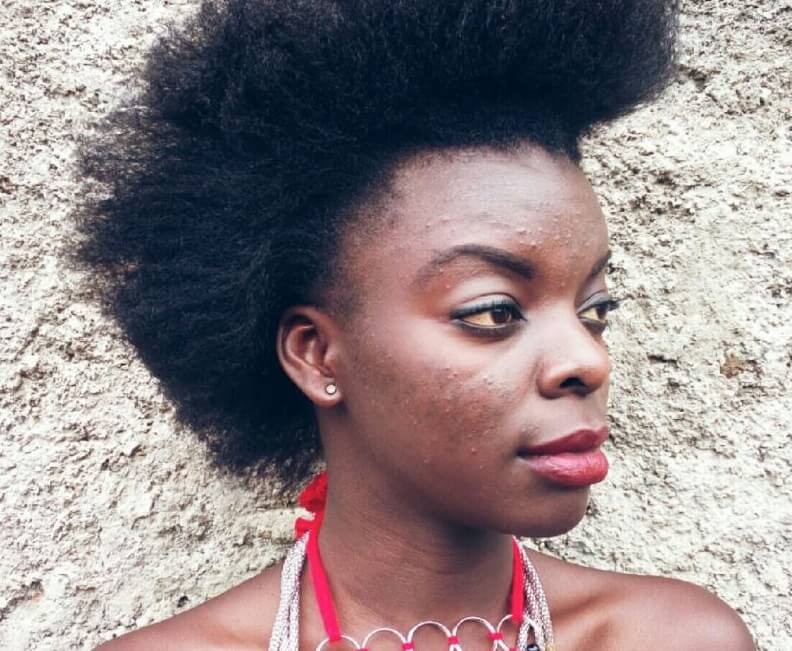
[bctt tweet=”There is no harm in trying. Do not be afraid of failure, keep trying – Michelle Orlendo” username=”SheLeadsAfrica”] Natural hair, especially 4c textured hair, styled in a simple yet luxuriant look has been frowned upon by many. We often hear people classifying it as an unkempt and unruly look. However, Michelle Orlendo, is changing that perception daily one head at a time. Michelle is seeing to it that as many women in Kenya transition and embrace the beautiful and natural look as possible. Tired of chemically and heat treating her hair, which had lost volume, and inspired by the fact that African women were rocking their natural hair and slaying, the 23-year-old Michelle woman embarked on a journey of being a naturalista. The big chop Michelle Orlendo went for the big chop in July 2015, to the chagrin of many. She had shoulder-length, flowing heat-treated hair, an ideal look for many. As she began her journey slightly over a year ago (on 25th November, 2015), Michelle vowed to involve other women. She especially targeted young girls who would aspire to go natural but lacked the motivation and/or guidance. The journey ahead was full of trials, criticism, moments of almost giving up and a lot of doubts. However, it began with the opening of a Facebook page dubbed “Nywele Chronicles”, (Nywele is hair in Swahili). Michelle invited her friends to like the page initially. Only a few liked it, but the fan base gradually picked up through her consistency in giving what the audience wants. The Nywele effect A few months after her big chop, Michelle’s hair grew tremendously and ladies started asking questions. Michelle describes her hair as a reflection of her soul, and her hair was glossy and really kinky —in every sense of African amazing kinky. Questions came pouring in, people wanted to know what Michelle applies, how she styles it and protective styles they could use. With every question came the realisation that she could start a blog. Michelle thought to move away from only posting pictures on her social media platforms, but also write reviews of the products she used and how she styled her hair. From it’s inception, Nywele Chronicles gained a huge amount of followers who genuinely wanted a smooth transition from chemically treated hair to natural hair. Michelle became a hair consultant of some sort. Ladies would approach her to feel her hair and request her to cater to theirs the same way. Her glorious mane turned heads in school, Moi University, as people started calling her by her page’s name, Nywele Chronicles. “It has not been an easy journey to keep my focus on updating my social media pages, getting the time to do tutorials amongst other things.” Michelle says. “I’d have given up were it not for my passion and the strong support system I have.” This is how Michelle Orlendo persevered through the challenges to get to the one year mark. Aiming to encourage women to love their natural hair Michelle hopes to have her own products that cater to African-textured hair in the market, in a span of less than 5 years. With a salon to her name and a degree in Trichology —a branch of dermatology that deals with the scientific study of the health of hair and scalp— a consultancy will come in handy. With her experience, Michelle always looks at people’s hair and analyses it even before touching. She can easily tell hair that lacks moisture, too much heat treatment and malnourished hair. [bctt tweet=”Michelle Orlendo stays motivated by the fact that Nywele Chronicles will soon be a business” username=”SheLeadsAfrica”] Now in her final year studying Actuarial Science, Michelle Orlendo stays motivated by the fact that she will soon be turning Nywele Chronicles into a business. Aiming to encourage women to love their natural hair is her tag line. This is being actualised as Michelle is helping transitioning women to wear their natural look, and feel glamorous while at it, through Nywele Chronicles. She further adds that the initiative has really helped build her confidence and esteem. Going natural has made Michelle appreciate herself holistically and opened a new window through which she views herself. To everyone that wants to venture in the formally perceived ‘not-so ideal’ courses and activities Michelle Orlendo says; “If you feel like the timing is right to do anything that you want to do, go ahead and do it. Forget what people will say and do it. There is no harm in trying. Do not be afraid of failure, keep trying.” Want to see women you know featured on SLA? Tell us what amazing things women are doing in your communities here.
Lebogang Chaka: I’m where I am today because I’m not afraid to dream

[bctt tweet=”Lebogang Chaka lives and breathes the values of being an African and is leaving a brilliant legacy” username=”SheLeadsAfrica”] Lebogang Chaka considers herself a multi-potentialite. She is a dreamer, a speaker and MC who has committed to travelling the world talking on pertinent African issues related to the continent. A firm believer in the notion that Africans need to tell their own stories, Lebogang believes that she was born to use her “voice” through her work and talks to become a “guardian” of the African continent. She is the founder of a consulting firm that offers management consulting services such as transformation, change management, organisational design, outsourcing and restructuring programmes including facilitation and coaching services. Lebogang Chaka has experience working with top-tier consulting firms such as Deloitte, KPMG and Accenture, with international experience in Dubai. She also currently serves as the Chairperson of the Thabo Mbeki African Leadership Institute Alumni Forum as well as the advisory board for Africa Future Dialogue. Still, Lebogang is a small town girl from Mafikeng with a love for her continent and dreams of being Dr Chaka. Take us through your day I like to start off the day with a gym session to prepare me for the day and all that it comes with. Given all my passion and commitments, my days vary. I am a management consultant by trade, which sees me sitting in board rooms with C-Suite executives or leaders in the public sector. As a consultant, I understand the problems of an organisation and provide practical solutions to their various problems. My demands as a Phd student require that I come home, switch off and give my studies my full attention. My various volunteer activities —which includes sitting on boards, require me to review concept documents, set up meetings and respond to proposals. As a speaker and coach, I ensure that I prepare for my sessions with my various commitments. What I love about my day is that it is seldom the same. Time management is key and learning how to say ‘no’ has been my greatest lesson to make it through the day. And yes, I manage to cook and spend time with my loved one. I love a home cooked meal. One needs to protect their core, some things cannot be compromised. I love being present at home and not let all my passions be a source of guilt. How do you push through your worst times? After burning out after 3 years in management consulting and nearly passing away, I took sabbatical for a month. During that time, I met people from different walks of life. This was my greatest low and afterwards, I learnt the art of taking care of myself physically by exercising and maintaining a healthy lifestyle. I was incomplete without my spirituality, I reconnected with God’s word and I now I draw strength from feeding my soul with the word of God. Through my worst times, I remind myself of how I overcame all the doctors had said. I remind myself of how far God has brought me. I push because I know that the light at the end of the tunnel is worth the wait, because I know that my success will inspire others. My doctoral studies have been the most challenging studies I have had to date but I stay grounded in the word. I maintain a healthy lifestyle to ensure the stress that comes with the studies is minimised to ensure that I can live a live that is filled with joy. [bctt tweet=”Lebogang Chaka learnt the art of taking care of herself after a burn out and nearly passing away” username=”SheLeadsAfrica”] What keeps you awake at night? The renewal of our continent. We cannot be the “dark continent”, I need to play my part. I constantly ask myself; What more can I do to ensure that I can build a continent that my children will be proud of? What are your success habits? The one thing that I admire about myself is my ability to dream like a child and to not have boundaries. My dreams are always larger than life, my dreams usually scare me but I always boldly talk about them. I got to where I am today because I am not afraid to dream and I am not afraid to work hard for my dreams. Above all, God’s grace is forever with me. I also believe that a life well lived is a life that does not mirror the vision of others but rather is based on one’s own journey. My measure of success is how well I have lived my life according to what I believe I am called to do. This is as opposed to what society believes I should do. Lastly, I was raised by parents who had an incredible vision for us as their children; to be more and to serve others. What is your meaning of greatness? Do you believe you have at some point achieved greatness? Greatness to me means being the best version of you. It means being able to achieve peace about what you were called to be, understanding your purpose. After experiencing a corporate burnout, I reflected on my life and realized that I had given all my talents to the corporate world. At that very point, I began to search for my purpose. Today, it is very clear how I can use my talents to serve and make a difference in the lives of many. My career as a speaker is birthed from me understanding my calling. Can you tell us about a time when you almost gave up, how you felt about that, and what you did instead of giving up?’ This year with my PhD studies at the beginning of the year, I was struggling with my studies. I have never struggled with any of my previous studies as such, this was indeed a humbling experience. There was a time in class in February
Senanu Arkutu: I decided to follow a passion that I hadn’t realised was a skill
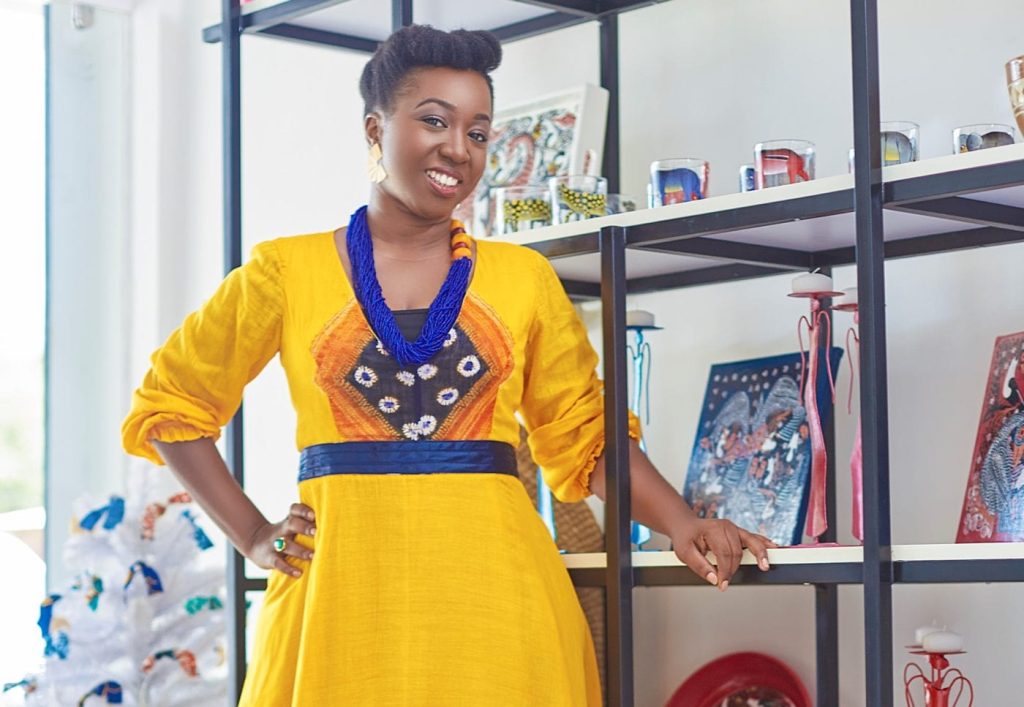
[bctt tweet=”Senanu Arkutu: The high quality is here in Africa but you have to do quality control ” username=”SheLeadsAfrica”] Senanu Arkutu is the founder and CEO of DAAR Living, an interior styling firm that is diversely African, layered and interwoven, antique and contemporary, with European and Arab influences. While pursuing a career in Reproductive Health and International Development, she realised she had a flair for interior design after decorating her own home. Spurred by the compliments she received, she gave up her day job and opened DAAR Living in 2013. Senanu is also the set designer for the hit series, An African City. Her flagship store opened November 19, 2016 in East Legon, Accra, Ghana. How does one switch from a career in international development to interior design, and what transferable skills have helped you in your new calling? Hahaha! It was time for a change after a 12-year career —that I loved, by the way. I decided to follow a passion that I had not realised was also a skill until I designed and decorated my own house, and the warm compliments started coming. Transferable skills from a career in sexual health and family planning, I find new ones every day! But the most important one to date is listening to client’s concerns and finding an appropriate solution that is sensitive to their specific needs and feelings. Conducting consultations helps. You’re Ghanaian but grew up in Southern and West Africa, which obviously have influenced DAAR Living. Where else do you draw inspiration from for your décors? …And East Africa where my personal style probably leans towards. I draw inspiration from my mum, my clients, other designers, art and culture, trends, life. What have been your highest and lowest points since starting DAAR Living three years ago? The highest and lowest points all come together in establishing our first store. I hired an established design and construction company to carry out the design changes I wanted done to the retail space. This was a team that the landlord was comfortable with as they had done some work for another retail space in the same building, which I had seen. The experience was a disaster. They were rude. Communication, follow-up and quality control were terrible and on top of that, a four-week job took them four months to complete! My rent money just went to waste (Accra landlords insist on two years rent upfront whether you are a start-up or not). The highest point was the night I laid out and merchandised my store for the first time and went outside to see what it looked like from the shop window —I had a moment! With a physical space all done up as I wanted it, and DAAR Living signboard up in lights, it suddenly seemed like DAAR Living finally actually existed. [bctt tweet=”Senanu Arkutu’s highest point was the night she laid out her store for the first time ” username=”SheLeadsAfrica”] In an interview, you voiced your desire to see African arts and crafts showcased in other ways besides a market setting or market style setting. Would you mind elaborating? I would love to see more of quality African art and crafts being showcased in all their glory in a contemporary retail, gallery-like space, and not always in a busy market where it is not easy to see the skill and beauty of the piece. You do not see this often in Ghana or the rest of the continent, except in South Africa and, now, of course, Alara in Lagos. The new DAAR Living store aims to be the contemporary retail space showcasing African functional art and craft in Accra. We want to be front and centre in this emerging story. [bctt tweet=”Senanu Arkutu: I’d love to see more quality African art & crafts in a contemporary space” username=”SheLeadsAfrica”] You’re the principle set designer for the hit African series, An African City. How did you get the deal for the show and end up collaborating with Christie Brown, who designed some of the beautiful clothes on the show? Nicole (creator of An African City) and I are good friends. We believe in each other’s work and see the value and strength in collaborating. I offered my house for use in season 1, and by Season 2 the AAC team had realised the added value of set design and how it plays a large part in story-telling. DAAR Living was better established by then, but there was no budget allowance for set design, so Nicole turned to me and Nana Spio-Garbrah of Blueprint Africa (Assistant set design). Of course, we were glad to help Nicole, and there was also the added potential exposure An African City could give. As for collaborating with Christie, when I began DAAR Living I wanted to launch a brand and begin building it and its community immediately. I knew that the products and services on offer may change slightly, several times, but the concept was clear and would remain the same. As a client and lover of Christie Brown, I could not get out of my head how pieces of mine reminded me of outfits of Aisha’s (founder of Christie Brown). So I called her with an idea for an exhibition that brought interiors and fashion together to launch my brand and she loved it! She encouraged me, offered her then new flagship store for the launch, and the rest is history. How does DAAR Living ensure on-time delivery and high quality across all its offerings, especially since décor and furniture pieces are sourced from across Africa? Good question. The high quality is here in Africa but like everywhere else you have to do due quality control. This is my job and it takes a lot of back and forth but we get there. For on-time delivery, firstly, I do not offer items for sale that are not already ‘on the shelf’ —online or in the physical store. Secondly, if a client is making a bespoke order and I think
Ugochi Obidiegwu: The Safety Chic

[bctt tweet=”I started reading about safety and I loved what I was discovering – Ugochi Obidiegwu” username=”SheLeadsAfrica”] It’s time for you to meet one of the people that make the SLA website run smoothly. We’re talking about our contributor family who SLAY with their writing. Ugochi Obidiegwu has a somewhat unusual passion; safety. She’s written articles on the importance of health and safety in start-ups, and has shared a bit on her experience with YALI. The main reason Ugochi does safety is simple; she does not want people to keep getting ill, injured, die or lose property due of their source of livelihood. This is the main reason Ugochi shows people how to be safer in everyday personal and business life. Get ready to be inspired by the Safety Chic! From the articles you’ve written for SLA, you’re clearly interested in safety. Where did this interest come about? I worked in a Nigerian airline as a cabin crew staff. One day in 2013, my boss informed me that I was now a safety officer. In addition to my original responsibilities, I was to work with another colleague to bring safety information and solutions to the Cabin Services Unit. My colleague and I decided we would launch monthly safety forums to share knowledge on safety issues affecting crew members, on and off the job. As someone, who believes in doing whatever I do very well, I started reading about it and I loved what I was discovering. But of course for you to be termed a competent person, you need sufficient knowledge, ability, training and experience. I embarked on certifications and volunteer work during my leave and off days on my bill. It wasn’t easy to give up vacation and other stuff but it was a necessary sacrifice. In the course of doing all these, I observed that it was mainly businesses in aviation, construction and oil and gas industries that took safety systems seriously. I decided to start a health and safety business that would provide tailored and affordable safety solutions for businesses, especially SMEs. A lot of SMEs I got in touch with thought accidents were beyond their purview. Therefore, I started a system of reorientation because I believed that gradually with more information, a safety consciousness would be awakened. I started writing on safety issues in a simpler format that the everyday person could relate to on my blog and later on SLA. At some point, my mentor Steve Harris suggested I make videos as not everyone might want to read. So, the idea of #60SecondsWithTheSafetyChic on Instagram and The Safety Chic came alive. #60SecondsWithTheSafetyChic is a weekly 60seconds or less video where content of blog articles is summarised. This way, my audience can have access to safety tips on the go. I have found that our generation, and people generally, are quite interested in an awesome quality of life, so anything that makes them able to live better is welcome. Do you ever see Nigerians taking safety seriously? Well, if you check, you’d find that the majority of Nigerians that are safety conscious either worked in organisations that do not joke with safety; or picked it up from friends and family members who worked there. Sometimes in an emergency, we want to help but do not know the right thing to do. It’s not really ingrained in us. Take for example, the use of seatbelts when driving in Nigeria. Until the Federal Road Service Corps (FRSC) put a fine to it, many people did not use their seatbelts. As a matter of fact, I had to explain to someone recently the importance of seat belt usage. He felt the FRSC just wanted to have a reason to fine people. There lies the human factor, which is the major cause of so many accidents and incidents. The machine could work well, the work procedure could be perfect but if the human being engaged in the task refuses to do the safe thing, an accident happens. So, I decided to take safety education to schools through the Train Them Young Initiative (#2TYI) because this is a problem that can only be solved from the root. #2TYI is a free safety training for public schools on road safety, fire safety, first aid and personal safety. I believe that safety education for students goes a long way in grooming a future workforce such that complies with safety standards. This will reduce workplace accidents and incidents as the habits we form in our formative years shape our future behaviour. The future goal of this initiative is to get safety education into the curriculum of all schools. [bctt tweet=”@thesafetychic is taking safety education to students in schools with #2TYI” username=”SheLeadsAfrica”] Tell us about being part of the YALI project. I was privileged to be selected for the Barack Obama Young African Leaders Initiative (YALI) Nigeria Cohort 1. It was an amazing experience meeting like minds doing awesome stuff in Ghana, Liberia, Nigeria, Ivory Coast, Sierra Leone, Cameroon and the Gambia. I knew there were lots of activists, but I had no clue there were so many young people advocating for all sorts of stuff. Let’s just say the world I was coming from was totally different. Some colleagues wondered what a cabin crew was doing in their midst; considering I wasn’t advocating for human rights, gender equality, child marriage etc. I think it was the Train Them Young Initiative that got me in. This is quite funny because when I started it, it was just my way of giving back to the society. I just wanted people to be a bit more informed and safe. Despite being slightly different from my new colleagues, we found common ground in a desire for excellence. This led to wonderful friendships and collaboration. We now have this family bond, no matter what you need there is always someone with the expertise and know-how. [bctt tweet=”Leveraging on one another’s strengths means we achieve more – Ugochi Obidiegwu
Vivian “Jokotade” Adeniyi: You are the only limitation to your potential

[bctt tweet=”Jokotade: Believe it or not, The Jokotade Network didn’t happen by a plan” username=”SheLeadsAfrica”] Vivian Jokotade Adeniyi, fondly known as “Jokotade”, is a Nigerian-American author, speaker, and thought leader on topics relating to women, business and leadership. She is the founder of The Jokotade Network which hosts a variety of talk shows with audiences in over 100 countries. In addition to running her own network, Jokotade is a wife, mother and an entrepreneur. Her life as a serial entrepreneur began at the age of six ,when she started assisting her mother with her retail goods business in Lagos, Nigeria. Jokotade has since launched a growing list of businesses. These include a leading full-service design and print firm located in Houston, Texas —a business she started with less than $100 over 12 years ago. SLA contributing writer, Uloma Ogba, caught up with this Motherland Mogul to get the inside scoop on how exactly Jokotade does it all, while looking fabulous. What does Jokotade mean and what exactly do you do? My name Jokotade (pronounced JOE-KOH-TAH-DAY), is a Nigerian Yoruba name given to a child whose parents suffered the loss of a child prior to the birth of the named. Its literal meaning is “sit with the crown” or “sit with royalty”. This signifies that this child will not die, but will stay and live with her parents and family. This powerful name was concurrently given by both of my grandmothers at my traditional Nigerian naming ceremony. I use the name “Jokotade” for my speaking and writing platform because it is a very powerful and purposeful name. The name tells a story of my origin, gives you insight into my identity and speaks powerfully to my destiny. I write all of the inspiring details surrounding my birth in my breakout, bestselling book – Fresh Start. Once you discover my full story, I have a sense you’ll simply call me “Jokotade”. [bctt tweet=”Vivian Jokotade Adeniyi: The name Jokotade tells a story of my origin & gives you insight into my identity” username=”SheLeadsAfrica”] Could you give the readers some insight into your background? I was born in Lagos, Nigeria and moved to the United States of America with my parents in 1997. Shortly after I arrived in the US, I got to work beginning my American life as a hair braider. This was my only choice at the time, as I had to wait a full year to begin my university education. I finally gained admission to the University of Houston where I majored in Computer Information Systems (CIS) with special interests in marketing and communications. What drove you to start your first business and continues to drive you to reach for new opportunities? I’ll be honest —my motivation was hunger. I was hungry for the opportunity to live out my potential. I was hungry for the opportunity to start over in the United States; after experiencing a very rough and downward financial season with my parents back home in Nigeria. For several years my dad (who is now a retired surgeon) had successfully operated a private medical practice. But right at the time I was finishing up my secondary school education, his practice suffered grievous losses due to lack of payments. The idea of possibilities, of what can be, of who I can become, has driven me and continues to drive me everyday. It’s a beautiful thing to know that everyday you wake up, you truly can become more than you imagine. I see each waking day as a canvas to paint on. I hope to make each day a beautiful work of art to remember. [bctt tweet=”Jokotade of @jokotadeshow is motivated to reach for new opportunities by hunger ” username=”SheLeadsAfrica”] While in university, you started a business selling clothes and accessories to other students. How did you come up with that idea? What was the process like for you, setting up a business alongside your classes? How were you able to find balance there? Do you know of any university student who couldn’t use some extra cash? If there is one lesson I learned early as a hungry student, it is this —pay attention to the problems you can solve for people. In university, I became the go-to person when it came to shopping or finding affordable resources. The idea of selling accessories to other students was born from a place of paying attention to these kinds of problems and the questions I was often asked. I simply turned these inquiries into a business. I often say that the best business ideas are the ones that solve as many problems as possible for as many people as possible. Juggling my side business wasn’t easy but it was worth it —it helped me pay for a car. This reward motivated me to find a way to “juggle my hustle”. I made time to deliver goods over the weekend and focused on my classes during the week. [bctt tweet=”Jokotade: The idea of possibilities has driven me and continues to drive me everyday.” username=”SheLeadsAfrica”] After university you were involved in a couple of different activities which eventually culminated in what we now see today as The Jokotade Network. Can you take the readers through the journey of how you got to this point? What were some of the major milestones and challenges you faced along the way? Believe it or not, The Jokotade Network didn’t happen by a plan. It happened by growth. Let me explain. I began the Jokotade platform as a fashion and style blog…can you imagine? You see in 2013, I noticed there were several fashion and style bloggers but rarely did any of the bloggers feature the style of clothes I love to wear –classic, sophisticated, refined and polished. Back then, there were hardly any who even featured stylish African clothes in these preferences. So you know what I did? I saw a gap in the market and I rose to fill it. I started blogging, featuring a choice of clothes
Maajoa Yeboah: I basically started with a Facebook page, a mobile phone camera and my passion

[bctt tweet=”Making accessories gives you the flexibility to still have a full time job @Maajoa_Yeboah” username=”SheLeadsAfrica”] Maajoa Yeboah makes accessories, mentors girls and is one of 30 young achievers in Ghana. Her passion and determination have paved the way as she initially wanted to work in a bank. Maajoa started her brand Asabea Ayisi while still in school, the initiative has since grown to include other projects such as the One Girl One Skill foundation. Through her work, Maajoa Yeboah ensures that she’s giving back to the community and helping other girls become financially independent. Tell us about the steps that lead to launching Asabe Ayisi. I started Asabea Ayisi whilst still a student in the tertiary institute. I basically started with a Facebook page, a mobile phone camera and my passion. Before commercializing the accessories, I was making them for myself and a few friends and family members. This was up until I started getting amazing feedback for the pieces I was creating. So I thought why not start a fashion business? This was however a great battle for myself and my family because I was an studying Accounting with dreams of being a banker like my father. My family equally had these dreams for me, I had started studying business in high school. Eventually my passion won! I built a fashion accessories brand as an accounting student with no knowledge of fashion trends and the fashion business in general. Yet, I made a conscious decision to learn all I needed to learn. Even though I made a huge load of mistakes, eventually I built a fashion accessories brand through hard work and lots of passion. Why did you decide to start the One Girl One Skill Foundation? A few years after I started Asabea Ayisi, I decided to take up a charity project. On the occasion of my birthday, I went into an orphanage and taught young girls how to make basic accessories like hair accessories, earnings and simple necklaces for themselves. I also wanted to mentor these girls. After one successful project in 2015, I started getting training requests from basic schools, churches and some community members who wanted their young girls to learn accessory-making skills. So I started One Girl One Skill foundation to reach out, train and mentor young girls on how to make accessories and also to instil in the them the relevance of following one’s passion. One Girl One Skill has since 2015 trained and mentored over 500 young girls in the eastern, western and greater Accra, as well as the central regions of Ghana. I still receive a great number of requests daily. I am hoping to organize training projects in other regions in the country and hopefully go beyond the boarders of Ghana. [bctt tweet=” @Maajoa_Yeboah has a track record of serving as a mentor to young people” username=”SheLeadsAfrica”] How did you come to be listed as part of 30 young achievers in Ghana? Why do you think you made that list? I believe my passion, hard work and commitment landed me the honour to be listed as part of 30 young achievers in Ghana. A total of thirty individuals were honoured in the categories of business and leadership, society and education, creative arts, healthcare and food, and technology and media. 2016 marked the third consecutive year of the report. It was the first time ever that an equal number of male and female achievers made the honour list. More than half of these achievers were entrepreneurs like myself. The achievers are selected by a rigorous consultative methodology that ensures honourees have actually achieved something that will be considered outstanding among peers. They also have to have demonstrated potential for greater future impact and I believe I qualified for the spot! Tell us about being selected for the US Global Leadership Coalition’s Entrepreneurial Challenge. The Global Leadership Coalition entrepreneurship challenge was open to young people from across Ghana. Business proposals were sought in the areas of agriculture, sustainable energy, climate change, education, health, and cultural industries. Some 25 budding entrepreneurs were invited to attend a four-day leadership and entrepreneurship boot camp held in Accra in June 2016. At the end, 15 entrepreneurs were selected to participate in a four-month virtual internship run by the Global Leadership Coalition. Over the course of the internship, the entrepreneurs were monitored by carefully selected mentors including myself. We were given the task of monitoring progress over a 3-month period. My role as the youth ambassador was to help each of these participants develop their leadership and entrepreneurship skills. My selection for this role was as a result of hard work and a great track record of serving as a mentor to many young people. As a mentor and a judge, how do you think mentors should effectively manage their mentees? As a mentor, I believe it is your role to help your mentee set realistic expectations. Also, if you know you will be unavailable because of business or personal travel, let them know. Encourage communication and participation and help the mentee create a solid plan of action. Help your mentee set up a system to measure their own achievements. A mentor should also be truthful in evaluations, but also tactful. Also, engage in your own learning while you are mentoring, collaborate on projects, ask questions and experiment. Share your ideas, give advice and be a resource for new ideas. A mentor should also be very much reliable because the more consistent you are, the more you will be trusted. It is also very essential for you as a mentor to stay positive; recognize the work the mentee has done and the progress made. Finally, offer feedback without criticizing. These I believe, will go a long way to help effectively manage mentees. How are you giving girls a chance to earn multiple streams of income? Teaching young girls how to make basic accessories like hair accessories, earrings, necklaces etc isn’t only imparting them a workable