
Sandra Myambu: Uplifting young people through social entrepreneurship
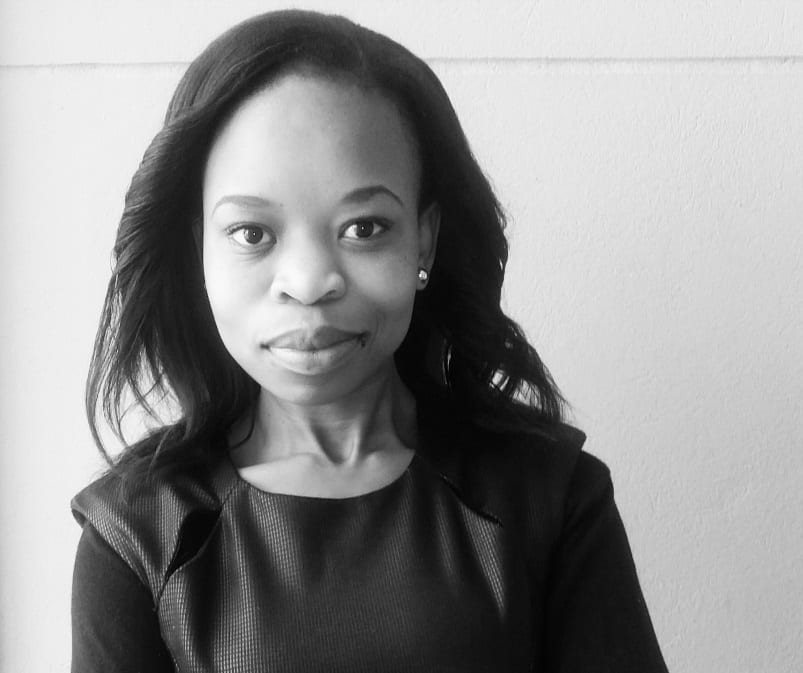
[bctt tweet=”Sandra Myambu is working towards giving school-leavers the skills that will make them employable” username=”SheLeadsAfrica”] Sandra Myambu is currently a Portfolio Programme Analyst at Dimension Data where she is involved in delivery and support of global, strategic projects. She is also the MD for Masana Social Innovations. During her university years, Sandra joined Enactus as Project Manager then Vice President. She also volunteered as a Skills Development Trainer and Project coordinator at an NGO. When Sandra began working for Dimension Data, she still wanted to continue having an impact to society. By seeing the number of graduates increase in parallel with youth unemployment, the idea for Masana Social Innovations was stimulated. Sandra found out from various research exercises that many graduates lacked skills that deemed them employable, especially in the ICT sector. This is when she started Masana Social Innovations to uplift young people. Sandra shares with SLA contributor, Anelisa Kasper her challenges and motivators of starting Masana Social Innovations with a full-time job. How has your journey/transition from corporate to entrepreneurship been like? As I’m currently still in corporate and have recently started with Masana, my transition into entrepreneurship hasn’t been hard. Masana’s aim is to use technology innovations to enable the civil society, corporates and state entities to deliver sustainable social solutions to communities. This will be achieved through bridging the skills gap in the ICT industry with a key focus on women, through the facilitation of various skills development programmes. This doesn’t mean it will be easy for everyone, as experiences vary from one person to the next. I haven’t had to transition as much. The most important thing was to find a balance between my corporate and my entrepreneurship venture. I have always been involved in entrepreneurial activities so juggling my job and my new business is familiar territory. There have been serious adjustments, where Masana and my job are demanding at the same time. What has helped me keep the balance was to be able to effectively manage my time. As I am the MD of Masana, it’s easier to manage my work and assign work to myself that also ensures that my job does not take major strain. [bctt tweet=”Sandra Myambu found out that many graduates lacked skills that made them employable” username=”SheLeadsAfrica”] What have been your hardest moments, and how have you overcome them and still overcoming them? I have big dreams and aspirations for Masana as a social enterprise, and not just as an NGO. Articulating my vision for the organisation has been one of the biggest challenges to date. What I’ve learned from trying to explain that vision is putting it into smaller goals, e.g. this is where Masana is going this year in order for it to get where Masana ultimately needs to be. Articulating the vision to people will still be a problem in the future because Masana is trying to use innovation to drive real social change. The issue is that people are still not ready to invest in social innovation or community programmes. The hope is that reaching out to more people in smaller scales and trying to explain the vision will help in increasing the buy-in. One of the major challenges that Masana is still experiencing is getting the right buy-in from the right people. It takes time to establish those relationships and to most importantly, maintain them. Common ground and common interest are key in getting buy-in from investors for your business. [bctt tweet=”Sandra Myambu: I’ve always had entrepreneurial activities so balancing is familiar” username=”SheLeadsAfrica”] What keeps you going in making sure you make Masana Social Innovations an even bigger success? It’s about knowing how whether small or big the initiatives Masana has, they are valued and they have a real impact on young people and the community. Recently, Masana hosted Africa Code Week in October. During the code week, Masana trained over 600 young people on basic coding skills. In addition, 60% – 70% of the participants were women. The programme had a big impact, and has opened up more women to coding, even if it’s starting at basic coding skills. The initiatives that Masana holds have had a big impact. Not just to impart people with coding skills which are essential, but also to make people realise that technology is also essential. The success of a business can also be determined by the technology you choose to run your business with. Uplifting young people is a motivator for continuing with my entrepreneurship venture. My target market has been young people from under-serviced communities and previously disadvantaged areas. Uplifting young women who do not believe they can get the same opportunities that our male counterparts receive. Most importantly, to uplift these young women in believing that they can do well in the world of tech. [bctt tweet=”According to @_WisaniSandra people aren’t ready to invest in social innovation” username=”SheLeadsAfrica”] Who have been your biggest supporters through your journey? How have they been supportive? My biggest support system is my family, my friends and a few of my colleagues. I have also received support from mentors in my professional and academic life, and conferences. Those mentors have played various roles in different stages of my life. My mom and sister have been the most supportive where I’m able to bounce off ideas with them. What has also helped has also been surrounding myself with friends that are also entrepreneurial and who have similar interests. Attending the #SheHiveJoburg event this November, in that short period of time, meeting amazing, young black woman who are also visionaries and have aspirations of their own. Those ladies have become key individuals in my networks. [bctt tweet=”Masana is uplifting young women who don’t believe they can get the same opportunities men receive” username=”SheLeadsAfrica”] What are your plans to ensure that Masana reaches a bigger audience and brings value to more people? Masana is still at it’s very beginning stages. So far, we’ve successfully implemented the Africa Code Week initiative. A SAP
Kagure Wamunyu: I always see opposition as an opportunity to grow
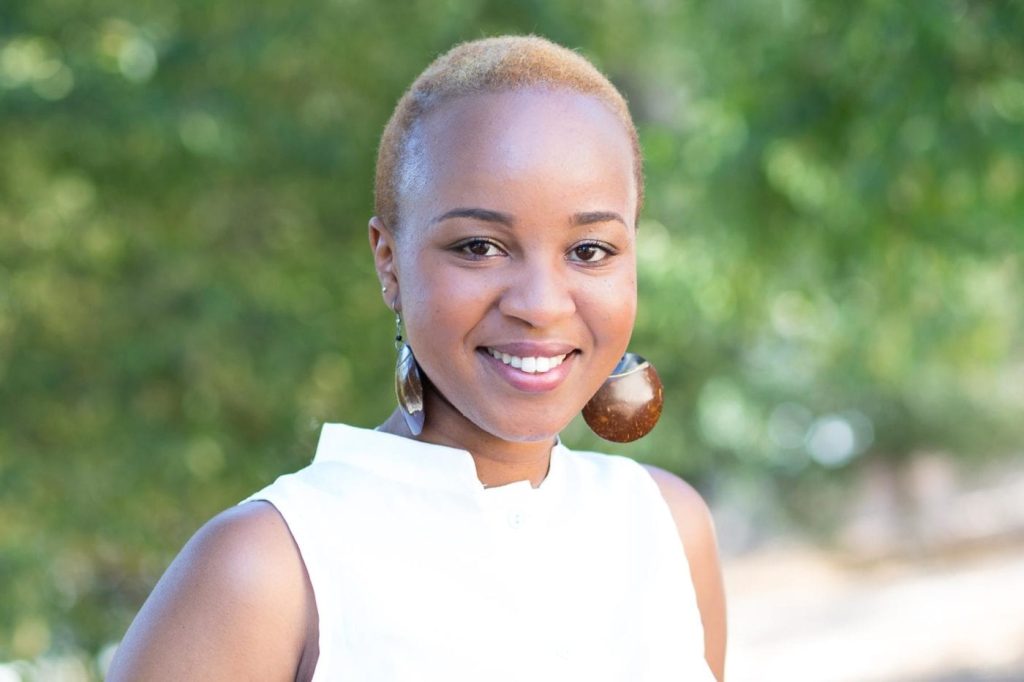
[bctt tweet=”Kagure Wamunyu: I think figuring out what it is you want to do in life, early in life, is key” username=”SheLeadsAfrica”] It’s always great to see our African sisters take on non-traditional fields such as technology and engineering. One such woman who has literally made technology her niche is Kagure Wamunyu. The 27 year old is the current head of logistics and operations at Uber Kenya. Kagure is changing the way women lead in the tech industry by following her own path and refusing to take no for an answer. She has carved her way into the industry meticulously with not one, not two, but three degrees under her belt. Kagure quickly returned to her beloved home-town, Nairobi to use her knowledge and expertise in improving the transport and urban planning industries, two things she is very passionate about. Diana Odero, our SLA contributor had a great chat with Kagure to find out what it is that keeps her motivated to do what she does and why she believes in always paying it forward. Word on the street is that you were Uber Kenya’s first full-time employee. How did you bag that role coming straight out of uni? I was recruited to join the organization during my last year as a postgraduate student through LinkedIn. I think what they really liked was the fact that I had picked a particular course and specialized in it throughout my academic career and work experience. All my research projects were transportation planning based and I mostly focused on Nairobi so I knew the topic and the area very well. Reading up on Nairobi gave me great knowledge on the industry there, which I used during my interviews with them and that resulted into me getting the job. Your road to Uber has been quite fascinating. An internship at the UN just before joining the company, a Masters degree from UC Berkeley and you also completed two degrees concurrently in college —all funded by scholarships might we add… How did you manage to study abroad for over five years and what would you advice young girls striving for the same to do? I was fortunate enough to go and study in the US with the help of Zawadi Africa Education Fund, a program that provides scholarships to bright young girls who show leadership potential. I discovered Zawadi Africa while in high school and I think my taking initiative to actually want to be part of the program got me the scholarship I needed to go for further studies. Then, I was awarded a scholarship by Meredith College where I studied Mathematics and Civil Engineering. I think figuring out what it is you want to do in life, early in life, is key in helping you achieve your goals. I knew what I wanted to be and I saw that this school in particular would allow me a chance to do a dual degree so I took the opportunity. Being in school for five years as opposed to the traditional four meant a lot of balancing and multi-tasking on my part but every minute was worth it. As for my Masters, I applied the same method, I looked for schools that had the course I wanted, looked up scholarship opportunities within those schools and applied. I was never scared or apprehensive about either application, I just saw an opportunity and went for it. There have been instances when there was public opposition from your taxi drivers about changes within the company such as drastic price cuts. How did you handle this public conflict? For me, it’s very important to believe in what I do. It’s very important to believe in the impact the work that I do has in my community, in my city and in my country. It helps that my background is in urban planning so I have a holistic view in terms of what is going on. When you believe in what you do, most of the time you have to set the misconceptions straight. When people are talking negatively about the work that you are doing or the impact the company has, more often than not, it’s always about misinformation or miscommunication. [bctt tweet=”Kagure Wamunyu: Tell things from your perspective and believe it as you say it.” username=”SheLeadsAfrica”] I handled this public conflict through telling my story, as it is very important to set the record straight, first and foremost. Tell things from your perspective and believe it as you say it. I always see opposition as an opportunity to grow, it gives me a reason to dig deeper into my work and see what the problem is and explain to them exactly what I meant by my decision. What tips do you have for those interested in joining the technology/urban planning field? For those interested in this field, and this is especially to the women; we always feel like technology is all about coding and programming which by the way, I can do neither. There are so many other things you can do in the world of technology and it’s just a matter of taking the leap. Be good at what you do now, be good at what you have chosen. Be it communications, urban planning, legal studies or engineering. Should you decide you want to be part of the technology sector, know that these companies need all these different functions to work. So if you have perfected your niche, whatever field it may be in, you will be able to find opportunities in the tech world. At the same time, find out what it is the tech companies look for, research on which direction the field is moving towards and improve and groom yourself for that role. [bctt tweet=”Kagure Wamunyu: If you have perfected your niche, you will be able to find opportunities” username=”SheLeadsAfrica”] What has been the proudest moment of your career? In May earlier this year, we announced a partnership with Sidian Bank for USD$100
Kgauhelo Dube: The European framing of public discourse is disturbing
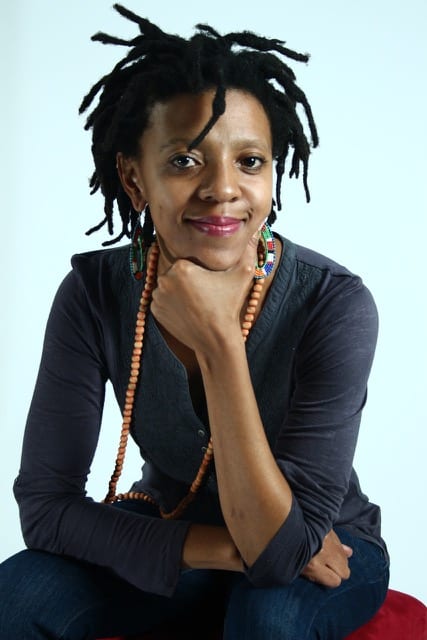
[bctt tweet=”2015 Mbokodo Women in Arts nominee @kgauzagp shares why she moved to the arts sector” username=”SheLeadsAfrica”] Kgauhelo Dube incorporates her knowledge and experience in traditional advertising into the work she does within the arts, culture and heritage field. She combines these on an eclectic mix of projects, including her own brainchild, #longstorySHORT. #longstorySHORT was launched in March 2015 to promote African literature through interactive events. These events feature the work of African writers, discussions about important topics affecting literacy in Africa and the sale of books. Kgauhelo continues to be part of a wide array of projects from festival management, content production for TV to acting as a strategic consultant to various artists, cultural foundations and corporations. She was 2015 nominee for Mbokodo Women in Arts award in the category of “Promotion of Arts and Culture in the Media”. You worked as a brand strategist for a firm. Why did you make the move to literature? I didn’t move from brand strategy environment to literature. I’d say I moved to the arts, culture and heritage sector. I made the move because I believe there’s a big role that the arts, culture and heritage sector play in social change, especially in South Africa, a country with a huge identity crisis. The European framing of public discourse is disturbing. Popularising and normalising versus romanticising African ideas, identities, philosophy, languages are instrumental to unlocking the various economic, moral and societal crises we are currently facing. [bctt tweet=”The arts can play a huge role in social change, especially in South Africa @kgauzagp” username=”SheLeadsAfrica”] #longstorySHORT has been well received since its inception in March last year. What is the ‘short’ story behind the name, and how was the idea born? Popular culture has in one way or another succeeded amplifying (whether tastefully or not) very important issues, and so we felt that we could tap into those same strategies and platforms to normalise the culture of reading. #longstorySHORT hosts a podcast in Setswana. Do you see any financial benefits to publishing in African languages? Is there a growing market for such books for young Africans writers to tap into? It’s difficult to focus on creating a business model around a culture that has been demonised over centuries. So, whilst there’s an opportunity in getting more Africans to read in indigenous languages, the first port of call would be for us as Africans to love ourselves enough to understand the potential transformative value of the wisdom that’s locked up in our languages. Being African shouldn’t be about wearing “costumes” on our independence days and during Africa month. There’s no point in pouring a lot of resources in creating African content and selling it to people who mostly associate upward mobility and sophistication with European brands, languages, lifestyles and frame of reference. Once we’ve dealt with the mind-shift, yes, then there are great opportunities for publishers, writers and content creators to disseminate exciting books, films, learning software in our languages! Think about it, Setswana is not only spoken in Botswana. SA has a huge population of Setswana speakers as well. Remember, we didn’t create the borders so there’s linguistic spill over in countries that border each other. [bctt tweet=”#longstorySHORT has celebrities endorsing African literature as its marketing strategy.” username=”SheLeadsAfrica”] It’s understandable for writers to participate in the reading events organised by #longstorySHORT. But no one expects a celebrity to participate in them. Why was it important to get them involved? This is where we use the tactics employed by the marketing industry. It is a classic case of celebrity endorsement. Instead of endorsing a beverage, the participating celebrity is endorsing African literature. With 92% of local libraries closed in South Africa and the rise of ebooks, are print publishers in Africa staring at a bleak future? The going statistic is that 92% of predominantly black schools don’t have functional libraries. However, there’s been a surge in local libraries being built in these areas post-apartheid, which is why a lot of #longstorySHORT readings happen there. How does #longstorySHORT engage with those who, for whatever reason, can’t attend readings and don’t have access to the internet? #longstorySHORT is one of many literacy/ literature promotion campaigns. The scope for the change that needs to happen is not only going to be achieved by us. There’s an exciting growth in literary entrepreneurship with many great young thinkers tackling the illiteracy conundrum in many different ways. There are festivals, online book clubs, bloggers, road-shows, master-classes and a host of other exciting things happening at the same time. It’s a special time for African writers. [bctt tweet=”According @kgauzagp to there’s an exciting growth in literary entrepreneurship” username=”SheLeadsAfrica”] In addition to the work #longstorySHORT is doing, what else can be done to help Africans publishers thrive and encourage bookstores to stock more African literature? Since a nation’s literacy rate has a direct link to its GDP, more official interventions need to happen. There’s lots of policy around eradicating illiteracy, but there’s very little enforcement, monitoring and evaluation. Governments have to have a more urgent, creative and spirited approach to these problems. It’ll never be enough to highlight these challenges within the contexts of calendar days such as World Book Day and World Mother Tongue Day. Consistent intervention is key. What does the future hold for African literature, and more specifically for #longstorySHORT in the coming year? From a promotional perspective, we believe the brand #longstorySHORT has high equity. Now the challenge is maintaining the frequency of readings and reaching remote audiences all over the continent. That requires some brave brand managers and philanthropists pledging their marketing budgets and collaborating with us. If you’d like to share your story with She Leads Africa, let us know more about you and your story here.
Habiba Wushishi: Food should not just be eaten but be enjoyed

[bctt tweet=”It has always been my dream to be innovative with my cooking – Habiba Wushishi” username=”SheLeadsAfrica”] You know a real foodie when she talks about food evoking emotions and cooking being a married of ingredients. We’re talking about Habiba Wushihi here, founder and spice-mixologist (yeah, we just made this up) behind Sydney’s Cuisine. Habiba just loves food and she wants everyone to enjoy the tastiness and variety of Nigerian cuisine. That’s such a dope goal. Through Sydney’s Cuisine, she’s creating a new culture around how we appreciate Nigerian food which she hopes to expand globally through franchising. Read on to discover how Habiba will achieve her goals. She’s got lots of great advice for baby start-ups too. Why are you passionate about delivering good food in Nigeria? As a foodie, I understand that there are people who eat just to fill up, and people that actually love food. I believe that food should not just be eaten but be enjoyed. Nigeria is a country that boasts of so many traditional dishes from a myriad of cultures within it. Each culture has its own blend of flavours and ingredients which makes all of the food unique. Sydney’s Cuisine’s concept is based on an infusion of Nigerian and Intercontinental flavours. To that point, I too have started ‘The Sydney’s Culture’ which aims to continuously entertain my customers with bursts of flavours as they eat. The beauty of the Nigerian food culture is that we all eat and appreciate each other’s food from all parts of the country. One thing that is for certain is that Nigerians love to eat. This is befitting for me as it has always been my dream to be innovative with my cooking and create new and updated dishes that I know will attract a lot of people. When you are running any food business, the main priority is to be able to satisfy a variety of palettes and to enhance customers’ dining experience. Food has the ability to evoke positive emotions. Maybe you are having a stressful day at work, and my food has put a smile on your face. This is immensely rewarding for me knowing that I have provided a good service. Sydney’s Cuisine is dedicated to delivering good food in Nigeria not only to quench hunger and satisfy cravings, but also to create awareness about the next phase of Nigerian cooking. What makes Sydney’s Cuisine different from the other food and catering businesses that exist on the market? Before I started this business, I did research on as many food businesses as I could. More often than not, you come up with some idea(s) that someone or several others already have executed. I realised, after conducting my research, that my food concept and brand culture would take-off based on that special component, that makeover, that je ne sais quoi, that is much needed in the Nigerian food and catering market. Not long after, I had an epiphany —cooked food is a marriage of ingredients! In this case, my food concept would be to infuse Intercontinental flavours into the Nigerian cuisine. What sets Sydney’s Cuisine apart from the rest is that there are at least 15 different Nigerian and Intercontinental spices in all of our meals. This achieves a level of flavour that is so desirable, it has proved to be a tad overwhelming (in a good way) for a few of our customers. [bctt tweet=”Sydney’s Cuisine blends at least 15 different Nigerian and foreign spices in all meals” username=”SheLeadsAfrica”] One of my goals is for Sydney’s Cuisine to appeal to people around the world, and the best way to achieve that is to provide a sense of familiarity by cooking with ingredients known to people from a specific country. I want the rest of the world to have a taste of the Nigerian cuisine and in turn, I’d like Nigerians to experience other flavours in food. Just like people all over world eat and enjoy the Asian cuisine. Global corporations like Google, Amazon, and Microsoft have their own individual business culture. This culture has played a huge role in the success of these companies. You don’t really hear about food/catering businesses and their cultures. Culture is a substantial part of any business and should be incorporated into every business. I am gradually developing the Sydney’s Cuisine culture that will make it stand out. Since this is your first start-up, what are the hardest parts of getting your venture off the ground and how are you looking to fill in the gaps? With any start-up, you will be faced with tough challenges. Teething problems are to be expected at the start of any food business. At first, when any issue arose, I found myself panicking and even doubting myself and my capabilities. I started this business on my own and without any partners. As a result, I had to juggle several roles and responsibilities to ensure quality control and efficiency. I was a manager, accountant, marketer (via social media platforms), food orders supervisor, packager, just to name a few. Sometimes, I would focus on one or two roles and because of this I would have missed a few orders or endanger the quality of the meals. Each role is just as significant as the other which is why I became very anxious in the beginning. [bctt tweet=”I found myself panicking and even doubting myself and my capabilities – Habiba Wushishi” username=”SheLeadsAfrica”] When you are starting a new business, you may not want to hire a manager from the onset because you want to save on costs. So I decided to try out a couple of routines and figure out the best one for me to follow. Since then, I have come up with a system that works perfectly and has enabled me to settle into all those roles comfortably. And as the business grows, I will create a team to fill the roles. Day to day operations will always be a challenge and
4 things to learn from the lady mechanic, Oduwa Agboneni
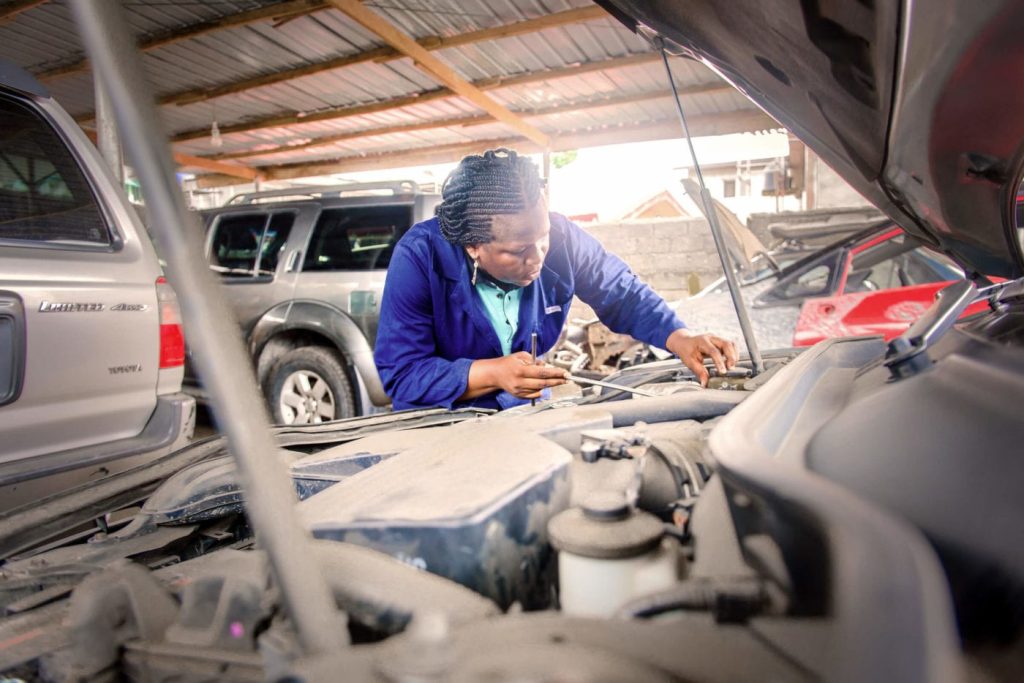
[bctt tweet=”There is nothing like male-dominated field – Oduwa Agboneni, the lady mechanic” username=”SheLeadsAfrica”] Oduwa Agboneni is an entrepreneur in a seemingly male-dominated field. By the way, she doesn’t believe that crap of “male dominated” anything. Oh yes, we love that kick-ass spirit. She had her first degree in Mechanical Engineering from the University of Benin before proceeding to the University of Lagos for a Masters degree in Geoinformatics. She worked previously in the mechanical industry but since she’s always had a flair for business, she knew it was a matter of time before launching hers. Oduwa is the founder of Neni’s Auto Care. Her services range from car wash and detailing (odour removal, polishing, washing, fumigating) to auto-repair (auto diagnosis, body work, panel beating, electrical) and home based repairs. Presently, her employees are 80% male. Although her male staff are fine with her leadership, most times they tell her that she is the first woman they have worked with. They love Oduwa’s leadership skills so much that they no longer see her as a woman. To Oduwa, this shows that success has no gender neither does leadership in the “male-dominated” field. Her goal is to be the richest black woman in Africa. Oduwa would also love to see her business represented in all states in Nigeria and all countries in Africa. She plans to set up an NGO to empower young ladies in STEM, all while being the best wife and mother. Here are four things SLA contributor Ugochi learned after a chat with Oduwa: 1. The most difficult part of being an entrepreneur isn’t funding but coming up with a sustainable idea Motherland Moguls, you need to get in here. Contrary to perception that funding is the major challenge for business owners, Oduwa believes this is not the case. A good idea will always bring in the money eventually. So dream big, start small and grow steadily. She started from a car wash to developing a garage and now Neni’s Auto Care has evolved to perform other services. Good ideas would eventually attract funds as Oduwa is a 2015 recipient of the Tony Elumelu Entrepreneurship Programme (TEEP) grant. [bctt tweet=”A good idea will always bring in the money eventually – Oduwa Agboneni” username=”SheLeadsAfrica”] 2. There is nothing like “male-dominated” field Oduwa believes that this is a thing of the mind in this part of the world. So, know what you want and go for it. Motherland Moguls, what are you waiting for? 3. It’s a fallacy that you can’t be feminine in a “male dominated” field Now, there’s that phrase again “male-dominated” but this line of thought is absolutely bullocks. According to Oduwa, it’s all about time management. You can still look good, make your hair and be girly irrespective of the industry you operate in. 4. You can ace marriage and career Even though she has always been a career person, Oduwa knew she had to blend it with her marriage. She has learned to create a balance between her work and her home. Ugochi and Oduwa are currently undergoing a training programme together and Oduwa brought her baby along. But you’d never know there is a baby there because Oduwa is so coordinated and still contributes meaningfully in class. Talk about doing well in all areas. [bctt tweet=”#MotherlandMoguls need to dream big and be open to partnerships” username=”SheLeadsAfrica”] Final words to the Motherland Mogul You need to dream big and be open to partnerships. Pay attention to your customers and your employees because you need them to grow your business. Be focused, hard-working, determined and prepared at all times. Live your dreams. Want to see women you know featured on SLA? Tell us what amazing things women are doing in your communities here.
‘Go the extra mile, because it’s usually empty’: Why you should Do it Now Now

[bctt tweet=”How @DoitBayo is bridging the gap between who people are now and who they want to be” username=”SheLeadsAfrica”] Do it Now Now is a crowdfunding platform that has the social development of Africa at its core. Founded by Bayo Adelaja, a research assistant at the London School of Economics, Do it Now Now helps supports social entrepreneurs in their quest to make a positive impact across Africa. Bayo also hosts frequent StartUps for Africa events on Google Campus, in the heart of London’s Silicon Roundabout. We caught up with Bayo to find out a bit more about the Do it Now Now journey and the importance of social entrepreneurship right now. Where did the passion for entrepreneurship come from? I love working at the LSE, the work is great and so are my colleagues but I’ve always had that entrepreneurial spirit within me. The only way I could do that was by stepping out of my comfort zone and saying this is who I am, who I want to be and I’m not going to let anyone talk me out of it. I had been talked out of it in the past when a company that was trying to buy another start-up I had tried to steal my idea. At that point I wasn’t good at saying I needed help or a support network to guide me on the journey. I realised that most people don’t have that support. They also lack the skills, knowledge and connections. I thought to myself, wouldn’t it be great if I could help people to bridge the gap between who they are and who they want to be? What is Do It Now Now? Do it Now Now is a crowdfunding platform with an incubator attached to it. We help people raise up to £10,000 ($12,000) from their friends, family and other interested parties. Do it Now Now helps businesses organise their campaigns, their perks and rewards, the marketing, the budget, everything. We work with the startup from A to Z, giving them all the support they need over the course of a year to help them build a healthy, scalable and sustainable business. [bctt tweet=”We help people raise up to £10,000 from their friends, family and other interested parties” username=”SheLeadsAfrica”] My job at the LSE has helped a lot as. I saw that there was a gap between the amount of work that aid organisations can do and the amount of development needed on the continent. Social entrepreneurs and start-ups can be more flexible, quicker on the ground with more local knowledge of the community that they’re in. That’s a huge advantage, and an opportunity for them to link up with other organisations in Africa who might be able to support them in one way or another. We also partner with incubators on the continent such as the Kumasi Hive, working with tech entrepreneurs in Ghana. How does the fundraising process work? You raise money with us and we help you grow. Then, we expect you to donate 20% of your gross income or £500 ($600), whichever amount it higher, to the charity that you chose at the beginning of your campaign. Do it Now Now collects commission that enables us to run the programme. We also have Startups for Africa, the free version of the programme which brings together people who are interested in growing their businesses, fostering collaborations and getting a conversation started. We want to show people that it is possible to be a purposeful, conscious person and have a business that is not just about the money, but about people and causes; it’s a heart thing. Money is great but being part of a community that cares about people and supports you is so much better. How can social entrepreneurs be successful on the continent? Do it Now Now is based on this principle: start now, plan now, do it now and do it well. Get on your feet and keep moving. So many of us have a good ideas that will change Africa but we spent too much time planning and researching. We’ve been relying on potential for years, if not decades. I want people to see that it’s not difficult at all to be a purposeful business. Social entrepreneurship is a fantastic way to support Africa’s development and still support yourself financially. I’m not here to simply line my pockets and die rich, I’m here to help people and improve life on the continent. [bctt tweet=”I want people to see that it’s not difficult at all to be a purposeful business” username=”SheLeadsAfrica”] If we have businesses that are strong, healthy and doing positive things it becomes good PR for Africa. Be passionate about your business, your people and the rest of the world will see it too. We need to recognise who we are, where we come from and build what’s needed —no one is going to do that for us. Africa is not a token, it’s not something you do on the side, you need to treat it with the respect that it deserves. How do you balance a full time job and running Do it Now Now? Well, I work about 80 hours a week: I wake up at 5am to build my business then go to work at 10am. Then I sleep and do it all over again, because I’m super passionate. Someone once told me ‘go the extra mile, because it’s usually empty’. If we just pivot the purpose of business we can make a truly sustainable and long-lasting impact. [bctt tweet=”‘Go the extra mile, because it’s usually empty’ – how to make your mark” username=”SheLeadsAfrica”] How can a budding social entrepreneur get started? Pick a problem and pick it wisely. It has to be something you’re passionate about, otherwise you’ll quit. You’ll quit quickly and you’ll leave people in the lurch. Pick something small and specific, then you can then blow it up and make it big. Always work with other people and look out for collaboration opportunities.
Rosaline Kariuki: There will never be a better time to be an entrepreneur
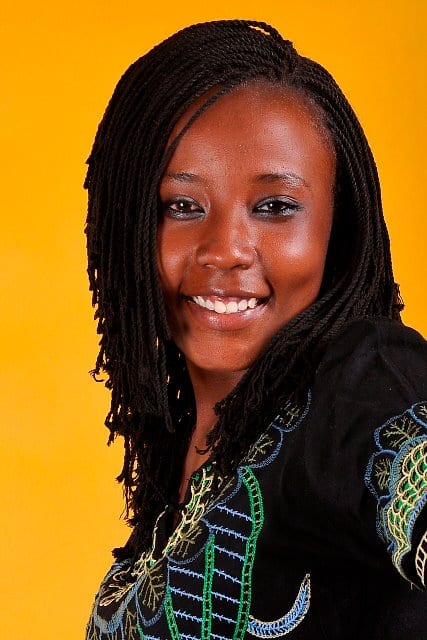
[bctt tweet=”I want to do small things for kids, but in a big way – Rosaline Kariuki” username=”SheLeadsAfrica”] I have had the pleasure of knowing Rosaline Kariuki since childhood. I’ve admired Rosaline as an amazing enterprising lady and recently imbibed some of her wisdom over froyo. Rosaline is a lawyer by profession. For a long while, her mind was fascinated by case laws, contract proceedings, ‘caveat emptors’, ‘de factos’ and ‘ipso jures’. However over time, Rosaline’s heart chose business. And as with all resilient, passionate, all-the-way-up hustlers, business chose her right back! Before we get to the crux of the business story, what was your childhood dream? Has that been the same all through or did you change some things along the way as you grew up and discovered yourself a little bit more? I always wanted to be a dancer, thanks to the influence of Channel ‘O’. Then in the usual progression of life, that evolved to a writer. However, there was no J.K. Rowling in my time who inspired me as such. After that, I moved on to the dream of owning and publishing a children’s magazine. Think of this as an enlightening kids magazine, giving them their voice where they get to write, showcase their skills, creativity and pretty much cover anyone with genuine interest in kids who would like a platform or a way to contribute. Finally, I settled on being a childrens’ lawyer. You really have a passion for children, Rosaline. Where are we now with the dream? Yes, kids! I want to do small things for them but in a big way. I figured that the ladder to a lot of ideas that I had for them would need me to climb up by sticking to the legal profession. So with my new-found energy and charm for business, I realized that I could use the proceeds to set up something for them on the line of quality medical care. The current providers are mostly overpriced, queues are long and rarely does a wonderful story spin out of these hospitals, private ones included. Don’t get me started on public hospitals. That’s brilliant! I think that good medical care has a long way to go and not just in Kenya, but in a lot of developing countries in Africa. After mulling over business ideas, what did you first settle on? I started by helping my mom set up a snack shop next to a major university in Kenya, Catholic University. I have always loved sandwiches and smoothies! If you want to take me on a date, you better get a perfect recipe for those two! [bctt tweet=”My first business was like a kindergarten teacher on day one holding me through the ABCs” username=”SheLeadsAfrica”] I was engaged there for a couple of months before getting into tenders for school suppliers. This first business taught me a lot: it was more like a kindergarten teacher on day one holding me through the ABCs. I perfected my entrepreneurial rocket launch pad, it was also a test of my courage for business and my very first baby. On to the tender business, would you share how that is coming along? So far so good, and so rewarding. My company is called Petmil General Supplies, or PMG in short. I tender to schools supplies in the range of cereals, dry food and stationery. It is bulk business and is very promising. My dad has been a major mentor especially for stationery supplies, having been involved in a similar business when I was small. My younger brother is my partner and I am looking to grow this and then strike another venture, the serial entrepreneur style. [bctt tweet=”Whatever it is that you are passionate about, stick to it long enough to make it happen” username=”SheLeadsAfrica”] Would you like to go deeper into the lessons and what other Motherland Moguls can learn from you? Oh yes! Always stick to the plan: My idea was to be a healthy snacks vendor but we found ourselves trying lunch meals. This shifted focus and by far has been my biggest lesson. Whatever it is that you are passionate about, stick to it and focus long enough to make it happen. Financial: For what you think you’ll need to start out as capital, double that. The buffer is necessary as other operating expenses or hidden expenses crop up and can be a tad overwhelming. Vision & employees: Your employees need to see your vision, understand it and buy into it. Even if not all, at least one. This keeps them on toes, gives them a direction and motivates them in times of uncertainty. Sometimes, it will be only one employee, the loyal kind. Such handle the business when you are away or have other commitments to take care of. Outsourcing: Get help or you’ll burn out. I burnt out a few months into the business because I was doing everything when I could actually outsource some help. Accounting/website design/social media…any functions that you can pay a reasonable fee to be taken care of will ease up your schedule for business development. Personal: There will never be a better time to be an entrepreneur. We are the change makers and this is the time. We are much like the American baby boomers who our kids will be talking about 20 years to come. I will die an entrepreneur. Want to see women you know featured on SLA? Tell us what amazing things women are doing in your communities here.
Emma Wenani: Deep down, I always knew I would be successful

Emma Wenani is the Director, Human Resources at Global Media Alliance (GMA), a leading communications company in West Africa. Together with her team; they manage the HR processes for over 300 staff members across 9 business entities. Emma embodies the idea of women in corporate leadership, but her career now is nothing close to what she wanted to do with her life while she was growing up. She shares more about that, her leadership experience and the challenges for women in leadership. What was your dream job as a kid? Why? I wanted to be so many things at the same time. At some point I wanted to become a model because they looked so prim and proper and very well mannered. Then I wanted to be an air hostess so I could travel the world; I still want to travel the world, but as a tourist. Then at yet another point, when one of the top cardiologists in Kenya died from heart disease, I decided I was going to be a surgeon. For the longest time I was working to be a doctor, but when I really discovered what careers were (I guess one eventually does grow up), I knew I wanted to become a teacher, I still believe that I will teach one day. I wanted to teach because of one of my primary school teachers, Mrs. Katingima. To date, she is my all-time favourite teacher because she taught us and loved us. I admired her; there was something about how much she wanted us to succeed that made going to school very easy. I wanted to be a teacher like Mrs. Katingima so I could teach my students with as much passion as she taught us. How did you find yourself where you are now? I will summarize it somewhat and say I do believe I am where I belong. I never thought that I would be pursuing a career in human resources, but this is where I find myself and I love it. When I was doing my undergraduate studies, I joined a student organization on campus called AIESEC. AIESEC is the largest student-run organization in the world, which was keen on inculcating in us the importance of working towards realizing our leadership potential. It was there that truly, my passion for talent, training and people was unearthed. I was involved in a number of roles that gave me the opportunity to lead teams, attend conferences in different countries with like-minded leaders, facilitate conference sessions etc. It was clear that anything and everything that involved working with people and in talent management was something I would pursue. After 6 years of being in HR and 2 years specializing in HR studies at Masters Level, I can comfortably say that I am home. What woman inspires you and why? I admire Kenya’s First Lady Margaret Kenyatta; I admire everything about Her Excellency. How simple yet powerful she is, how much thought goes into her ceremonial and occasional outfits, her causes and the passion she puts into them. I admire that she not only says she is going to do something, but puts her all into it. A leader should not only delegate but should also show others that they can do what they say they are going to do. The effort and work she has put as founder and patron for the Beyond Zero campaign, aimed at stemming maternal mortality must be lauded. I look forward to meeting H.E. Margaret Kenyatta one day, to tell her that I admired her from afar, and to say thank you on behalf of current and future mothers for sharing her story and truly living her promise. What do you consider your biggest success? I don’t know whether I would term it as biggest success but I am proud of the woman I have become. I have always been ambitious and deep down I always knew I would be successful. But, I do not take for granted the opportunities that I have had in the pursuit of my dreams that have made me excel in my career. 10 years ago, if anyone told me that in 2016 I would be a Director of one of the most successful media companies in West Africa, I would not have believed them. But here I am, many miles away from home, away from my family, away from what is familiar but flying the Kenyan flag high and representing it in my new home, Ghana, smiling deep down and being content with the woman I have become. I am still a year behind my dream of being CEO but I am proud of who I am today. Tell me about a time you failed as a leader? I cannot put a finger to any moment that I may have beaten myself up for failing. One of the things that scares me the most and would be a failure on my part, would be not leaving a legacy or having a good successor. If for example, I have to leave my work place and no one notices or feels my absence or I am not able to leave a good transition history, I would have failed as a leader. What do you think is the most significant barrier to women leadership today? Today, more women are empowered to take on executive leadership roles than in the past. Obviously we still have a long way to go because the percentage of male executive leaders still outnumbers women’s by a huge margin. One of the barriers to women leadership is the struggle with the idea of neglecting family as they climb up the corporate ladder. Women are natural caregivers. Therefore, we always have to think of how our families will be affected if we take on more responsibilities at the workplace, and what support, if any, will be offered by organizations whether in the formal or informal sector. How do we create a balance between taking a seat at the table and still remain competent home makers? If you’d like to share your story with She Leads Africa, let us know more about you and your story here.
Rebecca Kanoerera Munyuki: Leaders lead from within, regardless of their position
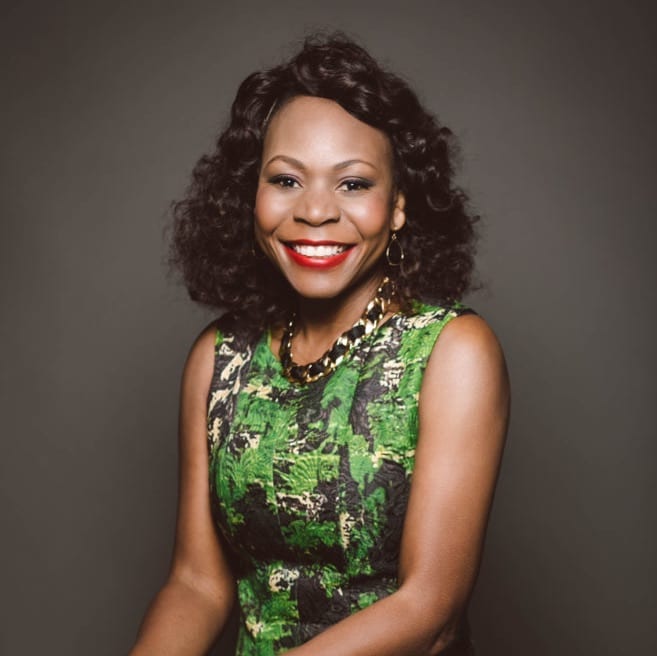
[bctt tweet=”@RebeccaKano is a woman who simply refused to accept average” username=”SheLeadsAfrica”] You know the famous Shakespeare quote: “Some are born great, some achieve greatness, some have greatness thrust upon them”? I am obsessed with hearing stories of how those who achieved greatness did it. Rebecca Kanoerera Munyuki is a great example of a woman who simply refused to accept average. She resolved that if it was possible to achieve greatness, she was going to be one of the ones who achieved it. I sat down with her to chat about her inspiring journey. You truly have humble beginnings. You started as a childcare giver, to working as a call centre agent, and then working for an international company. During your time at IBM South Africa, you held various management and key leadership roles. You ran their ‘Deal Hub’, then moved to marketing, covering multiple software technologies for Middle East, Africa and Turkey. Not to mention you served as chairperson for IBM Women in South Africa network group. What went into realising your personal greatness? Firstly, it is important to say that I actually don’t have to have it all figured out. Sometimes I stumbled into success. That’s not to say that I didn’t prepare and bravely accepted the opportunities that came and continue to come my way. This is what worked for me. If I had to give three keys of what got me here I would say: While you are figuring things out, make sure you stick with things and finish with excellence. You never know where opportunities come from. Mentors anchored me. You need people to encourage you and keep you accountable. Look for tangible models of how to get where you want to go. Even if you think you are doing something that no-one has done before. There is always someone out there who can model, if not your exact career path, at least a set of skills you will need to get there. This is why I am so insistent on women and Africans telling their stories. There is always something that someone can learn from you. [bctt tweet=”There is always someone out there who can model a set of skills you will need ” username=”SheLeadsAfrica”] When I left Zimbabwe and spent some years in America, I certainly didn’t know I’d be where I am now. Studying ICT was never in my plan. I always tell people not to ‘despise the day of small beginnings’ (which is from verse from the Bible and a useful thing to remember). One thing I admire about your journey is: it wasn’t linear. We see you now as a woman who has been successful in the tech space, but tech wasn’t your background. How did you chart a course in a space that I feel can be very exclusive? Keeping an open mind has been critical for my development. Thinking of your career opportunities in silo’s can limit you. After working for a bit, I realised that I wanted to enter the tech space. When I decided this, I didn’t only look for jobs in tech. I also seized opportunities that were tech-adjacent. For example if you want to work in tech, don’t just apply to traditional IT firms. Consider companies that may have a tech department and try get in there. [bctt tweet=” Thinking of your career opportunities in silo’s can limit you.” username=”SheLeadsAfrica”] You told me the story of a time when you were up for promotion. What should have been a great moment became a nightmare. Approval was held back because someone preferred a different candidate. After going through reviews and interviews, you were appointed. Your career journey was obviously not smooth sailing. How did you handle workplace opposition, and not take it personally. Also how do you continue to work with people who may have been difficult or who doubted your capabilities for a role? I have a philosophy for the companies I work for: They are my client and I am theirs. Ultimately I need to contribute to the success of the business results. In leadership and collaborating with colleagues and stakeholders, find a way to work towards a common goal no matter how diverse we may all be. While I can’t convince everyone to like me or believe in me, I make it a point to deliver. Also, in my case it was important to keep perspective. While there were people against me, I had mentors, team members and senior leaders who were incredibly supportive. [bctt tweet=”I have a philosophy for the companies I work for: They are my client and I am theirs” username=”SheLeadsAfrica”] Recognize the difference between potential and being capable. Potential is an intangible measure of the capacity you have inside to do a certain thing. Capability is usually measured by the tangible things you have already done. In trying to win people over, don’t just tell them you have potential. Show them why you are capable. Use past accomplishments to show you are capable, even if it’s a big step up. Also have willingness to learn and a teachable attitude. When taking up oversight of a team of people who are potentially hostile, be extremely deliberate in creating a new culture. Have one on one meetings; even if you are the leader, realize you are the new person. Do proper introductions, and get acquainted with the team. Learn the culture first before you change it; only impose ideas once you understand the context. Create systems and protocols to live by; make sure these processes are company standard to cut down on arguments. Never hide issues; Be deliberate in addressing things as and when they come up. Dealing with others’ criticism is tricky, but often we can be our own worst critics, right? You took an unconventional route to get into the tech space. Were there times where you didn’t feel qualified for promotions you received? Oh yes! An example is when I was looking to get into a more senior position, so I
Josephine Forson: At Tekura, quality means everything!
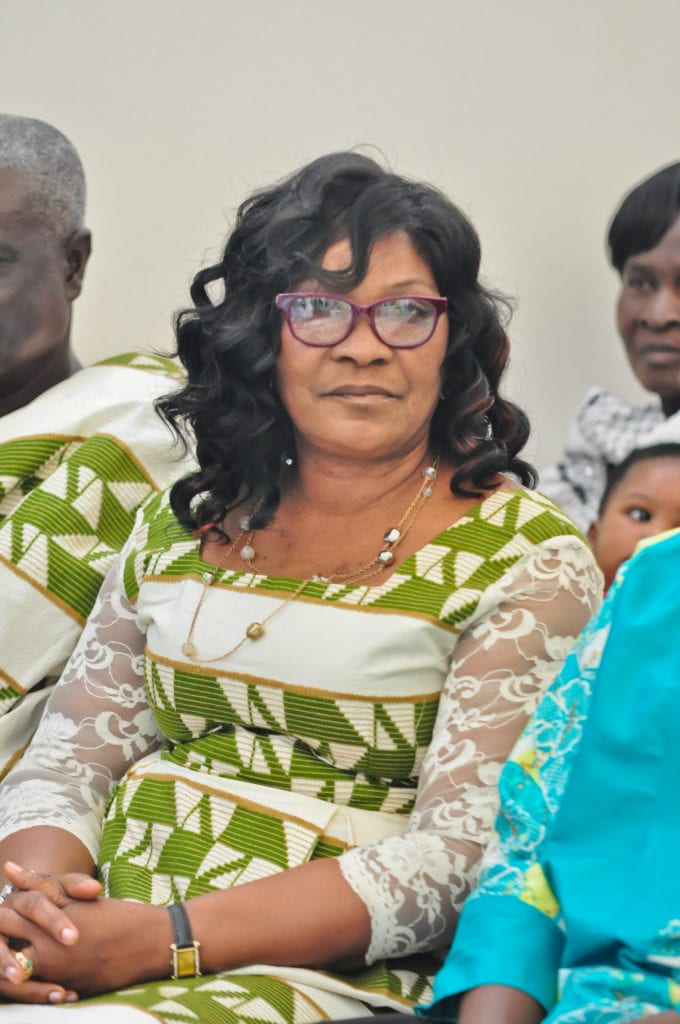
[bctt tweet=”Tekura started in 2000 with only two local artisans, crafting baskets under a mango tree” username=”SheLeadsAfrica”] Josephine Forson founded Tekura, an interior decor enterprise, in 2000 with only two local artisans, crafting baskets under a mango tree. By 2009, she was exploring other art forms made from locally sourced materials developed by artisans within the community. In partnership with Ghana’s Forest Research Institute and the Forestry Commission, Tekura sources reclaimed wood (off-cuts and dead wood) from forest plantations in Ghana for their furniture pieces. Tekura designs have been exhibited in USA and Europe, and have won the Africa Growth Institute of South Africa’s Trade Sector Award in 2008. Behind the scenes, Tekura is run by a mother, father and daughter team, and is inspired by the rich, diverse cultures of Ghana. Tekura is a family business run by a mother, father and daughter team. What do you think are the advantages and disadvantages of working closely with family? And when it comes to decision-making, whose call is it? Working closely together as a family has and continues to propel our loyalty and commitment to our brand and business. This makes pooling of resources much easier and everyone is empowered to bring along their own skills to grow the business. Like any family business that cherishes unity, we were concerned external investments would trigger a takeover. But with our well-structured succession plan, we will soon be on our way to going public. We’re grateful to God for Tekura’s success but what’s great is the opportunities and potentials for higher achievements. Our success mix is hard work, perseverance and love. The direction of policy is led by the board of Tekura. The Managing Director leads the daily consultative decision-making process. Your daughter, Audrey, is the manager of Tekura, what’s the biggest business disagreement you’ve had with her? And how are business skirmishes handled? Disagreements are essential for growth. It can be hard for us to agree on the definition of the various markets for our product lines. [bctt tweet=””Disagreements are essential for growth” – Josephine Forson, founder Tekura” username=”SheLeadsAfrica”] Something like this could be a major issue if you don’t make room for frequent team discussions and consulting with industry experts for fresher views and advice. Aside from Ashanti and Fanti cultural artistry, where else do you find inspiration for your unique pieces? Our inspiration goes beyond the cultures of Ghana. We pride ourselves in the rich cultures and heritage of Africa like the Fulani, Fang and Guoro. And since we’re in a land of beauty and natural wealth, we express all of these —who we are as African people through our furniture, handicrafts and other pieces. You mentioned in an interview how difficult it is for artists in Ghana to protect their furniture designs from forgery or reproduction, what’s your advice to aspiring furniture makers? Nobody likes copycats but we all in one way or the other have to deal with them. For us at Tekura that means staying ahead of others, focusing on innovative design and not compromising on quality. [bctt tweet=”Nobody likes copycats but we all in one way or the other have to deal with them” username=”SheLeadsAfrica”] Climate change is an issue on everyone’s lips. As a furniture company reliant on wood from reforested woodland, what role does Tekura play in sustaining the forests and in turn its business? Tekura is committed to keeping its environment safe and so we have a strict policy not to cut down trees in order to do our work. Our work involves recycling wood, and working with the Forestry Commission to collect and transform waste wood. A lot of African business struggle with quality control and consistency. How does Tekura ensure standard procedures are being followed at every stage of the design process and that every piece reaches customers in perfect condition? At Tekura, quality means everything! It’s not been easy but over the years we have engrained a kind of obligation in everyone to ensure the highest level of excellence and quality. This has been through supervision and other forms of checks and balances right from pre-production stage until the final product. What does the future hold for Tekura? The prospects for Tekura are great. Our partnerships with World Fair Trade Organization (WFTO) and the Centre for the Promotion of Imports (CBI) from developing countries has been successful as Tekura has penetrated global markets, particularly in the US and Europe. Also, Tekura’s space in the local market has grown and achieved great strides. There are so many opportunities out there with changing trends, markets and even competition, and that excites us. Tekura’s vision is to be the world’s go-to brand for hand-crafted furniture and décor. If you’d like to share your story with She Leads Africa, let us know more about you and your story here.