
“Your natural hair makes you look unkempt”
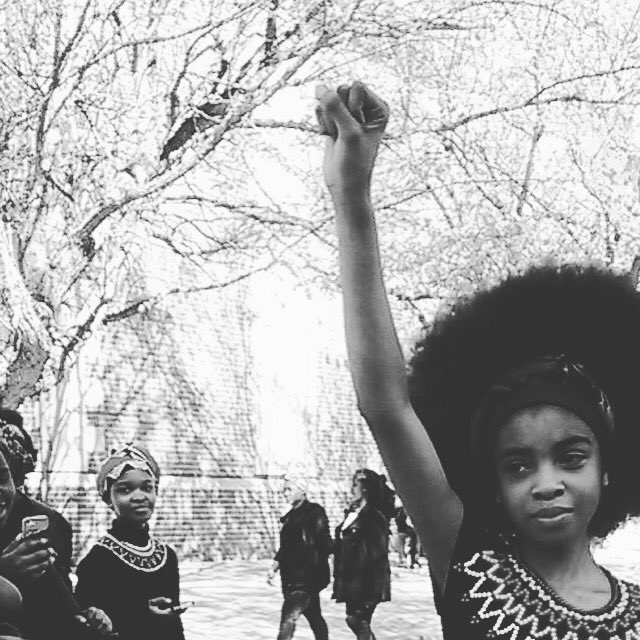
In case you haven’t heard, something amazing happened in South Africa. Just recently, the pupils of Pretoria Girls High protested over subliminal racist rules at the school. Apparently, the school basically told these young girls that their natural hair and Afros make their uniform look “unkempt”. In a world where black women and girls continue to defy the odds and accomplish feats in business and career, our hair cannot continue to define us. It’s been a decade since India Arie reminded us that we are not our hair. Yes, we understand that typically, our natural hair is incredibly thick. We know it is lush, ravishing, gorgeous and most likely, voluminous. We also understand that our hair does not lie flat like straight hair. In a society that associates hair that is straight or has loose curls as ”tidy”, we obviously don’t fit. Yet, having natural hair should never be a crime and it’s high time we (Africans included!) stopped hating on natural hair. I mean, what’s wrong with deciding to wear your hair without a relaxer? When will the world understand that all hair is equal? Healthy hair can be natural, straightened, coloured or chemically treated! Back to the issue at Pretoria, the students have also claimed that the rules in place don’t allow them wear inherently Black hairstyles. They are not to wear Bantu knots, braids, dreadlocks too! News of protests from the students against the school’s arbitrary rules have gone viral. A petition titled, ‘Stop Racism at Pretoria Girls High’ that has garnered over 14,000 asks that; – The school’s code of conduct does not discriminate against black and Muslim girls; – Disciplinary action against teachers and other staff members implementing any racist policy and/or racist actions – Protection for the learners who protested to ensure they will not be victimized. Meanwhile, the hashtag #StopRacismAtPretoriaGirls has been trending on Twitter. This message from a teacher to a parent takes the cake: Let’s hear what you think about the natural hair debate. Should the way you keep your hair define you? Should educational institutions have the power to decide how girls keep their hair?
What #MotherlandMoguls can learn from the Rio Olympics
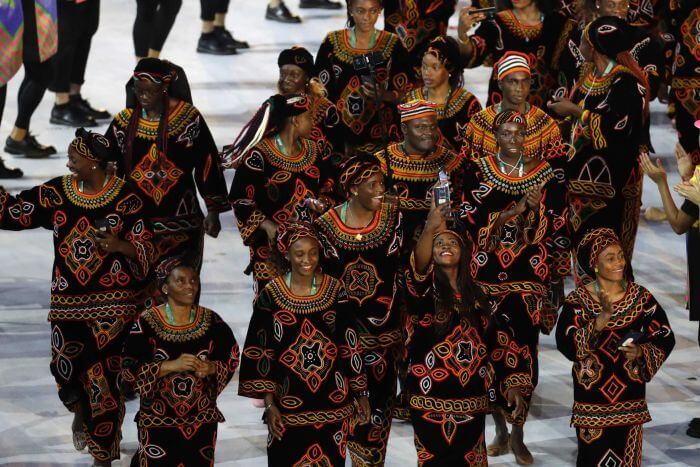
The Olympics this year had us glued to our seats, rooting for our countries and supporting our favorites for gold. You can’t deny the emotions and sheer excitement that came about this Olympic season. They had us distracted from our everyday hustle! If you’ve been following, you’ll know that there are some awe-inspiring stuff we can pick up from the recently ended Olympics. Do you! From Ibtihaj Muhmmed winning a medal in a hijab, to China’s Fu Yuanhui being candid about her menstrual cycle, it’s pretty clear that women aren’t really conforming to a set standard of doing things. Sometimes we get caught trying to fit in to a mold about what we can do or say. Women in #Rio2016 proved and shattering so many stereotypes and boundaries. They unified even in competition and showed strong bonds of sisterhood. So forget trying to be like someone else, own your hustle in your own way and people will definitely notice. You are never too old or too young to kick butt! What was really amazing to me was seeing that age is no limit to passion, determination and just being on fleek. Uzbekistani gymnast Oksana Chusovitina, is 41 years old and wowed us with her gutsy performances. Meanwhile, Simone Biles the 19 year old gymnast, was snatching edges and gold medals dominating the Olympics and winning hearts. Both women show that you have absolutely no reason put a limit to achieving your goals. Sometimes we get caught up looking at the impossibilities, but when you start looking past them and pushing for your goals, you unlock your ability to start slaying. Be different Seriously, you don’t have to fit in. If the Egypt vs Germany beach volleyball game taught me one thing, it’s that you don’t have to do the same thing the same way. Cookie cutter solutions in business or your career will not always work for you. You have to find something that is unique and that will ultimately help you grow your craft and dominate the grind. Shaunae Miller’s controversial dive for the 400 meter race shows that you won’t always win the usual way. Having out of the box ideas to accomplish your goals and targets is necessary to get you that gold. There might be times that it will be risky and you do have to look at the cost, but the payoff might also worth it. So, start thinking about those opportunities that might set you apart, look beyond the difficulties, and be your awesome self while at it!
We need to start teaching women about entrepreneurship early
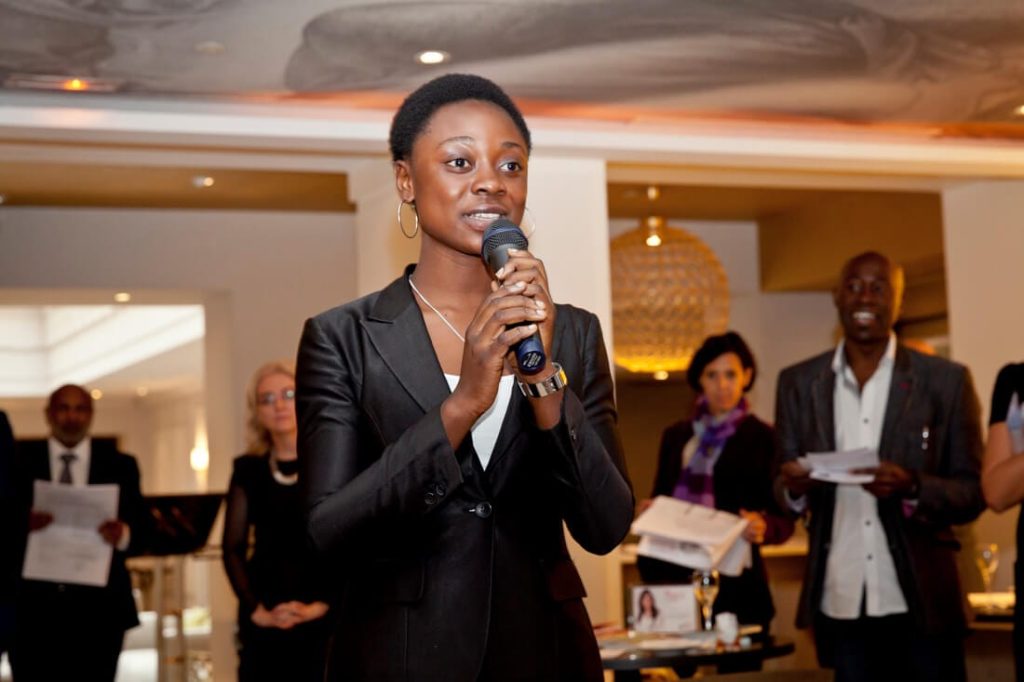
As young girls, we may have thought that that success in the real world means success at a corporate job. Working towards this goal, you start first by making sure you do well in school, entering into a good university, passing at university and ultimately finding a prestigious job in the corporate world. It really is tempting to believe that success in the corporate world is the only success that matters. But when you get get exposed to different kinds of people and career paths, you realise it’s not. Especially when you encounter entrepreneurship, where one can control their own destiny. Then you realise that corporate is not the be all and end all, and there’s far more available to you than climbing the corporate ladder. In my own life, I’ve come to see that there’s a huge misconception about entrepreneurship among women and I’d like to debunk some myths. It’s not as daunting as you think To some women, just the thought of struggling or having to put their lives into something that isn’t guaranteed to last, can be daunting. There is more focus on the negative rather than the possibilities of making entrepreneurship work for you. It’s true that we all fear of the unknown. When you add unforeseen risk to that, staying in your comfort zone seems easier. But staying in comfort zones implies that you’re scared of what starting your own business might bring. Yet there’s always hope. I’ve learn a few things in the past two years. It comes from being exposed to what entrepreneurship is and meeting various people that have found their passion here. Most important to me is, the advantages of being familiar with entrepreneurship from an early age. Start young Girls graduating high school need to know that entrepreneurship is an option when it comes to career paths. Once girls understand what it is, and what they can contribute to this exciting career path, self-doubt will vanish. Here’s how it works. High School No, I’m not saying young girls need to start hustling from high school. I mean that the knowledge needs to be instilled from there. This way when girls head to university, they know have an option to study entrepreneurship further. During school career fairs, the concept of what entrepreneurship is and what it offers should be shared. The onus is also on the high schools to make entrepreneurship knowledge more reachable to students. University and onwards Though Africa has many good universities, we have limited options for entrepreneurship as a degree. I didn’t even know that you could study entrepreneurship formally. I recently found this out when my colleague told me about her daughter studying entrepreneurship in one of the universities in SA. I can’t lie, I was shocked. Most universities don’t offer a degree that isn’t related to a corporate field. Still, it makes sense when you consider that pursuing entrepreneurship doesn’t necessarily mean you are saying goodbye to the corporate world. There are many #MotherlandMoguls who are successfully climbing the corporate ladder, while running their own businesses. In my opinion, if you have the opportunity of doing both, then you should take it. Juggling the work load might be too much, but at the end of the day the results will be fruitful and worth it. Find a community This is not as easy as you may think. It may be hard finding a community of like minds at first but more women are creating organisations that allow women to come together. With these groups, you can freely share interests, passions and ideas. I think such communities should become available for young women from high school onwards. (Imagine entrepreneurship clubs in high school). This helps so young women won’t feel isolated in choosing this path. I’d like to see more communities for young women become a safe haven. This will help us relate to one another and create a trusted and supportive community.
6 South African women killing it as we celebrate #WOMENSMONTH
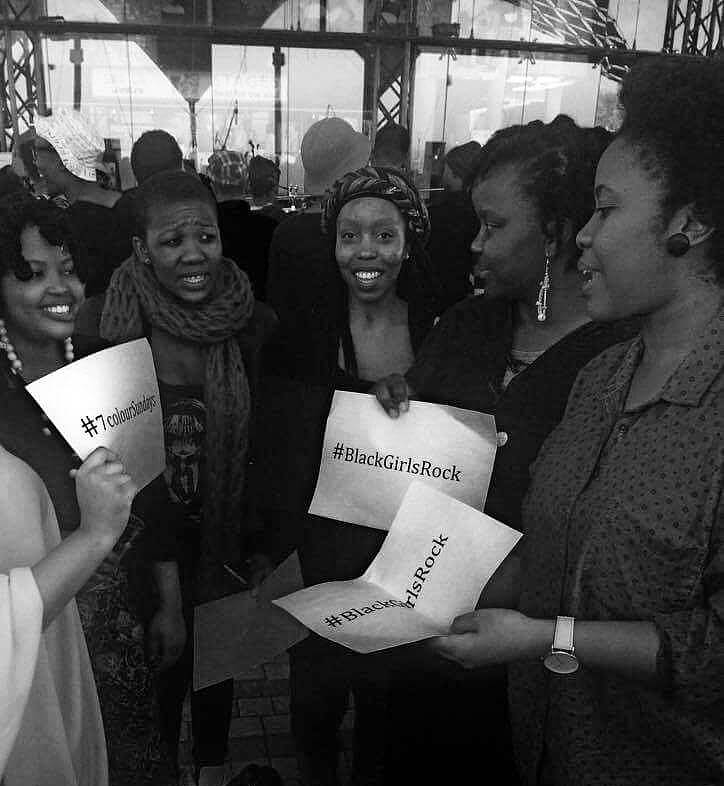
Gwa thinta abafazi, wa thinta imbokodo! This means, “You strike a woman, you strike a rock.” Currently, it’s women’s month in South Africa but I think the party shouldn’t start and end there. The month should celebrate and honour women in our entire continent, This should include women who are powerhouses and moguls, whether in communities and the business world. Let’s talk about some history. On August 9, 1956, thousands of women marched to Pretoria. It was to fight for their rights to freedom of movement without documentation, referred to as passes, along other segregation laws. In commemoration of women’s rights today, questions still remain debated over the role of women in society. This especially concerns women in positions of power. Six decades later, women continue to fight. This time, we fight a different fight. Evidently, we have MotherlandMoguls who carry a dumbbell with one hand and a mine of gold in the other. Today, we want to celebrate not just the woman in South Africa, but in Africa. She is an instinct-driven entrepreneur, who will be featured on Destiny Magazine, Forbes Africa, Forbes Woman and the likes. She is on her way to becoming the leading lady of a nation. She has a vision, creates networks and positively influences other young women. Now, let’s take a look at 6 young women killing it in South Africa: Mpho Khati Mpho Khati of Indlovukazi is a vibrant woman who celebrates herself through modelling. She invented the word ‘thick-thighing’ as a plus size model and is also an Instagram influencer. Mpho’s to watch for. Palesa Kgasane Palesa Kgasane is a young lady in her early twenties, born in cape town and raised in Bloemfontein. Amazingly, she’s the curator at Mzansimoodboard, a writer, and creative director. She also designs her own clothes. Khanya Mzongwana (aka Yulu Ishii) It is said that a woman’s place is in the kitchen and she makes it her business. Khanya, the foodie entrepreneur, is called the queen of pop-up restaurants. She’s the co-owner of Off The Wall pop-up restaurant. She is also a recipe developer and food stylist. Panashe Chigumadzi Panashe Chigumadzi is the author of Sweet Medicine. She’s also the founder and editor of Vanguard Magazine, a black feminist platform for young black women coming of age in post-apartheid South Africa. Also, Panashe is a storyteller interested in the narratives of black and African women. Tumelo Mothotoane As a television and radio broadcaster, Tumelo started locally with a woman’s programme called Sistas on Soweto TV. She moved to being a news anchor at the SABC. Now, she’s gracing the worldwide screens with being an international news anchor and correspondent for Russia today TV. Lumka Msibi Lumka Msibi is a 25-year-old qualified and international award–winning Aeronautical Engineer. She’s a global speaker and Entrepreneur from Soweto in South Africa. Regardless of the system in places that may hold women down, Lumka rises above limits. She creates the most compelling content, business industries, and communities. Commendably, this woman rises above societal pressure that dictates what a woman shouldn’t talk about. Here’s the thing A woman alone is success personified and she matters. She is not a statistic but she creates ground-breaking statistics. The stereotype that women are catty and always fight each other is old and needs to go. As women, we need to constantly remind ourselves that we’re flawless. We need to create circles of support platforms to generate a revolution of power among sisters. Now, Motherland Moguls, be your own kind of woman this month. Your career goals and strategies are valid. Start improving your business, and yourself! Kill it and make your entity your mark.
7 African Women to watch at #Rio2016

The stakes are high this time of the year as Rio2016 kick off. Lots of hopes and dreams are riding on this year’s wins. The national pride of certain countries is at stake at the sporting event as those of us living in African countries stayed up late to watch the opening ceremonies. Btw did you know that the Olympics started in 776 B.C. in Greece where the first Olympian, Coroebus won the single event, a 192-metre foot-race? In 2016, we’re all about the African women doing us proud at the Olympics. Out of this year’s lot, lets’ focus on seven African sportswomen who we’ll be keeping an eye on as the event unfolds. Yolande Mabika This 28-year-old judoka (a person who practices or is an expert in judo) is a refugee from the Democratic Republic of Congo. She’ll be participating in this year’s Olympics under that flag. There’s no shying away from it Yolande has suffered to get to where she is now. She’s slept on the street, and worked as a sweeper and at a textile mill. In 2013, she qualified for the World Judo Championships held in Brazil. She sought asylum in Brazil and started training at the Instituto Reação, a judo school founded by a former Olympic bronze medalist. She is aiming for gold at Rio2016 under the women’s 70kg category. #MotherlandMogul lesson: Nothing should hold you back the way nothing held Yolande back. We’ll be keeping our fingers crossed that she gets the gold she’s aiming for. Vivian Cheruiyot Known as ‘pocket rocket’ due to her short stature, Vivian is a Kenyan long-distance runner who specializes in track and cross country running. She has a massive track record under her belt but her most notable moments include how she lost 17kgs after giving birth. Vivian did this in order to compete in the 2013 International Association of Athletics Federations (IAAF) World Athletics Championships 10,000m gold medal in Beijing, China. She won that by the way. These aren’t Vivian’s first Olympics. She scooped 2nd and 3rd place in the 2012 Olympics for women’s 5000m and 10,000m respectively. She has also crowned Laureus World Sports Award for Sportswoman of the Year 2012. In Rio this year, she is doubling up in the women’s 5000m and 10000m. #MotherlandMogul lesson: There’s always room to do better and improve on your best. Vivian has pushed herself to do better and succeeded. She won and we can learn from her by pushing ourselves to win too. Hortence Vanessa Mballa Atangana Another judoka on the list, Vanessa has been flying the Cameroonian flag high since 2013 when she won the African Championships where she won a bronze medal in the women’s 78kg category. She also scooped third place in the Commonwealth games of 2014. In this year’s Olympics, she is going for gold in the same category. Margret Rumat Rumat Hassan Margret’s story is touching. The 19-year-old will be one of South Sudan’s two athletes to participate in the Olympics. She is from Wau, a South Sudan city, where, as recently as 2015, this world-class athlete didn’t even have access to a gym. Against all odds, she trained her way to the 2014 Youth Olympics in Nanjing, China. There she competed in the Women’s 400m as an Independent Olympic Athlete. This was even before South Sudan was recognized. She is aiming to be first or second at Rio2016 in the women’s 200m. #MotherlandMogul lesson: Margret forged a path where there was none before. Some people spend their lives training to be athletes in world-class gyms, Margret didn’t have access to that last year. And still, she stands. Blessing Okagbare Blessing also holds many feathers in her cap. This Nigerian track and field athlete specializes in long jumping and short sprints is an Olympic and World Championships medalist in the long jump. Blessing is also a world medalist in the 200 metres. She holds the Women’s 100 metres Commonwealth Games record for the fastest time at 10.85 seconds. Her 100m best of 10.79 made her the African record holder for the event until it was eclipsed by Murielle Ahoure in 2016. She was the African 100m and long jump champion in 2010. She has also won medals at the All-Africa Games, IAAF Continental Cup and World Relays. As a sign of her prowess, she is poised to take part in four events during Rio2016: women’s long jump, women’s 100m, women’s 200m and women’s 4x100m relay. Genzebe Dibaba This Ethiopian middle- and long-distance runner is destined for great things. Genzebe is the sister of three-time Olympic champion Tirunesh Dibaba and Olympic silver medalist Ejegayehu Dibaba, and the cousin of former Olympic champion Derartu Tulu. Her veins are literally flow with the blood of a winner. However, that’s not to say her own efforts are for nothing. Genzebe was the 2012 World Indoor Champion for the 1500m, and is the reigning 2014 World Indoor Champion and World Indoor Record Holder in the 3000m. She represented Ethiopia at the 2012 Summer Olympics and has twice competed at the World Championships in Athletics (2009 and 2011). Genzebe was named Laureus Sportswoman of the Year for the 2014 year and was 2015 IAAF World Athlete of the Year. She is the current world record holder for the 1500m (both indoor and outdoor), the indoor 3000m, the indoor 5000m, the indoor mile, and the indoor two miles. She is looking to win the women’s 1500 m track and field event at Rio2016. #MotherlandMogul lesson: We know we mentioned this before but…look at Genzebe’s family! The Dibaba family, aka the “world’s fastest family” are goals for how healthy families can reach their peaks and excel. They challenge us to ask, how can we work with our families to ensure that everyone stays winning? Caster Semenya A middle-distance runner, South African Caster Semenya’s track record is bright. It all started in the 2008 World Junior Championships, where she won the gold in the 800m at the 2008 Commonwealth Youth Games. In
What the misadventures of Koffi Olomide tell us about violence against women
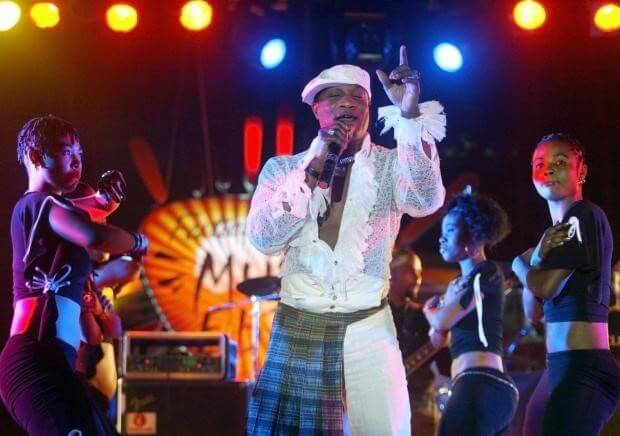
Koffi Olomide has had quite a week. To be honest with you, I’d never heard the name before. My taste in music seems to run parallel with his specialties. I got to know him recently though, and for all the wrong reasons. If you aren’t aware already, let me fill you in. The renown rhumba singer from the Democratic Republic of Congo was kicked off Kenyan soil on July 22 after clearly kicking one of his dancers. On the same day of his arrival and still at the Jomo Kenyatta International Airport, he assaulted the lady in front of Kenyan airport police and the media. Now, in another place and time, this incident would have blown over pretty quickly after a few comments thrown around here and there and a slot in the day’s prime-time news. He’s a celebrity after all. All publicity is good publicity. Unfortunately for Olomide, these are different times.As soon as the videos of his assault hit the interwebs, a barrage of condemnation and censure descended upon him like hell-fire in the form of social media outcries, especially on Twitter. The 60-year-old singer, known for acting on his anger outbursts, was not getting away with it this time. The jig was up. Olomide’s scheduled performance was cancelled after public outcries to boycott it. He was then taken to the police station and deported, along with three of his dancers the very next day. Catching up on these events, what first came to my mind was, “Shame on you!” I don’t get how a man old enough to be my father was caught kicking a woman. When confronted about the issue Olomide gave some nonsensical excuse about protecting the lady from muggers. Bah! I wasn’t hearing it. And neither were a lot of people, men and women alike. Even the higher-ups of Kenyan society spoke out. In a statement, Kenya’s Cabinet Secretary for Youth and Gender affairs, Sicily Kariuki, described his conduct as an insult to Kenyans. The Constitution states that violence against women and girls cannot be accepted in any shape, form or manner. When he landed back in Kinshasa, Olomide was received by a wave of jeers from the gathered crowd. He was booed by fans as he left the airport for his house in Kinshasa. Following this fiasco, Zambia, where the singer had a series of shows, also cancelled his performances. One of the organisers of that show Njoya Tembo, said, “Koffi has proved to be violent when musicians are generally peace ambassadors.” But it did not end there. Olomide was then charged with assault in a Kinshasa court and sentenced to three months in jail. This came after a rigorous campaign to have him arrested was started by Congressman Zakarie Bababaswe, who had filed a petition on behalf of the Congolese public to get the musician punished for assault. His arrest – which was ordered by the attorney-general– was received with jubilation by locals and foreigners, who feel justice must be done for all, and especially in enforcing women’s rights. As I watched all these events unfold in the space of a week, I just knew I was witnessing a revolution. African countries have generally lagged behind in condemning (and enforcing laws against) violence towards women. Yes efforts are being made, but it is taking longer for us to see the effects. However, this outward condemnation of a seasoned musician in the face of his actions is a sign of progress. If even he can be charged in court and receive a sentence to serve jail time, then we are definitely moving in the right direction. To that I say, hongera! (Swahili for ‘congratulations’). My cheering didn’t last very long. After just one day, Olomide was released from prison on July 28. For some weird reason, another twitter campaign got him out. This campaign was started after an outcry from his team for DRC to rally behind the singer as he had been ‘unfairly prosecuted’. Please tell me, what unfair prosecution are they referring to? He got what he deserved as far as I’m concerned. Kicking a woman is inexcusable, especially with his past record of similar transgressions. But you know, what? I still see a victory. Africa has learned something. One cannot get away scot-free for such gender-based violence any longer. Olomide’s trials through the past week will serve as a warning to anyone else even thinking that they can get away with such actions. It is a victory for women in Africa. Mess with us and you’ll receive a stern reminder that we are people too and assault is assault. You can go to jail for that, whether you’re famous or not. Motherland Moguls, what do you think of the singer being released from his sentence? Sound off below in the comments.
Is the law keeping young African women safe from sexual violence?
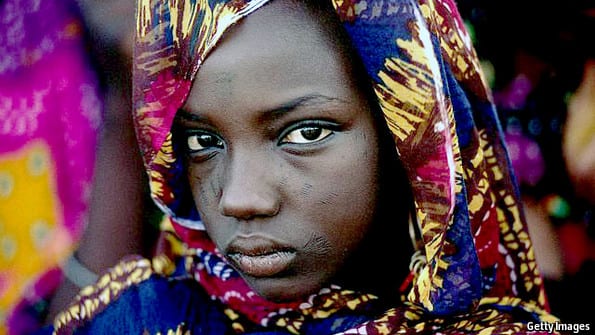
It may be 2016, but young Nigerian girls are still being exploited by those who should be protecting them. I’m referring to the father figures, lawmakers, community leaders and even some parents. Only recently, the internet and media went into a frenzy over the notion that the age of consent had been lowered from 18 to 11. The reason for this confusion? A bunch of subsections under Section 7 of the Sexual Offences Bill postulating penalties for sexual penetration in girls under the ages of 11, 15 and 18. We’re all still asking ourselves why the need to highlight these three ages rather than the relevant one which is 18. This is of major concern as concerns two main areas: child marriages and rape. Source: BBC Africa UNICEF reports that Nigeria is the country with the highest number of child brides across Africa. The number of child brides across Africa is expected to almost triple by the year 2050. It’s been almost 2 years now since the world has been fighting for the return of the Chibok girls following the #BringBackOurGirls campaign. Sadly, at this time, we are still waiting and hoping that they are rescued. Ese’s story Most people have been following the story of 14-year-old Ese Oruru who was abducted from her base by a man who took her to the North to become his bride. Reports made by the Bayelsa State Police Command as captured in Punch Newspaper state that her recent kidnapping from her home in Bayelsa to faraway Kano is a case of eloping. It’s almost laughable except that it’s not. This is a grave issue that affects every one of us regardless of gender. It thus becomes obvious that law enforcement and the rest of the community have failed to catch on that the law does not condone the violation of any woman especially one who is still a child. Ese’s predicament is our predicament and as such statements made by the very institution put in place to install law and order demonstrates our failure as a society. How on earth does a teenager elope? The fact that such a statement can be made by the police public relations rep confirm to us that child marriages are still very much a thing in this part of the world. This is a practice prevalent in the northern part of the country where matured men take on child brides. At this point of the century where societies are moving to expel inhumane practices, the reaction to Ese’s case is a prime example of the normalcy of such a practice. Whether or not Ese voluntarily left her base in Bayelsa for a faraway state or was kidnapped / coerced into doing so as certain assertions have been made, the baseline is she is still a minor. Although it has taken six whole months, the good news is Ese has been handed over to the police for her return to her family in Bayelsa. Just as author Chimamanda Ngozi Adichie has been quoted as saying, ‘culture does not make people, people make culture’. Thus, the mere fact that something is a part of our culture is not a good enough reason to uphold it. There is certainly good culture and bad culture and as humans we are expected to evolve and be progressive. What are some of the risks? There are several risks that child brides are faced with including emotional and psychological trauma that may follow them way into adulthood and in fact for the rest of their lives In addition, if the ‘marriage’ had been consummated underage, pregnancy, Vesicovaginal Fistula and STIs are all common occurrences for child brides. As a society, where do we go from here? We need to close the gap between the law and its practice through proper information dissemination and sensitization. The Nigerian police force must undertake reorientation programs with the passing of new laws. The law should expressly state the age of consent for sexual intercourse by getting rid of the compounding subsections in the Sexual Offences Bill. It is also not enough that the law prescribe a penalty of 5 years imprisonment or a fine of N500,000 for the perpetrators in child marriages! A part of her life is taken away from her as she is forced to grow up in the worst ways possible. The maximum penalty should be sought for such offenders. What can we do as women? As women, each of us has a responsibility to uplift other women especially those who do not have some of the privileges we do have. Speak up about it! Challenge the status quo! Tweet about it, blog about it, discuss with peers, make your voice heard. You may be surprised how little people actually think about this issue. Educate yourselves including other young girls and women. Females need to be aware of the dangers they face and to take extra precaution where necessary. Counsel and encourage one another. As women we need to quit slut shaming and blaming the victim. The guilty party is the aggressor or manipulator. Skimpy clothing or a flirtatious nature do not equal a license to rape. Parents and guardians also need to be receptive enough for their daughters to feel free enough to tell them about any funny business going on. Raise your sons to respect women. Men have as much a part to play as women do in the promotion of gender rights.