
Aileen Hlongoane: I didn’t envision that our organisation would have such a great impact on the country
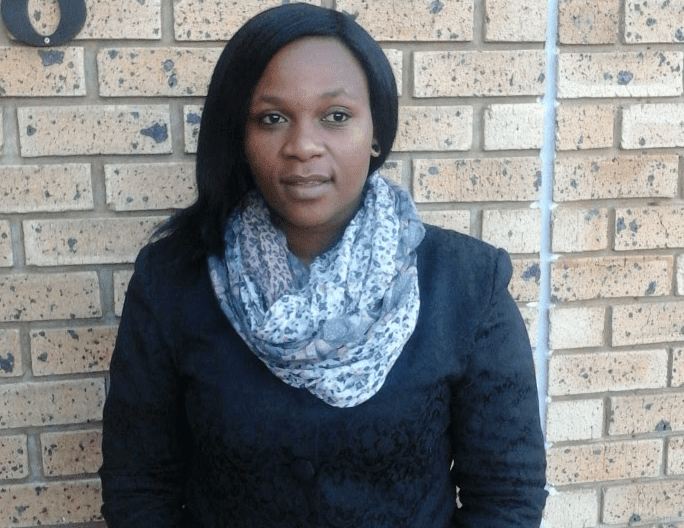
[bctt tweet=”The lack of sanitary pads is a human rights issue. It infringes on the right to dignity, education, health & privacy” via=”no”] Founder and president of Pledge a Pad SA, 28-year-old Aileen Hlongoane was born in Kwa-Ndebele in the Mpumalanga province of South Africa. Upon completing her high school with a distinction, Aileen enrolled for an LLB degree at the University of Pretoria. It was whilst volunteering at the institution’s Centre of Sexualities, Aids, and Gender that she discovered that young girls from underprivileged communities are forced to miss 3–4 days of school every month because they do not have access to sanitary pads. Aileen then established Pledge a Pad SA, a non-profit organisation that aims to educate young girls from lower income households about menstrual and reproductive health as well as provide them with sanitary towels in a bid to lower the high school- absenteeism rate of these young girls. SLA contributor Kutlwano Mokgojwa catches up with the 2015 Mail & Guardian top 200 young South Africans about challenging social myths and taboos surrounding menstruation, appealing to the Constitutional court to have provincial governments provide free sanitary pads to schoolgirls and increasing the access to sanitary pads across the country. [bctt tweet=”I figured that when faced with a decision between bread and sanitary pads, they’d always choose the former” via=”no”] Prior to Pledge a Pad SA, there were virtually no organisations founded for the sole purpose of affording schoolgirls from lower LSM communities to attend school during their periods. What triggered you to change that in South Africa? My tenure as a volunteer at the Centre for the Study of AIDS was my springboard. Whilst I was pursuing my LLB degree, I volunteered at the Centre for the Study of AIDS, at the University of Pretoria. We visited many orphanages and like places of safety, which houses many girls, yet have very little resources. I figured that when faced with a decision between bread and sanitary pads, they would always choose the former. Therefore, that “time of the month” would be a nightmare to the affected girls. The subject of menstruation is still very much a taboo what impediments, if any, did that cause for your organisation? Requesting donations from males and older women was difficult and sometimes impossible. Men think this is something that only women should talk about. The elder women feel disrespected when a young woman or a man speaks to them about anything that has to do with the menstrual cycle. [bctt tweet=”Requesting donations from males and older women was difficult and sometimes impossible” username=”SheLeadsAfrica”] Since the establishment of your organisation, other Non-Profit Organisations dealing with the same issue have been established. As of this year, the KwaZulu-Natal provincial government has started an initiative to supply schoolgirls from lower LSM schools with sanitary pads. Did you envision that your organisation would have such an impact? Why do you think the issue wasn’t tackled earlier? I really did not envision that our organisation would have such a great impact on the country. Not enough awareness was created on this issue and many people needed to be educated on the plight of young women and girls who cannot afford sanitary pads. The lack of sanitary pads is a human rights issue and it infringes on the right to dignity, education, health and privacy. Therefore there exist constitutional grounds to bring an application at the Constitutional Court to compel other Provincial Governments to provide free sanitary pads. There have been several petitions to have the South African government levy the tax on sanitary pads and tampons. What is your view on that? As Pledge a Pad, our main concern is the access to sanitary pad, therefore we support initiatives that will increase access to sanitary pads. You started the organisation whilst still studying, what effect did it have on what you initially wanted to do after school? How has running such an organisation affected your worldview and what has been the most gratifying experience you have had since the establishment of Pledge a Pad? I lost the interest in studying towards my LLB degree and I wanted to run Pledge a Pad full time and turn it into my career. I realised that the reasons we judge and discriminate against each other as people stems from ignorance and lack of education. Women suffer much prejudice just by virtue of being women; unless the status quo is dealt with, women will always lag behind compared to their male counterparts. What would you say is a skill that is essential in running a Non-Profit Organisation? A combination of business skills and care for people. [bctt tweet=”You need a combination of business schools and care for people to run a non-profit @Aileenhlongoane” via=”no”] What is the way forward for Pledge a Pad? Expand our operations and engage more state holders. Continue to advocate for women’s rights. What tasty food do you think would be disgusting over rice? Cake If you’d like to share your story with She Leads Africa, let us know more about you and your story here.
Titilope Oyewole: Social media was very easy to incorporate into my business
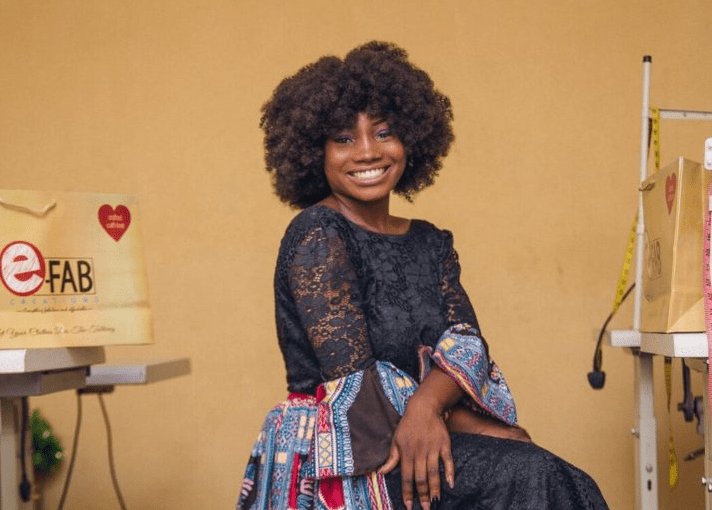
[bctt tweet=”My inspiration was to provide quality and beautiful outfits at affordable prices” username=”SheLeadsAfrica”] Titilope Oyewole is a 23-year-old graduate of microbiology. She is also currently running her postgraduate studies in Parasitology and Bioinformatics at the University of Lagos. While she pursues her studies, Titiliope owns Efab Creation and General Merchant, a start-up fashion house in Egbeda, Lagos. What was the inspiration behind starting E-fab Creations? The inspiration behind starting Efab Creations was to provide quality and beautiful outfits for Nigerians at extremely affordable prices. Our motto at Efab Creation is ‘Everything Fabulous and Affordable’. How were you able to successfully use social media as your primary marketing point? I have been using social media even before I started my business. By the time I started my business social media was easy to incorporate, I used to do some online PR for major brands. As part of my initial marketing strategy, I talked to other social media influencers as well and they have helped greatly in marketing my products. Describe a sample social media campaign carried out for any of your product? When we launched, we carried out our first social media campaign. I got some influencers and made them ambassadors of the brand so they talked about the brand itself across their entire social media platform. The idea was to introduce Efab Creation to the online community. We had a total of 8 influencers and the campaign ran for three days. They all posted different contents on their various platforms for the three days. Most of their content covered talking about Efab and what we do. We were able to achieve followers and customers because it was evident in our sales after that. [bctt tweet=” I talk about my business to everyone I come across – Titilope Oyewole” username=”SheLeadsAfrica”] You have a following of about 11.7k following on Instagram and 11.2k on Twitter, how were you able to achieve that? When I started using social media, I referred people to follow the Twitter and Instagram pages, I also organized giveaways. The first rule of all the giveaways was for participants to follow our social media accounts first. That way we were able to grow the platform. Also most of our customers tag us when they wear outfits received from us and that brings more followers and customers to our pages. Which other ways have you tried to acquire new customers for your brand? I do some word of mouth marketing. I talk about my business to everyone I come across. Also, I have printed flyers that I share to people. [bctt tweet=”Titilope Oyewole: Be consistent and give it your very best” username=”SheLeadsAfrica”] What advice would you give to other ladies trying to build a business online like you have been able to achieve? The first thing I’ll tell anyone trying to build a business is to be consistent and give it their very best. If you’d like to share your story with She Leads Africa, let us know more about you and your story here.
Mahlodi Legodi: I manage the business, God owns it
Public relations is basically free advertising. The thing is, it is important to be able to relate with the people on which your business relies. It is those relationships that will make people support your vision by choosing your product or services over your competitors. As a client I’d want some transparency, I mean who supports a vision they don’t understand? Mahlodi Legodi will help you with that. With 5 years experience in Public Relations, Mahlodi has managed and improved the media relations and reputation for prominent African and international brands. Notable among these are Carlson Rezidor (Radisson Blu Hotel group), LG Electronics, Bosch power tools, Ask Afrika and Subinite. With this extensive clientele base spanning corporate, consumer and retail sectors, Mahlodi has overseen and executed successful internal and external campaigns, exhibitions, product and service launches, media roundtables, internal and external communication strategies. SLA content fellow Rumbie had the opportunity to interview Mahlodi Legodi and this is what the PR guru had to share… Mahlodi Legodi, some of the readers would want to know what the few months before starting up your company were like. Starting a company isn’t an easy process! The first few months before I decided to embark on this entrepreneurship journey I spent in prayer, research, planning and preparation for the birth of FR Communications Pty Ltd. It is very important to gather as much information about your business venture. Speak with a few industry players about what worked for them and what didn’t in order to position yourself well in the industry. From the outset what was your mission? Our mission is to create and deliver award-winning services to our clients by providing modern strategic and creative ideas that are tailored to clients’ business objectives. We aim to be crucial creative partners to the brands that require effective and professionally executed PR and Communications solutions. Did you ever consider letting go and probably getting yourself a 9 -5? No, I have never considered getting another 9 to 5. The beauty of venturing into business for me came with the assurance that I had nothing to worry or stress about for greater is He that is in me (1 John 4:4) than he (challenges or struggles) that is in the world. I manage the business but God owns it! What gets you out of bed every morning? What gets me up in the morning is the reminder that my clients trusted me enough with their brands (dreams, aspirations and livelihood) accompanied with the love and passion for what I do. [bctt tweet=”When you lead your industry through communication, ensure it’s not just pretty but right” username=”SheLeadsAfrica”] ‘FR Communications believes in the importance of not just having a great idea but to have the “right idea”.’ How do you know your idea is the right idea? We are committed to setting brands apart in a crowded marketplace by offering unique, innovative and media savvy PR services that don’t only focus on creating great ideas but delivering the right ideas. Ideas which produce proven results that have a direct and positive impact on our clients brands. The right idea is more than just something you’re excited about —it is an idea that is actually viable to ensure the overall success of the clients business and communication needs. The right idea will always solve a business problem and set your brand apart in the industry in a memorable way. It is extremely hard to consistently create content that’s truly unique and new. So when you do have the chance to lead your industry through your communication, you have to take it and ensure it’s not just great (pretty looking, sounds amazing) but it’s right (viable, educational, factual, and speaks to your target audience) It is extremely hard to consistently create content that’s truly unique and new. So when you do have the chance to lead your industry through your communication, you have to take it and ensure it’s not just great (pretty looking, sounds amazing) but it’s right (viable, educational, factual, and speaks to your target audience) What is the most gratifying part of your position as owner and senior consultant? In this role, I learned that if God puts authority and credibility in your life, the title (owner and senior consultant) is irrelevant. I do everything from filling, writing, recons, mentoring, and media monitoring. What does it take to be a co-owner of a company? Who do you need to be connected to and what does one need to bring to the table as a cofounder/ coowner? Being a co-founder of a company means that you are part of a team that came together to compliment each other and validate the plans concerning the company before implementing them. When you decide to get into partnership with someone in business (being a co-owner/co-founder), it is very important to have a mutual understanding and vision of the products and services that you want to provide to the market and how you will ensure the company continues to grow. A partnership agreement should contain the following: It needs to define who contributes what: You need to discuss with your business partner what you both will be bringing to the table in terms of labour, cash, clients, property etc. Who plans on working on the business full-time, part-time or just act as a silent partner? It is very important to define who gets paid what: This consists of an outline of how profits will be distributed. Will each partner be paid a salary for his or her role in the business? If so, how much? And what about any extra profits for the year? You need to be able to define how decisions get made: What type of decisions require unanimous votes, and what type of daily decisions can be made by a single partner? Discussing these matters upfront and deciding what decision-making structure will let your business run the most effectively is important in a joint venture. If a co-founder doesn’t come to their part
Chika Ilang: I always dreaded the idea of running a business

[bctt tweet=”Chika Ilang – Besides the money there’s that freedom the life you truly desire gives you.” username=”SheLeadsAfrica”] Cliche but true; if you have a dream or goal, pursue it. It doesn’t matter how terrible your job hopping may seem, doing what you love is all that matters. In most instances it may be that you know where you want to be but you just don’t know how, now that’s when Chika Ilang International comes into play. This personal development company was launched in 2016 by Chika Ilang. It is dedicated to help women overcome the fear that keeps them from turning their dreams into a reality. Chika believes everyone has equal opportunity to achieve greatness if you show up for yourself. But just like Dr Rob Yeung puts it, “Unless you want to be one of the floundering masses, take the time to identify your vision”. She’s driven by the desire for career advancement, financial independence and living a fulfilled life. It’s her earnest desire to teach more women how to live a happier, wealthier and fulfilled life. Chika Ilang, the Clarity Mavern, please introduce yourself to the readers. I’m Chika Ilang, the founder of Chika Ilang International. A personal growth platform that helps women overcome the fear that keep them from turning their dream into a reality. Walk me through the step-by-step process that you went through to get to where you are today. I’d say mine is a long walk to purpose and freedom. You know that freedom you get when you are finally able to get your acts together. I mean, beside the money and fame, there’s that freedom and fulfilment the life you truly desire gives you. So in 2015, I started my side hustle because I was tired of desiring to do something besides my 9 to 5…something that I didn’t have a definition for at the time. I occupied myself with that side hustle while I figured out what was next for me. I sold smart kitchen tools, gift items and even did fruit carving and display. Life seemed okay at the beginning but that feeling was short lived. The hunger for growth set in and I felt unsettled. I wanted more. What this ‘more’ was exactly , I didn’t have an answer to, yet. And like most people I have multiple interests in different things but I couldn’t coordinate them optimally. One thing was rather certain, “I am made for more“. To get this more, I decided to shut down my business and seek what my heart yearned for. This period gave me the opportunity to understand myself better, connect and engage coaches and mentors who guided me, some of which are still guiding me on my journey. Bit by bit, the vision started forming, got clearer and got bigger. In 2016, Chika Ilang International was birthed, to help other women who like me, desire more but do not know the how to birth this more, to be able to turn that desire into a reality. Interesting! Can you tell us more about the Fruit carving and display. How did you start and did you have to do a course of some sort? I started off with gift items and smart kitchen tools. When it seemed like a good venture, I decided to add another item to the list. I always admired fruit carving and my tutor was on my BBM contact. You can imagine my thoughts each time she uploaded her work. Eventually I reached out to her and decided to take a course with her on fruit carving and display. [bctt tweet=”Chika Ilang International helps women who desire more but don’t know the how to birth this more” via=”no”] And Chika Ilang International? What is it and how well is it going in relation to the purpose for which it was created? Chika Ilang International is a personal development hub for women who seek life and career growth. We work with them to gain the clarity to build the life and careers they truly love and turn that dream into reality. It’s been a fairly smooth ride since inception, but there’s always room for improvement. So how long were you running the business before you started paying yourself? How did you live through those first few months/years? The business didn’t start making money immediately. But when it did start, I was careful not to lounge but churn back into my business and build myself up. Fortunately for me, my 9 to 5 sustained me before I started earning from my business. That is why I always tell people, don’t run to quit your 9 to 5 when you catch the rhythm of your life purpose, because you surely need money to fund your dream. [bctt tweet=”Don’t run to quit your 9 to 5 because you surely need money to fund your dream” username=”SheLeadsAfrica”] What techniques do you use to increase your clientele? What are your goals for increasing the number of clients you serve? Referral works for me. I love it when a client says, “Miss A told me you would help me get the solution I seek”. It simply means, Miss A has experienced me, has achieved positive result and feels the need for Miss B to achieve that result too. I just want to keep helping more women to become more and birth their dreams. Recently on your YouTube channel, you gave a tip to craft a personal mantra. What is your chant? I actually have more than one mantra. There was a time I easily got distracted with things that didn’t matter much. I coined a mantra sorta that says “Chika, you woke up to be great, and not because of XYZ”. XYZ here represented the things that didn’t matter much but somehow, they always eyed me and wanted my attention. I have another from the Bible that tells me “I can do all things through Christ who gives me strength” … oh this one fuels me when fears
Stephanie Uwalaka: Inspired by a love of sewing and protecting the environment
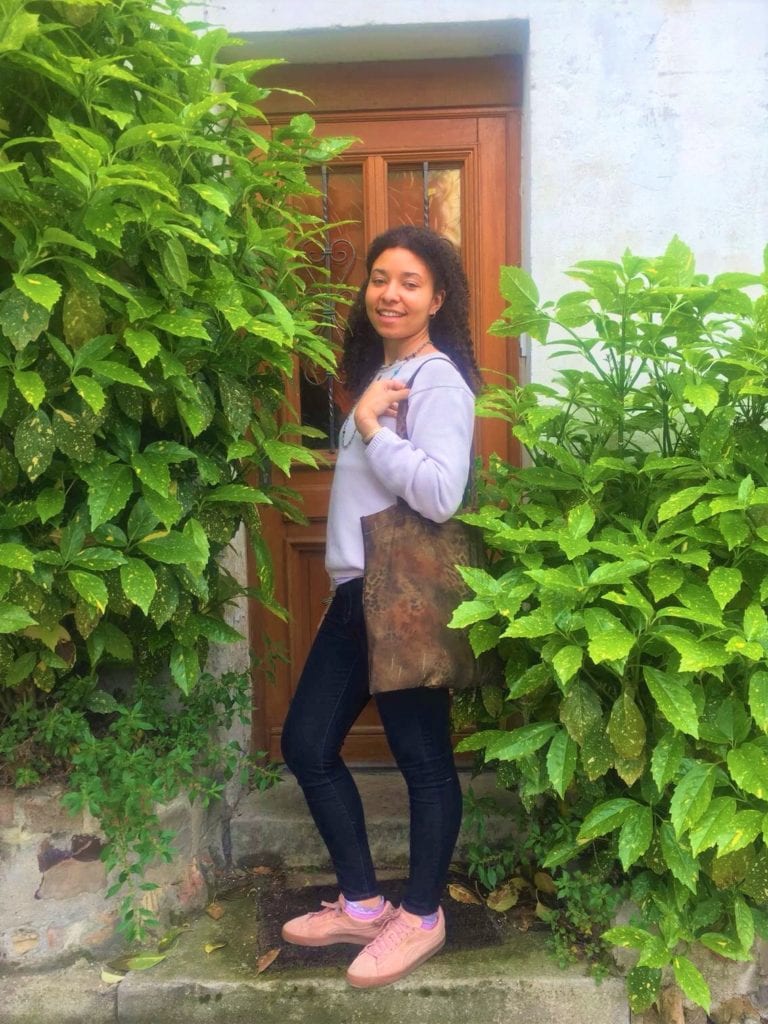
[bctt tweet=”I started up by using some of my own unwanted clothes – Stephanie Uwalaka” username=”SheLeadsAfrica”] Out of style, worn it too long, don’t feel it anymore…. I guess I just need a new one! These are some of the thoughts and reasons we give when we want to get rid of our clothing items. Very few times, if ever do we actually consider a Clothing DIY. It’s not always about upcycling items that are still in good condition, tattered clothes can be used as material to make other items as well. Thank goodness for Stephanie Uwalaka! In this interview, we gain insight on how she uses pre-loved clothing and off-cuts to make lovable tote bags. Stephanie is a half-Nigerian student from London, who set up her business independently while living and teaching English with the British Council abroad in France. The 22 year old is a features writer and section editor for one of the biggest student papers in the UK, The Gryphon. She has worked freelance for publications both online and in print, such as The State of The Arts, French regional paper and Le Courrier Picard. Stephanie has also volunteered for several charities including Oxfam, Traid and Help Refugees UK in Calais, France Better World Totes produces completely original hand-sewn tote bags made from recycled fabric off-cuts, aiming to combat the use of plastic bags and reduce the water wastage in the textile industry by upcycling fabrics to create tote bags people will use and love, with a 20% donation from each bag to going to environmental charities; including The Soil Association, Greenpeace, and WWF. Introducing Stephanie Uwalaka … A 22-year-old student from London, and set up her business while living and working abroad in France. Inspired by her love of sewing, protecting the environment and philanthropy, Better World Totes was born. How easy/ difficult was it to start Better World Totes in a foreign land? Well, aside from the hard work I put in, especially at the beginning, I would say it was easier for me to start up Better World Totes here in France rather than in London, purely because I had the time and space to finally invest in my own business. In London, there is this sense that there is not enough time, money and all number of distractions that can make it harder for creatives to set up their own platforms or even businesses, but for me being out of a city and abroad gave me the space I needed to focus. Also, living abroad changes your mindset in several ways I think, so it gave me the drive to go ahead and set up a business I have been thinking about for years pretty much. And although I am based in London, to start out abroad I think has given me great foundation to be able to continue in the UK. Recycling fabric is such a cool idea; how do you get your supplies? Like do you receive off cuts from other tailors or do you use pre-loved clothing items? This is one of the things I am constantly doing, looking for fabric! But I would have to say I use mostly off-cuts, I tend to find kind souls who either give me unwanted materials or from local markets for cheap. Sometimes even at car boot sales or craft fairs I come across an abundance of unwanted fabric that I can use given that its clean and there’s enough of it. Although I did start up by using some of my own unwanted clothes. For instance, ‘The Paisley Tote’ was a sun dress I bought but never wore, even though I loved the pattern, so I ended turning it into one of my first products! How will recyclables need to be prepared before they can be reused? Before I take on any materials or fabrics, I make sure they are clean and something I can work with. If needed I’ll wash fabrics on an eco-cycle using natural washing detergent, then iron lightly depending on the fabric. One of your aims is to reduce water used in the textile industry. How do you plan on doing this? Essentially, my intention is that by using fabrics that have already been produced and have seemingly no further use, can take on a new lease of life as a multi-use bag to prevent people paying 5 or 10p for a plastic bag or having to use paper bags when out and about. According to WWF, it takes 2,700 litres to produce just one cotton t-shirt. I think that by recycling, or upcycling if you will, fabrics we can reduce the pressure on natural resources and the environment to keep up with consumerist societal habits. The number of fabrics recycled each year in the UK is just at 25 percent, but 50 percent is recyclable, so I hope that by making original one-off tote bags that serve a purpose and please the eye is a little step in the right direction. [bctt tweet=”Stephanie Uwalaka: By upcycling fabrics we can reduce the pressure on the environment” username=”SheLeadsAfrica”] So, is it just going to end with tote bags? Not at all! I like to think that this is just the start, I am hoping to produce cushion covers, bunting, and maybe even yoga mat bags in the future! Also, I will be getting in some Better World Totes logo bags for our launch later this summer so that will be something to look forward to. Are there any negatives to your business or your industry at large? I think in the growing ‘green fashion’ and beauty industries it is easy to, what is called, ‘green-wash’ a business or product. This means that products are either not as ethically, environmentally or ecologically friendly as they make out to be or advertised. Recently, the Soil Association, a charity that Better World Totes makes donations to, had a campaign about the organic beauty industry and the mis-labelling of products that may mislead customers to think a
Ral Obioha: I have always had a passion for inspiring others
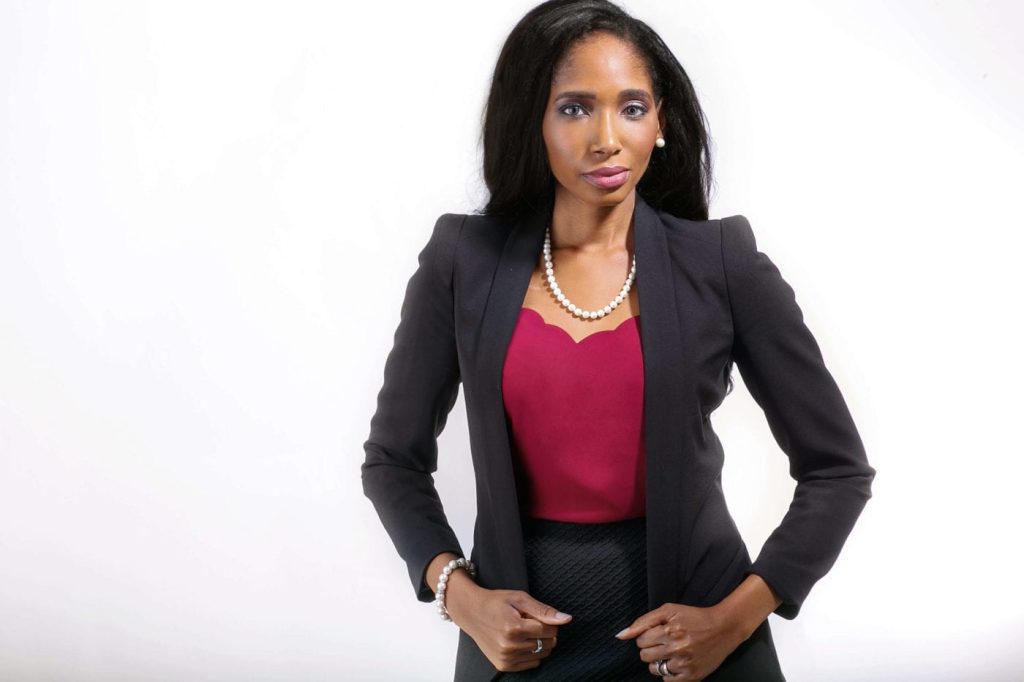
[bctt tweet=”My goal is to use my expertise and knowledge to improve the lives of my clients – Ral Obioha” via=”no”] Ral Obioha holds several degrees; a Juris Doctorate degree from Howard University School of Law, a Masters of Law Summa Cum Laude from American University Washington College of Law and a dual Bachelor’s degree in History and Psychology Magna Cum Laude from Eastern Mennonite University in Virginia. Eager to offer her legal expertise, Ral served as a Student Attorney in the Fair Housing Clinic, where she represented impoverished D.C. residents. She expanded her body of work in the legal field by becoming a member of the International Moot Court Team; participating in the D.M. Harish International Moot Court Competition in Mumbai, India, where her team won the Best Advocates Award. As a law student, As a law student, Ral interned with several law firms in Washington D.C., gaining experience in Immigration Law and Civil Litigation. Prior to moving to Houston, Texas, Ms. Obioha worked at an esteemed boutique law firm in Washington, D.C. where she represented clients in Personal Injury, Immigration, Business Law, Real Estate Transactions, Criminal Appeals, as well as International legal matters. Before starting her own firm, Before starting her own firm, Ral worked in one of the largest plaintiff’s Personal Injury firms in Texas representing clients in high profile auto and 18-wheeler trucking accident cases, as well as, premises liability and product liability cases. When she’s not working, Ral runs her inspirational blog, NwaVic and enjoys fine dining. What are three things you gained and lost in the process of setting up your law firm? I gained the quest for constant self-improvement, patience in service, and a stronger work ethic. I lost time, care and concern for things and people who do not add positive value to my life or life path. Now, I surround myself with “good vibes” only. [bctt tweet=”I gained the quest for constant self-improvement, patience in service & a stronger work ethic” username=”SheLeadsAfrica”] Do you volunteer? If so, can you share any advice on volunteering as a way to build a career? Yes, I volunteer at least once a month. Volunteering is an important avenue to not only contribute to your community, but to personally connect with the people in it. This gives you a gateway to free knowledge about the needs of your community and how you can meet them through the services you provide in your business or career. By volunteering, you can get experience, gain/expand your skills, learn more about yourself and your potential to grow and develop, and build your confidence. It is also the definitely the purest way of networking and expanding your networking. I have made some lifelong connections through volunteering. Tell us more about participating in the D.M. Harish International Moot Court Competition? How did you successfully lead your team to win an award? D.M. Harish International Moot Court Competition is an annual competition that is hosted the Government Law College, Mumbai, India, in association with the DM Harish Foundation. The competition presents a unique International legal issue and invites law students from various parts of the world to come and compete. In 2011, I attended the competition with two esteemed class mates. We were asked to research and debate the legal issues surrounding international surrogacy. I served as the researcher for my group and provided all the groundwork legal research we used to navigate the competition, and ultimately win an award. The experience was incredible. It took a lot of hardwork, dedication and late hours to win but it was an invaluable experience. I met law students (now lawyers) from all over the world, including Russia, Brazil, India and France with whom I still stay in touch. What are your current career goals? How are you taking the steps to reach them? My current goal is to continue to grow my law practice into a leading avenue through which my clients can reach their dreams, achieve their goals, and protect their estates. My goal is to use my expertise and knowledge to improve the lives of my clients. I am taking various steps to achieve my goals by networking, volunteering, and most importantly, providing each client with quality legal solutions and specialized attention. Can you tell us more about your inspirational blogging? I have always had a passion for inspiring others. In 2011, I started a blog NwaVic. The purpose of the blog is to inspire and empower others “to aspire, to love and to live a life of purpose”. There I share inspirational thoughts, stories, and experiences through the lens of my own life experiences and journey. I blog about my spirituality, my experience in marriage, friendships, and courage. [bctt tweet=”Ral Obioha: The purpose of my blog is to inspire and empower others” username=”SheLeadsAfrica”] The blog also has a section “Dear NwaVic” where my readers can send me any question or issue they need a neutral opinion on. I blog about my spirituality, my experience in marriage, friendships, and courage. The blog also has a section “Dear NwaVic” where my readers can send me any question or issue they need a neutral opinion on. The name “NwaVic” means “Daughter of Vic” and is inspired by my late dad whose name is Victor. I’m also on Instagram and Facebook. What has been your best fine dining experience to date? Ohh, my favorite experience was at this restaurant in Rio de Janeiro, Brazil in 2015. The restaurant literally sits on a tree with a view of the city of Rio. The service was amazing and the food was impeccable. The experience as a whole was so memorable, I think about it sometimes. What three skills do you think every young woman lawyer needs to be successful? Courage, self-confidence and discipline. This is a sponsored post.
Nthabiseng Mapela: Knowing that I made it happen makes all the hard work worth it
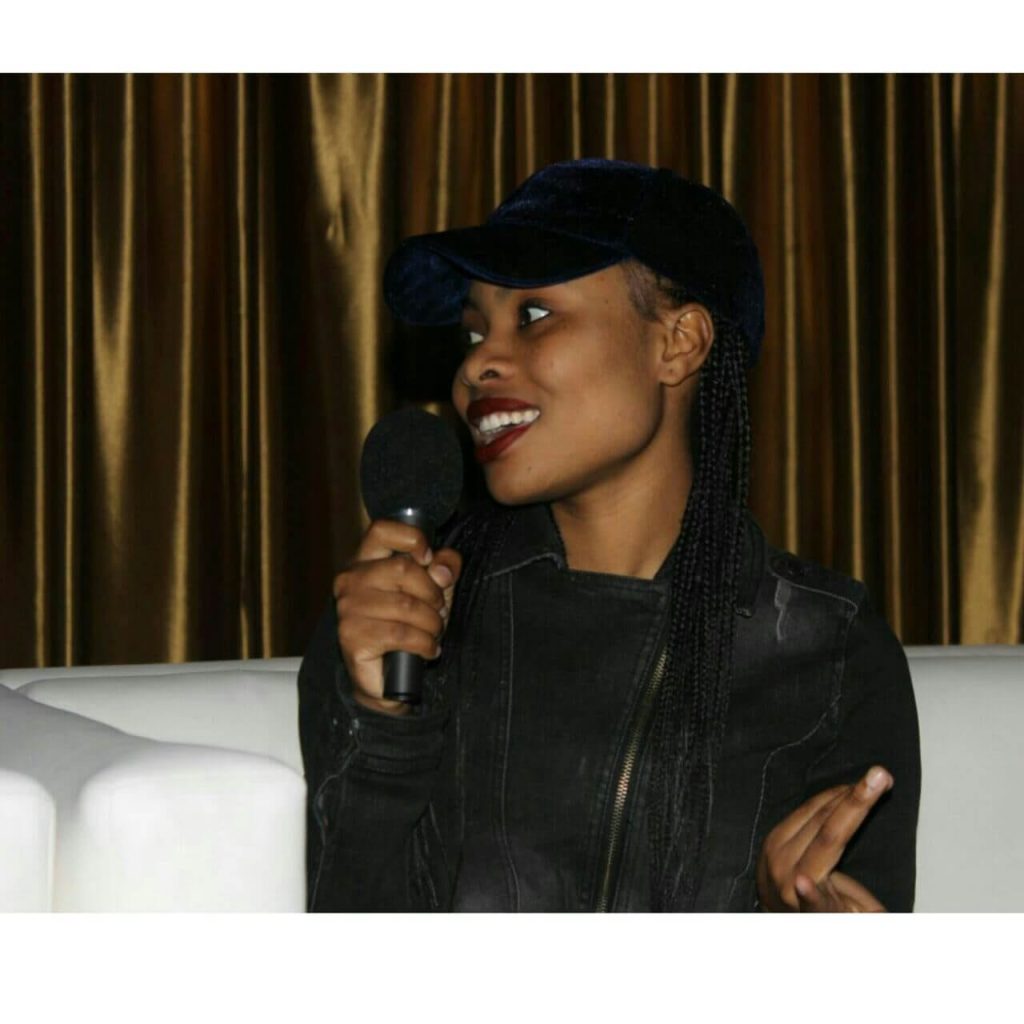
[bctt tweet=”Entrepreneurship was never something I dreamed of doing – Nthabiseng Mapela” username=”SheLeadsAfrica”] Entrepreneurship is about offering solution to problems. Nthabiseng Maphela, founder of Beyond Measure, an event company for growth is one of the few to say that money was always a motive to her. Even though it is not the primary motive. Nthabiseng certainly did not have sleepless night thinking about money but because she wanted to offer a better service for all. It is a passion for what she is doing for others that drives her. What does self employment mean to you? Self employment to me means building a legacy for the world, a legacy that will reflect who entrepreneurs are and change life of others. Self employment is a mean of giving back. What do you like most about your job? How do you stay motivated when things don’t go as planned? Despite all the stress and horrors, all the cancellations and technical difficulties, event planners wouldn’t have it any other way. What could be more rewarding than the end results? Seeing people enjoying themselves, seeing everyone connect and share an experience. Knowing that I made it happen makes all the hard work worth it and that’s why I love working in events. What are the most common/serious problems you have encountered as an event manager? We face three major problems; unexpected weather, technicaly failure and most importantly, guests not showing up The trick is to always have a backup plan. What is close to your heart? Entrepreneurship. It was never something I dreamed of doing but it’s important to the country. Entrepreneurship contribute to the economy and this made me want to be part of the team that changes the world. It is something that makes me feel very important and make me feel like i am contributing towards the economic growth. What do you enjoy more about you job ? The planning itself and putting it into action is exciting at all times. That’s because to me it is always an opportunity to explore new things, meet people and explore different environments. just love planning for my company because no matter how impossible it might look to people, I just love planning for my company because no matter how impossible it might look to people, I am going to put it into action as the owner of my company. Can you tell us about your services? Sure. Regarding our services, outside planning events, we supply promoters, hostesses, actors, brand ambassadors, dancers and extras. What is the first thing you do when you plan an event? Assemble a team. In union there is strength. What do you live by? Everything in this world began with a thought, respect your thoughts, value them and put them into action. Those thoughts comes from the world of possibilities. If you’d like to share your story with She Leads Africa, let us know more about you and your story here.
Joy Makumbe : Engineering is all about networks
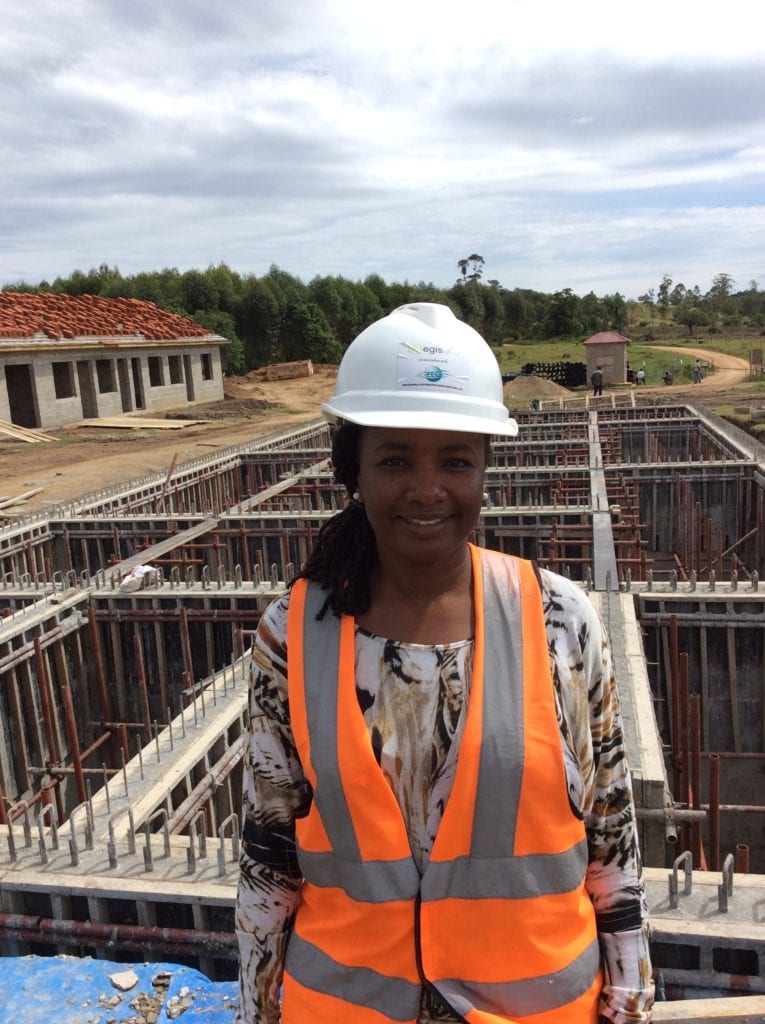
[bctt tweet=”I felt the need to test my strength & capacity to build, grow & sustain a company – Joy Makumbe” via=”no”] From an early age, Joy Makumbe, the founder of Majolic Construction and The Joy Makumbe Trust, both based in Harare, Zimbabwe, has always been passionate about turning her ideas into tangible physical reality. Knowing that these realities assists women and girls in alleviating some of the problems they face daily with regards to water and sanitation gives her satisfaction. Did you always want to be a civil engineer? No, not really. I didn’t know much about it until I was attached to engineering companies during school holidays. Most of these companies were mainly involved with mechanical engineering but that is where I realised my passion for building things. After graduation I mainly worked in consulting companies whose projects were mainly structural in nature. This was a good foundation for me as I worked with elderly white engineers who were really bent on detail, teaching, training and mentoring. From there I moved to another consulting company that exposed me to the projects management side of civil engineering. [bctt tweet=”I didn’t know much about civil engineering until I was attached to engineering companies” via=”no”] Tell us about Majorlic Construction. Majorlic Construction is a company I formed in 2008 after I felt the need to be directly involved in the communities, and to test my strength and capacity to build, grow and sustain a company. The name is a combination of letters from my first and last names. Majorlic’s focus has been water and sewer reticulation networks and structural design. We have also incorporated the use of green technology in construction with the use of solar energy to provide water heating and lighting in the houses we construct. To date we have done servicing of residential stands, house and road constructions in Harare, Zimbabwe. What challenges have you faced as a black African woman in engineering? Most of the time people assume that I am a man. The community’s awareness with regards to women in engineering is still very low. As a result my gender makes it harder to get contracts because people lack the confidence that a woman can really deliver. Contracts mainly come because of referrals from people who have worked with me and know my work. For me, there is no excuse for quality so it always comes down to proving myself more as an engineer. [bctt tweet=”Awareness of women in engineering is still very low. Most of the time people assume that I’m a man. ” via=”no”] What were the major start-up challenges? Capital and not being known in the construction circles meant fewer contracts. Not many people want to engage an engineer that they do not know. When you get that opportunity to do a project, the project just looks too big in your eyes and can be overwhelming. Looking back I have learnt that sometimes we are overwhelmed because we think we have to go at it alone but you will find that there are so many established companies who are willing to partner with you on some projects. Your company can learn from these established companies. I know TechWomen 2015 was a life changing experience for you, tell us a bit about that. You leave your country with one perspective on women, technology and science and you come back changed. I left the US with newly found relationships, sisterhoods, zeal, and a renewed form of energy. I met a lot of powerful young women from different parts of the world who are making a difference in their home countries and beyond. This challenged me and I realised that I too could bring such impact. How do you connect your experience at TechWomen with your work? During my mentorship I was attached to Sun Power – one of the major players in solar technology in the US. I realised that there was so much untapped potential in Zimbabwe for solar power on the domestic, industrial and agricultural fields. This was an area which we needed to explore more of in Zimbabwe. Since then I have been looking at ways of introducing different forms of energy in Zimbabwe through my trust, The Joy Makumbe Trust. It has been difficult in the past couple of years to rely solely on Hydropower due to seasonal changes and drought patterns. We have started exploring more on green technology and how we can use it to make our lives better. For example those in the rural areas have resources to use like Biogas, they just do not have the knowledge. We plan to bridge this knowledge gap in the communities. Overall, my experience at TechWomen has given me lifelong networks of sisters across the globe. Sisters who share opportunities and information to build our businesses and increase impact in our communities. Sisters who share achievements to encourage each other and show that it can be done. How has it been moving from being a lecturer to managing a multi-million dollar project in a foreign country? Engineering is all about networks. I got this job because an engineer colleague of mine informed me of the opportunity and I submitted my CV. The thought of relocating was overwhelming and being part of a million dollar job funded by the World Bank made it worse. So many questions ran through my head, “am I woman enough to pull it through?” But I have a very supportive family that really cheers me on. This contract came at the right time when I felt I was ready for something new. The TechWomen experience had elevated me to a level where going down again was not an option for me. I was restless. I needed to do more. I needed to make more impact. It has been challenging dealing with contractors and being in a different setting, but it has been an amazing experience.[bctt tweet=”Joy Makumbe: I was restless. I needed to do more. I needed to make more
Mariam Sule: Social media exposes me to a lot of readers
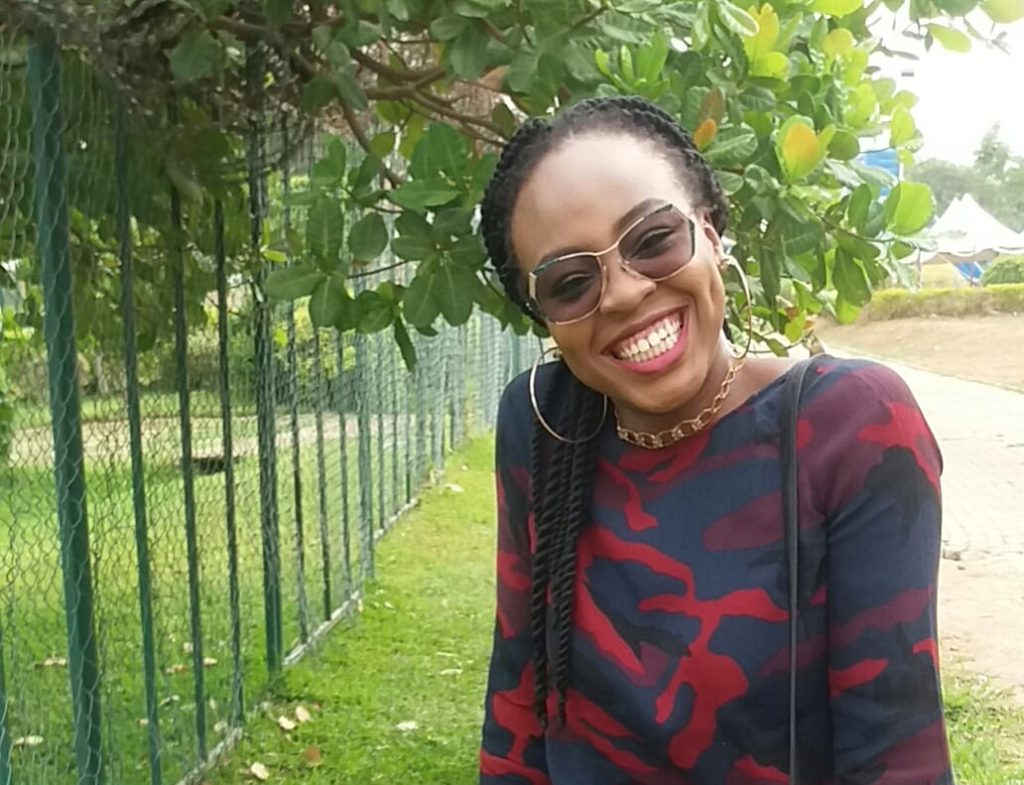
[bctt tweet=”I want to serve as a bridge between readers & writers- Mariam Sule, founder of @TheBookDealerNG” username=”SheLeadsAfrica”] Mariam Sule is a writer and educator. Her fiction and nonfiction have appeared in the Ake Review, Brittle Paper, Ebedi Review, ITCH Creative Journal and Litro Magazine UK. She was a writer-in-resident at the Ebedi International Writers Residency. TheBookDealerNG is her tech startup that provides a platform where book lovers can access titles published by writers of color. Mariam currently lives in Ilorin, Nigeria. What inspired your decision to start selling books? I have always really loved books. I love being around them. The scent of a book makes me happy. Also, I discovered that many other readers found it difficult to find books particularly African Literature and other books by people of color. I recognized a wonderful opportunity and I was happy to invest in it. What are the three key things you consider while trying to promote your brand online? Readers, publishers, and writers. I think carefully about what the readers see when they go through my pages. I make sure what I am offering is appealing. Also, I want to make sure that writers and publishers see me as a great outlet to distribute their content and that I can serve as a bridge between writers and readers. I achieve this by starting conversations on my pages. How has social media been able to help increase your productivity? Social media exposes me to a wide range of readers. Because of social media, I can keep people engaged by talking about books and writing and also collecting orders. [bctt tweet=”I haven’t encountered fraud on social media – Mariam Sule ” username=”SheLeadsAfrica”] What was the major social media campaign/experience/incidence that put you into the limelight? The very first giveaway I hosted was in December 2016 and it was a Christmas-themed giveaway. A classic buy-one-get-one-free promotion. Free books were given out to people and TheBookDealerNG received a lot of positive publicity including a blog feature. How have you been able to cope with social media fraud? So far I haven’t encountered fraud on social media. I am careful when I interact with people and I ensure that my transactions are transparent. Apart from social media, are there any online methods you use for promotions? Not at the moment. TheBookDealerNG’s site is still under construction. What’s your perfect one-line statement for young women trying to build a brand via social media? Go girl, I’m rooting for you! If you’d like to share your story with She Leads Africa, let us know more about you and your story here.
Chinero Nnamani: I want to be remembered as a conscientious person who was Black, a Woman, and Proud
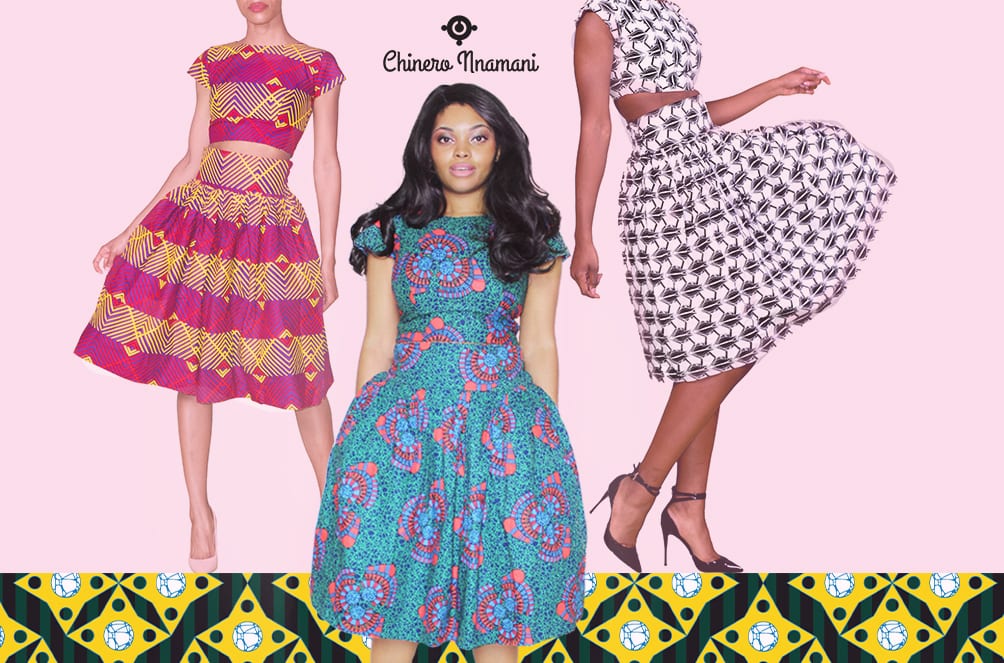
[bctt tweet=”I created @ChineroNnamani to celebrate & give well-deserved credit to Africa’s influence in our culture” via=”no”] Since childhood, Chinero Nnamani has been fascinated by the world around her. As someone with too many ideas, deciding a career wasn’t a straightforward process. Chinero wanted to be a nurse, a graphic designer, a lawyer, a social activist, an inventor, a politician, a psychologist…and the list goes on. In her search for a calling, Chinero learned about: computer science and graphic design in Sweden, creative writing and public policy in California, philosophy and psychology in London, statistics and data management in India, anthropology and human anatomy in Nigeria, and much more. With these experiences, Chinero learned how deeply embedded African influences were to the foundations of civilizations. She then created the Chinero Nnamani brand to celebrate, and give well-deserved credit, to Africa’s influence in our culture and other cultures throughout the world. How do you blend technology and art in your aesthetic? The many interconnections between technology, mathematics, and art provide a wealth of material to emphasize the fusion of African influences. My patterns tend to also celebrate math and technology with geometric influences, and the use of simple grids and linear perspective. The symbiosis of art and technology, in my opinion, allows for the most striking prints and clothing designs. You make your own original prints, how easy or difficult has it been creating them? I enjoy making prints by hand, but I can’t emphasize enough how technology has changed the game, and become integral to how I create my patterns, as it is incredibly convenient to travel with a tablet and stylus. So to answer your question, it is very easy and fun to create my prints! Can you tell us more about what you worked on before starting your brand? Before starting my brand I worked as a freelance graphic designer, illustrator and web designer. I also worked as the Practice Manager of a Mental Health clinic. These experiences have only helped consolidate my undergraduate experiences, and contribute to my personal and professional growth as a thinker, advocate, collaborator, manager, and leader. What was particularly challenging to you when you decided to create the Chinero Nnamani brand? The most challenging aspect of starting the brand was human resources, and finding and/or training reliable people to uphold my quality standards in Nigeria. You really have to firmly and consistently foster an organizational culture of efficiency and high quality in Nigeria, or the quality will suffer without proper systems in place. Fortunately, I have steadily built an amazing team of people in Nigeria that are always eager to learn and excel. [bctt tweet=”…the most valuable things I learned were how embedded African influences were to the foundations of civilizations.” via=”no”] You are present online and your flagship store is at the Jabi Lake Mall in Abuja. How did you go about opening the physical store? Opening the store in Jabi, Abuja was a beautiful experience. From our massive ornate mirrors, to our gold shelving, and blends of ornamentation and joyful visuals, I really was able to fulfill my vision for the space and have it emphasize global acuity and African pride. What’s the creative process like for you? Where do you go, and what do you do, when you need inspiration? I typically begin with a simple doodle or sketch in a moleskin notebook. I like to be out in nature or sitting by a window when I want to create. Inspiration is drawn from the fluid forms and sharp colors of nature, music, traditional food, Nigerian folk art, masked dance, ancestral drums, Igbo attires, and the shear wealth of African influences and innovations in cultures and textiles throughout the world. What is your three-year growth plan for Chinero Nnamani? My three-year growth plan for the Chinero Nnamani brand is pursuing more expansion opportunities in the U.S. with physical store locations in malls, and pop-up events. I also plan to release more lifestyle products like furniture, leather goods, and more! In one sentence, how will you like to be remembered? I want to be remembered as a conscientious person who was Black, a Woman, and Proud. This is a sponsored post.