
Kimberley Masimbe: I never design something I cannot wear myself

Four years ago, 29-year-old Kimberley Masimbe stepped out into the fashion industry with her chic Afrocentric vintage clothing line, House of Kiki.M. She started out running her business in a room in her parents’ house. Kim still recalls that the room was filled with inspirational pictures, fabrics, and a little table where she did her drawings. Glenda Makumbe, our SLA contributor caught up with Kim as she talks about House of Kiki.M and her passion for wearable designs. Tell us a little about yourself, Kim I was born and raised in Zimbabwe where I attended a multicultural school. I was blessed with being able to travel a lot at an early age and that significantly helped me grow personally and shaped who I am. I am very fashion conscious and I can say that has informed my kind of designs. I never design something I cannot wear myself. And oh… I love and collect hats too. Why fashion? Soon after college, I was going through a phase of self-doubt but one thing was certain —I wanted to create my own fashion statements and design wearable clothes. I used to sell second-hand clothes (bale) at Avondale flea market here in Harare. I would revamp the clothes by adding a personal touch to them. However, House of Kiki.M started after I won a young designer’s competition. My friends’ sister organized a fashion week in 2012 but because I couldn’t afford the entry fee, she asked that I enter for the young designer’s competition. We had to produce five garments and though it was my first time designing something, I won. I had been drawing and doing a few sketches so I had an idea of what I wanted to do. I have always been good at drawing and it runs in the family. My mum was a seamstress and my aunt was a poet so creativity does run in my bloodline. How would you describe your designs? Vintage…yes, vintage is the word. I love things from the past. I love giving things a different twist through beadings and attention to intricate details. What inspires your designs? I try not to follow current trends as I am inspired by the people who came before me. Brands from way back like Coco Chanel do it for me. What is your typical business day like? No gainsaying, my typical day is filled with appointments and fittings. How has your educational background helped you in managing your business? I did a course on media and communications and that has been helpful. But I’m looking at doing a fashion and design course at the Harare polytechnic. I have always been good at drawing as I come from a generation of artists. I never realized it until much later. What’s exciting about Zim fashion at the moment? I’m excited by the different fashion hubs opening up, the new designers trying to break barriers and the desire to promote Zimbabwean fashion. What are the challenges of running your own business as a young woman in Zimbabwe? Some people don’t take you seriously, especially if you don’t hang out with the creme de la creme of the society. Recently though, people have tried finding out my achievements and what I am currently up to. How do you keep yourself grounded? I try to stay true to myself, stay close to family and really value relationships. What would you tell a young woman wanting to start a business in a difficult economy like ours? Go for it. Know exactly what you want, then get a mentor to help you make the process easier. And never give up on your dreams. Lastly, what should we expect from House of Kiki.M in the next five years? I would like to have my brand in some of the local and regional department stores like Edgar’s (regional), Barbour’s (national) and boutiques in other cities. Eventually, I’d love to branch out to other Southern African countries. Having my designs on runways is the ultimate dream and I’m working towards it. Also, I look forward to branching into other areas like interior design and natural-based cosmetics. *If you are in Harare be sure to catch Kim Masimbe on the 3rd of September. If you’d like to share your story with She Leads Africa, let us know more about you and your story here.
4 tips for selling yourself on the spot, effortlessly!

I once had a position that involved cold calling people —without a script or template— and selling a product. I had no previous sales experience, and as you can imagine it was a complete disaster. The experience helped me realize that selling was a powerful art-form that I had seriously underestimated. It also gave me some good insight for when it came to finding ways to ‘sell’ myself to people I want to connect with. Whether you are an entrepreneur making connections, job hunting, or trying to win over co-workers, you need to know how to sell yourself. Many of us have no problem delivering a killer elevator pitch, or eloquently presenting our ideas. The problem comes when we have to convince everyone; why us? While being prepared is crucial, you may not always have the luxury of preparing. When put on the spot it’s easy to revert to a one size fits all prepared speech. To help with this I’ve come up with an acronym to ensure you can adapt on the spot. You need to think FAST. It’s not a template for a monologue but rather a few things to bear in mind in your conversation. Fit Getting the right ‘fit’ is about reading your audience, and deciding what skills or achievements would be relevant in that context. Yes, you are a #MotherlandMogul and you have LOTS of accomplishments, but is it necessary to list them all? Think from their perspective, and only include things that will help your pitch. Also mention things that you are working on doing, and not only past accomplishments. The Harvard Business Review points to a study which found that your potential could be as persuasive as your accomplishments. They note, “people are much more impressed, whether they realize it or not, by your potential than by your track record.” The study asserts that “when people seek to impress others, they often do so by highlighting individual achievements. Despite the intuitive appeal of this strategy, we demonstrate that people often prefer potential rather than achievement when evaluating others.” Keep it truthful and do not sell dreams, but don’t be afraid to use your on-going/future projects as well. Add value Essentially, you want them to realize they need you or at the very least your relationship can be valuable. Are there areas that you can collaborate with them in? Problems that you can solve? Demonstrate that you have grasped their needs, and paint a picture of just how you are positioned to solve them. If on the spot you have no prior knowledge, just ask what the needs are. What you want to avoid is going on about things that may not be relevant to them. Separate Unless you have a totally original idea or skill set, you must give compelling reasons as to why yours is different. Separate yourself from competition by mentioning the unique qualities/experiences that enhance your value. Salespeople would refer to this as a Unique Selling Proposition. Entrepreneur.com’s Small Business Encyclopedia illustrates this with some examples, “Charles Revson, founder of Revlon, always used to say he sold hope, not makeup. Some airlines sell friendly service, while others sell on-time service.” Whatever your personal USP is, make sure it actually adds value. Real estate coach Kevin Ward reminds us, “The goal is not just to be different. The goal is to add value to people in a different way.” (*For a humorous visual reminder of why different isn’t always useful, take a look at the Twitter account @WeWantPlates.) Tie it up So now you have won them over and you have buy-in. Remember, the goal of ‘selling’ is to make a sale.Wrap up your conversation by setting clear ways to follow through. Ending a conversation with:“We’ll chat more later” won’t cut it. Make sure you collect! Set dates, get signatures, do what you came to do. Don’t let a good sales pitch go to waste!
Charmaine Maphutha: All you need is focus

We give you the details about NGOs, now it’s time to talk to someone who works in the field. Charmaine Maphutha is a vibrant 22-year-old from Limpopo province, South Africa. While Charmaine studies at the University of Johannesburg, she also runs the Bopedi Hope Foundation. The Bopedi Hope Foundation was founded by Charmaine and two other women who wanted to make a difference by helping the needy. Makalela Mositsa spoke to Charmaine on her passion for helping the disadvantaged. Tell us about Bopedi Hope Foundation Bopedi Hope Foundation was founded by 3 girls, including myself. Our focus is giving to the disadvantaged. Currently, we provide sanitary pads, school shoes, clothes, toiletries and anything else identified as really needed. Our sole intention is to give hope. Our vision is to help as many children as possible, instilling hope and eventually taking some to school. Having a children’s home in Sekhukhune is also in the works and in our future plans. What inspired the foundation? I was inspired by an organization involved in giving meals to children in universities. I saw how dependent students were on the feeding scheme. It meant so much to them to receive meals that they probably didn’t know they would get. I immediately knew helping people was something I needed to do. Also, as a student teacher at Lekhini School in Limpopo, I got to meet students that inspired me. There, children from different backgrounds and households came to school because they wanted to better their future. One of the students once mentioned to me the de-motivation of having to study in classrooms that had no windows and sometimes no doors! That was when I started thinking about how to help these students with things the government couldn’t provide them. I thought to myself, “What if I could give them things that will help them live comfortably”. Wow…what else motivated you? I also had an interaction with a young lady who told me how she had to choose between buying a bag of potatoes and buying a packet of sanitary pads. This made me even more motivated to help. What advice would you give to someone looking to lending a helping hand? First, you need focus. You may never complete a task if your head is all over the place. Secondly, take things slowly. One project at a time, so your recipients are satisfied with whatever you decide to offer them. And lastly, do not make premature announcements, that way you won’t leave disappointed people at your wake. Red or white wine? Which would prefer and why? Red dry wine. Of course, because it contains procyanidins, compounds commonly found in red wine known for protecting against heart diseases. What would be a perfect day out for you? Good food and good company. Sharing creative ideas with people is my idea of a perfect day. Meeting people with different personalities and socio-economic barriers is cool, you know. I also find peace running the organisation. It’s something very dear to my heart. It opens my heart to want to give even more. Want to see women you know featured on SLA? Tell us what amazing things women are doing in your communities here.
Jeanette Theu: When you try to be like someone else you limit yourself

Women in tech will likely remain a buzz word for a while. Tech is one of those industries that everyone would like to see more of a gender balance in. Jeanette Theu is one woman trying to correct that balance. The marketing manager for MTN Business Private Sector, Jeanette has experience in both the enterprise and startup worlds. In her pursuit of greatness and helping more people, she started a non-profit organization, GirlCode with her best friend. The organization aims to help bridge the gender gap inherent in the IT industry. Jeanette shares with SLA her non-profit startup, GirlCode, and her thoughts on women in the tech industry. How did the idea of GirlCode come about? GirlCode was originally the idea of my best friend, Zandile, who organized the first GirlCode hackathon in 2014. I helped with the arrangements and onwards, we started brainstorming on how we could turn helping women through hackathons into a non-profit organization. The idea materialized in 2015 when we registered GirlCode as a nonprofit organisation. The idea has grown since we first started. We now see GirlCode not only as a vehicle for empowering young women through hackathons, but also a vehicle for creating programmes to teach young women how to code. We’re also planning on growing our brand to start having corporate challenges, and implementing the Women Go Digital initiative. With the hackathon happening this year, our aim is making it bigger and better. We’ve enjoyed sponsorships from great partners like Standard Bank, Entelect, MTN, and Microsoft. Also, JoziHub has granted us their co-working space to hold the hackathon. What is it like working with your friend? I think being co-founders with my friend is not such a bad thing as we get to spend a lot of time working together. We understand each other, but working a full-time job in addition to running GirlCode can get a bit daunting. So, it’s important working with people who can constantly motivate and push you to do better. I feel very motivated working with her. We’ve known each other for over a decade which makes it easier to be transparent. What are some of the challenges that GirlCode faces? The main challenge we faced at the beginning was trying to get sponsorships. People get excited at the fact that it’s an initiative for women in the IT space. But it’s a bit challenging getting them to actually put in the extra effort to help. However, it’s been great having people actually wanting to help with the initiative. Some of our partners have been involved in trying to get our next hackathon off the ground. Some others are helping to get more girls in the IT industry. It’s been inspiring to see these companies making a difference in helping girls bridge the gap. How do you approach corporate organizations? Do you go in directly or approach the right person to help? For us, it is finding that one person within a company that would be our ambassador. Someone who would be our voice within the company and fight for us 100%. We’ve been fortunate to have a couple of these people in the various corporates we’ve approached. They believe in what we do and try their best to help us. What has been the motivating factor in making sure that GirlCode becomes a success? It’s about making a difference in someone else’s life and bringing each other up. It’s all about using the knowledge we have for the greater good. What are your thoughts on the level of involvement of women in technology in Africa? How can we get more women interested in technology? We are making small strides but still have a long way to go. We have powerful women in the tech industry and I think they can also give back in some way. More women in the industry need to pull some of the girls up by offering advice. We need mentors. We need women to empower young girls. We try our best at GirlCode but we need the seasoned/successful women to guide young girls in pursuing this career. More women should work on making a change in their respective fields and encourage other women. Any advice you’d give to young women/girls wanting to join the tech industry and becoming the next Jeanette? In terms of wanting to be the next Jeanette, I’ll paraphrase something I heard Shonda Rhimes say, ”If you try to be like someone else you will always be second best, but you can always be the best you.” When you try to be like someone else you actually limit yourself. Yes, it’s important to aspire to be like someone, but always be true to yourself. We want to know about women in your communities doing amazing things! Tell us about them here.
Peggy Ballou: Young women should create vision in their career

Sometimes, busy professionals need specialised one-on-one training to boost their businesses. That’s where the boutique coaching comes in. Boutique coaching is the art of discovering the best in people and getting them to utilise it. In Ivory Coast, Peggy Ballou is at the forefront of talent management and human capital. She is the founder of Social Achievers, a non-profit organization which aims to develop personal and professional skills in high school students in Ivory Coast. Peggy spoke to SLA about young women creating vision in their career while sharing top tips on improving career skills. What does it take to run a boutique coaching and human capital firm? Running a boutique coaching and human capital firm in Ivory Coast is a challenging experience. Especially when only a few have basic knowledge of the services you offer. A boutique firm is one of a small size and/or narrow line of service. In our case, we specialize in career coaching for professionals in their mid-career, on one hand. On the other end, we help SMEs strategically plan and manage their human resources. Our ultimate goal is to provide advisory services on the strategic function of HR as opposed to the traditional view of staff and payroll administration most business owners have. Managing a business of this sort requires experience, innovation, perseverance and excellent communication skills. I personally work from home and my team consists of a virtual assistant and a community manager. Sometimes, I work in a client’s office with other independent consultants. The biggest challenge is to get the first clients, especially corporate ones. I spend most my time educating and nurturing the prospects on the importance of our services to improve the results and performance of their staff. I do this by networking, writing articles in HR Magazines and doing public speaking. How have you sustained your business through the years? I have been in business since September 2013. I started while I was still living in Canada. I was running it in parallel with my corporate job, at nights and during weekends. I a humble beginning, and in 2015, I took a leap of faith, quitting my job. I went back to school to obtain my coaching certification and started working on my business full-time. I am still at the beginning of my entrepreneurial journey and still have a lot to learn. However, I have personally grown considerably over the past few years and learnt a lot on the do’s and don’ts in the process. For 2016, my main focus is to systematize and streamline my business in order to scale it and make it sustainable. What is your model for human capital development? I see the human capital (talent) management as a 360° integrated process as the image below: Very often, organizations, especially SMEs, don’t strategically plan and align their staff with the business objectives. They place less emphasis on employees development. We are here to help in different aspects of the human capital management from the workforce planning to the talent acquisition; from training and development to succession planning. Our vision is to make human capital the most important asset of organizations by maximizing the potential of each individual contribution in meeting the business objectives. Why is human capital the heart of a business? How can young entrepreneurs leverage human capital? Human capital is the set of knowledge, experience, and talent that people have and can benefit an organization. As entrepreneurs, we know how important it is to hire the best employees and put the right persons in the right position. When starting out, entrepreneurs don’t have enough resources to invest in the human capital. But they could leverage human capital by identifying and selecting staff according to the potential and natural talents of each person. They don’t need to rely solely on just past experience. To attract the best people, young entrepreneurs should think of career development and advancement opportunities in their companies. It’s also recommended to invest 1% of the revenues in staff training and development. That investment will improve the overall performance of the organization. How can young women improve on their productivity at work? For me, productivity is the ability to produce the best result possible in the shortest amount of time. As young women, we often have to balance work with family duties. Hence, it’s important that we are organized and focused on productivity. At work, it’s crucial to identify what are the main priorities and focus on what matters the most. It takes discipline and dedication. Productivity also implies systematization. Whenever possible, young women should create systems in their work and personal life (checklists, templates, various spreadsheets, automated email responses, menus, pre-made grocery lists etc.) and establish routines. Finally, it’s important to note that motivation is a driver of productivity so young women should find purpose. They should create a vision in their career and life to stay motivated and keep their productivity level at his best. If you weren’t in your current profession, what would you be doing? I would be a diplomat or an ambassador! Did you enjoy this article? Sign-up for our newsletter to get even more amazing content directly in your inbox. Click here.
Nthabiseng Nkosi: Working from home is the norm now in South Africa

Ah the dream. Managing a business and team successfully from your home. Nthabiseng Nkosi is living it. Together with her husband, Nthabiseng built and now runs a proudly South African design agency called Jutsu Design. Even though Jutsu’s first clients were friends and family, the agency now offers services ranging from web design, digital solutions, mobile apps to photography. SLA caught up with Nthabiseng to learn more about Jutsu and managing a business from home. Nthabiseng, tell us, how did Jutsu Design come about? Jutsu Design started out as a concept to build a small design agency that would offer affordable designs through the line services for SMME’s. My then boyfriend, now husband, and I worked on building a name for us – Jutsu. The name ‘Jutsu’ came about as a result of the team being avid anime fans. ‘Jutsu’ is a Japanese word meaning technique or skill. Once the name was decided on, the company was then officially registered in 2011. Friends and family were our first clients and we grew from there. Fast forward to five years, the company offers web design, digital solutions, mobile apps as well as photography. Jutsu also developed our first two title sequences for e.tv’s Heist and SABC 1’s Dreamworld. How large is the Jutsu Design team? What are the challenges of managing your team? Jutsu Design is a team of a husband, wife, web developer, PR manager, freelance writer, and photographer. The team was initially made up of four members when we started out in 2011. Two members left to pursue other career paths and the rest of us continued with business. One of the major challenges we face at Jutsu is keeping up with the workload. Most times, it gets a little too much to handle, but we try to meet deadlines. In the earlier years, it was difficult, but every project has been a learning curve. Did work from home from the start? How did you manage that? Being a micro- enterprise, Jutsu Design has always operated from home. We are able to save money that would otherwise have been used for rent. We keep costs at a minimal because our company is small. How do you create awareness or reach clients for Jutsu ? The funny thing is, we don’t. We get new clients through word of mouth from our loyal clients. We have a website up and that too has been working for us. Active promotion of our company might mean getting extra hands and moving to bigger premises. How do people react to your working from home? I think working from home is the norm now in South Africa. Some people can be a little envious, but it takes a lot of self-discipline to be self-employed. You may think you have all the time to just chill and work later, but you actually don’t. How do you draw the line between work and running a home? At first, it was extremely difficult working from home. I used to want to make excuses with that, but with deadlines closing in on me, my head would spin. So, I have learnt to be a lot more disciplined. If possible, I work half days on Mondays to Wednesdays. Thursdays and Fridays, I do house chores; laundry, cleaning etc. This schedule works for me as I do not have a housekeeper. But if things get too hectic, with meetings and events to attend, I leave house chores to the weekend. What’s the best way to unwind when your office is also your home? My husband and I sometimes, go on dates, engage in fun activities and fetch our little one from the crèche. I have my spa days and he has his boy’s night outs with his friends. We try to do this once or twice a week. If you’d like to share your story with She Leads Africa, let us know more about you and your story here.
Princess Odiakosa: I’ve dreamed of becoming a chocolatier

The cocoa bean may be indigenous to the Americas but these days its home is in West Africa. West Africa produces nearly 70% of the world’s cocoa yet we’re not renowned for making luxury chocolate ourselves. Princess Odiakosa wants to change that. She is a chocolatier that works exclusively with Nigeria cocoa and has plans to make Nigeria “the sweetest place in Africa”. Here, she shares with SLA the challenges of being a Nigerian chocolate maker and why her company is called Kalabari Gecko. How did you find your way into making chocolates? I have always had this love for chocolate. I think it was as far back as when I was a little girl and being ascribed to as having a chocolate complexion. Also as a child, my sister planted a cocoa tree in front of our house all on her own. There is something very compelling about the visual structure of chocolates and its formation in a box. There is the mystery embedded in the interiors of its inner cavities, and the burst of polyphenols, a reward your brain is always thankful for. Whenever I travelled outside Nigeria, people would request I come back with chocolate. That used to get me upset. My response sometimes would be, “But we have cocoa, why don’t we make ours?” It was even sadder when visiting friends or family abroad, I had nothing to offer as gifts from my beloved Nigeria. So, you can say it was a two edged-sword. Thinking about Nigeria and the cocoa we have motivated me to stop talking and start creating. I’ve had this dream of becoming a chocolatier since 2010, but didn’t know how to go about it. There were no chocolate making schools or classes available anywhere in Africa. I had to head North of Europe to learn the art of bean to bar. My passion is for the Nigeria cocoa bean. You probably don’t know that our cocoa gets a lot of bad press for its distinct character. My Kalabari Gecko is 100% single source Nigerian chocolate. My chocolates are made from our locally farmed cocoa bean into tasty, satisfying treats. I want to change all that and make Nigerian chocolate an acquired taste. Something we can call ours. Why Kalabari Gecko? What’s the story behind the name? Initially, I had another name for my company. But one day I was conversing with a friend’s brilliant mum about my plans for the business and she advised me to change the name to a more Nigerian one. It was from there, the name Kalabari Gecko emerged. Every time the thought of my chocolate business came to mind, I always had a picture of this pretty rampant gecko in my head. This image started invading my dreams and I chose it as my logo. What do you do for a living? Do you have any plans to move towards making chocolates full time? I work full-time at a financial consulting firm, dbrownconsulting. We are into financial based training, consulting and outsourcing. I manage the Training and Marketing department. I love my job so much, and my boss has been really supportive of my business. It can be really hectic juggling both, but for now I try to find time in the early mornings to make chocolate, or after work, most especially weekends. I try to make my passion fuel me, and my dreams take me there. I would love to make chocolate full time and I am working towards that goal. How do you plan to take your chocolatier business to the next level? I have often heard about the difficulty of acquiring a start-up loan from the banks; that it’ll be easier bringing Steve Jobs back to life, than get a loan from one of the banks. So, I am investing most of the money I take home to my chocolate business. I see my factory producing high quality affordable chocolate for Nigerians and the people they love all over the world. I want to make Nigeria the sweetest place in Africa. To get there, I am taking things one step at a time and right now, trying to put everything in place. If you could eat only one kind of chocolate for the rest of your life? What would it be? It would be the darkest of the dark, or any flavor enrobed in dark. I love the honesty the dark chocolate has. I even find myself popping freshly roasted cocoa nibs into my mouth whenever I roast. If you’d like to share your story with She Leads Africa, let us know more about you and your story here.
Beyond the passion – What you need to get into the caregiving business

Are you a woman who wants to ensure that her family and community is well looked after? Are you passionate enough to sacrifice time and energy? Do you have some basic administrative, managerial or business skills? Maybe you’re thinking none of these requirements apply to you, but are you ready to be spat on, clean washbowls or change thousands of soiled diapers? Then the caregiving industry might just be the revolutionary business idea that you have been seeking. Mind you, it’s painstakingly hard but it is one way to give back to society whilst paying the bills. Interestingly, a famous African saying says, regardless the source of the income, money is money. I am sure that at this point your heart might be doing cartwheels at the thought of the coolest business idea ever. The fact is that home care is one of the fastest-growing businesses in the world. You can be rest assured that without a large capital and clients, you can feed your passion by starting a daycare for children or a nursing home for the aged. Location If you have a roof over your head, then you have the space to start and work with. Is your child in preschool? Are you a divorcee living alone? Or are you an elderly couple with kids off to university? You can always make space with what’s available. It could be a nursery turned into storage, a den that no one sits in anymore, an empty garage or a basement without piles of laundry. It will surprise you just how well, using the right colours, textiles, paint and partitioning can transform a space. Furniture and equipment Getting your initial set up furniture and equipment can be as easy as reaching out to friends and family, A lot of times, families hoard furniture in the hope of re-using them, but most times, they don’t. If you have a network that is accommodating, reach out to them for their old stuff. Most of these items are barely used and have minimal damage. They can be repaired at little cost. Staff Hire retired nursing aides, nurses, and early-year teachers because, with their experience, they are typically patient, may have less responsibility or financial needs and will be willing to help you grow your business. Recruit young people who are willing to work as volunteers for the first couple of months till you settle your financials. Acquire knowledge The worldwide web has a multitude of free resources and courses for business owners in the caregiving industry. Sign up for these courses as often as you can, acquire knowledge on creating a business plan, new trends and best practices in the caregiving industry. Research successful businesses in the industry, you can target studying one business a day. Learn new skills to minimize calls to experts for help with things as basic as installing a nursing station. Train your staff on acquired skills. Create a dynamic team. Give yourself space to grow! Your clients are right here Your clients are never in space or in the next city. They are the people you meet within the marketplace, at the hospital and at your place of worship. Familiar people will feel more relaxed because they think they know your story and can relate to it. They will feel safer around you than some savvy business owner who launches a similar start up in your area. These are your clients; be sure to invite them to your open house. Seek their ideas before implementation. Also, find out what their immediate needs are. Would they work full time or would they prefer a full day care? Are they more focused on the social interaction a group setting will offer? Furthermore, the elderly might just need to be tended to at different times or a group where they meet and discuss. That cozy setting might be your house. You can set up games and make homemade goodies, to create the perfect setting for old stories of love and war. Marketing and advertisement Design and print catchy flyers. Distribute them at supermarkets, playgrounds, schools, and hospitals. Also, volunteer for community engagements. These will increase your visibility and increase your trustworthiness. Remember that your most valuable marketing tool is word of mouth communication. This will get people talking positively about what you do. Registration and legal requirements Always ensure that you do a research on the requirements of registering a business in your country. You would want to create an atmosphere that is loving and devoid of stress. Seek advice within your network. You might just know a lawyer willing to assist with the registration procedures at a discounted value.
Rosie Mashale: Life in the townships is filled with entrepreneurial energy
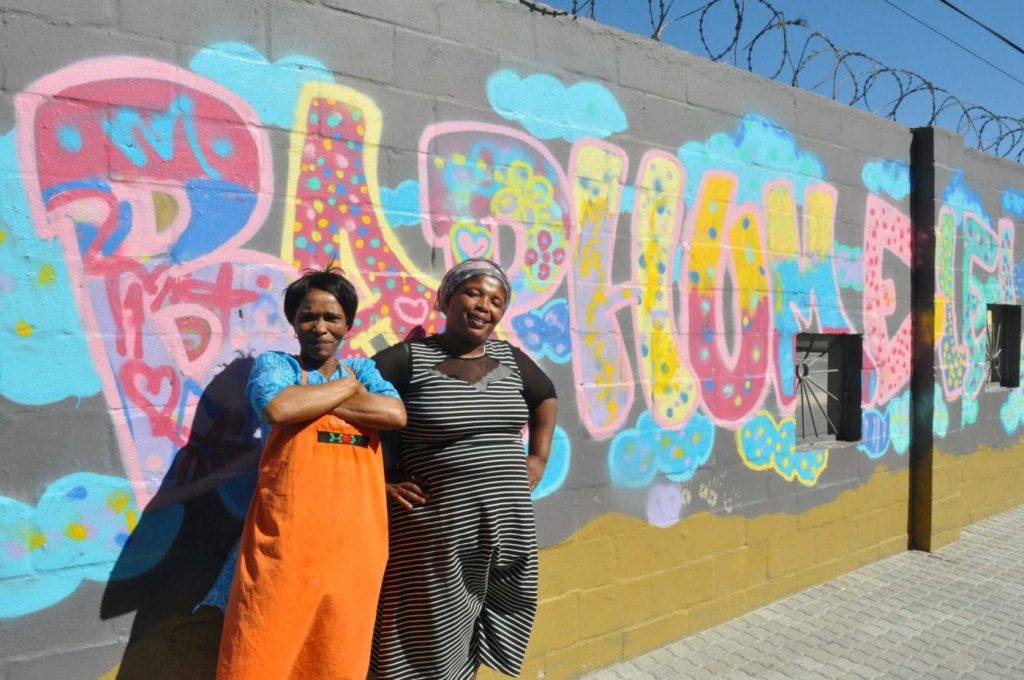
Rosalie “Rosie” Mashale was born in a small village called Kgubetswana, Matatiele in Eastern Cape. There, she studied and trained for thirteen years before moving to Khayelitsha. Trained teacher and care worker, Rosie founded a community-based project Baphumele, a crèche along with a group of women from her community. Writer Megan Gieske visited Khayelitsha and spoke to Rosie about Baphumele. She shares what she found with SLA. Langa Township is the oldest township in South Africa. Langa is a suburb in Cape Town established in 1927 after the Urban Areas Act. It is one of the many townships in South Africa designated for Black Africans during the Apartheid era. Since the 1960s, when the forced resettlement of the Apartheid era began, the people of Langa have wanted privacy and a sense of ownership. Rosie remembers being disturbed by seeing township kids sorting through rubbish dumps in search of food while left unattended by their parents. As life in the townships is filled with entrepreneurial energy and community spirit, Rosie knew she had to do something. Born and raised in Kgubetswana, Rosie was described feeling very shocked and puzzled when she arrived in Khayelitsha. “I opened the doors to take care of the orphans, for me it is a calling to do what I am doing”, Rosie says. She responded by taking children into her home, and together with a group of women from the community, began looking after these unsupervised children. This group later went on to found Baphumelele Educare Centre after moving to Khayelitsha in 1989 with the aim of providing a safe environment for township kids. From the first week, Rosie and her partners cared for thirty-six children. The name given to this project was Baphumelele, a Xhosa word meaning “you have progressed”. From these humble beginnings, Baphumelele Educare Centre was founded, which today is an established community crèche and Grade R (preschool) caring for roughly 230 children aged three months to six years. While the Educare Centre had developed a reputation for looking after children, Rosie also felt a calling to reach out to orphaned children in the community. To that end, Baphumelele Children’s Home was created as a place of safety for abandoned, abused, neglected or orphaned children, many of whom have been affected by the HIV/Aids pandemic or have HIV/AIDS themselves. Now, Rosie acts as Baphumele Organization’s managing direction and founder. From her initial idea, Rosie now permanently employs 204 people while 60 earn stipends as paid volunteers. Rosie aims for Baphumele to be a beacon of hope in Khayelitsha. Even though Rosie has received 28 local and international awards —and been visited by Nelson Mandela—, she says her greatest reward is the kids she works with. “The children who have been here at Baphumelele are progressing. Some are social workers, accountants, etc. They do not forget where they come from. My real motivation is that. At heart, I am very gentle, impressionable, receptive, a dreamer and visionary.” On the high wall that surrounds Baphumele’s many Educare centers, there’s a world map painted in bright colors. Many of the buildings on Baphumele’s campus have plaques recognizing local and international support. Baphumele Children’s Home is a demonstration of what a community, local and international, can achieve when everyone works together. “I am a person who supports change, innovation, and human advancement,” Mashale says, “I am strongly committed to a humanitarian cause and social improvement. I wish to contribute something of value to the world, or at least to my community.” You can read more on Mashale’s “success” on the website: www.baphumelele.org.za
The 4 minute guide to SME marketing: Everything na packaging

This article in the on-going series was largely borne out of a personal experience. Did I mention that I am testing the entrepreneurship waters myself? To digress a little, I think there is a side-gigging bug making the rounds, especially in the city of Lagos. Let’s do a quick poll if you currently work a 9-5 job but still want to take charge of your working life, do what you love and not be dictated to by corporate rule, say Aye! Well, my business partner and I had a mini-debate about how products should be packaged for potential customers. My stance was a very practical and cost minimizing one seeing as ‘affordable’ was at the core of our proposition to customers. But she, on the other hand, believed in making an impression because from her perspective and quite truly, packaging can make all the difference! Let me quickly explain why this is so. Remember that saying about dressing how you want to be addressed? The same can be said of product packaging. Humans are largely visual beings and can form lasting impressions based solely on what they see. Also, seeing as we live in a cluttered world, you want to be able to, with your packaging, get people’s attention and inspire them to take action. Now I am not going to over-flog the “Packaging Matters” discourse because I am almost certain that as a (potential) business owner this is something you are definitely aware of. But while you do the needful, there are 2 things I think you should keep in mind: What’s your business model? As a new business, especially, one playing in an already saturated field, one way to win would be through your pricing model. You should actually aspire to deliver the lowest cost to your customers in the form of lower prices. This can guarantee you a spot on customers’ purchase considerations. I mean who doesn’t want to pay the lowest price for the best quality, right? If your promise is the lowest cost, perhaps you shouldn’t spend so much on the packaging of your product seeing as every cost you incur would have to be taken care of in your selling price. Of course, you should consider this if you intend to make a profit and remain in business. Going minimalist (please do not read this as tacky!) with your product packaging shouldn’t bother you at all if your proposition to customers clearly explains why that is necessary. So for example, ever noticed the difference in packaging when you shop via Jumia or Konga (proposition: lowest price guaranteed) as against shopping at a Montaigne Place (proposition: luxury at its best)? Packaging versus Product Quality I am sure we’ve all had this experience before. You go to a fancy restaurant with the most fantastic ambience and the food turns out absolute crap. Mind you, this is after much pomp and pageantry. Or you pick a pack of biscuit off the supermarket shelf because of a package design too catchy to ignore and discover that it tastes like sawdust. In both aforementioned instances, you’d have to be a masochist to want to relive that experience. The learning, therefore, is this: you can inspire an action (purchase) with package design but if the product/service experience does not meet expectations, there would likely be no repeat purchase. More important than the package design is the product/service quality because that’s what ultimately delivers value. There is the need to fully understand how your desired customers define value and give them that, else any other thing you do would be counter intuitive. So you start a hair salon business, what would your ideal customer appreciate more; gold-plated mirrors from Dubai or gifted and experienced hair stylists on your payroll? This is the ideal process: Know your intended customers. Understand their needs. Create a product/service that fully satisfies those needs. Then properly package that product or service. Do not attempt to prioritize no. 4 over no. 3. There’s so much more we can say about packaging but this is still the most important thing: “Packaging is a substantive aspect of your marketing strategy that you should pay keen attention to ”. Cheers!