
Emi-Beth Quantson: There is still so much I want to do
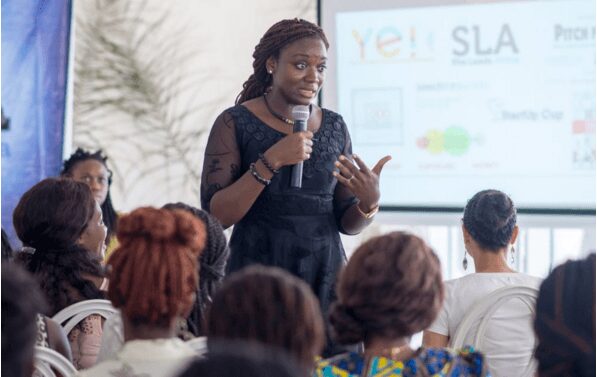
[In picture above, Emi Beth Quantson at SheHive Accra 2016] As part of SheHive Accra 2016, I caught up with Emi-Beth Quantson, CEO and founder of Kawa Moka, after her talk on how she won Startup Cup Ghana. Kawa Moka is a “social enterprise coffee shop and creative space” that empowers underprivileged women through employment and mentorship. The Startup Cup competition provides opportunities for entrepreneurs to network and gain financial support, which were essential for Kawa Moka to thrive. What was your childhood like? I had a very happy childhood. I have two older brothers who used to bully me shamelessly. And as my parents always entertained, we had to serve. I think that is where the interest in hospitality came from because my parents were always throwing parties – entertaining, they told jokes. We used to have Christmases where all our cousins would come together and we will have nine lessons and carols and sing and do firecrackers. It was pretty cool. What dreams did you have growing up? A lot! I wanted to do so much. I still want to do so much. One of the things I wanted when I was in Ashesi [University] was to be the first woman governor of the Bank of Ghana. I still have not lost that ambition. I am just praying that nobody gets there first. I still want to go to grad school, maybe go back into corporate and do something finance, sort of setup Kawa Moka, and then afterwards have it run a little and do something else. I have a million and one ideas. We will see which ones get done and which ones do not. But there are a lot of things I want to do with my life. What would you say are some of the influences that have shaped you into the woman you are today? I come from a close knit family, and I would say my mum, aunt, and grandmother were my closest influences on my mum’s side. And on my dad’s side, there were also a lot of women – aunties and grandma. I guess each family sort of taught me different value sets and opened me up to different experiences. I remember my grandma was always concerned about me: she calls me Aku. She was always like, “Oh Aku, what are you doing again? You say you want to do this or you don’t want to this, ohh”. She is always concerned and finding ways to impart knowledge from way back, not try to necessarily put me down, but then she will use some nice way of telling you that, hey you should do this. And it was fun to have all those family gatherings so I think my family has probably been my largest influence. How was your transition from Ashesi University into the corporate world? Very easy. I worked part time in my final year of school. I worked part time for Ghana Home loans so I had some corporate experience. My final internship was at PWC so before I graduated, I already had a job and had already gained experience in that job. As such, it was a very easy transition for me – I did not have to send out a million CVs. You have a background in consulting. What would you say are some of the key skills that make you a successful consultant? Being able to think on your feet. Even though a lot of assignments have a lot of similarities, everything is unique in its own way. For every assignment, you need to think on your feet and find innovative solutions based on the parameters that you are given. I think that is a key skill. Another key skill is networking and just learning how to talk to clients and establish a relationship because a lot of the consulting assignments are based on relationships. They feel the connectivity because you give them the best solution and you do it with a smile and you do it nicely. So, I would say those are the two key skills, and of course the analytics is a given. You need to have the technical skills. A lot of which, if you are working with a multinational they will teach you, but you can also teach yourself. You are the CEO and founder of Kawa Moka as well as the CFO at Impact Hub. How do you juggle all these responsibilities? With Impact Hub, I am transitioning. We are hopefully going to put out a job description for finance manager so that at least I can have support in the sense of the day to day stuff. But I mean it has not been so hard. I have had a lot of support from the Impact Hub team so there are other team members who sort of put in data and do the rudimentary stuff as well so that helps me with balancing. But it has also not been easy because, of course, you have your peak seasons running your own business. I also do a bit of consulting on the side so that has been a challenge as well. Some days you wish there are more than 24 hours in a day, but I think one tool that helps with balancing is communication – just make sure you set realistic deadlines and then you work to make sure you accomplish them. I also take courses all the time on setting smart goals and managing time just to remind myself how to be efficient and plan things out properly. How has being an entrepreneur affected your personal life? My husband is really fantastic. He is like my number one fan. He is always like, “why are you not doing this?” So he is giving me that male aggression in my business. He always pushes me to make sure I get to the next level and stay honest with my goals and visions. So even though sometimes, I
Five types of employees you want to fire immediately

We all have that one person in our squad or team that we could live without. They want the worst for you, but you want the best for them. You want a team as synchronized Travel Noire‘s, they want a mosh pit. You’re thinking savings, they’re thinking spending. In short, you two are on different pages. And so you fire them, which is what any reasonable person would do if they cared about saving their business venture. And if you have the below mentioned five employees on your team, please fire them all before they poison the well. 1. The Social Media Butterfly These are people who wake and sleep on social media. Give them a day to research five smoothie ingredients for a new flavour, and all they’ll come with are a bunch of IMDB tab sheets and a desktop background image of Idris Elba. 2. The Raver Everyone has a bad day, but that doesn’t mean we should scream like banshees at work. Home, yes. Work, no. No on wants to work with someone who stresses them all day, every day with strident remarks or caustic put-downs. 3. The Warlord These are career trouble makers, and all-around instigators. They’re ready to fight at the slightest perceived provocation, sowing seeds of discord in the office. If you dream of fostering a collaborative and friendly work environment, then caution them to cut it out, and if they don’t, give them the sack. 4. The Know-It-All Spews a never-ending stream of suggestions and unsolicited advice, but barely listens to second opinions nor take corrections. This kind of attitude breeds resentment and could spell trouble for your company if they’re their job requires them to liaise with clients. Encyclopedias are books, as in inanimate objects. So if your employee fancies themselves one, you have every right to be worried. And what do we do with worrisome employees? We fire them. That’s right, we fire them. 5. The Indecisive is afraid of mistakes and wants to run every full stop by you. They can’t take any initiative, and need constant reassurance and feedback. If you enjoy baby-sitting adults, keep them. If not, let them go or you’ll be doing their job and yours. Who else will you fire? Any personalities we didn’t mention? Care making a list?
My mentor helped me learn my worth & start my business

It was the worst of times–I was jobless, broke, and in despair. Then I met a woman who told me to own my skills and know my worth, in that order. She is now one of my amazing mentors, and an inspiration for my organization, The Fairy Godsister, Inc. Mentorship is significant to career success and personal advancement. Mentoring is a relationship between two individuals, in which a more experienced person imparts insight, wisdom, and guidance that can be leveraged to help a less experienced person progress in their professional, personal, or academic development. In my career, I have had an opportunity to meet wonderful women who have empowered me to accomplish great things. As such, I have always enjoyed networking as a fantastic way to expand the cache of individuals in my rolodex. But simply increasing your number of acquaintances is not enough. Join a Network There are networks whose primary purpose is to help match you with a mentor that is the right fit for your goals and ambitions. Do some research, and identify a few that are of interest to you. Then, reach out! Here’s a tip: Before you begin your search, define a few goals that you would like a mentor to help you accomplish. This exercise will enable you to quickly filter out organizations that do not provide mentors that speak to your needs. Affiliate networks If you already work at a company, find out if there is an affinity network for women. If so, join one or five, and engage with the members in the network. Find someone who is more senior than you, whose position you may one day like to have, and ask that individual out for coffee to discuss their experiences. This is an organic approach to developing an advocacy relationship with someone at your workplace. Leverage your network The good thing about networking is meeting people; the bad thing is not following up. To avoid the pitfalls of this, make it a goal to find one potential mentor at every opportunity where you meet people. Set relationship building as a priority and find individuals from whom you can learn. I have developed relationships with individuals simply because I reached out to follow up with an email to ask for a phone call or coffee after an event or upon reading their LinkedIn profiles. A coffee, two dinners, and a Facebook/LinkedIn later, you now have a healthy relationship with someone who you will learn from and can leverage to your advantage. Final tip Mentoring is a mutually beneficial relationship, so before you reach out to someone, consider how you may be able to assist them as well. In our organization, we have found that many of the mentors report great benefits from their roles. They learn things about themselves through their relationships with their mentees. So, when considering finding a mentor, be prepared to be a teacher as well as a student. In conclusion, the relationships that are built through networking opportunities are seldom maintained beyond a few follow-up emails, resulting in a wasted resource. You need to build relationships, and most importantly, identify an advocate who will become a mentor. Yet, I know that finding the right mentor is not always easy. In fact, studies indicate that historically, women have reported greater challenges in finding mentors than men. This has led to the development of a number of networks and programs who aim to connect women with female mentors. The Mentoring Women’s Network, and The Fairy Godsister are two such groups.
The fork in the road: Choosing the right business structure

Once you have decided to start your new venture, it is imperative that you choose the right business structure for your company. Do research to find out if you should register as a sole trader, a limited liability company, or a partnership. Don’t rush to the Corporate Affairs Commission to register an LLC because your friend did and their business is profitable. If in doubt, this piece will help you to make the right choice. Sole proprietorship (“the lone walker”) A sole proprietorship is owned and managed by one individual—the owner. The owner is liable for the business’s financial obligations. For example, in some jurisdictions, as a sole proprietor, your business profits and losses are included in your personal tax returns. Consequently, if your new venture experiences losses, such losses may offset your income from your “day job.” The drawback of this structure is that you’re liable for your new venture’s liabilities. Which means is your personal assets (houses, cars, jewelry etc.) are on the line if you fail to repay a debt or run into financial trouble. If you love working alone and do not mind being personally liable for your business, this may be a good option for you. But note that raising funds for your business as a sole trader will be difficult.Banks and institutional investors tend to shy away because of the risk of losing their investments if your business goes south. Partnership A partnership is appropriate if your new venture is owned by two or more individuals. Partnerships are named differently in different jurisdictions and vary in structure, which dictates you and your partner(s) liability. For example, under a general partnership, you and your partner(s) are responsible for the financial liability and daily operations of the venture. On the other hand, a limited partnership constitutes a general partner and a limited partner. A general partner owns and assumes the liability of the partnership, whereas the limited partner is the investor (the limited partner only provides the money!). The limited partner does not participate in the daily operations of the new venture and is not liable for the new venture’s debt. Generally, a partnerships have a better chance of raising funds from banks and institutional investors than sole proprietorships. More on partnerships Thoroughly review the different partnership structures in your jurisdiction and determine what works best for venture, then if necessary negotiate with your business partner(s) and sign a contract. Even if your partner is your best friend. Have these questions at the back of your mind when drafting the contract: What is your business continuity plan if your partner leaves or dies? What role will each partner play? Do you want only one partner taking decisions on behalf of the company (e.g. taking out loans)? How will you resolve conflicts between partners? (Stay away from litigation!) There is no better time to agree on the terms of the partnership than during the early stages when everyone is excited about the venture. Sign the agreement during the honeymoon phase as it will be extremely challenging to agree on anything during the divorce phase. Corporation Like partnerships, corporations vary from one jurisdiction to another. Nonetheless, corporations are generally separate entities from their owners, and personal assets not at risk. However, there are some exceptions where a court could pierce the corporate veil and make make owners liable. As with partnerships, banks and institutional investors are more likely to consider issuing loans or making investments. Corporations also have the benefit of raising funds by issuing stocks. Limited Liability Company A limited liability company has one or more partners (depending on the jurisdiction) and combines elements from partnerships and corporations. For example, all partners in a limited liability company can all participate in the daily operations of the business, but partners are not personally liable for the venture’s debt. What’s more, LLCs can raise funds from institutional investors and get bank loans. Nonetheless, this veil of protection against liability is lifted if you personally guarantee the venture’s debt. You want to keep a clean slate? Here’s how to do that… Once you have chosen a business structure, it is imperative that you register it with the relevant regulatory authorities. Contrary to popular belief, the Lagos Internal Revenue Services can track your Lagos-based business if your business fails to make relevant tax payments. Moreover, you do not want to give potential investors the impression of one who evades regulatory processes. Some practical steps to registering your business 1. Choose a name for the business. 2. Check with the Corporate Affairs Commission that the name is still available. In some jurisdictions, this search can be conducted online. 3. If it’s available, register the name or reserve the name (some jurisdictions allows for name reservations for 30 days). 4. After the name is confirmed, draft your legal documents e.g. Partnership Agreements, Memorandum & Articles of Association, etc. The Memorandum & Articles of Association should enumerate the purpose of the new venture, the name of the partners and their percentage ownership, the office address etc. 5. Register your company with the relevant tax authority and get a tax identification number. 6. If applicable, apply for a business permit/license. In sum, the business structure you choose determines the extent to which you will be personally liable for your business debt, your tax liability, your responsibilities as a business owner as well as the required regulatory filings. This is one of the most important early stage decisions you will make as a business owner so think through it carefully and decide what works for you! In the next segment, we will discuss legal considerations when raising funds for your new business. Have a question to ask? Write to us! We are listening. Follow this series with Part 1 of Efe’s Legal Corner on The Best Way To Resign Your Job To Start Your Business.
Diarra Bousso: It’s hard to be taken seriously in the beginning

Diarra Bousso is making significant waves in the global fashion industry with her bespoke luxury brand Dakar Boutique Group. The brand houses DIARRABLU and Diarra Bousso target swanky and contemporary consumers. Her work has been featured in The New York Times and The Huffington Post among others., and was showcased at New York Fashion Week. Diarra has gained recognition and acclaim from the global business community. She was a panelist at Harvard’s Africa Business Conference last year where she discussed the evolution of Africa’s consumer growth story. We caught up with her to talk about her journey. Tell us a bit about yourself I was born and raised in Dakar, Senegal and moved to Norway at 16 to finish high school. Upon graduation, I moved to the States where I attended Macalester in Minnesota for a B.A. in Maths, Economics, and Statistics., before moving to New York and starting a career on Wall Street. Two years later, I resigned and returned to Senegal to found Dakar Boutique Group, a luxury holding company that celebrates ‘Made in Africa’ through my various brands: Diarra Bousso and DIARRABLU. The Dakar Boutique Group – what does it do and why did you decide to start it? I always knew I was going to end up in fashion and for me. And it only made sense to do it in Africa, because I wanted to also focus on development and rebranding the continent. Dakar Boutique Group is a luxury holding company and basically owns other companies such as Diarra Bousso and DIARRABLU. Each subsidiary has a particular focus but they all share the ‘Made in Africa’ signature. Diarra Bousso focuses on premium leather goods whereas DIARRABLU focuses on womenswear in geometric cut. Coming up with an idea is the first step. What did you do next? My next step was to raise awareness. We launched at a big party on a private island and followed it up with a traveling fashion show in June 2013 titled African Voyage. This allowed us to get a lot of attention, both in Senegal and abroad. It also marked our first appearance in the media. Talk us through the first 6 months of starting up DB. What were your priorities and how did you determine them? My main priority was visibility. I was focused on the African Voyage event production and PR and put all our energy on it. I have no background in fashion but I definitely knew that I needed to set a high standard for the brand’s image. For me, the best way to achieve that was through a high profile original event. What were the key challenges you faced when you first started? How have they evolved over time? I think it’s always hard to be taken seriously in the beginning, especially when you are not trained in the industry. I was always confident about my vision and so I didn’t let anything discourage me. I focused a lot on communicating aggressively on social media and sharing the essence of my brands in a very transparent manner. I believe this makes you more credible and engages your audience. You’re a fashion designer but you also run a fashion business. How do these roles interact? Is there ever a conflict? The two roles compliment each other very well actually. My background is in finance so business comes naturally. That said, I spent all my free time growing up daydreaming, drawing, painting and designing. This job now allows me to align what I learned in school and what I am naturally good at, which creates the perfect balance. In the fashion business, making beautiful clothes is one thing, getting them to your customer is another. Tell us about your distribution strategy We are available online on the main website, www.dakarboutique.com, where customers all over the world can shop at their convenience. We are currently working on a few in store placements, especially in New York, and will be announcing that very soon. Our strategy focuses on distributing to areas we have customers. You created two lines DIARRABLU and DB . What was the business rationale of creating two separate labels? I wanted to reach two different demographics: DIARRABLU is a very trendy womenswear brand priced under $500. The brand focuses on daydreams which is something accessible to everyone and suits the bold, fun and modern shopper in major cities such as New York, Lagos, Paris, Rio etc. It is therefore only natural for us to aim for distribution in such places. Diarra Bousso is more exclusive and focuses solely on leather accessories. Everything is limited edition, so the customer has to find us, create a relationship, live the experience and then get their bags made to order. It’s a completely different business model as well as a different customer. How have you funded your business growth and what was the fundraising process like for you? Any specific tips and tricks for startups out there? We have been self-funded so far which has been challenging and rewarding at the same time. I think it is important for startups to first try on their own and show what they can deliver before approaching investors. It’s a good test of the viability of your business and definitely makes you more credible when it’s time to raise capital. Can you talk to us about some of the specific marketing strategies that you have used? We have a very strong marketing team that’s very focused on the digital space. Our customer is modern and online, thus it is important to focus on high quality images alongside strong social media fluency and transparency. Lifestyle marketing has also played an important role, and we achieve this with the African Voyage concept which we share on social media through photographs and videos. You’ve managed to get over 12,000 followers on Instagram. What role does social media play in your overall strategy? How have you grown your following? We have grown our following in a very organic manner. I think our audience likes to
Business incubation hub in South Africa focuses on women
Statistics indicate women-owned micro enterprises in South Africa currently experience higher barriers to success relative to those owned by men. This trend is unsurprising given the country’s predominantly patriarchal culture and history of exclusion of women in the work place. Thankfully, more effort is being directed towards correcting this injustice by both the government and civil society. Among key interventions is the growing number of business incubation hubs. These hubs differentiate themselves by levels of support, entry requirements and industry focus. At their core, they aim to help early stage businesses thrive amid the incessant challenges new business face. One recent entrant is the newly founded 1Accord, located in the East of Johannesburg, an industrial perimeter that has been hollowed out by the closure of manufacturing plants in the country. Founded by Mduduzi Dladla, an upwardly mobile businessman, the hub prioritises women enterprise support through a special program called the ‘Women Entrepreneurship Accelerated Program (WEAP)’. WEAP is aimed exclusively at women entrepreneurs at various stages of their business journey. Though he had all the traits of a street-savvy black youth, Mduduzi Dladla or Mdu, 26, as he is affectionately known, carries himself with a level of seriousness that’s rare among his peers. He sees himself as the new face of South African business: ambitious and well educated with a developmental approach to business. With his passion and drive, he’s on the way to being a business leader in South Africa. An accountant by profession, his first taste of entrepreneurship came while working full-time. For two years, he juggled his job and the start-up. When he did decide to go entrepreneurial route full-time, it was not without challenges, ranging from lack of finance to competitors. It was with this in mind that he developed 1Accord Innovation hub to provide business support, skills transfer, and linkages between small, medium and micro enterprises (SMMEs) and corporations. Mduduzi decided to dedicate a full program to women because, 21 years into South Africa’s democracy, the odds are still stacked against female entrepreneurs, especially in the mainstream sectors of the economy. “Women entrepreneurs have dominated the ‘softer’ sectors like catering, events managements, the beauty industry and the informal economy in this country,” he said. “Due to this fact, there is a growing need for structured programmes to get more women into previously male-dominated industries.” In his opinion, such a programme must provide support encompassing access to finance, markets, supply chains of large buyers of established businesses and the government, and assistance with developing business systems. “For women to learn and grow – especially those at the early stages of business – they need to learn from established women-led enterprises,” Mduduzi said. “This is key because women have a better appreciation of the subtle and not so subtle challenges women face in trying to establish their businesses.” WEAP provides support in the following areas: General information and business educational programs Financial assistance through access to finance granting institutions Mentoring and coaching programmes, and Support for networking structures. The program has been especially designed to help women entrepreneurs take charge of their journey and empower themselves. Participants are provided with expertise to enable them achieve both business and personal success. They are exposed to tools that will help become effective communicators and networkers. They also have the opportunity to upgrade their by learning finance and sales as it applies to small business. Participants also have access to a network of successful women entrepreneurs. This network provides support, guidance and links to the mainstream of the economy. Women in the program take part in business, strategic and financial workshops that accelerate their preparedness to run successful businesses. The ultimate goal is to ensure that participants leave the programme as confident, competent and motivated business women. The emphasis on ‘self-awareness as the basis for sustainable business success’ sets WEAP apart from other support initiatives. The intention is to empower women to overcome their internal inhibitions and rise to the challenge of entrepreneurship without mimicking their male counterparts, or losing what makes them successful in the many other complex roles they fulfil in society. Launching WEAP during the African Union’s Year of the Woman was vital. With the right support and access to opportunities, women have demonstrated their resolve and ability to run successful enterprises that add value to their communities and shareholders. And in the entrepreneurship landscape for women, 1Accord is a welcome addition.
Beyond handmade: Looking past Western obsession with handmade African goods
Sisi King, cofounder of the accessories brand ZikoAfrika, writes about her challenges developing a business model that allowed her to tap into efficient technology and ramp up scale while responding to growing demand for handmade African goods. Sisi King raises important questions about responding to short term market demands against long term growth opportunities. Two years after the collapse of a garment factory that killed more than 1,100 people in Bangladesh, the race to the bottom in the fashion industry may finally be slowing. Consumers are demanding products that have been made in a socially responsible manner, and brands, both large and small, are responding. With this increase in authentic goods with a social impact narrative, made-in-Africa products are gaining significant traction. Handmade items from the continent are especially in high demand; they are being carried across the retail spectrum, from low to high end luxury retailers. While this interest in handmade goods is to be celebrated, Africa is unable to compete with the high volume, low cost goods from China and India. The change in global consumer spending trends presents both unique opportunities and challenges for African production. If we buy into the hype of handmade in Africa, we ignore the bigger picture of working towards sustainable socio-economic growth for a quick marketing fix. The Story of ZikoAfrika Co-starting ZikoAfrika, a locally produced accessories brand in Kenya, I absolutely believed in the power of small-scale community focused production as a driver for fair employment opportunities. However, we were unprepared for the huge challenges we would face, producing a consistent high quality product at a price buyers were willing to pay. “Handmade goods have the powerful draw of connecting the consumer with the producer, providing a sense of meaning and transparency in a world awash with amorphous goods and murky supply chains.” Still, this is what consumers are largely unaware of: a lot of handmade production takes place in the informal work sector, which is unregulated and outside the bounds of government set minimum wages and conditions. Furthermore, the process is slow and quality is inconsistent. These issues present significant barriers to scaling. Learn to Grow Your Business In our case, these challenges made it difficult to meet timelines and low costings set by wholesalers. It became clear that to have a viable business, we would have to centralise our operations in a formal workshop and mechanise parts of the production line. As such, we explored the idea of finished by hand, not made by hand. This process involved re-evaluating our materials, designs and production line. We replaced natural materials such as bone and horn whose supply are inconsistent with perspex, a low cost and readily available plastic. This changed enabled us to utilise lasers to cut components that were then sent to an audited workshop for assembly and polishing, eliminating a huge degree of uncertainty in our production process. Available for hire in downtown Nairobi, lasers enabled us to cut high volumes of our material in a couple of hours with a 0% rejection rate. This task previously took at least a week, with up to 30% rejections. The change in production meant the opportunity to fulfill larger orders on time and with no rejection. For the workshop, it meant getting the pieces out faster, enabling employees to take on more work. In harnessing cutting edge technology available in our city, we combined two disparate worlds and broke through some of the barriers inherent in manufacturing by hand with a low-skilled labour force. The Challenge with Alternatives Being able to significantly increase production capacity, efficiency and quality was extremely exciting and motivating. However, on informing our main international client of the changes in our manufacturing process, we were told under no circumstances would products that were not 100% made by hand be accepted. At a crossroad, we had to decide whether we should continue to produce exclusively by hand, securing the short term survival of our business, or commit to a long term vision we believed had greater potential for both our business and our producers. A larger conceptual issue also loomed – is the largely western vision of the romantisized artisan and new obsession with handmade actually limiting development and fair growth in Africa rather than enabling it? To a large extent, I would argue that the obsession with handmade African goods limits development and fair growth opportunities. The global demand and value for fashion provides countless opportunities for product and market diversification. But to take full advantage of the potential for design industries to drive socio-economic growth, our products must meet quality standards, volumes, price-points and lead-times consistently. This requires some element of a mechanised production line, as well as significant investment in centralised manufacturing units that can be well managed and monitored. This is not to say that artisanal handmade production do not have a place in socio-economic development. It does – particularly in rural areas with limited money generating opportunities, or in the preservation of unique cultural handicraft techniques. However, without significant growth in the formal manufacturing sector, Kenya cannot grow from a low skill, low capital economy to a medium income one. Formalising and investing in fashion production units that utilise modern technology to eliminate bottle necks while continuing to retain an element of hands on production provides a viable hybrid to intensive industralisation. This hybrid enables our products to be competitive in international markets. Asking Ourselves the Difficult Questions As brands producing in Africa, we have a role to play in this emerging narrative. The handmade label has strong marketing currency – it is personal, the very antithesis of fast fashion and sweatshop labour, and it’s what the world wants now. But, we need to ask ourselves: is it viable? Are artisans actually making a living wage, are they working in conditions that are safe, are they working fair hours? Is what we are doing scalable and sustainable? For some it will be, particularly those in the luxury goods sector who
Mildred Apenyo: Creating a safe space for women’s health

Mildred Apenyo set out to create a warm, supportive and safe space for women when she started FitcliqueAfrica. The women-only gym, the first of its kind in Uganda, offers a wide variety of classes including; aerobics, African yoga, dance, kickboxing, strength training and personal safety. The Kampala-based startup is focused on the overall wellness and safety of women rather than attainment of the elusive “ideal body.” By so doing, it aims to provide women with the tools that they need to empower themselves both physically and psychologically. Mildred wants women to be able to workout without harassment, discrimination or any restriction. Through FitcliqueAfrica, she hopes that women will be inspired to own their bodies and their spaces. I caught up with the fitness entrepreneur, who is also a writer and human rights activist, to talk about her experience and her unique venture. Tipping point Mildred didn’t start out in the fitness industry. After graduating from university with a degree in Mass Communication in 2012, she worked in advertising. Her office was located in Kamwokya, a neighborhood she calls the hub of street molestation. Having to navigate this environment daily caused her to experience anxiety. Running became her coping mechanism. “It helped me learn how to inhabit space,” said Mildred. “It made me feel like I owned the streets. It made me feel like I owned my body.” Mildred broke her leg and had to stop running, then decided to join a gym so that she could workout. Her gym experience was awful. The trainers did not pay attention to female clients unless they were in the aerobics classes. Mildred, who was interested in weightlifting, was dismissed by some of the instructors. The people who paid attention to her instead were lechery men. While working out one day, a man threw a dumbbell at her because she refused to give up the exercise equipment she was using. “I vowed never enter a mixed gym again,” she said. It was then that she decided she wanted to create a warm and supportive space for women. Two months after the idea solidified in her mind, the first draft of Uganda’s Anti-Pornography Bill was released. The media and the minister of ethics and integrity turned the narrative it into an anti-miniskirt campaign. As a result of this, there were many women who were undressed and violated on the streets. This enraged Mildred. “The only thing that presented itself to me was that nobody cared about the safety of women,” she said. “Not even the men who society says are the protectors.” This further fueled her desire to pursue her idea. She realized that she had to find a way to ensure that women become stronger and have more agency. “While rage will be the spark for an idea, the building of the idea depends largely on how you can begin to channel this energy to something practical, something that people will come to,” said Mildred. “That is how the space and the gym happened.” Building blocks Mildred’s plan was to start with a Facebook page where she would discuss body ownership and self-love. She wanted people to able to talk about bodies and women enjoying activities that are typically reserved for men in regular gyms. “I wanted it to be that kind of space online and offline,” said Mildred. She first had to come up with a name for this space. The naming process varies from one startup to the next. It takes anywhere from several hours to months. The key is to pick a strong name that adequately represents the ethos of your brand. As a copywriter, Mildred could have come up with a name utilizing the same process she used for her clients. However, she wanted it to be a community space, and as such sourced for name ideas from her friends on Facebook. Solomon King, one of her friends, suggested the name Fitclique256. “It got the most likes,” Mildred said. “I decided to call the space that.” In March 2014, the fitness movement officially began. Mildred decided to quit her job so as to fully focus on and dedicate herself to Fitclique. “I said to myself, ‘How can you be seated here writing copy about products that you don’t care about when women are out there being undressed on the streets?’” she said. “FitcliqueAfrica hit me in the soul and demanded to be started.” With two salaries saved from her job, she embarked on taking the open and safe online space offline in the form of a gym. The first order of business was securing gym equipment. Mildred, aware of her financial limitations, had to get innovative so as to do this. Having done her research, she knew that there were people who had bought exercise and fitness equipment in the hopes of working out but ended up not using them. She started a campaign where she traded training for equipment. People would be able to get a personal trainer to work with them for a certain duration at a reduced cost if they gave Fitclique their equipment. The concept excited people and they responded positively. There are also those who simply ended up donating their unused equipment. Mildred was able to significantly drive down costs using this strategy. The gym has grown since then and is now able to buy its own equipment with the money it makes. Then Mildred had to find a physical space for the gym. She approached a gym she had worked on a marketing campaign for while at her advertising job. They agreed to let her hold one class for an hour in their space. “It was a yoga class that was massively successful,” said Mildred. After a while, the owner pulled out of the agreement because the classes only had women. “He asked, ‘Why yoga? Why only women? Are you witches? and added ‘I don’t want this to happen anymore,’” she said. Mildred had to go back to the drawing board, a practice
Sheila Afari: Mistakes and hardships were my best teachers
Sheila Afari is a young pan-African entrepreneur who launched Sheila Afari Public Relations at the age of 26 after recognizing the opportunity to promote African brands across the globe. Sheila wants to create one of Africa’s leading boutique agencies, and with clients in Nigeria, Ghana, Zimbabwe, Botswana and South Africa, she is well on her way to pan-African domination. In this piece, she shares with SLA her entrepreneurial journey and some advice on how startups can develop a public relations strategy that turns heads. You resigned from a marketing manager position to start your own business. How were you able to make the transition from a steady job with a guaranteed paycheck to the uncertain world of entrepreneurship? Having been an entrepreneur before taking on the marketing manager position, I was aware that I was able to create something from nothing. The plan was to work to get more business skills and leave. Fortunately for me, I had no debt or people dependents, so I was fearless and able to make the transition being comfortable with my odds in the risk vs rewards scenario. I also had a degree to fall back on as well as invaluable skills to offer if things have not worked out for me. And since I had no large monthly overheads/expenditures, I was able to offer my services for free and do jobs at low paying rates to build a portfolio and show my worth. What are the branding and marketing tools that you have used to grow your company and differentiate it in the marketplace? From day one, I decided that I wanted my PR agency to take on a bespoke approach to the clients we service. With that in mind, growth came from referrals as clients were happy with the services they were receiving. Word of mouth is known to be one of the most powerful marketing tools, so I go out of my way to ensure that every client is happy. I’ve spent the past 3 and a half years very hands on in shaping the business and overseeing the work done for each client. I believe my agency stands out in the marketplace because of the below reasons: We have a continental focus and reach outside of South Africa We work with traditional and non-traditional media platforms We incorporate a social media drive to all campaigns and projects We have a bespoke approach to each client We have a strong brand development focus We operate under unconventional business hours We believe in ethical business practices; integrity, honesty, exceptional service and team work As a lot of our clients are entrepreneurs and don’t operate with an “8-5” mindset, there’s a need for an agency that can keep up with them and service their needs in “real time”, which is what we do. We are available 7 days a week and after hours for our clients. From a branding perspective, I’ve stayed behind the scenes and that has positioned the business as somewhat exclusive. People won’t often see me unless it’s business related and they’ve done their homework. The work we do is better known than me or the company’s name, so if clients haven’t come via referral then they have done their homework and sought us out. My 2016 approach to branding and marketing will change somewhat as the company has grown. I’m tackling different industries, and there will definitely be a concerted effort with B2B marketing and advertising/visibility in key industry platforms. What advice would you give to startups that are looking to develop a PR strategy but don’t necessarily have the funds to hire an agency to work with them? 1) Draft a PR Plan. Even if it is just a one pager, you should be able to answer the below: Who am I/Are We? What am I trying to achieve in the market place? Where do I want to be in the next couple of months, 1 year, 5 years, 10 years? What do I want to be known for? Who are my competitors? Who do I strive to be like? What is my unique selling point? i.e. What do I bring that is different from my competitors as well as different from who I strive to be like? How can I get my message/service/talent across authentically? Then take a blank piece of paper and understand that your PR plan is a blank canvas that you can do anything with. Don’t try copy your competitors or the people your strive to be like. Pave your own way. Come up with fresh creative ideas and map out a way to get there. 2) Get online! Make sure that you have a strong online presence. With the digital age, and Google being one of the first platforms people go to search, you need to make sure you have a presence online and can tell your story the way you want it to be told. To start off with, get on the below platforms (may vary slightly for different industries): Facebook Twitter Instagram YouTube Soundcloud LinkedIn 3) Identify 5 people or platforms you deem important/relevant to giving your brand publicity and start making your way through the list. 4) Understand that contacts aren’t necessarily secret and content is king. Pick up a magazine, call the telephone number there and ask for the contact details people relevant to your field that you need to get in touch with. Also understand that media platforms need content, so “pitch” your story with an understanding of who their target audience is and how your story will be of interest to them. 5) Don’t give up. You will need multiple interactions in order to build your brand. Every attempt you make at building your brand’s presence all adds up and you will surely see results even if they may appear barely visibly. What is the one thing you know now that you wish you knew when Sheila Afari PR launched? I wish I knew that mistakes and hardships would be my best teachers. I spent so much time “playing it safe” out of fear of not being perfect or not keeping clients happy, that it took me quite a while to learn a lot of the things that have helped my business grow exponentially. Had I allowed
Rahama Wright: No is a pathway to yes, eventually
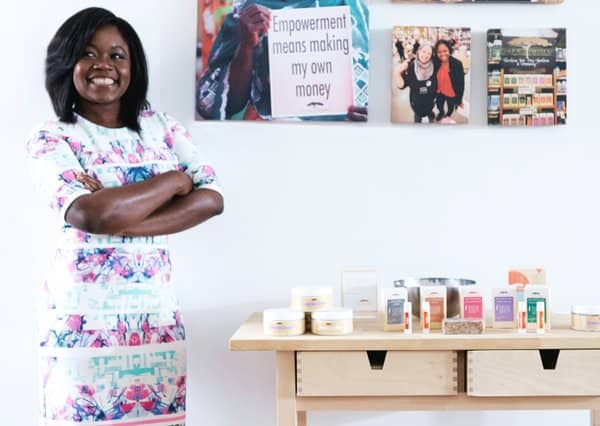
Young African entrepreneurs have turned their sights to manufacturing on the continent with new fervor. Just as the world has come to know China for its manufacturing prowess through the Made in China brand, many young Africans look to do likewise with finished products from the continent. To provide insights and effective strategies for aspiring young entrepreneurs and professionals, we’ve turned our gaze to African brands pioneering their Made in Africa products to the global market. Rahama Wright, Founder and CEO of beauty brand, Shea Yeleen, is one such mogul. Wright says what others see as ready baked success is a 10-year journey of persistence and openness to failure and learning. Wright’s work is influenced by her mother’s story and those of women in Northern Ghana and Mali where she worked and volunteered right after college. In 2005, Rahama Wright founded Shea Yeleen International, a social enterprise with a mission to provide living wages to women shea butter producers in West Africa. The enterprise’s profit arm, Shea Yeleen Health & Beauty LLC, was founded in 2012 and manufactures and distributes shea based products to international markets. Foot to the pedal and consistent hard work has brought Shea Yeleen to more than 100 Whole Foods Markets and independent stores. It is worth noting that Whole Foods is a Fortune 500 global supermarket chain. In Part 1 of this feature, Wright unveiled the secrets of her marketing sauce that has landed her coveted product placements and press features. She shared how using one’s personal brand can position you for success. Wright told her story better than anyone could and it is her openness and commitment to sharing her insight with all aspiring entrepreneurs and marketers that left a lasting impression. So to start, some questions on getting Shea Yeleen to market. How were you able to get your products into Whole Foods? This is the advice I would give to someone who is just starting out and trying to get their products into retail: Be persistent! I pitched 3 times before I was able to get my items into Whole Foods. One thing I have learned is that NO can be a pathway to YES, eventually. Of course, you should get feedback and understand why you are getting the NOs; don’t write it off as a rejection but as a way to improve for the next pitch. The primary reasons I was rejected 3 times was because I was talking to the wrong buyer and I needed better packaging. I upgraded my packaging including putting the soaps in boxes instead of sleeves, and used the space on the packaging to share our community development story and the benefits of our ingredients. I also created packaging that would pop off shelves by comparing my packaging to brands that were already on the shelf. This helped me better position my products. In short, if you want to get into retail, first pitch, adjust your pitch and product based on feedback and keep pitching until you get a yes! Also, if you are not getting traction in one area, move to another area to get in front of the right buyer. I wasn’t getting traction in one Whole Foods region and moved to another region. Getting in front of the right buyer required identifying someone who was looking for and thinking about products that Shea Yeleen was offering. The [final] thing is start small. For some retailers, you have to pay thousands of dollars to get your products in and if you don’t do well, they kick you out, which will cost you more money. Understanding the differences between big box retailers is really important. In terms of strategy, did you employ different methods getting into the local retailers like the mom and pop shops than you did the larger retailers like Whole Foods? They are almost the same but Whole Foods is a bit more corporate than the independent stores. A mom and pop shop is more accessible, because you can schedule a meeting with the owner or buyer and say, ‘would you give me a chance and bring my products in?’ and that’s literally what I did. I’ve learned about working with sales brokers, and there is a whole industry around sales brokers and distributors that’s a part of retail, and I made the mistake of relying too much on sales brokers who just did not deliver. Early on in your business you are the sales person. I wasted thousands of dollars on the wrong sales brokers. Even though it is hard and takes a lot of time to go door to door, you need to build your business initially until you get to the point where you can attract the right talent to manage that business. The region that is our best region, I opened all of those stores; I literally went door to door and was able to cultivate a really great relationship with the regional buyer. We also brought two of the shea producers from Tamale, Ghana here to the U.S. and they toured the stores with me, which was an incredible experience for the customers and the shea producers, who could now see where their shea butter ends up. This is an important part of the Shea Yeleen mission. It is not just about getting an African product and selling it. It is really about opening the doors for women producers of that product to understand the global supply chain and what they are a part of. Although the women come from rural communities, they can still be global leaders in the marketplace. What about other distribution channels? I know that you were recently in the subscription beauty box, Curlbox. Do you plan on doing more subscription boxes? We’ve done 2 subscription boxes and the verdict is still out. I believe that these subscription boxes are geared towards brands that are more well-known than smaller companies. My advice is don’t do a subscription box if it is just