
For young African women II: How to build wealth at every stage of your life

In Part One of How to Build Wealth at Every Stage, I discussed how to build wealth at the younger stages of life, from childhood to 19 years old. Here I discuss how to build on those stages. Stage 3: The Young African Woman This is known as the accumulation stage and is typically between ages 20-30/35. At this point, a person has just graduated or has started working and has some disposable income. Income is typically larger than expenses at this stage. Some may live with their parents while some may begin to consider getting their own accommodation. This is also a stage when people begin to think about settling down etc. This is the best time to begin to develop a personal financial system. The earlier you start the more time you have for your money to grow and enjoy the benefits of compounding. I love Albert Einsteins quote which says “Compound interest is the eighth wonder of the world. He who understands it, earns it…he who doesn’t pays it”. Basically, compounding interest simply means that the money you earn as interest is put back into your account or investment thereby allowing your money to grow faster. An individual at this stage should develop a savings and investment culture, learn and practice the principles of personal finance which is budgeting and also consider setting up an emergency fund. In terms of investing, this is a good time to invest in riskier assets and take advantage of long term growth opportunities. You can also begin to buy valuable jewelry like gold, which appreciates over time and can be sold when cash strapped. It is very important to withstand peer pressure at this stage. Focus on your vision and goal. Key things to consider at this stage include: Have a vision board Set financial goals Prepare monthly budgets Establish a savings culture Invest in the stock market Pay off any debts accumulated in University such as student loans, credit card debts etc Invest in yourself. Start a business Stage 4: The African Woman This is called the Consolidation stage and is typically between ages 30/35-55. At this stage your expenses are rising higher than your income. You may be married or starting a family. You may have moved out of your parents’ home and live on your own. Needs include education for kids, rent, mortgage, planning for retirement, higher education etc. Financial discipline is required at this stage. It is important to be strict with budgeting and not forfeiting savings and investments. In terms of investment it is also important to begin to diversify your portfolio. This is also a good time to take some risks depending on the side of the spectrum you fall on. Key things to consider at this stage include: Set up an education trust fund Buy land and or get a mortgage Health insurance Life insurance Build up your assets Plan for retirement Create multiple streams of income Invest in yourself It is also important to note that you are never too old to dream. Mrs Betty Irabor started her magazine at this stage. Mo Abudu started her tv station, Ebony Life TV in her late forties. Stage 5: The Older African Woman This is called the retirement stage and is age 55 and above. At this stage most individuals would be getting ready to retire or be retired. In most cases there is no steady income except from pension allowances. Needs include healthcare, retirement home, and vacation, maintaining a standard of living, estate planning and leaving a legacy. A woman who was financially intelligent in her younger years will enjoy this stage. She may have set-up a business that is running on its own and therefore be enjoying the fruits of hard work during her youth. This is also a time to ensure you are fulfilling purpose and at this stage you may even start a new business. Please note that these age ranges are just a generic template and not cast in stone. Individuals may past through these stages at different ages. Once you have determined the stage you are in your financial life cycle, it is important to set financial goals and to determine action steps required to achieve your goal. An important point is to ensure that you create a plan to achieve this goal and that your plans are as flexible as possible. For example you could have a goal to set-up an emergency fund of 6 months’ worth of living expenses by 30/12/16. Action Steps: ∙ Track spending ∙ Create a budget ∙ Pay-off all outstanding debts ∙ Reduce excess spending on eating-out and eat home-cooked food ∙ Reduce spending on aso-ebi ∙ Set up direct debit with bank What are some of your goals for your financial future? What phase of life do you find yourself in? Could you begin to implement some of these key elements now?
We should all be feminists: The business case for women’s inclusion
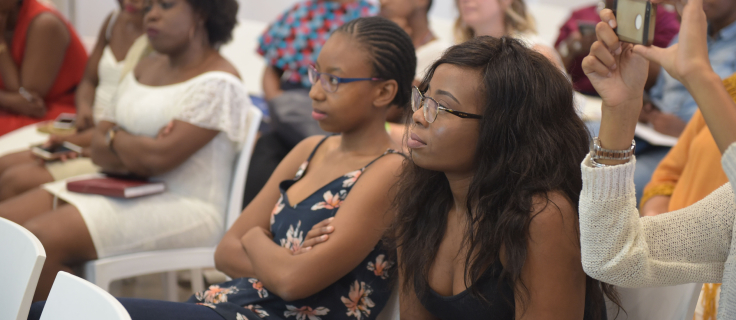
Mao Zedong once said: “Women hold up half the sky”. While I wholeheartedly agree with this notion— I must add that in Africa, women not only hold up half the sky but also hold down the land and everything therein. Let’s examine the facts: According to ActionAid International, women make up more than half of African farmers and produce up to 90% of Africa’s food Women constitute over 50% of Africa’s growing population According to the McKinsey Global Institute, women represent 70% of Africa’s informal economy It is simply impossible to imagine Africa without its women. However, as Africa has rapidly progressed, there has been a lack of proportional representation of women. Women are often missing in the narrative of Africa’s growth and are clearly underrepresented in governance. The concepts of growth and governance are in many ways intertwined and key to a prosperous Africa. To drive growth, Africa needs leaders with diverse skills, talents and backgrounds. Given women’s make up over 50% of Africa’s human capital, Africa can’t achieve any milestones without them. There are clear benefits for integrating women into Africa’s growth story and dire consequences for excluding them. Economists estimate that Africa needs to grow at a rate of at least 7% per year to put a meaningful dent on poverty. While some countries are on track to meet this target, others are lagging behind. The Organization for Economic Cooperation and Development found that an increase in female labor force participation –or a reduction in the gap between women’s and men’s labor force participation—results in faster economic growth. Also, development economics expert Stephan Klasen found that gender inequality in employment negatively impacts growth in Sub-Saharan Africa— the continent directly suffers losses of 0.3% per year compared to East Asia due to this problem. Fundamentally, the principle of economics tells us there are 3 key ingredients for economic growth: land, capital and labor. Economic growth is maximized when all of these factors are fully tapped into and being utilized. There is no nation in the history of the world that has achieved meaningful economic growth without engaging its female population. Further, the Nike Foundation found that women reinvest 90% of their income back into the household, whereas men only reinvest 35-40%. Cross referenced, the data suggests that the path to sustainable growth for Africa is one that needs women at its forefront. Hence, governments, private sector firms and individuals need to make a conscious effort to promote female participation in building the kind of economy Africa deserves. That said, Africa needs visionary and ethical leaders. Since gaining independence from colonial powers, many African countries have been ruled by male leaders (often dictators), and in that time we have not made meaningful progress. According to the World Bank, East Asia managed to reduce extreme poverty from 78% in 1981 to 8% in 2011. In South Asia, the share of the population living in extreme poverty is now the lowest since 1981, dropping from 61% in 1981 to 25% in 2011. Sub-Saharan Africa on the other hand, has only reduced its rate of extreme poverty from 53% in 1981 to 47% in 2011. While one can argue that external factors have contributed to this reality, I emphasize that a large part of Africa’s failure to live up to its potential has been due to poor leadership. Numerous behavioral studies have found women to be more trustworthy and publicly spirited than men and particularly effective in honest governance. A study by the World Bank Development Research Group found that higher rates of female participation in government are associated with lower levels of corruption. One can argue that these studies are neither all-encompassing nor conclusive. However, given that our current modus operandi has largely failed, I suggest we employ another approach towards the leadership of our continent – one that has more female leaders at the table. The World Economic Forum Global Gender Gap Report shows Rwanda as being in the top 10 countries of gender equality globally. One area of particular strength is the political empowerment of Rwanda’s women. The country’s women hold 64% of parliament seats (highest in the world) and 39% of ministerial positions. Rwanda also holds the number 1 rank globally for female labor participation, where the country has more women than men contributing to the GDP (with a female to male ratio of 1.02). It is no surprise, then, that Rwanda’s economy grew by 7% in 2014 and is projected to grow by 7.5% in both 2015 and 2016 according to the African Economic Outlook. The success Rwanda has shown in engaging women in political leadership is a glimpse of what the rest of Africa can accomplish with more women at the table. The business case for aggressively engaging women in the development story of Africa is clear— we simply cannot achieve growth without them. While there have been some bright spots, leadership has been poor. To realize our potential across every sector, women need to be engaged women at all levels. Women will not solve all our problems, but leveraging our most talented people—both female and male—promises to be the only sustainable solution.
What this year’s Forbes 30 Under 30 African women teach us about launching a career
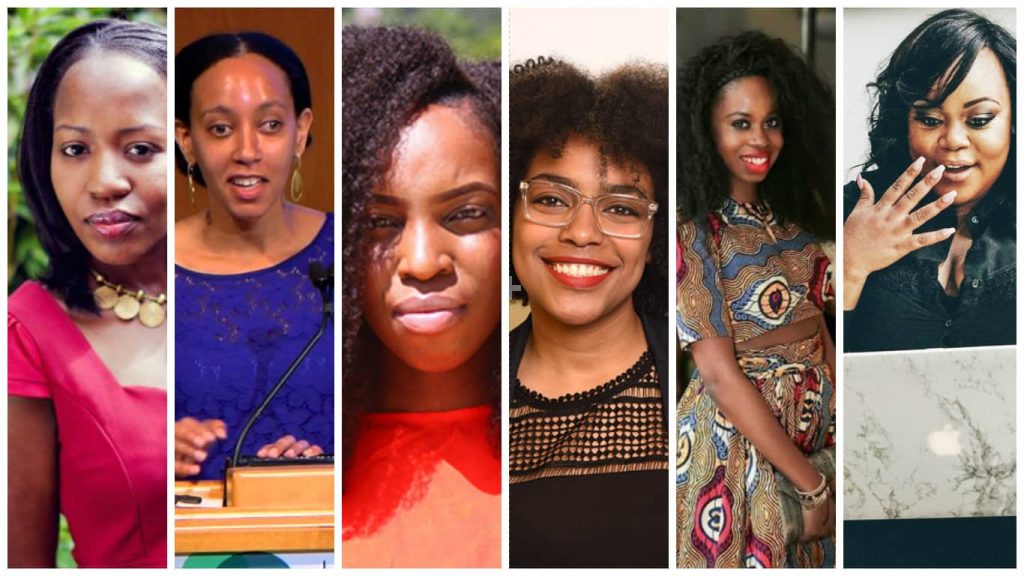
When Forbes released its 2016 30 Under 30 list this week, we looked on with excitement and cheered on the African women change makers and innovators in this year’s class. We celebrate the 6 Motherland Moguls on the 2016 Forbes 30 Under 30 list by taking a look at their work and the insights these women have to share about launching the careers of their dreams. 1. Haben Girma, 27 – Disability Attorney Girma is disability lawyer acclaimed for her work in education, law, and civil rights. She was recently honored by President Obama as a White House Champion of Change and is the first deaf-blind Harvard law graduate. In an interview with Harvard Law Today, the Ethiopian-American advocate shares how confidence and being “undaunted” built momentum for her career: “My parents tried very hard to make sure I had access to everything, and consequently I grew up thinking I could have access to everything… I was 15 and I was traveling outside the country without family, without anyone I knew very well, really. And it was amazing. It really helped develop my confidence. If I can go build a school in West Africa, I can go to law school” (Interview, Harvard Law Today). 2. Zim Ugochukwu, 27 – Founder, Travel Noire The Nigerian-American entrepreneur of the global Black community, Travel Noire, says she began refining her career in college. She shared the following on building community and not needing permission during her interview with Black Enterprise: “I was very community-oriented in college. I majored in biology with a minor in political science and sociology at The University of North Carolina at Greensboro. As part of my political science course requirements, I had to choose an internship with the political campaign for Barack Obama or John McCain. Of course, I chose the Obama campaign. This experience opened my eyes to what it means to be a young person and be engaged. In addition to working on the Obama campaign, I traveled throughout the country, for the “Forget Tobacco” organization. I educated young people on tobacco use and tobacco industry marketing tactics. I also started Ignite Greensboro, an awareness campaign to raise awareness about the International Civil Rights Museum. This was the cornerstone of my career. I learned I didn’t need people to give me permission to do anything; I can just do it myself” (Interview, Black Enterprise). 3. Catherine Mahugu, 27 – Founder, Soko Hailing from Kenya, Mahugu is the founder of Soko, an e-commerce platform that sells artisanal jewelry. Sharing her long term passion for the IT industry in an interview with WMIA, she shared the following about starting a career in the otherwise male dominated field of IT: “Don’t be your own barrier. Get rid of the notion that you cannot do what men in IT are doing because it is a male dominated field. Turn every barrier into an opportunity, that is what I have done and enabled me to get this far in tech. Always keep pushing your goals to the next level to achieve personal growth and never limit yourself in a world that is full of numerous opportunities” (Interview, WMIA). 4. Angelica Nwandu, 25 – Founder, Shade Room Nwandu who is of Nigerian decent and grew up in foster care. She is a writer and video producer. Speaking on her story and work in a Buzzfeed interview, Nwandu shared a great deal about how her Nigerian culture influenced her early career success, including graduating from college, and then later, as she learned her way building the Shade Room. She said the following about being among the 6% of foster children who graduate from college: “Nigerians are some of the most successful immigrants in America. And so when I would go to class, people would say, ‘Oh, you’re Nigerian,’ so they would expect me to be smart. Somebody expected something from me” (Interview, Buzzfeed). 5. Heben Nigatu, 24 – Senior Editor, Buzzfeed Nigatu who is a writer and editor at Buzzfeed, and the cohost of the popular Itunes podcast, Another Round, was born in Ethiopian and lived in the country until she was 5. Speaking on the success of her podcast, Another Round, she shared the following on authenticity in her work: “Media people ask us, ‘How are you doing this?’ and we just don’t take ourselves so seriously. It’s funny that they think we have a secret sauce” (Interview, The Guardian). 6. Kelechi Anyadiegwu, 26 – Founder, Zuvaa Anyadiegwu, the Nigerian – American Founder, CEO and Creative Director of the premier African retail site Zuvaa, said the this on following her childhood passions and joy: “I’ve always had an interest in technology, since my parents bought me a computer as a small child. I naturally found myself attracted to online communities (chatrooms, The SIMS, neopets, etc.) and building things (websites, avatars, digital Barbies, etc.). These were interests that really shaped my career aspirations going into high school and entering college. I loved digital design and I loved creating content. Everything from the yearbook club to creating layouts, or putting together short media clips. I loved it all” (Interview, Madame Noire). How about that for career inspiration? Learn more about this year’s Forbes 30 under 30 class.