
10 East African songs that will get you hyped for your next big interview

No matter how many times you practice your introduction or write down the skills you’ll bring to the position, interviews can be the most stressful part of getting a new job. We all know the stakes are high for an interview – you can go from the bottom of the pile to the #1 candidate by presenting yourself well and telling a compelling a story. With so much riding on your success, you can’t go into the interview room full of jitters and unsure of yourself. The best way to make yourself stand out is to be confident and calm. Not sure how to do that? We’ve pulled together a list of 10 East African songs to help center yourself and find some inner peace before the big moment. 1. Habida – Superwoman As the title suggests, this song will get you into a ‘conquer the world’ mood. With its catchy beat and uplifting lyrics, it is just the kind of song you need to conquer an interview. 2. Octopizzo – Black star Straight from the chorus, it is clear that the song is telling the listener to believe in themselves. “Forever you will be, a shining star… You will always be, a black star…” Go forth black star and rock that interview. 3. Khaligraph Jones – Yego This song is about Julius Yego, the Kenyan javelin thrower who broke the African record twice and Kenya’s national record four times. Seeing as the song is based on a champion, it shouldn’t be hard to get into a winning spirit when listening to this song. 4. Juliani – Exponential potential The title says it all and so does the video. The video is set within the confines of a boardroom which seems appropriate given the lyrics of the song. This is just the song you need to get the energy to unleash your full potential. 5. STL – Dreamer Stella Mwangi (STL) uses this song to encourage all the dreamers to go out into the world and follow their dreams while recounting her own story. It will definitely get you in the mood to conquer your fears and ace the interview. 6. Wangechi feat Karun – Analogue dreamer Although on the surface, the song seems to be talking about following your dreams, the more profound message is about being courageous enough to be different and to be you in a world clogged with similarity. Just the dose of courage anyone needs before an interview. 7. Muthoni the Drummer Queen (MDQ) – Nai ni ya who? This song was written for the city of Nairobi and what it takes to make it. But the song’s universal message also applies to any other city in the world. At its core, the song emphasizes the importance of getting up and doing something to change your life. The track’s awesome beat will get you hyped in seconds. 8. Avril feat Rabbit King Kaka – Ninaweza ‘Ninaweza’ means ‘I can’ in English. The song stays away from metaphorical analogies and remains as simple as its title suggests. It is the only motivation you need to get hyped for your interview. The message is clear, ‘You can.’ 9. Vanessa Mdee – Hawajui With a colourful video, Mdee encourages her listeners to overcome any obstacles that come their way, including unfair judgement from people who have no idea who you are. 10. Jua Kali – Baba Yao The song begins with these words, “Hauezi niekea chini, me ni baba yao” “You can’t put me down, I am a champion” (English Translation). Side Note: The Direct translation of the phrase, ‘me ni baba yao’ is ‘I am their father’ which is a sheng colloquialism used to refer to oneself as the best or a champion among colleagues. Which of these are your favorites? Any ones we missed? What is your all time favorite song for getting pumped your big interviews?
How to answer these 2 key interview questions

[bctt tweet=”Get a better understanding of who you are before you set out for that interview” username=”SheLeadsAfrica”] Before you attend any interview, you need to prepare adequately. Research the company and review the details of the position you applied for. Evaluate your expertise and strengths, and ways in which you can use your skill set to be an asset to the hiring organization. Anticipate how you will confidently answer questions asked. This preparation will help you get a better understanding of who you are, and enable you to clearly outline your competencies, qualifications and goals. First impressions are very important in the hiring process. In order to stand out from the competition, you need to make a lasting impression. This is not only determined by how you carry yourself, but also the way in which you respond to questions. Here is how to answer two key interview questions: 1. “Tell us about yourself” This is a common question. So, where do you even begin? Do you treat the question as if you are on a date and start talking about your interests, dislikes and whatnot? Stop. HR doesn’t want to know about where you grew up, the kind of hardships you went through to get to the position you are in today, or the number of siblings you have. When asked this question, you have to first focus on your academic background and professional experience. Give a brief overview of the two. For example: My name is Anastacia Kihoti, a communications graduate from Africa Nazarene University. I am currently a customer service manager with four years of experience working for SMEs and large organizations in the service industry in East Africa. Additionally, I have more than two years of experience in inbound and outbound campaign management in call centres… [bctt tweet=”How to flawlessly answer the common interview question; Tell us about yourself” username=”SheLeadsAfrica”] The next step is to talk about your career progression as well as what you have learnt or achieved through the years. Capture the HR’s attention by mentioning the accomplishments that you are most proud of. For example: As the customer service manager, I managed a team of fifty customer service representatives in introducing call centre systems by developing customer interaction and voice response systems, and executing user acceptance test plans. I came up with a strategy to get the job done within two weeks and successfully completed it at a lesser cost than that of outside consultants… Finally, you should give a summary of what you want your next career step to be. Make sure this logically ties in to the responsibilities of the position you are interviewing for. For example: I am looking to move away from customer service to coaching and developing team leaders and agents, managing the daily running of a call centre and driving performance of the team leaders to meet the business KPIs… 2. What are you looking for in a new position? In a recent email exchange with a job candidate, who was asked this question during an interview, he said, “I didn’t know what to say but the first thing that came to mind was ‘More money’. I regretted it as soon as I had said it because of the look I got from the HR. Although he didn’t say my reason was wrong, I got the feeling that I had blown my chances. How should I handle such a question in the future?” Well, we are all looking for greener pastures but mentioning money as the first thing may put off a recruiter. It makes it seem as if that is all you care about. Although money is important, don’t let it be your first response. [bctt tweet=”Mentioning money as the first reason you’re looking for a new job may put off a recruiter” username=”SheLeadsAfrica”] Start by mentioning that you are looking for a job which has the potential for advancement. Talk about the desire to work in an environment where you will be challenged and in which you can grow your skills while being mentored. Highlight the experience you expect to get from the position. One of the most important things you can do is gain as much experience as possible from every job you get. If you strive to work in a place that you’re excited to go to every morning or where you’ll be mentally stimulated, be honest about it. Tell the recruiter that those are the crucial aspects you want in a new position. What are some other ways you have navigated these key questions? What other questions often give you pause at interviews? Let us know.
Use these 3 Ps to land your dream job in Africa

It is not enough to show up for an interview having submitted a stellar resume. There are a few tips for blowing your interview out of the ballpark. At SheHive Accra 2016, Mrs. Florence Hutchful, Head of HR for West Africa at Standard Chartered Bank Ghana, summarized these tips into what she termed, the 3 Ps to acing your interview. Preparation It is important that you are able emulate the persona described and detailed in your resume. This means that you must come off knowledgeable and prepared for your interview. To be able to achieve a comprehensive understanding of the job, it is essential that you research the company. Read about the company online, spend time on their website and get to know the company. If you cannot find any valuable information online, go the extra mile and walk into the institution and ask questions. Furthermore, be ready to answer questions regarding your salary expectation. It is important to have a fair idea about salary brackets in any given institution. ALWAYS quote an expected salary; it shows that you know your worth and you are fully aware of the value of your time, skill and experience. Never compromise on preparation, it is what will make or break your presentation in an interview. Presentation Presentation in any interview begins with your physical appearance. Even before you speak, panelists will assess you based solely on what you are wearing and your demeanor – your posture and composure. It is imperative that you dress and appear smart and confident. Make sure your skirt is a good length, check the cut off your blouse and say no to overly elaborate jewelry, you must look professional. Confidence is always seen in the way you carry yourself, look up, straighten your shoulders and strut your stuff like the motherland mogul you are. Your ability to exhibit confidence in yourself through your outward appearance scores you several points even before you begin to speak. Adequate preparation will be key to ensuring that your spoken presentation is top notch. Remember to clearly articulate your views, present your ideas in concise and direct responses. Do not beat about the bush, exhibit clarity of thought and speak with authority. In the event you do not know the answer to a question, assess the panelists, are they attempting to evaluate your ability to think on your feet or is this a direct question? If it is the former, exhibit creativity and find a suitable answer, regardless of how far fetched it may be. But if it is the later, be candid and ask to get back to them later. Nothing beats honesty. Participation To get the job you must want the job. Remember that jobs aren’t just lying around for people to pick up. You have to demonstrate you are interested in the position, and mention the skills you can bring to the table and what the organisation will gain in return. Be keen for the job; don’t be passive. Engage panelists; look them in their eyes when you respond. Ask questions and show your excitement for the position. There is nothing better than an employee who is passionate about their job; this fuels engagement and the desire to succeed in any position. Your ability to show a keen interest in an interview may very well be what scores you the job. Hopefully, with these three Ps you are sure to ace any interview and land yourself that dream job. All it takes to win is preparation, which will fuel your presentation and your ability to participate.
What this year’s Forbes 30 Under 30 African women teach us about launching a career
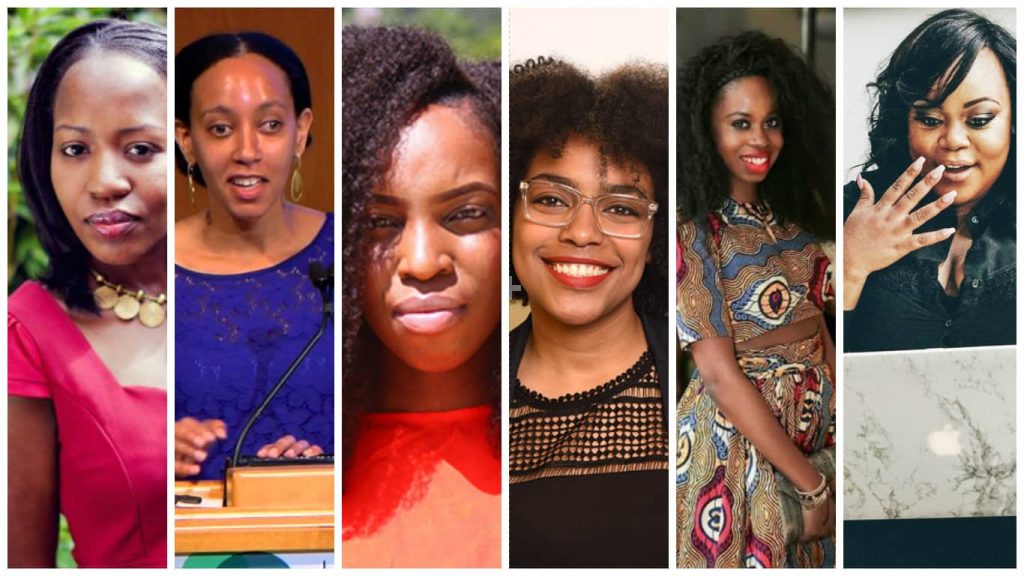
When Forbes released its 2016 30 Under 30 list this week, we looked on with excitement and cheered on the African women change makers and innovators in this year’s class. We celebrate the 6 Motherland Moguls on the 2016 Forbes 30 Under 30 list by taking a look at their work and the insights these women have to share about launching the careers of their dreams. 1. Haben Girma, 27 – Disability Attorney Girma is disability lawyer acclaimed for her work in education, law, and civil rights. She was recently honored by President Obama as a White House Champion of Change and is the first deaf-blind Harvard law graduate. In an interview with Harvard Law Today, the Ethiopian-American advocate shares how confidence and being “undaunted” built momentum for her career: “My parents tried very hard to make sure I had access to everything, and consequently I grew up thinking I could have access to everything… I was 15 and I was traveling outside the country without family, without anyone I knew very well, really. And it was amazing. It really helped develop my confidence. If I can go build a school in West Africa, I can go to law school” (Interview, Harvard Law Today). 2. Zim Ugochukwu, 27 – Founder, Travel Noire The Nigerian-American entrepreneur of the global Black community, Travel Noire, says she began refining her career in college. She shared the following on building community and not needing permission during her interview with Black Enterprise: “I was very community-oriented in college. I majored in biology with a minor in political science and sociology at The University of North Carolina at Greensboro. As part of my political science course requirements, I had to choose an internship with the political campaign for Barack Obama or John McCain. Of course, I chose the Obama campaign. This experience opened my eyes to what it means to be a young person and be engaged. In addition to working on the Obama campaign, I traveled throughout the country, for the “Forget Tobacco” organization. I educated young people on tobacco use and tobacco industry marketing tactics. I also started Ignite Greensboro, an awareness campaign to raise awareness about the International Civil Rights Museum. This was the cornerstone of my career. I learned I didn’t need people to give me permission to do anything; I can just do it myself” (Interview, Black Enterprise). 3. Catherine Mahugu, 27 – Founder, Soko Hailing from Kenya, Mahugu is the founder of Soko, an e-commerce platform that sells artisanal jewelry. Sharing her long term passion for the IT industry in an interview with WMIA, she shared the following about starting a career in the otherwise male dominated field of IT: “Don’t be your own barrier. Get rid of the notion that you cannot do what men in IT are doing because it is a male dominated field. Turn every barrier into an opportunity, that is what I have done and enabled me to get this far in tech. Always keep pushing your goals to the next level to achieve personal growth and never limit yourself in a world that is full of numerous opportunities” (Interview, WMIA). 4. Angelica Nwandu, 25 – Founder, Shade Room Nwandu who is of Nigerian decent and grew up in foster care. She is a writer and video producer. Speaking on her story and work in a Buzzfeed interview, Nwandu shared a great deal about how her Nigerian culture influenced her early career success, including graduating from college, and then later, as she learned her way building the Shade Room. She said the following about being among the 6% of foster children who graduate from college: “Nigerians are some of the most successful immigrants in America. And so when I would go to class, people would say, ‘Oh, you’re Nigerian,’ so they would expect me to be smart. Somebody expected something from me” (Interview, Buzzfeed). 5. Heben Nigatu, 24 – Senior Editor, Buzzfeed Nigatu who is a writer and editor at Buzzfeed, and the cohost of the popular Itunes podcast, Another Round, was born in Ethiopian and lived in the country until she was 5. Speaking on the success of her podcast, Another Round, she shared the following on authenticity in her work: “Media people ask us, ‘How are you doing this?’ and we just don’t take ourselves so seriously. It’s funny that they think we have a secret sauce” (Interview, The Guardian). 6. Kelechi Anyadiegwu, 26 – Founder, Zuvaa Anyadiegwu, the Nigerian – American Founder, CEO and Creative Director of the premier African retail site Zuvaa, said the this on following her childhood passions and joy: “I’ve always had an interest in technology, since my parents bought me a computer as a small child. I naturally found myself attracted to online communities (chatrooms, The SIMS, neopets, etc.) and building things (websites, avatars, digital Barbies, etc.). These were interests that really shaped my career aspirations going into high school and entering college. I loved digital design and I loved creating content. Everything from the yearbook club to creating layouts, or putting together short media clips. I loved it all” (Interview, Madame Noire). How about that for career inspiration? Learn more about this year’s Forbes 30 under 30 class.
Email like a boss : Ingredients to cook-up stellar professional emails

Professional emails are to a business what healthy food is to your body, vital! You eat healthy foods to get a stronger body and longevity. Similarly, professional emails are necessary to the fruition and strength of any business. The ability to communicate thoroughly with neutrally progressive language is imperative to achieving your business or career. It seems challenging and tricky, but like every healthy habit, consistency is key. Here is a checklist to cook up a healthy and effective professional piece of art with your own clear and personable touch. Subject – Perhaps the shortest but most influential part of your email The subject is what gets the reader to open your email. Too bold and it’s regarded as spam, cheap or unimportant. Too dull and it’s forgotten. Both extremes run the risk of not being read at all. Be specific and hint a reason for their urgent attention. If time sensitive, state a deadline, i.e., “Please reply by [date]”. Greeting Salutation – Greet your reader accordingly If the reader is in a different time zone, no need for day-relevant words (morning, afternoon or night). The simplest greeting is “Dear, [name].” or “Hello” If you aren’t sure who your reader is, “ To whom it may concern” is another option (though I don’t recommend it.) Introduction – Compliments and pleasantry and Introduce yourself (2 sentences) Begin the body of message reminding them of who you are. “Thank-you”s or “it was great meeting you at [name event]” are subtly pleasant ways of reminding the reader of who you are. Setting a genuine tone at the start your message goes a long way. If you are familiar with your reader, pleasantries such as “ I hope all is well with you and yours,” works wonders. When introducing yourself for the first time, keep it brief and relevant. If you and the reader are already acquainted, rely on your well crafted signature (at the end) to speak to your current endeavors. Reason for email – Purpose (1-2 sentences) This is where your purpose resides. Use the “One Thing” rule. What do you seek and how does it serve your purpose? Brainstorm ideas before you start your email. This way, you can establish why the email is relevant to the reader/recipient, and have it laid out clearly and accurately. Call of action – What are you asking for? What actions need to occur to have the mission possible? What do you need from the reader? Be accurate, clear, and reasonable. If it takes longer than two sentences to describe this portion, listing them in bullet point is the best way to go. Bullet points are easier on the eyes and more importantly easier for your reader to note them down. Remember the one thing rule, how do your call for actions affect your purpose? Closing message – Close as you started, genuinely (1-2 sentences) Every email you send should be important. If your email is time sensitive, state a time and date you would like to hear a response, so there;s a sense of urgency. If it isn’t time sensitive, say so respectfully and tactfully. One such statement is, “I hope to hear from you at your earliest convenience.” Closing Salutation and signature To keep things simple, professional closing salutations can be short, “Best”. Your signature should not exist in the body of your email. Mention your name, title, link to business address and your contact information. This way, you have a short yet effectual platform to speak of your current phones. So there you have it, a checklist of all the structure that a professional email needs. Whether you are sending this professional email to a client, co-worker or potential employer, this checklist will have you getting responses in a jiffy.