
Girls Talk London: Rebranding what it means to be a young woman in the UK
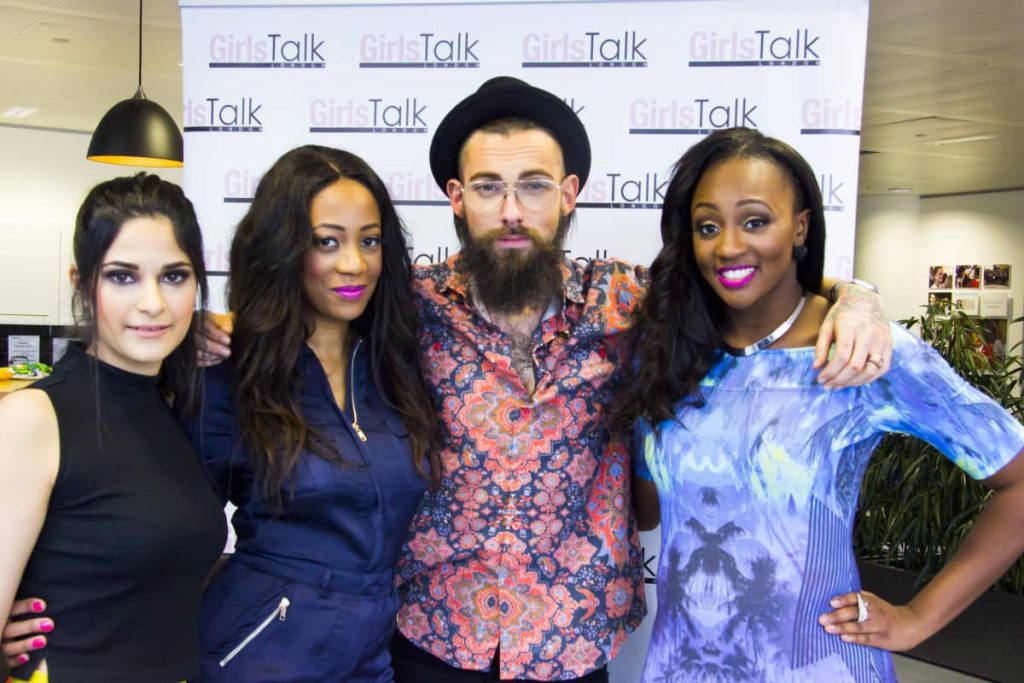
All across the world girls and young women are looking for spaces to express themselves and have their voices heard. While the issues may be different, digital media is providing the platform for young women to create what they wish they could see. Vanessa Sanyauke and Remel London, diaspora women based in London, have come together to create Girls Talk London and talk about the issues facing young women in the UK. Vanessa and Remel shared with us how they’ve gotten corporate leaders to see the value in their organisation, the networking tips they’ve used to connect with high profile guests like Adele’s stylist and the best African restaurant in London. Why is Girls Talk important to young women in the UK? Vanessa: At present in the UK there is not one single talk show that targets young women. We do not have a platform to talk about trending topics that affect us or hear from guests that are of interest to our everyday lives. Girls Talk is made for the everyday young woman in the UK and the hosts have open and honest conversation about current social media trends and have special guests and experts on fashion, beauty, work, relationships & life who give the viewer life hacks and tips to implement in their lives. This show rebrands what it means to be a girl in the UK and the hosts are non-judgemental advocates for women’s issues and rights. Remel: Young women need positive role models and I think that we showcase exceptional talented women from different walks of life and industries that they can aspire to be like. How did you build the business case for corporate partners to see the value in Girls Talk? Girls Talk London the organisation, connects FTSE 100 businesses with female talent-young girls and professional women. The business case is that a great deal of our corporate partners have less than 20% of staff who are women and even less at executive board level. We are the middle-woman and bring talent to them and help them to increase diversity. The UK government has introduced reporting measures which starting this year that requires any business with over 250 employees to report the salary and bonuses of male and female staff. This is another incentive for businesses to really address the gender pay which is currently at 19%. The fact that the government is putting pressure on businesses to treat their female staff better helps businesses see the benefit of working with us. How have you gotten high profile people to serve as guests on Girls Talk? We have built a reputation of professionalism and excellence in all that we do so most speakers can see that we are organised and they will be looked after when they speak at an event. Also, most high profile women are tired of being the only women in the roof and are actually passionate about doing all they can to get more women in their sector so selling the benefits of speaking at our events is not always that hard for us. What networking and relationship building tips can you share with our audience looking to connect with high profile people? You need to show that you are professional and organised so we’d encourage having a website or information packs which provide detail about your work and mission. For speakers and sponsors always show your gratitude for their time and be able to explain what you can do for them. Be confident and concise-high profile people always have limited time so try and avoid long emails and conversations by being clear and straight to the point. What are the hardest parts of getting Girls Talk off the ground and how are you looking to fill in the gaps? The hardest part in getting the talk show off the ground is building an audience. It takes time to grow so we are focusing on our mission, content and produce a show to the highest quality. We fill a gap in the market because we cater to all young women in the UK as our hosts come from all backgrounds including African, British and Asian as well as having a Dean as a host we are able to reach out to male viewers too. In addition, our show helps improve the lives of our viewers because interview guests who are experts in business, careers, fashion and beauty. It is not just about a group of women gossiping! If you had the choice between a powerful mentor and significant business funding, which one would you choose and why? Vanessa: Oh this is a tough one! I would say a powerful mentor because knowledge is priceless and if you have a powerful mentor the money will surely follow with their direction and support. Remel: I personally have a lot of plans and ideas of how I would like to continue to support young women and create opportunities for young people so I would choose business funding. What’s your vision for Girls Talk and what can we expect to see in the next 12-18 months? Remel: I would love to see Girls Talk go on an international tour visiting different countries to inspire girls all over the world but also interview inspirational women from all over the world. Vanessa: My vision for the show is for us to expand our audience —we want an international audience and we are looking at partnerships and sponsorships already for series 3 so watch this space! Fast Five with Vanessa Favorite Afrobeat singer? Tiwa Savage Best African restaurant in London? Wazobia on Old Kent Road Makeup must have? Blusher Favorite woman in business? Oprah Topic you’re most excited to talk about on this season of Girls Talk? I am really excited about the interview with Adele’s stylist and also our show on Kim Kardashian and Amber Rose and the sexualisation of women on social media. Fast Five with Remel Favorite Afrobeat singer? Moelogo Best African restaurant in London? Sweet Hands Makeup must have? Concealer!!! Favorite woman in business? Oprah
Kalinè: You don’t need the ideal situation before you do something with your talent

Singer, pianist, composer and producer – Kalinè is an artist of many talents. The Berklee College of Music graduate inspires her fans through her genuine and unique lyrical style while navigating the Nigerian musical industry as an independent artist. After getting her start in the industry ten years ago, she has remained a self-managed artist who believes that the beauty of not being on a label or represented has given her the power to make decisions about her musical career—what she wants to do and how she wants to do it—all of which have molded her as the artist that she is today. She Leads Africa spoke with Kalinè about her journey as an artist and entrepreneur and why honesty is her favorite form of inspiration. You published a piece on your blog Self-Managed- 9 Reasons why you should be your biggest cheerleader. Why did you decide to self-manage as opposed to hiring someone to do it for you? The ideal situation would be to have a support system in a formal way, or to have a team. However, I got to a point where I was looking for people, as opposed to being found. It is a lot better to be found by a manager as opposed to looking for one or paying for one. This is because they are coming on board knowing exactly what you want to do and they have a passion for what you are doing. I’ve learned to be discerning about who I want on my team as well. I have come into my own, and embraced the challenge that a self managed artist has and I try to use that to encourage others by saying, you don’t have to have the ideal situation before you do something with your career or talent. That is how the self-mantra was formed; by embracing it and seeing the beauty in it—until the right person approaches me. We all know that building a brand is filled with everyday challenges, some big and some small and aggravating. What’s your favorite challenge that you have tackled and what did you learn from this experience? Patience is the biggest thing for me. In this industry it used to be so difficult for me to see other people making a success of their talents and passions. I’ve learned that patience is the most important thing. Everyone has their own journey, their own timelines and trajectories. There is no use being anxious or worried about what is going to happen. I strongly believe that I will get to where I want to go. I must be patient about with the recourses I do have. Since you self-manage, this must also mean that you manage your own social media sites? If so, how have you built an online community around your brand? What advice would you give to other entrepreneurs around building passionate fans and active online communities? Be true to yourself. Be authentic and genuine, whether on Instagram or Facebook or Twitter or Soundcloud. I try to give valuable advice or useful and relevant information to my followers and supporters, while constantly remembering to be myself as I do so. It is also good to have goals for each platform. Your Instagram followers are very different from your Facebook followers, likewise your LinkedIn followers. Figure out, what exactly do followers want to gain from the different platforms? It is a learning process, and a trial and error. From your social media pages, I can see that you’re inspiring your followers in everything that you do—whether it’s singing or blogging. How do other activities that you partake in, inspire your work? Photography, reading, social messages, conversations, and social issues inspire my blogging and songwriting. At Berklee School of Music I studied film and music scoring. I’ve written music for commercials, and teach piano to little kids. Being an artist is a full time job. Everyday there is something to do—from social media, to practicing for a show, to styling, and to rehearsing. What female artists do you gain inspiration and or empowerment from? Adele, her honesty inspires me. Lianne Lahava, Laura Mvula—to name a few—teach me to stay true to myself and to write from an honest place. How do you define yourself and your music, in terms of today’s climate? If you come to one of my shows, you will hear reggae, highlife, pop, R&B and classical elements. The common thread that runs through all of my songs are honesty and elements of truth and authenticity through my repertoire. I am influenced by too many things to really put myself in the box. I think that is where the world is headed—no longer really saying. Everyone is going into various genres; as the Internet and social media become more accessible around the world, we are all going to make music that we love and we know we will communicate to our followers and our fans. What tips do you have on negotiating how much you get paid, how do you determine doing a free show or not? It all depends on the type of gig, and how many minutes they want you to perform; how many songs they want and the number of instruments needed. All are determining factors and more—styling, makeup, and hair—help me to determine how much to charge. However, creativity is relative. Some people have a budget. When you get to a point where you are trying to negotiate then other things come in, such as whether it is for a good cause or if it will be really good exposure for you or performing in front of an audience that you do not get to perform in front to often; or even someone saying, I will cover your costs but not pay your labor fees. There’s also the situation where you have the opportunity to leverage off the people who ask you to perform—if they can open some doors for you, or introduce you to certain people and not pay
Covert Allies: A tale of Nigeria’s secret feminists
As a Nigerian woman, I have a lot of things on my mind. Things such as the disappointment about the Nigerian Senate recently not passing the Gender Discrimination Bill. Or the daily panic that there would be a power cut as I’m putting on my makeup and getting ready for work. My mind is full. I now have to add the pressure of saying the words ‘I am a feminist‘ into the mix. The words are easy for me to utter, but often heavy for others to accept. The reactions are often disdain from a lot of men and suspicion from a lot of women. This surprises me greatly. What’s really wrong with demanding gender equality? It is surprising because to me, it is very evident that we Nigerians are all feminists – whether obvious or covert. Take, for instance, the working mum who says that feminists are unhappy spinsters who are angry with the world because they can not keep a man. This working mum is educated up to university level. She has a career where her salary is paid into her own bank account. She can post her thoughts on social media without her husband’s permission. She is a covert feminist, reaping the fruits of trailblazing feminists before her. But please, don’t let her know about it; that would spoil the secret. Actually, there are covert feminists! We definitely mustn’t forget the special variety of feminists which are the secret male feminists. They are often belligerent and patronizing to women who declare themselves to be feminists. Don’t you dare as a woman turn down the advances of the secret male feminist; he will ask you why you’re carrying this ‘feminist-thing’ on your head. His disdain for you would be oozing out of his pores. However, watch the secret male feminist talk with pride about his mother who worked several jobs against all odds to make sure that he got an education. Watch him puff out his chest when he announces that his wife has bagged a Masters Degree with distinction. Watch him talk with concern as he worries that the secondary school where his daughter is studying isn’t up to world-class standards, and therefore not allowing her to reach her full potential. Watch him talk with frustration about what to do his sister’s boss who sexually harasses her. Watch him look horrified when you call him a feminist. Who is then a feminist? To quote author Chimamanda Ngozi Adichie, ‘a feminist is a person who believes in the social, political and economic equality of the sexes’. That’s it. Feminism is not a cult for angry women; it is a movement which simply suggests that men and women should be treated with equal respect, consideration and dignity. When this is fully understood, bills which would protect the right of a woman to inherit her husband’s property would be passed into law. When this is fully understood, secret feminists-male and female-would come out of the dark shadows cast by misconceptions, and stand tall for equality. It would be one less burden to have on my mind as a Nigerian woman.
Top 10 best black girl magic moments of getting ‘WANDA’ in formation
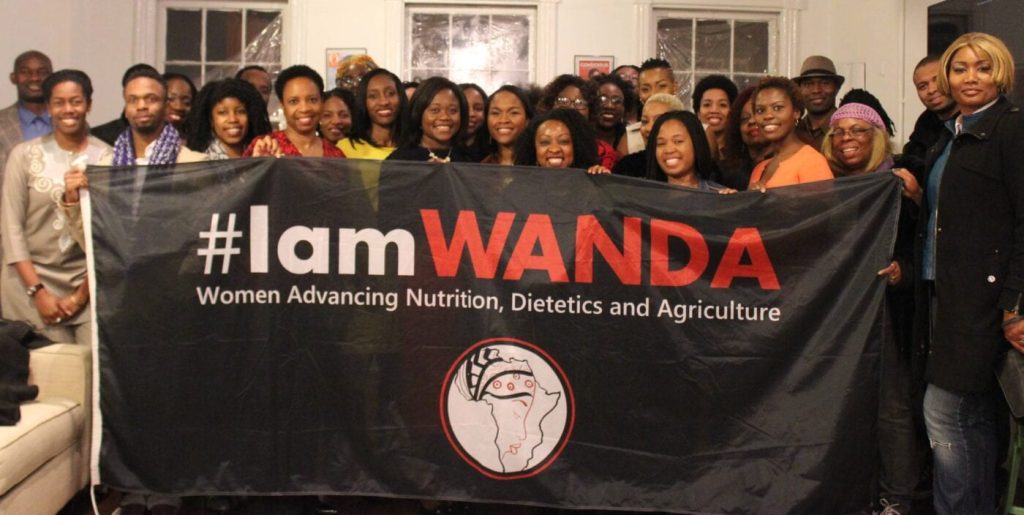
Earlier this month, I had the distinct pleasure of attending the launch of WANDA, a newly established nonprofit organization educating, empowering and advocating for women and girls of African decent to become leaders in the fields of nutrition, dietetics and agriculture. The launch, which took place on March 5th was held in honor of International Women’s Day and as such, featured a panel of innovative and groundbreaking social entrepreneurs in industries ranging from beauty and cosmetics, to television and entertainment. WANDA Founder, Tambra Raye Stevenson, groundbreaking in her own right as a National Geographic Traveler of the Year and founder of the DC-based NativSol Kitchen, describes WANDA (Women Advancing Nutrition, Dietetics, and Agriculture) as an initiative bringing together “sisters of the soil” to encourage all women, young and old, to lead in advancing the fields of nutrition and agriculture. “Women and girls are at the heart of transforming our communities through preserving our foodways, building vibrant economies and healthy communities,” she said. WANDA will also be launched in Abuja, Nigeria in May. As a Ghanaian-American woman just beginning her journey into the fields of agriculture and nutrition, I find WANDA’s mission intriguing. The organization promotes itself as a Pan-African initiative, which is hugely significant to me at this point in my career. Though most of my professional experience falls within the realm of international development, a heightened social awareness of racial injustice in the United States, underscored by the growth of the “Black Lives Matter” movement, has compelled me to offer whatever service I can to ensuring a healthy future for Africans AND African-Americans alike. Having shared this passion with colleagues and advisors, I have been told that I cannot have a successful career straddling both sides of the Atlantic – I would have to choose. The launch of this organization confirmed that I am not alone in my desire to protect and promote health throughout the African Diaspora. And for me WANDA is blazing a trail where there had been none before. If you missed the launch, check out my top 10 black girl magic moments that continue to resonate with me. 1. Getting in formation Inspired by the song that launched many a think piece, WANDA flexed its impressive marketing and social media muscle by borrowing from Beyonce’s celebrated and controversial song, “Formation” for the title of their event. Dubbing the launch, “Black Women Getting in Formation: Power of Media and the Arts to Advance Nutrition and Agricultural Advocacy,” WANDA brought attention to the convening power of a song some have identified as a call to arms for black women. In a recent interview with Black Enterprise, Stevenson shared that WANDA’s version of “getting in formation” means encouraging women and girls to pursue education and leadership roles in health and agriculture. For me, gathering under the backdrop of “Formation” and a national conversation about self-love and unapologetic blackness brought a palpable sense of pride and purpose to the launch. It was an environment that allowed participants to celebrate each others accomplishments, relate to each others struggles and commit to partnerships moving forward. A moment that stayed with me, however, was when panelist and WANDA honoree Rahama Wright, CEO of Shea Yeleen International reminded attendees that countless unnamed and unknown women have always and are still doing the work only recently championed by Beyonce. Way before the Super Bowl performance that stunned America, black women worked together to achieve success and independence. This moment from Wright reminded me that despite Beyonce’s undeniable contributions to the movement, the real heroes in the quest for justice and equality are in our midst and should not be overlooked. 2. Celebrating excellence in entrepreneurship Speaking of celebrating the heroes in our midst, WANDA set a great example by honoring four WANDA women leading the way in promoting positive images of blackness and black women. Along with Ms. Wright, WANDA honored Julian Kiganda, CEO of Bold and Fearless, DeShuna Spencer, Founder and CEO of KweliTV, and Mukami Kinoti Kimotho, Founder and CEO of Joodj. During the panel discussion, each honoree offered a unique perspective on the realities of being a black female entrepreneur. The most memorable moment for me was the vulnerability each woman shared in explaining that their successes were not won overnight. The panelists openly discussed the tendency in the black community to erase struggles from one’s personal narrative. By openly discussing the blood, sweat and tears that goes into growing an organization from the ground up, the panelists believe that more women may be encouraged to continue chasing their dreams even when they face hardship. It was a message that resonated with the audience who clapped in support of these personal and uplifting statements. 3. The food NativSol Kitchen provided the tasty, healthy and culturally relevant fare originating from different countries across the continent. Stevenson dazzled attendees with a Morroccan stew, West African rice dishes, savory black eyed peas, and my personal favorite from the event, bissap, or zobo as it is known in Nigeria. The drink is made from dried hibiscus leaves and is known for its tangy flavor and deep crimson color. NativSol spiced its version up with a touch of ginger, giving the beverage a kick that rounded out the meal. The message I took away from the impressive spread is that food from across the African continent and Diaspora is naturally delicious and healthy. Over time, departure from these foods and the uptake of the Western diet has left a staggering percentage of the Diaspora suffering from overweight, obesity, heart disease, hypertension, and diabetes. In the United States, over 75% of African Americans are overweight or obese, while in Africa nutrition related non-communicable disease will account for 40% of the disease burden on the continent by 2030. A part of WANDA’s mission is to reverse this trajectory and restore health to the Diaspora by embracing the heritage foods that characterize so many of its classic dishes. For more information about the link between culture, food and
Is it a good idea to move back to Nigeria?
It seems like everyday, there’s another of your friends who is moving back to the promised land of Nigeria for a shot at making it big. They either grew up or attended schools in the UK, America or South Africa, etc. Our generation seems to be leading the great diaspora exodus from the comfortable Western world and jumping back into Nigeria for a chance to “make it”. But for those of us who aren’t yet convinced that moving back to Nigeria is the right move, there are typically a couple of questions that come to mind: – Are there are any real opportunities there that I can’t find anywhere else? – How do I even get situated in the job market and meet the people who can help me find a job? – What things should I be looking out for to make sure I don’t get hustled? – Should I ask for the same salary I made before? As founder of a recruitment firm specializing in connecting diaspora returnees (Nigerians who have studied/worked abroad) with top companies in Nigeria and a returnee myself, I’ve faced all of these questions and more. Here is some advice for you on the areas with the biggest opportunity and some helpful do’s and don’ts. Ready to move back? Employers want what you’re offering. Diaspora Nigerians (aka repats) are the ideal package for employers as they help bridge the capacity gap in-country while simultaneously fulfilling local content obligations. As Nigeria becomes more globally competitive, repats are in the best position to maximize on the opportunities that accompany such growth. Those on the fence about moving back are being seduced by the promise of endless champagne nights, parties, and lucrative money making ventures. However, as likely as this may be, it’s extremely important to make sure that you are fully prepared for dealing with all sides of Nigeria, not just the glitz and the glam. You must have a clear plan about meeting your basic needs, that aren’t so basic in Nigeria (e.g. housing, transportation, electricity), otherwise you are on a fast-track to misery and likely to leave without maximizing your full potential, but I digress! All things being equal, lets assume you’re prepared for the move, let’s move on to what opportunities are on ground that aren’t available in more developed markets. Opportunity: Old dog, new tricks Major multinationals that have been on the continent for decades have refocused their global priorities to favor their sub-Saharan markets, Nigeria, in particular. Their increased investment is due to the market size opportunity available here. Several companies have instituted specific programs for moving diaspora Nigerians to work full time in Nigeria indefinitely or for a set period of time. If you’re working in a company that has an office in Nigeria, definitely enquire about this, and move back corporate style. Nigeria’s new wave of transition has led to an increase in development projects in established industries such as infrastructure (power, water, roads, etc.), agriculture, manufacturing, telecommunications, healthcare, you name it! Innovation is driving Nigeria at the moment, so you have to find the right opportunity at a major firm for what you are passionate about and drive it home. Ecommerce Start-Ups This is the golden goose for young Nigerian professionals considering moving back. Start-ups are great ventures to move back to work for, especially if you have long-term entrepreneurial ambitions. I actually moved back with a popular ecommerce company many moons ago and my experience there was invaluable! They are extremely ambitious, have long-term growth strategies for Nigeria and Sub-Saharan Africa, and are looking for repatriated talent that has local understanding to really drive their objectives. There is immense opportunity for growth but just make sure you do your research on the right ones to join and ask detailed questions about your role, responsibilities, short-term and long-term objectives. If you are on the same page, the sky is the limit with a start-up. Do your thang If you have a bright idea, pursue it. Do this intelligently and fearlessly. The opportunity potential here is true, the time for new ideas is not dead, even if someone is doing what you want to do, the market is big enough for both of you. I have friends that own bakeries, fashion labels, financial services companies, blogs, consulting firms, farms, you name it and are actually successful (no expensive hobbies here). If you know what you want to do, do some serious research, speak to the right people, and carry-out your plan. If you provide a great service, you will have clients. This is a huge consumer population with growing pockets. Create, plan, and deliver. Do’s/Don’t DO be open minded to different opportunities that you wouldn’t have previously considered. You moved back for a change, so go ahead and try something different. DON’T just take any job that has the highest paycheck. Find something you’re passionate about and don’t feel pressured into a role that you won’t perform in. DO network with people that have different backgrounds. This is the best way to find new opportunities and friends that can help you get acclimated in a new city. DON’T have an entitled attitude. If you’re coming from abroad people are looking for you to show that, so surprise them. DO find things to do that remind you of your life back home (e.g. weekly manicure, grocery shopping/cooking, intramural sports teams). Moving back can move you out of your normal routine so find the things that keep you sane and feeling settled. DO keep following She Leads Africa to stay motivated and help you achieve your dreams Compensation This is an area that causes frustration for both returnees, the employers and the recruiter (aka me ☺). Employers tend to find repats “entitled” for expecting higher pay than market rate; repats expect to be paid internationally competitive salary’s given their education, and experience in other markets, and I, the recruiter, am stuck in the middle! When discussing salary with potential employers, it’s always best to do the following: Research
Is the law keeping young African women safe from sexual violence?
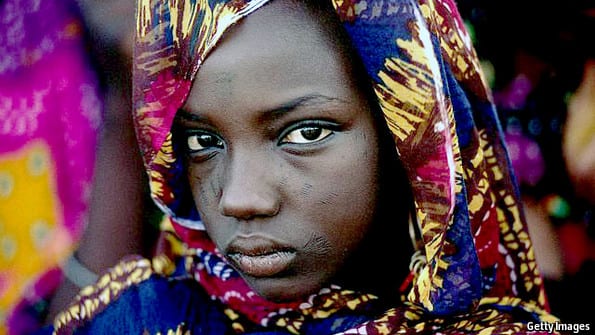
It may be 2016, but young Nigerian girls are still being exploited by those who should be protecting them. I’m referring to the father figures, lawmakers, community leaders and even some parents. Only recently, the internet and media went into a frenzy over the notion that the age of consent had been lowered from 18 to 11. The reason for this confusion? A bunch of subsections under Section 7 of the Sexual Offences Bill postulating penalties for sexual penetration in girls under the ages of 11, 15 and 18. We’re all still asking ourselves why the need to highlight these three ages rather than the relevant one which is 18. This is of major concern as concerns two main areas: child marriages and rape. Source: BBC Africa UNICEF reports that Nigeria is the country with the highest number of child brides across Africa. The number of child brides across Africa is expected to almost triple by the year 2050. It’s been almost 2 years now since the world has been fighting for the return of the Chibok girls following the #BringBackOurGirls campaign. Sadly, at this time, we are still waiting and hoping that they are rescued. Ese’s story Most people have been following the story of 14-year-old Ese Oruru who was abducted from her base by a man who took her to the North to become his bride. Reports made by the Bayelsa State Police Command as captured in Punch Newspaper state that her recent kidnapping from her home in Bayelsa to faraway Kano is a case of eloping. It’s almost laughable except that it’s not. This is a grave issue that affects every one of us regardless of gender. It thus becomes obvious that law enforcement and the rest of the community have failed to catch on that the law does not condone the violation of any woman especially one who is still a child. Ese’s predicament is our predicament and as such statements made by the very institution put in place to install law and order demonstrates our failure as a society. How on earth does a teenager elope? The fact that such a statement can be made by the police public relations rep confirm to us that child marriages are still very much a thing in this part of the world. This is a practice prevalent in the northern part of the country where matured men take on child brides. At this point of the century where societies are moving to expel inhumane practices, the reaction to Ese’s case is a prime example of the normalcy of such a practice. Whether or not Ese voluntarily left her base in Bayelsa for a faraway state or was kidnapped / coerced into doing so as certain assertions have been made, the baseline is she is still a minor. Although it has taken six whole months, the good news is Ese has been handed over to the police for her return to her family in Bayelsa. Just as author Chimamanda Ngozi Adichie has been quoted as saying, ‘culture does not make people, people make culture’. Thus, the mere fact that something is a part of our culture is not a good enough reason to uphold it. There is certainly good culture and bad culture and as humans we are expected to evolve and be progressive. What are some of the risks? There are several risks that child brides are faced with including emotional and psychological trauma that may follow them way into adulthood and in fact for the rest of their lives In addition, if the ‘marriage’ had been consummated underage, pregnancy, Vesicovaginal Fistula and STIs are all common occurrences for child brides. As a society, where do we go from here? We need to close the gap between the law and its practice through proper information dissemination and sensitization. The Nigerian police force must undertake reorientation programs with the passing of new laws. The law should expressly state the age of consent for sexual intercourse by getting rid of the compounding subsections in the Sexual Offences Bill. It is also not enough that the law prescribe a penalty of 5 years imprisonment or a fine of N500,000 for the perpetrators in child marriages! A part of her life is taken away from her as she is forced to grow up in the worst ways possible. The maximum penalty should be sought for such offenders. What can we do as women? As women, each of us has a responsibility to uplift other women especially those who do not have some of the privileges we do have. Speak up about it! Challenge the status quo! Tweet about it, blog about it, discuss with peers, make your voice heard. You may be surprised how little people actually think about this issue. Educate yourselves including other young girls and women. Females need to be aware of the dangers they face and to take extra precaution where necessary. Counsel and encourage one another. As women we need to quit slut shaming and blaming the victim. The guilty party is the aggressor or manipulator. Skimpy clothing or a flirtatious nature do not equal a license to rape. Parents and guardians also need to be receptive enough for their daughters to feel free enough to tell them about any funny business going on. Raise your sons to respect women. Men have as much a part to play as women do in the promotion of gender rights.
Smoothie Express: Bringing healthy food to the people
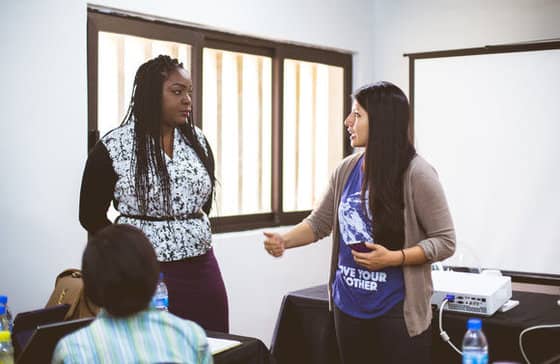
SLA quickly caught up with Tracy and Omowunmi the founders of fast growing fresh food startup Smoothie Express. They shared with us how they developed the idea for the company, how they get around volatile currencies and the best piece of feedback they’ve ever received from a customer. Where did the idea of Smoothie Express come from and how did you get it started? I was trying to do a smoothie detox and my biggest challenge was finding the right time to blend my smoothies as I was still working a 9-5 then. That’s where the idea came up, I had seen a problem that was not peculiar to me alone and I wanted to solve it. So I contacted Omowunmi and we both developed a solution for the problem hence, Smoothie Express. We first of all picked a name, Smoothie Express because we wanted to make fresh smoothies available to customers with minutes. Then we registered the company. We used our savings in starting up the company. We had to prioritize our capital expenditure because funds were limited. Why is healthy food so important to you? As adults, we have the tendency to go by our lives eating any piece of unhealthy food just to keep body and soul going. With lots of diseases coming up and ill health associated with being overweight, the best and easiest way to keep your health in check is to eat healthy. Healthy food plays an important role in our health and it’s important for me to indulge as much as possible. What is the most challenging element of running a food startup? I would say quality control for a food start up. Customers expect nothing less than perfect food/beverage not withstanding anything, all the time. So as a food company, you have to make sure there is quality control checks all day everyday. How has currency fluctuation affected your business and what are you doing to creatively manage it and keep your products affordable? We have always been a company that believes in patronizing Nigerian products. It’s been a struggle everywhere, but we have been able to manage the currency situation because of that. Although, we are struggling with increased prices for a few items. It’s such a shame how dollar still controls our economy this much. What is the best thing and the worst thing about having a business partner? The best thing about having a business partner is that, there is always someone to cover your weaknesses and loops. The worst thing about having a business partner is that you guys get to disagree a lot of times but the ability to push past it makes it worthwhile. What is the best piece of feedback you’ve ever received from a customer? Oh well. A couple of customers say we make the best smoothies in the world. If you’d like to share your story with She Leads Africa, let us know more about you and your story here.
Why we need business education in the African market
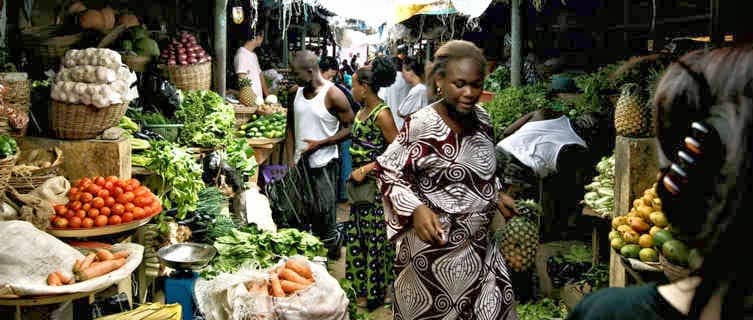
When considering female micro-entrepreneurship in sub-Saharan Africa, I often remember the stark images of the women of Yaba market in Lagos. Some of the market women sell food produce, others focus on the textile business and a greater number work as the “Jacquelines” of all trades. I often wonder if they designed and wrote out a business plan before they started their respective ventures and how they and their businesses have survived through the years. More importantly, I think about what can make their businesses more profitable and sustainable. During my last trip to Nigeria, I spent a few hours buying gifts at Yaba market and engaging different micro-scale womenpreneurs. My goal was to gain insight as to how these women got started in business, how their businesses were structured and what their biggest needs were. Unsurprisingly, many women talked about limited access to loans and credit. However, I was more struck by the desire of many of the women to get an education. The conversations inspired me to think of creative and effective ways to empower women in the market with customized business skills and education. I dug deeper to gain a clearer understanding of what can be done to empower these women, many of whom didn’t complete secondary school but still had a strong desire to obtain some formal education. The biggest challenge to getting formal education for many of these women was time, money and the opportunity cost of leaving their businesses for extended periods of time. Many women simply could not leave their kiosks during business hours to attend class at a school that would most likely be far away. While auditing a Coursera class on Social Entrepreneurship, I applied the Principles of Design to the problem. My solution: take the training and education to the women. I crafted a model that will function as a daily or weekly lunch-and-learn, allowing micro-womenpreneurs leave their kiosks for forty-five minutes to an hour and take skills-focused business classes at a location within the market infrastructure. To increase the chances of success, the program must be skills-focused and be offered in bite-sized digestible format. Many of these women manage shops, stalls and boutiques; hence they need an education that is timely, tailored and convenient. Listed below are the reasons that having a skills-focused business school in the market will be beneficial to small-scale women entrepreneurs: Timeliness and applicability of information Given the focus on skills-based learning and real time application of information, women can learn about how to build a budget and exercise their knowledge of different commerce topics on their businesses the same day. Their learning is further complemented by their respective business challenges, which can serve as case studies from which everyone else can learn. Additionally, women can real time advice from their teachers, mentors and fellow womenpreneurs. Creation of a Womenpreneur ecosystem A market-based schooling approach creates a network of entrepreneurial women who come together to share business experiences, engage with business lessons, and form a coalition. This creates a support system whereby women can rely on each other for support or even micro-credit; an ecosystem where women can share issues they are having in their businesses and find ways to learn from each other’s experiences promises to create trust among the women. Women may also discover that they are serving different levels of the business chain and may decide to integrate or partner; hence creating potential value to be realized in efficiency gains. Convenience and flexibility It is difficult to convince a middle-aged woman who is the breadwinner of her family to leave her kiosk for hours at a time to attend school. However, if that education is right there in the market and is fitted into mini-education sessions, it creates a more compelling and readily available opportunity. Bringing education to the micro womenpreneurs creates the flexibility that has been missing in obtaining an education. The Girl effect Many of the women I’ve seen running shops over the years tend to have some help from another younger woman. Usually, it’s a daughter or a niece or a relation of some sort. Some of these relationships with younger women can be structured as apprenticeships with defined learning outcomes, which further fuel the entrepreneurial spirit of the young women. Coupling that structure with formal education (right there in the market) can create a powerful domino effect for years to come. A program of this nature can take many forms. There are number of parties from the private, public and non-profit sectors who could come in as partners. From a funding perspective, the program can be sponsored through philanthropy, whether from an NGO, the government or a Private Corporation. It can also be structured as a public-private partnership. While there are obstacles facing women entrepreneurship, most of these are in fact solvable. Education continues to be a primary issue, however, with some creative thinking we can develop meaningful responses and improve these solutions as ideas further develop.
Efena Otobo: It is not how you get knocked down but whether you get back up
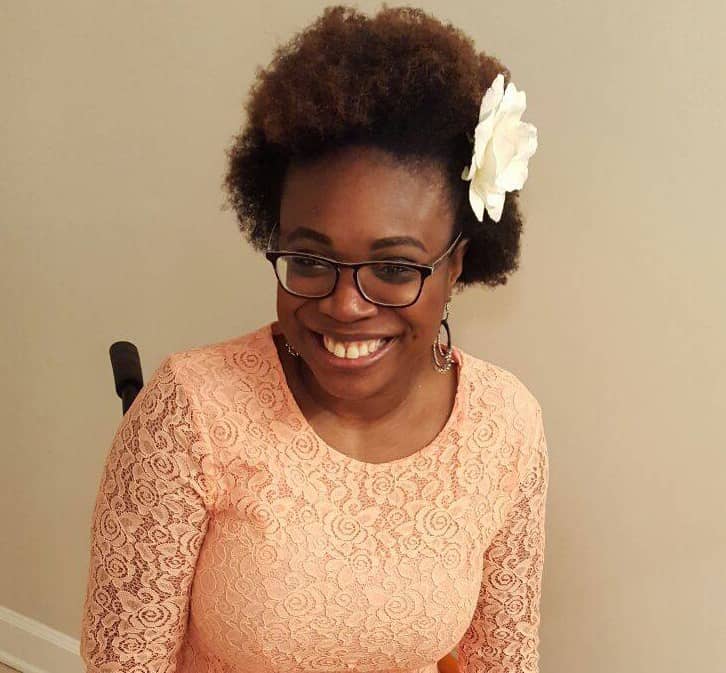
Perseverance. Determination. Willpower (PDW). To a person without struggle or strife these words are merely scribbles on a blank piece of paper or some abstract notion or a catchy mantra on the walls of a gym. However, when life suddenly takes an unexpected, drastic turn and plunges you into an abyss filled with mind-boggling agony, emotional turmoil and a seemingly bottomless pool of despair, one truly has a stark realization and a deep understanding of PDW. When you feel like you are drowning, trying to gasp for air as waves of struggle keeps pushing you below the surface – the challenges facing you, constant tides pulling you in all sorts of directions – the sheer force of will to swim against the current is the very definition of persevering. Setting the scenes Two years ago, one single moment caused a ripple effect and altered the course of my life in an unimaginable way. On the 21st of April 2014, Easter Monday, an unnecessary car accident in Yaba, Lagos, Nigeria involving two drivers and one passenger shifted my understanding of the world. Immediately after the crash, I looked down at my misshaped, lifeless legs and I knew that something had gone terribly wrong. In a matter of minutes, I was carefully lifted out of the car and placed on a little chair. Amid the chaos, voices and confusion, a scary feeling gnawed at my soul – life, as I knew it, was never going to be same. I spent the next five days flat on my back in excruciating pain, the kind of inexplicable agony that is difficult to comprehend, in four different local hospitals from Victoria Island to Igbobi to Ikeja. I was poked and prodded, underwent several medical tests, scans, endured sleepless nights, hunger, thirst and incompetent doctors. The knowledge and the hope that an ‘angel of mercy’, in the form of an air ambulance bound for London, England, would save me from the torrent of suffering gave me the determination to grit my teeth and survive the medical purgatory I was in. On Sunday, the 27th of April 2014, after a five hour back surgery, I found out I had sustained a complete T4 spinal cord injury caused by a T12/L1 fracture. In plain English, I had broken my lower back which rendered me paralysed from just below my chest all the way down to my toes and here’s the punchline – there was very little chance of ever walking again. The First Act Debilitating pain became the norm but I knew that finding strength through adversity was the only path to take. I had to summon every ounce of willpower to relearn how my ‘new’ body worked and moved. Imagine being taught the ‘art’ of rolling over in your late twenties, being instructed by an occupational therapist the best way to put your shirt over you head or how to sit up straight and balance so you can feed yourself. How undignified do you think I felt? How could I possibly survive and move forward? The answer is simple, yet complex – “The toughest steel is forged in the hottest fire” (Unknown, Chinese wisdom). With this new mindset, physiotherapy was not an obstacle but a challenge to build up muscular strength. Meetings with the neuropsychologist presented opportunities to equip myself to battle depression and emotional conflict; the confines of the hospital was not a prison but rather an avenue to foster positive relationships that enhanced my mental stability. The soul-crushing diagnosis from the doctors was a suggestion, not a declaration or conclusion. I knew without a shadow of a doubt that I was going to not only walk, but run, skip, jump and dance again. The Second Act Ask any young woman today to regale you with tales of her most trying times in life and how she emerged victorious, the replies will definitely have certain things in common. Rising like a phoenix from the ashes of struggle takes perseverance, determination and willpower. One has to harness the innate ability to utilize strength through adverse circumstances. It is not how you get knocked down but whether you get back up. Focusing on the light at the end of the tunnel culminates in what I like to call the Spirit of Invictus; in other words an unconquerable force to be reckoned with. Going to rehabilitation five times a week, in spite of the constant neuropathic pain in my legs and back – in order to build upper body strength, learning how to execute a safe multi level transfer from the wheelchair to the plinth and figuring out the best ways to manipulate my restricted mobility to achieve a desired result, required a level of perseverance beyond the ordinary. Enduring extreme discomfort became the ideal persevering tool I needed to succeed and excel, to rebuild what I lost and overcome the insurmountable challenges that lay before me. In essence, to achieve the extra-ordinary, one has to push beyond the realm of normalcy and endure the physical pain, mental torture, sleepless nights, financial struggles and emotional turmoil otherwise known as the uncomfortable and unwanted sacrifices that come with the territory associated with the extraordinary. Curtain Call In the face of all the anger, disappointment, agony, confusion and dismay, my faith and hope burned brighter than ever. I was determined to not allow the wheelchair define who I was. Living life to the fullest once again became a top priority. Wine tasting in the vineyards of Napa Valley, sitting in awe at the San Diego Comic Convention, appreciating the beauty of nature in Carlsbad, hoping to spot a celebrity in Beverly Hills, screeching with delight at the dolphins in Sea World, marveling at the millions of Christmas lights at the Atlanta Botanical Gardens, clutching my sides from laughing too hard at the jokes in The Book of Mormon production at the Fox Theatre on Atlanta’s Broadway, being gobsmacked at the wonder of ocean life at the Georgia Aquarium
Louisa Kinoshi: Be OK with failure, that’s how you learn
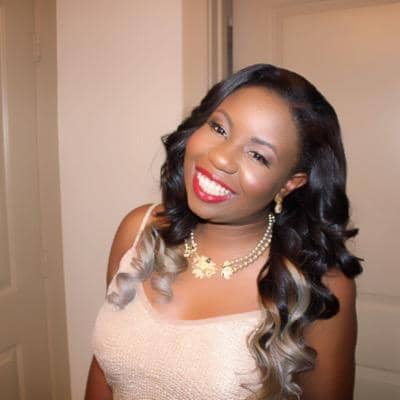
Louisa Kinoshi created BeautyRevNg to celebrate the diverse beauty of African women. The Nigeria-based company, which officially launched in April 2014, aims to revolutionize the beauty shopping experience in Africa. It seeks to put brands that cater to the needs of African women in its clients’ hands at the click of a button. BeautyRevNg also provides an online space for African beauty enthusiasts to gather and learn from each other. “It is more than just selling makeup,” said Louisa, who is also a fashion and beauty blogger, and has written for various online publications. Before relocating to Nigeria to work on BeautyRevNG full-time, she worked for Clean Line Energy in Houston. Prior to that, she worked in corporate public relations and marketing for seven years. Her clients included Starbucks, Pepsico and Pfizer, among others. I caught up with her to talk about her entrepreneurial journey so far. Light-bulb moment The idea to start a beauty business came about when Louisa was at Carnegie Mellon University. As a student, she often travelled to Nigeria for holidays. During one of her trips, she lost her makeup bag. “It was a surprise that there was nowhere I could go to replace its contents at an affordable price,” she said. The few places that she did find sold the makeup that she wanted at exorbitant prices. She realized then that there was a need in the market for reasonably priced beauty products that compliment African women’s skin. “I also heard from family, friends and blog followers that this was something African women want to see,” she added. As a blogger, Louisa spend time figuring out what was missing in Africa’s beauty and fashion industry. She talked to people on the ground who shared their beauty wants and needs with her. She also cultivated relationships with beauty influencers, who included celebrity makeup artists and bloggers, in Nigeria. It is through this research that she was able to find out the type of products that her company would initially feature. The relationships she had built came in handy when the business started. It was easy to get people to join the beauty revolution because they had heard about it from these influencers. Louisa wanted to start small. This approach would give her leeway to make mistakes as she worked out the kinks of her business and tested to see if it was something that people really wanted. Armed with personal savings and a little bit of investment from family and friends, she embarked on turning the idea into reality. The first order of business was getting inventory. “We live in a society where there is scarcity of product so whoever has the most inventory is queen,”she said. “If you don’t have anything to sell then that’s a problem.” She then had to develop a website for the company. “I didn’t have to spend too much money on this,” she said. “I have web and graphic design experience so I did a lot of the web development myself.” Louisa had also fostered relationships with photographers and designers who agreed to work with her at a reduced cost. Growing the brand Louisa and her team, which consists of herself, a creative director and logistics manager, identify beauty companies to partner with through research and crowdsourcing. They first find out the brands that African women like, want and respect. “Respect is a really big factor,” Louisa said. “Then we ask, ‘Do these brands have products that cater to us?’” They then reach out to the brands to find out if they are willing to work with BeautyRevNG and have a foot in Africa. Louisa also travels to Los Angeles and attends trade shows where she can meet with the brand representatives in person. She lets them know about her company and her mission and vision. “Once we have an agreement with them, we bring the brands to our site and market them to our customers,” she said. Fostering these business partnerships has not been without its challenges. Some of the brands that customers desire don’t understand the opportunity in Africa yet. Others aren’t quite ready to have a presence in the continent. As such, they are not willing to form a wholesale relationship with BeautyRevNG. “There are also some popular indie brands that are owned by small businesses, but they are struggling to provide inventory for America so they can’t quite expand,” Louisa said. “It’s not their priority.” This doesn’t deter her because the beauty industry has so many options. “If one brand says no, it definitely doesn’t kill your business,” she said.“There are also new players coming in.” “If one doesn’t work there is always the next one,” she added. The company has also dealt with logistics challenges. Initially, it was tough to get the product from the website to the customers hands. “It would take almost three days in the same city,” said Louisa. She worked closely with her delivery partners in order to tackle this. “Now we are at a point where it takes 24 hours for most deliveries within the city.” Her goal is to cut down the product delivery time to 3 to 4 hours. “That would be the sweet spot,” she said. Powering the beauty revolution The startup sets itself apart from its competition by actively engaging with its clients. “From day one we have focused on building a community,” said Louisa. “So our brand voice has always been very inclusive.” Customers participate in the company’s story. They share pictures of products they have purchased from the store as well as beauty finds they are interested in. Through this online community, clients can also access tutorials and get beauty advice. “We are their friends,” said Louisa. “We are who they go to when they want to have conversations about beauty.” “Even if you aren’t purchasing at the time, we still want to engage you.” she added. This online community keeps Louisa going in the face of challenges. “People are always encouraging me