
Nkem Offonabo: I visualize the woman I want to become

[bctt tweet=”Creating beautiful & functional spaces come easy for Nkem Offonabo founder of HomeWorth Interiors” username=”SheLeadsAfrica”] Nkem Offonabo is a seasoned banker, youth empowerment advocate, humanitarian, content manager and ultimately an entrepreneur who believes that passion can thrive into a great business. She is passionate about décor, personal development and wealth creation. With an innate love for aesthetics, creating beautiful and functional spaces comes so easy for Nkem. This was the drive for starting her company HomeWorth Interiors, a business she gradually is turning to an empire. She hopes to have a home gallery filled with all things luxury living, fashion accessories and collection of arts. Nkem Offonabo is making the world more beautiful one room at a time. Please tell us about your company and how it all began HomeWorth Interiors Concept Limited is a registered company that specializes in Interior Design, Furniture and Furnishing. Our unique product assortment ranges from custom-made furniture, upholstery, window and floor treatment, lighting, soft furnishings to exquisite bedding ensemble. We also offer bespoke home improvement advisory services to meet the needs of our clients. It was born out of an innate passion to create beautiful and functional spaces that reflect individual taste and style. Over the years, this passion has thrived into a business and was later incorporated in 2016. We recently launched HomeWorth Cleaners to the already existing business line, commercial cleaning services for both residential and corporate organizations. [bctt tweet=”Nkem Offonabo: I believe that one’s home or office space is a reflection of their personality & lifestyle” username=”SheLeadsAfrica”] How do you ensure you deliver excellent service to customers? I relate with my customers on a personal ground. I believe that one’s home or office space is a reflection of their personality and lifestyle. For us, design or business consultation starts with a preliminary meeting with the client, to understand their design preferences, through the life of each project. They’re carried along to ensure that our collective ideas are translated into the final outcome. What’s your source of inspiration for your designs? It most times feels innate but I get inspiration from places and spaces, colors and patterns. A pattern in a fabric shop could spark an inspiration for a design. I am constantly saving images online and in magazines for color and design inspiration. For most minimalist projects, the client and I come up with an idea from personal choices which will be developed to a final outcome. [bctt tweet=”HomeWorth Interiors aims to work on job and wealth creation for Nigerians and African beyond” username=”SheLeadsAfrica”] You run a multi-service company, what other services are you likely to add on in the nearest future? We want to be a full-fledged home services provider. We plan in addition to home decor and cleaning services, to include home moving services where we help people moving houses to carefully transport their items or belongings to their new homes or offices. Our long-term strategy is to establish a factory, where home furnishing accessories and related products (like bedding, mattresses, etc) will be manufactured locally in Nigeria. This is working in line with the Federal Government local content mandate which will help in job and wealth creation for Nigerians and Africa beyond. What is your golden rule in business? You win. I win. We all win. Can you tell us more about your CSR initiative, Energizing Lives Foundation? Energizing Lives Foundation for the less privileged is a non-profit organization focused on youth between the ages of 12 to 25 years old. It empowers youth with the mission of raising global influencers through an academic, capacity building and community based projects. Our three major platforms are: Project Decorate, Project Save2School, Project Acquire. In June, 2016, we partnered with Heritage Home Orphanage, Ikota, Lagos for our flagship project tagged “Project Decorate”. We decorated the living room of the orphanage home, to create a conducive ambience for recreation and learning. We intend to replicate this project in more orphanage homes and schools as part of our community-based projects. Our next project is centered on academic empowerment of the young adults. We intend to partner with another orphanage home(s) to sponsor some orphaned youths through school (from secondary to tertiary institution), provide them with job opportunities or skill acquisition, and monitor their progress until they are well able to contribute and positively impact the society. We are looking to partner with The Living Fountain orphanage, Oniru, Lagos on this project. It is a combination of two of our platforms, Project Save2School and Project Acquire. We have more details on this on our Facebook page. How will a typical day with Nkem be like? I start each day with some quiet time with God, a review of my daily to-do’s and a lot of multitasking between my day job and my hustles; engaging clients, organizing the vendors to ensure delivery of design projects and writing on my blog crownmusings. What is your favorite piece of house furniture? My all-time favorite piece of home furniture would be a mirror. Besides being a tool of admiration, a mirror acts as a reflective tool to question and evaluate oneself. In my mirror, I see the reflection of a woman crafted in the image of God, beautiful in His eyes and visualize the woman I want to become. If you’d like to share your story with She Leads Africa, let us know more about you and your story here.
Osayi Emokpae Lasisi: I desire freedom and confidence for young moms

[bctt tweet=”MoneyMaking Mommies creates online courses to help moms get comfortable with technology” username=”SheLeadsAfrica”] Osayi Emokpae Lasisi is the self-proclaimed queen of helping you get attention and make money online. She is the convener of the MoneyMaking Transition Online Conference and host of the MoneyMaking at Home podcast, where she interviews experts from all over the world and helps moms with online business skills. Osayi is also the author of the “Billionaire Mindset (for MoneyMaking Mommies)”, and “7 Days to the MoneyMaking Good Life”. As founder of the MoneyMaking Mommies Academy -now with over 2000 members, Osayi helps women to develop online products that make money. In this chat with SLA, Osayi takes us behind her MoneyMaking brand and shares tips based on her experience. As a business largely based online, what tools have you employed to grow your numbers? I do speaking engagements, and social media marketing. In my experience, speaking engagements have been amazing. Whenever I’m invited to speak, I’m able to share my love for what I do with the audience. It also gives me an opportunity to connect with people, and to invite them to work with me. I’ve always been a great speaker. I enjoyed being part of the debate team at Temple University, and for many years since relocating back to Nigeria people have told me that I need to go on the radio. So when I got opportunities to speak I knew that I needed to take advantage of it and use it to grow my business. From your experience, what’s one way Motherland Moguls can get attention online? Social media marketing is the best way to engage with fans and get attention online. Social media is amazing because you can segment people and send targeted messages to those that are interested in what I have to offer. Not only is social media marketing more precise than ever, it is also extremely affordable. Find the best option that suits your business and roll with it. [bctt tweet=”Osayi Emokpae Lasisi is teaching young Nigerian moms how to generate income online” username=”SheLeadsAfrica”] Tell us more about the MoneyMaking Transition Virtual Summit. The MoneyMaking Transition Virtual Summit was the first of its kind in Nigeria. It was a 6-day online conference targeted at helping moms transition from employees to business owners so that they can spend more time with their family. Some of our speakers were Dr. Godwin Ehigiamusoe, of LAPO Microfinance Bank, Mrs. Tewa Onasanya of Exquisite Magazine, Stephanie Obi, Bankole Williams. We had over 1400 people register, and between 400-600 people participated online every single day. My approach to the virtual summit is not very different from the norm. The main thing is that I enjoy interviewing people, so those who are invited guest experts enjoy the interview and are willing to also invite their friends. Those who participate and attend the event learn from the interviews as well, without having to spend an arm and a foot. Participants were thankful for the opportunity to learn, and their hope was resurrected, during a time in Nigeria when many people were discouraged. I’ll be having another virtual summit in April. In what ways do you generate revenue from your MoneyMaking venture? We create online courses to help women (moms specifically) get comfortable with technology (using the internet etc.). These virtual summits help us to get the message out there and to help bring knowledge from all over the world to women here in Nigeria. [bctt tweet=”Being comfortable with creating websites spells freedom to Osayi Emokpae Lasisi” username=”SheLeadsAfrica”] Why did you think it was important to teach moms how to create online stores and get comfortable with the internet? Not so long ago I was asked to resign from my job, and it was challenging. But after I got over being hurt I went and created a website and started selling a product. That helped me to regain my confidence and make some money while I figured out what I wanted to do next. Being comfortable with creating websites and using the internet spells freedom to me -I can be anywhere making money, just because I have the ability to create a website and sell my goods and services. That’s the kind of freedom and confidence I desire for young moms like me. What was surprisingly easy about hosting a virtual summit from Nigeria? I was surprised that people were willing to use their limited internet access (data) to watch these videos. If you’d like to share your story with She Leads Africa, let us know more about you and your story here.
Nigeria’s women’s bobsled team: We are just three regular girls who have now made history

[bctt tweet=”When you are the first person to do something, there is no blueprint ” username=”SheLeadsAfrica”] No African country has represented the sport of bobsled at the Winter Olympics, but that’s about to change thanks to three women aiming to represent Nigeria. Seun Adigun, Ngozi Onwumere and Akuoma Omeoga are shaping history to become Nigeria’s first women’s bobsled team. Seun, Ngozi and Akuoma are established athletes and are engaged in many hustles. Ngozi has background work experience in the mortgage industry and is now a full-time student pursuing a Doctoral degree. Akuoma is the brakeman for the Nigerian Women’s Bobsled Team and also works as a healthcare recruiter. Seun is the driver of the team and also currently a chiropractic student. Seun is studying for a dual degree of a Doctorate of Chiropractic from Texas Chiropractic College and a Masters of Science in Exercise & Health Science University of Houston Clear Lake. Teamwork and support have been integral in giving the women of Nigeria’s bobsled team confidence as they work towards success. Why a bobsled team? How did you decide to come together to do this? Seun: After realizing that my participation as a brakeman on the United States women’s bobsled team had grown to be far larger than me, I knew this was something I had to do. I noticed my ability to potentially empower and positively influence millions of people resided in my decision to give back to the country of Nigeria. I knew I possessed the resources and connections to get it done. The sport of bobsled was looking to grow and the continent of Africa had never been represented in the sport of bobsled. Once I finalized my decision to take on this mission, I knew I would need teammates so I reached out to these lovely women, Ngozi and Akuoma. [bctt tweet=”I noticed my ability to potentially empower & positively influence people – Seun Adigun” username=”SheLeadsAfrica”] Ngozi: Bobsled chose us! Well essentially Seun chose us to be apart of her amazing vision and from then on we made the decision to embark on an experience that would grow beyond us. Seun (who is also my former coach) and I have our annual lunches, at this one particular she brought up bobsled. Honestly, I needed something new and refreshing. I had just made the decision to hang up my spikes and had come off of a trying season competing for Nigeria in track and field attempting the Summer Olympics 2016. So when Seun presented this option to me, I was stoked and pleasantly surprised. Still, this didn’t become reality for me until we actually had our first practice and touched Seun’s wooden self-made sled, “The Mayflower”. Akuoma: Bobsled came out of the blue for me. I was familiar with the sport being that a coach of mine had been involved with the sort. My participation came out of Seun Adigun asking me to join this mission. I accepted and I was the third piece to the puzzle. How has been your experiences as African women in sport? What unique challenges have you encountered? Seun: So far the experience has been very rewarding as we have been receiving endless support and positive energy as we take on this task. The most challenging thing so far has just been navigating the unknown and doing it fearlessly. When you are the first person to do something, there is no blueprint for the optimal plan of action —you just have to trust God and work through the process one step at a time. Ngozi: As a Nigerian-American woman, I have been embraced by my teammates and by other aspiring athletes, Nigerians and just women in general. Challenges will always come when you are embarking on something completely new but we have adapted very well. With With us all being women with very high demand schedules, there have been some challenges in accommodating everything but we do quite well. Also, the learning curve of learning a completely new sport has been challenging but we aim to conquer. Akuoma: My experience has been the same as it has always been. Growing up I had always been active in sports and so have many other Nigerians that I grew up with. So being a Nigerian girl in a sport was pretty normal. I think the biggest challenge with this sport in particular, is that there isn’t a lot of awareness. So taking myself along with everyone else I know on this huge learning curve has been a bit challenging. [bctt tweet=”I had always been active so being a Nigerian girl in a sport was pretty normal – Akuoma Omeoga” username=”SheLeadsAfrica”] So far you’re yet to practice on snow or with a bobsled, how confident are you in securing a place at the Olympics? Seun: I have spent time on ice as both a brakeman and a driver —and that is the most important thing. As the driver, the success of the team resides in my ability to drive the sled from the top of the hill to the bottom. I have already successfully completed two driving schools this season on two separate tracks over the course of three weeks. With that, I can now compete in a race on either of these tracks, putting us in position to start the qualification process. This is a great confidence boost for the team because we now have something to look forward to. Our confidence is additionally fueled by our relationship with one another. We trust each other and that has taken us a long way in accountability and commitment. Our wooden sled has given us the opportunity to simulate sled conditions bringing our chemistry together and reproducing race scenarios. Ngozi: I think there is much to be said about mental preparation as this plays a big part in physical preparation. Although we have not yet been on ice, we have the perfect mentor to take advice from (Seun) as she was in the same
Olubukola Adebiyi: The solution to poverty is to bridge the gap between the less privileged & the privileged
[bctt tweet=”Be completely focused and committed to your passion against all odds. – Olubukola Adebiyi” username=”SheLeadsAfrica”] Buzzing with a powerful and uncompromising energy, the social enterprise, Jakin NGO is a place that has become home to many who don’t have much that they can proudly call their own. Bearing at its core a commitment to improve the everyday lives of society’s most vulnerable, Jakin serves as space for transformation; it serves as a training ground. It is a place where hope meets education; where dreams meet technology. Jakin is for many, a temporal refuge away from home. Olubukola “Bukky” Adebiyi, the President and CEO of Jakin, fully embodies Jakin’s commitment to serving humanity. Her service and commitment to change are championed through her passion and optimistic ambition to see Jakin serve even more people. Bukky is fully hands on as she not only obliges to her role as CEO but trains, serves food, greets, advices and lives the passion for her calling each and every single day. How would you describe what you do? As is described in our mission statement, I work with vulnerable groups to overcome health, economic and educational hardships. Our group targets are by majority orphans and vulnerable children, women —mostly widows, people living with HIV, people living in slums and hard to reach areas, particularly youth. What inspired you to get involved in this particular field of work? It’s my passion to put smiles on faces. By the grace of God, I realized that the “less privileged are simply those who lack the privileges of the privileged.” The solution to poverty is to bridge the gap by creating a conducive, secure and encouraging platform for the “privileged” to share their resources with the “less privileged”. What do you think has been your greatest contribution to your work? My life and my time! Your work can be challenging considering the fact that you are dealing with the vulnerabilities of people’s lives, what keeps you motivated? It’s the joy that breaks forth in the life, faces, and households of the beneficiaries that keep me motivated. Once they receive any form of assistance, they seem to light up with some immeasurable hope that tomorrow will be better. Thereafter, they seem to have a new drive to survive, despite all the odds. Most of the time you can hear them thanking God for remembering them for good. Can you please share with us a great story of success? Jakin has been in operation for 13 years, and yet we have never held a single fundraiser or partners forum. Nevertheless, we have over a thousand individuals, corporate and faith-based partners here at home (Lagos, Nigeria) and abroad that help keep us operational. All our projects till date always record outstanding success. We have over 6,000 orphans and vulnerable children, and over 2,000 vulnerable families including youth, widows, and people living with HIV, that are receiving support from 17 different projects that we have. How do you ensure that you maintain a level of commitment and integrity from your employees and the individuals that you supervise throughout the whole year? Consistency with our organizational values of transparency, integrity, humility, passion and the fear of God make that easy. I make my adherence to these values the first example that others follow. [bctt tweet=”The less privileged simply lack the privileges of the privileged. – Olubukola Adebiyi” username=”SheLeadsAfrica”] In your line of work, what are some of the things that you do to begin the year well? I make sure I personally start my year annually with rededicating my life to God and seeking His direction for the year by fasting and praying for the most of January. We normally have staff prayer meeting on the first work day of the year before commencing with general meetings, reviews of the last year, and other activities. Our annual training happens in that first week as work plans are completed by each department, in line with the organization’s yearly budget. Most implementation commences skeletally in January while the majority kicks off in February. How do you ensure that all your departments are working in line with the goals that you set forth as an organization? The organization is well structured. We have an organogram headed by a six-member Board of Directors that meet regularly. The office is also run by a management team comprising of all departmental heads who ensure that all members of staff are working in line with organizational goals and objectives. What word of advice would you have for a young woman wanting to do what you do? Have a clear vision of your passion. Be completely focused and committed to it against all odds. Start small, be transparent and always give feedback to your partners. Encourage your helpers and supporters. Above all, walk closely with God. [bctt tweet=”Start small, be transparent and always give feedback to your partners – Olubukola Adebiyi” username=”SheLeadsAfrica”] What is the best part about being a boss lady and owning that power of freedom? It teaches you humility and fear of God. You can’t afford to abuse power because it’s a privilege. How do you maintain a healthy work-life balance? I spend the bulk of my work life serving humanity so I make sure all my spare time is spent with my husband and children. Also, I enjoy being at home with my loved ones. I am blessed with the support of my husband. How do you de-stress and/or unwind from a long day of work? I watch TV, cook, dance to gospel songs and enjoy my time with lovely kids. I go out once in a while. Here is how you can support and learn more about the work of Jakin NGO. If you’d like to share your story with She Leads Africa, let us know more about you and your story here.
Natasha Bassey: I want to be better and to make others better

[bctt tweet=”I try to add value to someone, somewhere, somehow each day – Natasha Bassey” username=”SheLeadsAfrica”] At a time when most young ladies will give an arm and foot to work in one of the biggest Telecomm companies in Africa, this #MotherlandMogul took a wild leap and it is taking her places. Meet Natasha Bassey, PR woman, trainer, network marketer and a multi-business owner. Outside working in Telecomm, Natasha has experience in the show business industry. SLA contributor Priscilla Omoruyi caught up with Natasha Bassey and she shared her experiences and life work with us. How long were you in the Telecomm industry? I spent approximately 3 and half years in customer service and customer relations. My job was to attend to customer issues and try to resolve them as quickly as possible while at the same time trying to empathise with the customer and reassure them that the would get the most time effective response to their issue. What prompted you to leave and strike it out on your own? It initially started when I was diagnosed with medical issues that affected my hearing. I had also just completed my second degree in sociology and felt there was no better time to move on to new things. What are the challenges you face as a network marketer? For me, the greatest challenge isn’t even the recession. It is the close-minded nature of people to new ideas and better ways of doing things. I find overcoming that get rich quick mentality of instant gratification here and now a huge challenge. [bctt tweet=”Natasha Bassey’s greatest challenge has been people’s resistance to new ideas” username=”SheLeadsAfrica”] Money in itself is, after all, a byproduct of the mental process, so if that process is shunted in any way then there will be issues. You are into a lot of things, how do you handle them? I am usually able to handle all my businesses with my phone which I have turned into a mini office. I seriously need a personal assistant, though. The truth is that handling so many initiatives does take quite a bit of juggling. But the willingness and drive are fueled for me by my determination, I want to be better and to make others better. I wake up each day determined to take it one day at a time, one decision at a time. I try not to do everything but focus on the most important and rewarding things. Above all, I try to add value to someone, somewhere, somehow each day. What are your best and worst moments? For this, I would like to borrow a phrase we use in network marketing. There are no good or bad experiences, only learning experiences and this knowledge has really changed the way I think. [bctt tweet=”Natasha Bassey: There are no good or bad experiences, only learning experience ” username=”SheLeadsAfrica”] The truth is no person or event has the power to make or break you, you are the only person who can. Interestingly another great thinker Brian Tracy said this, successful people make every decision right. This means that whatever decision the person takes in that time, whether “good” or “bad”, the person makes it work out right. If you could go back in time to change something about your work and business, would you? My mother always used to say hindsight and the ability to look back at our choices is a good but can only be achieved in retrospect. I believe all my actions and experiences brought me where I am today, I honestly don’t feel I would change anything. I say this even though I sometimes look back at the time and energy I put into getting my second degree and wonder if I should have put in that much. If you’d like to share your story with She Leads Africa, let us know more about you and your story here.
Toyosi Ogunmekan: The warrior #MotherlandMogul
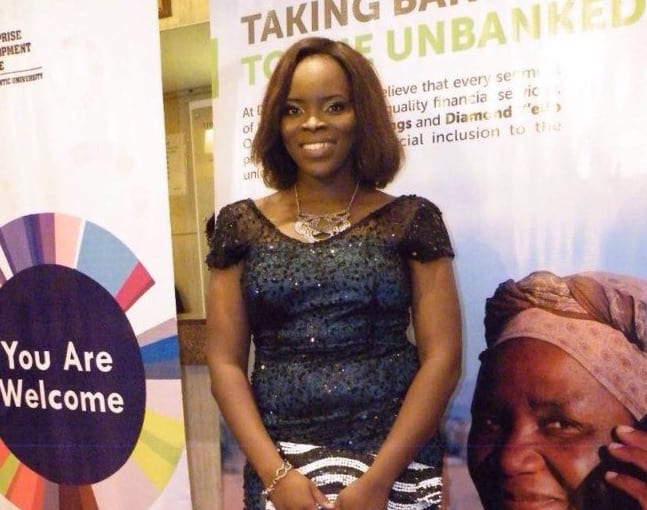
[bctt tweet=”Toyosi Ogunemeka is a Sickle Cell warrior whose start-up answers shortcomings in the healthcare system” username=”SheLeadsAfrica”] Toyosi Ogunmekan is a “warrior”! Yes, she is a Sickle Cell warrior who got involved in business because she noticed shortcomings in the healthcare system. Instead of getting beaten by the system, Toyosi decided to roll up her sleeves and make an impact. She started a business in medical technology, Toyo Medical Techs where she provides a range of healthcare products used to diagnose, monitor or treat a disease or medical condition. It includes medical devices, information technology, biotechnology, and healthcare services. SLA contributor Ugochi Obidiegwu caught up with her recently to understand her drive. What led you to start your business? After my post graduate in biomedical engineering, I fell in love with the idea of applying engineering principles to medicine. As a regular hospital visitor, being SS, I was very dissatisfied with our Nigerian healthcare system. I felt we needed to do a lot more technologically to meet up with foreign standards. Hence, the birth of Toyo Medical Techs. What has been your experience as a woman and SS in your line of business? Every business, especially at the start-up stage is very stressful and challenging. In my business, I have to do a lot of running around and drive long distances. There are days I feel overwhelmed and break down, there are also days I get comments like “I love what you do, keep it up” and that just makes my day. It’s been a bitter-sweet experience so far and I’m excited for what is to come. [bctt tweet=”Nigeria needs to do a lot more technologically to meet up with foreign standards – Toyosi Ogunmekan” username=”SheLeadsAfrica”] What is the impact of your business activities on your health? Doctors advise their sickle cell patients to avoid all forms of stress, but I don’t know. Maybe it’s an “SS-thing” we tend to be very stubborn and still act like we can do it all. Maybe we are trying to prove we’re not as weak as people think we are. Well there are days I suffer the aftermath of over stretching myself. I also thank God for family and friends who tend to “scold” me when I’m over doing it. Some 2/3 years ago I was diagnosed with avascular necrosis of the hip (it’s a common complication in sickle cell patients). My doctor recommended I do a lot of physiotherapy, avoid standing and sitting for too long, etc. But you know Lagos and all the traffic, sometimes I sit in traffic for hours! And when I get home, the pain I usually experience from that hip! OMG! It’s unexplainable. Still I’ve been able to understand my body and figure out how to balance my health and work. What’s your advice to others with your health challenge? My advice to other warriors is for them to be religious with their medications, avoid as much stress as possible, stay hydrated, understand their bodies; know when to slow down and join support groups. I run an awareness page on Instagram @thewarriorstoryng where I share tips and stories of other warriors to inspire others. I’m also a member of the Sickle Cell Aid Foundation (SCAF). From your entrepreneurship experience, what would you advice someone about to start? Be passionate about your dreams and don’t let anyone make you feel like you can’t do it. When one client says no, it doesn’t mean you should be discouraged, move on. And most importantly, pray. [bctt tweet=”A lot of people are ignorant and think sickle cell warriors don’t live long – Toyosi Ogunmekan” username=”SheLeadsAfrica”] What myths about Sickle Cell disorder annoy you? A lot of people are still ignorant about the disorder and think warriors don’t live long. There are a lot of warriors that live up to 90+ What are your plans for 2017? Hmmm… to stay healthy, get that beach body, I pray. I want to keep creating awareness on sickle cell disorder and keep pushing my business forward. Want to see women you know featured on SLA? Tell us what amazing things women are doing in your communities here.
Wonderfull Abuah: Our desire is to see women acquire skills from scratch
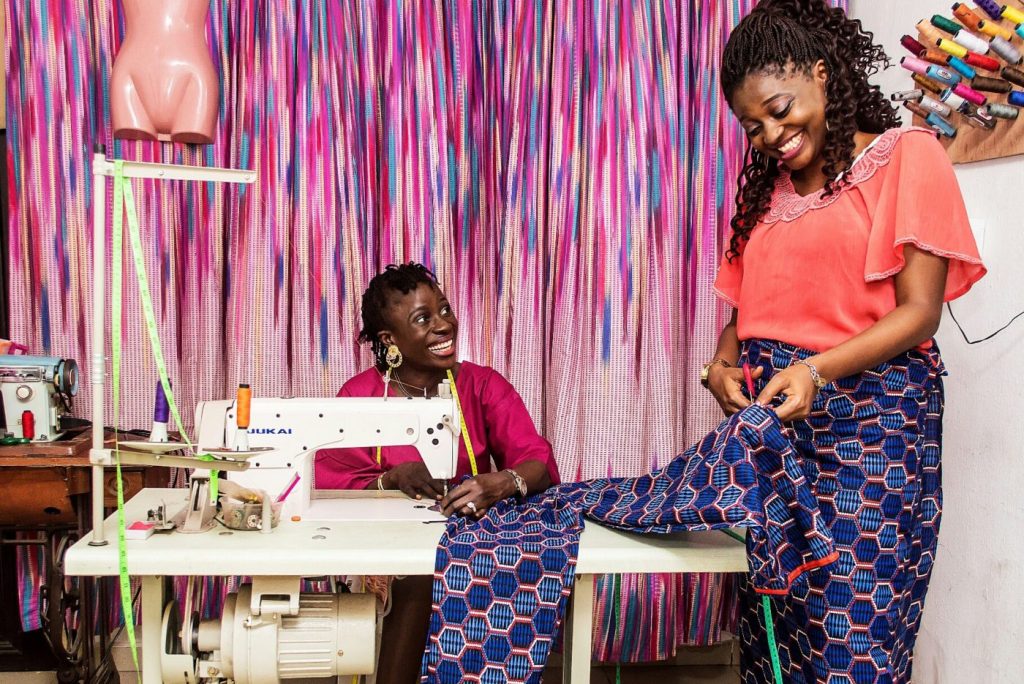
[bctt tweet=”It’s important for fashion enthusiasts to attend a fashion school – Wonderfull Abuah ” username=”SheLeadsAfrica”] Wonderfull Abuah’s first name is a perfect ice-breaker. She is co-founder and partner of Sew Easy Workshop (S.E.W), which she runs with Folasade Dan-Oketola. S.E.W is an online school for all things fashion, providing courses that are easy to digest and super easy to implement. Wonderfull’s journey into the world of fashion design started post-NYSC (National Youth Service Corps). Depressed over the fact that no job was forthcoming, she jumped at the opportunity to acquire sewing skills at a vocational centre where she met Folasade. Prior to co-founding S.E.W, Wonderfull spent her time making & selling outfits. With S.E.W, Wonderfull Abuah is living out her lifelong dream of impacting others. Would you say it’s important for fashion enthusiasts to go to fashion school? I would say it’s important for fashion enthusiasts to attend a fashion school. It isn’t mandatory, as we have some renowned fashion designers who are self-taught. However, times have evolved. A fashion school has a comprehensive curriculum that one can benefit immensely from. It saves time, energy and effort attending a fashion school rather than spending hours searching online or reading necessary and unnecessary books. How do you teach women to make money from sewing? At S.E.W, we teach women how to make money from sewing via an intensive coaching program. In this program, we cover their products, the quality and relevance to the current season/trends. We also deal with their pricing model and online/offline sales strategy. We literally show students how to properly position themselves as a brand that would attract the right target market. For example, we always emphasize product quality to the women we coach. Tailors already have a negative brand image around so it’d be catastrophic to be branded as “one of them”. By “them”, we mean tailors who disappoint their customers with poor finishing, poor customer service etc. We believe women should first of all, work on the quality of their products, then work on the packaging and marketing strategies. Our curriculum is created for absolute beginners and women with intermediate skill set. Our desire is to see women acquire this skill from scratch and be able to trade it eventually. We ensure that whatever we put into the curriculum would be suitable for a novice with zero knowledge about dressmaking. You’re a virtual company. What would you say to someone who doesn’t believe that one can learn fashion skills without a teacher looking over their shoulder? We are aware that many women in this part of the world are used to the traditional way of learning; i.e. physically with a tutor. And so we decided that our online teaching model would be as visual as possible and super easy to understand. However, our biggest breakthrough has been the testimonials from the women who dared to sign up for our online tutoring. This has been a major factor in convincing so many other women in our online sewing community to opt in for online sewing courses. We’ve had a wide variety of women use our program; from women who have 9-5 jobs,women who have children, young ladies freshly out of university and even students. We have received tons of tear-jerker messages from women who have taken our free and paid courses. It’s hard to pick one exactly because we have touched them in different ways. There are women who have had no extra time to enroll in a school and then discovered us and suddenly their dreams can come true, finally. We have stay-at-home moms whose kids are toddlers; they have no time to leave the house but with us tutoring them, they have begun mini sewing businesses from home. There are others who live in far away countries and discovering us has been an answered prayer. The scenarios are different but the results are same. We rekindled their dreams! How did you meet founder Folasade? What do you think compliments the both of you so S.E.W runs smoothly? I met Folasade at a vocational institute in 2009 where we both acquired dressmaking skills. We became good friends and kept in touch afterwards. She went on to intern with high profile designers and then established her sewing business, even as a banker back then. Last year 2015, Folasade called me and told me about her idea of us teaching women online. We had taught several ladies physically before; we did this separately. I loved her idea and we created our online group the same night! We added our family and friends (forcefully I might add) and then they added others. And that’s how we grew. Our partnership has been of great value. Folasade is the level headed one. She thinks through each proposal we create. She’s very practical and patient. On the other hand, I’m the instantaneous one. So we compliment each other so well. Folasade helps me slow down when my adrenaline is too high and I want to make decisions rashly. I also nudge her a bit more when we seem to slowing down on our goals. It’s been awesome working with her. What are the challenges in running a fashion school that is based online? Our challenges in running a fashion school online have been eye-opening. We have had to win the trust of women who were strangers via free online tutoring. About 5 months before we launched a paid course, we offered free online tutoring. We still offer free tutoring monthly within our sewing community and we’ll always do so. Eventually, we have been able to gain their trust. We have also had to deal with being present almost at every hour, answering questions from our online sewing community. We had to set a schedule for this to avoid burnout and to remain valuable to our students. [bctt tweet=”Wonderfull Abuah used free online tutoring at S.E.W to gain the trust of women to her brand” username=”SheLeadsAfrica”] Any New Year resolutions for
Ehime Akindele: Be fearless in the pursuit of whatever sets your soul on fire

[bctt tweet=”We should all aim to live a life dedicated to service to one another – Ehime Akindele ” username=”SheLeadsAfrica”] Ehime Akindele founded Your Way Foods, —which is made up of Sweet Kiwi Yogurt Cafe, Beet Root food bar and a soon to come Mongolian self serve bar— under the age of 30. A huge believer in healthy foods, Ehime actually started her career with Amnesty International. From then, she moved to Citigroup in Dallas, Texas where she worked in their legal banking group. All that time, Ehime Akindele wanted to start her own business back in Nigeria. She has received training certifications in restaurant management and dessert manufacturing and eventually started with Sweet Kiwi. Ehime will be celebrating the 5th year anniversary of Sweet Kiwi. While meandering the challenges of running a start-up in Nigeria, Ehime Akindele has found time to work in not-for-profit as she wants to foster the spirit of volunteerism in Nigeria. Can you tell us about opening Sweet Kiwi? Were there any particular challenges to opening a frozen yogurt store in Lagos that you did not expect? There were several challenges as we were the first frozen yogurt company in Nigeria. There were no existing format for operations so we had to learn a lot along the way. Still, we keep working at it. Power was a major issue as the soft serve machines are heavy duty and are quite delicate. A lot of times, the lack of power puts us in very stressful situations. I remember the day of our Lekki store launch, we had all 5 machine fuses blow. This was literally 10 minutes before the opening speech began. [bctt tweet=”Power was a major issue in running a frozen yogurt store in Nigeria – Ehime Akindele ” username=”SheLeadsAfrica”] I just prayed inside; we were about to open a yogurt store and the yogurt dispensing machines just stopped working! I had to think quickly so we had a team working behind the scenes while we lengthened the speeches and prayers. I remember Mrs. Fela- Durotoye telling me to be calm, and trying to delay the first product sample. She suggested I give a full breakdown of every item in the store. I don’t remember breathing the whole time, but we overcame it and we are now 3 years in. When did you decide to diversify your projects with the Beet Root healthy food bar? Why did you decide to? From the start, my plan was to have a group of companies dedicated to healthy food. I started off my actual entrepreneur career training on how to build and manage a Mongolian grill. Beet Root was always part of the plan, we just decided to put our Sweet Kiwi first. [bctt tweet=”Ehime Akindele founder of @sweetkiwie is promoting healthy food in Nigeria with her companies” username=”SheLeadsAfrica”] Any advice to women looking to expand their businesses? What three skills do they need to master before going this route? I believe the foundation of the business has to be solid before you consider expansion. So what you’ll need to do is perfect your operations and pay attention to economical forecasts. The three skill I would say young women need to master before expanding their businesses are; Patience, Resilience and Tenacity. Do you still work a 9-5 while managing your entrepreneurial projects? I have never worked while running my business, I quit before I began. Why do you believe Nigeria should foster the spirit of volunteerism? We should all aim to live a life dedicated to service to one another. I believe volunteering builds better and stronger communities. It is an opportunity to make a difference in another persons life and truly you never know what you might learn, sometimes it is as little as learning to appreciate your own situation. What’s your favourite fro-yo flavour? Why? This is a hard question as I have so many favourites. For right now and the key word is now, my favourite is the Strawberry Greek Yogurt. Any motivational last words for our readers? Be fearless in the pursuit of whatever sets your soul on fire. If you’d like to share your story with She Leads Africa, let us know more about you and your story here.
Vivian “Jokotade” Adeniyi: You are the only limitation to your potential

[bctt tweet=”Jokotade: Believe it or not, The Jokotade Network didn’t happen by a plan” username=”SheLeadsAfrica”] Vivian Jokotade Adeniyi, fondly known as “Jokotade”, is a Nigerian-American author, speaker, and thought leader on topics relating to women, business and leadership. She is the founder of The Jokotade Network which hosts a variety of talk shows with audiences in over 100 countries. In addition to running her own network, Jokotade is a wife, mother and an entrepreneur. Her life as a serial entrepreneur began at the age of six ,when she started assisting her mother with her retail goods business in Lagos, Nigeria. Jokotade has since launched a growing list of businesses. These include a leading full-service design and print firm located in Houston, Texas —a business she started with less than $100 over 12 years ago. SLA contributing writer, Uloma Ogba, caught up with this Motherland Mogul to get the inside scoop on how exactly Jokotade does it all, while looking fabulous. What does Jokotade mean and what exactly do you do? My name Jokotade (pronounced JOE-KOH-TAH-DAY), is a Nigerian Yoruba name given to a child whose parents suffered the loss of a child prior to the birth of the named. Its literal meaning is “sit with the crown” or “sit with royalty”. This signifies that this child will not die, but will stay and live with her parents and family. This powerful name was concurrently given by both of my grandmothers at my traditional Nigerian naming ceremony. I use the name “Jokotade” for my speaking and writing platform because it is a very powerful and purposeful name. The name tells a story of my origin, gives you insight into my identity and speaks powerfully to my destiny. I write all of the inspiring details surrounding my birth in my breakout, bestselling book – Fresh Start. Once you discover my full story, I have a sense you’ll simply call me “Jokotade”. [bctt tweet=”Vivian Jokotade Adeniyi: The name Jokotade tells a story of my origin & gives you insight into my identity” username=”SheLeadsAfrica”] Could you give the readers some insight into your background? I was born in Lagos, Nigeria and moved to the United States of America with my parents in 1997. Shortly after I arrived in the US, I got to work beginning my American life as a hair braider. This was my only choice at the time, as I had to wait a full year to begin my university education. I finally gained admission to the University of Houston where I majored in Computer Information Systems (CIS) with special interests in marketing and communications. What drove you to start your first business and continues to drive you to reach for new opportunities? I’ll be honest —my motivation was hunger. I was hungry for the opportunity to live out my potential. I was hungry for the opportunity to start over in the United States; after experiencing a very rough and downward financial season with my parents back home in Nigeria. For several years my dad (who is now a retired surgeon) had successfully operated a private medical practice. But right at the time I was finishing up my secondary school education, his practice suffered grievous losses due to lack of payments. The idea of possibilities, of what can be, of who I can become, has driven me and continues to drive me everyday. It’s a beautiful thing to know that everyday you wake up, you truly can become more than you imagine. I see each waking day as a canvas to paint on. I hope to make each day a beautiful work of art to remember. [bctt tweet=”Jokotade of @jokotadeshow is motivated to reach for new opportunities by hunger ” username=”SheLeadsAfrica”] While in university, you started a business selling clothes and accessories to other students. How did you come up with that idea? What was the process like for you, setting up a business alongside your classes? How were you able to find balance there? Do you know of any university student who couldn’t use some extra cash? If there is one lesson I learned early as a hungry student, it is this —pay attention to the problems you can solve for people. In university, I became the go-to person when it came to shopping or finding affordable resources. The idea of selling accessories to other students was born from a place of paying attention to these kinds of problems and the questions I was often asked. I simply turned these inquiries into a business. I often say that the best business ideas are the ones that solve as many problems as possible for as many people as possible. Juggling my side business wasn’t easy but it was worth it —it helped me pay for a car. This reward motivated me to find a way to “juggle my hustle”. I made time to deliver goods over the weekend and focused on my classes during the week. [bctt tweet=”Jokotade: The idea of possibilities has driven me and continues to drive me everyday.” username=”SheLeadsAfrica”] After university you were involved in a couple of different activities which eventually culminated in what we now see today as The Jokotade Network. Can you take the readers through the journey of how you got to this point? What were some of the major milestones and challenges you faced along the way? Believe it or not, The Jokotade Network didn’t happen by a plan. It happened by growth. Let me explain. I began the Jokotade platform as a fashion and style blog…can you imagine? You see in 2013, I noticed there were several fashion and style bloggers but rarely did any of the bloggers feature the style of clothes I love to wear –classic, sophisticated, refined and polished. Back then, there were hardly any who even featured stylish African clothes in these preferences. So you know what I did? I saw a gap in the market and I rose to fill it. I started blogging, featuring a choice of clothes
Ola Morin-Muhammed: I make it my duty to understand my client’s needs

[bctt tweet=” Ola Morin-Muhammed: The ultimate goal is to tell a story and expression of love through design ” username=”SheLeadsAfrica”] Luxury is a lifestyle and Nigerians know how to appreciate luxury. Ola Morin-Muhammed brings luxury to her unique event invitations. Think about it, at any event, the invitation goes out first. They are really the most important mode of communication for a grand day. People are slowly understanding the importance of the first mode of communication for their grand day. The invitation goes out first, and Ola’s invitations are some of the most gorgeous you’ll ever see. Ola Morin-Muhammed started IJORERE in 2008 and has designed invites for A-list celebrities of the sports and entertainment industry. Her background in architecture greatly influences her designs and has given her an unconventional approach. From next year, IJORERE will be designing weddings and events too. What do you think of the invitation design industry in Nigeria? Why the need for luxury in this industry? The invitation design industry in Nigeria is on the rise. People are slowly understanding the importance of the first mode of communication for their grand day. The invitation goes out first, it sets the tone for what to expect. It builds anticipation. The need for stationery in Nigeria, particularly the Nigerian wedding industry has been secondary for some time. And when you have a guest list of at least 1000 to accommodate, a 2-day wedding affair, and the need to make sure there’s surplus of everything, it’s no wonder why the first impression (invitation), doesn’t come first. I do however, see a shift, and Nigerians residing in Nigeria are beginning to understand the necessity of an invitation. Nigerians are known to be overachievers, and when we achieve abundance of wealth, we like to show it off proudly. I think that’s why Nigerians do appreciate luxury. Not because we are conceited or arrogant, but because we like to show off the hard works of our labour. Weddings in Nigeria are flamboyant and all about showing the world; that we have educated overachieving children, and will proudly spend flamboyantly, invite everyone we know and don’t know. This is just so our children know how important they are to us and their wedding is talk of the town. It’s a grand milestone the Nigerian society celebrates. What’s the process that goes on behind your designs? I make it my duty to understand my client’s needs, their personality, and take that knowledge to the drawing board. Sometimes, my client(s) knows exactly what design direction they’d like me to take. Other times, my team and I have to interpret what the client(s) desires are. The ultimate goal is to tell their story and expression of love through design. [bctt tweet=”Ola Morin-Muhammed: Nigerians are known to be overachievers, we like to show wealth off proudly” username=”SheLeadsAfrica”] How does your experience as an architect influence your work with Ijorere? Architecture greatly influence’s my design approach. I’m always designing not just for aesthetics, but functionality and sustainability. I want my designs to be keepsakes and to be used for other purposes outside of just being an invitation. Being able to apply principles of architecture to my design process also influences the way my clients experience their invitation. Now, they realize because of the principle of function, their special day can now and forever be a part of the lives of their loved ones. Some of the invitations became picture frames, boxes to keep special memories or treasures. How do you choose materials/fabrics for your designs? I always choose materials based on the client’s style and most importantly their budget. I also consider their story in the selection process. Identifying what fabrics will share their story and expression of love is a partnership with my clients. At the end, we want their guests to feel like they are really about to experience a uniquely grand day. Has it been difficult (or easy) to find clients to patronise IJORERE? IJORERE has been around since 2008, Over the years, I’ve garnered accolades in the media, including from the likes of Entrepreneur Magazine, INSIDE Weddings, BellaNaija, Munaluchi Bridal, and more. I’ve also been blessed to have designed for A-list celebrities of the sports and entertainment industry. A few I am able to mention are Louis Carr of BET, David Tutera of My Fair Weddings, and the weddings of NFL players; Nicholas Perry, and Michael Daniels. At this point IJORERE is branded, so it’s no longer difficult to receive cool and interesting projects. We let our work do the marketing. [bctt tweet=”Ola Morin-Muhammed: I want my designs to be keepsakes and to be used for other purposes ” username=”SheLeadsAfrica”] Do you usually attend the events you create invitations for? No, not usually, most of my clientèle are out of state or out of the country. Unless, my clients happen to be close friends or family, I don’t typically attend, although a few of my clients have invited me to their wedding or event. I enjoy being a part of it all with the designs we create. We get to be part of the big day and days beyond that with our keepsakes. What’s the last thing on your mind before you go to bed at night? Just 3 things; Prayer, IJORERE, Sleep. Where do you see IJORERE in 2017? Do you have any big plans in store? IJORERE is always evolving and staying abreast of trends. My focus will strictly be on invitation and event design in 2017. Weddings and event design is something new and came by demands, based on continuous requests from my clients. Now, I’m designing not only invitations, but also weddings and events. It’s fun and I find that I’m doing a 360 degree right back to my first love, architecture. If you’d like to share your story with She Leads Africa, let us know more about you and your story here.