
Emma Macharia: Invest in data and analytics from the beginning
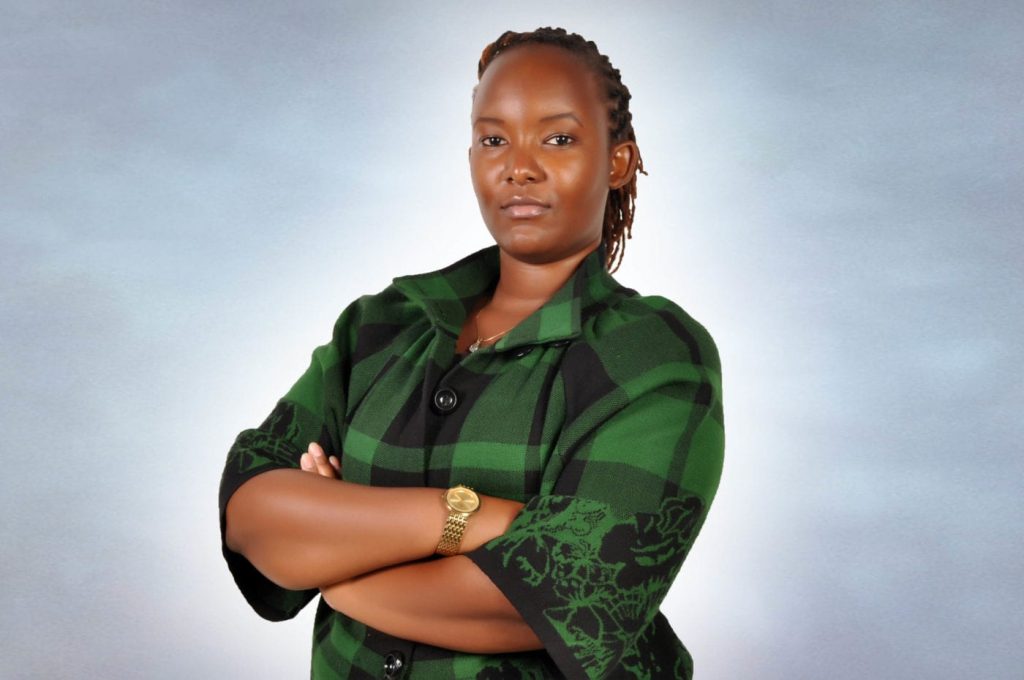
[bctt tweet=”EM Consulting exists to help such businesses scale through effective communication” username=”SheLeadsAfrica”] Emma Macharia is a communications consultant at EM Consulting, a communications firm based in Nairobi, Kenya. EM Consulting is dedicated to helping start-ups and SME’s grow and scale by effecting impact based marketing and communication strategies and tactics. Passionate about life, people, and business, Emma loves insightful conversations and turning ideas into successful business stories. Emma shared with SLA her thoughts on the Kenyan start-up ecosystem and her tips on effective marketing for start-ups. What are your thoughts on the Kenyan start-up ecosystem? How does your company fit into it? Kenya’s startup ecosystem, in my opinion, is at maturity level. By this, I mean that we are slowing moving from the hype of entrepreneurship and now starting to look at the sustainability of businesses. We are evolving from collaborations into partnerships and similarly from churning just new products and services to products and services that are customer focused and scalable. EM Consulting fits into this system simply because it exists for one agenda only which is to help such businesses scale through effective communication with all their stakeholders; suppliers, customers, shareholders and so on. We help your business speak one language to get everyone growing and moving in the same direction. How easy (or difficult) was it for you to step up EM Consulting in Kenya? How did you overcome any challenges? Setting up EM Consulting in Kenya was not too difficult because of continuously improved business facilities and regulations that make the process of setting up a business more flexible. Similarly, the relevant government institutions have begun opening up to entrepreneurs and taking a more active role in the entrepreneurship space in Kenya. However, building a communications firm in Kenya was quite a challenge due to the cut-throat nature of the industry. For this, I ensured I built my business on values that would withstand the industry such as innovation. Also, I ensured to surround myself with people of different skills sets and expertise to help me create a solid and well-planned business. Some of these experts include financial experts, tax consultants, brand strategists and technology experts. [bctt tweet=”I ensured to surround myself with people with the expertise to help me create a solid business” username=”SheLeadsAfrica”] What do startups get wrong when it comes to marketing? When it comes to marketing within a startup, it is very easy to initially place the customer in the back seat of the business. Between figuring out your financials, to perfecting the product and pleasing investors; customers tend to take a back seat in the scheme of things. This is where I feel startups get it wrong. If startups and founders mastered two key things then their solutions would be irrefutable. These are; the problem around the solution they are working on and the value proposition of their solution to their customer. If there is one thing I would advise all startups to have on the back of their hand it is their customer; to do this, collect insights, and invest in data and analytics from the beginning. How can start-ups leverage their brand to achieve business goals? Your brand is your credibility, so to this, I say build a brand that attracts your customer to your business. Communicate correctly and efficiently; figure out the one message you want your customers and stakeholders to pick from you and communicate it efficiently. Also, invest in a marketing plan to reap well from your brand. How do you hope to inspire current and future entrepreneurs? How can they get it right? Through the training service of EM Consulting, I speak to and train businesses and entrepreneurs on the value and leverage of the customer in building a business. Through these training sessions, I am able to share insights and trends about different kinds of consumers and audiences in different industries hoping to spark new ideas and innovations amongst entrepreneurs. How to get it right? Learn from and listen to your customer. There are a lot of benefits to focusing your business on the ‘consumer;’ it helps with forecasting the numbers, it helps you anticipate future trends and therefore innovate accordingly, it helps you build a business beyond yourself. [bctt tweet=”Figure out the message you want your customers/stakeholders to pick from you & communicate it” via=”no”] What’s your major challenge as a startup that caters to other startups? My major challenge as a startup working with startups and growing businesses would have to be money and buy in. I have learnt that the reason a lot of businesses are failing at communications and marketing is because they do not budget for it like any other business function. Secondly, a lot of entrepreneurs and business owners overlook the role of effective communication on their bottom line. This is why I decide to include training and business consulting in my range of services to listen to my clients immediate and long-term business needs, and show them how effective communications will help them get there. What communication trends have you noticed as more impactful for African businesses? I personally think Africans are by nature early adopters of technology among other solutions and that is why platforms like Facebook, WhatsApp, Uber, and even LinkedIn thrive in our markets. However, in the last few months is when I’ve seen African businesses applying these technologies to their context and markets. A great example is how service industries use WhatsApp or Telegram to build niche communities with their customers and share more personalized content or using Facebook communities to educate customers and build customer lists. Other communication trends include getting in touch with Generation Z consumers who are more focused on purpose and changing the world forcing businesses to relook their social impact as well as sharing more authentic communication to reach them. If you’d like to share your story with She Leads Africa, let us know more about you and your story here.
Amarachi Attamah: It hasn’t been easy, but we have succeeded
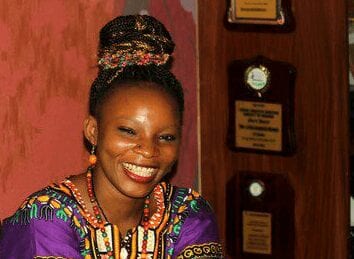
Sometimes it takes another eye to see and encourage you for you to know that what you are doing really makes sense! Amarachi Attamah is just a young simple Igbo girl. She is someone who scribbles some lines and calls them poetry. Amarachi, by career is a broadcaster and she has worked with different radio and television stations. As a young woman who loves who she is, Amarachi’s career draws from her identity, her roots and her cultural heritage. “My father would always say, ‘When you go out, remember that you have roots, so don’t go out and get lost’”, she says. Today, Amarachi is a performing poet specifically in Igbo language, and a writer. She has four published titles which include, “My Broad Daydream”, “Tomorrow’s Twist”, “Making a Difference” and her first Igbo collection, ‘’Akuko Ifo Nnem ochie koro m” (Folktales my Grandmother Told Me). SLA contributor Onyekachukwu Asadu met Amarachi in Enugu to find out more about what she does and how it is contributing to the growth of her community. Do you think you are making a difference? If yes, how are you making a difference in your community? Of course, I think I am making a difference. If I am not, I wouldn’t have continued what I am doing. However, the encouragement comes from seeing that what you do, actually makes a difference, even if it seems so stupid sometimes or unrealistic. I was born in Northern Nigeria and I grew up amongst a people that know who they are and are proud of it. As a child in that environment, I would tell you that I never saw a northern child that couldn’t speak their indigenous language; be it Hausa, Gwari, Nupe or whatever. They speak their language. They were always proud of their local food, or dressing. However, coming back to the east, I noticed that it was different; we were not even proud of our names. This got me worried and I made a resolve that the negative trend of denying our culture had to stop. I am proud of my identity and culture, and I have to make others see the same. So I thought to myself, ‘perhaps I should bring in this consciousness’. Honestly, I can’t tell when it started. When I was doing my NYSC, I wasn’t quite fluent in Igbo language but in my local dialect (Nsukka). I had published my first Igbo collection in 2007 and it was during that time that I met the literary icon, Professor Anezi Okoro. Despite my challenges at speaking and writing the Igbo language (I had failed Igbo language in my Senior School certificate examinations!) he encouraged me to do something in Igbo. I remained resilient and kept learning. I decided to dress in Igbo attires, making Igbo hairstyles. During that time, I started thinking of how to present my poetry and when I started displaying my craft on stage, I got a good response! So I continued, I never planned it but I saw the opportunity and so I started creating awareness about Igbo language and culture. I went to secondary schools, talking to students and teachers and parents; persuading them to speak the Igbo language. From there, we got the inspiration to organize festivals where schools make presentations and cultural displays in the Igbo language, then we published a collection of poems rendered by students. Gradually, people started coming around and getting involved with what we do. We have not gotten there yet but we have engaged the community, we have increased their consciousness and we are restoring the dignity of the Igbo race. Tell us about OJA Cultural Development Initiative. What plans are you making to reach and impact a global audience? OJA is ‘Odinala na omenala jikoro anyi’, which implies the culture and traditions that bind us together. It is an NGO created out of my passion to unite people. As a broadcaster working in the civil service, I discovered that even with most employees coming from Enugu State, there was still discrimination and segregation along village and local government lines. This did not sit well with me. I also realized that at the village level, certain positive elements/practices of our culture that united us was no longer there. For example, the women associations that changed the communities, the kinsmen and age grade meetings were no longer as strong and edifying as they used to be. This is because we accepted/adopted the foreign individualistic style of living that is not our cultural heritage. In as much as culture can be modified, we should not destroy our culture or lose the major ingredients that bind us together. This is why OJA is working with the younger generation because they are the ones that are mostly affected by this. To achieve this, we introduce regular festivals to bring these kids together and remind them of who they are. We go around reviving positive cultural practices that are going down. We don’t promote clandestine practices, after all, beyond Nigeria; there are cultures that are repugnant to natural existence. In addition to OJA, we also have a cultural outfit, Nwadioranma (The child that puts smiles on people’s faces) outfit. It is into cultural performances and all creative enterprise promoting our culture. People call us to perform at their events for entertainment. We also train young and consenting adults to work with us there to raise funds and further support our work. [bctt tweet=”Amarachi Attamah’s passion to unite young people and preserve Igbo culture with the OJA Cultural Development Initiative” via=”no”] You once worked with a Broadcasting house. As a Mass communication graduate, tell us how you perceived it was time to leave paid employment to becoming the one calling the shots? As you know, world changers are not regular employees. The world needs people with passion to drive a cause. To drive a cause, you must be creative. People will say you are crazy, they will assume you are not well.
Candice Nkosi: Consistency builds a brand
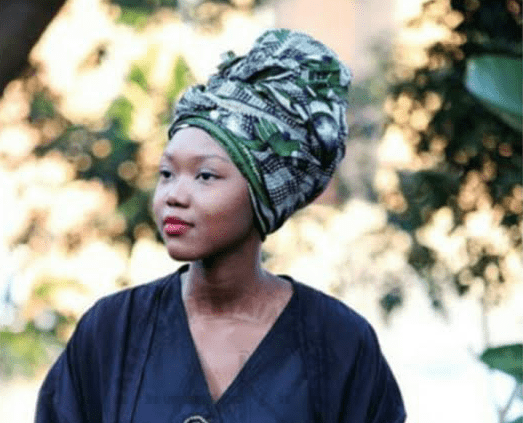
[bctt tweet=”I saw a chance to create jobs for women that I identified in my community @CandiceNkosi” username=”SheLeadsAfrica”] Born and raised in Mpumalanga, Candice Nkosi is a small-town girl with hopes and aspirations of reawakening the spirit of women empowerment. She works towards building from strength to strength with women from all spheres of life and in various fields. Candice is the founder of Pink Package Bag – a sanitary towel and toiletry drive for high school girls. She’s also the proud owner of Joyful Hearts Cleaning Services. Candice tells all in an interview with SLA contributor Jeanette Nkwana. Why ‘Joyful Hearts’? The name ‘Joyful Hearts’ was inspired by the idea of fulfilling and satisfying a client’s needs. It captures that we work hard to the best of our abilities and leave them happy and content to call again. How did you first get introduced to the industry? I saw a gap in the market, a chance to create jobs for women that I identified in my community and went through with it. Cleaning is an everyday part of our lives and more often than not, some households require extra hands to get the job done due to long hours of work and not finding the balance to manage household duties and work. What duties does managing Joyful Hearts include and what skills do those duties require? Joyful Hearts was established in 2016. We are still finding a knack of it, learning about all the ropes in the industry. A day in life includes approaching companies and individuals for work, pitching and thriving on a daily. I am still finding the balance between managing the company and being a student. [bctt tweet=”‘Businesses must strive to master their craft’” username=”CandiceNkosi”] In business, you need to work hard and master your craft. Find all the aspects you excel in and spend every day trying to get better and better. Be consistent in your work because that will influence your company brand and business all in all. Be a people’s person, go out there and network. Most importantly, surround yourself with individuals or brand that align with what you are offering, to continue to vibrate higher. What was the biggest challenge you faced when you first started and how did you deal with it? The biggest challenge was getting cash injection and having to assure clients that I can do the job. It is always hard for a start-up because you don’t have experience and it is never easy for companies to trust new businesses making their way up. But through hard work and selling your idea, you can achieve it all. My parents assisted me with capital, working hard and selling what I offer gets me clients. I try by all means to earn their trust. What, in your opinion, do people not know about the industry you operate in that is critical to the survival of a (similar) startup? [bctt tweet=”Every business requires consistency.” username=”CandiceNkosi”] The quality of your work needs to speak for itself just like any other business. You need to be professional and reliable at all times. Workers need to be on time, areas where you work have to be spotless and the consistency has to be forever. Consistency builds a brand. Has being a blogger been helpful to Joyful Hearts? If so how? Being a blogger has been really useful because through it, the brand Candice Nkosi gets exposure. That doesn’t only lead to people being interested in my blog posts but what I also work on besides that. It leads to a bigger clientele for my businesses. What can we expect from Candice Nkosi and Joyful Hearts this year? You can expect a lot that will unravel this year from Candice Nkosi. I am currently working on a sisterhood club called “Woman To Woman Brunch” where we celebrate each other and get inspired by individual journeys. I am also branching out into events. Hopefully, through the grace and hard work Joyful Hearts will expand and reach greater heights. If you’d like to share your story with She Leads Africa, let us know more about you and your story here.
Nozuko Mayeza: The strength of will to succeed needs to be constant in any businesswoman’s mindset
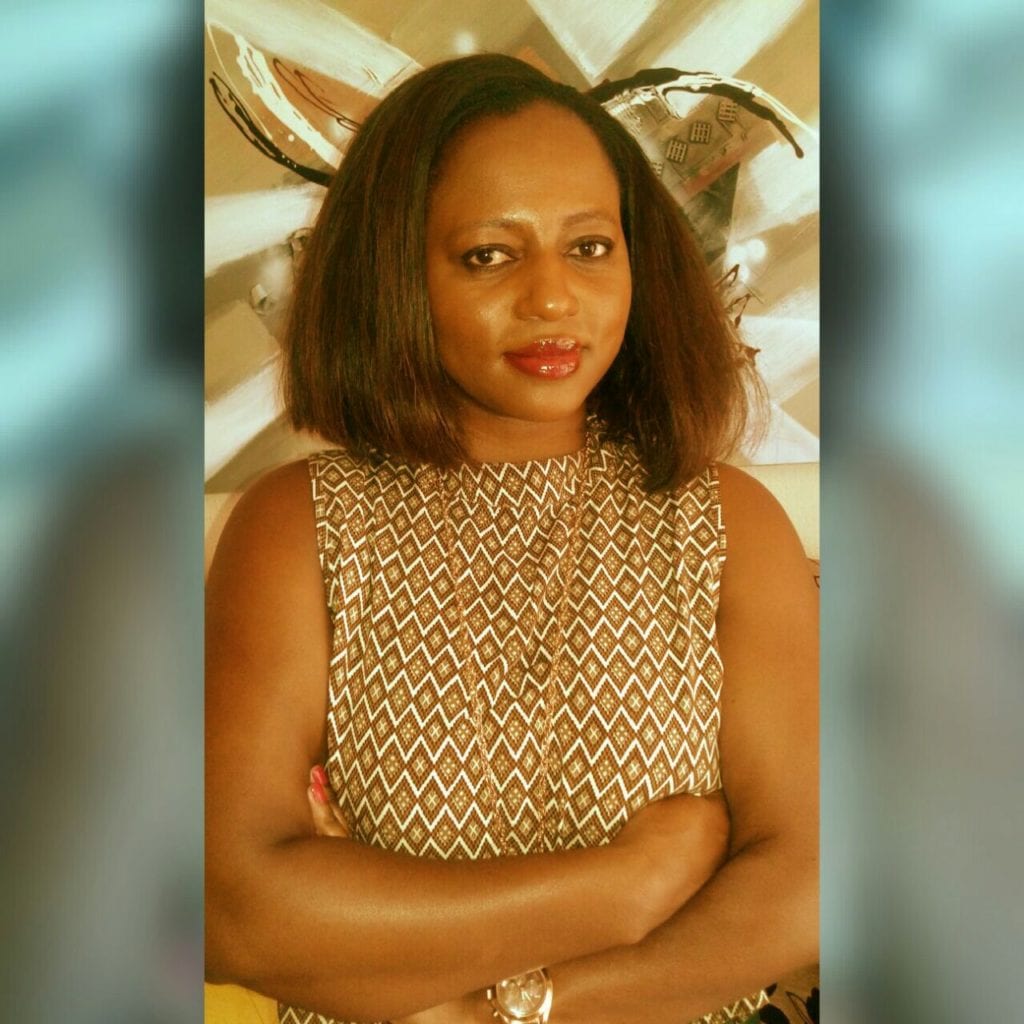
[bctt tweet=”After spending 7 years in banking, Nozuko Mayeza figured it wasn’t for her” username=”SheLeadsAfrica”] Women are generally underestimated simply for being a woman, hence the belief that we cannot perform like men in their work environment. However, given the equal opportunity as men, we see that many women perform wonderfully in their careers and becoming successful as entrepreneurs. Nozuko Mayeza is one of the few South African women breaking glass ceilings and navigating her way through male-dominated industries successfully. As a woman of great business sense with a passion to see her business and other small businesses succeed, Nozuko also trains young women on how they too can break through in any industry. Nozuko is the founder of Tulsawiz Logistics (Pty) Ltd which has operated in the supply chain sector for several years. Nozuko also has her eyes set on expanding her horizon with her successful strategies that have gotten her far. SLA contributor Neo Cheda met Nozuko through a mutual friend who introduced us a few years back and was attracted to her as most strong women are attracted to other strong women! Nozuko gladly took up the opportunity to meet with Neo and to share her story of how she has risen and continues to soar and overcome societal norms and tribulations that try to hinder successful people from exercising their personal power. So, why logistics? Well, after spending seven years in the financial services industry, banking to be precise, I figured this was not for me. From a young age, I had always wondered why there was heavy traffic and so many trucks on the road and what they were on about. I then realized that logistics permeates every field, be it fashion, technology, construction, science and more. There were opportunities waiting for someone with my kind of passion and skills set in logistics. My current role spans client relations, managing diverse stakeholders, finance, and connecting with industry experts. This is what I enjoy. How did you begin your journey? There is a lot to learn from men in terms of how they do business –everything from their work ethic, confidence and their strategies to solving problems. A male friend of mine after attending a networking event, introduced me, to logistics. He mentored me and taught me all about the business dynamics until I acquired my first contract. I even worked as a subcontractor for him until I eventually landed on my feet. [bctt tweet=”Nozuko Mayeza: There is a lot to learn from men in terms of how they do business” username=”SheLeadsAfrica”] You’ve been making the headlines and I recently saw a TV interview of you. Tell me, what has driven you to succeed? It’s mostly about following my passion and proving to myself that I can be more. I attribute the greatest lessons in my life to the hardships I endured along my journey and credit my mother for my tenacity. Born and raised in a village called Ndakeni/Ntlenzi in Eastern Cape, my twin sister and I had to juggle a home run shop and take turns with the younger siblings. Since then I have been business savvy and pushed to find ways to make things happen. My success in this field was born from life’s hard lessons. I chose to learn “how to be better” from each one and never quit on myself! It takes a lot of courage and with no money and finance, I had to hit the ground running. Getting big contracts is extremely difficult, but the trick is to never give-up. I was not received well as a woman in the industry but my strategies helped a lot. How is it being a single mom with a high-powered career? Though this can all be very challenging, it’s important to find ways to integrate work and life. I don’t approach it as though someone else was meant to help me parent my child. I’ve taught my son total independence, he knows I won’t make it to all his rugby matches etc, and he is cool with that. Whenever there is an issue (teenage problems) I find a solution quickly to avoid escalation. What advice do you have for women considering a career in logistics? Logistics is an exciting and challenging career choice that brings with it a lot of rewarding relationships and lifelong customers. I have witnessed first-hand over the last six years the growth of women in the industry and seen their roles continue to strengthen. Hopefully, in the next decade the term “a man’s field” will no longer exist in supply chain management. I am very passionate about mentoring and helping other women discover and exercise their potential and at the moment I have a few ladies I mentor as they start their own businesses! Society needs more entrepreneurs to eradicate poverty and make the world a better one. The main challenge however, is the lack of skills in demand, funding, and basic knowledge. This is where I step in and freely provide any knowledge to powerful women as I walk them through their path and start-up phase. [bctt tweet=”My success in this field was born from life’s hard lessons – Nozuko Mayeza” username=”SheLeadsAfrica”] Any other highlights to date? I recently traveled abroad for a business trip which enabled me to form partnerships with international companies. This was an experience which has made realize how far I have come. I also write and have co-authored a book entitled “Share Your Story, Vol. 5”. Also be on the lookout for my new book titled “Plan Your Walk and Walk Your Plan” which should be published by December 2017. Tips for emerging female entrepreneurs: Dedication- Know what you want and go for it. Network often Keep pushing- Quitting is not an option Get a mentor- I credit mine for contributing to my business success Failure is never an option and the strength of will to succeed needs to be a constant factor in any businesswoman’s mind-set. Nozuko Mayeza If you’d like to share
Bilikiss Adebiyi- Abiola: I chose waste for impact

[bctt tweet=”Bilikiss Adebiyi-Abiola – I like that my work makes me live a life of purpose” username=”SheLeadsAfrica”] Bilikiss Adebiyi-Abiola developed the idea for Wecyclers while she was a student in the US. She wanted to address two major challenges of waste management and unemployment by offering recycling services to low/middle-income households. Once she returned to Nigeria, Wecyclers Nigeria Limited was born. Wecyclers is now an award-winning company and as its Co-Founder and CEO, Bilikiss’ work is well recognised. She is a Carroll Wilson Fellow, an Echoing Green Fellow and a 2013 recipient of the Cartier Women’s Initiative Awards. She is also a member of the Lagos State Employment Trust Fund, founded by the Lagos state government. SLA contributor Olayemi Olajide recently caught up with Bilikiss to find out more about her journey….. Kindly tell us about Wecyclers? What made you return to Nigeria to start this company? Wecyclers is an award-winning company that is committed to improving recycling in Nigeria. We address the challenge of waste management and unemployment by offering sustainable and convenient recycling services to low/middle-income households and businesses while creating grassroots jobs and economic partnerships. The idea for Wecyclers was developed while I was in the US as a student at the MIT Sloan School of Management. Following a five-year career as a corporate software engineer at IBM. I was assigned to a study project to help people at the bottom of the pyramid (people living on less than $2 a day). I decided to work on waste with a focus on its uses, collection, and processing. After the project was completed, we (the project team) did some research and saw the huge potential in the waste recycling sector in Nigeria. Especially among the manufacturing plants who are hungry for a cheaper and easily available source of raw materials due to local and foreign demand for end products. I then decided to move the idea forward and Wecyclers was born. What do you enjoy the most about doing business in Nigeria? I like that my work makes me live a life of purpose and that it is having a positive effect on my country and my children. Wecyclers turns waste into wealth and supplements the income of thousands of households. Since August 2012, Wecyclers has registered over 15,000 households for our collection service in 3 Lagos neighborhoods, collected over 3,000 metric tons of recyclable materials, created over 100 jobs and rewarded our subscribers with over $75,000 worth of gifts and cash prizes. Since August 2012, Wecyclers has registered over 15,000 households for our collection service in three Lagos neighborhoods, collected over 3,000 metric tons of recyclable materials, created over 100 jobs and rewarded our subscribers with over $75,000 worth of gifts and cash prizes. [bctt tweet=”@wecyclers @realwecyclers @bilikiss are demonstrating that waste can be a source of wealth” username=”SheLeadsAfrica”] How has your experience working and living outside the continent helped you shape Wecyclers into what it is today? I think my educational experiences and starting my career as a software engineer in the United States provided me the toolkit with which to solve the kind of large-scale problems we are tackling at Wecyclers. It also provided opportunities to build an international network that has helped to guide and support our work. It also provided opportunities to build an international network that has helped to guide and support our work. [bctt tweet=”@bilikiss @wecyclers We have benefited greatly from the Lagos State Government’s progressiveness” username=”SheLeadsAfrica”] How has your partnership with Lagos State Government and other organizations contributed to building Wecyclers? Can you tell us names of organizations you have partnered with? Our partnerships with Lagos State Government and organizations has been a critical part of Wecyclers’ development. We have benefitted greatly from the Lagos State Government’s progressiveness and openness to working with organizations that provide solutions to Lagosians’ challenges. Wecyclers recently received a grant from the Lagos State Government to expand our collection and processing services into two new local government areas, create 120 jobs and 8 micro enterprises and reach an addition 68,000 Lagosians. Our partners also include FCMB, DHL, Unilever, Oracle, the Nigerian Bottling Company, MIT Sloan School of Management, and others listed on our webpage. Our partnerships have helped to improve our visibility, enabled large-scale programs like clean-up days, and enhanced our management operations. What are the constant challenges you face running Wecyclers? What’s next for Wecyclers? A major challenge is funding. We are a social enterprise, so we are more focused on having a positive impact on communities than generating profit. We are always looking for companies and foundations that are willing to support our efforts. Another constant challenge has been ensuring the supply of electricity to our hubs, which is essential for processing the recycled material we collect. We also have to deal with the negative perception that some people have of working in waste recycling as a dirty job. We are demonstrating that waste can be a source of wealth and that handling it well is good for our communities and the environment. Our plan is to continue expanding our operations and reach, encourage more communities to get involved in recycling. My plan is for Wecyclers to operate all across Nigeria and my long-term goal is to be the largest recycling company in Africa. [bctt tweet=”Bilikiss Adebiyi Abiola – My long-term goal is to be the largest recycling company in Africa. ” username=”SheLeadsAfrica”] 5 things you do to relax when you are not working. Listen to music, work out, cook, travel and read books. If you’d like to share your story with She Leads Africa, let us know more about you and your story here.
‘57 Chocolate: How to start a chocolate company on a budget in the Motherland
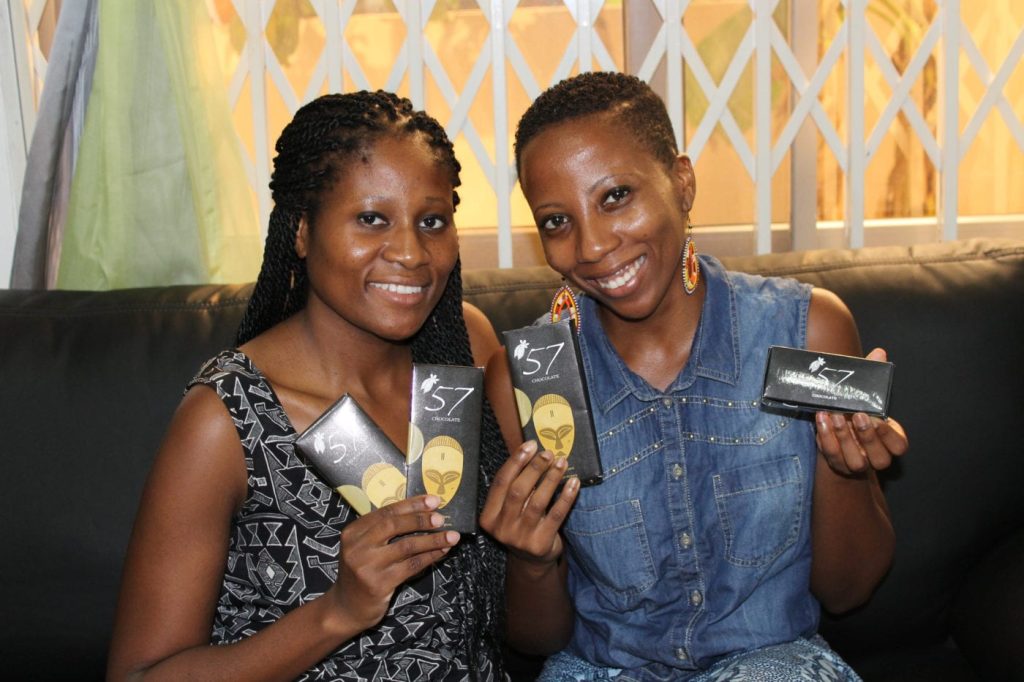
[bctt tweet=”The Addison sisters saw the need for a Ghanaian chocolate company before launching ’57 Chocolate” username=”no”] As the saying goes “an entrepreneur is someone who identifies a need in a market and finds a way to fill it”. This is what Priscilla and Kimberly Addison did when they realized that though Ghana is the second largest producer of cocoa in the world, the country produces little chocolate. Having recognized this, the sisters saw an opportunity to start an artisanal premium chocolate making company which they named ‘57 Chocolate –short for 1957, the year of Ghana’s Independence. The sisters upon starting the company in January 2016 applied for the 2016 Tony Elumelu Entrepreneurship Programme for Manufacturing where they were selected as one of the winners. This programme provided them with a small grant and networking opportunities to assist them in pushing their company further. Now, their aim is to set an example and demonstrate to the world that Africans can create products of the highest excellence and quality. What motivated you to choose this industry? Having spent time living in Geneva, Switzerland, we thought it was strange that Switzerland is known for its chocolate yet doesn’t grow cocoa, the core ingredient in chocolate. Meanwhile, Ghana is the second largest producer of cocoa, but produces very little chocolate itself. We saw a vast need for manufacturing of chocolate in Ghana and across the continent of Africa. In Ghana, the candy shelves of supermarkets and malls are overflowing with foreign chocolate bars, many undoubtedly made with Ghana’s very own cocoa. Having recognized all this, we were determined to use Ghanaian cocoa to create a Ghanaian brand of premium chocolate that is reputable locally and internationally. Chocolate really peaked our interest because it allows us a lot of creativity. We get to experiment with different factors such as how dark to roast the beans, the percentage of cocoa to include, and creating different flavors and pairings (e.g. sea salt, coconut shavings etc). We also love chocolate because it really is a healthy treat if you choose chocolate that is high in cocoa content. At ’57 chocolate, cocoa, as opposed to sugar, is always the first and main ingredient in our dark and milk chocolate. What steps did you take to start the company? What was/is your niche? We started the company before we even had a name for it. The idea came about in 2014; however, we made our first batch of chocolate in 2016. In between this time, we took courses on chocolate making and confections and trained with people in the field. We also did a lot of research and reading on the industry then we developed our chocolate recipes through trial and error. We would give our small-batch chocolate to family and friends who happily agreed to taste test. Also, we spoke to people already working in the industry to seek advice and support. [bctt tweet=”We developed our chocolate recipes through trial and error @57chocolategh” username=”SheLeadsAfrica”] Being from Ghana, it was important for us to create something that we were passionate about and that stood for a bigger purpose. Building our brand has been intricately tied to our desire to see Africans create products of premium value with the abundance of resources available. Hence the name ’57 Chocolate, which is short for 1957, the year of Ghana’s independence. 1957 was a revolutionary year for Ghana, not only because it was freed from colonial rule, but it is the year that gave birth to the nation’s “can do” spirit. The name ‘57 is meant to inspire a reawakening of Ghana’s 1957 “can do” spirit. From 1957 onwards, Ghanaians were creating and developing their own industries and products which resulted in a massive industrial boom. We want to return to that. ‘57 Chocolate aims to inspire the people of Ghana and Africa, to create and develop made in country products of high quality. Our niche is comprised of individuals who are looking for premium handmade chocolate that is made from bean to bar, and those keen on supporting Ghana’s industry by buying Made in Ghana products. How did you fund the company? Are there companies willing to invest in this industry? We funded the company with our personal savings, and with a few contributions from friends and family. We didn’t start with much, and we’ve been bootstrapping our way through this process. You have to make adjustments and sacrifices. As a silly, but true example, that pricey face toner from that fancy store we used to love for healthier-looking skin has now been replaced by a simple lime or lemon wedge. It surprisingly works just as well, though! It was important for us to commit to properly investing in our own company. Additionally, we applied and were selected as a winner of the 2016 Tony Elumelu Entrepreneurship Programme for Manufacturing which provided us with a small grant and networking opportunities. There are definitely numerous companies willing to invest in cocoa processing. It is, after all, a multi-billion dollar industry. What did you need academically and financially to qualify to start the company? There aren’t really any academic qualifications needed to start the company. Neither of us (Kimberly or Priscilla) has a background in chocolate making. We did need to take courses and get training on how to make and mould chocolate. How did you brand your company? What were your business and/or marketing plans when you launched the product? Our company is an artisanal premium chocolate company, as we wanted to fulfill this unique void in Ghana. Most importantly, we aim to keep Ghana’s cocoa in its truest form. Our chocolate is handmade in small batches, starting from sorting the cocoa bean by hand and processing it into the chocolate bar. Our chocolate is rich in cocoa, and made without any artificial colors, flavors, preservatives or weird things that are hard to pronounce. Additionally, our chocolate challenges the status quo of luxury chocolate being only a product of Europe. We are
Zimkita Nogela: Continuous progress is better than delayed perfection
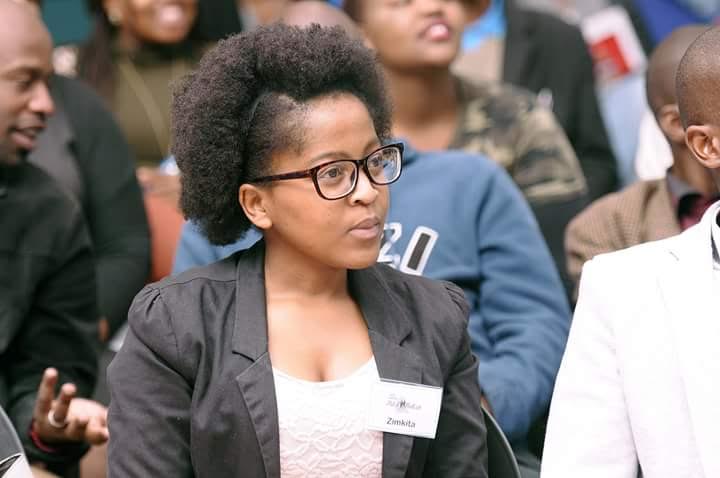
[bctt tweet=”Our passion is merging the latest technology in marketing science with strategic thinking” username=”RoundSquareSA”] 23-year-old Zimkita Nogela, founder of RoundSquare, is passionate about entrepreneurship, social development and mental wellness. RoundSquare is a boutique studio founded in 2015 based in the heart of East London. The studio crafts cutting edge ideas into delightful software and provides marketing strategist to software-based tech companies. The company’s functional practice areas include UX design and development, strategy, process, app analytics, and growth. RoundSquare’s mission is to help clients create, manage and grow their visions, nurture their brands and provide an unrivaled user experience. Besides being mostly occupied with running RoundSquare and her accounting studies, Zimkita lives on books and enjoys rambling about life and food on her blog. In an interview with SLA contributor Jeanette Nkwana, she shares her lesson-filled journey with us. What gap did you spot in the market that you feel Round Square fills? We provide proper targeted marketing for software based companies and affordable software development. Tech people are amazing at crafting awesome code but not communicating what their creation does in a way that speaks to their prospective users, as well as that getting any type of software from as small as a website to complex intranets or apps tends to cost an arm, this is where we come in. What skills does it require to service your clients and how did you acquire these? I actually studied and am studying accounting which might seem odd being in the tech field and all. I learnt coding and design online (perks of being a curious being). Both of these skills not only build a proper business but service our clients well. Again, all this is a team effort and having the right team with diverse skills from an array of industries adds and enables us to craft the work we do. How do relevant technological advancements or innovations impact on your business model? They impact it tremendously and more often than not positively. We are for all things innovative and love incorporating the newest tech in both our work and the running and growth of the company. What are 3 marketing strategies that start-ups can try out? It is vital to develop a vibrant, content filled social media presence. It is one of the strategies we use ourselves. Partner with organisations who have the same or similar interests as your own to drive both sales and marketing reach by leveraging on each others already established networks/client bases. Lastly, (and yes I might be a bit biased) get a delightful website/app that speaks to both your current and prospective clients/customers. [bctt tweet=”Partnerships are a good way to drive both sales and marketing reach.” username=”ZimkitaNogela”] What are ways to increase reach with zero funds? The simplest way for free marketing has to be using online platforms and leveraging on one’s current networks. How does one choose a market for their product? Choosing a market is inherent to the problem one is solving or the need they are addressing, whether that is a feasible market or not is another issue. What has been the most important lesson your journey taught you and how did it help you grow RoundSquare to its current glory? My greatest lesson has to be that continuous progress is better than delayed perfection. As a recovering perfectionist, I often let this curb my progress because everything I did had to be just right. I am learning that nothing will ever be perfectly perfect. What do you do for fun that you believe contributes to the successful running of RoundSquare? I love reading, both for recreational and learning purposes so this consumes a chunk of my free time. I also enjoy cooking and being around people albeit I’m an introvert. This balance contributes greatly as it keeps my mental health sound which is vital for the running of my business. What are some of the quotes you live by that have shaped how you manage your life and business? “Never live in fear of people’s opinions,” – unknown author and; “Whether you were born by, bore or born with a person, never let how they live their lives dictate how you live yours,” – my mother. [bctt tweet=”Never live in fear of people’s opinions shapes @ZimkitaNogela’s business management” via=”SheLeadsAfrica”] What is your vision for RoundSquare and how do you plan on forging closer to realizing it this year? My vision is for RoundSquare to be a leading global tech firm both in software development and software marketing. I think my main focus this year is getting over the start-up slump and mindset and going for the big project I’ve been a bit hesitant to go for. In addition to this, developing a great company culture and team to attract top talent is another focus for this year. If you’d like to share your story with She Leads Africa, let us know more about you and your story here.
Janine Gaëlle Dieudji: I like changing and renewing myself
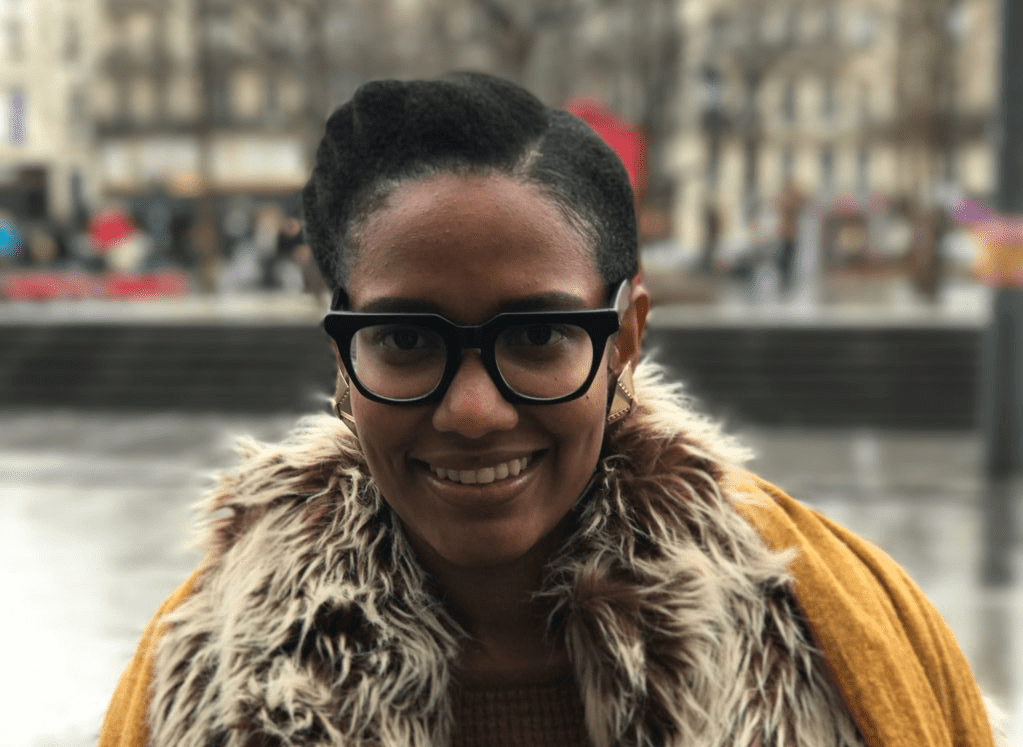
[bctt tweet=”We don’t have to be afraid to share ideas with people, this is how beautiful things happen” username=”SheLeadsAfrica”] Janine Gaëlle Dieudji is a bi-national French and Cameroonian graduate of Culture and International Relations from Lyon 3 University in France. She also holds a Master Degree in Political Science from Paris 2 Panthéon Assas University. She’s been living in Florence, Italy, for the past six years, a city she has since fallen in love with. This is how Florence became home to her and the place where she started to build her career as an art professional. She considers herself as a ‘multilocal’ by believing that we belong to all the places we have lived in. Home is where the mind can create and feel rested at the same time. This is what the life journey is made for, exploring to become the person we decide to be. Janine, what is an art agitator? I consider as an art agitator to be a person who makes the difference. For me, it’s a person who makes the art scene move and is committed to it. It could be a curator, an artist, an art dealer, a gallerist or a collector. The ability to inspire others by your achievements and the way you humbly contribute to the dynamism of this versatile field. What gave you the sparks to follow this career path? Well, I truly love what I do which helps a lot. The absolute truth is that this path in a certain way chose me, actually. First when I landed six years ago in the renaissance city, Florence. I was there for a year through a study exchange program (Erasmus). I had no idea six years later I would still be here, but I fell in love with this city, and every time I tried to leave (I have tried three times), I always come back after a couple of months. The second time (in 2012) I was about to leave Florence because I wasn’t happy professionally. Then, randomly, I met the artist Clet Abraham. We quickly got along and I think he saw something in me, which became a working relationship. After six months in Lyon to complete my Master’s degree, we started a three year, beautiful and enriching collaboration. Two years before Clet, I had a two month internship at the city hall of Rosny-sous-Bois in France where I assisted the Director of the Cultural Department in the organization of Beninese artist Zinkpè’s exhibition. At that time, I wanted to be a journalist or work in a cultural department of an international organization like the UN, La Francophonie or a French Institute abroad. What’s the best way for one to make a name for themselves? It may sounds cliché, but I would say to be yourself, stay humble and always be curious to learn something new. I believe that these ingredients make people excel at what they do. Humility and originality are the key, but also the hard work you put on it. One can not forget that fears and struggles are important in ones daily development. [bctt tweet=”Humility and originality are key to making a name for yourself – Janine Gaelle Dieudji” username=”SheLeadsAfrica”] How is it like working with talented people such as Johanne Affricot of Griotmag.com? It’s definitely inspiring. Johanne Affricot is one of a kind and I’m very grateful to work with her. She’s multi-tasks, a great mom, a wife and a do-er with no fear. She created Griotmag.com two years ago, the first Italian webzine celebrating an aesthetic, creative and cultural diversity in and from Italy – African Italians – and the African diaspora. From this project, she pushed forward by creating a webserie, The Expats – a a documentary web series exploring the lives of African Italian creatives living abroad in the search of new opportunities. Two new episodes filmed in London will be released by the end of this month. The use of the term in the title of the series is meant to be provocative and encourage reflection not only about the idea of black Italians in Italy and abroad but also Italians who do not know this “different” or “diverse” Italy. I was very excited when she approached me a year ago, we immediately clicked the first time we met, we have a lot in common and work well together. [bctt tweet=”I realized that together we do better and we go further – Janine Gaelle Dieudji” username=”SheLeadsAfrica”] You have a lot of experience as a contributor. What is the most valuable thing you have learnt so far? I realized that together we do better and we go further. I like changing and renewing myself so being a contributor on different projects makes me do different things and it’s exciting. I recently collaborated with Justin Thompson on the organization of the Black History Month Florence, we had at least 50 events all over the city, in only one month. My main satisfaction was the Clay Apenouvon’s installation “Film noir, danse de survie” which I curated in collaboration with the City Hall and Institut Français Firenze. I met Clay almost two years ago at 1:54 art fair in London where I discovered his work and I love how down to earth the artist was. After that, we decided we want to collaborate, so we started in Florence, and hopefully will do more in the future. My point is we don’t have to be shy or afraid to share ideas with people, this is how beautiful things happen, by putting our strengths, capacities, and inspirations together. With this philosophy, I’m actually doing a collaboration with Wires eyewear on the Italian and French market, and I’m planning to organize a Street Art Festival in Cameroon for 2018, as soon as I find some partners to fund it. So Janine is also a translator. Is there a code of ethics when it comes to translating? I’m new in this field actually; I started a couple of months ago in a
Trecia Makhubele: It is ordinary South Africans that will create jobs in SA
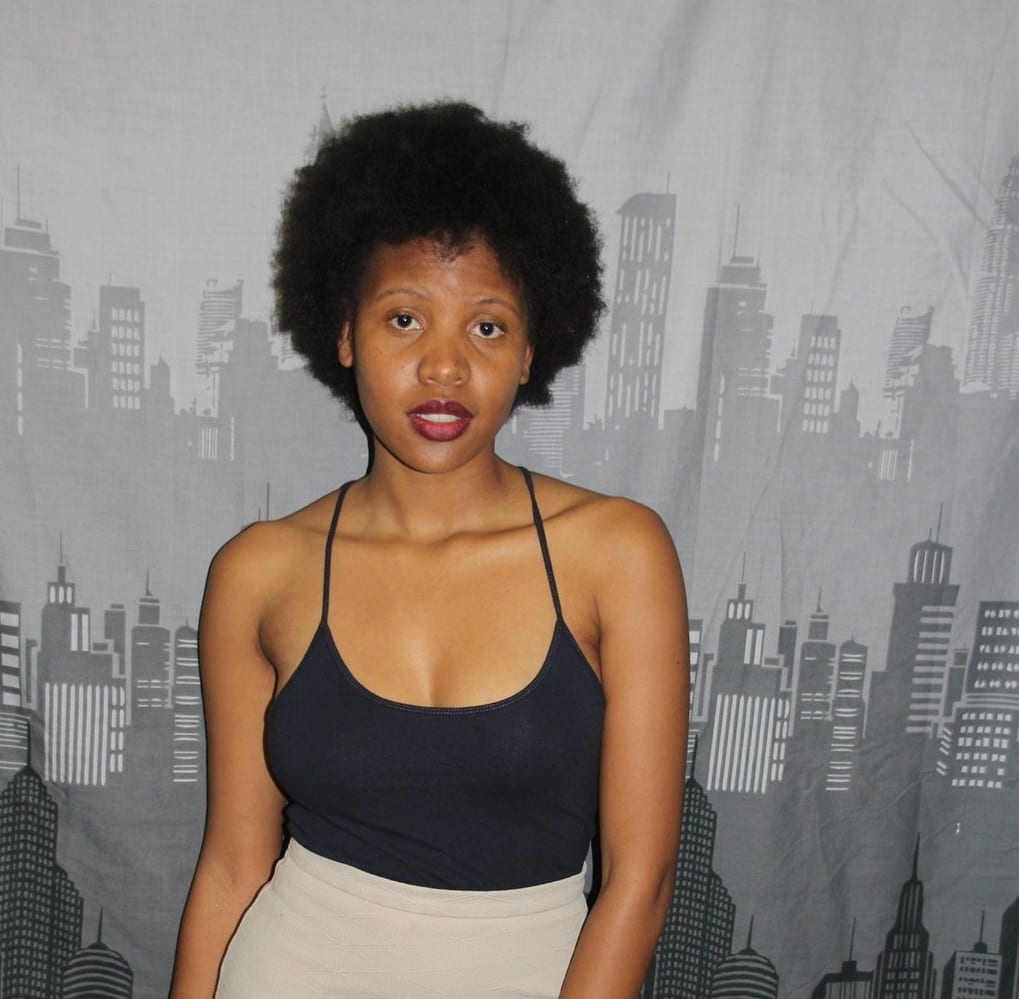
[bctt tweet=”Bohochic was born from a desperate need for financial stability” username=”SheLeadsAfrica”] Born in rural Mpumalanga in a small town called Bushbuckridge, Trecia Makhubele, co-founder of Bohochic, is a graduate from the Oprah Winfrey Leadership Academy for girls. In 2016, she went on to achieve her undergraduate degree in Politics and international studies. Trecia is currently a Penultimate year law student at Rhodes University where she tutors law first-yearear students and works as a law library assistant. Trecia is passionate about entrepreneurship and believes that it is ordinary South Africans that will be able to create jobs in SA. SLA contributor Jeanette Nkwana interviewed this young South African entrepreneur, this is how it went. How did Bohochic and your partnership with the co-founder come about? Bohochic, like most black owned businesses in SA, was born from a desperate need for financial stability. Rue, my friend and co-founder, and I found it difficult to go to residence trips to buy appropriate clothing for court visits and textbooks because our parents were just not able to provide us with everything that we needed. Instead of accepting our financial situation, we each started our own businesses, mine being Spiritus Mundi designs and Rue’s being Rude-soul chains, making jewellery. However,separately we were not making enough money to sustain ourselves. We then looked at trends and realised there was a growing fascination for crochet clothing. Having had basic crochet skills, we read blog posts and watched YouTube videos and soon we had a couple of designs. Once we were confident enough with the idea, we abandoned our businesses and used their respective profits to start Bohochic. What are some of the challenges of working with a partner and how do you personally deal with them? For some reason, we both work really well together and have never had any major fights to date. I think it’s all about finding someone you have a good chemistry with. Both Rue and I luckily found that in each other. [bctt tweet=”‘Good chemistry is important in a partnership – Trecia Makhubele’” username=”Spiritus_Mundii”] Another reason we hardly face any challenges in this partnership is the consistent brutal honesty between us. If for example, someone makes something ugly, the other is not afraid to speak up. The receiving party does not take it personally either. It simply becomes a laughing matter! This is perhaps due to the fact that we are also friends and thus know each other well. You value your academic career, how do you deal with the pressures coming from school and entrepreneurship? We made a pact that no matter how big Bohochic gets, we would not let it take up more space in our lives than our academics. At the beginning our timetables allowed us to split our times to ensure our academic lives did not suffer. Of late, the business has become too big as we are now doing post-graduate studies which requires more of our time. This has. undoubtedly, put a lot of pressure on both of us. We have decided to start a skills development programme in Grahamstown which allows us to teach a number of people how to crochet so that they can eventually come on board as our employees and do the actual crocheting. This will lessen our burden of making each order and help families like our own by way of job creation. [bctt tweet=”Bohochic is more than a brand dedicated to making money, we want to uplift our communities” username=”SheLeadsAfrica”] You are also a YouTuber, how has this helped with the success of Bohochic? Bohochic is more than just a brand dedicated to making money. It is about showing young people like ourselves that social media can be used to uplift ourselves and communities. Through our tutorials and videos, we hope to get people thinking. We want to show them that there are awesome business ideas that do not require large sums of money to execute. We have been able to fulfill this mandate through our YouTube channel as most of our viewers are students like ourselves. What is the most fulfilling thing about what you do? The financial independence. Nothing is more fulfilling than being able to buy a bus ticket to school or that ridiculously expensive textbook without having to put pressure on our families. What do you think your customers value most about Bohochic? The creativity that goes into the products we make. We do not just make crochet tops, we take the time to research and see what people are into and translate that into each crochet item. [bctt tweet=”Bohochic looking to expand from crochet tops and chokers to Bohochic Kids and Home.” via=”no”] What can we look forward to from Bohochic this year? Growth, lots of it. We have dedicated so much time to improving our craft. This year we will see the finalization and launch of Bohochic Kids and Bohochic Home. If you’d like to share your story with She Leads Africa, let us know more about you and your story here.
Bamisaye Folasade: I want to promote menstrual hygiene for girls and women
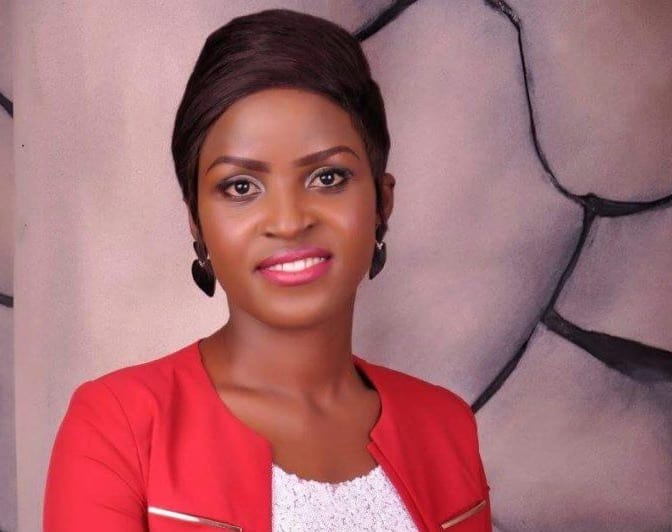
[bctt tweet=”I realised that I can impact my community without being rich – Bamisaye Folasade” username=”SheLeadsAfrica”] Meet Bamisaye Folasade, a social entrepreneur who is passionate about menstrual hygiene for girls and women of reproductive age. She is an example that you can effectively do business while solving social problems. Bamisaye has over 8 years experience improving psycho-social wellbeing of girls and women at the grassroots. She is the founder of Young Women Arise an organisation with the goal to give power to girls and women. It’s meant for them to be able to make right and informed decision about their Sexual and Reproductive Health and Right (SRHR). Through this project, Bamisaye has trained over 1600 girls and young women at the grassroots. She is also the curator of Ablaze Ladies Camp which provides participants with the needed skills for them to make informed decision about their SRHR. Bamisaye is also the brain behind MyPeriod Kit, an innovative product that aims to increase access to menstrual hygiene and help keep girls in school during their periods. How did you get involved in women health advocacy? I am driven by my passion for community and human development, as well as a strong desire to make a positive change. Right from childhood, I have always wanted to be a philanthropist so I can help the vulnerable people in the area of education, health, and poverty. But I reasoned that I could only do so when I get wealthy. As I grew older I began to gather information on how I can start impacting my community without being rich. I then began to understand what volunteerism is all about. In 2009 I became a full-time volunteer, working on issues of women and young people’s sexual and reproductive health and rights. My first major experience was on PACT/USAID supported REACH project in Ekiti State. You recently launched a new product, MyPeriod Kit, tell us about it? Yes… that is MyPeriod Kit and I am so excited about it. MyPeriod Kit is the first product with a compilation of sanitary materials for young girls and women of reproductive age in Nigeria and the West Africa sub-region. The product aims to promote menstrual hygiene and healthy transition into womanhood for girls and women of reproductive age especially those residing in under-served communities. The justification for having MyPeriod Kit is that girls and women residing in under-served areas around Nigeria are faced with huge challenge of coping with their menstrual period hygienically. Women and girls’ capacity to manage their periods is affected by factors, including limited access to affordable hygienic sanitary materials and disposal options. This has led many girls and women to manage their periods ineffectively, uncomfortably and unhygienically. Young girls and women in rural areas tend to opt for natural materials such as mud, leaves, dung or animal skins to manage the menstrual flow due to inadequate knowledge about puberty education, access to affordable sanitary materials as well as poor menstrual hygiene management. This is in addition to insufficient access to safe and private toilets and lack of clean water and soap for personal hygiene. As a result, menstruating girls and women often feel ashamed and embarrassed. How have you been able to manage entrepreneurship and advocacy efficiently? My sister, I will say it has not been an easy task. This is especially when coupled with the fact that I am also an employee. But you know what happens when determination meets passion and grace, then you can consider challenges as a piece of cake. My passion for girls and women’s general well-being keeps me going. [bctt tweet=”When determination meets passion and grace, challenges are a piece of cake” username=”SheLeadsAfrica”] Can you share a story on your toughest day/period? Hmmm… the life of a development worker coupled with being an entrepreneur cannot always be a bed of roses. Each day comes with its own unique toughness in different forms. So it is really difficult for me to isolate a day out as my toughest day. However, if we say period then I can say the toughest period in my life was between 2014/2015. I was running my Masters degree full-time, working full-time and also setting up a new NGO in a new environment in that period. I only had a few staff to work with, so the work was so enormous. And I still had to study hard to have good grades. That period was so challenging but grace and passion were at work in my life. What do you recommend to other women based on your experiences? It is never too late to start being productive and resourceful. Whatever positive things you dream of doing, believe me, you can achieve it. Seize the moment now that international organizations are advocating for huge investment to be made in girls and women. Try to make something meaningful out of life, invest in yourself and in others. What are the misconceptions/myth on women’s health you’d like to debunk? That menstruating is a taboo or a dirty process. This myth has for long put girls and women in a position of being discriminated against to the extent that in some society menstruating girls and women are barred from participating in religious exercises. Also, girls in school are forced to stay at home while their male counterparts stay in school to learn. Menstruation is a biological process that girls must undergo. It is the onset of womanhood and thus must be appreciated and treated with dignity and the highest level of hygiene. Menstruation in itself is not dirty, but the process must be undergone hygienically. What are your plans for your product/business? MyPeriod Kit is a work in progress. In the coming years, we plan to reach more girls and women of reproductive age with menstrual hygiene supplies that are hygienically packed to meet their specific needs at an affordable rate. If you’d like to share your story with She Leads Africa, let us know more about you and