
Making lemonade out of lemons: How my struggle with depression shaped me into a confident woman
My mission in life is not merely to survive, but to thrive; and to do so with some passion, some compassion, some humor, and some style. -Maya Angelou Recently, I got to check off something my bucket list —to see Beyoncé in concert! A recurring theme in her phenomenal performance was overcoming the obstacles in life. The message was one of survival even with the odds stacked against you. It was about making something beautiful out of an ugly situation. It was definitely making lemonade when it seems like all life has served you is lemons! I left the concert on an emotional high while combing through my past experiences and tallying the number of ways my struggles have shaped me into the woman I am today. Mental health, specifically depression, has had a grave impact on my life. It is one battle I have fought constantly throughout my adolescence and adulthood. I have had more low times than I can recall. There were times when I felt that happiness was permanently out of my reach. Those times, it felt like this disease would always stand in the way of me achieving my dreams.Now, I know that I can choose to either focus on the negative or pick out the lessons it has taught me. The choice is entirely mine. So, in the spirit of making lemonade out of the proverbial “lemons of life”, here are some of the positive things I have learnt through my journey with depression. You become more self-aware The famous Greek philosopher Socrates said, “the unexamined life is not worth living.” In this age, we see a lot of people eager to emulate the lives of others in the hope of achieving the same level of comfort, wealth or fame they imagine these people have. I think a lot of people don’t really take the time to truly find themselves. They are unable to decide what makes them happy and what they truly want out of life. Depression is one of those conditions that forces you to take a deep, long and hard look at yourself. I try to understand the reasons behind my depression, my reaction to certain situations and how I can be more positive in spite of it. These insights, in turn, have come in handy in navigating other aspects of my life. You become more empathetic towards others It’s human nature to sometimes make snap judgments about people we encounter, even when these judgments are made based on very little facts. Dealing with depression made me realize that you can never really know what someone else’s life is like until you’ve walked in their shoes. Also, the longer I had depression, the easier and more willing I was to help other people. I took the time to ask questions, listen to their stories and try to support them on their journey as much as possible. If employers had more empathy towards their staff, governments towards their citizens, individuals towards strangers, the world would be a more tolerant place. Depression taught me that sometimes, it’s better to ask questions first and save judgment for later, or never. You become more resilient There have been many times when I almost threw in the towel because I didn’t think I could ever truly beat this disease. It seemed pointless living a life of diminished quality. Now, with medical treatment, therapy and the love and support of my family and friends, most times I’m able to go months without having a major depressive episode. The more I learn about my condition, the more empowered I feel to handle it and not let it control my life. If there’s anything depression has taught me, it’s how to be strong and resilient. I have fought for years and I’m still standing! I try to apply this same attitude to my personal and professional life. I know that no matter how tough a challenge is, the rewards will be beneficial to my growth and maturity. Finally, let’s get more comfortable with talking about issues regarding mental health in our African societies. By being willing to listen and learn about the struggles of others, we give them a chance to express and embrace themselves fully. Our societies will benefit from having citizens that are adequately equipped to cope mentally with the daily challenges. Want to inspire us with your personal stories on SLA? We’d love to hear all about it here.
Nnenna Kalu Makanjuola: I was tired of waiting for someone else to do it
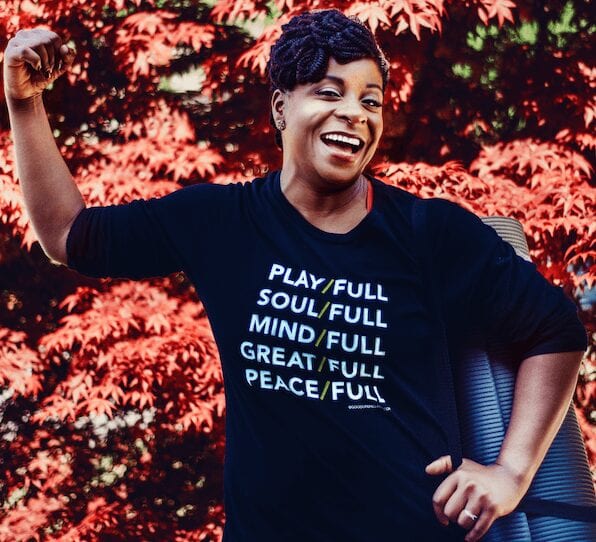
This is the age of wellness and African women won’t be left behind when it comes to health and well-being. Fed up with the lack of healthy living content geared towards African women, Nnenna Kalu Makanjuola knew she had to do something about it. So she started Radiant Health, Nigeria’s first women’s health magazine. Available on Apple and Google Play, Radiant Health is a complete guide to healthy living for today’s African woman. Currently, it is the only global African-owned health magazine focused on bringing all aspects of health and wellness under one title. The magazine also focuses in-depth on socio-cultural issues that are relevant to the well-being of every African woman or girl. We spoke to Nnenna Kalu Makanjuola to find out how African women move towards living healthy. She was graceful enough to share her favourite smoothie recipe too. Why did you feel like now was the right time for you to start Radiant Health and why you are the right person to do it? Radiant Health, quite frankly, is the magazine and health platform that I was searching for to meet my own healthy living needs as an African woman. I was constantly surprised each time I googled African or Nigerian health magazine. I found there wasn’t much in that space. This is a search I had done periodically from the time I was a student and well into my career. But somehow, it never quite occurred to me to start one…until three years ago. I was out for a long run one early morning and thinking about health care in Nigeria, as I often do. And the idea just very clearly came to me to start a health magazine. I didn’t feel the least bit qualified to publish a magazine. But by the end of that run, I had my mind made up to go for it. I thought, “why not me?” It’s fair to say I was tired of waiting for someone else to do it. Why do you think many professional African women struggle with living a healthy lifestyle? I’m reminded of a quote attributed to Chimamanda Adichie, that says “We have taken over our father’s job while retaining our mother’s responsibilities.” In talking to so many of my peers and Radiant Health readers, lack of time brought on by our increased responsibilities is a big issue. Even when the partner/spouse is supportive (and many of them are), African women still bear a heavy share of home, child rearing or other imposed traditional responsibilities. Many try to create a balance with careers and/or side businesses. Often time, it’s the health that gives, if we’re to keep up with these expectations. Equally challenging is the dearth of credible, African-tailored health content we can rely on. No matter where in the world we live, our African sensibilities, consciously or unconsciously, influence nearly everything we do including our health-seeking behaviors. But when it seems everything out there is telling you your culture is incompatible with healthy living (think food for instance), we need a platform that not only counteracts this message but guides us to live a healthy lifestyle that embraces our African essence. And that’s what Radiant Health brings to the table. What makes Radiant Health different from the other health and wellness platforms that exist on the market? I like to think of Radiant Health as a complete guide to healthy living for today’s African woman. We recognize that health is not just the absence of disease and encompasses the whole self. So in addition to health, wellness, fitness, and nutrition we also focus on the mind, spirituality, style, beauty, culture and life. We began as Nigeria’s first women’s health magazine and we’re now the only global African-owned health magazine focused on bringing all these aspects of health and wellness under one title. Our content is well researched, fact-checked and written by experts in their respective fields. We are also very driven by the social issues that impact African women. Every single Radiant Health magazine issue focuses on an in-depth socio-cultural issue that is relevant to the wellbeing African woman or girl. I’m also committed to dedicating a portion of our revenue to support well-organized local, homegrown organizations that are working on alleviating some of the most egregious social injustices faced by the African woman. Finally, we believe strongly in aligning only with advertising partners whose products are not in direct conflict with health promotion. For a startup, it hasn’t always been easy to turn down tempting offers but this is something I feel very strongly about. For your business to get to the next level, would you prefer funding or a high value mentor? Which one would you choose and why? High value mentor. There’s nothing quite like mentorship from someone who has walked the path you are trying to walk on. I don’t want to give the impression that capital is not critical to growth. It is. But even those with deep pockets still need high value mentorship to succeed. I believe with the right mentorship, the funding will always follow. I’ve been fortunate to have encountered some great mentors along the way. I should also add that a high value mentor could be a business coach or strategist that you pay for. You don’t have to wait for someone to freely take you under their wing to benefit from high value mentorship. What can we expect to see from Radiant Health over the next 6 months? Currently, our quarterly issues are published digitally and sold via in-app subscription purchase on Apple and Google Play app stores (news stands). Plans are now underway to add limited print issues in the coming months. We’ve also begun the first launch of a series of our Radiant Body Reboot fitness and nutrition program that have only been available to a select group until now. By the end of the year, we would have rolled out the complete 90-day Reboot program, which includes a done-for-you 21-day clean eating
The fault in Nigeria’s stars: The war between business & government

The fault, dear Shakespeare, is occasionally in our stars —and if you’re Nigerian, occasionally in our government. Yesterday, while all of Nigeria nursed a hangover from Mark Zuckerberg’s stealthy visit to Lagos, local government officials handed out an overdose of Advil, with complementary sunglasses, to smack us all back to reality from the ephemeral excitement. Amongst other properties on Rumens Road in Ikoyi, the Lagos branch of the Nuli Juice Company—a rising local healthy fast food company—was demolished by local government officials who claimed that warnings had been sent to the respective landlords concerning outstanding fees. A worrying trend A few months ago, the Federal Government of Nigeria, through the Nigerian Communications Commission (NCC), slammed a $5.2 billion fine on MTN for failing to disconnect unregistered users, dragging the telecoms giant’s bottom line to a headline loss for the first half of 2016. This was amidst questionable monetary policy decisions by the Central Bank that have now seen the Nigerian economy, along with the constituent businesses of the flailing economy, crumble in 2016. The tug of war between Nigerian businesses, their predominantly foreign investors and the government has never been more obvious. And Nigeria’s economic situation, more disheartening. The same business owners, investors and government officials who vivaciously graced the dance floor to the tune of the “Africa is shaped like a gun and Nigeria is the trigger” chant led by McKinsey & Company and The Economist appear to be trickling off. Standard Chartered and Atlas Mara are leading the exodus from Nigeria with United Airlines and Sun International in tow. The Garden of Eden has proven that when trouble strikes in paradise, the blaming game begins. Adam blames Eve, Eve, the serpent and we Nigerians, our government. That’s just the way the chaos crumbles. However, the Nigerian government is not alone but in good company. The Chinese government has driven Uber to a $1.3 billion loss in the first half of the year. The Tanzanian government abruptly passed a bill requiring all telcos to list on the Dar Es Salam Stock Exchange. The South African government’s proposed sugar tax has the potential to squeeze the life out of Coca Cola’s operations in the country. This chasm between the private and public sector across the globe could not be more glaring. Thankfully, in my lifetime, I’ve experienced the magic that happens when the chasm is bridged. I spent the summer of my sophomore year in college interning at Sahel Capital, a leading agriculture-focused investment firm. Sahel Capital manages the $100 million Fund for Agricultural Finance in Nigeria (FAFIN). Nigeria’s Ministry of Agriculture established the fund and now, Sahel Capital manages it. I am the daughter of my father, a brilliant agricultural economist. He spent the bulk of his career in Nigerian agribusinesses—the private sector. My late maternal grandfather spent his life in public service. In his day, he worked in the agriculture sector of Nigeria’s Western Region. Interning at Sahel Capital, the epitome of public-private partnership, my two worlds collided. And not just mine, but Nigeria’s too. Collaboration between the public and private sector is by no means beyond the bounds of possibility. Here’s blowing the whistle on our leaders for attempting to prove otherwise.
Patricia Kihoro: Create the work you want!
Patricia Kihoro needs no introduction. The multi-talented Kenyan singer and actress has only grown since becoming a finalist at Tusker Project Fame 3 (TPF) in 2009. Now, Patricia has produced her own musical stage show, worked with a variety of renowned musicians and performed across Europe. Through all this, what matters most to Patricia is harnessing positivity and creating a great product. “As people in the creative industry, we are always tarmacking. I got to a place in life where I decided I wasn’t going to stay in the house waiting for work so I created the work I wanted ”, Patricia says. Obviously, music is not all there is to you. Tell us about the other things you do. As an entertainer, my interest spans singing, acting, writing, stage performances and photography. In the spirit of creating work for myself, I wrote, directed and produced my own stage show, Life in the Single Lane, a narrative involving interactive storytelling, acting and singing. The name was inspired by my then single status. In this show, I had put in all my savings and was a bit nervous. The play sold out, reaffirming my belief in authenticity. Life in the Single Lane was not fiction, I was not acting, I was being me. I wanted to create a product that was original and authentic. It ended up being something that people were comfortable bringing their friends, parents and even their teenage children to watch. Evidently, the love bug bit again and it’s a wrap for Life in the Single Lane, literally. So, how much of our personal issues should we let into our businesses? When creating a product, say a play or music, my current state of mind matters a lot. I know I am my greatest enemy. But the good thing is, I was able to harness into my heartbreak positively and create a great product. You were in the Because You Said So stage show. How was it? In 2014, along with a group of friends led by Jason Runo, we staged an improv comedy show dubbed ‘Because You Said So’, a hilarious comedy improvisation stage show. Improv comedy is a form of live standup comedy that is unscripted and entails off the cuff responses to scenarios created by a host. The show has gone on to enjoy tremendous success over the past 2 years. Do you worry about everyday things other entrepreneurs worry about? I mean issues like paying bills or paying late. As a creative especially, I worry that my product may not be good enough. Tell us about your radio show. What kind of music do you play? My radio job at HBR 103.5 is something I take pride in. My show Afrocentral showcases urban and contemporary music from across Africa. I also host creatives making waves on the continent. There’s a lot of good music out there, songs that don’t enjoy any or enough airplay. This is the kind of music I play. Africans are so talented. My greatest joy is when I receive feedback from delighted listeners who call in asking more about the music or the artist. This sounds like a fun and easy job. Is it? I sometimes have to turn the internet upside down looking for music on YouTube and even reaching out to artists directly. Before HBR, I worked at 1 FM radio as a News Presenter. I would say persistence and networking have helped a lot. You’re also an actress. Tell us about it. I was cast on MNET’s production Changes (my first TV gig), Sauti and Rush TV pilots and the 1st & 2nd season of Groove Theory (Africa’s first ever musical TV series). These were not roles that were handed to me. I had to rigorously audition for each and every one of them. I have even had to audition for a role in my best friend’s production. You’re multi-talented but do you ever suffer indecisiveness, especially with what project to do and when? Unfortunately, I can never choose music over my acting, radio or vice versa. These are all abilities that make up who I am as a creative person. Of course, I become indecisive at times. Some friends have advised me to concentrate on one thing, say music. But if I did that I feel I would be selling myself short. Are you involved in other ventures outside the creative industry? Besides being involved in the creative industry, I am one of the mentors at Blaze. Blaze is a recently launched platform that empowers youths to be in control of their careers and future while helping them succeed in their specific chosen fields. It is a sub-brand of Safaricom, a leading mobile service provider in Kenya. I also mentor in media, arts, and journalism. How are you inspired? I keep a group of close-knit friends who inspire, build and challenge me to grow in my career. We want your stories! Tell us what amazing things women are doing in your communities here.
4 dating ideas for busy girls

Like it or not, it happens. You finally decide to do something about this awesome business idea or project, you get immersed in it, then you begin to get tired as this somehow takes over your life. Suddenly, you look up and realize you have no significant other or anything close to it. You’ve been out of school for about a decade or so which means you’re in your late 20s or early 30s. So, you sort of forget how these things are done. I know it’s not exactly science, but dating demands some effort. Putting in the grunt work now while you’re still young, is so worth it to find the ‘right’ one for the next phase of your life. Here are my top four tips for dating as a busy single girl, whatever it is you do and no matter how old you are. Ask for introductions Ask your family and friends for referrals. Be downright shameless if you have to! These people know you better than anyone else and will help you meet suitable, pre-vetted people. You know, like in the same way having someone pass along your resumé can help. This is an effective way to expand your existing circle. Though there’s no guarantee that this would work but who knows, you might just end up with a new friend or gist buddy. Be creative with the little time on your hands No, really. Get innovative. It doesn’t have to be anything nerve-wracking but literally, get yourself out there. I’d say take this glorious moment of singlehood when your life isn’t jam-packed with commitments (except, of course, making truckloads of money). You may even start giving off that irresistible vibe of a person with passion. You then become the more attractive to potential dates. If you’re an introvert like me, going out might be pretty difficult and I’d suggest doing only things that make you comfortable. These ideas prove that love doesn’t really cost a thing or much: – Volunteering – Free concerts – Go to the movies – Attend weddings…I know it’s cliché but still. – Go out with friends – Attend birthday parties You never know where the right people might find you. Online dating … don’t rule it out yet It’s hard to deny the fact that online dating isn’t just the new normal —it also works. Of course, like all good things, relying on online dating has its downsides. So, I’d say be careful (you’re too smart to be scammed, girl). Be sure to keep your expectations in check. Remember, even a bad date can be a good learning experience. Invite the best. Cut off the wrong people You’re already so busy and can’t afford the luxury of having the wrong person around you. Don’t be one of those people who hang around, enduring disrespect, taking inconsistent calls or texts, hoping that one day this person will change. Give yourself a little tough love and delete the wrong person(s) from your life. You don’t have to convince anyone of your worthiness. Trust yourself and let go of the insecurities and soon, you’ll know what to do and who is right for you.
5 Types Of Accounts Every Woman Should Have Before 35
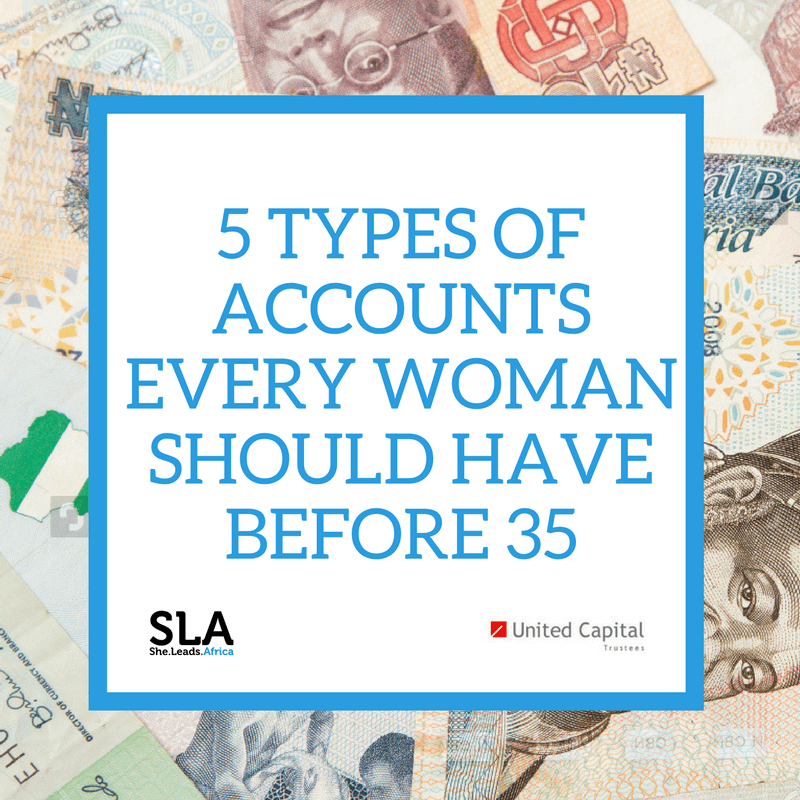
Mo money, mo problems right? Maybe for Diddy, but definitely not for us. Definitely not in this economy and with the bills we need to pay and with the power moves we’re trying to make. More money equals more financial security for ourselves, our businesses and our families but how do we go about achieving that in the long run? The first thing you have to realize is that you can’t wait until you’re older to get started. In fact there are things you can do before you turn 35 which will go a long way in ensuring your financial independence for the rest of your life. We spoke to financial advisors from United Capital about what young women need to do to be better prepared for their future and they shared with us 5 important money accounts that every young woman should have before she turns 35 years old. Now 35 isn’t a hard and fast deadline but we can all probably agree that we better start to have our stuff together by the time we turn 35. Topics this guide will cover: – What are the 5 accounts you need to have before you turn 35 – Why each of these financial accounts matters for your future – How you can get free financial advice to help you reach your money goals So how do you download this free guide? Easy – just fill out the form below to join our community and get access to this guide and AWESOME weekly content. [ninja_form id=29] If you already know you’re ready to speak with a financial advisor who can help you set up long term savings and investments options, then you should connect directly with the United Capital team by emailing them at privatetrust@unitedcapitalplcgroup.com.
5 lessons I learnt about navigating the entrepreneurial roadmap with Nieros Oyegun

At SheHive London, Nieros Oyegun, principal and head of Corporate and Financial Advisory at W8 ADVISORY gave an insightful talk about navigating the entrepreneurial roadmap. Here are five things I learned that I’m sure will be useful to you too. 1. It starts with an idea For any entrepreneur out there, the first step they took towards starting their business is coming up with an idea. This may seem like the most basic step but thinking about a product that is marketable is key to overcoming the hurdles that will come in the future when it comes to financing and growth. So to start off, you need to figure out what you are going to be selling, how you will be selling it and who your target market will constitute of. 2. Understand the environment It is important to understand the environment you will be doing business in. Ask yourself, whose market share are you taking up with your startup and what are the opportunity costs. You need to pick out your competitors and understand their habits, they are factors that could contribute to determining your growth rate and customer base. 3. Approach investors Cold-calling investors is not the way to go. Try and build your contacts and get someone to introduce you to potential investors. When pitching to investors, keep your pitch skeletal and to the point. Try and demonstrate why you think your product is marketable and how it can make your way to profitability. In essence try and think like an investor and understand the risk-investor matrix of your business. Also, make sure that when you leave investor meetings, you clearly understand expectations from both sides and where you stand. This is because there is always the risk of buyer’s remorse with the investor, they may decide not to go ahead with funding the business. So do not relax until the money is in your account! 4. Find a partner A one person startup usually hinders investment opportunities. This is because it is difficult for one person to take on all the roles in a company. Therefore investors are more skeptical of putting resources into such a business. Finding the right partner and their potential long term contribution to your business can aid you in getting investors. 5. Consider self-funding When it comes to funding your business, look into self-funding through your savings, applying for grants and accelerator programs first. If you bring in a partner, you should be cautious of how much equity in your business they control. It is sometimes the case with start-up businesses that at the early stages, the partner is active in helping set up but once the business is up and running, their role is limited so having a huge percentage of equity is disadvantageous to you. Institutional investors are the later options to look into for funding.
How to be a fashion model when you’re clueless
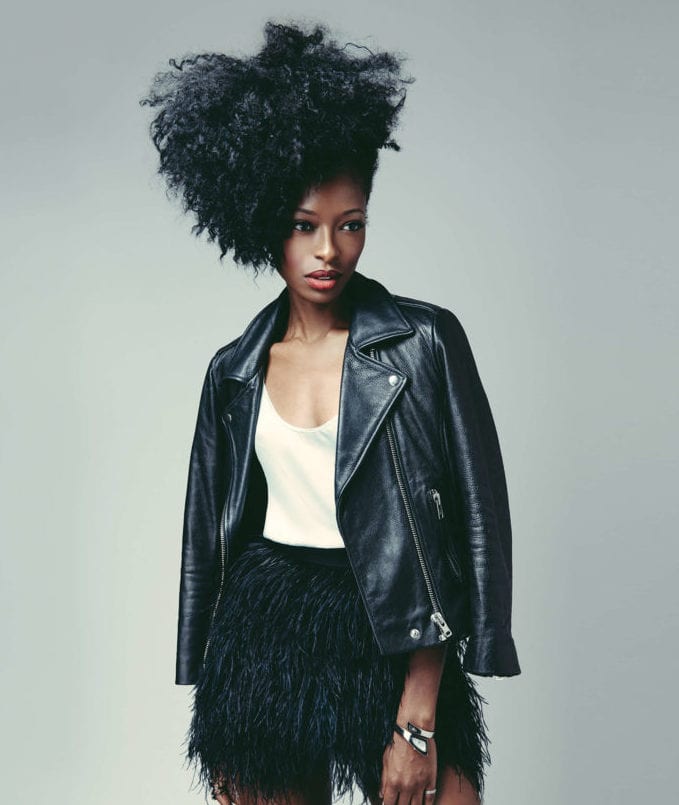
Those who are aware know that modelling is a fast-paced exciting career that can take you to new places. But breaking into the fashion scene can be hard, especially if you’re aiming international and you’re an African girl. To find out more, we talked to Aina Fadina, a model and entrepreneur who has done in-house work for Oscar De La Renta, Alexander McQueen, Versace and more. Aina graciously shared her advice on breaking into the fashion industry and the tools any aspiring model needs. Understand the business Top models from Naomi Campbell to Jourdan Dunn have called out the challenges of being a black model and Aina agrees. “I think the fashion business is still very challenging for any model. Period. The business has changed so much but for the black model, it is a lot harder. I have seen a slight increase of black girls in editorials and commercials. Brands have finally noticed the power consumers have, however, it is still challenging.” The challenge is further complicated by the fact that models now compete with celebrities for jobs. Aina’s advice is that if you understand the business and are strategic enough, you can pull through. Tips to get into the industry There are no shortcuts to this, you’ll have to work hard while remaining smart. Aina’s top tips are, Do your homework. Study boards of the top agencies and brands to learn about the business behind fashion and network authentically. Get a mentor! In every profession, you need mentorships so find someone willing to guide you through. The power of social media If you’re broke, have no connections and still want to be a model, social media is your friend. Learn to use it to your advantage. These days, clients are going directly to talents, so you need to know how to market yourself. Also, consider getting a part-time job in fashion or entertainment industry, it can help to gain access. Maintaining relevance as a model Now once you’ve gotten into the industry and are working your way to being a top model, you still need to be on top of your game. The most important thing for Aina is being nice to your clients and agents. She says you should always check in with your agents and have great work ethics and values. Make sure you show up before your call time and always offer to stay longer if needed. Aina shared this saying, “It is nice to be important; however, it is more important to be nice.” Wise words, right? Good luck to you as you embark on your modelling career!
Delphine Groot: Your success as an entrepreneur is determined by your willingness to work hard
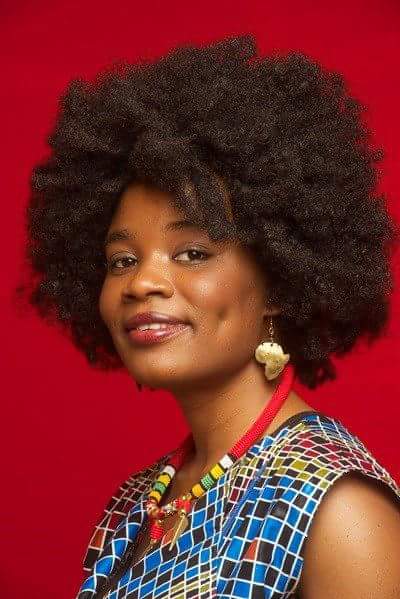
Delphine Groot had her big breakthrough into the African-inspired fashion scene in the Netherlands in 2015. That was when she had the opportunity to showcase her collection at the Locked & Loose event in Amsterdam in the summer of 2015. Organized by The Natural Hair Club, the event exposed her unique collection to a crowd of entrepreneurs, designers, sponsors, and consumers. Many of whom were impressed and this eventually generated publicity and sales for her brand, Bobo Couture. SLA contributor Uloma Ogba, spoke with Delphine on seeking alternatives to follow her passion and being a cultural ambassador for Africa in the Netherlands. How did you decide on the name “Bobo Couture”? I belong to the Bobo ethnic group, native to Mali and Burkina Faso. The Bobo people have a thousand-year-old tradition of handicrafts and textiles. When choosing a name for my fashion brand, I felt that Bobo was fitting. Bobo captures who I am and what I want to bring to the fashion industry. I bring with me well-designed and crafted clothing, and jewelry inspired by my rich African heritage. What was your motivation for starting your own business? I was born in Mali but grew up in the Netherlands and in several other African countries. So, I have seen a fair bit of the world and absorbed parts of the different cultures I have been exposed to. In university, I studied Human Geography and International Development because I wanted to understand the role of cultural exchange in global development. However, after graduation, I quickly realized that I was not suited for office work. And so, I decided to seek alternatives to follow my passion. I came up with the idea of starting my own business. I wanted to find a way to apply my studies to something that I find both practical and engaging. Through Bobo Couture, I am able to participate in the cultural exchange process. I do this by creating access in the West to the creations of local people in various African communities. For every item I sell and when I get a chance to tell the story behind its creation, I see myself playing a role as a cultural ambassador for Africa. What is the process like for you as a designer and an entrepreneur? First, I must give credit to my mother who is my business partner and provides a lot of creative input. Together, we decide on the right fabrics and designs for each collection. The goal is to showcase different aspects of our African culture that our customer base in the Netherlands can relate to and appreciate. My culture is very vibrant, colourful, exciting, playful at times, and very focused on community. I try to make sure each collection represents that in varying degrees. From reviews I have read and from your own accounts, your brand Bobo Couture is doing really well, exceeding even your expectations. How do you think you are contributing to the development of Africa as you say? All the fabrics and textiles that we work with, for the clothing and jewelry, are sourced locally. We also employ tailors and craftsmen in Mali, Togo, Kenya, and Ghana. By providing them with work on a consistent and growing basis, we contribute to their economic development and professional growth. We want our workers to take pride in the things that they produce. We also want them to know that our goal is to ensure that their work and the meaning behind it, reaches a wider audience. You recently expanded your business to set up a physical location. In addition you manage the online store and travel back and forth between the Netherlands and Kenya to import the clothes. How are you able to find balance in your life? To be honest, these days it seems like all I do is work. But I love seeing the efforts of my hard work come to fruition. In the first year of Bobo Couture, I had to give up my personal life. No going out with friends or going on vacation. Since we opened the store, even though we employ some local girls to help out, I still have to be present most of the time. The only things that keep me sane are using what little time I have to keep up with the gym and talking to my family. These provide me with the physical and moral support I need. Given your experiences, what would be your advice to aspiring entrepreneurs? If I could give one piece of advice it would be that hard work is the most important key to your success. There are going to be many challenging times ahead. But you have to try to view failures as part of the learning process to reaching your goal. Set big goals and dare to achieve them. When I started, a lot of people tried to discourage me. I heard the market was already saturated and it would be hard to stand out. Before I got an assistant, I had to transport all my clothes to and from events by myself. But I always believed in myself and in my ideas and that is what got me here today. Any final thoughts? I think a big part of why my designs sell so well is because they are a true reflection of who I am. I would never sell anything that I wouldn’t proudly wear myself. Whatever brand you choose, if it reflects you, then selling it to the public will never feel like hard work. Want to see women you know featured on SLA? Tell us what amazing things women are doing in your communities here.
Evelyn Namara: Don’t wait until you have the perfect product

Evelyn Namara is bomb-ass in just about every way. When she’s not breaking ground in tech innovation in Uganda, she’s helping women start successful businesses. We totally get why she was called a “fearless influencer of society”. Evelyn is the founder of Vouch Digital, a technology start-up building a verified digital voucher system that helps simplify the distribution of aid for international aid agencies as well as government programs. Her system helps eliminate fraud and corruption in the distribution of goods and services for cash-based programs, but before that, she worked for Beyonic Limited and Solar Sister. She is an Acumen East Africa fellow and also an IDEX fellow (January 2015 class) where she spent six months in India as part of the fellowship program working for Wings Learning Centres. Here, Evelyn shares her passion for tech and entrepreneurship with SLA and lets us know her top five tips for start-ups. What is one thing about Evelyn Namara that the world should know? I keep a counsel of close advisers who I go to when I need advice and guidance on anything. It is important for everyone to have a counsel of trusted friends who can genuinely give you guidance and also truthfully rebuke you when make terrible decisions. I have found that these people have helped me stay focused on my goals and have encouraged me when I have felt like giving up. Tell us about Vouch Digital Vouch Digital was born out of a need to find a solution to fight fraud and corruption in the distribution sector. After realizing that most systems that deliver aid to end users lack efficient systems to track transparency and efficacy, I started working on our product. Our product is a verified voucher system that simplifies the distribution of aid to different program beneficiaries. Beyond distribution, we are working on mapping beneficiaries who receive aid and do not have an identity by giving them digital identities through our system. The digital identity system allows these beneficiaries to access other goods and services such as financial services. [bctt tweet=”@vouchdigital was born out of a need to find a solution to fight fraud and corruption in the distribution sector.” username=”SheLeadsAfrica”] What needs to be done to increase the number of women in IT? STEM studies should be encouraged from the grassroots. Girls, as well as boys, should know that the choice exists for them to take up technology as a career from an early age. I believe that once we introduce STEM studies early on and put gadgets in the hands of girls as they grow up, there will be no need to “increase women in IT”. We have a problem now because some outdated education systems allow girls to believe that some courses are not meant for them. That there are some simpler and feminine courses that girls should take up and unfortunately technology is not one of them. Let’s focus on building capacity for the younger generation and open up opportunities for girls to live up to their full potential. Besides that, we need to encourage more forums that are building capacity for women in IT. One of such forums is AfCHIX which continues to impart skills development in young women in ICT. AfCHIX gives girls an opportunity to be better at their skills and thus compete favorably for jobs. It also links them to opportunities to attend conferences such as the Grace Hopper Conference which is one of the biggest women in technology conference that brings together thousands of women from all walks of life in the technology sector. As someone who helps women start businesses, what are your top five tips for start-ups? I draw my lessons from my start-up and I will share those with other start-ups. Research the field you want to serve adequately. Carry out your baseline studies and understand your field. Know the other players in the field and find a way to make your start-up stand out in terms of product offering. It’s your uniqueness that will give you an edge. Don’t wait until you have the perfect product for you to hit the market. Prototype early, test your prototype with potential customers and iterate. You learn a lot when your product is in the hands of customers and this allows you to work on early modifications before bringing out your final product. Have a target market and work closely with them. Most start-ups are not very clear on who their target market is and this creates ambiguity in building your solution. Work on knowing who your target customers are so that you build specifically for them. Build a pull of partnerships, these are key in giving you longevity. With the right partners, you can scale your start-up easily. Find those that complement your vision and work together to push your product or service. Build the right structures. This is key if you are looking to build your start-up to scale. You were an IGF Internet Society Ambassador in 2015, tell us about that. Internet Society invests in Next Generation of Internet leaders. Through its Next Generation Leaders (NGL) programme, Internet Society helps Internet professionals between the ages of 20 and 40 develop their leadership potential in technology, business, policy, and education. NGL participants gain a unique opportunity to advance their professional growth and build the experience and confidence they need to drive development in their own local communities and the larger Internet ecosystem. The Internet Governance Forum Ambassadorship Programme lies under the NGL curriculum and gives an opportunity for Internet professionals to attend the IGF and participate in the dialogue that shapes the Internet ecosystem. I applied and was accepted as a 2015 ambassador and the experience was enriching. Stand out topics for the 2015 IGF were Connecting the next billion, Net Neutrality and Zero Rating, topics that are relevant to the African continent. My interest as a member of civil society was on following and contributing to the discussions on connecting the next