
7 history lessons from bomb-ass Ethiopian women

In our modern quest to being Motherland Moguls, sometimes it’s refreshing to peek back into history for validation. There, we find stories of women who just didn’t take no for an answer. These women also overturned the status-quo and created worlds that they believed they deserved to live in. There are countless women in our continent’s history that were kings of their own castles, literal and metaphoric, despite the odds. This is the case for these five Ethiopian women who insisted on their individuality at any price and still brought repute and victory to their country and continent. Yodit Gudit, c. 900 The Commander in Chief. For the woman who courts controversy and knows that sometimes she needs to be ruthless. This rebel queen reigned over a sovereign kingdom just outside the sprawling Axumite Empire, which at its height spanned all the way from Ethiopia to present day Yemen. When her territory was threatened with occupation by the Empire, Yodit initiated an offensive. Her tactics didn’t just expel enemy troops from her lands but chased them all the way back to the seat of their kingdom. She chased ruling elites of the Empire from town to town, until she brought about the complete dissolution of the Axumite Kingdom. Yodit’s rule marked the beginning of a dynasty that introduced a new bloodline, breaking nine centuries of rulers who traced their kinship back to Queen Sheba and King Solomon. She is notorious in written and spoken accounts of ancient Ethiopian history for her zeal for vengeance. In fact her last name, Gudit, is an epithet that translates to an infernal capacity for destruction. While her legacy is controversial, it is undeniable that she was resourceful in leveraging military might as well as fear tactics to take on a behemoth Empire that was much more endowed in artillery and troops than she was. Empress Taytu Betul, c. late 1800s Military strategist and pioneering Motherland Mogul. Empress Taytu’s goals for the woman who accepts diversity in business development. When Italy invaded Ethiopia the first time, the empress didn’t sit back while her husband, Emperor Menelik, drove troops to the war front. Instead she led 5,600 infantry and cavalier men into battle and took the stead of military counselor to the generals in command. Leading up to the decisive battle of Adwa, she suggested a decisive strategy to weaken the opposing troops –cutting off water supply to the Italian fort rather than attack it directly. After a humiliating defeat of the Italians, diplomats looked to the peace treaty to achieve their colonial ambitions through a deceptive technicality that would allow them to have protectorate rights over Ethiopia. Taytu stopped at nothing to revoke the treaty, which she did successfully. In peacetime, wife and husband capitalized on their separate strengths to build a formidable and forward-bound nation out of the newly reconstituted Ethiopia. While Menelik travelled to quell rebellions within the country, Taytu stayed in the new capital, Addis Ababa, a city she had selected herself. She pioneered industrial growth by setting up the first wool factory in Ethiopia after consulting with experts from Turkey and India. She encouraged the growth of cosmopolitan life by opening the country’s first modern hotel that served both local and international cuisine. Senedu and Yewubdar Gebru c.1930s Freedom fighter and vice president of parliament. Freedom fighter and virtuoso pianist. These sisters show that two heads can be better than one in the marketplace. The repertoire between this sisterly duo includes guerilla warfare, virtuoso classical music, ten books, five languages and leadership of the country’s largest institutions. They were among a handful of their generation to win scholarships patronized by their home city governor to study in Europe. Quite like our present day shift towards repatriation, they chose to return to their country and become teachers. Soon after, Fascist Italy invaded for the second time. Rather than join their families in safe exile, these sisters took up arms alongside their countrymen. They joined the Black Lion movement to expel Italians out of Ethiopian territory. Before Ethiopia was liberated by 1940, they spent two held captive in a jail on an Italian island. There, they snuck in material to learn Italian to cast off lethargy. Upon return to their motherland, they took separate paths but continued to share a passion for life. Senedu became a national figure in the multitude of public roles she assumed. As a headmistress of a renowned all-girls school, she became a compelling role model. She cultivated a generation of girls into leadership under her strict tutelage. As the first woman in parliament, she was also known for her bold challenges to order and outspoken rhetoric. This earned her vice presidency in later years. The younger sister, Yewubdar, joined a monastery, adopted the name Emahoy Tsegue-Mariam and continued to hone her expertise in classical music. To this day she lives in Jerusalem and travels worldwide to play her self-written numbers on the piano. Asnaketch Worku, c. 1950s Artist Extraordinaire. We all love women who calmly ignore societal dictates on what is “proper feminine behavior”. Asnaketch is the one for the women in industries that are considered unfeminine. This woman was a force of nature. Her charm on and off stage held her audience’s attention in a fit of willful siege. Asnaketch was a theater actress and a dancer to boot, but she was most revered for her music. The mastery with which she spun her hoarse and sonorous voice with the searing sound of the kirar (a traditional string instrument) into bewitching tales of love, loss and independence held many in awe. She belonged to a school of music, azmari, that at the time was considered immodest. This was due to its explicit nature compared to the characteristic conservatism of Ethiopian culture. Asnaketch paid no mind to the stringent mores of womanly propriety. She had a tailor on hand to weave her daring costumes, raised children that weren’t her own and
DiElleCi: Working with sisters can be light on tough love

Diasy, Luisa and Cleo are Angolan sisters who are leaving their imprint on the blogosphere not just in English but Portuguese too. Their blog DiElleCi, a mash of their names, is becoming the go-to for advice on beauty, fashion and health. These sisters are all students, Cleo recently graduated with a degree in engineering, but find the time to give readers a peak into their lives. SLA reached out to them curious to know more. We learned that working with sisters is great but can be light on the tough love and reduces the need to micromanage. DiElleCi share more about running a bilingual blog, including what’s in their purses below. When did you start your blog? What lead you to it? We started our blog on February 10th, 2016 because we have always had a creative side. We also had the desire to do a project together. However, we noticed that as university students, the academic side of our lives was taking over the creative side that we very much exercised when we were younger. For that reason, we decided to create an outlet where we could share another side of us and our additional interests. Also we, as young African women, felt like we weren’t represented in social media, especially in the Portuguese speaking market. Have you faced any difficulties blogging in both Portuguese and English? Which of your audiences is bigger? The only difficulty we’ve had with running the blog in two languages has been ensuring that our voice remains the same both in English and in Portuguese, regardless of translation. So, it takes some time when translating posts since we need to add expressions for each language. But we are glad we have done so, since our biggest audience is the Portuguese one. Have you taken any special steps to grow your audience? Social media has been a great catalyst to the growth of our audience. Firstly, Facebook is great since almost everyone has an account, so we make sure to keep our Facebook page current and engaging. In addition, Instagram has been equally great since it has so many pages that cater to girls that share similar interests to ours. Because of that, we have been featured on some high quality pages and have seen more growth and exposure from them. Most importantly, we have made it a priority to remain consistent in both the frequency of posts and in the quality of content. How can a young African woman reading this start monetizing her blog? Blogs can be monetized in many ways. As a starting point for us, we decided to monetize our blog through affiliate links. However, we have noticed that it’s not the most sustainable option. We’re currently working on developing different ways to get a more sustainable return without compromising the overall brand. What is it like working together as sisters? Is there any conflict? Working with sisters is great because we share the same values and know each other very well so when conflicts arise, there are no issues in addressing certain situations. However, since we know each other so well and care about each other, sometimes it is hard to give much needed “tough love”. Above it all, the biggest benefit since we know each others weaknesses and strengths is that there is no need to micromanage, which makes task distribution easier. How do you find time to update your blog regularly as students? Being students has taught us about discipline and multi-tasking, so we have applied those attributes to our blogging routine. In addition, like we mentioned before, we separate our tasks according to our strengths and weaknesses. We have seen it has helps us save time and energy when tasks are well divided and only the best person for the job is in charge of a specific task. What’s the process of blogging like for you? How do you come up with content ideas? The process of blogging for us is very interactive. We have been very lucky because our audience has been very good at telling us what they like and what they want to see. Even more, we get inspired by our everyday routines and experiences and share what we think would be helpful or interesting. Most importantly, we gain inspiration by seeing ourselves as the audience and consistently asking ourselves what we would like to see. Can you share what’s in your purses right now? Wallet, student and Oyster card (for public transport in London), our blog planner, snacks, chapstick, a book we are currently reading, iPhone, portable charger and of course keys. What is the last song you played on your iTunes/iPod? We were just listening to the new Rihanna song ” Sledgehammer”. If you’d like to share your story with She Leads Africa, let us know more about you and your story here.
“Be realistically audacious” : Teniola Adejuwon on the 500 StartUps accelerator experience

Podozi.com is a beauty ecommerce platform that gives African women access to both local and international beauty brands. Co-founders, Teniola Adejuwon and Wale Babatunde, recently completed a 4-month accelerator programme with 500 StartUps, a leading venture capital fund in Silicon Valley. To date, 500 StartUps has invested in over 1,500 businesses across 50 countries worldwide. Every year, thousands of businesses apply either through a formal application or referral, and after passing 5 or 6 rounds of interviews are accepted onto the programme. Podozi was one of 50 startups accepted for the most recent cohort ‘Batch 16’. With the programme, Podozi worked in Silicon Valley, learned how to take their business to the next level and received a net investment of $100k. In this interview, Teniola shares her experiences with 500 Startups and gives some advice for aspiring entrepreneurs. How did you get involved with 500 Startups? It came as a total surprise. Last year, we were introduced to 500 Startups through an investor who was a personal contact. As my mentor Tara Fela-Durotoye always reminds me, your network is your networth. Previously, the investor had mentioned that although they typically focus on Series A funded businesses or higher, they really liked the Podozi business. So we agreed to keep in touch for when the business grew bigger. Applying to 500 Startups was an aspiration of ours, which we planned to pursue in the future. About a year later, we got an email introducing us to 500 Startups, and that was it. How has being part of the 500 Startups programme helped develop Podozi? We recently completed the programme, so it’s still very early to articulate the full benefits, but being part of the 500 network is like being part of a global family. It’s a lifetime thing, where you grow and evolve. We were exposed to people and ideas from across the world. While we have formally finished the programme, we continue to keep in touch with our batch and the other businesses in the community via a group email. We have a well of resources to draw from and access to mentors who we can reach out to for advice. Throughout the programme, we had opportunities to pitch to hundreds of investors and peers in the startup ecosystem. One of our pinnacle moments was presenting Podozi during the closing ‘Demo Day’. Being able to articulate our brand raised our profile with international peers and investors, which also helped our profile in Nigeria. Also, to be eligible for the programme, we had to (re)incorporate as a U.S. company which gave us access to U.S. specific venture networks and investors. Tell us more about your experience in Silicon Valley as part of 500 Startups Batch 16? Living in California was an interesting experience. Given the 8-hour time difference, we were working from 9am to 7pm U.S. time, then worked after hours to service Nigeria alongside our colleagues back home. It was a demanding but authentic experience of what it means to run a truly international business. All businesses in our batch worked from the same office in San Francisco. This helped develop a spirit of camaraderie, collaboration and shared learning, which is not always a given in most accelerators. We travelled to Los Angeles, New York and other cities across the U.S. which gave us exposure to international best practices and processes. Once you get established processes in place, you’re able to serve your customers better. I’ve always been an advocate of this and Podozi advocates this too. While it’s not always possible to please everyone, I remind my team to put themselves in the customer’s shoes. Empowering the customer is crucial, and something businesses on the continent tend to miss. What advice would you give to aspiring startups and entrepreneurs? Cultivate an attitude of excellence. Being entrepreneurial isn’t about calling yourself the CEO, you need to have a long-term mindset. My first company, Beauty by Nature, ran the Beauty Business Masterclass series. We would teach attendees that no matter whether you’re a nail technician or a self-taught makeup artist, you need to develop your craft and put the right structures or systems in place to support it. That is the difference between a sustainable business and one that burns out quickly. Also, it is not only about funding. Successful entrepreneurs are convinced beyond reasonable doubt about what they are doing. In the past I’ve seen African startups get deterred early on by investor questions about about basic things like their business model or business numbers. If you are not convinced about your product, it will be difficult to enter in, let alone survive in Silicon Valley. It can become quite distracting when your brand gets bigger and your profile increases, so you need to keep focused. As one of my mentors says, ‘the media, awards and accolades will come; just do your work’. What tips would you recommend for making a successful application to an accelerator? Firstly, do your homework. There are funds and accelerator programmes that may be targeted to your industry or geography. Be aware that while some of them are global, their funds might be localised to specific regions. Then, develop a proof of concept. Ideas are a dime a dozen, so don’t just go about touting ideas. Don’t simply try to replicate an idea that works in another country, ensure that it’s relevant to your market. My mentor, Mrs Ibukun Awosika says, “Be the expert of your business – know your numbers and keep your books tidy”. Businesses sometimes rush to launch an app without considering the consumer behaviour in their locality or whether they have the capacity in-house to maintain such. In e-commerce the big question is traction! It’s all about your metrics. Third, be humble enough to admit what you don’t know and be ready to learn quickly. Utilise your resources, prepare in advance and ask as many questions as possible, there’s a wealth of resources out there like Quora to keep you
What you should know about co-working

Co-working has been a growing trend around the world, a trend that is spreading across Africa as well. If you’re in charge of a business, particularly a small startup, you know that running your own office space can be seriously distracting. “The internet is down! What should we do?” “This place is dusty, was the cleaning done today?” “Are we making sure all our visitors are taken care of?” With all this headache, you may end up forgetting what your business is actually all about! Not everyone has time to deal with all these challenges! If you can relate to this, then you should consider moving into a co-working space! Abuja has Ventures Platform, Lagos has Stranger, Johannesburg has the Hub and Nairobi has Nairobi Garage which has been at the forefront of the co-working scene in Nairobi for more than a few years now. If it isn’t yet a no-brainer for you, here is a list of reasons why co-working is a great option for your business. Networking You already know that networking is an essential part of growing your contact base. This is something every professional has to go through. Expanding your network is something that you always have to go out of your way to do…unless you’re in a co-working space! When you co-work, you don’t have to go out of your way to meet people, they’ll simply come to you! Take a look at the sort of people you could be sitting next to. YOLO Renting out your own office space can seriously break the bank. Then, you may find yourself having to choose between fast broadband internet and better furniture. Which one will you let go? Co-working is great as access to Wi-Fi, office equipment, a kitchen, a lounge area, and meeting rooms are all included in a package. You’ll have many great amenities at your disposal that you otherwise wouldn’t be able to afford on your own startup budget. All this without any serious investment on your part. Meet new people Co-working spaces usually consist of people from a wide variety of different companies. This means lots of new ideas can be found everywhere! Being surrounded by small-scale startups means beings surrounded by innovators like you, so you’ll definitely be inspired by different people on many occasions! Some co-working spaces also host seminars, panels and workshops. Nairobi Garage for example hosts cool bi-monthly events. We are one! Last but not least, the main thing a co-working space has to offer is the feeling of community! Thanks to the range of different companies in these spaces, companies aren’t directly competing against each other. This means you won’t get entrenched in any internal politics that plague usual working spaces. You’re part of a family, a big one where people help each other out. THAT is the essence of co-working!
Anthropology in Business: Using insights into human behavior and culture to improve your business

“To succeed in the business of the future, we have to become the very people we’re trying to reach.” – Brian Solis Anthropology is the study of people or the human condition in order to gain insight into patterns of behavior or culture. Anthropologists have been practicing the art of cultural immersion for many years. Rather than simply observing from an outsider’s perspective, cultural immersion involves inserting oneself into and fully engaging with the culture of the group being studied. The goal of cultural immersion is to try to find answers to questions like, “How do people or groups construct meaning?”, “How does it function within the context of their daily lives?” As the world becomes increasingly globalised, there is a need to understand not just the people in our communities and those communities closest to us, but also people much farther away. You do not have to be an anthropologist to realise that to truly comprehend the reality of others’ lives, you must be able to view them through a lens that isn’t clouded by ethnocentricity. Put simply, to effectively communicate and engage with others we must be willing to put ourselves in their shoes and try to see the world from their perspective. This same principle is becoming increasingly relevant in the business world. What customers want vs. what they think they want Microsoft, Google, Intel, Procter & Gamble and Philips. Can you guess what all of these companies have in common? They all have a team of anthropologists on their payroll! Have you ever found yourself watching a commercial and having no clue what product was being advertised? But once the product was revealed, you realise that the commercial had somehow piqued your interest and succeeded in selling it to you. Have you stopped to wonder why more businesses are choosing to adopt this kind of indirect marketing and advertising approach? Well, businesses are catching on to the fact that that there is a divide between what customers want from a product and what companies think they want from the same product. As it turns out anthropology has a lot to say about human behaviour and cultural patterns. To remain competitive, both domestic and international businesses constantly rethink their strategies to better fit their environment. Being able to identify and explain patterns of consumer behaviour is essential to the success of any business. So to is knowing where within the wider cultural context these consumers are located. As anthropologists and market researchers Patricia Sunderland and Anita Denny stated in their 2007 report, “From our vantage point, markets are not constituted of segments of people with specific and profiled “needs”. Rather they are constituted by systems of interwoven meanings and practices that may or may not have resonance for a product, brand or experience”. What does this mean for your business? The key take away messages for all Motherland Moguls from this should be, Let anthropology guide and shape your marketing strategy. Facts and figures are important, but you must look beyond and strive to understand the relationship between your market(s) and the culture(s) in which it is situated. Use cultural immersion to your advantage by participating in the testing of your product, brand or experience. This is a surefire way to create a sustainable relationship with your clients and to ensure that you truly understand each other’s wants and needs. Did you find this article interesting? Please share your thoughts by leaving a comment below.
Kah Walla: Starting a business in Cameroon is easier than before
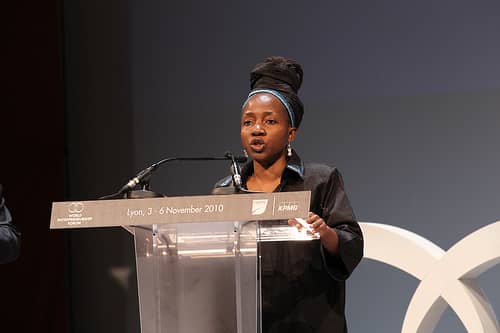
Kah Walla is one of Cameroon’s most successful female entrepreneurs. When she started her consulting firm 20 years ago, she says she never stopped to consider how unusual, and challenging, it would be for a woman in her 20s to begin a business in Cameroon. Despite being a woman and facing the hurdles of the Cameroonian tax system at the time, Kah successfully established her consulting firm. Her company; Strategies is now across the world, serving both domestic and international clients, and draws in an average annual revenue of $500,000. Kah’s consulting firm, which makes over 90 percent of its turnover outside Cameroon. It offers services in leadership, strategy and organisational development to multi-national firms and development organisations. Kah’s business reach and outstanding impact throughout Africa, Europe, and the US, has given her recognition and many awards. In 2008, she was recognised by the World Bank as one of the seven women entrepreneurs working to improve the African business environment. Today, Kah says now is the best time for entrepreneurs, especially women, to start a business in Cameroon. This, given that Cameroonian laws now grant women new rights, such as travelling without male companions, opening bank accounts and registering businesses on their own, without their husbands’ consent. This is something which didn’t exist before. In the following excerpt, Kah shares more tips on starting a business in Cameroon. Do research: Know the country’s laws and what the people need Any entrepreneur willing to start up any business in Cameroon has to do some professional homework regarding the country’s business and tax laws, including general marketing analyses. You also need to know what the people really need in a bid to understand if your business project will be people-friendly. Cameroon’s business law is harmonized under the OHADA treaty like other countries in West and Central Africa, and is at face value gender neutral. But there are customary laws and traditional practices which sometimes disadvantage women in business dealings. So knowing the laws is a salient point to consider before starting out. Put down your plan on paper The next step in starting businesses at any level is creating a plan. You must create some kind of plan before going into business. Putting something down on paper will remind you of your objective and goals. Then you can continually develop this plan, but make sure to always have one from the get-go. At some point –even after you’ve started a business, return, rearrange things, and reflect. Just put your plan together first! Be proficient in the country’s two languages. Cameroon is a bilingual country with English and French as its two official languages. Any young entrepreneur who wants to succeed should know how to manoeuvre between English and French. Get the right information, meet and create the right network “Meeting and creating the right network is very important. There are many businesses that have not seen the light of day simply because they didn’t get the right information. Connect with people who have different strengths but are like-minded in their entrepreneurship and development interests. Being a business owner or entrepreneur can sometimes get lonely, particularly in the start-up phase. The government of Cameroon has been striving to assist entrepreneurs in setting up and running their own businesses in Cameroon through the One-Stop Pilot Centre. The Centre is one of out of the many other investing paltforms in Cameroon. These centres unite all administrative services for creating a business –including taxation, insurance, treasury and customer service. There are places where people can find out what documents they need to prepare and fees they need to pay in establishing their businesses. Any person willing to start up a business should go to these places to get the right information. These centres have eased the process of creating businesses in Cameroon, which now is supposed to take between three to five days.” Have the right mind-set There are certain basic mind-sets which are critical to becoming the ultimate entrepreneur. They include: Everything is possible, Passion first, We are connected, 100 percent accountability, Attitude of gratitude, Live to give, and The time is now. All challenges have solutions “All challenges and problems have solutions, and in order to be successful, one has to be innovative and creative. Successful business women must remember that everything is possible. When I started out in my 20s, I didn’t realize that the markets would be a challenge for me. But what I had was the will and desire to make it and to start my business venture. With that alone and my passion, I think I have been extremely successful in my life. Summarily, I will advise entrepreneurs to create businesses that provide what Cameroonians need and to welcome any challenges as added motivation for innovation. The keys to success are sticking to a plan, being creative, remaining optimistic and doing one’s homework. The Cameroonian government has made starting a business faster and easier here. So the time to start-up is now!”
Tips to prevent workplace accidents

According to Lindsey Friedman, about 3 million workers a year in the US private sector are injured. The rate of injuries and illnesses are highest among small and medium-sized companies. Now, that is the US, imagine the current statistics in Africa. As some Nigerians may say, “It’s not my portion”, “God forbid”, “I’ve never had an accident before”, but precaution is better than cure. Accidents and other such incidents in the workplace are one of the ways businesses lose money and for an entrepreneur working on limited funds, this is not the way to go. It’s never too late to build a safety culture. It is important to invest in accident prevention because trust me, without adequate control measures in place, accidents will definitely cost you. Don’t worry though, here are some tips to help: Formal safety policy and procedures You need a defined Health and Safety policy, work procedures and actions to take in emergency situations. Determine upfront that you want a safe business and work towards it. Avoid shortcuts in work activities We understand you have deadlines to meet but hey, we would like to see you arrive at the end in one piece. Remember, you need to be alive and in good health to bring in the money. Hazard identification Hazard is anything with the potential to cause harm. You need to study your operations and identify likely hazards. This is a major step because identification makes you come up with ways to limit the effects of hazards on your business. Communication Free flow of effective communication between employers and employees keeps a workplace safe. Employers need to communicate safety procedures to their employees verbally and using appropriate signs. Employees on the other hand should report safety concerns because they are directly involved in the work process and experience things first hand. Provision of appropriate equipment When buying equipment for your operation, always buy the right one. Research to know what is best for your business. Remember, whatever is worth doing is worth doing well. Improvising has caused many workplace accidents. For example, if employees have to climb to reach material, please provide appropriate ladder so they do not have to use a stool. Provide Personal Protective Equipment (PPE) Depending on the hazard faced with each task your employees will have to do, provide relevant PPE. Protective equipment include gloves, coveralls, safety shoes, hard hats, safety goggles, ear plugs etc. Good housekeeping This simply means a clean and orderly workplace where certain things are avoided. Unmopped spills, disorganised work spaces, loss of concentration, not putting away used items have led to workplace injuries. Therefore, cleanliness and orderliness in the workplace is very important. Training New employees need to be trained in work processes as research has shown that they are more likely to be involved in workplace accidents. Also, when new equipment or work processes are introduced, staff should be trained. Yes, we know you’re still working with those limited funds but the costs of accidents are even more. Be on the look out for cost effective training. Regular inspection Work processes and equipment must be inspected from time to time. Inspections reveal pitfalls in the system and give you the opportunity to tackle them before problems arise. Vehicle maintenance All vehicles used for business must undergo routine maintenance. Don’t say, “Oh, it’s still alright”, “Everything is still functioning well”. Regular maintenance ensures that you are safe every single time you get into a vehicle. We would absolutely love you to achieve your success story without any broken limbs. Tell us tips you use to prevent accidents in your workplace.
You don’t have a career strategy? Seriously?

I completed another course in leadership & management earlier this year (boooyar!) Much of the work involved researching and understanding the purpose of business and decision-making strategies. I won’t lie, some of it was boring as hell and I found myself browsing Facebook when my assignments were due in. But in true fashion, I slayed that course! Whilst busy slaying, the course reminded me of the importance of strategies in our lives overall. The word ‘strategy’ sounds so serious. It sounds like something connected to business plans, maybe world domination, but let’s break it down and keep it real. A strategy is a plan or path as to how a certain goal or objective will be fulfilled. It’s a plan that takes you from A-Z. What is a career strategy? Your career strategy outlines the steps that you’ll take in order to achieve your career goals. Simple! It starts with your vision A career strategy starts with what you see yourself doing in x number of years. It then goes on to outline the steps that you’ll take in order to realise your vision. These steps may involve practical things such as gaining relevant qualifications. It can also cover intangible areas such as, dealing with any negative beliefs you hold about your progression and re-evaluating your values. Your strategy doesn’t have to be perfect You might not know each and every step that’ll get you from your current role to the one you desire. Yet, as you begin to pull it together, you’ll see where there are gaps, which are areas where you may need to call on others for support. For example, if your main goal is to progress into a management role within your organisation, your initial strategy may look something like this: Pick up a current job description for the role or similar. Carry out a self-assessment of where you are right now, in relation to the requirements of the role. Recognise your strengths and be honest with yourself around areas you need to develop. Identify your transferable skills. Check this article to learn how to do this if you’re unsure. Discuss your career progression goals with your manager to identify potential ways that you can develop any skills that may be weaknesses right now. This may include on the job training, taking on additional responsibilities or other development opportunities. Consider external influences that may have an impact on your career, e.g developments in industry standard qualifications. Consider realistic timelines for reaching your goal. Invest in yourself. Hire a career coach or mentor who can support you in your development & help you stay on track. Why go it alone when you can make progress far quicker with someone unbiased, who’s 100% in your corner? Practice working on any self-limiting beliefs daily Find opportunities that will enable you to develop supervisory/management skills, such as leading a team. Learn about different management styles and motivating others. Review your progress within a realistic timescale. Seek feedback from those around you, especially your manager. When you feel you’re ready, apply for supervisory/management roles. If opportunities for progression within your organisation are scarce, look at other employers in your field. Be proactive in seeking feedback on your applications. It can be this simple. As with business, your strategy may change as things change unexpectedly. Life happens. The main thing is not losing sight of your overall vision as this will inform just about everything that you do, work-wise. Why you need one It can be so easy to get caught up in the day to day routine of going to work and trying to have a life outside of work, that time just passes you by. Before you know it, a year has passed and you’re exactly where you were 365 days ago. Having a career strategy helps you: To focus on your end goal To get through those trying days where you wonder why you bother To recognise just how much progress you’re making To actually fulfill the vision you have! Having just one of these benefits is great but create your own career strategy and you can have them all. Go ahead and be the CEO of your career.
Slash your Way to Career Diversity: 4 Tips on WHEN to turn that ‘side hustle’ into a full time gig whilst keeping your full time gig

‘Just because you love doing something doesn’t mean it’s wise to do it all day long. I love coaching but the intensity of personal connection also makes it quite draining for me. I find writing extremely fulfilling but as an extrovert I need to balance it with human interaction and external stimulation. Speeches and interviews are a joy, but after a certain number of hours on stage I have nothing left! I couldn’t do any of these things as solitary endeavour, but when I combine them in the right proportions each enables the others.’ – Michela Lecher career coach/writer/speaker Last time, I tried to provide some guidance on embracing your slash life by looking at the questions, What and Why? What does one slash and why would one choose to do so? Hopefully you found the insight helpful and are fully ready and positioned to embrace the slash life that awaits you. In continuation, today I want to discuss the ‘When’. As Motherland Moguls I’m sure you are all used to your passionate mothers saying over and over again that, timing is everything. Yup, Mama knows best! This is a crucial concept when it comes to the slash life. The timing of your slash is enough to make or break it. I believe having the correct strategy is half the battle won, and a big part of strategy is timing. The first question you need address is: What is my anchor slash at this point in my life? The reason I say this is simply because it is not possible to add a slash to something that is not there. Take this simple visualisation of a slash life, ‘A/B’. If the ‘A’ was unstable or not present then it will read ‘/B’ which is not a slash life at all. The first part of the slash has to be stable for you to ‘add on’. So that been said ladies let’s get in formation! Here are 4 tips on when to embrace your sLASH (in other words that other thing you do)… 1. The Anchor vs Orbiter Dynamic Spend some time making sure that that the ‘anchor’ is solid before you add anything else to it. Any good career adviser will tell you that to get a new job, you need to be killing it at your current job. This demonstrates the capacity to do something well. For your slash life, it is the same. Invest the time in getting your ‘anchor’ slash correct before moving on to embracing something new. I really think this is crucial. For me, my anchor slash is my job in finance. The moment that begins to slip, everything else slips as well. This is simply because this aspect of my life currently takes up most of my time, so the longer it takes for me to sort that out, the less time and energy I can give to my slashes. Think of it as solidifying the base and creating a pretty strong platform for the other skills to nicely orbit around. 2. Have Clear Goals A slash is not something that you just pick up randomly. You have to make a slash goal. Now guys, this language around ‘slashing’ is just a mechanism for you to address a process I believe is very natural to all of us. In other words, it is nothing new. A good slash is a well thought out slash. Before I knew what job I would do, I always knew I wanted to write and speak. The wisdom is not in knowing what your talents are and planning for them, it is knowing WHEN it is the right time to do so. For some of you this is the time to begin to plan your future slash once your anchor is solid. For some, it is time to put those very detailed plans into action and ‘work smart’, for some it is time to reduce the amount of time your anchor slash takes because it has achieved its goals and begin to actively develop your slash. Everyone is different. The key here is to understand where you personally are on the journey, and do not compare! The only person you should try to be better than is who you were yesterday. 3. Double or Triple Time Okay so let’s assume you are a total badass at this and your anchor is solid and strong and you have taken up a slash. How much time should you spend on each? I put it to you ladies that it is not really about the amount of time you put it, but the amount of energy and focus it extracts from you. If you have three slashes, your energy and strategic efforts should be divided amongst the three equally, even if your time is not. So for example, I have three slashes currently. Work, my website (a platform for guidance and inspiration) and my charity. They all take up the same amount of energy, even though they occupy different amounts of time. A slash should be able to stand shoulder to shoulder with another one in terms of your commitment to it. If it cannot, then please down grade it to a side gig or side hustle which you can start and stop at any time. 4. Seasons of Life One of my most treasured books in the world explains how there is a time for everything. A time to slash and a time to wait. A time to let an old slash go and a time to embrace a new one. I really believe this is true. Sometimes a slash is not meant to be for the long haul -some slashes are seasonal. It may have seemed like the best idea to start a company when you were younger, and now it looks like the vision has evolved and you need to re-brand it. That’s fine. Or, your company might be going through downtime, which means you need to increase
Defining your fabulous: how to develop personal and business authority in the age of mediocrity

For a small business, it’s almost impossible to separate the CEO’s personal brand from the business brand. These become indistinguishable given that the founder is the face of the business, and most likely the primary client-facing representative too. This can have both positive and negative connotations. Personal image and branding isn’t only represented by the outward appearance of the CEO. It is also in the values and the professionalism exhibited (or not) by the CEO in running the business. Current and prospective clients will judge the credibility of your brand based on the quality of their interaction with the founder and staff. They will also be concerned with the quality and responsiveness of your product, as well as the quality and consistency of your service. For the business owner and CEO, this brings home the need to reflect on, define and articulate your personal and business values right from the outset. Understand and define what you are trying to achieve with your business and what values are aligned with those personal and business aspirations. Then, commit to living those values through how you operate your business. This delivers you your business brand. How you choose and interact with clients, how you recruit and engage with staff. How you present yourself to the world, as well as your presentation, oratory and networking skills, and personal style. Let’s look at some “how to’s”; How to define your personal and/or business values Your business is an extension of you, your personality, your values. You need to complete the exercise of identifying or defining your values. What are you trying to achieve with your business? What values are aligned with these aspirations? Most clients in one way or the other will want a product or service from a particular service provider because they feel an affinity with that brand. Whether you know it or not, clients have already judged you before they come to your business premises based on the values you are exuding. Whether they stay with you or not is dependent on how well you consistently demonstrate those values in operating your business. How to ensure that your business values are evident in how you present yourself to the world How you present yourself to the world includes your outward appearance, but also your technical skills and abilities, your oratory and your presentation skills. How you present yourself involves aligning all of this with your vocation, without limiting your unique personality. The CEO is the heart and soul of the small business –when we think of buying your good or service, we usually think of you. Therefore, your physical outward appearance must demonstrate your brand essence. In this regard here are a few prerequisites: Upgrade your presentation and oratory skills This gives immense confidence and credibility. A lot of the time CEOs are pitching their business, whether on the golf course or at a conference. You need to be able to do this authentically and authoritatively so that in 2 or 3 minutes people ‘get’ your business and are persuaded to believe that you have a good or service that will be of interest to them. Be an authority Your staff and your clients are looking to you for leadership, give them leadership. Staff and clients want and need to be schooled in how to do things. That’s why clients come when they have that tricky business challenge, and it’s why graduates will chase your company for a job once they leave university. Both clients and staff believe you are an authority in your industry. Consistently demonstrate to them that you have that authority. Nothing demonstrates this more than knowledge, insight and creativity. You need to constantly be a thought leader in your industry so that your business is future forward and ready. Business services Business values also need to be evident in the operations of your business. How you recruit and select staff, how you choose and maintain clients, how you present your business, how you and your staff dress and the code of conduct of your business. You need to be concerned about the credibility and aesthetics of your business. Branding Finally, business values need to be evident in the branding of your business. What is your business’s corporate identity? What are your corporate colours, and why? Are staff aware of the brand identity, do they use it? More importantly, do they use it as they should? Is this identity easily translated by clients? Decide today to define your fabulous. Develop your personal and business values to a level strong enough to enable you positively dictate the experience of current and prospective clients with your business, the growth of your business, and the leadership experience with your staff. Good luck!