
Need capital to grow your business? UnoEth’s crowdfunding story

Hey there budding entrepreneur, are you finding yourself looking for ways to grow your business?Are you telling yourself, “If I just had more inventory or more capital, my business could…?” Me too! The search for ways to fund your business can be overwhelming and intimidating. There is a wide selection of grants and loans that can leave a business owner confused and unsure of which path to take. Yet, the number of grants that your business qualifies for may be limited and applying for a traditional small business loan may have you jumping through more hoops than you can qualify for. Pitching my business to an investor was another thought, I considered. But was I really willing to give up part of my business so early in the game? No. As a co-owner of a year-and-a-half old leather goods business, UnoEth, I found myself at a crossroads, weighing out our options for funding our young business. Scrolling through the Oakland Small Business Assistance Center’s website one day, I stumbled upon information about a non-profit organization called Kiva. Kiva is the first and largest micro-lending service in the world that has distributed $709 million over 10 years, in 85 different countries (almost 30 countries in Africa), among 1.5 million small businesses. I was delighted to find that many philanthropic foundations, Fortune 500 CEOs, small business owners like myself, and giving individuals contribute to many loans on Kiva. I was also inspired by the giving community on Kiva where lenders and entrepreneurs support one another to reach their goals. After reviewing the terms and qualifications, I thought, “Hey, I think this may be the right path for my business.” I applied immediately. Several days later, I received a call informing me that we had been approved and our private funding round started immediately! In the private funding round, each entrepreneur needs to have a certain amount of lenders contribute to their loan in 15 days in order to qualify to the next round. After reaching out to close friends and family, we reached our goal before the deadline. We are currently in the public round of our crowdfund and are over 20% funded—woo hoo! Reaching out personally in our network and social media has helped us gain momentum in raising funds. In addition, contributions from the Kiva network has greatly helped as well. With less than 3 weeks left, we are confident in reaching our goal so that we can support our artisans and vendors in Ethiopia, increase our inventory, and market our business. Click here to contribute to our Kiva loan! Should you wish to follow our example and start your own crowdfund, take some time to research. There are crowdfunds that can help take your business to the next level such as Kiva, Indiegogo or Fundable. Find out which is the best fit for your business and go with it. Don’t underestimate the power of word of mouth, social media, and the giving personalities of those who may be moved by your business’ mission as well. If you don’t take the risk, you’ll never know what amazing opportunities the adventure may lead!
Why we need to start empowering girls

A number of African cultures traditionally sideline girls leaving few opportunities for us to talk about the prevention of abuse. While some African governments have introduced laws aimed at protecting girls, protection alone is insufficient. We need the platform to show who we are and what we can do without being viewed as “just girls”. Over the years, more women locally and internationally have responded positively to the upliftment of girls by taking on higher positions of authority in society and government, and pushing for change. Successful women respond to criticism by proving that life is not about being at home and raising the kids, but there is so much more we can do out there to change the political and economic situations all over. This stresses the need for us, as sisters to stand up and act. Surely in a world where girls outnumber boys by 52 to 48 percent, the scales of authority should tip in our favour? We can’t have patriarchy controlling us from all corners. The situation in Zimbabwe Where I’m from, we are slowly reaching a far yet near destination in total emancipating girls. I say its far because of the mountains and obstacles to be moved and grappled with along the way. The situation of girls in Zimbabwe is a sorry state of oppression disguised as norms heavily imposed on girls. To adjust and adapt to the hostile environment and curve their own space in the world, girls use methods that often diminish their being. Take for instance, the Blesser-Blessee “situationships”, where girls offer men sexual favours in return for their needs being met. It is exploitation, yet it happens because girls don’t see a way out. Then, some of us are criticized for our choices to remain single or childfree, even when it’s our choice to create our own path and not fall into traps created by society. Zimbabwean society even gives unmarried women nicknames such as “Chipo Chiroorwa”, which translates to “get married now or risk becoming ridiculed.” Girls are good for more than marriage I met a young girl from my hometown once, Ruvimbo. She fell pregnant at the age of 14 leading to a loss of parental love, education and deterioration of her physical health. She dropped out of school to look for work and fend for herself and the baby after been chased away from home and forced to elope. The boy, on the other hand, was allowed to continue with his studies. Ruvimbo suffered silently, unable to share her concerns for fear of rejection, stigma and discrimination. Her story brings to light how girls are more often than not, overpowered by societal pressure to get married even when they don’t want to. Many young girls and women out there put on brave smiles that hide sad stories about the detrimental effects that adolescent pregnancy has had on their lives. By succumbing to such pressure, girls are forced to deal with the overwhelming psychological trauma of giving up their dreams, and being forced into parenthood at a young age without necessarily being prepared for it. Stereotypes can be changed We are brought up in a culture that indirectly promotes male chauvinism. Some of us believe that the only way to belong to society is to abide by social standards and chauvinistic rules. The problem is, behind these rules is a false idea that gendered roles, emotions and behaviors are biological. They say it’s natural for men to show superiority, dominance and aggression and for women to be weak and servile. Really? The truth is, these stereotypes can all be changed. Women need to kick start the revolution and increase the volume of voices to prove that we too can be superior and aggressive. Ladies, let’s avoid people that try to belittle us and our ambitions. Small people always do that but the really great people make you feel that you too, can become great. Let’s review our own beliefs, attitudes and stop perpetuating the male chauvinism that limits our opportunities. We all want to see girls doing good for themselves. If each successful woman can hold one girl’s hand, imagine how many of our girls will be at peace.
10 Startups Selected For The Inaugural SLA Accelerator

Earlier this year we kicked off the first ever She Leads Africa Accelerator Program. In partnership with the Work in Progress! Alliance (VC4Africa and Oxfam) and Guaranty Trust Bank we set out to create a 3-month accelerator program designed to identify, support and fund the next generation of Nigeria’s brightest female entrepreneurs. The SLA Accelerator received applications from over 120 startups from across Nigeria. The selected entrepreneurs were evaluated based on their traction and progress in the market, management team and vision to grow and scale across Africa. The selected businesses are: Fresh Direct Produce and Agro-Allied Services – An eco-friendly social enterprise that produces premium organic produce through hydroponics and community action. DeliveryBros – Helps you save time and stress through pickup and drops from the market to your house or office. Medsaf.co – Solves the medical industry’s procurement problem, by providing a technology enabled distribution solution resulting in transparency and simplicity. Koko’s Kitchen – An indigenous brand of confectionary dry mixes specially tailored to suit the taste buds and pocketbook of the quintessential person on the go. Bubble Tii – Bringing the Bubble Tea phenomena to Africa. Shuttlers – Enables professionals to access comfortable and efficient transportation to and from work using seat matching technology. Keek’s – Designs tailored weight loss packages for busy women who want a plan that is both effective and simple to implement. Art Splash Studio is a virtual art studio offering a social art experience through our Paint Nite painting classes hosted at different venues in Abuja. Paint, eat, and sip on cocktails while you create. Our instructors will guide you. So bring your friends and let’s have an art party! BathKandy Co. – Creates sumptuous dessert-inspired beauty treats for women who crave the finer things. Independent Personal Assistant (iPA) – Provides strategic virtual assistance to high-level executives across Africa. We take care of the mundane while you focus on what matters. SLA Accelerator participants will spend the next three months working on their business strategy and growth, while networking with investors and potential partners. Experts and program mentors include Chudi Amu, Vice President of Investment at Verod Capital; Shirley Somuah, Investor at Cardinal Stone Partners; Seun Abolaji, Creative Director at Wilson’s Juice Company; and Tunde Kehinde and Ercin Eskin, Cofounders of ACE. The entrepreneurs will have the opportunity to pitch their businesses at an investor Demo Day in October and compete for N2 million investment from She Leads Africa along with other business support services. Congratulations to all of the selected entrepreneurs!
Navigating cross-cultural relationships in the workplace

After years living in France and the United States, Aminatou, an experienced business development consultant, arrived in Abidjan to work for a local social enterprise. Despite the logistical hiccups of working on the continent, she didn’t think the transition would be that much of a problem. After all, she grew up in Saint-Louis, Senegal, and spoke fluent French. She’d worked across Africa for leading multinationals and smaller start-ups for the better part of a decade. But after a few months, she was struggling with her team and considering returning to her job in Paris. What was the problem? Cross-cultural training isn’t just for the West. As many young African professionals contemplate moving back to the continent —to their home country or somewhere else in the region, they can suffer from the shock of navigating cross-cultural dynamics in the workplace. It’s no secret that business leaders need to understand the cultural nuances of the different regions where their business operates. Yet, aspiring Motherland Moguls returning home might underestimate the need to orient themselves to the minutiae of workplace dynamics across Africa, especially as the continent rapidly transforms. The Ghana, Kenya, or Zimbabwe of 2008 doesn’t look the same in 2016. Avoid clichés Clichés and stereotypes can lead to faulty assumptions. While generalizations can be useful, culture is complicated and can’t be measured by one or two factors. Individual people might not fit these generalizations. Even as we advocate for pan-Africanism, we should recognize that each country or region is unique. For example, there is a prevailing stereotype that Africa is a sexist place and that men will be condescending to women in the workplace. This is not always the case. Assume best intent until proven otherwise, and ask questions to immediately clear up miscommunication. Overemphasizing stereotypes can have a real cost — misplaced fear of encountering workplace sexism may scare talented female professionals from taking positions in Africa. As you enter the workplace, you might encounter differences along these four major areas: 1. Different Communication Styles Across cultures, people communicate differently when it comes to verbal and non-verbal communication. Messages aren’t always explicit — more often than not, you’ll have to read between the lines. Words and phrases that are common in one place might leave people looking at you in confusion in another. In some countries, there might be more of an emphasis on hierarchy than in others. In Francophone Africa, for example, there is more of an emphasis on formality than in Anglophone parts of the continent. 2. Different Conflict Resolution Styles Not everyone always gets along. Some cultures approach conflict directly while in other cultures differences are worked out quietly. Feedback might be frank or more diplomatic. 3. Different Approaches to Time Management Some countries, like Germany and Switzerland, are famous for their strict adherence to clocks. However, in most non-Western cultures, time is better viewed as a polite suggestion. Nevertheless, time management views can defer depending on the situation. People tend to have short-term or long-term orientation when comes to time. In parts of Southern Africa, for example, some people differentiate regarding the urgency of a project by saying “now” (sometime soon) vs. “now now” (right this minute). 4. Different Decision-Making Styles A cultural frame of reference often shapes expectations about how to make a decision. Does what the boss says go? Is there room for dialogue? The roles individuals play in decision-making can depend on the egalitarian or hierarchical nature of a culture. This determines whether or not decisions are made unilaterally or by consensus. To successfully navigate cultural differences, follow the three L’s: Listen actively and empathetically to assume best intent, Learn from generalizations, but supplement these with your own observations and, Look at the situation from both the insider and outsider perspectives. Arm yourself with these tools, and you’ll avoid misunderstandings and conflicts that can cost your team profits or productivity.
Urban-rural migration and the weird city girl that dares it

While rural-urban resettlement may be the most studied human migration pattern, it definitely isn’t the only existing one. Considering the pros of urbanization and the excitement that the urban switch stirs, it is understandably confusing that anyone would want to spin the bottle the other way around. I’m talking about urban-rural migration. Yes. Packing up your valuables then taking a hike out of town, destination, some good old rural grounds with the intention to settle for a few months…or for good. Talk about a reverse trend. The question is, why? You know how when almost everyone gravitates towards something, it becomes particularly precious? Urban cities illustrate this best with their high cost of living and increased competition over limited resources. The basic structure of the urban system in itself is as magnetic as it is frustrating. As much as we love it, sometimes it gets too much and there is a yearning to shut out the noise of the city. This goes beyond taking days off work, or locking up and staying indoors. Rural life presents a picture of serenity, easy living and greater mental focus -which we like to call ‘clarity of mind’. It also suggests cheaper land and rent, a chance to work without constant disturbance of modern tools and to learn the art of human relations in its most basic form. Now for the soulful African woman who needs to find herself but cannot because of the confusing urban noise and pressure, ruralism may be a very bold step. Moreso if it involves living alone, as many African cultures still raise eyebrows at the single woman who dares to live alone. Yet, it just might work. Going rural may not be at the top of the list for most young women. But, when it does become a choice, it is always a good idea to start a business that will give financial security. Here are a few ideas; Go ruralpolitan Be that city girl that knows how to farm. Those who know this, know this, farming is good business. There is something strongly appealing about a farm girl. She’s a girl you do not want to mess with. Everyone loves to eat, even those who don’t eat much still need food. Cultivate maize, yams, vegetables, fruits…anything that works with available soil. There’s no shame in it. Farm and sell the produce within your community and find a market in the nearest city. Here’s a fact; because of the absence of chemicals and smoke from industrial chimneys, crops grown in rural areas thrive, look and taste better. Get into some animal farming too. Rear chickens and sell the eggs, add goats to the mix if you can. And if people like rabbits in your part of town? Do not hesitate. Set up a bakery We haven’t met anyone yet who doesn’t enjoy a good loaf of bread. Chances are the nearest bakery is a good distance away from your town and folks do not particularly like walking so far to get some flour in their diet. Bake breads, doughnuts, rolls, pies even sweets if you know how to and sell. Drum up some new confectionery when you can and introduce it. You’ll be shocked to find how receptive people are to the new. They won’t just want to see it in your show-glass, they will want to taste it too! Become a transporter At a reasonable fee, of course. If it’s high, you may very well just ride alone.This may be tricky because of the cost of the vehicle in question whether motorcycle, motorcar or van. If you have any of these, transporting would be good commercial enterprise to undertake. Don’t just ride that bike or car, make some cool cash out of it. Launch a convenience store Every town big or small needs a convenience store (guess that’s why it’s called “convenience”). Before you do this, find out about the people living in your area and what they gravitate towards. This way you don’t waste time trying to sell things nobody has any interest in buying. It does not necessarily have to be a big shop at first. You could start small then later expand to something larger and on and on. Stock up on products you know people cannot do without, things they like but can’t get because they have to go miles to find them. Save them the trouble and include all those things in your store. This business ensures a steady flow of income everyday! Start up a medical care/pharmacy Please be certified to do this. You don’t want law enforcement agencies knocking on your door one day out of the blue -that just smashes the whole idea of peace and quiet, don’t you think? Much as this is humanitarian, it is also a service provision that comes with a fee. People have headaches or illnesses they simply can’t explain, women get pregnant, children run, fall and get bruises. Every one of them needs to be treated. Every town or village needs a medical facility no matter how healthy-looking the environment is. Open a beauty salon People get tired of doing their own hair. Even those who didn’t give it much of a thought earlier will suddenly begin to find their way to your shop once it opens up. Beware, you need to be able to make that hair sing. A lack of skill will quickly bring an end to customers trooping in. Establish a guesthouse Why open a guesthouse in a rural area? It’s as confusing as it is simple. City dwellers may not always like to go to small towns or villages but they usually pass through. Whether they come alone or are accompanied by friends, city dwellers will visit family ‘back home’ for festivities. Most of them will require lodging so that they don’t inconvenience their hosts. It would be a great idea to establish a place where they can lay their heads for the night or for a few days
Ask a Financial Advisor – Volume 1

Financial independence starts with careful planning. If you want to be a millionaire in the future, you have to do the work today. We’re excited to kick off our brand new column called Ask A Financial Advisor. Financial experts from United Capital are taking questions from our community and providing real advice. Read on for our first series of answers covering topics such as investing as a fresh graduate, real estate as an investment property and how to start investing even when you feel like you don’t have any money to spare. Hello. I would like to ask about the best place and way to invest my money in Nigeria presently, some say federal government bond buying, but am not so clear nor sure. I mean am not so super rich and just 3yrs out of college but I think the little money I make part if it invested would go a long way. Pls kindly help a sister out. Gracias! – Abimbola Investments when being done on a relatively small scale, are safer when carried out under the umbrella of a professional Fund Manager/ Trust Company. That way, the minimum requirements for say an FGN Bond or any other instrument will be met through the pool of funds being managed by the company. Also, the risks involved will be shouldered by the company and you will be privy to professional wealth advisory services suited to your investment objectives. What can one invest in that requires minimum money? I’m a single mum and I feel I’m living hand to mouth, I’d like ideas on what I could invest in and how that will require minimum money that could potentially accumulate or grow. – Nikita You can invest in a contributory scheme with a minimum annual contribution of N60,000.00, which will come to N5,000.00 per month. If you were to set up a Private Investment Trust, your contributions will be pooled with other contributors’ funds and invested in profitable investments which the N5,000.00 would ordinarily be insufficient to partake in. The result of this is a healthy mix of stable returns as well as minimum -risk investments which will be affordable to you and simultaneously accumulate in the long term. Every month I seem to just break even and in some cases I am over budget. How can I save money whilst breaking even on my budget? – Sharon You need to decide on a percentage of your income to save every month, we would advise 10%-15% for a start. Once that decision is made, you can invest in a contributory scheme which requires you to make contributions per month. A Standing Payment Order (SPO) given to your banker to automatically credit your contributions to the Fund Manager/Trust Company will ensure you do not begin to overspend before the contributions are made. This will improve your financial discipline and at the same time ensure you have accumulated a tidy sum which would have yielded a stable return in the medium to long term. With the rising cost of living, buying property is virtually impossible. Although I qualify for a small amount, should I rather buy an investment property (property that I will rent out and never live in) or wait until I can afford a place of my own and buy one for myself? – Kendi Buying property is a highly capital intensive venture and may not be advisable if you do not have the liquidity. It would rather be advisable to invest your funds in REITs (Real Estate Investment Trusts) through a professional at a minimal fee, so that you can accumulate the funds until you can afford the property of your choice, whilst still enjoying some benefits of real estate investments through the underlying assets of the REIT. If you’d like to get your questions answered by a financial advisor from United Capital, submit your questions by clicking here.
5 skills your new team needs right away
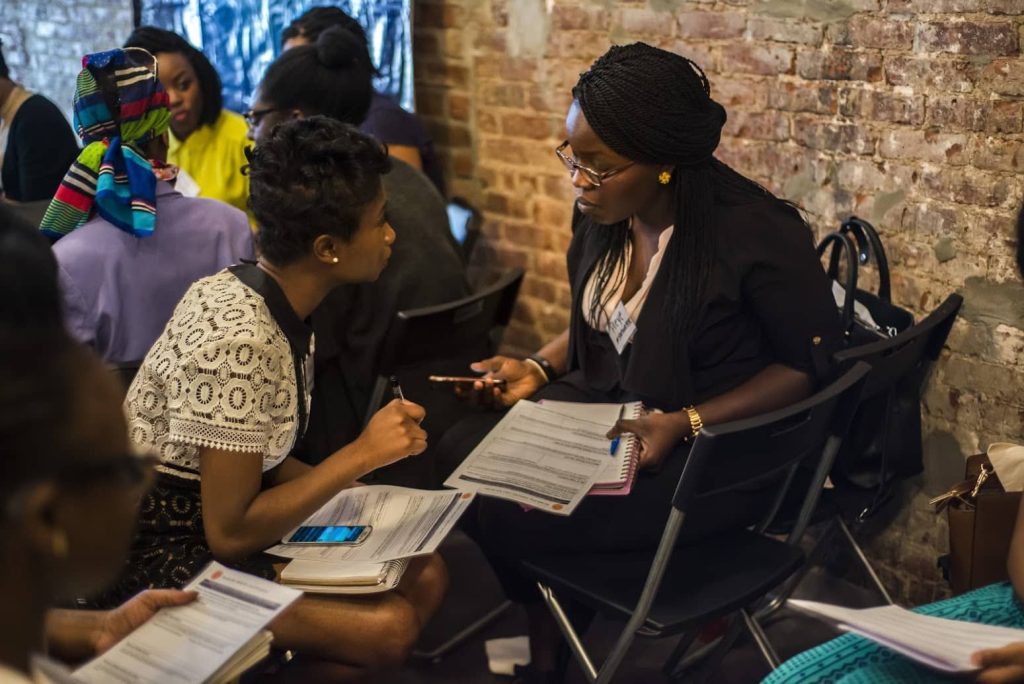
So, you’ve got a new team on your hands. As a savvy manager, you’ve studied your team and decided that they need to work on some new skills. But you’re having a tough time making a choice on which skills are the most useful to ensure your team operates smoothly. Don’t worry, we have your back. Communication The importance of communication cannot be overstated. You have a new team of people, some of whom may have never worked together before or have never worked with you. In this case, clear verbal communication is essential for success. Your team should be able to easily communicate within themselves and also with you as their manager. Then again, excellent communicating ensures effective meetings, respect towards others and little misunderstanding during team work. Being open-minded Your team is going to have to learn to be open-minded and be willing to listen to new and diverse points of view without jumping into conclusions. You can’t have one member talking over the rest of the team or shutting down other’s ideas. As a manager, you want your team to work together and be supportive of each other. For that to be achieved, it is essential that everyone is open-minded. Problem solving Each member of your team should be able to problem solve on their own. Poor problem solving can lead to failure of the team, and your brand in the larger picture. As a whole, your team should easily identify problems and come up with different solutions. They should be able to take the initiative with coming up with new ideas. If they are having difficulties making a decision, they should know to notify you. Management and organisation Any efficient team knows the basics of project management. They know how to plan, manage tasks and schedule their time. It shouldn’t be the responsibility of just one person to ensure meeting and team goals are set. The whole team should possess management and organisational skills, this way everyone can remain focused on achieving tasks. Questioning Now this is an often overlooked skill, but it is extremely important for everyone. A good number of us are scared to ask questions, we don’t want to appear lacking especially in front of a new group of people. Your team will likely not be any different. Learning questioning skills encourages curiosity and knowledge seeking. If you’re working with a team where roles need to be divided, consider having a rotation so this way your team’s skill sets are continuously growing and expanding. Have you managed a new team recently? What skills did you encourage them to learn? Please let us know your answers by leaving a comment below.
Making sense of cents: Quick tips to improve your financial literacy

In an increasingly consumerist society it is very easy to get swept up in the barrage of not-so-gentle persuasions on how to spend your money. It ranges from the seemingly harmless dine-out options you yearn for all month long, the glitzy red bottom heels, to a new gadget that you just have to have. Financial literacy is muscle, the more you engage it the stronger and better skilled it becomes. It is important to practice intense amounts of self discipline. It sounds daunting, doesn’t it? Growing up, having a job, earning your own money and then be told be disciplined with how you spend it. Very few people are raised to understand finances beyond what they spend. It is much like not ever teaching children how to read then expecting them to be able to fully engage with a highly literate world as adults. No fair, right? Don’t worry though, help is at hand. We are going to learn this financial alphabet together. Here are a few tools that are easy to understand and implement, provided you’ve got that discipline we spoke of. Draw up a budget It isn’t as scary as it sounds. First, you write down a list of what you need to spend money on for the month. Then, you take out the cost of those items from the amount of your income. When you see just how you want to spend money you may reconsider what you thought was a necessity. Put together a list of your short and long term goals Whatever your goals, they need to be financed to become a reality. Arrange them in order of importance and find space for them in your monthly budget. While having to say, pay for a course module vs. a really expensive night out with the girls may hurt, in the long run it works out. Once you’ve graduated, you will be able to afford many girls’ nights out. Review previous month’s expenditure Once you’ve given your brave new budget a whirl, go over your expenses. Have a hard look at where you spent money wisely and where you did not. Look closely at where you spent most, check whether you spent money on things that tie into your short and/or long term goals. Then review your habits so that moving forward, you make decisions that give you long lasting value for your money. Save 10% of income It is important to save. Life happens, a family member could pass away, a car could be involved in an accident or a job may be lost. There are plethora of unforeseen circumstances that could hurtle themselves into one’s life. It is always wiser to be on the right side of caution. As your spending and saving habits grow, you could even increase that amount from 10%. It is key to note that knowing you can change your habits makes you the boss of your finances. Join a free online financial literacy class The internet is your friend. There are a many resources available to you, should you want to exercise that financial muscle we mentioned above. Ultimately, financial literacy is about attaining freedom, autonomy and peace of mind. There is a life that exists without ponzi schemes and loan sharks. It can be accessed the moment positive, informed decisions are made. In South Africa at least, there are 95 men for every 100 women, that means we ladies have more… um… manpower. The power to change the trajectory of African women is ours.
Key steps to finding your voice

Like many girls and young women growing up in a patriarchal culture, I embodied this “less than” attitude as I grew up. While women are leaders in many regards, there is still a shadow that we live under. Women may have the education, the experience and the drive to successfully guide a team of people but still lack a well defined voice (and no, not “voice” as in Tenor and Bass). Voice in this case is an extension of the person. It’s their brand, their way of doing things, their expertise and how it is communicated. Those who show strong leadership skills have often developed this sense of voice throughout their careers. For those who haven’t, it may be time to examine it further. Determine your voice A women, we need to be familiar enough with our voices to know how we come across to peers, staff and clients. Our personal set of values is directly connected to this, what we stand for, our values, what people can learn from us. There is a need to be clear and concise about your voice, your stance and your ideas, and be sure that everything you do and say aligns with that. Look for inspiration There’s no shame in admiring the qualities of others, whether it’s a family member, a mentor, an industry leader, an iconic figure or a celebrity. Observe them closely. Have conversations with those you have access to. For those whom you don’t have access to, watch their public appearances and read their writing. Find them wherever they are, in business, politics, sports, TV and note down the characteristics that appeal to you. It is not enough to just admire someone, figure out what it is about them specifically that draws you in. Note their confidence, their ability to build relationships, their network, their charisma, their intense knowledge of a particular area. Identify what intrigues you and roll with it. There’s no need to reinvent the wheel. Experience matters All the important lessons learned throughout the beginning and progression of your career are a part of your professional voice. The decisions you’ve made, the wins and the losses, they help to make up who you are. One of the common mistakes women make is we feel that because we have a seat at the table and we say something, everything is good. It’s important for us to know that having a voice really means having a track record of success and accomplishments. That people want to listen to what you have to say because you’re saying something of value. So, use your voice and use it strategically. Experiment For those women leaders looking to evolve, especially those in the younger end of the workforce spectrum, it might be time for experimentation. Identify low-risk scenarios in which different approaches are feasible. For this experiment, try to make a decision with consensus, then in an authoritative tone and then one in the middle. After doing this, it will become clear what style fits you. You don’t have to do this in a high-risk client situation or in front of venture capitalists who will determine your funding future. Try making a plan with friends, getting your children to do what you need them to do, or sitting on a non-profit committee. Practice with your spouse, your friends, or your network. Just like building a business, this is a process. The earlier you are in your career, the more latitude you have to experiment. Your voice and leadership matters. When you begin to speak out for what you believe in and use your voice without apology, you not only empower yourself but all women and girls. You become a role model, and girls everywhere can begin to see themselves as leaders. You might not get it right in the first year, the first business, the first finance pitch, the first launch, or maybe even the second or third. But awareness is the first step.
Recently graduated? How to make unemployment work for you

In recent years it has become common to find yourself unemployed after graduating. How you spend those few months in unemployment (or years if we are keeping it all the way real), could add a lot of value to your development. Use that time to invest in yourself and begin the journey of personal branding. Before you tune out, these overused buzzwords are always relevant, especially considering the changing nature of the workplace. To quote Bryan Kramer; “…your personal brand is how you appear to the world. Different than self-promotion, personal branding represents a full-time commitment to defining yourself as a true thought-leader within your industry”. So, here are a few tips to get you started. Position yourself near the ‘central nodes’ of networks The most common piece of advice you will get is, network. It is useful to remember that when it comes to networking you must think quality over quantity. When you are just starting out, reach out to bigger or more established brands (companies or people) that you wish to learn from. LinkedIn co-founder and the ‘most connected man in Silicon Valley’, Reid Hoffman helped shape my thinking in this area. Reid explains that the most effective networks are built when you connect yourself near the ‘central nodes’ of the spaces you want to be in. ‘Central nodes’ here refers to the most influential areas within your networks. Trust me, to avoid endless meetings that ultimately go nowhere, you should be picky. Take time to research key influencers in the spaces that you are interested in and reach out to them. Ensure your networks are usable Once you know who you want to, you need to build trust and goodwill with them. This is in order to turn them into contacts that you can actually use. One way to build this relationship is to find out if there is an area they need help with that you can add value to. Show them the quality of your work. People are far more likely to become usable contacts in the future when you have established a mutually beneficial relationship. Know your hustle. Know your value While learning the landscape of the industry you are trying to position yourself in is important, you also must understand how you fit into that space. You need to be sure of the value you bring, and be able to articulate it clearly. It may seem old fashioned but it would be a good idea to sit down and write your personal value proposition. When you’re through, mould it into a short elevator pitch. What’s your background? What are your best qualities? What are your strengths? What is your business approach? Do you have any notable successes that speak to the opportunity in front of you? Once you know what you are good at, be able to boldly and clearly communicate it. My advice? As the saying goes, “Keep it humble with a hint of Kanye.” Mentor your weaknesses Having a mentorship is a tried and tested way to keep yourself motivated and accountable. However, the relationship is only as beneficial as you allow it to be. Often there is a temptation to put your best foot forward when dealing with a mentor. After all, you can’t have your idol think he/she is wasting their time on you right? We all have areas we need to grow in, so make sure you open yourself up to advice in these areas. Start something It almost doesn’t matter what it is; a blog, a book club, a weekly Google hangout, just make sure you create a space for you to learn, grow and focus your passions. Time is your most valuable asset during this period, and that combined with your passion and skill is a formula for a fulfilling way to get through your time at home. It also helps to show future employers that you are able to take initiative. Good luck!