
Divinity Matovu: You don’t want women dropping out of the workforce

She Leads Africa interviewed Cofounder and CEO of MBA Mama, Divinity Matovu. As a mother of two, she is pursuing her MBA at the Wharton School of the University of Pennsylvania with a focus on entrepreneurial management and finance. She has launched four start-ups, lived and worked in East Africa and prides herself on being a global citizen and an advocate for women’s empowerment. This is what she had to say about navigating family and career planning as an MBA Mama. “The biggest barrier for women with children interested in pursuing their MBA, women in business is: childcare. Many women find themselves saying: Oh, I have a child, I’m not going to be able to keep up. What will I do about childcare? Will I have any money going in? If we can develop something that helps women to save time and money on childcare, it becomes much easier to have a conversation and for them to continue advancing in their careers. You don’t want highly educated, highly qualified, and highly trained women dropping out of the workforce. Our brand, MBA Mama, makes visible: women who successfully maintain their careers after maternity leave and even women who have children during the MBA. We are an online platform that provides ambitious women with tools and resources to leverage an MBA, and strategically navigate family and career planning. Because of the childcare issues, there are a lot of women who are not at the table to lean in. That is not good for our economy or for business. We want to help women navigate having a child during their post MBA career so that they don’t fall behind their male peers, and so that they don’t feel like they have to drop out of the work force. From our perspective, an MBA is a great degree that women should leverage to have career advancement. Firstly, an MBA is a graduate degree with the highest return on investment. During the MBA program, you can gain a set of skills that are transferable to any industry and add value to any career. An MBA can increase your access to an excellent network. Lastly, the types of careers available post MBA have wonderful benefits.” Whether you’re a mother, a woman who is passionate about going back to school, a woman interested in starting a family or all of the above, Divinity provides you with these useful tips. Here’s her top three tips for a successful family planning during the MBA: 1. Timing is crucial There are quite a few women who are timing their ovulation cycle when pursuing their MBA. They work with their partners to make sure that they will be pregnant when they want to be pregnant. These women give birth during the winter break, which is 3-4 weeks. They come back that next semester, and for most of them, they are only taking classes maybe two days a week. There are also women who work to have children the summer before they start full-time work, and after they graduate. 2. Maintain consistent family time When I’m with my daughter, I’m with my daughter. I’m unplugged and not checking emails or on social media. My philosophy is: quality of our time together as opposed to quantity. Even though I’m really busy, that really helps us to maximize our time. So, figure out what time works best for you. Mornings are really good for us because we’re up and about and getting ready together. 3. Prepare for the week I do meal preps on Sunday. So, I cook many meals on Sunday and then I’ll Tupperware everything into portions so that throughout the first three days of the week I have all of my meals ready to go. We do take out Thursdays, so I know I don’t have to cook dinner that day. Fridays and Saturdays are easy, because I don’t have class. Sunday, I start my meal prep again. On her four tips on successful business planning: 1. Create your own brand I am an MBA Mama, and I see myself in my consumers. I’m investing time in the community and I hope that leads people to our brand. I launched the company and was very excited to get my partner Nicole on board. That was a challenge because I had to make sure that my vision was clear, and that I could get someone else to buy into the idea. 2. Gain Financial Skills Finance is central to any business operation. You can have a great brand and people can be excited about what you’re doing, but if you don’t know how to manage the money, if you don’t know how to read a balance sheet, and if you don’t know how to get your finances in order—nothing else really matters. 3. If you want to build an online community, communicate and be engaged Be engaged with your online community—whether that’s responding to a tweet or re-tweeting someone mentioning your brand, communicating with fans on Instagram or featuring people on your blog. By staying connected, people know that you actually see enough value in what they have to say. 4. Utilize Social Media! Finally, any of word-of-mouth that can help your business will be good for your brand. People love referrals because it’s a trusted source and it’s even more trusted than paid advertisements. Through our blogs people find us, and the women we feature also spread the word to their followers. Also, we feature women who share their stories through our “MBA Mama of The Month Initiative.” If someone can recommend your brand by word-of-mouth, that’s really the best way.
3 young African women software developers want to give you global hair inspiration

SLA interviewed Priscilla Hazel, Cassandra Sarfo, and Esther Olatunde, cofounders of the Tress App. In this interview, they share insights on how they met, their Tress app, and their vision for their enterprise. Who are the women behind Tress and how did you all meet? We are three software entrepreneurs from Ghana and Nigeria who are passionate about using technology to improve lives. Priscilla Hazel is the team hustler and is responsible for business strategy, public relations, and keeping morale high. Esther Olatunde is the hacker within the team. She’s the backbone of our technical development and responsible for keeping the app running. Cassandra Sarfo is our resident hipster – she has a keen eye for detail, and is responsible for the user interface design and user experience of the Tress app. We’ve known each other for about 2 years after first meeting at the Meltwater Entrepreneurial School of Technology, and we’re are excited to be working on something that affects us on a daily basis. What is Tress ? Tress is a mobile app and a fun, passionate community of black women from around the world sharing and discovering hairstyle inspiration. With Tress, women can: 1. Discover new hairstyles to inspire them the next time they’re at the salon. 2. See detailed information about hairstyles such as the products used, the name of the salon, and price range. 3. Share their favourite hairstyles and get compliments and recommendations from our supportive community. 4. Follow fashionable people and discover their hair care secrets. Whether you’re rocking a weave, extensions, cornrows, braids, locs, relaxed hair, wig-caps, or anything in-between, Tress is your home for hair inspiration and information. What was the inspiration for the app? What problem are you trying to solve with the app? It’s surprisingly difficult to find accurate information about hairstyles. Many ladies have at some point walked up to complete strangers to compliment and inquire about their hair, or stalk social media accounts not only for inspiration but adequate information about the style. We wanted to bring the experience of getting answers on the mobile phone, without the hassle. So now on the app, women have access to hairstyle inspiration that is relevant to them and they have adequate information to help rock the look they want. Who is your target market? Our target market are the 100+ million black women around the world who have access to a smartphone and are crazy about hair. According to Nielsen, black women on average spend a disproportionately high share of their income on haircare products, which is 9 times more than other races. Mintel estimates the black haircare industry to be worth 500 billion dollars. We consider the market to be extremely attractive. You are currently based in Ghana, what’s your vision for Tress in Ghana? What about in Africa and globally? While we piloted the app in Ghana, where we’re currently based, Tress is available globally. We want Tress to be synonymous with anything hair: hairstyles, hair-products, hair-stylists, hair-extensions, you name it. It should be the go to place for hair related queries. What’s one of the biggest challenges you face right now? Our biggest challenge is distribution. Getting the word out there about Tress has been challenging, as well as getting the kind of community engagement we aspire to have. What would a successful Tress look like? A successful Tress will be an app that is used by practically all black women for their hair and hairstyle needs. It should be the go-to app for any woman looking to find hair inspiration, hair-stylists, and high quality hair products. Beyond the app, we’re also excited to have Tress become active in all kinds of media products for black women – television, magazines, events, and more. A successful Tress would also be an active social network of black women thriving in all aspects of their lives. Is there any other insight about being business women and entrepreneurs you would like to share? My co-founders and I have grown extremely close through working on Tress together. We have our individual and collective ups and downs, but we’ve learned to support each other mentally and emotionally, while also having fun together to maintain our sense of humour. When embarking on the entrepreneurial journey, it’s extremely important to have a great team with you that you can trust to be with you through both the inevitable disappointments as well as the exciting times. Finally, we’ve really enjoyed working on a deeply personal problem. We’re able to use our unique experiences as black women to inform the development of the company and this also helps us empathize with our users and anticipate the needs of women like us. I’d encourage more women to start business focused on solving the unique challenges we face. Black women wield a large amount of purchasing power, and their multiple businesses waiting to be started to harness that. Want to know more about Tress? You can find them here: Email: priscilla@tressapp.co Facebook: TressApp Twitter: tress_app Instagram: tress_app Blog: blog.tressapp.co We want to know what amazing things women are doing in your communities. Tell us about them here!
All the reasons no one is responding to your emails

Even for tech-savvy millennials, emails can be tricky, especially in the workplace. Every once in while, when you send an email, you might not get a response. It could just be that the recipient hasn’t seen it yet, or perhaps started replying and then got distracted (this happens with texts all the time, no??). But it could also be more than that. Here are a few things to consider when you don’t get a reply from your boss or colleague. 1. Wrong Recipient This doesn’t refer to an instance in which you meant to email Tayo and ended up emailing Taiwo because they have similar email addresses (though that very well may be the case). Rather, this is when you email Taiwo about an issue that Tayo should be handling or is more suited to respond to. Always make sure your email is going to the appropriate recipient. There’s no need to email the CFO of your company about something the Finance Manager can handle. 2. Unclear Content Maybe you went into too much detail, maybe you didn’t go into enough detail. Either of these can lead the email being confusing for recipient and may lead to you not getting a response. With most emails, brevity is key. But every once in a while, you’ll need to send an email with lengthy project descriptions or detailed instructions. Make sure to read over emails to ensure that they’re coherent. Proofreading may seem like a chore but with short emails, it won’t take you more than a minute. With longer ones, it’s important that there isn’t any miscommunication. 3. Poor Timing Sometimes a co-worker may not respond to your email because of the timing. Perhaps you sent them some information too late, or perhaps it’s a question that can be answered in a meeting later that week. Either way, make sure to consider the timing of the email if you find yourself wondering why you haven’t gotten a response. 4. You were rude Hear us out! You may have not intended to be disrespectful, but we all know how emails can be misconstrued. This depends largely on the recipient and his/her perspective, so to be safe, it’s best to use language that is either pleasant or at least neutral and innocuous. If however, you intended to express displeasure or be combative, don’t be surprised when you don’t hear back, as some people would rather not engage in heated email exchanges. 5. A response isn’t required Some emails just don’t need a response. If you send your boss some information she asked for, she may respond or she may not and will discuss it with you at a later time. Other times, if you’re sending a thank you email or an email about something that is not pertinent, it’s possible you won’t hear back. In most cases, it’s nothing personal, so there’s no need to worry. All in all, remember that proof-reading and clarity are very important when emailing at work, along with being polite. Emails rarely get lost, so if you don’t hear back, consider one of the five instances above. Then call to make sure the recipient has seen the email or send another email following up.
How to start an event planning company with no money and no clients

So you want to quit your job to start your own event planning company (or any other one) but you have no money and no clients, yet. What do you do? Have a roof over your head and food to eat Firstly, if you’re going to quit your job, make sure you have some back up. This doesn’t necessarily have to be cash, but a family or someone that is willing to maintain a roof over your head and food on your table. If you don’t have that, then you will need to ensure you have some cash back up to keep yourself going through your start up phase, this will be a minimum of a year – two years, depending on your company. This back up, in whatever form is comes is essential! It’s essential because you will need all the energy and focus to get clients and start earning an income. For an events company, you should be earning a small income within your first year to at least cover some costs. Once you’ve figured out your back up, quit your job! It will be the scariest but most liberating thing you’ve ever done, but a word of caution, you will now work 24/7. Be prepared! What makes your company unique The next step is to figure out what your unique selling point (USP) is, what sets you apart from all the other event coordinators. As JamJar, our USP is customer service, efficiency and pushing the boundaries. We are willing to go the extra mile for our customers and promise to push ourselves as we create concepts and experiences that are truly one of a kind for the customer.Once you have your USP, start using your contacts. Your first job is likely to be someone you know. If you do a good job, the word will start to spread. E-mail people you know and ask them to recommend you. Send out your company profile to people and test their reaction to your information. Be realistic and original. People can tell when you are trying too hard or being fake. Initially, you may need to take a few jobs that you do not make much money from but is worth value in terms of marketing, building your portfolio and experience for yourself. Keep note of this, however: there will become a point where you no longer need exposure, and exposure won’t pay your bills. Be aware of your business and your value and continue to reflect. Once you reach that point, own it and do not be ashamed. Listening is key Until you reach that point, continue to work, listen and learn from your jobs and experiences. Make sure the experience of working with you is memorable from when the person first takes your card to the end product. This is everything! Even when something goes wrong or you have a difficult customer, remember your response is key and will last forever. People will tell 4 out of 10 people about a positive experience but 8 out of 10 for a negative experience. Get to bookkeeping Slowly you will start to increase the number of customers you have, do your best to keep them. As you start to grow, make sure you have a good financial system, this does not have to be fancy. Keep track of what you are receiving and what you are spending. The event planning industry is one that is not heavily reliant on start up equipment – your brain and a piece of paper are all you need to be organised, efficient, and reliable, the main characteristics an organiser should have. Take advantage of this fact, it means your start up capital required is much less and you can pace the growth of your company. Share with like-minds Lastly, Collaborate. Collaboration is powerful if you are strategic. Don’t just collaborate because someone asks you to. Collaboration usually means you will foot the bill for whatever you are willing to contribute to the project, or provide your time for free. Be sure you are prepared to lose or not gain as much as you hoped. Moreover, make sure you do what you can and get the most as much as possible for your brand while working with your collaborators. Good luck starting up and enjoy the journey!
Blogger’s delight: Lee Litumbe of Spirited Pursuit

As the face and voice behind the popular travel and lifestyle website Spirited Pursuit, Lee Litumbe’s mission is simple: she is in spirited pursuit of travel, adventure, and new cultural experiences. Founded in 2014, Spirited Pursuit showcases dynamic travel stories, captivating photography, and curated city guides from culturally rich destinations. Geared towards curious and adventurous individuals seeking authentic experiences, Spirited Pursuit is quickly becoming the premier inspiration site for travelers. As a visual storyteller, Lee uses photography to shape poignant narratives centered around cultural immersion and travel experiences off-the-beaten track. Driven by Lee’s Cameroonian roots, Spirited Pursuit’s primary region of focus is Africa. Other current geographic focuses include The Middle East, Latin America, Southeast Asia, and Oceania, with some additional coverage of Europe and North America. Accolades garnered include features in USA Today, The Guardian, and Ebony magazine to name a few. Additionally, Elle Canada named Lee among the most “Inspiring Instagram Accounts that Make You Want to Travel”. With a blog that features photography, travel, adventure, and cultural experiences from you and many around the world, what led you to start blogging? To be honest, Spirited Pursuit was founded as a result of my quarter life crisis. The idea for the website began to develop after I turned 25 and realized I had no idea where my life was going. During that time, I was working a job I despised, struggling to salvage a dysfunctional relationship, and battling a severe bout of depression which all left me with dangerously low self-esteem. After spending several months curled up in bed feeling sorry for myself, my two older sisters encouraged me to get off my ass and get back to doing the things I love: traveling, taking photographs, writing, and just being creative. Those passions combined with my desire to provide a platform for others to share their transformative experiences and stories with travel are what ultimately drove me to create Spirited Pursuit. The website now serves as my creative outlet, which has given my life a renewed sense of purpose and direction. As seen on your blog, you are also a photographer, and a model. How have these hidden treasures furthered the success of your brand? I think it just comes down to others seeing themselves in what you do. African (black) women are rarely used in major travel campaigns, so it’s a conscious choice to use myself as the face of my projects. I want other young black girls and women to be able to see themselves traveling and being adventurous, while also giving readers the opportunity to connect with a real person. By using myself and my unique set of skills to capture destinations, I believe it makes my stories more relatable and attainable. It further demonstrates to my readers that if I – a young solo female traveler – can do it, so can they. Although I use myself as a subject, the narratives I produce always focus more on the place and experience, not so much me. Have you been able to monetize Spirited Pursuit? If so, through what avenues? If not, do you have plans to do so or are you not interested in monetizing? Spirited Pursuit began as (and still is) my labor of love, so initially there was no financial motivation. Early on, I made the difficult decision to keep our digital space ad free to maintain a positive user experience, choosing to accept donations at the discretion of our readers instead. However, as the platform continues to see tremendous growth, I’ve opened up collaboration and partnership opportunities to like-minded brands, tourism boards, and publishers that are interested in promoting powerful travel opportunities to our community through creative advertising. I also separately offer my creative services (content curation/creation, creative direction, consulting, photography, and writing) to other brands interested in elevating the quality of their digital content. Pursuing earnings without compromising my reader experience is important to me. I am consistently working towards finding a balance between keeping the lights on and maintaining a quality, minimally compromised, user experience.What are your plans for Spirited Pursuit? Where do you want to take the blog/ brand in the future? The goal is more travel, more stories and more inspiration – particularly within Africa and the African Diaspora. I’m passionate about building a community and platform that takes the anxiety out of traveling to Africa by creating informative and inspiring resources and guides. By curating content that shows others that Africa is not defined by the poverty, conflict, disease, and socio-political issues constantly being projected in traditional media, my ultimate goal is to attract more investment and tourism. And by attracting investment, I mean compelling and propelling business opportunities within the continent, not just charity. Beyond that, I’d much rather show you than tell you, so please stay tuned for what’s next for Spirited Pursuit and me. What advice, would you have for African women looking to further their brand through blogging or social media? The best advice I would give to others would be to speak on a topic they truly love and are passionate about; mostly because you’ll need that passion to stay motivated when things get hard (which they will) or uninspiring. If your goal is to build a large audience, focus on producing quality and original content consistently. The people you hope to connect with will naturally gravitate towards your work if it’s genuine and honest, so don’t lead with trying to make money or being “popular”. I would also encourage others to add value to the lives of their audience by solving a problem they might have, while being as creative and original as possible in the execution of their ideas. Finally, be sure to support others – particularly women. One of the biggest lessons I’ve learned on my journey is that another woman’s success is not my failure. Your win is my win, and my win is your win. Instead of viewing other women as competition, reach out and build relationships with them so they become allies; there
3 business lessons I learned from Beyonce’s Super Bowl Weekend

Ok, so Beyonce happened this weekend and apparently so did the Super Bowl! I don’t know who has fully recovered from it because none of my social media feeds have. That’s the Beyonce effect. I mean she has me wanting to eat at Red Lobster and I live in South Africa??!! Do they deliver? Apart from the epic dance moves that I need to start practising, I think there is something we can learn as business-minded women from the event! 1. Let’s get information Education and self development are important for us as women, especially in these days where almost every company/ institution/ government wants to be seen to be progressive by empowering the women in their societies. There are so many free learning opportunities that exist we have to look around us and take advantage of them- especially in tech and business management.If you can’t find free, look for cheap, but credible courses. We can find Chanel on the low low so lets channel that to finding Harvard learning on a budget. MIT has free online course materials; you won’t get a degree but it does boost your confidence. Beyonce did an interview looking back at her 2013 halftime show and she said “part of the reason I rehearse so much and part of the reason I study everything is so that I can completely let go and relax, so I am not in my head and I am confident.” Be like Beyonce and study as much as you can so when opportunities arise, you are confident to put your hand up in that meeting! You should lean all the way in! 2. Let’s see that coordination How dope were the black panther women in their fros and leather ensembles? Wouldn’t you love to have seen Beyonce in an afro? I have read some interesting articles for and against Beyonce’s support of the black panthers. I won’t get into the political debate, but I think we need to look at collaboration and coordination within the black community. It’s an open secret that black women have challenges working together. I have heard this story endlessly and have been a victim of black on black discrimination. On 31 January 2016, thousands of black girls gathered in Johannesburg in a celebration of ‘militancy, magic and melanin’. I think the mobilization was great, the atmosphere electric – but my only criticism is there was no formation around a common goal. For example, we have to support black owned businesses or actively connect college black girls to career black women so as to help us survive the jedi mind tricks of corporate culture. Prime example, Beyonce gave a shout out to Red Lobster and their year to date sales went up by 33%??!! Beyonce said, “prove to me you got some coordination.” This reminds of a picture posted by Ava Durvenay of 3 little girls with their afros holding hands. The caption of that picture read, “if there is no enemy within, the enemies outside cannot hurt you.” I think this challenge of working with other black girls comes from the ‘just enough’ mentality we were raised with. In our homes, there were just enough resources and we’ve transferred this mentality to our work. We think there is just enough ‘shine’, that the “enemy” is onto us, so they reserve only 1 spot for us at the 18 seater table, and we all clamour for it. We don’t have to play by those rules anymore, especially if we play together! Come on, lets twirl on the haters together, it’s better for optics! 3. Slay…consistently I think this is pretty self explanatory. Beyonce is a lot of things, but consistency is probably number 2 on the infinite list. She was on hiatus for almost a year, but when she hit that stage, it was like she never left. Be known for your craft and excellence: ” You just might be a black Bill Gates in the making!”. Beyonce sparked something. We have to keep the flame burning so we can afford tickets to her Formation World Tour. Side note to Beyonce: Africa is a part of the world, so don’t be planning world tours and excluding us! We are not represented by our colonisers in France and Britain. You need to come by and see us! That said, I think black girls in Africa should start a petition for Beyonce to bring her tour to Johannesburg. Ok, now ladies lets get in formation!
Beginner’s guide to marketing to an African audience
Now is a good time to become a game changer. Social media has allowed the world to get a cultural peak into the diversity of African culture. From Azonto music to African films, many African media outlets are re-branding Africa’s image to the world. Social media has given us the global platform to have unfiltered control over our own images (no pun intended) and build meaningful connections with those who are like-minded. Take advantage of the global opportunities that the internet has to offer. Working within the field of marketing is based off of the relationships and connections that you build with others. When others see that you are of value to them in some capacity, they are more inclined to support you. Content is king (or queen)! Your content must reflect your values. If your mission statement says that you believe in high quality, but your social media images look like your little cousin Kofi took them, nobody believes you. High quality photos are non-negotiable. The majority of your digital audience will most-likely have smartphones, if they can take semi-professional looking photos with them, at the very least, you can do the same. About 55% of online users leave a website within the first 15 seconds, this leaves little time to make a great first impression. You should always “sweat the small stuff”. Have an eye for detail. Putting elements of your personality into your marketing strategy sets you apart from the rest. It shows a level of creativity that no one else can effectively duplicate because there is only on you. Engage with your audience You have to tap into your audience’s needs on an emotional level. You must engage with your audience so that they feel connected to your brand; this is how brand loyalty is developed. Take the time to define who your target audience is and create content that is relevant to them. Be as personal as possible when addressing your audience, they need to know that they are valued. Implement nuances that remind them of their culture so that they feel a level of nostalgia and camaraderie in association with your brand. Allow your empathy to shine through. Show your core audience that you “get them.” Please understand that social media for brands is really not about self-promotion but rather to engage with your audience and build trust. Brands should use their social media platform to learn about their customers needs and find solutions for them. When you are marketing, you are in the business of solving problems. It is imperative that you take the time to know and grow with your audience. In knowing their values, you can develop marketing strategies catering to their interests. Majority of online activity for many is done on a mobile device (i.e. tablet or smartphone). Your website must be mobile friendly, responsive web design needs be integrated into your website. Responsive web design is “a web design approach aimed at crafting sites to provide an optimal viewing experience—easy reading and navigation with a minimum of resizing, panning, and scrolling—across a wide range of devices (from mobile phones to desktop computer monitors).” If visitors have to struggle and constantly scroll across the screen just to read a sentence, they will easily become annoyed and less likely to visit again. Your website should be easy to navigate. If you are selling a product or asking visitors for donations on your homepage, visitors should not have to maneuver through three different webpages before finding the right button to click. People in the digital age are less patient, you have to find ways to accommodate that. I beg, “African time” need not apply in the digital world. Create customer profiles When marketing to an African audience, create a customer profile. A customer profile is just a detailed description about who your target customer is. Many marketing teams do this in order to make customer centered decisions that appeal to their target customer. The customer profile could include the following: Name Age Hobbies Where they live Favorite movies Goals and aspirations In addition to the above, you can even google a picture of what your target customer would look like, be as visual and descriptive as possible. According to user experience researchers from Experience Solutions “most projects evolve from an idea, and grow through the opinions of influential members of the project team. The trouble is that these influential members of the project team are rarely the end user or customer. This often results in a product or service that doesn’t quite meet customer expectations or needs…” Having a thorough customer profile serves as a reminder as to who your target audience is. You are more likely to accurately focus your branding strategies around their interests. Make Google analytics your best friend Make Google analytics your best friend. Google analytics is a free web service run by Google that tracks and reports your website traffic. You can use this tool to track the geographical location of your users, view which pages on your website they are visiting, the time of day that they visit the most, and a host of many other details. In knowing how your audience moves, you can study trends and plan strategically. For example, if Google analytics shows that your blog has that highest amount of web traffic on Tuesday’s between 3-5pm, you may want to release new blog posts during that time. There are plenty of videos on YouTube that walk you through the process of using Google analytics. Africa is not a country Finally, marketing to an African audience requires significant research. Africa has over 50 countries, each of which has its own unique culture. A marketing strategy that works in Nigeria may not work in Kenya. Collect data, analyze and respond accordingly. As long as you are working with a well-defined goal in mind, it is easier to establish your target audience and market to them effectively. Have any other tips on marketing
8 things we learn from the acquisition of Kenyan beauty brand, SuzieBeauty
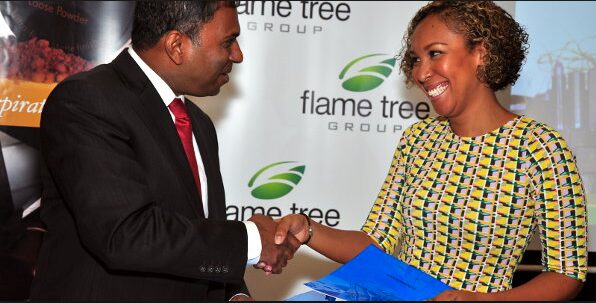
In 2011, Suzie Wokabi, founder of Kenyan cosmetics brand, Suzie Beauty, said the following about her vision for her brand: “My dream is to turn SuzieBeauty Limited into a household name for everything beauty on the continent, and internationally. I want to become the MAC of Africa!”. Six years before that, she had returned to Kenya as a trained makeup artist looking to stock up on goods. She faced a number of challenges such as not being able to find the high quality brands she was used to. Where she was able to find them, they were often unavailable, overpriced, or counterfeit. So in 2009, Wokabi launched her own local brand. Seven years later, she is in reach of the vision she set out for her company. On January 25th, 2016, SuzieBeauty announced that it has been acquired by regional manufacturing company, Flame Tree Group, pending approval of the competition authority. Suzie said the following about the sale of her company: “For me this is the biggest milestone so far.” Wokabi explained, “with the resources at Flame Tree Group, SuzieBeauty will likely expand its range to include skincare products such as cleansers, moisturisers and eye creams. There will also be investments into better distribution and marketing. In the long-term, production could be moved from China to Kenya”. This wife, mother, daughter, and entrepreneur is trailblazing the way for other Motherland Moguls. There is so much to learn from the successful sale of Wokabi’s company. We’ve narrowed it down to just 8. 1. Do your research In choosing to start a beauty brand, Wokabi did extensive research on the Kenyan beauty market. In an interview with How We Made It In Africa, Wokabi said the following: “My research shows that the development of products to fill our specific market needs has the potential of becoming a big and profitable business.” She also did extensive testing of her products in the market before launching her business. She developed her product line and spent a year of testing on the market before launching in 2011 and beginning retail operations in 2012. 2. Choose to work in your passion Wokabi once said, “If I did not completely love everything about SB and the beauty industry, I would have given up a very long time ago. I now understand why most startups fail. When you don’t have the passion and everything is an uphill battle, it becomes so easy to quit.” 3. Dream BIG From the start, it is clear that Wokabi had a strong vision for her company and brand. From her early interviews before the launch of her product line to more recent ones, the vision has always been, as she said, to “distribute Africa-wide. The sky is the limit”. 4. Know your magic While strong on quality products, Wokabi has said time and time again that the affordability of her products is what makes her competitive in the local and international market. When she was asked if SB stand out in the midst of international beauty brands that had recently entered the Kenyan market? She responded, “None of them will ever beat me in price. The whole point of SB is the affordability of quality beauty products.” 5. Get help in your weak areas Wokabi says she knew nothing about business prior to her endeavor. She has especially struggled with financials, an area her husband has supportive in. 6. Learn from your mistakes While successful, Wokabi has never shied away from the mistakes and mishaps in her journey. After some false starts with partners, Wokabi made sure to engage differently with future partners. She explained: “We have had so many bad partnerships. We have had both equity partners and debt investors. There were just too many mistakes made. We were very particular about this one. This time we didn’t make any mistakes – and it feels right, completely.” 7. Engage with investors and finance partners who understand your company and your vision While in talks with Flame Tree Group, Wokabi was in talks with other potential investors. She had this to say about Flame Tree Group: “The chemistry has always been right from the beginning. So any challenges we ever came across, we would fix together.” Flame Tree Group CEO, Heril Bangera, also had this to say, “We want to increase the brand’s presence in the market. We have seen the brand is successful, so there is an opportunity now to use that as a base to grow it within Kenya and beyond.” 8. Knowing that someone did it helps Wokabi often mentions her role models, Bobbi Brown, in interviews. Bobbi Brown was an American professional make-up artist who founded Bobbi Brown Cosmetics. Estée Lauder, the America beauty products giant, bought the brand in 1995, with Brown retaining creative control. Wokabi will similarly retain creative control of SuzieBeauty. We wish Wokabi, SuzieBeauty, and Flame Tree Group much success in their new venture. What other insights have you learned from this acquisition? Share them below.
Xiomara Rosa-Tedla: There are benefits to starting a business with family
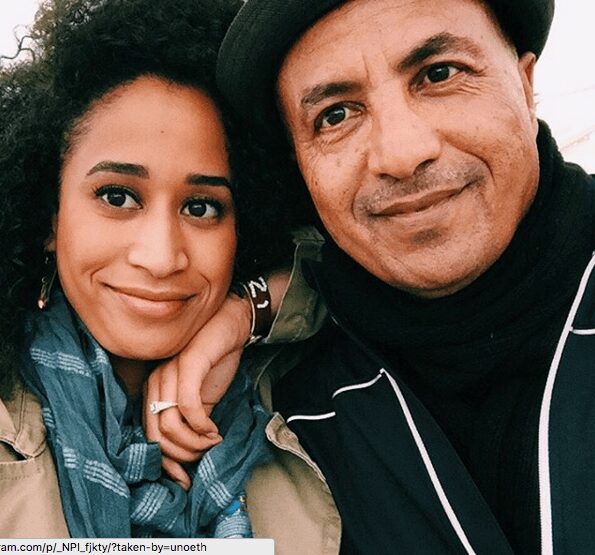
Many people ask how and why my father and I started our business. And to be honest, it was by accident. About two years ago, my father returned home from a trip visiting family in Addis Ababa, Ethiopia. After picking him up from the airport and unloading luggage, he handed me a gift— a custom, handmade leather messenger bag. Immediately, I fell in love with my new gift and sported it everywhere. From work to dinner to weekend trips, I toted my new bag all around the world. And soon after, friends, family members, and strangers started asking, “Where did you get your bag? I love it! Can your dad get me one as well?” For months the questions and requests kept coming. Even my father told me he had been getting the same questions, and suggested, “Hey, I think we have a business here. Let’s start a leather bag business!” Shortly after, the birth of UnoEth began. Starting a business from scratch is a fun creative process, where brainstorming sessions let your mind run free with ideas and opportunities for your business to grow exponentially. But as with any business, the road to success is never a straight line up. There are dips, curves and encounters with the unknown. In addition, it can be a lot of work. On the bright side, there are benefits to running a business with family. A family member as a business partner can be extremely beneficial— especially my dad. Having an equal partner with a long history (my whole life) and blood ties helps solidify communication, trust, and dedication to succeed. Neither partner wants to let the other down. From day one of creating our new business, I felt unbelievably confident in our new venture because my dad and I shared the same vision and passion for our budding brand. In addition to trust, communication, and dedication, working with family also means splitting responsibilities. As we both grow our business around our full-time jobs, we wish there was more time in the day to juggle responsibilities. We split outstanding tasks, which alleviates the stress and workload on both of us. Communication is key to maintaining strong relationships with each other, our vendors, shipping counterparts, business partnerships and most importantly, our customers. In the development of UnoEth, we’ve learned to communicate promptly to avoid creating a bottleneck in our business. Thanks to apps like Viber, we’re able to communicate easily internationally via wifi and all stay on the same page— just in different time zones.It’s incredibly important to maintain a positive, can-do attitude with a goal always in sight. As mentioned before, the road to success is never a straight line. Every business experiences road blocks and obstacles, which can deter most individuals from starting a business in the first place. But with an optimistic, focused, and goal-oriented outlook, one can overcome the temporary downfalls, cross the finish line and push on to the next stage. At the end of day, one must ask, “How bad do I really want to be successful?” And then simply just go for it! What are your thoughts on starting a business with a family member? Enjoyed Xiomara’s story ? Share the UnoEth story with your network.
Archel Bernard kickstarts her Liberian ethical fashion factory
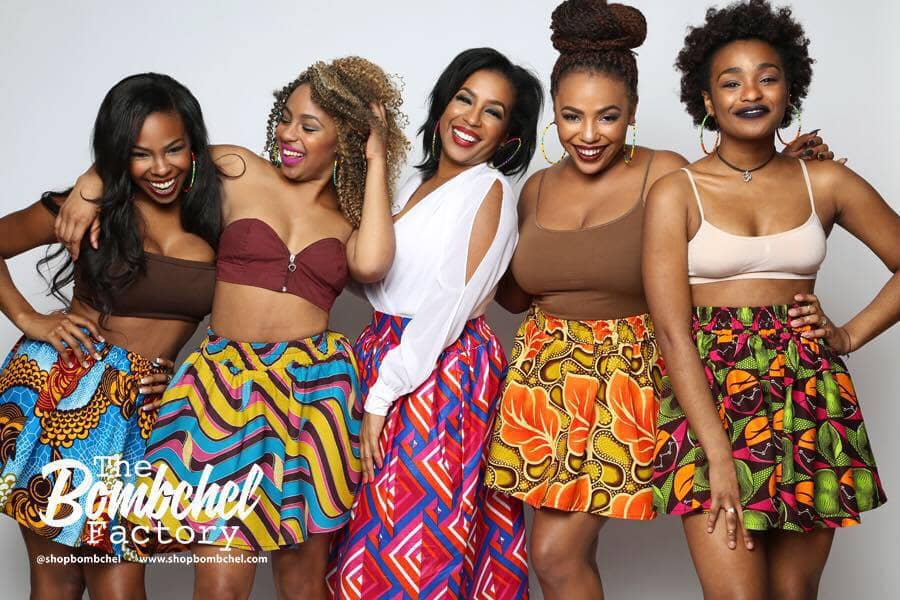
Archel Bernard is a Liberian fashion designer and entrepreneur. She successfully raised more than $40,000 on Kickstarter for her company’s growth and shares with us how someone stealing her ideas got her started in fashion, her ambitions to build a global brand and why crowdfunding was the way to go to raise much needed cash. Why did you choose fashion as your avenue to make a difference in Liberia and how has your business made an impact on the local community? I wanted to be the West African Oprah Winfrey when I moved to Liberia. I would go to communities and shoot and edit videos of exciting things happening around Monrovia, and of course the West African Oprah had to wear West African clothing! I made my dresses at a trendy boutique in town, and the seamstress would take FOREVER to get my clothes to me. I was doing my own designing because traditional African clothes aren’t typically my taste. One time I went to pick up a dress the boutique had been working on for about a month, and when I saw her, she was wearing a copy she made for herself, another customer was wearing a copy she just purchased, and another tailor was sewing one for her to sell on her racks! I still had to pay top dollar for a dress she was taking credit for designing. At that point I realized I could figure out a way to do everything I was paying her to do for me, AND possibly make a profit from it if people liked my styles. I made 8 different styles, found two tailors, and paid them a small fee to make my first line. I didn’t even know I was creating a line, much less a company. I just thought I could make a little money around Christmas. I sold out of everything and used the feedback (and money) to make more styles. Two of those same looks are still our top sellers today! I was never inspired to create until I came to Liberia. I loved the bold colors and patterns. The chaos in the markets and streets, and always the women wore bright lappa to navigate it. Seeing and wearing African cloth made me feel at home. I was thrilled by the design possibilities because from where I sat, we could do much more than tie lappa around our waist. Two months after selling my first dress, my government contract ended and I was unemployed. My mom hired me to be her driver on a visit to Liberia, and my dad gave me his pick up truck, so I bought cloth with the money and sold dresses from the back of the truck. Slowly, I saved enough money to open a shop. I’ve worked all kinds of jobs to make this happen. Now our business has grown so much, our tailors get sad when I leave town, not because they will miss me but because when I’m in town there’s always a ton of money to be made! What are your ambitions for your company and The Bombchel Factory? I want to build a large factory that staffs and trains hundreds of Liberian women, and offers classes on the side for literacy and business skills. This is about community building and industry changing. I want our factory to rival not only rival China for quality, but be the best in the world for human development. I want clothes made in The Bombchel Factory to be sold everywhere from Nasty Gal to Bergdorf on Fifth Ave soon, to prove that there is space for quality, ethical fashion in the most exciting shopping districts of the world. Why did you choose crowdfunding as a fundraising strategy for your business? I chose to crowd fund our company because we had hit a point where we couldn’t grow anymore doing the same thing we were doing: small custom orders for under $100 a client. We wanted to reach the everyday girl, but customer acquisition was expensive and there wasn’t much profit in a few custom orders a month. I’m incredibly scared of loans, after having already signed my life over to Sallie Mae years ago, and I don’t think we are big enough to start including investors with equity. Since all we needed was a strong following to preorder our goods, crowdfunding was perfect for people like us. Everyone who backs our campaign knows to expect a wait before receiving their goods, so that gives us a chance to perfect our items and plan our website and New York Fashion Week launch party. We are using Kickstarter to literally explode onto the market, and Kickstarter is good for helping you build a loyal following. What factors did you take into consideration before starting the crowdfunding campaign and how did you prepare to make sure it was a success? I had a friend, Chid Liberty of Liberty & Justice factory, also do a Kickstarter for his t-shirt line. He was actually the person who recommended crowdfunding to me. When his campaign launched it was flawlessly executed. They met their goal in a few hours and even got endorsements from several celebrities. I knew I didn’t have that kind of reach, but I also knew I had a lot of things going for me that I could package. I read every article and watched every video on having a successful crowdfunding campaign and applied what I could. My best friend in Atlanta offered a great photo shoot deal, and my sisters have been known to work long hours for clothes, so I knew my packaging would be spot on. I had a ton of people interested in ordering my designs, but I needed to streamline the ordering process and show the need for my product would gain the same results as having a large network. Crowdfunding has proven I have a market, not just cousins and friends who want to support me. What message would you share with other young African