
Facebook Live with Sneha Shah: How to do business in Africa without fearing the risks.(Oct 13)
Want to do business in Africa successfully? Learn how to break down barriers and prove your worth. On Friday, October 13th, Sneha Shah – Managing Director of Africa for Thomson Reuters shared with us how the African business landscape is currently positioned for female entrepreneurs, and how you can take advantage of it. Sneha has initiated partnerships with leading international market development, and works in close collaboration with public and private sector organizations in each country, to tackle the opportunities and challenges around financial and capital markets development. [bctt tweet=”Learn from @snehasshah how to do business in Africa without fearing risks” username=”SheLeadsAfrica”] Register below to get a FREE downloadable guide with Sneha’s top 10 tips on how to do business in Africa without fearing the risks. Some of the topics we’ll cover Are there businesses that are easier to establish in Africa than others? Find out. How young start-ups in Africa are changing the game. Challenges and opportunities business owners should expect when operating in Africa. How the African business landscape is currently positioned for female entrepreneurs. Leveraging millennials for African growth. What Africa can learn from other emerging economies. Innovate or disrupt – how to prepare your company for the future. Watch the video: https://www.facebook.com/sheleadsafrica/videos/1949040855319225/ Sign up for the e-book here: [ninja_forms id=156] About Sneha Sneha Shah joined Thomson Reuters in 2001 in New York and has held several global leadership roles across the financial and media business units in operations, product development, and technology. She was appointed Managing Director of Africa for Thomson Reuters in April 2015, and leads all of the financial, risk, tax and legal businesses across the region, providing data, automation and digitization solutions to financial institutions, governments, and corporates. She is responsible for driving the profitable and sustainable growth for Thomson Reuters in Africa in a manner that contributes positively to the region’s economic development. Born in Kenya and having worked in many African countries, Sneha is particularly passionate about initiatives that help empower Africa’s success. Sneha is a member of the Board of the US Chamber of Commerce, US-Africa Business Center. She is also a member of the Young Presidents Organization (YPO) and the African Leadership Network (ALN) and has been actively involved in several initiatives of the World Economic Forum (WEF) on Africa, including the Partnering Against Corruption Initiative (PACI) (current), and the Global Agenda Council on Governance (2014 to 2016). Prior to joining Thomson Reuters, Sneha was a commodities trader for Cargill in South Africa and traded money markets and foreign exchange at CFC Bank in Kenya. She holds a BA (Hons) degree in Politics with International Studies from the University of Warwick in the UK.
Dumisile Mphamba: Striving To Maintain Excellence, As A Form Of Worship
Dumisile Melody Mphamba is a 19-year-old Zimbabwean young lady who will be starting her undergraduate studies at Stanford University, this fall, under a full scholarship. Growing up in a country with a ‘broken’ health system, she aims to contribute solutions to eradicating the inequity in the healthcare sector. Dumisile hopes to becomes a medical doctor and public health professional, who focuses her career on optimizing access to healthcare, for low-income Zimbabweans. She describes herself as an artistic scientist. During her high school days, Dumisile co-managed 26 extracurricular clubs including: Public Speaking Captain and Toastmasters Vice President. She is also an active She is a Worship Leader, actress, Youth Music Director and volunteer in her community. Dumisile is the oldest of three girls, and lives with her parents and sisters in Harare, Zimbabwe. In this interview, she takes us through her incredible story to Stanford… [bctt tweet=”My core belief is that I was created to praise and please the Lord” username=”SheLeadsAfrica”] What has been your motivation for excellence and what impact have you made as a result? My core belief is that I was created to praise and please the Lord. What better way to honour my Creator and Source than to give Him my best and nothing less? In this same regard, I take pleasure in developing other people, so that whether they share my spiritual beliefs or not, they can live to get the very best out of life, and share the very best of their gifts with the world. I do this in many ways, my particular favourite being, as a mentor and Youth Group Leader in my church, as well as the Youth Music Director and Worship Leader. In addition to that, as a Cultural Captain and leader in my school. I believe that, by striving to maintain excellence as a form of worship, I inspired several of my schoolmates to pursue academic, extracurricular, sporting and other equally important forms of excellence, and thus obtain a sense of fulfillment. [bctt tweet=”By striving to maintain excellence as a form of worship, I inspired several of my schoolmates” username=”SheLeadsAfrica”] Take us on a walk through your journey to attaining a full scholarship at Stanford University? I began considering applying to the US for tertiary education when my school Guidance Counsellor suggested that I consider it as an option. Anyone who knows me, knows that at the time (I was 17) I had made a solid plan to complete my GCE A-levels, pass and go straight to medical school, without going through the relatively complicated American path to becoming a medical doctor. It took a lot of convincing from my Guidance Counsellor and my mentor, Dr Charlene Kembo-Chideme. But, I joined EducationUSA Harare, took the SATs, sought guidance from the EducationUSA advisor and fellow Zimbabweans in the USA (in crafting my application essays), applied, and the rest is history. I was accepted into the University of Pennsylvania and Yale University, also on very generous scholarships, but Stanford had always been my dream school, and their package was the most generous of the three. So I am very grateful for having such an easy choice to make! What principles have been fundamental to you and why? My defining element is my constant motivation to please God, and pursue a close relationship with him. But, this was not always my conviction. When I was about 14 years old, I experienced a time of loneliness and rejection by friends I had trusted for years, as well as tragedies that led to angry questions: What was the point of living? What was the point of God? It is then that I began to realize, through prayer, introspection, and a bucket load of tears, that my job was not to understand why things were the way they were. But, what was important was for me to flourish in those circumstances, and please God by doing my personal best, no matter what my surroundings looked like. [bctt tweet=”Flourish in your circumstances, no matter what your surrounding looks like” username=”SheLeadsAfrica”] While in high school, you balanced having an outstanding grade while managing over twenty-six extracurricular activities. How did you achieve that? The most important element was my close relationship with God and our often brutally-honest conversations. I also received constant encouragement from my parents, and had a strong support structure of older sisters, particularly my mentor, who affirmed me especially when I needed it. I also have to mention my artistic outlet. I studied only science subjects at Advanced Level, and so it became increasingly important for me to deliberately let out the artist in me on stage, through public speaking, theatre, music and worship. What qualities are essential for young Africans? Resilience is key. One of my favourite quotes is “A river cuts through the rock, not because of its power, but because of its persistence.” – Jim Watkins. As young Africans, we must believe in the unique gifts and ideas we possess. We must be resilient enough to seek new ways of pursuing our goals if ever we fail, and we must refuse to allow our gift to die without being tapped into. I believe that leadership is the ability to use our gifts to unite people; Towards a vision that benefits followers, and to inspire them to develop their own vision for their lives, so that they may use their gifts to, in turn, benefit the lives of others. [bctt tweet=”A river cuts through the rock, not because of its power, but because of its persistence -Jim Watkins” username=”SheLeadsAfrica”] What are your plans for Africa and Zimbabwe in particular in the coming future? My goal is to become a medical doctor and public health professional, who focuses her career on optimizing access to healthcare for low-income Zimbabweans. I look forward to collaborating with many like-minded individuals, both in Africa and the world at large, who are also passionate about developing healthcare infrastructure in
Dr Yabome Gilpin-Jackson: My work is about developing our human capacity to be, think and do things differently and better
Dr. Yabome Gilpin-Jackson was born in Germany, grew up in Sierra Leone, and completed her studies in Canada and the USA. She is a social scientist, organization consultant, academic and writer. Dr Yabome Gilpin- Jackson considers herself to be a global African, dreamer and storyteller – a curator of African identity and leadership stories. She’s been named International African Woman of the Year and Emerging Organization Development Practitioner 2017. The author of Identities: A short story collection, and initiator and co-editor of We Will Lead Africa, Volume 1. Best known for: Her laugh. Yabome, who is married and the mother of 3 children, has also published several journal articles and book chapters and continues to research, write and speak. Most recently at Princeton University – on the importance of holding global mindsets and honouring diversity and social inclusion in our locally global world. What is We Will Lead Africa? We Will Lead Africa is a platform for inspiring continued change and transformation on the African continent, in two ways: First, we collect, curate and share the stories of everyday African leaders who are making a real impact on the progress of the continent. Second, we encourage networks of everyday leaders to gather in their communities to share, learn and inspire each other to continue taking actions that make a difference. At our root, our work is about sharing inspiration and action, through the power of storytelling. We know that the personal narratives of ordinary everyday leaders are in fact extraordinary. Our first volume shows this powerfully. It reminds us everyday that Africans are taking charge of their destinies and futures, despite popular opinions. [bctt tweet=”Africans are taking charge of their destinies and futures, despite popular opinions” username=”SheLeadsAfrica”] What inspired you to create We Will Lead Africa? My inspiration came from a deep desire to be part of the movement of Africans reclaiming our own narratives. When you live in the West/Diaspora, you are bombarded by news, images, and everyday negative stereotypes, that imprint the challenges and deficits of the continent on entire populations that don’t know any different. As this is perpetuated, Africans ourselves become hooked into a sense of helplessness and hopelessness, even when we know that the dominant view is an incomplete one. We do not hear about all that is going well, the innovations occurring, the industries emerging and expanding, the people and groups who are no longer waiting for our political leaders and foreign aid to fix all our problems. As we lose hope, our conversations become like the very dominant Western narratives we are subsumed in. For example, I received a call for submissions to the Kwame Nkrumah International conference a few years ago and the list sparked a deep desire for change in me. The list was focused on all the historical issues that have led us to the political leadership challenges we face on the continent. Then, I thought what about leadership NOW and into the FUTURE? What does that look like? That was what sparked the idea for We Will Lead Africa. When I met my co-founders and co-editors, Sarah and Judith, they shared similar thoughts and sentiments and off we went. It’s important to say also that we are not interested in a one-sided view or only the positives…we want to know and be inspired by the fullness of stories of everyday leaders. How do they navigate and overcome the challenges they face everyday, to solve complex problems on the African continent? [bctt tweet=”My inspiration came from a deep desire to be part of the movement of Africans reclaiming our own narratives” username=”SheLeadsAfrica”] What one story had the most impact on you? This volume is so full of inspiration and examples of courage! I was impacted by all of them in different ways. But, the one that I keep remembering though is, Chris Mulenga’s story about starting a program to help get street children recognized for their resilience and innovative capacities and reunited with their families. Chris describes how he has done this work that has a 90% success rate. He describes himself as poor when he started and says he is still poor. Yet at the time of writing the book he had helped over 6,500 children and has been recognized with international humanitarian awards. He attributes his inspiration to the value of being hospitable-which he learned as a child- whereby his family would share what they had no matter how little; and to the orientation of service to the poor that comes from his Catholic faith. I just keep thinking about the resources available to so many of us, and yet, we are stopped by the myth that we do not have enough to make a meaningful difference to the lives of others. What if we just tried? What if we just started now, with whatever we have? What are the 3 main steps you’d advise for an aspiring author ? 1. Get clear what story you are passionate about telling and why 2. Get clear who you want to tell it to 3. Be focused and determined…and just start writing. There really is no magic to it – it’s 90% determination and the willingness to make time to do the work needed. Growing WWLA brand… Our priorities are growing We Will Lead Africa networks and encouraging other African leaders to take on editing volumes as well. The three of us have identified a volume we will work on next, and we are documenting our process, which we will make available to others interested in editing a volume as well. For now, stay tuned in the next 18months to 2 years for the following volumes: We Will Lead Africa: Technology; We Will Lead Africa: Women; and We Will Lead Africa: Governance. Our priority is in growing our impact in inspiring everyday Africans to take action for the change and transformation of the continent. We are in this for the long haul and are choosing to go
Udoka Uju: I am the first woman in Nigeria to come out boldly as a creative Painter
Udoka Uju the ‘first lady painter’ as she fondly calls herself, is specialized in creative wall designing (interior and exterior painting). She is also the founder of the ‘Grab a brush, Color a Life’ Initiative,which targets poorly kept environments and beautifies them. She took a bold step in 2015 when she resigned from her banking career to pursue her passion as a painter. [bctt tweet=”… I am an influence to all other creative women out there…” username=”SheLeadsAfrica”] What does it feel like to be a lady painter in a male dominated vocation? Knowing that I am the first woman in Nigeria to come out boldly as a creative Painter, with a totally different painting concept and solution, does feel good. The idea of it being a male dominated field is because we allowed it to be so in this part of the world. I am glad I am an influence to all other creative women out there, now a lot women are coming out as Painters, even those who only called themselves “Artists” are now adding Painter to their profile. [bctt tweet=”…my experience made me realize how some of us actually take people with blue-ollar jobs for granted.” username=”SheLeadsAfrica”] What gave you the push to walk away from your 9-5 job to pursue your passion? What motivated me to go pursue this business idea was the desire to find my own path in life, and to use it to inspire the lives around me. Up until late 2015, I had never thought of being a Painter. I had only always been fascinated with beautiful homes and spaces. I used to wonder what it took create beautiful spaces and I used to imagine myself creating spaces like that. So one day I just started calling myself The Lady Painter, and since then all I think of is how to create amazing spaces for people to live and work in. How was your transition like from being an employee to becoming an entrepreneur? What hurdles did you encounter? My transition was a hard one, from paid employment to uncertainty. When I started off this business, my experience made me realize how some of us actually take people with blue-collar jobs for granted. I used to have clients turn down signing an agreement with me, because they felt my job was not serious enough to have an agreement. I found myself spending even my profit on jobs I had concluded. To stop that from happening further, before I proceed on any job, my clients must sign my service request form, with my terms and conditions of service stated clearly, which saves me from being liable for defects on walls that I have no control over. This helps me do my job professionally. [bctt tweet=” Start by taking a first step which is understanding that your life is purposeful.” username=”SheLeadsAfrica”] Tell us about your initiatives and how they are impacting lives, As part of my desire to give back to society and really inspire lives around me, I founded an NGO ‘Grab a brush, Color a Life’ Initiative. This initiative is all about beautifying a poorly kept school or location- in any local community with colours and patterns. The maiden project took place on October 1st, 2016 at Araromi Primary School Mushin, Lagos. What led to it was the desire to not only make money from my skills, but, to also touch lives positively using my painting. I believe that everyone deserves to live and learn in a beautiful environment and so my mission is to inspire people to live in their full potential- using colours and bold patterns. My next project is in Imo state, I choose my locations randomly. Have you done jobs for male clients? Was their response positive or negative and how did you stand up to negative responses? Yes I have done jobs for male clients and the response is always good, I have not received any negative response or feedback from male clients. What message do you have for women who feel stuck in their jobs and would want to pursue their passion?Where do they start from? I would give them the same advice I gave myself, which motivated me to be who I am right today, I curled it from a bible verse and gave it some twist. It says: whatever makes you happy, whatever gives you satisfaction, if it will make you a better person, if it will make your neighbor (in this case your customer) happy, and if it will earn you a decent income, then by all means go out there and do it! Start by taking a first step which is understanding that your life is purposeful. How do you combine working as an entrepreneur and pursuing your other initiatives? Thankfully, both my business and my initiative have the same offering – Painting, which makes it a little easy to manage. The only difference is that one brings in money and the other cost me money. It’s quite a lot of work because both my initiative and job require me to travel to different states frequently. Also, I have a reliable team to handle my business when the initiative requires my attention. I can be reached on 08063275102 or email info@theladypainterng.com and my website is www.theladypainterng.com. I am also available on the major social media platforms. Twitter – @LadyPainterNG Facebook – @TheLadyPainter Instagram – @theladypainterng LinkedIn – The Lady Painter Are you female painter or aspire to be one? If you’d like to share your story with She Leads Africa, let us know more about you and your story here.
Hazard Reporting in the Workplace

Hazard reporting is one of the main key’s to keeping a safe business. A hazard is anything with the potential to cause harm. Most times we are afraid to report safety concerns or issues in the workplace because we do not want to be seen as “busybodies”. We do not want to put others in trouble or we convince ourselves that it’s not our business. It is your business actually. Would you rather report a wrong action that could lead to an accident or allow the accident happen and let people get hurt? Reporting hazards could save your life. Who knows, you might be the victim of an unreported hazard. The effects of these hazards could either be immediate or occur over time. The employer/entrepreneur has a legal obligation to keep the workplace safe. However, as an employee, you are directly involved in the work process. You see the loose ends the boss may not see. Therefore, it is your duty to report shortcomings in the system. Some of us wrongly assume the employer knows about the situation already. Sadly, they do not always know and things could go wrong. There are four categories of hazards which can be found in the workplace, depending on the nature of the business: Physical hazards These are usually more common; faulty equipment, trailing cables, using wrong equipment for tasks, exposed moving parts of machine, spills and uneven floors. Biological hazards These could be from working with body fluid from humans or animals, bacteria and viruses. Chemical hazards This is exposure to various chemicals in a liquid, solid or gaseous state like gasoline, cleaning products or fumes. Ergonomic hazards These type of hazards occur in workplace conditions; poor lighting, poorly arranged workstations, bad lifting posture, wrong office furniture or repetitive tasks. We do not have to wait for accidents to happen before reporting. We should report unsafe acts and tasks or faulty equipment, because these are the components of future accidents. When we report hazards in the workplace, it help’s by: Creating an awareness of the situation Leading to solution creation Increasing staff involvement, as they also make suggestions to keep the work process safe Improving workplace safety Image credit: www.giphy.com www.google.com/images Do you have an efficient hazard reporting process in you workplace ? Let us know more about you and your story here.
6 Characteristics Exhibited By Exceptional Business People
[bctt tweet=”Great people are willing to do what a majority of people are not most likely to do” username=”SheLeadsAfrica”] Great people are willing to do what a majority of people are not most likely to do. Every great achievement in history came from exceptional thinking and perseverance. Every start up to ever rise to the pinnacle of the business world exhibited some exceptional qualities that propelled them to where they are. To attain such heights of glory and acclaim, there are certain characteristics you may want to consider adopting straight away. Say good bye to the old days of laxity, procrastination and disorganization, its time to embrace focus, doggedness and persistence. Without further ceremony, here are 6 qualities you should exhibit if you want to see your nameplate next to Mark Zuckerberg’s and Dangote’s. Self-Respect Outstanding business people do not rely on others for their drive for success. They continue to operate with a sense of composure and self-confidence when tough challenges spring up, they are willing to take calculated risks. That’s because they believe in their worth, their objectives and never they forget the importance of their business quest. Self-Control Outstanding business people are self-driven, confident and in control of their emotions. To them rejection is an opportunity to be better and view risk as a rewarding attempt. Therefore they don’t back down in any difficult situation. They remain sanguine about prospects of their nation’s economy and are passionate about their dreams in the business realm. Discernment Great business persons are conscious of the company they keep and try to shrug off any form of negativity. They surround themselves with positive and forward thinking minds and only associate with those who build them up. And create time for leisure, exercise and fun. These people have a mindset development routine and maintain personal relationships to achieve their business pursuits. Simplicity According to Ward Cunningham (2004), “Simplicity is the shortest path to a solution”. This denotes that outstanding business people find straightforward means of solving problems, by creating products and rendering services which would seem understandable to nearer society. There is beauty in simplifying innovative ideas. Sometimes, its not about providing multiple solutions, it could just be about providing “the” solution to a “specific” but “nagging” problem. Giving Generous business people do whatever it takes to rise in the morning to feed and nurture their children, pets, partners, career and themselves. They display the great power of giving and always carry out giving-oriented CSR in some communities. Giving back to the public is of utmost importance to them. Determination Interview 5 successful people and they would all tell you the same thing – They kept at it. It’s not about how many times you got turned back, but more about how many more doors you knocked on. Powerful business people are sharp-witted, focused and determined. They keep their eyes on the prize regardless of the competition and distance required to travel to fulfill them. Feeling inspired already? then get cracking. No one says the change is going to take place over night, it could take quite some time. Like the saying goes, “make a conscious decision to be that change you wish to see.” Do you have any more tips about being an exceptional business person? let us know more here.
Rutendo Beverly Mpofu : A lot of people feel there are no returns in basketball
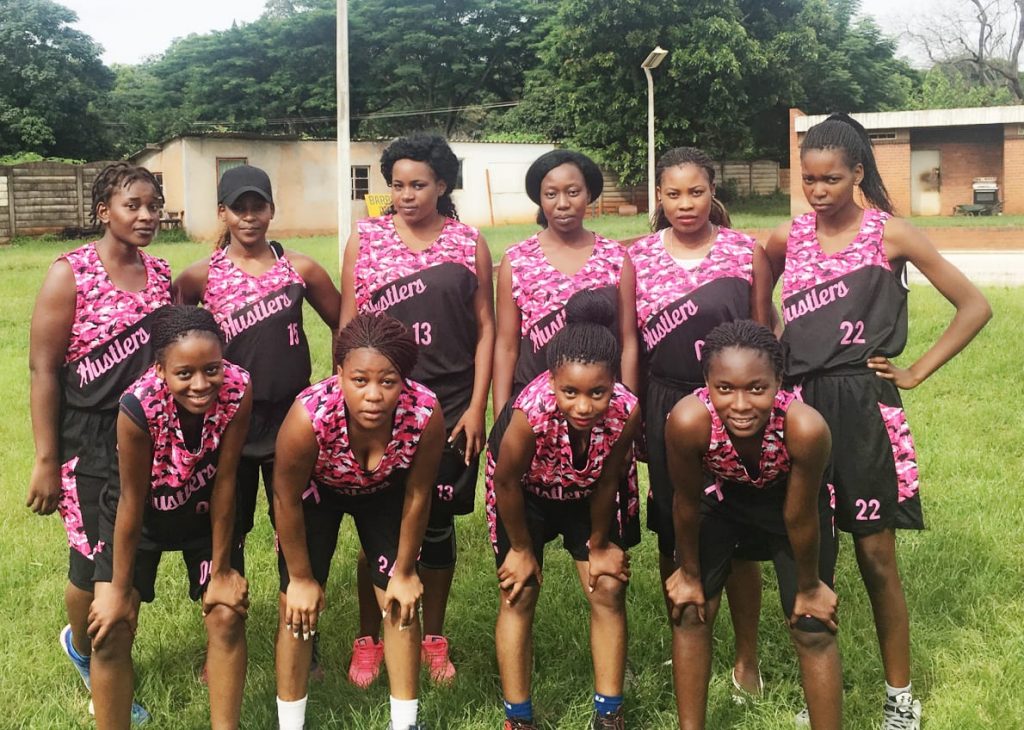
Twenty seven (27) year old Rutendo Beverly Mpofu, was born in Bulawayo, Zimbabwe. In September 2015 she started a basketball team, Lynx Ball Queens, with four other women, Tanya Kazembe, Celestine Karimbika, Sarah Kabiseni and Melisa Maganga. Beverly is the team captain and currently plays number 15. She also holds a Communications and Media with Management degree from Monash University in South Africa. [bctt tweet=”One doesn’t have to be social but on the court there has to be unity” username=”SheLeadsAfrica”] When did you decide to start a basketball team? I joined a basketball ladies association team soon after my undergraduate degree, but realised we had different goals. This pushed me to start my own team. At first there was a lot of slacking and not taking things seriously. But, after the loss of one of the team founders, we decided to be serious about the team. We joined another team called Hustlers in Mufakose, Harare and after a while we branched out on our own to become Lady Hustlers. We recently rebranded to Lynx Ball Queen. We started out small with a group of about seven women and now we are more than 12. Our team is made up of women between 16 – 27 years of age. Within our first year we managed to make it to the top six in the national league with only seven players. It was really challenging but we were happy with the results. Last year (2016) we were number two. So I clearly see a great improvement. Where do you get your sponsorship? We currently do not have sponsorship, because a lot of people feel that there are no returns in basketball therefore they do not want to sponsor it. We have approached many people and Net-One (a telecommunications company in Harare) has given us t-shirts before. We take whatever small donation we get and are open to working for our sponsorship. Because we do not have sponsorship, we purchase our own kits, and cover transportation costs to and from training and tournaments. A subscription fee of $10 is paid every month by each team member, but because of the current economic conditions we have agreed that people pay whatever they can. This is what is used for the basic running of the club. Where does your inspiration come from? My brother used to play since primary school. So that was my grand entrance into basketball. All the women on the team started playing when they were young, so it’s just a passion for most of us. What does a normal day look like for you? We train during the week but it is very challenging to get everyone in the same spot at the same time because of our many different commitments. We have players that are still in school and some work, so we have to incorporate training with other clubs that have venues with good lighting. This is so that we are able to train late into the evening. We generally try to put in work where we can. On the day of the tournament, we do not train. We sit, talk and strategise and do warm ups 15 mins before a game. It also helps if we know the people we are playing. Which women have been the most influential in your life? My Mother. She continues to teach me that you can’t wait for other people to do things for you. You need yourself first before you need someone else. [bctt tweet=”When you get on the court, you leave your quarrels on the line” username=”SheLeadsAfrica”] What is the greatest lesson you have learnt when setting up your team? To be patient. I deal with people from different backgrounds who have so many things going on, so I have really learnt to be patient. How do you manage conflict within the team? When one gets on the court, they leave their quarrels on the line, they can always pick them up after if they choose. But basketball time is basketball time. One doesn’t have to be social but on the court there has to be unity. That being said, people don’t bring their problems on the court. What personal traits are necessary for what you do? A high basketball IQ. One should be able to take theory and apply it on the court. A fighting spirit and perservance. The ability to work within a team and realise that one cannot do everything by themselves. Do you run a business in the sports industry? If you’d like to share your story with She Leads Africa, let us know more about you and your story here.
Monique Ntumngia: Unpack your fears and take bold steps to conquer them
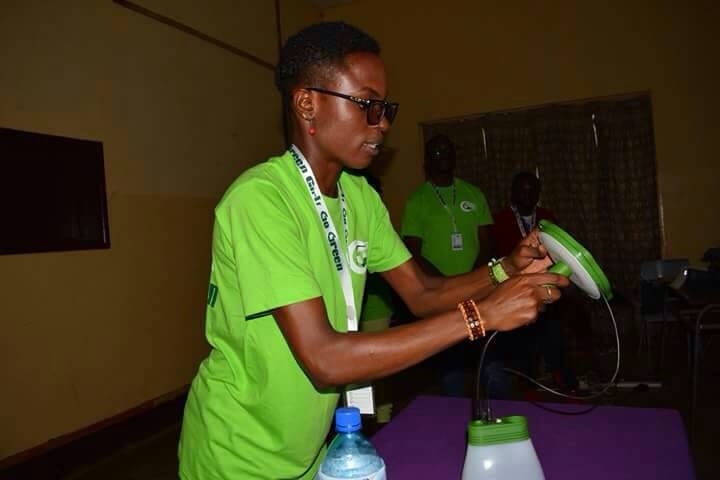
Monique Ntumngia is a human rights advocate against violations on women and girls. She is very passionate about entrepreneurship and promoting sustainable development in Africa with the use of renewable energy. Currently she is the President of the Green Girls NGO and CEO & Founder of Monafrik Energy. Her impressive track record includes: 3000 households supplied with biogas, 672 young girls trained, 23 communities helped and tremendous media exposure in Africa, Europe, America and Asia. Monique Ntumngia has been the Director of Sales and Marketing of Heta Energy in Cameroon and Program Officer in charge of Gender and Human Rights for the Resource Centre for Human Rights and Civic Education. She started her career as company Executive Legal Assistant for Human-As Cameroun. Monique fluently speaks English and French and is a holder of an LLB Law from the University of Buea in Cameroon. [bctt tweet=”Cameroon’s Green Girls Project has trained 672 girls, provided over 3000 households with biogas and installed solar panels in over 100 homes” username=”SheLeadsAfrica”] Can you tell us more about the Cameroon’s Green Girls Project? The Green Girls organization’s activity is to render girls financially independent through inclusive educational tech training on renewable energy, in a bid to eliminate poverty and fight climate change. Since activities commenced in October 2016, 672 girls from 23 rural communities have been trained- from 3 out of the 10 regions of Cameroon. Over 3000 households have been provided with biogas and over 100 homes installed with solar panels. How do you select the girls to train and what’s the duration of training? Communities are chosen based on a sample resulting from a native never- seen- before SDG scoring model. Eligible communities are pre- selected with the participation of donors or grants. In that community, the number of girls to undergo training is shortlisted, representing the demography of the locality. The flexible constraint for Green Girls is to target girls aged 14 – 18 years. Training runs from a week plus, depending on the number of girls and the community. How are you able to support this project? The project is mainly supported by grants from donor organizations, the cross fertilized team made up of: Cameroonians, Senegalese and French and strong partnerships. What obstacles would you say that you’ve had to overcome to get where you are today? Obstacles encountered have been numerous ranging from economic, social, cultural, technological, regulatory and demographic. Economically, the cost of training is very high and funds from donor organizations are not always easy to come by There is also the high cost of equipment and transportation to the communities. Social obstacles include the orientation of mindsets to adopt clean green practices and language barrier. The resistance to using renewable energy to cook because of fears that food cooked with biogas wouldn’t taste properly was a bit of a cultural obstacle. Technologically, the training requires accurate expertise in the domain of renewable energy which is not easy to have because not many are trained in the field of renewable energy. Regulatory authorizations have not been easy to acquire permitting the training to be carried out in communities. Demographic obstacles include the massive trend of rural exodus in the communities. What are some of the traits every lady should adopt in order to succeed? The traits every lady should adopt to succeed are: a) Unpack your fears and take bold steps to conquer them b) Find a mentor c) Be passionate about what you do and be focused d) Stand your ground and show your strength e) Always think positive and keep an optimistic spirit Do you have any other passion projects you would like to develop? Green Girls focuses on the actual project in order to trigger organic growth. Share with us a fun memory from your teenage years. Having to interact and empower young Muslim girls in Kano on the advantages of education. Are you in the renewable energy field? Share your story with She Leads Africa, let us know more about you and your story here.
5 #MotherlandMogul characteristic’s when it comes to relationships
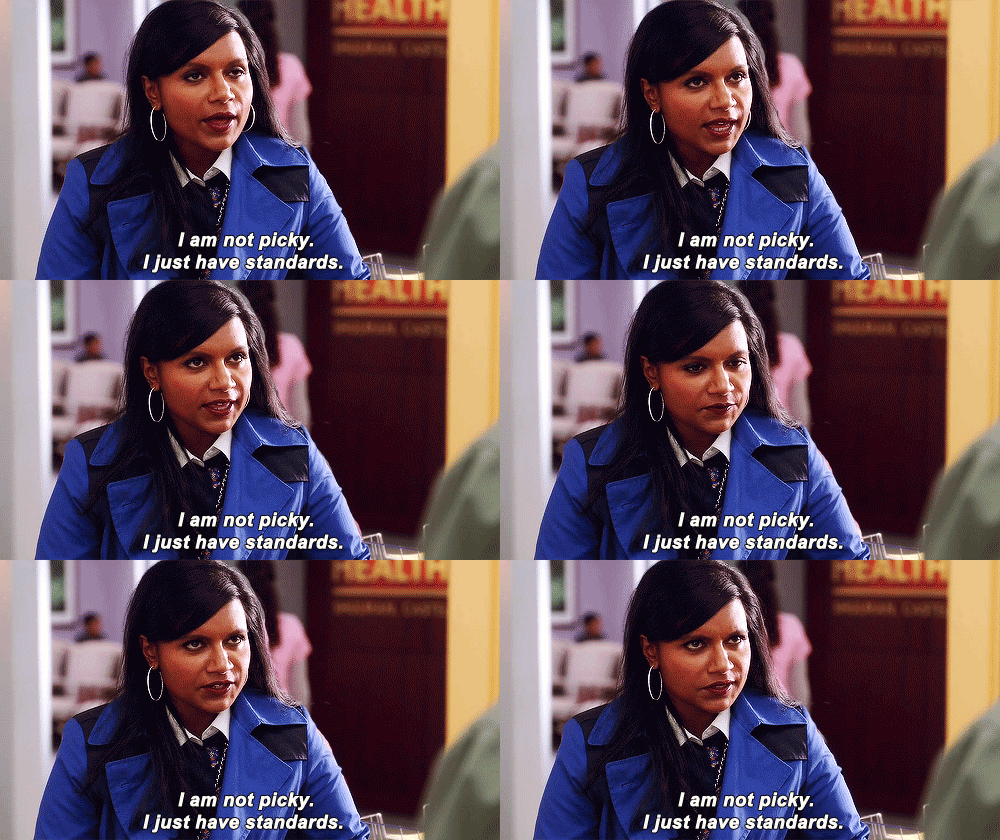
When was the last time that a song took you to church like this? Or this? For me, it was yesterday. The song? “Add To Me” by Ledisi. I identified with this song on such a deep and personal level because, it perfectly outlines some of the thought patterns that I have as a #MotherlandMogul when it comes to dating and entering into relationships. Like… I seriously considered playing it to the next nosey aunty to ask me why I’m not married yet. Heck, it made such an impact that I was inspired to write a little ode to it! As such, here are 5 characteristics of Motherland Moguls, regarding relationships (as told through Ledisi’s “Add To Me” lyrics). I’m sure you, as a member of the SLA community, will be able to identify with these too. So, without any further ado… #1 They are self-sufficient “I can be good on my own (can you add to me?) But I don’t want to be alone (can you add to me?) Paying all my bills on my own (can you handle me?)” As these lyrics show, Motherland Moguls are the epitome of the old adage “she wants you but she doesn’t need you” because they are independent and able to cope with or without a man in their lives. To summarise the late, great Dr. Myles Munroe, this is because they understand that singleness is not the same as incompleteness. Understanding this, Motherland Moguls can, indeed, “be good on [their] own”. #2 They prioritise their needs and practice self-care “I’ve been in a spiritual place; so when it gets hard I don’t break” Boss women have worked hard to become [spiritually, mentally, financially] self-sufficient. They are not interested in being destroyed by the wrong choice of relationship. As such, they may actually elect to remain single in order to maintain their “good” status. They also recognise that if they: Don’t have a healthy relationship with themselves, they will never be able to have a healthy relationship with another person. Are not happy or fulfilled within themselves, nobody else will be able to draw these things out of them or place them inside. In addition, they recognise that these qualities come from a strong relationship with God, as well as a positive intrapersonal relationship (relationship with themselves). #3 They have goals “Made a lot of money last year (can you handle me?) Plan to make more this year (can you handle me?)” Not only have they worked hard to become the person that they are now, they have clear goals for the future. Boss ladies are not stagnant ladies; so they don’t want to be with anybody who is going to stand in the way of their progress or the fulfilment of their goals. They want someone who truly has their best interests at heart and is not a distraction because, as Cindy Trimm once said: “Everything in your life rises and falls on a relationship. If you have the wrong relationships, you are going to end up in the wrong place” and vice versa. This means that positive relationships can advance us and move us forward , whereas negative relationships can stagnate us and cause us to regress. Bosses understand and apply this wisdom, knowing that the person that they are with can determine whether they get to their destiny or not. #4 They are not easily impressed “Took a lot now you’ve got my attention… But I’m the type that needs a little more” Because Motherland Moguls are so self-sufficient and focused on building their empires, they are not easily wooed or impressed. With all that they want to accomplish, they also don’t have time for games. This may earn them the reputation of being “cold,” “too picky” or even “a man hater” but, that’s not the case at all. They simply are not looking for a savior or to be in a relationship for relationship’s sake. #5 They are looking for a partner “But you got to have it all together (can you add to me?) So we can be stronger together (can you add to me?)” One of my favourite personal development books is “The Wisdom of Andrew Carnegie” by Napoleon Hill. In it, Carnegie advised that two of the steps to major achievement are: definiteness of purpose (a goal) and choosing a master mind team so that those in it can experience the benefits of synergy. This, in a nutshell, means that when two (or more) individuals unite and join forces in order to achieve a given purpose, they will be able to produce something that is exponentially greater than they ever could have done by themselves. Most people tend to understand this concept of “teamwork making the dream work” from a business point of view, but what sets #MotherlandMoguls apart is that they are also seeking this in their romantic relationships. As Ledisi quite rightly put it- they want someone in their life who they can build with; who can and will “add to [them]” and who they can add to in return. What other #MotherlandMogul characteristic’s would you add to this list? Let us know here.
Salma Abdulai: Failure is part of succeeding
[bctt tweet=”Others will believe in you, if you believe in yourself” username=”SheLeadsAfrica”] Mrs. Salma Abdulai is the Chief Executive Officer of Unique Quality Product Enterprise. With a background in Agriculture Science from her senior high school level, she continued her education at the University for Development Studies where she studied Agriculture Technology and majored in Agricultural Economics and Extension. In addition to that, she has a postgraduate degree in MPhil Agricultural Economics from the same University. Salma Abdulai has 9 years of experience working on different projects with international non-profit organizations. She has extensive experience in the agriculture sector, particularly working with small scale rural farmers and women groups. The company is a reflection of her experience and passion for agriculture and social consciousness. Mrs. Abdulai is currently responsible for the overall management of the company and its day-to-day operations. “High influx of imported food products in the country is making local goods less competitive” You started your company in 2013; can you tell us what the first 6 months was like? The first 6 months were vague, even though the results to achieve were clear, the process was not very clear to me. It was all about planning on how to take off, where to get the necessary materials, how many women farmers should we support, what other equipment do we require? It felt like there were a lot of things to be done by one person. What support system and tools have helped you in the course of running your enterprise? We constituted an advisory board, which had diverse experiences in various fields to advise us on key decisions the enterprise took. This actually reduced the risk we faced against some of the actions we made. It also helped the business stay focused and concentrated on very important things in the midst of the limited resources. Attending networking events has brought the enterprise a lot of referrals in terms of market and financing. We weren’t able to attend all, but we made it a point to attend as many as possible. Social Media has become the most popular marketing and information tool; we use social media for marketing and sharing a lot of information on our product. I also got a lot of support from family in terms of resources and advice. What are some of the challenges facing the agricultural sector? High influx of imported food products in the country is making local goods less competitive. Inadequate funding because of the risk associated with this sector, adding the adverse effect of the impact of climate change in this sector is making it more difficult to get funding. Lack of implementation of government policies on agriculture. What do you think the government can do to improve the agricultural sector in Ghana? Make good policies to favour small business in the agribusiness sector, by developing and promoting policies that directly affect the growth of the sector. This can include cutting down on importation of food products, increase capacity of farmers to produce more and support businesses to absorb increased food surplus by adding value. Enhance institutions that directly deal with farmers with the necessary resources to do so. Create a favorable environment for small businesses to thrive. Also the government should strive to reduce bureaucracy in our public institutions. [bctt tweet=”Failure is part of succeeding” username=”SheLeadsAfrica”] Share with us the most valuable lesson you’ve learnt about yourself and others from your journey in life thus far? I have learnt to believe in myself. When I believe that I can do something, I end up doing it, even if I face a lot of challenges. Others believe in you if you believe in yourself. Failure is part of succeeding. It is not always the decision you have made that you will always succeed at, but believe me, if you fail, you become stronger and wiser. [bctt tweet=”I have learnt to believe in myself” username=”SheLeadsAfrica”] What three skills have helped you overtime in business? Time management, Routine planning of daily activities, patience. What’s the most courageous thing you have done? The most courageous thing I have done is reviving a cereal that went extinct in my area and getting women to produce it even when they did not have access to land. If you were to host few friends for lunch, what meal would you make with Fonio? I will prepare Fonio chicken salad for lunch and Fonio pudding for dessert. Are you in the agricultural business? How has your experience been thus far? If you’d like to share your story with She Leads Africa, let us know more about you and your story here.