
Keep it movin’: How to get more work as a freelancer

[bctt tweet=”You are only as good as your last job when it comes to freelancing” username=”SheLeadsAfrica”] Working as a freelancer has amazing perks: you keep your own hours, you do the work you actually want to do and above all, you do not have to answer to anyone else. You are your own boss and that is so liberating. With the highs come the lows: the inconsistent paychecks, the odd working hours and the never ending search for more work. Until you build up a reputation and have people knocking at your door you have work twice as hard- for your actual content as well as looking for more business. So how do you keep the business rolling in when starting out as a freelancer? 1. Be proactive You have to look for the work and until you become a brand name, it won’t look for you. So spread the word among your friends, family, even the stranger down the street (jokes, don’t do that unless you really have to). If you’ve left a previous job to become a freelancer ask your old colleagues to put out the word for you, even if recommending you for work they can’t take on. Referrals will help you get new jobs especially when you have a good reputation. It might be worth it to talk to other freelancers in your field, hear how they built their business and they could also become someone worth partnering with. Approach people you want to work with/for, put yourself out there. 2. Be social media savvy Thanks to Twitter, Facebook and Instagram, your clients are literally a click away. I am not a fan of the, ‘Guys, my client could be on your timeline’ tweets but I also appreciate the resourcefulness. If you use a website remember to link it to your social media so you can direct traffic to your site. Keep it updated, showcase your work and also engage with your followers. Social media is a great tool to build up and maintain your clientele. [bctt tweet=”Until you have people knocking at your door you have work twice as hard” username=”SheLeadsAfrica”] 3. Be accessible Nothing irritates a potential client more than having to work for someone and not being able to find them. You don’t have a PR team behind you or a secretary so you have to balance your work and being available. Make sure you keep your contact details and website up to date. When your clients want you, they should be able to find you. When there are events or opportunities to attend conferences for your field, go! Get out there and get known, build your brand by being reachable. Having a good reputation is as necessary as producing good work. 4. Don’t be too picky Sometimes, you’ll look at a work offer and be like, ‘I’m above this’ but when you a starting out you cannot be too picky. You’ve got to do some not so great work to get access to the more exciting work. Sometimes this might mean doing work for free – which is a freelancer’s nightmare. Annoying but necessary in some cases especially when it will contribute to exposure and portfolio building. It is part of the process of starting your career. You get to be pickier when you have the choice to be. Right now you don’t. [bctt tweet=”Talk to other freelancers in your field, they could become someone worth partnering with” via=”no”] 5. Plan, plan, plan Without the daily structures of office life, it is easy to be lax when it comes to planning and having a set routine. In order to put out good work, you have to be efficient and structured. You are in charge of your schedule and it’s easy to let things slide but you have to create timelines for projects and mark down deadlines. Put in a weekly reminder to track your progress, that way you are consistently putting in the work and not just waiting for the due date to get the work done. You have to be on top of your schedule to stay on top of your work. 6. Let your work speak for itself You are only as good as your last job when it comes to freelancing. When looking for working on sites such as UpWork, you may be requested to give examples of previous work. Your portfolio is as good as your CV. Always be consistent in terms of quality by making sure it is always up to date. Another way to get more clients is to have your previous clients speak up on your work. [bctt tweet=”Freelancers need to get out there and get known, build your brand by being reachable” username=”SheLeadsAfrica”] Have them quote their opinion of your work on your site/ portfolio. This builds up your reputation and shows a history of satisfied clients.
Revolutionise your business cards with these 6 easy-peasy tips

[bctt tweet=”By handing over a business card you are literally handing your business name in their hands” via=”no”] One of the smartest things to do upon meeting a potential customer, client or partner is to hand over a business card. However, I’ve noticed more than 80% of the business cards I have collected over the years have one thing in common- a blank space at the back. By handing over a business card to a potential client/customer you are handing your business name in their hands; quite literally. This is your chance to capture their attention by making use of that awkward blank space at the back of your business card, (you know they will turn it over to explore, right?) or for some that repetitive business logo that does nothing. Think of your business card like having two billboards on the roadside whereby you opted to use only one simply because all your information could fit in there and leave the other one empty. What a waste right? If you are not using the back of business card, you are definitely wasting one of the most effective budget friendly marketing resources at your disposal. I have searched the web and found some examples of how creative entrepreneurs are using the back their business cards. Here are some useful and easy ideas to you get you started. Boost your credibility Every person, brand or company can quickly tell a story of why they are relevant by adding one of the following to the back of their business cards; Customer testimonials Brand promise or a statement quote Career achievements, or honorary degrees A short list of important media features A translation of your business card will make a great first impression on your foreign clients and customers. Names or logos of your major clients or customers. Charities you support Titles or cover photos of any books you have published. The hours you are open for business 2. Give a special offer Use your business card to give your potential clients offers they can’t refuse. The important thing is to make offers depending on your business model and clarify in your wording that the offer is exclusively available to those holding your business card when they walk into your shop and not otherwise. Such offers can be: Free consultation offers for client attraction Offering discounts for your client first purchase or first project together “Buy one get one free” deal to incentivize customers to purchase Offer a free recipe or great tip relating to one of your products. 3. Add a QR CODE to your paper business card Another great option is to print a QR code on the back of your card to generate leads for your business. A variety of QR code scanners are available as smartphone applications and when a client scans a code, it will bring up anything you choose to link to such as your website, links to social media profiles, email subscriptions page, adding to their phonebook etc. You can learn how to make your personal QR code online very easily. Important to make sure you have a call to action on your business card. Don’t just print the QR code, write something with it; for example, “Scan this QR code to know more about me”. [bctt tweet=”You can also use the back of business cards to show a short description of what you do” via=”no”] 4. Showcase your skills and services You can also use the back of business cards to show a short description of what you do/who you do it for. You could opt for one of the following: If you are a restaurant, you could put a small menu with a best selling dish especially for takeout customers. Titles of courses and the number of people you have trained in your career are great for teachers. Public speakers can include the titles of their talks. A before/after photo can be very persuasive for professional services providers such as fitness coaches, event decorators, and furniture repair or restoration services. If you are an artist, you can add one of your favorite artworks. Price menu including prices of your best services or products. 5. Choose a meaningful background There might be times you don’t want to add any text on the back of your business card. Instead of selecting a coloured background, which is no better than a blank white space even if they are pretty to look at, how about adding an icon, a symbol or a photo that describes your brand? This particular style can work great for creative professionals in the visual arts, such as architects, photographers, graphic designers and many others. [bctt tweet=”Whatever you decide to add to the back of your card, make it something valuable” username=”SheLeadsAfrica”] Conclusion There are limitless possibilities for the back of your business card to add additional information beyond the basic and showcasing your unique personality and brand. Whatever you decide to add to the back of your card, make it something valuable and favorable to your customers or prospects.
Munozovepi Gwata: Nobody is really taught how to manage their personal finances

[bctt tweet=”We want to instill financial literacy skills into children from a very young age so that they can understand money” via=”no”] Munozovepi Gwata is an ambitious entrepreneur and an aspiring Chartered Financial Analysts and Hedge Fund manager. She is the founder of the Aworks, a conglomerate with subsidiaries Arete’ Tech, Kukura Capital NGO and Kukura Capital Investment Trust. Her personal mission statement is to inspire people throughout the African continent and to create innovative solutions that will bring upon development, wealth, and success for the continent. Munozovepi’s goal is to build Awork to the same status and standard of Berkshire Hathaway which she has no doubt that she will accomplish. Why is financial literacy important and why start an organisation that educates people on the matter? I believe financial literacy is extremely important just like learning Maths and English. It is the fundamental skill that equips people with the essential ability to effectively save and make money. Unfortunately, nobody is really taught how to manage their personal finances. Not at one stage in our lives do we come across financial literacy education in the mainstream education system. I find this very alarming and I am a strong advocate that financial literacy should be included in the mainstream curriculum. The consequence that we have now, is that people are not equipped to manage their personal finances and they do not know how to save or grow their money. Therefore, instead of having the opportunity to pass down wealth to the next generation, they are passing down poverty and debt. I felt that I could no longer sit on the sideline and watch this continue to happen, this is when I decided to become a part of the solution and build an organization that addresses the problem. In starting Kukura Capital, did you decide to go solo or have a business partner(s) and why did you decide to go solo/partner up? In starting Kukura Capital, I decided to go solo. I do have a great team of friends and family that help me and soon we will be adding another 8 new team members to the Kukura Capital team. When I started Kukura Capital it was only an idea. A lot of people, even though they shared and agreed with my vision, didn’t share my hard work ethic, and because of this, I did not manage to find a full-time business partner. It still worked out great in the end. I was given a lot of good advice on how to develop the organization, leaned on some great books and to my surprise in such a short time we have managed to pick up and maintain a great momentum. We also have the support from other well established NGO’s and Institutions which is great. When did you establish Kukura Capital and what has been the biggest lesson you have learnt thus far? Kukura Capital was established last year in November and it was inspired by my own journey to learn more about the financial industry. In gathering information, I kept thinking to myself there has to be an easier way to learn about financial literacy, and from there Kukura Capital was born. The biggest lesson I have learnt? I have to say I have learnt so many things, but the biggest lesson is that knowledge is truly power. As an organisation, one of our main goals is to make knowledge about financial literacy easily accessible and to break down the complex concepts of finance and make it simple and easy to understand and apply. Doing such a simple task has proven to be powerful. When you tell an individual of any age, be it a high school student or a young adult, that if you save this amount of money every month and reinvest it either in the market, or in a business and you can get this x% in return, people’s eyes really light up, and they really do change their spending habits. The things people always say to me is: “Why didn’t anybody tell me earlier? I would have been a millionaire a long time ago.” What gave you the courage to start your organization? What advice would you give to someone who is thinking of going into business? Fortunately enough, my past experience in leadership positions and community involvement gave me a lot of confidence to start. Also, having a business and finance background also gave me the confidence to start Kukura Capital. However, to be honest, I didn’t really think too much about it, I really believed what the organization stood for and went for it. That would be my advice to anyone starting a business. In addition to running Kukura Capital I also run a FinTech business and when I started I had plenty of doubts but I quickly moved away from any negative thoughts and just went for it. In addition to that, I will advise anyone who wants to start a business to fully commit to their business and make sure that they love what they do, so even when it gets tough they are still driven to keep going and succeed. [bctt tweet=”I’ll advise anyone who wants to start a business to make sure that they love what they do” via=”no”] You have recently finished a children’s book “The Rich Life of Thabo”, what brought about the decision to write a children’s book on financial literacy and in what format and where will the book be available? I really love this book and wrote it with my talented friend Charisa Mujuru. I am really excited for this book because it is definitely going to inspire a lot of young kids to be like Thabo. Thabo is the main character in the book and he lives in a township and one day he decides that he is tired of never having enough pocket money so him and his sister, under the guidance of their grandmother, decide to start a business. The book really
Effectively handling multiple jobs like a pro

[bctt tweet=”Reading to be a professional job juggler? Here’s how to balance your 9-5 and your hustles ” via=”no”] So you got the gig! You are excited because you are finally on your way to doing something you really love. You spend endless hours on your side gig all in the hopes of being successful. But your job becomes a distraction and starts to keep you away from your hustle. How do you balance it all? Below are some of my tips for being a professional job juggler. Develop a work routine The biggest problem with holding multiple jobs especially if you already have a full-time job is falling into the trap of thinking you don’t have to work as hard as you would a regular job. Sorry to burst your bubble but having a freelancing gig may mean working twice as hard just to get a little bit of success. Therefore, a work routine needs to be developed for your multiple jobs. If you have set aside 3 days a week to work on your side hustle do it! Treat your gig just the way you treat your regular job. If you can’t imagine slacking on your regular job then you sure can’t slack on your side job. [bctt tweet=”If you can’t imagine slacking on your regular job then you sure can’t slack on your side job” username=”SheLeadsAfrica”] Talk to others The good part about the year being 2017 is that plenty of people have lived in on this earth. Chances are there are plenty of people doing what you are doing right now. Talk to other freelancers and pick their brains on issues that you may be having. Also just ask them general questions about how they operate. Learning from others will help you avoid the mistakes they made and save you a whole lot of time and money. Be organized Being organized doesn’t always have to mean you have a physical space to call an office for your business. In these times, few businesses have that. Regardless always make sure you have your business cards, company profile and pitch ready. This will significantly reduce your turnaround time with potential clients. Getting even one potential client is a good feat for a gig so you don’t want to scare off any. Additionally, you always want to feel ready to conquer what’s thrown at you. [bctt tweet=”Being organized doesn’t mean you have a physical space to call an office for your business” username=”SheLeadsAfrica”] Take time for yourself Seriously, take a break. When you feel overwhelmed by your multiple jobs it is okay to have a time out to just think. Watch your favourite 90s movie (cue in Pretty Woman), take a bath, go out for drinks, read a good book the list is pretty endless. The goal is to rejuvenate yourself so you can focus on your work. Create goals for yourself. Look! Goals give you direction period. If you do not set goals for yourself and your work you are most likely going to get overwhelmed. Additionally, you will be working but not adding impact. Every morning when you wake up ask yourself, “What single task can I do today that will take my business forward?” It’s all about creating purpose and everything will fall into place. Celebrate!! Celebrate every little milestone you achieve while working multiple jobs. You will automatically psyche your brain into doing more and before you know it you’ll be a master of your craft.
Giving it 110%: How to be a fitness entrepreneur and slay in your tech job at Google

[bctt tweet=”Bami, founder of Bam Bam Boogie has created a global operation from a ‘side hustle’” username=”SheLeadsAfrica”] Imagine working at Google and trailblazing your very own dance fitness sensation. That’s what founder of Bam Bam Boogie, Bami is doing. In less than a year, this Google marketing specialist and fitness entrepreneur has run fitness classes in Brazil, London, Vegas, Texas, Toronto, and Dublin. Talk about major multi-tasking and creating a global operation from a ‘side hustle’. SLA contributor Abiola caught up with Bami to find out just how the heck she has achieved all of this in such a short space of time, and how this is only just the beginning. Tell us about Bam Bam Boogie (BBB) and how you got started Bam Bam Boogie is an Afro-Caribbean-inspired dance workout that pairs traditional fitness movements with authentic Afro-Caribbean dance styles to the beat of contemporary afrobeats, dancehall, reggaeton, soca, and hip-hop. We foster an environment of diversity and inclusivity: anyone and everyone is welcome at Bam Bam Boogie. It all started following a rough time I was going through at the end of 2015. I’d just returned to the UK after my first ever trip back to my ‘homeland’ Nigeria, and although it was an amazing experience, I had a strong sense of emptiness. While ‘going back’ helped me see where I came from, there was still something missing and I couldn’t work out what. Something felt like it just didn’t fit. So after some soul-searching, and that took the form of working out. But being at the gym was so mundane, and it felt like you needed to look a certain way to fit in. And that’s how BBB was born. I wanted to create a space where people who may not feel 100% confident in the gym, can workout, be free and have fun while doing it. So that’s what I did, and very quickly, it became the most popular Googler-led class at my work gym. (Googler is Google-speak for someone who works at the firm!). [bctt tweet=”Afro-Caribbean dance at Google? Find out how this woman makes it all work #TeamBoogie” username=”SheLeadsAfrica”] How did you get your firm to support the BBB movement, and keep supporting it even a year later? We started as a diversity initiative to generate awareness, celebrate cultures and break down stereotypes in the workplace. That was our USP and it helped me to get buy-in and continued support from my firm. I only had to convince a handful of important people and from there the news spread like wildfire. There’s nothing like word of mouth. Very soon other teams and managers were asking for Bam Bam Boogie conferences and team events! It’s a fun and easily accessible way to start an important conversation and I think that’s why the firm is so supportive. It strongly reflects their “bring your whole self to work” perspective. What have been the highlights in taking BBB from some classes in Ireland to around the world? It’s always amazing when I take BBB to other countries and people find out that I live in Ireland. They look puzzled, first they think, ‘where is that?’ and second, ‘there are African people there?’ It makes me proud to be able to represent the diaspora through BBB. I loved taking the class to Toronto because that’s where I grew up and become heavily involved in Afro-Carribean culture. Everyone back home was super proud and supporting, and #TeamBoogie Toronto wish they could do classes weekly! I also loved doing it in Vegas because – it’s Vegas right? Everything that happens in Vegas stays in Vegas so I guess that’s all I can say about that workshop! Finally, Sao Paulo was a major highlight because it was my first time in Brazil. The energy was amazing Brazilians can really move – they even taught me a move or two! I loved explaining the concept to Afro-Brazilians because they were so impressed to see someone who looked like them bringing their passions to the corporate world and thriving in both aspects. It’s a moment I’ll never forget. How do you get so many diverse collaborations and how have they helped your brand? I’ve had the opportunity to work with lots of different growing brands around the world such as blktckt concept online magazine (USA), u-wantit.com (Nigeria), Organo (USA), Kemetic Knowledge (USA) and Put Power (Canada). I’ve been able to do this mainly through my network and very open personality. Yes, BBB is a brand, but it is an extension of my personality. I have made this very clear from the start, so within the first 30 seconds of meeting someone, I have already told them about BBB. This helps a lot with word of mouth because it means I’ll always be top of mind. I also I seek out opportunities for myself using social media. I’ll search up relevant hashtags for example “#ukurbanwear” and I will slide into their DMs to see how we can add value to each other’s brands. I like to support brands I believe in especially if they have an ethos that supports Afro-Caribbean Culture. These collaborations have helped add credibility to my brand as when people see these interviews, blogs, and videos they get to see the entrepreneurial side of BBB. The fact that it’s not just a dance fitness movement but a community used for empowerment and support. How do you balance a high-powered corporate career with entrepreneurship? [bctt tweet=”Calculate how many hours you have in a day and break it up according to daily/weekly priorities. #productivity” username=”SheLeadsAfrica”] Balancing the two is never easy, and some weeks it feels like a 50/50 split in dedication, other times it feels like 110/110 and I’m burning out at both ends. But if you’re passionate you just have to keep pushing. My top 3 tips would be: Calculate how many hours you have in a day and break it up according to daily/weekly priorities. For example, I know that
Adebimpe Akinbuja: Producing safe chickens for consumption
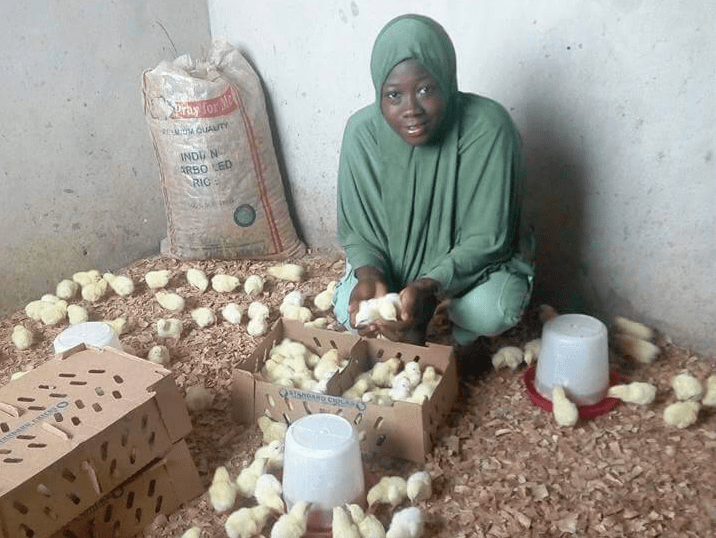
[bctt tweet=”I made up my mind to create employment for myself & grow it so that others will have jobs too” via=”no”] To ace our hustles, we need to be alive and in good health otherwise, we won’t be able to make the impact we desire. This is why we need to eat good food, quality food that will not impede our health in any way. This young woman, Adebimpe Oladunjoye Akinbuja is doing something about the quality of chicken available for consumption. She studied animal production and health at Ladoke Akintola University of Technology ( LAUTECH) and is putting this into her hustle. It’s no wonder that when she saw the challenges in the sector, Adebimpe decided to change the narrative in her own way. How did you find yourself in the poultry business? At first, it was simply because I saw the alarming rate of unemployment in the country. My senior colleagues were graduating but were not having something tangible to do for over a year. I made up my mind to create employment for myself and grow it so that people around me will have a job out of it too. After creation, I discovered there was more to do. My landlord in school then operated a cold room. One day he told us about how we are gradually dying from the things we eat. He told us that the frozen foods we eat are being preserved using an embalming chemical, formalin. He spoke as if we didn’t have a choice but to keep consuming this ‘dead-body fluid’ (in pidgin accent) and continue to die gradually. I took that information a little further and decided to produce chickens that will be safe and healthy for the consumption of humans. That is amazing! What are the challenges in this business line? I’ve had to face challenges from technical, to financial, to environmental, market, transportation and the major one has been power. And I’m still facing some of them till date. There is perception that the Poultry business is too risky, what is your opinion? People say they hate poultry business because chickens die a lot. They believe it is a risky business. Yes, poultry business is highly risky and chickens die but every business has risks, what should be focused on is risk mitigation. With a good business model, appropriate poultry house, good biosecurity practice, a learning mind and God’s blessings you will be a successful poultry farmer. [bctt tweet=”The poultry business is highly risky but every business has risks, rather focus on risk mitigation” via=”no”] What other opportunities abound asides rearing the chickens? Poultry business is filled with lots of opportunities. We have egg production, meat production, live chicken production, transportation, poultry housing and equipment, processing and marketing, training and consultancy. Do you think the Nigerian system is favourable to this line of business? I would say no because in Nigeria, we still struggle with the problem of power and this is eating into the profit of farmers. We also have issues of hatcheries not been transparent enough. And importation of frozen chickens still affects the sales of fresh chicken in Nigeria. [bctt tweet=”In Nigeria, we still struggle with power cuts and this is eating into the profit of farmers” username=”SheLeadsAfrica”] What is your advice to young women interested in building a poultry business? Learn. Find yourself a coach and a mentor and let them show you the way. Ask questions and network with other poultry “agripreneurs”. If you’d like to share your story with She Leads Africa, let us know more about you and your story here.
Transferable skills: What they are and how you can detect them
[bctt tweet=”So many of us want a change of jobs and we feel our skills will not fit. That isn’t entirely true” via=”no”] Have you looked through a job application and your initial thoughts are that you haven’t got any required or essential skills necessary for the job? Don’t panic just yet, we have the scoop to calm your career nerves. What are transferable skills? Transferable skills are talents and abilities you can take from job to job or career to career. They are skills you have acquired and can implement in any future career settings. They are categorized of more soft skills than technical skills. How are they acquired? Transferable skills are acquired through volunteering, internship opportunities, apprenticeship, training (formal and informal), hobbies and any job, task or role you were or still involved in including parenting. [bctt tweet=”The key thing is that you have every opportunity to develop your skills & learn new ones” via=”no”] What set of skills are transferable? Interpersonal and people skills Simply put, it is a skill that shows how well you relate to others. Top tip is how you communicate (written and verbal), empathy for others, conflict resolution and willingness to get along with others (team player), to ensure a common goal. Organisational skills This set of skills requires the ability to use your energy, resources and time in an efficient and effective way. Top tip is how you are able to follow through, manage your time, prioritize your work, planning and of course, meeting deadlines. Leadership skills The ability to influence a set of people to achieve a goal or move to a particular direction is essential as a leader. This set of soft skills is developed over time. Top tips are how you can effectively communicate, indispensability, integrity, commitment, problem-solving, initiative, decision making, evaluating, delegating and managing. Communication skills This set of skills cannot be overemphasized enough. They require the ability to articulate, explain, persuade and speak in public settings (meetings, work presentation or informal settings). Top tip is how well you are understood either through an email or letter or through your speech. Information technology skills The use of I.T skills is more than essential in our everyday life. However, you need to show an ability to use formal I.T skills in a work environment. Top tip is having the ability to use Microsoft Office packages. Research and analytical skills This set of transferable skills has the ability to search or look for information or data, organise them, interprete and make inferences, theories and decisions or solutions based on your findings. Top tip is the need to want to solve problems, by thinking, creativity, and curiosity. [bctt tweet=”You already have transferable skills. You just need to list them out now and apply them” username=”SheLeadsAfrica”] How do I know if I have them? Get out your pen and a paper and begin to make a list of skills and talents you have acquired thus far. Reflect on the roles you have done in the past (even in an educational environment) and as you go through this set of skills, create a list of your own set of transferable skills.
Lebogang Mashigo: Our role is to present platforms for discovering, expressing, empowerment and connecting

[bctt tweet=”At first it was about numbers but now our focus is about quality and impact” username=”SheLeadsAfrica”] Lebogang Mashigo is a 27-year-old social entrepreneur from the former KwaNdebele region, currently Thembisile Hani, of South Africa. She is the founder and director of Nubreed Company and Music Institute. She is a YALI (Young African Leaders Initiative Alumni in Business and Entrepreneurship, a Monash South Africa Lead (MSA Lead) fellow and was named the Mail & Guardian’s top 200 Young South Africans 2016. Lebogang is very passionate, brave and believes in her strength and that of others. She has been nominated twice for the Women Real Architects of Society Awards. Lebogang has also been profiled on Mzansi Insider, On the Spotlight with Ashraf Garda as well as on Kicking Doors with DJ Sbu on CNBC Africa. She Leads Africa contributor, Kutlwano Mokgojwa catches up with her on all things Art, Music and youth empowerment. What role does Nubreed have in the community and how does it fulfil that role? Our role is to present platforms for discovering, expressing, empowerment and connecting. We started a just a music project that gave music lessons. Today we have become more than just a music project. We educate, discover, empower and partner with young people and communities for change. What effect does empowering the youth with music have? How has that inspired you to venture into the Visual Arts and Life skills? Coming from a rural area where little is happening to stimulate young people growing up in the region of former KwaNdebele, I didn’t want to change the world, but I understood that young people are gifted and they can express themselves through music, it made sense to start NuBreed the music institute. We are not changing people but we have inspired young people to be confident, to go after their dreams, to discover opportunities within the music/arts industry. Through workshops and many events, we host, young people, connect from those in the industry and learn from them. Working with young people helped us to discover other talents and needs which propelled us to create other platforms for visual arts, life skill workshops and business workshops. It is all part of our mission to educate, empower and develop. We now host the biggest annual talent show in June called KwaNdebele Got Talent where we call for auditions and in June young come from all over the region to showcase their talents and compete for a big cash prize and other development opportunities. [bctt tweet=”Our role is to present platforms for discovering, expressing, empowerment & connecting @NubreedMI” via=”no”] How has Nubreed been welcomed into the community, what relationships have you formed and how do these relationships help the organisation? NuBreed is a recognised brand that is associated with youth, Change and Empowerment. We have been welcomed with open arms in the community. We work with other community structures, we’ve worked with schools, churches and other NGOs. However, we still see room for more networks. How old is your target market and what socio-economic challenges do they face? As the music institute, we’ve worked with many young. At first, it was about numbers but now our focus is about quality and impact. So I will say we are growing our impact. [bctt tweet=”We’re not changing people but have inspired young people to go after their dreams” username=”SheLeadsAfrica”] What kind of syllabus does your organisation follow and how has that helped with your partnership with the University of South Africa? NuBreed uses the UNISA music syllabus to teach our students, we have UNISA accredited teachers and we do UNISA Music exams twice a year. This enables our students to receive UNISA music certificates and earn university credits. Your organisation is a non-profit entity, how does that affect your operations in terms of funding and how do you manage the financial pressure? Funding has been a big challenge. We are not formally funded. We have received donations from individuals now and then. But this has encouraged us to develop our own fundraising programme in-house. We enter competitions for funds and we are always looking for partnerships. Now we are looking for opportunities to expand. All this is inspired by our need to sustain NuBreed. What personal lessons have you learnt through your leadership of Nubreed? Personal lessons: It is important to say no to some ideas. [bctt tweet=”It is important to say no to some ideas @leewaMashigo” username=”SheLeadsAfrica”] If you can spend a day in the life of anyone, living or dead, who would it be? I would really like to be Oprah for a day. I would build art schools in rural areas. If you’d like to share your story with She Leads Africa, let us know more about you and your story here.
How to mission travel

[bctt tweet=”The best trips are those that are the most demanding, socially and professionally! ” username=”SheLeadsAfrica”] I am sitting in the middle seat of an empty row (great when you need to catch up on some sleep), and we are a few hours away from final destination: Dakar, Senegal. Since July last year, my world has been turned upside down in ways I never thought possible. I exited two years of post-bachelor unemployment (forcing myself to confront my aggravated social anxiety) to join an agency where I am in the air for what feels like 3 weeks every month. Though it has been exciting to discover everything business travel has taught me, oh boy has it been tricky and downright scary sometimes. It’s that fear of the unknown I suppose. I cannot tell you if it will ever leave me. But I don’t intend on wasting these travel opportunities by focusing on my fears. So I have mapped out a way in which I could be better prepared for mission travel, therefore less stressed, and more likely to take in as much as I can from these travels. If you are interested, and especially if you will be going on your first travel missions soon, I hope you stick around and enjoy the read. Step 1: The pre-travel prep In the week preceding your travels, take some time to research not only your final destination but also the countries in which you will be transiting. Make sure you have the travel and transit durations right (those can get so confusing, I mean is it just me?). Check the weather, the currency used in these countries and the predominant culture/religion for acceptable dress codes. You may want to calculate how much money you will need for the time you are away and take the appropriate amount of money beforehand; carrying dollars is very often the most appropriate. If you are not carrying cash, check for available banks and ATMs where you will be landing. Let me give you an illustration of what went wrong when I didn’t research my travel destinations. Last month, I embarked on a trip to Abidjan via Addis Ababa. I was so excited because after my mission I would be discovering Abidjan with some friends who have their parents there. All I could think of was the heat of Côte d’Ivoire and I imagined myself lying on the beach, sunnies on and all. I didn’t bother to check the weather in Addis where I would be spending the night and let’s just say, it was a pretty cold and uncomfortable night. The same goes with transit durations. I once confused an overnight layover for one that would only last a few hours. I encountered a lot of stress finding a hotel to spend the night in, and I thank the heavens I hadn’t given in to the temptation of spending all my remaining cash. Step 2: Pack appropriately and as lightly as you can This is where, till today, I binge watch “how to pack lightly” YouTube videos like they’re going out of style. Yesterday I think I hit the mark when an airport officer remarked: “Your suitcase is so light for a lady, you always feel the need to pack everything.” Needless to say that as a compulsive over-packer, I felt great. In all seriousness, it is important not to pack too heavily. If you pack light, you lose fewer things and you move faster. Packing light, however, doesn’t mean you leave the things you do need behind. Other than clothing, make sure you pack all professional material relating to your mission travel, and then you’re good to go! Learn how to pack like a pro here! Step 3: Keep your eyes on the prize So you’ve made it to your destination. Now what? If you are traveling alone, contact your boss or supervisor and make sure they know you’ve arrived safely and are ready to get moving. This serves two purposes, 1. Someone from your organization will know where you are and can assist with any urgent queries. 2. By calling when you get to your destination you can find out as soon as possible what you need to do and how you can get ahead on certain tasks. Mission travel is often very short and we can use all the time we have. [bctt tweet=”How do you ace travelling for work when you have social anxiety? Read this!” username=”SheLeadsAfrica”] Step 4: Take care of yourself Indeed, mission travel can be pretty fast pace. So remember to take care of yourself whenever you have the time. During travel, we often end up in surroundings we are not used to with people that may have completely different cultures than ours. The change in scenery can be exhausting all on its own. So take some time out for you. Call your friends or a family member -yes, even if you’re only going to be away for 4 days- wake up a little earlier for some prayer or meditation time, or get to bed earlier if you can. Step 5: Take in the travel and loosen up! I recently read “Daring Greatly” by Brene Brown from which a sentence struck out to me. I turned into an everyday prayer, and I am paraphrasing here, but it goes a little something like this; “let me have the courage to show up and let myself be seen”. All this to say that you should expect that despite the stress of the travels, your colleagues are going to be a lot more relaxed, and it’s an opportunity to show your personality and get to know on a deeper level those with whom you work. [bctt tweet=”Travelling for work is a great opportunity to get to know your colleagues on a deeper level ” via=”no”] You’re going to get some FOMO too, sometimes you’re going to get an entire afternoon to yourself after work to visit your surroundings and sometimes you’re
Abiola Seriki: Running a business isn’t as juicy as it seems
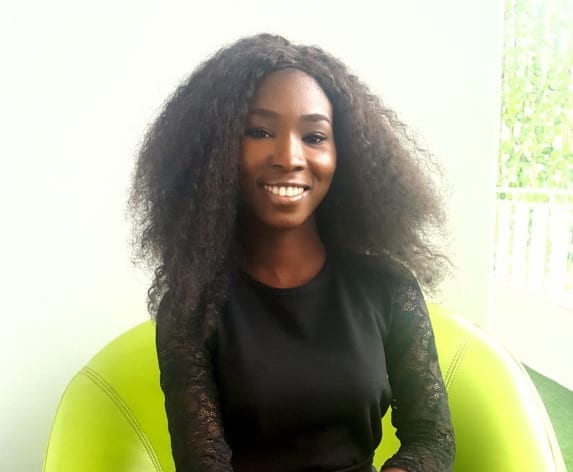
[bctt tweet=”It was all fun and games in the beginning as it didn’t take so much time to learn ” username=”SheLeadsAfrica”] My foray into the world of crafts began shortly in 2014 after my final year examination as an undergraduate. Throughout my time in school, I had attended several conferences focused on entrepreneurship and also participated in some business-related programs. My mind had thoroughly consumed an understanding that owning a business was the future. As a young woman preparing for her media career in showcasing African businesses, I believed I had to understand how to either own or work in one. Initially, I wanted to learn how to sew, but I decided to go into bead making because there were very few people in the business. It was all fun and games in the beginning as it didn’t take so much time to learn. As a matter of fact, it was my only means of survival during my one year stay in Nigeria’s Jos, Nigeria for the mandatory National Youth Service Corps (NYSC) programme. However, I soon learned that small businesses required more than “fun and games.” Running a small business requires more than time and concentration. Especially in a creative industry, it requires value, consistency, and direction. I had to learn it the hard way. Clients had various options to select. As a small business owner, I needed to find out how to convince a customer to choose my services over another. Having lived in Lagos and Ibadan, Jos was a whole new town for me. I didn’t know anyone apart from the ‘NYSC family’ and the few people at the company I was serving at. Running my business went beyond familiarity and excellent communication. It had more to do with my positioning, people’s perception of my brand and my ability to stay true to my core values. [bctt tweet=”To run a small business is not as juicy as it seems- Abiola Seriki” username=”SheLeadsAfrica”] At the initial stage, some of the key strategies I discovered and infused into my business included: Product differentiation I had to learn how to make other kinds of bead designs that weren’t in vogue. There were several bead designs that every regular bead maker or buyer was used to. The idea was to make people want something different. Thus, I decided to create casual designs rather than those for bigger occasions, such as weddings. At first, it was quite challenging to convince people to wear handmade beaded accessories on a casual outfit, but after a few marketing opportunities, I soon started building a small fan base. Pricing In Jos, I didn’t have an understanding of how the market worked, but there was one thing I knew; quality didn’t come cheap. Using valuable tools to create an accessory meant investing in a lot of money yet I needed to make something that regular NYSC members could afford as well. I focused on buying just one type of bead in bulk so that I could design as many styles as I wanted and sell them for a lesser price. However, I still placed a higher value on quality than quantity. Audience segmentation I created products that were meant for a select audience- millennials. A majority of bead designs I saw at the time I started bead making was crafted for the older audience. Except for brides, a majority of women wearing beaded styles were older women in their 40s. I decided to craft my designs to suit younger ladies. A few weeks later, I launched a line for bracelets to cater for the ladies who aren’t really into wearing beaded necklaces. Word of mouth marketing I also had a lot of talking to do at the beginning. There were times when I had to go talk to someone and convince them to buy my product even if they didn’t want it. I remember being shunned off at some occasions. However, although quite an introvert, I am talkative. So it was quite easy to incorporate word of mouth marketing into selling. My target then was men. It was easy to get them to buy for their significant other. Digital marketing As an undergraduate, I had a part-time work as a social media marketer for brands. Thus, with my knowledge of social media marketing, I was able to find audiences that were far away from me. I used my private Twitter account as my major store until I recently opened an Instagram store. I had to incorporate delivery services at a point when orders came from places farther than where I was. At the moment, my major sales and marketing channel is online. I have no physical store. I am currently rebranding my digital marketing strategy to fit into my creative direction. Case studies I blog about small businesses and startups. Over the past two years, I have been able to understand how some of these firms operate. I realized that I couldn’t possibly be sharing all these success stories and not be able to build a successful business as well. So sometimes, I take the time to read these interviews that I had held, to learn how I could make things work for my business. Other times, I ask the business owners for personal mentoring sessions from them. To run a business is not as juicy as it seems when you read or watch the stories of how founders build empires. However, it’s not difficult either if you are willing to adhere to your values. I currently manage my small business with several other things I do, and I haven’t regretted starting in the first place.