
Yvonne Amankwah: There is less consideration for Special people in recruitment

[bctt tweet=”A lot of organizations in Ghana prefer to work with able-bodied individuals” username=”SheLeadsAfrica”] Yvonne Amankwah is a young leader passionate about her contributions to societal issues and education for the less privileged. What struck SLA contributor Ugochi Obidiegwu most about her business is the fact that Yvonne made a conscious decision to involve people living with disabilities. This is something a lot of people do not consciously think about. Tell us about your educational background I am blessed to have practical experience in corporate work, communication and societal development works which enable me to effectively contribute to solving problems. I had the opportunity to learn and develop my leadership skills from President Obama’s YALI initiative Nigeria cohort-1 and my engagements as the ex-president of Enactus Radford University College chapter broadened my scope. Recently, I completed my basic knowledge in Deutsch at Goethe Institute. I also hold a first degree BSc in Business Administration where I majored in human resource. During my degree program, I successfully combined my studies with work, showing I could to be self-motivated, organized, capable of working independently and able to utilize my skills and abilities effectively. Why did you choose to work with Special staff? 90 percent of the time, when there is an employment opportunity the last people we look at employing are people with disabilities. A lot of organizations in Ghana prefer to work with able-bodied individuals whereas there is less consideration for the Special people. This is what motivated me to carve my niche by working with people with disability. I feel they can be powerful when empowered to do more for themselves. I am deeply committed to training people with disabilities giving them an opportunity to better their lives. How do you communicate to ensure your desired business goals are achieved? The importance of communication cannot be overstated therefore it’s one of the ways business goals can be achieved. For the speech and hearing impaired we provide a note taker, a sign language interpreter, written materials or printed scripts. In some situations, we keep paper on hand so the person can write out words that staff cannot understand. Besides, we use training videos which is very useful where interpretations may not be available. What led you to start your own business? A few years ago, I learnt an important lesson from my entrepreneurship lecturer back in college, Mr. Alan Dwomoh Sarpong which earned him the place as my mentor. He told me his secret to success was “looking at each day as a new opportunity to be your very best. Set high goals, be honest, never say no, and work with people who share your passion for doing their best”. [bctt tweet=”My mentor’s secret to success is looking at each day as a new opportunity to be your best” via=”no”] Since then I injected this advice into my life as I try to live up to it every day. This was the realization of my dream that I could impact the lives of people by my handiwork. As the CEO of a new startup Vons Brands Limited, a detergent manufacturing company where we produce liquid soaps and home cleaning detergents, I find it important to teach others this trade so they can benefit from it. I really love what I do and I try to surround myself with people who share similar interest. I thrive on this type of environment. What are the challenges you have encountered in the course of doing business? I believe entrepreneurship is much broader than creation of business, I define it as a mindset and a way of thinking and acting it but that notwithstanding, challenges are inevitable. I have many but I work hard to overcome them. Finances, high-priced raw materials, distribution are just a few of the challenges but have managed to overcome them. I have a practical approach to problem-solving and a drive to see things through to completion. One of my keys to thriving in my space is to learn from the failures of others by having the humility to learn from their mistakes. It has always led me to success. The dark side of being an entrepreneur can never be skipped, but there is always a way to survive the harsh realities of entrepreneurship. One has to learn to live with risk and always be ready to improve by challenging the usual. [bctt tweet=”Entrepreneurship is broader than creation of business, I define it as a mindset” username=”SheLeadsAfrica”] Do you think the business environment is favourable to African young women? The business environment is favourable to African women entrepreneurs who become the voices of change despite the challenges. These barriers can be broken through thought leadership. It’s time to fight the challenges to enhance our contribution to development in Africa. At first, it’s difficult to break through but with time and consistency, you thrive in the business environment. There are a lot of opportunities for women to explore and be successful at, they should not be discouraged by the physical obstacles they see. They should rather feel empowered to overcome any challenge that sets in on their journey to success. What would you advise a young woman who wants to start a business but is paralyzed by fear? Fear is weakness! It cripples your ability to explore and be successful. Being bold is a new era. Get that weakness out of your mind and spirit. It only exists when you allow it into your thoughts. Success and fear are enemies so you should always choose one side. Never be with the losing team which is fear. Get out of your closet, go out and make things happen because you can. The environment for women in entrepreneurship is great against all odds and this is the redefined power given to us women. Women don’t lack confidence, don’t be paralyzed by fear it’s our to turn elevate our generation! If you’d like to share your story with She Leads Africa, let us know
Nkechi Adimora: 5 things that kept my business running during the recession

Nkechi Adimora is the CEO of Ozi Express, a logistics business she started with her husband a little over a year ago. This startup is focused on local delivery of food, parcels, and errands within the city of Abuja, Nigeria. Prior to this, Nkechi has run businesses ranging from retailing authentic human hair, a mobile clothes and accessories boutique, and a food vending stall. Although Nkechi’s educational background in International Relations and Development gained from Sussex University and School of Oriental and African Studies (SOAS) London seems a little different from her savvy and quest for business, she has successfully integrated these skills to ensure she runs her logistics business with class and excellence. The young CEO shares with us some key things to note while keeping your startup running during the recession. [bctt tweet=”I adopt the ‘customer is always right principle’ because my main goal is not money” via=”no”] My employees Let us be honest while it is somewhat fulfilling to become an employer of labor, it is getting increasingly difficult to find good employees. Somehow it seems like everybody wants to earn money but nobody wants to work. My employees are not the best but they all have one thing in common -they are very hardworking. The business needed a lot more effort to keep customers which meant that we had no room to mock about especially since we now have an almost saturated market for delivery business. But they wake up every day and self-motivate themselves to work – and this helped us through the recession. [bctt tweet=”My employees self-motivate themselves to work – this helped us through the recession” via=”no”] Loyal Customers I began the business handling the customer relations myself – this meant that despite my regular day job, I spend an enormous amount of personal and family time responding to customers and ensuring that they were satisfied with the service I am providing. Now I love speaking to customers – and sadly I feel that nobody can handle my customers like I do. This is because I can instantaneously take decisions in order to ensure customer satisfaction such as offer discounts, deal with complaints immediately and appease customers whenever my employees have delayed a delivery/errand. I also always adopt the good old ”customer is always right principle” because my main goal is not the money but rather to keep them coming back to me. I had years of customer service related training and work experience right from when I was in University – from being an International Student Ambassador to call centre jobs in corporate companies where I sharpened my Customer Service Relations (CSR) skills to the core. Accounting Now, this is one area where I am still not an expert in but I realize you do not need to be an expert to do simple numbers. I am very strict with monitoring the accounts (which I do myself). I keep a simple spreadsheet which helps me track my daily income and expenditure. And this year when the recession really hit, I administered cost-saving strategies so as to keep our costs as low as possible in order to maximise profits. Pricing When I initially started I offered very low prices for even far distances. In the new year, we announced a price increase to our customers which was between 100 – 200 naira. Unbelievably, we lost a lot of customers even though the majority of them understood the reasons for our decision. But of course when you lose some you gain new ones and this was our case. We had to ensure the price was right so that we do not end up running a charity business. Supporting Small Businesses Every small business or start-up in Nigeria already understands that the environment is very unfriendly to our business. With this in mind, I consider small businesses when I want to offer discounts to my loyal customers. It’s simple. If food company A has a product for 5 naira and my delivery cost is normally 5 naira, it does not make sense to me to charge him or her 5 naira for delivery. In such cases, I am usually willing to charge 2 naira for delivery. In my opinion, I am also contributing to support small businesses to achieve their dreams. A lot of my customers now are startups/small businesses who have negotiated affordable prices for delivery that they feel their customers will be happy to pay (although not in all cases). Generally, in business, people only think of how much they can make out of it. While this is not in itself a bad thing, I think that money should be the second thought – crazy as this sounds. The first thought could be passion, filling a gap or meeting a need…then comes the money. Ozi Express is on Instagram as we continue to leverage on innovative ways to support businesses and grow our clientele.
Fikile Skhosana: I help victims to become survivors
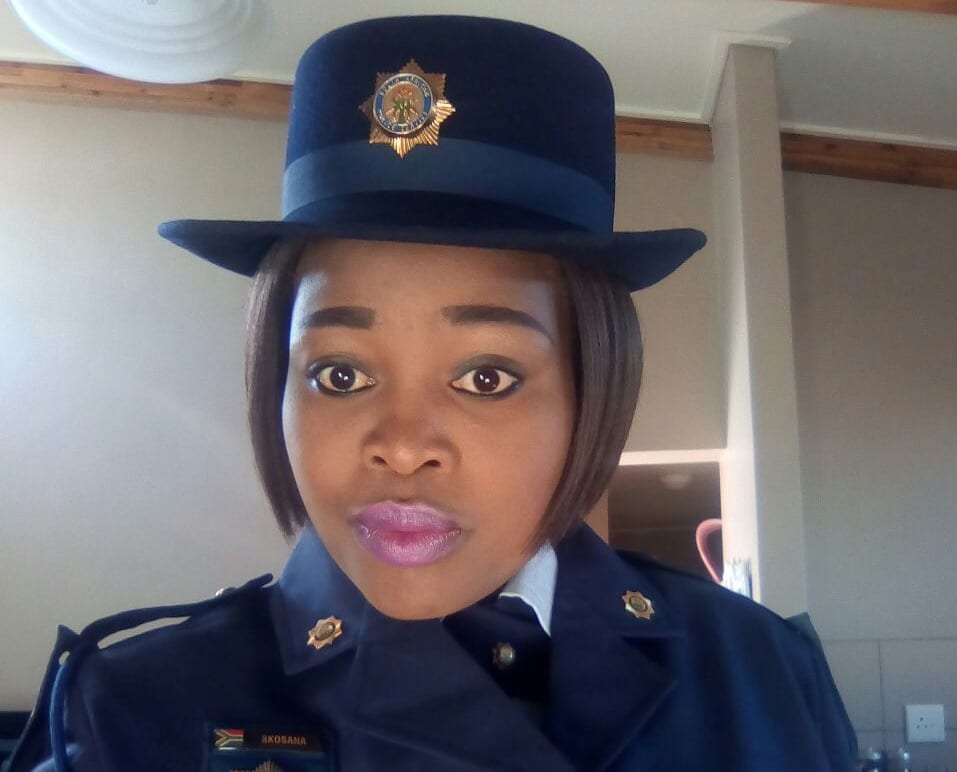
[bctt tweet=”I became a police officer because I like challenges, protecting others, and solving problems” username=”SheLeadsAfrica”] Fikile Skosana is a Detective Constable and Investigator employed by the South African Police Service, under Family Violence, Child Protection, and Sexual Offense Unit. She is constantly solving critical cases related to women and child abuse and assault. Fikile is giving women, whose rights are violated, the freedom to speak out and find justice and closure for their ordeals. This brave and compassionate 33-year-old always finds it rewarding when she solves a case and turns a victim into a survivor. When most young girls dreamed of being nurses or working in other ‘feminine’ jobs, you chose to be a police officer. How did you come to that decision and what did your parents say about it? I became a police officer because I like challenges, protecting others, and solving problems. My parents were not happy at first but now they believe in me. Police work is seen as a field typically better suited to men, what has been your experience with working in a male dominated field and have you ever felt incompetent because you are a woman? The job is not gender-specific, ultimately police officers have to be the same regardless of gender. As a woman, I don’t go out to fight but to calm the situation. I always feel competent, especially after solving a case. For women who feel guilty or responsible for their rape ordeal, sexual assault or abuse, what do you say to them or how do you act in such circumstances? How do you create that safe space for them that allows them to speak up freely and be heard? Some kids feel more comfortable talking to a mom-type person, same as rape victims, they feel free and safe talking to women. I listen to them, I tell them they are safe, I help victims to become survivors. What is your motivation every morning that keeps you going to work in a challenging and potentially risky field? Helping people and stopping other people from becoming victimized. The difference I make in someone’s life is what motivates me. [bctt tweet=”The difference I make in someone’s life is what motivates me – Detective Constable Fikile Skhosana ” username=”SheLeadsAfrica”] What is the most fulfilling aspect of what you do? The most fulfilling is when offenders get higher sentences. Solving cases and giving victims some type of closure is what I find most rewarding. How can young women wanting to enter police-work mentally prepare themselves for work in such a field? How does one know that they are a good fit for this type of career? I encourage women to consider law enforcement as a career if they are willing to put in time and hard work. They shouldn’t be discouraged and think that this is a male dominated world. They can do anything that a man can do. [bctt tweet=”I encourage women to consider law enforcement as a career if they are willing to put in time & hard work” via=”no”] Being a police officer, do you enjoy action movies or dramas on TV and if you do, which one is your favorite and why? I watch ID Extra channel 171 on DSTV. The shows on that channel are all about crime solving. I actually learn different tracing techniques there. If you’d like to share your story with She Leads Africa, let us know more about you and your story here.
Nyaradzo Mavindidze: Work is a form of worship

[bctt tweet=”Nyaradzo Mavindidze is passionate about developing the ‘uncommon sense’ in leaders” username=”SheLeadsAfrica”] Nyaradzo Mavindidze, the Managing Consultant of Avodah Consultants, is a Holistic Leadership Expert who is passionate about developing the ‘uncommon sense’ in leaders, thus going beyond the five senses. A psychologist by profession, she enables leaders to draw on their inner and outer natural resources thus shifting personal paradigms and beliefs leading to transformed organisations. Over the years, she has developed herself as a brand to reckon with in dissemination of lasting solutions to performance deficiencies in individuals, leaders, and organisations. She says, “Every one of us already has power, it’s just a matter of peeling away the stuff that shadows who you are and what you are capable of…” As a coach, Nyaradzo creates an environment where you and your dreams, your challenges, fears, and victories are the focus. A time and space to be you, to find out who you are and what you want, and to then go out and create that despite external environmental challenges. Nyaradzo is a high-energy speaker with boundless energy and wit who is able to combine inspiration with insight. Her charismatic style and ability to engage emotionally with audiences have made her a sought-after keynote speaker delivering proven solutions on topical issues for corporations. Her mission as a speaker, coach, and trainer is to empower organisations to achieve sustainable success through holistic development and cognitive reconditioning. She has published a motivational journal, ‘Motivation for Success: Morsels in the Desert’ and is the co-author of; ‘Breaking the Glass Ceiling: Career Strategies for Women’. Her motivational articles are published in local magazines and tabloids. She currently writes a motivational column ‘Motivation for Success’ published in The Business Herald every Monday. She makes guest appearances on local radio and has been interviewed on a MNET TV program. In 2015 she was on the list of Young Zimbabweans to Watch’ and is the 2016- ZIWA Motivational Speaker of the Year. Nyaradzo is also the founder of QueenMakers Trust whose mission is to empower female leaders through training, mentoring and coaching, thus enabling them to contribute into the mainstream economy. How was Avodah formed? Avodah was formed through a series of events. Having been in the NGO and corporate sector for close to a decade, with Viva Network Dandy Zimbabwe and Standard Chartered, I took a career sabbatical and went to Uni in the middle of a third pregnancy. Halfway through my degree, I started a clothing business: Sheba’s Closet, in an upmarket area in Harare. I travelled to Asia and Europe at least once a month to purchase clothing for the two shops that I had acquired. After graduating in 2008 Avodah was formed with the realisation that it was virtually impossible to get back into formal employment due to the state of the economy. I decided to run the 2 businesses, my love for fashion and my natural speaking talent. It focuses on soft skills training, human capital development, recruitment, and coaching. Avodah is a Hebrew word meaning work is a form of worship. I believe that as you are working, you are exercising and using your gifts that were placed inside of you, thereby giving glory and worshiping the giver of that gift. In 2012, I went through a life altering experience that got me thinking about my purpose, passion, and desires. This led to me closing Sheba’s Closet to focus on something that left a legacy for my children. I knew that I was not going to be able to develop it to the level Edgars and Truworths (regional clothing stores), so I decided to focus solely on Avodah. [bctt tweet=”Every one of us already has power, it’s just a matter of peeling away the shadows” username=”SheLeadsAfrica”] What were the major start-up challenges? I started Avodah during the 2008 recession period. I was going in the opposite direction of the economy. The only reason I have managed to survive is my work ethic and excellence. I believe when you function in your area of passion and strength you have more staying power. Tell us a bit about QueenMakers? QueenMakers is a passion. I am passionate about women’s empowerment. I started QueenMakers to assist women developing themselves to function at their maximum potential. Culture, religion, politics, economies, and societies have made women a secondary species and made them feel like they don’t deserve a seat at the decision-making and power table. QueenMakers is an organisation where women come together, get trained, motivated, coached and inspired to reach within themselves and polish their potential. We network, encourage, expose women to opportunities that are around them, help them maximise their potential and occupy centre stage. What are some of the challenges that you have faced as a black African woman? Most of my challenges as a black African woman have been self-belief and going past that little voice inside your head that says it’s impossible. I have had to work hard to develop my confidence to put myself out there. What more can government do to support entrepreneurs in Zimbabwe I believe women have not even begun to utilise the ‘little’ that has been put on the table for them. Before we can ask for more we need to sweat what has been offered thus far. There is more that they can do but it’s also more of what we as women can do. For example, there has not been that many women in politics. Our generation aspires and desires, complains and bickers but no one has really stepped up, very few women take up such roles. [bctt tweet=”As you are working, you are exercising and using your gifts that were placed inside of you ” username=”SheLeadsAfrica”] What lessons or advice would you give your younger self? Be bold and not afraid because fear is not real. It needs to be challenged through the stretching of our minds. Like Nike says; Just Do it. What can we look forward to in the
How to stop procrastinating using ‘temptation bundling’

[bctt tweet=”Procrastination is like a credit bill: it’s a lot of fun until you get the bill” username=”SheLeadsAfrica”] Does this scenario sound familiar? You wake up in the morning, pump your fist in the air and tell yourself that today you will finally go to the gym and exercise. As the day goes on, you’re losing energy and willpower from work demands and other activities. By the time you get home from work, you’re exhausted the last thing on your mind is to exercise. Then, just like every other day, you curl up on the couch read a book and watch your favourite TV show. It’s been several months since you had your New Year’s resolution to get in shape, but you’re still procrastinating on it. Luckily, there is a simple, effective strategy you can use right now to stop procrastinating and start taking action to achieve your goals. You’re not alone Katy Milkman, Associate Professor at The Wharton School at the University of Pennsylvania, had a similar struggle in overcoming procrastination. In an episode of Freakonomics, she talks about this strategy: “I struggle at the end of a long day to get myself to the gym even though I know that I should go. And at the end of a long day, I also struggle with the desire to watch my favourite TV shows instead of getting work done. And so I actually realized that those two temptations, those two struggles I faced, could be combined to solve both problems.” To combat her chronic procrastination, Katy simply combined her guilty pleasure of watching her favourite TV show with her long-term goal of losing weight. She would only allow herself to read ‘The Hunger Games’ book when she went to the gym. Her strategy worked very well, Katy soon started going to the gym regularly soon after. This simple technique of combining things that make you feel good now with something that is good for you in the long-run is called ‘temptation bundling’. Temptation bundling Essentially, you bundle behaviours you are tempted to do with behaviours that you ‘should’ be doing. Temptation bundling has been formally tested in a study done on the exercise habits of 226 students from the University Of Pennsylvania. During the experiment, students were only allowed to listen to their favourite audio books if they went to the gym to exercise The result: students who applied the temptation bundling strategy were close to 51% more likely to exercise than the control group. (Full study, PDF) [bctt tweet=” How to (finally) stop procrastinating using this research-backed strategy” username=”SheLeadsAfrica”] How to use temptation bundling to stop procrastinating Here’s a simple exercise to put all of this into action. Draw two columns on a piece of paper. In column one, write down the activities that you’ve been procrastinating on doing. In column two, write down your guilty pleasures that give you that feeling of instant gratification. Now you can simply criss-cross across both columns to match what you ‘should’ be doing with what you ‘want’ to do. For example, whilst writing this article, I’m also listening to my favourite music and podcasts. I’ve also used a similar technique to maintain a regular exercise routine for over five years. Here are some examples that may help: I will only listen to my favourite music when I exercise. I will only watch my favourite show when I work on my writing project. I will only get a pedicure when I catch up on my backlog of emails. Recap “Just try new things. Don’t be afraid. Step out of your comfort zones and soar, all right?” – Michelle Obama Temptation bundling is one of many strategies that will help you stop procrastinating and take action. Most importantly, it kick-starts a new habit by helping you to do more of the things you should be doing and not just things you want to do. By combining your guilty pleasures with your long-term goals, you can begin to build healthy habits that will transform your life.
The GoalGetter’s guide to creating schedules for productivity
Where does your time really go? The goalgetter’s guide is here to change your life! Whether you are a full-time student, employed, a small business owner or you’re juggling all three, we are all bound to have moments of wishing for more time. If you watched our webinar on personal efficiency and time management, with Tafadzwa Bete-Sasa, and you’re still not sure how to create the time and discipline to be productive, NO WORRIES, we’ve designed for you a practical guide with some tips and tools to get you organized to and enable you to get more things done. Get you the goalgetter’s guide to learn all you need to know about time management, productivity, and discipline. And guess what? You’ll also get more tips directly from GoalGetter after signing up for this guide. Topics this guide will cover: How to schedule your weeks and days Creating routines Prioritizing Time management tips and resources The last two points will definitely do you good if you spend half your day doing sweet nothings, binge watching episodes on Netflix, or stalking Queen Bey and the twins on Instagram. Getting access to this guide is easy: just fill out the form below to join our community and get access to this guide, as well as AWESOME weekly content. Don’t forget to send the sign-up link to all the serial procrastinators you know. Help a sister, brother, or frenemy out.
Sante Nyambo: Education is the most important gift you can give yourself
[bctt tweet=”My father always told me, education is the most important gift you can give yourself… just go for it! – Sante Nyambo” username=”SheLeadsAfrica”] “I remember standing still in a dark room for a long period of time with one hand on my face and the other on my phone… On that day, the news beaming from my phone lit up my life forever.” This is how Sante Nyambo recalls the moment she received the acceptance letter from the Massachusetts Institute of Technology (MIT) in the US, where she later obtained her B.Sc in Civil Engineering. At only 18 and filled with courage and a desire to positively impact her nation, she flew across the world to pursue knowledge that would change her life forever. This Tanzanian probably never dreamed that her story would be told in film. She’s now one of the stars of “One Day I Too Go Fly”, a documentary film about 4 African youths’ journeys to become engineers at MIT. It is directed by Arthur Musah, a Ghanaian engineer/filmmaker who seeks to create powerful new narratives about Africa and Africans in cinema. You can view a glimpse of the footage of the film on Kickstarter, where Arthur and the team are rallying up support to fund post-production editing of all the footage: https://www.kickstarter.com/projects/arthurmusah/one-day-i-too-go-fly-documentary-post-production Take us back to that moment when you got the acceptance letter from MIT, what went through your mind in that moment? I was still up at 3am on Pi day (March 14th 2011). I stayed up because I could not fall asleep. The letter came in around 3:30 am via an email portal notification. As soon as I read the beginning of the letter, I immediately thought I was on the waiting list. I had the biggest smile on my face. I felt happy to have been considered. I sighed with relief. As I kept on reading on, I began to cry. I remember standing still in a dark room for a long period of time with one hand on my face and the other on my phone. I was overwhelmed and overjoyed with happiness as my smile turned into a pool of tears. When I read the end of the letter saying “Now go party and have fun! See you on campus…”, it was a day that I will never forget. On that day, the news beaming from my phone lit up my life forever. Before you left for MIT, what ideas did you have about the world and about yourself (as a young African woman) and how have they been refined since your studies at MIT and your exposure to a different way of life in America? I was 18. I did not know a lot about myself at the time as I do now. I still feel have not changed much. I am still all about having fun with life and remaining strong and persistent to follow my dreams. As I got to America, I thought I knew what I wanted out of myself and life. My way of thinking gradually changed slightly during the school year and internships. I vividly remember the look on my father’s face as I made my way to the departure gates in 2011. We both felt the same way. I was nervous. My father was skeptical about letting me leave. I literally had to convince my family. It was not easy because I could not predict or control the future. The fear of the unknown. I never thought a lot about myself. I cared more about my family, cousins and grandparents. I grew up with a very close knit family with my mother as my best-friend. I knew that I would be leaving a void. I also strongly felt that I would eventually strengthen the bonds when I returned home. I felt that I was given a great opportunity to be challenged and one of tremendous growth. Being introduced to a different way of life in America, have you found it hard to decide how much of Africa to hold on to and how much of America to absorb? What are you holding on to that is African and what American ideals are you absorbing, without losing your African heritage? Coping was a combination of a sine and a cosine curve. It had ups and downs. Immersing yourself in a new environment really has a way of molding you. It reinforces your foundations. After graduation, time to time, I watch the first “One Day I Too Go Fly” Kickstarter video that was launched in 2012. It looked back into the past and it captured moments in my dorm room where it showed how I decorated my room with Arusha region decorations (Maasais dancing). I do hold on to my memories of home and my heritage as a chagga woman. I think the ability to cope presents a challenge, however it is a function of resiliency. We can to some extent control that. What new narrative about Africa and Africans is the film, ‘One Day I Too Go Fly’, aiming to share with the world? 7 years ago in Dar es Salaam, I was sitting on a curb on a very warm sunny day after a long basketball game. I was waiting to catch a daladala when a young lady walked up to me looking for directions. In our conversation, she told me she attended MIT and how much she enjoyed it. She went on to mention that it is the best university in the world and I should consider this opportunity to study abroad. I had never heard of such a college or considered being an engineer at the time. I enjoyed and loved STEM and despite my strengths lying in engineering, I thought I wanted to be a doctor. I went home that night, I reached out to her for help with the applications. For me, the film is a way to create exposure to the world about opportunities in general. The
Financial affairs in freelancing

[bctt tweet=”Like any business, freelancing has its peak seasons and its low seasons. Know them” username=”SheLeadsAfrica”] So, you delved into freelancing. You jumped head first (or first dipped your toes, whichever works for you) into being your own boss and now nothing can stop you from working in your pyjamas. First of all, big hearty congratulations. Not many make it past opening a freelancing account somewhere, let alone enlist clients. And now that we have gotten the pleasantries out of the way, let us get into the nitty gritty. The big girl stuff. Mogul business. It is essential that you realise that like any business out there, freelancing has its peak seasons and its really, and I mean, really low seasons. This being said, it is essential that finances line up throughout these seasons. Let’s get to it. Know your market This is the basis of any business, and it applies even in online businesses. Knowing when the seasons’ peak and when they fall is essential in managing your money. In academic writing, for instance, seasons pick at around March-April, August-September and in December, which is the end-of-semester months. If one is freelancing designs for say, at a corporate company, it is essential that you understand their fiscal year and how they pay or contract employees then. Know your worth Some people may have you believe that since you are freelancing your services, they have to pay less that is required. Knowing the pricing on your product and service is crucial in you making profits, in the long run. So, do not undervalue or overvalue yourself. [bctt tweet=”Know your worth as a freelancer, do not undervalue or overvalue yourself” username=”SheLeadsAfrica”] Factor in your expenditure Granted, there is not much revenue that you put in when freelancing unless you are renting office space. Your internet plan, however, will straight out flatten your morale if you are not careful. Choose an internet plan that is affordable for you, and that you know you can easily manage even when literally no clients are coming through because it will happen. Ride the wave High seasons in freelancing are really high, and what goes up will hit rock bottom with the same momentum. When that tide comes in, ride it like your life depends on it. Work through the day and night, stock up on coffee or energy drinks, never see outdoors, whatever it takes, stock up on that money (just remember to factor in self-care, of course). Stock up on some emergency cash Yeah, things happen. Your regular client finishes school, your contract ends, life goes on. Set aside some money for an emergency just in case your bank account is depleted. This actually goes for all businesses. It is standard. Follow the 50/30/20 rule on cash Personal financing is basically what will take you through freelancing. Know what you are spending your money on, track your receipts, cut down on the ‘for show’ products, and follow the 50/30/20 rule. 50% of your income is used on basic expenditure (like rent, food), 30% settle your debts and maybe a few luxury products, and invest with the 20% that remains. Or, follow this SLA guide prepared to cushion you from spending everything. Network, network, network Even in the low seasons, remind your clients that you are available, and ask them to refer you to other clients. Networking and good service are crucial in this business. If you are working in your pyjamas and at the convenience of your home all day, something has to give. [bctt tweet=”Even in the low seasons, remind your clients that you are available” username=”SheLeadsAfrica”] That said, like in any business, consistency and good product/service will bring you the money. Personal financing will ensure that the money sticks with you. Happy freelancing #MotherlandMoguls!!
Isioma Onyegikei: Social media has helped reach our target audience

[bctt tweet=”It has not been so difficult to sell food online – Isioma Onyegikei” username=”SheLeadsAfrica”] 24-year-old Isioma Onyegikei is the founder and head cook at Brelunds, a food service provider startup in Lagos, Nigeria. Her startup offers services which include the running of office cafeterias, breakfast, and lunch weekly subscription plans, events catering, bulk soup and stew preparation. Isioma officially began Brelunds in September 2015 with a standard menu consisting of Nigerian dishes, finger foods, and Nigerian street foods. She is a graduate of Political science and public administration from the University of Benin, Nigeria. What inspired your decision to start a food retail business? The decision to start a food retail business was inspired by my experience as an employee for another company. I resumed work very early and got home very late due to heavy traffic in the city. Saturdays were the only days I rested, did chores and caught up with friends. On Sundays, I go to church and prepare ahead for the next week. I realized that it was the reality of most of my colleagues. Some even had to work on weekends too. Cooking is a huge chore because time and rest in Lagos is a luxury to a typical Lagosian. So I started out by making and delivering bowls of soup and stew. My intention was to ease my client of cooking as a chore, an important human need. Along the line, the idea of a weekly lunch plan to be delivered to clients at work came up. How have you been able to sell cooked food to people via an online medium? Describe the process from order to sales. For now, we sell our meals online via our Twitter and Instagram pages. We are currently working on a better website. We post information about our services on these platforms; potential clients see our information online and contact us for the service they want. They either pre-order for bowls of soup/stews or they subscribe for any of our lunch packages. They provide us with their names, phone number(s) and address for delivery. It has not been so difficult selling cooked food online because it is an important need and a food delivery business helps the client with one less problem to worry about. [bctt tweet=”Social Media has helped with referrals – Isioma Onyegikei” username=”SheLeadsAfrica”] How has social media enabled you to reach your target audience? Frankly, social media has enabled us to reach our target audience in the sense that a lot of young Nigerians (Lagosians) and even older Nigerians are online. The chances that our next client that we will market to offline has a Twitter, Facebook or Instagram account is 80%, so with social media, it is easy to market to a lot of people at the same time in different locations with just one post. Potential clients also come online to search for a service they need, we see this and market our service to them. Social media also has helped in terms of referrals. An old client can see someone asking for a similar service and refer them to our page. Instagram, for example, is pictorial so with a business page, anyone who comes across the page already knows what services to contact us for. The use of hashtags has helped in getting across to our intended target audience because people do search for the service thy want using related hashtags. Which social media channel do you consider to be the most responsive channel for your business? Twitter has been responsive and this is because people do not necessarily have to follow you to see your tweet on their timeline. Retweets are free. There is also the advantage of having others try out a service that one or two of their friends have used and Twitter seems to be the most engaging social network to set up that way. How often do you make sales from social media? We make sales from social media regularly. It is a food business and now, more than ever, people desire convenience. Also, the fact that we have two different service offerings: pre-ordered bowls of soups/stew and lunch subscriptions, helps to ensure that we are able to reach a broader segment of people and meet more needs. [bctt tweet=”Logistics is an issue for online businesses. – Isioma Onyegikei” username=”SheLeadsAfrica”] What are some of the issues you have faced while trying to run your business online? In running an online business, our main issue has been logistics. First of all, we run a value for money service, delivering high-quality meals at very affordable prices. Currently, a lot of logistics companies charge very high for their service and most times it makes no sense to ask a client to pay more for delivery than the actual food they are buying. Also, the logistics companies have other clients that they also trying to service while servicing you. In situations like this, it is very easy to get disappointed at any time or have a client’s order messed up on the way. There is also the issue of bad publicity when running an online business. Social media can make or mar business. An unsatisfied client can easily discourage others, totally within their rights, so for us at Brelunds we ensure that our customer service is top notch and intended to “wow” both clients and potential clients. What’s your perfect one-line statement for young females trying to build a brand via social media? Know what you do, learn what you don’t know and know those who know what you don’t know. If you’d like to share your story with She Leads Africa, let us know more about you and your story here.
6 digital marketing myths you need to stop believing

[bctt tweet=”Conduct your research and prepare a digital strategy that works for your business” username=”SheLeadsAfrica”] Digital marketing used to be a thing of luxury but now it’s a complete necessity in order for brands to stand out. There are some myths surrounding digital marketing that could be holding back most entrepreneurs from maximizing output and engagement online. Some of the myths were once true but need to be revisited once again and some were just not true, to begin with. Here are a few: Myth #1: “My business must be on every social platform” Social media has become a very important tool for many businesses but that doesn’t mean you should be on every platform. For instance companies with technical service offering would succeed best on LinkedIn, Twitter, YouTube and Facebook rather than Pinterest and Instagram while fashion related business would do well on Instagram and Pinterest. It can be time wasting to update all social media accounts with fresh, relevant and regular content so it’s better to focus on 2-3 platforms that will give you results than keep track of many platforms which won’t provide results and your target audience isn’t necessarily there. Use this guide to find out which social media platform is best for your business. Myth #2: ”It’s all about followers” There are a lot of goals and metrics that you can establish when creating your digital strategy like page views, followers, likes, comments. They are great but such can be misleading. Go a little bit deeper than that, look at the time spent on your website, abandoned cart (if you have an e-commerce site) and more importantly conversion rates. How many of those who view, comment or like on your social media become paying customers? [bctt tweet=”Goals and metrics are great but such can be misleading” username=”SheLeadsAfrica”] Myth #3: “Boring industries can’t benefit from digital marketing” Rest be assured that whatever industry your business is in, your targeted customers are bound to be online somewhere. Don’t be fooled into thinking that your product or service isn’t too exciting or glamorous for you to profit from social media. It’s a matter of finding the right people to offer your product or services. “You’re only boring to those who aren’t in your target market.” – Harry Gardiner Additionally, stay ahead of the curve if your competition isn’t online yet. It is better to capitalize on their mistake and gain the first mover advantage to capture a new segment of customers. Myth #4: “Online negative comments are bad for my business” Of course, it is emotionally hard to see bad comments on something you have worked so hard to build but use this to your advantage. While some resort to hiding comments, blocking users etc. responding well and timely to legitimate concerns will do you a world of good in creating a virtuous reputation for your company. Motherland Mogul tip: There is no point in responding to insults and baseless comments. If you follow the tip on responding above, you will create brand loyalists (“your tribe”) who will defend your brand to the so called “keyboard warriors” who just want to destroy you. Besides, recently Instagram just like Facebook has rolled out a new feature which blocks offensive language. This feature is currently only available in English but more languages will be added later on. [bctt tweet=”Whatever industry your business is in, your targeted customers are bound to be online” via=”no”] Myth #5: “It’s all about tech” Do not make a mistake of thinking traditional marketing is now a thing of a past. Yes, technology is key in digital marketing but it will be wise to merge it with your existing traditional marketing practices like TV and radio commercials, newspaper, networking etc. into one so that you have a lasting impact and become more apparent. The Internet is unpredictable and with the influx of many updates per seconds, minutes or hour, you are better off maintaining a balance between the old marketing approach and digital marketing. Motherland Mogul tip: If you run a digital marketing campaign only you run a risk of being swallowed up by the Internet. Myth #6: “Why blog when I have a social media?” You probably should be writing content because chances are your target audience may be searching for it online when they are looking for tips, how to guides, product recommendations etc. The importance of having a blog cannot be understated as when on social media, you are on someone else’s turf and on their terms. With a blog, you’re on your territory and you make the rules. You can write as much as you want about anything. People come to check you out and here is where you build your position as an expert. There are a lot of myths out there but these ones are the ones I meet the most and are quite misleading. Don’t let any of them hold you back from fully benefiting from the digital world. Conduct your research and prepare a digital strategy that works for your business. Are you familiar with any other digital marketing myths that may have been left out on this list?