
Cynthia Okuwashaka: Everyone has a talent inherent they can work on
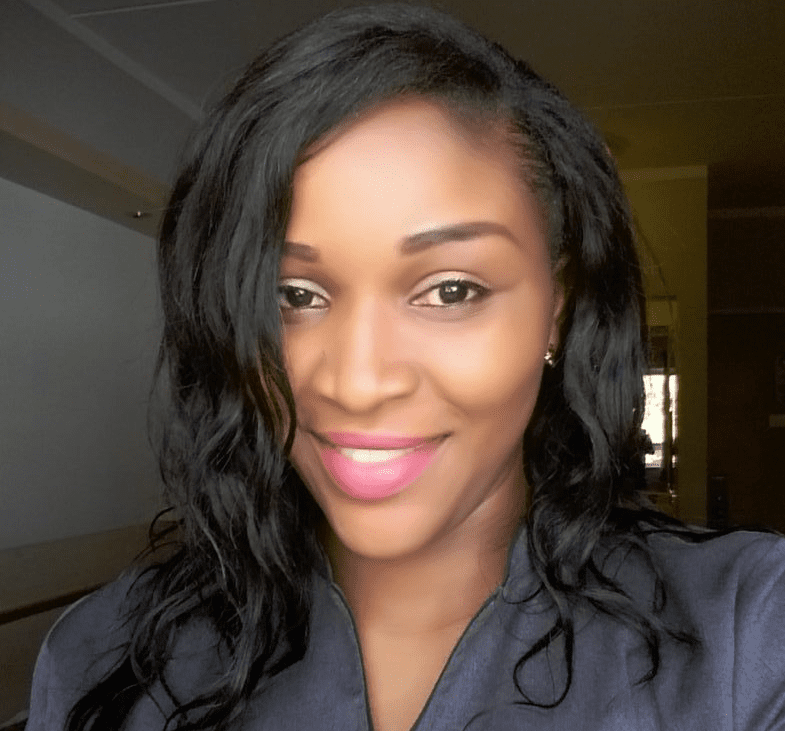
[bctt tweet=”I try as much as possible to come with something new to make myself stand out” username=”SheLeadsAfrica”] Cynthia Okwuashaka craving her own financial independence started out as an apprentice in a nail studio. Thereafter, she went on to acquire training in hair making and makeup artistry. All these skills she acquired while studying the English Language in University. A few years later, she enrolled at the Opral Benson beauty school and has now become a certified massage therapist. Cynthia worked in several beauty lounges and finally at Four Points before resigning to start her own business Spaquil Beauty Therapy, a mobile spa, and wellness business in November 2015. Since then, she hasn’t looked back. For Cynthia, she finds peace and fulfillment when she is able to help her clients get relief from aches they feel before the session. In addition, earning her own income in a decent way brings even more fulfillment. How did you come about the knowledge that you could self-sponsor yourself through the university rather than be financially dependent on anyone? I had the opportunity of meeting a friend’s sister who told me she supported herself through school fixing false nails. So I said to myself if she could do it so I can. That’s how I started working at a nail studio and went on to learn hair making too. Why did you leave your job at Four Points to start your own business? Four Points for me was a phase I knew from the onset will pass so when the time came, I had to leave. I have always pictured myself as my own boss and my years there were to gain experience so when it’s time for me to setup mine I will do it and be successful at it. [bctt tweet=”…there’s so much fulfillment in making your own money in a decent way” username=”SheLeadsAfrica”] How do you manage competition in your business? Knowledge they say is power, I try as much as possible to come up with something new to make myself stand out. You are a graduate of English language, how does your discipline impact your business? In the area of communication, my discipline has given me an edge as people see therapists as secondary school drop outs. When I have a conversation with my clients, they get to see a different side of me. Sometimes, they then ask why I had to settle for a therapist instead of working in line with what I studied in school. I tell them I have a passion for therapy. [bctt tweet=”I know for sure one step at a time gets me closer to my goal.” username=”SheLeadsAfrica”] What plans do you have for the future? Like I said, knowledge is power so am working very hard to get more training in my field of practice. What is your advice for girls from indigent homes who feel they can only survive by being financially dependent on men? Where do they start from? First of all, they will need to make a decision about the kind of life they want and work towards it. Dependency cripples, and there’s so much fulfillment in making your own money in a decent way. Crafts pay off in the long run and everyone has a talent inherent they can work on and pray as well for God to bless and prosper. The journey of starting one’s own business and growing it is a very tough one, where do you get the inspiration to continue in down times? I would say my passion for massage therapy is what keeps me going, Spaquil Beauty Therapy was birthed in November 2015 and I have had the opportunity of traveling to South Africa for training in less than 2 years of starting up. And when I think of the difference I can make in the lives of people with my healing touch I keep going no matter what. I know for sure one step at a time gets me closer to my goal. You moved from making hair and being a nail technician to a makeup artist and now a massage therapist. It seems you have worked longer as a massage therapist. Is it that you are passionate about this than the other trades and why? Massage for me is my sole calling in life, it goes beyond touch, I find peace and fulfillment when am able to help my clients get relieved of aches they feel before the session. I see myself as a small doctor (lol). How do your parents feel about your accomplishments so far being a certified therapist and running a successful business at 29? My parents have always given me support. In fact, my father who is very educationally inclined actually gave me the go ahead to learn vocational skills while I was still at the university. Today, they are happy and proud of me which is the joy of every parent to see their child or children succeed in life. If you’d like to share your story with She Leads Africa, let us know more about you and your story here.
Writing cover letters for jobs in media or communications
[bctt tweet=”Remember, it’s not about you, it’s about what you can do for them” username=”SheLeadsAfrica”] The media industry is a very cutthroat place driven by extreme timelines and deadlines. That being said, most media professionals will not have time to read through pages of a cover letter explaining every single job you have ever had or what clubs you chaired in high school. They simply want to know these five things: Who are you? Why should we hire you? What do you know about us as an organization/company/institution/publication? What sets you apart from the rest? How do we find you? Put all this in a cover letter and you’re on your way to getting that interview call back you are hoping for. How to go about this though, is where most of us get it wrong. The world changes every day with each passing day, hour, minute and second, therefore it is imperative to keep up with the constant changes going on. What worked as a cover letter say 5/6 years ago, is definitely not the case today in 2017. Check out the dos and don’ts below which I hope will be a quick guide to writing a great cover letter. DO: Start off with a very intriguing first sentence The media/comms industry is all about being creative and thinking of different angles to put points across. Do not just say, “I’m applying for this position because I really need a job and I feel this would be it”… Let’s avoid the tired cliches, shall we? Start with what you know, which is your field, where you saw this vacancy and that you are interested in the position. This, first of all, gives them an assurance that their ads are being seen. Secondly, it tells them you know you fit the description by saying what you do already and lets them avoid wasting time reading the entire letter only to find out you don’t even know what you are applying for. DON’T: Start writing out a detailed description of your resume or LinkedIn profile By the time an editor, HR officer or head of department is receiving your cover letter, he/she has already looked at your resume. Do not waste time filling cover letters with repetitive content. DO: Tailor your cover letter to the job description Generic cover letters are a lazy way of applying for a job and they can be sniffed out from a mile away. A good example during my time working at an NGO, I was tasked with the job of going through various applications that had come in and had to cut them down to at least seven from 30 files. Out of the 30, half the group had exactly the same cover letter, copied and pasted from a popular career website, just different names and sent on different dates. That saved me a lot of time in terms of evaluation but it cost those candidates a job because they did not bother to actually write a detailed cover letter. Answer the questions they are asking by saying exactly how you fit the job requirements and you can provide one or two examples of what you have done in relation to the position. [bctt tweet=”Applying for a job in media/communications? Here are tips to write a stellar cover letter ” username=”SheLeadsAfrica”] DON’T: Go overboard with selling yourself Remember, it’s not about you, it’s about what you can do for them. Focus on that. Don’t talk so much about where you went to school, or the accolades you achieved. In this industry particularly, your honours, summa cum laude nod, distinction… aren’t prioritized as much. Someone with a Ph.D. can just as easily be outshone by a freshly graduated senior from college, it all boils down to efficiency, skill and how badly you want this job. Show them you are worth the investment, don’t tell them what they could have easily looked up on Google. DO: Your research Find out all you can about the place you are applying to. Talk to them about their visions, their values, their goals. Show them how adding you to their team will contribute to bringing about even better communication campaigns or how efficient of a designer/copy writer/editor you are thus providing a fresh approach to their brand/publication/business. Show them you know them and that you are ready to not change things around, but contribute to an already well-established organization. DON’T: Have grammatical errors None whatsoever. Cross all your Ts, dot all your I’s, have every comma, period and apostrophe properly placed. Proof-read your letter once you are done writing to make sure there are no typos, spelling errors etc. Have someone else check it as well to have a fresh set of eyes on it. There have been cases where an entire application has been cast aside due to one single typo in the cover letter. This industry is very detailed in the work they do and a simple mistake such as wrong spelling or a missing piece of information can cost them millions in the long run. A cover letter with grammar mistakes shows you are not meticulous and are sloppy with your work thus a liability to the company. DO: Be brief I’ll reiterate the concept of time. Most people in these industries will most likely skim through these applications than actually read through them. They will look for the five things mentioned above and tick off or cross out where appropriate and move on. Anything more than a page will not be considered at most organizations because again, no one has time to read through all that. Do be brief and concise yet include every detail you deem important to you and them on there. The art of paraphrasing comes in handy when applying to fields such as these. [bctt tweet=”A cover letter to the UN will be very different from a cover letter to a travel magazine” username=”SheLeadsAfrica”] DON’T: Forget to provide contact information If
How to build your network of African distributors – The Yenati example

[bctt tweet=”I felt the need to become known in my region before moving to West or East African countries @tinnasusan” via=”no”] The first step Tinna-Susan Mereki took towards building her network of distributors was to reach out to a friend. Tinna-Susan is the founder of Yenati Fragrances and Yenati Brand Communications. Driven by her passion to promote authentic African brands, she has successfully managed to design and develop a cosmetics brand that provides the highest quality products at the most competitive price. Yenati Fragrances also fosters philanthropic work. They offer business starter packs to financially challenged single mothers or widows through their distributor network. Also, they have a programme where fragrance packages are given to students from poor homes who have done exceptionally well throughout the year. Tinna-Susan has built a network of over a 150 distributors for Yenati Fragrances in the Southern African region in a space of a year. Curious to know how to build your own network of distributors? Look no further, Tinna-Susan willingly shares advice from her experience. Reaching out to your networks It was through an acquaintance that Tinna-Susan started building her network of distributors. “[My friend] became interested in the business after seeing me post my products on Facebook. I told her I could supply her with stock and she could help me distribute my products. She took it on and after selling my products for a while, I persuaded her to connect her other friends to join my company. It was not difficult to convince her because she was happy with my products. I offered an incentive of a cash payout for every distributor she connected.” Tinna-Susan then started to repeat the process with other distributors and slowly her network started to grow. Choosing the countries to start in Tinna-Susan was born in Masvingo, Zimbabwe and was raised between Zimbabwe and South Africa. So when deciding which African countries she wanted to work in, she just went with what was familiar. “I decided to work in Zimbabwe first, being my home country, I felt I could manoeuvre my way around the nation. I knew the trade secrets, the ins and outs, the market and the competition. “This enabled me to set up my business with ease. My next target was South Africa, as it is the country of my residence. Other SADC countries followed as I felt the need to become well known in my region before moving up to West African or East African countries.” Namibia, South Africa and Tanzania have opened up their doors to Yenati and they have been doing business in these countries consistently. Tinna-Susan also gets a lot of enquiries from countries like Ghana, Nigeria, Uganda, Botswana, Malawi, Mozambique, Kenya. Always up for growth, she is hoping to start building networks in those countries soon. [bctt tweet=”Want to sell your brand across Africa? Find out how @tinnasusan does it with Yenati brands” via=”no”] How to build your own network of African distributors in a year Yenati style For Tinna-Susan, the biggest tool in building Yenati’s distributors was increasing her online presence (as a business of course). Facebook alone helped her reach audiences and networks in a short space of time. “Through their “targeted reach ads” I was able to expand and stretch my advertising and select audiences based on language, gender, location, workplace or even profile keywords. I also noticed that people like to follow brands that have a good image. After I started to take care of my brand identity, people started to notice my products more. My products started to receive a lot of attention.” Another important step is to keep in touch with your network, customer care is of utmost importance. Constant communication is also key, Tinna-Susan speaks to her Yenati distributors through Whatsapp groups almost daily. “I help them with sales and marketing techniques, and I help them advertise their business by creating ads for them on our pages. I call them business partners as opposed to distributors as I believe they are partnering with me in building the Yenati brand. My business partners are very important to me and I always try to remind them of how valuable they are to the business. When they are happy and content, they begin to grow the market themselves and I always encourage them to build sales teams.” [bctt tweet=”@tinnasusan calls her distributors business partners as they’re partners in building her brand” via=”no”] Building an African entrepreneurial dream Tinna-Susan believes that the most successful Africans in future will be the ones that master the ability to partner with other Africans. “The minute we reach beyond race, tribe, and national borders, we will tap into the explosive potential of this continent. I am all about building the African dream, and it begins with us. “The dream where we trade with each other and remove border restrictions between nations, and become the United States of Africa. Where we use our countries’ natural wealth for the benefit and development of Africans as opposed to funding overseas companies. “The dream where we do not hate each other as Africans and do not kill each other through xenophobic attacks. The dream where we live in peace, harmony and pride ourselves in products made by Africans for Africans, as Dr. Strive Masiyiwa once put it, “We value Africanisation”. All the wealth comes from Africa and yet we are classified as ‘Third World’. We need to change to the ball game.” [bctt tweet=”Successful Africans will be the ones that master the ability to partner with other Africans @tinnasusan ” via=”no”] Four lessons learned from distributing Finally, I asked Tinna-Susan the four lessons she’s learned from distributing Yenati across Southern Africa. Here’s what she shared; Put measures that protect the brand and business. “I have had my fingers burnt through over-trusting.” she says. Always be innovative as they are other similar products on the market. You always have to find ways to remain competitive and relevant with eminence. Be accommodating. “I have learnt
Why review your business accounts?

[bctt tweet=”The bookkeeping records are the mirror that you look into to know how your business is performing” via=”no”] The ultimate goal of a business is to make money for the entrepreneur. On the way to attaining this goal, there are many things that you must do in your business which includes, producing the service or product, selling, managing your customers and keeping financial records. Record keeping sometimes referred to as bookkeeping is an integral part of a business and these records are the mirror that you look into to know how your business is performing.Once you have your records in place, the next important step is to use them to improve your business. This entails pouring through the numbers to understand the patterns and trends that the records reveal. For you as an entrepreneur, there are two reasons why you want to go over your business accounts; To check that they are accurate; reviewing your accounts allows you to make sure they give a fair reflection of the state of your business, which will help to highlight any weaknesses and areas for improvement, for example, you will be able to note the missing records, vouch estimates used and even assess how stock is being managed. To compare performance; when accounts are compared with previous years or with your competitors, they can show unique trends and help you learn from other businesses in a similar position to yours. Business accounts should be reviewed at least every quarter. [bctt tweet=”Reviewing your accounts allows you to make sure they give a fair reflection of the state of your business” via=”no”] What to look out for There are some important things to look out for when reviewing accounts. On the income statement check whether the business has made a profit in the year and whether revenue or costs has gone up or down compared with the previous year? The balance sheet will tell stories about how much money is in the bank. Remember, from the Cash is King article, we discussed why money should be available. The balance sheet will also gauge whether cash levels are moving in line with profit? On the balance sheet, you will be able to note if the stock level is reasonable and also whether there are any big payments due soon in terms of loan repayment or large invoices. When analysing business accounts, ensure there is nothing that is obviously missing and use ratios to help you to compare and contrast the performances of businesses. Comparisons can be made internally with past performance or budgeted results or externally with competitors or industry averages. It is good practice for the accounts to be independently reviewed and you can one or more of the following people to do this on your behalf: Any person other than yourself An accountant or An auditor In our ‘Reviewing Financial Accounts’ guide, you’ll find a section on key ratios for analysing business performance. It will provide you more information on how to go about reviewing your accounts. Download our guide on reviewing financial accounts here. Photo credit: Caldera Gem
Everlyn Nguku: Textile design and fashion technology is amazingly dynamic
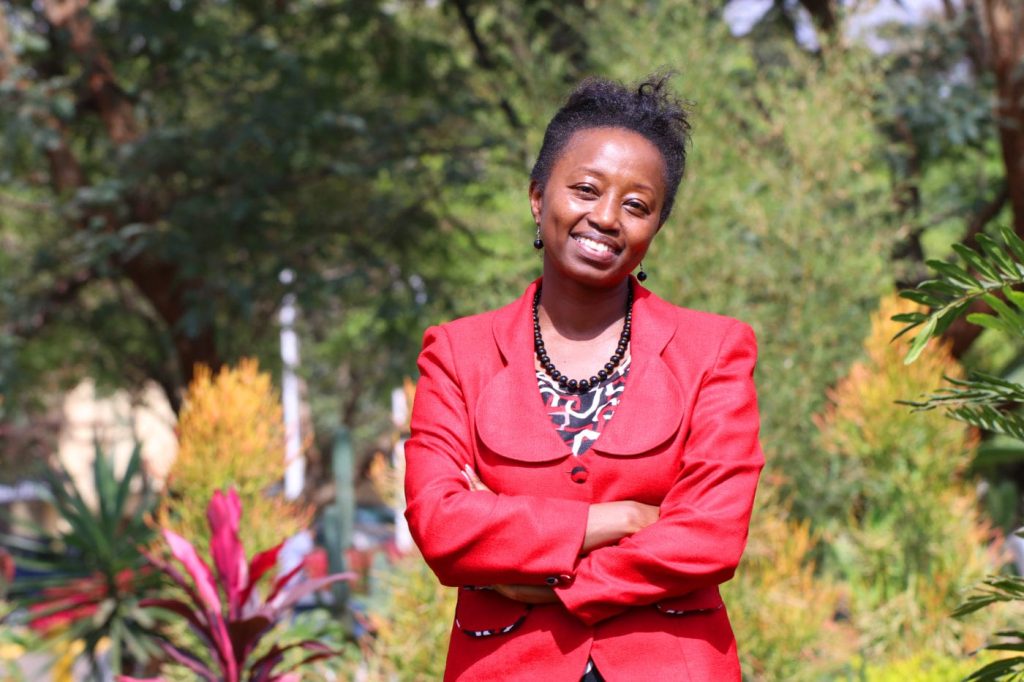
[bctt tweet=”Meet Everlyn Nguku the woman setting Africa on a new journey toward advanced textile manufacturing” via=”no”] Everlyn Nguku is one of Kenya’s few and little-known textile scientists. She was more of the artsy type growing up. But while she was in University studying fine arts, her interest shifted to a more scientific angle. Unbeknown to her at the time, this shift in interest would catapult Everlyn to establish East Africa’s first silk quality control laboratory, and set Sub-Saharan Africa on a new journey toward advanced textile manufacturing. What exactly does a textile scientist do? A textile scientist specialises in various areas including; new technologies related to fibres, innovative textiles; textile chemistry, polymer and fibre science, processing, fabric development, quality issues among others. Textiles are multidisciplinary in nature. How did you come across this as a career? I did not start out as a Textile Scientist. I studied Fine Arts for my first degree and looked forward to a career in teaching design or design related activities (I am the “creative” in the family). However, as I studied my course, my passion for fabric and pattern shifted to fabric construction. I was intrigued and keen to understand the technical aspects of fibres and fabric. I then did my masters and the study focused on four natural textile fibres. This was the beginning of my journey with silk and science at International Centre of Insect Physiology and Ecology (ICIPE). I began to look at textiles beyond the design element. My Ph.D. focused on silk properties. I had to understand the science behind the silkworm that produces the silk, processing technology and quality of the resulting fibre. You are researching on the African Silkworm; tell us a bit about that? My work actually revolves around the domesticated silkworm Bombyx mori, although there are several commercial species of silkworms. B. mori is the most widely used for silk production; it is reared indoors and feeds on the mulberry leaves. This activity is referred to as sericulture, which is the practice of raisings silkworms to produce raw silk- the yarn obtained from cocoons spun by the worms. I take an interdisciplinary approach and multi-faceted research of silk that focuses on optimizing silkworm rearing techniques, and cocoon production, with a key focus on fibre quality and value addition initiatives for the production of various quality silk products. The research explores the mechanical behaviors of the silk fibre, which are key building blocks in the production of quality silk fabric. We also design silk fibre testing procedures to assess and systematically study the quality factor, tenacity & elongation, friction and wear traits. How many women are involved in this research? Within the institution, I am working with five female technicians who undertake rearing of the silkworms and processing of the cocoons and raw silk. A textile industry needs more professionals who understand the science and the business sense in manufacturing and processing the raw material, how can Africa tap into this? The industry is labour intensive and has the potential to offer significant employment opportunities. There is a need to equally invest in the skills and qualifications of people and promote the technical qualifications for people in the textile and apparel industries. African Universities do offer degrees and masters in textile design and fashion technology. What can be done to ensure that more of these graduates become the backbone of this industry? This sector in Africa is amazingly dynamic; however, it appears to be fragmented. Consequently, its potential remains largely unexploited possibly due to organizational weaknesses within the industry. In order to integrate graduates into the industry, there is a need for governments within the continent to prioritize the sector, unlock the potential, overcome existing problems of the textile industry and address issues that hinder the growth of the manufacturing industry. This strengthens and improves the entire textile industry and value chain for it to be competitive and remain relevant. In addition, possibly review the rules on textile imports especially the influx of cheaper clothing which seem to hamper the local industry in Africa. The industry should also recognize the potential of textile design and fashion technology graduates and the dynamisms they inject into the growth of the commerce and therefore need to nurture and engage this local talent. Some of the challenges you face revolve around ignorance and general disregard of research from a policy level. How are you pushing to get more attention on this issue and more government investment and commitment to grow the textile industry in Kenya? I am a member of Kenya Bureau of Standards (KEBS) Technical Committee on Blankets, Nonwovens, Threads, and Fibres. This is a forum that presents an opportunity to interact with the main industry stakeholders on issues related to textiles, standards and to an extent policy. Who would win in a fight, Wonder Woman or Black Widow? Hmmm…I had to look up the Black Widow…. didn’t know much about her ? All the same, my take is Wonder Woman. If you’d like to share your story with She Leads Africa, let us know more about you and your story here.
How to build a daily culture of rest (The rest rituals of the rich)
[bctt tweet=”We live, work and play, burning out and hoping for resuscitation over the holidays” username=”SheLeadsAfrica”] I learnt that we do not have a culture of rest in our society and holidays reveal that for me personally. We live, work and play, burning out and hoping for resuscitation over the holidays. You can’t put your wellness on the line for 350 days and hope that in 2 weeks you can snap back! We need to build a ritual of rest, all successful people have some type of ritual that involves treating their bodies with care, so perhaps this is one you can adopt. Last year, I started reading “Thrive” by Arianna Huffington, but I stopped because I felt that Arianna was telling people to slow down on work after she had sold her business for $315 million to AOL! I was like “let me do that first and then I will rest!” But this holiday I dusted off my copy of “Thrive” and reread it to find some daily rituals I can practice going into the year! Here are my top 5 rest rituals I am challenging myself with this year. 1) Quality sleep: 7-8 Hours a night As an entrepreneur that works from home, it is very difficult to unplug and go to sleep, especially towards the end of the month. The Harvard Medical School’s Division of Sleep Medicine states, “sleep deprivation negatively impacts our mood, our ability to focus, and our ability to access higher level cognitive functions: the combination of these factors is what we generally refer to as mental performance.” Therefore, to be smarter, you have to sleep more; not less! In this instance, I encourage that we sleep our way to the top! Now sleeping isn’t getting into bed and scrolling through time feeds until you fall asleep, you need to completely shut down before you get into the bed and be prepared for sleep. Here are a few things you can do to cross over into la-la land: Make your bedroom darker (use lamps or candles) and keep it cool; Practice deeper breathing before bed (I’ve tried this, it does work) Banish all LCD screens from the bedroom at night (cellphone- charge it in the lounge and buy an alarm clock, laptops, TV, tablet) Get a nice set of pyjamas, instead of a t-shirt, that will excite you to get into bed. 2) The power nap If you decide to nap, you are actually in good company with the likes of former US President John F Kennedy, inventor Thomas Edison, and British Prime Minister Winston Churchill. Their naps would vary from 20 minutes to 2 hours and even up to 6 hours! The most bizarre nap I have heard of is that of Salvadore Dali, the artist, who would nap for 1 second! He called it “slumber with a key” where he would sit in a chair, holding a key and place a plate on the floor so that when he fell asleep the key would fall onto the plate and wake him up! Allegedly Albert Einstein did the same, so it may be worth a try! Slumber is the key! Side note: These are all men, can we take up the challenge of becoming famous women nappers??!! [bctt tweet=”Consider a 30-day social media hiatus at least once every 6 months” username=”SheLeadsAfrica”] 3) Unplugging We live in a hyper connected world where we probably know more about whats going on around us than we do whats going on inside us. I did not think I was addicted to social media until I watched Simon Sinek’s talk on Millennials in the Workplace, which you can see here. A warning, do not watch this video if you aren’t ready to make some changes, I was not ready! I strongly recommend a 30-day social media hiatus at least once every 6 months. 4) Minimalism This is a concept I came across recently, so I am also learning! Minimalism is about owning exactly the right things, for you and your needs, and no more than that, so that you then have more time, energy, and resources (including money) to spend on the important stuff. Stuff costs money and it takes up a lot of space -a lack of both can lead to stress- which does not help to rest! Living with less is not just about getting rid of junk and making extra cash from selling your hoarded items. It is about living with passion and purpose and less about living for things. I have read about people living with just 50 items and up to 300 items. It’s about frequently asking the question, ” Does this serve a purpose in my life?” [bctt tweet=”Living with less is living with passion and purpose” username=”SheLeadsAfrica”] 5) Quiet time Call it whatever you want, meditation or prayer or power hour or stillness. Whatever word you decide to use. We all need at least 5 minutes or an hour to connect with our source of wisdom and power. I personally use this time to read my Bible and pray. Binge watching series, Netflix, and chill are not resting or recuperating, at best it is escapism. I think implementing each or one of these simple steps on a daily basis will allow us to cultivate a culture of self-care, taking rest daily instead of waiting for the next holidays. What are some of your tips?
4 principles to follow for a meaningful career
[bctt tweet=”How do you actually find meaning and purpose in your career? Start here ” username=”SheLeadsAfrica”] We all aspire to find meaning and purpose in our careers, whatever our line of work maybe, but the question is how do you actually do that? I feel like somewhat of an expert on the topic having explored different fields of study from Physics to European studies. In addition to that, I have considered going into the business world but eventually ending up working in development. I do feel that the work I do now is more in line with my long-term goal which is to work in the intersection of educational development and girls/women’s issues. Had I taken the time to ask myself some key questions years ago and really try to answer them based on a true understanding of my want, needs, and aspirations, I may have arrived at this finding a long time ago. Through this post, I’d like to share with you some practical steps you can take to make sure that you don’t stay stuck in a career that’s not meant for you but rather you are empowered to find a career that allows you to do the things you genuinely care most about. 1. Define what “meaningful” looks like to you Conventional wisdom may indicate that a meaningful and successful career is one that brings loads of money, recognition, and fame. And maybe that is true for some people, but is that true for you? You need to take a moment of self-reflection and truly consider what a meaningful career looks like for you and how that fits into the context of a meaningful life. Personally, when trying to decide what a meaningful career looked like, I tried to consider how my intended career weighed against the following factors: legacy, mastery, freedom, and alignment Legacy Look at the list of things you will have to achieve on this job and ask yourself if these are things you enjoy doing and can see yourself doing for an extended period of time. It’s not always going to be rainbows and roses, and so even on the mundane days, you have to ask yourself if you would be willing to stick it out). Are you creative and like to think outside the box? Do you like to follow rules and preserve order? How well do you handle uncertainty? Do you like being told what to do or do you prefer to be left to your own devices most of the time? Are you good at convincing others to do things or do you prefer to let the numbers do the talking? Will your career allow you achieve the things you want to professionally while allowing you to stay true to yourself? Mastery Make a list of all the things you know you kick-ass at and totally dominate. Are you a good writer, speaker, convener, motivator, team player, thinker? Does the career you’ve chosen put you in a position where you can display your mastery of these skills? Are there other skills that you have a feeling that if given the opportunity to do so you could master easily? Would this career afford you that opportunity? [bctt tweet=”Does the career you’ve chosen put you in a position to display your mastery of your skills? ” via=”no”] Freedom I think we all know intuitively what this means. Whatever career you choose, it’s going to come with some constraints i.e. salary, benefits, vacation days, perks, how much you get to travel etc. When you imagine yourself living your best and freest life, what does this look like? Will this career allow you to achieve that vision of freedom that you have? Alignment When it comes to alignment, the question you have to ask yourself is whether your chosen career is in line with your personal values and the type of work culture that you value. This requires a bit of research and digging to find accounts from people who have worked there. For instance, a company might be well-known for fostering creativity but also condoning a culture of misogyny (Uber anyone?). You need to be able to determine for yourself whether the culture that exists is one you see yourself fitting into seamlessly or whether it is one where you are willing to change to adapt to. 2. Think long term Thanks to advances in modern medicine, people are living longer which means that for our generation, retirement age is probably going to increase. Chances are whatever career you do commit to you’re going to be in it for a long time. So rather than thinking “What job do I want right now”, think “What life do I want 50 years from now”. And then find the career that fits into that. Find a career that you can see yourself doing 10, 20, 30 years from now. One that excites you and you feel will have room to allow you to grow in the direction of your long-term goals. [bctt tweet=”Think about the life you want 50 years from now and find a career that fits into that ” username=”SheLeadsAfrica”] 3. Be honest about your finances One of the main reasons that people stay stuck in a job or career that they don’t love is because of money. Either the money is too good to leave or the money is so bad they can’t afford to leave. But know this, you deserve to find a career that you find meaningful and fulfilling. So start today, start with what you have and create a “financial cushion” that will enable you to get started on that journey towards career bliss and psychological freedom. Make a budget and stick to it, give yourself a timeline, start exploring other opportunities and when the time is right, make your grand exit and follow your dreams. 4. Give time some time No one likes to hear this, but things take time and as the saying goes “Rome wasn’t
Caron Williams: The hip-hop maven behind The Plug Magazine

[bctt tweet=”It’s a balancing act offering our audience what they want to read & what we feel is an important story” via=”no”] By now, everyone in the industry knows the lovely Caron Williams. Hailing from Cape Town, this beauty has been in the creative industry for years and has now added “Editor” to her resume. The Plug, the new and freshest hip-hop online magazine has really changed the game in such a short amount of time. The Plug gives you the need to know and the latest on all things hip-hop, fashion and urban culture –locally and abroad. This magazine has been an incredible platform, giving us in-depth insight into our favourite local and international artists in a fresh and innovative way. As a young Black woman, Caron is breaking the barriers of a male-dominated industry, paving the way for young creatives. Having turned her knack for hip-hop into an incredible publication, Caron has clearly become a powerhouse in the making, in her own right. In this short interview, Caron gives a sneak peek into how she grew the magazine, being a woman in the industry and what the future holds. What inspired you to start The Plug? I’ve always been incredibly passionate about hip hop, urban culture and fashion and becoming an Editor has always been my dream. The Plug Mag was the brainchild of 6th Avenue Group, they approached me regarding becoming the Editor of their online publication before it was founded and I agreed. Have you found that being a woman in the industry has proven to be difficult? If so, what kind of setbacks do you have? Being a black woman in any male-dominated industry definitely comes with immense challenges, but the truth is, the game is hard for everyone. You have to be tough to be in this industry and willing to put up a fight every day. Regardless of your gender, if you don’t know who you are, aren’t clear about your vision and aren’t willing to put in the work, the game will chew you up and spit you out. I’m not fazed by being a woman in this industry because I can hold my own against the best in the game and this is only the start. I want to be the best and I’m going to be the best, no stereotype about by gender will deter that. [bctt tweet=”The reception is inspiring & shows the SA hip hop community is hungry for powerful content” username=”SheLeadsAfrica”] I know that you also have a knack for fashion, can we see a publication of the sort from you again soon? Anna Wintour and the late Franca Sozzani are my idols. Fashion has always been my first love and a passion I’d love to return to. Establishing my own fashion publication is something I definitely aspire to do one day and the success of The Plug Mag is essential for me to reach that point. South Africa has such incredible designers and fashion talent, which deserves to be celebrated. Speaking of fashion, what are your must-have items this season? Definitely my camo bomber, Army green overall, deep maroon lip colour and a great pair of boots. The publication has grown tremendously this past year – how has that been for you and your team? It’s been a thrilling experience. It started off as a passion project from a group of creatives who truly love hip-hop, fashion and the culture as a whole, so to see how much it has grown and resonated with people is truly incredible. We have so much we still plan to do with The Plug because we truly want to transform the local urban cultural landscape, so the response has been encouraging. On a personal level, it has been a challenging but fulfilling experience. How is the future looking for The Plug? Any chance you will switch to a print publication? We have so many exciting plans for The Plug Mag. We’re immensely ambitious with our plans. Watch this space… [bctt tweet=”Editor, @CaronWilliams_ chats with us about how The Plug is transforming the local urban cultural landscape” via=”no”] As a woman in a male-dominated industry (hip-hop), you have basically become the answer for consumers who want to know more about what’s happening in the industry, how does that feel for you? It’s an interesting position. It’s always a balancing act offering our audience what they want to read and what we feel is an important story that needs to be shared with the culture. The reception to the content we’ve put out has been very inspiring and demonstrated that the SA hip hop community is hungry for powerful and engrossing content. What advice do you have for people who want to start their own thing? Passion is the foundation of any great venture; it’s what drives you when things get challenging. You truly need to have a clear vision of what you’re trying to achieve and how you plan on doing so. You have to understand that great projects and brands take the time to build and that you have to be in it for the long haul. Over and above everything, you really just have to work hard and put in the hours. Outwork everyone, study the game, study your peers and become versed in the industry you’re trying to penetrate. You also have to surround yourself with people who are as passionate and driven as you are, and people who have been in the game longer than you have been so you can learn from them. Be realistic about what you want to achieve; people are often very idealistic about startups. Even if it’s what you’re passionate about, it’s still going to be hard work. Build a network, sell people on your vision and don’t be afraid to make mistakes. [bctt tweet=”Build a network, sell people on your vision and don’t be afraid to make mistakes” username=”SheLeadsAfrica”] Which songs do you currently have on repeat? I’ve had Mick
Dr Kel: The Healthertainer

[bctt tweet=”I can proudly say that the word ‘healthertainer’ is from me – Dr. Kel @Healthertainer ” username=”SheLeadsAfrica”] If you do not know Dr. Kel on social media, I really wonder where you have been. She is the vibrant young lady who provides medical information in a fun and catchy way on Instagram, Twitter and Facebook. SLA contributor Ugochi got talking with her and she shared about her journey. Dr. Kel bagged her M.B.B.S Degree from Imo State University in 2014, did her Internship Program at 445, Nigerian Airforce Hospital, Ikeja Lagos and served at the Government House Clinic, Lokoja, Kogi state. And of course, she was retained there after the completion of her NYSC. Who wouldn’t retain such a bundle of talents? Let’s meet her! How did you evolve to be this social media phenomenon? I had always had a flair for entertainment and social media and I got involved in a few entertainment activities while in school. I was always active on social media ( HI5, Facebook, Myspace, Tagged, Keek) and it was all for fun until medical school got really serious and I had to disappear for a while. After I graduated, I had more time for the internet but this time I didn’t want it to be just for fun, I wanted to educate people on basic health issues, add more value and impact lives with my social media presence. I thought about starting a health platform where I would teach health and health related topics but I wanted to do something different from the norm. This meant health information delivery in the most entertaining and relatable fashion possible and this birthed the word: Healthertainer, a perfect blend of health and entertainment. I can proudly say that the first mention of the word “Healthertainer” on the digital media space was from me. [bctt tweet=”I didn’t want social media to be just for fun, I wanted to educate people on basic health issues” via=”no”] Asides being a doctor, what else do you do? (Chuckles) Please don’t call me Jack of all trades after I am done with this question. Lol. I have a registered start-up company which is a consulting agency that offers services to non-governmental organizations and organizations alike. We organize themed events, creating concepts and originating ideas for these events as well as supervising/implementing them. Serving in Kogi State provided a fertile platform for my startup to thrive. During my service year, I handled a couple of successful projects which were really innovative and outstanding in the state. “The Preemie Walk & Talk” for Tiny Beating Hearts Initiative, to celebrate World Prematurity Day, “Governor Yahaya Bello Walk For Peace” for Youths For Peace And Security Nigeria, to celebrate the 365 Days in Office of the Executive Governor of Kogi State “Annual Medical Outreach” for Ogori Grand Progressives Initiative, to celebrate the Ovia Osese Festival in Ogori Community, Kogi State The above is my offline hustle. On social media, I have another “workshop”. I am a Digital Media Strategist and a Social Media Influencer. I focus mainly on Medico-Social issues and trending topics which appeal to my target audience and I turn it into educational viral content which I push from my social media platforms. I have quite a robust platform with over 36,000 followers on Instagram, over 8,000 on Twitter who are interested in Health. I ride on these platforms to further promote my clients’ products and services. [bctt tweet=”It’s not an easy endeavour combining medicine and other side hustles @Healthertainer” username=”SheLeadsAfrica”] How do you manage all the causes you’re involved with, work and your health platform? Truth be told it’s not an easy endeavour combining Medicine and other side “hustles”. Nonetheless the key elements of determination and focus have helped me achieve the height I am at the moment and keeps driving me towards the future. My primary focus is on my clinic duties (for now, until I blow, lol). In between seeing patients, I find time to work on my proposals, clients orders, concept generation, idea expansions and content for my page. It is all about “balance”. I remember when I was working on my first CSR Project – #HepFreeZone last year. I somehow managed to find time to solicit for funds, plan and carry the event whilst doing my 9am – 6pm routine. Phew! Same with the projects I carried out for my clients and the outcome for each of these projects were commendable, I must add. I am currently working on another project which will kick off any moment from now, and I know I’ll have to work my magic somehow to find time in between work or after work to do all the necessary things. You seem to run all these smoothly? “Smoothly,” you say? Wow. I take that as a compliment because most times I am all over the place and forgetting somethings I should have gotten done or neglecting some others. “Smoothly” isn’t quite the word, but somehow I manage to get it all done eventually. I sit back after each feat and I wonder how I pulled it off. Truth be told it’s not an easy endeavour combining medicine and other side “pieces”, but we have to try. Let’s talk about social media, how important is it to business today? Oh yes! Social media has its perks. It is an effective tool for business as it helps you grow an audience and prospective clients. However, every entrepreneur has to be wary of “false impressions”. You need to target your audience and reach prospective clients/consumers. Sometimes it is not about the number of followers you have, but the quality of followers. Make sure you are reaching out to the right people. Not just the “spectators” and “consumers” but also the investors and prospective clients. Social media has given me a lot of exposure. People can easily follow my works and share them thereby expanding my network of followers. Social media has also provided me a cheaper and
Bessie Duke-Odu: The Flair Hair Academy was born out of my refusal to rest on my oars
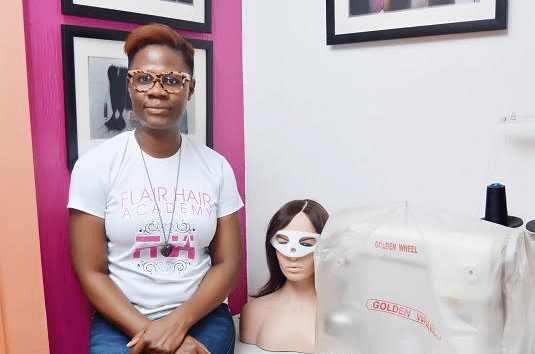
[bctt tweet=”Africa has come of age and needs to get industrialized hence sharing my expertise through the Academy” via=”no”] Bessie Duke-Odu is the Proprietress and Lead Posticheur at Flair Hair Academy (Nigeria’s foremost Human Hair Academy). With a degree in Microbiology, she started off merchandising human hair and hair accessories and in 2010. The Bessie consciously decided to delve further into the research, manufacturing procedures and processes of human hair. She is Korean-trained by the renowned John Korea Hair School in South Korea. Bessie has also acquired degrees from various institutions in Germany, the United States, China and the United Kingdom. Bessie Duke-Odu is also a World Bank Scholar, an alumna of the prestigious Enterprise Development Centre (PAN-ATLANTIC UNIVERSITY), a professional member of the Complementary Therapist Association (UK) and is listed in the Embody Magazine UK as a qualified service provider. Can you tell us what most people don’t know about you? Hmm…that’s a broad one. Over the top of my head, I’d say my tenacity. I rarely give up on things or people. I’d rather buy furniture from IKEA where I can lay the manual out flat, assemble the bolts and every other fitting accessory and work my way to the finished look. You have a degree in Microbiology, why did you go into merchandising human hair and hair accessories? Now, that sounds like two extremes but I guess I naturally flowed to my inherent side. As early as when I was 8-9 years old, I could weave hair and I picked that up by just watching. At the time when I started merchandising, running the hair and accessories enterprise gave me the ample time to tend my new baby and adjust to motherhood without the pressures of a paid 9-5 whilst still being economically viable. What lead you to start Flair Hair Academy? Flair Hair Academy was born out of my refusal to rest on my oars, challenging status quo as it were. Essentially with the knowledge acquired over time, floating a range of wholly made in Nigeria hairline would’ve been exclusive to me. But Africa has come of age and needs to get industrialized hence sharing my expertise through the Academy. What’s one thing about your industry that you didn’t expect before getting into it? As the progenitor in this, it has its first mover advantages as well as disadvantages. Acquiring knowledge has been hugely capital intensive. Nonetheless, every accomplishment begins with the decision to try as successful self-actualization lies just outside your comfort zone. [bctt tweet=”Every accomplishment begins with the decision to try – Bessie Duke-Odu” username=”SheLeadsAfrica”] You’ve been trained in South Korea, China, Germany, and the United States, can you tell us a bit about that and why you decided to choose these countries? Absolutely, I realize that knowledge is power but it takes my enthusiasm to keep pulling that switch. From my research, I discovered that Korea played a huge role during the early years of world industrialization especially after wig making moved to the East. All the named countries have what is unique to them and I am glad to give enrollees a good mix. As an ardent learner, I never restrict my self-development to capital or anything else. I would rather trade in my phone or other paraphernalia to learn a new skill than to walk around with all of that unskilled. I also recognize that going to YouTube to feed off all sorts is an option but I made a conscious and informed decision to research and invest; knowing that a small amount of knowledge can mislead people into thinking that they are more expert than they really are. [bctt tweet=”I’d trade in my phone to learn a new skill than to walk around with all of that unskilled” via=”no”] What kinds of services do you offer? Our bailiwick is in training, handing down well-researched hair manufacturing skills to people who value their development. We train people on how to set up mini hair factories, improve existing salon services, upscale human hair businesses from just buying and selling to production capacity thus reducing to the barest minimum importation on finished hair goods into the country/continent. We also offer contract manufacturing to hair vendors. Our courses include Machine Wefting, Wig Making, Human Hair Texturing, Hackling, Wig posting, Preparation of raw hair, Handtied Wefting, Human Hair Processing and Human Hair dyeing. We have an upcoming Wig Making Workshop this July and enrollees will learn the history of Postiche, how to ventilate a closure, frontal, full wigs, create templates, lace repairs and so on, all from scratch. We help them develop their value proposition and build a sustainable business model canvas. At Flair Hair Acamedy, we have had enrollees from Cameroon, Kenya and within Nigeria. Practically anyone (novice or hair guru) can go through our training and learn the ropes effectively. What do you think makes Flair Hair Academy different from others? Simply put, our resolve for greatness and constantly outdoing ourselves. What movie did you watch recently that stood out to you? Aww…. Definitely “Me Before You”. I teared up and got very emotional. It is a must watch. Look for it! Sponsored post